There’s something new under the sun. If you look at it closely,
something new is only (and always) created at crossroads –
when different and signi¦cant traditions are connected and
combined. On their own, these traditions have often existed
for a while. However, in this new form they have never
appeared together. The latest manifestation of something
new can now be found on the album “No Future Dubs”, the
interpretations of “No Future Days” – the most recent album
by German band Messer – by Finnish producer and old
friend of the group Kimmo Saastamoinen aka Toto Belmont.
The intentional traditions that merge on this grand and
digni¦ed album are post-punk, dub and techno. A new
chapter in the culturally constant narrative of dub is written
here. Through their past and parallel activities in hardcore
and post-punk bands, Messer drummer Philipp Wulf met and
befriended Kimmo, originally a drummer too. In their
continuous dialogue discussing their musical journey, Philipp
and Kimmo over the years more and more immersed
themselves in the aesthetic possibilities of dub and reggae.
Indeed, lots of musicians do not listen to the type of music at
home that they write and play in their respective projects
(Take me as an example: House is the music that I produce
and put on as a DJ. On my own, I listen to various stuff,
music by Monk and Messer for example). The same applies
to the protagonists involved here. By discussing dub und
through Toto Belmont’s steadily increasing producingexpertise, the idea of creating dub versions of selected
Messer tracks was born. The Messer album “No Future
Days”, released in 2020, proved to contain the perfect raw
material as the songs on this album are already produced in
a much more transparent way than on previous LPs – and
are hence more suitable for dub. Still, it’s a giant leap from
the originals to the dubs. These add a third dimension to the
described character of the post-punk/dub amalgam: techno.
The result is a sound that hasn’t existed before, especially
not with German lyrics (which scarcely, however, carry
meaning or messages here. Hendrik Otremba’s voice is used
more like an instrument, as if he was the ghostly ¦gure which
he often sings about and which now §oats and screams
through the sound space). The history of mutual contact and
in§uence of (post-)punk and dub (reggae), which Messer
have kept on writing, is glorious and reaches back far in
musical history. Still, it has always been a rather marginal
chapter not only in punk but also in dub history. But already
in the beginnings of punk (the British version, less the
American one), the presence and in§uence of reggae was
obvious in many places as both are united in their resolute
attitude as rebel music. This is how the two genres
recognized each other – especially the punks regarded
reggae as rebellious. As is known, already Johnny Rotten
mainly listened to dub in private. By using the name John
Lydon, he then – together with bass player Jah Wobble –
established the group PiL as one of the most exemplary
bands at the crossroads of dub and punk. The Slits, Pop
Group, Killing Joke, The Ruts and last but not least The Clash
along with the Mick Jones offshoot Big Audio Dynamite –
the thriving British music scene in the early 80s was full of
dub-in§uenced acts. The echoes meandered everywhere. In
the USA, it took longer until the in§uence of dub became
noticeable and it has never been as distinctive as in the UK.
The history of US hardcore, however, cannot be told without
bands like Bad Brains from Washington D.C. who on their
albums occasionally inserted conscious reggae and dub
tracks between breakneck hardcore tracks. Another
important group is Blind Idiot God who similarly included
dub tracks on their LPs – the contrast between densely
droning rock tunes and widely breathing dub versions can be
experienced very vividly here. In the 90s, dub’s in§uence on
post-punk decreased while turning up even more distinctively
somewhere else: Techno was in many respects susceptible
to dub, to say nothing of the music from the so-called British
hardcore continuum (jungle, drum & bass etc.), which directlydeveloped from dub and reggae. But also “pure” techno –
meaning techno without breakbeats – discovered its a¨nity
for the possibilities of dub at an early stage, in England for
instance in projects like Left¦eld or The Orb. In addition, the
project Rhythm & Sound was established in Berlin with close
ties to the Hardwax record store. With regard to this project,
you can’t really say where dub ends and where techno begins
(or vice versa) because of the interconnection of the two
genres here – everything is based on the steppers pulse
which links the two styles like a common DNA. With dub
techno a new genre was created. Until the present day, there
are producers who don’t produce anything else and DJs who
don’t put on any other music. The Messer dubs are
characterized by a grand majestic manner and force that
presumably someone like Mad Professor is able to produce
and that is also inherent in many Scandinavian productions
of the last 15 years; a crystal-clear aesthetic which locates
itself far away from Kingston or Brixton, but features a pulse
referring clearly to Berlin and Helsinki. The songs appear in a
completely new and deconstructed form, the instruments are
exclusively used as particles and raw material, not as riffs;
merely glaring guitar textures ¦ll the wide dub space. There
are many new elements that were added by Toto Belmont,
especially synthesizer sounds and drums. The ¦nal result
creates an enormous aesthetic power and dignity, and an
atmosphere you don’t want to leave anymore. “No Future” is
a well-chosen title as a reference to the protagonists’ punk
association; as a main thrust of the album, however, a
comma between these two words is imaginable as well.
Поиск:l ow project
Все
- A1: Trippin' (Feat Oliver Night)
- A2: Say You Love Me (Feat Ruru.432)
- A3: Don't Say (Feat Colonal Red & Baba Israel)
- A4: Yourself (Cool Cut) (Feat Stan Smith & Planetself)
- A5: Timeless (Feat Baba Israel & Grace Gaju)
- B1: Why Don't You Listen (Feat Eliza Dickson & Pugs Atomz)
- B2: Eachother (Fallin) (Feat Andrew Ashong)
- B3: Be The Change (Feat Marietta Smith)
- B4: Astral Love (Feat Dwight Trible, Planet Self & Michele Manzo)
Being one of the finest exports Australia has to offer, Jules ‘Inkswel’ Habib has become very well respected the world over for his excellent musical output and undying dedication to his art.
Countless Inkswel recordings, remixes, and collaborations circulate the airwaves and internet as project after project surges through with an unstoppable force. Inkswel is a prolific artist, known for his superb album trio on BBE Records, his relentless cooperative EPs & collaborations on Rush Hour, Boogie Angst, Wolf Music & Oye, and recent output with Pugz Atoms on Jazzanova’s own Sonar Kollketiv imprint. Jules reaches even further as he launches “Inner Tribe”, his own labels boasting artists such as Ahu, Planetself with his amazing wife and vocalist Charli Umami, Kid Sublime, Stan Smith & Colonel Red to name only a few. knowing himself that working with great talent makes great music.
His latest album offering Astral Love on ARCo. is an outstanding 9 song Long-player featuring a plethora of brilliant artist backing up his bouncy-rough-cuts. Naming only a few, you will find maestros such as Dwight Trible, Stan Smith & Andrew Ashong among many others who elevate this album to great heights.
Fortunately for us, Dmytro Nikolaienko agreed to open up the jewellery boxes of his tape-loop archive for his debut album on Faitiche. What came to light was a collection of dreamy glittering gems, masterfully presented using the compositional possibilities of analogue tape machines. Some may consider a tape machine to be limited as a musical instrument, but Rings makes a convincing case with its sure-handed use of the available parameters – moving tape over the tape head mechanically and manually, cutting loops, manipulating timbre and creating noise by means of saturation. The results are eleven blurred, repetitive, rhythmic patterns that can be understood as an intervention against digital precision, as mechanical irregularities and background noise become musical events.
For those familiar with Nikolaienko’s work, his nostalgic approach here will come as no surprise: born in Ukraine and now based in Estonia, he has chosen a historical medium (that has been enjoying a renaissance for some years now) to record historical-sounding sequences. The way he manages his own back catalogue is similarly archival, documenting the chronology of his tape loops in such a way as to leave no doubt as to their advanced age. And then there are his two wonderful labels Muscut and Shukai, the latter being an archival project releasing electroacoustic obscurities from the Soviet past. Which brings us back full circle …
Zwerm is a Belgian-Dutch electric guitar quartet (with a backyard rehearsal shed located in Antwerp) that operates along the borders between styles and traverses traditions that are typically not convergent. Zwerm rhymes Larry Polansky with Nadah El Shazly and are galvanized by the likes of guitars pioneers like The Velvet Underground and Sonic Youth, the microtonal DYI-er Harry Partch, Middle Eastern sonorities and the prog-madness of Kind Gizzard & the Lizard Wizard. ‘Musical adventure’ is not just a hollow cliché for this quartet, but a genuine commitment. Zwerm calls itself a ‘guitar quartet’, but that can be interpreted broadly as well as with a pinch of salt: “If we want to do something on instruments we don’t really master, we’ll just figure out a way to make it work.”
Toon Callier, Johannes Westendorp, Kobe van Cauwenberghe and Bruno Nelissen all met in 2007 while working on a project with Glenn Branca. A new guitar quartet was born and it became clear rather quickly that staying in the strictly contemporary compositions lane was not for this quartet-with-five-to-six-members (an organizational chart is available upon request).
An appetite for new and lasting collaborations has been a constant theme throughout their artistic parcours. The group has shared stages with theatrical producers like Walpurgis and Post uit Hessdalen, dancers such as Ecce and with the musicians Fred Frith, Stephen O’Malley, Shiva Feshareki, Rudy Trouvé, Mauro Pawlowski, Larry Polansky, Eric Thielemans, Yannis Kyriakides, François Sarhan, Serge Verstockt and Stefan Prins. These projects have not always translated into records, but they have been decisive in creating a unique musical approach. In 2015, when Zwerm was asked by De Handelsbeurs to collaborate with Fred Frith, they proceeded to pen a few new musical sketches over which Firth sublimely improvised. In 2018 ‘Badminton in Tehran’ was released, their first record that was made up completely of only the group’s compositions.
“a basket full of buttons here
and if you push the wrong one: fear
and if you push the right one: love
or maybe none of the above”
The route that Zwerm has taken is often defined by the question “What if... ?” - like a dart thrown at a musical map, not quite blindly, but naive enough to lead to unexpected endings.
“What if we play Renaissance pieces written by John Dowland, but instead of playing lutes we play these tunes with a Telecaster – and then jam it through effect pedals and an amplifier?”
“What if we connect one hundred guitar pedals and just leave our guitars at home?”
“What if we record a record with ten different one-page-pieces that we found on the Internet?”
In 2020 our metaphorical dart landed on “What if we tried microtonality?”.
‘Microtonality’ sounds a bit creepy, but actually there is nothing to be afraid of: there are no out-of- tune notes, just alternate notes. On the continents where Western musical theory is less stringently applied, microtonality is the rule, and has become the subject of many deep and thoughtfully written theories. However for Zwerm, this phenomenon occurs in many, often surprisingly lighthearted forms. A dilapidated piano that has settled into a beautiful microtonal tuning of its own accord, enthusiastic choral singing, a guitar whose three strings are tuned a quarter-tone higher, a saz (Turkishquarter-tone lute), a maddening guitar pedal, ...
"the dreams they were convicted for telling only lies reality came after for claiming to be wise what you don’t see is what you get just never light a spark I’m a crow in the dark”
“And… what if we work with a drummer?” Enter Karen Willems - dummer, extraordinaire, and ardent player in groups, projects and collaborations galore. One chance meeting and the deal was done. It was obvious before the start that Willems was the versatile and creative percussionist-in-a-toy-store necessary for this project. And in the studio, to our delight, she demonstrated an easy dexterity when switching quickly from one idea to the next.
At the reins behind the scenes was producer Rudy Trouvé, who – during previous sessions for ‘Badminton in Terhran’, when the classically trained guitarists went completely off the rails, staring deeply and forlornly into their scores, looking for answers – was able to pinpoint the problem and get the wagons rolling in the right direction again. Completing the team were Mark Dedecker (recording)and Joris Calluwaerts (mixing).
The results are in and it’s called ‘ Great Expectations’ – a title that, in several ways, fits perfectly with these strange times.‘Great Expectations’ goes wide! Zwerm is at its best when it can run along the borders between style and across traditions that otherwise would not necessarily intersect. The most straightforward rockers have a proggy tinge while the dreamy psychedelic songs lean more toward Richard Youngs. And if a nice melody dared come to close to becoming a ‘Kit-Katjingle’, then barbs-a-la-Pere-Ubu were trailed, tracked, found and promptly embedded. ‘Heavy Machinery’ sits neatly somewhere between Captain Beefheart and Richard Wagner, and ‘On My Way To Aguno’, set to an Iranian folk song chord progression, grew into a hyper-personal lullaby. Zwerm used the saz (Turkish lute) and the sinter (Moroccan gnawa bass instrument) without falling into pastiche psychedelia, but you can still sense the orient.
2023 Repress
it’s happening again: dj, producer and dial records co-owner lawrence produced his fourth album for mule musiq. and once more, another very special one. the berlin-based artist wrote nine new arrangements specifically for “studio mule”, the new audiophile listening bar that mule musiq's head-honcho toshiya kawasaki recently opened in shibuya, tokyo. it features an exquisite vintage hi-fi sound system, a small record shop, craft liquor and beer as well as an extensive natural wine collection. “toshiya's wine and listening bar was the inspiration for the project. i followed the idea of listening to music in this (for me imaginary) place on a magic vintage sound system, slightly drunk with an always special drink in my hand! the music is therefore also very eccentric and “tipsy”, improvised on acoustic instruments, synthesizers and computer, combined with recordings i did in berlin's central tiergarten park.” lawrence acknowledges the imaginative superstructure above his new album and his mode of operating during the recordings. the records is called “birds on the playground” and features deep pulsating music, that unfolds its true absorbing character when the auditor listens care-fully to the detailed storytelling of lawrence. like always his tunes got a special, radiant pulse, that somehow is a signature sign of most of his productions. playful cosmic grooves, light-hearted, crafted with love and yet freshly unset-tling in some moments. his arpeggiated melodies remind partly on the music of hans-joachim roedelius. in other sec-onds they display a jazzy spiritual character and drift into meditative areas, that sound to a degree like long forgotten japanese folk music spheres. as “birds on the playground” isn’t aimed straight for the dancefloor, the overall coating of the music is a relaxed, cautious one, that goes beyond the average definition of ambient music. each track builds up gracefully, in order to present a mesmerizing musical architecture, that offers new sound dimensions with any fresh listening turn. as the record is made for mule musiq`s latest public space enterprise, everyone who is close-ly connected to the label was involved.
mule musiq’s core artist kuniyuki was in charge for the mastering. and the labels visual draw-er stefan marx painted the cover artwork. “when i saw the record cover for the first time, i had to think a bit of an extremely funny new year's eve party from over 10 years ago, when stefan and i founded the imaginary band “the dead sea”. this record would have been a wonderful soundtrack to the bustle during that night.” lawrence reveals.
it must have been a party beyond hysteric spheres, where all guests dance and talk dearly at the bar, while the music slows down their body functions enough to hear a sound that takes everybody away to a place, that must have been home in that very moment.
LA-based producer, composer, songwriter and multi-instrumentalist James McAlister is a rare creator, and highly sought after collaborator. Perhaps best known for his work with Sufjan Stevens , McAlister has also appeared on record with Lorde amongst many others, and is a regular contributor to Aaron Dessner 's projects, including the latest albums from Taylor Swift, folklore and evermore . His regular work with film music includes The Two Popes, The Big Sick, and Ron Simonsen 's recent films. In 2018 he joined Stevens, Casey Foubert , St. Vincent and Moses Sumney for the Oscar performance for music from Call Me By Your Name, where he played piano and a bottle of cupcake sprinkles. With nearly countless projects to his name, it was in 2017 that his collaboration with Stevens, Nico Muhly, and Bryce Dessner entitled Planetarium was released by 4AD. Around the same time McAlister started a deep dive into a personal sonic realm that has manifested as an ambient project under his own name. 2018 saw the release of Three Breaths , the first offering from this exploration. 2021 will see the second installment, an album called Scissortail which vividly puts McAlister's evolving master craft on display. It is a collection of moving, meditative, immediately satisfying and quietly stunning work. It is the sound of an artist letting go entirely of pre-conceptions or expectations, instead mining the depths of that very real and abstract place of sound, texture, color and feeling. Some songs arrive almost intuitively, while others feel mechanically made, fed through the framework of synthesizers and the patchwork of recording gear. And with that comes a compelling duality to the work; a machine grace informing the on-going but subconscious dialogue between energy and material, sensitivity and asceticism.
"Modern Uganda" is a unique project-it's the exquisite debut album of a band, which no longer exists!
delay_okwas a band from Gdańsk, Poland, which was formed in 2017 and played together till 2020 in the belief that making music must be fun. It was a trio consisting ofPiotr Chęcki(tenor and baritone saxophone, flute, casio),Szymon Burnos(synthesizers, moog, guitar, vocals)andJacek Prościński(drums, spdsx, percussion). On this, their debut album you can also hear the peculiar sounds of the Sopot's MDK Orchestra, the guitar ofMichałZ ienkowskiand a Tanzanian rap byAlex(Alex Mussa), met in Zanzibar.
"W e create impulsively, not ignoring our first - sometimes trivial - ideas,because it is in them that we find the joy that accompanied us at the very beginning of our musical paths. W e do it so that we can sit together in front of the speakers and have fun listening to our own songs again. "Modern Uganda" is a small collection of our interests, so we kind of do it out of the selfish need of doing something for
ourselves"
The band oscillates around the sound of IDM, lo-fi, and other sub-genres of modern electronics, with an element of jazz improvisation. The album was DIY recorded and is a tribute to the most famous African ski jumper from Uganda-Dunstan Odeke.
"Modern Uganda" vinyl record comes in two colors(flamingo pink and classic black). Mix and mastering were done byMaciej Milewski, the cover photo with shoebill was taken bynao-cha, a Japanese artist from Tokyo.
Back in 2015, to celebrate the 50th anniversary of the BBC broadcast of Delia Derbyshire & Barry Bermange’s “Inventions For Radio: The Dreams”, The Eccentronic Research Council released their own super-limited edition cassette soundtracking the recalled dreams (and nightmares) of friends, artists, actors, musicians, scientists, poets and filmmakers. The release was called “The Dreamcatcher Tapes Volume 1”. Five years on, and with a large part of the planet under lockdown and with nowhere to go but within their imagination, the ERC put a call out once again to music collaborators, nurses, teachers, truck drivers, writers, journalists and shop workers to upon waking, record their dreams straight into their phones and to then send them to the ERC to soundtrack. And thus, Volume 2 of The Dreamcatcher Tapes was born!
How did you make the album during lockdown?
“We got around 26 dreams sent to us via email over the space of a couple of weeks then Dean Honer my partner in The ERC and I revved up the old analogue equipment and would record music and collage sounds to the dreams (remotely) from our home recording studios and bounce them back and forth to each other till they were done. It was a really good way to work actually, sometimes I didn’t even have to put on any trousers!” says ERC/ Moonlandingz founder Adrian Flanagan. Why a second volume of The Dreamcatcher Tapes? “I was really interested to see how the enforced lockdown and the removal of people’s basic needs such as human contact and hanging out in close proximity to friends was affecting the dreams of my friends, peers and those at the very front line of this horrible pandemic”, Adrian continues. “The Important shared experiences for people’s mental health such as going out to gigs, the pub, the cinema etc. ”It was an interesting experiment. Nurses dreaming of inadequate PPE and having to use blow up Elvis costumes to protect themselves. Teachers dreaming of zombies and lots of people dreaming about sex - where the hair of Greek sorceress’s Circe meets bouncy castle breasts and where other dreamers dream of serial killers or seeing dead family members, or taking baby elephants for a walk, or having discos for one in the middle of the ocean and so much more. I’m really proud of this record. It’s psychedelic in its truest most cerebral form”
Who’s on “The Dreamcatcher Tapes Volumes 1 & 2”? Who are the dreamers?
“Although our long time collaborator Maxine Peake wasn’t on the very first tape (her dream ended up on LTD edition split 7” ERC single we did with Pye Corner Audio) - she was the first dream that we soundtracked when I came up with the idea of doing the concept record. However, on the new vinyl and tape box set - she opens volume 1. Across the 2 volumes there’s film maker Carol Morley, Andy Votel from Finders Keepers records, John Doran from The Quietus (who also wrote the albums brilliant sleeve notes), acclaimed writers Benjamin Myers & Adelle Stripe, musicians such as Evangeline Ling from the group Audiobooks, Lias Saoudi from my ‘semi fictional band’, The Moonlandingz and fat white family, Sidonie from The Orielles, journalists /writers Wyndham Wallace (he wrote lee Hazelwood’s brilliant biography) and Daniel Dylan Wray amongst a whole array of musician friends, eccentrics and people with actual proper jobs!”
Why did you chose Castles in Space for this release?
“Jim Jupp at Ghost Box records suggested them to me so I looked into them and saw they were doing loads of really great strange little bespoke electronic record releases. I think that because this is a very niche limited run release, it required a label that was willing to treat it like a piece of art and not a throwaway mass produced commodity. So making sure the packaging was special, the artwork was bang on point and the sleeve notes were written by a writer we like all were very important to us. “It was also important that we could turn it around from the finished recording to being in people’s hands really quickly as Dean and I have another ten projects between us on the boil - and so far, Castles in Space have been true to their word. It’s an artists label done with love and there’s not many of them about anymore - believe it or not.“
“The Dreamcatcher Tapes Volumes 1 & 2” is an immense collaborative achievement which makes for a thoroughly compelling, and gloriously disorientating listening experience.
It is released as a double coloured vinyl LP in deluxe gatefold sleeve w/insert and a highly limited deluxe double cassette box set. The album is released on March 19th, 2021.
- A1: Children Of Zeus - Fear Of A Flat Planet (Feat Layfullstop)
- A2: Ladi6 - Ikarus
- A3: Creative Principle - Caught In The Middle
- A4: Bosq Ft Induce - Step Into Midnight (Disco Stepper)
- B1: Massimo Vanoni - Exciting Groove
- B2: Nightmares On Wax - Good Ship (Feat Steve Spacek)
- B3: Dim Zach - Innocence
- B4: Ladi6 - Royal Blue (Silent Jay, Sensible J And Leigh Fisher Remix)
- C1: Chieftain - Out Of My Life (Instrumental)
- C2: Steve Cobby - Lefthanded Books Feat Danielle Moore
- C3: Soulphiction Presents Sbm - Gotta Have It
- D2: Nightmares On Wax - Look Up (Feat Andrew Ashong& Sadie Walker)
- D3: Fat Freddy's Drop - Russia (Nightmares On Wax Remix)
*Repress*
The iconic album series Back to Mine returns in 2019, to mark it's 20th anniversary, with the indomitable Nightmares on Wax, to share his personal collection of music for after hours grooving. The series was renowned for its eclectic selection and selectors which includes some of the biggest names in electronic and pop music, from the likes of Faithless to Pet Shop Boys, Groove Armada to New Order.
Building on Back To Mine's heritage for quality this edition comes as limited edition heavyweight vinyl and extra thick cardboard sleeve with full coloured bespoke artwork, commissioned from illustrator Rich Fairhead, depicting the artist's influences along side personal sleeve notes form Nightmares On Wax.
The collection includes three exclusive tracks, one new track from Nightmares on Wax, along with a remix from the man himself of seminal band Fat Freddy's Drop and brand new project Creative Principle. The album is impeccably mixed and blended, as you'd expect from a DJ and collector of George's pedigree. His selection includes a strong representation from his roots in Northern England. Opening with respected Manchester soul duo Children of Zeus, Hull's Steve Cobby provides his own 'Lefthanded Books' featuring Crazy P's Danielle Moore and also introduces his chuggy-disco project Chieftain. There's also room for the recent Nightmares on Wax recent single 'Look Up'. Moving internationally; there's Greek producer Dim Zach who doffs a cap to Imagination on the synth-heavy 'Innocence', US-born/Colombian based Afro/Latin/disco/funk producer Bosq, Italy's Massimo Vanoni with the slo-mo funk 'Exciting Groove', the deep and jazzy 'Gotta Have It' by Berlin's SoulPhiction side project SBM and two tracks by New Zealander Ladi6.
This first re-instalment of Back to Mine is a triumphant return for the iconic and music loved series. Nightmares on Wax delivers an incredible selection of tracks that gives the listener a real insight into the artists personal and extensive taste. To coincide with the series release, Nightmares on Wax will embark on extensive Back to Mine worldwide DJ tour which sees the producer touch down in various cities across Europe and USA, including six dates in the UK.
'I always hoped that when the time was right I would be asked to do a Back To Mine release and so when the call came there was absolutely no hesitation'. - Nightmares on Wax.
- A1: Alicia Myers - Right Here Right Now (John Morales M+M R
- A2: Harvey Sutherland - Priestess
- A3: Housing Authority - Ultraviolet
- A4: Virgo - R U Hot Enough?
- A5: Speedy J - De-Orbit
- B1: Symbols & Instruments - Mood (Tropical Dream Revisited)
- B2: Psyance - Gates Of Heaven
- B3: I¼-Ziq - Twangle Frent (Special Request Rework)
- B4: Fc Kahuna - Hayling (Special Request Mix)
- B5: Special Request - Elysian Fields
Special Request continues his impeccable run of form with a typically fervent entry into the DJ-Kicks mix series. His adventurous 25 track mix takes in personal favourites, new school classics and of course a selection of his own brand new and exclusive edits, dubs and reworks next to some overlooked gems. Leeds based Paul Woolford dares to go where few others do. He can do face-melting underground bangers, peak time piano anthems, ambient cinematics or chart climbing crossover hits. What unites his work as Special Request across labels like Houndstooth and R&S, though, is precision engineering, but never at the expense of real, raw emotion and visceral impact. He is an artist who very much pours his heart into everything he does, and has been on such a prolific run in recent years that it has been impossible to keep abreast of all his many projects. Even in this mix, he hints at yet more new sides and sounds. As always with Special Request, this is an emotional, full spirited ride through the musical mind of one of the most accomplished artists of the day.
An unlikely meeting of two like-minded spirits, »First Man in the Moon« sees the former Swans guitarist and Hallow Ground regular Norman Westberg and the prolific double bass player Jacek Mazurkiewicz collaborate for five evocative tracks. The pair finds common ground beyond the boundaries of atmospheric drone, abstract jazz and experimental music and blurs the lines between the acoustic and the electronic.The two first met when the composer Mazurkiewicz supported Swans with his solo project 3FoNIA on their 2014 European tour. »I really enjoyed his approach,« says Westberg about the Polish musician’s blending of the acoustic qualities of his instrument with electronically generated sounds. A decision to collaborate was made and when the US-American musician returned to Eastern Europe to support Michael Gira on his solo tour in late 2019, Mazurkiewicz reached out to him with the idea of booking some studio time before Gira’s two concerts in Warsaw. »Recording was very fun and easy,« remembers Westberg. »It was just two people enjoying hearing and reacting to what the other is doing.« »First Man in the Moon« is not however a plain document of these improvised sessions, but also shaped by Mazurkiewicz’s approach as a composer. Once the recordings were finished, he selected and edited the recorded material, refining the peculiar dialogue between the guitarist’s meditative drones and bright chords and his own rhythmic yet subtle approach to playing the double bass, sometimes plucking the strings and occasionally using his bow to underscore
Westberg’s fleeting melodies, but also using the instrument in unconventional ways to generate sound. A feeling of weightlessness prevails throughout the aptly-titled »First Man in the Moon.« Even at their most abstract however, these five improvisations-turned-compositions remain tangible, lively, and joyfully explorative. It is a record that you wouldn’t expect from either of these musicians, but
the logical result of two idiosyncratic minds sharing not only space and time, but also their respective visions with each other. Credits:
Recorded at Studio Diamentowy Pies/ Damian Pielka, engineering/Piotr Mazurek, engineering assistance/Jacek Mazurkiewicz, mix/
Lawrence English, mastering/John Fell, photographs.
Next up on MOM is another exploration of the link between art and music. This time it is dance performance. The musical artist is Okkre (Uge Pañeda) producer of the Spanish duo LCC, who have released two albums on the celebrated Austrian imprint, Editions Mego. Okkre is a composer of soundtracks, DJ and she is currently immersed in researching her "landscapes series" project, connecting countries and cultures that are seemingly unconnected to each other through field recordings... MOM 012 is the soundtrack to a very special performance named ÉPICA. Directed by Barcelona based choreographer Aimar Pérez Galí, it was premiered at Sonar 2017. EPICA brings clubbing culture inside the theatre, to deliver a highly energetic performance, joining bodies, sound and voices of historic and political dissidence. It is about communication between bodies (without language) and the liberty of being on the dancefloor. Freedom of movement, expression and happiness through music! Okkre has provided a startling soundtrack. This soundtrack complements the performance of the dancers beautifully but also deserves to be listened on its own. It is both powerful and dramatic, fitting the title. The music of the soundtrack has been adapted for its imminent release on vinyl. The piece begins with the rhythmic movement of beats, which provides a structured backdrop. They are complemented by a swirling bassline. Overlayed percussion of differing styles comes in and out. Harsh almost metallic synths enter after a few minutes, which also have the sensation of breathing. Later on, powerful synths battle sturdy cymbal assisted percussion. In the latter stages, everything gets even more intense techno feel and the A Side ends with dense dark synths. The music is alive! While the other side gently mixes a melodic bassline that moves like the wind with intertwined chorus and voices, which appeal to the spirit of the artistic work, evoking space for feeling and touching. At the same time, insistent beats offer a club feeling. Scary yet empowering strings create a hypnotic atmosphere alongside falling keys and vocal impressions. The final few minutes provides a strong climax to the record. This features hammering beats, a circling bass and powerful keys. A mighty performance! ÉPICA is indeed epic.
It doesn't happen too often that you come across someone with Sam's composure and artistry at such a young age. 22 year old Sam De Nef has been in music for a while as lead singer of indie outfit 'Danny Blue and the Old Socks', but It wasn't until last year he started thinking of a solo career. Influenced by a generation of songwriters he listens to every day, Sam felt an urge to follow his own path and write genuine songs he could play all by himself and at any time, unadorned and without pretence.
He started recording demo's during the March lockdown, swiftly landed a record deal and started recording his debut with Nicolas Rombouts (Dez Mona, Ottla, Stef Kamil Carlens) and PJ Decraene (Rhinos are People too) - also his live band - in an old house in the French Vosges mountains.
The first tracks he released did not go unnoticed at national radio, press and streaming playlists alike. Sam is a prolific writer and lyricist, he recorded a 7 track debut mini album, expected in February. We are instantly struck by his stunning vocals, his versatility and maturity as a songwriter, embracing the classics but never without transcending their influence.
Sam De Nef's first solo project is a vehicle to tell his own stories and write songs that come to him in the most natural way. His debut mini album is an inspired collection of visceral folk and singer songwriter tunes, drenched in nostalgia. He's inspired by the likes of Dylan, Jack Kerouac, Leonard Cohen and Karen Dalton, but displays a unique voice and decidedly steers clear of platitudes.
"On my first trip to Serbia, visiting my girlfriends family, I discovered a whole new world in music. People played their songs around the diner table. What I saw was a family sharing food, alcohol and stories everyone could relate to. This experience opened up a new window, the wind blowing inspiration. I want to tell stories and touch people with simple songs and colorful language."
There is a directness and intimacy throughout each of the record's 23 minutes, which both sparks universal melancholy and makes Sam De Nef's debut very personal.
Legendary pedal steel player Susan Alcorn presents her music as curated and arranged by cellist and composer Janel Leppin. This recording is from a live performance from her residency at Issue Project Room in July 2012. Leppin’s arrangements and curation emotes the brilliance, transparency and resonance of the pedal steel guitar. Through this ensemble, the mastery of Susan Alcorn's compositions shine.
Susan Alcorn has taken the pedal steel guitar far beyond its traditional role in country music. Having first paid her dues in Texas country & western bands, she began to expand the vocabulary of her instrument through her study of 20th century classical music, visionary jazz, and world musics. Struck by the music of Messiaen she began transcribing classical music from recordings and scores on her instrument. Soon, she began to combine the techniques of country-western pedal steel with her own extended techniques to form a personal style influenced by free jazz, avant-garde classical music, Indian ragas, Indigenous traditions, and various folk musics of the world. By the early 1990s her music began to show an influence of the holistic and feminist “deep listening” philosophies of Pauline Oliveros. As her records gained a cult following she moved to Baltimore, MD. She performs internationally and is a key figure in the free improv scene in the US.
Janel Leppin is a core member of the Washington, D.C. experimental, jazz, punk and improvisational scenes and is a celebrated visual artist as a weaver. DownBeat Magazine describes her as “An absolute virtuoso”, NPR Music says “instrumental intimacy swept up in arrangements that cluster around her voice, as delicate and as imposing as a sheet of falling ice.”. Janel leads and writes for her free jazz sextet, Ensemble Volcanic Ash “a rarity..ahhh-vant garde at it’s finest." -Capital Bop. Leppin and Alcorn also recorded the composition “Thick Tarragon” by Eyvind Kang from the album Visible Breath on Ideologic Organ. Leppin appears as a string arranger on many recordings on labels from Dischord Records to Sacred Bones.
- A1: Safe Sailing
- A2: But Slowly I Made It My Own
- B1: Folk Triumfator
- B2: Tthe Ski Resort Was Buried In The Avalance
- B3: Sword Of Sodan Spanned Three Discs
- C1: Eis Im Sweizer Panzer Museum
- C2: Things They Will Never Tell You
- C3: Histoire Ancienne Des Dragon Blues
- D1: Where The Fringes Of Suburbia Recede
- D2: Always A Nice Story Before Bedtime
- D3: Ooit Eens Aan Deze Kust
Legowelt teams up with medieval music expert Jimi Helinga once again for a new album in their 'para-academic' Zandvoort & Uilenbal project. Folk Triumfator is the successor to the cult 2016 GERUIS UIT SOMBERDORP in which they return to appropriate historical instruments and mix it with 'modern'synthesizers. We can hear a medieval Hurdy Gurdy, A Victorian Harmonium, a 1950's Mixtur Trautonium, an electro acoustic thumb harp and much more, all mingled and amalgated into the unique Zandvoort & Uilenbal sound. It all crackles and squeaks like an old haunted ship drifting into a foggy sinister harbour while being obsvereed by Ligottian clown puppets. We can write how conceptual and arty this all is but let's just say this is hardcore dark ambient with lots of medieval drone space jazz influences to trip your mind out into a region where time and your opinions cease to exist.
File Under: Jazz / Contemporary Jazz - For fans of Ryuichi Sakamoto, Boards of Canada, Linda May Han Oh, Supersilent, Nels Cline, Makaya McCraven, and Haruka Nakamura! Born in Pinsk, Belarus in 1984 and immigrating to Canada in 1992 with the collapse of the USSR; Alexei Orechin has been actively shaping musical environments with his current projects No Seas, a solo project for guitar and tape, and leading his own ensemble incorporating jazz, chamber, and experimental elements into his compositional work. A diverse talent that is reflected in the company he has shared the stage with: Nas, Akae Beka, Rana Mansour, Shad, Yaadcore, and Sina Bathaie. He has played in USA, Mexico, Europe, and Russia. Performances include the TD and Montreal Jazz Festivals, Caribana, Irie Music Festival, Tirgan Festival, and Pride Toronto. His music for film has been featured at TIFF, CFC, NFB and the Warsaw Jewish Film Festival. He has been featured on CBC, Noisey, Global News, The Star, Dub Rockers, Huffpost, Afropunk, and Relix magazine. 2020 saw the premier of '1992 Ambient', a 45-minute long composition that is a 'therapeutic experiment in slowly melting sound and colour; representing the acculturation and restructuring oneself through emigrating from Russia to Canada in 1992'. 2021 will also see the release of his debut full length album Mirages; an album that showcases his diverse and ever evolving style of composition, ranging from moments of melodic solitude to fractal experimentalism.
Thumbing Thru Foliage is a blunted journey through YUNGMORPHEUS’ mind where personal lyrics intertwine with socio-political themes and tongue in cheek humour. Produced entirely by ewonee. Lead single ‘Fistfulofgreens’ grooves on a g-funk-esque plain and is an assured mission statement - “original man who got the game plan, I aint switching my hands inside these strange lands” whilst also sharing some intimate insight “I don’t ever answer questions that the feds askin, they were cuffin’ my mama, you know I had to blast them”. Second single ‘Sovereignty’ takes a more soulful turn with ceremonial strings and r&b samples ringing under braggadocious bars. Third single ‘Middle Passage’ is a more introspective cut - sombre vocal and piano loops are juxtaposed with neck snappin’ energetic drums. Describing the project in his own words, YUNGMORPHEUS says, “Peace peace, I consider this album a call to action of sorts. The world is rife with distractions and oppressive tactics but niggas move through it nonetheless ! Respect to ewonee for providing a beautiful backdrop for me to get some much needed shit off my chest. Maneuver through the foliage yall... Power to all black people ! Salute to those who listen”. ewonee adds, “Growing up like we did in this corporation Neegas deal with a lot. Usually gotta go through the mud to get to the greens. Good comes with the bad and vice versa, learning how to adjust is a must. Hope y’all get that from this. Roll up count up and mount up. PEACE”. YUNGMORPHEUS is an American rapper and record producer, originally from Miami but now based in LA. He has released music on Leaving Records and Rap Vacation as well as collaborating with Pink Siifu, Fly Anakin, Koncept Jack$on and Ohbliv. Previously supported by Okayplayer, XLR8R, Bandcamp, DJ Booth, Tiny Mix Tapes, Earmilk, BBC6 Music, Dublab, NTS and Worldwide FM. ewonee is an American Multi-instrumentalist, Producer, Beat-maker & Audio engineer from New York. Part of the Mutant Academy crew and also involved with the Beat Haus Show, ewonee has previously produced & collaborated with the likes of Your Old Droog, Fly Anakin, Reginald Chapman and Koncept Jack$on.
Justin Thurgur has been at the heart of the UK's World Music scene for over twenty years, primarily through his collaborations with the Afrobeat maestro Dele Sosimi (former keyboardist for both Fela and Femi Kuti) and with the pianist Kishon Khan. Most recently in Khan's projects Lokkhi Terra and the Afrobeat/Cuban crossover, Cubafrobeat.
Thurgur has worked with Cuban giants Giraldo Piloto, Changuito and Julito Padron, with the Nigerian drum legend Tony Allen and with Damon Albarn's Africa Express project; which included Cheick Tidiane-Seck and Fatoumata Diawara. He's also worked with the likes of Bukky Leo, Francis Fuster, Pandit Dinesh, Baby Akhtar, Inemo, Tony Kofi, Kodjovi Kush, The Soothsayers, The Levellers and The Selecter.
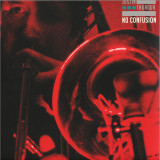
He is perhaps most known as the trombonist from the multi-award winning 'folk' group Bellowhead. Their split in 2016 led to him forming his own band and releasing his debut album as a bandleader, 'No Confusion'.
The album features original compositions written by Thurgur in collaboration with double bassist Max De Wardener, piano/rhodes/Hammond organ player Kishon Khan and guitarist Phil Dawson, with band members including the likes of Graeme Flowers on trumpet, James Allsopp on bass clarinet and Oreste Noda on congas.
Thurgur promoted 'No Confusion' throughout 2016 and 2017, culminating in an enthusiastically received performance at Love Supreme Jazz Festival in 2017. Jazz FM, in particular Chris Philips, gave extensive airplay to the album as well as streaming a live performance from the Jazz FM studios and doing an interview. They subsequently playlisted two of Thurgur's single releases. Lopa Kothari played a track on BBC Radio 3's show 'The World On 3'. The band did a live interview and performance on DJ Ritu's 'A World In London' show on Resonance FM. Beyond this Thurgur has been developing relationships with various other digital radio stations, including Gordon Wedderburn, John Waugh and a number of Global music stations based in Europe.
- Intro Feat. Bobby Rox
- Relax Playa
- You Sure Love It Feat Kenny Keys
- It's Gonna Be Trouble Find Myself Interlude
- There's No Wasting Time
- Feel Involved In Love Feat. Mr. Tanqueray
- Comfortable Place
- The Next Level Feat Keya Maeesha
- Live At The Beeiscuit Lounge
- Feeling Good Off That Life
- Let Love Be Your Magic Carpet Feat Kyotey Grey
- Speak Low
Generally speaking, albums are created over the course of a few weeks, months, or years. However when it comes to Airplane Mode, not only has it spanned the latter, but its DNA was formed across two continents, a multitude of significant life changes, and an overall renaming of the projects title.
What started as a collaboration effort morphed in to a sonic space that Tall Black Guy used to highlight questions many of us frequently ask, but struggle to answer; Why am I here? Am I enough? What makes me happy? How do I move forward? What does real love feel like? Although the answers may be different for us all, Airplane Mode sets the path that the listeners use to reach their own conclusion.
In closing, rarely does 40 minutes capture the essence of so many different facades of an artist’s process, and personal transition. As intimate as the album may be, Tall Black Guy leaves room for people to shape their own interpretation by what they bring to the listening experience. Airplane Mode demands your complete consideration, and is intended to be consumed without skips, or interruptions. In other words, sit back, relax, and put your mind in….Airplane Mode!
When a synth master like Steve Moore joins forces with the legendary KPM, magic must materialise. And so it does with Analog Sensitivity: cinematic, enigmatic synthscapes to both haunt and heal.
New York-based multi-instrumentalist/producer/film composer Steve Moore is probably best known for his synthesizer and bass guitar work as Zombi, together with Anthony Paterra. But he is also part of Miracle and Titan as well as being a prolific solo artist releasing music as Gianni Rossi, Lovelock and under his own name. Steve’s music has found a home across labels like Future Times, Mexican Summer, LIES, Static Caravan, Relapse, Kompakt, Spectrum Spools, Death Waltz and Ghost Box, and much of his recent work has been scoring films like The Guest and Cub. Prolific indeed.
The story of Analog Sensitivity starts with those soundtracks, or more specifically the time in between them. Rather than being commissioned by KPM, this LP comes from music Steve was recording sporadically and tinkering with for over three years during the downtime between his film projects. There were no ideas about what it was nor a plan for how it would be released, or even if it was going to be released at all.
However, after Jon Tye invited him to play on the Ocean Moon project for KPM Steve realised that the hallowed library label might be the perfect home for what he had been working on. The people at KPM agreed. Finishing production in late 2019 in Albany, NY, he came up with the track sequencing and suddenly, he had an album: Analog Sensitivity.
The LP opens with the dystopian electronic minimalism of “Eldborg”, its dark synth bass unfolding to ominous synth pads, shadowy sustains and glistening arpeggios. “At The Edge Of Perception” brings an unsettling retro-future of edgy analogue leads and desolate FX. The sound of a robotic core tears through the sparse textures of the enigmatic “Rose Of Charon”. A chilling breeze blows through a persistent, hypnotic synth sequence on “Time Freeze”. Title track “Analog Sensitivity” is a sparkling transcendental synthscape of melody, drones and celestial synth. The brooding “Behind The Waterfall” winds down the first side, building subtle strings and a desolate sound beneath its haunting organ.
“Mirror Mountain” ushers in side two, its woozy bass and arpeggio unfolding to envelop the muffled, muted echos of its organic leads. "Syzygy" emerges you in bubbling sequences, airiness and ambient electric guitar tones. It’s followed by the cinematic minimalism of “Pentagram Of Venus” and its trickling FX. The wind swirls through the otherworldly “Of Dust Thou Art” kicking up clouds of unsettling, plodding synth sequences leading to the uneasy atmosphere of “Message From The Beast” which builds to the echo of the last refrain of some choral incantation. Closing track “Urge Surfing” is as cool a climax as you’d hope from something so brilliantly titled, riding along hushed waves of brooding electronics.
With the clue right there in the title, Analog Sensitivity is built up from the quieter aspects of the sound Steve has been exploring and evolving for over 20 years. It’s a layering of ambivalently dense and airy, muffled and echoing sounds from his collection of synthesizers and other electronic music hardware. And whilst some of Steve’s other work uses this vintage equipment to conjure the past, that wasn’t his intention here. Steve explains “I wanted Analog Sensitivity to feel atemporal, as though it could have been released any time over the past 30 or 40 years. While not specifically in the spirit of any particular album, I’m really into old KPM artists like Alan Hawkshaw and Brian Bennett”.