Al Fajer Group was established in Kuwait in 1987, co-founded by four artists: Sima Kanaan (Vocals), Bashar Shammout (Guitar) Jameel Saraj (Oud and Guitar) and Nizar Alyan (Percussion). Al Fajer Group became known for their unique frequencies and the transparency of their sound. The band is rooted in acoustic oud, guitar and percussion and they never used any electronic equipment during their sets. When they were first established they would perform Palestinian patriotic songs, related to the Palestinian liberation struggle. They released their launch album, recorded on reel tapes, during the First Intifada in 1988, after which they began composing and writing their own original music. They were unable to release this due to the Iraqi invasion of Kuwait in 1990, when all the band members were forced to leave the country and could not reunite to release the second album. During the limited time in which they were able to work together, they participated in multiple tours in Kuwait, Iraq, Germany and other locations.
This is the first vinyl release for the band and includes original music, which has not been available until today.
نشأت فرقة الفجر في الكويت في العام 1987 بمبادرة ذاتية من قِبَل أعضائها الأربعة وهم سيما كنعان (غناء) وبشار شموط (غيتار) وجميل سراج (عود وغيتار) ونزار عليان (أيقاع). تميزت الفرقة بأدائها الموسيقي الشفاف والهادئ والذي اعتمدت به على استعمال آلتي العود والغيتار وبعض الآلات الايقاعية المتنوعة وتجنبت استخدام أي آلات كهربائية. اعتمدت الفرقة في بدايتها على إعادة أداء بعض الأغنيات الوطنية الفلسطينية ذات الكلمات الواضحة والهادفة. أصدرت فرقة الفجر ألبومها الوحيد في ظلال الانتفاضة الأولي في العام 1988 ثم بدأت في تلحين أغانيها الخاصة بها والتحضير لإنتاج ألبومها الثاني، لكن لم تتمكن من تسجيله وإنتاجه وذلك بسبب نشوب حرب الخليج عام 1990 في الكويت حيث اضطر أعضائها للرحيل من هناك ولم تعد الفرقة قادرة على الاستمرار. رغم المدة المحدودة جداً التي نشطت فيها فرقة الفجر، إلا أنها شاركت في عدد لافت من العروض والمهرجانات في الكويت والعراق وألمانيا وغيرها.
Search:l ow
Repress.
Just one week after the outbreak of the First Intifada in 1987, Riad Awwad brought his sisters Hanan, Alia and Nariman together in their living room and began recording The Intifada album on equipment he had made himself. One of these was co-written with their friend, the acclaimed Palestinian writer Mahmoud Darwish. Riad printed 3000 copies of the cassettes which he began distributing in the Old City of Jerusalem and across the West Bank. The Israeli Army immediately confiscated all the copies they could find, the vast majority of which remain in the military archives to this day. Riad was arrested, interrogated and detained for several months. Straight after his release, he formed a band, Palestinian Union, and put out a new album. He then founded a school, offering kids in the West Bank an alternative musical education, teaching them how to create their own electronic equipment. In 2005, Riad was tragically killed in a car accident. His legacy lives on through his family, his timeless music and his powerful story, which continues to inspire to this day.
Over several years, Mo’min Swaitat has amassed an archive of rare tapes and vinyl from Palestine and beyond. Many of these were acquired from a former record label in his hometown of Jenin, in the north of the West Bank. The Majazz Project is a research project and record label borne out of the archive, focused around sampling, remixing and reissuing vintage Palestinian and Arabic cassettes and LPs, shedding new light on the richness and diversity of Arabic musical heritage.
French modular tribalist Sindh launches the Komudo Origins Series on his own label with a fierce first chapter built for deep physical immersion. Still rooted in rythmic ritualism, these four tracks push further into shadowy, shape-shifting techno. 'Sauros' is the beatless opener, all hovering, menacing atmospheres and sonically refracted voices. 'Arbhar' glides along with a sleek, understated techno framework that feels like it's made of pure air. 'Mystic Sun' begins to edge towards the pumping, firing echoes and low level spoken words across a progressive-style builder, before 'Denali' closes things off via thumping, late-night techno charge. Subtle darkness, alien textures and body-focused grooves define this potent new series.
- Phonè
- Turenas
- Stria
- Sabelithe
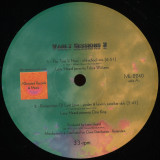
Dr. John Chowning (b. 1934) is a pioneering computer musician, composer and professor who, in 1967, discovered the FM synthesis algorithm. This breakthrough in electronic music allowed for simple, yet rich timbres described as sounding "real." With this discovery, Chowning composed singular, dramatic electronic music and changed the timbre of music forever.
Chowning utilized the potential of computers to synthesize sounds according to programmed instructions. The composer's use of his own FM algorithms, digital synthesis with computers and the new compositional concepts offered by a programmable musical structure combine to create some of the most original and unique electronic music ever created.
The compositions on this LP were realized between 1966 and 1981 and the music on this LP, with the exception of Stria, was originally released on CD in Germany (Wergo, 1988). The version of Stria included here contains a section not included on the Wergo CD. Thus, this version of Stria is complete. This is the first time these purely digital recordings have been released on an analog medium. The original dynamics of these groundbreaking compositions have been preserved on this LP. As a result, listeners are advised to increase volume with caution.
In 1975, John Chowning founded the CCRMA - Center For Computer Research In Music and Acoustics at Stanford University. Through Stanford, Chowning licensed his groundbreaking algorithms to Yamaha resulting in numerous new instruments including the iconic DX series of keyboards. In 1972, his composition Tureens which is included on this LP, was the first to create the illusion of continuous 360-degree space using four speakers.
Technical Notes:
All pieces on this LP are originally quadrophonic. The illusion of moving sound sources is thus projected from the surrounding environment given by four loud-speakers on the stereo-basis.
STRIA was composed using Chowning’s own program to compile the musical structure into note-lists and MUSIC 10 (by D. Poole/Tovar) to generate the sounds in software-synthesis. The original quadrophonic version utilized 12 bits, two different sampling rates being used to accommodate the enormous amount of data on the magnetic disc-packs available at that time. The original sound-data was processed by sampling-rate conversion and digital mixes to achieve the stereo version presented on this LP.
SABELITH and TURENAS were synthesized originally using Smiths’ SCORE and MUSIC 10. However, their format was changed from direct sound-samples to a command stream for a special purpose computer, the System Concepts Digital Synthesizer, designed by Peter Samson, one of the first large-scale digital synthesizers for real-time sound processing - one was designed for CCRMA in the late seventies. For this recording the sounds were recorded directly from the synthesizer computing the samples in real-time.
PHONÈ was realized with the System Concepts Digital Synthesizer using again Chowning’s own program to create the note list.
The master tape of this LP was made directly from the computer system at CCRMA which generated and stored the sound data in digital format. No analog recording was involved at any stage of the production and editing process.
- Side A. Gypsy Song
- Side B. Never Land
After traveling through Mexico, Miami, the Bahamas, and New Orleans, Nishioka recorded his fourth album South American Journey in Los Angeles,
released in 1979. From this album, two of his most celebrated tracks—“GYPSY SONG”, a fan favorite with numerous cover versions, and “NEVER LAND”,
featuring the distinctive sound of steel pans and a Japanese reggae vibe are now being pressed on 7-inch vinyl for the first time in a limited edition!
The recording features members of the So What Review band, including Junshi Yamagishi (guitar) and Osamu Ishida (guitar), along with renowned steel pan
player Robert Greenidge, known for collaborations with Van Dyke Parks and Taj Mahal.
(FLATT THE LAIDBACK)
Kyozo Nishioka Profile
(Born May 7, 1948 – Died April 3, 1999)
Singer songwriter from the Shima Peninsula in Mie Prefecture, affectionately nicknamed “Zo-san”.
After enrolling at Kinki University and moving to Osaka, Nishioka became a regular at the folk cafe Dylan in Namba, opened in August 1969 by Masaji Otsuka
and Yoko Ishimura. Dylan was a gathering spot for folk music enthusiasts from all over Japan.
Nishioka formed the folk group The Dylan with Masaji Otsuka and You Nagai, performing at folk camps and the Nakatsugawa Folk Jamboree. In 1971, Nishioka
left the group, and Otsuka and Nagai continued as The Dylan II. Nishioka wrote and composed the song “Puka Puka” under the pen name Zokyozo, which became
one of his signature works. The song was first released in July 1971 as the B-side of The Dylan II’s single “Otoko rashii tte Wakarukai” on URC Records.
Nishioka began his solo career, releasing his debut album “Dylan nite” in July 1972, produced by Kinji Yoshino on Bellwood Records, which included his own
version of “Puka Puka”. In September 1973, he appeared at the farewell concert of Happy End titled CITY – LAST TIME AROUND at Bunkyo Public Hall in Tokyo.
His 1974 album “Machiyuki Murayuki” was produced by Haruomi Hosono, and his 1975 album “Rokka My Baby” featured support from Shigeru Suzuki’s band
HUCKLE BACK. Nishioka recorded three albums under Hosono’s production, deepening their friendship.
Together with his wife and lyricist KURO, Nishioka wrote songs for artists such as Eikichi Yazawa. The couple traveled the world, recording overseas albums such
as “Nanbei Ryoko” (1977), “Yoh-Sollo” (1979), and “New York to Jamaica” (1981), incorporating reggae, calypso, and other global sounds. In the 1980s, he released
works under the duo name KYOZO & BUN with Yoshifumi Okajima, and in the 1990s returned to solo projects with albums like “START” (1993) and “Farewell
Song” (1997).
After KURO’s passing in 1997, Nishioka continued his musical activities until his own death in 1999 at the age of 50. His music transcended the boundaries of folk,
blending jazz and tropical elements to create a unique world view, leaving an indelible mark on Japanese music history.
- A1: Aldn, Midwxst - Happy Ever After
- A2: Aldn - I’m Alright
- A3: Aldn - 2Ppl
- A4: Aldn - Glittr
- A5: Aldn - Precious
- A6: Aldn, Renforshort - Dog Eat Dog
- A7: Aldn, Glaive - What Was The Last Thing U Said
On the release of his debut EP, aldn shares, “‘greenhouse’ represents my mind and thoughts. The individual songs represent the different plants within that greenhouse. Each song gets its own special attention and dedication just like a plant would. Everything on this EP was written and produced by me which makes them extremely personal to me, I’ve grown them all from a simple melody into what they are today. I want all of these songs to be put into your own interpretations to make them more personal to you.”
Through the interwoven storylines and soundscapes of greenhouse, aldn’s experimentation with a broadly sculptured experimental palette shares a snapshot into the worldbuilding he has created over the past two years, an honest representation of the thoughts you only feel comfortable sharing through the lens of your phone, and a therapeutic diary entry set to the dim lights of the corners of the club. As the world moved online in the past year, this new music became even more of a crucial component as a direct means of communication where crossed wires connect the dots more than ever.
Julius Hemphill's debut record, 1972's Dogon A.D., was self-produced for his Mbari imprint, and it was issued with a beautiful black-and-white cover. Very DIY. The label's name writ large along the bottom edge, like it was the band's name. It's a quartet record featuring Hemphill on alto and flute, with Baikida Carroll on trumpet, Abdul Wadud on cello, and Phillip Wilson on drums – a classic jazz front line/rhythm section format, but nothing conventional about the way the music sounds.
The long track – from where the LP takes its title – is one of the key epic statements of new jazz in the era. Among its remarkable distinctions, it manages to draw on Wilson's schizoid experience having been a member of the Paul Butterfield Blues Band and the first drummer for the Art Ensemble of Chicago, in making an 11/8 rhythm into a staggeringly funky thing of joy. Over the course of fourteen and a half minutes, Hemphill builds a nearly continuous solo, his spiritual blood brother Wadud sawing the cello with a deep blues soulfulness that is raw and mantra-like in its repetitive incantation. It feels right and wrong in equal measure, the theme carrying its own piquancy with honked barnyard dissonances and some contrary motion between the horns and string. Most of all, it takes its own sweet time, in no hurry to get anywhere in particular, but out for a righteous stroll. – John Corbett (excerpt from the liner notes)
- A1: Don't You Touch The Radio
- A2: Beirut
- A3: Do What You're Told
- A4: Ya Habibi
- A5: God's Own Remedy
- B1: We Are One
- B2: Gonna Be Fine
- B3: Run Run
- B4: Fallen Angel
- B5: Jericho
‘Under The Sun’ is the new album from The Wanton Bishops, a band by every definition of the word, but primarily the vision of one eclectic man – Nader Mansour. The album is an exploration of identity and ultimately a love letter to his hometown Beirut, capturing Nader’s kaleidoscopic life journey through a melting pot of musical influence; primarily gutsy blues-rock but with tinges of psychedelia, surf-rock, dance, as well as the Lebanese influences of Nadar’s hometown. “It’s Lebanese Rock”, adds Nader, “a new genre, a blueprint for future music. It’s not fusion, it’s confusion, it’s not world music, it’s rock music from the world, for the world”.
Following the release of The Wanton Bishops’ debut album ‘Sleep With The Lights On’, a Delta blues record inspired by the likes of RL Burnside and Muddy Waters, Nader journeyed to America’s deep south to experience the roots of Mississippi blues. The experience spawned a musical epiphany for Nader, as he returned home to Lebanon a changed man with a newly inspired musical vision. Nader’s music slowly emerged from the Delta swamps into the Lebanese mountains, and the music of The Wanton Bishops began to reflect Nader’s homeland, his people, and his personal journey. To quote Nader, "I’m finally getting to the core of the music I want to create, and that core is scarily confused, yet uniquely special, much like our own identity as Lebanese people living in Beirut, that eternal cultural crossroad."
2026 Repress
Alleviated Records is proud to present the first of hopefully a succession of releases sharing selections from our own Archive of recordings that either have never been issued or that have never been issued on the Alleviated imprint. After many years of being ''on-the-shelf'' we are extremely pleased to share these with the public. First up, we have a selection that was being considered for the ''Another Side'' (Fingers, Inc.) album that features Ron Wilson free-styling vocals to a deep-house vibe. To this day, we are not quite sure why this selection was not included on the project but are pleased to finally share it. Next up we have ''Electronic Debris'' delivering a ''mellow-deep'' vibe. Then we have ''Saspence'' with, as the title implies, a ''mysterious-deep-minimal house'' feel. Concluding the EP is ''Nyte Light'' delivering a ''deep-ambient-acid'' flavor. We sincerely hope that you enjoy these selections at the club and at home for a long time to come. Musically Yours...
2023 Repress
Alleviated Records is proud to present the second of hopefully a succession of releases sharing selections from our own Archive of recordings that either have never been issued or that have never been issued on the Alleviated imprint. After many years of being "on-the-shelf" we are extremely pleased to share these with the public.
- Division Day
- No Name #6
LTD. OPAQUE RED VINYL DELUXE[14,08 €]
Elliott Smith's 'Division Day' is not only one of the late artist's most beloved fan favorite songs, it's also one of Smith's first departures away from the soft-spoken melancholy of his first two albums and into the more sophisticated pop that led to his breakout success. B-side 'No Name #6' is a classic in its own right, encapsulating the humble brilliance of one of our generation's greatest singer-songwriters.
- A1: Kunde - Late Bloomer
- A2: Kunde - Odd Rose
- A3: Kunde Feat. Helena Casella - Shades Of Navy
- A4: Kunde Feat. Tennishu - Weighdown
- A5: Kunde - The Slope
- A6: Kunde - Clouded
- A7: Kunde - Tired
- B1: Kunde Feat. Fred Gata - Bittersweet
- B2: Kunde - Clickbait
- B3: Kunde - Malice In Thunderland
- B4: Kunde - Shoulda
- B5: Kunde - Litestepper
- B6: Kunde Feat. Okon - Out Of The Blue
With Late Bloomer, Belgian-Cameroonian rapper, composer and multi-instrumentalist Kunde delivers a work that is both deeply personal and socially charged. The album forms a diptych with his previous release, Dandelion(2024). In Late Bloomer, Kunde pays tribute to his mother, who largely raised him and his sister on her own, using pivotal personal moments as a mirror through which he reveals the world from his perspective.
Composed and arranged entirely by Kunde and brought to life by his live band, Late Bloomer unfolds as a rich, layered universe where jazz, R&B, hip-hop, samba and touches of psychedelic rock intersect. Whereas his first album emerged mostly from the home studio, the new work is driven by live energy, collective interplay and a broader sonic scope. The album is further enriched by guest contributions from Helena Casella, Fred Gata, Okon and Tennishu (US), frontman of the Anderson .Paak-supported jazz-fusion band Butcher Brown.
Late Bloomer cements Kunde's reputation as a storyteller, composer and musical director. The album is both intimate and expansive, rooted in personal history while offering incisive reflections on the human condition. Like his inspirations, ranging from Coltrane and J Dilla to D'Angelo, Don Blackman and Arthur Verocai Kunde crafts a distinctive sound that is at once deeply personal and universally resonant.
Here we have two luminaries of contemporary music, vocalist Audrey Chen and iconoclast guitar player Tashi Dorji, who both have proven themselves as key representatives of idiosyncratic music for the past 20 plus years.
Audrey, born into a family of material scientists, doctors and engineers, channeled those family genes through un-processed hyperextended voice, consequently transmutating her family's DNA into her very own sonic language of equal precision, discipline and creative power as her kins' professions.
Tashi, on the other hand, carries the mountains in his spirit: born in Bhutan, Southeast Asia, now residing in Ashville, North Carolina, close to the Appalachians. That earthly power is unmistakably present in his energetic guitar playing, which also incorporates folkloric elements of both his native country, and his homeland since 2000.
Those two strong musical personalities met on stage in the late summer of 2023 at Morphine Raum, Berlin. The fact that it took place in one of the birthplaces of techno music, seems to have pushed their performance towards an industrial, repetitive aesthetic of, at times, almost dancelike quality. However, as the track titles suggest, that classic forward pulsating rhythm, associated with electronic dance music, is bent at their heart's content, as are its appertaining clean melodies gnashed to smithereens.
- 1: Grief (Feat. Maya Al Khaldi)
- 2: Karakoz
- 3: Echoes Of The Harvest (Feat. Alabaster Deplume)
- 4: Old Poem Made Of Sand
- 5: Dawn On The Cremisan Valley (Feat. Julmud)
- 6: Jinn Of The Bethlehem Souk (Feat. Osama Abu Ali)
- 7: Wondering Through The Crowded Paths Of Al-Hisba
Mai Mai Mai’s artistic path has never rested on laurels, it’s been a constant evolution, a profound and poetic research, a dark and dusty journey through awareness and collaborations where the heart of the process has always been about building connections and understanding people and their rituals. Mai Mai Mai’s new album ‘Karakoz’ was mostly recorded in Palestine (Ramallah and Bethlehem) in 2024 during an ongoing genocide and follows his acclaimed Southern Gothic double-album ‘Rimorso’. The album opens a new chapter for the Roma based artist, a deeply personal record where his traditional industrial miasma flows into a weeping vortex of spiritual hymns, Mediterranean hauntology and Middle Eastern chants of sorrow, carrying the despair of a battered population and matching the fighting hope with echoes of ambient bliss. Recorded during his artistic residency in collaboration with Radio Alhara and Wonder Cabinet, the album is the result of an immersive six-week residency between January and May 2024, in Bethlehem and Ramallah, where Mai Mai Mai delved deep into the traditional music of Palestine, meeting and collaborating with local musicians, exploring archives, and recording the resonances of the land. This deep engagement allowed him to unearth the intricate layers of Palestinian sonic heritage, weaving them into his own sonic language.
S urrounded by the DIY-scene around their own self-founded recording label new basement, plainhead tries to introduce an ethos uncommon to the local music landscape in their hometown Munich (DE) and interacts between the boundaries of experimental rock and pop.
You Are More Than A Thousand Words‘ is a romantic gesture dedicated to the stars and the people we hold close to our hearts, a subtle mix of chamber pop, experimental acoustic indie and 00s indietronics.
(FFO: Phil Elverum, The Notwist, The American Analog Set)
- 1: Poison Icon
- 2: Godless Cynic
- 3: The Crawl
- 4: A Dead Issue
- 5: Thy Mountain Eternal
- 6: Soulburn
- 7: The Twin Stranger
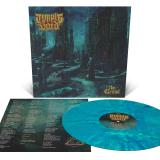
Critically acclaimed Death Metal force TEMPLE OF VOID return with their new album, The Crawl. The caveman brawn of previous albums, namely Summoning the Slayer (2022), remains, but there’s a wider dynamic on the group’s fifth full-length album at play. Now a quartet—featuring guitarist Alex Awn, drummer Jason Pearce, vocalist/guitarist Mike Erdody, and bassist Justin Malek—the Michiganders aren’t shying away from their non-metal influences, seeking greater integration of grunge and post-punk with their brutish signature. Singles “The Crawl” and “Soulburn” demonstrate the proficiency of TEMPLE OF VOID's death-cloaked, spearheaded attack. From the high intensity of opener “Poison Icon” to the granite wall of “The Twin Stranger,” The Crawl isn’t just TEMPLE OF VOID evolved, it’s a harbinger of death metal to come. “The biggest shift for me on this record was not feeling like we had to fly the ‘death-doom banner’ as part of our identity,” says Alex Awn. “Death-doom, as a genre, gave us something to anchor our sound around when we started. It was always a reference and touchstone. At the same time, we always wanted to make sure we had our own spin on it. We’ve always been adding to the conversation, adding to the genre, giving our point of view. A huge part of what makes a Temple of Void record is the non-death-doom influences that make up our DNA. And on album five we never once asked ourselves, ‘Do we have enough death metal? Do we have enough doom metal?’ We simply wrote a heavy-ass record—let the chips fall where they may.” For lyrics, Erdody built on the psychology and fear themes of Summoning the Slayer. The overarching theme of The Crawl is, put rather simply, an “allegory about life, choices, and consequences.” It’s a qualitative view on the horrors of the human condition and the contemplation of our monstrous capabilities. “The Twin Stranger,” for example, is about being stalked by a person’s doppelganger; “Godless Cynic” draws on a short story by sci-fi author Harlan Ellison; and “Poison Icon” tackles the crushing effects of mankind’s intrinsic nature to deceive and control.
Technokunst Records returns for a second chapter in the Split Series, pairing long-time friends Reeko and Claudio PRC for a package of highly effective grainy Techno excursions. This meeting is a perfectly weighted exchange with two originals and two reinterpretations shared between them.
The opener ‘Grainphase’ is a slowly morphing textural work building towards a masterfully executed release of energy in the latter half of the track. Reeko’s version reshapes the main elements and reveals a harder spine beneath the original’s fluid architecture. Flipping the record gives way to Reeko’s original, a tour de force in sound design. ‘Tierra De Nadie’ paints a desolate and hazy surface filled with glitched recordings of alien language. Finally, Claudio’s rework is built in a similarly dark tone but with an increase of visibility, drifting aboveground.
Mastered by Artefacts Mastering and cut by Simon at The Exchange. The artwork is based on a digitally scanned painting on canvas by Technokunst’s own Dorka Berkes.
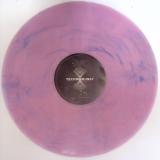
180gr pink & blue mixed coloured vinyl in poly sleeve w/ art print insert, LTD — 200 copies.
Technokunst Records returns for a second chapter in the Split Series, pairing long-time friends Reeko and Claudio PRC for a package of highly effective grainy Techno excursions. This meeting is a perfectly weighted exchange with two originals and two reinterpretations shared between them.
The opener ‘Grainphase’ is a slowly morphing textural work building towards a masterfully executed release of energy in the latter half of the track. Reeko’s version reshapes the main elements and reveals a harder spine beneath the original’s fluid architecture. Flipping the record gives way to Reeko’s original, a tour de force in sound design. ‘Tierra De Nadie’ paints a desolate and hazy surface filled with glitched recordings of alien language. Finally, Claudio’s rework is built in a similarly dark tone but with an increase of visibility, drifting aboveground.
Mastered by Artefacts Mastering and cut by Simon at The Exchange. The artwork is based on a digitally scanned painting on canvas by Technokunst’s own Dorka Berkes.
- 1: Private Symphony (Feat. Stuart Murdoch)
- 2: The Cold Collar (Feat. Gruff Rhys)
- 3: Love Is A Life That Lasts Forever (Feat. Molly Linen)
- 4: First Moonbeams Of Adulthood
- 5: Road To The Amber Room
- 6: Hachi No Su (Feat. Saya From Tenniscoats)
- 7: In Portmanteau (Feat. Field Music)
- 8: Irreparable Parables
- 9: Spectators In The Absence Of God (Feat. Kathryn Joseph)
- 10: Soul Enters The Ocean Sun Climbs Out The Sea
White Vinyl[26,26 €]
Very limited numbers, orders will need to be confirmed.
For his new album, Irreparable Parables, Andrew Wasylyk felt a strong desire to write a set of songs featuring an element hitherto rare in his work: the human voice. Equally strong was the conviction that he did not want to sing them himself.
The Scottish multi-instrumentalist and composer set about assembling a group of guest singers, sending out the songs to wherever they were in the world. The vocals were recorded remotely and then, like migrating birds, winged their way back to Scotland. The result is an album of great beauty which, perhaps preeminently in Wasylyk’s work, expresses the vulnerability and resilience of the human spirit.
Six singers appear on the record, represented by six songbirds illustrated on the sleeve by Clay Pipe Music’s Frances Castle. The cuckoo is a nod to Belle and Sebastian’s 2004 single ‘I’m A Cuckoo’, that band’s Stuart Murdoch being the first voice you hear on the new album. When the vocal for ‘Private Symphony #2’ arrived, says Wasylyk, “it was everything that I was looking for and more. But this is Stuart Murdoch. Of course he’s going to make something incredibly beautiful and thoughtful.”
The song lyrics were, for the most part, written by the singers. The music is Wasylyk’s creation. He navigates a sound world that lies somewhere beyond the borders of classical and jazz, ambient and abstract. It is difficult to describe, but easy to understand, which is to say to feel. That is the way Wasylyk’s work is experienced: as a feeling. It takes you back to childhood, perhaps, to feelings of comfort and safety, or to memories of walks at sunrise and sunset, or to the way a shadow falls on a particular field in a particular place at a particular time in your life. This is consoling music. That is why, though pretty, it is not merely pretty. These are songs to shore up the soul.
Wasylyk writes in a room, in his native Dundee, full of “half broken” instruments. He picks these up, plays a little, seeking an idea, a feeling, a door that lies ajar. The musical palette of Irreparable Parables includes brass and woodwind, a six-piece string section, guitar, bass, drums, vibraphone, Mellotron, Fender Rhodes, tape loops, synthesisers and percussion. The strings were arranged by the cellist Pete Harvey, a long-term collaborator.
Among the other guest vocalists are Gruff Rhys of the Super Furry Animals, Saya Ueno from Japan’s Tenniscoats and Peter Brewis from Field Music. Wasylyk himself takes the lead vocal on the title track, though a throat infection and touch of pitch-shifting have altered his singing in a way that even he, having fallen out of love with his own voice, finds acceptable.
The heart of the record can, arguably, be found in two tracks, ‘Love Is A Life That Lasts Forever’ and ‘Spectators In The Absence of God’, sung respectively by Molly Linen and Kathryn Joseph. The former, bright with trumpets, was inspired by the writing of Derek Jarman. “I was feeling deeply upset about the world and wanted to try and write some- thing that was obviously hopeful,” Wasylyk says.
‘Spectators …’ offers an emotional counterpoint. It is an “apocalyptic hymn” that seems to grapple with watching human suffering from afar, too distant to be at physical risk, but experiencing the psychological wounding, and feelings of helplessness, even complicity, that come with constant awareness of other people’s pain. “Kathryn’s a pal, I love her dearly, and she’s a brilliant artist who really feels what she writes,” Wasylyk says. “The cracked tenderness of her voice is spellbinding.”
The album closes with an instrumental piece, ‘Soul Enters The Ocean Sun Climbs Out Of The Sea’, all piano and strings, that offers a sense of resolution and ascension. A good moment, too, for Wasylyk to reflect upon the artistic companionship that he enjoyed while making this record – the songbirds that answered his call: “These humans are incredible at what they do. I’m deeply grateful and feel so lucky. It blows my mind.”
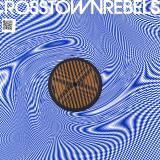
JAMIIE & Ape Drums reunite for captivating collaboration ‘4ME’ on Crosstown Rebels.
Out on 27th February 2026, the Berlin-based DJ/producer and Miami-based Major Lazer member make their first appearance on Damian Lazarus’ label, featuring a bold reinterpretation from Whitesquare.
Following their widely championed 2025 collaboration ‘111’, a standout of the summer season, JAMIIE and Ape Drums reconnect for ‘4ME’, a track born from long-distance sessions and a unique creative flow. Crafted via a partnership that thrives on spontaneity, with ideas bouncing seamlessly between Berlin and Miami, the result is a production that feels alive, organic, and meticulously detailed as they both make their debut appearance on Damian Lazarus’ renowned Crosstown Rebels imprint.
The original ‘4ME’ moves at its own pace, layering resonant synth textures, alluring vocal phrases, and subtle melodic chords to create a hypnotic pull. Moments of intimacy give way to rolling, percussive grooves, pulling the listener into a slow-burning, immersive journey.
On the flip, Italian DJ/producer and returning Crosstown Rebels talent Whitesquare sharpens the track, injecting jittering percussion, bubbling organ stabs, and a taut, club-ready pulse that transform the hypnotic original into a late-hours weapon without losing its emotional core. A continuation of their creative dialogue, ‘4ME’ showcases JAMIIE and Ape Drums’ ability to fuse emotive depth with kinetic energy, offering a release that captivates from the first listen to the final drop.