quête:l ow
10
Gatefold Sleeve
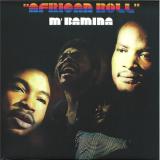
M’Bamina – African Roll (1975)
The story of an album born between Africa, Italy, and the nightclub culture of the 1970s
In the heart of 1970s Italy — a country undergoing profound social change and a music scene just beginning to open itself to distant sounds and cultures — an extraordinary, almost improbable story took shape. It is the story of a group of young African musicians who found their way to Europe, of a Turin nightclub that became a crossroads for communities and experimenters, and of an album which, released in small numbers and largely unnoticed at the time, is now considered a rare jewel of Afro-fusion.
The band called themselves M’Bamina — an ensemble of musicians from Congo, Cameroon, and Benin, who arrived in Italy in the early Seventies. Settling between northern Italy and the Pavia area, they began performing in small clubs and community events, bringing with them a vibrant rhythmic heritage: African polyrhythms, call-and-response vocals, funk-infused bass lines, and Caribbean or Afro-Latin colours absorbed along their musical journeys. Their raw, contagious energy on stage quickly drew attention.
Meanwhile, in Turin, another story was unfolding. There was a venue becoming almost legendary: Voom Voom, one of the city’s liveliest nightclubs, run by Ivo Lunardi. The club attracted an eclectic crowd — students, artists, foreigners, night owls — and Lunardi quickly understood that the dancefloor wasn’t just a place for music, but a melting pot for a new kind of cultural energy. Out of this vibrant atmosphere came his idea: to turn the club’s name into a small independent record label, Voom Voom Music, capable of capturing the spirit of those years and giving voice to unconventional projects.
When Lunardi heard M’Bamina, he immediately sensed that this was the sound he had been searching for: fresh, different from anything circulating in Italy at the time, and capable of blending African tradition with funk and European sensibility. He brought them into the studio.
Production was handled by Lunardi along with Christian Carbaza Michel, while the engineering was entrusted to Danilo Pennone, a young sound technician with a sharp, intuitive ear.
The recording sessions — held in Turin in 1975 — produced a remarkably warm and direct sound. The music feels almost live: grooves rooted in African tradition, but open to funk-rock structures and modern arrangements. It is a natural fusion, never forced. Tracks move between tribal rhythms, funk basslines, light electric guitars, congas and Afro-Latin percussion, with call-and-response vocals and melodies that echo both Congolese tradition and the lineage of Latin jazz. Not by chance, one of the album’s most striking tracks, Watchiwara, reinterprets a Latin standard through M’Bamina’s own rhythmic language.
The album was titled African Roll — a name that was already a statement of intention. It is African music that “rolls,” that moves, adapts, transforms within a new geographic and cultural setting. It is not strictly Afrobeat, nor Congolese rumba, nor Western funk: it is a spontaneous, hybrid blend, shaped more by lived experience than by any calculated aesthetic program.
When African Roll was released, the world around it barely noticed. Distribution was limited, and 1970s Italy had yet to develop a cultural framework for receiving such music. The national music press rarely paid attention to African or “world” productions. The album slipped into silence — though the band’s own story did not.
M’Bamina continued performing across Europe and Africa, even sharing a stage in Cameroon with none other than Manu Dibango. By the late Seventies, they moved to Paris, signed with Fiesta/Decca, and recorded a second LP, Experimental (1978). Meanwhile, the peculiar record they had made in Turin began to resurface quietly among vinyl collectors, Afro-funk enthusiasts, and DJs hunting for forgotten grooves.
That is when the album’s fate began to shift.
Over the decades, African Roll emerged as an almost unique document: a snapshot of an intercultural Italy before the word “intercultural” even existed, a fragment of migrant history, a spontaneous experiment in musical fusion born far from major industry circuits but rich in authenticity. Original copies began commanding high prices on the collector’s market, and the album became recognized as one of the hidden classics of European Afro-fusion from the 1970s.
Today, more than fifty years later, this reissue finally restores visibility and dignity to a project that deserves to be heard, studied, and celebrated. It is not simply an album: it is the testimony of a rare cultural encounter, born in an Italy unaware of how fertile such exchanges would one day become.
It is the story of a visionary producer, an extraordinary band, and a fleeting moment in which music, migration, and nightlife came together to create something genuinely new.
African Roll is — now more than ever — the sound of a bridge: between continents, between eras, between cultures. A record that, after rolling far and wide, has finally come home.

Somewhere long ago in a vinyl galaxy near you We Play House Recordings released an E.P. called ‘This Is Still Belgium Vol 1’. The release was called like that because the music on it could only have been made by Belgians. Vol 2 never happened…until now. Label boss Red D has always been inspired by the rich Belgian club music of the 90’s and inevitably those influences have sneaked into his own productions, but never as clear as on the three tracks you are reading about now.
And so the original WPH series has been revived with WPH 024.5, aptly called ‘This Is Still Belgium Vol 2’. The music is situated somewhere between house, progressive house and early trance music, basically club music with soul & melody at its core.
On the A-side we find Red D teaming up with his friend Mona Lee, a soul sister who has been making waves in recent years in soulful house circles and who comes up with the vocal prowess to match Red D’s emotional trip of a track and heartfelt lyrics. Can you handle the break?
The B-side opens up with ‘Tides’, a deep hypnotic builder for late night eyes-closed dance floors and closes with ‘Papillon’, a track that came to life long ago in the minds of Telepaticos (Marcos Salon & Sandro Valcke). When Red D heard a demo version of this one the melody got stuck in his head and never really left him. Many moons later he rediscovered the parts of this one on a hard drive and got to work on his interpretation that features on this E.P. Safe to say the track holds a special place in Red D’s heart and we’re sure you’ll feel it as well!

2026 Repress
French DJ and producer Hemka makes a striking solo debut on Mutual Rytm with 'Introspection'.
Born in Marseille and based in Paris, Hemka has been shaping her take on techno for over a decade, steadily growing her international presence with music on respected imprints such as Token. Her music fuses the raw energy of 90s techno with modern textures and is fast-paced, groovy and laced with subtle psychedelia. By weaving in her own vocals, Hemka adds a deeply personal and authentic layer that resonates with both the body and mind. Following the strong reception of her track 'Fragrance' on the 'Federation Of Rytm III' compilation, this potent new EP is a powerful reflection of her bold, emotional and forward-thinking artistic voice and the start of an exciting new chapter with SHDW's Mutual Rytm.
'Abyss' kicks off with tightly coiled, heavy-hitting drum funk and eerie synths that never let up while ghoulish vocals layer in extra darkness and anxiety. 'Time' is another sleek, stripped-back but banging wedge of linear techno excellence and 'I Can't Shine' layers up paranoid vocals with high-speed glitches and rubbery drums to ensure maximum impact in the club. The excellence continues with 'The Bad Place' with booming drums and moody synth atmospheres, getting you up on your toes and keeping you there. Last, 'Unchanged' fizzes with static electricity as wordless vocals refract around the mix next to wispy synths and icy hi-hats. Digital bonus cuts 'Voice In My Head' and 'Eternity' round things out with more heady and intense techno for driving deep into the night.

- A1: Your Selfish Wayss
- A2: Morning Light
- A3: Just Like You
- A4: One Way Or Another
- A5: Folie
- B1: No-One In The World
- B2: Clouds At My Feet
- B3: Summer Rain
- B4: Ancient Hometown
- B5: The Girl With The Fairytale Dream
- C1: All Your Own Way
- C2: Juke Box Heart
- C3: The Daydream Girl From Sealand
- C4: I Am The Murderer
- D1: Some Love Will Remain Unsaid
- D2: Shadow Play
- D3: On The Horizon
- D4: Just After Sunset
18
Apollo Records proudly present the vinyl reissue of ‘Morning Light’, the acclaimed 1997 album from Mark Van Hoen’s Locust project; a work that blurred the boundaries between ambient electronics, trip-hop, and dream-pop with an emotional precision few have matched since.
Originally issued during the label’s pioneering late-’90s era, ‘Morning Light’ marked a bold evolution for Van Hoen, best known at the time for his dark, abstract ambient work under Locust and as a member of Seefeel. Seeking to create something more human and melodic, Van Hoen assembled a rotating cast of collaborators, including Zoe Niblett, Craig Bethell, Neil Halstead (Slowdive/Mojave 3), and Wendy Roberts, blending fractured dance rhythms, live instrumentation, and intimate vocal performances into something both deeply personal and effortlessly cinematic.
From the haunting reimagining of The Carpenters’ ‘No-One In The World’ to the slow blooming emotional arcs of ‘All Your Own Way,’ ‘Folie’, and ‘The Girl With The Fairytale Dream’, the album’s 13 tracks form a widescreen narrative of melancholy and beauty. Reviewers at the time hailed it as “a subtle delight” and “sheer God-given genius”, comparing its mood and texture to Massive Attack, This Mortal Coil, and Portishead, yet noting its entirely singular voice.
This reissue restores Morning Light to vinyl for the first time in over two decades. A crucial artefact from the fertile intersection of experimental electronica and ethereal pop, ‘Morning Light’ stands today as one of the label’s most quietly influential releases.
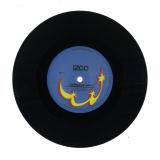
London-based producer IZCO is set to release his latest single, “Guiding Star (feat. Reek0)”, blending soulful nostalgia with the raw energy of the capital’s underground sound.
Drawing from influences that span UK dance music, hip hop, and soul, IZCO’s music captures both the energy of the dancefloor and the emotion of lived experience. Over the years, IZCO has become a key figure in London’s cross-genre underground scene, collaborating with artists like Reek0, Greentea Peng, Sam Wise, Liam Bailey, and Novelist, and performing at iconic venues and festivals across the UK and Europe.
His previous releases, including tracks like soulboy - IZCO Remix, Beauty Inside, and OBiNRin - IZCO Remix, showcase his knack for crafting warm, sample-rich productions that balance classic influences with a distinctly modern edge. Whether behind the decks or in the studio, IZCO continues to push boundaries, creating music that feels timeless, authentic, and deeply rooted in community.
“Guiding Star” is no different. It pairs warm, vintage soul textures with the sharp percussion and bass-driven pulse that have defined IZCO’s sound across his discography. Featuring long-time collaborator Reek0, the single bridges eras and styles; a homage to the past while firmly rooted in the energy of today’s London.
Speaking on this release, IZCO says:
“Guiding Star. That classic shit, Combining the soulful sample with the London grit, real London track. Inspired by a mixture of 70s soul, US hip hop and UK grime.
Made this track without thinking much, the sample spoke for itself.
Reek0’s vocal was from one of the first sessions we ever did years ago, and it had never been released but it sounded perfect on this track. A taste of nostalgia, this track reminds me of good memories and friendships. Simple but meaningful. And an honour to use such a beautiful sample”
Later this year, fans will be able to own an exclusive 7-inch vinyl edition of Guiding Star, featuring both the original and instrumental versions - a collector’s piece for crate diggers and fans alike. Out on the 5th December.
With “Guiding Star (feat. Reek0)”, IZCO continues to carve out his place as one of the most versatile and soulful producers in UK production, grounding every beat in authenticity, emotion, and connection

The return of Jonne Lydén aka 53X is an exhilarating welcome for Emotional Especial with 4 more seismic analogue psychedelic jams that are becoming recognisably a unique and hypnotic statement.
Lydén’s studio time is distillation for personal contemplation and perfection just 3 releases in 5 years that are worth the wait. The heady demand for his debut ‘Synapse’ and the following ‘Zen ‘23’ on Especial (limited repress incoming!) show constant development a sound of widescreen technoscope where dub beats trance pyrotechnics and 303 mind-melt swirling in a cosmic matter.
His return takes this further his music heritage in Finland’s hardcore punk scene to finding the techno of Detroit and Berlin before submerging in synths and drum programming jamming recording and mixing these trip-out electronic journeys live.
This heavy 4/4 jack is apparent on opening Sanctuary. Like his recent outings ‘Radar’ found on the Especial 50th “sampler” release ‘Gracias Especial’ (EES050) and also ‘Simulaato’ hidden away on blink and you miss it cult label Avidya (AVI003) this is a pure undiluted bang. Straight forward heavy bass kicking charged with acid 303 and monotonic vocal insights the track is a flourishing temple a call of embrace.
The eponymous Cyan Haze showcases 53X’s cinematic finest panoramic audio and sound design creating expansive phonics. BPMs drop samples flourish around break drops and rolling bass – breathing looping shouting lifting.
Owls enlightens. Hardware rumbles cerebral a temporal universe awakening. The collage of found sound successive sequential all encased by hypnotic broken chords rolling bass and melancholic piano refrain. Meta worming braindance ecstatic tribal industrial gliding by Shiva into the night.
Dust closes apt its basement collage pounds Lydén to techno genesis. Proto-zeitgeist steppa dark room incantation pulling and expanding the fantasy to strange dreamscapes. Reincarnation and hope in 2026.
2026 Repress
A landmark release for both the label and its founder as Kasra releases his debut solo EP. The Ski Mask EP features 4 tracks of rolling low end and marks the start of a new phase for him to make his mark as an artist as well as DJ.
Kasra says, "After 16 years of running the label I thought it was time I released a body of work of my own. It's quite daunting after all the incredible music the artists have given me to be doing this for the first time. I hope you enjoy it for what it is: raw, honest drum and bass."
12
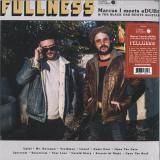
There’s a special kind of feeling when everything falls into place - when the drums bounce easy, the bassline rolls steady, and a bright guitar line cuts through the warmth of tape. That feeling became the heart of the FULLNESS, from Marcus I meets aDUBta. The sound of FULLNESS is built on simple, living elements: real drums, deep bass, a warm sound, and melodies that leave space to breathe. It moves between Early Reggae, Rocksteady, and Roots - sometimes straight and solid, sometimes stretching out into Dub and Echo. With its voice, from singer and lyricist Marcus I, FULLNESS carries the message about gratitude, love, freedom, and the small moments of everyday life. While Marcus’s singing style nods to the great singers, he stays grounded in his own experience, which perfectly complements aDUBta’s production, giving him space to shine. This LP is a complete, warm, balanced, and uplifting experience from start to finish.
FULLNESS grew from a steady musical exchange between Marcus I and aDUBta - two people on different sides of the Alps (Marcus I in France and aDUBta in Germany), finding a shared rhythm. What began in early 2022 with a few Riddims sent back and forth soon turned into a regular flow of songs. Every week brought new ideas, new words, and new melodies. When they finally met in person at aDUBta’s Attic Roots Studio in Bavaria, Germany, it all fell naturally into place. Most of the instruments were played by aDUBta, and the whole LP was mixed live on his Tascam 388, keeping that raw, handmade feel. With several friends helping bring even more color into the music, aDUBta brought in Viti Sanchez to lend his expressive saxophone and horn lines, Michael Salvermoser with his warm trombone tones, and members of the Black Oak Roots Allstars - King HuHa and Jannis Klenke on bass and guitars, along with Morry 'Da Baron' (Dub Inc.) on bass. FULLNESS means the fullness of music, of life, of friendship, of gratitude. It’s what happens when music becomes more than a project - when it turns into a shared space where things just flow.

10
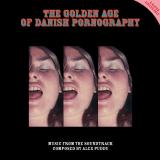
Alex Puddu's, second volume of the groundbreaking album of the soundtrack of The Golden Age of Danish Pornography from 2014, finally will be released as a new reissue on the artist's own label Al Dente in his entire original track list and with a brand new cover. The music on this record is inspired by and composed by Alex Puddu for "The Golden Age of Danish Pornography" - a collection of vintage hardcore short films from the early seventies,1971-74 directed by Danish porn pioneer Freddy Weiss - available on DVD from Pink Flamingo Entertainment.
12
Alex Puddu's groundbreaking album, the soundtrack of The Golden Age of Danish Pornography from 2011, finally will be released as a new reissue on the artist's own label Al Dente in his entire
original track list and with a brand new cover. The music on this record is inspired by and composed by Alex Puddu for "The Golden Age of Danish Pornography" - a collection of vintage hardcore short films from the early seventies,1971-74 directed by Danish porn pioneer Freddy Weiss - available on DVD from Pink Flamingo Entertainment.
5
Trippy Journey proudly presents Trippy Dove, the sister label of Trippy Cat and the new home of their feathered companion Kesha the Dove. Expanding the sonic universe, Trippy Dove explores the darker and deeper side of the journey a mysterious reflection of its feline counterpart.
The debut release Trip Mode 01 features five distinctive tracks from Trippy Journey, JJ Fortune, Prince de Takicardie, Javier Carballo, Aniano, and Nebulaee. Each track brings its own authentic character and hypnotic groove, designed to set the perfect mood on any dancefloor.
Get ready to dive into a trippy flight through to Trip Mode.
Mastered At Time Item Studio
Sindh presents the Vagali EP, a striking continuation of his tunnelling, futuristic take on techno. Growling synths, driving basslines, alien atmospherics and finely tuned percussion define a sound that feels unmistakably his own.
Following his Komudo series — which has built a devoted following since its debut in 2024 — this latest release leans further into his signature sound design, pairing hypnotic sequences and menacing synth lines which feel right
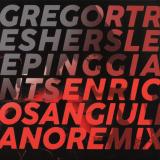
Gregor Tresher is finally back on his own imprint with a track that once more showcases his impeccable songwriting skills and even though he manages to deliver a song that fans will recognize as a Tresher production, it's not a repetition of his earlier works in any way, but another step forward in his ever evolving sound.. "Sleeping Giants" has been a secret weapon in Gregor´s DJ-sets, often dropped as the closing track if the night was really a special one. It's a journey driven by arpeggios and layered drumming that culminates just before a mysterious vocal sets the tone for the second coming. Gregor is obviously back on top of his game. And well, then there´s the B-Side: A world renowned DJ and producer, and a dear friend of Gregor and the BNS family delivered a remix that can only be described as pure perfection. It forces the original track on to the most massive warehouse floor you can imagine. Mr. Enrico Sangiuliano invites you to witness a true masterclass in remixing by delivering nothing short of an absolute peaktime monster, while keeping the vibe of the original respectfully intact. Ladies and Gentlemen, we give to you: Sleeping Giants!

Expanding beyond the West Coast with release number three, Goodtunes invites master of the craft Rob Pearson for a dark & moody EP.
Opener “Odd Job Mischief” bends itself over dubbed out low end pressure as echoic LFOs rip through the groove. A2 “Dodgy Brass” doubles down, forcing hazy horns through truncated rhythmic cracks split from beneath its own weight.
On side B, “The Right Speed” is all gas, no breaks. A moody, stripped back weapon with detailed texture & the dark, tripped out aesthetics of Jayson Walker’s murmurs over the top. “Beautifully Mangled” wraps up the EP with a dark minimal groove & lush atmosphere that slowly builds into a warm driving force.
Third time’s certainly the charm on GT003, with Pearson pushing his productions into new territory with meaningful intention.

17
2023 Backstock
New album of one of the biggest Reggae/Dub french soundsystem starring MacGyver, Rooty Step & Pupajim (who worked with Alpha Steppa, Biga Ranx, High Tone, Mungo's Hi-Fi ...).
Since their inception at start of the 2000s, Stand High Patrol have rocked sound systems to their own riddim, assimilating and re-purposing the codes of the genre in their own unique style. From tiny bars in Brittany to huge festival stages, on independent radio or across national airwaves, the crew have quietly trod their own path, never compromising their core value of independence. Connoisseurs have long recognised Stand High’s credentials both as a dub group and a leading sound system, but they stand out from the crowd because of their ability to deliver the unexpected, whether live or on record. Their ability to draw such a diverse audience is testament to this atypical approach to making music.
In 2020, almost 20 years since their humble beginnings, the collective presents their fifth album, “Our Own Way”. As with their first two albums “Midnight Walkers” and “Matter Of Scale”, now considered as classics in their genre, this new opus asserts itself as the latest representation of the crew’s versatile approach to crafting sound. Their music, a blend of its own known as “Dubadub”, has always borrowed influences from multiple sources, and over the course of their career their roots in dub and reggae have intertwined with hip-hop, jazz, new wave, trip-hop and numerous other genres. The ‘Dubadub Musketeers’ have never ceased experimenting, forever seeking to increase the sonic territory they cover, day after day. Both live and recorded, they’ve made it a point of honour to never offer up the same thing twice. Any resemblance that “Our Own Way” might bear to those first two albums is a consequence of this obvious creative continuity, rather than of going “back to basics”.
In contrast to the last two Stand High Patrol records, the hip-hop inspired “The Shift”, or the Bristol indebted “Summer On Mars”, “Our Own Way” doesn’t have a unifying concept or theme. Rather than being limited to a single aesthetic, the LP pays respect to the entire canon of Jamaican music, all unified under Stand High’s inimitable production values. With the wealth of experience gained during the recording of their last two records, the collective decided to aim for a freer project, letting themselves be guided by their own music and their own instincts. The end result is a musical portrait of what Stand High Patrol is in the present moment.
The tracks that make up the new LP burst out of the studio, each born out of unbridled, impulsive creativity. Previously unheard compositions and specially re-tooled dub plates have been assembled into a tracklist that shifts and moves like a classic Dubadub Musketeer live set. Each step of the process has been refined by years of practice : composition, effects, and the final mix. Throughout “On Our Way”, the brutal dub stepper, though still a favourite for sound system sessions, is noticeable by its absence. Instead, it’s the full weight of the crew’s reggae heritage that’s expressed in the mix. It's not just the depth and weight of each tune that strikes the listener, but also the spaces heard between the notes that grab and hold their attention.. The sense of a trip, whether musical, internal or geographic, is omnipresent throughout the LP, linking each track to those before and after. “Our Own Way” finds Stand High Patrol exploring as usual, yet also narrating their journey as they’ve rarely done before.

4
Emotional Rescue returns after a much-needed year hiatus, refreshed and ready, as it moves into its 15th year, to further explore the environs of oft-forgotten musical secrets and present them to new heads and minds.
To celebrate, the label looks back to one of its favourite collaborations, the music of French ‘Ethno-Industrialists’ Vox Populi! in presenting a truly unique EP of “In Dub”, inspired remixes by 4 fellow Paris based artists of today in Full Circle, Froid Dub, Krikor and Shelter.
“In Dub” takes a selection of songs from the series of albums reissued or compiled on Emotional Rescue and sister label, Platform 23, and gives the Master tapes to this talented ensemble to offer their own, unique dub reworks. The project explores the on-going advances in technology offered, mixed with pure talent and a respectful homage.
Formed by Axel Kyrou and including wife Mitra, as well as long-term music and art partners Pierre Jolivet aka Pacific 231 and Francis Lafont aka FR6 Man, they forged a path from obscure, drum and drum-based cassette releases on to fully realized albums and compilations on their now cult Vox Man Records.
Alexis Le Tan and Joakim’s Full Circle project starts, with their electronic dub remake of Soleyman Dub from the ‘Alternatif Réalisme’ compilation (ERC079). With releases on Good Morning Tapes, Offen and their own “Released” label, their plaudits as master diggers and producers of dubby tripped-out inspired electronics – releasing slowed Trance some 10 years before anyone else – is inspired. Tuning in and turning on the original dub into a mantra style slow-breaks (Digi)dub is the perfect experimental flavour.
Jube Man is next, a twisted, psychedelic dub out by rising stars Froid Dub. The stand-out from the ‘Magiques Creations’ release (ERC052), an album that explored Vox Populi’s furtive post-industrial period of 1984 to 1988, Jube Man was the perfect selection by the duo of François Marché and Stéphane Bodin.
Froid Dub have steadily developed their “cold” Digidub style to acclaim –
releasing a steady flow of dub inspired electronics on their own label Delodio, as well as recently appearing on sister label Emotional Response’s 10th year anniversary collection, ‘All Trades’. Their haunting, shuffling and murky acid / piano dub, with the drifting “Space Echoing” of Mitra’s vocals from the live desk mix, creates a ghostly version to effect.
Next, master mixer, producer and engineer Krikor serves a steppers remake with his “OverDub” of Zen-Dub. With a career that spans releases on Tigersushi, LIES and Soul Jazz, his sound has developed from Electro, House and Techno, to Acid, Bleep, Dancehall, Dub and touches of Gabba.
Taken from Vox Populi!’s master-opus Aither (ERC030), the first of our reissues dating back to 2016, Zen-Dub’s pacey, lo-fi dub experience is transformed and overdubbed into an incessant sound system throb, a true bass quaking “steppa”.
To close, Micro Climax is put through Shelter’s increasing avant dub exposition. Appearing on the likes of Growing Bin, Emotional Response and his own Protopost, as well for – and being in-house designer – on the much-missed Séance Centre, Alan Briand aka Shelter productions have developed from Balearic, Edits and House to explore Avant, Raga and live Dub productions.
Appearing on the recent ‘Ethniques Pyschedeliques’ compilation on Platform 23 (PLA032), in original form Micro Climax is a sprawling 10-minute ethno-dub of whispered vocals, drone and sub bass. Shelter strips it back, keeping background effects, adding live bass and percussion to create a wonky, slow, shuffling ska-lite excursion to complete a true “In Dub”.

- A1: Facts
- A2: Fuck It
- A3: Royalty
- A4: Both Ways
- A5: How Could
- B1: Usa
- B2: Let Me See
- B3: Get Paid
- B4: On My Way
- B5: It’s Goin Down
- B6: Real Life
Ten years ago, Adolph Robert Thornton Jr. planted his flag. Released on February 19, 2016, King of Memphis wasn't just a debut studio album; it was a bold declaration of independence and a flawless blueprint for self-made success. To celebrate a decade of this foundational Southern rap masterpiece, Paper Route Empire is honoring Young Dolph’s legacy with a series of exclusive, limited-edition 10th Anniversary vinyl variants.
Before King of Memphis, Dolph had already built a massive underground following through a relentless run of mixtapes. But this official debut elevated him from a local hero to a national powerhouse.
By bypassing the major label system and releasing the project entirely through his own Paper Route Empire (PRE), Dolph proved that undeniable talent, relentless hustle, and business savvy were all you needed to take the crown. The album peaked in the Top 50 of the Billboard 200, an incredible feat for a fiercely independent artist at the time, and cemented his status as a CEO who called his own shots.
King of Memphis is all killer, no filler. Over 11 tracks, Dolph's signature slow-flow delivery and larger-than-life charisma glide over heavy-hitting, trap-defining production from a legendary lineup of producers, including Mike WiLL Made-It, Zaytoven, TM88, and Cassius Jay.
With zero guest features, the project relies entirely on Dolph’s magnetic presence. From the motivational hustler's anthem "Get Paid" to the menacing confidence of "Let Me See It" and "Royalty," the album plays like a victory lap for a self-made king.
4
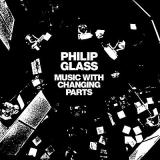
Philip Glass, the great American composer, was already in his mid-30s before his first album appeared, and then only because he produced the double LP himself. Music With Changing Parts was the inaugural release on his own Chatham Square imprint in 1971.
At this point, Einstein on the Beach, Glass' first opera, was still five years away. Yet in Changing Parts, one can already hear much of his vocabulary in full bloom: the buoyant arpeggios, the melding of electronic and acoustic instruments, the elongated drones of human voice, the primary emphasis on pulse (an interest he shared with fellow composer Steve Reich) and the ecstatic potential inherent in repetition.
The album features the original Philip Glass Ensemble – the composer himself, along with Jon Gibson, Dickie Landry, Art Murphy, Steve Chambers and Robert Prado – playing Farfisa organs and woodwinds as well as Barbara Benary on electric violin.
As Glass describes in his memoir Words Without Music, he secured a $500 interest-free loan for the recordings' initial release from the Hebrew Free Loan Society – an organization intended to help immigrants from the Old World upon arrival in the US. Though Glass was merely the grandson of immigrants, the venture wasn't far off the society's charter as Changing Parts helped usher in a new world of sound that would become known as Minimalism.
Chatham Square went on to release albums by other composers in Glass' circle, including Gibson and Landry. The label was named after the Manhattan intersection where Landry had a studio and the ensemble rehearsed.
Born in Baltimore in 1937, Glass first moved to New York to attend Juilliard at just nineteen, having already graduated from the University of Chicago. A staple of the Downtown scene, he can perhaps be appreciated as akin to the likes of sculptor Richard Serra or filmmaker Jim Jarmusch: mavericks who became major cultural figures entirely on their own terms.
This first-time vinyl reissue reproduces the original side-breaks and gatefold sleeve.
15
Felipe Gordon is back on Shall Not Fade with his new album Tezeta and f*ck is it special.
Felipe Gordon is SNF label mainstay... (we released his triple repressed debut album "A Landscape Onomatopeya" in 2022 as well as 7 x 12" EPs on SNF over the years plus an extra 12" on Lost Palms)... so given his consistent and exceptional output on our record label you'd probably forgive some complacency with this write up, you might even afford us license to assume we're preaching to the choir and allow us to rest easy knowing that at this stage Felipe Gordon's records sell themselves.... Well none of those things are happening here because when an artist makes a record this complete, this good, you have to try to find the words. You use words like "timeless", "complete and "special". Words that can carry the weight. Because when you've listened to an album dozens of times, and not once, in any part, on any listen in any way has it fatigued you, you need to say. When a record felt so wonderfully familiar from the first listen and just kept on giving you the same feels ever since, you need to say. When a record makes you think about you how you feel about certain Air & St Germain albums (even when you know what it means to put that in a press release), you need to say. So here we are, saying these things.. Tezeta is a special record, one that exists in the rarefied air. A proper album. A record that every time you press play you will immediately remember why you own it and why you love it. A record that your subconscious will know so well that if shuffle is on you will know in an instant. An album that when it's in your collection and the first track starts you get a twinge of annoyance because you didn't listen again sooner and when the final track stops you stop too.
Given paint and a canvas we can most of us paint a picture, but only those that are gifted can paint something that makes us feel. Tezeta makes you feel. Feel familiarity when it's playing, yearning when its not, and absence when it ends. This alone would be enough to make the argument as to why this album is special and justify the gushing opening paragraph of this press release. But we're not done yet.
We don't really have a word in english for what Felipe Gordon has created with this album and how it makes you feel. "Tezeta" that word.
Tezeta is a one of four musical modes within the traditional Ethiopian modal music system known as Qiñit. Mulatu Astatke, the father of Ethio-jazz, frequently uses this mode, often translating it as "nostalgia" or "longing". Gordon says Mulatu's own tezeta recordings convey to him "feelings of melancholy and longing from a point of affection". This is exactly the feeling Gordon has captured. It is what he has woven through every recording on this album. Tezeta is the prime ingredient. It's the base note in recipe, it's sprinkled over the signature jazz-sampled house tracks. It powers the vast array of synthesizers Gordon deploys. It underpins the explorations into trip-hop. It's present in Gordon's varied vocal deliveries and it tunes his guitar. It's in the running order. It's the flow. Tezeta is tezeta in electronic music form, with 4/4, breakbeats, samples and synths.
Gordon says a big part of what differentiates this album from from his previous albums is that is was recorded in a period where he allowed himself to create music without the constraints of time or self-pressure which coincided with a moment of heavy personal growth which allowed him to reflect deeply on his work.
There is a word in Portuguese "Saudade" that Gordon says has a similar meaning to Tezeta - Saudade is defined as a deep, sometimes bittersweet, longing or nostalgia for someone or something that is absent or lost. But here at SNF we think that in Tezeta nothing has been lost. Quite the opposite. Through Felipe Gordon's artistic explorations we have all gained something very special indeed.
