Reggie Soul real name Reginald Stone is just one of many illusive recording artists who had a very limited recording career for a handful of small independent Chicago labels then disappeared into obscurity, Reggie reputedly left Chicago in the mid 1970’s for the lone star state of Texas never to be seen or heard from again!
Reggie’s recording legacy is the sum total of 3, 45 singles two of which he recorded under the supervision of respected Chicago songwriter and producer Clarence Johnson., firstly the funk outing “I Got Jody” backed with the soulful “I Feel So Bad” for Red Balloon Records, “I Feel So Bad” was composed by Lee Sain who recorded his own version under the title of “Baby Don’t Leave Me” for the Broach label. Reggie Soul’s “I Got Jody” also came out as a B-side on Nation Time Records, the A-side was a version of the James Brown song “Soul Walkin’ but this side was credited under the mis-credited artist name of Reggie Smith?
Finally, Reggie’s third release “My World Of Ecstasy/Mighty Good Loving” was released on the Scott Brothers own Capri Records label in 1968. Both sides of the 45 were written by Reggie with Charles and Walter Scott, arrangements were provided by John Jackson and Bill McFarland who provided the horn section to many of the Scott’s future productions. The Scott Brothers of which there were several (all musicians) had begun their own careers during the late 1950’s recording under the group name of The Masquerades on the Formal label. Often referred to as The Scott Brothers Orchestra with Howard Sephus Scott at the head of their growing musical dynasty they formed their own company Capri Productions circa 1968, their initial recording productions were Fred Johnson (Shi-Lush Records) and the aforementioned Reggie Soul & The Soul Swingers. The Scott’s were also the house band in one of Chicago’s Southside’s most popular night clubs ‘The Bonanza Lounge on 7641, South Halsted. The Scott’s often used the Bonanza as a source of finding future artists for their labels, such as The Soul Majestics, Judson Moore, Bobby Jones & Duke Turner amongst others, they even recorded a live performance on The Bonanza Lounges’ resident comedian Randolph Browner which gained a release on the Shi-Lush label.
“My World Of Ecstasy” like several Capri 45 releases were heavily imported into the UK, often sold in soul packs before finding favour with aficionados of the Crossover Scene in the late 1980’s with it’s popularity still remaining high to the present day.
Soul Junction through their licensing deal with Scot-Tees Publishing would like to present the first release of their Capri Records series.
Daneshevskaya (Dawn-eh-shev-sky-uh), the project of New York's Anna Beckerman, writes songs steeped in the folklore of her own personal history. Her artist (and real middle) name comes from her Russian-Jewish great-grandmother, a person whose presence she has always felt although their paths never crossed in real life. Beckerman grew up in a musical family; her father is a music professor, her mother studied opera and her own songs often feel spiritual, less so by any religious connotation and more as a hymn-like, archival record of Beckerman's own past, present and future. Her first release on Winspear, Long is the Tunnel, contemplates how the people you meet impact the pathway you travel. Through songs like the poignant "Somewhere in the Middle," the lilting "Challenger Deep" and the surreal "Big Bird," the EP paints a distinctive collage between traditional songwriting and modern turns of phrase that remain spellbound in the unadulterated luster of self discovery. The seven songs read as both patchwork memories/diary entries and elegies to those in her life. Co-produced by Ruben Radlauer and Hayden Ticehurst of Model/Actriz and Artur Szerejko, the final versions of these initial demos also saw contributions from Lewis Evans of Black Country, New Road (saxophone), Maddy Leshner (keys) and Finnegan Shanahan (violin), adding to the gleaming instrumentation that makes each song sound like a world within itself. Long is the Tunnel is filled with hyperreal imagery that denotes a form of escapism: two of the songs reference birds, which Beckerman describes as about being transfixed by something you can't take your eyes o‑ while also being able to leave at will. Long is the Tunnel prolongs this feeling of being completely immersed: by desire, emotion, and fantasy, though the somber melancholy of her love songs are often more manifestations to her internal self than anyone else.
Daneshevskaya (Dawn-eh-shev-sky-uh), the project of New York's Anna Beckerman, writes songs steeped in the folklore of her own personal history. Her artist (and real middle) name comes from her Russian-Jewish great-grandmother, a person whose presence she has always felt although their paths never crossed in real life. Beckerman grew up in a musical family; her father is a music professor, her mother studied opera and her own songs often feel spiritual, less so by any religious connotation and more as a hymn-like, archival record of Beckerman's own past, present and future. Her first release on Winspear, Long is the Tunnel, contemplates how the people you meet impact the pathway you travel. Through songs like the poignant "Somewhere in the Middle," the lilting "Challenger Deep" and the surreal "Big Bird," the EP paints a distinctive collage between traditional songwriting and modern turns of phrase that remain spellbound in the unadulterated luster of self discovery. The seven songs read as both patchwork memories/diary entries and elegies to those in her life. Co-produced by Ruben Radlauer and Hayden Ticehurst of Model/Actriz and Artur Szerejko, the final versions of these initial demos also saw contributions from Lewis Evans of Black Country, New Road (saxophone), Maddy Leshner (keys) and Finnegan Shanahan (violin), adding to the gleaming instrumentation that makes each song sound like a world within itself. Long is the Tunnel is filled with hyperreal imagery that denotes a form of escapism: two of the songs reference birds, which Beckerman describes as about being transfixed by something you can't take your eyes o‑ while also being able to leave at will. Long is the Tunnel prolongs this feeling of being completely immersed: by desire, emotion, and fantasy, though the somber melancholy of her love songs are often more manifestations to her internal self than anyone else.
Daneshevskaya (Dawn-eh-shev-sky-uh), the project of New York's Anna Beckerman, writes songs steeped in the folklore of her own personal history. Her artist (and real middle) name comes from her Russian-Jewish great-grandmother, a person whose presence she has always felt although their paths never crossed in real life. Beckerman grew up in a musical family; her father is a music professor, her mother studied opera and her own songs often feel spiritual, less so by any religious connotation and more as a hymn-like, archival record of Beckerman's own past, present and future. Her first release on Winspear, Long is the Tunnel, contemplates how the people you meet impact the pathway you travel. Through songs like the poignant "Somewhere in the Middle," the lilting "Challenger Deep" and the surreal "Big Bird," the EP paints a distinctive collage between traditional songwriting and modern turns of phrase that remain spellbound in the unadulterated luster of self discovery. The seven songs read as both patchwork memories/diary entries and elegies to those in her life. Co-produced by Ruben Radlauer and Hayden Ticehurst of Model/Actriz and Artur Szerejko, the final versions of these initial demos also saw contributions from Lewis Evans of Black Country, New Road (saxophone), Maddy Leshner (keys) and Finnegan Shanahan (violin), adding to the gleaming instrumentation that makes each song sound like a world within itself. Long is the Tunnel is filled with hyperreal imagery that denotes a form of escapism: two of the songs reference birds, which Beckerman describes as about being transfixed by something you can't take your eyes o‑ while also being able to leave at will. Long is the Tunnel prolongs this feeling of being completely immersed: by desire, emotion, and fantasy, though the somber melancholy of her love songs are often more manifestations to her internal self than anyone else.
and Sebastian Kokus and the prolific Ulf Schütte, the Hamburg-based trio has tirelessly expanded upon its sound and extended its musical style. After 2022’s »S/T« documented the results of their first jam sessions as a newly-founded group, »V.A.« started even more modestly and became an even bigger undertaking. Originally conceived as a small one-off release, it grew into a full record which sees the group embracing dub music, collaborating with Peaking Lights’ Aaron Coyes and inviting other artists—No UFO’s, Seekers International, Coco Em—who reworked select tracks in true dub style. »V.A.« is marked by inconsistency, openness, and heterogeneity in the best sense of those words: ever-changing, constantly surprising and consistently in motion.
The starting point for »V.A.« was a Hamburg concert in December 2022 together with Coyes, who played a solo set as Peaking Lights. On the request of the event organiser, Cloud Management teamed up with him for a jam session after the gig, laying the foundation for a track that the group took to the studio before sending it to Coyes to record vocals for it. Another song quickly followed and even though the band initially intended to release »PST« and »0rten Pitch« as standalone 7” single, they soon decided to have others create versions of the two tunes to round them off in the form of a 12” EP. Once more though, one thing led to another and now »V.A.« collects five original pieces by Cloud Management as well as three—four on the digital version—remixes by other artists.
Collaborating with Leipzig-based Canadian producer No UFO’s, the Canadian Seekers International collective, and Kenyan multi-disciplinary artist Coco Em came about organically. As fans of their friend Konrad Jandavs’ work for labels such as Spectrum Spools, Root Strata and his own Nice Up International, Korf, Kokus and Schütte asked him for a remix and granted him full creative freedom for his take on »PST«. Jandavs also connected them with the prolific Richmond-based soundsystem worshippers, who present their take on the same track on this record as well as a version of »Electric CD.« Also this track appears three times on the record, having been re-rubbed by Emma Mbeki Nzioka, who was introduced to the the trio by its label Altin Village & Mine.
There isn’t really a common thread running through the rough digi-dub of No UFO’s take on »PST«, Seekers International’s traditionally-minded yet infinitely playful dub-psychedelia and Coco Em’s bass-heavy, percussive, pulsating take on »Electric CD.« However, as a group dedicated to staying in flux at all times, Cloud Management ended up embracing the creative differences between their own work and those of their respective collaborators. In calling it »V.A.,« they paid tribute to their somewhat loose, but conceptually consistent concept of giving various artists full creative licence over their own work. Neither a true album in the strict sense of the world nor just a compilation, »V.A.« is actually the essential Cloud Management record: ever-changing, constantly surprising, consistently in motion.
Cultural power house Jazz Montez is back with the second edition of its compilation series "Jazz Montez Presents". The album comprises nine tracks by artists from around the world: Àbáse, Bokoya, Debmaster, FloFilz, J.Lamotta, Karaba, King Owusu, Liraz, MC Yallah, The New Love Experience, Wolf Müller & Niklas Wandt and Zeitgeist Freedom Energy Exchange. Inspired by the tradition of jazz, they collectively channel the power of music to transcend all borders and push the boundaries of pre-conceived genres. Each track was recorded in the analogue sanctuary Lotte Lindenberg in Frankfurt, Germany, mixed by D&B legend Kabuki and mastered by renowned producer and audio technician Wolfgang Gottlieb. The vinyl cover was designed by artist Clara Sipf and includes a booklet featuring texts by all participating artists as well as a picture story on music as a universal connecting force.
out of Stock
Last delivered 2 years ago available to reorder, subject to availability
I want to introduce this work ‘Halos of Perception’ to you in the way Lisa introduced me to it, through the sharing of experiences.
Lisa and I met for a walk near South Yarra station to talk about this work, when inclement weather made it too wet to visit the tunnels. Moving almost seamlessly from a world of leisurewear, infinite milk alternatives and blaring neons to stretches of green by the water that brimmed with sounds and life, we saw a few people climbing the Burnley bouldering wall, butterflies suspended in the hot wind and lots of plants I wish I knew the names of. Overhead the cars rumbled like a ceaseless animal as we talked about hidden ecosystems, imagined spaces and networks of care.
Stemming from a serendipitous encounter with an original Cave Clan member that led to many underground adventures, this work explores the worlds that exist outside of our perceptions. By the river, I leafed through a selection of tunnel photos Lisa had printed off at Officeworks, revealing alien textures, tunnels that stretch on into abysses of their own, underground flowing streams. Light is sparse and delicate, something reflected by the flickering and wavering in Lisa’s piano compositions.
As we walked, we noticed the ways in which infrastructure is often designed to keep people out—cut doors into fencing and clipped wires show an active and ongoing defiance of this. We spoke about how her Cave Clan friend used to go down to this painted room and read in solitude, using candles for light. The way sound exists underground, encased in these hollow cement tunnels, a painted room with its own deep hum. How people used to hold underground shows, how there were rules for safety (no exploring after rain, never alone) that was shared with each other. This warmth and absorption of other’s experiences is present in Lisa’s work—it’s immersive, like wading in water.
We paused on the walk to eat berries and talk about how The Caretaker creates transitory worlds with recorded sound, how this technology captures memory, and the exploratory pursuits of Pauline Oliveros’ Deep Listening Band. These citations of memory and deep listening inform Lisa’s use of analogue and classical instruments, playback artefacts and acoustic feedback in her own world-building. When speaking about ‘Halos of Perception’, she describes it as a fascination with timbre and acoustic artefacts.
Ideas of networks and enmeshment are felt deeply in Lisa’s compositions, motifs overlaid over each other evoking the image of many hands interlinking playfully, tenderly, softly. The way her compositions delve into refraction and echo makes me think about the tunnels and the way they splinter off into many possibilities. Manipulated textures reminiscent of the chalky, earthy, moss air that perfumes the tunnels’ subterranean air. Tactile details that gesture towards close attention, verging on obsession.
This work is also about imagining ecosystems of potential. Lisa shared with me that during this project, she has been reimagining subterranean networks in dreams, thinking about oral traditions, and the way water moves—from the sky to the earth, through the ground, connecting all these spheres. Realised in collaboration with hyperreal video artist Tristan Jalleh, Lisa’s dream landscape melds waterfalls, leaks, flower graffiti, and hidden messages lit up by imagined light sources with existing subterranean networks. There’s a real sense of wonder in this world she has built, how the city can reveal itself to you with some patience and care, how the city and its secrets can find its way into your dreams.
TVAM announces ‘Costasol’, his new EP for Invada Records. The 10” EP is pressed on translucent blue vinyl, and housed in a reverse board, spined sleeve. TVAM returns to the sun lounger to deliver a horizontal view from the pool of self-reflection. Joe Oxley, aka TVAM, offers, “‘Costasol’ began life as two atmospheric interludes that I wrote for my last album, ‘High Art Lite’. Over time these ideas took on a life of their own and demanded that I take another look at them. I slowly began putting the pieces together and ended up with a track which became much more than the sum of its parts.” The resultant ‘Costasol’ is a song about longing, loss and regret wrapped-up in heatwave bass and shimmering guitars, all perfectly enhanced by Mona’s dreamlike vocal. TVAM self-released his much-acclaimed debut, ‘Psychic Data’, in the Autumn of 2018. Something of a cult-classic, the album joined the dots between Suicide’s deconstructed rock ’n’ roll, Boards of Canada’s irresistible nostalgia and My Bloody Valentine’s infinite noise. ‘High Art Lite’, released in October 2022, took a different tilt to its predecessor by emphasising the immediate and the personal. The colours were blown-out and the brightness was cranked up. It’s in this world where TVAM’s new ‘Costasol’ EP exists. Full of colour and noise, with a vibrant, distorted palette. Though the title track may find a home at some poolside retreat, the subsequent tracks return to TVAM’s claustrophobic realm. ‘Ephemerol’ evokes its own mutant groove, part ‘Midnite Vultures’ Beck, part ‘Pretty Hate Machine’ Nine Inch Nails, with ‘Heart Attack’ and ‘VHF’ rounding off this bold, bright, brief encounter. Radio - BBC 6 Music Lauren Laverne, New Music Fix, Emily Pilbeam, Amazing Radio B-List. Tourdates - October 22 SWN Festival Cardiff, November 11 Hebden Bridge Trades Club, 18 What Music? Liverpool.
With a voice of pure gold and a startling sensitivity for heartfelt pop songwriting, on No Reino Dos Afetos (In the Realm of Affections), Berle firmly embraces earnestness, through starry-eyed Brazilian love songs, ambient vignettes, warm, home-cooked beats and gentle strokes of MPB genius.
Maceió, the capital of Brazil’s Alagoas state on its sprawling east-coast, is home to pastel coloured colonial houses, white sand beaches and a brilliant young composer, poet and multi-instrumentalist named Bruno Berle.
With a voice of pure gold and a startling sensitivity for heartfelt pop songwriting, on No Reino Dos Afetos (In the Realm of Affections), Berle firmly embraces earnestness, through starry-eyed Brazilian love songs, ambient vignettes, warm, home-cooked beats and gentle strokes of MPB genius.
“It’s an album that was built from my desire to find beauty”, Berle explains - his simple, graceful words mirroring the graceful simplicity in his music. But amongst the simplicity, the compositions, arrangements and productions on No Reino Dos Afetos tingle with nuance and detail.
On the contemporary R&B inspired lead single “Quero Dizer” - produced by Berle and longtime friend and collaborator Batata Boy - the swirling, lo-fi, kalimba and guitar-fronted beat is turned into a feel-good hit by the ingenuity of Berle’s honey-soaked vocal melody.
Powerfully intimate, “O Nome Do Meu Amor” (My Love’s Name) is a guaranteed tearjerker, with Berle’s stunning voice soaring over gently plucked acoustic guitar and the textural flutter of soft movement, as if we hear him writing the song in the moment.
Drawing upon a close-knit, collaborative scene of Maceió artists and musicians, (of which Berle and Batata Boy are vital members), Berle also recorded some of his friends songs on the album, including João Menezes’ “Até Meu Violao”, the album’s beautifully laid back sunshine soul opener, which has all the charm of early-70s João Donato.
Having cut his teeth in soft-rock group Troco em Bala, and more recently finding himself embedded in both Rio and Sao Paulo’s contemporary music scenes - collaborating with the likes of Ana Frango Eletrico, who took the photo for the album cover - No Reino Dos Afetos is as musically diverse as Bruno himself. It’s hazy indie rock (“É Preciso Ter Amor”), calming ambient and field recording (“Virginia Talk”) as well as Berle’s own take on West African High Life (“Som Nyame”).
Instantly recognisable as a truly special artist, Berle’s character fills every corner of the sound, which is unsurprising considering he played most of the instruments.
In the decade or so that hard-working New York quartet Sunwatchers have operated, the group has steadily & subtly refined their sound - a brain-blasting mixture of jazz, psychedelia, krautrock, punk, noise, & Saharan blues - into something that is avant-leaning enough to appeal to the discerning jazz & experimental music fan & weird & wooly enough to get the true heads' toes tapping. "Music Is Victory Over Time" is the band's 5th album, and fourth for Chicago-based Trouble In Mind Records, seeing the long-running lineup of Peter Kerlin (bass guitar), Jim McHugh (guitars), Jason Robira (drums), and Jeff Tobias (alto saxophone and keyboards) in prime form. Album opener "World People" is a classic Sunwatchers number whose title expresses their Anarcho-Internationalist ideology (and the atypically multi-culti make up of their crowds), with an underlying melodic resonance to New Orleans funeral marches à la Albert Ayler _ a triumphant call to arms to all peoples. Live fave "Too Gary"'s gang vocal shout punctuates a motorik rager named for a phrase often uttered by a badass eight year old skateboarder McHugh knew with a speech impediment (it means "that's too scary"). "T.A.S.C." (or "Theme For Anarchist Sports Center") is inspired by Sonny Sharrock's maligned 80's output & sounds exactly like a wrathful, mutant version of a prime-time athletic show theme, replete with the requisite "sitcom ending." The sun- scorched "Foams" - a longform piece intended to depict natural stuff like tides, nightfall, and time slowly passing, ancient, peaceful and slightly gross all at once - practically jumps out of the speakers, its palpable intensity crackling in your eardrums. The title of "Tumulus" might reference an ancient burial mound, but the music itself might be the group's most high-tech song to date, complimented by an arpeggiating sequencer, three different forms of tape delay and an electric saxophone; ecstatic, fiery & deeply spiritual. "There Goes Ol' Ooze" is a smoky creeper that lets Tobias & Kerlin take a walk for a while, with respectful nods to the Stones and Steve Reich. "Song For The Gone" closes out the album, showcasing a sincerely tender moment for the gang, as an expression of love and resolve for dear friends who had recently, tragically died. Its cascading, bluesy melody attuning itself to our own collective unconscious grief. Having the distinct pleasure of being the first band to record in John Dwyer 's new LA-based recording studio Discount Mirrors, "Music Is Victory Over Time" boasts a beefed up sound. The band worked closely with in-house engineer Eric Bauer - facilitator, troubleshooter, sonic obsessive, a legendary freak and a DIY lifer. The band also had full access to the studio's epic armory of gear: amps, axes (it's Dwyer's Eddie Harris model electric sax), synths, a bass guitar once belonging to Klaus Flouride of the Dead Kennedys. Crucial for the sounds and the vibe. The album art was created by Josh MacPhee, the activist artist, author, archivist and founding member of both the radical artist collective Just Seeds and Interference Archive, a public collection of materials from social movements based in Brooklyn. MacPhee's participation in the project works as a statement of Sunwatchers' progressive utopian intentionality, and organically underscores their involvement in revolutionary projects within and without of their hometown. Listening to "Music Is Victory Over Time", Sunwatcher's rebellious spirit & unbridled enthusiasm remain fully intact, but the secret sauce is their infectious irreverence in the face of the horrors of this world. Much of our best cultural commentary is Trojan-horsed to the general public via humor & satire & the band has a knack for lacing the ridiculous with the radical. It's good to have them back. "Music Is Victory Over Time" is released worldwide digitally via most DSPs, on CD, black vinyl & a limited "Sunflare" blue/red splatter vinyl while supplies last.
In the decade or so that hard-working New York quartet Sunwatchers have operated, the group has steadily & subtly refined their sound - a brain-blasting mixture of jazz, psychedelia, krautrock, punk, noise, & Saharan blues - into something that is avant-leaning enough to appeal to the discerning jazz & experimental music fan & weird & wooly enough to get the true heads' toes tapping. "Music Is Victory Over Time" is the band's 5th album, and fourth for Chicago-based Trouble In Mind Records, seeing the long-running lineup of Peter Kerlin (bass guitar), Jim McHugh (guitars), Jason Robira (drums), and Jeff Tobias (alto saxophone and keyboards) in prime form. Album opener "World People" is a classic Sunwatchers number whose title expresses their Anarcho-Internationalist ideology (and the atypically multi-culti make up of their crowds), with an underlying melodic resonance to New Orleans funeral marches à la Albert Ayler _ a triumphant call to arms to all peoples. Live fave "Too Gary"'s gang vocal shout punctuates a motorik rager named for a phrase often uttered by a badass eight year old skateboarder McHugh knew with a speech impediment (it means "that's too scary"). "T.A.S.C." (or "Theme For Anarchist Sports Center") is inspired by Sonny Sharrock's maligned 80's output & sounds exactly like a wrathful, mutant version of a prime-time athletic show theme, replete with the requisite "sitcom ending." The sun- scorched "Foams" - a longform piece intended to depict natural stuff like tides, nightfall, and time slowly passing, ancient, peaceful and slightly gross all at once - practically jumps out of the speakers, its palpable intensity crackling in your eardrums. The title of "Tumulus" might reference an ancient burial mound, but the music itself might be the group's most high-tech song to date, complimented by an arpeggiating sequencer, three different forms of tape delay and an electric saxophone; ecstatic, fiery & deeply spiritual. "There Goes Ol' Ooze" is a smoky creeper that lets Tobias & Kerlin take a walk for a while, with respectful nods to the Stones and Steve Reich. "Song For The Gone" closes out the album, showcasing a sincerely tender moment for the gang, as an expression of love and resolve for dear friends who had recently, tragically died. Its cascading, bluesy melody attuning itself to our own collective unconscious grief. Having the distinct pleasure of being the first band to record in John Dwyer 's new LA-based recording studio Discount Mirrors, "Music Is Victory Over Time" boasts a beefed up sound. The band worked closely with in-house engineer Eric Bauer - facilitator, troubleshooter, sonic obsessive, a legendary freak and a DIY lifer. The band also had full access to the studio's epic armory of gear: amps, axes (it's Dwyer's Eddie Harris model electric sax), synths, a bass guitar once belonging to Klaus Flouride of the Dead Kennedys. Crucial for the sounds and the vibe. The album art was created by Josh MacPhee, the activist artist, author, archivist and founding member of both the radical artist collective Just Seeds and Interference Archive, a public collection of materials from social movements based in Brooklyn. MacPhee's participation in the project works as a statement of Sunwatchers' progressive utopian intentionality, and organically underscores their involvement in revolutionary projects within and without of their hometown. Listening to "Music Is Victory Over Time", Sunwatcher's rebellious spirit & unbridled enthusiasm remain fully intact, but the secret sauce is their infectious irreverence in the face of the horrors of this world. Much of our best cultural commentary is Trojan-horsed to the general public via humor & satire & the band has a knack for lacing the ridiculous with the radical. It's good to have them back. "Music Is Victory Over Time" is released worldwide digitally via most DSPs, on CD, black vinyl & a limited "Sunflare" blue/red splatter vinyl while supplies last.
Assiko Golden Band de Grand Yoff is the sprawling drum collective tearing up Dakar's nightlife scene. Senegalese poet Djiby Ly (Wau Wau Collectif) is backed by fourteen different percussive instruments plus horns, winds, balafon, and the occasional accordion, combining Count Ossie's spiritually elevated polyrhythms with Fela Kuti's orchestra and Tony Allen's groove. Based in the impoverished neighborhood of Grand Yoff and operating as a mutual aid group for the larger community, the band builds its songs on ancient rhythms passed on from Senegal, Cameroon and the infamous Gorée Island. In both Wolof and French, Djiby preaches a message of uplift and cooperation rooted in the Sufi teachings of the Mouride Brotherhood, as well as Christianity and animist religions. "Senegal, my life my joy" is the call and response chanted over cascading, infinitely layered drum patterns on opener "La Musique Du Coeur." "We build our own country" the band proclaims in Wolof on "Xarritt." For twenty years and across three generations of band members, Assiko have played raucous all-night jams at weddings, secret parties, and political rallies. Grainy cellphone footage of their live shows have spread online. But this is their first album, the result of a collaboration with Swedish musician and archivist Karl-Jonas Winqvist (Sing A Song Fighter), who met the band in Dakar in 2018 and facilitated recording sessions and overdubs via Whatsapp (no small feat with so many musicians). This is vital, exciting and innovative music, alive with energy and purpose, a band rooted in a very specific community but speaking to the world.
Xavier Boyer, the lead singer of Tahiti 80 and one of the most distinctive voices in French indie pop, returns solo with a melodic and timeless new EP entitled "Soda Coda".
After "Tutu To Tango" (2007, under the name Axe Riverboy), "Some/Any/New" (2017), and not forgetting Tahiti 80's nine studio albums, Xavier Boyer has composed five songs navigating between soft rock, folk sounds and pop experimentation. "On previous albums, I'd done everything on my own, but this time I was looking for something more lively, more organic, more collective. I also wanted to exchange ideas with other musicians.
This mini-album (the vinyl version will include five alternative versions recorded on a 4-track cassette) was created with the help of three emblematic figures from the French music scene, Mehdi Zannad (Fugu, April March, A Girl Called Eddy) on keyboards, Laurent Blot (Le Superhomard) on drums and Stéphane Laporte (Domotic, Egyptology) on mix.
Recorded between tours and studio sessions with his main band, "Soda Coda" once again confirms his talent as a melodist and his appetite for sonic adventures. The power pop of "D Day" or the lyricism of "Children Of The Sun" would not be out of place on albums by Emitt Rhodes or Richard Swift (producer of Tahiti 80's "Ballroom" in 2014). "Oh Liza" is as smooth as an Elliott Smith novelty.
The singer assumes his influences: "My aim has always been to write timeless songs without pretending it's 1975, or 1998. I want my music to remain rooted in its time." "Read The Room" blends Jamaican music and avant-garde pop with its crystalline guitars and soaring synths, while "Soda Coda" brings a touch of Soul to the EP with its distorted piano and slap-back vocals.
More than a journey or a nostalgic trip, Soda Coda is a succession of luminous songs, and as Xavier Boyer sings on the eponymous track: "I'm singing something good, I can hear this tune lighting up my path".
Wewantsounds is delighted to reissue, in collaboration with Corbett vs. Dempsey, one of the great albums out of the BAG galaxy recorded by Luther Thomas and a cohort of musicians including Joe Bowie, Charles Bobo Shaw, Floyd LeFlore and Lester Bowie. Recorded live in 1973 at The Berea Presbyterian Church in St. Louis, the album consists of two tracks, the formidable, aptly titled "Funky Donkey" and the spiritual "Una New York." Released as a private press on Thomas" own Creative Consciousness Records, it"s reissued here for the first time since the 70s, marking the recording"s 50th anniversary, and features original artwork, remastered audio and new liner notes by Howard Mandel.
In apartheid-era South Africa, gospel music provided solace and served as a tool for covert communication to circumvent the censorship of the settler regime. By the 2010s, South African gospel, deeply ingrained in the soul of Soweto, assumed a new role—as a heartfelt cry against persistent failures and shortcomings, a cry mourning a South Africa that never materialized.
A new South Africa needed a new gospel sound.
In 2016, nine young men from different parts of Diepkloof, a celebrated neighbourhood brimming with talent within Soweto's sprawling township, came together to form the sound of a new South Africa under the name Diepkloof United Voice.
Diepkloof United Voice's music has gone viral multiple times on TikTok, YouTube, and Facebook, garnering between 60,000 to 2 million views. The comments section displays flag emojis from Brazil to India, showcasing the global reach of their music.
This album was recorded on site in Soweto, in an abandoned classroom of Lebowa Elementary School in Diepkloof Zone 3, where the choir rehearsed for years. Amid rolling blackouts, Diepkloof United Voice poured their heart, soul, and vocal chords into their debut record, combining classic South Africa gospel, Soweto's own kasi soul, American blues, and Zulu flavor, to present the contemporary gospel sound of a changing South Africa.
The promise of a new South Africa might finally be realized, as Diepkloof United Voice guarantees the country's future is guided by the truth, uttered with each gasp of breath from their inimitable voices.
In apartheid-era South Africa, gospel music provided solace and served as a tool for covert communication to circumvent the censorship of the settler regime. By the 2010s, South African gospel, deeply ingrained in the soul of Soweto, assumed a new role—as a heartfelt cry against persistent failures and shortcomings, a cry mourning a South Africa that never materialized.
A new South Africa needed a new gospel sound.
In 2016, nine young men from different parts of Diepkloof, a celebrated neighbourhood brimming with talent within Soweto's sprawling township, came together to form the sound of a new South Africa under the name Diepkloof United Voice.
Diepkloof United Voice's music has gone viral multiple times on TikTok, YouTube, and Facebook, garnering between 60,000 to 2 million views. The comments section displays flag emojis from Brazil to India, showcasing the global reach of their music.
This album was recorded on site in Soweto, in an abandoned classroom of Lebowa Elementary School in Diepkloof Zone 3, where the choir rehearsed for years. Amid rolling blackouts, Diepkloof United Voice poured their heart, soul, and vocal chords into their debut record, combining classic South Africa gospel, Soweto's own kasi soul, American blues, and Zulu flavor, to present the contemporary gospel sound of a changing South Africa.
The promise of a new South Africa might finally be realized, as Diepkloof United Voice guarantees the country's future is guided by the truth, uttered with each gasp of breath from their inimitable voices.
“A piece of music never truly comes to An end. Revisiting a theme illustrates this idea that life goes on.” These are the words of Wayne Shorter, uttered in 2018 upon the release of Emanon, his final opus. On this record, the octogenarian uses dusky hues to shade in the passions of his youth - drawing and science-fiction, as well as the causes he has defended all his life - the fight against ecological upheaval and structural racism. This sentiment did not fail to resonate with Julien Lourau, who has reached a stage in life where he has begun to look back over certain pages written by the man he has always considered one of the masters of his trade. Five years later, this Parisian native has also chosen to revisit his glory days, offering reworked versions of specific tracks composed by his titular elder throughout the 80s. “When I play this music, I find myself back in my teenage bedroom. These are my standards, and they remind me of autumn in Rambouillet.” At that time, after practising his scales, Julien would also play Dungeons & dragons, and immerse himself in SF as well as heroic fantasy - epic influences which are not without a certain connection to the dreamworlds Shorter conjured up, as another fan of landscapes beyond the grasp of reality.
This album features four themes taken from Atlantis, which came out in 1985, and two from Joy Ryder, released three years later. To these, he has added a composition penned at around the same time for Sportin’ Life, the penultimate LP by Weather Report. This is rounded off by a tune taken
from Native Dancer, the record which, ten years earlier, in 1975, brought together this saxophonist who learnt his trade alongside Art Blakey, before joining Miles’ second quintet, and Brazilian Milton Nascimento.
“Between Native Dancer and Atlantis, Shorter did not release anything under his own name, but he took the time and care to really perfect his writing. Upon his return, he injected a very Brazilian form of subtlety into his compositions, especially rhythmically. And from a harmonic point of view, these themes are extremely sophisticated, and reveal truly singular colours. In fact, he decided to display the score as if it constituted the liner notes of Atlantis.”
Julien Lourau is a fan of every Wayne Shorter era, from his Blue Note days, where Mr Gone defined the bases of a truly unique repertoire, all the way to his final quartet - a reference like no other. He decided to focus on this “highly electric” period, which is not necessarily Shorter’s best known, nor his most widely appreciated - despite being a unanimous reference, Shorter has nonetheless never had a direct descendent. In Lourau’s line of sight there lies a desire to focus on typically South American tonic accents which characterise this repertoire, twinned with the ambition to switch up their actual sound “by attempting to open up onto a production highly influenced by eighties fusion". However, he admits that modifying the structures of these most unique of worlds constituted a fresh challenge. “There’s this labyrinthine harmonic system where you’ve no idea how it holds together, but where it’s actually impossible to touch the slightest element without the whole edifice wavering. It is in fact a very difficult thing to achieve!”
In order to successfully transcribe all this creativity free of obstacles, Julien Lourau once again called upon the help of Mathieu Debordes. From January 2023 onwards, Mathieu endeavoured to break down all the musical elements, on paper, before creating any actual music. The record was therefore constructed on the faith of these scores, without necessarily transiting through a creative residency - just two live gigs, to make sure the setup worked. Besides Mathieu Debordes and his synthesisers, Julien Lourau has assembled an ad hoc team by his side. On the bass, according to the track, we can hear erstwhile companion Sylvain Daniel or a new acolyte on the fretless bass, Joan Eche Puig.
Stéphane Edouard, on percussion, even dives headfirst into an unlikely proto-rap of sorts, on Pearl On The Half Shell (where, on the original version, Bobby McFerrin adjusted his interventions in a rather madcap style). Aesthete and drummer Jim Hart as well as pianist Leo Jassef also figure on this release - both were present on previous project devoted to label
CTI. “At sixteen, I wanted to sound like Michael Brecker rather than Ben Webster - that was equated with modernity in those days”, adds Julien with a smile, as for him, all this rings out a little like a logical next step, a joyful immersion into the fountain of youth. And if, for this record, he plays the soprano more than ever, the saxophone Shorter set in his sights on, he never tries to replicate an unattainable ideal note by note. What would be the point?
“Wayne Shorter is not just a saxophonist’s saxophonist. In fact, I don’t know a single person who has risen to challenge of his solos. I have not done it myself either, but on the other hand, I have retained a lot of his phraseology. His way of approaching the instrument reveals a more evanescent language, a work on colour and shape. Keeping this in mind has allowed me to gravitate towards certain elements, that in hindsight, I find echoes of in my work, even in Groove Gang.” Shorter etches out these phrases, creating a groove within which Lourau had traced subtle punctuation, managing, from a highly written base, to create fresh apertures, promises of a great escape. Emblematic of this standpoint, his regal version of Ponte de Areia, originally a wonderful dialogue between Milton Nascimento and Wayne Shorter. Here, the Frenchman takes liberties with the original melodies, without ever growing distant from the original spirit, extending one section with delicacy, offering a rubato development and then a groove “like a little suite”. Julien Lourau also renews with an accomplice from last century, Magic Malik, who lends his high-pitched vocals to the track. Though they had not recorded together for more than twenty years, the two of them got on as if they had only ceased collaborating yesterday, everything flowed naturally. The track was wrapped up in just one take, much like other themes, such as opener Who Goes There where the flautist deploys smooth, enchanted and smoky wisps.
Fundamentally, reflecting of the sleeve which features a child playing with a ball, image that could symbolise the sun just as much as the moon, Julien Lourau manages to translate the ambiguous candour which characterizes Shorter’s work - solar and crepuscular at the same time, that of a visionary and poet definitively situated outside of all chronology, but with whom Julien shares surprising and ‘timely’ coincidences. Shorter was born August 25, 1933, the same day as Julien’s father, “if we take time zones into account”, and who died on Lourau’s birthday, March 2, 2023. Should we take this as a random fact? Or could we not see here the sign of a destiny connecting the agnostic Frenchman to the man who, as a fervent Buddhist, believed in the transmission of his spiritual flow ?
Five groups, one mythical studio - documenting the emergence of a generation!
The initial postulate was simple: five groups, one emblematic studio and 24 hours for each to imagine and record two unreleased tracks with one objective - the will to document a French jazz scene in the midst of renewal.
In these last few years, several innovative currents have shaken up the world of jazz and attracted new fans. They have bubbled up from Los Angeles, impregnated with hip-hop culture (Kamasi Washington, Terrace Martin, Thundercat), or from London, tinged with African rhythms (Nubya Garcia, Kokoroko, Ezra Collective). Meanwhile, in France, a new scene is emerging, carrying with it more of a dancefloor-oriented sound influenced by electronic music - an obvious kinship with the French Touch explosion of the late 90s.
Historically, every movement has been assimilated to a certain neighbourhood, to specific clubs where late at night, young guns stayed up to imagine the jazz of tomorrow - the Cotton Club for the jazz of the 20s, Minton’s Playhouse in Harlem for Be-Bop, the Black Hawk in San Francisco for West Coast jazz, Birdland in New York for Hard-Bop or a lot more recently, the Total Refreshment Centre which has been the playing field for the new London scene.
In Paris too, this new sound is associated with actual venues, places which have allowed these groups to form, create a repertoire and forge an aesthetic - Le Baiser Salé for Monsieur Mâlâ, La Gare/Le Gore for Photon, La Pêche in Montreuil for Ishkero, La Petite Halle for Underground Canopy and also le Duc des Lombards and le 38 Riv’ for Alex Monfort; it’s in a live context that this music will always continue to evolve.
Keeping this “live” spirit, with all its spontaneity, was actually the guiding line for the elaboration of this Studio Pigalle compilation. Each take was recorded in the most organic way possible, bringing all the musicians together in the same room to limit post-production alterations before the final cut was assembled, in just one day, by studio in-house sound engineer, Felix Rémy.
A feeling of urgency permeates a record guided by an artistic production taking care to crystalise the essence of this artistically free-range generation whose childhoods were rocked just as much by Bill Evans and Roy Hargrove as by J Dilla and Jeff Mills. One of the two tracks recorded is geared towards the dancefloor, and the other, more cosmic/ambient gives freer rein to individual interpretation.
There were therefore many possible ways of interpreting these guidelines for the five formations which number among the most distinctive on the current French musical landscape, and the occasion, for some, to rummage through their archives! With Transe (Mbappé) and Da Verdere (Vella), Monsieur
Mâlâ present us with two unreleased tracks issued from the very first rehearsals of the quintet reworked especially for this compilation. “Seen the aesthetic range of this group, it all worked out very naturally in the studio”, recounts keyboardist Nicholas Vella “Recording like they did in the sixties with all the channels live and working with small imperfections was a very interesting task, even when it came to the mix, we had to make do with the takes we had... “
“Our group is very recent, and with this session, in just two tracks, we had the opportunity to present the entirety of our musical universe,” says Photons pianist Gauthier Toux. “All too often, we assimilate this fusion between jazz and dance music to computers and post-production modifications. For “Dessine”, we kept the first take, and we must have recorded just three or four for the other track with more of a techno bent. In one day, we understood that we could play our entire repertoire live, from A to Z”.
“When the Komos label offered me this project, it immediately spoke to me”, remembers Alex Monfort “Straight away, I thought of “Since I Met You”, a track with a nine/four time signature which really is reminiscent of a new- soul groove, but with this extra cosmic vibe! I wrote the words to the chorus and Nina Tonji placed her voice on the track, adding her own verses. For “Tonight”, the up-tempo track, I wanted to head off in more of a hybrid direction inspired by Kaytranada or the Black Radio series by Robert Glasper. A cross-over between jazz and hip-hop which really does represent my world, and I also tried to place vocals centre stage (Emcee Agora)”.
“We truly resonated with the way Antoine Rajon imagined this compilation and the recording session”, confide Warren Dongué and Jérémy Tallon from Underground Canopy. “When arriving in this studio we felt as if we had gone backtothe70s! Inkeepingwiththespiritofthisera,heknewhowtoletus keep our spontaneity, without recording in too many takes, and that’s how we like to work”.
“We managed to adhere to the themes of the compilation without changing our instrumentation, we wanted to remain faithful to the sound of Ishkero on these new compositions and take them somewhere else” – says drummer TaoEhrlich -“Withoutaddinganyelectronics.Thesessionwassupervisedin a truly subtle and benevolent manner. From a human perspective, it was also a wonderful experience”.
Whether turned towards hip-hop, ethnic or electronic music, the artists featured on this Studio Pigalle compilation represent the eclecticism of a new generation in the process of writing the first chapters of its history. Open to experimentation, these artists continue to hold high an immutable love for improvisation and creation in the moment... another definition of the word Jazz!
The funky, atmospheric, evocative and sometimes downright weird output of companies such as DeWolfe, Cavendish, Burton and the ubiquitous KPM have always been a guiding inspiration for ATA Records, as evidenced in the spooky soundtrack vision of The Sorcerers, the big band brass of The Yorkshire Film & Television Orchestra and even in the soul-jazz of The Lewis Express & Outer Worlds Jazz Ensemble. It only seemed natural for the team at ATA Records to scratch their own Library itch and so "The Library Archive Vol. 1" was born in 2019. Recorded over a series of sessions in the Aladdin's Cave of vintage recording equipment that is ATA studios, it featured many of the ATA stable of performers. Released in 2021, "The Library Archive Vol. 2" still had the golden age of European Library music squarely in it's sights, but this time the focus was drawn more to the off-kilter soul organ sound of Italian quartet I Marc 4. These two volumes garnered praise from Library aficionado Shawn Lee ("Holy...
out of Stock
Last delivered 2 years ago available to reorder, subject to availability
Unlike what we might expect, traditional music is not one-size-fits-all. Each song has its own story,
history and characters which the singers must serve, rather than themselves. On his new album, Look
Over The Wall, See The Sky, John Francis Flynn delicately unpicks these traditional songs and
rearranges them with an emotional force that sometimes leaves them unanchored, floating in a surreal
space between the past and the present, the analogue and the digital, between love and tragedy.
If there’s a secret to time travel, Kool Keith owns the patent. Even a flying DeLorean seems too
conventional for the Bronx legend. He’d more logically orbit throughout the galaxy in a gleaming
chrome spaceship, teaching the stars and aliens new forms of originality. He is too weird to live, too
rare to die, too uniquely ultra-magnetic to be accurately mimicked. Released on Mello Music Group,
Time? Astonishing! is the latest dimensional warp from hip-hop’s premiere astral traveler. His union
with MMG producer L’ Orange finds him exploring uncharted terrain: choppy volcanic rock planets, ice
glacier moons, new surgical procedures, and fresh rappers to toss into the ether. The scalpel remains
eternally sharp. The beats glow with radioactive grit. Hard enough to knock from your car speakers,
cinematic and plutonium-propelled enough to transport you to strange terra firma. Buck Rodgers
movie serials meet boom-bap. And along for the odyssey are a cast of the best underground MC’s of
the last decade: Blu, Open Mike Eagle, Mr. Lif, J-Live, and more. These are space symphonies and
occult odysseys, fuel for wanderers, wonderers, and all the a-likes. Welcome to the new world, even
more sinister and suspenseful than the last one. We live in astonishing times: abstract, absurd, and
indelibly Kool.
We at Real Gone Music have proudly represented Steve Lawrence and Eydie Gorme’s GL label for
over a decade. But now, we are very, very excited to announce that we are working with Steve and
Eydie’s son David Lawrence and his wife Faye to overhaul their entire catalog of recordings, offering
updated annotation and fresh remasterings straight from the original tapes! Last year, we inaugurated
our reissue campaign with their classic 1964 holiday release...and now we are very proud to announce
we are bringing That Holiday Feeling! to vinyl (green vinyl, that is)! You get 12 holiday favorites
including solo Steve (“The Christmas Song,” “Let Me Be the First to Wish You Merry Christmas”), solo
Eydie (“White Christmas,” “What Are You Doing New Years Eve”) and the duo’s trademark duet
renditions (e.g. “Sleigh Ride”). We’ve included a personal note from David Lawrence with liner notes
by Joe Marchese. Even if you already own this Christmas classic, the sound on this new edition—
remastered for vinyl by Eric Boulanger under David’s Lawrence supervision—will indeed spark that
holiday feeling. Limited to 750 copies!
SPEICHER is going back to its classic double header split EP format. HUNTER/GAME are no strangers to KOMPAKT, having released a number of singles and the “Adaptation” album back in 2016. “Reload” was written in cooperation with Buenos Aires based U S H N U and it’s a total corker of a proto trance inspired track – the kind of trance that would have graced Dorian Gray’s Sunday morning dancefloor.
We’re extremely happy to finally welcome the ever excellent BAWRUT to our family. Hailing from Madrid, he has been one of the most creative forces in recent years, carving his own niche of percussion-heavy, psychedelic techno. “CLAP” is an unpredictable monster, taking so many twists and turns, causing such confusion that your synapses will give up making sense out of the chaos and book a flight to the Bahamas.
SPEICHER kehrt mal wieder zum klassischen Doppel-A-Seiten-Split-EP-Format zurück. HUNTER/GAME sind bei KOMPAKT keine Unbekannten, denn sie haben seit 2016 eine Reihe von Singles und das Album “Adaptation” veröffentlicht. “RELOAD” entstand in Zusammenarbeit mit U S H N U aus Buenos Aires und ist ein großartiger Proto Trance Smasher – jene Art von Trance, die Sonntag morgens den Dancefloor im Frankfurter Dorian Gray geziert hätte.
Wir schätzen uns sehr glücklich, endlich den unglaublichen BAWRUT in unserer Familie begrüßen zu dürfen. Der Madrilene ist eine der kreativsten Kräfte der letzten Jahre und hat sich unlängst seine eigene Nische des percussionslastigen, psychedelischen Techno geschaffen. “CLAP” ist ein unberechenbares Monster, das so viele Wendungen nimmt und so viel Verwirrung stiftet, dass deine Synapsen irgendwann aufgeben dem Chaos irgendeinen Sinn zuzuordnen und einen Flug auf die Bahamas buchen.
out of Stock
Last delivered 7 months ago available to reorder, subject to availability
Gawk, released in 2015 on the band's own Gawk Records, was the highly anticipated follow up to the band's debut album Antics. The album received widespread praise from critics and fans and quickly became the band's breakout album. Pitchfork called Gawk a "a charming, chaotic pile-up of surf-, math-, and art-rock."
‘Blind On A Galloping Horse’ serves as David Holmes’ first solo album since 2008’s ‘The Holy Pictures’. A 14-track interrogation of the last decade, time spent watching a decaying, fraying Britain visibly buckling in real time while tending to his own battles with mental health. Holmes’ soundtrack to this inquiry is at times claustrophobic, often euphoric, driven by the rattle and snap of analogue drum machines, wild oscillations of droning analogue synths and the voice of Raven Violet, which beguiles and commands in a way that could part oceans. On this album, there are songs of hope for an age of uncertainty; love songs to leap the barricades to and, on ‘Necessary Genius’, a comprehensive roll call of the great and good - those ‘dreamers, misfits, radicals, outcasts’ that we’ve lost and just a few who’ve managed to cling on in the churn of the 21st century. And there are elegiac electronics evocative of an endless Europe where pulsating, crackling rhythm tracks fuse with dreamlike textures and the underground pulse of psychedelic therapy to form something unique that feels nothing less than radical. CD in 4pp digisleeve with 8pp booklet. Double vinyl in 300gsm gatefold sleeve with reverse side print and 180gsm reverse side print inner sleeves.
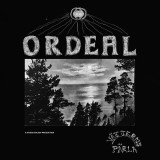
As an important agent of Gothenburg’s underground scene, Dan Johansson has been a member of several experimental harsh noise projects such as Sewer Election, and lo-fi indie folk bands like Enhet För Fri Musik and Amateur Hour. Ordeal is his latest solo output, and might as well be ashes stuck in the blast furnace's edges of his last longing career. Not by means of summing up genres or as a culmination of his musical development, but as a profound music piece weaved in his own household.
With not much more than a synthesizer, Vätterns Pärla is built by trembling, dissonant drones stained in feedback and reverberation, thickly textured by the no-fi quality of the recording, depicting a menacing atmosphere congested with heavy fumes. In Johansson's words, Ordeal "takes inspiration from the early 80’s albums of Maurizio Bianchi, filtered through a Gothenburgian no-fi bleakness. It’s an album for inner voyage, childhood memories, and places that now lost purpose and meaning”.
There's certainly intimacy and nostalgia, yet a claustrophobic, hypnotic ambiance wraps it all up in a contained and narrow space. Emphasis is put on texture rather than on detail, on color rather than on progression, on suspense rather than on conclusion. Tension varies stiffly, sometimes a drone layer dismantles and the mood seems to filter, but ragged edges are never polished. We can feel the walls and the air, which although tarnished, can be breathed in somehow. It's as if waking up in a dark room and having to recognize it with our ears and tact, testing its dimensions and its surface. The stillness in the chamber is like the stillness between gasps of storms.
Without visible stars, an enclosed share of night sky hides a heavy load of industrial debris underwater. These remnants are maybe the pearl regarding the album's title. It all can seem like a dream, a grim mechanical soundscape deafened by hefty, yet sporadic winds. Soil strives to make something grow, but sprouting is kept suspended, held by a dismal presentiment. Long shadows on the ground prove that darkness is about to befall. And as these shadows stretch, almost about to break up in a loud strike, the noise turns white.
*LTD BLUE VINYL* Having cut her teeth as part of dream pop band Snakadaktal then as half of Two People, Melbourne’s Phoebe Go solo break out has seen her discover her own voice and potential, a process that has been both daunting and liberating for her. Her self-released debut, the Player EP, opened the world to Phoebe’s vulnerable, sincere and gut-wrenchingly honest songwriting; posing questions about her career, relationships and existence, yet still emerging with heartfelt hope for the future. A word-of-mouth success when released late last year, the likes of NME, Notion, Wonderland, triple j Unearthed, Double J and Under The Radar have already sung her praises. Having just wowed audiences at The Great Escape, her Player EP is finally getting the vinyl release outside Australia it deserves, being released by tastemaker label Dalliance Recordings (Gia Margaret, HighSchool, Francis of Delirium, lilo). Formats Available: Limited edition (300) 12” Blue Vinyl with a lyric sheet and an exclusive track ('To Love Me Now’).
Singer-songwriter Thom Morecroft releases his sophomore album, “Waiting For Leo.” Drawing inspiration from the rich songwriting style of 1970s folk-rock and infusing it with the distinctive aesthetic lens of Glasgow’s C86 scene, Morecroft delivers a captivating lo-fi experience that pays homage to the past while carving its own unique path. Think Crosby, Stills, Nash & Young meets the infectious energy of Teenage Fanclub’s “Bandwagonesque.” During the pandemic-induced lockdowns of 2020 and beyond, Thom embarked on a remarkable creative journey, offering his Patreon subscribers a new digital album every month. It is within these prolific collections that the songs for “Waiting For Leo” were born. With an abundance of time and the freedom to explore his creative impulses, Morecroft crafted a collection of songs that are reflective, philosophical, and deeply personal. Some look towards the future with hope, others reminisce about the past, while some capture the essence of the present moment, and a few wander into realms of pure fantasy. As Thom navigated the challenge of selecting the final tracklist, he honed and refined each composition, adding production elements and creating a cohesive sonic tapestry. “Waiting For Leo” is an album that manages to strike a delicate balance, emanating a sense of contentment and carefree spirit while simultaneously delving into themes of family, alcoholism, grief, and loss. The introspective nature of these songs, born out of a period devoid of external stimulation, allows listeners to embark on a thought-provoking journey alongside Morecroft. Reflecting on the album’s title, Thom shares, “The album is called ‘Waiting for Leo’ because the songs were written and recorded during the period before my partner and I discovered we were expecting our son. There is also the famous Samuel Beckett play called ‘Waiting for Godot,’ which I must confess I have never seen. Is it good?” “Waiting For Leo” stands as a testament to Thom Morecroft’s artistic growth and showcases his ability to merge captivating songwriting with a distinct sonic aesthetic. As listeners immerse themselves in the intimate world he has created, they will discover a tapestry of emotions that resonate deeply.
Semisonic - eine der meist unterschätzten Alternative-Rock-Bands der Jahrtausendwende meldet sich nach über 20 Jahren mit einem bemerkenswerten neuen Album zurück.
Die Songs balancieren hier auf einem schmalen Grat zwischen roher Energie und zarter Schönheit, sie finden die Balance zwischen der Kraft des Power-Pop und der Intimität des Akustik-Sounds. Bassist John Munson und Schlagzeuger Jacob Slichter haben ihre Leistungen fein abgestimmt, um Wilsons helle, beschwingte Melodien mit einem Hauch von Melancholie und Dunkelheit zu durchdringen, die ständig am Rand lauern.
Während es für eine Band wie Semisonic leicht gewesen wäre, in Nostalgie zu schwelgen, blickt 'Little Bit Of Sun' stattdessen mit Wertschätzung in die Vergangenheit, anstatt sich nach ihr zu sehnen.
Es verbindet eine tiefe Dankbarkeit für die bisherige Reise mit einer ansteckenden Vorfreude auf alles, was noch kommen wird
In 2021 Nijs and Smolders started a series of free improvisations. Each came from a different background (see bio’s) and wanted to explore musical horizons that they were not used to. As a next step they decided to record an album of composed tracks. The experimental platform shifted from long improv sessions to composition and structure, with the work of Delaere as a source of inspiration. The material of his work, the unevenness, the detail of pigments clashing, superimposing on the canvas served as a metaphor and inspiration for sonic canvases that they constructed.
The result has become a record full of surprises. Rhythm, drone, dynamics, timbre, notes, tones, all have been thrown in the tumble dryer and during the process many times led the two musicians towards an outcome they couldn’t have possibly foreseen. But here we are. Our own experience is that the music works best when it’s played loud. Crank up the level of your amp and dive into these 35 minutes of colorful sounds.
A side is from Mr Rêve, a tune orginally produced on his own label with the hand of Will Apocalypse... legendary track.... With its crazy outro... ambient hidden second tune.
After this full side of emotion comes the Venin 6Tem 01 B-side : Ash is the Ash... a dark tune with a long clap call intro, really good as a DJ tool... and then the tune opens on a banging downtempo Industrial new-wave feeling...
Both tunes are 130/140 BPM and both are bloody weapons to play... One side per track with a Simon The Exchange cut... You ask me if it sounds good ?
A devil project really...
ENJOY !
out of Stock
Last delivered 2 years ago available to reorder, subject to availability
In ¿Quién?, Sylvia Meyer combines music, image, sound and poetry. Her lyrics, so subtle, acquire a singular dimension. They grow and become an essential lyricism that vindicates art and music. Almost 30 years after her last album release, Sylvia Meyer released ¿Quién?, an album where everything happens between his piano and his voice. Its exquisiteness, sensitivity, luminosity, and refinement coexist with arranging complexity and virtuosic, achieving a unique texture and a voice that penetrates souls to nest there, and grow beauty. The musical atmospheres and the universes of beauty to which the songs that make up this album transport us rescue that sound so complete and, at the same time, so inevitably montevidean, which travels absolutely free. Meyer is one of the most important Uruguayan artists of the last four decades. Composer and owner of a unique and special voice. Everything that sighs fills it with beauty and mystery. His music manages to transcend the borders of cinema, theater, concerts and art. "Because a the music, the only thing that interests is music" repeats Sylvia Meyer
DEVO’s Hardcore documents the group’s beginning as pre-punk outcasts in the fertile Akron, Ohio, underground rock scene. Spawned at the nearby college of Kent State, site of the infamous May 4 Massacre, DEVO formed as a conceptual art project armed with the radical philosophy of de-evolution. Brothers Mothersbaugh (Mark, Bob and Jim) and Brothers Casale (Jerry and Bob) along with drummer Alan Myers soon whipped up an otherworldly brand of “devolved blues” that could hold its own alongside the beatnik groove of 15-60-75 (a.k.a. The Numbers Band) or the primal rock poetry of The Bizarros. Recorded on various four-track machines and in tiny studios, basements and garages between 1974-1977, Hardcore reveals their strikingly clear vision: rock ’n’ roll stripped bare of its collective cool and jerked back into propaganda fit for post-modern man. It’s no surprise that these transmissions would soon catch the eye and ear of Brian Eno, who later produced their landmark 1978 debut album. Noisy synth, strangled guitar chops and a primitive rhythmic thud power the early DEVO sound. Threaded beneath it all are lyrical themes of post-McCarthy paranoia, middle-class ephemera and DEVO’s long-running topic of choice: sex, or lack thereof. Few moments in pop music history can match the grinding, pent-up energy of “Mongoloid” and the spastic bounce and sputter of “Jocko Homo” (two anthems presented in their earlier and superior versions here). Cult favorites like “Mechanical Man” and “Auto-Modown” make Volume 1 essential listening. Superior Viaduct and Booji Boy Records are proud to present DEVO’s Hardcore to a new generation of spuds, lovingly packaged with Moshe Brakha’s stunning cover photography. As David Bowie said in 1977, DEVO is indeed “the band of the future.”
John Devecchis AKA The Owl takes flight once again here on his self titled label's 10th outing. Once again it is a head turning mix of disco and funk that carries on where his superb Concrete Funk album from 20121 left off. These are beefy cuts with authentic grooves, starting with the loose limbed playfulness of 'Shake It'. There is a more heavy, purposeful chug to 'Follow Me' which comes alive with lush strings and perfect soul vocals. 'Always Be There' leans into a house groove with noodling guitar riffs a la Chic and 'The Way' is a nice leggy and elastic pumper with expressive diva wails. Super stuff.
out of Stock
Last delivered 2 years ago available to reorder, subject to availability
Following much love for his EPs, remixes and club sets, the virtuosic DJ/producer Simo Cell’s debut album 'Cuspide des Sirènes' doesn’t disappoint. In fact, it takes things to a whole new level.
With a fantastical menagerie of anthropomorphism, sounds create characters and tools; the mermaid-like Sirens, the mind controlling Octopus and the Magic Conch Shell:
“Have you heard of the legend of 'Cuspide des Sirènes'? This is not a simple tale, but an incredible tapestry woven over many years and through countless wondrous adventures. I will recount the legend as it was recorded in the ancient scrolls.
The album’s story explores the themes of magic, enchantment, charm, and allure, but also personal fears. The protagonist (me) embarks on a quest to find the hidden lake and confront his own demons, in order to understand and master his own power.
The protagonist is armed with a powerful conch shell. As he embarks on his journey, he will encounter Sirens who will teach him various chants. These melodies hold unique powers and grant the main character the strength to confront and overcome any danger that may arise.” Simo Cell
Musically, the LP is a continuation of Simo’s journey that began with the ‘YES.DJ’ EP, with a synthesized/modernized take on noughties hip hop, bass music, trap, ghetto house and ghetto tech – but here he broadens the scope, massively.
Exploring new pathways through magical landscapes, via infused melodies, emo and pop, the sensations are bright and addictive, like a sugar and endorphin cocktail. There’s a screen sheen and video game quality too, sounding like the high-octane score to an action flick from the year 3000, with unimaginably wild SFX.
'Cuspide des Sirènes' is the kind of record to stop someone in their tracks, to ask “what IS this?”, provoking bass face, perplexion, fascination and manic glee, all at once. Not so much organised chaos as intricately-crafted-borderline-unhingement, the album is slightly bonkers, in a very good way. There’s a boundless sense of childlike, unencumbered imagination at play, and an abundance of fun, but there are moments of serious-deep-beat-science for the heads, and introspective passages too.
There’s a lot going on, with detail, layers, flourishes, arrangement, melodies and myriad fresh sounds – but it’s never too much; just a really engrossing listen – the kind that that ruins ones appetite for prosaic, vanilla dance music, rendering such 2D pursuits boring and obsolete.
Ideally, the album is meant to be experienced as a seamless narrative from start to finish, so leave any inhibitions or preconceptions at the door, and let the pied piper of electronic futurism lead you way down the rabbit hole.
out of Stock
Last delivered 2 years ago available to reorder, subject to availability
Next up on Rocky Hill is a limited edition, vinyl only white label, featuring 2 edits licensed from Terrestrial Funk and Darone Sassounian's compilation from 2021, and two original tracks from LA - based DJ and producer, Lara Sarkissian. The A side (Silk Road Side), features two previous exclusives from Darone's compilation on Terrestrial Funk titled, 'Silk Road: Journey of the Armenian Diaspora (1971 - 1982)'. The two edits on the A side were only available digitally, on CD, and Cassette formats. A1 features an edit of Marten Yorgantz's "Ammenain Serdov De Tout Coeur" from NY-based DJ duo, Fundido. A2 features an edit of Jozeph Sefian's "Karoun E Yegel" from Darone Sassounian. The B Side (Lara Sarkissian Side), features two original tracks sampling duduk (Armenian woodwind), songs - named as Lezginka Dance Scene and Ojakhum Nightmare. The tracks are reworks of the originals from 2016 - 2017, when Sarkissian began the creation of her own unique process of synthesizing duduk as percussion, bass and voice. Both tracks have been used in her early live sets from 2017 - 2018. They're finally available now only on vinyl. This is Rocky Hill.
out of Stock
Last delivered 8 months ago available to reorder, subject to availability
Electro is fundamentally modern. The coldness of the machine laid bare, a human attempt to express through circuits and wiring. Despite adhering to specific codes and norms, it is a sound that refuses to be pigeonholed. It is with this in mind that Shipwrec has collected a wealth of international talent to showcase their own vision of this bracing style. Serge Geyzel incises from the needle drop, the acid blistered "Still There" is sliced and quartered by scissoring snares. Endfest changes the trajectory with the modular warmth of "La Chouffe" before the lines change and Manasyt delivers the darkened angles and punishing percussion of "Row Hammer." Andrew Red Hand maintains the shadowy synthlines of his predecessor, industrial undertones bubbling to the surface in distortion-soaked aggression. The mood shifts with Alpha Visitor. Crystalline chords are punctured by crisp drum patterns, stabbing keys and broad arcs unveil a world of sci-fi inspirations. The finale comes from Jauzas the Shining. Broad sweeps introduce "Shemale" before dripping drums are countered by samples and icy blasts. Modern machine music from six masters.
out of Stock
Last delivered 11 months ago available to reorder, subject to availability
Confident and deliberate. Lightning in a bottle. The Rapture’s Echoes was and is a clear-eyed kick in the teeth, a band at the peak of their powers and producers with an ambitious vision making. a. point. The whole “indie crowd finally learns to dance” narrative is overwrought and irrelevant in 2023 - perhaps context is no longer king - but what remains clear is that this album, made by a San Diego punk band who had moved to New York via Seattle, and produced by the DFA in their own studio, where time and gear and ideas both good and bad were aplenty, maintains an energy and search for catharsis that could bulldoze even the most uptight. For whatever reason, it’s remained out of print on vinyl since its initial run.
out of Stock
Last delivered 2 years ago available to reorder, subject to availability
What was it about Bob Marley that made him so popular in a world dominated by rock’n’roll?
How is that he has not only remained the single most successful reggae artist ever, but has also become a shining beacon of radicalism and peace to generation after generation of fans across the globe?
On May 11, 1981, a little after 11.30 in the morning, Bob Marley died. The man who introduced reggae to a worldwide audience
in his own lifetime he had already become a hero figure in the classic mythological sense. From immensely humble beginnings and with talent and religious belief his only weapons,
the Jamaican recording artist applied himself with unstinting perseverance to spreading his prophetic musical message.
And he had achieved it: only a year earlier, Bob Marley and The Wailers' tour of Europe had seen them perform to the largest audiences
a musical act had up to that point experienced. Record sales of Marley's albums before his death were spectacular;
in the years since his death they have become phenomenal, as each new generation discovers afresh the remarkable power of his music.
Chris Salewicz, who had a sequence of adventures with Bob Marley in Jamaica in 1979,
offers us a comprehensive and detailed account of Bob Marley's life and the world in which he grew up and came to dominate.
Never-before-heard interviews with dozens of people who knew Marley are woven through
a narrative that brings to life not only the Rastafari religion and the musical scene in Jamaica, but also the spirit of the man himself.
South London soul artist Andrew Ashong returns with his first full release since 2014 - an expansive six-track collaboration with Kaidi Tatham, the unrivaled underground virtuoso described as the UK's Herbie Hancock. 'Sankofa Season' takes both artists to new heights as they seamlessly complement each other's musical language, giving voice to productions that criss-cross genre and time to move into their own distinct lane. Expect deep jazz funk, hazy contemporary soul, jazzy broken beat, breezy latin soul, organic deep house and much more.
out of Stock
Last delivered 2 years ago available to reorder, subject to availability