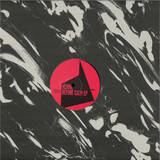
Skyf Connection (pronounced skAyf) was a short lived project by long time friends Anthony Mthembu and Enoch Nondala. At the time they were working for Annic Music, an independent label run by married couple Anne and Nic Blignaut. Although the label was known mostly for Zulu, Sotho, Tsonga and other traditional styles, they had a few Disco releases on the label including groups like Keith Hutchinson’s Focus and Enoch’s discovery Lena, who went on to have huge success under the name Ebony a few years later.
In 1984, when an artist didn’t show up for a booked session they decided to make use of the studio time and began working on a demo. At the time Anthony and Enoch had been playing for a year at a new club called Gamsho, located on a farm on the outskirts of Kliptown Soweto. Along with Blackie Sibisi, Sepate Mokoena and Elijah “chippa” Khumalo they made up the resident house band. Due to cultural boycotts and American artists refusing to perform in the country, locals took it upon themselves to fill the market with the American sound the crowds demanded. The demo they recorded at Blue Tree Studios was going to be their product they could use to promote their brand of the American sound. They then took the demo to Universal Studios where their friend and trusted engineer Jan “fast fingers” Smit was working. It would be here that they would polish their demo into something they could take to their bosses and have pressed. Equipped with a DX 7, Linn Drum and some Juno synthesizers they were on their way. Jan lived up to his name and programmed the drums, it is rumoured he could program in almost real time, a skill that translated to the local arcade where he held high scores on many machines. Enoch would be singing and playing guitar while Anthony would do all the Bass and Keyboards. The result was 4 funky party anthems with synth work like no other recording at the time. Their take on what they believed the crowd would want to hear at the beloved club they called home.
From start to finish the 4 tracks portray what would have been a standard night at the Gamshu. Although the club would open earlier and the standard hours of most clubs was 6 to 6 , the band would start playing at 10pm. With their standard set time and Anthony and Enoch unique view on what a Disco should be, they chose the motto Ten to Ten as the album title because those were the hours when they were the stars and Disco ruled the dance floor. To get to the club was a bit difficult, you needed to drive along an empty road where thieves waited for any patrons trying their luck walking after dark. Since there was no transport during the night, the safest way to get home was to wait till the next morning to walk home. Even though in the summer months of Johannesburg light begins to peek in just after 4am, crowds refused to leave and stayed enjoying good music and company until 10am. The lead off track “Let’s Freak Together” has powerful lyrics encouraging people to let go of their worries, put aside any differences and let the music bring everyone to freak and dance together. The whole album is about the joy we can all feel when we share the same moments and how music can bring people together in a unique way, a philosophy shared with the original nightclubs of 70s New York. This approach to music is where the name Skyf Connection comes from, translating from slang to mean the connection we create through sharing, in this case Music and good times.
Skyf Connection would go on to play at Gamsho till the club’s closure in 1986. In those years their popularity lead to being booked for private events like weddings and birthday parties, as well as gigs in some other venues like Mofolo Hall. They would share the stage with many artists through the years learning artist’s songs and providing support as a backing band. After the club closed Anthony would go on to join the house band at The Pelican, another famous club located in Orlando East, as well as dabbling with songwriting for artists like Phumi Maduna and helping Enoch on many projects through the years. Enoch would ditch live music altogether and immerse himself in studio work, starting full time as a house producer and A&R for the recently formed Ream Music. He would go on to produce hit albums for pop artists like Percy Kay and Makwerhu but made his mark discovering countless artists that would become stars in the traditional market. They would remain friends until Anthony’s passing in 2016 and although Anthony is no longer with us his spirit lives in the grooves he left on this one of a kind record. His wife Vinolia will be accepting his portion of the profits on his behalf.

Cerca:l t j sound machine
C.Y.M. is the collaboration between British producer and DJ Mike Greene (otherwise known as Fort Romeau) and LA-based American musician Chris Baio, who releases music as Baio in addition to playing bass in the acclaimed band Vampire Weekend. Their debut, self-titled EP arrives on Phantasy as an elegant pean to the infinite possibilities of kosmische music, driven by a motorik strain of psychedelia. The foundations of a wider project, C.Y.M. speaks not for analogue nostalgia, but a subtle and modern update on imagined futures that are still open to interpretation.
‘Capra’ immediately establishes the duo’s masterful if unsurprising grip on rhythm, a man-machine stomp that persists as the track takes myriad turns, from post-punk guitar licks and processed vocals, through bubbling modular synthesis and culminating in a soaring, cathartic melody. On ‘Far Gone’ C.Y.M. turn their studio inward for a more brooding and intimate interpretation of their sound, a balearic amalgam of intriguing vocals, feedback soaked riffs and no-wave inspired movement. The bliss beneath the waves of noise that crash across C.Y.M’s music emerges fully on the driving conclusion, ‘Super-Cannes’. A hypnotic tempo and blistering drums intertwine with whirling organs, and shimmering keys, providing a wistful and warm finale.
Hot off the heels of Aluxes, his 2018 Lumière Noire debut EP, young Mexican DJ/producer Iñigo
Vontier is inviting Chloé's label on a trip to the far corners of the body & mind with an album of
demented grooves, psychedelic take-offs and imaginary comic strips of mystical rituals. A
bewitching debut full-length. Mexicans may never possess the sonic science of the Germans,
the hedonistic madness of the English or the gift for synthesis of the French, but, as proven by
Iñigo Vontier's first full-length for Lumière Noire, their universe is much more exciting than
anyone would have ever thought.
The DJ/producer fully asserts his origins by brandishing the album’s title "El Hijo del Maiz" ("the
son of the corn") almost as an emblem: "in Mexico, corn is eaten daily. It has long been defined
as 'the gold of America', and I consider all Mexicans as children of corn". A spiritual and
embodied vision Iñigo's first Lumière Noire release, the four-track Aluxes, set the tone of the
young talent's distinctive interpretation of dark disco, which creeps up on the dancefloor from its
iconoclastic side. The two tracks and two remixes (one by Flügel, the other by Inigo himself)
featured on the 12" for lead single "Xu Xu" (featuring Red Axes-affiliate Xen's irrelevant vocals)
was a full-bodied confirmation that Vontier sees the dancefloor as an arena for the occult –
whether from the peoples of the equatorial jungle, the Middle East or, even from indocile
machines. But, while the spiritual element seems part and parcel of the Jalisco native’s output, it
is in no way the only ingredient of this first long-player: "this album best reflects my own vision
and spirituality, and the way I feel it" he says.
Whether contemplative or frenetic, the collection of tracks that make up “El Hijo Del Maiz” takes
the kitchen sink and throws it out the window: languid rhythms, haunted vocals, and mysterious
percussion fuel a discombobulated house set that scrambles the listener's five senses, leaving
one disoriented and exposed to the vagaries of vertigo. Following the demented, dystopian “Xu
Xu” EP, which explored an imaginary jungle that harbored Mayan and Egyptian pyramids,
Middle Eastern accents are once more present in the off-kilter “Bo Ni Ke” and its Japaneseinfluenced vocal trickery, which Moroccan flutes à la Jajouka transform into a feverish trance.
With the following three tracks, Iñigo Vontier raises himself to the same level of excellence as
the Pachanga duo (of which pride of the Mexican scene Rebolledo, is also known as a prolific
artisan of deconstruction): “Awaken”'s slumbering voice, heard as through the veil of hypnosis,
slowly introduces a techno beat which, as in follow-up “Time”, literally brings the listener to a
levitative state. In a housier vein, yet continuing in the same psychedelic, 90s-infused spirit,
“Don’t Go Back” disrupts the genre’s usual signatures with an out-of-tune keyboard that is
becoming the artist's trademark, destabilizing the listener into a drunken vertigo, with a good
helping of sexiness: "I think the sexy dimension definitely brings a kind of magic to music," says
Vontier. “I'm sure I felt this magic during my DJ sets, and I like to think that sorcerers use this
element in their practices. I might consider myself a bit of a sorcerer when I take over the DJ
booth, by the way." A mood and sound that can once again be found – in a quieter, more
bucolic version – on “Chiquitita” (feat. the flute stylings of pioneer DJ Rocca, now a partner of
cosmic disco legend Daniele Baldelli). The more cinematic, fast-paced and dreamy beat of the
no less captivating “Little Monster” might evoke the mischievous spirit of the Mayas' minor
mythological creatures, while ode to the magical herb Marijuana (feat Thomass Jackson)
proudly tramples into the debate that such a provocative title inevitably provokes: "psychedelic
drugs are powerful tools to reach a higher level of consciousness about what surrounds us, but
we must learn how to complete this psychic journey by ourselves, notably through meditation
and love.
In the end, El Hijo del Maiz is an album-length confirmation of Iñigo Vontier's uniqueness, and
his adherence to Lumière Noire's policy of letting artists fully express their vision – while letting
their passions guide their idiosyncrasies and explorations of innovative electronic signatures
Rebekah’s Elements label welcomes Storb who delivers two vigorous cuts, while the label boss herself and Scalameriya provide remixes.
Something of a mystery, Storb may be elusive but his driving music speaks volumes. The industrial techno producer has released on labels like Diffuse Reality and Emetic, but now he is invited to join Birmingham’s pivotal techno tastemaker Rebekah’s imprint accompanied by a remix from the esteemed artist herself, not to mention Serbian techno purveyor and live performer Scalameriya who’s recently released on THEM and Genesa Records.
Taking a haunted and brutal route from the off, ‘The Donut Theory’ is built on contorted synths and sewed pads that together generate a twisting and turning aural experience, followed by ‘Gasp’ which thunders forward using hyperdrive drums, frazzled effects, overdriven machine sounds and caustic textures.
On the flip, Scalameriya remixes ‘The Donut Theory’ incorporating hammering broken beats, urgent alarm samples, industrial components and fizzing stabs. Tying it all together, Elements boss Rebekah reinterprets ‘Gasp’ by stripping things back to focus on colossal kicks and firing sirens that permeate a relentless groove to generate a pure warehouse inclined energy.
‘Still Strange’ reaches back into the prized loft tapes of Jeff Sharp aka Orior following the revelatory discovery of his overlooked early ‘80s gems on 2016’s ‘Strange Dream’ collection, as coaxed out by
DDS dons Miles Whittaker and Sean Canty.
Huddling another sublime, dusty set of analogue tapes freshly baked and remarkably well-restored by Andy Popplewell, ’Still Strange’ contains four gorgeous flashbacks to the era 1979-1983
surrounding and even pre-dating ‘Strange Beauty’, and then shifts focus to recordings that Orior made around the early ‘90s.
As with its predecessor, Orior is not alone on the material in ’Still Strange.’ From those feted early tapes we find Phil Hollis returning to lend jagged guitar on the drum machine sizzle of ‘Feels Like
Summer’, while the mysterious synth player New Cross John makes vital contribution to ‘Invium.’
Along with the aching synth sigh of ‘To Return’, which pre-dated all of these recordings, and the nine minutes of haunting bedsit strums in ‘Larbico Alt Mix’ which came from the first batch, the
early material is all arguably worth the price of admission alone for seekers of lost synth treasures - really this stuff is just so good..
However, the album’s other six tracks expand knowledge of Orior’s work into the ‘90s and also contain some extraordinary material. Salvaged from further loft tapes found in various states of degradation, and subsequently mixed down between London’s Goldsmiths College and Miles Whittaker’s Whalley Range attic (and elsewhere), they are decidedly more blunt and gloaming, especially in the Deathprod-like ‘Under Shadow’ and the near static witching hour ambience of ‘Endless’, while shorter vignettes such as ‘Unknown Future’, ‘Gothic’ and ‘Another’ point to pre-echoes of BoC’s crepuscular scapes and even Bladerunner-esque sci-fi noir soundscapes
Back with a vengeance, Cimm returns to the imprint with a highly anticipated succession to his Sentry debut from last year, stamped on a irresistible 2 x 12" vinyl release. Infernal halftime beats and top-notch Dubstep shells, firmly entrenched at the frontier of sound system music and its invaluable heritage. The London-based producer and DJ rose to swift and significant acclaim in the last few years with releases on institutions like Tempa, J:Kenzo's Artikal and Wheel & Deal as well as notable residencies at Rinse FM and the renowned Fabric night club, among other recent achievements. Now coming to a turntable near you, Cimm delivers four bespoke cuts, primed for the dance and your enjoyment, battle-tested by the scene's foremost tastemakers.
Diving into unidentified transmissions, 'Unknown Caller!!' sets the pace with eerie reverberations and filtered resonance. Amid the faint hiss of machinery, larger-than-life drums set up shop alongside subterranean pressure emissions. Hefty breaks, hold tight! Retro synth melodies keep us on track within the monstrous switch-ups and unquestionably meticulous arrangement, sure to shut down any dance in style. Cutting no corners with the B-Side, Cimm teams up with veteran vocalist Rider Shafique for a dystopian sub-bass onslaught, swaggering militant chants and the apocalyptic ambience to go with it. Steaming low-frequency oscillations bubble and hurl their weight, stripped of all restraints, coveted in freezing harmonies and ethereal atmosphere. Vibrating in a more uplifting spirit, the dedication to the Jamaican roots of sound system culture unfolds in the Londoner's signature style - dubbed out soundscapes ahead. 'Tosh Dub' keeps it a laid back, with vintage instrumentation, scattered skanks and swirling organ chimes. Taking an ultimate trip through unremitted grit and off-kilter grooves, 'I Am Jack Travis' lures us in with rainy undertones and hypnotic foley sampling. Promptly revealing its true nature with plenty of pressure and scrupulous syncopation, a ghostly heavyweight ensues and closes the deal.
Yuzo Iwata has made one prior appearance to date on Pluie/Noire in 2018. This EP for Malin Genie's label finds him exploring further deep cover plains of expression through the medium of experimental house and techno, leading in with the rippling textures and haunting piano refrain of "Spoit."
The delicate gamelan chimes of "Mount Castle" that follow collide with rugged drum machine beats and artful sonic interference, while "Tiger" fuses jagged off-centre beats with gnarled acid lines and fluttering melodies lingering in the middle distance.
- Touch - seals the deal on this highly distinctive EP with a writing, organic mass of sound design strapped to a forthright four to the floor stomp.
2x12"
The first LP from Scorn since 2010’s Refuse; Start Fires, Cafe Mor is Mick Harris in his happy place. Which just happens to be in studio, demolishing all standards and rules for electronic bass music, and embodying the darkest, deepest sound in dub. Cafe Mor takes risks outside of the conventional Scorn apparatus, and with these risks come substantial rewards.
The album is comprised of powerful dub excursions, from the deep dark dank of the front two tracks Elephant and The Lower The Middle Our Bit, and gaining steam towards the ultraviolence of Mugwump Tea Room to Never Let It Be Said to the CRUSHING DEATH KICK of Who Are They Which One. A quick drive under the lights with a lasered out snare on Dulce, then we come across the appearance from Sleaford Mods frontman, Jason Williamson, on the standout track on the LP, “Talk Whiff”. A cruise around the Midlands sighting the Broke Fridge and Tinder Surprise, with an instant classic refrain:
“Talk Whiff // I’m a busy person // I’ve had enough of it”
Cafe Mor culminates in the all-in-one dub affair SA70, letting rip all the new mixer and fx techniques of Harris’ most recent incarnation of Scorn. The album is the official soundtrack for all smoked out backroom deals, situations and arrangments, cancelling all small tours, and mongoose rhinocharging the bass to level 24.
All tracks Created and Mixed by MJ Harris in the Lad’s Old Room
B14 Mastered by Daniele Antezza for Dadub Mastering Studio
Artwork, Layout by MachineTM
Exploration is back! Johannes Volk continues the journey with a new 4 track EP on his own imprint. The title track is a long upbuilding peak time smasher with strong reminiscences of early Detroit Techno. A2 delivering raw and dirty machine madness with a subtle bleep funk around stomping drums. The flip side comes with 2 driving Dub Techno tracks, filled with heavy bass, emotional soundscapes and an complex sound architechture.
White Vinyl
This is "Altair", a collection of kaleidoscopic post-breakcore on Love Love Records from veteran french surrealist Ruby My Dear. Presented with artwork by TAPT on white vinyl.
The lights are out and a strange alien force surrounds the periphery of your hearing.. The sound of a haunting music box flickering in the darkness draws you closer but as you begin to approach everything explodes into dank crossbreed DnB rhythms that punch you in the gut and send you flying. As the bombardment of breaks momentarily subside you realise you've been beamed aboard the mothership and are now surrounded by unknown and indescribable visions.
You are given a brief moment to contemplate before your legs are swept from underneath you by a flurry of amens that would fry the minds of the hungriest of junglist's epicures. Journeying deeper into the heart of the beast you become aware of distant and immense rumbles but are stopped in your tracks by grinding brutal machinery rising up on all sides. As quickly as it appeared it starts to collapse and you are plunged into near darkness once again.
Pulses of light slowly begin to stab rhythmically from behind clouds and you feel yourself begin to move faster and faster through a void that is now streaked by a spectrum of colour. Floating debris starts re-arranging around you at light speed and every fiber of your being is simultaneously stimulated with needle-like accuracy. As the last string plucks play out the darkness falls away and the cover artwork comes back into focus. You immediately leave wherever you are and encourage someone else to experience this music.
Planning the imminent arrival of the 50th release on Touchin’ Bass, label boss Andrea Parker was digging through the warehouse during a stock take and it became apparent that there was something missing. There was a gap in the catalogue numbers. Where was TB036? Searching the archives it transpired that, for one reason or another (not least Parker’s inability to count), there actually wasn’t one.
So what better way to backfill this now documented gap than to welcome the multitalented guitarist and drummer, mathematician and multidisciplinary improviser Maria Gamboa Perez into the Touchin’ Bass fold with an updated focus for 2019.
Perez combines elements of rage, chaos, tension and anguish to form a visceral style. Her musical terrain and talent is shaped by dissonance and NO art. Under the moniker NonZero!, Perez brings Matrix Equation to the fore; a heavy 8 track EP with electro aesthetics from none other than Carl Finlow Scarletron/Silicon Scally/Voice Stealer.
Beginning her artistic career as a teenager playing as a bassist and guitarist in groups with influences from Noise, Avant Garde and the No-Wave, Perez was introduced into several areas of electronic music during the club culture years in Madrid and opted for styles such as Electro or Industrial, at which point she began to be interested in the introduction of rhythm boxes together with traditional drums.
Her passion for sound synthesis and musical exploration led Perez to introduce electronics into a solo project under the pseudonym NonZero!. Under this name she aims to make electronic music her field of sound research and for years has been continuously searching for existing relationships between sound and mathematics, focusing on the perceptual limit between music and noise.
Matrix Equation indulges in an evidential brooding angst, shifting between abstraction and the kind of elevated introspection carefully harvested over the years. With dramatic frontage in parts, blasts of boisterous energy and machine mayhem, its deployment of surprise, shifting focus and spontaneity operate in an assured statement.
Splintered beats and a foreboding sense of tension give way to a more DJ friendly logic of instinctive introductions and codas of gradual builds and breakdowns as Finlow further reworks the results to great effect.
- A1: Lentz 1 Mg (Viersen / D)
- A2: Grossenhainer Eu (Grossenhain/ D)
- A3: C.a.roscher Bo (Oberlausitz / D)
- A4: Henry Livesey Bo (Blackburn / Gb)
- A5: Lentz 2 Mg (Viersen / D
- A6: Saurer Mg ( Aarbon Ch)
- A7: Ruti / Łódź / Pl, 1892 Rec M.w
- A8: Saurer 400 Bo (Aarbon Ch & F)
- A9: Günne (Irmscher) Bo
- A10: Bändchen Mg (Jacquard F? Unbekannt)
- A11: Dornier Mg (Lindau / D)
- A12: Transmission / Bo
- A13: Elitex Jet Mg. (Cz)
- A14: Robert Hall Mg Solo (Bury / Gb)
- A15: Fred Greenwood Mechanical Works / (Łódź / Pl 1889) Rec M.w
- A16: Kleiner C.a.roscher Bo (Oberlausitz / D)
- A17: Jean Güsgen Bo (Dülken / D)
- A18: Grossenhainer Eu / Lower Floor (Grossenhain/ D)
- A19: Grossenhainer Eu (Grossenhain / D)
- A20: Grossenhainer Eu Lower Floor / Variation1 (Grossenhain/ D)
- A21: Looms/ Group* Łódź, Pl / Rec M.w
Editions Mego is proud to present the latest addition to the compelling discography of Thomas Brinkmann. Throughout his career Brinkmann has focussed on the human operating amongst industry alongside rhythms that manifest as a result of technological advancement. With this new release Brinkmann makes a u-turn, looking back to the early industrial age. Comprised of recordings of various looms, Raupenbahn investigates the sonic properties and consequences of the first automatic loom as constructed by Jacques de Vaucanson in 1745. Thomas Brinkmann once again adheres to his tendency for clarity and simplicity whilst further investigating not only the sound and rhythms of the machines (looms) but also what role they serve in society and what consequences they have on the environment. Raupenbahn presents 21 tracks in total, 11 feature on the vinyl, the remaining 10 as digital bonus tracks. The majority of recordings were undertaken by Brinkmann in 2017 with a Neumann KM 184 stereo set. Additional recordings were sourced with permission from Monika W. recs. from 2014 Central Museum of Textiles Łódź, Poland. Each piece presents a diversity of material which borders on the breathtaking and beautiful in richness and complexity. The various looms unravel rhythms and patterns unexpected from machines of the early industrial age.
The loom holds a significant role in shaping our world being the catalyst for Charles Babbage's Analytical Engine which, alongside the subsequent work of Byron's daughter Ada Lovelace, paved the way for modern computing. There is a linage of the loom that fits succinctly in Brinkmann's overall argument. Here we encounter a parallel between machine driven economies and the music that rose from such places, consider the Sheffield steel industries, the Manchester weaving industry or the Rhineland / Düsseldorf loom and machine industry. Is it a coincidence that the practice of such machines in the environment gave rise to today's predilection for electronic dance music, in pop, soundtracks, etc.
Raupenbahn features no treatment or processing and explicitly displays varying tempo and timbres which ascertain a wide range of acoustic structures. The artwork features Ingrid Wiener, Rosemarie Trockel and Alexandra Bircken, three different generations who would with ideas of fabric weaving, loming and the like. This exceptional release works on a number of levels alongside it's striking sonic palette.
i 9 Günne (Irmscher) BO Möhnesee / D
It’s been a busy eight months since Dampé’s debut on Dirt Crew Recordings. That time has seen the producer hold down monthly slots on Rinse FM, contribute a downtempo electronica/jazz edit to the S3A ‘Pages Remixes” EP as well as open big rooms for the likes of Surgeon and Blawan.
The intervening months have also seen the producer set up camp in the Rhythm Section studio in South East London, and the result of new access to studio gear can be heard all across ‘Garden’. Compared to the debut ‘Peach Shuffle’ this is a far more machine-led and darker listening experience. Snatches of acoustic instruments and space remain, but it’s never long before the disembodied vocals and oversaturated classic drum kits return reminding you this is music best enjoyed in the club.
‘A Basement, 10 Years Ago’ started just there. A bass line dimly recalled from a long-lost 6am jam is sequenced on a weighty analogue keyboard, while syrupy R&B vocals dance around mbira and gangsa, all slowly building and building together. ‘727 and Arp Breaks’ is a love letter to two of the producer’s favourite instruments from the studio. A TR-727 and an Arp Odyssey collide across dubbed out stabs to form some very rolling breaks.
Sunday Night Machines’ sees Dampé tame the box-of-physics that is the Arp Odyssey again with a sprawling meditation on two repeating arpeggios.
‘Garden’ is the one for the dancers. Four variations play with the same melodic theme in distinct sections, with the second variation being the deepest and most floor-ready the whole record gets. ‘France’ is a warped dub-come-hip hop beat that manages to conjure both Lil Jon and Yusef Lateef. We approached Liverpool’s finest ASOK (Lobster Theremin, M>O>S Delsin) for remix duties and to close out the record with a twisted bang. He turned in a propelling weapon that brings a whole new texture to the track listing. It’s very 90’s, very ravey and very raw, in a true IDM style.
With this eclectic mix of sounds we are entering another chapter of the Dirt Crew story and we hope you dig it as much as we do!
This is already EP number three of these two techno heavy weights from Zagreb and Germany, Petar Dundov and Marc Romboy.
After „Caper Tran“ and „Dimension D“ it´s time again for real techno music:
„Upiter“ shows us how musically the Croatian-German friendship team is able to create dark and deep tech tunes. The warm and catchy arpeggio combined with a shuffling 808 groove takes us to a journey of spacy and trippy speres.
„Ex machina“ is forward thinking techno music however with the spirit as it was made in the 90s when the machines were the masters of the music and ruled the structure of the song. The track surprises with unexpected turning points and moving sound synthesis.
Detroit imprint My Baby returns with its third musical offering, a split release from two Motor City heavyweights, in the form of Rex Sepulveda and Acid Pimp.
This fledgling vinyl only label has got off to a superb start showcasing music from Detroit locals on its first two stellar Eps. With a focus on the underground sound of the city it resonates with global fans of quality house and techno and continues to do so here with four outstanding new tracks.
First up is Acid Pimp, a DJ & producer who has been an integral part of Detroit’s music scene since the early 90s. His distinct sound saw him release a string of classic twelves on the Cheshire imprint, whilst his DJing took him from the warehouse parties of the city to international clubs like Tresor. He founded the ‘Friction Detroit’ night in his home town, hosting the likes of Ben Sims, Regis and Chris Liebing, and he co-founded the M-Nus sub label D- Records with Richie Hawtin and two other friends. The first of his two offerings is the superb ‘Re-Ak-O-Pan’, seven minutes of intense, industrial tinged techno with taut drums working alongside panning synths and static machine noise to superb effect. This is complemented by the looped excellence of ‘Lupe 09’, a rolling groove that is sure to lock in any dancefloor.
The flipside sees another of Michigan’s sons in the shape of Rex Sepulveda. Rex has a musical history dating back to 90s, he was one of the aforementioned friends that launched D-Records with Acid Pimp and Richie Hawtin and has released original and remix material on a number of imprints. His first cut here is ‘Rex presents Dvda’ a deep, brooding affair populated by rubbery, acidic synths and razor-sharp percussion. This is a pure early-hours number that is sure to twist up the floor wherever it’s dropped. Closing the package we have ‘Rexie’s Orgasm’ a spacious, and understated track that perfectly captures the echoing sounds of a cavernous warehouse space.
This is a sterling package of quality underground sounds from the city that sparked the fire.
I felt totally unrestrained making this album” says Lindstrøm about his 6th solo album On A Clear Day I Can See You Forever (a title inspired by the 1970’s musical On A Clear Day You Can See Forever starring Barbra Streisand). “I’ve listened to Robert Wyatt’s solo albums and his Matching Mole’s debutalbum a lot lately. It so effortless, fearless and free. And not insisting. I was very inspired by this” In the autumn of 2018, Lindstrøm composed a commissioned piece for Norway’s premiere art centre Henie Onstad Kunstsenter. Sketches from the three sold-out performances became the foundation for the new tracks. “I decided to keep some of the initial ideas and develop them further. All the songs are based on long one-take recordings”, says Lindstrøm “Also I’ve been very conscious about the music on the album not exceeding the length of the physical limitations of the vinyl-format, finding that 2 long tracks on each side were the perfect balance for this album” This is also the first time ever Lindstrøm has made an album entirely with hardware instead of computer-plugins. He utilised thirty plus synthesizers and drum-machines during his performance at Henie Onstad Kunstsenter. The experience inspired him to embrace a similar set-up when making the album. “The joy of making music on actual physical objects and devices makes a lot of sense to me now. After working on a computer for over 15 years, I don’t think I’ll ever look back” he says with an almost childlike excitement. It was the accessibility to his enviable collection of music gear – largely consisting of sought after synthesizers – that allowed Lindstrøm to experiment so freely with ideas and soundscapes. “The title track is a 10-minutes improvisation on the Moog Memorymoog. I liked the loose feel so I decided to keep everything unedited. The other tracks were written and arranged prior to the recordings. I then set up the instruments needed for my sessions, then recorded more or less everything in a single take. I’m really happy with the way this album came together.” Lindstrøm has cited classical music as an inspiration the last couple of years “I used to study classical music at school. Back then I was listening to a lot of Opera, orchestral music and solo music on the piano. Listening to classical music again has been a revisit to my childhood days, just like I did when I embraced the 80s in the early 2000s”
Once embracing the freedom and the joy of making music without inhibitions, immersing himself in to the physical realm of making music with hardware, Lindstrøm learned something new not only about music – but about himself.
“I guess I've been trying to re-educate myself”
15 years ago in a basement in the Bronx, I attended a bunch of sessions with my long time collaborator and friend, Ray West. Ray is a lifelong DJ and home producer, and only in 2012 did he begin to release music via his well-respected underground label, Red Apples 45. He had a main studio but also this much smaller room in the back which I dubbed “Studio B” in the tradition of any multi-room recording facility who would have a second “B” or third “C” room, and the name stuck. Despite the much lower-level quality equipment in that room, like a Yamaha MiniDisc board burning mixes realtime to CD-R, there was a certain vibe to it that inspired creativity, and a simplicity that encouraged faster working methods. One of the groups that worked there was called Results. Their philosophy was whatever happened in the moment was meant to be on tape and they didn’t spend hours perfecting it. This is rather opposite to how I work in the studio and especially on my own material, of which I can be thorough to the point of finishing less than I’d like. Through working there I realized the potential of having a smaller, simpler second setup, one that was not related to my work as an engineer, or my artist career as a performing electronic musician and techno producer.
Fast forward to 2016 and I would have both a professional studio outside of the home and enough spare gear to make a smaller studio based around a 4-track cassette recorder in my living room. This was a place where I could make whatever I wanted, whenever I wanted, without the disturbances of clients, the chaos of 30th St., or any genre restrictions that I might place on myself in the big studio. I spent some time tracking down a functioning Akai MG614, the holy grail of 4-track recorders. It’s a large machine, making even the MPC3000 look small on the table next to it. With no computer, things were focused. I went through a couple of variations of the setup in my living room beginning with an MPC1000, DSI Evolver, Sonic Potions LXR, Bastl Microgranny, and a variety of classic effects that I didn’t keep in the rack at Butcha Sound like the Yamaha SPX90 and Ensoniq DP-4, plus a bunch of pedals and eventually a Korg Karma keyboard. Then I had the good sense to bring home the Emu SP1200 I was borrowing from The Martinez Brothers. Eventually I brought home the MPC3000 as well. Another thing I kept connected was a Zoom field recorder that captured sirens, street noises, and me playing the upright piano in my apartment live to tape. Results. These recordings were made in Hell’s Kitchen from July 2016 - May 2017 with the window open and the sounds of my Manhattan block inspiring the takes. — Phil Moffa 2019
Kerrie makes her debut for DBA with four tracks devised originally for her high impact live sets. Other than a cut on highly regarded London label I Love Acid's 10th anniversary comp Kerrie is a relative newcomer but the ten years she has put in honing her style immediately shine through in her music. The EP ranges from Before Calm's bug-eyed, angular swagger replete with a hair raising distorted hook, to Orb Weaver's peak time techno roll via Acid8 Slider which is one of the most original 303 tracks to come out of the UK in some time and Curveball, a bolshy electro leaning stepper.
Her influences range from current UK artists like Blawan to Japanese artists such as NHK yx Koyxen & Hiroaki Iizuka and pioneers like X101, Joey Beltram and Surgeon. The running thread in her taste is a penchant for high energy, raw banging grooves with a machine funk flavour, and a love of analog sound both as a producer and DJ. No doubt this stems from her time spent working at legendary Manchester shop Eastern Bloc Records where she joined in 2013 and has worked ever since. Honing her skills through her DJ residency for EBloc Kerrie has gone on to become a regularly booked act for the UKs most prestigious underground club nights. As a live performer she has also toured the UK since 2017 with the live show being met with high acclaim. Her live set for Freerotation 2019 has been one of the festival's most talked about debuts.
Before an upcoming album in 2020 on Heavenly Sweetness, Mama is the first single. A track in which the balafon’s woody resonance, the meditative flute and the female choruses return to the Creole roots of David, recall the memory of his Caribbean grandfather exiled to New York but, above all, a title dedicated to his grandmother, who after the last soaring electro-disco, she comes to declaim the text on the ultimate measures. David Walters will have thought of it, conceived and realized in close collaboration with Patchworks. Then, in the wake of the single Mama released in the month of each of them took the title, isolated himself in the studio with instruments and machines to come out only with a total reinterpretation, but especially personal, of the title. Hammering bass drum and snare drum bursts, David has entrusted the direction of operations to the rhythmic, and it is one after the other that digital elements were invited to transform the original maternal softness into a boiling soundsystem. Synths their strings on the hum of the bass, the hypnotic power of the riddim remains.
Two remixes, two atmospheres. The Patchworks scene is set in a jazz-funk setting, an heritage from Roy Ayers and Lonnie Liston Smith. Powerful drum, enrobing bass, the Fender Rhodes becomes a soloist, motivated by this irrepressible groove, first become a soloist. And that the meshes leave the hands of the balafon player to pass in those of the vibraphonist.
A mind-bending blend of modular synth performance, Anthony Baldino’s dynamic Twelve Twenty Two LP is a treat for all ears. Baldino’s transcendent album is available both digitally and on vinyl on Thursday, October 24 via MethLab Recordings.
“The record focuses heavily on the modular synth as a composition tool and instrument. I originally approached this as a collection of tracks that were recorded straight out of the machine with little to no editing. The work flow of generating a complex patch and then figuring out the overall arch and performance of the piece was really exciting. The Tip Top Audio Circadian Rhythms was a key compositional tool in this process and was used to organize the overall structure of these pieces. It wasn’t until I stumbled upon a patch, the opening synths in ‘Fading Quickly Now,’ that I went back to how I used to write and shifted to harvesting sounds and rhythms from the modular and arranging and editing them in the box. That patch was originally created for a different track on the album, which I’ll let you find, but IH ad accidentally changed the clock rate before tearing the patch down. Hearing it in that new way triggered a whole new thought process and emotional reaction for me.” - Anthony Baldino
Originally approached as a collection of tracks recorded straight out of Baldino’s machine with little editing, Twelve Twenty Two is a complex piece of thoughtful modular work. A truly stunning display of masterful sound design, Baldino’s sound resonates with listeners from first note to last. Existing in a unique space where ambient sounds meet vivacious bass, Baldino seemingly exists in an impressive league of his own, with Twelve Twenty Two standing apart powerfully from the masses. With an already powerful arsenal of artists and releases, MethLab Recordings adds a brilliant 10-track addition to their already wild playbook.
“From the beginning, it was important for me to keep this record musical and emotional and not just an exercise in technicality, so using both the modular and the computer to arrange felt really good both emotionally and sonically and created a different balance to the record that I really liked. Switching the process up a bit halfway through kept things interesting and I think the body of work really benefits from it. This record is split in half with performance based/straight out of the machine tracks and the other half organized in the box. But when listening back, the two approaches overlap so much that it’s hard to tell where one approach ends and the other begins.” - Anthony Baldino
About Anthony Baldino:
Born and raised in New York, Anthony Baldino is an LA-based composer and sound designer whose work spans an enormous range of production avenues. The likelihood that you haven’t heard his world is nearly impossible, with music and sound design in too many trailer campaigns to list, including Prometheus, Interstellar, Ex-Machina, Star Wars: Rogue One, and Avengers: Infinity War and End Game just to name a few. From there, his work ventures to the opposite pole of production with custom sound design based compositions for Dolby Labs mixed in Atmos, beautifully glitched out remixes, and continues on to mind-bending modular synthesizer performances.
With his debut artist release, he delivers a devastatingly beautiful album grounded in IDM that focuses on modular synthesizers/ While a vast amount of modular synth music is currently being released, this album goes far beyond the typical beeps and boops that one may expect when they hear “modular IDM record.” This record is as technical as it is emotive. Tasteful and incredibly detailed, Twelve Twenty Two bridges the gap between sound-design laden beats and cinematic motifs and ambiences. This record does not disappoint and is sure to become a favorite of electronic music fans.
The album opens up with a slowly unfolding melody that seems to be within grasp, but never actually repeats itself. Incredibly tasteful glitchy sound design leads us into a build that one would only expect to be in a movie, and then drops into a full-on sonic assault of impeccable drums and rich synths. From there, the record traverses a wide array of texture, time and technique. Closing with a track that makes you feel like you could actually reach out and touch the sound and float in its space, the sonic landscape created in Twelve Twenty Two is a true treat for ears.