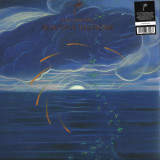
This 45 features two new artists from the ever-expanding Colemine universe: Pale Jay, a budding artist, and Steve Okonski (as Okonski) of Durand Jones and the Indications. The A-side is a collaboration between the two artists. By The Lake is a Neo Soul flip of the Okonski piano tune that's poignant and upbeat at the same time. The lyrics come from a conversation that Pale Jay had recently with a close friend who was pondering moving to a new city to pursue a budding love affair, but ultimately chose to stay put because they had not overcome an old heart break. When he heard Okinski's song, Runner Up, from his upcoming album, he immediately latched onto the lingering feeling of speaking to his friend and wrote By The Lake in the next thirty minutes after chopping up Okonski's piano samples. The B-side, Runner Up, features the original track by Okonski. Recorded at the Colemine HQ in Loveland, OH, Runner Up exhibits a triumphant yet melancholic melody in the piano that leads to a more reserved Bsection driven by the drums and bass of Aaron Frazer and Michael Isvara "Ish" Montgomery.
quête:la chose
High Roller Records, Wiederveröffentlichung 2023, schwarzes Vinyl, ltd 150, Einleger. In den Fußstapfen der einzigartigen Mercyful Fate und zusammen mit obskureren Acts wie Alien Force, Randy und Crystal Knight gehören die Kopenhagener Witch Cross zu den besten dänischen Heavy-Metal-Bands aller Zeiten. Das 1984er Album "Fit For Fight" ist sicherlich eines der Top-5-Alben in der Geschichte des dänischen Heavy Metal. Nach einer langen Pause folgte auf "Fit For Fight" das zweite Album "Axe To Grind" im Jahr 2013 (ursprünglich veröffentlicht von Hell's Headbangers und nun auf High Roller Records für ein breiteres Publikum wiederveröffentlicht). "Axe To Grind" war für mich ein großartiges Comeback-Album", sagt Gitarrist und Gründungsmitglied Mike Koch heute. "Wir hatten einige Gastmusiker/Sänger Gastsänger und Chris Tsangarides hat das Album gemischt, es war also eine starke Verbindung zur Vergangenheit. Die Songs waren wirklich gut, vielleicht ein bisschen zu old-school, aber das ist es, was wir auf dem Album wollten."Wir waren überwältigt, wie die Presse uns gelobt hat", fährt der Witch Cross-Gitarrist fort. "Es fühlte sich gut an und gab uns das Gefühl, dass die Band das Richtige getan hat, obwohl "Fit For Fight" so ein Kultalbum war. Es gab allerdings eine Ausnahme: "In unserem Heimatland bekam "Axe To Grind" nicht so viel Aufmerksamkeit, wie wir gehofft hatten. Aber die Konzerte, die wir dort gespielt haben, waren großartig." "Axe To Grind" war das zweite Album der Band nach einer langen Pause. Wie kam es überhaupt zu der Wiedervereinigung und wann und warum hat Mike Koch beschlossen, doch ein neues Studioalbum aufzunehmen? "Ich war mit einer Menge anderer Musik beschäftigt und wollte ein Metal-Album schreiben", erklärt er. "Also habe ich angefangen Ideen zu sammeln, und als wir 2012 bei Keep It True spielten, hatten wir ‚Demon In The Mirror' aufgenommen, das wir auf dem Festival spielten, um zu sehen, wie die Leute darauf reagieren. Zusammen mit 'Demon In The Mirror' sind 'Pandora's Box' und 'Bird Of Prey' meine Lieblingssongs auf der Platte. Nach 'Keep It True' beschlossen wir, dass wir mit 'Witch' weitermachen müssen." Koch hält es jedoch nicht für richtig, zu sagen, dass "Axe To
Grind" dort weitermachte, wo "Fit For Fight" aufgehört hatte: "Nein, das stimmt nicht wirklich. Es ist eher eine Verbindung zur Vergangenheit, als zu dem, was wir 1985-86 musikalisch weitergekommen wären, wenn wir ein weiteres Album gemacht hätten. Es gibt einen Song namens 'The Chosen One' auf dem neuen Album "Angel Of Death", der meiner Meinung nach viel mehr im Stil von Witch Cross von 1985 ist."
High Roller Records, Wiederveröffentlichung 2023, schwarzes Vinyl, ltd 150, Einleger. In den Fußstapfen der einzigartigen Mercyful Fate und zusammen mit obskureren Acts wie Alien Force, Randy und Crystal Knight gehören die Kopenhagener Witch Cross zu den besten dänischen Heavy-Metal-Bands aller Zeiten. Das 1984er Album "Fit For Fight" ist sicherlich eines der Top-5-Alben in der Geschichte des dänischen Heavy Metal. Nach einer langen Pause folgte auf "Fit For Fight" das zweite Album "Axe To Grind" im Jahr 2013 (ursprünglich veröffentlicht von Hell's Headbangers und nun auf High Roller Records für ein breiteres Publikum wiederveröffentlicht). "Axe To Grind" war für mich ein großartiges Comeback-Album", sagt Gitarrist und Gründungsmitglied Mike Koch heute. "Wir hatten einige Gastmusiker/Sänger Gastsänger und Chris Tsangarides hat das Album gemischt, es war also eine starke Verbindung zur Vergangenheit. Die Songs waren wirklich gut, vielleicht ein bisschen zu old-school, aber das ist es, was wir auf dem Album wollten."Wir waren überwältigt, wie die Presse uns gelobt hat", fährt der Witch Cross-Gitarrist fort. "Es fühlte sich gut an und gab uns das Gefühl, dass die Band das Richtige getan hat, obwohl "Fit For Fight" so ein Kultalbum war. Es gab allerdings eine Ausnahme: "In unserem Heimatland bekam "Axe To Grind" nicht so viel Aufmerksamkeit, wie wir gehofft hatten. Aber die Konzerte, die wir dort gespielt haben, waren großartig." "Axe To Grind" war das zweite Album der Band nach einer langen Pause. Wie kam es überhaupt zu der Wiedervereinigung und wann und warum hat Mike Koch beschlossen, doch ein neues Studioalbum aufzunehmen? "Ich war mit einer Menge anderer Musik beschäftigt und wollte ein Metal-Album schreiben", erklärt er. "Also habe ich angefangen Ideen zu sammeln, und als wir 2012 bei Keep It True spielten, hatten wir ‚Demon In The Mirror' aufgenommen, das wir auf dem Festival spielten, um zu sehen, wie die Leute darauf reagieren. Zusammen mit 'Demon In The Mirror' sind 'Pandora's Box' und 'Bird Of Prey' meine Lieblingssongs auf der Platte. Nach 'Keep It True' beschlossen wir, dass wir mit 'Witch' weitermachen müssen." Koch hält es jedoch nicht für richtig, zu sagen, dass "Axe To
Grind" dort weitermachte, wo "Fit For Fight" aufgehört hatte: "Nein, das stimmt nicht wirklich. Es ist eher eine Verbindung zur Vergangenheit, als zu dem, was wir 1985-86 musikalisch weitergekommen wären, wenn wir ein weiteres Album gemacht hätten. Es gibt einen Song namens 'The Chosen One' auf dem neuen Album "Angel Of Death", der meiner Meinung nach viel mehr im Stil von Witch Cross von 1985 ist."
‘Before the Odysee, there was the Iliad; a tale of the golden age of heroes and warriors.'
The idea behind the new Iliads series is to return to the sound of the golden age of Jungle/Drum & Bass, and more specifically the original ‘heroes’ of the Odysee label.
This first in the series pays homage to the style of music heard in the Oblivion releases that Source Direct delivered through Bassment Phil’s Street Beats imprint between 1995 & 1996.
Forbidden Affections is a classic Deep Amen track, made with tracks like Sands Of Time and Secret Liaison very much in mind. Right from the onset where the pads are given plenty of time and space to draw you in, it is completely faithful to that mid-90’s SD style. All the trademark break switches and deep 909 sub lines are present, and the palette of sounds are all drawn from those same sources that first inspired the SD sound (as such it is Atmospheric Jungle with a strong Techno persuasion). The finishing touches come from the achingly gorgeous female vocal ad-libs that were also such a trademark of the early, more atmospheric SD tracks.
Hidden Rooms is perhaps even more authentically SD, especially with its focus on arrangement, and the way it uses the selection of samples that are once more drawn from those same Deep Techno sources. The interaction between the rolling curls and cuts of the Apache at the start, and the crisp injection of the Think breaks at the drop comes straight out of the early SD portfolio. The bass drops down super deep underneath the drum work, punctuated by exposed electro hits and well-chosen samples. It is the haunting keys nearly 4 minutes in however that give this track the authentic SD twist more than anything, calling tracks like Fabric Of Space and Made Up Sound very much to mind.
Drifting Through is the final track of the E.P. with its beautifully sharp rolling Hotpants/Worm combination. This track leaves plenty of space; dubbed out to just breaks and bass for much of the duration, with the occasional injection of an obscure electronic sample, or the sweet vocal ad- libs to hold the tune together. Further down the track there is a touch of the Jazz influence as the Rhodes chords add an extra level of harmonic warmth.
Look out for Volume II where we will be returning to the distinctive flavours of the original Mirage releases on Odysee!
Birds chirp through a tape-hiss breeze atop a bed of airy pads, and a cleareyed, forlorn guitar springs forth: this is the beginning of the debut album from Sans Merit, a new rock project from Griffin James, otherwise known as Francis Inferno Orchestra.
For over a decade, the Melbourne-raised—and now L.A.-based—producer has been indulging his indie and alt interests, and this fuzzed-out bedroom janglepop and shoegaze LP, Early Grave, is his first extensive deliverance.
The album represents a gestalt of sorts: years of approaching different genres and songwriting styles, and producing not “in the box,” with soft synths and
samples, but with live instruments (and sometimes a band), has led to this focused and succinct thirteen-track musical journey.
In pursuit of a pure and low-key aesthetic, James recorded demos on phones and chose to rely heavily on budget instruments, clapped-out synths, and
crappy amps, and would often cut tapes live in bedrooms, lay down vocal takes in closets and put microphones to broken speakers, all in part of the quest of using limited resources to create a truthful body of work. The finishing touch is a thick coating of nostalgia ooze; soundbites from internet clips flitter throughout the record, and goofy sound effects flicker above like dying incandescent bulbs.
A dream-pop album for our times: its lyrics are off-kilter romantic musings, sarcastic self-loathing mumbles, reflections on the unrealness of real life.
After last year's release on Shall Not Fade, Paul Rudder & Kresy are back - this time on Exploited for the infamous Black Jukebox Series.
‘Along With You’ bounces along with plenty of feel-good energy, channeling ‘90s energy with its thicc bassline pump and an earworm of a sugar-sweet vocal. Well-chosen vox cuts create an infectious rhythm in between the full vocal sections while soft synth arps tickle the surface of the track and epic snare rolls inject more energy in the breakdown and at key moments. Guaranteed to get massive reactions. Kresy’s Continuum Mix takes things into a lighter direction with gorgeous, sunny piano chords chiming in unison with a driving, uplifting bassline and pretty synth flourishes.
‘Her Dream Road’ pushes the EP into almost ambient house territory with its swirling pads and deep atmospheres, but the energetic percussion and warm bassline throb and melody give it plenty of dancefloor energy. Kresy’s Mellonized Remix pumps it up with plump organ bass, dreamy acid licks, soaring arpeggios, continual automation and epic pad progressions that make for an absolutely huge rework that’s full of life, atmosphere and colour.
Tom Trago returns to Rush Hour after 10 years with a wonderfully accomplished mini-album, tip!
During the years he spent living in Amsterdam, when his DJ career seemed to become an unstoppable juggernaut, Tom Trago was a regular visitor to Deco Sauna, a local institution that helped him “decompress” and de-toxify his body. Eventually, a more extended period of “decompression” was needed, with Trago moving to the coast to reassess his priorities and spend more time with his young family.
‘Deco’, his sixth album and first for Rush Hour in a decade, was recorded following an extended absence from club dancefloors, as Trago cut back on DJ commitments to prioritise family life. When he returned to the studio, often with his daughter by his side, Trago initially struggled to get back into the groove. The desire to make dancefloor-focused music had – temporarily, at least – deserted him; instead, he found himself drawn towards a desire to create “electronic lullabies” and music that reflected his more pastoral environment (his home backs on to a patch of woodland in which he would walk every day).
Returning to his most familiar synthesisers – and specifically the first synthesiser he bought, on credit, as a young DJ and wannabe producer – Trago set about navigating different musical routes without the straight-jacket of club-focused dancefloors. Occasionally, old friends from Amsterdam would join him in the studio – Tracey and Maxi Mill, both of whom are part of his Voyage Direct label roster, contributed to tracks on the album – but for the most part the production process was a solo endeavour: musical therapy for an artist determined to do things differently after years spent making club hits and sweat-soaked peak-time workouts.
The results are rarely less than spellbinding. Trago sets his stall out with opener ‘Dark Oak’, a gorgeous, colourful, sun-bright scene-setter co-produced by Tracey that layers tumbling lead lines, chiming melodic motifs and kaleidoscopic chords atop the gentlest of bubbly beat patterns. Maxi Mill lends a hand on ‘Central Park’, a deep and hypnotic excursion marked out by rhythmic bleeps, minimalistic beats and layered melodies, and the summer sun-down rush of ‘Never Peace a Puzzle’, where kaleidoscopic synth sounds, meandering solos and looped electronic stabs rush towards a dancefloor of the mind.
Trago’s desire to create “electronic lullabies” for his young daughter comes to the fore on ‘To Be Left Unlocked’, a hypnotising fusion of spacey electronic motifs, Steve Reich style (synth) marimba melodies and slowly building musical intensity, while the echoing Fender Rhodes riffs, squelchy synth-bass, glistening guitar notes and sparse, snappy post hip-hop beats of ‘When The Sky Is Watching Us’ doff a cap to the producer’s roots as a bedroom beat-maker.
Given the project’s genesis, it’s perhaps fitting that Trago chose to conclude proceedings with ‘It Might Be Forever’ and the digital only ‘Blue Dope’, the album’s most rejuvenating, immersive, and vibrant moments. Both feature sustained chords painted with vivid aural brush strokes and come blessed with the merest hint of a rhythmic pulse – a thread that subtly runs throughout Trago’s most mature and musically rich album to date.
Matt Anniss
New York painter and musician exploratory industrialist Tor Lundvall initially envisioned his 14th album, Beautiful Illusions, as an entirely instrumental affair, "inspired by memories of sitting in a church or cathedral watching the shifting sunlight through stained glass." Although he ultimately chose to wreath the majority of the tracks with hushed, poetic vocals, his original muse still resonates. These are certainly songs of shadowplay and vaulted skies, the quiet grandeur of dusk deepening on the horizon. Lundvall characterizes the lyrical subject matter, too, in ways both specific and surreal, exploring "the doubts, the anxieties and even the bleak fantasies the mind spirals into during moments of isolation, separation and distance." Tricks of the eye, mind, and ear, magnified by silence and the looming long winter. Shivering pulses and muted bass lines tread the twilight while icicle synths and wiry guitar map the melody until the voice enters, narrating oblique moods of essence and absence, tenderness and truth. Glimpses of dark humor flicker in the wordplay but the greater sonic landscape is one of falling leaves and failing light, small gestures rendered as revelation, cloaked in reverb and spatial fog. Lundvall's mastery of nuance and negative space continues to heighten, whispered brushstrokes of the invisible and the unsaid, what lies beneath and what lies beyond: "Behind the shields and false fronts is usually a sadness. The heartbreaking reflections of what might have been."
Abstract Sounds, in partnership with Bianchi, present the second instalment of their special collaborative series. This latest immersive minimal house/deep tech project has sought out the creative intellect of artists ChrisOdt, Máté Si, and Nerve Maze, alongside the label head himself, Staniz. Each producer has an instantly recognisable taste in sound, yet they still manage to harmoniously glide together, moulding into a grouping of tracks set to fly.
Staniz is the primary figure behind two of Italy’s most exciting musical projects to emerge over the past few years, Bianchi and Abstract Sounds. The brands support rising Italian talent, whilst stressing the importance of upholding the intrinsic value of art and music, through a preference for physical merchandising, resulting in the flourishing of musician and fan communities alike.
ASBV002 takes us on a comprehensive and fluid journey through aerial chords, scintillating keys, raw, tech-permeated beats, and enthralling, rough textures. This star line-up shows total control and confidence over each composition, letting all the individual sonic elements chosen to shine in their own right with their discerning individuality and signature tonalities. In combination, the works harness an aesthetic full of instrumental flavour, unlikely to be forgotten with time.
Beautiful, soulful jazz record by Jimetta Rose and The Voices of Creation, a Los Angeles-based community choir, a mainstay of the local scene. Highly recommended!!
The Voices of Creation are a community-based choir led by vocalist, songwriter, arranger, producer and mainstay of the Los Angeles scene Jimetta Rose. Made up of a multigenerational group of mainly non-professional singers backed by some of the city’s finest musicians,their music marries hip strains of gospel with layers of jazz, soul and funk. While aspects of their music might recall Kamasi Washington, The Staple Singers or Sly Stone, Jimetta’s unique vision has resulted in new spiritually-charged forms of music whose whole-hearted embrace of love, joy and peace act as sonic healing balms for the soul.
For Jimetta - whose resume includes collaborations with Miguel Atwood Ferguson, Georgia Anne Muldrow, Sa-Ra Creative Partners, Angel Bat Dawid, Shafiq Husayn, MED and Blu - the very act of creation was part of a healing process: “I was very low at the time and I wrote most of the songs going through hardship. But I found comfort in the songs and a way to adjust my mindset to where things got better. So I thought ‘if this music works for me, maybe it will work for other people’ I believe that every person has their own voice and their own note and that we can use our voices to heal ourselves. That’s the intention behind creating the project.”
After putting out a call on social media for people interested in joining her choir she was met with a sea of replies. Members were chosen in less-than conventional fashion: “I recruited people based on their interest in healing themselves and others, not necessarily on their musical experience or being seasoned performers” she says. Among those accepted into the ever-evolving collective, which was begun initially as a community choir, were the likes of Sly Stone’s daughter Novena Carmel, better known as a radio DJ for KCRW’s flagship breakfast show. Jimetta’s upbringing in the Pentecostal church, where she was a youth choir director, fed into her otherwise intuitive teachings of her songs and arrangements to the inexperienced members with help from the group’s seasoned organ player/co-musical director Jack Maeby.
Produced by Mario Caldato Jr. (Beastie Boys, Seu Jorge) and his wife Samantha Caldato the results show the incredible sense of togetherness and communal spirit that the group had built up over time in the rehearsal sessions. The six tracks of their debut album, a mixture of originals and rearranged covers, are performed in a wide-eyed mix of styles that reflect Jimetta’s vision for borderless music: “It’s new black classical music,” she explains. “It’s all the hodgepodge of being an African American but also with creativity and vision for the future. It has a taste of what is to come and what we can do. What we have gone through and who we are now.”
The group’s propensity for warm and buoyant sonics finds representation on album opener Let The Sunshine In, a sparkling rework of the Sons and Daughters of Lite’s deep jazz classic. Their version finds the group’s dynamic group harmonies offset with Allakoi Peete’s nimble afro-percussive touches and plenty of soul- drenched keys courtesy of pianist Quran Shaheed and organ player Jack Maeby. A similarly uplifting take on Rahsaan Roland Kirk’s choral jazz classic Spirits Up Above follows, with Maeby’s groove-laden organ lines inspiring some gorgeous group harmonies as well as prime solo turns from the likes of Kellye Hawkins, Zavier Wise, Tamara Blue, and Khalila Gardner.
Another Sons and Daughters of Lite cover follows as Jimetta leads the choir in the groove-drenched ode to self-affirmation Operation Feed Yourself. Written as a series of mantras for everyday living, the Jimetta-penned composition How Good It Is harnesses the full transformative power of music to generate a stirring and joyful ode to positivity - it’s chanted declarations bringing out some of the group’s most deeply-felt and affecting vocal performances over some superlative piano and organ accompaniment with a surprise feature vocal from Novena Carmel.
Jimetta’s talent for re-imagining songs in her own light is highlighted in Answer The Call, her vivid re-telling of Funkadelic’s Cosmic Slop: “When I listened to the original song, the Mom in the story was really going through it. I thought of how I could turn this into a song that can encompass the glorification of all mothers and I thought of the Egyptian cosmic goddess Nut. To that mother we’re all the seeds planted in the garden. Answering the call in your life is literally that. Finding out exactly what you’re here for through your heart.”
The album finishes with the standout original gospel number Ain’t Life Grand. Over swaying organs and clapped percussion Jimetta’s lyrical mantras serve to emphasise the good feelings that come to those with a grateful heart. Good feeling is an apt descriptor for the mood of the album as a whole. Its shining positivity provides a welcome ray of light in an increasingly dark world. “It’s a shortcut if you will to the better feelings” Jimetta says. “The hope that we need to keep pressing forward. We are saturated and inundated with images of chaos and destruction, death and hatred. There’s so much we can witness. So, I want to make sure that there is a representation sonically of the other parts that are still there to witness so that we can continue to build those things. So that the systems we support actually reflect what we want to experience. So it’s like: “Don’t give up and Let The Sunshine Into You” and then find out what your purpose is and answer the call.”
the remix release of japanese jazz fusion masterpiece of eiki nonaka which was released in the last summer.
uk balearic master “faze action” chosen one of the best track “flanged vortex” from the album(this track is licensed for great compilation “heisei no to” on music from memory). the result is timeless summer feel balearic slow house.
our new favorite artist in milano “simone du kunovich” chosen very emotional tune which is remind us pat metheny. his remix is stripped down no beats emotional house music. it will be your all time favorite closing track!
PURPLE VINYL
A Wednesday song is a quilt. A short story collection, a half-memory, a patchwork of portraits of the American south, disparate moments that somehow make sense as a whole. Karly Hartzman, the songwriter/ vocalist/guitarist at the helm of the project, is a story collector as much as she is a storyteller: a scholar of people and one-liners. Rat Saw God, the Asheville quintet's new and best record, is ekphrastic but autobiographical and above all, deeply empathetic. Across the album's ten tracks Hartzman, guitarist MJ Lenderman, bassist Margo Shultz, drummer Alan Miller, and lap/pedal steel player Xandy Chelmis build a shrine to minutiae. Half-funny, half-tragic dispatches from North Carolina unfurling somewhere between the wailing skuzz of Nineties shoegaze and classic country twang, that distorted lap steel and Hartzman's voice slicing through the din. Rat Saw God is an album about riding a bike down a suburban stretch in Greensboro while listening to My Bloody Valentine for the first time on an iPod Nano, past a creek that runs through the neighborhood riddled with broken glass bottles and condoms, a front yard filled with broken and rusted car parts, a lonely and dilapidated house reclaimed by kudzu. Four Lokos and rodeo clowns and a kid who burns down a corn field. Roadside monuments, church marquees, poppers and vodka in a plastic water bottle, the shit you get away with at Jewish summer camp, strange sentimental family heirlooms at the thrift stores. The way the South hums alive all night in the summers and into fall, the sound of high school football games, the halo effect from the lights polluting the darkness. It's not really bright enough to see in front of you, but in that stretch of inky void - somehow - you see everything. The songs on Rat Saw God don't recount epics, just the everyday. They're true, they're real life, blurry and chaotic and strange - which is in-line with Hartzman's own ethos: "Everyone's story is worthy," she says, plainly. "Literally every life story is worth writing down, because people are so fascinating." But the thing about Rat Saw God - and about any Wednesday song, really - is you don't necessarily even need all the references to get it, the weirdly specific elation of a song that really hits. Yeah, it's all in the details - how fucked up you got or get, how you break a heart, how you fall in love, how you make yourself and others feel seen - but it's mostly the way those tiny moments add up into a song or album or a person.
Light in the Attic Records is proud to present the next installment of the Nancy Sinatra Archival Series with the first ever reissue of the classic 1972 album Nancy & Lee Again. Recorded during a 1972 reunion between Nancy and the enigmatic Hazlewood, the album contains some of the pair's most enduring and ambitious duets including the epic "Arkansas Coal (Suite)," the sensual "Paris Summer" and the incredibly powerful Dolly Parton-penned "Down From Dover." Equal parts daring, psychedelic, cinematic, and sweet, Nancy & Lee Again reveals with each track a timeless, natural chemistry between two artists who would remain influential for generations to come. Nancy & Lee Again is available in a variety of formats, including vinyl and CD. The vinyl LP is presented in an expanded gatefold jacket and is accompanied by a 20-page booklet, featuring an array of photos from the legendary singer, actress, and activist's personal collection, as well as in-depth Q&A with Nancy Sinatra, conducted by the reissue's GRAMMYr-nominated co-producer, Hunter Lea (also available in the CD package). All formats have been beautifully designed by Darryl Norsen of D. Norsen Design, and include two bonus tracks, "Machine Gun Kelly" (first time on vinyl) and the previously unreleased "Think I'm Coming Down." Nancy, the eldest daughter of Frank Sinatra, had been working with the Oklahoma-born songwriter since 1965, when she topped the pop charts with "These Boots Are Made For Walkin'." Over the next five years, the two artists forged a prolific relationship in the studio, with Hazlewood writing and producing many of Nancy's solo hits. Soon, the duo found success with a series of duets, including "Sand," "Summer Wine," and "Some Velvet Morning" - all of which appeared on their highly-influential 1968 debut. Not long after the critical acclaim and chart success of Nancy & Lee died down, however, Hazlewood unexpectedly relocated to Sweden, leaving his musical partner in the proverbial dust. America, meanwhile, was in the midst of a cultural shift, as the Vietnam War waged on. By the turn of the decade, the musical landscape had changed significantly. "Trivial music and not profound music became unimportant," recalls Nancy, speaking to Hunter Lea. "It was a tough time." And yet, despite the circumstances, the stars somehow aligned for the duo to record some of their most magnificent music together. Returning to Los Angeles for the project, Hazlewood - who reprised his role as producer - chose to take a new direction with the duo's sophomore album. Nancy recalls, "It was more dramatic; it was more fun to do, more challenging to do_. It was more grandiose." Nancy & Lee Again remains a creative high point in the careers of Sinatra and Hazlewood and, upon its release, garnered rave reviews from Billboard, Record World, and Cash Box, among others. Yet, Nancy & Lee Again never received the spotlight it so utterly deserved. "We didn't have label support at all in those days," recalls Nancy. "Without the strength of a label, records die. We were old. We were old-fashioned. We were just not what was happening. It's a very ageist kind of business." Nevertheless, she adds, "I think it's a very good album. I think it's timeless." Now, after years of being a sought-after rarity, this gem in the Sinatra-Hazlewood canon can finally get its due.
A gorgeous and gripping portrait of Fenne's last two years, Big Picture was pieced together in an effort to self-soothe. Tracked live in co-producer Brad Cook's North Carolina studio, the album delineates the phases of love and becomes a map of comfort vs claustrophobia. Though its creation took place amid personal and global turmoil, the ruminative yet candid Big Picture is Fenne's most cohesive, resolute work to date, both lyrically and sonically. "This isn't a sad album _ it's about as uplifting as my way of doing things will allow," she says. "These songs explore worry and doubt and letting go, but those themes are framed brightly." With confidence and quiet strength, each track provides an insight into Fenne's ever-changing view of love and, ultimately, its redefinition _ love as a process, not something to be lost and found. While the album was written alone in Fenne's Bristol flat - a fact intentionally reflected in its compact sonic quality - Big Picture was transformed from a solitary venture into a unifying collaboration during the recording process when she was joined by her touring band, Melina Dutere of Jay Som (mixing), Christian Lee Hutson (guitar and co production), and Katy Kirby (vocals). Notably, these 10 songs are Fenne's first and only to have been written over the course of a relationship; 2018's On Hold and 2020's BREACH both confront the pain of retrospection, saying goodbye to a love that's gone. Big Picture does the exact opposite _ rooted firmly in the present, it traces the narrative of two people trying their hardest not to implode, together. "This album is an observation of the way I think about love, the selfexamination that comes with closeness and the responsibilities involved in being a big part of someone else's small(er) world," summarizes Fenne. "It was written in a place of relative emotional stability - stability that felt unstable because of its newness, but also because of the global context. 2020 was the year of letting go, but we'd all already let go of so much and nothing felt like mine anymore. Writing always did, though, so that's what I chose to do."
ULTRAMARINE VINYL
A gorgeous and gripping portrait of Fenne's last two years, Big Picture was pieced together in an effort to self-soothe. Tracked live in co-producer Brad Cook's North Carolina studio, the album delineates the phases of love and becomes a map of comfort vs claustrophobia. Though its creation took place amid personal and global turmoil, the ruminative yet candid Big Picture is Fenne's most cohesive, resolute work to date, both lyrically and sonically. "This isn't a sad album _ it's about as uplifting as my way of doing things will allow," she says. "These songs explore worry and doubt and letting go, but those themes are framed brightly." With confidence and quiet strength, each track provides an insight into Fenne's ever-changing view of love and, ultimately, its redefinition _ love as a process, not something to be lost and found. While the album was written alone in Fenne's Bristol flat - a fact intentionally reflected in its compact sonic quality - Big Picture was transformed from a solitary venture into a unifying collaboration during the recording process when she was joined by her touring band, Melina Dutere of Jay Som (mixing), Christian Lee Hutson (guitar and co production), and Katy Kirby (vocals). Notably, these 10 songs are Fenne's first and only to have been written over the course of a relationship; 2018's On Hold and 2020's BREACH both confront the pain of retrospection, saying goodbye to a love that's gone. Big Picture does the exact opposite _ rooted firmly in the present, it traces the narrative of two people trying their hardest not to implode, together. "This album is an observation of the way I think about love, the selfexamination that comes with closeness and the responsibilities involved in being a big part of someone else's small(er) world," summarizes Fenne. "It was written in a place of relative emotional stability - stability that felt unstable because of its newness, but also because of the global context. 2020 was the year of letting go, but we'd all already let go of so much and nothing felt like mine anymore. Writing always did, though, so that's what I chose to do."
Tape
A gorgeous and gripping portrait of Fenne's last two years, Big Picture was pieced together in an effort to self-soothe. Tracked live in co-producer Brad Cook's North Carolina studio, the album delineates the phases of love and becomes a map of comfort vs claustrophobia. Though its creation took place amid personal and global turmoil, the ruminative yet candid Big Picture is Fenne's most cohesive, resolute work to date, both lyrically and sonically. "This isn't a sad album _ it's about as uplifting as my way of doing things will allow," she says. "These songs explore worry and doubt and letting go, but those themes are framed brightly." With confidence and quiet strength, each track provides an insight into Fenne's ever-changing view of love and, ultimately, its redefinition _ love as a process, not something to be lost and found. While the album was written alone in Fenne's Bristol flat - a fact intentionally reflected in its compact sonic quality - Big Picture was transformed from a solitary venture into a unifying collaboration during the recording process when she was joined by her touring band, Melina Dutere of Jay Som (mixing), Christian Lee Hutson (guitar and co production), and Katy Kirby (vocals). Notably, these 10 songs are Fenne's first and only to have been written over the course of a relationship; 2018's On Hold and 2020's BREACH both confront the pain of retrospection, saying goodbye to a love that's gone. Big Picture does the exact opposite _ rooted firmly in the present, it traces the narrative of two people trying their hardest not to implode, together. "This album is an observation of the way I think about love, the selfexamination that comes with closeness and the responsibilities involved in being a big part of someone else's small(er) world," summarizes Fenne. "It was written in a place of relative emotional stability - stability that felt unstable because of its newness, but also because of the global context. 2020 was the year of letting go, but we'd all already let go of so much and nothing felt like mine anymore. Writing always did, though, so that's what I chose to do."
Tape
A Wednesday song is a quilt. A short story collection, a half-memory, a patchwork of portraits of the American south, disparate moments that somehow make sense as a whole. Karly Hartzman, the songwriter/ vocalist/guitarist at the helm of the project, is a story collector as much as she is a storyteller: a scholar of people and one-liners. Rat Saw God, the Asheville quintet's new and best record, is ekphrastic but autobiographical and above all, deeply empathetic. Across the album's ten tracks Hartzman, guitarist MJ Lenderman, bassist Margo Shultz, drummer Alan Miller, and lap/pedal steel player Xandy Chelmis build a shrine to minutiae. Half-funny, half-tragic dispatches from North Carolina unfurling somewhere between the wailing skuzz of Nineties shoegaze and classic country twang, that distorted lap steel and Hartzman's voice slicing through the din. Rat Saw God is an album about riding a bike down a suburban stretch in Greensboro while listening to My Bloody Valentine for the first time on an iPod Nano, past a creek that runs through the neighborhood riddled with broken glass bottles and condoms, a front yard filled with broken and rusted car parts, a lonely and dilapidated house reclaimed by kudzu. Four Lokos and rodeo clowns and a kid who burns down a corn field. Roadside monuments, church marquees, poppers and vodka in a plastic water bottle, the shit you get away with at Jewish summer camp, strange sentimental family heirlooms at the thrift stores. The way the South hums alive all night in the summers and into fall, the sound of high school football games, the halo effect from the lights polluting the darkness. It's not really bright enough to see in front of you, but in that stretch of inky void - somehow - you see everything. The songs on Rat Saw God don't recount epics, just the everyday. They're true, they're real life, blurry and chaotic and strange - which is in-line with Hartzman's own ethos: "Everyone's story is worthy," she says, plainly. "Literally every life story is worth writing down, because people are so fascinating." But the thing about Rat Saw God - and about any Wednesday song, really - is you don't necessarily even need all the references to get it, the weirdly specific elation of a song that really hits. Yeah, it's all in the details - how fucked up you got or get, how you break a heart, how you fall in love, how you make yourself and others feel seen - but it's mostly the way those tiny moments add up into a song or album or a person.
Critically-acclaimed, criminally-overachieving Glasgow-based singer and guitarist Alasdair Roberts is known as a superlative original songwriter as well as an interpreter of traditional songs from Scotland and beyond. For the past twenty years, his recordings have alternated between these two complimentary poles, with "pop" records such as The Amber Gatherers and A Wonder Working Stone nestling in his expansive back catalogue alongside "folk" albums such as No Earthly Man and What News (with Amble Skuse and David McGuinness). Additionally, all of these records possess a further dimension, derived from their collation of songs together into one album-length statement. This is part of Alasdair"s great achievement in his career - for him, this thing of music and song hasn"t come the eons it"s travelled to simply entertain. These impulses fully present and well honed, Alasdair returns to his roots with Grief in the Kitchen and Mirth in the Hall, his fifth full-length collection of traditional song. Recorded live in the studio, it is an entirely solo collection of twelve traditional ballads and songs sparsely arranged for acoustic guitar, piano and voice. The majority of the songs originate in Alasdair"s homeland of Scotland, with a couple from Ireland and one from Prince Edward Island on Canada"s eastern seaboard too. The record takes its title from a line in the final verse of one of its songs, "The Baron o" Brackley" - a ballad of feuding clans and matrimonial betrayal from the north-east of Scotland. Grief in the Kitchen and Mirth in the Hall: it"s a title which goes some way towards encapsulating many of the record"s themes. Collectively the songs treat of various conflicts and tensions - those of gender; of class, status and position; and of geography and tribal belonging - and the roles and responsibilities expected at the various intersections of these constructs. That we should never forget! As with many of Alasdair"s recordings, Grief in the Kitchen and Mirth in the Hall contains ballads aplenty: tragic ("Bob Norris"), supernatural ("The Holland Handkerchief") and dramatic ("Eppie Morrie"). There are love songs ("The Lichtbob"s Lassie") and anti-love songs ("Kilbogie"). There are rare, seldom-heard pieces ("Young Airly") and much more well-known ones ("Mary Mild," a version of "The Queen"s Four Maries"). Woven through all of this - a thread of levity, perhaps - is a triptych of zoological allegories - a panegyric to a mystical steed ("The Wonderful Grey Horse"), a lament for a lost cow ("Drimindown") and a paean to a regal waterbird ("The Bonny Moorhen"), which serves to highlight the intersection of the mythic, the eternal and the mundane at which we all find ourselves in every day of our life on Earth. Grief In the Kitchen and Mirth in the Hall was masterfully recorded by Sam Smith at Green Door Studios, Glasgow over an economical two days, and mixed in one day. Its brevity on all levels is an aspect of its expression. Alasdair"s renowned acoustic fingerstyle guitar is understated yet questing, ever in service to the needs of the song, underpinning his soulful tenor voice. Three songs eschew his habitual acoustic guitar in favour of simple piano arrangements. The spare setting and Alasdair"s deeply committed performance gently reminds of the meanings and melodies of these old songs, chosen instinctively and with care, for all to hear and sing in 2023, and the world beyond that is ever coming.