When accidents happen, they are normally over in seconds, sometimes minutes; this one has been going on for 20 years. It is two decades since the members of Emile Parisien’s quartet played a jam session together. At the end, they looked at each other in disbelief. They had not just been hit by a collective musical thunderbolt, they also knew they had just brought...well...something...into being. The common ground between them was jazz, but each had all kinds of seeds to sow in it, from classical music and contemporary sounds to rock, electronica and chanson. Saxofonist Emile Parisien, Pianist Julien Touéry, Bassist Ivan Gélugne and drummer Julien Loutelier rip up labels, break down barriers, upset codes, and yet they know exactly where they are headed. There is a shared obsession with narrative. “The central axis of the quartet has always been storytelling,” Parisien emphasizes.
“Let Them Cook” is like a breath of fresh air, and with a band sound now firmly and unmistakably of 2024 rather than 2004. There was a particular turning point: at a concert in Sweden near the end of their “Double Screening” album tour, they had taken a chance and tried out a move from an entirely acoustic sound to incorporate some electronics.It worked, so they stayed with it: they found that these electronic punctuations never polluted the band’s DNA, but rather stimulated it. The electronic apparatus was clearly additive to the stories of these compositions, the way it all fitted together was astounding.
Which brings us back to the ever-present question: how do you get away from the classic jazz quartet of sax, piano, bass and drums? “We’re always trying to find the answer! There’s no point in redoing what the John Coltrane and Wayne Shorter groups did, because in many ways you’ll never reach their level.” “There’s a certain road in life most people walk on,” Wayne Shorter once said, “because it’s familiar, and they can jostle to get in front. I prefer to take a different road that’s less crowded, with many forks, where you get a wider view of life. I call it ‘the road less travelled’. That’s where I want to be.” In the year which marks its 20th anniversary, Emile Parisien’s quartet has never been more in tune with the thinking of one of its main influences.
slide 7 to 10 of 8
Les Égarés
Les Égarés
Search:la familia
Jeb Loy Nichols describes 'parish bar' as "some covers, some jazz, some country, some soul... what it sounds like at my house". if so, nichols's house sounds like the place to be, never more so than when he's spinning 'countrymusicdisco45', the infectious lead-off track. over what sounds like a swamp-funk version of the 'superstition' riff, nichols explains how he was getting down at a club when a country record came on and killed the mood, everywhere except in his head, and how he tried to convert the throng to 'the new country style' by demonstrating a ridiculous dance - "roll like the wind and scoot like a rooster / skip around the room like you usta". fun, funky. elsewhere, his familiar crossover style is in full effect, with dancehall twitches enlivening the country standard 'i'm blue i'm lonesome too' and the country-funk groove 'whole thing going on'; the classic 'just a country boy' whispered over an itchy drum shuffle in his baritone murmur; 'foggy road ride' sounding like 'family affair' -era family stone; 'neath the cold ground' and 'so sad' navigating the area between dub, blues, country and funk, and nichols's own booze warning, 'satan's helper', done lambchop style. his best collection since 'lover's knot'.
“But into my miserable brain, always concerned with looking for noon at two o’clock" - Charles Baudelaire (1869)
The Foreign Department is the second album by Astrel K, the solo project helmed by Stockholm-based British ex-pat, Rhys Edwards. Those already familiar with Edwards’ work will likely know him for fronting the cultishly great Ulrika Spacek, and given he operates as the principal songwriter in both projects, much of the same hallmarks of his cathartic, elliptical songwriting are present in Astrel K. Nonetheless, The Foreign Department feels like a rubicon moment of sorts, and the album that Edwards has unconsciously been working towards his entire creative life.
As a title, The Foreign Department offers an instructive guide for the listener, framing a life-in-transition/artist-in-exile document that maps two impromptu moves in twelve months for its songwriter: the first from London in pursuit of a relationship, the second between homes in Stockholm as that decade long relationship then suddenly dissolved. Indeed, diffusion, dissolution and reconstitution feel like appropriate touchstones for its recurring themes. Written amidst the flux of two states, at once isolated from home and then any established emotional anchor, the resulting eleven tracks came to represent a precognitive search for shifting identity and with it forming an unwittingly biographical record. It's commendable and somewhat telling that during this shake up, Edwards somehow landed upon his most realised and original work.
With a former life stripped away, there emerged an opportunity to reinvent a sense of self through art, now not just as a writer, but a composer also. Developing the confidence to arrange songs in ways he'd previously considered off-limits, while also taking cues from the opulent string and brass arrangements of records like Mercury Rev's Deserters' Songs and Death of A Ladies Man by Leonard Cohen, Edwards enlisted a range of performers to bring to life the mini-symphonies forming in his head. Perhaps it's inevitable that an album written while facing the consequences of being alone would eventually ossify around the process of bringing people together.
For all its troubled origins, The Foreign Department is a remarkably warm sounding collection. Edwards' lyrics are typically knotty and neurotic, dancing around the poetry of quarter-life anxiety, but the music itself is often joyous and even uplifting, the combination expressing that neat duality of melancholic euphoria. Edwards sings variously of crises, "torrid pieces of art", of "houses on fire" and not "having the guts for it", yet these troubling sentiments are framed by seemingly incongruous swelling strings, chirping horns or motorik percussion, creating that sense of pushing forward or floating above, of wrapping your troubles in dreams, a salve for the moments when you get a bit too much for yourself.
Lead single, 'Darkness At Noon', likely captures this all best. Named for the French idiom "midi a quatorze heures", the maddening idea of attempting the impossible for the sake of some greater possibly pointless cause, it directly grapples with the opposing notions of wanting and not wanting, of being here and being there at the same time. The conflicting and impossible self. It’s something Edwards addresses in the song at perhaps his most open, opining, “I know I want to be seen, but I hate most of what comes out of me”. And yet here is, putting it all out in the open and on the line, the dialectics of his enlightenment up on show.
Viktoria Tolstoys ACT-Debütalbum »Shining On You« aus dem Jahr 2004 markiert aus heutiger Sicht einen wichtigen Moment in der Erfolgsgeschichte populärer Jazzstimmen aus Skandinavien. Die Musik für die Aufnahme schrieb Esbjörn Svensson, der zusammen mit Dan Berglund und Magnus Öström die Kern-Band bindet, welche wenig später als e.s.t. weltberühmt wurde. Das von Nils Landgren produzierte Album ist auch ein Treffen vieler Mitglieder der damals noch jungen ACT Family of Artists, die als Gäste an der Session teilnahmen.
Genau 20 Jahre später hat Viktoria Tolstoy für »Stealing Moments« die Idee des »familiären« Musikzierens wieder aufgegriffen. Die Kompositionen des Albums stammen von einer ganzen Reihe aktueller ACT Künstler, von denen viele auch schon an »Shining on You« beteiligt waren. Und auch Esbjörn Svensson ist auf besondere Art am Album beteiligt: Von ihm stammt die Instrumentalkomposition »Hands Off«, für welche seine Frau Eva nun einen Text verfasst hat. Dazu kommen Kompositionen, die langjährige Freunde und Weggefährten wie Nils Landgren, Ida Sand, Wolfgang Haffner, Cæcilie Norby, Lars Danielsson, Iiro Rantala und Jan Lundgren eigens für Viktoria Tolstoy und ihre Stimme geschrieben haben.
»Wenn du singst, geht die Sonne auf«, sagte Pat Metheny einst zu Viktoria Tolstoy. Ihre klare, kraftvoll strahlende Stimme ist der rote Faden, der alle Stücke auf »Stealing Moments« verbindet. Dazu kommt eine Mischung aus Energie und Leichtigkeit, die Viktoria Tolstoy als Person ausmacht und die sich durch die Musik auf die Zuhörer überträgt. Ihre Botschaft ans Publikum, in Anlehnung an den Albumtitel: »Lasst mich Euch ein bisschen Zeit stehlen, um dieser Musik zuzuhören.«
The Pheromoans are tenants of an unruly domain. Over the last 18 years the group have evolved from garage rock primitivists to auteurs of their own curious sound; a frothy brew of loose electronics, refractory rock and humdrum musing. Their songs are mutable, capricious, unreliable narrations, often withholding as much as they reveal. Russell Walker’s understated vocal has always been the band’s unifying focus, it is wry, unsparing and wilfully honest. Walker’s lyrics are an observational tour de force, sometimes droll, yet often tipping over into unlikely pathos. With previous releases on Upset The Rhythm, Convulsive and Alter, 2024 will witness The Pheromoans return with lucky album number 13, entitled ‘Wyrd Psearch’ (out March 1st on Upset The Rhythm).
‘Wyrd Psearch’ was recorded in Lewes throughout 2023. This was undertaken by founding member James Tranmer, his keen instinct for how the band should sound shaping many of the creative decisions. Joined by new guitarist Henry Holmes, the five piece doubled down on a decidedly breezy, melodic approach. Scott Reeve’s drumming is ever brisk, whilst Daniel Bolger explores AOR peripheries on keyboard and bass. “Wyrd Psearch finds us on relatively zestful form” affirms Walker “whether it be merrily recalling the Jason Williamson / Tim Lovejoy Covid summit, or mentally bathing in the pleasures of lunch hours spent strapped to a listening post in Borders.” With The Pheromoans there is always a familiarity at play, only broken and reassembled, like a bygone sitcom gone rogue in your memory. This contributes to the group’s peculiarly British outsider perspective, one that shouts from the sidelines, but never goes unnoticed.
Subjects covered lyrically on ‘Wyrd Psearch’ include “mid-life crises, male pattern baldness, and thwarted artistic and personal ambitions” according to Walker himself. “Nothing is off limits for scrutiny, even rural arts communities” he concludes. Lead single ‘Downtown’ swings with chiming guitars and finds Walker mid-breakdown trying to persuade a loved one to accompany him into the town centre to collect controlled medication and wind back the clock to happier times. “I want to keep you in cotton wool until pay day” he confides. ‘Cropped to Death’ and ‘Father Austin’ are ruminative and more relaxed in nature, whilst ‘Twibbon Wife’ is a more energetic effort, all jabbed synth chords, circuitous basslines and rampant drum fills. ‘Faith in the Future’ similarly bounds along with reverie.
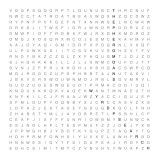
Walker claims that the album’s title is an expression of his frustration at the ubiquity of people claiming things are eerie or weird / wyrd in the present cultural milieu. The artwork for the record is designed as an actual word search too, a knowing nod to how we all grapple for meaning amongst the absurdity of each day. Leaning into ‘weird’ as a coping mechanism is not on The Pheromoans’ agenda however. This album holds little sway with the supernatural, it’s not enough. The overriding impression given by ‘Wyrd Psearch’ is of a band renewed with ideas. There’s no trouble finding the right words, they’re hitting their mark, keeping up with the commentary. ‘Wyrd Psearch’ is a document of The Pheromoans mastering their unquiet moment.
LIMITED RED VINYL
Sheherazaad ist eine US-amerikanische Komponistin und Sängerin, derenzeitgenössische Folk-Pop-Synthese, produziertvon Arooj Aftab, einer neuen Welle der klanglichen Innovation aus der Diaspora Teil wird. In der modernen Welt ist Migration omnipräsent. Sie durchzieht sämtliche Lebens- und Alltagsbereiche, steckt oftmals verschlüsselt in unseren Gewohnheiten. Während unzählige Menschen sowohl mental als auch körperlich mit nie da gewesener Aggressivität die Globalisierung vorantreiben, werden einst stabile "Genres" und Identitäten jeder Art zerlegt - aufgespalten und abgeschafft, überflüssig gemacht und wieder neu geboren. Alles migriert, alles ist in Bewegung. In genau diesem fluktuierenden Feld findet Sheherazaad Inspirationen für ihre Songs. Ihr Minialbum Qasr entstand während einer Phase der familiären Entfremdung. Auch die Trauer über einen Todesfall in der Familie und die rassistische Polarisierung ihres Landes, das plötzlich kaum wieder zu erkennen war, prägten die Aufnahmen. Der Titel des Albums bedeutet auf Urdu (der Nationalsprache in Pakistan und einigen indischen Bundesstaaten) so viel wie "Burg" oder "Festung". Und tatsächlich ist Qasr ein Monument: Es verkörpert die Last der Vertreibung, die widersprüchlichen Sog- und Anziehungskräfte der Diaspora - und das schreckliche Problem der Auslöschung, des Vergessens der eigenen Wurzeln. Um genau diese Art der Erfahrung geht es, um die Gewalt, die Hysterie, auch um die Romantisierungen, die damit einhergehen, wenn Sheherazaad klanglich eintaucht in jenes In-Between - ins Reich des Dazwischen. Die Aufnahmen fanden im Herzen von Brooklyn im Glass Wall Studio statt. Die unbeschreibliche Energie der nächtlichen Sessions speiste sich dabei vor allem aus der einzigartigen (und einzigartig internationalen) Konstellation der Mitwirkenden: u.a. mit dabei waren auch Basma Edrees (Ägypten), Gilbert Mansour (Libanon) und Firas Zreik (Palästina); gemastert von Heba Kadry (Björk, Ryuichi Sakamoto). Auf Qasr lädt uns Sheherazaad in eine betörende und vollkommen neue Klangwelt ein: in ein Reich der Musik, das genau genommen noch gar nicht von dieser Welt zu sein scheint. Zugleich lässt sie die Fackel der nomadischen Erfahrung auflodern, gibt auch diesem Feuer einen sehr viel prominenteren Platz. Insgesamt entwirft die Künstlerin mit diesem betörenden Album ihre eigene Festung. Denn sie will auch uns dazu ermutigen, unsere eigenen Festungen, unsere eigenen klanglichen König:innen-Reiche und unmöglichen Traumwelten zu entwerfen
Burn Out - the latest release from Mini Trees - is a defiantly euphoric EP with the sonic and emotional bandwidth of a full-length record packed neatly into five new songs from Los Angeles-based songwriter Lexi Vega. Inspired by a relentless touring schedule that followed the release of her 2021 debut album Always In Motion, the songs of Burn Out confront questions of identity, exhaustion, and how to navigate creating art in an industry fixated on commodifying it.
A month away from music sparked Vega’s creativity and inspired her to return with long-time friend and producer Jon Joseph. Together they determined to push the limits of Mini Trees’ “bedroom pop” description, opening the door to a number of new
collaborators - keys from Zac Rae (Death Cab for Cutie, Lana Del Rey), arrangements from James McAllister (Sufjan Stevens, Taylor Swift), and even bass from longtime family friend Jimmy Johnson (James Taylor, Phil Collins). These songs shimmer in production, even as they’re saturated with the pervasive sense of fractured identity, disillusionment, and otherness that has shaped much of Vega’s sense of self. The overwhelming weight of these disparate identities is reflected in the EP’s cover art - a bed cluttered with clothes she’s chosen not to wear, familial heirlooms and mementos strewn at her feet.
The fast-rising Purveyor Underground Ltd kicks on again here with a sizzling seventh EP that is as rude as they come - in both meanings of the word - from Die Familia. It is his own East Side Gangster remix of 'U Dat Bitch' that kicks off with hard-hitting house kicks and sleazy vocals over a rugged bassline. 'House Music' (part 1 - Late Night edit) is just as raw but more deep and hypnotic with its ascending synth lines and steamy vocal coos. 'Organic (Like Weird)' might be the best of the lot - a quick and urgent house thumper with silky hi-hats and rolling bass getting you up on your toes amidst swirling pads and a melange of vocals.
Felix Machtelinckx is a singer, composer, producer and lyricist from Belgium. Featuring an array of film scores, dance soundtracks, pop, folk and electronic music, Felix's music resonates with a familiar, almost nostalgic patina, applied with a distinctly crooked touch. Through artistic collaboration, coaching and production, Felix has cut a dash in the pop and indie cult scenes of Belgium, especially with his band Tin Fingers, who are feted as one of the most promising indie acts of the moment. Night Scenes, Felix’s solo debut is, in contrast to his other work, more humble and less traditional, roughly hewn from a series of ambient soundscapes, earthy textures and playful structures. Felix’s voice, normally the flagship of his music, becomes more of a distant memory, an indistinct emotion feathered throughout the music. Many lyrics are improvised, sometimes unintelligible, conjuring haunted, uncertain undertones. Similarly, the album is innately peripatetic to the core, being created, written and recorded in Lithuania, Belgium, France, mastered in the US, and finally released in the UK. In the first instance, some of the tracks were created for the contemporary dance piece Doggy Rugburn by Brandon Lagaert of Kaiho and Peeping Tom; others were created enigmatically for a film that never surfaced; while the remainder are the product of more personal work and research. As Felix began to collect and review these disparate parts, the concept of a unified album began to evolve. With 'night' featuring as a suitably dark leitmotif, or backdrop to a series of emotionally fraught 'scenes', each track depicts a form of trauma, locked within the confines of the mind. Felix observes: "Imagine yourself in a dusty old room unable to sleep. Emotions, fears and other demons haunt your mind. This in-between state makes your mind reach for other worlds. This is Night Scenes." For the most part, Night Scenes was created using a variety of old, and rare, analogue equipment. With almost no digital editing, the record was primarily mixed through a vintage cassette desk, giving it a nostalgic character with a noisy undertone. Felix fully embraced the synergy of his emotional themes and retrograde gear, enthusing: "A lot of textures were created on an old Soviet synthesizer that causes a blackout when you hit the lowest note on the keyboard. The dysfunctionality of the synths was often used to create rhythm and texture." This unnerving ability Night Scenes has to comfort and confound the listener is summed up by Jordan Hudson, House Of Media producer, and music podcaster, when he concludes: "Some songs on the album have this sort of fleeting comfort and tonality, which dissolves into a subtle rhythmic/structural or modulated disarray the moment I settle into them - this really fits with my experience of the night .. This record is a winner, and will be something I'll listen to a lot from here on
- The Black Angels' classic sophomore album - Special color edition pressed on Metallic Silver Wax. - Triple LP housed in a Stoughton tri-fold gatefold jacket // "The Black Angels bring the aura of mid-1966 the drilling guitars of early Velvet Underground shows, the raga inflections of late-show Fillmore jams, the acid-prayer stomp of Austin avatars the 13th Floor Elevators everywhere they go, including the levitations on their second album, Directions to See a Ghost. Mid-Eighties echoes of Spacemen 3 and the Jesus and Mary Chain also roll through the scoured-guitar sustain and Alex Maas' rocker-monk incantations. But he knows what time it is. 'You say the Beatles stopped the war," Maas sings in `Never/Ever.' `They might've helped to find a cure/But it's still not over.' Even so, this medicine works wonders." - David Fricke, Rolling Stone Last time we met The Black Angels, they were staring into the desert sun somewhere outside of Austin, Texas. Two years later, night has fallen and the spirits have come out. It's time for The Black Angels to provide Directions On How To See A Ghost. If you're familiar with Passover, the band's 2006 debut, you'll know that The Black Angels's music alone is enough to invoke spirits. There's a name for the band's sound; they call it `hypno-drone 'n roll'. It's the sound of long nights on peyote, of dreams of a new world order, and of half-invented memories of the seamy side of '60s psychedelia. While the Iraq war is still a major influence on the band's lyrics, there are new forces at work here, including Eugene Zamyatin's dystopian novel We and in Christian Bland's words "psychic information from the past and future." See, The Black Angels really are in contact with ghosts. "Civil War battlefields are prime spots for seeing ghosts," says Bland. "One time at Kennesaw mountain in Georgia, I was climbing the mountain in the middle of June and it must have been close to 100 degrees, but in this one particular spot it was very cold. The hairs on my neck stood up and I knew something strange was happening. Then the wind whispered something like `retreat,' and I did. I later learned that the spot where I was on the battlefield was known as `the dead angle', the place where the fiercest fighting took place. The confederates ended up retreating from the mountain towards Peachtree Creek." The Black Angels formed in Austin, Texas, in 2004, comprising from six people (now five) from very different backgrounds. Singer/vocalist Christian Bland is the son of a Presbyterian Pastor and was raised in a devoutly religious household. Bassist / guitarist Nate Ryan was born on a cult compound and drummer Stephanie Bailey claims she's a descendent of Davy Crocket. She and Alex Maas (vocals/guitar) believe a little girl in a red linen dress haunts the group's home. The band released Passover in 2006 to critical acclaim for both the album and the song "The First Vietnamese War". Most of all, Passover established The Black Angels as a band with brains, balls and a strong message. And this time around, the message is there to read in a 16-page booklet that comes with the album. "Our central theme is that people need to open up their minds and let everything come through, and to learn from past mistakes," says Christian. "Only then will we understand the reality of this world and progress beyond where we are now as humans. We've built upon that theme with Directions to See a Ghost. We want people to study the booklet we are providing with the album in hopes that they will be able to relate each song to something in their life." _"War is Peace. Freedom is Slavery. Ignorance is Strength. Keep Music Evil."_
- A1: Bob Porter - Chiang Mai
- A2: Jordan Stevy - No Thoroughfare
- A3: René Costy - Strange Dream
- A4: Stern Selection - Imagination
- A5: Leonard D Messina - Osmoses
- B1: Jordan Stevy - By Pass
- B2: Stern Selection - Black World
- B3: Jacques Siroul - Space Shuttle Jazz
- B4: René Costy - Crystal Waltz
- B5: Jordan Stevy - Pink Donkey Pop
- B6: Bob Porter - Chief Of Freen Bean
Sdban Records continues its reissues of the legendary library series 'A Special Radio - TV Record' with Selection 23, releasing a variety of notable tracks from the 70s library label together on a physical compilation for the first time. With this release, the label continues the vinyl reissues of the Belgian imprint 'Selection Records,' featuring tracks originally released between 1976 and 1981.
Essentially, the tracks take you through a cinematic musical landscapewhere funk and soul merge with a hint of jazz, always evoking a sense of familiarity.
One name that immediately springs to mind is René Costy. From this virtuoso and insatiable artist, the compilation 'Expectancy' was previously released. With 'Strange Dream' and 'Crystal Waltz,' he shows once again that he was not only a versatile composer but also a curious jazz cat. With 'Space Shuttle Jazz', pianist and harmonica Jacques Siroul shows his fascination for synthesizers. Which, as a composer, earned him an unofficial title as an expert in music on demand. This, and much more, make Selection 23 a must-have for fans of previous compilations like Beat Action, Funky Chicken, and Funky Chimes!
Double LP on Hibiscus & Butterfly Pea Tea Vinyl Dust off your coffee machine and prepare your warmest smile to meet your customers again in the second episode of the much-loved coffee brewing and heart-to-heart talking simulator - "Coffee Talk Episode 2: Hibiscus & Butterfly". You are a barista and your customers aren't always humans. Listen to their stories and influence their hearts with a warm cup of coffee or two. Introducing "Coffee Talk Episode 2" on vinyl. Dive into the soothing rhythms of this atmospheric lo-fi soundtrack, which captures the very essence of the Coffee Talk universe. Each groove transports you to that familiar coffee shop corner, where the patter of rain, heart-warming chatter and captivating melodies intertwine flawlessly. Presented in a stunning analogue format, the cover is drawn by Junkipatchi, Episode 2's lead writer and narrative designer. The tracks themselves have been handpicked by Andrew Jeremy, game producer and music composer, who has this to say: "The world is so chaotic that it can break you down. Just take your time to rest and re-energize with relaxing and chill music, before you start each day conquering the world once again." So, settle down with your favourite brew and let Coffee Talk Ep. 2 on vinyl guide you on a melancholic yet tranquil journey, evoking the Seattle from a parallel universe that you've come to know and love. Secure your auditory escape today and immerse yourself in an unmatched coffee shop ambiance.
- The Way I See
- Heartfelt Smile
- Dance In The Shower
- Learn From Mistakes
- Self Reflection
- Sunny Day Of Cold Winter
- Breezy Old Neighborhood
- Shimmering Hearts
- Colorfully Painted Skies
- Night Road
- 24: Hours Rainfall
- Perfect Getaway
- The Hardest Part
- Feeling Better
- Moving On
- Pardon My Words
- Thanks To All Of You
- Last Call
- Never Fade Away
- Stargazing
Dust off your coffee machine and prepare your warmest smile to meet your customers again in the second episode of the much-loved coffee brewing and heart-to-heart talking simulator - "Coffee Talk Episode 2: Hibiscus & Butterfly". You are a barista and your customers aren't always humans. Listen to their stories and influence their hearts with a warm cup of coffee or two. Introducing "Coffee Talk Episode 2" on tape. Dive into the soothing rhythms of this atmospheric lo-fi soundtrack, which captures the very essence of the Coffee Talk universe. Each groove transports you to that familiar coffee shop corner, where the patter of rain, heart-warming chatter and captivating melodies intertwine flawlessly. Presented in a stunning analogue format, the cover is drawn by Junkipatchi, Episode 2's lead writer and narrative designer. The tracks themselves have been handpicked by Andrew Jeremy, game producer and music composer, who has this to say: "The world is so chaotic that it can break you down. Just take your time to rest and re-energize with relaxing and chill music, before you start each day conquering the world once again." So, settle down with your favourite brew and let Coffee Talk Ep. 2 on tape guide you on a melancholic yet tranquil journey, evoking the Seattle from a parallel universe that you've come to know and love. Secure your auditory escape today and immerse yourself in an unmatched coffee shop ambiance.
- The Way I See
- Heartfelt Smile
- Dance In The Shower
- Learn From Mistakes
- Self Reflection
- Sunny Day Of Cold Winter
- Breezy Old Neighborhood
- Shimmering Hearts
- Colorfully Painted Skies
- Night Road
- 24: Hours Rainfall
- Perfect Getaway
- The Hardest Part
- Feeling Better
- Moving On
- Pardon My Words
- Thanks To All Of You
- Last Call
- Never Fade Away
- Stargazing
Dust off your coffee machine and prepare your warmest smile to meet your customers again in the second episode of the much-loved coffee brewing and heart-to-heart talking simulator - "Coffee Talk Episode 2: Hibiscus & Butterfly". You are a barista and your customers aren't always humans. Listen to their stories and influence their hearts with a warm cup of coffee or two. Introducing "Coffee Talk Episode 2" on tape. Dive into the soothing rhythms of this atmospheric lo-fi soundtrack, which captures the very essence of the Coffee Talk universe. Each groove transports you to that familiar coffee shop corner, where the patter of rain, heart-warming chatter and captivating melodies intertwine flawlessly. Presented in a stunning analogue format, the cover is drawn by Junkipatchi, Episode 2's lead writer and narrative designer. The tracks themselves have been handpicked by Andrew Jeremy, game producer and music composer, who has this to say: "The world is so chaotic that it can break you down. Just take your time to rest and re-energize with relaxing and chill music, before you start each day conquering the world once again." So, settle down with your favourite brew and let Coffee Talk Ep. 2 on tape guide you on a melancholic yet tranquil journey, evoking the Seattle from a parallel universe that you've come to know and love. Secure your auditory escape today and immerse yourself in an unmatched coffee shop ambiance.
“I’ve been wanting to make a record like this for a long time. The band, Franny and I produced it ourselves in my living room with no adults present. It’s all acoustic, not an electric lick on the album…banjos and mandos and string basses and stripped-down drums. I put a ton of work into the tunes and I’m pretty proud of this batch. Had a little help from my old co-writing pal Jaida Dreyer on a couple, also wrote a good one with my screenwriter buddy, Brian Koppelman. Lots of gambling songs and lots of minor keys. And my band guys absolutely killed it too, they’re all badasses. I’m dedicating the record to my old compadre, Ian Tyson, who passed away a few months back. I’ve named the album for him as well. ‘El Viejo’, or ‘the old one’ is what our mutual friend Tom Russell took to calling him in later years. The title track is a pretty special one for us. We had a blast making this thing, and we hope you enjoy it too.” - Corb Lund
orange marbled vinyl
A1 - The Construct
Opening the EP in style with a slew of darkly FX, The Construct sets a suspenseful tone before a thorough atmospheric amen on slaught takes center stage - solid, weighted breaks are chopped and edited to the standards fans have come to expect from ASC with a morose, anxious energy to the vocal samples and synthy backdrops punctuating the track in style. A banger for the club as well as the phones.
A2 - Tidal Lock
Distinctive thumping quadruple kicks thunder like a furious heartbeat as Tidal Lock mixes up the vibe and experiments with off-key tones and delivers a neurotic energy to the breaks. Rapid hats and snares accelerate the mix with deep undertone sub bass, as ASC crafts a cacophony of detail and delirium to a track that somehow fuses both calm and a tenacious ferocity in one. Unique, stylish and a joy to listen to.
AA1 - Centurion
A DJ-friendly intro opens Centurion with initially simple breaks which are soon joined with detail and a forceful finesse. Curious, inquisitive FX and melodies bristle melancholically as a stunning deep bassline seizes the attention and the atmosphere elevates. Familiar classic atmospheric signatures add to the complexity later in the track, with all layers continuing to breathe throughout.
AA2 - Nexus
ASC concludes the EP with a deep, rapid fire workout in Nexus -a track which quickly exudes a moody, tense vibe driven by a nervous vigor - inviting you to explore its immersive tapestry of quality modern atmospheric breaks. Persistent hi-hats and snares dominate the mix with vocal samples and otherworldly
effects, and parallel high horn notes complement the composition perfectly.
The Cherry Boppers are back with six fiery artifacts of promiscuous funk recorded in collaboration with the vocalist, also from Bilbao, Patricia Reckless, in this mini-album in 10-inch vinyl format. Pure rhythm from head to toes. As is well known, funk fuses what has historically been labelled soul, rhythm and blues, jazz and rock, and The Cherry Boppers (TCB) have undoubtedly created their own promiscuous formula based on a fine selection of styles that predate hip-hop. Active since 2004 and convinced advocates of jazz-funk and instrumental funk, there are very few examples of vocal tracks in their discography. However, in 2014 they released the EP "TCB meet Dr. Baltz" (Brixton Records-Soul Series) in which they successfully covered three classic rhythm and blues standards with lyrics in Spanish. Now, after five years of publishing drought, they repeat the experience with the stellar collaboration of the vocalist, also from Bilbao, Patricia Reckless, musically formed in the band "Bohemian Soul". The powerful and educated voice of Patricia Reckless blends perfectly, as one more instrument, into the compact rhythmic machinery of TCB, giving the 6 tracks of this mini-album (the 6-track EP thing doesn't quite fit) a structure, perhaps, more familiar to a non-specialized audience. But let's not get carried away, the textures, the silences, the "on the one!" beat, the breaks, the stately Hammond organ, the brilliant brass, the forceful bass lines, the precise percussion, the wah wah... are all 100% Cherry Boppers. "The Cherry Boppers meet Patricia Reckless" remains faithful to that analogue funk sound that makes the band proud of a long and vocational career in the genre. And it is also an album full of details, of paths and instrumental lines to be discovered on multiple listens.
Musique Infinie is the collaborative project of Manuel Oberholzer a.k.a. Feldermelder and Noémi Büchi.Their album »Earth«, released through the Hallow Ground label, is based on a spontaneously composed live score for Alexander Dovzhenko’s groundbreaking 1930 silent movie »Zemlya« (»Earth«) created for the 24th edition of the VIDEOEX festival for experimental film.
Frequently cited as a masterpiece of early 20th century filmmaking, the movie deals with the collectivisation of Ukraine’s agriculture. The Swiss duo complemented it with atmospherically rich electronic soundscapes that are both deeply immersive and highly evocative. As a stand-alone music release, the two-piece »Earth« album captures the essence of Büchi and Oberholzer’s collaboration that is marked by mutual trust and musical versatility that puts them in a state of »togetherness trance,« as they call it.
Oberholzer has been highly productive as a composer, musician, sound designer, and installation artist in recent years, releasing a slew of solo albums as well as a variety of collaboration records with artists such as Sara Oswald and Julian Sartorius. Büchi has recently debuted as a solo composer and sound artist working with electroacoustic techniques to create a »symphonic maximalism for the end of the world,« as she dubs it.
Both are prolific and versatile artists with a penchant for working conceptually, however their collaboration as Musique Infinie is an improvisational and thus by design an intuitive one.
Their sessions start with an exchange on emotions and thoughts rather than theoretical questions or aesthetic debates. When they get to work—often for several hours—they rarely talk.
They approached »Earth« the same way, improvising freely together and using only a few select samples from the film’s original score in the process. Their open-ended approach is marked by an aesthetic ambivalence that perfectly corresponds with the movie’s own inherent contradictions.
Dovzhenko approached his socio-political subject with poetic imagery and philosophical rigour, juxtaposing notions of traditionality with the depiction of modernity.
Büchi and Oberholzer accordingly work with motives that at o ce seem anthemic and elegiac, working with sounds and musical motives that evoke a sense of familiarity in one moment before transforming into something futuristic and uncanny in the next. Their score for »Zemlya« is not to be understood as a mere interpretation of the movie, but rather a re-narration or even re-negotiation of its aesthetic and emotional qualities under their very own terms. »Earth« is an album that concisely depicts what is at the core of the duo’s musical partnership
In the beginning was a half-truth, the truth was of war and the half-truth was post-war. Fancying the pretensions of its cultural superiority, a continent chose to hide the truth behind ridiculous jargon and the soothing distance of offshored ?????????. Europe wished itself beyond war because it thought the privilege of peace a birthright, just as it refused to understand that post-war was a euphemism for interbellum. Then the truth has set us free.
The delusion was discarded and war was revealed as an inconceivable horror. Almost immediately it turned familiar and virtually comfortable. Novelty songs of drones gutting tanks became a laughing matter and the burning tanks, their crew inside, entertainment. Consequently, a plurality of people started to collectively dream of new stages of the righteous kind of carnage. This happened within weeks.
Our imagination has swollen to the point of loss of consciousness, compounded by the narrative form long in the sways of atrophy. All of this raises the question of to what degree were the years of peace culturally squandered. The art of the previous age prided itself on self-awareness, today we fail to even notice that we no longer recognize ourselves. But we have arrived where we started and our issues were not too complex for expression.
Since no art form generates action, the most appropriate art for a culture on the edge of extinction is one that simulates pain. In these times we shouldn't produce any other music, none but this, intended to prevent our silence from being misinterpreted.
When Paul Murphy released his critically acclaimed debut solo album, Claremont 56, in 2006, many thought it would be the first of many. In a way, it was, as in the years since he’s released a string of collaborative sets alongside Benjamin J Smith (as Smith & Mudd), and as part of underground ‘supergroups’ Paqua, Bison and Hillside. But that second solo album? Well, it just had to wait. In early 2023, Murphy finally decided to scratch that itch, roping in some of his most trusted collaborators (keyboardist and bassist Michele Chiavarini, percussionist Patrick Dawes, guitarist Dave Noble and HF International’s Kashif included) to lay down a sumptuous set of tracks that not only showcases his now familiar (bit hard to pigeonhole) neo-Balearic sound, but also proves how much he has matured as a writer and producer since 2006.
In The Garden of Mindfulness is richly musically detailed, expertly arranged and full to bursting with fluid instrumental solos, with Murphy and his collaborators serving up tracks that brilliantly blur the boundaries between languid jazz-funk, downtempo, vintage synth-laden krautrock, dubby grooves and sun-splashed soundscapes. It simply sparkles from the moment that opener ‘Eighty Three’ slowly rises like the morning sun, with gentle, undulating synth sounds ushering in a slow-motion jazz-funk excursion rich in twinkling electronics, spacey pads and warming bass. Recent single ‘Katanaboy’, a lusciously layered dub disco-infused dancefloor excursion in Murphy’s familiar style, raises the temperature a touch, before ‘Bonne Anse’ and the sublime ‘Unka Paw’ (whose combination of evocative fretless bass, extended electric piano solos, Clavinet licks and acoustic guitars is genuinely spellbinding) invite a combination of wavy shuffling and flat-on-the-back, eyes-closed appreciation.
And so it continues, with gorgeous title track ‘In The Garden of Mindfulness’ making way for the boogie-influenced, Japanese-British brilliance of ‘Hangsang’ (check the jaunty pianos, yearning breakdown and exotic melodies). Murphy’s long held love of warm, weighty bass, hypnotic disco grooves, colourful analogue synth sounds and jazzy guitars once again comes to the fore on ‘Way Of The Hollow’ before the album reaches a fittingly triumphant conclusion with ‘Late In March’.
A neat sonic summary of all that makes the set such a rewarding and entertaining experience, repeat listens reveals a wealth of musical details, from off-kilter triple-time drums and surprise bass guitar solos, to impeccable piano solos (provided by the immensely talented Chiavarini), fizzing jazz-funk synth doodles and stirring synth-strings. It’s a breathlessly brilliant way to end an album that was genuinely worth waiting for.