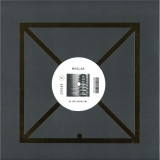
Jon K & Elle Andrews' MAL imprint returns with its second release - a long rumoured excursion from Equiknoxx skippers Gavin “Gavsborg” Blair and Jordan “Time Cow” Chung operating under the Gav & Jord masthead for the first time. It’s their most probing x tight set of productions thus far - showcasing that naturally wild rhythmic mutability that’s earned them followers in every corner of the experimental paradigm over the last few years.
‘Writings Ov Tomato’ ties off a loop between Equiknoxx and their early supporter Jon K, who was pivotal in bringing their productions to the attention of Sean Canty at DDS, who went on to release their by-now seminal ‘Bird Sound Power’ album a good half-decade ago. This new set of tracks came about after MAL urged to the duo to explore any under-excavated musical territory they’d been thinking about since they began to tour the world, and the result is this incredible, purely instrumental LP that romps between Autechrian mutations, avant R&B swangers, Jersey-style sluggers and proper, wig-flipping club missiles.
Who else would boot off a new LP with a track titled ‘Childish House Mafia’? The fact it sounds like Actress formulating an industrial noise tape using ritual chants just makes it all the more screwy. The title track returns the duo to more familiar ground, with prickly “Bird Sound Power” drums notched up a few BPM and spliced with whirring trap hats and disorienting synths. ‘A Yow Jon K’ is a Kingston-fried take on sun-bleached Miami electro, with a rolling beat filled out by Gav & Jord’s hard boiled soundboard x foley crunches, before ‘Pig Pilot’, the record’s most substantial cut, loops JBC Radiophonic Workshop convulsions around a booming 4/4 that wouldn’t sound completely out of place at Berghain’s Klubnacht. Saturating the hook and allowing ferric hats to fill in the gaps, the pair manage to fabricate a sound closer to 1970s library music than Villalobos, and we’d wager you ain’t ever heard owt like it.
Combine all this with lower-key slithering industrial-ambient moments like the plughole-wonked outro ‘Brent Bird’ (named after Gav’s producer brother), the tuned tinkle of ‘No Sweat in my Sweatpants’ and the airborne elegance of ‘Appinness’, and you’ve got another Equiknoxx joint that draws from the syncretic mosaic of Afro-Latin-Sino-US influences and re-contextualises them into remarkably odd and effective structures that dance in the integers of a myriad styles.
Cerca:la familia
Shortly after having their North American tour canceled due to Covid in
March 2020, Sam, Clay & their close friend and producer Dan Horne
decided to hunker down and use the time to work on an album of covers
Ranging from songs by close friends like Allah Las & Little Wings, to classics by
Stevie Wonder & the Beach Boys, what resulted is an effortless & touching take
on songs you may or may not be familiar with. Other artists include: Sade, Babe
Rainbow, Peter Rowan, The Louvin Brothers.
Decomposed recalls classic American hardcore like Bad Brains, Poison Idea and Jerry’s Kids or Japanese ragers like Paintbox, The Comes, Eiefits and Skizophrenia. But there’s also a healthy slug of classic UK and US punk and even a bit of Krautrock, psychedelia and Black Sabbath in there too. Nottingham has always been a melting pot for heavy music. For a small city, it has boasted more than its fair share of genre defining bands and artists, not to mention record labels. Bands cross-pollinate, form projects and offshoots and play one-off gigs that would result in lengthy careers and world tours if they had happened across the Atlantic. It has always been like that there. No big deal (but yet, a really big deal if you know). One such band/project/offshoot were Endless Grinning Skulls. Formed by guitarist Andy Morgan (also from Bloody Head, Army Of Flying Robots, Nadir and countless more), drummer Steve Charlesworth (Heresy, Wolves Of Greece, Meatfly, Geriatric Unit) and bassist Gords (Hard To Swallow, John Holmes, Geriatric Unit) in the early twenty-teens, they re-set the bar for the 3-piece hardcore band before (perhaps inevitably) burning out in 2018. Morgan and Charlesworth weren’t done though. They’d forged a bond in EGS and wanted to carry on playing together so - in a familiar Nottingham storyline - they recruited former Pitchshifter guitarist Stu Toolin on bass and Anmarie Spaziano (who you might know from running a famous burger joint) on vocals and formed Blind Eye. They knew Toolin was about to relocate to Portland, Oregon so they wrote and recorded an EP (released on Morgan’s own Viral Age Records). Quick-sharp. No messing about. And that – by rights – should have been that: over and out. New band please. However, the demo captured a rare intensity and vitality that more considered projects often fail to achieve. This was a band let loose, free from previous shackles and loving the noise they made. It seemed a shame to stop there. Recruiting Matt Grundy (a former bandmate of Morgan’s in both Nadir and Dead In The Woods) to the bass vacancy they went back to Stuck On A Name Studios in 2021 with Ian “Boulty” Boult at the helm again and delivered the album Decomposed.
Decomposed genuinely rocks out without losing one iota of the effervescent anger that made the demo such an essential listen. From the insistent, minimal opener Ready To Go Now via the unhinged thrash of Straw Man and the menace of the stomping Pero No Quieres, to the measured chugging and epic crescendo of closer Broken Star, this record is a fucking blast. Needle off, flip it back over, play it again. Your neighbours are loving it so much they’re banging on the walls to tell you. “I suppose the intention was to write high energy, catchy hardcore, with a nod to what has come before, but also to do our own thing,” explains Andy. “Lyrically, the album was written during the pandemic, and although it’s not ‘a pandemic album’, I think it deals with a lot of the feelings of loss, separation and isolation
Motorik, Techno, Lo-fi, Primal and monotonous are words to describe Black Bones unique take on afro and post punk. This 7” is their first on Höga Nord Rekords and contains two tracks showing depth in musical creativity and record collections.
Black Bones use familiar components in surprising ways: electronics and loops swirl over sequenced pounding backbeats, but when the aggressive stereo bass kicks in on “Nairobi Night Train”, Kenya’s border stretches all the way up to the British Isles and a huge savannah opens its horizons just south of Belfast.
This is an unusual mix of European and African music tradition - a meeting of genres so seamless it’s hard labelling it crossover. It’s just an explosive potion mixed for dancing!
We’re stoked to welcome back Medlar to Delusions for his third EP on the label and you’re in for a proper treat! One of the unsung heroes of UK underground house music, Medlar has released on Wolf Music, Wah Wah 45’s and West Friends. His remixes and edits for the likes of West End, Kon, Dele Sosimi, Glenn Astro, Disclosure and Billy Cobham always hit the spot with an authentic, raw and crunchy sound that work magic on the dance floor.
Here on his Interruptor EP we have 4 tracks which show off his range as a producer, taking in percussive tools, deep and dusty basement jams and blissful late night atmospherics. Lead track Interruptor is deceptively simple but devastating on a big system. Chopped up percussion, speaker wobbling bass and a heavy kick lay the foundation for crazy timbales and filtering syn-toms, all topped off with a familiar sample from back in the rave days.
Next up we have I Wish which features Kim Anh who delivers a brilliant vocal complimenting the low-slung disco drums, 808 percussion and fat bassline perfectly. This is our idea of what a modern day house hit should sound like. Raw and unpolished with a loose, un-quantized groove so you can feel the funk and a dynamic arrangement which keeps the energy high throughout.
Flipping over we have Cable Street which cranks things up with a techy house jam perfect for more peaks time sets. Once again, Medlar knows ex- actly how to make more with less and keeps the shuffling drums stripped back and simple stabs and modulating FX front and centre for maximum im- pact.
Finally, Turn Things Around brings a more 90’s deep NYC feel to the EP with floating pads, bouncing bassline, piano stabs and organ riff. Subtley epic and grandiose without being showy, this is a slow-burner that could just be one of those B2 tracks which become your favourite of the release.
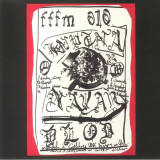
Swedish progg is not to be confused with "prog" as in progressive rock music. When we are talking about progg, we are referring to the Swedish music movement influenced by the political climate of the late 60's, to some extent the hippie movement and in many cases also Swedish folk music. Music highly driven by a political agenda. Blod's Knutna Nävar, originally released in an edition of 150 copies on Förlag För Fri Musik in 2018 and later a small cassette run, is pretty much a lost progg classic from the 70's. This is not a case of copying a certain sound though, far from it, neither are ideas really rehashed nor does the album feel nostalgic in that sense. Rather it feels like if someone has read about the progg movement and all the records but never actually heard it, yet decided to do an album and somehow managed to succeed big time. Further developing the sound palette and ambience initiated with parts of the Leendet Från Helvetet recording, the music feels slightly louder and more in your face. It's like it's more of everything. The melodies are immediate and it's quite impossible to resist the brash catchiness of it all. Albeit mentioning progg music and its importance for this recording, the actual musical side of Knutna Nävar has in reality more in common with soundtrack/library music and Swedish composers like the late Björn Isfält when you attempt to break it down. The crude DIY approach and anything-goes mentality just adds an extra dimension to it all and ultimately places the music somewhere else. There's a rather blunt use of samples throughout the record (sources probably best to leave out, though you don't have to be a Einstein to figure these out), but then again this is made by the same guy that gave the world the ABBA album. Those samples has managed to become an integral part of the music through the few years that has passed and though well familiar with the records those snippets are now to me genuinely Blod and nothing else. It seems like everyone has their own favourite but Knutna Nävar is the Blod album I have returned to the most. It has that extra something that sets it apart and if I would have to pick up a few records that sums up why Gothenburg has been a pretty damn awesome place to be in the last 10 years or so, this would definitely be one of the top picks.
Arriving on Cheeky Sneakers and bringing the essence of UK rave with him is UK based producer Ravetrx who deliver four huge cuts of breakbeat, jungle and trance-licked hardcore for the masses.
'Run 'N' Hide' begins with fairly familiar territory for the producer. Sitting somewhere between techno, breaks and speed garage, this peak-time warper is a sure-fire party starter, before 'Show Me' transitions into breakbeat completely; it's deafening bass-kicks, euphoric builds and jungle-percussion providing a throwback to a golden era for dance music.
The familiar chords of the M1 ring out on 'Mind Games' - a classic trance love-cry brimming with emotion - before the 160bpm jungle riddims of 'Shebeen' provide a lairy and screwface-inducing climax.
D'Arcangelo is the duo of Marco and Fabrizio D'Arcangelo and Arium is their first release of sublime introspective electronics for A Colourful Storm. Throughout EPs and seminal albums for Rephlex, Nature and Suction Records, D'Arcangelo forged a sleek and sensuous sound alongside their label mates Bochum Welt, Leo Anibaldi and Lory D. Arium is their latest EP, containing new studio productions and a lost gem produced during the Shipwreck era, hinting at the seminal Broken Toys' Corner and Eksel albums. Full-colour sleeve with insert and liner notes by Marco D'Arcangelo.
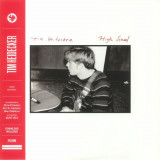
Produced by Heidecker, Drew Erickson, Eric D. Johnson and Mac DeMarco, High School sees Heidecker emerging as an increasingly playful and poignant story teller, infusing childhood tales with new gravity. In conjunction, he announces Tim Heidecker Live! Featuring Tim Heidecker and The Very Good Band, his first two-act tour of comedy and music. Since 2016, Tim Heidecker has chronicled the annals of adulthood on a series of supreme singer-songwriter albums. The crushing devastation of divorce and the existential malaise of middle-age, the minutiae of home ownership and the ritual of family vacation, child rearing and global warming: Heidecker has handled it all with humor and heart. But, there’s one pivotal lodestar of human development he has yet to mine that’s right, High School. First single “Buddy” is a composite of a few woebegone friends, which finds Heidecker reminiscing on the familiar tragedy of the adolescent stoner, manifesting the destiny of undiagnosed depression and parents who didn’t care much. The song itself is a jangly delight, but it’s hard not to mourn for “Buddy,” then re-count whatever blessings you may have. After initial and fruitful sessions with Jonathan Rado, Heidecker started recording tunes with DeMarco and Erickson, who had also worked on 2020’s collaboration with Weyes Blood, Fear of Death. At DeMarco’s studio, they added drum machines and synths and sidewinding solos to Heidecker’s big strummed chords. Johnson (Bonny Light Horseman, Fruit Bats) helped Heidecker finesse the tunes even more, making the music as rich as the feelings. Kurt Vile contributed to one song, as well. Through all those sessions, it slowly became clear: Heidecker was writing not only about the adventures and misadventures of life as a Pennsylvania teen in the early ’90s, but also how it felt to lose a juvenile sense of mystery and possibility as an adult. He was writing about high school and, really, the way it helped shape everything else. Back at Pennsylvania’s Allentown Central Catholic High School, Heidecker dreamed of making it with one of his many rock bands — Time and Other Things, Shaggy’s Beltbuckle, and (incredibly) The Pulsating Libidos. Two years shy of his graduating class’ 30th anniversary, Heidecker admits he had little of substance to say when he was 17, like all but the rarest of precocious minds. In college, though, he found the friends with whom he built his comedy career, largely apart from music and without much thought for his time back at Central Catholic. He was focused on his future. It is fitting, then, that as Heidecker has become such a delightful singer-songwriter and collaborator, he returns to the first scene of his time as a musician. Maybe he’s right — he didn’t have anything to say or sing about life back then. But across the earnest and amusing High School, he finds plenty to say about those weird and wonderful and ordinary times.
Following up their hugely respected 2 demos (also available as a compilation) and fairly recent 7”, CHAOTIAN are back to release ultimate Death Metal barbarity into the underground in the form of their debut full length. Storming into life with a rotten amalgamation of putrescent riffing and blastbeats, the instrumental unity of this Danish titan is a juggernaut of pure filth. It is telling when a band can have those super groovy pinch harmonic laden riffs and not making them sound like all the others. This may seem a weirdly specific observation (perhaps a guitarist just being a guitarist) but it makes all the difference with heaviness, intensity and also the catchiness on the records. When met with the sewer-spewing vocals and weird dissonant spasms in the music, it doesn’t take long to recognise this will be a truly warped and maniacally brutal experience of Death Metal might. Interlinking primitive hooks that grasp you by the throat then transcend into these weird effects or spacious riffs, there’s nothing predictable about the album yet it has that familiar feeling that all good Death Metal has where it feels a bit daunting, unnerving and yet you cannot escape it. Obviously Denmark and this trio does not let the scene down. Amazingly this small country seems to have so much diversity in their rotten underground movement and CHAOTIAN are a shining example who embody the grotesqueries, masterful songwriting and tight musicianship that has become associated with this otherwise pretty and peaceful nation. It explains that mysterious gurgling from the sewers at least! Bludgeoning, cavernous and ultimately otherworldly, CHAOTIAN masterfully combine the cerebral and cosmic with brutish, old school music that is damned heavy and doesn’t feel pretentious nor directionless. Their debut LP is not just as strong as their previous works, but a more refined and complete vision, showcasing the bands full potential (so far)…
Greek genius Christos Chondropoulos’ stunning debut for The Death of Rave finally lands on vinyl - an incredibly imaginative masterwork rich with quartertone melody and meticulously chiselled production, shaped into a future-folk songbook that deeply expands on his wonders for 12th Isle and The Wormhole. Highly recommended if yr into Paul DeMarinis, Rashad Becker, Ryuichi Sakamoto, Kara-Lis Coverdale's 'Aftertouches', Jonathan Bepler’s soundtracks for Matthew Barney, Black Sabbath or Aphex Twin. Floors us every time!
Continuing Christos’ singular fascination with, and reappraisal of, Ancient Greek modes, ’Relics’ further excavates the deeptime topography of Greek music prior to the ban of “oriental” or 1/4 tone microtonal modes nearly 100 years ago.
Clandestine, euphoric, hyperreal and otherworldly; it takes shape as faintly familiar forms of new age folk, avant-techno and metal musicks, but with an alien appeal that treats the past almost like another planet, never mind a foreign land. Christos studiously raids the past for lost treasure, navigating his tuned instincts as an improvising percussionist, and lover of non-Western composition, to create a uniquely absorbing soundworld that resembles an AI’s dreams after ingesting encyclopaedia entries on thousands of years of Greece prior to 1936. In the process, the album acutely questions his and our relationship to the past, and what has become lost in translation with reliance on prelaid templates and the “wisdom” of elders.
Bursting to life with the iridescent arps and new age AI chorale of ‘First Love Fereter’, and concluding with bone-clacking raverie of ‘Jungle X’, the album offers a stunning advance of the themes and aesthetics in Christos' previous records, from the self-released free jazz of ‘Fingerpainting’ (2013) to 2021’s 12th Isle released ‘Athenian Primitivism.’
Thanks to meticulous detailing, ‘Relics’ allows a finer play of textured light and almost tangible - yet entirely generated - voices into his music: most strikingly on the sublime songcraft of ‘Regret’ and ‘I Dream Of You’, while the likes of ‘Asham’ are bathed in deeply uncanny atmosphere, and his percussive proprioceptions are most heightened in the delirious battery of ‘War Horns’ and ‘Sacrifice’, with ‘Cyber Crust’ calling up demonic, cthonic pagan spirits resembling Black Sabbath undergoing regression therapy.
Taking direction from both the cinematic song stylings of sardonic yet
unfettered troubadours like Randy Newman, Brian Wilson, and Harry
Nilsson and the "visual scoring" of indie pop song placement in 21stcentury films, Best Move's music suggests the sound of a decade of
winding, disparate avenues finally convening in a perfect center
The Sacramento-based trio is composed of Kris Anaya, Joseph Davancens, and
Fernando Olivia. Anaya, a talented songwriter with a penchant for wry, offbeat
guitar-based folk-pop songs, and Davancens, who holds higher education degrees
in avant- garde composition and jazz double bass, formed the electronic act
Doombird together in 2016, but in 2019 the pair gravitated back to what they
consider more natural inclinations: organic instruments, earnest songwriting, and
a more true-to-themselves direction. Adding Oliva, Best Move was born. Many of
Best Move's songs maintain an intentionally similar sonic feel. Guitars strum and
piano twinkles while a layer of manipulated or synthesized instruments spread a
hazy overtone on top of it all, and steady yet minimal drums keep things moving.
Lyrically, the standards prevail - love, loss, friendship, searching for purpose - but
the themes bubble under the surface of a sea of metaphor, leaving the listener to
decipher the message in their own way. Anaya calls the sound a "thank you to the
past," and while a warm, familiar tone echoes throughout the band's universe,
something unmistakably modern remains.
The brand new album by rising Australian out-rock duo, Party Dozen. Features guest vocals by Nick Cave. Party Dozen are a duo from Sydney made up of Kirsty Tickle (saxophone) and Jonathan Boulet (percussion and sampler). Since forming in 2017, they have become renowned in Australia for their incendiary live shows, touring and playing with acts such as LIARS, Tropical Fuck Storm and Viagra Boys. Exactly what Party Dozen are is completely up to the listener. Doom. Jazz. Hardcore. Psychedelic. No-wave. Industrial. Although largely instrumental, their sets are punctuated by Kirsty’s unique “singing” style, screaming into the bell of her saxophone which itself goes through a bevy of effects pedals. Intensely independent in everything they do, the duo write, perform and record everything themselves. 2022 will see the return of Party Dozen, first in April with the 7” release, Fat Hans Gone Mad, for the Sub Pop Singles Club, and then in July with their third album, The Real Work, with a new label partner in New York’s Temporary Residence Ltd. The Real Work succeeds in exploring new directions but also features some familiar Party Dozen touches. Perhaps most notable is the first-ever appearance of a guest other than Kirsty or Jonathan on a Party Dozen track, with Nick Cave ad-libbing a very memorable contribution to the album’s second track, “Macca The Mutt.”
While awaiting the release of Dignity Of Labour, The Ex headed back into the studio in early 1983; this time with a new friend – The Mekons' Jon Langford – helping produce.
Originally released in April 1983 (only a month after Dignity Of Labour), Tumult marks a major evolution in Ex-sound. Opener "Bouquet Of Barbed Wire" emerges snarling out of post-punk atmospherics with Terrie Ex's glacial guitar, Bas Masbeck's loping bass and cascading tom-toms from new recruit Sabien Witteman, while "Fear" and "Survival Of The Fattest" bring to bear the rhythmic core of the band, their signature angular style.
Lyrically, the songs on Tumult cycle through a series of familiar concerns: animal rights, squatters, the working class, punk's penchant for radical chic and the creeping fascism of nationalist sentiments. G.W. Sok's voice is squalling and perfectly wry throughout.
Tumult remains a high-water point of early Ex, serving as both developmental guide and way-station. The next 18 months would see the departure of Bas and Witteman and the arrival of long-serving bassist Luc Klaasen and drummer Kat Bornefeld (whose supple rhythms propel the group to this day). The album stands as one of the most compelling and unique documents of early '80s DIY exploration. If Mark E. Smith had only one favorite Dutch punk band, then it would undoubtedly be The Ex.
This first-time vinyl reissue comes with 28" x 39" full-color poster
"The letter X marks the spot, crosses over, literally with a cross. It’s the former, the ex-. The ex-lover known simply as “an ex”. Ex- is the latin prefix meaning “out”. Exterior, an exit. Extraordinary. Excellent. It’s exciting. Generation X. X-files. X is the unknown. X is Extreme“
Extreme is Molly Nilsson’s tenth studio album. Recorded in 2019 and throughout the 2020 global pandemic at home in Berlin, Extreme is a departure for Nilsson, an explosion of angry love. It’s an album of anthems for the jilted generation, soaked with joy and offering solace, bristling with distorted, Metal guitars and planet-sized choruses that bring light to the dark centre of the galaxy. It’s an album of the times, by the times and for the people. It’s a record about power. About how to fight it, how to take it and how to share it.
Absolute Power explodes with massive guitars, double kick beats and the instantly iconic line “It’s me versus the black hole at the centre of the galaxy.” Nilsson’s performance itself portrays absolute power in its confidence but the song is a call-to-arms, an entreaty to grasp the here and now, to take the power back. It’s Nilsson pacing the ring and we’re instantly in her corner. Earth Girls takes familiar Molly Nilsson themes - female empowerment and subverting the patriarchy - but casually throws in one of the choruses of her career. “Women have no place in this world” she sings, but it’s the world that isn’t good enough. Stadium-sized but still warmly hazy, Earth Girls has its fists in the air, glorifying in harmony, almost ecstatic in its feeling good. Nilsson’s Springsteen-level conviction and righteousness bleeds through the speaker cones, the cognitive dissonance between the song’s cadences and angry lyrics redolent of Bruce in his prime. Female empowerment isn’t always an angry energy on Extreme, however. On Fearless Like A Child, Nilsson’s anthem to the female body and women’s sovereignty of it, she croons over a mid-80s blue-eyed Soul groove. It sets a nocturnal scene as the narrator surveys her past and her surroundings. Before we’re fully submerged in a dreamlike, Steve McQueen-era Prefab Sprout poem to learning from your mistakes the song erupts into one of those lines only Molly Nilsson can get away with: “I love my womb, come inside I feel so alive” she fervently sings. Against the backdrop of ever-encroaching, conservative rulings on women’s reproductive rights in places like Texas, it’s simultaneously angry and full of love.
Every song on Extreme is a gleaming gem in a pouch of jewels. On Kids Today, Nilsson is the voice of wisdom, archly commenting on the eternal struggle between youth and authority. Wisdom infuses Sweet Smell Of Success with a transcendent love that forgives the narrator’s shortcomings and celebrates the moment, it’s a letter to the author from the author that asks “what is success” and concludes that this is it, this song, this moment. It’s a rare moment of simple reflection that is generous in its insight to Nilsson’s inner life. “Success” is a tool of power and we don’t need it… We need power tools and there are moments on Extreme where it feels like Nilsson is showing us how to find them. It's an open conversation through out Extreme. She’s a warm, comforting presence through out the album and specially on these songs of encouragement, songs perhaps sang to a younger Molly Nilsson or, really, to whomever needs to hear them. “They’ll praise your efforts, they’ll call you slurs a rebel, a master, an amateur / Merely with your own existence, you already offer your resistance.” On Avoid Heaven she’s even more direct, pleading with us to avoid concepts of purity and to embrace the glorious, ebullient, emotional mess we’re often in as a method of upending the power structures who need things to be perfect.
They Will Pay brings back the big, distorted power chords in the form of a agit-punk, pop slammer. Of course, when Molly Nilsson does punk pop we get the catchiest chorus this side of The Bangles or The Nerves. It’s rendered in an off the cuff, throwaway manner that is just perfect in its roughness. However, it’s on Pompeii that Nilsson delivers the album’s epic, emotional heartbreaker. Like 1995 on Nilsson’s album Zenith, or Days Of Dust on Twenty Twenty, the lyrics of Pompeii are heavy with a transcendent sadness, an aching poetry that cuts to the truth of the heart like the best Leonard Cohen lines, though here delivered with an uplifting, life-affirming love. It contains the most personal moments of Extreme, a song lit by the dying embers of romance. Yet it’s here where the alchemy at the base of all Nilsson’s best work is found. Turning small nuggets of personal truth into big, generous universal moments that invite everyone to cry, to love and to fight the power. In an album of jewels, it might be the shining star.
Molly Nilsson’s biggest, boldest and most vital album to date, Extreme is about power. Against the love of power and for the power of love.
When words trail off at the beginning of claire rousay’s »everything perfect is already here«, ornate instrumentation is waiting to fill a void left by the breakdown of language. Yet it becomes clear as we trace rousay’s collaged sonic pathway that breakdown, of meaning and also of melody, is also a place to rest. everything perfect… is made up of two extended compositions that cycle between familiarity and unknowing. There are seemingly infinite ways to feel in response to these pieces of music, which shift tone across their languid duration, earnest like a familiar song but unbound from the emotional didacticisms of lyrical voice and pop form.
rousay builds a fluid landscape around the acoustic contributions of Alex Cunningham (violin), Mari Maurice (electronics and violin), Marilu Donovan (harp), and Theodore Cale Schafer (piano), whose respective melodies weave gently in and out, sometimes steady, sometimes aching, sometimes receding altogether in deference to less overtly musical sounds. That is, percussive texture in the form of unvarnished samples and field recordings: the rattle and rustle and the stops and starts of life unfurling, voices sharing memories nearly out of reach, doors closing, wind against a microphone. Everything comes from somewhere in particular, possessing the veneer of the diaristic, but sound’s provenance is secondary here and so these details become tangled and fused. On this release I hear such details not as individual ornaments or stories but the collective architecture of the greater composition. It’s an architecture that is not quite formed and thus full of openings out to the world unfolding.
“The world unfolding,” that’s a kind way of saying change, movement, loss, transformation. Things rousay here indexes, not without shards of desire or pain, still somehow what I hear is coarse peace in the in-between. These two pieces sweep you away and then bring you to earth, but which is which, anyway? Where am I now? What is different outside of me? What is different inside of me? Um. I think. everything is perfect is already here, like the answers to these questions, is loose and beautiful in surprising ways.
The music guides a certain experience of the world around. In claire’s music there is this marriage—not just a pairing or juxtaposition but an interrelationship, an eventual confusion—of song/texture, narrative/abstraction, figure/ground. Everything comes from somewhere in particular but not just the voices, the field recordings, the what is being said or meant, what matters is the where you are now. There are so many ways of anchoring oneself in the present, some have to do with fantasy or storytelling and some with accepting what is.
These two compositions find peace between these modes. They sweep you away and then bring you to earth, but which is which, anyway? Their mode of feeling is inquisitive. Where am I now? What has changed outside of me? What has changed inside of me? The music, like the answers to these questions, is loose and beautiful in surprising ways.
TAF KIF Records present their first release: Fools Gold Vol. I, a four track compilation with an eclectic selection of dancefloor-ready cuts for this summer.
Studio Barnhus' head honcho, Axel Boman, starts off the A side with a catchy bassline, hypnotic and nostalgic synths and ring modulated guitars. After being road tested for years, we are super happy to finally get to release his song "Oasis", a surfy summer heater in all its glory.
A2 comes from TAF KIF's own Velmondo, known for his work on Hivern Discs and Compost Records. He blesses us with "Echo Welt", a leftfield psychedelic excursion filled with Balearic vibes, krauty bubblegum beats and exotic percussion. What else could you ask for?
TAF KIF's MLiR, a usual name for those familiarised with the Studio Barnhus' catalogue, open the flip side with the mega sexy "It's Baby Time". Smooth operators in the house, baby!
Last but not least, Lusille delivers an afro fire starter called "Une Long Route", a secret weapon from the likes of Hunee among others. Very limited edition with just a few hundreds of copies, don't sleep!
Leeds art-rock group Mush (Dan Hyndman vocals / guitar, Phil Porter drums,
Nick Grant bass, Myles Kirk guitar) are set to return with album ‘Down Tools’
via Memphis Industries. The new record marks the prolific band’s third album
in as many years, following hype-building early singles ‘Alternative Facts’
and ‘Gig Economy’, 2020’s debut album ‘3D Routine’ and 2021’s acclaimed
‘Lines Redacted’, which pushed their sound further and, as Uncut wrote, saw
them become “kindred spirits to Wand and King Gizzard & The Lizard
Wizard, two other bands prolifically honing their sound and approach,
steadily developing their voice.”
On ‘Down Tools’, this voice grows again into a more brilliantly singular
sound. It sees Mush getting loose, moving away from the defined moods and
textures of ‘Lines Redacted’ with a musical openness, straddling genres
while avoiding pastiche. Hyndman says of the lyrics on ‘Down Tools’ that
“there was a conscious decision to retreat further from an observational
approach” with vocals being ad-libbed lending the record a more abstract
feel. Hyndman continues: “this album is less dark than the previous one. The
Armageddon obsession has eased, or at least the symptoms have become
milder due to saturation. Musically there’s a lot more chill on the record -
there’s a few more mellow tracks out there and the most astute listener may
even be able to decipher some of the words, fingers crossed.”
While grief and work balance form themes on the record, Hyndman’s
approach is largely made up of abstract, disconnected streams of
consciousness and lines liberally taken from books, paintings, films and
beyond. On ‘Human Resources’, Hyndman dramatically retells a battle he
had with an HR department at a job in a David and Goliath style. The song
‘Group Of Death’, a phrase chillingly familiar to any football fan, is
emblematic of the turn towards softer, more considered sounds. Hyndman
says: “In my warped imagination it just sounds like a Paul McCartney song,
but it won’t to others. I initially had the idea of doing a World Cup song called
‘Group of Death’, but by the time it was written nothing beyond the title had
any relevance to football. Anyway, the next World Cup is in Qatar so fuck
that shit.”
‘Northern Safari’, meanwhile, is a song about the way the North of England
has been portrayed in the media and used as a mirror to reflect some of the
nastier elements of what’s going on in society, in particular vox pops around
Doncaster, portraying a particular narrative of the collapse of the red wall and
the disgruntled ex-miners.
‘Down Tools’ sees Mush idiosyncratically ping-pong from finger picked
looseners to noise-rock bangers to brilliantly entertaining effect, avoiding
post punk saturation with an easy style and wit.
Black vinyl[22,65 €]
2LP[36,56 €]
Turquoise and Black splatter vinyl[27,69 €]
Gold LP[25,63 €]
Forest Green Vinyl[39,08 €]
Red / Blue Splatter Vinyl[29,37 €]
Black Vinyl[29,37 €]
Vinyl[35,92 €]
Clear Vinyl[28,53 €]
Clear Vinyl[30,21 €]
LP[30,21 €]
LP2[38,87 €]
Black Vinyl[29,37 €]
Creme White Vinyl[31,89 €]
Clear Green Vinyl[31,89 €]
Lavender Marble[30,63 €]
Yellow w/ red & black splatter[30,63 €]
Black VInyl[30,21 €]
Cassette[15,08 €]
Black Vinyl[33,19 €]
Tidewater Tri Color Vinyl[34,87 €]
Available on vinyl for the first time since it's original CD-only release in 2007. Tenor saxophonist Fred Anderson and drummer Hamid Drake had the closest of relationships, as close as a father and son might have. Their communication was at a higher level musically and emotionally. The music on this album reflects not only their masterful musical skills, but a conversation in music that is exceptionally powerful and unique. For From the River to the Ocean, they assembled a band consisting of fellow Chicagoans to record the most relaxed, perfectly balanced album they made together. It may seem hyperbolic to call From the River to the Ocean Fred Anderson's greatest album, but the empathy and cohesiveness of the ensemble, coupled with the saxophonist's brilliant, searching improvisations, makes it a powerful contender. From the River to the Ocean is an especially varied outing, ranging from Anderson's classic set-closing blues "Strut Time" to the meditative, spiritual, modal track "For Brother Thompson," dedicated to the late trumpeter Malachi Thompson and featuring bassist Harrison Bankhead on brooding piano and Drake chanting in Arabic. The record's title track and the closer, "Sakti/Shiva," find bassist Josh Abrams laying down an astounding bed on guimbri, the threestringed Moroccan acoustic bass familiar to fans of Gnawa music. Another of the album's delights is guitarist Jeff Parker, well known Jazz guitarist as well as member of Tortoise. Here, Parker displays an immense sensitivity and melodic genius, sharing solo spotlight with Bankhead's cello on "From the River to the Ocean" and sculpting a stunning array of shapes on the group's swinging take on Anderson's "Planet E." Underneath it all is Hamid Drake, an intensely creative soul continuing to challenge himself. Drake's growth is not measured in how many different instruments he plays - indeed, he's scaled back his arsenal over the years - but in the depth and musicality of his feeling. On this record he is remarkably light and airy, playing with tremendous delicacy and clarity. Propulsion can be introduced without a pneumatic drill, and Drake instigates an avalanche of rolling forward momentum on the opening moments, inspiring the two basses and guitarist to move, to make something moving, and in turn to further inspire Fred Anderson to some of his most forceful and imaginative playing ever documented. If the individual is a small receptacle of expressivity, a mountain spring if you will, then it is in ideal settings like this one that the springs join forces, turning into streams, then bigger and bigger tributaries, finally swelling into rivers that open into the oceanic creative waterways. Thank goodness Anderson and Drake tapped into that wellspring, drawing directly from the source
Black vinyl[22,65 €]
2LP[36,56 €]
Turquoise and Black splatter vinyl[27,69 €]
Gold LP[25,63 €]
Black Vinyl[26,85 €]
Red / Blue Splatter Vinyl[29,37 €]
Black Vinyl[29,37 €]
Vinyl[35,92 €]
Clear Vinyl[28,53 €]
Clear Vinyl[30,21 €]
LP[30,21 €]
LP2[38,87 €]
Black Vinyl[29,37 €]
Creme White Vinyl[31,89 €]
Clear Green Vinyl[31,89 €]
Lavender Marble[30,63 €]
Yellow w/ red & black splatter[30,63 €]
Black VInyl[30,21 €]
Cassette[15,08 €]
Black Vinyl[33,19 €]
Tidewater Tri Color Vinyl[34,87 €]
Available on vinyl for the first time since it's original CD-only release in 2007. Tenor saxophonist Fred Anderson and drummer Hamid Drake had the closest of relationships, as close as a father and son might have. Their communication was at a higher level musically and emotionally. The music on this album reflects not only their masterful musical skills, but a conversation in music that is exceptionally powerful and unique. For From the River to the Ocean, they assembled a band consisting of fellow Chicagoans to record the most relaxed, perfectly balanced album they made together. It may seem hyperbolic to call From the River to the Ocean Fred Anderson's greatest album, but the empathy and cohesiveness of the ensemble, coupled with the saxophonist's brilliant, searching improvisations, makes it a powerful contender. From the River to the Ocean is an especially varied outing, ranging from Anderson's classic set-closing blues "Strut Time" to the meditative, spiritual, modal track "For Brother Thompson," dedicated to the late trumpeter Malachi Thompson and featuring bassist Harrison Bankhead on brooding piano and Drake chanting in Arabic. The record's title track and the closer, "Sakti/Shiva," find bassist Josh Abrams laying down an astounding bed on guimbri, the threestringed Moroccan acoustic bass familiar to fans of Gnawa music. Another of the album's delights is guitarist Jeff Parker, well known Jazz guitarist as well as member of Tortoise. Here, Parker displays an immense sensitivity and melodic genius, sharing solo spotlight with Bankhead's cello on "From the River to the Ocean" and sculpting a stunning array of shapes on the group's swinging take on Anderson's "Planet E." Underneath it all is Hamid Drake, an intensely creative soul continuing to challenge himself. Drake's growth is not measured in how many different instruments he plays - indeed, he's scaled back his arsenal over the years - but in the depth and musicality of his feeling. On this record he is remarkably light and airy, playing with tremendous delicacy and clarity. Propulsion can be introduced without a pneumatic drill, and Drake instigates an avalanche of rolling forward momentum on the opening moments, inspiring the two basses and guitarist to move, to make something moving, and in turn to further inspire Fred Anderson to some of his most forceful and imaginative playing ever documented. If the individual is a small receptacle of expressivity, a mountain spring if you will, then it is in ideal settings like this one that the springs join forces, turning into streams, then bigger and bigger tributaries, finally swelling into rivers that open into the oceanic creative waterways. Thank goodness Anderson and Drake tapped into that wellspring, drawing directly from the source