In recent years, Annelie lended her vocal talents, instrumental proficiency and musical versatility to other artists. On her debut album After Midnight, she deliberately explores and gravitates within the limitations of a single instrument. The album originated in some measure from half-finished songs and loose fragments of melodies. These impressions, however, continued to resonate with Annelie over a longer period and eventually forged into beautiful abstraction. 'At Night', the record's opening cut, lasts nine minutes and thirteen seconds; yet the sense of time immediately disappears once you get acquainted with the music's deft, spiralling progressions.
The After Midnight vinyl package includes an insert.
Buscar:la forge
- A1: Emad Youssef - Al Bareedo Ana (The One I Love)
- A2: Abdel El Aziz Al Mubarak - Ma Kunta Aarif Yarait (I Wish I Had Known)
- B1: Kamal Tarbas - Min Ozzalna Seebak Seeb (Forget Those That Divide Us)
- B2: Madjzoub Ounsa - Arraid Arraid Ya Ahal (Love, Love Family)
- B3: Khojali Osman - Malo Law Safeetna Inta (What If You Resolve What's Between Us)
- C1: Zaidan Ibrahim - Ma Hammak Azabna (You Don't Care About My Suffering) (Live)
- C2: Saied Khalifa - Igd Allooli (The Pearl Necklace)
- C3: Taj Makki - Ma Aarfeen Nagool Shino! (We Don't Know What To Say!)
- D1: Hanan Bulu Bulu - Alamy Wa Shagiya (My Pain And Suffering) (Live)
- D2: Abdelmoniem Ekhaldi - Droob A Shoag (Paths To Love)
- D3: Samira Dunia - Galbi La Tahwa Tani (My Heart, Don't Fall In Love Again)
- E1: Mohammed Wardi - Al Sourah (The Photo)
- E2: Abdullah Abdelkader - Al Zaman Zamanak (It's Your Time)
- F1: Mustafa Modawi & Ibrahim El Hassan - Al Wilaid Al Daif (The Youth Who Came As A Guest)
- F2: Ibrahim El Kashif - Elhabeeb Wain (Where Is My Sweetheart)
- F3: Mohammed Wardi - Al Mursal (The Messenger)
In Sudan, the political and cultural are inseparable. In 1989, a coup brought a hardline religious government to power. Music was violently condemned. Many musicians and artists were persecuted, tortured, forced to flee into exile — and even murdered, ending one of the most beloved music eras in all of Africa and largely denying Sudan's gifted instrumentalists, singers, and poets, from strutting their creative heritage on the global stage.
What came before in a special era that protected and promoted the arts was one of the richest music scenes anywhere in the world. Although Sudanese styles are endlessly diverse, this compilation celebrates the golden sound of the capital, Khartoum. Each chapter of the cosmopolitan city's tumultuous musical story is covered through 16 tracks: from the hypnotic violin and accordion-driven orchestral music of the 1970s that captured the ears and hearts of Africa and the Arabic-speaking world, to the synthesizer and drum machine music of the 1980s, and the music produced in exile in the 1990s. The deep kicks of tum tum and Nubian rhythms keep the sound infectious.
Sudan of old had music everywhere: roving sound systems and ubiquitous bands and orchestras kept Khartoum's sharply dressed youth on their feet. Live music was integral to cultural life, producing a catalog of concert recordings. In small arenas and large outdoor venues, musical royalty of the day built Khartoum's reputation as ground zero for innovation and technique that inspired a continent.
Musicians in Ethiopia and Somalia frequently point to Sudan's biggest golden era stars as idols. Mention Mohammed Wardi — a legendary Sudanese singer and activist akin to Fela Kuti in stature and impact in his music and politics — and they often look to the heavens. A popular story is of one man from Mali who walked for three months across the Sahel to Sudan because the father of the woman he wanted to marry would only allow it if he got him a signed cassette from Wardi himself. Saied Khalifa is said to be the one of the few singers to make Ethiopian emperor Haile Selassie smile.
Such is the stature of Sudanese singers and the reputation of Sudanese music, particularly in the "Sudanic Belt," a cultural zone that stretches from Djibouti all the way west to Mauritania, covering much of the Sahara and the Sahel, lands where Sudanese artists are household names and Sudanese poems are regularly used as lyrics until today to produce the latest hits. Sudanese cassettes often sold more in Cameroon and Nigeria than at home.
But years of anti-music sentiment have made recordings in Sudan difficult to source. Ostinato's team traveled to Ethiopia, Somalia, Djibouti, and Egypt in search of the timeless cultural artifacts that hold the story of one of Africa's most mesmerizing cultures. That these cassette tape and vinyl recordings were mainly found in Sudan's neighbors is a testament to Sudanese music's widespread appeal.
With our Sudanese partner and co-compiler Tamador Sheikh Eldin Gibreel, a once famous poet and actress in '70s Khartoum, Ostinato's fifth album, following our Grammy-nominated "Sweet As Broken Dates," revives the enchanting harmonies, haunting melodies, and relentless rhythms of Sudan's brightest years, fully restored, remastered and packaged luxuriously in a triple LP gatefold and double CD bookcase to match the regal repute of Sudanese music.
A 20,000-word liner note booklet gives voice to the singers silenced by an oppressive regime.
Take a sail down the Blue and White Nile as they pass through Khartoum, carrying with them an ancient history and a never-ending stream of poems and songs. It takes two Niles to sing a melody.
If you want to know what Gabe Gurnsey's debut album
'Physical' sounds like, the first thing you should do is forget all
about Factory Floor, the group he co-founded 13 years ago.
Gone are the cold, lengthy, stripped back deconstructions of no
wave electronica and industrial techno, abandoned in favour of
something altogether warmer, torrid and succinct.
'It's a real departure from Factory Floor,' he explains. 'Yeah,
that was the intention. There's only one track over six minutes
long! There's only one crossover point on the song 'Night
Track', which is 6'33' - that's probably as close to Factory Floor
as it gets. What I wanted to get into with 'Physical' had more to
do with exploring songwriting and structure. The album is very
escapist in one sense even though I don't want to escape from
Factory Floor but what I do on my own has to be separate and
it has to explore new avenues.' Gurnsey started writing tracks in his downtime from the group early 2017 and by the start of that Summer he had 30 demos ready for work. He admits he worked very quickly initially but then gave the tracks 12 months to develop fully into a new sound.
And that new sound - a 21st Century take on muscular electro,
Balearic synth pop, EBM, proto-Hacienda militant funk, early
Chicago house and minimal, Neptunes-referencing beats - can
be experienced in full on 'Physical' the album released on Erol
Alkan's Phantasy label. The album features additional production from Erol Alkan, who also mixed the record.
Double LP format includes printed inner sleeves and digital
download code. Press - Reviews in Q, Loud & Quiet, The Quietus, Record Collector, Uncut.
Features in Loud & Quiet, Electronic Sound, Q, Clash, The Quietus, Gigwise, Silver Soundz.
[]I C2 | I Get
[]J C3 | Version
New album from Anthony Ferraro aka Astronauts, etc, who for most of his music career, served as Toro y Moi's keyboardist, with this album 'Living In Symbol' being his debut solo record.
Sonically, the album weaves its influences into an alien drapery. 'The Border' introduces Latin psychedelia to a groove à la David Axelrod, setting the stage for a vocal performance that manages to be equal parts Lee Hazlewood and HAL 9000. On 'The Room', a Borgesian story gets dressed up in an eerily graceful string arrangement reminiscent of Les Baxter. And 'Who I Talk To' nods to George Harrison in a soft rocking arrangement that supports Ferraro's ghostly croon.
Living In Symbol Is An Ode To Ambiguity, The Future, And Saying 'so Long' To The Known. A Member Of The Last Generation To Experience Life Before Total Interconnectedness, Anthony Ferraro (digitally Known As Tony Peppers) Aims To Be A Bridge Between Two Very Different Realities.
The Spirit Of Change Is Especially Pronounced In California's Bay Area, Where Technologies Dawn And Disruption Is The Noblest Goal. Critics And Advocates Of All Stripes Write Columns And Fill Talk Radio Hours With Their Analyses Of The Times. Ferraro Is A Funny Case: A Sometimes Luddite With A Romantic Streak, He Would Probably Be A Doomsayer If It Weren't For His Being Situated In The Middle Of It All. As It Happens, He Ended Up Writing A Generative Music Algorithm That Sold On Auction At The Smithsonian For $5,000.
His Take On Tomorrow Is Nonjudgmental, Meditative, Imaginative. It Keeps Away From Unqualified Hope Or Outright Alarmism, Choosing Instead To Embrace The Indeterminacy As Food For Dreaming.
Ferraro's Friendship With Chaz Bear, Who Co-produced The Album, Began Modestly Enough: Bear Walked Into The Coffee Shop Where Ferraro Worked While Attending Uc Berkeley. The Two Became Friends, And When Ferraro Graduated The Following Summer, He Signed On As Touring Keyboardist For Toro Y Moi. Musical Bonds Were Forged Over The Next Few Years, And The Pair Began Collaborating On What Would Become Living In Symbol.
Living In Symbol Is A Series Of Rooms, A Choose-your-own-tomorrow Story. Step In And Peer Through Its Open Doors.
- A1: Turn Uo
- A2: A Curse, A Blessing
- A3: Flying Donut
- B1: The Star Of A Story
- B2: Gettin' To The Good Part
- B3: Gimme Dat
Word Of Advice To Funk Lovers, There Is Not A Minute To Lose. Get On Board Of The Big Hustle's Spaceship. Before We Take Off, Let's Do A Little History. The Band Was Founded In 2014 By Bass Player And Composer Sébastien Levanneur And Its Aim Is To Bring Together 70's Old School Funk With The Hippest Actual Sound Laced With Influences Spanning From Steely Dan And Headhunters, To Snarky Puppy And Soulive. With Mighty Horn Players, A Rock And Funky Rhythm Section, The Big Hustle's Music Has A Very Large Variety Of Soundscapes.
The First Destination Takes Us To The Washington, D.c. Area With turn Up'. The Groove Is Clearly Go-go Music Flavored With The Trademark Sound Of Cowbells And Of Course It Reminds Us Of Zapp By The Use Of The Talk Box On Lead Vocals, Performed Here By Saad El Garrab. And Don't Miss Out Shaun Martin (snarky Puppy, Erykah Badu, Kirk Franklin Amongst Others) As A Very Special Guest Performing The Talk Box Solo! Second Stop Is a Curse, A Blessing'. It's An Instrumental Very Much In The Freddie Hubbard Vein During His Cti Years. The Last Leg Of The A Side Ends With An Instrumental Interlude Titled flying Donut'. Double Tribute To Jay Dee And Flying Lotus, The Music Is A Simple Hip Hop Loop Based On Samples.
The B Side Takes Us Back Into The Past With Two Brilliant Covers, Involving Rod Temperton The Late Great British Songwriter Who Scored Some Of Michael Jackson's Biggest Hits. Now The Idea For This B Side Is To Do The Opposite Approach From The A Side. Taking 70's And 80's Original Music And Make Them Travel Into Time To 2018. We First Land With A Heatwave Song Named the Star Of A Story' From Their 1976 Central Heating Album. Track 2 Is A Herbie Hancock Song Named gettin' To The Good Part' From His 1982 Lite Me Up Lp. This Time Traveler Ep Journey Ends With An Interlude. Called gimme Dat', The Song Deals With The Need Of New Music, New Sound.
Again, This Blend Of Deep Rooted Funk Laced With A Contemporary Edge Is To Be Consumed Without Moderation. And Do Not Forget That E.p. Also Stands For Extended Pleasure.
- A1: Henry Mancini - The Evil Theme
- A2: Roger Webb - Moonbird
- A3: Eden Ahbez - Eden's Island
- A4: Lee Hazelwood - The Nights
- A5: Nora Dean - Ay Ay Ay Ay (Angle-Lala)
- B1: Yello - Great Mission
- B2: Quarteto Em Cy With Tamba Trio - Aleluia
- B3: Lena Platonos - Bloody Shadows From A Distance
- B4: Ray Davies - I Go To Sleep
- B5: Alfred Schnittke - Piano Quintet, V
- C1: Agnes Obel - Stretch Your Eyes (Ambient Acapella)
- C2: The Bulgarian State Radio & Television Female Choir - Pilentze Pee (Pilentze Sings)
- C3: Agnes Obel - Glemmer Du
- C4: Agnes Obel - Bee Dance
- C5: Sibylle Baier - The End
- D1: Michelle Gurevich - Party Girl
- D2: Can - Oscura Primavera
- D3: David Lang - I Lie
- D4: Nina Simone - Images (Live In New York 1964)
- D5: Agnes Obel - Poem About Death
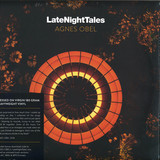
to Me, Sounds Have Always Been More Interesting Than Words,' Says Agnes Obel. i Love It When The Voice Becomes An Instrument And You Almost Forget It's A Human Voice.' Never Is This More Apt Than On This Beautifully Programmed And Bewitching Selection Of Music.
Agnes' 2010 Debut Album Philharmonics Went Platinum In France And Belgium And, Unsurprisingly, Quintuple Platinum In Her Native Denmark, Where She Also Won Five Danish Music Awards (equivalent To The Brits) In 2011. The Follow-up Aventine, Released In Late 2013, Was Imbued With The Same Measured Calmness As Her Debut. It Went Platinum In Belgium And Gold In Denmark And France.
For The Mix You Have In Your Hands It Feels Almost As If Agnes Has Scoured The World Looking For Kindred Spirits - Or Kindred Songs. There's A Quietude About It All, The Antithesis Of A Rush Hour, Like A Frozen Lake On A Sunday Morning. This Is Aided By A Veritable Cornucopia Of New Obel Material, Including A Haunting Reading Of Danish Song 'glemmer Du', Inger Christensen's 'poem About Death' Set To Original Music, And An Agnes Original, 'bee Dance'.
Among Them, There's The Enigmatic Jamaican Singer Nora Dean Who Weighs In With The Hypnotic And Slinky Duke Reid Production, 'ay Ay Ay Ay (angie-lala)' And The Sparse, Sardonic 'party Girl' By Michelle Gurevich, So Good It Inspired The Eponymous French Movie. There Are The Plangent Voices, The Bulgarian Folklore Choir, Nina Simone, Ray Davies And Agnes Herself, Ringing True. Somehow, Ms Obel Makes Even Makes The Electronic Tracks Bow To Her Needs As With Yello Whose 'great Mission' Is More Martin Denny Than Underworld And Cult Greek Composer Lena Platonos' 'bloody Shadows From A Distance' Pulses Gently Rather Than Throbs And Can's Recently Rediscovered 'obscura Primavera', Unusually Hushed.
"i Was Surprised At How Much Time I Ended Up Spending On This. I Collected All The Songs Together With My Partner Alex And We Just Spent Time Listening To Records, Trying To See What Would Fit Together. Some Of The Music I've Included Here Is On Mixtapes We Made When We Were Just Friends As Teenagers. Each One Of The Tracks Produces Stories In My Head." - Agnes Obel, February 2018
A near-perfect record, White Magic was the lauded CD-only debut album by Sorcerer (Californian native Dan Judd, one half of Windsurf with Hatchback). Just in time for Spring/Summer, we present the first ever vinyl issue, released as a deluxe double LP.
Back in summer 2007, this majestic set gently nestled itself into the Balearic soundtrack-to-summer slot for many, making him a household name for Cosmic Disco heads alongside the likes of Lindstrom, Metro Area, Todd Terje, Mudd, Studio and Quiet Village. In the intervening years, exceptional producers have created vibrant variations on the dreamy, dubby, melodic nu-disco theme. Happily, the emergence of such luminaries as Jex Opolis, Harvey Sutherland, Suzanne Kraft, Tornado Wallace et al has only served to make the master - Sorcerer - sound ever more brilliant and vital.
Utilising his array of guitars, drum machines, synths, and trusty MPC, the loved-up Sorcerer sound inspires halcyon memories of warm days, endless sunsets and pure youthful abandon. Influenced by surf, 80s dance pop, acid-R&B, space jazz, krautrock, disco, dub, and am radio gold, his music maps a tour through a uniquely Californian lifestyle. Yet when music so vividly captures a vibe and a feeling, it can make writing about it appear almost redundant. Instead, to glean the full colour of what your turntable will soon gratefully radiate, we prescribe the generous soundclips presented here.
And, for a unique insight into the process behind the wonderful sounds conjured up, here's Sorcerer himself:
"White Magic is a reflection of personal freedom and discovery. Having been in bands for years, this was a chance to develop music that stood alone and for me to be in full control.
I was living alone and worked on jams whenever I could. I was highly inspired by a new openness to music as a pure inspiration, not being part of any scene. I tapped into the mixes I was hearing coming out the UK where deejays were playing "cosmic" sounds that were so strangely familiar.
I was picking up all kinds of $1 vinyl and throwing bits of it into my sampler almost randomly to see what would come out.
In my mind, I was making music to be played at my friend's Broker/Dealer Pop nights where they fused golden German techno sounds with the new disco emerging at the time. Also, I took vacations and reconnected with the Pacific Ocean where I spent so much time as a kid: it spilled out into the sounds.
Lastly, I forged a partnership with Hatchback (Sam Grawe) who was working on music in the same way. I learned so much about arrangement and the colors of music. We began recording together as Windsurf and released our own stuff. It all seems like a small glorious moment in time, so I am so excited to keep the legacy alive and I continue to work on my music with these spirits inside of me."
Lovingly remastered by the esteemed Simon Francis, cut reassuringly loud on to heavyweight double vinyl and presented in a deluxe gatefold jacket with freshly commissioned artwork throughout from original designer Rich Robinson, this limited edition of 500 copies is sure to fly.
Radical Connector was originally released in 2004 and is now fnally back on vinyl. This re-issue is pressed on mixed splatter color vinyl and presented in a high gloss jacket with free download card.
Though reference points like Daft Punk and Prince have rightly been thrown around, Radical Connector is in fact a strange album that doesn't sound like much else.' - Pitchfork
Mouse on Mars is recognised as one of Germany's most defning and versatile electronic music projects. With their
anarchic mixture of sound that oscillates between uncontrollable chaos and meticulously arranged structures,
Jan St. Werner and Andi Toma have forged a unique musical language, which is readily decomposed by the
unpredictability of its myriad mutations. Free from schools of thought, genre conventions, and from the constraints
of the music establishment, they have worked under the Mouse on Mars alias for 24 years, mapping their own
idiosyncratic trajectory through a no man's land between pop, art, club music, and the avant-garde. - Jan Rohlf
Sexy robot vocals slip and slide all over juicy squeals, raindrop plops, and jungle-thick beats.'
- Entertainment Weekly
Stirring songs drift out of its frantic aural mishmashes, fnding a controlled center amid all the dizzy spin.'
- AV Club
Mouse on Mars have a gift for making electronic bleeps and buzzes sound like tangible objects that bounce,
bend and collide in physical space.' - Rolling Stone
originally released in 1990-with Liz Lamere - Never released on vinyl-
Born in Brooklyn, Alan Vega was reared on the rock 'n' roll sound of Elvis Presley and Roy Orbison, but originally struck out on a career as a visual artist and light sculptor, making pieces out of electronic debris. But on the occasion of seeing Iggy Pop fronting the Stooges at The Stooges at the New York State Pavilion in 1969 was an epiphany for Vega. It showed me you didn't have to do static artworks, you could create situations,' he said. That show was the first time in my life the audience and the stage merged into one." It was that eradication of barriers between the two that Vega took to heart.
Their first two albums, 1977's Suicide and their 1980 follow-up, remain two of the era's greatest touchstones, beacons for others seeking to transform their worlds with sound. And even during the group's hiatus through the 1980s, Vega continued to pursue his singular vision across an individualistic solo output. From his 1980 self-titled debut and rockabilly-infused albums like Saturn Strip, through bracing albums like Power On to Zero Hour and IT, Vega forged his own singular path.
For all the darkness and despair that encompasses this moment in our world - and despite his work being depicted as bleak and nihilistic - for Vega there was always a sense of hope and a place for dreams to become reality. People have always told me that my music is angry,' he said. To me, it was always just an energy. It was the way I perceived the world. The key Suicide song was 'Dream Baby Dream,' which was about the need to keep our dreams alive. I knew back then that something poisonous was encroaching on our lives, on all our freedoms.' He fought to his very last breath for that freedom.
originally released in 1993 - with Ric Ocasek & Liz Lamere-Never released on vinyl-
Born in Brooklyn, Alan Vega was reared on the rock 'n' roll sound of Elvis Presley and Roy Orbison, but originally struck out on a career as a visual artist and light sculptor, making pieces out of electronic debris. But on the occasion of seeing Iggy Pop fronting the Stooges at The Stooges at the New York State Pavilion in 1969 was an epiphany for Vega. It showed me you didn't have to do static artworks, you could create situations,' he said. That show was the first time in my life the audience and the stage merged into one." It was that eradication of barriers between the two that Vega took to heart.
Their first two albums, 1977's Suicide and their 1980 follow-up, remain two of the era's greatest touchstones, beacons for others seeking to transform their worlds with sound. And even during the group's hiatus through the 1980s, Vega continued to pursue his singular vision across an individualistic solo output. From his 1980 self-titled debut and rockabilly-infused albums like Saturn Strip, through bracing albums like Power On to Zero Hour and IT, Vega forged his own singular path.
For all the darkness and despair that encompasses this moment in our world - and despite his work being depicted as bleak and nihilistic - for Vega there was always a sense of hope and a place for dreams to become reality. People have always told me that my music is angry,' he said. To me, it was always just an energy. It was the way I perceived the world. The key Suicide song was 'Dream Baby Dream,' which was about the need to keep our dreams alive. I knew back then that something poisonous was encroaching on our lives, on all our freedoms.' He fought to his very last breath for that freedom.
The "Perfect Illusion EP" opens up with "Never Can get Away", a steamy & dreamy cut that sucks you right in to it's lair of thick pads and trancy sequences, which are contrasted by a carefully programmed synth bassline and a stomping house beat.
Next the title track immediately evokes early Chicago warehouse jam feelings, with bass sequence, detuned chords and classic drum patterns all oozing of old analogue Roland machines.
"Running Number" starts as a no-nonsense house track, yet it transcends into 80s territory with the help of a deeply emotional chord progression that might just make you forget you're in a club.
Berlin Duo Longhair give "Running Number" the Luv-Remix treatment, really digging deep into that chord progression and building a melody and synth-bell infused Italo-house track around it that should make this year's festival crowd weep and rejoice alike.
Hospital are honoured to present the last known piece of new music from Rob Dickeson, aka Apex. Released in his memory, in association with Help Musicians UK, all proceeds
will go to their incredible work on the Music Minds Matter campaign. Available as a digital download, and limited-edition 12-inch vinyl, which features Unknown Error's 'The Yearning' (Super VIP mix), which is exclusive to the
physical format. Drum & bass has lost a number of unique talents in recent years, and we can only hope this release will be a positive force to raise awareness surrounding mental health issues within the music industry, and also as a fitting tribute to
Rob's memory. 'I hope that this record will raise awareness that help is out there. If you, or someone you love, finds themself in a situation where life just seems impossible, don't forget that you are not alone, and that there is help.' - Katerina (Apex's
partner). Help Musicians UK is the leading UK charity for professional musicians of all genres, from starting out through to retirement. Operating 24 hours a day, seven days a week, Music Minds Matter is a support line and service for the whole UK music community.
OddMann Recordings is a new London based label run by Half Baked's Greg Brockmann and production partner Odd Soul under their OddMann alias. Having already forged their own very unique minimal techno sound, here they bring a superb three tracker with tunes aimed squarely at the dance floor, both at peak time and also those creepy dark after-hours moments.
2x12"
Tinfoil is the project of DeFeKT and Sunil Sharpe. Initially forged as a studio collaboration in 2014 (and later as a live show), the pair have since racked up an impressive catalogue of 12s on their own self-titled label. Tinfoil's sound is unique in today's scene, reflecting the versatility of both artists, plus a combined know-how of techno and electro. Their music comes primarily from live studio jams, enforced by a desire to get quickly to the point in what they do. This is no surprise given the fast, technical way in which they each perform solo.
For their debut album, Tinfoil provide a varied but cohesive collection of tracks. Following the intro's epic synth blasts, they open with a bang through 'Caravan Life' - a sinister, bassline-driven destroyer that builds and builds over a blend of claps, filter zaps and crying feedback. 'Beads' continues in a heads-down vein, this time with a more musical EBM type bass and knocking rimshots that mark the first appearance of Sunil's role-playing, haunting lead vocals.
'Friendly Safe Fumes' marries playful bass notes to a singing lead line, as fizzling closed hats and busy claps whip things into a frenzy. Next enter the otherworldly mutant electro of 'Meadow Pulse', signaling a well-timed lull in mood to explore a silkier side to Tinfoil's production. 'Every Saturday Night' starts with a taxi conversation about horses and carbolic soap in bygone Dublin days, before launching into a volley of clattering beats and hip-shaking FM sequences.
'Multi-DOMINATION' retains some of the FM wonk and treads a broken-beated path, featuring vocals this time akin to a ritualistic chant or perhaps the murmurings of a possessed baby. 'Both Roads To Triogue' meanwhile, brings us to a short intersection, splicing odd voices with a dense tribal rhythm. 'The Wolves Of Hellfire' is Tinfoil in more minimal dancefloor mode, as drones filter in and out under a resonating bass that detonates at all the right times.
Closing with 'Resting Point', the climax becomes deadly. The beats are stepped and the bass boisterous, while pained screams become quickly uncontrolled, setting up for a crescendo of roughneck rhythms, ricocheting kicks and turbulent modular wails.
Tinfoil have been on a roll since the beginning but maybe 'On A Roll' emphasizes this a little bit more now.
A bit of an emotional moment for us - this much needed repress of one of our very favourite slabs of vinyl that have passed through these doors over the years. Exploring the very outer limits of dancehall and techy D&B, both sides writhe and snarl at 90bpm, beating you over the head with pressure cooked kick drums, drop forged snares and, those ugly, ugly mentasms. Upon it's original release, it was a challenging and very rewarding record - one that had DJs scratching their heads, dancers demanding wheelups and, more recently - more than a few emails from people asking if there were any copies left stashed away. Both side's disregard for genres and conventions mean this plate sounds just as fresh now as it did upon it's original release date - arguably it's better stationed for tactical deployment now than it was back in 2013 - The current crop of stripped back dancehall (and halftime D&B that has been undoubtedly informed by it) are in rude health and prime for disruption with this record. That said, regardless of which styles you play - this is one of those wildcard riddims that can be used at peak time to wreak havoc on any dancefloor. Blacklabel, sticker sealed pressure, with a yellow paper insert of the original artwork. One of those records you'll pull off the shelf in years to come, no doubt about it. Edition of 300, with insert and stickered centre labels.
Aroop Roy has been making waves with his unique sounds for the past few years, with a wealth of successful releases and a busy gig schedule at the helm of some of the best clubs around the world. By fusing elements of Jazz, Afro, Latin, Funk and Soul with the deeper end of House and Disco, Aroop has forged his own style with EPs on revered labels including G.A.M.M, Basic Fingers, Freestyle and Lazy Days. For his Delusions Of Grandeur debut he pulled out all the stops, delivering three original tracks which further show his diversity as an artist and ability to produce left of centre, quality underground music without losing sight of the dancefloor.
Things kick off with Save Our Love, a track that's absolutely brimming with energy thanks to punchy Wurlitzer chops, tension-building Philly strings, and a rock-solid disco groove.
Next up we have What I love which sees Aroop take an altogether more freaky approach flipping an uptempo rolling break, distorted synth line, cross-rhythm stabs and rasping vocal cuts into an edgy dance floor workout.
Closing this brilliant EP is the low-slung bump of Walk That Walk featuring original vocals from Oakland, CA based Blacktroniks who delivers his flow on top of a bass-heavy slice of deep electro boogie.
Techno Album of the month March 2018 in Mixmag UK!
Central to the Israeli club scene, Deep'a & Biri have long been defying expectations even within a community they helped construct. Serving as resident DJs, activists and bookers for Tel Aviv's legendary Barzilay Club, the pair helped build a transcendent club scene. Hugely influential artists such as Robert Hood, Derrick May, Rødhad, Ben Klock and Moritz Von Oswald passed through the club, enjoying legendary crowds and what they could surely sense was a genuine air of anarchy, rebellion and unadulterated rave pleasure.
As the duo held down dozens of parties with dozens of DJs, there was no 'eureka' moment for their emerging sound; just a steady stream of brilliant, inspiring electronic music, much of which left an indelible imprint on the pair. Now based in Berlin, for Deep'a & Biri, things are much the same, even if the landscape and the city is different. Always rooted in the fertile ground between machines and emotion, on their second full-length LP, 'Dominance', the duo demonstrate their unique grasp of the sensitive, unfolding relationship between man and machine. Steadfast in their insistence never to remain in one lane in terms of their sound, 'Dominance' flawlessly segues between forcefulness and weightlessness. From beginning to end, this is not a record afraid to show its teeth with an uncompromising, instantly recognisable techno palette that kicks the foundations of any sound system with menace, anger and determination, particularly on tracks such as the dense 'Voltage' and pulsing throughout the more industrial flourishes of 'Ecole De Nancy' and 'Seeking Solace'.
Beyond these grittier, although never mindless, moments of authority, a sense of escapism and curiosity imbues the album. 'Alpha Cephei' offers the first hint of Deep'a & Biri's more wistful concepts, producing a smoke trail of twinkling electronics out of a smudged but distinctive bassline. That understated sense of emotional catharsis carries throughout, to be found between the complex-yet-familiar bells that drive 'Flow Diverter's' rhythm to a Detroit-indebted landscape that will surely instantly elasticate any keen dancers, while 'False Memories' offers big-room techno fulfillment with none of the character or sincerity removed for cheap thrills. Saving the most remarkable moments for last, the pair sign off 'Dominance' with the poignant and purifying 'Astral Trails', fusing an ethereal, ambient landscape with the more pronounced rhythms of their hardware.
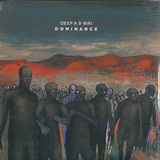
The album's distinctive artwork comes from the studio of Jewish orthodox artist Avraham Guy Barchil, who forged a powerful connection with Deep'a, both was immediately drawn to 'weird atmosphere, amazing technique and emotions involved with his work'. Perhaps one of the most interesting painters from Israel, Avraham is known for his unique perspective, taking his inspiration from the Zohar - the foundational work in the literature of Jewish mystical thought known as Kabbalah. The ambiguous figures represent mystical aspects of the Torah (the five books of Moses), as well as material on mysticism and mythical cosmogony.
Ensuring their natural, conscious touch always remains at the forefront of this unapologetically machine-driven music, Deep'a & Biri have produced an album in the lineage of their heroes and greatest influences. Cerebral yet satisfying, deep yet always engaging, 'Dominance' both reasserts and evolves Deep'a & Biri's forward facing and singular sound.
Alex Kolodziej was born in Poland and raised in Cologne, Germany. Since he moved to Vienna in 2008 for a degree course in psychology, he immediately checked out the austrian capitols nightlife and got involved with several people from the scene. During the 2010s he was one of the most booked djs for techno and house events in the city, and was also a staple of the cult venue Ochsenfrosch. Although he produces electronic music since 14 years, only a few tracks came out officially via various digital labels. Partygoers heard the majority of his unreleased work only at his rare live performances. After a long hiatus and several harddisk crashes, it is a pleasure for us to announce that he finally makes his comeback on forTunea with his first vinyl release!
Tech House is a genre that has been spoilt over the last 10 years. While most of them follow the cookie-cutter-aproach, Alex' - Workaholic dives in psychedelic sounding rhythm collages, that captures the hectic daily routine in modern society. - Slacker Attitude might be a slow-paced tune, but it's extraordinary drum patting and trippy atmosphere lets you forget that it's only 112 bpm fast. Last but not least, Peletronic contributes a late night dub treatment of the latter. Coming soon in a record store near you!
LIMITED TO 300 COPIES -- Mastering by Patrick Pulsinger
Mouse on Mars is recognised as one of Germany's most defning and versatile electronic music projects. With their
anarchic mixture of sound that oscillates between uncontrollable chaos and meticulously arranged structures,
Jan St. Werner and Andi Toma have forged a unique musical language, which is readily decomposed by the
unpredictability of its myriad mutations. Free from schools of thought, genre conventions, and from the constraints
of the music establishment, they have worked under the Mouse on Mars alias for 24 years, mapping their own
idiosyncratic trajectory through a no man's land between pop, art, club music, and the avant-garde. - Jan Rohlf
Idiology takes the acoustic experiments of Niun Niggung even further, and it's this combination of electronic
and 'traditional' music -- melding keyboards and synthesizers with french horns and guitars and trumpets into a
seamless whole -- that points the way through the dead-ends of most electronica.'
- PopMatters
Andi Toma and Jan St. Werner continue to create soundscapes that blur the line between programming and live
musicianship, and sometimes between Earth and outer space.' - The A.V. Club
On April 13th Mouse on Mars will release Dimensional People,
their brand new studio album on Thrill Jockey.
The album features Werner and Toma joined by a number of
prolifc guests: Justin Vernon (Bon Iver), Zach Condon (Beirut),
Spank Rock, Aaron and Bryce Dessner (The National), Swamp
Dogg, Eric D. Clarke, Lisa Hannigan, Amanda Blank, Sam
Amidon, Ensemble Musikfabrik, and about 20 more musical
collaborators.
After a series of notorious dance oor releases, Dimensional
People reveals them working deep within their own vernacular,
digging into fertile terrain of their inexhaustible vault of digital
and acoustic experimentation, and charismatically making
elemental components new again. This album makes clear how
their craft is of discovery, of fnding new contexts for places,
sounds, memories, sensations, ambiences, technologies,
relationships, and of course, people.
For a label that wasn't around long, Strata East achieved the same sort of label recognition that Impulse! or Blue Note managed to build. In other words, you knew what you were getting when you bought a record on the label, even if you didn't know the names on the outside of the cover. This is no exception. Who is Shamek Farrah Who knows Who cares It's the music that's important. This is the standard spiritually intense new jazz one learns to expect from the label, soaked in some Eastern influences but always with its ear to the street. Musicians took their roles as leaders and spokesmen very seriously back then. This very adult statement from a group of very serious men is no exception. However, what might be an average, forgettable session is rescued by the propulsive engine of Milton Suggs' bass. He adds the fire and the drive that keeps things interesting and prevents the music from wandering into a circular spiritual morass. For fans of the sound or the label, this can be heartily recommended.