Unlike the main Magic Wand label, the imprint's offshoot 'Special Editions' series is a little more fluid about what it releases, with some EPs sporting original productions - many of which are admittedly sample-heavy - as well as re-edits. That's the case for this second missive from Matsoaka (real name Matt Lundgren). So, while the EP begins with a genuinely gorgeous and Balearic original cut (the dreamy and slow-motion folk-rock of 'Butterflies', featuring the emotive and harmonic vocals of Butterflies), much of the rest falls into the "Balearic re-arrangement" category. In this camp you'll find the immersive, trip-hop style dreaminess of 'Faith', the mid-80s Yellow Magic Orchestra-style Fairlight-sporting electro of 'Gin Yuzu', and the dollar bin brilliance of 'Sheriff' (a take on a Japanese city-pop cover of a reggae favourite).
Поиск:la rock
Все
Veruh makes his debut on LOK.Ltd with a powerful statement of minimal precision and hypnotic groove.
Driven by deep, stripped-back rhythms and subtle textures, Neanderthal EP explores raw energy and immersive flow.
Featuring the original “Yuca Bara” and a captivating Funky Trip Remix, this release delivers a refined yet driving sound built for late-night floors.
Minimal. Hypnotic. Timeless.
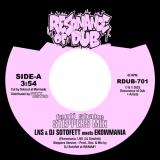
THIS 7" IS FRESHLY RELEASED FOR THE JAPAN TOUR 2025 WHERE DJ SOTOFETT STRICTLY PLAYS ACETATE DUBPLATES!!! DJ Sotofett's new label "Resonance of Dub" follows up his Tresor born dub-club concept with the same name. "Resonance of Dub" is simply the dancefloor spectrum that's directly influenced by Dub music; Steppers, Disco-Dub, Digi-Dub, Dubstep, Lovers Rock, Dub-Techno, UK Garage and Jungle... First release features a strictly percussive dance floor stepper by LNS & DJ Sotofett with vocals by Ekowmania (aka Ekow Alabi Savage, drummer and percussionist from Ghana and collaborator with Jimi Tenor). B-side is a deep melodic and percussive piano dub, a melancholic late night stepper.
analoque records returns with its third release, welcoming Andrei Ciubuc for a tightly crafted 3-tracker. True to the label’s timeless character, the record moves through rolling grooves, old-school energy and deep-rooted aesthetics.
High-quality mastering and cut, pressed on 180g black vinyl.
- A1: She's Getting Married In August
- A2: Evenin' Rain
- A3: Les Papillons
- A4: Zeena
- A5: Virgin Morn
- A6: Seeds
- B1: Crystal Blue
- B2: Lady Carole
- B3: Lotus Child
- B4: Last Prayer
- B5: Hymn For Today
- C1: Boston
- C2: Blackbird Charlie
- C3: My Sun
- C4: Closer To The Truth
- C5: Strange News
- D1: Moonchild
- D2: Red Shoe Truckin
- D3: Beautiful
- D4: Opal Blue Sunday
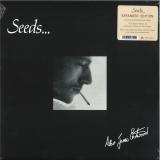
First time vinyl reissue, expanded and deluxe double gatefold 140g double vinyl, remastered audio with restored artwork and fresh liners written by Paul Hillery (Folk Funk & Trippy Troubadours)
Alan James Eastwood's glorious Seeds is a certified folk-funk lost-classic.
But who was Alan James Eastwood? He had never hit the big time and commercial success eluded him. By the mid-1970s, his musical career was pretty much over and he was almost unknown except among deep heads, amongst whom he would gain cult status.
Original copies of the 1971 vinyl release of Seeds exchange hands for high sums, if you can find one. This expanded 2LP contains an extra record, collecting 9 rare non-album singles and is presented in a gatefold sleeve complete with freshly commissioned liner notes courtesy of Paul Hillery (Folk Funk & Trippy Troubadours).
With the long overdue deluxe reissue of this prized artefact, we hope to finally shine a light on the unheralded genius of Alan James Eastwood. RIYL Nick Drake, Rodriguez, Richie Havens.
Alan James ‘Bugsy’ Eastwood was a renowned musician and singer who came to prominence in the late 1960s with The Exception, an unsung but excellent band from Birmingham. The Exception released many singles, the first featuring friend Robert Plant on tambourine, before an album, The Exceptional Exception. However, by this time, Bugsy was feeling constrained and restless; he left the band within weeks of the release.
Having vanished from the scene, he was honing a deeper, introspective edge to his songwriting. His demos found their way to the sound engineer and producer Mike Cooper at Pan Music Studios in Denmark Street. Loving what he heard, Eastwood soon entered a recording session with Cooper. The session was just Alan, his guitar and harmonica and - by all accounts - it was remarkable. With the songs, the voice and such an exceptional talent, it was hard to go wrong. Says Mike: "We had John Hawkins do the big string arrangements and Richard Hewson arranged the string quartet. We overdubbed the orchestrations on Alan's original session recordings, adding Chris Karan on tabla and various percussion. We considered re-recording the vocals but found that the magic on that original session was so exceptional overdubbing would not be as good as the atmospheric 'live' performance."
Mike and Alan viewed each track as a different entity, giving the album a diverse sonic palette. Assessing each song individually, they decided which would be suitable for each arranger. Top-flight session musicians were added to the roster to complete the sound, with Byron Lye Fook (father of musician Omar) on drums, bassist Mike Ward, Brian Pickles on marimba and jazz drummer Chris Karan on tabla and percussion. Recorded in a matter of days in Pan's small 8-track studio, they carefully added overdubs, rhythm sections and four string sessions arranged by Hawkins, with Hewson's arrangements recorded at Trident Studios.
Seeds was Alan James Eastwood's debut solo album – indeed, his only solo album - and was originally issued on President in 1971. It melded Eastwood’s impressive rock sensibilities with a folk thread to superb effect. His arresting voice - its deep, rough-hewn soulfulness - coupled with gorgeous string-drenched backing, make this a phenomenal listen. It really is a great 70s singer-songwriter record - with touches of acid-folk and folk-funk throughout.
It opens with "She's Getting Married In August", a mellow tune with Richard Hewson's strings arranged around Alan's straightforward guitar structure. Up next, the joyous, sun-dappled guitar and strings workout "Evenin' Rain" glides by before the fragile, accordion-enhanced "Les Papillons" breezes out of the speakers. The bluesy "Zeena" follows, featuring vocals and acoustic guitar and showcasing Eastwood's effortless harmonica. Starting out as a ballad, "Virgin Morn" builds with soaring strings and gospel-tinged backing vocals from Marilyn Powell and jazz singer Josephine Stahl. The A-side closes with the title track, "Seeds". With a chugging mid-tempo beat, soulful vocals and a beautiful Bacharach-esque string arrangement, it truly is stop-you-in-your-tracks spectacular.
Side B opens with "Crystal Blue", gilded by Lye Fook's marimba, lush gospel-esque backing vocals and handclaps. Eastwood's acoustic guitar begins "Lady Carole", which starts as a bluesy ballad and builds with more string arrangement, lifting the track to another height. A towering highlight of epic proportions, "Lotus Child" is a true masterpiece of arrangement. It opens with simple yet stunning do-do-dah vocal harmonies blended with John Hawkins's strings, bass lines and rhythmic beats, forming a vibe very much in conversation with the sounds coming from LA's Laurel Canyon. Next up, the heartwarming "Last Prayer", dedicated to Alan's first and last love, contains a melancholic vocal with a wistful string-drenched arrangement that would sit comfortably in a Federico Fellini score. Bringing the album to a close, "Hymn For Today" is a melodic raga with tabla, strings and a soft-psych feel. Eastwood's prophetic whisper - "I am real. At last, I am real" - profoundly hits home.
Kicking off the extra disc is the sparsely funky and country-tinged "Boston", released as the flip to the astonishing "Seeds". Next up are the two tracks that comprised Alan’s debut solo 7" single from 1968. The laconic, Bobby Charles-esque "Blackbird Charlie" evidences a real depth and charm in Eastwood's songwriting whilst the starkly brilliant flip, "My Sun", was a horizontal, atmospheric folk-tinged soundtracky precursor to his later work on Seeds.
In 1972, two further standalone singles followed. The first was the evergreen flute-driven folk-funk bomb, "Closer To The Truth", backed by the funky blues of "Strange News". The second, a deeply moving Havens-inspired "Moonchild" - rightly fawned over to this day - was flipped with "Red Shoe Truckin'", a groove-infused track. Eastwood also paired up with Marilyn Powell for a single produced by Powell's partner, Mike Cooper. Under the name Eastwood & Powell, they released their staggering rendition of "Beautiful", a rock-blues-pop song arranged by Ivor Raymonde and written by Carole King. Over on the flip, a funky Eastwood original "Opal Blue Sunday" lurked. This is not to be overlooked.
Over the years, Alan remained active on the music scene, but problems with alcohol and health complications from diabetes severely impacted his career. He spent his latter years living in London until his untimely death from heart failure on 25 October 2007, just one day before his 62nd birthday and without his music having received the real acclaim it so dearly deserved.
This deluxe reissue, spellbinding from beginning to end, should hopefully go some way to rectifying this tragic fact. Mastering for this special double vinyl edition was overseen by Be With regular Simon Francis and it was cut by the esteemed Cicely Balston at Abbey Road Studios to be pressed in the Netherlands by Record Industry. The original artwork has been lovingly brought back to life at Be With HQ, with the addition of passionately written liner notes specially for this landmark reissue by none other than Paul Hillery.
- A1: Kajagoogoo - Kajagoogoo (Instrumental)
- A2: Simple Minds - Don't You (Forget About Me)
- A3: Orchestral Manoeuvres In The Dark - If You Leave
- A4: Oingo Boingo - Weird Science
- A5: Furniture - Brilliant Mind
- A6: Dave Wakeling - She’s Having A Baby
- B1: The Flowerpot Men - Beat City
- B2: The Psychedelic Furs - Pretty In Pink
- B3: Flesh For Lulu - I Go Crazy
- B4: Dr. Calculus - Full Of Love
- B5: Lick The Tins - Can't Help Falling In Love
- B6: Steve Earle & The Dukes - Six Days On The Road (A
- C1: Kirsty Maccoll - You Just Haven't Earned It Yet Bab
- C2: Suzanne Vega & Joe Jackson - Left Of Center
- C3: Pete Shelley - Do Anything (Soundtrack Version)
- C4: Carmel - It's All In The Game
- C5: The Dream Academy - Power To Believe (Instrume
- C6: Kate Bush - This Woman's Work
- D1: The Beat - March Of The Swivelheads (Rotating He
- D2: Nick Heyward - When It Started To Begin
- D3: Orchestral Manoeuvres In The Dark - Tesla Girls
- D4: Big Audio Dynamite - Bad
- D5: Killing Joke - Eighties
- D6: The Specials - Little Bitch
- E1: Gene Loves Jezebel - Desire (Come And Get It) (Us
- E2: Flesh For Lulu - Slide
- E3: Love And Rockets - Haunted When The Minutes Dr
- E4: Sigue Sigue Sputnik - Love Missile F1-11 (Ultraviole
- E5: Lords Of The New Church - Method To My Madnes
- F1: The Jesus And Mary Chain - The Hardest Walk (Sing
- F2: Echo & The Bunnymen - Bring On The Dancing Hor
- F3: General Public - Tenderness
- F4: The Blue Room - I'm Afraid
- F5: Belouis Some - Round, Round
- F6: Thompson Twins - If You Were Here
- F7: The Dream Academy - Please, Please, Please Let M
- G1: Yello - Oh Yeah
- G2: Book Of Love - Modigliani (Lost In Your Eyes)
- G3: Otis Redding - Try A Little Tenderness
- G4: Patti Smith - Gloria In Excelsis Deo
- G5: Westworld - Ba-Na-Na-Bam-Boo
- G6: Divinyls - Ring Me Up
- G7: Topper Headon - Drummin' Man
2LP Edition[87,35 €]
Demon Music group in conjunction with the Hughes family are proud to present the first official compilation of music
from the movies of legendary filmmaker John Hughes, covering the classic eighties period 1983 – 1989.
For anyone growing up in the 1980s, the films of John Hughes are some of the most iconic of the decade and have
created a lasting cultural impact still felt and referenced across TV, film and music. As well as the characters and
stories created in these iconic movies, what made John Hughes’ movies different from the rest was the symbiotic
relationship between scene and music. Whether Cameron Frye staring at the painting in Ferris Bueller’s Day Off set to
The Dream Academy’s “Please, Please, Please Let Me Get What I Want (Instrumental)”, Duckie and Andie from Pretty
In Pink at prom set to Orchestral Manoeuvres In The Dark’s “If You Leave”, or even Neal and Del’s classic “Those aren’t
pillows” scene from Planes, Trains and Automobiles set to Emmylou Harris’ “Back In Baby’s Arms”.
“Music was a huge part of filmmaking for him, it was a thing he seemed to like the most.” Matthew Broderick
Curated by John Hughes’ music supervisor Tarquin Gotch, this 6LP vinyl boxset includes 73 tracks from the movies
National Lampoon’s Vacation, Sixteen Candles, The Breakfast Club, Weird Science, Pretty In Pink, Ferris Bueller’s Day
Off, Some Kind Of Wonderful, Planes, Trains And Automobiles, She’s Having A Baby, The Great Outdoors and Uncle
Buck.
“Back when we were working on these movie soundtracks, the best way to send music around the world was the
cassette, by Fedex. We sent John cassettes of newly released music, of demos, of just finished mixes (and in return he
would send VHS videos of the scenes that needed music).” Tarquin Gotch
The films of John Hughes spawned many classic tracks, some licensed for the films, some commission specifically, and
many going on to become huge international hits from acts such as Simple Minds, Kate Bush, Furniture, Yello, and
The Psychedelic Furs.
“It serves as a reminder not just to the musicians he championed in the 1980s, but to how intensely his search for
music expanded beyond this era. Until his final days, he was still collecting outrageous amounts of music from around
the world, galaxies removed from the New Romantic and new wave sounds that, to many, still define him.” James
Hughes
Also includes an extensive 24-page booklet including memories from Matthew Broderick, James Hughes, Tarquin
Gotch, Ron Payne, plus track-by-track sleeve notes.
“John said he only made movies so he could choose what music to put in them, so as his success at the Box Office
grew, and thus his power with the studios, the number of tracks in his films, by up and coming UK bands, steadily
grew.” Tarquin Gotch
Billy Idol - "Catch My Fall" (From The 1987 Movie 'Some Kind Of Wonderful')
The Association - "Cherish" (From The 1986 Movie 'Pretty In Pink')
Penguin Cafe Orchestra - "Music For A Found Harmonium" (From The 1988 Movie 'She's Having A Baby')
Zapp - "Radio People" (From The 1986 Movie 'Ferris Bueller's Day Off')
Blue Room - "Cry Like This" (From The 1987 Movie 'Some Kind Of Wonderful')
Ray Charles - "Mess Around" (From The 1987 Movie 'Planes, Trains & Automobiles')
Joe Turner - "Lipstick, Powder & Paint" (From The 1989 Movie 'Uncle Buck')
Darlene Love - " (Today I Met) The Boy I'm Gonna Marry" (From The 1984 Movie 'Sixteen Candles')
Marvin Gaye - "How Sweet It Is (To Be Loved By You)" (From The 1988 Movie 'She's Having A Baby')
Perry Como/Mitchell Ayres & His Orchestra/The Ray Charles Singers - "Juke Box Baby" (From The 1989 Movie 'Uncle Buck')
The Chordettes - "Mr Sandman" (From The 1989 Movie 'Uncle Buck')
Ray Anthony & His Orchestra - "The Peter Gunn Theme" (From The 1984 Movie 'Sixteen Candles')
Lindsey Buckingham - "Holiday Road" (From The 1983 Movie 'National Lampoon's Vacation')
Emmylou Harris - "Back In Baby's Arms" (From The 1987 Movie 'Planes, Trains & Automobiles')
Hugh Harris - "Rhythm Of Life" (From The 1989 Movie 'Uncle Buck')
Spandau Ballet - "True" (From The 1984 Movie 'Sixteen Candles')
Propaganda - "Abuse" (From The 1987 Movie 'Some Kind Of Wonderful')
The Dream Academy - "The Edge Of Forever" (From The 1986 Movie 'Ferris Bueller's Day Off')
Yello - "Lost Again" (From The 1987 Movie 'Planes, Trains & Automobiles')
Bryan Ferry - "Crazy Love" (From The 1988 Movie 'She's Having A Baby')
The Rave-Ups - "Positively Lost Me" (From The 1986 Movie 'Pretty In Pink')
Los Lobos - "Don't Worry Baby" (From The 1985 Movie 'Weird Science')
Steve Earle - "Continental Trailways Blues" (From The 1987 Movie 'Planes, Trains & Automobiles')
The Revillos - "Rev Up" (From The 1984 Movie 'Sixteen Candles')
Boston - "More Than A Feeling" (From The 1988 Movie 'She's Having A Baby')
Balaam & The Angel - "I'll Show You Something Special" (From The 1987 Movie 'Planes, Trains & Automobiles')
The Rave-Ups - "Rave Up/Shut Up" (From The 1986 Movie 'Pretty In Pink')
Pop Will Eat Itself - "Beaver Patrol" (From The 1988 Movie 'The Great Outdoors')
The Vapors - "Turning Japanese" (From The 1984 Movie 'Sixteen Candles')
Silicon Teens - "Red River Rock" (From The 1987 Movie 'Planes, Trains & Automobiles')
out
- A1: Lost Blocks F. Elucid Produced By Messiah Musik
- A2: The Big Nothing Produced By Messiah Musik
- A3: Flatlands Produced By Messiah Musik
- A4: Woodhull Produced By Willie Green
- A5: U-Boats F. Elucid Produced By Driver For Raygunomics & Aesop Rock
- A6: Zulu Tolstoy Produced By Willie Green
- A7: Warmachines Produced By Messiah Musik
- A8: Carpetbagger F. Elucid Produced By Brother Hall
- B1: Born Yesterday Produced By Messiah Musik
- B2: Sleep Produced By Willie Green
- B3: Scales F. L’wren Produced By Messiah Musik
- B4: Poor Company F. Elucid & Henry Canyons Produced By Elucid & Messiah Musik
- B5: Dreams Come True Produced By Messiah Musik
- C1: Bicycles F. Henry Canyons Produced By Blockhead
- C2: African Dodger F. Elucid Produced By Dosg4W
- C3: Lambs Produced By Messiah Musik
- C4: Slow Week Produced By Dosg4W
- C5: Weeper F. Curly Castro Produced By Messiah Musik
- C6: Rpms Produced By Messiah Musik
- D1: Dark Woods Produced By Steel Tipped Dove
- D2: True Stories Produced By Blockhead
- D3: Borrowed Time Produced By Junclassic
- D4: Benediction Produced By Elucid
- D5: Good Night Produced By Blockhead
When billy woods released Today, I Wrote Nothing ten years ago, it was an unexpected departure from a rapper who was just starting to make waves in the indie rap scene. After spending the earlier part of his career in the wilderness, woods had managed to crawl out of obscurity with the minor success of 2012’s History Will Absolve Me. Dour Candy, 2013’s collaboration with underground legend Blockhead drew accolades, which only increased with Armand Hammer’s debut Race Music.
Then, woods dropped out of sight for two years before returning with Today, I Wrote Nothing, a record that deviated significantly from what had come before. Where Dour Candy had been concise and focused, TIWN was a sprawling 24 tracks. Where History Will Absolve Me was anchored by hard-hitting beats, anthemic songs, and a couple high powered features, TIWN was comprised of short vignettes, quietly eclectic production, and the only guests were his Backwoodz label-mates. Only one video was released; the claustrophobic “Flatlands”, shot on a shoestring budget in a Brooklyn housing project. Reviewers didn’t know quite what to make of the record, and in many cases, neither did fans.
As is often the case for woods’ albums, many perspectives shifted as the years passed. Listeners came to see the sad, quiet beauty of Today, I Wrote Nothing; a road trip album that doubles as a meditation on life’s journeys and death’s hiding places. The album’s power is in it’s intimacy, it’s insistence on holding your hand through the darkness. Now, TIWN is considered one of the more unique and vital records in woods catalogue. The dynamic woods created with TIWN vis-a-vis History Will Absolve Me and Dour Candy is one that would come to define his ouerve; constant experimentation, a refusal to be pigeonholed, and an unwavering search for the emotional heart of his subject. For us at Backwoodz, being able to repress this album on it’s ten year anniversary is especially sweet, because we remember how long it took us to sell that original run of 500. To everyone who copped one of those and helped us keep the lights on, this is for you too, we couldn’t have gotten here otherwise.
"Anti Todo" is Eskorbuto's most celebrated album, recorded in the shortest time imaginable and released in 1985. It shows what the Spanish punk band did best: hitting the studio with as much raw energy, provocation, inspiration, and natural talent as possible. A new remastering for this edition has given the album the richer, more vibrant sound it always deserved. We can once again enjoy the urgency, simplicity, and rage of this refreshed "Anti Todo", a true classic recorded at Eskorbuto's peak of their creativity and energy. It includes a large poster and insert with notes. DESCRIPTION 1985 was a landmark year for punk rock in the Basque country, and possibly for the whole of Spain. Punk merged with the Basque Radical Rock (Rock Radikal Vasco or RRV) movement, although this was not necessarily always the case. For instance, Eskorbuto invariably kept their distance from the movement and everything related to it. Hardship was part and parcel of Eskorbuto's life and musical career. All their albums were recorded in the shortest time imaginable, partly due to tight budgets (studios were expensive, labels were close-fisted), and partly because Josu and Jualma needed to spend the money on other things_ When it came to recording "Anti Todo", Eskorbuto stuck to what they did best: hitting the studio with as much raw energy, provocation, inspiration, and natural talent as possible. It was their best record and we have to ask: what would Eskorbuto have been capable of if they had more time, a bigger budget, and tighter control? The song 'Tamara' was practically composed on the spot in the studio in less than two recording days, as was much of 'Ha llegado el momento'. The experienced sound technician did an outstanding job, but a new remastering for this rerelease has given the album the richer, more vibrant sound it always deserved. We can once again enjoy the urgency, simplicity, and rage of this refreshed "Anti Todo", a true classic in our musical history, originally released in 1985 at Eskorbuto's peak of their creativity and energy. This edition of the album includes a large poster and insert with notes.
An extremely rare Northern Soul 45 RPM single originally released in 1965 on the Holly label, Billy Arnell And The Sparkles "Tough Girl" was the product of two childhood friends that lived less than a block apart in suburban Fairlawn, New Jersey in the early 1960s - Billy Smith and Lou Hemsey.
Billy played guitar and sang; Lou played guitar and wrote songs, so they decided to form a band. They added friends Eddie Hoffman on organ and Jack Gullone on drums and began playing lots of gigs locally as Little Willie & The Sparkles. They were young, ambitious, and imagined themselves as the next Beatles. By a stroke of fate, they met Joe Martin of Apex-Martin Distributors in Newark, NJ, who caught the band's live show and was duly impressed. That meeting led to the recording session for the "Tough Girl" single. When they recorded the first version of the song, the producer wasn't happy, nor was Joe Martin - so he fired that producer and brought in the young, up and coming producer, George Kerr. Kerr didn't care much for the band, so they redid the entire thing without Hoffman and Guilone - with just Billy singing and Lou playing guitar.
The pair of old friends were buoyed by session aces Eric Gale on guitar, Bernard Purdie on drums, Bobbie Banks on organ, as well as a bass player whose name has been lost to time. In addition to those changes, they used the studio horn section that Hemsey arranged for, plus two trumpets, two saxes and two vibes players. The resulting single was an infectious amalgamation of rock and soul. Billy changed his surname to Arnell for the 45 release (because he thought it sounded more "show-biz") and the rest is pop history. Arnell later started a record company (Fire Sign Records) and purchased a recording studio (112 Greene Street Recording) in the trendy SoHo section of Manhattan with Steve Loeb.
As for the rest of The Sparkles, Hoffman became a teacher somewhere on Long Island, Guilone graduated from the Culinary Institute of America in Massachusetts and ended up living in Northern New Jersey. Hemsey became a well-known recording engineer, composer (Lou was the one who wrote "Tough Girl"), guitarist, arranger, orchestrator, editor, film director and producer for records and commercials.
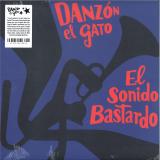
Das Debütalbum des enigmatischen Kollektivs Danzón El Gato stellt einen faszinierenden Dialog zwischen Jazz, Funk und Roots-Musik her. Gegründet im Untergrund der Madrider Experimentalszene, gehen die Mitglieder vom Groove aus, um Traditionen zu erkunden. "El Sonido Bastardo" ist ein Kaleidoskop aus Rhythmen, Landschaften und Echos aus Nordafrika, den Tropen und Lateinamerika, verflochten mit einer rockigen Rhythmussektion, die gleichermaßen von 1970er Library Music wie dem Hip-Hop inspiriert ist. "El Sonido Bastardo" fängt die Essenz eines kulturellen Schmeltiegels im ständigen Wandel ein, dessen Musik in der Tradition verankert ist, aber gleichzeitig einen kosmopolitischen und überschwänglichen Look aufweist. Die beiden Kernmitglieder Javier Adán und Santiago Rapallo schrieben in der Vergangenheit experimentelle Stücke fürs Kino und das Prado-Museum.
Iter, Calgolla's latest concept album, is an intense and layered sonic journey into the contradictions of the contemporary human condition.
With a musical language that combines alt-rock, post-rock, post-punk, spoken word and forays into performance art, the group constructs a complex work that defies any simple definition.
The record deals with themes such as migration, inner transformation, social alienation, ecological collapse and a sense of loss, layering lyrics and sounds into a coherent but fragmented narrative, like the time it tells.
The lyrics are taken and adapted from Viaticus, a graphic poem written by the singer together with visual artist Giacomo Della Maria, reshaped to adhere to tense, dense and visionary soundscapes.
The nine tracks of Iter thus form a journey that crosses different languages, styles and moods, like stages of an initiatory path that reflects the precariousness of modern life.
An album that refuses to offer answers, but invites immersion, surrender and transformation through listening. It is a meditative, multi-layered exploration of transformation, perception and resilience in the fragmented reality of modern life. With nine tracks and several languages, Iter (‘journey’ in Latin) traverses internal and geopolitical, sacred and profane landscapes, layering spoken words and sound collages into a deeply expressive experience. The guitars weave textures that are now ethereal and now abrasive, while the rhythm section builds a pulsating framework that supports and amplifies the evocative atmosphere of each piece. Iter does not merely recount the decay of our time, but attempts to bring it to life, immersing the listener in an emotional flow that blurs the boundaries between dream and nightmare, between meditation and chaos. An album that refuses to offer answers, but invites immersion, abandon and transformation through listening.
The writer Max Sebald often pondered over the nature of human memory, specifically, how our thoughts and desires - and their results - overlap and mutate over time. In A Place in the Country, he writes of the significance of what see as “similarities, overlaps and coincidences”. Are they the “delusions” of the self and senses, or manifestations of “an order underlying the chaos of human relationships, ... which lies beyond our comprehension”?
Song of the Night Mists, the new album by post-classical composer Stefan Wesołowski, often feels it draws on Sebald’s premise.
On a simpler plane, the one where the market dictates the neatly ordered information we consume, Song of the Night Mists can be described thus: recorded in the main by Stefan Wesołowski in Gdańsk, both in his studio and in Saint Nicholas' Basilica, the album incorporates acoustic instruments - piano, violin, double bass - and classic synthesizers such as the Roland Jupiter-8, the Soviet Polivoks. A Roland Space Echo RE-150 tape delay was also pressed into service as an instrument. We also hear the basillica’s organ and field recordings from the Tatra Mountains. Other musicians were Maja Miro, who played the flute parts on ‘Glacial Troughs’ and brother Piotr Wesołowski, who played the organ on ‘Wilhelm Tombeau’. Sound engineer was Marcin Nenko, who was also on hand to record the basilica organ parts. The album was mixed in New York by Al Carlson (Oneohtrix Point Never, Jessica Pratt, Zola Jesus, Lady Gaga, and Liturgy) and Rafael Anton Irisarri handled the mastering.
Ostensibly, Song of the Night Mists is the last in a trilogy, following on from albums Liebestod (2013) and Rite of the End (2017). All three deal with existential matters such as love, death, decay and “an ultimate end”; apocalyptic and Promethean in spirit, and betraying very human conceits. The Sebaldian nature of the new record starts to make itself felt when Wesołowski talks of how he used sampling. One element is unexpected, that of sampling himself: “I go back to dozens of my own unused sketches and recordings, treating them as raw material to cut, slow down, reverse, and transform in every possible way.” Memory as sound, to be reemployed by the listener through their own imaginings.
Another set of samples made by Wesołowski plays another role. These are field recordings, originally created for an audio illustration of the formation of the Tatra Mountains, and used in a film by sound designer Michał Fojcik. Wesołowski: “You can hear cracking ice, streams, footsteps in the snow and the wind, and a real avalanche, recorded from the inside.” The “Tatra connection” on the album is also found in samples referencing composer Karol Szymanowski. The album’s title alludes to a poem about the mountains by Polish poet, Kazimierz Przerwa-Tetmajer.
Wesołowski’s Tatra recordings are “about a world without humans - about the fact that the world existed, was beautiful, and had meaning long before people arrived, and for the vast majority of its history, it was a place without us.” Wesołowski, using one iteration of the natural world, plays out in sound Sebald’s idea of another order, underlying the chaos of human relationships lying beyond human comprehension.
These feelings play themselves out on the five album tracks. Sonorous and rich, they illustrate tectonic shifts we have no control over. Wesołowski hints that the overall sound is a “meditation on the metaphysics of the non-human set against the spirituality that human presence has brought into it.” In that light, the opening number, ‘Core’, with its slow build, and crackling and straining sound effects, create an effect of the earth groaning into life in a creation myth. Once the piano part raps out a simple melody and modulated tonguing trumpet samples add to the overall atmosphere, the listener can certainly find a cue in the “spiritual”, or “human” side of the story. Human versus nature: from the strains and harmonic muscle stretches of the second number, ‘Glacial Troughs’, through to the powerful and filmic ‘Stalagmite’ and heart-on-sleeve romance expressed in closer, ‘Wilhelm Tombeau’, we listeners are cast as Friedrich’s wanderer, looking out over a landscape that will appear only if we engage with it.
Formations of melody appear incrementally, almost appearing by chance - like hidden footings in the rock shelves to give us something to grasp onto. Rhythms are used sparsely: the prolonged percussive taps on ‘Glacial Troughs’ are an anomaly and maybe there to give pace to the album to come; essentially to keep the listener strapped in. Elsewhere, percussion is used as an aid to mood, the two thudding, timpani-style passages on ‘Peak’ there to offset the short, beautiful, kosmische passage that splits them.
Elements of the borderline religious spirit that drove German electronic music in the late 1960s and 1970s also find a place on Song of the Night Mists. The swells and recessions of the organ find their emotional climax on ‘Wilhelm Tombeau’, a track which summons up echoes of the “mountain magic” vistas created by Popol Vuh or Tangerine Dream, especially with the slightly atonal wobble of the Mellotron that counters it.
This is a dramatic album, but it does feel a strangely short, or curtailed listen on ending, evoking the feeling one gets when waking from a dream, and, for all its incipient grandeur, a track like ‘Stalagmite’, for instance, ends on a minor note. Wesołowski admits that Song of the Night Mists is born of the all too human process of temptation, doubt and recalibration - Sebaldian overlaps and coincidences forming something that must live another life, away from its creator. In Wesołowski’s words, the album is “a newborn foal must stand up and walk right after birth.” Now it is yours to ponder.
Zurich-born, New York-based DJ Tony y Not is best known for her free-spirited sets, seamlessly weaving together techy acid, progressive, dark disco, and heart-opening indie. She brings that signature energy to her Kompakt debut with striking precision. Have You Lost Your Mind channels a touch of Swan Lake-era Todd Terry – one of NYC house’s legendary figures – delivering a razor-sharp acid line, a rock-solid groove, and one of the most flawlessly executed breakdown/drop combos in recent memory. Deep Don’t Stop follows suit, skillfully reviving the essence of ’90s New York club culture in a way that would have set Junior Vasquez’s Sound Factory ablaze. True to her mission, Tony y Not continues to spread joy and uplift others, both on and off the dance floor.
TEE MANGO’s first release on Kompakt has been a long time coming. Ever since Michael Mayer heard his sunkissed remix of The Invisible’s ‘K Town Sunset’ back in 2017, he’s been obsessed with his music. The two tracks here, ‘Moonshots’ and ‘My Mind Is Making Up Monsters’, are prime examples of TEE’s ability to create heartfelt, uplifting modern house music. There’s a sense of bacchanal liberation, a potent transcendental element that opens the mind to joyful bliss.
VHF debut and second widely-available LP by Liam, part of a new generation of underground “American primitive” guitar players serving the traditions and smashing them up simultaneously. Prodigal Son is a portrait of an artist on the road, changing fast, recording things as they spring from the fountain. The sound here is raw – grass and dirt instead of pre-fab; homemade/handmade instead of high-tech, etc. There’s a visceral quality and immediacy of culture that’s being lost every day in modern life – Prodigal Son is a chance to grab some of it back. “Palmyra” has Liam on weissenborn-style lap steel, the sound fuzzed out and distorted by the guerilla recording technique. “Salmon Tails Up The River” stretches out to nearly 13 minutes, a dense meditation on 12 string that sustains a dark and heavy mood for the entire duration. On the B side, “Insult to Injury” reverses the mood, with an elegant and unhurried 12 string sequel of deep beauty. Liam’s unexpected take on Loren Conners’ “A Moment at the Door” is a perfect translation of Loren’s reverb-heavy electric drift to unadorned acoustic (and tape hiss) – a frozen moment of absolute grace. Wrapping things up is a take on “Old Country Rock,” with fiddle and banjo, just a brief taste of the barnstorming old-time sound of Liam’s touring trio.
In order to launch Brazil’s newest record label, we gathered tracks from some of the country’s most significant names in the scene at the moment.
The first press of Whatever Records starts up with Trajano’s violent “Rock Baby’
Following up, will find Simas’ dirty sounds with “RatoeiraMax”.
On the other side of the record, we will find Criminal Issue’s deeply satisfying “Criminal Weapon For Ber”.
And there is no better way to end the EP other then with Villaça’s, perfect for closing, “Bye Bye Track”
Rocker’s Revenge was a studio musical project, assembled by producer Arthur Baker in 1982. The band comprised of Baker himself plus Donnie Calvin, Dwight Hawkes, Tina B and Adrienne Dupree Johnson. They are most remembered by their 1982 post-disco hit "Walking on Sunshine", which peaked at number 1 on the US Dance Chart and number 4 in the UK.
On the A side of this release, the track is reset for 2025 with a remix by post punk indie rockers Yard Act, where they have include their own guitar, synths & vocals to give their unique stamp to it. – It’s become a track they have been performing live. On the other side is an unreleased 9 minute remix by New York’s legendary Sound Factory co-founder Junior Vasquez back from 1988, to make it proto acid house bassline & driving percussion journey.
Boston-born Arthur Baker launched his music career as a Disco DJ, but soon made his way into music-making, producing classic Disco for legends Northend and TJM. Arthur is one of the most visible and widely imitated early Hip-Hop/House producers; masterminding breakthrough experimentation with tape edits, sampling and synthetic beats on such records as Afrika Bambaataa's 'Planet Rock', New Order's 'Confusion', Freeez's ‘IOU’, and his own break Dance classic ‘Breaker's Revenge'. Baker would go on to become an award-wining DJ, music and film producer, working for and with the likes Dylan, Hall & Oates, Al Green, Springsteen, The Rolling Stones, Fleetwood Mac, Diana Ross, &many more; on film music for 80s/90s classics such as Beat Street, Ferris Bueller’s Day Off, and Life Less Ordinary. Turning his hand to film documentary’s, Baker has produced Finding The Funk and 808 the Movie. Baker has also directed a documentary on Rocker’s Revenge ‘On A Mission’ along with completing their debut album.
STRANGER STILL was Julian Cator (guitar), Paul Cator (piano, organ, synthesizer), Tim Warnes (bass), Frank Warnes (vocals, drums) and Ian Johnson (vocals, drums) from King’s Lynn, Norfolk, UK. The two sets of Cator and Warnes siblings had been playing together in bands since 1974, with Ian joining in 1979, and with their musical style evolving from glam influenced rock to punk/new wave (punk came late to Norfolk) and finally post-punk, influenced by Ultravox!, Magazine, Joy Division, Bauhaus and Killing Joke. Their first gig together was in September 1979 with John Peel being in the audience. The Solitude/Survivor single was recorded in July 1981, released in November and sold well locally. John Peel played Solitude, between singles by Winston and Screen 3. When Julian left in autumn 1981 the others continued, later changing their name to Nothing Sacred. Ex-members have since played in a number of other bands, most notably Paul and Tim in Shine!, and Julian and Paul in Ivy.
Solitude opens in a perfect analogue way with a ‚primitive’ rhythm machine pattern and a dark synth sound fading in. We shall be glad for the band’s move towards electronics while knowing „given the negative reaction we got from some of the local bands when we got the synth a Moog Satellite“, quoting Julian. When the real drums, guitar, bass and vocals also come in, you’re in for one of the most perfect post-punk songs, yet playful but ultimately bleak. “And then I can feel nothing more. Alone again, with no sensation.“ Survivor is more uptempo and bass-driven, reminiscent of early Death In June (who came later though). Lyrics like “4 minute warning warning – the sound of today. Our new dream world – Enola Gay.“ set the mood there.
The band composed a dozen of songs, demos to get gigs, which were unfortunately never recorded properly in a studio. So these are demos or rehearsal tracks, never released to the public and presented here for the first time ever as an additional 15 tracks download-only (due to the poor sound quality). You’ll find fantastic tracks like Brave New Berlin or Cardiac Arrest, which is reminiscent of Death In June’s In The Nighttime, and then, there is a demo of Solitude too!
Here’s to a piece of post-punk history!
Brooklyn Sway's 7th drop might best be described as the black market edition, but as always we leave the gumshoe work to those heads out there savvy enough to figure it out themselves. Thugfucker alum Acid Tourist and BKS stalwart DeWinter remix celebrated West Coast sideman ROC's cover of a tune that needs no intro, transforming a torch song into an acid belter while keeping its quality intact. Charles Levine, best known as Charlie from Soul Clap, steers close to his usual antics with 'Ocean Waves & Ashtrays', his ashtrays obviously full of blunt ends as he runs the voodoo down on a sultry funk number laced with fat lead keys and ideal for beach party afterhours or smoky late-night sessions. Returning for a second BKS appearance, Ohm Hourani's 'SupaDupaFly' fetches the funk again with rap vocal samples sliding just inside the industry 10% rule set amidst seesawing synths for a woozy, extended effort sure to influence sobriety decisions. On 'Hearts & Diamonds,' label honcho Jay Prouty and mainstay David Paglia join forces jailbreaking two legendary NYC freestyle anthems into a combination that rocks more like high period New Order, so when you catch Fumero's psychedelic painting winking at you off the plate after a few spins, you'll understand exactly why the sway resides in Bucktown.
Wewantsounds is delighted to reissue Charles Kynard"s 1972 cult classic Woga, recorded in Los Angeles for Mainstream Records and featuring top-tier musicians Chuck Rainey, Paul Humphrey, Arthur Adams, and George Bohanon. Produced by Bob Shad, the album stands as one of the label"s funkiest releases, showcasing Kynard"s signature Hammond organ grooves. Woga is reissued here on vinyl for the first time since its original release, complete with its original gatefold artwork using first-generation session photos. This edition also includes the bonus track "Smiling Faces Sometimes" and comes with newly remastered audio plus a two-page insert featuring new liner notes by Kevin Le Gendre.
Obrador originated from Olympia the capital state of Washington. A multifaceted group that consisted of many members over the years. They were together from 1976-2006 and was led by band leader Michael Moore. The members were, Steven Bentley ~ Drums, Connie Bunyer ~ Clarinet, Guitar, Vocals, Paul Hjelm ~ Guitar, Bass, Trap Drums, Piano, Steven Luceno ~ Bass, Guitar, Michael Moore ~ Keyboards, Michael Olson ~ Percussion, James Pribbenow ~ Saxophone, Vincent Soluna ~ Sax, Vincent Soluna ~ Sax
They recorded 5 albums over the period of 30 years. One track of which “Willow” you will find tucked on the B side of this lovely new release. We wanted you Kats to have great value for money and pack the record with two stone wall Dingwall style killer recordings.
The A side “Blink Samba” was recorded at Russian Hill Studios San Francisco in July 1983, after the group made the long journey down from Olympia and back to record a whole Lp that has lay unissued since 2023 only getting a digital release. We stumbled across the tracks whilst doing some research and was blown away. A few chats with member Michael Olson and we knew these had to be on vinyl. They are pure fire jazz with a slightly latin Esq vibe. We can almost see the sweat dripping from the Jazz dancers as they cascade to the rhythm of the percussion “Blink Samba”
Flip it over whilst the floor is still rocking to the track “Willow” Unlike “Blink Samba’s opening percussion this one kicks in straight away with a rasping baseline. You hold on to the bars like you been strapped into to a rollercoaster and get ready for the ride.