2026 Repress
Trickpony rightfully return with their sensual sophomore record, a six track tip of downtempo anthems elaborating on the sonic blueprint established through Pillow Talk (STEP11). Contemporary trip hop revivalists at the core; the trio specialise in new age pop collages, stripped, subbed and dubbed for your pleasure. With whispered secrets tangled over atmospheric decay and hooks that tug at heartstrings, the trickpony DNA is embedded deep in the musical discourse; “24/7 Heaven” elevates even the most devious to a divine higher place.
From top to tail slung breaks crash like waves, rolling and seeping into opulent synthesis which fills the room. Sometimes music can say a thousand words without a single lyric; Ripple and Trick Trick fixating on textural constructions, layers of harmonic delight working in unison with forward thinking percussion patterns. Angel and No/Direction delve deeper into a more sparse, stripped back landscape; delayed fragments with room to breathe between vocal stylings that will lodge themselves into your memory one word at a time.
Closing with a psychedelic exploration, Memphis Light derails structure formula and drum&bass starts to feel technicolour. With an understated maturity exuding from all angles, STEP17 offers an introspective assortment of illustrious songs ready to reach into your subconscious.
Cerca:la synthesis
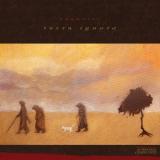
Elations Recordings presents "Terra Ignota", the long-awaited new full length album from elusive Melbourne-based fusion ensemble Krakatau. "Terra Ignota" marks a return and an epochal shift for the group, a deep exploration of possible sonic spaces and a portent of things to come.
In the years since 2016's cosmic jazz funk-prog-spiritual 12" "Tharsis Montes/Apogean Tide" Krakatau have worked on refining their craft as instrumentalists and writers, expanding further into the world of jazz and fusing influences from world folk musics, contemporary jazz and the European post-minimalist music of the 1980s and early 90s. "Terra Ignota", literally translated as "Unknown Land", takes its name from the cartographer's notation for uncharted territory, the blank spaces on maps where knowledge gives way to imagination and speculation, gesturing towards the group's studio explorations and search for new sonic worlds in the years spent developing the record.
The results are a diverse yet unified combination of sounds and influences across five tracks that see Krakatau drawing closer to the independent underground "world" jazz scene of the 1980s than anything contemporary. The album opens with the digi-minimalism and fourth world atmospherics of title track "Terra ignota", a percussion heavy latin fusion sound in "Birds of Passage", and melancholic ambient saxophone and synthesiser duo "In Memory". Three-part epic "Cosmetic Surgery" journeys through a long, complex post-minimalist arrangement into latin fusion and contemporary jazz, followed by the contemplative ECM-styled acoustic quartet closer "Trial in Absentia".
The album features significant contributions from saxophonist Rob Vincs, former Victorian College of the Arts head of Jazz and Improvisation and a collaborator with Australian musician Brian Brown; layered percussion and wordless vocals from Brazilian percussionist and esteemed songwriter Alcides Neto; and a guest performance from trumpet player Reuben Lewis on the title track.
In the rapidly shifting tectonic plates of the global Afrobeats scene, few arrivals have been as seismic as that of Ahmed Ololade—better known to the world as Asake. With his breakout project Mr. Money With The Vibe, the artist didn’t merely debut; he effectively recalibrated the tempo of the Nigerian pop soundscape. The EP functions as a masterclass in synthesis, pulling from the ornate, percussive history of Fuji music and grafting it onto the driving, bass-heavy architectures of contemporary Amapiano. It is a calculated, deeply rhythmic hybridization that manages to feel both nostalgic and jarringly modern.
From a critical vantage point, Mr. Money With The Vibe is defined by its brevity and density. Asake treats each track as a focused vignette, utilizing a vocal delivery that oscillates between a melodic, almost liturgical chant and the staccato urgency of a Lagos street orator. The production—characterized by sharp, frenetic percussion and deceptively simple melodic loops—creates a high-intensity atmosphere that mirrors the relentless pace of urban life. He avoids the pitfall of bloated experimentation; instead, he doubles down on a "street-pop" ethos, prioritizing accessibility without sacrificing the complex rhythmic interplay that gives the genre its distinctive texture.
Ultimately, Mr. Money With The Vibe stands as a pivotal document of the current era, capturing the transition of Afrobeats from a regional powerhouse to a dominant global force. By blending the aspirational "hustle culture" narrative with an increasingly sophisticated sonic palette, Asake established a blueprint that has since influenced a new wave of artists. The project is a testament to the idea that authenticity, when paired with relentless precision, remains the most effective currency in contemporary music.
- A1: Old Becoming New
- A2: Vessel Diaspora
- A3: Floor Phlegm Hue
- A4: Soft Tissue
- A5: Arriving Through The Front Door
- B1: Moth Ball
- B2: Spin
- B3: Terraforming
- B4: Lilac Sea
- B5: Oumuamua
London experimental spoken word and electronics duo BAG land on Phantom Limb with mesmerising new album This House is a Body, marrying visceral poetry with exploratory production to achieve beguiling, occasionally screwy and occasionally dreamy sonics.
“This album functions as a floor plan, a house in itself, collecting and containing the ecosystems of multiple rooms,” write BAG - Canadian artist and poet Jody DeSchutter and London producer Daniel Allison. “The roles we play can be defined by the room we are in; and it can be near impossible to tell what room we are in without looking from outside. This album maps out a number of rooms which hold such relations, memories, or experiences and builds them all into a single house, a single body.” Formed from Allison’s headspinning, depth-mining production for synthesis, field recording, and acoustic instrumentation, and DeSchutter’s lysergic and prophetic spoken word, the palette of This House is a Body can turn on a dime from claustrophobia and dread to hyperreal dream sequence, illuminated in sunstreamed glory in places and dripping with basement effluvia in others. Throughout, words, meaning, and imagery all dissolve into an architecture of alternately familiar and unknowable sound.
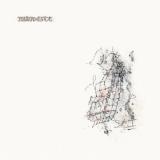
Australian composer-performers Judith Hamann and James Rushford have worked together in countless projects for two decades, perhaps most notably in Golden Fur, their trio with Sam Dunscombe. Black Truffle is pleased to announce Midmeste, their first work as a duo. Its title is Middle English for ‘the middlemost point’, alluding to how the piece builds on the points of overlap between the highly personalised musical languages Hamann and Rushford have developed in recent years. Performed on cello and a variety of pipe organs, Midmeste is a spacious, sometimes unsettling exploration of their shared interest in alternative tunings, psychoacoustic phenomena, the physical properties of their instruments, and the usually peripheral sounds generated by the performing body.
Beginning with a sequence of austerely vibrato-less harmonics from Hamann's cello, trailed by Rushford's whistling portative organ tones, the music soon expands into a slow-moving melodic wander, pausing at times to linger over an uncomfortable harmony or particularly resonant cello tone. Hamann and Rushford have long histories of engagement with pre-Classical European musical traditions, having in past projects performed and radically extended the work of Solage, Louis Couperin, Johann Conrad Beissell and other composers. Here they use a 15th century song by John Dunstaple, ‘O rosa bella’, which returns throughout the piece, distorted, aerated and splayed into new forms.
Developed while the two shared residencies at Akademie Schloss Solitude, Stuttgart in 2020 and La Becque on Lake Geneva in 2023, Midmeste integrates recordings made (at at the invitation of the Biennale Son) on the organ of the Basilica St Valere in Sion, Switzerland—the world’s oldest playable organ, built in the early 15th century. Played by both Rushford and Hamann, the instrument’s idiosyncratic features, including bellows pumped manually using massive wooden beams, are integrated into the music through amplification. Creaks and thumps locate the music physically both in the performers’ bodies and the specific site of its making. Moving through a series of distinct episodes across its forty-minute span, Midmeste makes space for near-silent duets of high harmonics and hissing air, moments where twittering high tones and rumbling sub-bass could be electronic, and static fields that unexpectedly blossom into almost Romantic harmonies.
Listeners familiar with Hamann and Rushford’s work will find many familiar features here: the stunningly rich cello tones, their patient sustain allowing heightened awareness of the inner life of sound and its interactions with the environment; the care with which acoustic space is activated, becoming at times a third instrumental voice; the attention to fragile, unstable sonorities that sometimes have a comic edge. A major work from two key figures in contemporary experimental music, Midmeste synthesises rigorous exploration of fundamental questions of sound and performance with an unapologetic embrace of beauty.
Celebrating a decade since its live debut, Detroit-based artist Rebecca Goldberg announces the first-ever vinyl release of her original score for A Trip to the Moon, the iconic 1902 silent film by Georges Méliès. Composed in 2016, Goldberg’s reimagining of the groundbreaking film—originally titled Le Voyage dans la Lune—translates early cinema fantasy into a minimalist electronic soundscape shaped by synthesis, texture, and composed foley.
Goldberg’s approach honors the wonder and theatricality of Méliès’ vision while grounding it in Detroit’s lineage of forward-thinking electronic music. The score premiered in Paris in 2016 with live performances at Silencio, the club founded by David Lynch, and at Bar à Bulles, located above the legendary Moulin Rouge. The Paris events were produced by Why So Serious Productions and marked a rare convergence of experimental electronic performance and historic cinematic space. Goldberg also presented the live score in her native Detroit, reinforcing the transatlantic bridge that has long shaped her conceptual record projects.
Now, ten years later, the score will be released for the first time on vinyl in a limited edition of 300 copies. The pressing captures the nuance of the original live compositions while offering listeners a new way to experience the interplay between silence, rhythm, and sonic illusion. As with Goldberg’s previous conceptual 12" releases, the vinyl format serves not only as a medium but as an artifact that preserves and reframes cultural memory.
- A1: Back To Nature (Originally By Fad Gadget)
- A2: Brand New Life (Originally By Young Marble Giants)
- A3: The Visitors (Originally By Abba)
- A4: I Can't Escape Myself (Originally By The Sound)
- A5: Goodbye To Love (Originally By Carpenters)
- B1: Rock On (Originally By David Essex)
- B2: Smoke And Mirrors (Originally By The Magnetic Fields)
- B3: Day Breaks, Night Heals (Originally By Thomas Leer, Robert Rental)
- B4: Gentle On My Mind (Originally By John Hartford)
- B5: Richard! (Originally By Ed Dowie)
- B6: End Credits (Originally By Laptop)
Depeche Mode, Yazoo, Erasure's Vince Clarke, Blancmange's Neil Arthur and the electronic producer-writer-synth-nerd Benge have joined forces to form the new project Doublespeak. Set to be released on May 29th, their self-titled debut album revisits eleven of their favourite songs from the past four decades, each reimagined and renewed in the timeless space of gleaming analogue electronica.
The 'Doublespeak' album is divided between songs from the postpunk netherworld brought blinking into the light (Fad Gadget, The Sound, Young Marble Giants), pop radio monsters ushered back down a dark stairway into the club (ABBA, David Essex, The Carpenters) and buried treasures from the 1990s onwards (The Magnetic Fields, Ed Dowie and Laptop).
Collectively, the album amounts to a shadow autobiography of the three collaborators' continuing musical education. Doublespeak is the great human songbook, synthesised.
Empathic vocals, bold arrangements and glowing analogue electronics turn familiar and forgotten songs into a personal, forward-looking electronic statement.
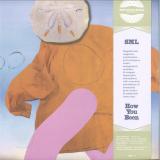
SML is the quintet of bassist Anna Butterss, synthesist Jeremiah Chiu, saxophonist Josh Johnson, percussionist Booker Stardrum, and guitarist Gregory Uhlmann. Their second album, How You Been, finds the supergroup of prolific composer/producers pushing ever further into the hyperrealist, collectivist approach to music creation nascently explored on their debut Small Medium Large, which was lauded as "awe-inspiring" by Glide, "exuberant" by the Los Angeles Times, and "an exciting milestone" by Pitchfork. As SML has evolved and spread out in space-time, their fluencies, both as an improvising unit in performance and as a production team in the studio, have sharpened. At inception the band inspired disparate but distinctive artist comparisons like Essential Logic, Oval, Herbie Hancock"s Sextant, and electric Miles Davis, as well as assorted genre touchpoints like Afrobeat, kosmiche, proto-techno and new-jazz. With How You Been their work manages to both collapse and explode such derivatives, displaying a new, high resolution version of SML, fully-flowered into a new strain of sound, bound to incite its own copycats in due time.
- 1: Private Symphony (Feat. Stuart Murdoch)
- 2: The Cold Collar (Feat. Gruff Rhys)
- 3: Love Is A Life That Lasts Forever (Feat. Molly Linen)
- 4: First Moonbeams Of Adulthood
- 5: Road To The Amber Room
- 6: Hachi No Su (Feat. Saya From Tenniscoats)
- 7: In Portmanteau (Feat. Field Music)
- 8: Irreparable Parables
- 9: Spectators In The Absence Of God (Feat. Kathryn Joseph)
- 10: Soul Enters The Ocean Sun Climbs Out The Sea
Pink Vinyl[26,26 €]
Very limited numbers, orders will need to be confirmed.
For his new album, Irreparable Parables, Andrew Wasylyk felt a strong desire to write a set of songs featuring an element hitherto rare in his work: the human voice. Equally strong was the conviction that he did not want to sing them himself.
The Scottish multi-instrumentalist and composer set about assembling a group of guest singers, sending out the songs to wherever they were in the world. The vocals were recorded remotely and then, like migrating birds, winged their way back to Scotland. The result is an album of great beauty which, perhaps preeminently in Wasylyk’s work, expresses the vulnerability and resilience of the human spirit.
Six singers appear on the record, represented by six songbirds illustrated on the sleeve by Clay Pipe Music’s Frances Castle. The cuckoo is a nod to Belle and Sebastian’s 2004 single ‘I’m A Cuckoo’, that band’s Stuart Murdoch being the first voice you hear on the new album. When the vocal for ‘Private Symphony #2’ arrived, says Wasylyk, “it was everything that I was looking for and more. But this is Stuart Murdoch. Of course he’s going to make something incredibly beautiful and thoughtful.”
The song lyrics were, for the most part, written by the singers. The music is Wasylyk’s creation. He navigates a sound world that lies somewhere beyond the borders of classical and jazz, ambient and abstract. It is difficult to describe, but easy to understand, which is to say to feel. That is the way Wasylyk’s work is experienced: as a feeling. It takes you back to childhood, perhaps, to feelings of comfort and safety, or to memories of walks at sunrise and sunset, or to the way a shadow falls on a particular field in a particular place at a particular time in your life. This is consoling music. That is why, though pretty, it is not merely pretty. These are songs to shore up the soul.
Wasylyk writes in a room, in his native Dundee, full of “half broken” instruments. He picks these up, plays a little, seeking an idea, a feeling, a door that lies ajar. The musical palette of Irreparable Parables includes brass and woodwind, a six-piece string section, guitar, bass, drums, vibraphone, Mellotron, Fender Rhodes, tape loops, synthesisers and percussion. The strings were arranged by the cellist Pete Harvey, a long-term collaborator.
Among the other guest vocalists are Gruff Rhys of the Super Furry Animals, Saya Ueno from Japan’s Tenniscoats and Peter Brewis from Field Music. Wasylyk himself takes the lead vocal on the title track, though a throat infection and touch of pitch-shifting have altered his singing in a way that even he, having fallen out of love with his own voice, finds acceptable.
The heart of the record can, arguably, be found in two tracks, ‘Love Is A Life That Lasts Forever’ and ‘Spectators In The Absence of God’, sung respectively by Molly Linen and Kathryn Joseph. The former, bright with trumpets, was inspired by the writing of Derek Jarman. “I was feeling deeply upset about the world and wanted to try and write some- thing that was obviously hopeful,” Wasylyk says.
‘Spectators …’ offers an emotional counterpoint. It is an “apocalyptic hymn” that seems to grapple with watching human suffering from afar, too distant to be at physical risk, but experiencing the psychological wounding, and feelings of helplessness, even complicity, that come with constant awareness of other people’s pain. “Kathryn’s a pal, I love her dearly, and she’s a brilliant artist who really feels what she writes,” Wasylyk says. “The cracked tenderness of her voice is spellbinding.”
The album closes with an instrumental piece, ‘Soul Enters The Ocean Sun Climbs Out Of The Sea’, all piano and strings, that offers a sense of resolution and ascension. A good moment, too, for Wasylyk to reflect upon the artistic companionship that he enjoyed while making this record – the songbirds that answered his call: “These humans are incredible at what they do. I’m deeply grateful and feel so lucky. It blows my mind.”
“We know what jazz is when we hear standards or music that is close to the same source, to a recognized pattern. But what is jazz? Here, a starting point. "Blow" showcases an accumulated CITIZEN:KANE techno vocabulary but it quickly tones down the sensation by introducing frequent breaks in the rhythm, as in "Peiote". But even there we are able to "feel" techno by recalling Wolfgang Voigt's M:I:5 and its parallel yet contrasting rhythmic grids. Elsewhere, manifestations of opposite forces: the beat keeps a body firm on the floor, eminently physical but not commanding; and melodies, cosmic threads, suggest ascension as well as a drive towards the within, creating space for feelings and/or rationalization. "The Fence" or "Montreal" stand as good examples. One less evident aspect of beauty in this record is the apparent coldness of the music, almost rigid and devoid of passion, and thus we declare it more true. As the mind performs a synthesis of what was learned after a class, last track "Family" (expressively) gathers impressions of what went before, adding poetry to the moment. "Blow" may be a reference to the most familiar instruments used in jazz but it can also figuratively mean an explosion, an aesthetic liberation, even with (our) knowledge that for now, and theoretically, the artist chose to concentrate on this thing called jazz.”
The union of Antwerp synthesist David Edren and Tokyo minimalist Hiroki Takahashi is a fit so natural as to feel preordained. Both traffic in subtle shades of contemplative electronics, marked by patience, space, and poetic restraint. And both have rich histories of curation and collaboration – Edren in the duo Spirit & Form alongside Bent Von Bent, and Takahashi as proprietor of the Kankyō record shop, as well as one fourth of cosmic ambient quartet UNKNOWN ME. Mutual fans of one another’s work, they began sharing stems in the latter half of 2020, which slowly blossomed into a collection of multi-hued compositions inspired by notions of connectivity and impermanence, translated for east and west: Flow | 流れ.
Opener “Dusk Decorum | 黄昏 礼節” maps the mood of what’s to come, elegantly pirouetting and percolating through an expanding vista of looming stars and half-light horizons. Takahashi describes Edren’s arrangements as evoking “a strange feel, something we haven't heard much of before.” The sensation is one of “in-betweenness,” a restless current whispering beneath the beauty, like seasons seen in time-lapse footage: flickering but infinite, transience turned permanent. Takahashi’s signature sculpture garden tones plot spiral patterns over which Edren cascades dazzling pointillist synthesizer coloration. The pieces veer between delicate and dilated, micro and macro, their aperture forever softly in flux.
From the oscillating orchestral lullaby of “Stalactime | 鍾乳石時計” to the sweeping, sparkling dream sequence closer, “Shift Register | シフトレジスタ,” the album achieves the elusive goal of being more than the sum of its parts. This is music of rare air, elevated and amorphous, shimmering just out of reach. Though Edren and Takahashi have yet to cohabitate the same room in person (a fact that should be rectified soon by an astute festival booker), their palettes and poise are perfectly paired, twin fragilities woven into seven radiant and regenerative vibrational states. The cover design of a beatific, beaded leaf rippling on the surface of a hidden pond aptly captures the record’s muted majesty. Takahashi’s quiet pride is justified: “We are very happy with this time-consuming and carefully crafted work.”
As the so-called “Latin boom” becomes a new anchor for hard-swung club sounds, it is crucial to recognize that the region’s musical culture extends far beyond dembow edits and the pop-trap hybrids that have edged into the mainstream. Monterrey-born, New York City-based producer and DJ Delia Beatriz, aka Debit, returns to NAAFI with Potpourri, a generous and kinetic collection of dancefloor-oriented tracks filled with percussive flourishes, squelching 303 basslines, and rhythmic mutations that actively challenge the status quo. Rather than rebuilding “Latin sounds” as a fixed category, the album rethinks their internal logic, tracing the evolution of techno and house in cities like Detroit, Chicago, and New York alongside parallel innovations emerging in Mexico, Colombia, and across the wider Latin world. Positioned on the bridge between Mexico and the US, Potpourri does not seek synthesis as a gesture of smooth fusion, but as a site of disruption.
The album can be heard as a loose follow-up to System (2018), Debit’s NAAFI-released EP that expanded the sonic potential of tribal guarachero through triplet-driven rhythms, industrial pressure, and noisy reconstruction. Potpourri retains guaracha as a structural backbone while drawing further influence from veteran DJ and producer Javier Estrada—who also appeared on System—and particularly from his fast-paced, nonlinear style of mixing. That approach becomes a formal principle here: canonical structures are dismantled, repetition is avoided, and tracks evolve without sacrificing propulsion. Coming after the introspective temporal inquiry of Desaceleradas and the speculative historical acoustics of The Long Count, Potpourri arrives as a deliberate surge of energy. As Beatriz explains: “It’s a manifesto for rethinking form and sound in dance music. By stepping outside traditional structures and embracing the potpourri approach, I’m creating new meaning with familiar rhythms. I’ve also been applying this to my DJ sets, using it as a tool to break free from established norms and explore new narrative possibilities.”
Years in the making, Potpourri imagines an alternate timeline in which the psychedelic squelch of acid—echoing pioneers such as DJ Pierre and Mr. Fingers—and the dub-inflected atmospheres of Basic Channel entered into direct and sustained contact with Latin American club mutations. Those references are legible, but never merely quoted. Instead, they are folded into syncopated hi-hats, overdriven kicks, and unstable arrangements that absorb both the intensity of the parties Beatriz remembers from Monterrey and the abrasive edge she sharpened at DIY noise shows in New England. The result is unmistakably a dancefloor record—heard in tracks as forceful as “Pero like” and the peak-time pressure of “tuvesuerte”—but one saturated with grotesque, psychedelic atmospheres, where sounds dissolve into hoarse croaks, acidic smears, and anxiety-inducing growls. Here, the rave becomes not simply a site of release, but a platform for navigating identity, hybridity, and artistic formation across borders. Moving through peaks and ruptures, Potpourri reveals a party narrative that is not linear but multidimensional.
By folding together the fluidity of DJ culture, the experimental charge of acid, and the rhythmic vitality of guaracha, Potpourri proposes a space of formal and political innovation within Latin America’s rapidly expanding electronic music landscape. It is a record that refuses containment, pushing against the templates through which Latin electronic music is often consumed, and insisting instead on friction, instability, and transformation as generative conditions for the dancefloor.
Inner Image is a series of live studio recordings by Kamran Sadeghi, an Iranian, New York City-based composer and interdisciplinary artist working across electronic music, sound art, and multichannel composition. The EP is focused on rhythm programming and non-sample-based, hyper-sculpted synthesis. Audible artifacts become compositional material, producing shifting textures while exploring auditory illusion, spectral layering, and spatial perception. This debut release on amenthia recordings bridges Sadeghi's club sound system music with his ongoing work in sound art and avant-garde composition.
We’re proud to present the first-ever official reissue of Rold Lebo - "Dansez Otiere" — a folk-jazz treasure from 1986, originally released in the Republic of Congo on vinyl and cassette (self-released on small quantities). This vinyl gem revives the energy and elegance of a rare record, now brought back into the light — a timeless work, finally restored to its full glory.
This album alternates between the call to celebrate the ancestral homeland and cultural identity and poignant ballads about love, exile and homesickness. It is a work that is both intimate and cosmic. Finally restored to its full glory, it returns on vinyl for the first time since its initial release.
This is an essential restoration — a sophisticated synthesis of Congolese Folk-Jazz, subtle soul, and deeply introspective rhythms. Recorded in the 80s, the album channels a timeless spirit, exploring multilingual themes of ancestral identity, the melancholy of exile and the delicate games of love.
Rold Lebo’s music is a profound emotional capsule — once overlooked, now revived for a new generation of listeners eager to explore the sophisticated sounds and resonant stories of the Republic of Congo.
Phase alternations arise where overlapping waves diverge in phase, revealing the hidden
geometry of sound. A phenomenon that Peryl deliberately allows to happen — thus placing
the physical and technical aspects of music at the center of attention. His new album
builds on a fundamental idea of electronic music — but reimagined.
The person Peryl and his needs steps into the background during production —
functioning merely as a channel that intuitively receives and transmits what long-studied
machines, in dialogue with the subconscious, collectively bring to the surface.
The result is a collection of nine tracks, like emanations of precisely crafted analog
synthesis. No sound returns the same way twice. This fragility fuels the urgency — a
creative necessity to listen, to commit, to allow form to arrive before it dissolves again.
Rhythm is no longer on the grid, but a series of small shifts, offsets, and delays. Loops fall
slightly out of sync. Deviation creates friction, and friction creates energy. Through the
layered interplay of phase-driven effects — chorus, phaser, flanger — the sounds begin to
breathe in alternate rhythms. Hollows emerge. Swells fold into one another.
Challenging these swells is an essential part of Phase Alternations. Effects come alive in
subtle shifts, industrial textures whisper melodies, folding and unfolding in rhythms that
emerge through their own logic.
Peryl presents the result of an experiment: the sound itself chooses its form.
Lapalux (Stuart Howard) is a UK-based experimental electronic music producer known for his emotionally charged sound design, intricate textures, and immersive sonic storytelling. With releases on Brainfeeder and widespread critical acclaim, Lapalux has built a loyal global following and earned consistent airplay on BBC Radio 1, BBC 6 Music, and NTS. His work has been championed by DJs including Mary Anne Hobbs, Benji B, and Tom Ravenscroft, and praised by outlets such as The Guardian, Resident Advisor, XLR8R, and Clash. Lapalux's music occupies a unique space between IDM, ambient, and leftfield electronica — rich in atmosphere, detail, and feeling.
On the Grid is Lapalux's latest EP — a deeply intricate, hardware-driven exploration of rhythm and emotion that fuses fragmented IDM with warm analogue tones and deep dynamics. The EP showcases Lapalux's continued evolution as a producer, balancing intricate sound design with powerful melodic undercurrents. It follows years of refinement in the studio, drawing on his signature use of modular synthesis, Digital and analogue hardware and organic imperfections. With a limited vinyl pressing and strong fan demand, On the Grid stands as a key release in Lapalux's catalogue and a compelling addition to any store's forward-thinking electronic selection.
- A1: Design - Premonition
- A2: Vision - Lucifer’s Friend
- A3: Richard Bone - Alien Girl
- A4: John Howard - I Tune Into You
- A5: Ian North - We’re Not Lonely
- A6: Selwin Image - The Unknown
- B1: Harry Kakoulli - I’m On A Rocket
- B2: Rich Wilde - The Lady Wants To Be Alone
- B3: Billy London - Woman
- B4: Alan Burnham - Science Fiction
- B5: The Microbes - Computer
- B6: The Goo-Q - I’m A Computer
- C1: Gerry & The Holograms - Gerry & The Holograms
- C2: The Warlord - The Ultimate Warlord
- C3: Die Marinas - Fred From Jupiter
- C4: Dee Jay Bert & Eagle - I Am Your Master
- C5: Peta Lily & Michael Process - I Am A Time Bomb
- C6: Sole Sister - It’s Not What You Are But How
- D1: Alasdair Riddell - Do You Read Me?
- D2: Karel Fialka - Armband (The Mystery Song)
- D3: John Springate - My Life
- D4: Idncandescent Luminaire - Famous Names
- D5: Disco Volante - No Motion
- D6: Dream Unit - A Drop In The Ocean
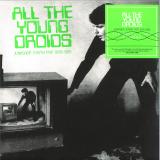
2025 REPRESS ON TRANSPARENT GREEN VINYL
Compiled by Philip King “And then came the rise of synth pop : blokes with dodgy haircuts hunched over keyboard-operated machines stuffed with wires and do-it-yourself tone oscillators making sounds like a brood of geese passing gas in a wind tunnel. Whoopee! This is the way the ‘70s ended : not with a blood-curdling bang bang but with a cheap, synthesized, emasculating whimper.” NICK KENT, NME. All The Young Droids: Junkshop Synth Pop 1978-1985 is a new compilation that charts the underbelly of the epoch-defining sound of the synthesiser in 80s popular music. Compiled by Philip King (previously seen compiling All The Young Droogs, Glitterbest and Boobs - The Junkshop Glam Discotheque), the music here connects the dots between DIY synth enthusiasts grappling with new, cheap synthesisers at the tail-end of punk and wannabe, jobbing songwriters enthral to the new music pioneered by Gary Numan, Depeche Mode and Daniel Miller’s Mute Records. Featuring rare tracks of auto-didactic progressive pop music, proto-techno punk, shoot-for-the-stars-land-in-the-gutter chart flops and heralded, underground synth classics, School Daze paints a picture of beautiful failure. Complete with extensive sleeve notes written by King and never before seen imagery, all 24 tracks were remastered by RPM in-house engineer Simon Murphy, many from vinyl copies due to lost master tapes. The story told on All The Young Droids is one of the dawning opportunity presented by both the emergence to the market of cheaper analog synthesisers and the distribution networks plus indie labels that exploded with the advent of punk music in 1976. While the music that sprouted out all over the globe in the wake of these factors was decried as fake, plastic, a refutation of punk’s guitar-led revolution, it’s telling that much of the music on All The Young Droids.. was created in bedrooms, ramshackle studios and home-made set ups with often borrowed equipment. In the era of record labels jumping to capitalise on the success of The Sex Pistols, The Clash (both on major labels, of course) these artists struggled to stand out from a new gold-rush with next to no budget or PR team. With radio and labels desperate for the new Yazoo, what resulted was a testament to necessity being the mother of invention. At the time, the synthesiser was the music of the future, a shiny new machine that could paint like an orchestra with a single finger and a 4-track. In the hands of Manchester avant-pranksters Gerry & The Holograms it’s a pulsing, sardonic weapon.. the only instrument on the Messthetics classic lampooning of New Wave fashion. In Hamburg, a 16 year old Andreas Dorau used it to write and record (with his female classmates on vocals) a global smash in Fred Vom Jupiter (later licensed to Mute Records). The hard-to-find English version (Fred From Jupiter, natch) is included here. Many artists with alreadystoried careers caught the bug and recorded synthesiser-fuelled peons to space, computers, the future and, of course, love-interests. Harry Kakoulli, late of Squeeze, recorded a solo album in 1979 that included the incredible power-synth-pop smash-that-never-smashed I’m On A Rocket. Similarly, Ian North of Neo and American Power Pop stalwarts Milk ’n’ Cookies bought a Korg MS20 and used a tape machine to record We’re Not Lonely, an absolute lost-classic of minimal synth pop. We’re Not Lonely also features on the Junkshop Synth Pop sampler 7” twinned with John Howard unreleased track You Will See, released April 12th 2025. There are plenty of compilation debuts in evidence. Sole Sister were a mysterious trio who were featured on the Scaling Triangles compilation of female-fronted, queer-adjacent post-punk / underground music that also featured The Petticoats. Selwin Image were from San Francisco and featured members of the recently defunct power pop/punk group The Pushups. Their stupidly catchy The Unknown fizzes with New Wave energy - think XTC to Sparks but remains unreleased until now. Dream Unit’s A Drop In The Ocean is an early synth wave cut, positively teaming with Joy Division instrumentation, previously only released on a long-forgotten and super rare, self-released EP. Incandescent Luminaire’s Famous Names belies an archetypal struggle of a small-town trying to make it in a cruel industry but is a thrilling New Romantic-Synth Wave cross over with a OMD gloominess that’s a joy to hear. Feminist Minimal Wave track I Am A Time Bomb by performance artist Peta Lilly and Michael Chance is a revelation destined for new found cult status. It was released on 7” and lost until now. The flipside to the subterranean, never-made-it synth pop mentioned above are the ambitious, even fruity attempts at success that have a perennial elegance to their confidence. New Jersey-ite Billy London (real name Ed Barth) tried to cash in on the synth boom with Woman, released by a major label, a lurching new wave track built on the Louie Louie rhythm and a wonderfully camp Lou Reedstyle sleazy vocal before exploding in the synthesised chorus. The song bombed but with a chorus like this, you have to wonder why? Ex-Glitter Band member John Springate’s My Life is truly epic, with doomed chord progressions and massive sounding drums turning into at least 3 different songs in the course of the track. Before you wonder what’s going on the song resolves with a glorious return to the main refrain. The dry-ice-dressed dance floor is well catered for too. Design’s Premonition and Vision’s Lucifer’s Friend are stone-cold minimal synth bangers, well loved but given a new lease of life here. The Warlord’s The Ultimate Warlord was released in 1978, a homespun proto Hi NRG banger that was later re-recorded by The Immortals in Canada who had a club hit with it. One-man- band Disco Volante’s No Motion was re-issued by Synth wave label Medical in 2012 but makes its first vinyl compilation appearance here. Close your eyes and you can imagine what Lawrence of Felt would have sounded like with some cheap Korgs a little earlier in his career. Gibraltar-based trio The Microbes imagined a computer programming people to dance - how prescient - and ended up with a propulsive, robo-funk track with splendid rubbery bass playing over a tectonic drum machine. Previously picked up by Belgian label Stroom TV, Dee Jay Bert & Eagle’s heavily Euro-accented I Am Your Master demands the listener to “come to paradise!” In a frankly terrifying manner. All The Young Droids is the first compilation to peel away from the narrative that dour, Minimal Synth and Cold Wave were the only musical children of the first rush of synth pop. Philip King and School Daze Records describe a much more complicated world: along with the austere, Brutalist children of Daniel Miller (who produced Alan Burnham’s Bowie-Low-influenced Science Fiction here) was a plethora of desperate cash-ins, accidental mainstream hits, ambitious pop dramas and major label punts that went nowhere. Crucially, the compilation blurs the line between junk and treasure. What if the two things are interchangeable. What if it’s all science fiction?
Welcoming London-based artist House on the Strand to the Eastern Nurseries fold following his impressive 2024 debut, "Heroine", Ruben Elbrond-Palmer channels a sombre, cinematic sense of sound with "Unrest".
Interpolating the visual sensibilities of some of his favourite artists, filmmakers, and photographers into the sonic field, Elbrond-Palmer’s palette cuts loose from the percussive elements of his previous work, blending analogue synthesis with repurposed guitars, haunting melodies, and field recordings that call to mind the hazy delirium of a dusty summer’s day. Sitting at its core, "Unrest" places harmony front and centre, with each sombre movement rising and falling as electric fences hum, helicopters hover overhead, and unknown events are set in motion.
Deceptively simple, the resultant album is gestalt—an elegy of melancholic moments, lost to the world.
Mastered by Ike Zwanniken of Hysterical Love Project - mainstay mastering engineer behind majority of INDEX, Co:Clear & Theory Therapy Releases
Established in 2019, Eastern Nurseries is a platform for deeply emotional contemporary electronic music based between Porto and Newcastle upon Tyne. Curated by Rui P. Andrade (aka Canadian Rifles) and Christopher Macarthur Owen (aka Burning Pyre).
The label has released a steady yet considered magna of records from Hasfeldt, Emma Acs, innerinnerlife and VAs encompassing the likes of Conna Harraway, Severin Black & Slowfoam.
Eastern Nurseries no. 41
Written & produced by Ruben Elbrond-Palmer
Recorded in London, Kobaek & Aude, 2019-2024
Mastered by Ike Zwanikken
Cover photo by Andrew Weathers
Seeking out the inspirational intersection between free improvisation, rave and ancient mysticism, Plants Heal deliver an album of kaleidoscopic, organic beatdowns to Quindi.
Plants Heal is a collaborative project between Dan Nicholls on synths, Dave De Rose on drums and Lou Zon (aka Louise Boer) on visuals. The roots of the project are entwined with Dan and Lou's London-based event Free Movements, which began in 2018 to explore how instrumental music could merge with live electronics and DJ sets. Dave and Dan found themselves playing together frequently at the event and as part of Dave's free improv project Agile Experiments, with their accomplished track records as multi-instrumentalists reaching across many layers of music culture. The particular synergy of their partnership taps into the subliminal, surreal and transcendental soundscapes, but they're reliably anchored by instinctive rhythms and driven by a natural flow-state.
From the tentative steps of their first collaborations, Dan and Dave coalesced Plants Heal as a more pronounced project with Lou's live visuals, culminating in a first self-released album in 2021 and since organically fed and watered through continued performances across adventurous festivals and intimate club spaces. Every incremental step along the path of the project yielded new surprises and the deepening sense of a unique, powerful energy. The trio opted to pour this energy into two days of studio sessions at Sonic Playground Studios in Athens, maintaining their unplanned approach and letting the music and visuals unfold in the moment. The end result is Forest Dwellers, a sincere document of truly free music that uses the rhythmic structure of dance and trance music as a springboard into heightened consciousness.
Throughout the album you can hear hints of the familiar - dub techno shimmers, trip hop boom-bap, kosmische momentum, snarling bass modulation, new age ambience and even the odd sizzle of disco. But none of these references are explicit, and they weave in and out of less placeable expressions deeply bedded into Dan and Dave's sonic practices. The end result is a swirling tapestry of unspooling groove, wide open and agile enough to shift gears mid-flow - just as comfortable letting the propulsion melt away as locking into a four-to-the-floor throwdown. From the slippery syncopation of 'Avena Moon' to the angular bait-and-switch of 'Alien Hardware', 'Yarrow's starry-eyed reverie and the rolling, warm-hearted funk of 'Space Ballad', the Plants Heal sound world is expansive and equally enthusiastic for immediate musical motifs as much as wild abstraction.
Lou's visual practice is an intrinsic part of the project. During performances she improvises with analogue footage from her library run through video mixers and synthesisers, focused on medicinal plants such as yarrow, hawthorn, nettle and thistle. All those plants feature in processed form on the cover of the record, which was designed in collaboration with Lou's brother Arthur Boer. Meanwhile, Lou recorded additional footage in Athens during the recording sessions to feed into the continued cycle of the project's live evolution.
Forest Dwellers' meaning honours this cycle and its reflection of the eternal undulations of the natural world. It's also a sincere tribute to the spiritual importance and radical potential of the dancefloor, drawn from the freedom taught by jazz and dedicated to reclaiming lost ideas about community, agency, bodies and the enduring allure of the unknown.
Chaos is fundamental for creating something powerful. It teaches us to be at ease with how things are, to listen to ourselves, and find our own order’. (Enrico Sangiuliano)
Pioneering, avant garde yet chart-storming sound designer/producer/live performer Enrico Sangiuliano drops EP ‘Order In Chaos’ as release #1 in his self-destructing countdown imprint ‘NINETOZERO’, out 20th November. The EP’s three tracks respectively represent a triptych of sound exploring tension, release, and dissolution, with violinist and composer Vito Gatto joining Italian techno/melodic maestro Sangiuliano for tracks 1 and 3. The EP blends electronic, classical and electro-acoustic genres, resulting in a fresh, unique product that defies typical techno expectation, as Sangiuliano and Gatto explore the concept of disorder as a creative playground.
‘With this chapter, we dive into chaos – something that can be uncomfortable, but is the place in which you can find unexpected or new ideas. Chaos is fundamental for creating something powerful. It teaches us to be at ease with how things are, to listen to ourselves, and find our own order’. (Sangiuliano)
The ‘Order In Chaos’ EP continues a momentous year for Enrico Sangiuliano, and heralds his upcoming all-night-long SOLO show at Nitsa in Barcelona (Nov 28th, tickets here). His highly acclaimed NINETOZERO label has also previously featured Charlotte de Witte, Antonio d’Africa, Mattia Saviolo, GMS, Alex Lentini, STOMP BOXX, Zimmz, Secret Cinema and About Sofiya.
Vito Gatto is a Milan-based violinist, composer and sound explorer. He is the founder of label/collective NeMu (‘Neutral Mutation’) producing Italian projects at the interface of electronic and organic sound. His self-description as ‘Making sounds, looking for silence’ makes him the perfect collab partner for ‘Order In Chaos’, which ‘embraces the paradox: chaos births order, and order dissolves back into chaos.’
‘Whilst classically trained, I have always been fascinated by the world of electronic music, in all its expressive forms’ Gatto says. ‘I use real instruments and natural sound sources processing them through electronics to enhance their unpredictability, always remembering that the core of music - whether classical or electronic - is communication and storytelling. This philosophy guided our creative synthesis on this release.’
The collaborative workflow combined remote and in-person studio work over roughly a year, culminating in these three key tracks reflecting different musical and conceptual layers.
‘Order In Chaos’ EP tracks:
Enrico Sangiuliano & Vito Gatto ‘Adaptation for Strings and 909’: A cinematic overture built from the raw intimacy of Vito Gatto’s violin, processed and layered with unquantized 909 drums. Out of grid, out of rules. Drama and turbulence surge until thunderous kicks strike like sudden storms. ‘This track symbolises both of us. Vito sent the strings, I added the iconic Roland 909. It has no structure and no grid, the arrangement is not precise, it’s a very pure track and a great example of disorder and freedom.’
Enrico Sangiuliano ‘Order in Chaos’: The title track is a pure techno weapon and dancefloor igniter: rolling, stripped, euphoric. A shape-shifting lead synth constantly mutates, flirting with disorder until the kick restores gravity. Chaos becomes dancefloor order.
Enrico Sangiuliano & Vito Gatto ‘Dissolution’: The closing moment. Strings and drums dissolve into a weightless drone. Beatless and infinite, it invites surrender into space. ‘This cinematic track slowly melts ‘Order in Chaos’, adding processed organic sounds and field recordings from the mountains.. coming back to nature, and silence.’ (Gatto).
Still #0 to go in the NINETOZERO countdown… And then what? With Sangiuliano, it’ll be something unexpected and brilliantly innovative.