The legendary Disk Union Japan and180gpresent the best of today's Brazilian music!
An essential album from contemporary Brazil, Xenia's first solo effort pays tribute to the sounds of the black diaspora, masterfully blending soul music with jazz, samba, r&b and electronic flavors.
Latin Grammy nominated album
180gheavy vinyl, comes with download card
Xenia França is a singer from Bahia, Brazil. She has been nominated for the 2018 Latin Grammy for this debut album Xenia, and for the song "Pra que me Chamas?", a favorite among listeners. Part of an art scene concerned with reviving and disseminating the African-Brazilian culture, the singer became a reference of female empowerment and behavior, especially among black women.
Xenia has performed at major Brazilian festivals, such as Recbeat, Coala, Coma and Queremos, among others. In 2018 she took to Central Park's SummerStage Festival in NYC, and has also performed in Philadelphia and at the Pablo Toblón Theater, in Medellin, Colombia.
Her first solo effort here, "Xenia", is an essential album from contemporary Brazil, paying tribute to the sounds of the black diaspora, masterfully blending soul music with jazz, samba, r&b and electronic flavors, now available for the first time outside of Brazil!
Cerca:la union
"Frisina meets Toco" is the result of the artistic union of two main Schema Records' characters, Gerardo Frisina and Toco, spontaneously born from many listening sessions of Brazilian music LP's. The music contained in this 12" record stands in the middle between Rio and Bahia, merging together the Brazilian rhythmic culture and groove (Toco) with the modern sound of clubbing latin jazz (Frisina), and it's also enriched by the presence of the young pianist and composer Vitor Araújo and his peculiar signature style, particularly apparent in the instrumental version of the song "Craque".
In the early eighties, Edmond Mondésir, professor of philosophy and Léon Bertide, trade unionist, founded the Bèlènou group. They were actors of the great agricultural strike of 1974, which resulted in the death of two workers (Ilmany and Marie-Louise) and left many wounded. Activists of the patriotic movement Asé Pléré An Nou Lité (Stop crying, Fight), they were part of the identity and the cultural affirmation la revendication identitaire et culturelle of the time. Like the Guadeloupean musician Gérard Lockel and his work on the Gwo Ka, they put the Bèlè, in its traditional form, back in the spotlight during Swaré Bèlè (Bèlè nights).Minimalist and spiritual, a true rural ancestral art from Martinique, the Bèlè combines dance and music from responsorial monodies, which is a choir that responds to the lead singer (Respondè / La vwa dèyè), on codified drum rhythms and ti-bwa (2 sticks that hit the back of the drum or a piece of bamboo). It comes in a series of collective choreographies, working up into the trance. The texts are simple, short and tell the story of everyday life and struggle. While preserving the emotion and the drum’s central place, the fundamental contribution of Bèlènou is to keep the traditional form of Bèlè while adding a modern instrumentation: bass, guitar, saxophone, drums...
Emosyon Tambou-a (Emotion of the Drum) was released in 1990. This third opus of the band expands the musical spectrum in harmonies, arrangements and influences to create a contemporary music anchored in the Bèlè matrix, while keeping the beat, the energy and ancestral roots of music. Bèlènou adapts some classic rhythms: Bélya, Gran Bèlè, Bèlè Pitjé or Ting-Bang rewritten here for an orchestra.With the appearance of long couplets and a complex harmonization of the choruses, Bèlènou's music brings a form of modernity, it opens notably to jazz territory as well as to other forms of music and grooves. Also, Bèlènou leaves the musicians with space for improvisation: not only on the saxophone or the guitar, but also with the drums (cleverly adaptating traditional rhythms to the drums).
The texts sung in Creole are of a social nature, appealing to the solidarity and self-denial of the people (Bélya pou péyi-a, Tout pèp-la sanblé), to the struggle for political emancipation towards a new democracy (Wi ny ké rivé, Ni dé jou, Démokrasi); land protection (Sové tè-a); finally, to the vitality of the Bèlè culture ... (Emosyon Tambou-a, Dansé Ting-Bang)...Culture participates, according to the expression of Aimé Césaire, as "Miraculous Weapons". Bèlènou sings a project of a new and united society. A precursor group, experimental in the its early years, Bèlènou reconciles with talent tradition, modernity and cultural identity.
Lovely crafted tip-on sleeve. Remastered. 700 copies
Legitimately available again on vinyl for the first time since its original release in 1983, Outernational Sounds proudly presents a major statement from a crucial figure on the Los Angeles jazz underground – pianist Nate Morgan’s spiritualised deep jazz classic, Journey Into Nigritia.
How many 16 year olds would have the confidence to walk up to a revered bandleader at a gig, and inform him that one day they’d be playing together? As improbable as it sounds, this is how pianist Nate Morgan introduced himself to the great Horace Tapscott, founder of the Pan Afrikan Peoples Arkestra. The teenage Morgan had heard Tapscott’s Flying Dutchman LP The Giant Is Awakened being played by Greg Kufahamu on local Los Angeles radio station KUSC, and Arthur Blythe’s wailing sax had gone ‘straight to the heart. It was a spiritual experience.’ Morgan showed up to all the Arkestra shows he could find. He was already studying with Joe Sample and Hampton Hawes and playing in local bands, but the draw of the Tapscott’s band was too much for the gifted young pianist:
‘I could only take about two or three more concerts before I had to run up on stage. When I first introduced myself to Horace, he tells everybody that I said, “Yeah, I’m Nate Morgan. I’m going to play with you all.” Not that I want to, but that I’m going to.’
Over the next decade and beyond, Morgan would become a central figure in Tapscott’s UGMAA (Union Of God’s Musicians and Artists Ascension’), bringing new figures into the fold (it was Morgan who first hipped Jesse Sharps to Tapscott’s circle; they were lifelong friends), running jam sessions, and eventually being given the task of organising the Arkestra songbook. During the early 1970s he also worked commercially, doing a stint with Rufus and Chaka Khan and appearing on Willie Hutch’s Foxy Brown soundtrack. Into the 1980s and 1990s he remained active, keeping the UGMAA flame alive in late night jams and private sessions, and working tirelessly around LA, including collaborations with Bone Thugs N’ Harmony; he was also part of the early 2000s LA jazz collective Build An Ark. A true musician’s musician, Morgan died in 2013.
Journey Into Nigritia, featuring firebreathing reedsman Dadisi Komolafe, was the first of two LPs Morgan recorded for Tom Albach’s storied Nimbus West imprint. A committed, spiritualised work that showcases Morgan’s heavy composing as well as his McCoy Tyner- influenced and technically flawless playing, Journey features dedications to Coltrane (‘He Left Us A Song’) and Cecil Taylor (‘Study In C.T.’). Surging, modal jazz from the LA undergound, Journey Into Nigritia is a crucial recording by an unsung jazz legend.
OCS001 is curated by the founders and residents Lawrence Kurt &
Monovsn, a collaboration that crafted a sound signature which is
representing the union of visions and it is the result of a solid alliance
established in Berlin. The A side shows the musical contrast between
the artists while the B side displays the union of ideas and creates a
story line with three functional techno atmospheric cuts.
- A1: Patrick Manent - Kabaré Atèr (Jako Maron Remix)
- A2: Boogzbrown - Timbila
- A3: Loya - Malbar Dance
- A4: Jako Maron - Batbaté Maloya
- B1: Sheitan Brothers - Gardien Volcan
- B2: Ti Fock - Kom Lé Long (Do Moon\\\\'S Edit)
- B3: Boogzbrown & Cubenx - Butcha
- B4: Force Indigène & Jako Maron - Mazigador
- C1: Agnesca - Bilimbi
- C2: Zong - Mahavel (South Africa Dub Studio)
- C3: Labelle - Block Maloya
- C4: Psychorigid - 303 Militan
- D1: Salem Tradition - Kabaré (Alma Negra Rework)
- D2: J-Zeus - Koloni
- D3: Kwalud - Angel Choir
Formerly clandestine, today manifest, both sacred but also profane, sometimes meditated, very often improvised, the Kabar transpires in the daily Reunion, getting rid with insolence of any label that dares to impose. The Kabar is a fleeting but bubbling manifestation of an identity and a local culture that is still difficult to define. A moment of life and sharing where handcrafted instruments, neighborhood meetings, ritual dances and lyrical demands are mixed. A meeting.
Born from the musical union of maloya and electronic music, Digital Kabar is a compilation at the crossroads of cultures, porous to all sound experiences. It's also the result of a friendship that drives InFiné at Les Electropicales festival, from the fascination of a small team dedicated to the independent musical cause for a musical scene and its diversity.
Digital Kabar features tracks & reworks from Jako Maron, InFiné affiliate Labelle, Alex Barck, Christine Salem, Boogzbrown, Loya, Sheitan Brothers,Ti Fock, Force Indigène, Agnesca, Zong, Psychorigid, J-ZeuS, and Kwalud.
A new Four Flies 45s series, properly designed for DJs, producers, and worldwide music lovers, and focused on the very best Italian library grooves from the golden age, finally released on 7-inch vinyl for the very first time. This first batch was made possible by a collaboration with our friends at Flipper Music, which gave us complete access to eight killer gems that will surely burn your dancefloor, selected from the most sought after DENEB/FLIRT/FLOWER/NUOVA IDEA/UNION albums.
Here we have the ultimate Italian library breakbeat: wicked synths, and cosmic electronic effects, marks the experimental hip hop beats of RULLIO by Ugo Busoni, sourced from the "Valvole" LP on the Nuova Idea label. On the flip side, one will find another rhythmic banger, VIOLENZA by Gerardo Iacoucci, taken from "L'Avventura N. 2″ – a psychedelic b-boy break with heavy bassline and percussive piano, echoing an urban soundscape full of drama and suspense.
Nippon Afro-Groovers AJATE are back with two dancefloor bombs teaming up with French Garage Funk providers NY.KO!
180g heavy vinyl
Limited edition of 500 copies
Fresh from their highly acclaimed KEXP live session!
Includes two remixes by beatmaster Deheb
New Ajate album to be out late 2019!
Formed in 2011 by band leader Junichiro "John" Imaeda, Ajate consists of 10 Japanese musicians who play a unique blend of afro-groove dance music mixed with Japanese traditional festival music called "Ohayashi". Their album Abrada is out in 2017 on the 180g label, selling out immediately and being followed by two highly acclaimed European tours. Teaming up this time with French groovers Ny.Ko, Mammamelie and With Regularity are two dancefloor destroyers announcing Ajate's brand new album to be out late 2019!
[b] 2. Mammamelie (Deheb Remix) [feat. Ny.Ko]
[d] 4. With Regularity (Deheb Remix) [feat. Ny.Ko]
[b] a2. Mammamelie (Deheb Remix) [feat. Ny.Ko]
[d] b2. With Regularity (Deheb Remix) [feat. Ny.Ko]
For the second release on the Galaxiid imprint, a label of electronic music archeology and quality, we are transported to the strange sonic world of an elusive 90s pioneer. Solar X's 1997 album X-Rated will be released for the first time on vinyl, as well as reissued digitally, with new artwork by the Japanese artist Keiichi Tanaami. Two worlds connecting sonically, visually and culturally.
Solar X enjoyed a burgeoning career in post-Perestroika Moscow making playful, low-tech electronica from Soviet analogue instruments, which he masterfully configured to forge animated compositions and dancefloor rarities. Fascinated by chaos and complexity, his music explores the ways in which our minds can be manipulated by structure - an endeavour quite plausibly linked to his other career as a lecturer and researcher of AI, information theory and cognitive science, his interest in which was in turn triggered by his young experiments in computer music.
Solar X gained international attention at a time when Russia was (quite unfairly) seen as a vacuum for electronic music, but was exploding in the period of piracy, poverty and freedom following the collapse of the USSR. Young Russians had benefited from the soviet education system and there was a strong DIY computer programming and music scene, fuelled by hackers, gear freaks and party animals. Viewed from today, the album is reborn at a time of further political and social strife, which many see as fuelling the huge creativity and radical thinking of modern Russia's young creatives.
X-Rated treats tempo and form as fluid concepts, administering sudden changes to its sonic landscape with disorienting effect, underlain with a subtle dose of humour and experimentation. Downtempo trip-hop sits alongside frenetic IDM and blistering electro, all bound together by peculiar melodic inflections and lively distortions. Warm, trippy harmonies and robotic synths are offset with angular drums, shifting erratically through moods and genres with cunning intent. Much like his contemporaries from the era, it's his ability to breathe life into a humble production setup that makes his music so compelling some twenty one years later.
The track titles are from a book of call girl cards in London phone booths, that reached the artist in Moscow in 1995. "I liked the titles from these cards, which were self-promoting and offering pleasure (e.g. "Mistress awaits you"). So, I thought since my tracks also offered some kind of pleasure, they might as well advertise this through their titles.'
Label head Nina Kraviz was introduced to the work of the 83 year old sensei Keiichi Tanaami by Ukawa Naoshiro, founder of Dommune in Tokyo, one of the brightest figureheads for the arts in Japan, responsible for the graphic design of the cover. In September 2017 Nina played for the opening of Tanaami-san's first exhibition in Moscow at Gary Tatintsian Gallery. Nina performed a live sound palette, to accompany the looping 7 minute animation, of experimental music from the Soviet Union, Russian pioneers of electronic music like Species Of Fishes and SolarX, Soviet-time pioneer Lev Termen, Kuryochin, avant-guard rock mixed with some Stockhausen and just pure abstract sounds, as well as treasured artists like Biogen.
Tanaami's illustrative work has strong sexual elements, so out of the five art pieces Nina selected and commissioned for Galaxiid, the first fits perfectly for 'X-rated'. The vertical line of text on the left is the traditional form for Japanese covers of foreign releases. The cover, together with the accompanying poster and sticker, are printed in Japan to ensure the highest print quality and purity of the colours.
Power Culture is the union of Emmanuel and Tim Tama. "Talent wins games, but teamwork and intelligence win championships." This project aims to melt the experience and the world of the two artists in one single place. Both known for their very unique style started to work naturally on music, figuring out lately that the entire project was right there, in front of their eyes, Power Culture is the result of the collision of many styles that dominated the 90's but look forward to the future, with a wider angle. Techno Culture has been crucial to the development of many crafts, and once in a while some projects tend to define a line in time, this is the aim of this project.
RE-pressed and available again on 9th november 2018! The Gunesh Ensemble was founded in 1970 in Ashkhabad, Turkmen Soviet Socialist Republic, then part of the Soviet Union. They started out as a vocal group with supporting musicians from Turkmenistan State Radio and TV. Later several young musicians came to play with them and the band's music became much more modern. The group began to play jazz-rock tightly intertwined with traditional Oriental music. With that new musical style the band participated in some popular festivals around the Soviet Union. They received various awards and became very popular. Gunesh has always been in the process of developing and was one of the first and best local jazz-groups to organically combine the principles of jazz and melodic improvisation. The remarkably beautiful arrangements and polyrhythmic compositions were always further developed thematically. This process was highly praised at the Moscow competition With A Song On Life in 1977 where the ensemble became a prize-winner. The Organizing Committee of the Festival Spring Rhythms in Tbilisi (1980) called out members Rishad Shafi as best drummer and Stanislav Morozov as best saxophonist. This, their very fine first LP was originally released in 1980 on the Soviet state label Melodyja and contains traditional Central Asian music in jazz-rock arrangements plus a Vietnamese singer. The line-up has changed many times. Around 65 musicians have been a member of the group at some point in time.
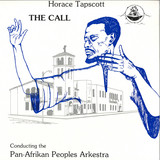
Available on vinyl for the first time in 40 years, Outernational Sounds is proud to present a masterpiece from the Los Angeles jazz underground - Horace Tapscott's burning, spiritualised 1978 set, The Call.
One of the unsung giants of jazz music, the composer, bandleader, arranger, pianist and community activist Horace Tapscott was the undisputed keystone in the grassroots Los Angeles jazz scene. Throughout the 1960s and 1970s, his radical community arts and music formations the UGMA (Underground Musicians Association, later changed to UGMAA - Union of God's Musicians and Artists Ascension), and his protean big band, the Pan Afrikan Peoples Arkestra, were at the epicentre of music, culture and politics in the Los Angeles area.
From their 1960s base at the Watt's Happening Coffee House on 103rd St, to their decade-plus- long 1970s residency at the Immanuel United Church of Christ on 85thE St and Holmes Ave, Tapscott's groups were the beating heart of underground music in LA. Hundreds of musicians passed through and played their part. Major figures in LA jazz such as Arthur Blythe, Azar Lawrence, Jimmy Woods, John Carter, Bobby Bradford, Sonny Criss, Ndugu Chancler and dozens of others all paid dues or just got down with Tapscott, not to mention the core Arkestra regulars who have since become celebrated names - Nate Morgan, Jesse Sharps, Adele Sebastian, Dadisi Komolafe, Gary Bias, to mention only a few.
Tapscott and the Arkestra were down on the ground - playing fundraisers in park and street, organising teach-ins and workshops for young and old, mixing it with radical theatre groups, firebrand poets, political radicals, Black separatists, community groups and churches. They lived communally, and built an ark for the Black arts in the heart of the city. But as a result of this grassroots community focus and Tapscott's antipathy to the music industry, the Arkestra didn't record for nearly two decades. That only changed when long-time jazz fan Tom Albach started Nimbus Records. The label was initiated specifically in order to document Tapscott and his circle, and the first three records showcased Horace and the Arkestra.
The Call was put together from two studio sessions in April 1978, one at Hollywood Sage and Sound, one at United Western - the latter session had the addition of a string section, who can be heard on the moody Cal Massey composition 'Nakatini Suite' and Jesse Sharps' swinging modal trip, 'Peyote Song No. III', with its swirling soprano solo. In keeping with the communal nature of the Arkestra, the other two compositions, 'The Call' and 'Quagmire Manor at Five A.M.' are also by Arkestra members. But at the centre of the music is the builder of the Ark, the visionary whose original call to action started a movement whose legacy continues to this day - Horace Tapscott.
Heed The Call!
- A1: Gypsy's Curse
- A2: Fake Fur
- A3: The Ride Pt.2
- A4: Where Water Flows
- A5: The Black Light
- A6: Sideshow
- A7: Chach
- A8: Missing
- B1: Minas De Cobre (For Better Metal)
- B2: Over Your Shoulder
- B3: Vinegaroon
- B4: Trigger
- B5: Sprawl
- B6: Stray
- B7: Old Man Waltz
- B8: Bloodflow
- B9: Frontera
- C1: El Morro
- C2: Man Goes Where Water Flows
- C3: Glowing Heart Of The World
- C4: Too Much Sprawl
- C5: Rollbar
- D1: Minas De Cobre (Extend-Omix)
- D2: Minas De Cobre (Spatial Mix)
- D3: Minas De Cobre (Acoustic Mix)
- D4: Lacquer
- D5: Drape
- D6: Bag Of Death
+ download coupon
2LPX version is an indies only format.
An Album About Crossing Physical And Metaphorical Borders That Has Never Been Timelier: Calexico's Classic Album 'the Black Light' Turns 20 This Year. This Limited Celebratory Anniversary Edition Includes All New Artwork By Victor Gastelum, Extensive Linernotes, And 11 Bonus Tracks.
What Was Surprising About The Black Light (and What Set Its Architects Apart From Their Indie Rock Peers) Was The Album's Unusual Willingness To Wade Into The Rapids Of American And Mexican Culture, Fully Immersing Itself Midstream. From The Outset, With 'gypsy's Curse', The Record Combines Guitar Twang And Flamenco Flourishes; And By Its End, Almost An Hour Later, It's Contrived A Skillful And Instinctive Union Of Smoky Bar Room Jazz, Arthouse Indie Rock, And Compelling Mariachi Brass In 'frontera'. If Calexico Falls Short As A Name, It's Only In The Fact That - Alongside Their Mining Of Mexico's Fertile Musical Past - Joey Burns And John Convertino Weren't Just Digging Into California's Songbook...they Were Unearthing America's Too.
- Anniversary-edition On 180g Heavy Double Vinyl Including 11 Bonus Tracks
- Limited Clear Double Lp On 180g Heavy Vinyl
- New Alternative Artwork By Victor Gastelum
- Gatefold Cover With Embossed Logo And Silver Print And 8 Page Booklet
- Limited To One Pressing Only
From four individual parts, with distinct musical pasts but also
overlapping histories, a new unified chapter begins with Piroshka and
the quartet's thrilling debut album 'Brickbat'.
The album is named after the word for a missile, which nails the
record's heavyweight lyrics if not the music's gorgeous, bittersweet
and euphoric pop. Think of 'Brickbat' as a wolf in sheep's clothing -
which suits the name Piroshka, the Hungarian take on the wolf
terrorised fairytale hero Little Red Riding Hood - a subtle nod, too, to
a certain red hairdo that stood out in the 1990s Brit-guitar-pop
scene...
The four band members are former Lush vocalist / guitarist (and
former redhead) Miki Berenyi, former Moose guitarist KJ 'Moose'
McKillop, Modern English bassist Mick Conroy and former Elastica
drummer Justin Welch. The connections between them are a
veritably tangled family tree. Before they lived together and raised a
family, Miki and Moose were notable figures on the so-called
shoegaze scene, while Elastica were Britpop peers. After post-punk
pioneers Modern English split for a second time, Mick became a
latterday member of Moose, while Justin joined the reformed Lush in
2015. And when Lush required a bassist for what proved to be their
final show (in Manchester) in November 2016, Mick stepped in.
It was the rehearsals for that Manchester show that laid the
foundations for Piroshka. 'We sounded great!' says Justin. 'Like a
proper punk band. Mick brings a huge amount of enthusiasm and
livens up the room, and I thought, this is the kind of band I want to
be in again.' Mick agreed. 'I'd seen Lush so many times, it was like
playing with old friends. Miki agreed it was good fun too. And with
Moose available, we thought, let's all have a bash, see what
happens.'
Though 'Brickbat' kicks off with a squeal of feedback, the album is far
from a proper punk record, with as much sublime delicacy as physical
force, with guitars to the fore but also electronic flourishes in all
manner of spaces. Combined, they drive the nuggety melodic bombs
long associated with Miki's songwriting
LP format includes digital download code.
- A1: Okolona River Bottom Band Ft. Norah Jones
- A2: Big Boss Man Ft. Hope Sandoval
- A3: Reunion Ft. Rachel Goswell
- A4: Parchman Farm Ft. Carice Van Houten
- A5: Mornin' Glory Ft. Laetitia Sadier
- A6: Sermon Ft. Margo Price
- B1: Tobacco Road Ft. Susanne Sundfør
- B2: Penduli Pendulum Ft. Vashti Bunyan With Kaela Sinclair
- B3: Jessye Lisabeth Ft. Phoebe Bridgers
- B4: Refractions Ft. Marissa Nadler
- B5: Courtyard Ft. Beth Orton
- B6: Ode To Billie Joe Ft. Lucinda Williams
'Bobbie Gentry's The Delta Sweete Revisited' is
Mercury Rev's committed and affectionate
resurrection of an album that anticipated by three
decades their own pivotal expedition through
transcendental America, 1998's 'Deserter's Songs'.
From their recording lair in New York's Catskill
Mountains, the founding core of Jonathan
Donahue and Grasshopper with Jesse Chandler
(previously in the Texas group Midlake) honour
Gentry's foresight and creative triumph with
spacious invention and hallucinatory flair.
Gentry's stories and original resolve are brought to
new vocal life and empowerment by a vocal cast
from across modern rock and its alternative paths:
among them, Mazzy Star's Hope Sandoval; Laetitia
Sadier, formerly of Stereolab; Marissa Nadler;
Margo Price, the fiery new country star with a
punk rock heart; and Norway's Susanne Sundfør,
who cuts through 'Tobacco Road' with arctic-Nico
poise. Phoebe Bridgers, whose first record was a
softly stunning 2015 single for Ryan Adams' PAX
AM label, hovers through the acid-western
suspense of Gentry's 'Jessye Lisabeth' with floating
calm, like a comforting angel.
Rich, Deep, Percussive Soulful Folk Album From Master Togolese Singer, Akofa Akoussah.
The Album Moves Through Uptempo Afro-folk-funk On 'tango' To Deep Ballads Of 'ramer Sans Rame' And 'i Tcho Tchass' And Lighter Moments On 'g Blem Di' And 'mitso Aseye'. Akofas Exceptional Songs And Soaring Vocals Are Decorated With Percussion, Guitar Lines, Subtle Backing Vocals And Horns To Create A Unique, Rich Sonic. The Album Was Recorded For Release By French Label Sonafric In 1976. Produced By Gérard Akueson; Founder & Owner Of African Record Label, 'akue', Based In Paris.
Music Was Truly In The Blood Of Julie Akofa Akoussah. She Began Singing At The Age Of Three, Inspired And Led By Her Mother And Older Sister And Became Principal Soloist In Her School Choir, St. Peter & Paul Choir Of Our Immaculate Conception Parish Of Nyékonakpoé, At The Age Of 8. From There Her Career Blossomed, And Singing Often Took Precedence Over Her Studies. In Order To Master Her Art She Spent Time Studying And Working Closely With Local Groups Including Mélo Togo, Rocka Mambo, Rio Romamcero, Ok Fiesta, Eryco Jazz, Afro Cubano, Los Muchacho, Elégance Jazz And Togo Star Amongst Others. In Her Own Words: 'luck Opened The Door In January 1966 Where I Had The Honour Of Being Selected To Share The Stage With Bella Below - One Of The Best Voices Of
Africa - At The 1st 'negro Arts Festival' In Dakar. On My Return, I Was Approached By Ambroise Ouyi, The Highly Respected Singer & Poet, And We Wrote 'tu Ne M'écris Plus', My Very First Opus.'
The Popularity Of Her Work Led To An Increased Exposure For Togolese Music Outside Of The Country, In Neighbouring Ghana And Benin Most Notably. During Her Career She Collaborated And Performed With Greats Including Manou Djibango, Queen Pelagie, Abeti Massikini, Aycha Koné And Myriam Makeba. Akoussah Was Also Dedicated To, And Widely Recognised For, Her Work For Social Causes, Championing And Nurturing Young Musical Talent, And The Fight Against Aids. She Was President Of The National Union Of Artists Musicians Of Togo (unam) Before Sadly Passing Away In April 2007 After A Long Illness, At The Age Of 57.
Welcome to the strange musical world of Tolley & Dara, an experimental duo whose incredible music held a marginal yet vital position on the fringe of the Australian music industry during the late 1970s and early 1980s.
Consisting of jazz bassist and synthesist David Tolley and percussionist Dure Dara, their union was a relationship of romance and intense creativity, a deep spiritual bond consecrated amidst banks of modular synthesizers and racks of exotic percussion instruments.
Recorded over a series of live performances in the spring of 1979, the music featured on Cutheart was edited and assembled from eight improvised pieces recorded at the Universal Theatre Melbourne. Comprised of analogue synthesizers and a vast array of tuned and non-tuned percussion, Tolley and Dara sculpted a cluster of electronic abstractions and organic splashes of Gamelan-influenced percussion; a dense otherworldly soundscape coloured with trance-like vocal scatting and deranged muttering.
Known for his bass playing on the classic Australian jazz-rock album Carlton Streets by The Brian Brown Quintet and also as a member of EX-, (the collaborative project with Daevid Allen from Soft Machine/Gong), Cutheart sees Tolley explore the outer realms of heady improvised electronic music.
While the music of Tolley & Dara exists in a sonic universe all of it's own, similarities could easily be drawn to another likeminded musical partnership, the American husband and wife duo Annette Peacock and Paul Bley. Cutheart is a pioneering recording of extended synthesiser and percussion technique from the Australian experimental underground.
- A1: Magical Evening
- A2: Cinnamon Swirly
- A3: Shane Danger - Manager
- A4: Laurence's Lobby
- A5: Delicious Feeling
- A6: 5 Dollars For Fun
- B1: You Should Eat All Of It
- B2: Palominos
- B3: The Show's Over
- B4: Grains Of Paradise
- B5: Platonic Union
- B6: Beverly Is A Man's Name
- B7: Lulu Danger
- B8: Rum & A Ramble
- C1: 14 Pieces Of Candy
- C2: Who The... Is Beverly Luff Linn
- C3: Embroidery
- C4: Flat Headed Birds
- C5: Your Pelvis Is Kinked
- C6: Choking On Breast Milk
- C7: Colin Colin Colin, Selfish Selfish Selfish
- C8: Lamb & Lily
- D1: Earring
- D2: Magical Evening (Snares) (Snares)
- D5: Feast On Snacks
- D6: Fill Me With Your Stories
- D7: Never Too Late
- D3: Edwin
- D4: I Love Cold Beer!
As co-founder of Fuck Buttons; the highly-influential noise-electronic duo, Andrew Hung has toured extensively with headline shows at the Kentish Town Forum, Glastonbury and Greenman Festivals, been featured on the
2012 Olympics opening ceremony and all three albums have featured as Best New Music on Pitchfork Media. His production work has included Zun Zun Egui's 'Shackles Gift' and cowriting/
co-producing the critically acclaimed 'Kidsticks' by Beth Orton. In 2016 he soundtracked the multiple-award winning film 'The Greasy Strangler ', and was nominated for Best Soundtrack at the Empire Awards. His debut solo
album, Realisationship was released via Lex records in October 2017. An Evening With Beverly Luff Linn is the soundtrack to Jim Hosking's directorial follow up to The Greasy Strangler and stars Aubrey Plaza, Jemaine Clement,
Emile Hirsch, Craig Robinson and Matt Berry.
One thing The Vryll Society aren't short of is admirers, Lauded at just about every turn by press and public alike, the release of their debut LP for Deltasonic Records is hotly anticipated thanks to the promise this band have shown through their live sets and recent single releases.
Discovered and nurtured by the late and much missed Deltasonic founder Alan Wills, they fitted the type for him perfectly. He instantly saw in them similar attributes he'd previously found in the early days of The Coral and The Zutons. The confident swagger, the solid union formed by their band-of-brothers gang mentality, their willingness to stand outside the conventional and often stifling jangly Liverpool scene, and the work ethic. Always the work ethic.
Wills instilled in The Vryll Society something which has become over the ensuing years a key element of what they are, what they've become, and of the music they produce. He gave them belief. A belief that hard work and determination will bring them to the place they wanted to reach.
'Alan taught us that all you need to conquer the world is a rehearsal room, your instruments, a good work ethic and a positive attitude and you'll get there. He kind of taught us the rules and the attributes that you need to have to be successful so we've just continued on that path' says frontman Mike Ellis.
Ellis has stated that it was that attitude and that work ethic which got them through the subsequent tragic loss of their friend and manager in 2014, driving them forward through those times, propelling them to harder work, and bonding them even closer together as a unit.
That unit have spent the intervening time creating and honing their own brand new-psych sound, and building up a fanbase with their superlative live shows. Drawing from an eclectic palette of influence from deep funk to Krautrock, electronica and prog, they've created a heady, intoxicating, pin sharp, and tightly wound mellifluous groove, washed over with cyclical motifs, acres of effects laden guitar hooks, and shimmering, textural technicolour soundscapes. It is at once blissful, dizzying and madly infectious. It's that eclecticism, that kaleidoscopic swirl of influences which brings together hip hop flavours, with the prog stylings of names such as Aphrodite's Child and The Verve - pre Urban Hymns - when the drugs were still working. The dynamic leaps and folds through all these influences is where you find The Vryll Society's own brand perfect pop. Its all there in the loops, in the hooks, the drive and the vibe of this unique band. But this isn't frippery, these aren't throwaway cheap thrills for our disposable times. No, this is heavier. This is music too feed your head.
Live too, The Vryll Society are a formidable force. That gang mentality binds them together over the ideas formed by spending long hours together in the rehearsal every day. Hotwiring these ideas into the heads of the crowd through extended psych jams and deep solid grooves gives a different show every time, and with each and every set, the offer gets better. Recent travels have seen them take SXSW 2017 by storm as guests of BBC Introducing as well as major festivals such as Glastonbury and Leeds/Reading.
The songs that fill the delicious grooves of Course Of The Satellite weren't so much written as devised or developed, brought together organically over months in the band's underground lair, or over weeks in Liverpool's Parr Street Studios. Working closely with producers, Wills' right hand man and Deltasonic brother-in-arms Joe Fearon and Tom Longworth, the album took shape organically, biding its time and finding its way. The result is a work of impressive confidence and stature. It's a record that believes in itself, and for all the right reasons. This is an effortlessly cool album, the sort of record that makes friends easily. The world is ready, willing and more than able to take The Vryll Society even deeper to their heart. The path Alan Wills showed them awaits. It's a path that leads to greatness.
a1 | Course Of The Satellite
a2 | A Perfect Rhythm
a3 | Andrei Rublev
a4 | Glows And Spheres
a5 | Tears We Cry
a6 | When The Air Is Hot
b1 | The Light At The Edge Of The World
b2 | Shadow Of A Wave
b3 | Soft Glue
b4 | Inner Life
b5 | Give In To Me
- A1: Wildstyle Crew - Intro (Edit)
- A2: Bryozone - Juicy Quiddity
- A3: Ratti Nielsen Nikolaienko - M2
- A4: Mark Templeton - Soft Education
- A5: Andrew Pekler - Underwater Nocturne
- B1: Native Instrument - Thud
- B2: Nisantashi Primary School - Flaneur
- B3: Aem Rhythm Cascade - Biruza
- B4: Ol - Nutmeg
- B5: Vakula - Afromadness
Ukrainian label Muscut celebrates its anniversary - Muscut X (10) Test Pressign II - is the tenth record in a row. The first release was published in 2012 on 7 inches and was called simply Test Pressing. Like six years ago, the current vinyl is a compilation of Muscut's 'residents', as well as new friends of the label. Test Pressing II is 12 inches on which there are exactly ten tracks. Both sides are significantly different in color of mood. Party A starts with dub-drone sketches of key figures of the Odessa underground - Wildstyle Crew and Bryozone. Then we hear the mantra-like M2 - the work of the creative union of Nicola Ratti, Mads Emil Nielsen together with Nikolaenko. The Canadian sound-artist Mark Templeton continues the line of rhythmic textures crowned with unhurried percussion - it is in all senses of Soft Education at number four. The first part is completed by an exquisite curtsy from the Andrew Pekler label frequenter called Underwater Nocturne as a soundtrack for the perfect tea ceremony.
The second side confidently sets a completely different compilation rhythm from the very start - the tribal tribal dance from the Berlin project Native Instrument instantly introduces into a trance. It is followed by a warm, enveloping minimal synth track from the Ukrainian trio Nisantashi Primary School. The middle of the second side is decorated with the pensive house-ballad of St. Petersburg producer Fadeev known as AEM Rhythm Cascade. Another Russian settled next to him - Muscovite Oleg Buyanov, aka OL, with a massive broken dub Nutmeg. The final composition consists of burning afrosint motifs from luminary Odessan Vakula.