A new artist on the Citizen Records / Clivage Music roster, Vhinz is a musician based in Brussels. After taking his time to break onto the electronic scene, he’s now ready to share Belvédère, his debut, dreamlike album, confidently intense, sweeping between cinematic songs and soaring, epic electronic sounds.
Vincent Honca is Belgian, with Armenian roots and a love of keyboards: the mini synth he used to play as a child, the classical piano of his years of training at the Académie de Musique, the Yamaha synth of his teenage years... During the noughties of his adolescence, electronic music was omnipresent in his life as he listened to and admired Daft Punk, Moby, Vitalic, Air and The Chemical Brothers. He also went out dancing, a lot, in the nightclubs and parties of Brussels and the vicinity, and soon his love of computers, technology and synthesisers led to him producing his own music. “I wanted to create beautiful textures with synths,” he says. “I wanted to have fun and discover the possibilities. As part of the internet generation, I taught myself everything I know through reading magazines and checking the forums.”
Vincent went on to become a computer programmer and decided to make music in as much of his spare time as possible. His first productions came out in 2015, including “Drastical”, one of three deep house dancefloor-orientated tracks recorded with none other than Kris Menace. “At the time I was really searching for my musical identity,” explains Vincent, and progressively his music started to lean towards another of his passions – films and film music. “I’ve listened to soundtracks a lot since I was a teenager, and they’ve been a big influence, in particular the music for Heat by Elliot Goldenthal, Gladiator (Hans Zimmer), Saving Private Ryan (John Williams), The Last Temptation of Christ (Peter Gabriel), The Virgin Suicides (Air) and Leon (Eric Serra).” Coincidentally, Vincent has already worked on two independent Belgian films by director Christophe Karabache, UltravoKal and Vortex, both collaborations with Michel Duprez.
Now Vincent has chosen the name Vhinz, bringing together his expertise with machines and computers, his passion and enthusiasm for the electronic sounds of his adolescence and his adoration of cinema’s powerful, impactful soundtracks. Vhinz’s first track is thus called “Aether”, a track brimming with character and confidence, with sung-spoken vocals that sweeps the listener up in bewitching synthetic themes and drums like an off- kilter heartbeat. The track perfectly encapsulates the Vhinz sound, and Citizen Records – the only label he sent it to – immediately loved it and were ready to release a 12” with more. “Then Covid and the lockdown happened, and everything came to a complete halt,” remembers Vhinz. During those long two years without anything being released, the project continued its gestation and has now grown in a mini-album of eight coherent, fascinating tracks. “I really wanted a strong concept for everything, and so was born this album that I’ve called Belvédère. I imagined myself on a belvedere with a panoramic view of the world, channelling all the emotions it elicited in me into music.”
Belvédère is a dreamlike debut album, confidently intense, sweeping between cinematic songs and soaring, epic electronic sounds. It’s a place for Vhinz to showcase his dreams, talk, sing and invite others too: Margot Ferro sings on “Le Passage” and “Envole-moi”, and Michael Meers lends his vocals to “Evolution”. “My album tells a story, with the tracks in chronological order. There are both times of hope and darker periods of my life, with sadness and love,” meaning that listeners are invited to experience a suite of different emotions and be swept along by the author’s musical daydreams. Musically, the album falls somewhere between Moby, Vitalic, Air and Serge Gainsbourg, with a density and atmosphere that are completely Vhinz. “With Belvédère I was looking for beauty, but also something darker, dirtier, more organic. The album is the culmination of that.”
Поиск:la williams
Все
Remastered reissue of another stone cold New York club classic from the legendary
SAM Records label - home to so many fabulous disco/boogie recordings from the
1980s.
• Pure early 80s electronic disco joy for the packed, sweaty dance-floors. A true boogie
classic, a huge club hit that got spun from The Garage to the streets of London.
• Not much is known about Komiko, an undercover studio outfit that featured guest
vocals Carol Williams, Tracey Weber and Vicky D. This single is their sole release.
• Remastered by Phil Kinrade and presented in a 7” Discobag sleeve.
Almost halfway through 2023, Voitax returns with a bass heavyweight of the highest order.
Marc alias Tymotica has been showcasing his musical ambitions not only as a founding member of the Munich-based label »Ruffhouse«, but also through his sonic ventures as a DJ and producer. Luca, on the other hand, an equally ambitious DJ and producer going by the name of DJ Ion, has his roots in hip-hop, jazz, and 90s techno. His debut on Don Williams’ a.r.t.less imprint proves that adequately. Their fusion turned out to be quite fruitful, as shown by their diverse yet well-centred record »Anthea« on Club Qu.
With »Bionic Gradient«, their promising collaboration enters another chapter, a representation of their precise curation of musical components, as well as an impressive design of their sounds. This progressive bass EP features dubstep-, grime-, trap-, and hip- hop influences, nuanced with dub and IDM. Through each track, the duo links crispy polyrhythms with well-chosen samples that perfectly complement the contemporary, high defined sound. Catchy leads, long reverb tails, metallic soundscapes, and detailed drum programming are carefully fused with the underlying warm bass body. All this comes down to an astonishingly eclectic bass EP that is built to be dropped on the dance floor, yet invites you to dive into an abstract and dreamy world on its own.
As both are continuously working on new material, we are more than excited about what is to come!
Cole has provided vocals and percussion for Joey Bada$$ (“Curry Chicken”), Chiddy Bang (“Ray Charles"), Lisa Lisa and the Cult Jam, Aloe Blacc, Nickodemus, Little Jackie, and more. -William's vocal performances have been featured on television shows as prominent as Conan, Late Night with Jimmy Fallon, Good Morning America, The Jools Holland Show, and The Craig Ferguson Show. Cole Williams debut 7" single on the Soul Tune imprint known for launching Maria Sanchez career, and for having a genuine and classic soul sound. This 45 is certainly no exception! "A Better Woman" brings you back to the golden age of soul in the 60´s. Cole´s voice is described by many as hypnotizing and unique. Fantastic Soul music! Look out for the album!
- A1: Ivory
- A2: Talk
- A3: No Good Reason
- A4: Invincible (Feat. Daniel Caesar)
- A5: Endlessly Interlude
- A6: Killing Me
- A7: Go Away
- A8: Waiting On You
- B1: Petrified
- B2: Personally
- B3: En El Olvido
- B4: Tamagotchi
- B5: Can't Get Over You
- B6: Evergreen (You Didn't Deserve Me At All)
- B7: Bad Life (Feat. Kali Uchis)
- B8: Mr. Neighbor
Omar Apollo veröffentlicht offiziell sein mit Spannung erwartetes Debütalbum IVORY.
IVORY bringt Omar Apollos Songwriting auf die nächste Stufe - es überwindet Genregrenzen und Sprachbarrieren, während es eine noch größere musikalische Vielfalt des aufstrebenden Superstars zeigt.
Das neue Album enthält die zuvor veröffentlichten Singles "Tamagotchi", produziert von Pharrell Williams und Chad Hugo, "Killing Me", das mit einem Fernsehauftritt in der Tonight Show mit Jimmy Fallon debütierte, und "Invincible" mit Daniel Caesar.
Darüber hinaus enthält das Album die von Teo Halm produzierte gemeinsame Single "Bad Life" mit Kali Uchis und "Go Away", das von Omar selbst zusammen mit Carter Lang und Chromeo produziert wurde.
In nur wenigen Jahren entwickelte sich der in Indiana aufgewachsene, mexikanisch-amerikanische Singer-Songwriter vom Teenager-Strummer zu einem der heißesten R&B-Künstler seiner Generation.
You Can Can is an echoed affirmation, an album which traces song forms around silence, field recordings, and degraded analog memories. This is folk music transmogrified and mutated, as if recorded and reconstructed in Pierre Schaffer’s GRM studio.
Not your typical Mariposa folk duo, the group is comprised of Toronto avant-music scene stalwarts, vocalist Felicity Williams (Bernice, Bahamas) and bricolage artist and synthesist Andrew Zukerman (Fleshtone Aura, Badge Epoch). The album feels like a somnambulant conversation, fragmented and half-remembered with Williams’ vocals traveling through a landscape of field recordings and Zukerman’s saturated concrète topographies. It is an electro-acoustic assemblage, both analog and digital, comprised of air, electricity, minerals, wood, and water. Although the album nods towards traditional forms of folk and musique concrète (if at this point it can be called a traditional form), it is outwardly and inwardly contemporary; non-linear, citational, opaque, and sui generis. In a way it feels like a sonic index of the narrative experiments found on the infamous Language school-related publisher The Figures, in the work of Lyn Hejinian, Clark Coolidge, and Lydia Davis. In the musical continuum, the album picks up where Linda Perhacs left off in the early 70’s—explored by Gastr Del Sol in the ‘90s—a convergence of rural acoustic idioms and urban avant-electronics. This is country music for the discerning cosmopolitan citizen of the 21st Century.
RIYL: Luc Ferrari, Brannten Schnüre, William Basinski, Oval, Eric Chenaux, Emmanuelle Parrenin About Everything In Time and Failure Figures, Felicity Williams says:
Everything In Time is indebted to the language of Brazilian author Clarice Lispector (as translated by Alison Entrekin). Drawing on insights from psychoanalysis, we trace the roots of melancholy to render them available to consciousness; words from the ghostly realm of the transpersonal filter through dreams and shine a beam of light onto a lone trillium in a forest at night. Other influences include the experience of not knowing, of being subject to a gestation outside of one’s control. This is an ode to the power of naming to obliterate, to set free.
Failure Figures is a meditation on the radical contingency of reality and the vicissitudes of the will. With Slavoj Zizek as my guide (think: “Hegel for dummies” - I’m the dummy in this scenario), I wander through the valley of the shadow of death, and take heart. The last verse refers to an experience I had recording at a studio in Brussels. I was singing in French, with which I have some fluency, and the producer was complaining to the artist whose song it was that my delivery was not convincing. Thinking I was out of ear shot, he said in French, “c’est comme elle n'est pas là”; I was pronouncing the words correctly, but I failed to express anything. So what or whom is responsible for conveying meaning, if not the form of the word itself? And if the connection between meaning and form is broken, how do we fix it?
Gratitude to Thom Gill (guitar) and Daniel Fortin (bass) who joined us on the recording of Failure Figures. Thanks as well to my old roommate Christopher Willes, who unwittingly left behind his hand bells deep in the hall closet. We unearthed them by accident, and the bells became an important sound element. Thanks to other past roomies Robin Dann and Claire Harvie, whose childhood piano and guitar respectively still reside with us, and were used in the recording. Field recordings were made in Toronto, Canada and Celestún, Mexico in 2020.
After being part of the various artists "Sentence Four", Tim Williams releases his solo EP on the SNTS' label Sacred Court.
Feedback Moves kicks off 2023 with a new record by @xcrswx and Lolina. @xcrswx are Crystabel Riley (drum-/human-skin) and Seymour Wright (saxophone), they released ‘Call Time/Hard Out’ on Feedback Moves in 2020. Lolina is an electronic and digital musician, who has previously released music as Inga Copeland and was a member of the band Hype Williams.
Their collaborative relationship stems back to 2020. Lolina invited @xcrswx to contribute new work to a radio residency on NTS. They made 3 pieces played across 3 episodes. After these were broadcast, further ideas were exchanged which led to a collaborative audio-visual piece, streamed on Cafe Oto’s website in February 2021. They also performed as a trio live at Café OTO in 2022.
The artists now present a split 10” vinyl. @xcrswx weave the above-mentioned pieces into a 10 minute piece titled ‘FIXES’. The duo strip their sound to bare components. Beginning with the sound of fireworks, the pair then work through stuttered snare shots and warbled, interplaying saxophone.
Lolina presents ‘FM’; some of her strangest and most subtle work to date. Echoing and furthering the abstract turntablism found on previous records ‘Who Is Experimental Music?’ and ‘Fast Fashion’. We hear found sounds, close and distant, rhythmically gathered and dissolved in a swirl of dub tone and timbre.
Tracks have had early play on NTS Radio, Clydebuilt Radio and are expected to be played on BBC Radio 3’s ‘Late Junction’ and ‘Freeness’ show’s.
Featuring music from a lost tape of devotional keyboard jams, field recordings of migrating birds, mysterious bells, meditative noise and crooked new beat/EBM, made god-knows-when and subsequently discovered in a Thessaloniki charity shop years later. It now somehow finds its way to vinyl, newly mastered by Rashad Becker, and sounding like a lost Hype Williams x Muslimgauze madness.
Originally discovered in a musty charity shop by Live Adult Entertainment, and issued in minuscule numbers on CD in ’21, Christian Love Forum’s raverential debut ‘Naked Light’ documents the fraternal post-church jams of siblings, Scott, Kiro and N•X, plus their mate Steve, who would regularly channel the light and pain of Sunday mass sermons into their ecclesiastic crud.
As previously heard on their blink ’n miss ‘Unconditional Love’ tape, the trio express their higher purpose thru ribboning microtonal keyboard jams that sound like Gurdjieff with a Casio and a knackered drum machine after too much sacramental wine. They hit the strangest, most affective seam of religious cinematic epic soundtracks, gnarled noise and clandestine Belgian new beat that seriously pushes our buttons, sounding quite unlike anything in the contemporary sphere, but eerily also echoing sentiments explored on record by James Leyland Kirby or Bryn Jones.
Now reshuffled and clad in custom artwork, ‘Naked Light’ is unveiled to believers and skeptics as a definitive article of faith. The lord works in mysterious ways within, manifest in stages of sun-bleached post-church field recordings, whirligig melodies, blown-out bouzouki and choral tape howls and a Béla Tarr soundtrack-like campanology on the A-side, before letting their passions flow in ‘Wicked City (Parts I-IV)’; a spellbinding side-long collage of slurred synths, neo-noir hardbeat rhythms and speaking-in-tongues vox recalling V/Vm’s new beat apocrypha as much as bits from Hype Williams’ hypnagogic ‘One Nation’, thee dustiest gooches of Dirk Desaever’s archive, or even aspects of Rat Heart at his cruddiest.
‘Naked Light’ rarely fails to induce uncontrolled eye movement in susceptible skulls, destined to become an occult hit with lapsed churchgoers, new beat fiends and anyone missing the enigma and ineffable flavour of ‘00s underground noise tapes in this auspicious year of AD2023.
(Produced, Arranged and Conducted by Claus Ogerman)
Not long after the dawn of her career, as a teenager in Rio de Janeiro, Joyce was declared “one of the greatest singers” by Antonio Carlos Jobim. Yet despite reputable accolades and the fact that she has since recorded over thirty acclaimed albums, Joyce never quite achieved the international recognition of the likes of Jobim, João Gilberto and Sergio Mendes, all of whom became global stars after releasing with major labels in the US.
There was a moment when it seemed she might be on the cusp of an international breakthrough. While living in New York, Joyce was approached by the great German producer Claus Ogerman. Ogerman had already played a pivotal role in the development and popularisation of Brazilian music in the 1960s, recording with some of the all-time greats like Jobim and João Gilberto, as well as North American idols like Frank Sinatra, Billie Holiday and Bill Evans.
"I met him in New York City, in 1977”, recalls Joyce. “I was living and playing there, and João Palma, Brazilian drummer who used to play with Jobim, introduced me to Claus. We had an audition, he liked what we were doing and decided to produce an album with us.”
Featuring fellow Brazilian musicians Mauricio Maestro (who wrote/co-wrote four of the songs), Nana Vasconcelos and Tutty Moreno, and some of the most in-demand stateside players including Michael Brecker, Joe Farrell and Buster Williams, the recordings for Natureza took place at Columbia Studios and Ogerman produced the album, provided the arrangements and conducted the orchestra.
But mysteriously, Natureza was never released, and what should have been Joyce’s big moment never happened. As Joyce remembers, “I returned home, but Claus and I remained in contact, by letters and phone calls. He was very enthusiastic about the album and tried to hook me up with Michael Franks. He wanted me to go back to NYC in order to re-record the vocals in English with new lyrics, which I actually wasn’t too happy about. But then I got pregnant with my third child and could not leave Brazil. And little by little our contact became rare, until I lost track of him completely. And that was it. I never heard from him again."
While Claus was known to be something of an elusive character, the album’s disappearance might also have been a result of timing. The Brazilian craze was coming to an end, making way for disco and new wave at the end of the seventies, and Ogerman struggled to find a major label interested in a new Brazilian sensation. Additionally, as Joyce mentions, it wasn’t quite finished. Ogerman wanted to add finishing touches to the mix and to record alternative English lyrics for the US and international markets - a critical artistic difference between Joyce and Ogerman.
As the military dictatorship’s grip on Brazil began to subside in the 1980s, Joyce had a handful of hits in her home county, including a tribute to her daughters ‘Clareana’, and the iconic ‘Feminina’ - an intergenerational conversation between mother and daughter about what it means to be a woman. But already a feminist pioneer, these successes were hard fought. Joyce had caused controversy as a nineteen-year-old when she became the first in Brazil to sing from the first-person feminine perspective, and the institutional sexism she faced was worsened by the dictatorship who would often censor her music. Even once the Junta was out of the way, Joyce found herself up against the male-dominated major record companies in Brazil, who sought to dictate her career and sexualise her image, before dropping her for refusing to play along.
A few years after the success of her albums Feminina and Agua E Luz in Brazil, Joyce’s music began to find its way to the UK, Europe and Japan, and “Feminina” and “Aldeia de Ogum” became classics on the underground jazz-dance scenes of the mid to late-eighties and early-nineties.
The full-length version of “Feminina” from the Natureza sessions was first heard on a Brazilian Jazz compilation in 1999 and “Descompassadamente” was licensed for a CD compiling the work of Claus Ogerman in 2002. Following these, word began to get out about an unreleased Joyce album with Claus Ogerman and the legend of Natureza grew.
Forty-five years since it was recorded, Natureza finally sees the light of day, as Joyce intended: with her own Portuguese lyrics and vocals. Featuring the fabled 11-minute version of ‘Feminina’, as well as the never before heard ‘Coração Sonhador’ composed and performed by Mauricio Maestro, Natureza’s release is a landmark in Brazilian music history and represents a triumphant, if overdue victory for Joyce as an outspoken female artist who has consistently refused to bow to patriarchal pressure.
***Disclaimer! While “Feminina” and “Descompassadamente'' were mixed by legendary engineer Al Schmitt and mastered from the original master tapes, the remaining five tracks are unmixed. Due to significant deterioration of the master-tapes, the best audio source for these tracks was an unmixed tape copy Joyce had kept of the recordings. The best care has been taken in the restoration and mastering of this release, but the sound quality may differ from other releases on Far Out Recordings. We advise listening to sound clips before buying where possible.
Jackie Mclean&Michael Carvin/Chris Mcgregor’s Brotherhood Of Breath
Melodies Record Club 001: Four Tet selects
We’re excited to be launching a new release series: “Melodies Record Club”, a string of DJ and artist curated mini compilations in loud 12” format.
The first instalment was put together by Four Tet, selecting two big peak-time Jazz tracks he used to spin regularly at Plastic People.
On one side, we’ve got all time jazz greats Jackie McLean and Michael Carvin’s De I Comahlee Ah, taken from their seminal album Antiquity recorded in Denmark back in 1975. A year and a half ago, we visited Steeplechase, the original label in the outskirts of Copenhagen. They informed us that at the time, the track was cut short as it didn’t fit on the full LP. They were kind enough to provide us with the tape of the full original recording, allowing us to release for the first time the full extended version capturing twelve and a half minutes of studio magic. Speaking with Michael back in November, he told us that every song on that album was recorded without any overdubs. They had taken their shoes off and organised the studio in such a way that they could move from instrument to instrument during the take (!!)
On the flip, we have Chris McGregor’s Brotherhood of Breath – MRA. Back in 70s London, the Brotherhood had brought together musicians who had sought refuge from South Africa’s apartheid regime and the best of a new generation of British jazz musicians. Music journalist Richard Williams, who had originally reviewed the band in the 1970s tell us: “They made music that appealed in equal measure to the head, the heart and the feet, taking the jazz legacy of Duke Ellington and Charles Mingus and adding to it the fantastic dance rhythms and gorgeous harmonies of the townships and untethered collective improvisations of the new free music”.
Four Tet’s instalment is out early May in 12” format and digitally (stream & download), first press comes with a folded A2 insert with words from and about the artists. Graphic design by Studio ChoqueLeGoff, illustration and animation by Nevil Bernard and for the audiophiles out there, remastered and cut at half speed by Matt Colton at Metropolis Studios!
The second instalment curated by Ben UFO is scheduled shortly, which will be followed over time by a string of releases including selections from Hunee, Mafalda, Floating Points, Anya & Julia from Javybz, Daphni, Josey Rebelle, Charlie Bones, Gilles Peterson… and more, stay tuned!
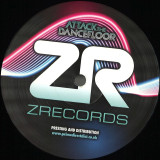
The 17th in our Attack The Dancefloor Series that is always a strictly vinyl affair. This time we’ve got some exclusive remixes to dish out in this Special Remix edition of the series.
First up we got the Freerange boss in to remix the classic Sunburst Band track ‘He Is’. The mighty Jimpster has turned in a rich and sublime mix that truly deserves to be called Deep House. Warm Rhodes licks twinkle over deep kicks dubbed out guitars and hazy echoes. The whole track is drenched in Jimpster's deft touch as a producer and we think this is one of his best remixes. A Heavenly rework you might say.
Next up is a long lost remix from Andrés of ‘I Recoginise’ by Joey Negro. Never before released this was unearthed deep within a hard drive in the ZR vaults, now seeing the light of day it deserves. Andrés does what you would expect of him delivering a bass heavy MPC driven rework, utilising the synth lines and vocoder to great effect.
Fresh off a run of hot remixes for Glitterbox is Razor n Tape’s JKriv who turns the disco arpeggios up to 11 with his soaring remix of Prospect Park’s ’The Kinda Love’ complete with live strings and percussion.
Last but not least, The Visions’s dreamy piano led remix of the classic 'My Vision' by Jakatta featuring none other than Seal on lead vocals.
Following the release of a number of EPs on Swiss, German, British and Australian labels, Trinidad will release their debut album ‘Palm Trees & Thirty Degrees’ on October 16th 2020.
The album draws on the Swiss-based trio’s experience of sustaining the energy of festival and club shows, while also providing the perfect background to a relaxed summer evening with friends.
The project provides an opportunity for the trio to indulge in a range of musical influences, blending together a mix of synthesizers with the haunting tones of a church organ, the warmth of a string quartet and regality of an opera singer. The album grew organically, with inspiration taking hold beyond the confines of the studio: the bonus track recorded with a Jamaican reggae singer in the back of a VW bus in Greece. Soundscapes from Colombia to India were captured and embedded.
With "Palm Trees & Thirty Degrees" Trinidad guide listeners on a journey to a tropical paradise; to a wonderful, perhaps peculiar place of confidence, created and shaped by the mental theatre of the moment.
The soft kiss of a warm breeze hits you as you adjust to your new surroundings ("Desembarco"); leaving the static chatter of your thoughts behind in the "Lobby" (feat. MonoAbe) of your mind; you allow yourself to imagine what the evening holds in store (“Kopfkino”); But first, there’s a drink in the “Sunset Bar”, a refreshing cocktail "Luciola" that serves as a gateway for you to plunge into the night. A night of unlimited possibilities, the first instances a blur ("Sagrada"), as time starts to lose its meaning ("Tempus Fugit"); everything spins, everything is possible, everything is ("Elevate"). Suddenly, hours (or is it days?) have passed – it doesn’t matter; what matters is the first sign of dawn, the unmistakable warmth dissolving the darkness (“Alma”); the beat slows, and you feel the "Libération" of the new day; looking around you see the moments you’ve shared etched on the faces of your friends ("Fleeting" feat. Julia Portmann); It is not goodbye, it is only "Au Revoir".
The album was produced by Trinidad in their own studios in Bern and Zurich. It features collaborations with a number of artists: Cornelia Aeschbacher Firmin (Hang), MonoAbe (Mallets & Percussion), Jack Williams (text of "Fleeting"), Julia Portmann (vocals), Zenyth (vocals) and Michael Meier (electric bass). The songs were mixed by Marcel Schneider, mastered by Benjamin Fay. Raïssa Lara Lütolf was responsible for the graphic design.
Artist and multi-instrumentalist Flaer embraces the search for quiet miracles on first full-length LP Translations.
In 2023, Realf Heygate - who makes music as Flaer - released his debut mini-album Preludes, composed on his mother’s piano and his childhood cello.Returning to ODDA for his debut full-length album, Heygate is now looking in another direction. A record that embraces transition and movement, Translations is in many ways more internal, less rooted to a single place and reflective of the process of laying new foundations in Cornwall.
Like Preludes, Translations is coloured with found sounds and field recordings, from the starlings which can be heard singing through the open window of his studio, to the brittle recordings of his mother, who was a linguist, learning Spanish on a set of language tapes. In both cases, Heygate embraced the translations and memories inherent to the sounds.
“When I digitised my mother’s tapes, they warped and stuttered in a very similar way to the starling’s song,” he explains. “They had this uncanny rhythm and pulse that I couldn’t quite decode, but was saying something." These decayed transmissions hint at loss, resisting clarity in favour of the ineffable.
Translations is also a record of ambiguities and in-betweens, suggested by the double meaning of the album’s opening track ‘Entre’. At once intricate and expansive, threaded with birdsong and acoustic guitar motifs, this and ‘Starling Descends’ (a reference to Vaughan Williams’ ‘The Lark Ascending’) act as a bridge away from the pastoral themes of Preludes towards a more assertive sound. At times intimate in its textured instrumentation and at others more overtly grand in orchestration, reflecting awider palette of influences.
“Flaer began in many ways when I picked up my mother’s instruments, seeking a form of reconnection. Where words evaded me, they became the tools through which I found a language for grief – and above all, for love.”
Recorded between 2023 and 2025 – what Heygate calls “A gradual process of sowing and harvesting ideas rather than a single intense creative period” - each track follows a rhythm similar to the small maquettes and sculptures he has been working on in his visual practice, whereby structures and melodies form intuitively in moments that are as rare as they are fleeting.
“It's that feeling of searching that I really enjoy,” Heygate continues. “I never know what the destination of the composition is going to be, and I never really find what it is."
Translations is released on limited edition off-white vinyl LP (500 copies worldwide) with one of five signed and numbered handmade risograph prints. It's also available as standard black vinyl LP and digitally.
2026 Black Vinyl Repress
We are extremely excited to share with you this wonderful piece of old skool hardcore. Created in Bristol in 1993 and released on a limited white label back then, this record has become a holy grail over the past 30 years. Very rare, very sought after and 100% original West Country vibes.
Written by Rich Williams, who emigrated to LA many years ago and James Towler – producer for John Lydon these days! These guys were on some next level vibes when they wrote this ultimate slice of darkcore rave!
Pressed by the mighty Phil ‘The Vinylman’ East on 180g heavyweight vinyl. This release is a bespoke product as no one record is the same. Designed to look like the planet Jupiter and part of a 4 vinyl Cosmik series.
Is it dark enough???
66 pages, 175 x 129mm paperback w/ litho printed cover & french flaps.
The second outing for our short run book publishing imprint, The End books, takes the form of a reprint of Spanish Cante Jondo and Its Origin in Sindhi Music, originally published in Spanish in 1955 under the name Cante Jondo: Su Origen y Evolución and later in this English translation.
Aziz Balouch here presents his theory on the roots of flamenco's 'deep song' in modern-day Pakistan, a cultural journey that mimics the routes of his own life, having been brought up among the Islamic mysticism and devotional songs of Sindh before travelling to Gibraltar in the early 1930s and becoming transfixed with the cante jondo across the border in southern Spain. Positing this concept through personal accounts rather than solid theoretical backing, this text provides a valuable account of an extraordinary existence that crossed remarkable geographical, musical, and spiritual boundaries. Issued here with a new introduction from anthropologist of sound, the senses and Islam, Stefan Williamson Fa.
"It would be easy to place Balouch on the fringes, as an eccentric footnote in flamenco history. But that misses the shape of his life and work. He was a figure who moved intuitively across boundaries that our present categories of nation, genre, discipline tend to fix in place. His work predates the founding of the academic discipline of ethnomusicology, the global circuits of world music, and the marketplace logic of fusion projects by decades. He was not an ethnographer or a proto–world musician, but someone for whom the deep song of Andalusia and the devotional song of the subcontinent resonated along the same fault lines of feeling, and who spent his life trying to trace them.
This book is one of the few surviving traces of that attempt. To read it now is to encounter a perspective that resists tidy narratives of influence or origin, despite its title and what he claims to do. It stands instead as evidence of an idiosyncratic musical imagination, one that relied less on proof than on listening, and on the belief that certain echoes carry farther than history can easily explain."
— Stefan Williamson Fa
- A1: Ita Ayelala
- A2: Yanga
- B1: Kwanini
- B2: Nakupenda
- C1: Summerskin
- C2: Vanguard Drive
- D1: Cruisin Kruga
- D2: Dala What We Must
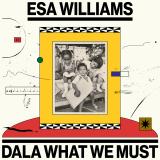
Marking twenty years since South African producer and DJ Esa Williams left Cape Town, Dala What We Must is a deeply personal and expansive debut LP, an exploration of movement, memory, and sound shaped by two decades of creative evolution.
Co-created with collaborator and multi-instrumentalist Robin G. Breeze, the album deftly combines field recordings, layered instrumentation, and emotionally resonant compositions into a nuanced, globally influenced body of work. It also stands as Esa’s most collaborative release to date, featuring contributions from musicians across London, Oaxaca, Nairobi, and Cape Town, each adding their own creative energy to a project built on openness, trust, and shared experience.
The album draws inspiration from Esa’s recent ventures into documentary scoring and soundtracking, with projects like Cursed (Audible) and The Invisible Hand teaching him to listen differently, to honour space, to serve the story. That sensibility permeates the album, resulting in music that breathes, lingers, and listens as much as it speaks.
The title, Dala What We Must, is a South African call to action: a reminder to do what’s necessary, even in uncertainty. Finalised in the months leading up to Esa’s transition into fatherhood, the record carries a sense of grounding, care, and quiet transformation.
Dala What We Must is a sonic reflection of journey and community, a deeply collaborative project rooted in connection and guided by intention.
- A1: Kwanini
- A2: Ita Ayelala
- A3: Yanga
- A4: Nakupenda
- B1: Summerskin
- B2: Cruisin Kruga
- B3: Vanguard Drive
- B4: Dala What We Must
Marking twenty years since South African producer and DJ Esa Williams left Cape Town, Dala What We Must is a deeply personal and expansive debut LP, an exploration of movement, memory, and sound shaped by two decades of creative evolution. Co-created with collaborator and multi-instrumentalist Robin G. Breeze, the album deftly combines field recordings, layered instrumentation, and emotionally resonant compositions into a nuanced, globally influenced body of work. It also stands as Esa’s most collaborative release to date, featuring contributions from musicians across London, Oaxaca, Nairobi, and Cape Town, each adding their own creative energy to a project built on openness, trust, and shared experience. The album draws inspiration from Esa’s recent ventures into documentary scoring and soundtracking, with projects like Cursed (Audible) and The Invisible Hand teaching him to listen differently, to honour space, to serve the story. That sensibility permeates the album, resulting in music that breathes, lingers, and listens as much as it speaks.
The title, Dala What We Must, is a South African call to action: a reminder to do what’s necessary, even in uncertainty. Finalised in the months leading up to Esa’s transition into fatherhood, the record carries a sense of grounding, care, and quiet transformation. Dala What We Must is a sonic reflection of journey and community, a deeply collaborative project rooted in connection and guided by intention.
- 1: Behind Closed Doors 2.0
- 2: Mysterious Girl .0 (Feat. Bubbler Ranx & Gjb100)
- 3: All About Us 2.0 (Feat. Montell Jordan)
- 4: Rest Of My Life 2.0 (Feat. Brian Mcknight)
- 5: Rock U Right (Single Version)
- 6: Flava 2.0
- 7: Natural 2.0
- 8: Insania 2.0
- 9: Close To You (Feat. Oritse Williams)
- 10: I Feel You 2.0
- 11: Island Girl (Feat. Lady Leshurr)
- 12: All Night All Right 2.0