Buscar:lag

Estilos
Todo
SILVER CEE - RED SHIVA

Silver Cee

RED SHIVA

12inchV-ADDIKT009
VIBES ADDIKT
14.05.2025

Available in an exclusive red vinyl edition, the "Red Shiva" EP invites listeners to dive into a captivating sonic universe, blending enchanting melodies and punchy rhythms. Early support from Mha iri (Drumcode), M.I.K.E. Push (Bonzai), Dave Davis (Laark), DJ Fire (Bonzai), Tom Leclercq (Exreme), DJ HS (Lagoa)…

Disponible

En el almacen y preparando para el envío

15,92
Various - ECHOES OF ITALY – THE BIRDS OF PARADISE – EARLY 90S HOUSE VIBES VOL.2 (2x12")

Googling “paradise house”, the first results to pop up are an endless list of European b&b’s with whitewashed lime façades, all of them promising “…an unmatched travel experience a few steps from the sea”. Next, a little further down, are the institutional websites of a few select semi-luxury retirement homes (no photos shown, but lots of stock images of smiling nurses with reassuring looks). To find the “paradise house” we’re after, we have to scroll even further down. Much further down.

It feels like yesterday, and at the same time it seems like a million years ago. The Eighties had just ended, and it was still unclear what to expect from the Nineties. Mobile phones that were not the size of a briefcase and did not cost as much as a car? A frightening economic crisis? The guitar-rock revival?! Certainly, the best place to observe that moment of transition was the dancefloor. Truly epochal transformations were happening there. From America, within a short distance one from the other, two revolutionary new musical styles had arrived: the first one sounded a bit like an “on a budget” version of the best Seventies disco-music – Philly sound made with a set of piano-bar keyboards! – the other was even more sparse, futuristic and extraterrestrial. It was a music with a quite distinct “physical” component, which at the same time, to be fully grasped, seemed to call for the knotty theories of certain French post-modern philosophers: Gilles Deleuze, Félix Guattari, Paul Virilio... Both those genres – we would learn shortly after – were born in the black communities of Chicago and Detroit, although listening to those vinyl 12” (often wrapped in generic white covers, and with little indication in the label) you could not easily guess whether behind them there was a black boy from somewhere in the Usa, or a girl from Berlin, or a pale kid from a Cornish coastal town.

Quickly, similar sounds began to show up from all corners of Europe. A thousand variations of the same intuition: leaner, less lean, happier, slightly less intoxicated, more broken, slower, faster, much faster... Boom! From the dancefloors – the London ones at least, whose chronicles we eagerly read every month in the pages of The Face and i-D – came tales of a new generation of clubbers who had completely stopped “dressing up” to go dancing; of hot tempered hooligans bursting into tears and hugging everyone under the strobe lights as the notes of Strings of Life rose up through the fumes of dry ice (certain “smiling” pills were also involved, sure). At this point, however, we must move on to Switzerland.

In Switzerland, in the quiet and diligent town of Lugano, between the 1980s and 1990s there was a club called “Morandi”. Its hot night was on Wednesdays, when the audience also came from Milan, Como, Varese and Zurich. Legend goes that, one night, none less than Prince and Sheila E were spotted hiding among the sofas, on a day-off of the Italian dates of the Nude Tour… The Wednesday resident and superstar was an Italian dj with an exotic name: Don Carlos. The soundtrack he devised was a mixture of Chicago, Detroit, the most progressive R&B and certain forgotten classics of old disco music: practically, what the Paradise Garage in New York might have sounded like had it not closed in 1987. In between, Don Carlos also managed to squeeze in some tracks he had worked on in his studio on Lago Maggiore. One in particular: a track that was rather slow compared to the BPM in fashion at the time, but which was a perfect bridge between house and R&B. The title was Alone: Don Carlos would explain years later that it had to be intended both in the English meaning of “by itself” and like the Italian word meaning “halo”. That wasn’t the only double entendre about the song, anyway. Its own very deep nature was, indeed, double. On the one hand, Alone was built around an angelic keyboard pattern and a romantic piano riff that took you straight to heaven; on the other, it showcased enough electronic squelches (plus a sax part that sounded like it had been dissolved by acid rain) to pigeonhole the tune into the “junk modernity” section, aka the hallmark of all the most innovative sounds of the time: music that sounded like it was hand-crafted from the scraps of glittering overground pop.

No one knows who was the first to call it “paradise house”, nor when it happened. Alternative definitions on the same topic one happened to hear included “ambient house”, “dream house”, “Mediterranean progressive”… but of course none were as good (and alluring) as “paradise house”. What is certain is that such inclination for sounds that were in equal measure angelic and neurotic, romantic and unaffective, quickly became the trademark of the second generation of Italian house. Music that seemed shyly equidistant from all the rhythmic and electronic revolutions that had happened up to that moment (“Music perfectly adept at going nowhere slowly” as noted by English journalist Craig McLean in a legendary field report for Blah Blah Blah magazine). Music that to a inattentive ear might have sounded as anonymous as a snapshot of a random group of passers-by at 10AM in the centre of any major city, but perfectly described the (slow) awakening in the real world after the universal love binge of the so-called Second Summer of Love.

For a brief but unforgettable season, in Italy “paradise house” was the official soundtrack of interminable weekends spent inside the car, darting from one club to another, cutting the peninsula from North to centre, from East to West coast in pursuit of the latest after-hours disco, trading kilometres per hour with beats per minute: practically, a new New Year’s Eve every Friday and Saturday night. This too was no small transformation, as well as a shock for an adult Italy that was encountering for the first time – thanks to its sons and daughters – the wild side of industrial modernity. The clubbers of the so-called “fuoriorario” scene were the balls gone mad in the pinball machine most feared by newspapers, magazines and TV pundits. What they did each and every weekend, apart from going crazy to the sound of the current white labels, was linking distant geographical points and non-places (thank you Marc Augé!) – old dance halls, farmhouses and business centres – transformed for one night into house music heaven. As Marco D’Eramo wrote in his 1995 essay on Chicago, Il maiale e il grattacielo: “Four-wheeled capitalism distorts our age-old image of the city, it allows the suburbs to be connected to each other, whereas before they were connected only by the centre (…) It makes possible a metropolitan area without a metropolis, without a city centre, without downtown. The periphery is no longer a periphery of any centre, but is self-centred”.

“Paradise house” perfectly understood all of this and turned it into a sort of cyber-blues that didn’t even need words, and unexpectedly brought back a drop of melancholic (post?)-humanity within a world that by then – as we would wholly realise in the decades to come – was fully inhuman and heartless. A world where we were all alone, and surrounded by a sinister yellowish halo, like a neon at the end of its life cycle. But, for one night at least, happy."


Disponible

En el almacen y preparando para el envío

28,99
Aizikovic - Dry Blow

Aizikovic

Dry Blow

12inchPHASELAB002
Phase Imprint
18.03.2025

Next stop... Second reference in the PHASELAB catalog and twenty-third of our PHASE IMPRINT label! What a satisfaction to finally present this project (vinyl and digital) by Aizikovic, the yout from Madrid who is trying to bring an especially fresh, as well as profound, vision to our city. This EP transmits us; altered visions in music, many experiences linked to the dance floor and feelings of light in a dark space. And in case anyone wanted a little more, Comissar Lag aka Lag has prepared a melting remix for us.

Many thanks for the designs to the snowboarder of the strokes @judyisangry, to Mario Castillo for the Master and to Pedro O'Connor for the Mix.

Disponible

En el almacen y preparando para el envío

14,08
LIVY EKEMEZIE - FRIDAY NIGHT LP

Livy Ekemezie’s Friday Night is widely recognised by DJs and afro-funk aficionados as a UFO (Unidentified Flying Object) grail record. It is one of those rare dance music albums that sounds like a record of its’ time but also has a timeless quality that makes each listen an immensely rewarding experience.

Fueled by teen spirit, every track slaps leaving little or no opportunity to skip. The song concepts circle around sweaty, afropolitan nightly excursions into the nightclubs of Aba, Port Harcourt and Lagos. But they could easily have been the soundtrack to Basquiat and Grace Jones grooving to DJ Larry Levan at Studio 54.

Digital Multitrack Sound Production combined with 80s synths and keyboards ushered in a new era. But what made this different is the bombastic but never overbearing "mélange" of slapping, funky bass lines, choppy synths, crazy, carefree vocals contributing to an intense dance-driven musical experience.

Livy and his friend Franklin Izuora teamed up with Jules Elong a seasoned keyboardist to create the LP in 1982, Franklin was a student in the US and already the experience of producing an album (Be Nice To The People, 1977, EMI) with the soundmaster, Odion Iruoje in the teenage afro-rock band, Question Mark. This gave Livy the confidence to leave most of the creative direction to him.

Livy had completed his secondary school cursus and was waiting to attend college. Jules Elong’s role was to make the record sound professional. The Quincy Jones influence created a reference point, Goddy Oku’s studio, Godiac was the mother ship for this 80s dance music masterpiece.

Disponible

En el almacen y preparando para el envío

24,16
ALBERTO MELLONI - LAGO LUNGO EP

The multi-faceted and multi-talented Alberto Melloni returns once more to Bordello A Parigi to unveil his musical multi-verse. “Lago Lungo”, the title piece, sets the tone for the quartet of tracks. Steady kicks thud next fizzing hi-hats as a rich and full-bodied piano melody takes hold, Melloni’s instrumentation creating sheer peaks and creamy amber plains. “Promised Land” offers a different audio topography. Key stabs are bolstered by incising beats as a late-night italo infused romp undulates from speaker cones. Underscoring the EP are influences from both disco and house, sun-kissed chords countered by textured percussion. These twin inspirations combine in the groove laden “Paradise Pie”. Clean notes are refracted in neon, undercurrents of acid lurking just below the vibrating hardwood floor. The mirrorball takes the limelight for the finale. Breathy, smokey vocals orbit funk dipped lines of “Only You”, warbling vocoders dancing under the glittering beams to the close.

Disponible

En el almacen y preparando para el envío

13,40
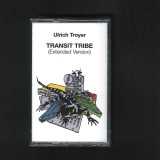
Ulrich Troyer - Transit Tribe MC (TAPE)

Ulrich Troyer has been producing music now solidly for over twenty years within a largely genre free framework, but whilst navigating forms such as avant-garde, techno, leftfield, field recording, electronica, glitch and ambient it is the aesthetics of dub that guide his creative direction. Not really recognisable in an orthodox form as remixed versions of roots reggae songs but in the way sonics are manipulated with space, the application and layering of delay, reverb and echo that fixes his output well within the scope of what might be called futurist dub.

The nearest comparisons to his new album TRANSIT TRIBE can only be established by a synthesis of some of the more adventurous explorations in modern music such as African Head Charge, Jon Hassell, Pole (Stefan Betke), Bill Laswell or even Miles Davis; featuring a diverse selection of artists and friends not only from Vienna and environs but also from around the world, sounds are not so much fused but allowed to float along the continuous flowing tide of warm waves of bass.

Rather than to allow the names of Ulrich Troyer's collaborators be merely listed in the album credits, what they bring to this joyful affair needs to be outlined, albeit briefly: Co-producer credits go to Osman Murat Ertel from Istanbul, who employed a variation on the old foolproof Nick Lowe method for checking out the impact quality of his own sound productions by playing tracks through his car sound system speakers!

Murat is a member of the electro-psych-folk group Baba Zula where he plays electric saz, oscillators and theremin and played a key part in the creative development of the album. Mamadou Diabate, the balafon master originally from Burkina Faso and now resident in Vienna, has developed his own unique technique of playing solos that replicate the sound of three instruments playing in unison; however the multi-talented Mamadou is engaged here on singing and playing the talking drum. From South Tyrol Reinhilde Gamper is a member of the experimental trio Greifer who are bringing the sound of the zither into the twenty-first century using new playing techniques and electronic gadgets. Susanna Gartmayer is an Austrian composer and bass clarinetist specialising in improv and multimedia sound research. Diggory Kenrick has been engaged with creating new dub fusions and also re-energising classic rocksteady and roots reggae classics, renowned for his interventions on flute. Didi Kern is an electronic dance musician and drummer from Vienna with a focus on free improvised music. Hamidou Koita, a singer and multi-instrumentalist, is from a traditional Griot family in Burkina Faso but now resident in Vienna and a regular musical partner of Mamadou Diabate playing drums and calabash. Austrian Lukas Lauermann is both a studio and live musician playing cello, also working on electronic sound design and writing string arrangements. He has recorded extensively and appeared on stage with both Mark Lanegan and Hans-Joachim Roedelius. Martin Mallaun is a Tyrol-born specialist in both the development of the zither in modern music and also as a researcher in the effects of climate change on the vegetation of Alpine ecosystems. Mystica Tribe is the musical alias of Tokyo-based dub/techno producer Taka (Takafumi) Noda. He collaborated with Vienna's own Vegetable Orchestra on 2020's "Transplants (Mystica Tribe Version)". After studying classical percussion Flip Philipp is now a jazz vibraphone player and member of the Vienna Symphony Orchestra. Wolfgang Pfistermüller is a member of the Vienna Trombone Quartet and the developer of the incredible bass-trombone Aurora with its uniquely warm and resonant sound. Roger Robinson is a renowned British poet, winner of many contemporary poetry prizes and member of the experimental music group King Midas Sound. Kwame Yeboah is a Ghanaian born UK based keyboard wizard who tours regularly with Yusuf / Cat Stevens, Ms. Dynamite and Pat Thomas.

So contained on the album is an astonishing mix of musicians and instruments: sounds of cowbells recorded in the South Tyrolean alps processed by modular synthesizers and heavy analogue bass synths combined with instruments such as zither, bass-zither, electro saz, flute, talking drum, trombone, cello, vibraphone, marimba, djembe, contra-alto clarinet, melodica, Farfisa - all bound together by organic live-drums and dub effects.

Liner notes by Steve Barker

Disponible

En el almacen y preparando para el envío

14,92
Apples - Mind Twister LP

Apples

Mind Twister LP

12inchODILIV003LP
Odion livingstone
15.01.2025

70s Nigerian psychedelic soul rock to be filed next to Shuggie Otis’ Inspiration Information. Some albums are more than the sum of their parts. This is one of them. Nothing quite explains the luscious layers of sounds. The wholesome feeling that exudes from the first note to the last. Shuggie Otis meets Grotto/Ofege is what comes to mind.

The band was a ragtag band of teenage musicians who hung around Federal Palace Hotel in classy Victoria Island, listening to the resident band, led by the incomparable Yom Yem with Papa Doe and Gboyega Adelaja on keys. Frank who had some experience stringing around studios in Lagos, approached the George Veira (Vocals, Guitar), Nadi brothers (Clifford and Gerrard) with the idea of making a record. Odion Iruoje had enjoyed massive success with Ofege and Frank knew he might be open to the idea of producing the band. “It happened very fast, as Georges had songs already written or half completed. We started jamming with a few gigs at Surulere Night Club, which was run by Tee Mac at the time. Odion heard the material and did not need any convincing. We Then we went into the studio to lay the vocals, drums and guitars. The keys and further production was done in London.

“My routine at the time was to finish records in London, at Abbey Road Studios. It was the best way to get the sound I wanted and allowed my use London based musicians which brought a special flavour. I liked to lay the rhythm tracks and vocals at our Wharf road studio in Lagos. That was the core of the work”. Mr Odion Iruoje

(Resident A&R exec/Producer, EMI Nigeria)

Disponible

En el almacen y preparando para el envío

11,98
Ennio Morricone - Il Serpente OST
Disponible

En el almacen y preparando para el envío

32,73
Ulrich Troyer - TRANSIT TRIBE

Ulrich Troyer has been producing music now solidly for over twenty years within a largely genre free framework, but whilst navigating forms such as avant-garde, techno, leftfield, field recording, electronica, glitch and ambient it is the aesthetics of dub that guide his creative direction. Not really recognisable in an orthodox form as remixed versions of roots reggae songs but in the way sonics are manipulated with space, the application and layering of delay, reverb and echo that fixes his output well within the scope of what might be called futurist dub.

The nearest comparisons to his new album TRANSIT TRIBE can only be established by a synthesis of some of the more adventurous explorations in modern music such as African Head Charge, Jon Hassell, Pole (Stefan Betke), Bill Laswell or even Miles Davis; featuring a diverse selection of artists and friends not only from Vienna and environs but also from around the world, sounds are not so much fused but allowed to float along the continuous flowing tide of warm waves of bass.

Rather than to allow the names of Ulrich Troyer's collaborators be merely listed in the album credits, what they bring to this joyful affair needs to be outlined, albeit briefly: Co-producer credits go to Osman Murat Ertel from Istanbul, who employed a variation on the old foolproof Nick Lowe method for checking out the impact quality of his own sound productions by playing tracks through his car sound system speakers!

Murat is a member of the electro-psych-folk group Baba Zula where he plays electric saz, oscillators and theremin and played a key part in the creative development of the album. Mamadou Diabate, the balafon master originally from Burkina Faso and now resident in Vienna, has developed his own unique technique of playing solos that replicate the sound of three instruments playing in unison; however the multi-talented Mamadou is engaged here on singing and playing the talking drum. From South Tyrol Reinhilde Gamper is a member of the experimental trio Greifer who are bringing the sound of the zither into the twenty-first century using new playing techniques and electronic gadgets. Susanna Gartmayer is an Austrian composer and bass clarinetist specialising in improv and multimedia sound research. Diggory Kenrick has been engaged with creating new dub fusions and also re-energising classic rocksteady and roots reggae classics, renowned for his interventions on flute. Didi Kern is an electronic dance musician and drummer from Vienna with a focus on free improvised music. Hamidou Koita, a singer and multi-instrumentalist, is from a traditional Griot family in Burkina Faso but now resident in Vienna and a regular musical partner of Mamadou Diabate playing drums and calabash. Austrian Lukas Lauermann is both a studio and live musician playing cello, also working on electronic sound design and writing string arrangements. He has recorded extensively and appeared on stage with both Mark Lanegan and Hans-Joachim Roedelius. Martin Mallaun is a Tyrol-born specialist in both the development of the zither in modern music and also as a researcher in the effects of climate change on the vegetation of Alpine ecosystems. After studying classical percussion Flip Philipp is now a jazz vibraphone player and member of the Vienna Symphony Orchestra. Wolfgang Pfistermüller is a member of the Vienna Trombone Quartet and the developer of the incredible bass-trombone Aurora with its uniquely warm and resonant sound. Roger Robinson is a renowned British poet, winner of many contemporary poetry prizes and member of the experimental music group King Midas Sound. Kwame Yeboah is a Ghanaian born UK based keyboard wizard who tours regularly with Yusuf / Cat Stevens, Ms. Dynamite and Pat Thomas.

So contained on the album is an astonishing mix of musicians and instruments: sounds of cowbells recorded in the South Tyrolean alps processed by modular synthesizers and heavy analogue bass synths combined with instruments such as zither, bass-zither, electro saz, flute, talking drum, trombone, cello, marimba, djembe, contra-alto clarinet, Farfisa - all bound together by organic live-drums and dub effects.

Disponible

En el almacen y preparando para el envío

23,49
Jónbjörn - Gárur LP 2x12"

Jónbjörn

Gárur LP 2x12"

2x12inchLAGAFFE011
LAGAFFE TALES
15.11.2024

Jónbjörn's 'Gárur' re­ects the ebb and ­ow of life, and is a sonic exploration of the nether regions of atmospheric electronic music. Jónbjörn, an Icelandic producer and purveyor of organic textures and soundscapes has just released his debut full-length LP titled ‘Gárur’. Translated to ‘Ripples’ in English, the album is a colourful display of intricately woven electronic grooves and hypnotic atmospheres. The 10-track LP unfolds like a 1-hour mixtape, each song seamlessly blending from one to the next. ‘Þeytt smjör’ sets the scene with a sequence of generative ambience – lush pads and synthesizers atop a backdrop of found sound textures. The album pushes forward into many beat-centric tracks across various genres – everything from Downtempo, Deep House, Electronica, and Electro can be found throughout. While each track borrows in­uences from across the dance music spectrum, the album is held together by Jónbjörn’s melodic and harmonic tendencies that encourage you to lose yourself in. Jónbjörn's process is heavily sample-based, often jamming carelessly to unearth new sonic possibilities. He records tracks live, triggering loops and effects spontaneously, and separates the creative process from mixing to maintain a sense of naivety. This approach allows him to capture the purity of initial demos, without falling into the temptation to overly polish the ¬nal product and lose that initial magic. Over the past three years, Jónbjörn has released a string of singles and his last full release on the Helsinki label ‘OO Recordings’, which featuredsix tracks on cassette. He has also been putting out music on his own label, Lagaffe Tales. In March 2020, he released his ¬rst full vinyl EP on his own label series, BROT, at a time when the global pandemic had closed almost all clubs worldwide. Additionally, he has released music on reputable labels such as D.KO Records, Neo Violence, Gestalt Records, Móatún 7, Bitterfeld Musik, Yellow Island Records, and FALK.

Disponible

En el almacen y preparando para el envío

31,05
FRAK - Safari Modules

Frak

Safari Modules

12inchKMWL013
Kontra Musik
24.10.2024

FRAK was the first act out on the Kontra-Musik White Label series. Back in 2012 the EP Triffid Gossip marked the return of both the band FRAK and the label Borft. Now, 12 years later, FRAK returns to KMWL with the splendid and diverse Safari Modules EP. Machine produced by FRAK, hand stamped by Ulf-Ulf.

Disponible

En el almacen y preparando para el envío

12,82
MARTÍN LOPEZ Y SUS ESTRELLAS - COCINANDO LP

In 1969, singer and police lieutenant Pedro Gregorio López started recording a series of instrumental tracks and songs on the MAG record label in Peru, ranging from guaracha to cumbia, all cooked with musical eclecticism and simmered to appeal to a wide audience. Many of these musical ingredients combined on the 1971 album entitled "Cocinando", in reference to the similarities between Peruvian cooking and tropical music. López began his career as a singer and orchestra conductor many years earlier, when he joined the backing singers for Lucho Macedo's Sonora. After completing his police training, he adopted the stage name Martín López, in order to preserve the anonymity his job required. Between 1969 and 1971 Martín López y sus Estrellas recorded all the tracks comprised on this album, including salsa, guarachas, rumbas, chichas and boleros, proving their knowledge and mastery of the tropical music lexicon. It is not surprising since the orchestra was made up of the most talented label’s session stars: including the double bassist Joe di Roma, singer Pablo Villanueva "Melcochita", percussionists Ñiko Estrada and Coco Lagos, and trumpeter Tito Chicoma. "Cocinando" is an epic historical treasure that captures the explosive impact of the tropical music movement on Peruvian culture.

Disponible

En el almacen y preparando para el envío

27,69
Fela Kuti - Alagbon Close (50th Anniv.)(Ltd.LP)

- Ltd. Col. LP: (Opaque Orange Vinyl)

'Alagbon Close', ursprünglich 1974 auf dem Independent-Label Jofabro veröffentlicht, markiert das Aufblühen des Afrobeat sowohl als Musik als auch als prinzipielle politische Philosophie. Instrumental vereint das Album die verschiedenen charakteristischen Elemente von Felas Afrobeat, die bis dahin noch nie in einer so einheitlichen und fein ausbalancierten Form auf Tonträger festgehalten worden waren. Textlich ist es eine direkte Auseinandersetzung mit der Vollzugsgewalt des nigerianischen Staates: 'Alagbon Close' in Lagos war das Hauptquartier der nigerianischen Kriminalpolizei (Criminal Investigation Department). Viele der musikalischen Elemente, die 'Alagbon Close' so fesselnd machen, sind bereits auf früheren Aufnahmen zu hören, aber auf diesem Album hat Fela sie alle mit verheerender Wirkung zusammengeführt und damit das klassische Afrobeat-Paradigma geschaffen.

Disponible

En el almacen y preparando para el envío

24,33
Various - Down & Wired 8

RARE & PREV. UNRELEASED PSYCH-FUNK AND GARAGE ROCK !!!

Say hello to Down & Wired Vol. 7 as Perfect Toy Records unleashes yet another instalment in its long-running compilation series! Once more, the label provides a delectable selection of obscure funk and soul-influenced psychedelic and garage rock tracks to delight even hardcore collectors of both genres.

And make no mistake, there is plenty to discover among these eleven tracks. At the funkiest end of things, Function's Free Style morphs from West Coast psychedelia to country funk to swamp rock and back again in its sub-three minute length, Dandy King provide psychedelic funky-soul and The Whiz Kids take a heavy dose of funkiness with them into psych-rock territory – sample fiends watch out for the fat twenty-second drum break towards the end of the latter! Purer psychedelia can be found in the offering from Third Stone while Würzburg band Prisma provide all-out epic psych-rock carnage. And if rock carnage is your thing, you'll be feeling the dirty garage rock onslaught of The Comin' Generation and a previously unreleased cut by Synod - soon to be a 45 single on Perfect Toy. That just leaves The General Store, The Soul Society, The Vestells and another unreleased cut from The Villagers (from whom the label will be dropping more unreleased material soon!), to close the circle by adding a heavy dose of garage soul.

A worthy successor to the previous volumes, Down & Wired Vol. 7 is once again accompanied by an insert containing detailed information and photos of the bands and a download code is also included with every vinyl LP.

Disponible

En el almacen y preparando para el envío

21,81
PHRAN - LAGUNA EP

Phran

LAGUNA EP

12inchEDVI002
Ediciones Villasonora
09.09.2024

Ediciones Villasonora’s sophomore release is “Laguna” by Phran. The Venezuelan lands on the southeastern Spanish label with a mini-album crafted in a marked personal approach, evident through six tracks combining dubbed atmospheres, broken percussive patterns, and warm analog textures—a sonic expedition bridging his intimate roots with an advanced sense of dance.

Disponible

En el almacen y preparando para el envío

13,40
Artículos por página
N/ABPM
Vinyl