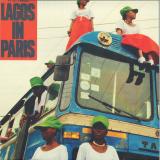
The West African band and new sensation LAGOS IN PARIS make their striking debut with the release of their first and bold, EP « WE ARE LAGOS IN PARIS ».
After gaining support on their two first singles « Mali Spirit » and « Afro G Western » from Colors Studio, Trace or even Rollingstone and being broadcasted on BBC Radio 1Xtra the collective continues to expand and spread what they call the AFRAW sound : a mix of traditional African music with modern electronic styles resulting in a raw, powerful, and unique sound.
Recorded in different places across West Africa and Europe, every track on « WE ARE LAGOS IN PARIS » is shaped by the artists, musicians, and cultures they encountered along the way.
Blending heady blues loops in « Afro G Western », or groovy electronic basslines in « Faya », always with pure vibrant vocals, LAGOS IN PARIS offers trough this project a visceral and authentic experience speaking directly to the soul.
The listening experience also extends to the visual with the single « Faya », which will be accompanied by a video shot in Ghana, capturing the energy and aesthetic of the song.
Поиск:lagos in paris
Все
- 1
The Éthiopiques series returns! Essential archive recordings from an extremely fruitful period in Ethiopian music.
Before “Swinging Addis” took over the world, there was Moussié Nerses Nalbandian — the Armenian-born composer who shaped modern Ethiopian music. Mentor, arranger, and pioneer, he laid the foundations of Ethio-jazz.
This Éthiopiques volume revives his forgotten legacy, recorded live by Either/ Orchestra First issue ever with new exclusive photos and in depth liner 8-page insert.
“Ethiopian jazzmen are the best musicians that we have seen so far in Africa.
They really are promising handlers of jazz instruments.”
Wilbur De Paris
(1959, after a concert in Addis Ababa)
አዲስ፡ዘመን። *Addis zèmèn* **A new era.**
The time is the mid-1950s and early 1960s, just before "Swinging Addis" bloomed – or rather boomed – onto the scene. Brass instruments are still dominant, but the advent of the electric guitar, and the very first electronic organs, are just around the corner. Rock’n'Roll, R’n’B, Soul and the Twist have not yet barged their way in. Addis Ababa is steeped in the big band atmosphere of the post-war era, with Glenn Miller's *In the* *Mood* as its world-wide theme song, neck and neck with the Latin craze that was in vogue at the same period. Life has become enjoyable once again, with the return of peace after the terrible Italian Fascist invasion of Ethiopia (1935-1941). The redeployment of modern music is part and parcel of the postwar reconstruction. *Addis zèmèn* – a new era – is the watchword of the postwar period, just as it was all across war-torn Europe.
The generation who were the young parents of baby boomers** were the first to enjoy this musical renaissance, before the baby boomers themselves took over and forever super-charged the soundtrack of the final days of imperial reign. Music is Ethiopia's most popular art form, and very often serves as the best barometer for the upsurge of energy that is critical for reconstruction. Whether it be jazz in Saint-Germain-des-Prés or the *zazous* who revolutionised both jazz and French *chanson* after the *Libération*, be it Madrid's post-Franco Movida, or Dada, the Surrealists and *les années folles* that followed World War I, the periods just after mourning and hardship always give rise to brighter and more tuneful tomorrows. Addis Ababa, as the country's capital, and the epicentre of change, was no exception to this vital rule.
**Two generations of Nalbandian musicians**
Nersès Nalbandian belonged to a family of Armenian exiles, who had moved to Ethiopia in the mid-1920s. The uncle Kevork arrived along with the fabled "*Arba Lidjotch*", the** "*40 Kids*", young Armenian orphans and musicians that the Ras Tafari had recruited when he visited Jerusalem in 1924, intending to turn their brass band into the official imperial band. If Kevork Nalbandian was the one who first opened the way of modernism, pushing innovation so far as to invent musical theatre, it was his nephew Nersès who would go on to become, from the 1940s and until his death in 1977, a pivotal figure of modern Ethiopian music and of the heights it. Going all the way back to the 1950s. Nothing less. And it is Nersès who is largely to thank for the brassy colours that so greatly contributed to the international renown of Ethiopian groove. While the younger generations today venture timidly into the genealogy of their country's modern music, often losing their way amidst a distinctly xenophobic historiographical complacency, many survivors of the imperial period are still around to bear witness and pay tribute to the essential role that "Moussié Nersès" played in the rise of Abyssinia's musical modernity.
Given the year of his birth (15 March 1915), no one knows for sure if Nersès Nalbandian was born in Aintab, today Gaziantep (Turkiye/former Ottoman Empire) or on the other side of the border in Alep, Syria... What is certain is that his family, like the entire Armenian community, was amongst the victims of the genocide perpetrated by the Turks. Alep, the place of safety – today in ruins.
Before Nersès then, there was uncle Kevork (1887-1963). For a quarter of a century, he was a whirlwind of activity in music teaching and theatrical innovation. *Guèbrè Mariam le Gondaré* (የጎንደሬ ገብረ ማርያም አጥቶ ማግኘት, 1926 EC=1934) is his most famous creation. This play included "ten Ethiopian songs" — a totally innovative approach. According to his autobiographical notes, preserved by the Nalbandian family, Kevork indicates that he composed some 50 such pieces over the course of his career. This shows just how much he understood, very early on, the critical importance of song as Ethiopia's crowning artistic form. Indeed, for Ethiopian listeners, the most important thing is the lyrics, with all their multifarious mischief, far more than a strong melody, sophisticated arrangements or even an exceptional voice. (This is also why Ethiopians by and large, and beginning with the artists and producers themselves, believed for a long time — and wrongly — that their music could not possibly be exported, and could never win over audiences abroad, who did not speak the country's languages).
Last but not least, one of Kevork's major contributions remains composing Ethiopia's first national anthem – with lyrics by Yoftahé Negussié.
Nersès Nalbandian moved to Ethiopia at the end of the 1930s, at the behest of his ground-breaking uncle. Proficient in many instruments (pretty much everything but the drums), conductor, choir director, composer, arranger, adapter, creator, piano tuner, purveyor of rented pianos,... he was above all an energetic and influential teacher. From 1946 onwards, thanks to Kevork's connexion, Nersès was appointed musical director of the Addis Ababa Municipality Band. In just a few years, Nersès transformed it into the first truly modern ensemble, thanks to the quality of his teaching, his choice of repertoire, and the sophistication of his arrangements. It was this group that would go on to become the orchestra of the Haile Selassie Theatre shortly after its inauguration in 1955, which was a major celebration of the Emperor's jubilee, marking the 25th anniversary of his on-again-off-again reign.
At some point or other in his long career, Nersès Nalbandian had a hand in the creation of just about every institutional band (Municipality Band, Police Orchestra, Imperial Bodyguard Band, Army Band, Yared Music School…), but it was with the Haile Selassie Theatre – today the National Theatre – that his abilities were most on display, up until his death in 1977. To this must be added the development of choral singing in Ethiopia, hitherto unknown, and a sort of secret garden dedicated to the memory of Armenian sacred music, and brought together in two thick, unpublished volumes. Shortly before his death (November 13, 1977), he was appointed to lead the impressive Ethiopian delegation at Festac in Lagos, Nigeria (January-February 1977).
His status as a stateless foreigner regularly excluded him from the most senior positions, in spite of the respect he commanded (and commands to this day) from the musicians of his era. Naturally gifted and largely self-taught, Nerses was tirelessly curious about new musical developments, drawing inspiration from the very first imported records, and especially from listening intensely to the musical programmes broadcast over short-wave radio – BBC *First*. A prolific composer and arranger, he was constantly mindful of formalising and integrating Ethiopian parameters (specific “musical modes”, pentatonic scale, and the dominance of ternary rhythms) into his “modernisation” of the musical culture, rather than trying to over-westernise it. It even seems very probable that *Moussié* Nerses made a decisive contribution to the development of tighter music-teaching methods, in order to revitalise musical education during this period of prodigious cultural ferment. Flying in the face of all the historiographical and musicological evidence, it is taken as sacrosanct dogma that the four musical modes or chords officially recognised today, the *qǝñǝt* or *qiñit* (ቅኝት), are every bit as millennial as Ethiopia itself. It would appear however that some streamlining of these chords actually took place in around 1960. It was only from this time onward that music teaching was structured around these four fundamental musical modes and chords: *Ambassel*, *Bati*, *Tezeta* and *Antchi Hoyé*. A historical and musical “details” that is, apparently, difficult to swallow, especially if that should honour a *foreigner*. Modern Ethiopian music has Nersès to thank for many of its standards and, to this day, it is not unusual for the National Radio to broadcast thunderous oldies that bear unmistakable traces of his outrageously groovy touch.
This compilation is more than a selection of songs from Willy Nfor’s solo career in Nigeria—it’s the story of a man’s determination to live his dreams. Known as Willy Ngeh Nfor, he was a founding member of the Mighty Flames. One morning, Willy and his bandmates packed their instruments, grabbed a few clothes, and headed from Cameroon to Nigeria. Crossing the border on foot, they made their way to Onitsha.
“We left Cameroon with no contacts in Nigeria—it was an adventure. We’d heard about the FESTAC Arts Festival and felt we had to be part of it. Our first band in Nigeria was Pentagon Funk Band, sponsored by the 5th Brigade in Port Harcourt. Later, we moved to Onitsha and signed with Right Time Stores, recording Sweet Love (RTLPS 011) as The Mighty Flames. The sessions were at Decca Studios in Lagos, with a 16-track analog system. It was intense—no room for mistakes. We rehearsed endlessly before recording each take.” (Vincent Ekedi, Drummer, Mighty Flames)
Willy’s journey was shaped by his resilience and talent. Losing his mother early and facing family struggles, music became his escape. Inspired by funk and jazz-rock greats like Bootsy Collins, Jaco Pastorius, and Stanley Clarke, he honed his skills on bass and composition, playing with local bands alongside musicians like Vincent Ekedi. Together, they refined their grooves, dreaming of brighter futures.
After his time in Nigeria, Willy moved to Paris, becoming a session bassist for legends such as Manu Dibango, Mory Kanté, Tony Allen, Akendengue, Ray Lema, Jean-Luc Ponty, and Kanté Manfila. Touring extensively, he lived the “Star Life” (Star Life, Cornerstone Records, Feel So Fine, 1981), playing funk grooves with giants in grand venues, fulfilling his dream of the spotlight.
Adey Omotade, a sound artist and cultural cartographer rooted in Lagos and shaped by diasporic experiences in Paris, Johannesburg, Berlin and Ivory Coast, brings a rare sensibility to this work: walking between worlds, bringing with him the cadence of home and the dissonance of diaspora. In his hands, sound becomes ritual: a migration of soul, an assemblage of bells, melodies and chants woven from Ifa shrines, river banks and Yoruba festivals. Playing the dual role of griot and cartographer, Omotade, who works across acoustic ecology, experimental music and sound design, builds each track like a shrine: layered, intentional, alive with breath and blood, each track a libation, each break an invocation. Each track unfurls like aso-oke, the celebratory fabric of the Yoruba people: drums that speak in polyrhythms, synths bending like waves, incantations layered like memory, fading then returning, gently like the water at the banks of the Osun River.
The influence of experimental sound design is evident throughout, but ‘Ni'ran’ is no cold abstraction. It pulses with life, with the heartbeat of talking drums, the breath of ambient textures and the warmth of the voices of babalawos, priests of Ifa, invoking ire (blessings) on all. ‘Oori : Ogbe’ invokes the sacred Odu Ifá — a divination verse that speaks of beginnings, clarity and destiny. In ‘Ofo : 'Nkantation’, polyrhythms unfold like verses, each beat a coded message inviting listeners to reflect on destiny and alignment.The title track ‘Ęęro : Eeşu’ begins with the haunting voice of a priest reciting the Odu Ifá, a calling to give unto Eesu his due. Percussive patterns unfold like verses, each beat both a memory and a prayer.
In his sixth and latest album “New African Orleans”, released by ENJA and Yellow Bird, bass guitarist and composer Alune Wade explores the multiple junctions between his native West African rhythms, the Afrobeat and juju rhythms from Lagos and the brass band repertoire immortalized in New Orleans. “I’m exploring a world that goes from my roots to the lost branches on the other side of the Atlantic,” explains the musician from Senegal. He has whittled down around 50 compositions – both original and standards - to a dozen which Alune recorded in Paris, Dakar, Lagos and New Orleans. “The idea first came to me during the Jazz à Gorée festival I organized back in 2014,” he explains. “It had me reflect on the notion of reversing the musical trip most people take from the United States to the African continent. I wanted to set out westward and begin a musical conversation with the best artists, both in Nigeria and the US.”
To achieve this, Wade has invited top artists from both sides of the Atlantic, including the Nigerian talking drummer Olaore Muyiwa Ayandeji, the percussionist Weedie Braimah and the jazz drummer Herlin Riley from New Orleans. The musical inspirations are equally transatlantic, ranging from Dr. John to Manu Dibango and Charlie Parker. But the 45-year-old also pays homage to his father who was a brass band star in his native Senegal back in the Sixties.
BACKGROUND
We only have a partial idea of the birth and remarkable development of the music born of the transatlantic slave trade. From Malinke ballads to Cuban son, from call-and-response patterns to field hollers and hip-hop, Yoruba rhythms to Argentinian tango, from Angolan percussions to the New Orleans brass band sounds… all have roots in Africa and a shackled migration that lasted four centuries. No more so than Congo Square in the Louisiana capital. In 2024, we mark the 300th anniversary of the implementation of the Code Noir which “gave enslaved Africans Sundays off to dance”. A drop in the ocean, but one which shows the importance of culture as a lifebuoy against this barbaric trade. As the Guadeloupian writer Daniel Maximin once claimed: “Our music guided us from the scream to the song, from dragging our chains to dancing.”
- A1: French Lesson
- A2: Nothing (Feat. Fleur De Mur & Georges)
- A3: Every Second (Feat. Mangabey)
- A4: My Bad (Feat. 4Tunat)
- A5: Play My Song (Feat. Oden & Fatzo)
- A6: Got To See The World (Feat. Lucile)
- A7: For Your Love
- B1: Ebelebe (Feat. Lauretta Yemoja)
- B2: Faubourg Saint-Denis (Feat. Contrecoeur)
- B3: Bad Girl (Feat. Fleur De Mur)
- B4: Zut De Flûte
- B5: Cool Uncle (Feat. Phat Kat)
- B6: Big Ben
- B7: Partir Tous Les Deux (Feat. Solitaires)
With French Lessons, Jeff The Fool delivers a dazzling display of musical diversity, exploring a myriad of styles and influences. From the melancholic rain of Paris to the warm rays of the Californian sun, each track showcases remarkable technical precision and infectious energy.
Set for release in 2025, this album stands out with its array of international guest artists such as Fleur de Mur, Oden & Fatzo, Mangabey, and Phat Kat. It brings together singers and rappers from Lagos, Detroit, and Atlanta, infusing the work with a unique cosmopolitan dimension. On compositions imbued with French accents, these artists lend their voices to traverse house, hip-hop, jungle, trap, and afro-soul. French Lessons is a true ode to innovation, illustrating Jeff The Fool’s determination to push genre boundaries and reinvent himself alongside talented collaborators. This album pays tribute to the electronic music scene while asserting his unique artistic identity.
Here, Jeff The Fool continues his creative journey, marked by a subtle blend of underground house sounds and more accessible grooves. Since his notable debut with the Pay Your House EP in 2018, he has consistently expanded the horizons of house music, skillfully combining soulful samples and deep rhythms, crafting tracks designed for the dance floor.
Building on the success of his 2022 album Russian Dolls, released under Nowadays Records and amassing millions of streams, Jeff The Fool continues to captivate house music purists while drawing in a broader audience. His live performances, intense and eclectic, blending house, techno, disco, and electro, have taken him to international stages, showcasing the breadth and richness of his talent.
Yannis Philippakis von Foals veröffentlicht sein erstes Solowerk, eine Kollaboration mit dem verstorbenen legendären Schlagzeuger Tony Allen. Yannis & The Yaw" präsentieren die EP 'Lagos Paris London', die nach den Orten benannt ist, an denen sie geschrieben und aufgenommen wurde und an denen sie beide gelebt haben. Das fünf Tracks umfassende Werk wird am 30. August auf Transgressive veröffentlicht.
Im Jahr 2016 bot sich Yannis die Chance seines Lebens: eine zweitägige Session mit dem großen Schlagzeuger Tony Allen, den er für seine einflussreiche, genreübergreifende Arbeit mit Künstlern wie Fela Kuti, Sébastien Tellier und Jeff Mills sehr bewundert.
Als Yannis sich in ein verrauchtes 70er-Jahre-Studio in Paris begab, erwartete er, dass sie eine nostalgische Afrobeat-Platte aufnehmen würden. Doch es kam etwas ganz anderes dabei heraus. Die beiden entwickelten schnell eine intuitive Telepathie, die Musik entstand aus Jams und Loops, und die verschiedenen Berührungspunkte - Rock, Funk, Jazz, Dub und mehr - wurden durch die einzigartige Atmosphäre des Aufeinandertreffens zweier Kulturen und kreativer Köpfe ergänzt, deren Ausdruck durch das Musizieren im und für den Moment selbst befreit wurde.
Zusammen mit Tonys regelmäßigen Mitstreitern Vincent Taeger (Schlagzeug), Vincent Turrell (Tasten, Marimba) und Ludovic Bruni (Bass, Gitarre) entstand bei diesem ersten Treffen eine Handvoll fast fertiger Songs, die in einigen nachfolgenden Sessions weiter entwickelt wurden. Aufgrund von Terminproblemen und Corona-Einschränkungen wurden die Aufnahmen jedoch nie abgeschlossen, bevor Tony im April 2020 im Alter von 79 Jahren verstarb.
Yannis fühlte sich zutiefst verpflichtet, das Projekt zu vollenden, nicht nur als bittersüße Art, seinen alten Freund zu ehren und zu feiern, sondern auch, weil Tony so begierig darauf gewesen war, diese Songs mit der Welt zu teilen. Das Ergebnis ist die kommende Fünf-Track-EP 'Lagos Paris London' unter dem Dach von Yannis & The Yaw - ein Projekt, zu dem er in Zukunft zurückkehren möchte, um weitere Kollaborationen mit inspirierenden Musikern aus der ganzen Welt einzugehen.
- Ltd. 12" EP
Few sounds transcend time and space quite like the driving pulse of Afrobeat, and few artists, for that matter, have defined their own domains quite as profoundly as Tony Allen—the very beat of Afrobeat itself. In 2011, Allen recorded one of his inimitable rhythmic dialogues as part of the Afrobeat Makers Series for the Parisian imprint Comet Records. Charged with the same fervour for uninhibited expression that defined his trailblazing career, Tony Allen’s drumming, free from convention and charting its own course, emanates a cadenced stream of consciousness that speaks its own truth.
If Allen’s language was his beat, then on this record, La BOA—La Bogotá Orquesta Afrobeat—becomes his latest and most fitting interlocutor. What began as a tribute—a song named after Allen—now feels like the prelude to a deeper dialogue in a meeting that seems more like fate than mere happenstance.
Led by producer Daniel Michel, the ever-evolving band has spent over ten years embodying the fluid, transformative spirit of Afrobeat, imprinting it with their distinctly Colombian sensibilities. From Casa Mambo in Bogotá, Michel’s Mambo Negro Records has become a cornerstone of Colombia’s underground scene championing Afro-Colombian and independent music throughout that time.
Across this LP, Allen’s recordings lay down the canvas upon which La BOA paints its own vision of Afrobeat—raw and expansive, locking step with his drum tracks while building around the unmistakable blueprint of their Colombian rhythms: exuding Caribbean beat, rolling with Pacific groove, and, above all, shaped by the rarefied air of the Andean melting pot that is Bogotá. What ensues is an enduring conversation that crosses eras, borders, even life and death—a celebration of the passing of the baton and the boundless nature of Afrobeat as a genre that refuses to settle. Where the beat of Lagos meets the brass of Bogotá, so too La BOA meets Tony Allen.
- A1: Kpafuca - Live At Clout Africa Studio, Lagos
- A2: Beautiful Emilie - Live At Clout Africa Studio, Lagos
- A3: Dear Mr Cooper - Live At Clout Africa Studio, Lagos
- B1: Wisdom Behind The Smile (Cash)- Live At Clout Africa Studio, Lagos
- B2: Rhythm Is Love - Live At Clout Africa Studio, Lagos
- B3: Melissa
- B4: Femiliarise - Live At Clout Africa Studio, Lagos
- C1: Million Miles From Home- Live At Clout Africa Studio, Lagos
- C2: Rainy Saturday
- C3 19: 73- Live At Clout Africa Studio, Lagos
- C4: Afrosurrealismfortheladies- Live At Clout Africa Studio, Lagos
- D1: Hello Heavenly - Live At Clout Africa Studio, Lagos
- D2: The Funderlying Undermentals - Live At Clout Africa Studio, Lagos
- D3: The Bed's Too Big Without You
- D4: Below The Funk (Pass The J)
Keziah Jones is back with a new concept album entitled "Alive & Kicking" , recorded live in Lagos at Clout Africa Studio. Not only all his classics revisited 'live in studio" but including 2 brand new singles (studio) "Melissa" & "Rainy Saturday" , his first ones since 2013. And as bonus 2 covers (of Ricky James 'Below The Funk (Pass The J) & Police's 'The Bed's Too Big Without You).
Keziah Jones was born and raised in Lagos, Nigeria. Then has been living between Paris - he's been an established & cult musical brand in France - , London and Lagos. He is since the early 90's the creator of the blufunk movement, "a fusion between raw blues elements and hard, edgy funk rhythms. His catalog includes iconic songs such as Rhythm Is Love, Million Miles from Home… Keziah is known for his distinctive style of guitar playing, including his percussive right-hand technique.
Yannis Philippakis von Foals veröffentlicht sein erstes Solowerk, eine Kollaboration mit dem verstorbenen legendären Schlagzeuger Tony Allen. Yannis & The Yaw" präsentieren die EP 'Lagos Paris London', die nach den Orten benannt ist, an denen sie geschrieben und aufgenommen wurde und an denen sie beide gelebt haben. Das fünf Tracks umfassende Werk wird am 30. August auf Transgressive veröffentlicht.
Im Jahr 2016 bot sich Yannis die Chance seines Lebens: eine zweitägige Session mit dem großen Schlagzeuger Tony Allen, den er für seine einflussreiche, genreübergreifende Arbeit mit Künstlern wie Fela Kuti, Sébastien Tellier und Jeff Mills sehr bewundert.
Als Yannis sich in ein verrauchtes 70er-Jahre-Studio in Paris begab, erwartete er, dass sie eine nostalgische Afrobeat-Platte aufnehmen würden. Doch es kam etwas ganz anderes dabei heraus. Die beiden entwickelten schnell eine intuitive Telepathie, die Musik entstand aus Jams und Loops, und die verschiedenen Berührungspunkte - Rock, Funk, Jazz, Dub und mehr - wurden durch die einzigartige Atmosphäre des Aufeinandertreffens zweier Kulturen und kreativer Köpfe ergänzt, deren Ausdruck durch das Musizieren im und für den Moment selbst befreit wurde.
Zusammen mit Tonys regelmäßigen Mitstreitern Vincent Taeger (Schlagzeug), Vincent Turrell (Tasten, Marimba) und Ludovic Bruni (Bass, Gitarre) entstand bei diesem ersten Treffen eine Handvoll fast fertiger Songs, die in einigen nachfolgenden Sessions weiter entwickelt wurden. Aufgrund von Terminproblemen und Corona-Einschränkungen wurden die Aufnahmen jedoch nie abgeschlossen, bevor Tony im April 2020 im Alter von 79 Jahren verstarb.
Yannis fühlte sich zutiefst verpflichtet, das Projekt zu vollenden, nicht nur als bittersüße Art, seinen alten Freund zu ehren und zu feiern, sondern auch, weil Tony so begierig darauf gewesen war, diese Songs mit der Welt zu teilen. Das Ergebnis ist die kommende Fünf-Track-EP 'Lagos Paris London' unter dem Dach von Yannis & The Yaw - ein Projekt, zu dem er in Zukunft zurückkehren möchte, um weitere Kollaborationen mit inspirierenden Musikern aus der ganzen Welt einzugehen.
- Ltd. 12" EP
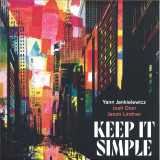
Keep It Simple!
That's what Tony Allen told me, whether on stage, in the recording studio or when we were working together on the album "The Source"(Blue Note 2017) in my studio. Obviously, if he repeated it at will, it's because it's so difficult, to express the essential, not to scatter, over-play, over-arrange. So natural for him, so constraining for others! For years he pushed us, the members of his group to develop our projects. I had something in mind, necessarily with him, unfortunately his unexpected demise decided otherwise.
It took a moment to accept his departure, to accept being a voice, to find a new path. The desire to continue the work started together, that of mixing styles, sounds to appropriate them and create new, authentic. The desire also to meet new people, another energy.
After composing music for this project, I asked my friend Ben Rubin, musician and producer to help me record it. I found in NYC what I was looking for, a sense of urgency, that of doing, generous and committed musicians. I knew Jason Lindner, a musician that I have been following for a long time and he was the first person I thought of for pianos and synthesizers. He has this ability to find new and powerful sounds, with a direct and unadorned playing. For the drums, I didn't especially thought about a musician whose playing could come close or far to Tony's. Ben suggested Josh Dion to me, I've been following him since his "Paris Monster" project, I love his ability to make his drums sound like a new instrument by playing the bass synth with his right hand, that forces him to keep it simple! He also plays 2 tracks in drum/synth mode on the album.
I'm also happy that he agreed to sing a song on this album.
So we recorded at the Figure8 recording studio in Brooklyn, Eli Crews providing the sound recording, we decided with Ben to create a powerful and assumed sound from the take. Many biases on the tones, whether on the drums and the keyboards. Back in my studio in Paris, I continued to search, to dig while recording additional saxophones, percussions and keyboards.
I met Tchad Blake during a week-long mixing seminar. His work on the album on is radical.
Keep it simple?
Difficult but I try to remain so on all the phases of evolution of this project, from writing to production, in the improvisation parts. Where I feel it the most is in the immediate joy of playing with Jason and Josh, of tweaking a few sounds in my studio to create the unexpected, surprise in the structures, authenticity. Simple as the desire to go towards something essential, to seek oneself, to find oneself, to doubt but also to invent oneself.
If someone would have told me years ago, when I started the label, that one day I would be releasing music by Ernesto Djédjé, the king of Ziglibithy himself, I would have personally driven them to the closest psychiatric institute such is the magnitude of the artist and his iconic tune “Zighlibitiens”.
The star of Ernesto Djédjé started rising in the late 60s, when he became the guitar player and leader of Ivoiro Star, founded by Amédée Pierre, star of Dopé, the leading musical style at the time. Annoyed by the “congolisation” of the Ivorian music that was taking place within the band, Ernesto left the group and emigrated to Paris in 1968 to record his first few singles arranged by Manu Dibango and influenced by Soul, Rhythm & Blues and Jerk. Those recordings reflect the musical mood at that time which was dictated by two musical trends within the Ivoirian scene: Traditional music, embodied amongst others by Amédée Pierre on one hand and imported music from the States, Cameroon and Zaïre on the other. And while the first trend was generally neglected, the youth fully embraced the second and as a result bands such as „Les Black Devils“, „Djinn-Music“, „Bozambo”, “Jimmy Hyacinthe”, shot to stardom overnight by recording mainly funk and disco music. It is within this context that Ernesto would draw the inspiration for a future formula.
Returning to Côte d‘Ivoire in 1974 Ernesto began looking for like minded musicians to form the mighty “Ziglibithiens”. Diabo Steck (drums), Bamba Yang (keyboards & Guitar), Léon Sina (Guitar) and Assalé Best (chef d´orchestre and Saxophon) would become the core of the group and together with Ernesto they began thinking of ways of combining the rhythms and chants of the Bété people and fuse them with Makossa, Funk and Disco and create a musical style that was both Ivorian and International. He called his experiment Ziglibithy and his first two albums, immortalised at the EMI studios in 1977 in Lagos and released on the Badmos label, took West Africa by storm turning Ernesto Djédjé into an icon overnight and one of the legends of African music.
Ernesto Djédjé died in mysterious circumstances on June 9th, 1983 - at the age of 35 - shocking the whole Ivorian nation. And although the end came abruptly, it didn’t come soon enough, and Ernesto had time - within 5 albums - to cement his legacy as one of the most innovative artists the Ivory Coast ever produced.
The song Zighlibitiens, brought to Colombia by an aeronautical mechanic in the early 1980, would become a huge hit on the Caribbean Coast. Renamed “El Tigre” by locals soundsystem operators - certainly due to the Badmos logo - that particular song would reach legendary status in Barranquilla and Cartagena. Setting fire to uncountable local parties, it has become one of the most sought-after Album in that part of the world. And so, while Ziglibithy has mostly disappeared from the airwaves of its country of birth, on the other side of the Atlantic, its fire continues to shine bright.
- 1: Can I Sing With You? Ft. Sidi I.b
- 2: No Hay Pescado Ft. Sidi I.b., El Latigazo & Mame Samba
- 3: Neuron Landfill (Vertedero De Nueronas)
- 4: Smelk
- 5: The Light Mandem Forward Ft. Kiki Hitomi W/ Javier Afonso
- 6: Guidance & Healing Ft. Mame Samba
- 7: Monsanto Ft. Troy Harkin*
- 8: Mike Input At Loud Speakers Corner*
- 9: Bus Meter Ft. Zeeteah & Sidi I.b
- 10: Assuage No.9 Ft. Zeeteah
Helmed by Dave Watts aka D.WattsRiot (Fun-da-mental), the debut KingL Man album, ‘Headonix’ is beat-laden shout out in response to the perpetual state of war we seem to find ourselves at. Outrage and disgust, love and hate, history and presence.
Contributions come from four continents.
Fresh on the scene is Senegalese vocalist Sidi I.B., who arrived on Canarian shores with two hundred other compatriots, cold, wet and hungry after seven days at sea with nothing but his future in his hands.
Temporarily housed at the infamous migrant holding centre in Las Raíces, Tenerife, the studio environment provided an avenue of relief from the inadequate conditions at the overcrowded camp.
Also from Senegal, living in Santa Cruz de Tenerife, is rapper Ibrahima El Latigazo who delivers his lyrics in French, Wolof, Spanish, English & Sérère. Rounding up the Senegalese contingent is Mame Samba, a group that hold the spirits close when performing. Their contribution is from recording sessions they had with François R. Cambuzat & Gianna Greco (Putan Club / Ifriqiyya Electrique).
Kiki Hitomi (Waq Waq Kingdom/King Midas Sound) returns to the fold, exhaling positivity with Canarian multi-instrumentalist Javier Afonso (Grenouille). The Canarian faction also includes violinist Mónica Viñoly, Dani Garcia (Lagoss/Tupperwear) and Vakawuare. Further guests include percussionist Miroca Paris (Cesária Évora/Madonna); Hamid Mantu (TransGlobal Underground);
Ramjac (Dub Colossus), drums and percussion respectively.
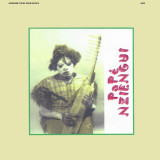
Kadi Yombo, published in 1989, is the most successful album in the quest for a fusion between tradition and modernity in Bwiti harp music of the Tsogho people of Gabon. Combining beating rattles with a layer of synthesizers, Papé Nziengui blends in a contrapuntal dialogue characteristic of harp playing: male song in appeal and female choir in response, male voice of the musical arc and rhythms of female worship. But above all it’s Tsogho ritual music and modern studio orchestration. The result is an initiatory itinerary of 10 musical pieces which are all milestones likely to be simultaneously listened to, danced, meditated on, and soon acclaimed. In the years since, Nziengui has traveled he world from Lagos to Paris, from Tokyo to Cordoba, from Brussels to Mexico City to become a true icon, the emblem of Gabonese music.
Like Bob Dylan, "electrifying" folk and Bob Marley mixing rock with reggae, some purists have criticized Nziengui for having distorted the music of harp by imposing a cross with modern instruments. They even went so far as to claim that Nziengui was just an average harpist covering his shortcomings with stunts that were only good for impressing neophytes; like playing a harp placed upside down behind his back or playing two or three harps simultaneously. Sincere convictions or venomous defamations, in any case, Nziengui never gave in to such attacks, imposing himself on the contrary to pay homage to the elders (Yves Mouenga, Jean Honoré Miabé, Vickoss Ekondo) while instructing the maximum of young people. He is thus the promoter of many young talents, the most prominent of which is certainly his nephew Jean Pierre Mingongué. In a conservative society where the sacred is confused with secrecy, exposing the mysteries of Bwiti in broad daylight can be punished by exclusion or even execution.
Papé Nziengui has always claimed that he faces such risks because he never felt enslaved to a community that governs his life, that regulates his conduct, that has a right of censorship over his activities. Like Ravi Shankar, the famous sitarist, Papé Nziengui is a man of rupture but also of openness, a transmitter of culture. As proof, he has established himself in Libreville, Gabo’s capital, as the main harpist for sessions and concerts, accompanying the greatest national artists (Akendengué, Rompavè, Annie-Flore Batchiellilys, Les Champs sur la Lowé, etc.) as well as foreign artists (Papa Wemba, Manu Dibango, Kassav', Toups Bebey, etc.). In 1988, he was the first harpist to release an album in the form of a cassette produced by the French Cultural Center (Papé Nziengui, Chants et Musiques Tsogho). At the same time, he created his own group (Bovenga), combining traditional music instruments (musical bow, drums, various percussion instruments, etc.) in the framework of a true national orchestra, which gave the first concert and the first tours of a traditional music that was both modern and dynamic, thus "democratizing" the harp, to the dismay of certain purists.
On the other hand, in modern music, dominated by the logic of profit or even commercialism, artistic creation must often be adjusted for a specific audience based on reason rather than heart. But instead of allowing himself to be distorted, Papé Nziengui has always tried to produce music that is not a caricature, worthy in its expression as in its content, of the sacredness and transcendence of the music of the Origins. This is what makes Nziengui not only the musician, but the man someone whose age hasn’t altered any of his freshness or authenticity
Kadi Yombo, published in 1989, is the most successful album in the quest for a fusion between tradition and modernity in Bwiti harp music of the Tsogho people of Gabon. Combining beating rattles with a layer of synthesizers, Papé Nziengui blends in a contrapuntal dialogue characteristic of harp playing: male song in appeal and female choir in response, male voice of the musical arc and rhythms of female worship. But above all it’s Tsogho ritual music and modern studio orchestration. The result is an initiatory itinerary of 10 musical pieces which are all milestones likely to be simultaneously listened to, danced, meditated on, and soon acclaimed. In the years since, Nziengui has traveled he world from Lagos to Paris, from Tokyo to Cordoba, from Brussels to Mexico City to become a true icon, the emblem of Gabonese music.
Like Bob Dylan, "electrifying" folk and Bob Marley mixing rock with reggae, some purists have criticized Nziengui for having distorted the music of harp by imposing a cross with modern instruments. They even went so far as to claim that Nziengui was just an average harpist covering his shortcomings with stunts that were only good for impressing neophytes; like playing a harp placed upside down behind his back or playing two or three harps simultaneously. Sincere convictions or venomous defamations, in any case, Nziengui never gave in to such attacks, imposing himself on the contrary to pay homage to the elders (Yves Mouenga, Jean Honoré Miabé, Vickoss Ekondo) while instructing the maximum of young people. He is thus the promoter of many young talents, the most prominent of which is certainly his nephew Jean Pierre Mingongué. In a conservative society where the sacred is confused with secrecy, exposing the mysteries of Bwiti in broad daylight can be punished by exclusion or even execution.
Papé Nziengui has always claimed that he faces such risks because he never felt enslaved to a community that governs his life, that regulates his conduct, that has a right of censorship over his activities. Like Ravi Shankar, the famous sitarist, Papé Nziengui is a man of rupture but also of openness, a transmitter of culture. As proof, he has established himself in Libreville, Gabo’s capital, as the main harpist for sessions and concerts, accompanying the greatest national artists (Akendengué, Rompavè, Annie-Flore Batchiellilys, Les Champs sur la Lowé, etc.) as well as foreign artists (Papa Wemba, Manu Dibango, Kassav', Toups Bebey, etc.). In 1988, he was the first harpist to release an album in the form of a cassette produced by the French Cultural Center (Papé Nziengui, Chants et Musiques Tsogho). At the same time, he created his own group (Bovenga), combining traditional music instruments (musical bow, drums, various percussion instruments, etc.) in the framework of a true national orchestra, which gave the first concert and the first tours of a traditional music that was both modern and dynamic, thus "democratizing" the harp, to the dismay of certain purists.
On the other hand, in modern music, dominated by the logic of profit or even commercialism, artistic creation must often be adjusted for a specific audience based on reason rather than heart. But instead of allowing himself to be distorted, Papé Nziengui has always tried to produce music that is not a caricature, worthy in its expression as in its content, of the sacredness and transcendence of the music of the Origins. This is what makes Nziengui not only the musician, but the man someone whose age hasn’t altered any of his freshness or authenticity
Kadi Yombo, published in 1989, is the most successful album in the quest for a fusion between tradition and modernity in Bwiti harp music of the Tsogho people of Gabon. Combining beating rattles with a layer of synthesizers, Papé Nziengui blends in a contrapuntal dialogue characteristic of harp playing: male song in appeal and female choir in response, male voice of the musical arc and rhythms of female worship. But above all it’s Tsogho ritual music and modern studio orchestration. The result is an initiatory itinerary of 10 musical pieces which are all milestones likely to be simultaneously listened to, danced, meditated on, and soon acclaimed. In the years since, Nziengui has traveled he world from Lagos to Paris, from Tokyo to Cordoba, from Brussels to Mexico City to become a true icon, the emblem of Gabonese music.
Like Bob Dylan, "electrifying" folk and Bob Marley mixing rock with reggae, some purists have criticized Nziengui for having distorted the music of harp by imposing a cross with modern instruments. They even went so far as to claim that Nziengui was just an average harpist covering his shortcomings with stunts that were only good for impressing neophytes; like playing a harp placed upside down behind his back or playing two or three harps simultaneously. Sincere convictions or venomous defamations, in any case, Nziengui never gave in to such attacks, imposing himself on the contrary to pay homage to the elders (Yves Mouenga, Jean Honoré Miabé, Vickoss Ekondo) while instructing the maximum of young people. He is thus the promoter of many young talents, the most prominent of which is certainly his nephew Jean Pierre Mingongué. In a conservative society where the sacred is confused with secrecy, exposing the mysteries of Bwiti in broad daylight can be punished by exclusion or even execution.
Papé Nziengui has always claimed that he faces such risks because he never felt enslaved to a community that governs his life, that regulates his conduct, that has a right of censorship over his activities. Like Ravi Shankar, the famous sitarist, Papé Nziengui is a man of rupture but also of openness, a transmitter of culture. As proof, he has established himself in Libreville, Gabo’s capital, as the main harpist for sessions and concerts, accompanying the greatest national artists (Akendengué, Rompavè, Annie-Flore Batchiellilys, Les Champs sur la Lowé, etc.) as well as foreign artists (Papa Wemba, Manu Dibango, Kassav', Toups Bebey, etc.). In 1988, he was the first harpist to release an album in the form of a cassette produced by the French Cultural Center (Papé Nziengui, Chants et Musiques Tsogho). At the same time, he created his own group (Bovenga), combining traditional music instruments (musical bow, drums, various percussion instruments, etc.) in the framework of a true national orchestra, which gave the first concert and the first tours of a traditional music that was both modern and dynamic, thus "democratizing" the harp, to the dismay of certain purists.
On the other hand, in modern music, dominated by the logic of profit or even commercialism, artistic creation must often be adjusted for a specific audience based on reason rather than heart. But instead of allowing himself to be distorted, Papé Nziengui has always tried to produce music that is not a caricature, worthy in its expression as in its content, of the sacredness and transcendence of the music of the Origins. This is what makes Nziengui not only the musician, but the man someone whose age hasn’t altered any of his freshness or authenticity
The Groove Boys Project have been members of the Amsem family for a long time, so their first record for the label comes as no surprise.
Cooked in their beautiful parisian Studio 937, the five tracks off their «Something Special» EP feels like a per- fect introduction to those who haven’t had the chance to experience their soulful and passionate live shows. This record will take you on an ecstatic journey from Chicago to Paris, from peak-time classic house to deeper, early-morning cuts, bringing in their friends and collaborators Lucas Piette and Rawai¨ along the trip, culminating in a epic Drum’n’Bass number that should set many dancefloors ablaze.
About the label
The story started 8 years ago, when Gabriel Mester and Marc-Antoine Rousseau met in high-school, despite being serious students, they quickly realized that they were together sharing a common passion: a love for electronic music, as well as a nai¨ve dream: creating their own independent music label.
During this period, the Mesma Records’ adventure began, a demanding and adventurous Parisian-New York based label combining electronic and experimental music.
A few years later, Amsem Records was born. This second label was initiated by Gabriel and Marc-Antoine, joined on occasion by his’ brother, Constantin. This label aims to be a real living laboratory of parties and creativity with a simple goal: celebrating music that brings together with unstoppable grooves and moments of collective madness, accompanied by a return to the roots of the club culture they loved so much.
For two years now, Amsem Records has been developing a plural and rich universe through each of its releases (vinyl and digital), visuals, clips and Parisian evenings.
The label began producing its events at the Nouveau Casino, which was immediately suc- cessful. On the strength of its reputation, other clubs such as Rex Club and
Badaboum then agreed to open their doors to them. Amsem is determined to continue crossing the threshold of the best clubs in France and Europe.
Pushing the doors of creativity even further, Amsem arrived with fresh energy and original ideas. Its latest project? An official brand of clothing. Designed in New York, made in Portu- gal and screen printed in Paris, this brand makes the label the herald of music that can be danced as much as it is worn.
As a musician, life is often lived on the road. Each city leaves its imprint on the artist as they develop their craft. Touring, recording, and keeping up with friends and family took Oddisee beyond his hometown of Washington DC to Australia, Europe, Asia, Africa, and South America. From cities like East Africa's Khartoum in Sudan, to cosmopolitan jaunts like Paris & Tokyo. The influence of these travels can be heard on every one of the 24 tracks included on "Traveling Man". Each track was produced while Oddisee stayed in the city it was titled after. The result is a 24 city sonic tour of the world. Listen as Oddisee guides you through his instrumental journey around the globe. Visit the lonely winter streets of Detroit, festive San Francisco, hypnotic Khartoum - or let your swagger loose with the theme music of Chicago or the bounce of South Central. Oddisee sees the world, so that you can hear it.
Lancaster had initially cut his musical teeth with the avant-garde on New York’s Lower East Side in the 1960s (famously on sessions with pianist Dave Burrell and drummer Sunny Murray) and in Paris during the ‘70s after an appearance at the Actuel festival but, throughout his career, his path was built around community engagement, positivity and “the Philly jazz sound, Germantown style.” He became an ambassador for the music of the City Of Brotherly Love, starting his own Dogtown label, helping launch the Philly Jazz imprint and campaigning tirelessly to improve the circumstances of the city’s street musicians. Lancaster’s sessions for Black Fire were planned following a gig at Caverns Jazz Club in Washington DC. “Jimmy Gray of Black Fire and I originally met during the ‘riotous blisters’ of the late Sixties there,” explained Lancaster. “We became the best of friends.” Backed by a band of Philly musicians including percussionist Keno Speller and Baba Robert Crowder (drummer for Olatunji and Art Blakey), the album also featured the Drummers From Ibadan led by Tunde Kuboye, another influential figure dedicated to community jazz with whom Lancaster had bonded while teaching in Lagos. The result was a free-flowing set of spirituality and positivity, built around full band groove workouts, solo pieces and heavy African roots. “We had big fun documenting this music,” remembered Lancaster. The message of the album remains as relevant today as ever, “I dedicate this album to all African Americans in the USA. To the youth, I ask ‘What does it profit a man to gain the whole world and lose his soul?’”
Born in Cameroon, Vicky began banging the drums at the age of 9. By 13 he had moved onto bass and within a couple of years he was playing every night from 10pm to 5am in the Castel Douala Cabaret. At the age of 19 Vicky moved to Paris to study Banking and Commerce and cram in even more music. He took classes at Épinay-sur-Seine Conservatoire music school and it was here that he met Bandmates of his Dikalo project.
Word spreads and he soon becomes one of the most sought after bass players in the Afro arena. His session work features on many scenes stars, Manu Dibango, Eko Tala AM, Kemayo, Sammy Massamba, Toto Guillaume and many more. A chance meeting with the Gibson brothers also see him play on two of their hit albums. In the 80's Vicky moved to the US for spell and excels as a session bassist and touring musician.
We pick up the story in 1981. With his stature as a musician and bass player riding high he takes a detour to Nigeria to record with the Afrodisia label in Lagos. The "Thank U Mamma" album is the result. It is repressed for the first time, here in 2018 on the revitalised Afrodisia label.
Musical proceedings open up with the heartfelt ode to his mother "Thank U Mamma", smooth pop meets afrobeat boogie. "Marina Drive" slows things down with its smoldering jazz. Side Two opens with "Its Not Serious" a catchy vocal number underpinned with funky guitars and striding basslines. "Stormy Rain" is lazy guitar jazz swansong. We close off the album with the ever so funky "You". Slick funk grooves powered along with a dose of slap bass. As a side note Vicky actually plays left handed but with a "upside down" right handed bass. This upside-down precursor making his effortless slap playing even more impressive.
Vicky went on to record a two other albums and still tours and plays as an ever-in-demand session musician.
Up and away / To your journey to the sun / Drink your rocket juice / Fly away (Hey, Shooter).
High up in the skies, amongst the clouds, Rocket Juice & The Moon was born. Literally. It happened back in 2008, when Damon Albarn, Flea and Tony Allen convened on the same Lagos flight, to play and exchange musical ideas in that city as part of the Africa Express collective. Relishing a shared enthusiasm for one another's work, and bonding immediately, there and then the triumvirate laid down the blueprint for Rocket Juice.
Still, more than a year passed before conditions were set for three weeks together at Albarn's West London studio, recording and refining two-dozen startlingly out and deeply funky instrumental grooves. The next stage was to invite onboard some extremely talented friends, with further sessions in Dallas, New York, Chicago and Paris... Erykah Badu, no less, queen of contemporary soul. Three companions from Africa Express: Malian singer Fatoumata Diawara, whose debut album has topped World Music charts since its release last Autumn; her multi-talented compatriot Cheick Tidiane Seck, whose prodigious keyboardism has lit up releases by artists ranging from Youssou N'Dour to Hank Jones; the young, Ghanaian rapper M.anifest, quizzically existential, switching seamlessly between Twi and English. And the Hypnotic Brass Ensemble, long-time stalwarts in the Honest Jon's set-up — since one of the team discovered them busking near the shop in Portobello Road, on his lunchbreak — with a second album for the label due in May... Finally, the tracks were dispatched for mixing to Berlin, to be meticulously honed, polished and envenomed by Mark Ernestus, one half of the legendary Basic Channel and Rhythm & Sound partnerships.
The result is Rocket Juice & The Moon — out March 26, 2012, on Honest Jon's Records — a triumphant exploration and proliferation of kinetic Afro-funk rhythms: organic, exuberant, communal music-making, evidenced by the project's live debut on stage as part of the Honest Jon's Chop Up in late 2011, which hit London, Marseille, Dublin, and Cork to such great acclaim (witness the flurry of smart-phone film-clips uploaded in the days thereafter).
From the inaugural bars — that absurdly funky slice of instructional timekeeping, 1-2-3-4-5-6 — the liquid pulse of Fela Kuti's classic recordings drives the action through a suite of 18 shape-shifting compositions. The greatest drummer in the world has never sounded so good as he does here. His intricate cross-patterns jostle and lock with Flea's nimble, rumbling bass riffs. Joined by Seck on There and Extinguished — 'when you dispose of something burning, be sure it's out' — Albarn's keyboards spray synth fusillades up top, over, and under... splicing into the mess of wires running between the freaked Afro-disco of William Onyeabor and the space-jazz-moog of Sun Ra. The HBE brings extra intensity and drama to Leave-Taking — likewise Flea's trumpet to Rotary Connection — teasing out the haunting melody coiled in the mix.
Where the best of vintage Afrobeat sides sustained their concentrated energies over the course of sprawling, marathon jams, RJ & TM manages something altogether different: the group bottles the idiom into capsules of funk... and real songs. Beautifully buoyed by Erykah Badu's unmistakable vocals, Hey, Shooter brilliantly traverses metaphysical spaceways sans any semblance of noodling. Lolo and Follow-Fashion — featuring the open-hearted sensuality of Diawara's singing, M.anifest's quick, brawny science, and more brass blasts — play like its musical cousins or codas. Indeed, the album's shrewd sequencing creates the composite effect of tracks working both individually or within the context of an extended song-cycle.
The lovely ballad, Poison, is bittersweet and ruminative: 'If you're looking for love, beware the signs / They will paralyze you one by one / Poison, it will only break your heart.' Down-tempo and dubby, Check Out and Worries amplify the range of styles and moods. And by the time of Fatherless — a chugging Afro blues that evokes John Lee Hooker lost in Lagos, one gets the sneaking suspicion there's very little outside the reach of this collective's inventive musical grasp.
There is, in fact, a palpable openness pervading Rocket Juice & The Moon — the sense of a limber willingness to follow creative impulse — right down to how the group acquired its name. When Ogunajo Ademola — the Lagotian commissioned to do the album's cover artwork — dubbed his submission 'Rocket Juice & The Moon', it quickly morphed into the formal name of the project, like trying to hold onto mercury.
Surely, the stars above also approved.
- 1