Originally available as a tour only tape for the bands Asian tour 2024 (Japan, Malaysia & Indonesia). Limited retail quantity available.
Plátano Tapes is a collage of unreleased studio recordings and free-flowing jams from the band’s rehearsal space in a banana plantation.
Recorded, mixed and mastered at the bands studio between 2019-2024 in Tenerife, Canary Islands
quête:lagos
- Lagoss Side A1. Conan El Barbudo
- A2: Hay Tiempo Pa Comer
- A3: El Burro Salchicha
- A4: La Bandunga
- A5: Conventional Family
- A6: Planeta Palmera Y Su Cabra
- A7: Siempre Nos Quedará Semarang
- A8: Plátano Sauvage
- Babau Side B1. Geoshredder
- B2: Tidal Field
- B3: Stone Cold Thunder Dub
- B4: Dulugu Ganalan
'exclusive tour tapes' limited quantity available for distribution
Limited split tape collaboration between like-minded pranksters Lagoss & Babau. Co-released by Sucata tapes & Artetetra in July 2025.
‘’The chars were emerging as some chunk of makeshift swamp coolers blasted the soil surrounding our motorbikes. Sunburn vapours floating grey all around, licking our necks with heavy hazy tongues. Just oppressive and gross. Blah.
Someone says heat waves are among the most dangerous natural hazards. I guess that the magnetic tides did not help at all. For sure, recreational sleep deprivation aside, it was days of relentlessly documented tipsy headaches, thermometric cicada noises and weird-ass hallucinations. It is what it is. The age of earthquakes. We drink from our black plastic bags with a straw pushing a bit of oxygen thru our reptile brains. Just half a pack of synthetic tobacco for the ride. No internet. Whatever.
She looks at me behind the war metal glasses and the silicone frog mask high on desert dust. Sweaty pools on her shoulders. Eyes purple with adrenaline. Map on the scratched screen. “It says that at this point we should be hearing that fucking flute”. We stop amidst the geysers. We can see the monoliths and stone gods ready to eat up all the solar storms and the thunder. Towards the horizon, second moon is up. Damn. Water rises to our knees, green with bloating sounds. Just what we needed. We’re stuck. "Turn up the radio. Let’s hope it lasts five minutes." After trashing a bunch of fake subtropical signals, the radio plays a flute. She takes off the mask and explodes in a grin: “This is it man, we made it! No man’s land. The real fucking thing.” I light one up and let the sight get blurred: “You betcha.”’’
- A1: Quasimode - High Tech Jazz (Paul Murphy 45 Edit)
- A2: Christian Prommers Drumlesson - Trans Europa Express
- A3: Pamela Wise - Gibraltar
- A4: Jazzbois - Nutville (Live At Ninety One Living Room)
- A5: Antonio Hart - Sticks
- A6: Saimaa - Super Strut
- A7: Clementine - Sandalia Dela
- A8: Barry Adamson - - Miles
- B1: Version City Session - Riot In Lagos (Slowly Version)
- B2: 3Io - Born Slippy Nuxx
- B3: Giacomo Gates - Is That Jazz
- B4: Frank Morgan &Amp; Bud Shank - Quiet Fire
- B5: Blue Mode - Jungle Strut (Feat Chip Wickham)
- B6: Mike Ledonne Groover Quartet Plus Gospel Choir - Bridge Over Troubled Water
Jazz Room Head Honcho Paul Murphy kept hearing all these fab versions of some of his favourite tunes.
He couldn't release them all, a year is just not long enough so it was time to put together the first Jazz Room Records Compilation, entitled JAZZ ROOM PRESENTS: COVERS. Snappy & to the point.
Some exclusives and first time Vinyl releases on this Double Vinyl album, ranging from the Psychedelic Jazz Fusion of Helsinki Collective "Saimaa" with their epic LIVE version of the Deodato Classic "Super Strut" to the Japanese Shibuya Jazz Artistry of Quasimode with a Jazzy take on the Galaxy2Galaxy 90's Techno Floor Filler. Jazz meets Dub in the "Slowly" produced "Riot In Lagos" and some finger snapping Cool New York Vibes on Giacomo Gates Hip To The Trip version of Gil Scott-Heron's "Is That Jazz".
There's even a Gospel meets Soul Jazz tribute to Simon and Garfunkel. Oh yeah. Did we say there's a Chip Wickham exclusive too?
Louie Vega says: "This is an Awesome Compilation!"
d 04: Jazzbois - Nutville (Live At Ninety One Living Room) feat. Dom Beats
Manchester’s sferic label return with a debut from ungoogleable Greco-Canadian anomaly Anastasia Patellis, aka Any, featuring additional instrumentation and co-production from Klein/Lolina cohort LA Timpa. It's a set of "squat pop" experiments that thread nocturnal soundscaping and pop hooks through hallucinated outlines written on harp and broken synth.
Greco-Canadian artist Any was bedding down in a Cretan squat when the album's title, μέγα ελεός in Greek, boomed from loudspeakers next to a bonfire, courtesy of a midnight Orthodox church sermon. Moving to the sunny, ancient island had provided her with an escape from big city burnout, but she ended staying far longer than expected - years rather than months. It’s this prolonged sense of suspension that provides the album with its wandering spirit, using harp as an emotional core.
Listening to Breton music made on the Celtic harp from artists like Kristen Noguès and Alan Stivell, Any sketched out song outlines that were then tweaked by Lagos-born, Toronto-raised journeyman LA Timpa, who flew out to Crete last summer to put his idiosyncratic stamp on the record. Like the dusty songs on Astrid Sonne's 'Great Doubt, ‘MEGA MERCY' sounds as if its drum line was duped on dictaphone from an old beat tape, then spliced with field recordings and vocals.
Half sung, half spoken, she murmurs around the beat, not exactly over it, adding circuitous, boss-tuned harp twangs when necessary. It's music that's spartan rather than lo-fi; a sort of bare-bones reaction to electroacoustic experimentation and outsider folk. It makes perfect sense that an artist as thematically on-point as LA Timpa is involved - Any's instrumental vamps are roughly pasted around pinprick boom-bap snaps and crunchy foley denouements, eventually cooled into contemplative Nala Sinephro-esque meditations.
Sections bring to mind Tirzah's most psychedelic early excursions, with dry asides set against a slurping, off-axis beatbox loop and distant, barely-audible synths. The record is tied up on 'WEATHER LIKE TIDE', an instrumental callback to the opener, book-ending the album with a melancholy, humid kinda ambient folk, purposefully melting the timeline.
Following the great success of BBE’s 2023 reissue of Remi Kabaka’s 1976 lost masterpiece 'Son of Africa' comes yet another neglected and hitherto-hidden slice of pure Kabaka goodness: 1980’s 'Roots Funkadelia'. While the 1976 album was recorded at Island Studios London, roots was recorded and mixed in L.A. in the midst of a golden period for the Motown studios, and the sheer quality of the mix shows in spades. An unexpected but welcome bonus is the appearance throughout of the ‘mean machine’- Motown artists the commodores’ brass section alter-ego. Released in 1980 on Polygram Nigeria with no international distribution deal, and lurking almost unnoticed in a handful of dedicated afro vinyl collections, this is the first-ever reissue outside Africa of an album that regularly fetches £500 plus on the ‘those who know’ market’.
A meeting of minds and bodies on a heady percussive trip with no clear destination, captured live at Espacio Cultural El Tanque in Tenerife. With both imaginary and lived in tropical sceneries coalescing the two units, both Tenerife's Lagoss and Kampala's Abagwagwa (aka Nihiloxica) find a common thread to disentangle cartographies. As if it was bound to happen. As it did.
Taking Abagwagwa's relentless barrage of polyrhythms as a starting point to jammin' excursions that never falter into self indulgence, brimming with ideas and spirits pulled from East African traditions, Free Jazz cosmologies, Dub tactics, urban sonic warfare and different strains of psychedelia through a vast array of drums, percussion, flutes, skewed synths, ecstatic vocals and electronic processing.Blessed with the xamanic drumming of João Pais Filipe on two tracks and feeling equally indebted to both bands' vision all the while commiting to a newfound sense of wonder, 'Island Slang' is a celebration that's truly alluring in its search for some sort of 'Universal Consciousness' - to quote Alice Coltrane - for which we're now invited to tag along. You are all welcome.
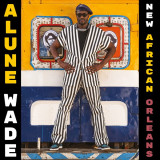
In his sixth and latest album “New African Orleans”, released by ENJA and Yellow Bird, bass guitarist and composer Alune Wade explores the multiple junctions between his native West African rhythms, the Afrobeat and juju rhythms from Lagos and the brass band repertoire immortalized in New Orleans. “I’m exploring a world that goes from my roots to the lost branches on the other side of the Atlantic,” explains the musician from Senegal. He has whittled down around 50 compositions – both original and standards - to a dozen which Alune recorded in Paris, Dakar, Lagos and New Orleans. “The idea first came to me during the Jazz à Gorée festival I organized back in 2014,” he explains. “It had me reflect on the notion of reversing the musical trip most people take from the United States to the African continent. I wanted to set out westward and begin a musical conversation with the best artists, both in Nigeria and the US.”
To achieve this, Wade has invited top artists from both sides of the Atlantic, including the Nigerian talking drummer Olaore Muyiwa Ayandeji, the percussionist Weedie Braimah and the jazz drummer Herlin Riley from New Orleans. The musical inspirations are equally transatlantic, ranging from Dr. John to Manu Dibango and Charlie Parker. But the 45-year-old also pays homage to his father who was a brass band star in his native Senegal back in the Sixties.
BACKGROUND
We only have a partial idea of the birth and remarkable development of the music born of the transatlantic slave trade. From Malinke ballads to Cuban son, from call-and-response patterns to field hollers and hip-hop, Yoruba rhythms to Argentinian tango, from Angolan percussions to the New Orleans brass band sounds… all have roots in Africa and a shackled migration that lasted four centuries. No more so than Congo Square in the Louisiana capital. In 2024, we mark the 300th anniversary of the implementation of the Code Noir which “gave enslaved Africans Sundays off to dance”. A drop in the ocean, but one which shows the importance of culture as a lifebuoy against this barbaric trade. As the Guadeloupian writer Daniel Maximin once claimed: “Our music guided us from the scream to the song, from dragging our chains to dancing.”
- A1: French Lesson
- A2: Nothing (Feat. Fleur De Mur & Georges)
- A3: Every Second (Feat. Mangabey)
- A4: My Bad (Feat. 4Tunat)
- A5: Play My Song (Feat. Oden & Fatzo)
- A6: Got To See The World (Feat. Lucile)
- A7: For Your Love
- B1: Ebelebe (Feat. Lauretta Yemoja)
- B2: Faubourg Saint-Denis (Feat. Contrecoeur)
- B3: Bad Girl (Feat. Fleur De Mur)
- B4: Zut De Flûte
- B5: Cool Uncle (Feat. Phat Kat)
- B6: Big Ben
- B7: Partir Tous Les Deux (Feat. Solitaires)
With French Lessons, Jeff The Fool delivers a dazzling display of musical diversity, exploring a myriad of styles and influences. From the melancholic rain of Paris to the warm rays of the Californian sun, each track showcases remarkable technical precision and infectious energy.
Set for release in 2025, this album stands out with its array of international guest artists such as Fleur de Mur, Oden & Fatzo, Mangabey, and Phat Kat. It brings together singers and rappers from Lagos, Detroit, and Atlanta, infusing the work with a unique cosmopolitan dimension. On compositions imbued with French accents, these artists lend their voices to traverse house, hip-hop, jungle, trap, and afro-soul. French Lessons is a true ode to innovation, illustrating Jeff The Fool’s determination to push genre boundaries and reinvent himself alongside talented collaborators. This album pays tribute to the electronic music scene while asserting his unique artistic identity.
Here, Jeff The Fool continues his creative journey, marked by a subtle blend of underground house sounds and more accessible grooves. Since his notable debut with the Pay Your House EP in 2018, he has consistently expanded the horizons of house music, skillfully combining soulful samples and deep rhythms, crafting tracks designed for the dance floor.
Building on the success of his 2022 album Russian Dolls, released under Nowadays Records and amassing millions of streams, Jeff The Fool continues to captivate house music purists while drawing in a broader audience. His live performances, intense and eclectic, blending house, techno, disco, and electro, have taken him to international stages, showcasing the breadth and richness of his talent.
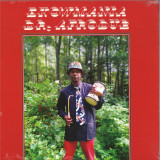
Seminal Afro-dub album "Dr. Afrodub" by Ghanaian Ekowmania aka Ekow Alabi Savage. The drummer, percussionist and singer who's played with Jimi Tenor & Kabukabu for more than 20 years explores the fields of classic Roots Reggae, Afro and Dub as well as uptempo modern African rhythms and ballads. This Jimi Tenor produced album is an expansion of Ekowmania's tribute song to Kwame Nkrumah (which is also released as 7" with different versions) and Tenor's electronic loops, which they developed into a full album in guitar player Lauri Kallio's country side studio in Kiikala, Finland. The album kicks off with a very heavy, club-ready and UK reggae-styled album mix of "Kwame Nkrumah", following up with 200% intensity on the voodooesque rhythm explosions of "Twerk Your Mind", then taking a 360 degree turn with the smoothness and laidback vibes of "Kiikala Reggae". Throughout its 9 cuts "Dr. Afrodub" always approach the balance of beautiful song writing and intensity in rhythm and melody, visiting the excellent and classically crafted 70's Roots tune "Dub Souljah", the upfront & tempo-fueled "Lagos Heavy" and ending with DJ Sotofett's mix of the albums ballad "Me Know".
CUT WITH EXCELLENCE BY TIMMION CUTTING LAB IN HELSINKI FINLAND.
Now and again, an album project with no home comes along out of the blue, demanding to be licensed and shared with the world.
It was unearthed on one of Paper's digging trips. BOM's album sounded like nothing else out there, only the future. Shrouded in mystery and country-of-origin unknown, Africa runs through its DNA, but sometimes mysteries are best left...
Ase - a Yoruba philosophy signifying the power that makes things happen and produces change; given to Gods, ancestors, spirits, humans, animals, plants, rocks, rivers, songs and prayers.
BOM takes influence from all corners of Africa and its diaspora, blending them with 25 years of Western electronic music into a melange of forward facing, leftfield afro futurism.
The album features one of Africa's brightest rising stars, Luka Productions (from Mali), cosmic poet Sirius Rush (UK) and master drummer & vocalist Felix Ngindu (DRC/Liverpool) for a journey into kaleidoscopic Afro-tech funk. Gqom, Shangaan electro and township funk rub shoulders with hip-hop, bass, deep house and dub for a psychedelic celebration of collaboration and possibility.
As geographical and musical barriers are broken down, BOM's 'Ase' album is leading the charge; London to Lagos, Lisbon to Sao Paulo, Bamako to Berlin, BOM captures the sound of the underground.
Yearly compilation series RADAR KEROXEN return with its fifth volume of themed based albums showcasing the talents and misfortunes of carefully selected musical projects based or connected with the Canary Islands.
With its first volume released in 2020 aiming to introduce and divulge adventurous Island based music, the Keroxen imprint now presents Vol.5 with a collection of tracks born out of an in-situ collective performance at the Keroxen Festival iconic venue - a massive disused gasoline tank near the harbour of Santa Cruz de Tenerife.
The Radar Drone Ensemble, as it was named for that night only, took advantage of the tank’s natural reverb to perform an improvised piece exploring the cavernous resonance corners inherent to the locale. The four artists then took a few months to compose a 9 track LP inspired by the site’s peculiar sound.
Gonçalo F. Cardoso kicks opens up the proceedings with two broody new tracks, in a style not heard since his 2015 album A Study of 21st Century Drone Acoustics. Doomed and menacing atmospherics brush shoulders with creepy and ethereal chants creating the perfect opening for this drone themed edition of Radar Keroxen. Eduardo Briganty (also from MINIATURa) follows with two equally deranged feedback based compositions letting his guitar riffs and distortions roam free. Afgan aka Mladen Kurajica (from GAF, Lagoss and Tupperwear) takes things further to an Angus MacLise inspired drone collage of mystic percussions, field recordings and electronic modular storms. Resonance aka Javier Perez wraps up the journey with his now trademark soothing synth compositions full of warm tones and blissful melodies.
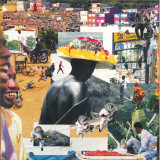
The album comes, as always, wrapped into a dizzying post-tropical collage artwork by Pura Marquez.
- A1: Santiago Silva Y Hnos - El Pito
- A2: Ñico Estrada - Salchicha Con Huevo
- A3: Beto Villena - Dejenme Ser Libre
- A4: Nilo Espinosa - Lindo Caballito
- A5: Pancho Acosta Y Sus Guaracheros - Heriberto Boogaloo
- B1: Melcochita Y Karamanduka - Peruvian Boogaloo
- B2: Kintos, Los - Sin Caña Y Sin Platanal
- B3: Joe Di Roma - Bugalú Cornejo
- B4: Santiago Silva Y Hnos - La Batea
- B5: Tito Chicoma - Pata Pata Pelada
- C1: Joe Di Roma - Popurri De Boogaloo
- C2: Melcochita Y Karamanduka - Peruvian Guajir
- C3: Melcochita Y Sus Astronautas - Rumba A Gogo
- C4: Sonora Casino - Guajira De Amor
- C5: Luciano Luciani Y Sus Mulatos - Guajira Cubana
- C6: Mario Allison Y Su Combo - El Boogashake
- D1: Coco Lagos Y Sus Orates - Tumba Coco
- D2: Kintos, Los - Bam Bam
- D3: Laghonia - Bahía O New Juggler Sound
- D4: Otto De Rojas - Soul Limbo
- D5: Sangre Joven - No Se No Se
- D6: Rayos Del Ande - Cadera Contra Cadera
These two vinyl records showcase the legacy left by the boogaloo movement in Peru between 1966 and 1975. They comprise twenty-two songs by seventeen artists who recorded on the remarkable local label MAG more than five decades ago and now invite today’s new generations to dance body and soul to these re-releases. You will find outstanding tracks by the likes of Tito Chicoma, Melcochita, Los Kintos, Otto Rojas, Coco Lagos among many others. MAG was one of the most important and prolific labels in Peru and, though it also was involved in releasing a lot of other types of music, its specialty was the tropical variety, which coincidentally, DJs and collectors seem to crave most. Peru developed a major boogaloo scene in the mid-60s, far from the genre’s place of origin, New York, where iconic songs like 'Bang Bang' and 'El Pito', fused soul and funk with Latin sounds, conquering dance halls and winning extensive radio airplay. The music trend soon spread to Caribbean countries and from there made the geographical leap to the city of Lima. 'El Pito', the collective creation of the Joe Cuba Sextet, was particularly popular. Shorn of overelaborate arrangements, the improvisation and spontaneity of the song resonated with the young generation who were avid for new music after the U.S. placed an embargo on the distribution of Cuban music. In July 1966, Rebeca Llave´s label, Disperú, released the 45 RPM of 'El Pito' (and Joe Cuba's LP), promoting the single in the most prestigious newspaper in the country: El Comercio. The press information stated that the record had sold seventy thousand copies in New York and fifty thousand in Los Angeles. That same year local dance versions by the bands of Alfredo Linares (MAG) and Lucho Macedo (El Virrey) were released, followed by another by the band of the Argentinean musician Enrique Lynch who was based in Peru (Sono Radio). These records were a hit with a new generation that embraced Lucho Macedo's band and the garage rock of Los York's with equal enthusiasm. Although Joe Bataan claimed that boogaloo was killed off at the end of the sixties by the labels and their veteran musicians (who conspired against the new generation of singers), Pete Rodriguez, Richie Ray and the Lebrón Brothers continued to release boogaloo records in Peru, but salsa music soon took over.
Repress
Samosa Records swings back into action for the summer months with Afrikano Vol. 1 - a scintillating four tracker EP from Various Artists which you will fall in love with on the first listen.
On the A-side, the always impressive Vagabundo Club Social kick things off with the enigmatically titled ‘Mr. Mista’ - a hypnotic, (almost calypso inspired) rhythmic explosion of Mibra guitar, whirling organ, horns and a wicked high end laser sweep. This is a pure chugger, folks. At a deceptive 120bpm it will have you dancing til dusk.
A2 brings us ‘Sweet Dance’ where C. Da Afro met De Gama: after a brief shuffle beat start (liberally peppered with rhythm guitar and organ stabs), the unusual duo make sure it’s all about the beat and horn breakdowns. Pre-drinks in Lagos, people watching and waiting for the night to start is the order of the day here. Cut this in half and it has ‘summer’ stamped right through it. Gloriously sweet.
On the B-Side, Atchoum & Grincheux take centre stage with ‘Demokoussé’. Les Inferno applies the special retouch here, and straight away we’re treated to a gloriously produced trip through breakbeat inspired beats, deep, throaty horns and an outrageously soaring sax. Oh you want more? Well try the addition of the gorgeous spiritual vocals that put the bow nicely on this African sizzler.
Finishing the EP on B.2 is Lego Edit and the aptly titled ‘Afromaniaco’. A pulsating, horn inspired shaker, this track grabs you right by the beat bone from the off and won’t let go. Lego Edit’s trademark deft touches and attention to detail is all on display here - sweet sounding African vocals weave in and out of the almost melancholy horn stabs and washboard beats. A soundtrack for one of those incredible sunsets, ‘Afromaniaco’ is the missing piece of this diverse jigsaw.
With Afrikano Vol. 1, Samosa Records has found the perfect accompaniment to what is hopefully a long, hot summer. So Samosa, so brilliant.
Few sounds transcend time and space quite like the driving pulse of Afrobeat, and few artists, for that matter, have defined their own domains quite as profoundly as Tony Allen—the very beat of Afrobeat itself. In 2011, Allen recorded one of his inimitable rhythmic dialogues as part of the Afrobeat Makers Series for the Parisian imprint Comet Records. Charged with the same fervour for uninhibited expression that defined his trailblazing career, Tony Allen’s drumming, free from convention and charting its own course, emanates a cadenced stream of consciousness that speaks its own truth.
If Allen’s language was his beat, then on this record, La BOA—La Bogotá Orquesta Afrobeat—becomes his latest and most fitting interlocutor. What began as a tribute—a song named after Allen—now feels like the prelude to a deeper dialogue in a meeting that seems more like fate than mere happenstance.
Led by producer Daniel Michel, the ever-evolving band has spent over ten years embodying the fluid, transformative spirit of Afrobeat, imprinting it with their distinctly Colombian sensibilities. From Casa Mambo in Bogotá, Michel’s Mambo Negro Records has become a cornerstone of Colombia’s underground scene championing Afro-Colombian and independent music throughout that time.
Across this LP, Allen’s recordings lay down the canvas upon which La BOA paints its own vision of Afrobeat—raw and expansive, locking step with his drum tracks while building around the unmistakable blueprint of their Colombian rhythms: exuding Caribbean beat, rolling with Pacific groove, and, above all, shaped by the rarefied air of the Andean melting pot that is Bogotá. What ensues is an enduring conversation that crosses eras, borders, even life and death—a celebration of the passing of the baton and the boundless nature of Afrobeat as a genre that refuses to settle. Where the beat of Lagos meets the brass of Bogotá, so too La BOA meets Tony Allen.
Recorded during a residency in Tenerife powered by Keroxen Festival and Discrepant back in 2020 - amidst the pandemic, no less -, the duo of Carlos Godinho and Mestre André return after their 'Mãe D'Água' debut on Sucata Tapes and an entry on Keroxen's Aquapelago Series through a split with tropical druids Lagoss. Mostly captured in performance through a quadraphonic system placed inside a huge disused fuel tank, with a few tracks recorded out in the open throughout the island, 'Lava Love' evokes the tectonic shifts and motions inherent in their title in 13 tracks.
Based around Godinho's percussive arsenal, from found objects to instruments from all sorts of cartographies, and André's electronic processing, each of these expositions is a point in a map that is created between the island's concrete and fictional existence, discarding any superficial overdubs and crescendos, to focus on the balming and transporting properties of sound itself. From stripped down vignettes like 'Bajamar I' & 'II', 'Chacho' or 'Tangana I' to hypnotic tapestries that confuse the real and imagined like 'Haha No!' or 'La Gomera', Banha da Cobra conjure a collective dream of the island.
All tracks performed and recorded by Banha da Cobra in a quadraphonic system inside an enormous fuel tank (Espacio Cultural El Tanque, Santa Cruz de Tenerife),except Bajamar I and II (recorded outdoors at cantonera de Bajamar, with Lagoss), Taganana I and II (recorded outdoors at Playa de Almáciga) and El Guachinche de Los Realejos (recorded outdoors at Playa de Castro, with Lagoss).
The genius that is Tony Allen departed this mortal world in April of 2020, but not without leaving an unmatched legacy that crossed oceans and borders, bridging cultures and forging a sound that changed music. As the drummer for Fela Kuti's revolutionary Africa 70, Allen's polyrhythmic drumming defined Afrobeat. His contributions as an artist and cultural ambassador left an indelible impact on every genre of popular music, from Techno to Jan to Rock and Hip-Hop. Tony Allen's music stands as an ongoing testament to the interconnected musical relationships and dialogues across the African diaspora, and their lasting influence on how we listen. For Jazz Is Dead producer Adrian Youngs, it is no small honor to share new music recorded with the drummer revolutionary Tony Allen.
- A1: Kpafuca - Live At Clout Africa Studio, Lagos
- A2: Beautiful Emilie - Live At Clout Africa Studio, Lagos
- A3: Dear Mr Cooper - Live At Clout Africa Studio, Lagos
- B1: Wisdom Behind The Smile (Cash)- Live At Clout Africa Studio, Lagos
- B2: Rhythm Is Love - Live At Clout Africa Studio, Lagos
- B3: Melissa
- B4: Femiliarise - Live At Clout Africa Studio, Lagos
- C1: Million Miles From Home- Live At Clout Africa Studio, Lagos
- C2: Rainy Saturday
- C3 19: 73- Live At Clout Africa Studio, Lagos
- C4: Afrosurrealismfortheladies- Live At Clout Africa Studio, Lagos
- D1: Hello Heavenly - Live At Clout Africa Studio, Lagos
- D2: The Funderlying Undermentals - Live At Clout Africa Studio, Lagos
- D3: The Bed's Too Big Without You
- D4: Below The Funk (Pass The J)
Keziah Jones is back with a new concept album entitled "Alive & Kicking" , recorded live in Lagos at Clout Africa Studio. Not only all his classics revisited 'live in studio" but including 2 brand new singles (studio) "Melissa" & "Rainy Saturday" , his first ones since 2013. And as bonus 2 covers (of Ricky James 'Below The Funk (Pass The J) & Police's 'The Bed's Too Big Without You).
Keziah Jones was born and raised in Lagos, Nigeria. Then has been living between Paris - he's been an established & cult musical brand in France - , London and Lagos. He is since the early 90's the creator of the blufunk movement, "a fusion between raw blues elements and hard, edgy funk rhythms. His catalog includes iconic songs such as Rhythm Is Love, Million Miles from Home… Keziah is known for his distinctive style of guitar playing, including his percussive right-hand technique.
- 01: Broken Steps / Tokyo Ch 1
- 02: Rebirth - Reboot / Tokyo Ch 2
- 03: Wired Grace / Tokyo Ch 3
- 04: Steel And Skin / Tokyo Ch 4
- 05: Legacy In Limbo / Tokyo Ch 5
- 06: Beyond / Tokyo Ch 6
- 07: System Error / New York Ch 1
- 08: The Dream&Apos;S Underbelly / New York Ch 2
- 09: Home Across Borders / New York Ch 3
- 10: Caught In A Paradox / New York Ch 4
- 11: Dilemma / New York Ch 5
- 12: Downfall / New York Ch 6
- 13: The Breaking Point / New York Ch 7
- 14: Guarding The Blue / Lagos Ch 1
- 15: Oceans In Translation / Lagos Ch 2
- 16: Political Obstruction / Lagos Ch 3
- 17: Inventing Change / Lagos Ch 4
- 18: The Plastic Purge / Lagos Ch 5
- 19: Seeds Of Tomorrow / Rio Ch 1
- 20: Fading Futures / Rio Ch 2
- 21: Something New / Rio Ch 3
- 22: Whistle Against The Storm / Rio Ch 4
- 23: We Are Human / Rio Ch 5
GC'mon Tigre announces their new instrumental project, Instrumental Ensemble - Soundtrack for Imaginary Movie Vol 1. This album offers an alternate view of cinematic music: a soundtrack composed for a fictional film using a challenging and inventive method. This project investigates an alternative approach in which music shapes and guides visual storytelling. It's the first in a series of albums dedicated to as-yet-unmade films, enabling listeners to explore music as a key component in cinematic narrative. The original story that inspired this music was created in partnership with a large language model, which was taught and instructed in substance and style to best fit the project's artistic concept. C'mon Tigre works with AI to achieve collaborative harmony while contemplating on the unavoidable future ahead. Each track on the album depicts a scene, delivering stories about humans juggling personal issues and contacts with advanced technology. The end result is a story told by sound and text, designed to immerse listeners in a multisensory universe.
War Head Constriction, a trio that defined an uncompromising afro psych-rock sound, began by playing shows that combined dark proto-metal influences from Black Sabbath and Deep Purple with afro-rhythmic elements. Their raw energy caught the attention of Afrodisia, a progressive record label, which signed them to release a single in 1973: "Graceful Bird" b/w "Shower of Stone." Unfortunately, the record was too experimental for mainstream audiences and quickly faded, leading to the band's breakup. Despite this, they played their biggest show opening for Fela & the Afrika 70 at the National Stadium in Lagos before disbanding. However, the members quickly moved on, continuing to form new groups.
Amenechi recalls jamming with Soga Benson, his cousin Skid, and Ben Bruce at St. Gregory’s, where they wrote and performed together. Benson, who had previously been in rival groups, became close with Amenechi once he joined Greg’s. Benson, a talented guitarist, joined Ofege for their second and third albums in 1975 and 1977. Despite this, his main group, Grotto, had yet to record. That changed when EMI Records, the leading afro-rock label, took interest in Grotto in 1977.
Odion Iruoje, A&R manager at EMI Nigeria, recalls his first encounter with Grotto, noting their cocky attitude and raw material. He sought to help them find an authentic sound, avoiding the typical influences of British rock or groups like Ofege. Iruoje was passionate about youth bands, seeing them as a fresh opportunity to experiment and create something unique. Despite skepticism from EMI Nigeria about the youth market, Iruoje felt confident that Grotto’s originality would shine through.