Belt drive DJ turntable with USB interface and recording software, black
Built-in USB port and phono preamplifier, for a high-quality and convenient digitization of analog vinyl records Plug & play: no driver installation required, unit is identified automatically
Sampling rates of 44.1 kHz and 48 kHz in stereo, resolution: 16 bits
Incl. software for recording and editing
2 speeds, pitch control ±10 %
Large start/stop button
Strobe lamp for exact speed adjustment
Adjustable anti-skating
Shock-absorbing feet
Switchable phono/line output
Delivery includes removable acryl dust cover, pick-up system, RCA and USB cable
USB 1.1 support
Suitable for Windows XP, Vista,7, 8, 10 and Mac OS X
the device can be connected via USB to the PC
Power supply: 115/230 V AC, 50/60 Hz
Power consumption: 8.00 W
Protection class: Protection class II
Power connection: Fixed Power supply cord with Euro plug
Frequency range: 20 - 20000 Hz
Drive type: Belt Drive
Brushless DC motor
Drive: Start time: 1 sec.
Stop time: 1 sec.
Speed change time: <1s 1khz 5cm/sec
Wow and flutter: <0.25 % WRMS
Rumble: 50 dB DIN B
Speed: 33 RPM, 45 RPM
Tonearm: S-shape with Cardan''s suspension
Length: 220
Overhang: 10 mm
stylus pressure: 3-4 g
output level: phono 1.5-3.6 mV/ 1 kHz 5 cm/sec
line 90-216 mV/ 1 kHz 5 cm/sec
Color: Black
Connections: Output: line/phono via Stereo RCA
Output: via USB B (W) mounting version
Pitchrange: ±10%
USB port: USB 1.1, Typ B
Material: Plastic
PC connect: via USB
Width: 45 cm
Height: 14.5 cm
Depth: 36 cm
Weight: 3.95 kg
Turntable platter
Material: Plastic
Diameter: 33 cm
quête:lam
Nuira is the joint project of Italian producers Giovanni Petruzzelli and Michele Lamacchia.
The 6-track strong mini LP called "For Unconventional Ears LP" is a homage to old school drum and bass and breakbeat, while also taking influences from more modern breakcore, culminating in beautiful and blissful breaky bassiness.
Hard-hitting yet romantic tracks invite you on a dreamy ride into the past, present and futu-re! A record to brighten any listener's horizon…
All tracks written and produced by Giovanni Petruzzelli and Michele Lamacchia
Mixed at acustic sound studio (Bari - IT)
Special thanks to Marco Squicciarini and Nicola Loporchio
System Error MM GmbH, Berlin, Germany, Earth © 2024
Sleep Now Forever is the second and final album released by Sorrow, the post-Strawberry Switchblade group fronted by singer Rose McDowall. Originally released in 1999 and long since deleted it is a cornucopia of pastoral, elegiac folk music, swirling atmospherics, hymnal compositions and above it all the alternating towering and fragile vocal performances of McDowall. Recorded in the late 90s with fellow band member and co-songwriter Robert Lee, Sleep Now Forever is the definitive statement by the now defunct group and Rose McDowall’s most complete long-form work to date.
Released through the group’s own Piski Disk Records, Sleep Now Forever was distributed by World Serpent which struggled through the early 2000s with financial woes, eventually folding due to bankruptcy in 2004. Due to the company’s troubles, Sleep Now Forever was never distributed widely and was a victim of the company’s failure. Released on CD only, original copies are now rare and only traded on second hand channels. Remastered by Mikey Young for a limited vinyl release, Sleep Now Forever will be released on April 20th on double vinyl format, with one side an exclusive etching by Glasgow artist Holly Allan.
Despite its rarity, Sleep Now Forever enjoys a firm cult following. The album’s textures are expansive, lush, deliciously detailed and celestial. Recorded in home study Velvet Hole by Rose McDowall and then-husband Robert Lee, the album enlists an array of players from the underground Neo-folk / industrial scene: Nigel McKernaghan (Uilleann pipes, Whistles), Susan Franknel (Bassoon), John Contreras (Cello) and Lawrence Frankel (Oboe, Cor Anglais). The eleven songs here revolve around McDowall’s instantly recognisable voice. Brought up singing in the Catholic Church, McDowall’s vocals are impeccable and angelic, particularly on tracks like Turn Off The Light where her experiences with religion are canted over soaring oboe and guitar backing. By far the most evolved and realised version of Sorrow’s vision, it feels somewhat criminal that music this beautiful could be lost to time until now.
McDowall’s lyrics throughout Sleep Now Forever deal frankly with mental health, depression, altered states, death and redemption. Wave upon wave of harmony drench each song, McDowal’s vocal multi-tracked and imperious. Opener Soldier benefits from Robert Lee’s use of the studio as instrument, summoning forth a lilting group performance of sparkling guitar and percussion that recalls the Velvet Underground. Mikey Love’s master treats the compositions to brand new frequency dynamics and space. Harmonium and string drones form the counter to McDowall’s vocal on Love Dies, a slow, lurching lament that feels transcendent. On Haunting, the arrangement is orchestral and aching, bleeding into Fear Becomes You, with chord and harmony structure that recalls the baroque sixties pop of West Coast Pop Experimental Art Band or the 60s psychedelic folk movement. A towering, beautiful statement, this elegy for times lost and moonlit-illumination is finally resurfacing from the darkness.
The debut album by the italian singer-songwriter influenced by soul, jazz, funk and hip hop.
Love Letters is the debut album of urban singer-songwriter Raffaella Zago. The first album of the Paduan-born, Milan-based artist contains ten tracks influenced by soul, jazz, funk and hip hop that deal repeatedly with the theme of love. In 2023, Raffaella Zago quickly attracted attention with her first official song, a nu-soul reinterpretation of "Money Trees", a song by the most praised rapper of the last decade, Kendrick Lamar, for which she composed a new melody. The other pieces of "Love Letters", in which she addresses people who have been or are part of her life, reaffirm her vocal, writing and composing skills.
- A1: I Swear, I Really Wanted To Make A "Rap" Album But This Is Literally The Way The Wind Blew Me This Time 12 20
- B1: The Slang Word P(*)Ssy Rolls Off The Tongue With Far Better Ease Than The Proper Word Vagina Do You Agree? 13 50
- C1: That Night In Hawaii When I Turned Into A Panther And Started Making These Low Register Purring Tones That I Couldn't Control .. Sh¥T Was Wild 10 29
- D1: Buypolodisorder's Daughter Wears A 3000® Shirt Embroidered 13 06
- D2: Ninety Three 'Til Infinity And Beyoncé 3 49
- E1: Ghandi, Dalai Lama, Your Lord & Savior J C. / Bundy, Jeffrey Dahmer, And John Wayne Gacy 10 15
- E2: Ants To You, Gods To Who ? 6 42
- F1: Dreams Once Buried Beneath The Dungeon Floor Slowly Sprout Into Undying Gardens 17 11
Mit "New Blue Sun" veröffentlicht André 3000 ein unerwartetes, rein instrumentales Album, auf dem Andre Flöte spielt und von anderen talentierten Musikern begleitet wird. Auf dem von Andre 3000 und dem Multiinstrumentalisten Carlos Niño koproduzierten Album "New Blue Sun" spielen Nate Mercereau, Surya Botofasina, Deantoni Parks, Diego Gaeta, Matthewdavid, V.C.R., Diego Gaeta, Jesse Peterson und Mia Doi Todd.
Diese limitierte 3-LP-Vinylauflage ist auf 180 g schweres schwarzes Vinyl gepresst und verfügt über ein ausklappbares Poster, bedruckte Innenhüllen und eine Notiz des Künstlers.
Re-Press of Original Pirate Material on a burnt orange vinyl
- The 25th March 2022 marks the 20th anniversary of the instant British classic Original Pirate Material - The Streets.
- For the PR approach for this anniversary label are working with zeitgeist creatives: Sabotage Studios and photographer Isaac Lamb. Sabotage Studios will connect the creative anniversary projects with with cool, veritable influencers and magazines in an authentic way. Aiming for an editorial around the anniversary projects with: The Face, Vice, 10 Magazine, HERO, Noisy Wonderland and Hunger.
- Hugely popular and influential designer Corbyn Shaw, who focus on archetypes of British Culture is creating a Original Pirate material tribute piece of work for the OPM anniversary:
- Minnow Films and comedian James Acaster to create a short documentary around the for the OPM Anniversary. Talking to BBC, Amazon and smaller publications like Vice and Noisy to promote this.
“Sainen Hildo” is an album based on Miguel’s original compositions, recomposed and rearranged for accordion and voice by the two composers. Using the natural resonance and harmonics of these two instruments to influence their introspective interactions, resulting in evolving drones and tones and puzzling percussive outbursts. Unusual and at times unsettling, they manage to create a calibrated, deep and complex exploratory universe of ambience and drone where listening becomes a ritual. Highest recommendation for fans of Pauline Oliveros, Eliane Radigue or Phill Niblock.
Garazi Navas (accordion + voice). Original compositions by Miguel A. García. Recomposed and rearranged by Garazi Navas & Miguel A. García. Recorded by Ibon Rg at Azkuna Zentroa (Contemporary Art Centre in Bilbao) in June 2022, as part of the associated artists program. Mixing and mastering by Juan Carlos Blancas. Compiled by Mikel Acosta.
Acrylic painting on heavyweight paper by Maite Mugerza Ronse. Limited edition of 300 black vinyl LP’s housed in a coloured matt laminated cover. Released by Hegoa Diskak.
Dopelganger is the project in collaboration between classically trained accordion player and singer Garazi Navas (Usansolo, Bizkaia-Biscay, 1995) and Miguel A. Garcia (Vitoria-Gasteiz), an artist living in Bilbao with an extensive career in the fields of experimental music and sound art.
Garazi Navas / Classically trained at Musikene School of Music in San Sebastian with a masters in traditional music, Garazi, is a restless accordionist who, despite her young age, has taken part in a multitude of projects in theater, poetry, ballet, art installations and even playing with the Bilbao Symphony Orchestra. Her works are a personal interpretation of the close relationship which she feels exists between cutting-edge and traditional music.
Miguel A. García / Has performed extensively in Europe, America and Asia, both as a solo artist, improvising and in multiple ensembles. He has collaborated with dozens of artists (Al Karpenter, Jean Luc Guionnet, Sébastien Branche...) in studio and live, and appeared in more than a hundred albums. At the same time, he is organizer and curator of events, being founder of Club Le Larraskito, director of Zarata Fest, and part of the coordination of the cycle Hotsetan at Azkuna Zentroa itself
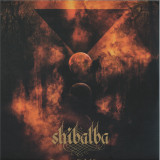
The flesh withers to the pulses of thunderous cave reverberations, while the spirit is united with the psalms of the Glorious Dead, the Ancient Entities that have conquered Death and become Life, dominant, absolute and victorious. This Work consists of a ritual deriving from the darkest corners of the Mind, the deathlike spheres of the Netherworld and the truest essence of the Afterlife, to become a homage to the Force of Life Eternal.
Guided by Her Luminous rays, it is dictated to be experienced solely in chamber-like conditions, below the waxing Moon, accompanied with Myrrh and lunarian incenses and agharbattis, to be properly roamed within its uncharted corridors. Listen, experience and conquer, setting aside the mundane aspects of realities, explore the unmapped pathways, with every preconception burnt to the altars of this Magnum Opus.
SHIBALBA's music is saturated with the mysticism of the East. It's richly detailed and multidimensional, while layered with chanting and broadly defined elements of traditional ritual and shamanic music. Apart from contemporary synths and guitar drones, the band makes use of bones and skulls as percussion instruments, Tibetan Horns, Tibetan Singing Bowls, bone & horne trumpets, Darbuka's (goblet drums) as well as ceremonial bells and gongs, to name a few. The Spirits behind the Shamanic Halls of Shibalba are V.P. Adept & Aldra-Al-Melekh.
CD edition of 300 copies in 6 panel Digisleeve, Matt Lamination. 7 Tracks. Running Time: 43:04
Vinyl LP edition of 300 copies in 3mm sleeve with printed innesleeve, Matt Lamination. 7 Tracks. Running Time: 43:04
L+P-2 is Rivet's second album following his acclaimed debut, On Feather and Wire, released on Editions Mego in 2020. The wheels were already in motion for a subsequent album on the same label, but tragedy struck. Peter "Pita" Rehberg, the legendary owner of Editions Mego, suddenly passed away at only 53 years old, leaving the experimental electronic music community in a state of pitch-black grief. Rivet was among the many deeply affected by this loss. The inspiration and support from Rehberg had propelled Rivet to create at a level he himself was uncertain he had mastered. For Rivet, Rehberg's death felt like the death of music.
However, that brooding sentiment was abruptly shattered when Rivet's beloved dog and companion, Lilo, was diagnosed with incurable cancer just a couple of months later. They were inseparable, and now they would be separated nonetheless. The only way Rivet could cope with this double blow was to compose—for Lilo, for Pita, for his own sanity. L+P-2 is the result.
While the album naturally emerges from a place of despair, it's remarkably comforting. Partly, this stems from Rivet's singular ability to make machines not only sound human but also act human—sincere and warm, yet flawed. In more than one track on L+P-2, you'll encounter a distinctive melody and a gnarly bassline dancing hand in hand with Rivet's eccentric and captivating drum patterns. Then, seemingly on a whim, the melody takes off on its own, leaving the faithful bassline behind—much like a dear friend that suddenly vanishes from your life without warning. Yet life goes on, and so does the music. But never unchanged. Never.
L+P-2 is an album of lamentation, yet also of resolve—a dedication to those who go through life losing more than their share because they always carry too much.
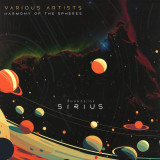
Following a masterful release from SWOY, Sounds of Sirius Music presents their first Various Artist Compilation SOSNZ007 – “Harmony of the Spheres”. Wrapping up 2023 with top notch underground music, joins the musical dots between talented and free-spirited artists working across the globe.
In this edition we have close friends and supportive artists from Sounds Of Sirius, including none other than Mihai Pol (Romania), rising Chilean talent Nibaaldo (Chile), brotherly duo Clay and Heath Ostrer aka Last Pines (UK) and Sevillian talent Alvaro Lamet aka Enzo Leep (Spain).
Harmony of the spheres is a philosophical concept highlighting proportions of the celestial bodies and their movements– the Sun, Moon and planets – as a form of music. These comic mathematical relationships express qualities or "tones" of energy which manifest in numbers, visual angles, shapes and sounds.
Early Support: Mihai Pol, userUNKNWN, Silat Beksi and Herman Saiz.
Hailing from Mexico City, Louie Fesco is as cool as his name states, he is never lame. Louie can make a Tiesto t-shirt cool, just by cutting off the sleeves and wearing it. Mr. Cool has graced many top labels over the last decade and made these labels even cooler, his outing on CV
Could be one of his best and coolest, #truestorybro.
On this crispy 12 inch he delivers a masterclass on party rocking grooves, proper basslines and drummy hooks (not to be confused with dummy hookers).
So to speak- a perfect weapon in your vinyl arsenal (not “Vinyl Arsenal” the amateur football team made up of various aging UK Djs).
On the remix duty, we get some heavy hitters from the ever mysterious Gathaspar. We heard he gets his inspiration from tiny elves that are only found in Munich catacombs. When asked about these tiny elves on Instagram, he leaves you on “seen”. His OP vinyl series are instant hits and collectors items among bearded vinyl nerds, and people who use a lot of bedroom hand lotion. These remixes are monsters- I know, I tested them myself in raves to people and they responded by dancing.
In short, if you are a Dj who likes nasty records to rock parties, this is a must, and if you’re a creepy Discogs shark, this is sure to go up in value.
Why do we even write these write ups?
I’m not sure, and if you are still reading this instead of listening to the 12 inch, I don’t know what else to say to you.
I guess I’ll give you the “ your good enough, your smart enough, and god darn it- people like you” words to get you thru the day.
Sincerely, Jay-the writeup guy.
I Talk To Water, the fifth album for Kompakt by Danish producer Kölsch, is the artist’s most personal statement yet. While all the trademarks that make his music so popular and powerful are still present – lush, melodic techno; swooping, trance-like figures; sensuous, shivery texturology – I Talk To Water is also a deep and intimate rapprochement with family and history, a beautiful, finely detailed document of loss and memory, and a tracing of the long, unbroken thread of grief that runs through our lives once we’ve lost those we loved.
The emotional core of I Talk To Water, then, is a cache of recordings by Kölsch’s father, Patrick Reilly, who passed away in 2003 from brain cancer. With time rendered elastic by the pandemic and its associated lockdowns, its sudden, alienating shifts in everyday living, Kölsch found himself reflecting on his father’s passing and ongoing spiritual presence, thinking about how best to memorialise such a significant figure in his own life. Those recordings opened a gateway, of sorts, for Kölsch to move through – a way to bring past and present together and entwine them in a sensitive, poetic manner.
Kölsch’s father was a musician – “touring in the sixties and seventies, in the Middle East especially, he was doing the whole hippy trail, playing guitar, and wrote some songs over the years,” he recalls. “But all in all, he decided to focus on family rather than pursue a musical career.” Reilly kept playing and writing music over the years, though Kölsch hadn’t listened to the material for some time: “I’d never had the guts to listen to it, because I just felt too fragile listening to his voice. It’s such a tough thing to go through.”
During the pandemic, though, Kölsch listened through the fragmented body of work that his father had produced over the years. “I decided I’m gonna finally release my dad’s music twenty years after his passing,” he reflects. “This whole album is about the process of loss, and for me it’s been one of my main driving forces in my musical life, the whole emotional aspect of whatever I’ve done has been based in that feeling that he’s not there anymore.”
Recordings of Reilly appear on three songs across I Talk To Water. His guitars drift pensively across “Grape”, offering a lush thread of melody that Kölsch wraps with clicking, driftwood rhythms and droning, melancholy bass. “Tell Me” is a lovely three-minute art song, a sadly beautiful reflection, minimally adorned with gentle keys and a muted pulse. And on the closing “It Ends Where It Began”, Kölsch lets his father’s acoustic guitar take centre stage for a lament that’s unexpectedly folksy, a guitar soli dream, which Reilly originally recorded in 1996. “He actually recorded it for my first album that never came out,” Kölsch reveals, “and I had it sitting around forever. That is purely him.”
These three imagined collaborations between father and son are poised and delicate. But their relationship also marks the gorgeous music Kölsch has made across the rest of I Talk To Water, from the itchy yet lush “Pet Sound” (titled in tribute to one of Reilly’s favourite albums), the flickering synths and yearning vocal samples that slide through “Khenpo”, the ecstatic shuddering that marks “Only Get Better”, or “Implant”’s slow-motion pans and subtle reveals.
There’s also the title song, where Kölsch is joined by guest Perry Farrell (Jane’s Addiction, Porno For Pyros), singing a mantra for internal reflection: “I talk to water / Searching for myself / Looking for answers / Oceans of you.” Farrell’s appearance brings another timbre, another spirit to the album, aligning neatly with his recent interest in electronic music. “He was completely taken by this idea of talking to water,” Kölsch says, thinking about the ways we collectively lean towards the natural world as a comfort and a listener, a guide through mourning, a way to map out the terrain of the heart. This mapping is something that Kölsch has proven remarkably adept at through the years; dance music for both body and mind, but also both for the here-and-now, and for the hereafter.
“I Talk To Water”, das fünfte Album des dänischen Produzenten Kölsch für Kompakt, ist zweifellos das persönlichste Statement des Künstlers bislang. Während alle Markenzeichen, die seine Musik so beliebt und kraftvoll machen, immer noch präsent sind – üppige, melodische Techno-Tracks; schwebende, tranceartige Elemente; sinnliche, fiebrige Texturen – ist “I Talk To Water” auch eine tiefe und intime Annäherung an Familie und Geschichte. Es ist ein wunderschönes, fein ausgearbeitetes Dokument des Verlusts und der Erinnerung, und es verfolgt den langen, ungebrochenen Faden der Trauer, der durch unser Leben läuft, sobald wir diejenigen verloren haben, die wir liebten.
Der emotionale Kern von “I Talk To Water” besteht aus Aufnahmen von Kölschs Vater, Patrick Reilly, der 2003 an Hirnkrebs verstarb. Durch die Pandemie und ihre damit verbundenen Lockdowns, die plötzlichen, entfremdenden Veränderungen im Alltag, fand Kölsch sich in Gedanken an den Tod seines Vaters und seine fortwährende spirituelle Präsenz wieder. Er überlegte, wie er eine so bedeutende Figur in seinem eigenen Leben am besten verewigen könnte. Diese Aufnahmen öffneten ihm sozusagen ein Portal, um Vergangenheit und Gegenwart miteinander zu verbinden und sie auf sensible und poetische Weise zu verweben.
Kölschs Vater war Musiker – “er tourte in den sechziger und siebziger Jahren, vor allem im Nahen Osten, auf dem Hippie Trail, spielte Gitarre und schrieb im Laufe der Jahre einige Songs”, erinnert sich Kölsch. “Aber alles in allem entschied er sich, sich auf die Familie zu konzentrieren, anstatt eine musikalische Karriere zu verfolgen.” Reilly spielte und schrieb jedoch im Laufe der Jahre weiterhin Musik, obwohl Kölsch das Material lange Zeit nicht angehört hatte: “Ich hatte nie den Mut, es anzuhören, weil ich mich einfach zu zerbrechlich fühlte, seine Stimme anzuhören. Es ist so schwer, das durchzustehen.”
Während der Pandemie hörte sich Kölsch jedoch durch das fragmentierte Werk, das sein Vater im Laufe der Jahre produziert hatte. “Ich beschloss, die Musik meines Vaters zwanzig Jahre nach seinem Tod endlich zu veröffentlichen”, reflektiert er. “Dieses ganze Album handelt von dem Verlustprozess, welcher für mich generell eine der Hauptantriebskräfte in meinem musikalischen Leben ist. Der ganze emotionale Aspekt von dem, was ich getan habe, basierte auf dem Gefühl, dass er nicht mehr da ist.”
Auf “I Talk To Water” sind Aufnahmen von Reilly in drei Songs zu hören. Seine Gitarren ziehen nachdenklich durch “Grape”, bieten einen üppigen Melodiefaden, den Kölsch mit klickenden, treibenden Rhythmen und dröhnendem, melancholischem Bass umwickelt. “Tell Me” ist ein schönes dreiminütiges Kunstlied, eine traurig-schöne Reflexion, minimal geschmückt mit sanften Tasten und einem gedämpften Puls. Und auf dem Abschlusstrack “It Ends Where It Began” lässt Kölsch die akustische Gitarre seines Vaters im Mittelpunkt stehen, ein überraschend folkiger Klagegesang, den Reilly ursprünglich 1996 aufgenommen hatte. “Er hat es tatsächlich für mein erstes Album aufgenommen, das nie veröffentlicht wurde”, enthüllt Kölsch, “und ich hatte es ewig liegen.”
Diese drei erdachten Kollaborationen zwischen Vater und Sohn sind ausgewogen und zart. Aber ihre Beziehung prägt auch die wunderschöne Musik, die Kölsch im Rest von “I Talk To Water” geschaffen hat, angefangen bei dem nervösen, aber üppigen “Pet Sound” (benannt als Hommage an eines von Reillys Lieblingsalben), den flimmernden Synthesizern und sehnsüchtigen Vocal-Samples in “Khenpo”, den ekstatischen Erschütterungen in “Only Get Better” oder den langsamen Schwenks und subtilen Enthüllungen in “Implant”.
Es gibt auch den Titelsong, in dem Kölsch von Gast Perry Farrell (Jane’s Addiction, Porno For Pyros) begleitet wird, der ein Mantra für die innere Reflexion singt: “I talk to water / Searching for myself / Looking for answers / Oceans of you.” Farrells Auftritt bringt eine weitere Klangfarbe, einen weiteren Geist in das Album, der gut zu seinem jüngsten Interesse an elektronischer Musik passt. “Er war völlig fasziniert von der Idee, mit Wasser zu sprechen”, sagt Kölsch und denkt darüber nach, wie wir kollektiv zur Natur als Trost, Zuhörer, Führer durch die Trauer neigen, um die Gelände des Herzens zu kartieren. Diese Kartierung ist etwas, in dem Kölsch im Laufe der Jahre erstaunlich geschickt war; Tanzmusik für Körper und Geist, sowohl für das Hier und Jetzt, als auch für das Leben danach.
The 1973 album “El Violento” was the fifth full-length salsa LP led by Julio Ernesto Estrada Rincón, aka Fruko, and the second credited to Fruko Y Sus Tesos. Though it did not contain hits like ‘A la memoria del muerto’ or ‘El Preso’, it’s a collector’s item today in places like the US, Europe and Japan, perhaps precisely because it is obscure yet full to the brim with unrelentingly hard and heavy salsa bangers that never let up from start to finish (hence the title, which translates as “The Violent One”). A mix of originals and interesting covers, the LP is “all killer and no filler”, purposely designed to set the dance floor ablaze. It features Fruko’s two main vocalists that took over from the first pair of Humberto “Huango” Muriel and “Píper Pimienta” Díaz, namely the beloved duo of Álvaro “Joe” Arroyo and Wilson “Saoko” Manyoma. Los Tesos were a talented “wild bunch” who listened to their fearless leader, with Fruko holding down the bottom end on electric bass, Hernán Gutiérrez in the piano chair, the Villegas brothers on hand percussion (Jesús tickling the bongos and Fernando slapping the congas), augmented by Rafael Benítez on timbales and an ace horn section of Freddy Ferrer and Gonzálo Gómez (trombones) and Jorge Gaviria and Salvador Pasos (trumpets). The super aggressive sound comes directly from the South Bronx playbook of Willie Colón. The snarling trombones and soaring trumpet are somewhat sweetened by a nice little Puerto Rican cuatro guitar solo. Sonically lightening the mood somewhat, ‘Nadando’ (‘Swimming’) is a bouncy tune in the ‘Mercy’ genre (basically a hybrid of pop, funky soul, cumbia and salsa, in the style of Nelson y Sus Estrellas), gleefully sung by Joe Arroyo. The beats are complex and ever changing, with a little bit of mozambique, conga, bomba, jala jala and of course salsa thrown in for good measure. The side closes out with a brilliant, uptempo salsa reworking of the venerable ranchera chestnut, ‘Tú, sólo tú’. Side two explodes with the frenetic descarga jam session ‘Salsa na’ ma’—which is exactly that: nothing more than the hottest “sauce” to make the dancers go crazy. Fruko’s tune is dedicated to the Latin community in New York that listens to salsa from everywhere and dances to it so fervently on the weekend. The relentless percussion propels the listener along at breakneck speed as if hurtling down the Bronx Expressway, demonstrating that Fruko y Sus Tesos have mastered the ‘violent’ form of urban salsa that was having its transnational moment in the early 1970s. While “El Violento” may not be as well known as some Fruko records, it certainly deserves a new look and should be assessed on its own merits as a very powerful, confident entry in the historical evolution of Colombian salsa dura.Sleeve
Mysterious and very rare from a private press label with only one known release on its catalogue, (up until now it wasn't even sure what the release year was). Spanish guitar, classic Balearic Italo house beats, drama on the vocals, all boxes are checked for a good time on an outdoor sunny dancefloor on some Mediterranean island.
Seeing the credits makes it clear that this was a joint operation of well seasoned Italian music specialists at the time. Although it's all about the "D.J. Never Sleep" version, all original versions in different languages are featured in this re-issue along with an additional new DJ tool style bonus beats. Very odd ball project that has been well hidden for a long time, brought back to record bags at an affordable price.
- A1: Flug 8 - Puerto Rico (The Velvet Circle Mix)
- A2: The Black Frame - Sacrosanct (Mount Obsidian Remix)
- A3: The Novotones - Liberty Bell
- A4: Sascha Funke - Mathias Rust
- A5: La Finca - What Clouds Say
- B1: Paulor - The Last Coke In The Desert
- B2: Mount Obsidian - Fade Feat Charlotte Jestaedt
- B3: The Velvet Circle - Our Tribe
- B4: Seb Martel Feat Las Ondas Marteles - Dark Mambo (Joerg Burger Mix)
- B5: Mount Obsidian - Marole Feat Charlotte Jestaedt
Kompakt unveils the third volume of Jörg Burger’s Velvet Desert Music compilation series, dedicated to music that hits the sweet spot between the cinematic, the (pop) ambient, and the psychedelic. With Velvet Desert Music Vol. 3, Burger and his friends wander afar, taking trips away from, or adjacent to, the dancefloor that’s acted so long as the crucible for the Kompakt aesthetic. Like its predecessors, it’s a gorgeous, lambent collection of late-night mood music.
Because it’s such a broad church, Velvet Desert Music admits all kinds of new experiences, as well, with Burger looking for music that "leads out of the desert into the velvet universe". Indeed, of all the volumes in the series, this third instalment feels closest to an album made by a true collective. The roster has changed, with new contributors Flug 8 and Seb Martel, both with his trio Las Ondas Marteles and with Chocolate Genius and Zsela as La Finca, joining regulars The Novotones, Mount Obsidian, The Golden Bug, Paulor and Sascha Funke.
Burger himself reappears, too, alongside Fritz Ackermann (of The Novotones), Max Würden and Thore Pfeiffer, in The Velvet Circle. Their contributions are pure lush life electronica: “Our Tribe” hitches a ride with a low-slung groove, flickering psychedelic reels of acoustic guitar traipsing across moody bass and taffeta layers of drone; their opening remix of Flug 8’s “Puerto Rico” gently introduces the album with softly tangling electronic tones, while guitars, drenched in reverb, pirouette in the background. A Mount Obsidian remix of “Sacrosanct” by Burger’s The Black Frame -project is a swirling treat for the ears.
La Finca’s electronics and voice miniature, “What Clouds Say”, is a masterclass in poetic restraint; Martel’s “Dark Mambo”, remixed by Burger, is one of the collection’s big surprises, for it indeed does what the title says, a drifting, surrealist take on the mambo form, full of pensive chords, rich with unrequited longing, a breathy saxophone whispering under the song’s sly rhythmic carriage.
Elsewhere, The Novotones chime in with a slyly propulsive, Krautrock-esque charmer, “Liberty Bell”, and the guitar-led tone-drift of “Valley of Oblivion”; Paulor’s “The Last Coke in the Desert” is a chiming, lilting dreamscape; Mount Obsidian are joined by vocalist Charlotte Jestaedt for two modern takes on early-hours art song, “Marole” and “Fade”; Sascha Funke’s “Mathias Rust” is a lavish dancefloor dream, vocal samples drifting through the song as it slowly envelops the listener in its opulent radiance.
This is just a taste of the rich pleasures of Velvet Desert Music Vol. 3, a triumph of a compilation that takes the psychedelic visions of its predecessors and looks for the desert within, a dusty kiss, a road-movie hallucination flickering on the listener’s eyelids, a cinematic projection from deep inside the mind.
'After a first album as a duo released on Okraina Records: "Le Corps Défendant", Delphine Dora and Mocke invite us to join them again in listening to a new album. We slip into it as if in a dream, the music carries us away with its floating images.
Heard before on a handful of disturbingly beautiful solo albums and in collaborations such as Midget!, Arlt, Chevalrex, Mohamed Lamouri, Mocke (Dominique Dépret's nom de plume) is a subtle and inventive guitarist, who draws melancholic arpeggios, with a beautiful languor, that walk the line between tensions and tears. Delphine Dora has been heard with Roxane Métayer, Sophie Cooper, Andrew Chalk, Jackie McDowell, Helena Espvall, Valentina Magaletti ... meeting in a moment of improvisation, a solitary sincopated voice blooming between the black and white keys of her piano, tuning betwist these keys, or at other times in the gap of the right note. Here improvisation feeds on melody, or is it the other way round?
Recorded in an old church in the village of Mauzun in the Puy-de-Dôme, by Cyril Harrison, "L'invisible est multiforme" is an invitation to join them, to let these abstract songs erase our obsessive thoughts of the day, to open ourselves to the vibrant poetry of the air and the evening, to finally forget ourselves. Each note played by these four intertwined hands is like a slight break in the fabric of time, sliding one over the other, reminding us of mortality and its beauty. Ritornellas flow out of mechanical clocks, fragile, taking care not to hurt the silence. Both seek to dig and open up new paths to enrich their duet, to open up imaginary landscapes. Sometimes the guitar cuts through the fabric of an organ, fractures the song, just as the rain erases a landscape, redrawing it. But very quickly, both of them continue to follow this new path, improvising what will serve as a framework, a perspective, a language. There is a kind of praise for slowness in this "invisible", a desire to hold back the song, not to let it slip away, to let the listener's ear enter its course, to share the last note, its illumination. Each of these thirteen short sound pieces merge into a common colour, a vibration close to the different tonalities, which inter-penetrate, like a cubist painting. Words cannot take away the mystery of this record, words can only fail to describe the music, you must hear it.'
- Michel Henritzi
The latest by New York-based producer Lamin Fofana further refines his cinematic dialect of fractured soundscapes, displaced rhythms, and tectonic unease. Unsettling scores aptly describes itself: grainy, bristling, and bruised, rippling with dread disguised as grandeur. The collection emerged from an extended reworking of his 2016 composition, “A Symbol of the Withdrawn God,” mining deeper into the piece’s “unvoiced fragments, shards, and utterances.” Other tracks were inspired by recent readings on climate emergency and its “specific implications for Black life, from hurricanes in the Caribbean to mudslides in West Africa.”
Fofana has spoken of his music as part of a “legacy of resistance,” spanning the roots of Detroit techno to the outer reaches of contemporary sound art as championed by his labels, Sci-Fi & Fantasy and Black Studies. His work here vividly embodies that spirit, seven hyper-textural transmissions of rumbling lament, shifting sands, and restless innovation, tracing jagged silhouettes of indeterminate futures: “The instability is worldwide.”
Repress.
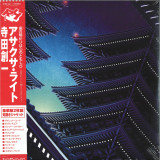
Back in 2015, Japanese DIY house pioneer Soichi Terada stepped back into the limelight courtesy of Rush Hour's 'Sounds From The Far East', a Hunee curated retrospective of material first released on his own Far East Recording label in the 1990s and early 2000s. Buoyed by the positive response and renewed interest in his work, Terada went back into studio to record his first new album of house music for over 25 years, Asakusa Light.
Developed over 18 months, Terada tried to recreate the mental and physical processes that led to the creation of his acclaimed earlier work. Those familiar with Terada’s celebrated, dancefloor-focused sound of the 1990s – a vibrant, atmospheric, and emotive take on deep house powered by the twin attractions of groove and melody – will find much to enjoy on Asakusa Light.
“I tried to recall my feelings 30 years ago, but when I tried it, I found it super difficult,” he explains. “I didn’t even know what I thought about myself five years ago, and the mental metabolic cycle seems to be faster than I thought. I tried different methods, including digging up my old MIDI data and composing by remembering old experiences. With the help of Rush Hour, I found some of the light from my heart that I had 30 years ago. I nicknamed the light I found in my heart, ‘Asakusa Light’.”
Produced using the very same synthesizers and drum machines that powered his 1990s work, the album is a joyous, colourful and life-affirming collection of timeless house music that not only recalls Terada’s own impeccable back catalogue, but also that of similarly celebrated contemporaries such as the Burrell Brothers or Ben Cenac (Dream 2 Science, Sha-Lor).
Terada, who has spent much of the last two decades writing video game music, has always had a gift for combining warm, undulating synthesizer basslines and perfectly programmed machine drums with stirring chords, smile-inducing melodies and mellow musical flourishes. It’s this immersive, sun-kissed and tuneful trademark style that takes centre stage on Asakusa Light, an album for the ages.
The set begins with the alien-sounding chords, soft-touch percussion and dawn-friendly warmth of ‘Silent Chord’ and ends on a high via the bouncing string stabs, starlight chords and thickset grooves of ‘Blinker’; in between, you’ll find a deluge of effortlessly feelgood music that’s the aural equivalent of a dopamine rush at sunrise.
There are subtle variations aplenty throughout the album – see the 8-bit lead lines and pulsing electronic textures of ‘Takusambient’, the vintage Tony Humphries flex of ‘Diving Into Minds’ and the effortlessly funky ‘Marimbau’ – but it’s the uniquely atmospheric, vivid and tactile nature of Terada’s loved-up sound that resonates. After well over 30 years in house music, the light in his heart is shining brighter than ever.
KEY GLOCK is a protégé of Young Dolph & who rose to fame in 2017 with his mixtape “Glock Season.” The artist signed to Young Dolph’s label in 2017 and their collaborative album, “Dum and Dummer,” reached #8 on the Billboard 200. As a lead artist, Key Glock has since had one certified platinum single (“Russian Cream”) and 4 certified gold singles (“Since6ix,” “Gang Shit No Lame Shit,” “Mr. Glock,” & “Ambition for Cash”). His debut studio album, “Yellow Tape,” peaked at #14 on the Billboard 200, while the follow-up, “Yellow Tape 2,” rose to #7 on the same chart. A 5-track EP, “”PRE5L,” was released in November 2022 & included the hit track, “Jigsaw.” He is the cousin by marriage of Young Dolph, who sadly passed in November 2021. In a since-deleted IG post, Key Glock called Young Dolph “my lefthand man, my brother, my cousin, and my mentor.”