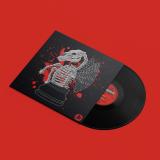
Love Reaction returns with a new release and unveils the third and final chapter of its vinyl catalogue: ZONE, a series dedicated to club-oriented electronic music. For the occasion, the label welcomes ORA, two seasoned professional musicians rooted in the jazz scene, eager to explore new sonic territories together.
With Common Frequency, the duo unfolds a raw and organic sonic tapestry. Live, they sculpts landscapes in real time using drum machines and synthesizers, unleashing a club energy that is both electric and vibrant. Between analog textures and immersive rhythms, this debut EP asserts a strong and magnetic identity.
Suche:lan
- A1: Be Yr Own Abyss
- A2: New Distortion Properties
- B1: Oblivion Seekers
- B2: Unmake A World
Ein aufmerksamer Zuhörer der Welt zu sein, bedeutet, von Sprache umgeben zu sein. Sprache hallt durch fast jeden Raum, in dem sich Menschen aufhalten, ob unerwünscht oder erwünscht, banal oder tiefgründig. Worte stehen auf der Seite und klingen im Ohr nach, vermehren sich endlos. Diese Überfülle fasziniert den Komponisten und Musiker Ben Vida schon lange, aber in den letzten Jahren hat sie zu einer neuen Art des Musikmachens geführt, die die Vorrangstellung der Sprache in unserer Klang- und Kulturwelt gleichzeitig hervorhebt und hinterfragt. Sanft und spielerisch bricht Vida die Hierarchie von Bedeutung und Klang der Sprache auf, bis sie in egalitärer Harmonie existieren. Oblivion Seekers ist Vidas neuestes Album in diesem Kompositionsstil, nach der Zusammenarbeit mit dem New-Music-Ensemble Yarn/Wire The Beat My Head Hit aus dem Jahr 2023. Wie bei seinem Vorgänger liegt der Fokus der Musik auf koordinierten Duetten aus gesprochenem Wort in neutralem Ton, wobei die variablen Rhythmen der bewegten Worte komplexe interne rhythmische Strukturen schaffen. Er wird von den Stimmen von Nina Dante, Christina Vantzou, John Also Bennett und Félicia Atkinson, die einen einzigartigen Klang erzeugen, der weder ihrer noch seiner ist und in seiner Geschlechtsdarstellung, seinem Akzent und seiner Aussprache fließend ist. Die instrumentalen Kompositionen, die den Hintergrund des Albums bilden, haben den ungezwungenen Fluss eines Dialogs, gesprächig, aber zurückhaltend, selten als Motor der Veränderung. Es herrscht eine ruhige, konzentrierte Stimmung, die durch den zurückhaltenden Rhythmus der Stimmen noch verstärkt wird, sodass man das Gefühl hat, die Musik sei ein langes Mantra, das nie ganz zu seinem Ausgangspunkt zurückkehrt. Der Effekt ist bezaubernd, gleichermaßen einschläfernd und fesselnd, und suggeriert Wiederholung, ohne sich jemals genau gleich zu bewegen. Die Instrumentierung der vier Stücke des Albums variiert; ,Be Yr Own Abyss" wird durch den wellenartigen Kontrapunkt der Saxophone geprägt, während der mehrdeutige Klang des Vibraphons über ,Oblivion Seekers" schwebt und Frasers anschwellender Bass den einzigen dramatischen Auftritt des Albums liefert. Die Musik verändert sich im Ohr, während der Text die Form und Bewegung der Komposition ständig neu definiert und in einen neuen Kontext stellt, auch wenn sie in ihrem jenseitigen Glanz konsistent bleibt. Der Text besteht oft aus Sprachfetzen, denen Vida während seines Lebens beim Komponieren begegnet ist: zufällig mitgehörtes Gemurmel in der Schlange im Supermarkt, eindrucksvolle Sätze aus einem Roman, den er gerade las, Eindrücke von Musik, die er immer wieder auf seinem Plattenspieler hörte. Kleine, ansonsten unbedeutende Details sammeln sich an, nicht um eine Erzählung zu bilden, sondern um einen Eindruck vom komplexen Prozess der Bedeutungsfindung zu vermitteln, der im täglichen Leben stattfindet. Charaktere und Szenen tauchen im Bild auf und verschwinden wieder, und Sätze, die nach einer Erklärung verlangen, dürfen einfach vorbeiziehen. Vidas Liebe zu Robert Ashley ist gut dokumentiert, aber vielleicht noch bedeutender sind Mark E. Smith und The Fall, Neil Tennant und die gesprochenen Verse der Pet Shop Boys, die gesamte Geschichte des Hip-Hop und Meredith Monk. Die Art und Weise, wie die Worte dargeboten werden, ist genauso wichtig wie die Worte selbst und offenbart eine Intentionalität und Direktheit, die Vida mit den abstrakten Konstruktionsmustern des Textes hervorhebt und untergräbt. Auf Oblivion Seekers ist der omnidirektionale Lärm der Marmor, den Vida abträgt, um zu beleuchten, wie wir die unermessliche Fremdheit der Welt verarbeiten. Der Triumph des Albums besteht darin, dass wir nichts von dem schönen Geheimnis verlieren, wie diese Zeichen unsere äußere und innere Welt miteinander verbinden.
- A1: W9 Bc (Saky Nite At The Sand Dunes) (3:56)
- A2: Maigo Lost Child (2:30)
- A3: D'ameja (4 52)
- A4: Double Platonic Suicide (5 03)
- A5: Dream Of Embeyo (7 05)
- B1: Logical Nation (2 42)
- B2: Not Only One (3 50)
- B3: Bizarre Tastes (3 46)
- B4: Value Another (3 05)
- B5: A Pompful Of Horses (3 19)
- B6: Nantaratta Kantatta (1 39)
- B7: Psycho Revolution (1 59)
- B8: Jinmenso The Human-Faced Sore (2 47)
Vol.2[22,06 €]
From the depths of the most independent and revolutionary underground, a handful of tracks from the repertoires (often limited even to a single flexi disc) of some of the heroes who rode the wave, extracting from it—more for themselves and expressive necessity than for us—its most mystical and expressionist essence. New and No Wave, minimal and minimalist electronics, Avant Wave from the land where the sun still rises for now.
KNEECAP return to bend genre, language, and rules. The most talked about artists in the world are turning the page. A new chapter, new sounds, new manifestos.
A blistering album that revels in darkness while bursting through the void with illuminated revery. This is FENIAN.
Produced by Dan Carey (Fontaines D.C., Kae Tempest, Wet Leg), FENIAN upends expectations with an expansive sonic palate, traversing acid house, trip-hop, dubstep, and more - Masters of rave and rap theatre, FENIAN represents Kneecap’s most sophisticated exploration of language and sounds.
More darkness. More confrontation. More craic. More energy. More solidarity. More absolute bangers. And more fuel for the unrelenting engine that powers this unstoppable force. For their remarkable second album, Kneecap have come out fighting.
Throughout, the sirens and alarms ring, and the chorus’s blast. Revolutionary and rebellious, confrontational and impossibly catchy, inescapably intelligent and brilliantly rendered, FENIAN doesn’t just represent the next phase in Kneecap’s trajectory but stands as a remarkable record that thrills as much as it surprises. The mayhem of their breakout year is a memory now. But Kneecap are neither dwelling on that nor merely persevering through it. In FENIAN they excel, reaching a new peak that is undeniable in its mastery.
Pressure makes diamonds, and FENIAN glistens with Kneecap’s uncut gems.
This isn’t a compilation—it’s a vinyl conversation between cities, generations, and musical bloodlines. This inaugural release embodies the spirit of collaboration, community, and cross-generational artistry that defines each artist’s deep musical legacy.
A statement on wax bringing together Glenn Underground, Coflo, Jon Dixon, Kevin Reynolds and sillygirlcarmen, this four-song project documents the shared language of five Artists through deep house, jazz roots, and forward-looking soul. Though these artists have shared DJ booths and dance floors around the world, this release marks a rare moment where their creative voices intertwine on wax. Each track stands on its own, but together they form a continuum—past, present, and future etched into wax. Pressed with intention and made for real systems, this release exists for the heads, the selectors, and anyone who still believes vinyl is where the story lives. Meant to be played—not archived. The kind of tracks that feel alive in the room and grow every time you hear them.
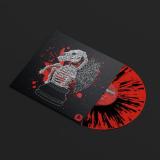
‘Ease’ EP tracks:
Glenn Underground ‘Dive (Into The Deep)’; the Chicago legend & Strictly Jaz Unit co-founder combines deep house, freeform jazz & soul, here in a jazz-infused, laid-back, hypnotic melange of house beat, synth chord riff, rippling arps, with a whisper of disco in the bassline and 80’s electro in the high, singing strings.
Coflo x sillygirlcarmen ‘Never Forget (That Feelin’)’; East Bay CA-based Coflo combines Hawaiian & Portugese roots with a global reach. A collaborative skipping house beat, pattering percussion & melodic jazz synth piano embrace sillygirlcarmen’s soulful voice and heartfelt lyrics. This collaboration marks a merging of emotional storytelling and percussive sophistication.
Jon Dixon ‘Saturday At Northland’; Detroit’s modern jazz & techno fusionist, rooted in long study and prestigious performance of classical & jazz piano both in orchestral and electronic contexts, employs his keyboard virtuosity in a thrilling wave of melodic piano improvisation & complex lively percussion, combining sheer craft with spiritual heft.
Kevin Reynolds ‘I Got Music’; from an Irish/US Detroit family, producer/live artist Reynolds blends techno, jazz, soul, from influences as diverse as 90s underground techno, Kraftwerk & John Coltrane, and roles/performances in multiple prestigious venues & positions. Here, a stealthy beat & Kraftwerk-evoking robotic electro synth theme are joined by a dual vocal used as a riff, while clusters of piano chords flower into jazz motifs.
Siccar Point is the second album release from Intertoto, and is a study of the geographical extremes on the east coast of his native Scotland. The eight pieces of music on the album serve as vignettes portraying this ancient headland, while also acting as an allegorical reference to the pioneering work of Scottish geologist James Hutton, who proposed that geological features are not static but undergo continuous transformation over indefinitely long periods of time.
With this theory — and the striking landscape — in mind, Jamie Coull, aka Intertoto, imagines tectonic forces through tension, space, density, and texture. Divergent and convergent boundaries are realised in different moods throughout. Siccar Point opens with the irregular drift of Raw Lunar Concrete, a track that undulates asymmetrically, pulling you off balance before settling into the pulse of Condor Launch and Cloud Chamber — the more veiled club moments of the album.
Further into the strata, Siccar Point mines deep into the dense textures of Metallic Veins and Redox Dub, before closing with the cascading outro Foraber, shimmering with tones that imagine a view outward from the rocky promontory — beyond the vanishing point.
Presenting the remarkable second album by the Chinese musician, DJ and creative chef Yu Su. An evolution from her 2021 debut LP and two track single released last year, Foundry radiates a fresh, fully-fledged and far-reaching sound.
The nucleus of Foundry began with material penned for live performance at MUTEK in 2025, alongside a move to London which brought about new shifts in perspective. Searching for a style that was true both to her roots and progression as an artist, Yu ventured in a post-orientalist direction, and came upon a language of ‘in-between music’.
Mixing the eclectic influence of her DJ sets with genre-defying collaborators and newfound taste for minimal and ambient techno, a dusky, dub-inflected character began to emerge. This broad palette reiterates Yu’s prior form in making connections across disciplines, which have not only consisted of music, but also multisensory endeavors which incorporate taste and smell.
With cover art featuring hammered metalwork by the artist Brendan Ratzlaff, for Yu the foundry represents a nexus of creation; a shared workspace where collaborators combined their materials and skills. With the input of Seefeel, Dip In The Pool, and Memotone, together their broad spectrum of aural elements underwent a chemical transformation, and were forged into something new.
Well-designed, ergonomic yet occasionally amorphous, the effect is that of meticulous freedom, both controlled and free flowing. Using immersive sound design, Yu creates inspiring spaces to revel in, which are warm yet steeped in shadow, with flashes of silvery light.
Featuring Yu in with duet Miyako Koda of cult Japanese art pop duo Dip In The Pool, the record kicks off in swirling but poised fashion with ‘A Jewel’. The dusky, reverberant underwater minimalism of ‘Sunless’ follows, which features British composer Memotone, and was influenced by Chris Marker’s 1983 film Sans Soleil.
The dubby, sunkissed affirmation on ‘Cul De Sac’ leads to the thumping acid stomp of ‘Foundry’, and onto the hazy glow of ‘One Place After Another’, featuring lauded soundheads Seefeel, where Yu’s voice is joined by Sarah Peacock’s, alongside Mark Clifford’s seductively gauzy fuzz guitar.
Venturing into more ominous territory is the liminal ambient dub of ‘Wanli’, followed by the rich textured flutter of ‘Os Cionn’, which translates from Gaelic as ‘above’. The album ends with the reflective, processional pulse of ‘Ripe Fruits’, which was inspired by Frederic Leighton’s 1892 oil painting The Garden of the Hesperides.
The LP’s visual was art directed by Lucas Dupuy, whose approach perfectly encapsulates Yu’s spatial sonics: “We both think in layers”, she comments. “Not linear layering, but horizontal layering, like weaving metallic threads, where a bigger picture of a grainy sphere will occur at the end.”
Mastered by Miles
Art by Lucas Dupuy & Brendan Ratzlaff
- A1: Red Axes & Man Parrish Ft. Roy Garrett - Hot Rod To Hell And Back
- A2: James Infiltrate - Chaos
- B1: Queen Atom - Tributemaki
- B2: The New Black - Androids Are Sexy
- C1: Red Axes - Clear Beats
- C2: 100Hz - Whisper
- D1: Red Axes - Time To Take It
- D2: Sluts`n Strings & 909 - Past The Gates
- (10") | A Redrago - Spikes
- (10") | B Redrago - Frequency
Red Axes step into the fabric presents series with a release that feels both inevitable and deeply personal. Known for their hypnotic, psychedelic approach to club music, the Tel Aviv–based duo bring a narrative-driven sensibility that aligns seamlessly with fabric’s legacy of long-form storytelling and forward-thinking curation.
Across years of performances at fabric and other key global institutions, Red Axes have developed a reputation for sets that unfold patiently and unpredictably, drawing dancers into a world where groove, tension, and atmosphere take precedence over genre or trend. Their contribution to the fabric presents series reflects this ethos: a carefully sculpted journey that prioritises mood, momentum, and emotional depth, while remaining firmly rooted in the physical language of the dancefloor.
Formed by Dori Sadovnik and Niv Arzi, Red Axes emerged from Tel Aviv’s underground with a sound shaped by post-punk, acid, krautrock, and cosmic disco influences. Over the past decade, they have built a catalogue defined by raw textures, twisted melodies, and a distinctly human looseness, qualities that translate as powerfully in the club as they do on record. Their releases and remixes for labels such as Phantasy, Correspondant, Running Back, Dark Entries, and Permanent Vacation have established them as artists who consistently operate just outside the expected.
As DJs, Red Axes are celebrated for their ability to stretch time on the dancefloor, weaving obscure selections, unreleased material, and leftfield classics into slow-burning, trance-inducing narratives. This approach has seen them invited to venues and festivals including Panorama Bar, De School, Bassiani, Dekmantel, Sonar, and Primavera Sound, where their sets are defined not by peaks alone, but by the tension built between them.
With the forthcoming fabric presents Red Axes release, the duo deliver a statement that captures years of shared musical intuition and a deep respect for the club as a communal, transformative space. It is a mix that rewards close listening as much as physical immersion, a snapshot of Red Axes at their most focused, expressive, and uncompromising.
To mark the launch of their forthcoming fabric presents album, the duo unveil the lead single, “Hot Rod To Hell”, a bold reworking of Man Parrish and Roy Garrett’s 14-minute spoken-word electro epic, reimagined through Red Axes’ signature psychedelic lens.
Stripped back and refocused, the original’s narrative tension is transformed into a hypnotic, downtempo house track built for late-night immersion. A rolling, elastic groove anchors the track, while pulsing low-end, subtly warped synth lines, and tightly controlled percussion create a sense of slow, smouldering momentum. The spoken vocal elements drift through the mix like fragments of memory, lending the track a ritualistic, cinematic quality without overwhelming the dancefloor.
- A1: Rigor Mortis
- A2: Drinking Sand
- A3: Neurobeat
- A4: Close Combat
- A5: Cybernetics And Pavlovian Warfare
- B1: Check It Out
- B2: Ballistic Statues
- B3: Burn Out
- B4: Bodycheck
- C1: On Command
- C2: Flesh
- C3: Colonial Discharge
- C4: Taste (The Suburban Whiplash)
- D1: Drinking Sand (Remix)
- D2: Rigor Mortis (Extended)
- D3: Flesh (Remix)
- D4: On Command (Live 89)
- D5: Burn Out (Between The Sheets)
Black Vinyl[28,53 €]
Belgian electronic body-music pioneers A Split-Second deliver an expanded reissue of their influential 1987 debut Ballistic Statues, a landmark of the New Beat and EBM movement. Blending dark electronics, cold-wave tension and precision-driven sequencing, the album helped define a pivotal moment in the late-80s European underground.
This new edition brings together all tracks from the original album and enhances them with essential recordings from the same era, including the band’s complete 1986 debut EP (A Split-Second), the cult Smell of Buddha, and additional period material.
Pressed in a limited run of 500 copies (200 on clear blue and 300 on black vinyl) housed on a gatefold sleeve with a reproduction of the original lyrics insert, an exclusive poster and one postcard.
Ballistic Statues remains a defining statement—raw, innovative and far ahead of its time. This reissue brings together the core foundations of A Split-Second in one essential collection making it ideal for both long-time followers and new listeners discovering the band.
Vol.1[22,06 €]
The second chapter of the journey through the bamboo forests, sounds, and visions of some of the most eccentric artists who remained in the shadows of Japanese new wave. Between Kraut and electronic impulses, chamber music for glass dolls and avant-garde club tightrope walkers.
Side A
栄養 Boys
(Eiyō Boys: Nutrient Boys)
1 Blood Sunday 4:15
2 Bad Man 4:11
From Blood Sunday / Bad Man (1982)
3 Untitled 1 0:49
4 Untitled 2 2:57
5 Untitled 3 2:38
6 Untitled 4 1:28
7 Untitled 5 0:42
8 Untitled 6 1:35
9 Untitled 7 1:42
10 Untitled 8 1:37
From = (1981)
Side B
栄養 Boys
1 Asia in Japan -You Know? 6:10
2 Mad Call 4:53
From Asia In Japan (1981)
DUPPI
3 三千の夜 (Three Thousand Nights) (Velvet Night) 5:10
4はつねつのみやこ (Hatsune no Miyako: Capital of the First Song) 5:17
From Velvet Night (1986)
An’archives presents 'sensitive', a new album, and the first solo vinyl release, by Japanese keyboardist and synth player, Mitsuhisa Sakaguchi. A deftly assembled suite of glistening electronic tonalities, 'sensitive' is the latest in a lengthy run of excellent, idiosyncratic albums by Sakaguchi. A low-key yet productive artist, Sakaguchi has released banks of solo titles via his own Bandcamp page, and is also an in-demand improvisor for electronics: see, for example, recent collaborations with Yoshiki Ichihara ('TO(R)RI INFRANTA', 'Ftarri', 2025), Tatsuhisa Yamamoto ('non equal mad', self-released, 2020), and the - trio with Yamamoto and Uchihashi Kazuhisa ('self-titled', Modern Obscure, 2023).
'sensitive' is a startling album for many reasons, not least its rich attention to detail. Sakaguchi’s ear is sensitized to the complexity of electronic sonority, something he’s developed through decades of performance and improvisation, though he’s not limited to that language. “I mainly use multiple synthesizers and process the sounds with effects,” he clarifies, detailing his approach to his music. “I also use a lot of acoustic sounds such as field recordings and percussion; sometimes I also use sounds such as prepared piano.”
Indeed, you can hear this see-sawing balance between the electronic and acoustic written across 'sensitive' – see the activated cymbals that twist and stutter through the first half of “metatoxic”, which are soon replaced by a similar stream of burbling synth-flow. The opening “sensitive rot” folds field recordings into Sakaguchi’s electronic kit to such a degree that the differing forms dissolve into each other; on “green shrine”, the field recordings are more present, yet still poetically framed, taken as they are “from the mountains of my hometown, Yawata City, Kyoto,” Sakaguchi explains.
The tender balance achieved by Sakaguchi as he moves between practices, tonalities and temporalities helps manifest the guiding conceptual force behind 'sensitive', where Sakaguchi explores a cleansing reverie. “What I wanted to portray with this album was to create an album of sounds that shattered and reassembled my current ‘sense’ and ‘toxins’,” he nods, “along with the ‘nature’ around me. Electronic sounds, our bodies, the environment around us, and nature all blend.”
From there, Sakaguchi attempts a transformation, or transmutation – an alchemical process of exchange. “I am attempting to explore whether it might be possible for the sounds to come closer to each other,” he concludes, “or perhaps even to interchange places.” On the five pieces that comprise 'sensitive', you can hear this fusing and exchange. Inhabiting similar spaces as the music of Nuno Canavarro, Asmus Tietchens, Omit, and other like-minded visionaries, 'sensitive' traverses curious, quixotic terrain between electronic composition, electro-acoustics, and improvisation.
- A1: Stanisłaŭ Malenčyk – Polka Biełarauskaja
- A2: Stanisłaŭ Malenčyk – Narodny Vals
- A3: Stanisłaŭ Malenčyk – Mazurka
- A4: Stanisłaŭ Malenčyk – Tanha
- A5: Stanisłaŭ Malenčyk – Polka Viesiałukha
- A6: Stanisłaŭ Malenčyk – Dyjaloh 1
- A7: Stanisłaŭ Malenčyk – Aberak
- A8: Stanisłaŭ Malenčyk – Vals Biežanka
- A9: Stanisłaŭ Malenčyk – Lavonikha
- A10: Stanisłaŭ Malenčyk – Cyhanačhka Z Vykhadam
- B1: Stanisłaŭ Malenčyk – Baćkaŭ Marš
- B2: Stanisłaŭ Malenčyk – Dyjaloh 2
- B3: Stanisłaŭ Malenčyk – Krakaviak
- B4: Stanisłaŭ Malenčyk – Polka Malenčyka
- B5: Stanisłaŭ Malenčyk – Alaksandraŭskaje
- B6: Stanisłaŭ Malenčyk – Kadryl
- B7: Stanisłaŭ Malenčyk – Kazak
- B8: Stanisłaŭ Malenčyk – Polka Žanićba Staroha
- B9: Stanisłaŭ Malenčyk – Łysy
- B10: Stanisłaŭ Malenčyk – Kaketka
- B11: Stanisłaŭ Malenčyk – Ja Ciabie Ždu
- B12: Stanisłaŭ Malenčyk – Małdavanski Šejk
- B13: Stanisłaŭ Malenčyk – Polka “Kareła-Finskaja”
- C1: Giovanni Lami – Zanemakurtza
- C2: Giovanni Lami – Alaska Sundryakea
- C3: Giovanni Lami – Belash Zankav
- D1: Giovanni Lami – Ola Henkalampcyk
- D2: Giovanni Lami – Klaryd
- D3: Giovanni Lami – Aurala Pokayskelb
"There is a suspicion that no one really knows how to deal with the legacy of the past." — Siarhiej Kraŭčanka
Malenčyk / Lami is a double vinyl release pairing previously unpublished archival recordings of Belarusian fiddler Stanisłaŭ Malenčyk with a response to that archive by Italian sound artist Giovanni Lami.
Stanisłaŭ Malenčyk (1928–2007) was a self-taught fiddler from a small village in Western Biełaruś, born on land that was then Polish territory. He never studied music formally and never worked on a collective farm — he supported his family solely through playing, crafting his own violins and harmonicas by hand. The music he played was made for a community: weddings, christenings, a room full of people, a shared life. As life shifted toward the cities and the village dissolved, that music lost the only place it could exist. By the end of his life, Malenčyk — nearly blind — was playing for whoever happened to be there: at the local bazaar, on district buses, moving through the aisles. He simply couldn’t stay home. He had to play.
These recordings were made by ethnographer Mykoła Kozienka in Ščučyn in 1999 and have not been released until now.
Giovanni Lami approaches this archive from a distance that could hardly be greater — geographical, cultural, temporal.
Credits:
Record 1 (Side A/B) — performed by Stanisłaŭ Malenčyk,
recorded by Mykola Kozenka in Shuchyn, Grodno Region, Belarus in 1999.
Record 2 (Side C/D) — produced by Giovanni Lami.
Mastering by Siarhej Cviki and Anton Aniščanka
Archival research by Alaksej Krukoŭski and Alaksandr Baroŭski
Cover Artworks by Volha Savič
Cover design by Ihar Jukhnievič
Project curation by Anton Aniščanka
Project assistance by Alaksiej Šumakovič
Texts by Siarhei Kraŭčanka (essay, editing, translation),
Alaksej Krukoŭski and Alaksandr Baroŭski (Malenčyk biography),
Giovanni Lami (artist statement)
Timeless and built by one of the legends who helped define the language of house music. Huge support by Ricardo Villalobos. KBMV001 is not just a debut catalogue number on Shelby own label, it is a foundation stone. Authentic, timeless and built by one of the legends who helped define the language of house music. Klassik Blueprint Muzic opens its catalogue with a statement. Widely regarded as one of the pioneers of the Chicago house sound, Shelby?s history reaches back to the formative years of the culture, with early milestones including ?Essence Of A Dream? under his Risqué III alias in 1987 and ?All For Lee-Sah? on Derrick May?s Transmat in 1989.
That legacy is exactly what gives ?OMG (Oh My God)? / ?Who Wants It DEEP?? its force. This is not nostalgia packaged as heritage, it is a living connection to the raw machinery, groove science and emotional depth that made Chicago house a global language in the first place. Shelby has long been associated not only with classic Chicago house, but also with the tougher edges where acid, techno and Detroit-inspired futurism meet, a cross-current reflected throughout his discography and in the way later reissue culture continues to treat his catalogue as foundational. Pressed on 180g vinyl and coming straight from Chicago, USA, this is a release that connects past, present and future in one gesture: authentic house music from a genuine architect, still speaking with authority.
Sadeira is a production trio made up of members based in both Brooklyn and Brazil and have dropped some global groove heat on the likes of Let's Play House and London-based Leng. For this one, they drop the first release from Ceci Discos in the form of the original single 'Miscigenacao'. It's a summer, deep cut sound with Balearic, MPB and jazz all colouring the swaying rhythms. Breezy vocals transport you to a coastal setting while the percussion is lively and authentic. The Jacques Renault Rhythmental remix lands more heavy but just as patiently, Diogo Strausz ups the sunshine with his piano-led reverie, and the Saidera Steppers dub is one to crank up nice and loud early in the evening.
New York's P-Sol lands again on their small but already well-formed PS7 label with a pair of smartly crafted and soul-soaked cuts. 'Fat Beatty' comes first and glides in on silky, neo-soul style deep hip-hop with an easy, late-night warmth topped by a few bars of neat rhyming. On the flip is something more playful and funky with jazzy keys dancing over the languid rhythms. 'Legend' features some familiar gravelly but emotive tones as well as some other smart samples from the hip-hop world. Smooth yet substantial, this is P-Sol at his most relaxed and refined.
Official reissue of a German under-the-radar disco tune. The original from 1979 is a bubbling dancefloor stomper with freewheeling synth lines. For the flipside of this 7" Korkut Elbay created a spaced out balearic dub rework. Picture sleeve with a funky painting by Holger Kurt Jäger that picks up on the original.
The melody of 'Butterfly Dance' came to Dieter Bührig's mind as a butterfly floated through the recording studio during a session break. The resulting track landed on a compilation with mostly cover versions of disco hits. Now, more than 45 years later, the tune found its well-deserved single release on funkscapes.
Korkut Elbay is a fixture of Cologne's electronic music scene for over 20 years. He's part of the Cómeme camp and with remixes and edits for labels like Permanent Vacation or funkscapes he prooves his sensitive feel for the dancefloor. So does he on this rework, giving the orginal space to breathe and calm down without leaving the dancefloor.
Dieter Bührig studied electrical engineering and sound recording in Berlin. Afterwards he worked several years as a sound engineer for the music industry and as a producer. Later on he worked as a teacher for physics and music, trained trainee teachers for secondary schools and wrote articles and publications on musical education, choir and band arrangements. Nowadays he's writing, among other things, musical crime stories.
Some grooves don’t rush to the dancefloor — they crawl there, slow and heavy, like smoke wrapping around a bassline. With Fragments of Reality, The Balek Band sculpt an electronic funk that lives between shadow and light — an end-of-the-world fever dream, a Barjavel-style Ravage where chaos turns nihilistic.
No sequencer grid here — just four musicians sharing the same room, shaping air and tension together: drums locked tight with a slap bass, a guitar dripping with echo and heat, and a one-man orchestra behind his machines, weaving acid lines and synth arpeggios while mixing the band live — drenching it in delay, reverb, and saturation, like a dub producer in a Kingston studio, Lee Scratch Perry or King Tubby conjuring ghosts through smoke.
This isn’t fusion — it’s friction. A living ritual where the TB-303 hums, and machines don’t dominate but converse with the human pulse. Each track feels like a night that refuses to end — that humid in-between where trance slips into languor, and the body starts to think for itself.
The record recalls the cosmic jazz of Alain Mion or Eddy Louiss meeting the fiery energy of West African afrobeat musicians freshly arrived in a smoky Belleville basement in the mid-’80s. When The Balek Band summon ghosts, it’s only to reshape them — bending the past into something futuristic, alive, and strangely refreshing. Both disciplined and delirious, Fragments of Reality feels like a promise at dawn: dark funk for the late hours, slow acid for warm blood.
This EP isn’t nostalgic, though it remembers. It’s a transmission from a parallel past — a moment when jazz players met drum machines and decided never to stop playing. Each note sweats, each rhythm breathes. You can almost see the light cutting through the haze, faces half-awake, half-possessed.
The Balek Band aren’t recreating a moment — they’re keeping it alive.
Flesh and cables. Impulse and patience.
A band, not a loop.
A trip, not a format.
- A1: Pulse Repetition
- A2: Absolute Elsewhere
- A3: The Proxy
- A4: Progress Report
- B1: Buran
- B2: Tesseract
- B3: Backscatter
- B4: Frequency Shift
On a remote gravel-covered spit of land on the east coast lie the abandoned buildings of a government facility for weapons testing and experiments with radar.
In the mid 1960s this site witnessed the construction of an over-the-horizon radar, a technological marvel bouncing signals off the ionosphere, built to covertly monitor the activities of other nations.
The reflectivity of the ionosphere is a function of frequency, time of day, time of year and of the solar cycle. In essence, a sympathy for the celestial was required to fully exploit this man made construction.
Plagued by noise that created false returns on the monitors, the intended performance was never achieved, and despite several investigations the system was shut down and eventually dismantled in the early 1970s.
The long dormant Cobra is now a nature reserve.
2026 Repress
Producer and bassist Huw Marc Bennett presents ‘Tresilian Bay’, a new project that draws from artists such as Tim Maia, Augustus Pablo and Idris Muhammed as much as the jazz scene and community he has found in south-east London. The languid, sultry sound fuses both modern and vintage, travelling from South London electronica, to Brazillian groove, Nigerian Afrobeat and Ghanaian Highlife along with a streak of Welsh psychedelia.
‘Tresilian Bay’ is a nod to hedonistic summer nights, whether spent on the Glamorgan coast or the hot Lewisham streets. The album is titled in honour of the bay near where Huw grew up, an area steeped in stories of ancient Welsh royalty, smugglers and pirates.
The album started out as a lost live session recorded at the Total Refreshment Centre studios, featuring Chelsea Carmichael (sax), Rosie Turton (trombone), Shirley Tetteh (guitar) and Jake Long (drums) with Huw at the helm on bass and compositions. With glorious vocal contributions from Miryam Solomon; Huw utilised his human style of production and multi instrumentality heard in his Susso project (Soundway Records, 2016) to mold these recordings into this mature and emotional debut.
The album was mixed and mastered by Albert's Favourites co-founder Adam Scrimshire with artwork by Jonny Drop.
Cassette[14,50 €]
Aspen is very proud to introduce ‘Non Sonett’ by the Christian Wallumrød Ensemble. This ensemble is a pioneering Norwegian chamber group whose work on ECM and Hubro has redefined the boundaries between jazz, contemporary composition and folk music.Across seven albums, the ensemble has developed a highly distinctive l anguage built on restraint, timbral nuance and collective interplay, placing it among the most influential European ensembles of the 21st century.
Bringing together some of the finest musicians in Norway, the ensemble draws on a rare collective sensitivity, where each player contributes to a deeply integrated and texturally rich sound world.
With Non Sonett, the Christian Wallumrød Ensemble opens a new chapter that grows directly out of recent years of work in more solitary and cross-disciplinary contexts. In this period, Wallumrød has developed material for solo performance as well as for dance, allowing ideas to take shape in more fluid and exploratory formats. Some of this material now finds its way into the ensemble, where it is met by the possibilities offered by instrumentation, collective playing, and the distinct voices of the musicians. At the same time, older pieces—originating in entirely different settings— re-emerge here in new forms, reshaped by the ensemble context.
A defining aspect of Non Sonett is the way many of the pieces function less as fully determined compositions and more as open frameworks: starting points, suggestions, or “springboards” for music. These structures invite response rather than prescribe outcome, relying on the ensemble’s inherent sensitivity and capacity to realize and transform the material in performance. The result is music that feels both precise and fluid, shaped in equal measure by composition and by the interpretative presence of the players.
Central to this album is a continued deepening of Wallumrød’s long-standing interest in ambiguity and in dissolving boundaries between different musical elements and expressive worlds. By placing contrasting materials and associations side by side—sometimes subtly, sometimes more overtly—the music opens up spaces where meanings remain fluid and interconnected. On Non Sonett, this approach is taken a step further, allowing these juxtapositions to play an even more active role in shaping the music’s character and flow.
This approach connects closely with the ensemble’s broader artistic trajectory. Over time, the Christian Wallumrød Ensemble has developed a language that is immediately recognizable—marked by reduction, clarity and a deep attention to sonic detail. While each release has its own character, the underlying aesthetic remains consistent: a focus on the inner life of sound itself. Rather than foregrounding gesture or virtuosity, the music draws the listener toward the smallest elements, where meaning emerges gradually through texture, spacing and timbre.
The listening experience becomes one of concentration and proximity, where each sound carries weight, and the accumulation of detail forms a larger whole. References may be sensed—to early polyphonic music, Norwegian folk traditions, or more recent experimental practices—but these are absorbed into a singular musical language that resists categorization.
As with the ensemble’s recent work, Non Sonett also continues the integration of electronics as a fundamental part of the sound world. Each musician engages with electronic elements alongside their acoustic instruments, creating a layered and dynamic sonic environment. At times, this leads into extended, exploratory passages reminiscent of analogue musique concrète; at others, electronics operate almost imperceptibly, subtly altering and extending the acoustic textures in real time.