Doppel-LP im Gatefold-Cover, recyceltes & zufällig gefärbtes Doppel-Vinyl, Müllsack-Innenhüllen und ein Coupon zum kostenlosen digitalen Download. Als Aesop Rock in den späten 90er Jahren mit Music For Earthworms und Appleseed debütierte, war auch Blockhead mit von der Partie, nicht nur als Produzent, sondern auch, um den Verkauf der CDRs an hungrige Hip-Hop-Fans zu koordinieren. Blockhead und Aesop setzten ihre Zusammenarbeit fort und schufen dabei eine beeindruckende Liste von Songs, darunter zwei von Aesops beliebtesten Liedern bis heute: "Daylight" und "None Shall Pass". In den letzten Jahren hatte Blockhead bei vielen von Aesops Solo-Veröffentlichungen und Gruppenprojekten Produktionen und Remixe beigesteuert, und Aesop im Gegenzug eine Handvoll Features bei Blockheads Soloprojekten, aber in all dieser Zeit haben Aesop und Block nie ein komplettes Album zusammen gemacht - bis jetzt! Garbology entstand im Laufe der Pandemie und auch zu der Zeit, in der Aesop den Tod eines engen Freundes im Januar 2020 verarbeitete. Anfangs gab es weder einen Plan für ein Album, aber es dauerte nicht lange, bis aus einem Song ein paar wurden, und dann eine Handvoll, bis schließlich ein Album geboren wurde. Garbology fängt den Soundtrack der heutigen Zeit ein, eine Momentaufnahme von Aes und Block, die sich - inmitten von weniger sozialen Interaktionen als üblich - entertainen wollen, "verankert in einem Gulasch aus Hüttenkoller, Angst, Wut und Langeweile", wie Aesop es beschreibt. Was den Titel des Albums angeht, erklärt Aesop: "Garbologie ist definiert als die Untersuchung des von einer Gesellschaft weggeworfenen Materials, um zu erfahren, was es über soziale oder kulturelle Muster verrät. Ich sehe viele Parallelen zwischen diesem Begriff und der Idee, nach einem Verlust oder einer Zeit intensiver Unruhe die Scherben aufzusammeln und zu sehen, was wirklich da ist. Es sind Informationen, die etwas darüber aussagen, wer ich bin, wer wir sind und wie wir vorankommen. Außerdem: in alter, oft vernachlässigter Musik aus einer anderen Zeit zu wühlen und diese mit einem Ohr zu durchforsten, das darauf eingestellt ist, diese Daten auf eine andere Weise aufzunehmen, als der durchschnittliche Hörer_ das ist genau das, was Tony tut. Geh die Informationen durch und sieh, was du findest."
Buscar:lang es
Lily Konigsberg, Mitglied der beliebten Art-Rock-Band Palberta, lässt auf die Zusammenstellung ihrer frühen Solo-Aufnahmen mit dem Titel "The Best of Lily Konigsberg Right Now", die hauptsächlich aus Bandcamp- und Soundcloud-Veröffentlichungen stammen, nun ihr erstes richtiges Album folgen. Der Titel "Lily We Need To Talk Now" stammt aus einem Text, den sie vom Produzenten des Albums, Nate Amos von der Band Water From Your Eyes, erhalten hat. "Lily We Need To Talk Now" ist eine charakteristische, eklektische Sammlung von Popsongs, die in manchen Momenten an die gitarrengetriebene, punkige Atmosphäre ihrer Arbeit mit Palberta, an Dinge wie Sheryl Crow aus der Mitte der Achtziger und sogar an The Cure angelehnten Post-Punk erinnert. Ein Album, an dem Konigsberg seit 2016 langsam gearbeitet hat, indem sie die Songs im Laufe der Jahre überarbeitet und neu aufgenommen hat. Die elf Tracks umfassende Sammlung ist ihr erstes richtiges Album und durchweg eingängig, wie viele ihrer poppigen und klaren Indie-Rock-Songs, die sie in den letzten Jahren zu einer festen Größe im New Yorker Underground gemacht haben. Ihre Stimme dreht und wendet sich und umspielt ihre cleveren Wortspiele auf neue Art und Weise; es gibt Anklänge an Power-Pop, Pop-Punk und Downtempo-Introspektion, alles gespickt mit augenzwinkernden Ostereiern des Humors. Sie wird von vielen ihrer langjährigen Mitarbeiter unterstützt: Andrea Schavelli, mit der sie 2017 die Split-Scheibe "Good Time Now" veröffentlichte; Matt Norman, mit dem sie seit Jahren im Avant-Pop-Duo Lily And Horn Horse zusammenarbeitet; Paco Cathcart von The Cradle, der ihre 2020er EP "It's Just Like All The Clouds" produzierte; und Nina Ryser, mit der sie im gefeierten Art-Punk-Trio Palberta spielt. Aber es ist ihre Zusammenarbeit mit Amos, die die bemerkenswertesten Neuerungen mit sich bringt.
- 1: Deck The Hall/Joy To The World (Duet With Johnny Mathis)
- 2: O Come All Ye Faithful (Adeste Fideles)/The First Noel
- 3: The Very Thought Of You (Duet With Kristin Chenoweth)
- 4: Auld Lang Syne (Interlude)
- 5: (I Love You) For Sentimental Reasons
- 6: O Holy Night (Duet With Calum Scott)
- 7: O Little Town Of Bethlehem/Silent Night
- 8: We Wish You A Merry Christmas (Interlude)
- 9: A Nightingale Sang In Berkeley Square (Duet With Gloria Estefan)
- 10: The Little Boy That Santa Claus Forgot
- 11: The Christmas Song (Chestnuts Roasting On An Open Fire) (Duet With John Legend)
As the title suggests, the album consists of reworked versions of previously released Nat King Cole classics, with a few key elements: 5 newly recorded duets with John Legend, Calum Scott, Kristen Chenoweth, Gloria Estefan, and Johnny Mathis. Nat’s vocals have been extracted and restored from the original recordings on all tracks, with new arrangements and recordings for the orchestral accompaniments on all tracks.
Black Truffle is thrilled to announce ViewFinder / Hide & Seek, a new release from acclaimed American experimental composer David Behrman, presenting recordings made in collaboration with Jon Gibson and Werner Durand between 1989 and 2020. Last heard from on Black Truffle as part of the collaborative art song/live electronics madness of She’s More Wild, these recordings find Behrman continuing the pioneering work in interactive electronics that have established him as one of the major living experimental composers.
Side A presents excerpts from two live realisations of Unforeseen Events (1989), the fourth in a series of pieces focussing on the interactions between instrumental performers and responsive software. Like the classic earlier works in the series, On the Other Ocean (1977), Interspecies Smalltalk (1984) and Leapday Night (1986), Unforeseen Events is an “unfinished composition” in which a computer system listens for and responds to specific pitch cues from an instrumentalist. Performed by the composer on electronics and Werner Durand on soprano saxophone in Berlin in 1989, the first realisation immediately ushers the listener into an environment of long soprano notes, lush, sustained synth harmonies, randomised percussive interjections and distantly burbling arpeggiated patterns.
The 1999 realisation recorded in New York with Jon Gibson on soprano shows how much room for the instrumentalist to affect the course of the music exists in Behrman’s interactive pieces, in which, as he notes, ‘performers have options rather than instructions’. Beginning in a roughly similar area to the version with Durand, this later recording eventually becomes substantially more active, as polyrhythmically layered arpeggios and percussive patterns respond to fast chromatic lines and dynamic phrases from the saxophone, moving Gibson in turn to respond with cycling figures and moments of extended technique that touch on the soprano languages pioneered by players like Steve Lacy and Evan Parker. Yet even at its most active, the lack of conventional forward movement in the music allows it to retain what Behrman’s friend Jacques Bekaert called its ‘fragile tranquillity’, as episodes of activity appear only as momentary disruptions of an underlying calm.
On the B side, we are treated to a new collaborative work from Behrman and Werner Durand, building on the 2002 installation work ViewFinder, in which a camera detecting physical motion triggered changes to electronic sound. The piece presented here is a long-distance studio construction, recorded by Behrman in the Hudson Valley and Durand in Berlin, offering up an expansive duet between Behrman’s lush, gliding synth tones and the alien, untempered tones of Durand’s invented and adapted wind instruments. Presented in a stunning gatefold sleeve with art from Terri Hanlon, archival photographs and new liner notes from Behrman and Durand,ViewFinder / Hide & Seek is an essential release showcasing the continuing vitality of a legendary figure in experimental music.
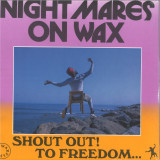
- A1: Shout Out! (Feat Beautiful People - Intro)
- A2: Imagineering
- A3: Creator Sos (Feat Haile Supreme & Wolfgang Haffner)
- A4: 3D Warrior (Feat Shabaka Hutchings & Haile Supreme & Wolfgang Haffner)
- B1: Miami 80
- B2: Gtp Call
- B3: Wikid Satellites (Feat Greentea Peng)
- B4: Breathe In (Feat Oshun)
- C1: To Freedom (Feat Beautiful People - Interlude)
- C2: Wonder (Feat Haile Supreme & Shabaka Hutchings)
- C3: Own Me (Feat Haile Supreme)
- C4: Widyabad
- D1: Isolated (Feat Pip Millett & Sabrina Mahfouz)
- D2: Trillion (Feat Mara Tk)
- D3: Up To Us (Feat Haile Supreme)
'Dieser neueste Soundtrack aus seiner Feder fühlt sich an wie ein längst überfälliges Wiedersehen mit einem verloren geglaubten Freund: Sofort erkennt man die bekannten Züge wieder, es umgarnt einen und zieht einen hinein in eine Welt, die unverwechselbar seine ist – die Welt von N.O.W. Immerhin kann man dieses Mal drei Dinge identifizieren, die zusammenkamen und dieses Album ganz klar prägen sollten: ein persönlicher Schicksalsschlag, ganz viel Zeit (ein Nebeneffekt der Pandemie) und Black Lives Matter. Inzwischen eher eine Art Bandleader, streckte er seine Fühler aus und knüpfte Kontakte mit jungen Talenten, deren Ansatz irgendwie zu N.O.W. zu passen schien. Bald war er mit Leuten wie Shabaka Hutchings, Haile Supreme, Mara TK und Sabrina Mahfouz in Kontakt. Auch Greentea Peng, OSHUN und Pip Millett fragte er an, erklärte ihnen die Stoßrichtung: Sie alle sagten zu und nutzten die im Titel angedeuteten Freiheiten und Freiräume auf ihre Art, lieferten ihre ganz eigene, vertonte Definition von Freiheit ab.' - Don Letts aka The Rebel Dread
The Velveteers, ein Rock-Trio aus den Bergen von Boulder, CO, bestehend aus Sängerin/Gitarristin Demi
Demitro und den Schlagzeugern Baby Pottersmith und Jonny Fig, werden am 8. Oktober ihr Debütalbum
”Nightmare Daydream” über Easy Eye Sound-Concord veröffentlichen; Produziert von Grammy-Preisträger
Dan Auerbach, ist das Album das lang erwartete erste Statement einer Band, die sich 2014 gründete und
seither sorgfältig an ihrem Sound und ihrer Identität gefeilt hat.
Aufgewachsen in Boulder, rebellierte Demitro durch ihre Gitarre, übte bis zu neun Stunden am Tag und
vernachlässigte die Schule, um einen Spielstil zu entwickeln, der schwer, aber beweglich ist, theatralisch,
aber nuanciert, in der Rockgeschichte verwurzelt, aber völlig eigenwillig. Mit Pottersmith und Fig, die
an einem gemeinsamen Drum-Set spielten, entwickelte die Band einen Ruf für ihre mitreißenden Auftritte.
Clips von den Live-Shows und DIY-Videos der Band schafften es bis zu Auerbach, der sie in sein Studio in
Nashville einlud, um ”Nightmare Daydream” zu produzieren.
”Ich mochte sie sofort”, sagt Auerbach. ”Sie sind live unglaublich, und ihre Videos sind so kreativ. Und
sie klingen einfach so kraftvoll. Jedes Mal, wenn man Schlagzeug auf einer Platte doppelspurig aufnimmt, klingt es so heavy. Wenn man das dann noch mit Demitros Baritongitarre kombiniert, klingt es so
bombastisch. Es gibt nichts Vergleichbares.”
Lofi-Schwergewichte Mr. Käfer & Phlocalyst ordnen die “metaphysics of a jazz thing” neu – um Gang Starrs Genre-definierenden Klassiker „Jazz Thing” aus dem Jahr 1990 zu zitieren. Obwohl die Fusion aus Hip-Hop und Jazz schon einen langen Weg beschritten hat, gibt es immer noch neue Routen zu entdecken und neue Geschichten zu erzählen. Mr. Käfer und Phlocalyst schreiben ihr eigenes Kapitel mit dem kollaborativen Album Now / Again, das über Melting Pot Music erscheint. Kicks, Snares und Basslines sind crispy, die 12 Tracks haben dennoch einen entspannten Vibe - verpackt in warme melodische Layer und getragen von Phlocalysts unverwechselbarem Trompeten-Sound.
Der flämische Produzent wuchs in Gent auf und lebt nun in München, wo er im klassischen Orchester spielt – ein ziemlich ungewöhnlicher Day-Job für einen Lofi-Produzenten mit mehr als zwei Millionen monatlichen Hörern auf Spotify. Mr. Käfer ist in Salzburg geboren – der Heimatstadt von Wolfgang Amadeus Mozart und Crack Ignaz – als Sohn einer österreichischen Mutter und eines algerischen Vaters. Heute lebt er in Köln. In seiner Musik mischt er alles von Boom-Bap über Jazz hinzu traditioneller, nordafrikanischer Musik. Das Album-Artwork wurde von der Kölner Künstlerin Giza One gestaltet. Now / Again ist als Vinyl-LP und Digitalalbum erhältlich.
- A1: Ennio Morricone - Mio Caro Assassino (From Mio Caro Assassino/My Dear Killer (1971)
- A2: Bruno Nicolai - La Notte Che Evelyn Uscì Dalla Tomba (Feat Edda Dell'orso - Long Version - From La Notte Che Evelyn Uscì Dalla Tomba/The Night Evelyn Came Out Of The Grave (1971)
- A3: Bruno Nicolai - La Dama Rossa Uccide Sette Volte (Edit - From La Dama Rossa Uccide Sette Volte/The Red Queen Kills Seven Times (1972)
- A4: Stelvio Cipriani - Tribal Shake (From Reazione A Catena/A Bay Of Blood (1971)
- A5: Stelvio Cipriani - Il Sesso Del Diavolo (Finale) (Finale)
- A6: Stelvio Cipriani - Deviation-M1 (From Deviation (1971)
- B1: Riz Ortolani - L'etrusco Uccide Ancora (Titoli) (Titoli)
- B2: Daniele Patucchi - Giallo In Tensione (From Frankenstein '80 (1972)
- B3: Ennio Morricone - Ansimando (Feat Edda Dell'orso - From Macchie Solari/Autopsy (1975)
- B4: Manuel De Sica - Black Dream (From Mystery Tour (1985)
- B5: Paolo Gatti & Alfonso Zenga - Cerro Torre (From Cesare Maestri Il Ragno Delle Dolomiti (1980)
- B6: Berto Pisano - Greta (From La Morte Ha Sorriso All'assassino/Death Smiles On A Murderer (1973)
- B7: Sante Maria Romitelli - Bambola Sensuale (From La Rossa Dalla Pelle Che Scotta/The Sensuous Doll (1972)
- C1: Adolfo Waitzman - Languidamente (From Pensione Paura/Hotel Fear (1978)
- C2: Nico Fidenco - Il Demonio In Convento (From Immagini Di Un Convento/Images In A Convent (1979)
- C3: Ettore De Carolis - Flavour Of Death (From Il Cavaliere, La Morte E Il Diavolo (1983)
- C4: Marcello Giombini - Un Gioco Per Eveline-M11 (From Un Gioco Per Eveline (1971)
- C5: Carlo Maria Cordio - Absurd (From Rosso Sangue/Absurd (1981)
- C6: Stelvio Cipriani - Devil Dance (Performed By Goblin - From Un'ombra Nell'ombra/Ring Of Darkness (1979)
- C7: Daniele Patucchi - E Tanta Paura-M2 (From E Tanta Paura/Plot Of Fear (1976)
- C8: Marcello Giombini - Orinoco Prigioniere Del Sesso-M19 (From Orinoco: Prigioniere Del Sesso (1980)
- D1: Franco Micalizzi - Bargain With The Devil #3 (From Chi Sei?/Beyond The Door (1974)
- D2: Stefano Liberati - The Prophecy (Version A - From I Pensieri Dell'occhio (1978)
- D3: Luigi Ceccarelli - Walking Through The Shadows (From Difendimi Dalla Notte (1981)
- D4: Daniele Patucchi - Minaccia Sulla Citta (From Belve Feroci/Wild Beasts (1984)
Red vinyl[63,49 €]
PAURA explores the horror repertoire from the precious CAM Sugar archives taking us on a hypnotic journey into the labyrinths of fear, through the different variations that Italian horror took on from the esoteric and supernatural to the slasher films of the early 1970s; to reinterpretations of Romantic literature and gothic fiction to the splatter films of the ‘80s; and from witchcraft to metropolitan horror. This is not a real “best of” but an eclectic menu full of mysterious voices, childlike lullabies, sweet melodies, obsessive music boxes, obstinate harpsichords, crazy distortions and threatening synthesizers, conceived as a succession of sequences, as if a film edit. The new collection includes some of the most creative music ever written and strives to do justice not only to some of the best known composers in this genre, but also to many great unsung composers: From celebrated composers like Ennio Morricone, Riz Ortolani & Stelvio Cipriani to long-forgotten personalities who fed the industrial backbone of Italian cinema such as Daniele Patucchi, Marcelo Giombini & Berto Pisano. The collection includes 6 previously unreleased tracks plus 3 tracks released on vinyl for the first time and 5 tracks available commercially for the first time (originally released only as a limited promo item).
Originally from Limerick, O’Brien’s work captures the everyday and the inbetween in a way that transcends any genre label. Writing from her own observations, O’Brien’s influences can be found in the realism of Mark E. Smith of The Fall, Patti Smith and The Slits, and the works of literary icons such Frank O’Hara, W.B. Yeats, Joan Didion and Albert Camus. Releases to date have drawn admiration from British and American outlets and radio stations as diverse as The FADER, Stereogum, The Guardian, Loud And Quiet, The Quietus, BBC Radio 1 and BBC Radio 6 Music, and more.
Speaking about the new single, O’Brien explains: “‘Most Modern Painting’ is about the creation and maintenance of ‘the self’ - the most epic task we are faced with in our lives. I wanted to work with structure in an unconventional way, linking the movements together using various voices from the narrative. The lyrics are voiced through a dialogue between the conscious and unconscious, through dream recall, memory, the individual and the ego.”
The accompanying music video for ‘Most Modern Painting’ was shot in a film-like manner on 16mm. Directed by Saskia Dixie, the movements are intrinsically linked to the lyrics; the choreography incorporates physical theatre, dance and elements of daily gestures and habits.
The chorus line on ‘Most Modern Painting’ birthed the title for the EP ‘Drowning In Blessings’ - “The more I said it, the more it meant. It’s an image which I find really cathartic; seeing the weight or build up of things as possibilities and opportunities instead of bearing their burdens. I approached the set of songs on the EP like a short album so the body of work feels full and tells a substantial story. Tracks allude and refer to one another and provide clues and hints to the future and to the past. It’s not only about language and music - it’s about energy, spaces, leaving room for other people to get in.”
A multifaceted artist, O’Brien’s writing has also been published by the esteemed London Magazine whose alumni include T.S. Eliot, Sylvia Plath and William Burroughs. Her unique fusion of spoken lyrics and art rock has piqued the attention of luminaries of both fields, seeing her perform with John Cooper Clarke and The Brian Jonestown Massacre at sold out theatres across the U.K. Playing live with her band and collaborators; Julian Hanson (guitar) and Oscar Robertson (drums), Sinead O’Brien’s transfixing performances are placing her at the forefront of a resurgent wave of independent British and Irish talent.
‘The record is inspired by the idea of humanity’s ever-increasing entanglement with technology and artificial intelligence, balancing fears and moral concerns with the possibilities of evolution’s next phase’
A new Soccer96 album is a chance for Danalogue (Dan Leavers) and Betamax (Maxwell Hallett) to return to something of a spiritual creative home. Between them, the keyboardist and drummer have become synonymous with the thriving London jazz scene and, in their mind-bending incarnation as the astral synths-and-drums pairing, they’ve traversed stylistic worlds. Over nearly a decade, the duo have metamorphosed from a DIY outfit whose rough-edged recordings hit with a punk spirit, to cosmic dreamers that use sound to travel the reaches of the mind.
First single Dopamine features Nuha Ruby Ra on vocals who sings from the perspective of human and machine throughout the track. This concept overlaps with the music seamlessly, forming a meeting point between technological and human exploration.
Dialogues between the band and Nuha crystallised a shared vision of a future where humans and artificial intelligence are entangled in a codependent relationship based on the giving and receiving of pleasure hormones, the robots only source of dopamine is to receive it from humans, and the humans’ ability to unleash the monsters of the worst of human emotion.
Danalogue and Nuha sing together ‘It’s a Long Way down’ .. the feeling of jumping from the cliff of our current state as humans and ‘free-falling’ into the unknown of robot-human intertwining. By the outro they are pleading with each other over their dopamine co-dependency, in terms of both giving and receiving the hit. "Dependency leads to free-falling integration, a moment of freefall into robotic consciousness. Humans and machines are locked in a dance of addiction." explains Betamax.
Soccer96 has always been a vessel for Danalogue and Betamax to find clear water from their multitude of other collaborations, their most notable being as two-thirds of The Comet Is Coming alongside Shabaka Hutchings. Danalogue’s other recent production credits include Snapped Ankles and Calabashed, whilst Betamax has been making music with Champagne Dub and Coma World.
“Through collaborating with various artists and developing our own sonic language, it feels like we have created a sound of our own,” says Danalogue. “Now we think less literally and take more liberties to not necessarily sound like a duo. It’s more like a production team that can be augmented or stripped back depending on what the music calls for.”
Dopamine, though, sees the pair back together once again, incubating their findings of the past two years and moving Soccer96 into new territories. The record is maybe darker in some senses than what they’ve put out before; it’s inspired by the idea of transhumanism and humanity’s ever-increasing entanglement with technology and artificial intelligence It balances fears and moral concerns with the possibilities of evolution’s next phase. “The LP title Dopamine refers to the type of neurotransmitter associated with pleasure, that enables technology to hack into our minds and control us, creating addiction, dependency,” Betamax explains.
Dopamine began life as a sonic reaction to the graphic novels of ‘Moebius’ Jean Giraud. The duo then started swapping reel-to-reel tape ideas through each other’s letterboxes in lockdown, before eventually convening in the studio and displaying one of the revered French artist’s images in the middle of the studio for inspiration.
“All musical decisions would centre around this image,” Betamax says. “It was a depiction of a cosmic traveller gazing across a desert at a sort of crystal city. If the music was resonating with the image then we knew we were on the right path. We are both glad there is a lot of emotional warmth underpinning the whole thing. We are trying to connect with the human essence at all times.”
- A1: Daniela Vega - Titles
- A2: Daniela Vega - Illness
- A3: Fernanda Carreno - Away
- A4: Hospital
- A5: Glasses
- A6: Trapped
- B1: Sposa Son Disprezzata
- B2: Fountain
- B3: Turn
- B4: Escape
- B5: Warehouse
- B6: Queen
- C1: Kidnap
- C2: Manicure
- C3: Key
- C4: Sauna
- D1: Taxi
- D2: Cemetery
- D3: Farewell
- D4: Ombra Mai Fu
- D5: Periodico De Ayer (Bonus Track)
A Fantastic Woman (Spanish: Una mujer fantástica) is a 2017 drama film directed by Sebastián Lelio and written by Lelio and Gonzalo Maza. It was selected as the Chilean entry for the Best Foreign Language Film where it won in the 90th Academy Awards. The film is about Marina, a transgender woman who works as a waitress and moonlights as a nightclub singer, is bowled over by the death of her older boyfriend. It premiered at the 67th Berlin International Film Festival in 2017 where it won the Silver Bear for Best Screenplay and the Teddy Award, an award given to films with a LGBT theme.
Matthew Herbert is an award-winning composer, artist, producer and writer. He has had work commissioned by the Royal Opera House, the BBC and has remixed iconic artists such as Quincy Jones, Ennio Morricone and been a longtime collaborator of Bjork’s, but he is best known for working with sound, turning ordinary or so-called found sound in to electronic music.
This is a limited edition contains of 1000 individually numbered copies on transparent pink coloured vinyl. The LP package contains an insert with notes from director Sebastián Lelio.
Alexander Winkelmann, der höflichste Punk von Germany, singt vom fast normalen Leben. Wir haben es offensichtlich mit Aufbruch und Verzweiflung zu tun, mit alten Sehnsüchten und neuer Zufriedenheit, mit dem Guten und dem Schrecklichen, und mit dem Yolofanten (»Yolofant«).
Was tut man, wenn man alles tun kann? Und was passiert, wenn alles stillsteht? Treibend und schrammelig, gaga und melancholisch. Die Neunziger, die Nuller, die Zweitausendzwanziger. Punk, Pop, Indie-Rock. Winkelmanns Debütalbum, »Danke der Nachfrage«, ist Wohnzimmer-selfmade und dennoch brillant produziert (in Marzahn – von Balayage, also Garagen Uwe und Sebastian Gieck). Das Album, das von mehreren Videos begleitet wird, ist durchsetzt von Hits, aber auch meta und formbewusst — ein eigentlich unmöglicher musikalischer Stunt.
Die getriebene Stimme der Winkelmann-Figur wirkt regelrecht manisch, sie ist der offensive Ausdruck einer Person, der es sehr, sehr gut geht, die aber auch sehr, sehr traurig ist. Winkelmann glaubt an die vereinende Kraft des Tempelhofer Flugfelds (»Flugfeld«), er läuft alleine auf einer unbefahrenen Autobahn (»Autobahn«) und hat Dinge gesehen, die schon längst wieder verschwunden sind (»Dinge«). Er möchte mit seinem Wohnraum zum Wohnraum des geliebten Menschen fliegen (»Lockdown«), er möchte Pizza mit ganz viel scharfem Öl benässen, und wird die Weihnachtsfeier des Jahres 2019 (»Weihnachtsfeier«) wohl nie vergessen.
Zehn exzentrisch-sensible Hymnen über das doch eigentlich schöne Leben, intim nah am Berliner Alltag.
Razen are back with a second album on Blue Rot, follow up to last year's release Robot Brujo on HITD.
On Blue Rot, the band introduces a softer palette and a new quartet, as the core duo of multi-instrumentalists Brecht Ameel and Kim Delcour is augmented with new band member Berlinde Deman on Serpent and guest Thomas Bloch on Glassharmonica and crystal Baschet. Drawing inspiration from late 19th-Century Symbolist art, Blue Rot summons heartbreak and the perils of isolation in languid, hypnotic modes, laying bare the beauty of stillness, the solitary gaze at drifting clouds.
Notwithstanding its hushed and melancholy tone colours, the album provides the listener with the customary disorientation, instrument clashes and tension between stasis and slow-moving development so firmly entrenched in the sound world of Razen. These five improvised pieces offer another testimony to the uniqueness of this outfit, their esoteric ancient-modern approach and to their dedication to explore new ground on each release while managing to sound only like themselves.
DIALOGUE was conceived as a series of musical letters written back and forth between Luke Slater, Anthony Child (aka Surgeon), KMRU, Lady Starlight, Speedy J and harpist Tom Moth (of Florence + the Machine) at the height of the pandemic between 2020 and early 2021. Using the common language of rhythmic ambient electronics, each DIALOGUE features three actors in a sonic conversation of longform improvisation between 15 and 25 minutes in length, with Luke Slater the common denominator. The results are a brooding, psychedelic exchange of melody, texture, bass, oscillation, key changes and volume swells, which organically merge into complete compositions. It’s music that both reflects and transcends the artists' common reality of isolation – a meditative, consciousness-expanding conversion of musical ideas born from necessity. Cosmic but not escapist. And very much of its time.
Mission Escape: signal incoming...Escaping Earth - file loaded...press enter --> program launched! When things become too much, escaping might help. Take a seat and join the ride with CYRK's first full length musical player on CHILDHOOD. After having released outstanding records on labels such as Running Back, Rawax, Burial Soil, Vakant, Avoidant, Dred, Science Cult, Lone Romantic and their own Time Zero imprint, the seminal Berlin machine funk duo launched their analog spaceship studio once again to tell their most advanced and versatile intergalactic tale to date. Escaping Earth is a story that comes in 8 episodes and showcases Sam and Pascals mastered skills in detailed sound design and arrangement, while always keeping a focus on powerful dancefloor oriented electro grooves. Ranging from Detroit influenced bassline bouncers to slower acid variations, this album will let you dive deeply into CYRK's beautiful musical language and range: a soulful journey from the light to the darkness and back. Above all, this album is at all times pure analog electronic funk and won't let you go from beginning to end. Sometimes escaping helps. This musical story will make you travel the stars with ease. The album is pressed DJ friendly on 2 x 12" vinyl and includes a download copy. A limited edition of 100 numbered copies comes in double colored (red/green) records and will be exclusively sold via CHILDHOOD's bandcamp page as well as the CLONE store. Vinyl to be released on September 13th 2021, followed by the digital release on September 24th 2021.
Penny Records presents the vinyl version of the soundtrack from the TV Series "Anna" written and directed by Niccolò Ammaniti. Fueled by Niccolò Ammaniti's passionate and immersive creative style, the score for 'Anna' was approached almost as a character study. 'Anna' exposes a world of extreme conditions where the essentials of human existence flourish in a wide range of emotions and sentiments tainted through the eyes of children. Striking brutality and primal savagery go hand in hand with the beauty of innocence and hope. Rauelsson's musical language for 'Anna' includes tense and spare textures that blend seamlessly with intimate ambient minimalism; classical elements that coexist with electronic drone experimentation and tribal rhythms, candid piano melodies buried in tape loops and otherworldly rituals of wordless voices. To arrive at this music landscape, Rauelsson enlisted an international cast of collaborators including Finnish percussionist Tatu Rönkkö, German cellist Anne Müller, American multi-instrumentalist Peter Broderick and Oslo-based vocalist Simin Tander. With this ensemble, Rauelsson's music documents a journey of survival that highlights the power of imagination and love.
Credits:
Music by Raúl Pastor Medall except A3 (Salvatore Cardillo, lyrics by Riccardo Cordiferro), A5 (Raúl Pastor Medall, Peter Broderick and Anne Müller), B3 (Raúl Pastor Medall and Anne Müller) and A2, B1, B2 (Raúl Pastor Medall and Tatu Rönkkö)
Played by Peter Broderick (Violin), Anne Müller (Cello), Raúl Pastor Medall (Piano, Electric Piano, Synthesizers, Electronics), Tatu Rönkkö (Drums, Percussion) and Simin Tander (Voice) with additional contributions from Christoph Berg (Violin), Aisha Burns (Violin) and Giulia Dragotto (Voice)
Recorded in 2020 at Rockaway Studios (Castelló, Spain; engineered by Raúl Artana), Niu (Benicàssim, Spain; engineered by Raúl Pastor Medall), Old House at Galgeberg (Oslo, Norway; engineered by Olav Torget), Tanum Church (Bærum, Norway; engineered by Olav Torget) and Indigo Studios (Palermo, Italy; engineered by Fabio Rizzo)
Additional recordings by Peter Broderick (Co. Galway, Ireland), Anne Müller (Berlin, Germany) and Tatu Rönkkö (Helsinki, Finland)
Produced by Raúl Pastor Medall and Niccolò Ammaniti. Mixed by Raúl Pastor Medall and Adam Selzer at Niu and Type Foundry (Portland, OR). Mastered by Adam Gonsalves and Adam Selzer at Telegraph Audio Mastering (Portland, OR). Lacquer mastercut by Andreas LUPO Lubich at Loop-O (Berlin, Germany). Artwork by Emiliano "Stand" Cataldo.
The edition that marks the start of the brand-new Comets Coming could not be more suitable: it is that Rodrigo Brandão, like his grandfather Herman Poole Blount, dust of stars that the world knows as Sun Ra, may have his feet on the Earth, but he has definitely a sidereal head.
Brandão arrived recently to Portugal, but already left a strong mark in the most adventurous Lisbon scene, having performed several concerts in which his language has been wrapped in the exploratory sounds of musicians such as Rodrigo Amado, João Valinho, and Hernâni Faustino. The agitator, poet and spoken word artist, brought a vast experience that over the years saw him collaborate with artists as distinct as the members of Metá Metá or Prince Paul (that one!) on BROOKZILL!.
This work, however, came in his luggage, across the ocean, on the rediscovery trip that brought him from Brazil to Lisbon. OUTROS ESPAÇO was recorded in São Paulo in late 2019 with a luxury crew: Tulipa Ruiz and Juçara Marçal added to the microphone, Thiago França played flute and alto & tenor saxophones, Guilherme Granado dealt with the synthesizers and effects, Marcos Gerez measured the overall pulse with his electric bass, Thomas Rohrer played soprano and 'rabeca' (fiddle), and Paulo Santos dealt with the percussion. In addition to the base band, OUTROS ESPAÇO also features some members of Sun Ra Arkestra's current incarnation. Respectively: Danny Thompson (RIP) on baritone and bongo, Elson Nascimento on 'surdo' (tom drum), Knoel Scott on tenor and soprano, with the giant Marshall Allen in a prominent role leading the collective towards the unknown, while playing the alto sax and synthesizer.
In OUTROS ESPAÇO, Brandão reaches for words from different origins, from contrasting times and cultures, all with magnetic resonance imaging: what is not from his furrow comes to him from Candomblé (“Quando Os Orixás Desfilam Sobre A Cracolândia”), from his readings of Sun Ra (“Eu Sou 1 Instrumento” is an adaptation of the poem I Am An Instrument), or from the school's playgrounds (“Jamais Nos Esqueceremos”). And in these words there are teeth and nails ingrained in injustice (“Quantos Coltrane...?, “Todo o Dia Tem +”) and kaleidoscopic delusions that result from the speed of light (“Sol da Meia Noite”).
The crew that travels through these OUTROS ESPAÇO (PT for "Other Spaces") has freedom as the main fuel, jazz as a measure of their reach, and all swings in the world as maps, so they can lose themselves at the end of the cosmos. There is urgency and reflection, craziness and precision, surprise and well-known ancestral raw material, that makes us vibrate inwardly with the same trembling as the comets that are coming.
The visionary and veteran Scotty Hard was responsible for making everything sound like the music of the spheres, dealing with the mixing from his INGUASONIC SOUND studio in Brooklyn, NY.
And lastly, in January, Rob Mazurek, another frequent ally of Brandão, another notorious space traveler, offered a poem that frames this project. Among other things, he writes:
Make this place sing
Make this place thunder
Make this place shake
It couldn't be in any other way.
Following on from the acclaimed Tiger Balm / Amazonia Dreaming / Immersion LP (BT028), Black Truffle is thrilled to present two major new instrumental works from legendary sound artist and experimental composer Annea Lockwood. Demonstrating the ever evolving and radically open nature of Lockwood’s practice, these two recent works were developed in close collaboration with their performers. ‘Becoming Air’ (2018), developed with and performed by trumpeter Nate Wooley, uses extended technique and electronics to interfere with Wooley’s virtuosic control over his instrument, pushing him into areas of fluctuating pitch and timbral instability. Motivated by a desire for ‘the letting go of sound to be itself’, ‘Becoming Air’ unfolds as a series of texturally distinct moments separated by pauses, each fixing on a particular approach to the instrument (long tones, upper-register whistles, breathy wooshes) and maintaining it in an essentially static fashion, focussing our attention on subtle changes and variations. Dipping into near-inaudibility in the fragile high tones of its opening section, the piece dramatically increases in volume and intensity in its final third, climaxing with a passage of roaring distortion, where the interaction between feedback and trumpet pitches calls up the shuddering interference effects of Robert Ashley’s Wolfman.
‘Into the Vanishing Point’ (2019) is a collaborative work developed with New York piano and percussion quartet Yarn/Wire, who have performed work by major contemporary composers such as Olivia Block, Catherine Lamb and Klaus Lang. Carrying on the ecological and environmental concerns of some of Lockwood’s previous works, ‘Into the Vanishing Point’ was inspired by a devastating news article on the global collapse of insect populations. Discovering that the four members of Yarn/Wire had also read this text, Lockwood mapped out a loose structure for the piece that would allow the composer and four performers to explore their ‘feelings about what is happening ecologically’. Working with a huge variety of instruments, objects and techniques of sound production, the resulting work is an alluringly lush, organically unfolding tissue of unorthodox textures and haunting tones. Though not intended to sonically represent ecological issues in any direct way, its unique sound world of rubbed piano strings, gently handled objects and chiming pitches often calls up natural images: of insects and frogs, wind rushing through trees, a bird’s wings in flight. Presented in a stunning gatefold cover with liner notes by Lockwood, Wooley and Yarn/Wire, Becoming Air/Into the Vanishing Point is a testament to the generosity and experimentation that continue to characterise the work of this extraordinary artist, active for over fifty years.
Over the last few years, NuNorthern Soul has established a number of traditions, most notably annual releases that provide a snapshot of the label’s output while also considering their suitability for certain seasons. Perhaps the most popular is founder Phil Cooper’s Summer Selections series, which each year showcases warm and sunny gems mined from a range of forthcoming releases.
The 2021 edition of the sampler, the third in total, may well be the best yet. Six tracks deep and as subtly varied as you’d expect, the entertaining set features tracks from a mixture of exciting newcomers, experienced producers and long-time members of the NuNorthern Soul family.
To kick things off, Cooper introduces us to Marshall Watson, an American producer who later in the year will release two five-track EPs on the label. ‘A Door To The Sky’, which will feature on the Sunsets On Larkin Part 1 EP, is sumptuously sun-kissed, with delay-laden electric guitar textures and sparkling electronics reclining over a tactile electronic groove.
LOVA’s ‘Echoes of Memories’, the track that follows, recalls the atmospheric, synthesizer-sporting new age Balearica popularised by Quiet Force in the late 1980s. The Italian producer was signed after bringing a USB stick of productions to one of Phil Cooper’s gigs in Ibiza; his Gypsophilia EP will be one to check when it drops later in the year.
Gusk’s ‘Sketch #4 - Anafi Nights’ is seductive and exotic. It’s a crackling and atmospheric musical painting that daubs starry stabs and yearning melodies atop a bubbly, lo-fi drum machine beat. It provides a perfect snapshot of the Greek musician’s Mediterranean Sketches EP, which gathers together home recordings made between 1997 and 2003.
Arguably even more immersive and enveloping is ‘Aqua Blancas Sunrise’ by Tambores En Benirras, the musical project of Cumbrian selector DJ Gripper. A slow-burning delight full of intricate musical flourishes –think drifting female vocalizations, Indian-influenced percussion, twinkling pianos and haunting clarinet motifs the track is one of the many highlights on the Barrow in Furness based producer’s forthcoming debut album for NuNorthern Soul.
To round things off, Cooper has chosen to offer-up cuts from two very experienced artists. George Solar (real name Georg Boskamp) is an Ibiza-based German producer who has been collaborating and releasing music since the late 1980s. ‘Infrared’, his contribution to Summer Selections 3, is a languid and glassy-eyed slab of slow-motion Balearic dub. His Los Ra-yos Del Sol EP will be one to look out for later in the year and is his debut solo release.
The sampler’s final missive fittingly comes from long-time friend of the family B.J Smith, a regular contributor to NuNorthern Soul releases who has reunited with Huw Costin – a vocalist he previously worked with on Smith & Mudd releases for Claremont 56 for a double A side single due later in 2021. ‘Sun When You Come’ is as warming and hazy as you’d expect and features Costin’s emotive, reverb-laden vocals and mazy electric piano solos rising above a suitably horizontal groove. It provides a stunning, sunset-ready conclusion to another superb set of Summer Selections.
Underground rock festered and splintered as it spread through the U.S. in the mid-’90s, the alternative boom giving rise to microcosmic regional scenes singularly focused on feral powerviolence or screamo songs about breakfast. Boston’s Karate emerged as a force that could grip a national youth movement whose disparate tastes still commingled in the inky pages of fanzines overflowing with florid prose and on concert calendars for volunteer-run DIY spaces, community centers, and bowling alleys. In this world, Karate’s music was an enigma, one equally inviting to sneering punks and highfalutin indie-rock aficionados.Their 1996 self-titled debut, issued on Southern Records, set the standard.
Lasooing together white-knuckle posthardcore tension, sharply focused slowcore serenity, and resplendent jazz complexity, Karate eschewed settling in any one definiable style. But they certainly used the language of punk to get their point across; occasionally, guitarist Geoff Farina abandons his warm, hushed cadences for a hoarse shout that made him sound ragged, intensifying an aggression that burst out with every snaggletoothed guitar riff or drum snap that went off like canonfire.
Few followed their path—but who could keep up? Karate could make pensive moods blossom into feverish rollicking (“What Is Sleep?”), gracefully tip-toe around aggressive punk explosions without getting bent out of shape (“Bodies”), and stretch out
slowcore’s quietest reveries till their reflective notes sound ripped from an improvisational jazz session (“Caffeine or Me?”). Karate formally introduced the trio as a vital part of an independent U.S. punk scene stubbornly flowering in the face of the major labels’ ’90s harvest.