This band, and this album, function as critical missing links that takes one from The Fall to Yard Act, from Television and The Minutemen to Parquet Courts and Sleaford Mods, from punk as a sound to punk purely as an ethos. While any Van Pelt album is a stand alone album, the unique approach they take begs one to enter their world and dig deep in.
RELATED TO: The Lapse, Native Nod, St Vincent, Blonde Redhead, Enon, Jets to Brazil, Vague Angels, Ted Leo and the Pharmacists, American Football, Texas is the Reason.
‘The lines between post-hardcore, indie rock, and emo blurred on the two mid-’90s full-lengths from the Van Pelt.’ Pitchfork
‘New York City’s The Van Pelt are an influential, but too often overlooked indie rock band -- cult favorites for many an emo-inclined crate digger.’ Consequence of Sound
‘...should be mentioned a lot more than they are when you talk about the history of emo.’
Washed Up Emo
Back in the day there was this thing called an A&R guy. They would hang out at small venues looking to throw money at the next big thing. In the early 90s, everyone was looking for the next Nirvana of course. NYC's The Van Pelt had just released an album of anthems called "Stealing From Our Favorite Thieves" that seemed to be just that. The only thing is, they didn't want to sign. Legend has it $2 million was turned down over pierogies and coffee one Monday morning because The Van Pelt didn't want to risk crashing and burning. Instead, they were gunning for a long and stable stride even if that meant they would largely remain out of the public's eye forever.
Lack of willingness to play the game didn't mean people weren't waiting with baited breath for their follow up album though. In 1997 The Van Pelt released "Sultans of Sentiment", an album nearly devoid of the anthems and licks people were expecting. In fact, it's a complete bummer of an album that subjects the listener to the point on life's curve where the hubris of youth gives way to a cresting crashing defeat no kid with heart could ever have seen coming. Seeing as humanity are sick fuckers who revel in the misery of both themselves and others, the popularity of Sultans grew and grew and continues to win new loyal fans even today. It's for this classic album The Van Pelt has never fallen off the radar.
That being said, their swan song "The Speeding Train" was recorded while they were working on their third album. In any other age, in any other way, this song would have been a hit. The Van Pelt broke up mid-recording, released Speeding Train as a single, and the rest of the songs from that session didn't see the light of day until they were released in 2014 as the "Imaginary Third" lp.
Why are we here talking about them today in 2023? Because in preparation for the release of "Imaginary Third" The Van Pelt started playing some reunion shows. Soundchecks revealed to them that this band has a voice that was prematurely muted by their inability to see clearly in the thick of it. Returning to explore just what that is 25 years later has led to this first collection of 9 songs, "Artisans & Merchants". This is not a reunion album. This is vindication for that decision made over pierogies and coffee decades ago. The Van Pelt is a band in it for the long haul, free from whatever trappings the mayflies of trends and markets may bring.
For lovers of The Van Pelt, listening to "Artisans & Merchants" is like hearing the voice of a dear friend you haven't seen in years, a friend you used to share countless beers with over banter that went nowhere other than delivering a solid night. Your friend is older, they've changed. In some ways you're worried for them, looks like they might be teetering on the brink of something. In other ways it's the same old them, a nugget of a soul too unique to ever be altered. It's for those unfamiliar with The Van Pelt though for whom we should be truly jealous. This is a stand alone album, incredible vital song writing in and of itself regardless of the long history this band has. The climax of the single "Image of Health" perhaps describes the beautiful desperation best: "And you never felt more alive / Than when the priest came to read you your rites!"
Поиск:lap 1
Все
This is one of Ray Pérez’s most highly sought-after albums, not only for its strong salsa dura anthems and funky boogaloo numbers but also for its brave, quirky eclecticism and youthful, rebellious spirit, all of which are reflections of “El Loco” Ray’s unique genius, making him a beloved figure in rare record collector circles everywhere.
The original is not that easy to find today and carries a hefty price. Thankfully, it has been remastered from the original tapes, fully licensed, with the original artwork, preserving and presenting the legacy of this great Venezuelan music for today’s generation.
DESCRIPTION
The late 1960s was a very busy time when Pérez was juggling several different studio bands: Los Dementes, Los Calvos and Los Kenya.
The daring experiment Pérez created with Los Calvos laid the basis for Los Kenya, an actual working band that released six albums between 1968 and 1972. Despite being titled “Los Kenya, Vol. 2” because it was the second released by Discomoda, the record actually represents Los Kenya’s third album, and is perhaps the most mature, well-rounded venture in the lot.
In February 1969, on Discomoda, came “Los Kenya, Vol. 2” focused on the upcoming carnival season and was calculated to compete with rival bands Federico Y Su Combo Latino and Sexteto Juventud for the plethora of gigs offered at that time of year.
The album, like all Ray Pérez releases of the time, is short and powerful, with five tracks per side, showcasing a variety of singers, genres, rhythms, influences and arrangements, making this one of his more eccentric and interesting efforts. 1960s California “sunshine pop” rock (often referred to as ‘surf’ on Los Kenya records), guajiras, boogaloos, descargas and even Mexican mariachi corridos are all added to the pot of salsa cooked up by “El Loco Ray” and his band.
The album has been rescued from obscurity and lovingly restored, remastered from the original tapes, fully licensed, with its original artwork intact, preserving and presenting the legacy of this great Venezuelan music for today’s generation of global salsa dura fans.
a centrifugal spin collapses inward
sucked into the ground
vibrating with the quake beneath the crust
the folding repeats itself in time
an echo amid the buildings of a primordial era
with closed eyes
the shapes begin to take form
in the debris
objects clump together into conglomerates
a scream
trapped in water-retaining cells
the moss that embeds itself after
a short passage of time
you talk back
but I can’t hear you
something springs forth
somewhere
a remnant that remains
—
Strange Meridians is an album by multidisciplinary artist upsammy. It is released by adventurous electronic music label topo2 on November 21, 2024. The record is pressed on 180 grams of ICCS-certified bio-vinyl, housed in a heavy full-colour sleeve, and comes with a download-code to the full release. Mastering is done by Isabel Schröer at Scape Mastering and artwork by courtesy of Thessa Torsing and Kees de Klein. Poetry by Thessa Torsing with editing by Eelco Couvreur.
- A1: Choose Your Weapon
- A2: Shaolin Monk Motherfunk
- A3: Laputa
- A4: Creations Part One
- A5: Borderline With My Atoms
- B1: Breathing Underwater
- B2: Cicada
- B3: Swamp Thing
- B4: Fingerprints
- B5: Jekyll
- C1: Prince Minikid
- C2: Atari
- C3: By Fire
- C4: Creations Part Two
- D1: The Lung
- D2: Only Time All The Time Making Friends With Studio Owl
- D3: Molasses
- D4: Building A Ladder
- A1: Breathing Underwater (Roman Soto Cello Rework) - Bonus 7”
- B1: Making Friends With Studio Owl (Club Mix) - Bonus 7”
2x12" Green Vinyl + 7" Black Vinyl
Brainfeeder kündigt für den 25. November 2022 die Wiederveröffentlichung des mittlerweile zu Kultstatus aufgestiegenen zweiten Albums der Prog-Jazz-Future-Funkster von Hiatus Kaiyote, „Choose Your Weapon“! Das Album, das ursprünglich 2015 erschien und einige der größten Hits des Vierers vereint (u.a. „Fingerprints“ und „Molasses“), kommt in seiner Neuauflage auf fotoluminiszierendem Doppelvinyl dem zusätzlich Lyrics-Sheet, Stickerbogen und eine Bonus-7“ mit dem bislang unveröffentlichten Roman Soto Cello Rework von „Breathing Underwater“ und einem Club-Mix von „Making Friends With Studio Owl“ beiliegen.
Format: Fotoluminiszierendes Doppelvinyl inklusive Lyrics-Sheet, Stickerbogen und eine Bonus-7“ mit dem bislang unveröffentlichten Roman Soto Cello Rework von „Breathing Underwater“ und einem Club-Mix von „Making Friends With Studio Owl“
Stars align and Oli Heffernan brings his ever-(d)evolving Ivan The Tolerable to Riot Season for two LPs of sublime entropic drift.
Having this time recruited Christian Alderson (The Unit Ama) on drums, John Pope (Ponyland) on double bass, Kevin Nickles (Ecstatic Vision) on flute and saxophone and Ben Hopkinson on electric piano - both works were recorded as a quintet almost instantaneously, the players barely brushing or breathing a note before the whole thing was done.
The first LP, Vertigo, is all claustrophobic, dense and disorientating - like Sun Ra sitting in with Exploding Star Orchestra
Whereas the second LP, Water Music, is the music of lapping waves, becalmed, creaking hulls, circling birds and gentle winds. - Equal parts Laraaji and Natural Information Society
Bob Fischer (Electronic Sound Magazine) on ‘Water Music’
"A summer's afternoon daydream of an album. Beautifully soothing psychedelic jazz overflowing with raga delights...immerse yourself in its charms"
John Hubner (Complex Distractions) on ‘Vertigo’
“An expansive collection of free-flowing sound and mood bringing to mind Coltrane (John and Alice) as well as the great Albert Aylor, while touching on the forward thinking compositions of Rob Mazurek's Exploding Star Orchestra. From the titanic soundscape of "New Worlds On Earth" to the Marc Moulin touches of "Liquid Voices" and the mysterious eccentricities of "Swimming", 'Vertigo' hangs in the air long after the final note plays.”
- A1: It's My Life
- A2: Encore Une Fois (Featuring Sabine Ohmes)
- A3: Ecuador (Featuring Rodriquez)
- A4: Stay (Featuring La Trec)
- A5: La Primavera
- B1: Mysterious Times (Featuring Tina Cousins)
- B2: Move Mania (Featuring Shannon)
- B3: Colour The World (With Special Appearance Of Dr Alban)
- B4: Adelante (Featuring Paul Hammer & Rodriquez)
- B5: Just Around The Corner (Featuring Tina Cousins)
- B6: With My Own Eyes (Featuring Inka Auhagen)
- C1: Ganbareh (Featuring Mikio)
- C2: Run (Featuring Boy George)
- C3: I Believe (Featuring T J. Davis)
- C4: All Is Love (Featuring Jessy)
- C5: The Secret (Featuring Sarah Brightman)
- D1: Can't Change You (Featuring Plexiphones)
- D2: Walking The Wire (Featuring Christina Novelli)
- D3: Coming Home (Featuring Shayne Ward)
- D4: Rainbow (Featuring Nicol Scholz)
- D5: Rock My Body (With R3Hab, Inna And Sash!) *Bonus Tracks
- D6: The Ultimate Seduction (Featuring Sir Danny Cool And C'hantal)
The Eurodance producers trio consisting of Sascha Lappessen, Thomas “Alisson” Lüdke, and Ralf Kappmeier, founded SASH! in 1995. This comprehensive vinyl selection of The Best Of... SASH! includes the first smash hit “It’s My Life”, which reached the top charts in Europe in 1997, and the follow-up hit “En- core Une Fois” featuring Sabine Ohmes, which reached the #2 position in the UK charts. A slew of hit singles followed such as “Ecuador” featuring Rodriquez, “Stay” featuring La Trec, “La Primavera”, “Mysterious Times” featuring Tina Cousins, “Co- lour The World” featuring Dr. Alban, and “Adelante” featuring Paul Hammer & Rodriquez. All of which reached top positions in Europe and the UK.
In 2023, SASH! released hit singles “Rock My Body” featuring R3Hab and Inna. A year later “The Ultimate Seduction” fol- lowed, which featured Sir Danny Cool and C’hantal and con- tained a sample of the 1990 classic house acapella recorded by C’hantal. Both singles are included in this compilation as bonus tracks.
For the first time, The Best Of...SASH! is available on vinyl as a limited edition of 1000 copies on translucent yellow coloured vinyl. This 2LP includes an insert.
After winning three leading Belgian music awards with Humo's Rock Rally, De Nieuwe Lichting and Sound Track, girl band BLUAI is expanding its horizons. On their debut album Save It For Later, the trio leaves for a road trip through the sonorous areas populated by the likes of Big Thief, Pinegrove, Haim, and Alabama Shakes.
Save It For Later is a record not unlike a Polaroid picture. Belgian songwriter Catherine Smet captures the memories of her youth in lyrics with a perfume of Americana, country pop, and indie folk. The stories areset in her native Flanders, but close your eyes, and galloping horses on a ranch in Mississippi form the backdrop of BLUAI's debut album.
Catherine Smet (vocals, guitar), Mo Govaerts (drums), and Caitlin Talbut (bass) joined forces with producer Willem Ardui (blackwave.) for this record. BLUAI's instrumentation was expanded with banjo, twelve-string guitar, and lap steel. Engineer Tobie Speleman received 'Nashville tuning' as a briefing. BLUAI thus shifts the focus from indie rock to Americana and breaks open the band's frame of reference, with influences ranging from Maggie Rogers to Alabama Shakes to The Japanese House.
Save It For Later is the creation of a group that came together two years after the formation of BLUAI, found a common drive, and is now cruising at full speed. BLUAI is here to stay.
''One Foot in the Rave'' is a vibrant collection that showcases Jonny's signature style--a blend of melodic, melancholic acid jams, bleepy funk, and warm analog electronics. Whether for the stereo or the sound system, the LP moves from the upfront bounce of ''The Apocalypse is Now'' and ''Raymond Tuesday's Big Day Out'' to the shimmering reverb of ''Starry Night'' and the birdsong-infused ''Ringfort.'' Listeners will find themselves in familiar Automatic Tasty terrain, rich with psychedelic exploration. According to Jonny, ''What to say about this record? I don't really know and it hardly matters. I wrote them on different bits of gear; ye olde faithful Roland SH101, my MC202 (pencil and paper de rigeur), a battered x0xb0x 1.0 (thx Daniel!), a beloved Yamaha Cs-5, a similarly beloved Roland SH5, a truly hammered Juno106, a Roland JX3P, a Nord something or other, an MPC2500, my TR606, and a Vermona DRM1 MKII being sequenced via a bedraggled TR626. Also Jay's TR808 is on there (thx Jay!) and a TR8 being squashed through a Mutronics Mutator (wheee Damo!) and a Zoom H4n recorder. I edited them on a dilapidated laptop, with no headphones or monitors, steering by the tiny speakers on the computer and playing them in my car, twiddling the mix as I went. But these are frivolous and unimportant details. All that matters is that these songs were made out of love. Cheerio, Jonny. P.S.: This record is dedicated to Jay 'Winthorpe' Kelly.'' ''One Foot in the Rave'' will be available on vinyl and digital platforms starting October 14th.
The sea has long been central to Japanese culture, symbolizing both sustenance and spiritual depth. Charles A.D.'s Deep Diver draws inspiration from this, channeling the ancient traditions of diving and fishing into his music. Historically, the sea has influenced everything from Shinto rituals to the livelihoods of coastal communities. In Deep Diver, this reverence flows through aquatic soundscapes, where rhythmic waves of 90s house and Detroit techno meet Japanese minimal production techniques, New Age and Pacific Jazz. Like the tides, the album ebbs and flows, creating a serene yet dynamic homage to the timeless connection between Japan and the sea.
The opening track 'Deep Diver' plunges into the depths, its abstract sound design capturing the sensation of deep-sea propulsion. Rhythmic bubbles pulse gently alongside slow-moving chords, creating an otherworldly atmosphere. The textures are lush yet restrained, setting a tranquil stage that pulls the listener into a submerged world. 'Underwater Ruins' builds on this aquatic theme, introducing rhythmic layers and bass-heavy notes reminiscent of mid-90s Japanese ambient techno. The smooth, melodic flow nods to pioneers like Mr.YT and Susumu Yokota, while subtly incorporating the Detroit techno influence through soulful, deep basslines.
The track feels like a fusion of ambient and techno, balancing serene tones with a rolling groove, emblematic of Japanese techno soul. As the album progresses into 'Bubble Ring', it becomes clear that Charles A.D. is a master of minimalism. The production is timeless, leaning
on analog techniques where echo-drenched chords and carefully layered soundscapes take on an addictive, hypnotic quality. The simplicity of the composition is deceptive, as each element carries weight, drawing the listener deeper into the rhythm and space between the notes.
'Merperson' is where organic rhythms truly come into play. Charles A.D. gently evolves the patterns, allowing each percussive hit to flow naturally into the next. Soothing melodies emerge from within the track’s structure, eventually reaching an emotional peak without ever feeling forced. The organic nature of the arrangement creates an effortless progression that feels deeply connected to the natural movement of water.Starting the second half with 'Deep Exploration', the theme of underwater excursions becomes even more pronounced. Light, steady drumming anchors the track, allowing the melodic layers
to develop gradually. It unfolds with a calm, measured pace, before ending softly, almost as if the sounds are drifting off into the oceanic depths. 'Diffuse Reflection' stands out as the most dub house-influenced on the album, with rolling rhythms and hypnotic elements reminiscent of Maurizio's deep, pulsing sound. Yet here, the production feels submerged, with aquatic effects swirling around the rhythmic core, blending dub house with a fluid, oceanic touch. 'Traitors' delves even deeper into dub-inspired territory. Deep, resonant bass hits combine with wooden drums, while static-like sounds evoke the image of a radio tuning through static to find clarity.
Chords shimmer briefly before fading back into the liquid depths, evoking the ebb and flow of the tide. The final track on Deep Diver 'Levitation', is a fitting conclusion, as the rhythms merge and overlap like waves gently lapping the shore. The minimalistic arrangement allows each element to blend effortlessly into the next, creating a sense of unity and closure. The sounds move with the gentle grace of water, ending the album in a way that feels both complete and
open-ended, like the infinite motion of the sea.
Motherland is an electrified open letter to our dying planet. Having released a past solo EP in 2019, Motherland remains Lia"s first full-length offering. A longform listen of both heartbreak and help and healing. Seeing debilitation in its many forms and making art amidst the continued struggle. Her heavy lyrical content swirls through synth flutters and hard-hitting drums, making for a captivating contrast. Dystopian and dreamy. Ambient layers and atmospheric backdrops with piano ballads, downtempo electronica, and drum and bass. The influences of James Blake and Frou Frou ooze through these tracks. Think Låpsley, FKA Twigs, Kllo, Caroline Polachek.
Reissue of the Philadelphia group"s gritty psychedelic milestone, "Set And Setting" from 1999. The songs on Bardo Pond"s first two Matador releases - "Amanita" and "Lapsed" - were largely worked up at home and then recorded on the clock at a professional studio. On "Set and Setting," the band chose to work out of its home base, Lemur House, and the end result benefited from the open-ended DIY flexibility. "It was closer to the heart of what we do," says guitarist Michael Gibbons. "There was more improvisation, but also more culling of material. We had more time to find things that jumped out at us, go places we wouldn"t normally go, do investigative work. I think there was a shift. It"s just somehow a more true experience of Bardo Pond."
Following his debut album Bisou Genou, released in October 2021, Frise Lumière are preparing the release of his second album Ambo (Experimental, minimalism, Noise Jazz, Avantgarde) for October 2024.Ambo is the outcome of numerous interactions from the past and present, affirming and advancing the research of his prepared bass's acoustic possibilities. His use of broomsticks, mallets, and drumsticks enhances his rhythmic playing. Whether he plays his instrument more conventionally or flat on his lap. A method that is already audible in a few of the tracks on his first LP
Ella Raphael ist mit einer erstaunlichen Stimme gesegnet, voller Wärme und Emotionen; sie ist einnehmend, wie ein alter Freund, der Geschichten erzählt und spinnt. Mad Sometimes ist ihr Debütalbum, das über Fire Records erschienen ist.Aufgewachsen in London, umgeben von Geräusch, hörte sie erst Ella Fitzgerald, Sarah Vaughan, Etta James, während sie Queen, den Beatles und die Stones aus der Sammlung ihres Vaters begegnete. Ellas musikalische Reise setzte sich in Australien fort, wo sie viele andere Musiker traf und schließlich mit Möchtegern-Piraten segelte, die am Bug ihres Bootes sangen und beschlossen, dass Musik der richtige Weg für sie ist. Begeistert von der Musik, die sie auf weiteren Reisen durch die USA und Europa entdeckte, verfeinerte sie diese eklektische Mischung und fügte Love, Serge Gainsbourg, Karen Dalton, Vashti Bunyan, Catherine Riberio And Alpes, die ursprünglichen Meister des Tropicalia, exotische 50er-Jahre-Gitarren und die esoterischen Klänge der mittleren/späten Beatles hinzu. Sie hat einen Sound perfektioniert, der so vielfältig ist wie ihre Einflüsse und Erfahrungen, eine Musik, die so schön ist wie ihre Umgebung. Sie nutzt die Feinheiten und subtilen Nuancen des Klangs, um sowohl Licht als auch Dunkelheit in ihre Musik zu bringen. Auf ihrer ersten LP entsteht ein Klang aus einer stilvollen Mischung aus Lap Steel, Mandoline, Guiro, Congas, Synthesizern, einer Shruti-Box und Streichinstrumenten, die von Ella, Eyal Samson, Uzi Ramirez, Ron Ephrati, Guy Mintus und Amir Sadot gespielt werden. "A timeless, Tropicalia-tinged day-dream" Gorilla Vs Bear Goldfarbenes Vinyl (mit DLC) oder Digi-Sleeve-CD!
Handys raus, Laptops raus, kommt alle raus - Morgen Teuer Töten macht Sommerschlussverkauf im Winter. Die Band schallt mit ihrem Debütalbum "Not Available" den alltäglichen Wahnsinn direkt in eure Ohren. Mit bissigen Songtexten stürzen sich Morgen Teuer Töten auf die belanglose Trendgesellschaft, bis diese schreiend vor der Supermarktkasse liegt. Versucht nicht sie zurückzuhalten: Sie müssen hier vorbei. Ihre Songs sind so ohrwurmverdächtig, dass man sie nach dem Konzert noch unter der Dusche mitgrölt - und so schamlos, dass sogar die Seife rot wird. Es gibt gute Musik, es gibt Scheißmusik und es gibt Morgen Teuer Töten. Das Album erscheint als LP in kleiner Auflage von 300 Stück als reines Indierelease. Das Album kommt mit schwarzem Vinyl, schwerem Coverkarton, Textblatt in LP Größe und Download Link.
Forgetting You Is Like Breathing Water, the self-titled debut from the duo of trumpeter Will Evans and guitarist, synthesist, producer and multi-instrumentalist Theo Trump, arrives like a vault revelation. It feels like a decades-old yet newly unearthed masterwork of gorgeous ambient improvisation, the sort of thing scholars live to research and shepherd into deluxe reissue.
The patient, crystalline chords that swell and resonate like a series of confessions; the textured brass murmurs that suggest a ’60s or ’70s Fire Music master at their most poignant. Provocative found-sound experiments threading arcane religious recordings through dystopian soundscapes. Ear-shattering free-noise tumult. Where and when did this music come from? Who are these voices?
As it turns out, Forgetting You Is Like Breathing Water springs from an engrossing human story, though it isn’t necessarily the one you’d expect. This work of stunning maturity is in fact an entrance by two little-known explorers in their early 20s, who grew up together in Virginia, in the shadow of the Blue Ridge Mountains. It documents one of those perfect, sparkling moments in post-adolescence when big decisions and responsibilities are right around the corner, but for a spell, two young artists are able to create among the comforts and nostalgia of their shared past.
It also represents a reunion of sorts, as Evans and Trump connected as toddlers, became inseparable as boys, then pursued independent lives and creative paths as young adults. “Theo is my oldest friend,” Evans says, “and I feel like that’s what this band is — us meeting right in the middle of our interests.”
Now, having conjured this magic, they’ve detached once again: Evans, whose other works include the indie/avant-jazz unit Angelica X, is currently based in New York City. Trump recently moved to England, where he’d participated in his family’s theatre company, to go to school and further his solo ambient project. “This album didn’t start out as something super ambitious,” Evans explains. “It was more just an excuse to spend time together again and make music.”
***
In conversation, Evans and Trump are a delight, especially for cynics who might think that Gen-Z is only capable of doomscrolling. They come across as kindly young intellectuals who grew up using the internet as it was intended, for exposure to ideas and art across genres and generations. Trump points to indie-folk and the oracular post-rock of late Talk Talk, Bark Psychosis and Gastr del Sol. Pressed for his guitar heroes, he cites Bill Orcutt, Mary Halvorson and Marc Ribot, and mentions his devotion to alt-country. Heyday electro-industrial stuff like Skinny Puppy and Nine Inch Nails also meant a lot to him.
Evans is equally intrepid, though his background has a greater jazz focus. Ambrose Akinmusire, among today’s most thoughtfully commanding trumpeters, is a favorite. As for the soulful murmur he offers throughout Forgetting You, Pharoah Sanders’ wistful and lyrical contributions to Floating Points’ work is a touchstone.
The two grew up down the street from each other in the northern Piedmont town of Batesville, Virginia. Their families were friends, holidays were celebrated together and they became the most loyal of pals. As children they had a pretend band.
Then life unfolded, they attended different schools and their paths diverged. Evans discovered John Coltrane and became a jazz obsessive, as Trump found punk and hardcore and later began making ambient music. As a dedicated jazz trumpeter, Evans studied formally and widely; Trump was an autodidact, teaching himself guitar and absorbing synthesis and production techniques. The late teens and very early 20s brought moves away from home and back to home, as well as plenty of listening and learning. The Covid pandemic meant an opportunity to reconnect on long walks. Through it all, together and apart, they remained reverent of each other.
By early 2023, they found themselves living again among the Blue Ridge Mountains. In the evening, after giving trumpet lessons in Charlottesville, Evans would make the eerily beautiful trek “over the mountain” to Trump’s home in Staunton, Virginia. They’d talk and eat and begin to improvise, deep into the night. Evans played trumpet and sometimes drums. (Given the wee-hours recording schedule, the neighbors didn’t appreciate the latter.) Trump plugged a rickety, junk-store Telecaster-style guitar into a cheap solid-state amp and explored open tunings; he also layered on lap steel, electric bass, synths and electronics.
They locked in and relished each other’s gifts. In Trump, those include patience and intentionality and sonic decision-making; for Evans, a distinctive trumpet sound that both musicians think of as a singer’s voice. “Will’s playing is so thoughtful and well placed,” Trump says. “My goal from a producer’s mindset is that the trumpet will occupy the space that vocals would take.”
Often, they got lost in the best way. “The thing I look for most when I’m playing is that feeling of disappearing into what you’re doing,” Evans says. “Usually when that happens, the music is good.”
By the same token, they didn’t pursue free improvisation as an ethic, or as a pure process. Their goal was something closer to spontaneous composition. “We were trying to make good songs,” Evans says simply. Later, Trump did brilliant post-production work, expanding a modest setup into an enthralling soundworld. Under his judicious editorship, music that was wholly improvised sounds at times like a carefully composed new-music commission.
The results speak for themselves. “A Happy Death” summons up a swath of American desolation through the viewfinder of Wim Wenders. “Flesh of Lost Summers” and “Partings” are highlights from an essential ECM LP that never was. “A Collapse of Horses” infuses those seminal post-rock influences with the plod of doom metal or slowcore. The album’s final track, “The Mountains Are a Dream That Calls to Me,” was in fact the first thing the duo recorded, as an evocation of those twilit drives across the Blue Ridge Mountains. “Looking back at what we chose to name the songs,” Evans says, “and some of the sounds and how they make me feel, there is an air of impermanence and loss to this album.”
“I’m excited for everything that’s to come,” he adds, “but I recently thought, ‘Damn — that’s not going to happen again.’ It was a privilege for us to have that time together.”
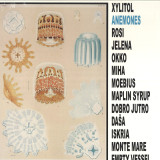
Xylitol is the alias of Catherine Backhouse, producer and DJ under the name DJ Bunnyhausen. She was a resident DJ at Kosmische, the now dormant Krautrock club and is a fan of jungle and hardcore. She currently co-hosts the radio show Slav To The Rhythm, which focuses on vintage central and eastern European pop and electronica and she's also co-writing a book on Yugoslavian pop culture. 'Anemones' is a total project from the cover to the music. Backhouse is fascinated by early botanical illustrations of anemones and other aquatic fauna, and how the act of taxonomy reveals as much about human psychology, desire and sublimation as it does about the organic specimen as a thing in itself. Each track is a microcosm of this 'other life', an allegory for the extraordinary potential latent within bodies that the dancefloor has the power to activate. Using early jungle and garage as starting points to connect dots and open up contrasts between dance music and vintage electronics, Backhouse finds a sweet spot which, in her words "feels like something that's simultaneously still and ancient yet propulsive and ecstatic." Not afraid of letting the the hiss and flutter of the music show, 'Anemones' holds attention with ancient bubbling synths and gracefully drifting arpeggiations, occasionally brought to heel by charming melodies, all accompanied by breakbeats that explode like fireworks. 'Anemones' has a lively and unpolished aesthetic that's a kindred spirit to Nondi_'s 2023 album of smeary, water-damaged footwork, 'Flood City Trax'. 'Moebius' pits the spaced out neon chords of the track's namesake against absolutely tearing breaks, allowing time for this almost overwhelming combination to become near enough transcendental, while the bleeping melody and sad slavic chorus motif in 'Okko' feels like an artifact from an alternative future. The Drexciya meets 2-step garage of 'Dobro Jutro' creates a welcome respite at the album's midpoint before the flow builds up again to 'Daša' with its glassy sounds from a lost radiophonic workshop miniature meeting bruising kicks and snares. Meanwhile 'Iskria' has purring synth chords and 8-bit melodies evoking the cosmonaut age. The subliminal influence of the Yugo era is felt in DIY synthesis and Mitteleuropean melody and seen in song titles such as 'Jelena', 'Miha', 'Daša' (named after novelist Daša Drndič) and 'Iskria' (taken from the fictitious Balkan region in Ottessa Moshfegh's bleak fable 'Lapvona'). 'Anemones' very effectively folds experimental genres from different times and places into a very enjoyable new sound.
Clan Caimán, led by composer Emilio Haro, is a group from Argentina, but their timeless, organic music transcends nationality. “Pica-Pau” (woodpecker), their third album, is their most abstract and minimal to date, but this is not a cold abstraction nor an austere minimalism; the music here, with its focus on rhythm and texture, is warm and hypnotic, seeming to have existed forever despite the fact that it was recorded in 2023-24. As on their previous albums, all with EM Records, the music is driven by the kalimabafon, Haro’s self-made tuned percussion instrument. The kalimbafon’s patterns weave through waves of reverb-drenched lap steel and guitar, as bass undertow and sans-cymbal percussion allow the music to flow music inexorably forward, like a broad, timeless river. The compositions here have a feeling of being immersed in deep night, surrounded by life, away from the enclosed isolation of the urban environment. As with previous albums, the compositions are instrumental, the exception being the final song, a vocal version of the opening track, sung in a language invented by Haro.
Tahiti 80, the cult French group, is back with a tenth album entitled Hello Hello.
Since their formation in Rouen in the 90s, Tahiti 80 have built a substantial discography, collaborating with artists such as Cornelius, Tore Johansson, Adam Schlesinger and Richard Swift. The indie pop quintet offers us today twelve irresistible and captivating songs on a solar tenth album. With its welcoming title, Hello Hello presents itself as a desire to merge the spontaneity of live performances with the chemistry of a band working in the studio. Xavier Boyer, lead singer and songwriter, explains: “We felt a slight frustration with our previous album, Here With You, released in 2022. The pandemic had forced us to record separately at home. When we realized our new demos were going in this live direction, we looked for the perfect place to capture that spirit."
It is at the Paraphernalia studio, located in the French countryside, that the members of Tahiti 80, including in addition to the singer, Pedro Resende, Médéric Gontier, Raphaël Léger and Hadrien Grange, perfected their musical interactions for ten days during the summer 2023. Integrated very early in the process, Stéphane Laporte, aka Domotic, brought his distinctive experimental touch to the arrangements and production. The vocals and additional synthesizers were then finalized between Paris, Rouen and Montpellier in the fall
The twelve songs that make up Hello Hello form a homogeneous suite, highlighting the creativity, diversity and maturity of a group which has just celebrated twenty-five years of career. Opening the album, “Every Little Thing” subtly mixes shoegaze guitars and synth pop. It’s also one of the rare Tahiti 80 tracks that keeps the same chords from start to finish. The singer confides: “It was an exercise in minimalism, with the constraint of finding varied vocal melodies revolving around the same chords. Singing the line ‘I Love Every Little Thing About Us’ made me realize that it could also be about us as a group.” The title song also plays the simplicity card with Boyer’s unique timbre, complemented by a drum machine passed through a tape echo and a catchy recorder theme – proof that years of practice of this instrument in French schools was not in vain!
The other distinctive trend is Brazilian: “Lose My Head”, “Soft Echo” or “Poison Flower” each display tropicalist attributes: swaying rhythms, rounded bass, soft guitars, all enhanced by a reverberated sound treatment. “From Caetano Veloso to Tim Bernardes, there is a unique way,” notes the vocalist, “of linking rhythm and melody that has always inspired us.”
However, the Tahiti 80 touch is not being put aside. “About Us”, sung by guitarist Médéric Gontier who can also be heard on “1+1” and “Anyway”, marks a return to the roots of indie pop. An impression confirmed by the hit “Vertigo” and its signature all in major sevenths supported by the elastic groove of bassist Pedro Resende. The song which sounds like a quick return trip between late 70s California and Tokyo City Pop, will find its place after “Crush!” and “Heartbeat” in the Rouennais’ songbook. Xavier Boyer concludes: “ if we manage to surprise ourselves, it will also work for the listener. but when you reach the tenth album, you must also manage to renew ourselves without denying ourselves what we did previously.”
With their innovative and unique approach to indie pop, their timeless melodies and their sophisticated productions, Tahiti 80 has never ceased to resonate with fans around the world. Their latest collection, Hello Hello, should easily consolidate their status as a singular group and esteemed personalities on the international music scene.
Build Buildings is Brooklyn, New York, based Ben Tweel. He makes music with computers, instruments and household sounds. The sounds on “Ecotone” are sourced from acoustic guitars, lap harp, ukulele, mbira, and clarinet, and played through the gestural iPad program Samplr. He has released numerous albums since 2004, most recently 2022’s “Bring in the Lampstand and Light Its Lamps” on Audiobulb Records.
Speedcore IDM post breakcore flashcore ... in one word Experimental Electronic Hard music !
Unique sound/style !!
Brighton (UK) punks THE BAR STOOL PREACHERS have announced their new EP 'Below The Static', which features reimagined versions of songs from the bands 2022 album 'Above The Static'. The EP is out 13th September 2024 via Pure Noise Records. Speaking about the new EP the band said, "For this release, we really wanted to highlight how good the songwriting was. We were stoked with how well the album went down but we really wanted to expose some of the more vulnerable elements and fuck with the format a bit. To hear such strong fxmale vocals, and having heavy guitar riffs on cellos/violins etc. really got us excited about these songs again. Some of the versions are stripped right back to just a voice and one instrument. It's the band like you've never heard it before, and really breathes a different life into the songs."
Imaginative re-workings and improvisations by Andrew Tuttle of the late great Michael Chapman's unfinished instrumental album. Sonic explorations that bridge the Southern and Northern Hemisphere via the Caribbean, remote Northumberland and sub-tropical Australia. Navigating calm seas and turbulent waters of ambient corals, new-age pirates, waves of lapping banjos and drifting eroding guitars.
When Michael Chapman passed away in September of 2021, at the age of 80, he did so – as he spent much of his life – as both a pioneer and a legend. A veteran of the British blues/folk/jazz scene, Chapman emerged in 1966 and continued working throughout his life, always pushing the boundaries of his creations while collaborating with a slew of similarly heralded musicians along the way: Bert Jansch, Mick Ronson, Elton John, Thurston Moore, Steve Gunn; to name just a smattering of those he worked alongside over the years.
It's the latter of those – Brooklyn guitarist and songwriter Steve Gunn – who Chapman flourished alongside in recent years, the two collaborating on 50 and True North, two of Chapman’s final and finest records. It was through that friendship that Chapman’s music found Andrew Tuttle, the Brisbane-based multi-instrumentalist who has toured Australia several times alongside Gunn.
In the aftermath of Chapman’s passing, his partner Andru discovered Tuttle’s Fleeting Adventure LP, describing it as “one of the albums that kept me sane during that first brutal winter on my own.” The pair met in Australia shortly after, and before Andru had even made it back home to the north of England, Tuttle had begun working on the recordings she shared with him at that time. Those recordings were part of a project Chapman was working on at the time of his death, called Another Fish – what would have been a companion piece to his previously-released LP, simply called Fish.
Though Chapman had spent time in his local studio playing all the guitars, layering the different sounds and effects, he’d always intended to do much more work on the songs, however fate had its way and he never got to ribbon-bow those ideas and bring the album to its conclusion.
Though there was little intention in terms of how to finalise the project, Tuttle spent valuable time with those recordings. What materialised, eventually - with time, care, and diligent attention - is a two-disc set Another Tide, Another Fish, something both unusual and completely distinctive. The first disc, Another Tide is centred around Tuttle’s own work, which shaped all seven of Michael’s songs and ideas into new songs of their own, and the second disc which simply incorporates the recordings that Michael left behind.
“On all of the tracks I also ‘played along’ on banjo to the originals several times until I learned an approximation,” Tuttle continues. “This ended up resulting in a ‘hybrid’, where some works are easily identifiable to those who know Michael’s originals, and some took that inspiration to head altogether elsewhere. Each of the tracks, even where not obvious, does have at the very least a trace element sample of the original recordings so that it’s a true collaboration.”
What we’re left with is indeed a hybrid: part remix album, part cover album, both a solo work and a collaboration, of sorts. Inspired by Chapman’s original ideas and with new track titles directly referencing the numbered but otherwise untitled source material, Tuttle adds his own flashes of colours throughout, including editing, sampling, MIDI transposing and signal processing that twists these songs into beautiful new shapes. Perhaps Tuttle’s greatest achievement here then is that Another Tide sounds so effortlessly free of all this context.
Whether you know Michael’s, Andrew’s or even Andru’s story or not, these recordings will bristle with enchantment and intrigue, worlds are built, and while some thrive and grow, others fizzle out in a burst of light, such is the way. “It's been a long, long road but we got there and I think it's been more than worth it,” Andru says in the record’s liner notes. “I really hope you think the journey was worth it too.”
Guitars and effects by Michael Chapman recorded by Alex Warnes at Phoenix Studio, Brampton, Cumbria, 2017 Banjo, effects and edits by Andrew Tuttle at Bella Vista, Brisbane / Meanjin, 2023-2024
Since first splashing on to the Southern California circuit in the mid-aughts, Geneva Jacuzzi (née Garvin) quickly cemented herself as the queen of the Los Angeles underground. Her immersive and unhinged multimedia performances are the stuff of legend, a psychotropic gallery of masks, costumes, confrontation, and massive art installations. Jacuzzi’s recordings are equally revered, catchy hooks and cryptic moods dusted in 4-track grit. The arrival of her third official full-length, and Dais Records debut, is cause for such celebration. Triple Fire vividly expands and crystallizes Jacuzzi’s signature fusion of midnight melody and mutant aerobics across a 12-track hit parade of wildcard synth-pop and sly post-apocalyptic camp. Her enthusiasm for the album is as bold as her body of work: “Halfway through, we started calling this the record of the prophecy, the record that’s going to save mankind.”
Opener “Laps of Luxury” sets the template – a strobe-lit dreamer’s delight of swaggering synth bass, Haçienda drum machinery, and sultry vocal spellcasting (“Tragic mysteries I’ve known for centuries / I burned all memories and turned to fantasy”). The collection burns through shades of sardonic strut (“Art Is Dangerous,” “Nu2U,” “Keep It Secret”), coldwave kiss off (“Speed Of Light,” co-produced by Andrew Clinco of Drab Majesty), retro-futurist body music (“Dry,” “Scene Ballerina,” “Bow Tie Eater”), and cheeky glitterball pop (“Take It Or Leave It,” “Heart Full Of Poison” co-produced by Roderick Edens and Andrew Briggs). She likens the eclectic spectrum of moods to the continuum of human emotions: “Funny, sexy, sad, scary, witty, hopeful, menacing. Eventually it deconstructs, turns into a party, and then ends sweet and soft.”
Taken as a whole, Triple Fire comes as close as any document yet to capturing Jacuzzi’s kaleidoscopic alchemy of pop sugar and chaos energy, flickering between icy and ironic, chic and surreal, hungry and heartsick. Hers is a muse as rare as it is regenerative, forever reborn at the precipice of the next chorus: “Someone said that Alcatraz had fallen into the sea / Almost sounded like an angel calling me in a dream / I felt an electric shock when I picked up the microphone.”
Repress of Still House Plants’ second LP FAST EDIT on frosted clear vinyl with microtene inners. Cultivated over the course of 2019, the album switches the combativeness of previous releases for bare intimacy. FAST EDIT is a palette of qualities and curdled headspaces. Now living far apart and coming together only for intense periods of shows and touring, the band have come to rely on an archive of mp3s (quick recall overtakes stable long-term memory). Written on mobile phones, dictaphones, and laptops, FAST EDIT cuts rehearsals and schemas with tight, raucous tracks. This is most tenderly at play on ‘Shy Song’ – a cut'n’chase piece, in which all sounds are ghosts of another. ‘PredikateD’ is a phone on the ground: the voice is air, the guitar and drums meld with the plywood and sand-bag structure, the seams exposed.
Black Truffle is thrilled to present a Song for two Mothers / Occam IX the first ever solo release from Laetitia Sonami. Born in France in 1957, Sonami studied with Éliane Radigue in Paris before moving to California in 1978 to study electronic music at Mills College, going on to make important innovations in the field of live electronics interfaces and multi-media performance. Sonami is perhaps most closely associated with one of her inventions, the Lady’s Glove, an arm-length tailored glove fitted with movement sensors allowing the performer fluidly to control digital sound parameters and processing, as well as motors, lights and video playback. Having performed with the Lady’s Glove for 25 years, Sonami retired it in 2016, turning her attention to the interface/instrument heard and pictured here, the Spring Sprye.
In Sonami’s own description, “The Spring Spyre is composed of three thin springs that are attached to reverb tank pickups, mounted on a metal ring. The audio generated when the springs are touched, rubbed or struck is analyzed in Max/MSP. The extracted features are then used to train machine learning models in Wekinator and Rapidmax and control the audio synthesis in real time. We never actually hear the springs.” After decades of aversion to documenting her work on recordings, a Song for two Mothers / Occam IX treats listeners to two side-long performances with the Spring Spyre: the very first piece developed for the instrument and the most recent, the two contrasting remarkably in sound palette, energy and form. A Song for two Mothers (2023) spins an intricate web of rippling synthetic burbles, rapid sweeps and fizzing textures. Performed in real time with the sensitive and partly uncontrollable Spring Sprye ("a bit tyrannical," Sonami calls it), the music is delicate yet chaotic. Abrupt gestures hover against a backdrop of silence, "devoid of spatial or temporal direction". After several minutes, the sound-world becomes metallic and percussive, tapping and ticking in pointillistic flurries before a wavering harmonic cloud emerges, sprinkled with resonant drips and pops.
Occam IX is a radically different proposition. At the outset of Sonami’s exploration of the Spring Sprye, she asked her former teacher Éliane Radigue to compose a piece for it—and her: like all of Radigue’s work since she ceased working with analogue electronics at the beginning of the 21st century, Occam IX is written not only for an instrument but also for a particular performer. These scores are developed verbally, through meetings and conversations between performer and composer; each is grounded in an image (usually kept from listeners, to avoid influencing their experience); all magnify the subtlest acoustic phenomena and require great commitment and patience from the performer. Sonami’s is one of the few Occam pieces to make use of electronics, bringing it closer to Radigue’s famous longform pieces for ARP 2500. Beginning from a rumbling low tone, the listener is gradually immersed in slowly lapping waves of synthetic tones, eventually thinning out into delicate bell-like pings against a background of white noise, reminiscent of one of the most beautiful sections of Kyema from the Trilogie de la Morte.
Accompanied by notes from Sonami, her longtime collaborator Paul DeMarinis, and Radigue, and illustrated with scores, photographs and images of the Spring Spyre, a Song for two Mothers / Occam IX is an essential document celebrating an under-recognised pioneer of electronic music and performance.
AMERICAN ROCK `N ROLL TRIFFT FRANKFURT ROCK CITY. Bereits seit Mai 2017 steht die vom Texaner Chase Wilborn und dem Frankfurter Julian Lapp gegründete Band auf den Brettern, die die Rock-Welt bedeuten und erspielen sich mit ihrer perfekten Mischung aus melodischem Stadion Rock und einer gehörigen Ladung Alternative eine stetig wachsende Fanbase. Im Frühjahr 2022 veröffentlichten LOSING GRAVITY mit ,LIVING IN RIDDLES" die erste Single des Debüt-Albums ,HEADED SOUTH". Besser könnte der Start zum ersten Longplayer nicht laufen, denn hier rockt Bandgründer CHASE WILBORN mit keinem Geringeren im Duett, als dem ,THE NEW ROSES"-Shouter TIMMY ROUGH und das sorgte in der Szene für gehörigen Wind. Auch 2023 legten LOSING GRAVITY jede Menge Autobahnkilometer zurück, tourten mit MOLLY HATCHET durch Deutschland, supporteten namhafte Acts wie KISSIN DYNAMITE, THUNDERMOTHER, THE SWEET und BONFIRE und spielten eine sattes Paket an Headliner-Shows. Das Frühjahr 2024 gehörte ganz dem Songwriting und Recording ihres 2. Silberlings! Erneut ging es in die Hessischen Basement Studios zu Markus Teske wo nun das neue Album ,ALL IN" fertiggestellt wurde.
Few bands have as enduring a legacy in the acoustic/newgrass/jam band
scene as Colorado-based Leftover Salmon
Carrying the torch passed down by the progressive bluegrass pioneers, The
Seldom Scene and Newgrass Revival, Leftover Salmon are true architects of the
contemporary jam grass scene, inspiring the careers of a generation of artists
ncluding Billy Strings, Greensky Bluegrass and Yonder Mountain String Band.
On 'Grass Roots', Leftover Salmon reflect on its bluegrass and festival
campground origins with a set of songs that draws from the repertoires that The
Salmon Heads and The Left Hand String Band played when they first jammed in a
Telluride Bluegrass Festival campground. Collaborating with jam scene icons
Billy Strings, Oliver Wood, and Darol Anger, and with the recent addition of Jay
Starling on resophonic guitar, lap steel and keys to the band's official line, Leftover
Salmon have all the instrumental firepower needed to deliver hard driving
versions of bluegrass standards and grassed- up versions of songs from Bob
Dylan, David Bromberg, and The Grateful Dead. Now available on Limited Edition
Banana Yellow Vinyl
Now available on Limited Edition Banana Yellow Vinyl
The third studio album "Pyramid" by The Alan Parsons Project was originally released in May 1978. As with other APP albums, the focus was on very high-quality studio sound production. "Pyramid" was a worldwide hit, achieving platinum and gold status in numerous territories including the USA, Germany and Canada. Limited edition 180g Heavyweight Clear Vinyl LP Half speed remastered by Miles Showell at Abbey Road studios.
3. Album der instrumentale Rock-Band Der Neue Planet aus Köln. Sie bezeichnen ihre Musik als"Heavy Dream Prog" bezeichnen: Schwere wuchtige Stoner Riffs bilden den Kontrast zu verträumt-spielerischen Post-Rock-Melodien und immer wieder wird man als Hörer durch Stilwechsel überrascht. Die Songs sind lang und entfalten einen wilden Genre Mix verschiedener Einflüsse: Jazz, Latin, Funk, Metal, Doom, Psychedelic oder Disco. Die Kompositionen sind vielseitig und progressiv ohne dabei in technische Dudelei oder laut-leise Post Rock Klischees zu verfallen. In fünf sehr unterschiedlichen Stücken tobt sich die Band aus und berührt zahlreiche Stile der Musikgeschichte, ohne ihren eigenen melodischen Wiedererkennungswert zu verlieren. Eine genaue Genre-Einordnung fällt schwer. Post- und Stoner Rock Elemente verschmelzen mit Sounds von Funk bis Jazz, über Kraut- und Psychedelic-Rock Parts, bis hin zu knüppelharten Metal-Klatschen. Wie bei Der Neue Planet üblich gibt es eine Menge zu entdecken.
"Vanatühi" by Kiwanoid is a technopagan concept album. Track titles refer to the word "nothing" in various languages.
The sonic landscape is crafted using deprecated tools: a first-generation 4-bit laptop, the DOS operating system, and a tracker program. Inspired by glitch aesthetics, the sound palette includes clicks, error noises, and low-bitrate techno sounds. Initially, the structures of the pieces may appear complex and chaotic. This electronic thicket might seem abstract, cold, and inaccessible, yet upon closer examination, it reveals a plethora of diverse species, coming across as somewhat nostalgic and warm, evoking surreal associations. From beneath towering sequoias peek pixelated ferns, LED eyes are blinking from below the undergrowth, and against the backdrop of a crackling campfire and cave paintings, a lively stomping of microchips unfolds.
Sudden contrasts, sharp cutting edges, a tachycardic bass drum engine, and irregular polyrhythms make themselves physically felt. Elsewhere, haunting lo-fi textures, hidden ambient drones, mysterious hums, and obscurely garbled samples offer introspective breathers. The dynamic range of the music is favourably extensive, and the raw imperfections of the sound are unmasked by reverb effects or other generic tools. Interwoven throughout are outsider rhythm loops, which could find a home at an alien rave party or a hobgoblin honky-tonk. Various human voice samples build a bridge to the listener, allowing them to embody a cyborg-like experience.
While each twist and turn remains unpredictable, these diverse approaches align in complementary patterns and stochastic regularities, making the whole surprisingly coherent, despite its chaos. The album doesn't bore the audience with intentionally irritating compositions or pseudocomplexity - it demands attention, but doesn't try to outrun its listeners.
BBsitters Club is a rock band based in Chicago that features Doug Kaplan and Charlie Olvera on guitar and vocals, Max Allison on bass, and Paul Birhanu on drums. As the label’s de-facto in-haus band, BBsitters Club satisfies Hausu Mountain co-founders Allison and Kaplan’s urge to remain connected to the rock and roll music they grew up loving and playing — far across the spectrum from the experimental electronics featured on the lion’s share of HausMo releases.
A solid four years after the one-two-punch releases of BBsitters Club & Party, the band’s 2020 debut studio album, and Joel’s Pick’s Vol. 1, the first volume in a series of audience-recorded live takes from shows around Chicago, we find the BBs reviving the Joel’s Pick’s series with Vol. 2. Charged with the energy of a close-knit group of friends willing to follow along with each other’s most outlandish ideas both in composition and live performance, JPV2 offers us a bewildering yet always tongue-in-cheek palette of ideas cherry-picked and mashed together into amalgams that both embrace “rock traditions” and defy them with a cherubic grin.
BBsitters Club’s amorphous compositions land somewhere between the world’s most baked prog band and a jamband that’s never content to lapse into wheel-spinning complacency. On JPV2, BBsitters Club cartwheel between eras and styles of rock music with abandon — a TV stuck flipping channels after your dad falls asleep with one leg on the remote. We encounter the elliptical dueling guitars and autumnal atmospheres of midwest emo / math rock, the gregarious stomp of electrified country rock, blues rock that has melted from ingesting one too many hallucinogens, and fried Devo-style art punk that breaches into the realms of ska before melting into free-form noise rock flecked with the bizarro imitative instrument tones of Kaplan’s MIDI guitar.
Since first splashing on to the Southern California circuit in the mid-aughts, Geneva Jacuzzi (née Garvin) quickly cemented herself as the queen of the Los Angeles underground. Her immersive and unhinged multimedia performances are the stuff of legend, a psychotropic gallery of masks, costumes, confrontation, and massive art installations. Jacuzzi’s recordings are equally revered, catchy hooks and cryptic moods dusted in 4-track grit. The arrival of her third official full-length, and Dais Records debut, is cause for such celebration. Triple Fire vividly expands and crystallizes Jacuzzi’s signature fusion of midnight melody and mutant aerobics across a 12-track hit parade of wildcard synth-pop and sly post-apocalyptic camp. Her enthusiasm for the album is as bold as her body of work: “Halfway through, we started calling this the record of the prophecy, the record that’s going to save mankind.”
Opener “Laps of Luxury” sets the template – a strobe-lit dreamer’s delight of swaggering synth bass, Haçienda drum machinery, and sultry vocal spellcasting (“Tragic mysteries I’ve known for centuries / I burned all memories and turned to fantasy”). The collection burns through shades of sardonic strut (“Art Is Dangerous,” “Nu2U,” “Keep It Secret”), coldwave kiss off (“Speed Of Light,” co-produced by Andrew Clinco of Drab Majesty), retro-futurist body music (“Dry,” “Scene Ballerina,” “Bow Tie Eater”), and cheeky glitterball pop (“Take It Or Leave It,” “Heart Full Of Poison” co-produced by Roderick Edens and Andrew Briggs). She likens the eclectic spectrum of moods to the continuum of human emotions: “Funny, sexy, sad, scary, witty, hopeful, menacing. Eventually it deconstructs, turns into a party, and then ends sweet and soft.”
Taken as a whole, Triple Fire comes as close as any document yet to capturing Jacuzzi’s kaleidoscopic alchemy of pop sugar and chaos energy, flickering between icy and ironic, chic and surreal, hungry and heartsick. Hers is a muse as rare as it is regenerative, forever reborn at the precipice of the next chorus: “Someone said that Alcatraz had fallen into the sea / Almost sounded like an angel calling me in a dream / I felt an electric shock when I picked up the microphone.”
Die US Alternative Metal-Vorreiter MUSHROOMHEAD melden sich diesen Sommer mit ihrem neuen Album Call The Devil zurück. Call The Devil ist der Nachfolger des achten Albums und Label-Debüts A Wonderful Life (2020), mit dem die Horror-Ikonen in den USA große Erfolge feierten (Platz 2 der US Current Hard Music Albums Charts und Platz 8 der Current Rock Albums Charts). Außerdem war es das Debüt von Jackie LaPonza – der ersten Sängerin von MUSHROOMHEAD.
Nach zwölfjähriger Pause kehrt Gitarrist Dave „Gravy" Felton auf Call The Devil zurück und verleiht zwei der neuen Tracks seine unverkennbaren Skills. Felton hat in der Vergangenheit auf mehreren wegweisenden Alben von MUSHROOMHEAD mitgewirkt und gilt durch seine Arbeit an Klassikern wie „Along The Way", „Sun Doesn't Rise" und „The Dream Is Over" als einer der prägendsten Songwriter. Call The Devil wurde erneut von Mastermind und Drummer Skinny produziert und von Matt Wallace (Faith No More, 3 Doors Down) gemischt, der bereits für das Kultalbum XIII mit der Band
zusammengearbeitet hat. Gemastert wurde Call The Devil von Jacob Hansen, der für seine Arbeit mit Größen wie Volbeat, Epica und Arch Enemy bekannt ist.
An elaborate, authoritative acoustic re-imagining of Taylor Deupree’s seminal electronic album Stil. (2002), Sti.ll is the result of a multi-year collaboration between Deupree and arranger/producer Joseph Branciforte to bring Deupree’s explorations of extreme repetition and stillness into the world of notated chamber music. Clarinet, vibraphone, cello, double bass, flute, and percussion stand in for the digital loops and granular processing of Deupree’s original, with meticulously notated arrangements preserving the all rhythmic, formal, and textural complexity of these compositions. Transcribed and arranged by Greyfade’s Joseph Branciforte and performed by an ensemble of notable New York creative musicians — Madison Greenstone, Ben Monder, Laura Cocks, Christopher Gross, and Sam Minaie, alongside Branciforte and Deupree themselves — Sti.ll is a landmark recording situated between the electronic and acoustic worlds.
Warehouse Find!
Avision storms into 2020 in fine fashion with his first EP for Maceo Plex's Ellum Audio label.
Playing the decks since just 12 years of age, this American artist grew up in the musically rich New York City scene and is now at the sharp end of it with his own new school techno sound. He has released on key labels like Ben Sims’ Hardgroove, Mark Broom’s Beardman and Teksupport, and is someone that icons like Adam Beyer and Chris Liebing often reach for in their own sets.
He starts off his latest offering with 'Innocence', a bustling techno track with bulky drum programming that is brilliantly loose. It jostles you into action as dark vocals add intensity and makes for a perfectly physical dance floor workout.
Keeping up the pressure is 'Time Lapse', with big hi hats and a driving bassline all interwoven with thundering kick drums that will get the whole club up on its toes. A rising synth in the background adds an air of cosmic exploration and means this tasteful techno trip is enthralling from start to finish.
These are two superbly stylish and high powered techno cuts from this contemporary tastemaker.
“Todavía No”, La Paloma’s debut album, consolidates the young band from Madrid as one of the realities of the current scene. Undoubtedly, it’s definitely a bold step forward in all senses: compositional, interpretative, and artistic. Noise-rock to combat all the noise out there.
In “Una idea, pero es triste”, their celebrated debut EP, La Paloma expounded something very serious, but they explained it only once. Five songs that instantly connected with an audience eager for new references. In “Todavía no” there is more depth; here practically each cut shows a different shade of being La Paloma. “Tiré una piedra al aire” is far from “Algo ha cambiado”, but both are unequivocally La Paloma. Surely, this is something that can be attributed to the baggage acquired during this time lapse, but it certainly speaks very well of the artistic ambition of a band to which now seems to have no ceiling.
We are not, therefore, facing a mere extension of their 2021 EP, although musically they pick it up from where they left off. “Todavía no” is an accessible and contagious work, equal qualities shared with “Una idea, pero es triste”. It’s a work that conveys discontent and liberation, ambition and boredom. In large part, it’s due to the accredited ability of its composers Nico Yubero and Lucas Sierra to observe the world with the right dose of skepticism and disappointment, avoiding tormented gesticulation.
The presentation tour that followed the publication of the EP was extensive and led La Paloma to defend their songs throughout the Spanish geography, as well as visits to Portugal, Mexico and the United States. That state of grace was transferred to the studio, where they tried to reflect their live sound and proposal. With an elegant production and without undue frills, the mission of preserving the sharp fang shown in concert halls was achieved, ensuring, in turn, that the elements, arrangements and the proposal of each instrument were heard crystal clear.
Right from the start, we notice in the sequence many of the virtues that make La Paloma one of the most advantaged groups of the current scene: gushing guitars, the solidity of its rhythm section with Rubén Almonacid on bass and Juan Rojo on drums and the color tone provided by the voices of Nico and Lucas, who share the vocal tasks on alternate tracks.
But there’s more: songs that destroy the most generic canon of noise-rock to take it to little-explored territories, frantic guitar games and a cascade of imaginative arrangements. It combines popular song constructions with unpredictable structures that prevent you from anticipating what twist is to come next, making listening experience exhilarating and addictive.
“Todavía no” is a tightly cohesive album, a remarkable fact considering the two creative inputs from which the band draws from and the artistic ambition with which they faced the building of this work. Because we are talking about a complete work, conceived as such. The first chords of “Sigo aquí” sound and the disorganization of reality… is still disorganized, but somehow it makes sense now.
forgive too slow, Avant Garde artist julia-sophie’s deeply personal debut album is testament to her ability to transform adversity into raw beauty, combining her traditional songwriting roots with her own take on experimental electronica. It features her intimate voice backed by warm and precise electronic sounds whose free spirited explorations give body to the carefully written personal songs julia-sophie comes off the drama of her 2010s rock band, Little Fish, which was signed to a major label. The surreal experiences (like being flown to Las Vegas in helicopters with a bag of slot machine money or given limousines for the day to go shopping), along with having to work in environments where she felt unsafe, drove her decision to leave the fame game. She turned down the offer to emigrate to America and engage with the machinations of the system as it did not feel “true or congruent with who I was”. Instead, she focused her attention on her hometown (Oxford, UK). She started recording lo-fi pop in her garage, using an old laptop, wonky microphones and hitting whatever was around for beats. Candy Says grew to be more of a collective than a band, and eventually co-wrote a film score for indie film Burn Burn Burn and recorded a cover of Running Up That Hill for the Netflix film Close (starring Noomi Rapace). Julia-Sophie soon started recording songs with her friend B, who had a studio stacked from wall-to-wall with analogue recording gear, vintage synths and drum machines. She decided to self-release and the music reached audiences beyond her expectations, including support from BBC Radio 6 and a feature in The Quietus. forgive too slow is Julia-Sophie’s debut solo album, and concerns relationships and the struggles we go through when we “forgive too slow” and can’t break out of patterns from the past. The songs narrate her story of self-destruction (“numb”), love (“falling”), and loss (“telephone”). By the end, embers are still burning and there is no telling if Julia-Sophie has found peace, but we do get a sense that she has gotten closer to the core of her being and is finally living authentically.
There are certain occasions when you can truly feel the stars align. One of these is when the interstellar voyager of cosmic soul Jimi Tenor finally lands his spaceship at full force on a Timmion recording. In 2024, he will be serving us two spaced out album sessions recorded together with Cold Diamond & Mink. Jimi is no stranger in these space ways as he has operated behind the Timmion scenes for years, furnishing several of the label's artists with his flute and reeds artistry. The first album out is titled "Is There Love In Outer Space?", which begs the question with the force of five extended tracks that are guaranteed to blow your mind to the stratosphere. The pieces are loaded with whooshing and glistening synth noises and span from lofi space funk to cinematic soundscapes. The sweetly floating title track is like some of those galactic ballads that rare soul collectors are spending their pensions on. At the other side of the spectrum, album closer `What Are You Doing?' sounds like Sun Ra sat down at a JBs session, and is straight up meant to get that booty moving. Combined with the raw soul prowess of CD&M, Jimi is able to refine new shades from his already impressive repertoire of talent. Even if you are a friend of his previous work you might not have heard him get down quite like this.
There are albums that tap into the very heartbeats of rhythm, melody and intricate sound design, pulsating with every musical note. This is the case of 'Séptimo Sentido', the new album by Buenos Aires-based producer Seph.
Sebastián Galante aka Seph is no stranger to these realms; with almost two decades of experience under his belt, he has established himself as one of the leading talents in the Argentina techno scene and as one of the most intriguing minds in alternative Latin American electronic music. His productions have found a home in cutting edge labels such as Insurgentes –a platform led by the DJ and producer from Medellín (Colombia) Verraco, and sister label of TraTraTrax, which has reduced gaps between the Latin electronic scene and the rest of the globe– or his own label Aula Magna Records. He has also fostered collaborations, among which stands out his project Oscean alongside Andrés Zacco, a project that was recently released on the legendary Berlin label Tresor.
In his new album 'Séptimo Sentido', Seph exhibits superlative production skills and masterfully showcases the widest palette of the braindance sound, that intersection where countless genres and sub-styles can coexist. Here we hear echoes from the mid-90s that revive undeniable references of early IDM; but with a renewed form, under a fiercely contemporary new skin.
At the core of this intriguing album, we find an artist whose devotion to experimentation takes his rhythmic and melodic obsessions through vibrant magical-techno-urban landscapes, where radiant colors and mutating forms collide in a bold and imaginative sonic journey.
'Séptimo Sentido' hails from the prism of perception, beyond the five senses and a step further than instinct, hunting for mysterious resonances with the cosmos; like a space portal inviting us to float a handspan above the ground.