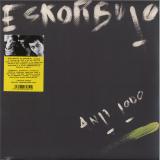
(Limited edition to 500 copies, remastered audio, pressed and printed in Indonesia) The 13 tracks contained in this compilation “Begadang: Soneta Group Best Songs, 1975-1980” are some the most innovative music that came out of Indonesia’s music scene in the 1970s, tunes that has cemented Rhoma Irama’s status as the king of the genre.
Dangdut is the biggest musical genre in Indonesia. Dangdut, onomatopoetic name from the sound of hand drums used in this type of music, is what reggae to Jamaicans, country to Americans or skiffle to mid 20th century British people. And in this genre of dang dut, the name Rhoma Irama looms large. He is until today the undisputable king of dangdut and his role as pioneer of the music is already in the history book. In fact, there's one book documenting the outsized role of Rhoma in establishing dangdut as the father of this music. The book is aptly titled Dangdut Story, written by Pittsburgh University music professor Andrew N. Weintraub.
Among Indonesian fans of dangdut, there’s this one misconceptions that dangdut music is that it is an indigenous art form from Indonesia and that it constitutes an amalgamation of local, traditional music of this Southeast Asian nation, with Malay music being the most prominent feature in the mix.
Dangdut pioneer Rhoma Irama is among the first to reject this assertion. “Dangdut music may have originated in Deli (in North Sumatra) but then got the influences from the West and India”, he said.
Indeed, most of Rhoma’s well-known compositions may have been influenced by Indian tunes but some of his best quality works owed much to the West.
Rhoma had long found home in Western pop music. In the early 1960s, after honing his guitar playing skill, Rhoma set up his first band Gayhand to play the tunes of The Beatles, Paul Anka and Tom Jones. In 1972, Rhoma won best singer title in a Southeast Asia singing competition in Singapore playing Tom Jones “I Who Have Nothing.”
Yet, nothing changed Rhoma’s fortune in the music industry, to a point where he decided to leave pop and switched to playing Orkes Melayu (Malay Orchestra) music, first with Orkes Melayu Purnama and later with Soneta Group.
His career soon took off with Soneta, especially after he introduced what ethnomusicologist William H. Frederick considered as “theatre”, through which Rhoma borrows many elements from stage performances of British and American rock bands. These elements, kitsch and pomp, he liberally adopted and became an inseparable part of dangdut itself; tight pants, long hair, platform shoes, glitter and glamour which would not be out of place in Elton John and David Bowie stage show.
And this is actually the contradiction of Rhoma’s brand of Malay music. “One might legitimately ask how imaginative, not to say bizarre, costuming and dancing with abandon could be related to some of the objectives of Rhoma has set for himself and soneta group”, Frederick wrote on his seminal work on the singer, Rhoma Irama and the Dangdut Style: Aspects of Contemporary Indonesian Popular Culture, published in 1982.
From technical point of view, Rhoma not only replaced the acoustic elements from Melayu Music with electric instruments but also created new synthetic sounds that has never been attempted before in Indonesia’s music industry.
Detractors like to point out how much he was indebted to Deep Purple, but a closer inspection reveals how he in fact had mined his influences even deeper.
Notice how Rhoma reproduced funk, which is all the rage in early 1970s, in the song “Santai” (Relax), this album’s closer or “Credit Title (Instrumentalia)” which opens this Darah Muda (Young Blood) soundtrack. The rubbery bass lines that open both songs can easily find home in any Sly and the Family Stone’s or Isaac Hayes’ tunes from that era. Other highlights of the song is the funky guitar licks and the droning Hammond a la George Clinton that stabs deep in the record groove. In the guitar solo, you can also hear the bark of George Harrison’s licks from “Taxman”.
The 13 tracks contained in this compilation “Begadang: Soneta Group Best Songs, 1975-1980” are some the most innovative music that came out of Indonesia’s music scene in the 1970s, tunes that has cemented Rhoma Irama’s status as the king of the genre. Only 500 copies were pressed for this compilation.
Cerca:large pro
- A1: Ritual (5:24)
- A2: Your Move (15:36)
- B1: All Burning (5:23)
- B2: Argot (12:01)
Pink Vinyl[16,60 €]
"Every night we've been listening to RATTLE. They have a stark yet deep trance percussion vibe that is both holistic and rocking." Thurston Moore
“Quietly dramatic and loudly intimate.” The Quietus
“Two drum sets. Two voices. One great idea.” MOJO
Rattle are Katharine Eira Brown and Theresa Wrigley, they formed in 2011 after meeting on the live circuit whilst both playing in other bands. Katharine was a guitarist who had recently started playing drums in the band Kogumaza, whilst Theresa was the drummer in Nottingham band Fists. They’ve since released two long-players, 2016’s self-titled debut album Rattle (Upset The Rhythm / I Own You) and 2018’s Sequence (Upset The Rhythm) to much critical acclaim in the music press, and with James Acaster discussing the debut on his BBC Sounds podcast Perfect Sounds!
Rattle have honed the four songs that make up ‘Encircle’ by playing them live over the last few years, adapting and stretching them into endlessly inventive new shapes, playing with the concept of time and expectation. ‘Encircle’ was recorded at Foel Studios, Wales, produced and mixed by Mark Jasper, and mastered at Liminal Audio by Shaun Crook. The stunningly colourful artwork was created by Martha Glazzard, who was also responsible for Rattle’s other mesmeric covers.
‘All Burning’ opens the album, a live favourite of cyclical tumbling and evolving wordplay. ‘All Burning’ was built up gradually layer by layer with Theresa’s cumulative snare work and Katherine’s urgent calls for action: “hold your doctor, hold your daughter, hold your horses”. If ‘All Burning’ represents fire, then it’s accompanying 12-minute long track on Side 1, ‘Argot’, is informed by the air. ‘Argot’ is a song about uncertainty, with Katherine singing wordlessly across the majority of the track. “I prefer to sing wordlessly often because it feels a bit more expressive and universal” asserts Katherine. The track feels truly epic with a satisfying release that comes with the eventual introduction of the bass drum and snappy hi-hat section.
Side 2 also pairs a shorter song with a long-form composition. ‘Ritual’ is worked up from a simple snare drum pattern which becomes more and more overlapped into an elliptical form of waltz. Katherine considers ‘Ritual’ as “very earthy song - lots of low lying mist on the ground swirling around and the drums coming together to summon something”! ‘Ritual’ was inspired by a visit to the ruins of Boleskine House so multi-dimensional themes and occult practice loom large. ‘Your Move’ is a step-up gear change with the band wanting it to feel like the tape had suddenly started to spin faster, urging movement, venturing action. Clocking in at over 15 minutes, ‘Your Move’, is mesmeric and boundless, hypnotic in its minimalism of doubled-drums and almost tribal vocal cycles.
With ‘Encircle’ Rattle have grown again, these songs are alive with elemental power. They build-up and disintegrate, existing in two places at once, embracing the nuance, tracing the circle’s edge. These are modes of song as pure gesture and eternal imagination, refined in mirrors after midnight.
Rattle has performed at The Barbican, London and toured the UK with Animal Collective and Thurston Moore Group and Europe with The Julie Ruin and Protomartyr, and performed with Hot Snakes, Bill Orcutt Quartetand Codeine.
Black Vinyl[16,60 €]
"Every night we've been listening to RATTLE. They have a stark yet deep trance percussion vibe that is both holistic and rocking." Thurston Moore
“Quietly dramatic and loudly intimate.” The Quietus
“Two drum sets. Two voices. One great idea.” MOJO
Rattle are Katharine Eira Brown and Theresa Wrigley, they formed in 2011 after meeting on the live circuit whilst both playing in other bands. Katharine was a guitarist who had recently started playing drums in the band Kogumaza, whilst Theresa was the drummer in Nottingham band Fists. They’ve since released two long-players, 2016’s self-titled debut album Rattle (Upset The Rhythm / I Own You) and 2018’s Sequence (Upset The Rhythm) to much critical acclaim in the music press, and with James Acaster discussing the debut on his BBC Sounds podcast Perfect Sounds!
Rattle have honed the four songs that make up ‘Encircle’ by playing them live over the last few years, adapting and stretching them into endlessly inventive new shapes, playing with the concept of time and expectation. ‘Encircle’ was recorded at Foel Studios, Wales, produced and mixed by Mark Jasper, and mastered at Liminal Audio by Shaun Crook. The stunningly colourful artwork was created by Martha Glazzard, who was also responsible for Rattle’s other mesmeric covers.
‘All Burning’ opens the album, a live favourite of cyclical tumbling and evolving wordplay. ‘All Burning’ was built up gradually layer by layer with Theresa’s cumulative snare work and Katherine’s urgent calls for action: “hold your doctor, hold your daughter, hold your horses”. If ‘All Burning’ represents fire, then it’s accompanying 12-minute long track on Side 1, ‘Argot’, is informed by the air. ‘Argot’ is a song about uncertainty, with Katherine singing wordlessly across the majority of the track. “I prefer to sing wordlessly often because it feels a bit more expressive and universal” asserts Katherine. The track feels truly epic with a satisfying release that comes with the eventual introduction of the bass drum and snappy hi-hat section.
Side 2 also pairs a shorter song with a long-form composition. ‘Ritual’ is worked up from a simple snare drum pattern which becomes more and more overlapped into an elliptical form of waltz. Katherine considers ‘Ritual’ as “very earthy song - lots of low lying mist on the ground swirling around and the drums coming together to summon something”! ‘Ritual’ was inspired by a visit to the ruins of Boleskine House so multi-dimensional themes and occult practice loom large. ‘Your Move’ is a step-up gear change with the band wanting it to feel like the tape had suddenly started to spin faster, urging movement, venturing action. Clocking in at over 15 minutes, ‘Your Move’, is mesmeric and boundless, hypnotic in its minimalism of doubled-drums and almost tribal vocal cycles.
With ‘Encircle’ Rattle have grown again, these songs are alive with elemental power. They build-up and disintegrate, existing in two places at once, embracing the nuance, tracing the circle’s edge. These are modes of song as pure gesture and eternal imagination, refined in mirrors after midnight.
Rattle has performed at The Barbican, London and toured the UK with Animal Collective and Thurston Moore Group and Europe with The Julie Ruin and Protomartyr, and performed with Hot Snakes, Bill Orcutt Quartetand Codeine.
- On Remnants Of Light
- Head In The Sand
- While Our World Is Still Revolving
- Muse On The Hook
- Another Inch Towards You
- Where You Two Once Held Hands
- Large As Lakes
- Back To Nowhere
Building on the acclaim of the band"s earlier work, Needlepoint"s newest offering Remnants Of Light skillfully weaves together proto-prog, British folk, soft rock, and jazz-rock influences, resonating with the sounds of the late 1960s and early 1970s that defined this vibrant musical era. Despite the departure of David and Olaf since their last studio album Walking Up That Valley (2021), Needlepoint"s spirit remains undiminished. They have crafted what they regard as a child of love. Bjorn Klakegg, the band"s wordsmith, is responsible for the evocative lyrics as well as the melodic and harmonic structures, while Nikolai Hængsle (Elephant9, BigBang) continues to steer the project as the producer and musical director, shaping the sound and arrangements. The inclusion of fresh talents like Erlend Slettevoll - who made his debut with Needlepoint on In Concert (2023) and is known for his work with the acclaimed post-bop ensemble The Core - along with the dynamic Ola Overby from Norway"s celebrated funk-soul ensemble Fieh, promises an inspiring new chapter for the band. Their contributions on Remnants Of Light are refreshing and palatable.
- Citizens Of Earth
- Threat Level Midnight
- Can't Kick Up The Roots
- Kali Ma
- Gold Steps
- Lime St
- Serpents
- The Beach Is For Lovers (Not Lonely Losers)
- December
- Smooth Seas Don't Make Good Sailors
- I Hope This Comes Back To Haunt You
- Rock Bottom
Light Pink Coloured Vinyl[30,21 €]
Repressed Blood Red Vinyl of NECK DEEP's sencond full lenght proper, originally from 2015. Kerrang!: "Life's Not Out To Get You" is a must-listen for any fan of pop-punk." #31 Greatest Pop-Punk Albums of All Time - Alternative Press: "Neck Deep have solidified their position as one of the leading bands in the new wave of pop-punk. Top 10 Essential Records of 2015" - - NME: "Neck Deep have produced an album that is both anthemic and emotionally resonant." - Rock Sound: "Neck Deep have delivered their most mature and accomplished album to date." #3 on Rock Sounds Top 50 of 2015 Following "Wishful Thinking," with their second studio album, "Life's Not Out To Get You", Neck Deep, released what is easily one of their most career defining albums and one of the largest albums in the pop-punk genre. - Featuring fan favorite songs: "December," "Can't Kick Up the Roots," & "Serpents" - DIY wrote the "full-length feels both quintessential and refreshing, a modern classic_The hooks are glorious, the bounce is addictive and it's a little rough around the edges for good measure." In the little over a decade since Neck Deep formed in the Barlow brothers' spare room in Wrexham, Wales, a lot has changed. From the scrappy, naively hopeful beginnings that define the starting of so many teenage bands, the pop-punks have gone on to be one of British Rock music's most successful global exports in recent memory: top 5 records in both the US and UK, global touring, viral hits and over a billion plays, just some of the fruits of ten years spent mastering their craft. - For Fans Of | Blink-182, Green Day, & State Champs
Producer, songwriter and director Sevdaliza releases her highly anticipated sophomore album Shabrang in roaring 2020. Produced entirely by herself together with long-time collaborator Mucky, the 14- track album is the long awaited follow-up to the 2017 debut album ISON.
In just a few years time Sevdaliza established herself as an iconic, highly creative, versatile and independent artist who has landed on many celebrity moodboards. Her stunning visual for HUMAN of her debut album ISON has collected over 25 million YouTube views to date and masterpiece Shahmaran about mental slavery, won 2 UK Music Video Awards. Sevdaliza toured 35 countries in the last 2 years and amassed thousands of fans globally (Spotify 200.000, Youtube, 300.000, IG 230.000). In 2020 Sevdaliza will return with her follow up album Shabrang.
“Shabrang” is mentioned In Persian mythology, although there is no direct translation to capture it’s essence, the Farsi phrase Shabrang literally translates to color-palette of the night. This “palette” is visualized in the tones in Sevdaliza’s black eye on the album cover. The black eye represents the years of physical and emotional turbulence. In Sevdaliza’s words “This album represents to me that the essence of it all to me is love. It is a deep letter to myself, my own bible I have to write in order to trust and believe in life. Trust in myself and my character as a human being.”
Born in Iran and residing in the Netherlands, Sevdaliza has been a strong independent force in the creation of her art. She is a producer and engineer, an independent art director with critical eye for detail and storytelling and an unique songwriter. Her music has been described as “genre- bending”, drawing on various genres including alternative electronic, indie, triphop, alternative R&B and the avant-garde.
Shabrang is available on grey vinyl and the package contains a large poster and photograph ID-sheet.
Pianist Masako Ohta and trumpet player Matthias Lindermayr are back on Squama with 'Nozomi', the follow-up to their 2022 debut 'MMMMH'.
The Japanese title, which translates to ‘hope’, felt fitting, as the album was conceived during a time of personal loss for Ohta, during and after which music proved itself as a beacon of hope.
The music on Nozomi unfolds gently, with Lindermayr’s airy tone and lyrical playing being wrapped in Ohta’s chordal backing that moves from tender to tense and back over the course of the album. While most tunes were written by Lindermayr, the only exception being an interpretation of Ryuichi Sakamoto’s ‘Hibari’, the arrangements are largely improvised, letting the duo’s intuition guide the course and build the form.
Solemn slowness has become a signature trait of the Munich-based duo and it makes listening to their new record a healing retreat from the frantic chatter of the present.
Our second release with Minds At Large on Vinyl Fanatiks. This time we repress the 1993 monsters that are Futureworld/Spinechiller, released on a white label by the group back in the day. You probably recognise Spinechiller from the LTJ Bukem mixtape 'Hardcore Volume 9' on Yaman from the same year.
- La La La
- Cruz
- Lost Angel
- Taquero
- Dream Suite
- The Mystery Of Miss Mari Jane
- Cha Cha Cha
- Sea Changes
- Cinema Lover
- Die Again, Yesterday
- Hollywood Ten
As Jess Sylvester finished his Hardly Art debut as Marinero in the fall of 2020, he realized it was time for a change. Sylvester grew up in Marin County, on the doorstep of San Francisco. It was a nurturing community for a high-school punk with a pompadour and, later, for a sober songwriter with a proclivity for moody psychedelia. But he wanted to be challenged and inspired by a new setting and scenario around strangers who prompted him to approach his music in unexpected ways. So in September 2020, as the world continued to reel in lockdown, Sylvester headed several hours south to Los Angeles, a city that, despite the relative proximity, the film buff knew largely from classic and cult films situated there. When he arrived, he kept digging into that cinematic past-Robert Altman's The Long Goodbye, with John Williams' classic theme, or classic 90s movies about East LA, many featuring Edward James Olmos. They shaped his understanding of his new town just as it began to open. This is one pillar of the multivalent and endlessly lush La La La, Marinero's new album about sobriety, identity, and fantasy that is playfully named both for the city that helped shape it and the sophisticated pop it contains. Sylvester wrote about characters outside of himself, whether considering the heroine reckoning with her own version of keeping clean or the screenwriters whose work was deemed communist simply as a political convenience. He linked those songs with motivational anthems about self-acceptance and playful numbers about flirting through food, shaping a 12-song set rich with humor, empathy, and encouragement. Sure, La La La is a continuation of the slippery genre play Sylvester started with 2021's Hella Love, 2019's Trópico de Cáncer, or even before that. But it also feels like a fresh beginning for Marinero, as Sylvester realizes how boundless this project can be. He began to think about the music of his childhood, how his mother is from San Francisco with Mexican roots, and how he'd heard so much salsa growing up as an impetuous teenager. So he wrote "Taquero," a red-hot salsa tune that uses tacos and their trappings as a source of endless metaphors for come-ons. And then there was the Ray Barreto or Santana-inspired "Pocha Pachanga," with organ gliding and percussion pulsing beneath his yearning vocals, warped as if by desert winds. In Los Angeles, he found a wealth of players who spoke this music like language itself (including Chicano Batman's Eduardo Arenas), all ready to play with and push these familiar forms. Sylvester has also been sober for 21 years, since a cross-country sojourn to attend college in Boston ended in a chemical haze. Today, he sees friends facing the same decisions he made two decades ago, and he brings bits of that experience to bear in songs that feel like self-help anthems. Recorded with a musical hero (and labelmate) of his, Chris Cohen, "Sea Changes" feels like sunshine breaking through dark clouds, as Sylvester acknowledges the newfound confidence and clarity in a friend who has stepped away from destructive habits. In the past, Sylvester has been intractably linked to his identity as a Mexican-American, born to parents from Mexico and Irish- American descent who settled in San Francisco. That can be limiting, of course, tying him to notions of sound and style that aren't always correct. On La La La, he simultaneously steps into and out of those preconceptions, singing tracks above salsa in joyous Spanish or pondering the dynamics of the Hollywood Ten and blacklists above mysterious lap steel and teasing trumpet. His identity, then, should now be clear: He is a Californian, making music shaped by the diversity of encounters and experiences that are a central part of that state's fabric. Never before has he presented himself so fully and unabashedly on tape as with La La La, an album Sylvester built with new inspirations to deliver new charms.
- A1: Color Me Blu - Fields Of Laughter
- A2: Apple - Love Melody In E Minor
- A3: Tribal Sinfonia - Do You Want Me
- A4: Harve And Charee - New Me
- B1: Kwartet Frits Kaatee - Easy Evil
- B2: Ernie Scott Trio - Souled Out
- B3: Bunker Hill - Dionysis
- B4: San Diego - Sands Of Malibu
- C1: Synod - Sheryl Song Is Gonna Do My Dancing
- C2: Whiz Kids - Long Time Gone
- C3: Ross Miller - I Can Love Her Anyway
- C4: Thunderbolt The Wondercolt - Ragged Edge
- C5: Eyrle Oliver - Lovely Lady
- D1: Lisa Richards - A Day In The Life Of A Fool
- D2: Joe Bozzi Quintet - Masquerade
- D3: George Melvin Quintet - It ´S Good Not To Forget
Watch out! You are holding the 125th (one-hundred-and-twenty fifth!) album on Tramp Records in your hands! We are honored to celebrate this impressive anniversary with the tenth volume in the Praise Poems series. This time, too, we go on a journey to discover previously unheard regions of jazz, folk and AOR from the 1970s and 80s.
Praise Poems Vol.10 presents sixteen (almost) forgotten rare groove gems, all released between the years 1970 and 1984. One of the many highlights is the opening track: "Fields of Laughter" by Color Me Blu - originally released on an acetate only of which two copies exist worldwide. But there is much, much more to discover. This brandnew volume features a wide range of genres, from AOR (Whiz Kids, Ross Miller, and another previously unreleased track by Harve & Charee) to Latin-Rock a'la Santana (Color Me Blue, Tribal Sinfonia, and Apple) to Soul-Jazz (Ernie Lewis Trio, Joe Bozzi Quintet or Dutch saxophonist Frits Kaatee). Right at the end, one track in particular stands out: the wonderful "It's Good Not To Forget" by George Melvin and his quintet - a fabulously dreamy, thoughtful instrumental piece in the style of Ramsey Lewis with catchy tune potential.
Not many compilation series make it to a tenth edition. And if they do, then you often notice that the quality of the songs goes in the opposite direction to the increasing number of series: namely decreasing. Not so with Praise Poems Vol. 10, which the creators prove in an impressive new way. They have found tracks that were originally either a) pressed by the musicians themselves in very small editions or b) released by small, regional labels. It is understandable that neither the musicians nor these small labels had the necessary knowledge or budget to market their albums or singles professionally. The majority of the bands therefore did not manage to reach a large audience - although they certainly had the potential for the big stage.
"Praise Poems 10 - A journey into soulful jazz and funk from the 1970s" makes these almost 50-year-old treasures accessible to a new audience. We hope that you enjoy discovering your personal favorite song(s) and we are already looking forward to many more releases!
Efficient Space honours the memory of producer and MC Ali Omar with Hashish Hits, a posthumous selection from the dub rebel’s self-released discography.
One of ten children in working-class Liverpool, Omar drew deep influence from his father's Arabic heritage—a thread central to his identity and sample origins. After art school and a spell clubbing during Manchester's halcyon days, he relocated to Sydney, where he cofounded the blunted downbeat duo Atone with fellow British expatriate Andy Fitzgerald. As an MC, he infiltrated the city’s house, dub, jungle, and bass circuits, becoming a regular fixture at the Bentley Bar, where he commanded the mic with his versatile, rumbling baritone and charisma.
Freakishly talented in the studio, Omar was a pioneer of the Akai sampler and Atari, deftly recording live sessions straight to DAT. Drawing on industry insights from his sister, Merseybeat firebrand Beryl Marsden—who supported The Beatles on their final UK tour and was signed to Decca and Columbia—the non-conformist sought to build a self-sufficient business model. Between 1998 and 2004, he independently issued four albums on CD through his Hashish Studios imprint, hustling copies directly to local record stores and live shows for instant returns, even hand-sewing screen-printed hessian sleeves for his final release.
Uncompromising in his principles and refusing to suffer fools or charlatans, Omar relished the opportunity to collaborate with those who embodied the same spirit. Hashish Hits offers a snapshot of his inner sanctum—Fitzgerald on the opening track's billowing smoke stacks, the serpentine vocals of Gina Mitchell and the magic hands of mixer Louis Mitchell on 'On Release,' and Wicked Beat Sound System’s Kye on 'Poor Man Beggar Man Thief'. Meanwhile, 'Suicide Bomber' smoulders with the tension of a lost Muslimgauze relic, as the instructional 'Roll Up' and 'The Last Straw' spiral deeper into Omar’s signature production vortex— where space stretches in slow motion and walls reverberate with ricocheting delay.
A true icon of Sydney’s underground scene, the larger-than-life Omar passed away on 23 June 2009 after a valiant battle with cancer. He is remembered for his assertive spirit, larrikin humour, wild anarchic personality, and enduring mantra: “Love and live your life”.1
The Montreal rapper's new opus is at once deeply introspective and a wide-eyed embrace of the world. Produced by longtime collaborators Adrian X and Kevin Figs, this sonically adventurous follow-up to her two-part debut Godspeed: Baptism (Prelude), released in 2020, and Godspeed: Elevated (2021) finds her stretching her wings lyrically, vocally and musically.
Naya Ali's journey to We Did The Damn Thing took hard work, sacrifice, faith, and sweat, as represented on the album cover : “Our sweat has trickled down from our braids for generations”. The song The Heist completely embodies the cutthroat energy and hard work that fuels Naya’s music. Yet, We Did The Damn Thing shows there’s more to her artistry. From the dark, ominous More Life, Less Names, a defiant anthem about protecting your peace, to the country-inspired renegade spirit of Turning Tables, and the Afrobeats-infused warmth of Life, where she stepped out of her comfort zone by singing instead of rapping, it is clear that Naya Ali has decided to embrace her versatility as an artist. Beyond the classic, 808-heavy beats, We Did The Damn Thing is a gospel-infused album grounded in live instruments, especially the electric guitar. Naya also took on a larger role in production, leading the choirs and working on vocal production for the songs Life, Jericho and Freedom Creepin.
Fumitake Tamura (Leaving Records) and Jason Kolàr (Dauw, Stroom) return to Dauw with 'Suki-Ma', a cassette only mixtape including music from the same sessions that led to their debut 'Ōki-sa' which was released last year. According to the artists, 'Suki-Ma' is conceived as a mixtape rather than a new album. A draft rather than a new step.
隙間 (Suki-Ma) refers to the space or gap between objects, a concept that invites reflection on what lies between the defined and the undefined. This mixtape embodies that in-between state: a fluid, open sketch existing at the intersection of ideas. Despite its more polished production, it embraces imperfection and incompleteness, serving as a continuation of Ōki-sa (大きさ, meaning ‘size’, ‘largeness’ or ‘spaciousness’), while embracing further misunderstandings in the creation of a new record.
- Fly Away
- Play On
Colemine Records is proud to present the first 45 from Aaron Frazer's latest LP, Into The Blue. The A side, "Fly Away" is a tune largely built on a sample of the Hi-Five track of the same name, and features thudding drums and dense guitar riffs. Cowritten by Lydia Kitto of Jungle, this tune is a perfect mix of 70's soul and 90's R&B. A true summertime jam! On the flip, "Play On" sits a little bit more in the midtempo cut with super tight drums, bass, and synths anchoring the track. The lyrics are a coaching up session and serve as positive encouragement, and Frazer's vocal delivery pushes that home. Mega catchy hook with just the right amount of swagger....play on player.
- 1: I Can See Him Loving You
- 2: Love Music
- 3: My Hang Up Is You
- 4: Halos Are For Angels
- 5: Somebody, Someplace
- 6: Do I (Love You Like You Like It)
- 7: That's Groovy
- 8: Can't Live Without You
- 9: A Toast (May There Be No Last Time)
- 10: Don't Spread Your Love Around
- 11: Trust Me
- 12: Give Him Up
- 13: That's All That's Required
- 14: Young Girl (In Your World)
Rare Seventies Big City Street Soul
In 1971, film producer David Gil and his business partners Robert S Sinn and Paul Frankenberg launched a film company called GSF. Over the next few years, it would be involved in a small number of productions. But, in 1971 the movie business was kind of old-hat, music was where it was at, and so GSF Records, a well-funded label, headed by Larry Newton was formed. Today Newton is largely remembered for his attempts to prevent Louis Armstrong from recording 'What A Wonderful World' but that didn’t stop him from growing ABC from a second division company to an industry leader. As he approached his 52nd birthday he was unveiled as GSF Records’ president a full-service music company, involved in records and publishing across all genres. Through a joint venture with drummer Bernard Purdie the label targeted the R&B charts and soul & funk dominated GSF's release schedule.
Black music ruled and this was reinforced by the hiring of Lloyd Price as head of A&R (veteran R&B star), and producers George Kerr (All-Platinum), Mickey Stevenson (Motown) and Jerry 'Swamp Dogg’ Williams. No wonder then, unintentional as it was, that GSF left behind such an extraordinary legacy of rare soul treasures.
NEW YORK’S BEST KEPT SOUL SECRET Features legendary Northern Soul classics courtesy of Anderson Brothers, Skull Snaps and Connie Laverne Produced by hit makers George Kerr and Motown veteran Mickey Stevenson Starring the Whatnauts and Eddie “Hey There Lonely Girl” Holman
- A1: Vertigo
- A2: Death On The Stairs
- A3: Horrorshow
- A4: Time For Heroes
- A5: Boys In The Band
- A6: Radio America
- B1: Up The Bracket
- B2: Tell The King
- B3: The Boy Looked At Johnny
- B4: Begging
- B5: The Good Old Days
- B6: I Get Along
- C1: Horror Show
- C2: Vertigo
- C3: The Delaney
- C4: What A Waster
- C5: Begging
- D1: Time For Heroes
- D2: Death On The Stairs
- D3: Boys In The Band
- D4: I Get Along
Black Vinyl[27,69 €]
Up The Bracket arrived like a raging bull in a tired post-Britpop china shop and introduced the world to The Libertines, a new gang of London bohemians, whose ragged tunes, red military tunics, opiated poetry and "live now pay never" lifestyle came to define the millennial angst of the early noughties. At the heart of the band is the blood bond bromance between the ramshackle Music Hall Jagger/Richards, Peter Doherty and Carl Barat, ably assisted by the rock solid rhythm twins John Hassall and Gary Powell. Any bookie worth his salt would have given you short odds on this quartet surviving more than a month or two, given the teetering on the brink lifestyle they chose to lead, but here we are two decades later and our Byronic heroes, though older and wiser, are still fighting the good fight and making music every bit as vital as their debut. The belief, talent and fervour that Doherty spoke of in their earliest manifesto has stood them in good stead. Up The Bracket, justly considered one of the greatest albums of the noughties, was originally released on October 21st 2002 by Rough Trade Records. The album, a heady stew of indie rock, skiffle, blues, dub and English bucolic pop, was a huge shot in the arm to a largely redundant music scene and helped to inspire the rebirth of guitar music, going on to influence countless artists who followed in its wake. Up The Bracket, which was produced by Mick Jones of The Clash, takes you on a wondrously poetic journey into the band"s mythical world and their fevered dreams of Albion, a land of squalid glamour, liberty, equality, fraternity, gin palaces and chip shops. Quite simply Pete, Carl, Gary and John created a hugely compelling timeless British rock"n"roll classic debut as relevant now as it was upon its release.
Ten years on, Joana Gama and Luís Fernandes show no signs of slowing down. Over the past decade, the duo has released five albums, composed soundtracks for film and television, and created pieces for performing arts. With “Strata”, they embark on a bold exploration of their musical identity, breaking new ground by seeking the primordial, the raw, and forging a deeper creative synergy. This evolution makes their music feel less like a conversation and more like a unified, introspective monologue.
Until now, their work has largely been defined by dialogue - a dynamic exchange of ideas evident in their earlier records. However, in their relentless drive to push boundaries, they now turn inward, embracing a monologue as a pathway for growth, innovation, and celebration of their journey so far. Two key elements shape this transition: Joana’s growing affinity for synthesizers over piano, a direction initiated in “There’s no knowing”, and her integration of field recordings gathered from diverse locations around the world. Rather than stepping into each other’s domain, the duo finds common ground, creating music that thrives on harmony and introspection.
“Strata” stands as Joana and Luís's quieter and most cohesive record to date. It reflects their desire to craft music that resonates with the natural world, unfolding as a seamless stream of sound that enhances their connection and invites the listener into their creative process. While their previous works were compelling, they often felt distant, as if the listener was observing from the sidelines. “Strata”, by contrast, draws the listener in, encouraging them to fill the spaces and find their own place within the duo’s monologue.
This process climaxes in the closing track, "Geode," where the subtle sounds of debris underscore the tightly woven structure of “Strata”. It’s a testament to the duo's commitment to evolution and their ability to surprise both themselves and their audience. A decade into their collaboration, “Strata” reaffirms Joana and Luís's creative vitality, offering a record that feels both fresh and deeply rooted in their artistic vision.
- A1: On Green Dolphin Street
- A2: Fran-Dance
- B1: Stella By Starlight
- B2: Love For Sale
Mastered by Matthew Lutthans at The Mastering Lab from a new 30 ips quarter-inch stereo master tape transferred from the original 3-track session tapes. Plated and pressed at Quality Record Pressings for flawless production and superior fidelity! Stoughton Printing Old Style tip-on gatefold heavyweight jacket with scuff-resistant matte finish.
Miles Davis's Kind of Blue was the number-one jazz album in history. It totaled five songs. There are four more songs from that same historic group, recorded in the same time period and at the same studio. And here they are. These songs deserve to stand on their own with artwork to highlight the quality of the music and that matches the time period of the recording. This is a rare opportunity to have a smash follow-up to what many consider the greatest jazz record ever!
Through the years, these four remarkable performances — all from a single recording session in 1958 and all exemplary of the sound of Miles Davis' legend-loaded sextet of that year — have not been served well. They have been largely treated as add-ons for other compilations. Now, for the first time, Analogue Productions, the audiophile in-house reissue label of Acoustic Sounds, Inc., together with Quality Record Prssings, has deservedly given these tracks a stellar stand-alone release for jazz fans to savor!
The once-in-a-generation lineup that recorded these tunes is the very same that would be immortalized for the enduring classic they would record almost a year later, Kind of Blue. Davis played trumpet sublime with his ensemble sextet featuring pianist Bill Evans, drummer Jimmy Cobb, bassist Paul Chambers, and saxophonists John Coltrane and Julian "Cannonball" Adderley.
Undervalued since their recording, the tunes on this album reflect historial and musical significance. They offer early glimpses into the modal jazz that Kind of Blue would bring to the forefront. Using modes common in modern classical music, rather than the chords of popular songs, Miles had begun to experiment with the new approach on the Milestones recording sessions previously.
Analogue Productions is proud to present Birth of the Blue in an exclusive first-of-its-kind stand-alone release that reflects our reputation for meticulous production, capturing authentic sound with clarity, depth and fidelity that exceeds the audiophile standard.
For this release, we started with the original 3-track recording session tapes that were mixed down to a brand-new 30 ips quarter-inch stereo master tape by senior mastering engineer Vic Anesini at Battery Studios. From that stereo master tape, Matthew Lutthans at The Mastering Lab cut the lacquers at 33 1/3 RPM utilizing the legendary Doug Sax's custom all-tube system and cutting lathe. The lacquers were plated and pressed on 180-gram vinyl at Quality Record Pressings. Lastly, the Stoughton Printing tip-on gatefold jacket with a deluxe scuff-resistant matte finish is the highest quality available. The artwork has an incredible spot-on look to a 1959 Columbia records release!
Features:
• Pioneering Ensemble: Captured the same rare and short-lived alignment of jazz legends including Miles Davis, John Coltrane, Cannonball Adderley, Bill Evans, Paul Chambers, and Jimmy Cobb, as heard on the historic Kind of Blue.
• Innovative Sound: The session represented a crucial transition in jazz, blending elements of hard bop with early modal jazz influences, showcasing the ensemble's experimentation and forward-thinking approach.
• Undervalued Legacy: Despite its historical and musical significance, the session's recordings have been historically overlooked, often relegated to being add-ons in compilations rather than recognized as standalone masterpieces.
• Modal Jazz Precursor: Offered early glimpses into the modal jazz that would later be fully realized in Davis's groundbreaking album "Kind of Blue," laying the groundwork for future jazz innovation.
• Impact on Artists: Served as a critical point of development and confidence for the musicians involved, particularly Bill Evans, who noted the significant impact of this experience on his own identity and style.
• Historical Context: Occurred at a peak moment in Miles Davis's career, following his signing with Columbia Records and his critical and commercial successes with albums such as ‘Round About Midnight and Miles Ahead.
• Revealed backstory: Extensive liner notes by the Grammy Award-winning author Ashley Kahn, who also penned the estential book, Kind Of Blue — The Making Of The Miles Davis Masterpiece
- Tempat Angker Part 1+2
- Tempat Angker Part 3+4
Tempat Angker (haunted place) is a Halloween mixtape compiled by music researcher and artist Luigi Monteanni, aka Neurotica Exotica.
To celebrate a second year of fieldwork research in West Java and to bring together the longing for All Hallows’ Eve partying with the archipelago’s richness in local and historical horror folklore tropes, figures, characters and stories, Artetetra’s co-founder cuts up 120 minutes of soundtracks, sound effects and dialogues from the glorious and extensive Indonesian horror movies tradition counting more than 700 titles.
Hear it from speculative horror and sci-fi filmmaker Riar Rizaldi (whole essay in the tape’s leaflet):
“The popularity of cinematic media during the New Order era led to the unprecedented development of more rapid and large-scale production methods. Genre films, particularly horror and fantasy, emerged as some of the most prolific outputs, with hundreds being produced annually. The filmmaking process was accelerated, and post-production ᅳ especially sound design ᅳ was completed as swiftly as possible. Notably, veteran composer and musician Gatot Sudarto, who had worked extensively on drama films in the 1970s, became a regular contributor to studios producing horror and fantasy films in the following decade ᅳ although composer Embie C. Noer was also active during this period, his focus was more on action “sword and sandals” films. Gatot’s influence in the music departments of these films was significant, helping to create an authentic soundscape. He adapted many of the compositional techniques used in European horror films (mostly the usage of harpsichord) at the time, blending them with the bass synths characteristic of American horror, while incorporating local and regional instruments to tailor the sound to Indonesian audiences.”
By sampling excerpts from 43 movies spanning the ages from the early seventies to the two thousand and tens, mostly trying to portrait the sound influence of the vintage horror era made popular by the “queen of horror”, actress Suzzanna, Tempat Angker throws you into decades of experimentation in conjuring the sound of Indonesian terror. Unearthly screams, bombastic fights, bamboo music, eighties synthy extravaganza, ominous sound effects, sexy dangdut, evilish pitched vocals, gamelan, eerie laughters from beyond and even calls to prayer fill the air in the spooky month!
Recorded in 1966 and released by Blue Note Records in August of 1967, Don Cherry's Symphony for Improvisers features Gato Barbieri, Henry Grimes, and Ed Blackwell, all of whom had appeared on Cherry's previous album Complete Communion. Also featured are Karl Berger, Jean-François Jenny-Clark, and Pharoah Sanders. The album received a rating of ****½ on AllMusic, with reviewer Steve Huey stating that, "Even though the album is full of passionate fireworks, there's also a great deal of subtlety. Feverish but well-channeled, this larger-group session is probably Cherry's most gratifying for Blue Note."
Strut proudly reintroduces a classic from the Topomic catalogue, Ice’s ‘Each Man Makes His Destiny’, officially available on vinyl for the first time.
After relocating from the United States to Paris, Ice began performing regularly in the city’s Barbès district, a vibrant area with a large North African immigrant community. The band’s heavy Afro-funk sound caught the attention of producer Pierre Jaubert, leading them to become the resident session musicians at his independent Parisound studio.
Immersed in the local influences, Ice began integrating African-inspired chants, textures, and rhythms into their distinct funk style. In 1973, the group recorded their debut album, ‘Each Man Makes His Destiny’, a psychedelic funk exploration that hinted at the evolving sound that would later define them as the Lafayette Afro-Rock Band and, eventually, Ice once more.
Produced by Jaubert, the album brings some powerful social commentary on claustrophobic tracks like ‘Too Little Room’ and ‘Suicide’, under-pinned by a determination to succeed despite the adversity.
Remastered by The Carvery.
With Human Drift, TUKAN continues to explore human connections through music. This album marks a new phase in their journey, after years of performing on international stages and resonating with an ever more diverse audience. Human Drift embodies this collective movement, this human drift where the individual is swept away by a force larger than themselves.
In a world leaning towards isolation and individualism, Human Drift is a celebration of connection. Each track blends electronic grooves with instrumental melodies to highlight how music can transcend language and create authentic bonds between people. They want their audience to feel, through every note, the raw and organic energy they experience on stage.
Echoing their music, the visual universe of this album also focuses on the human element. It's all about bodies in motion, imperfections that reveal the authenticity of the moment. Just like on stage, they aim to capture sweat, emotions, and communion. Every detail matters: wrinkles, smiles, flashes of light in the dark. They seek to show the beauty of disorder and the unexpected.
Human Drift was composed with the idea of what music can provoke in a collective space: transformation. It's an album that encourages letting go, immediate connection, where each sound is an invitation to surrender and drift together towards unforeseen horizons.
Human Drift is a human experience, an album that embodies the spirit of community, celebration, and sharing. They hope that, like them, you'll let yourself be carried away by the drift.
Larkin Poe"s new album "Bloom" sees the dynamic sister duo venturing further along on their evolving musical journey with a collection of songs that resonate with introspection, authenticity, and a profound connection to their roots in American music. Produced and largely co-written by Megan, Rebecca, and Tyler Bryant, the album marks a significant evolution for Larkin Poe, reflecting a synergy that extends beyond mere musical partnership. Already hailed for the sincerity of their songcraft, the Lovell sisters now place an even greater spotlight on their gift for storytelling, delving deep into personal narratives with universal themes of self-acceptance and individuality against a backdrop of contemporary blues and rock influences. With their distinctive blend of masterful instrumentation and soulful harmonies, each track unfolds like a chapter, with lyrics that wind deeper and deeper towards the heart of Larkin Poe.
- 01: Broken Steps / Tokyo Ch 1
- 02: Rebirth - Reboot / Tokyo Ch 2
- 03: Wired Grace / Tokyo Ch 3
- 04: Steel And Skin / Tokyo Ch 4
- 05: Legacy In Limbo / Tokyo Ch 5
- 06: Beyond / Tokyo Ch 6
- 07: System Error / New York Ch 1
- 08: The Dream&Apos;S Underbelly / New York Ch 2
- 09: Home Across Borders / New York Ch 3
- 10: Caught In A Paradox / New York Ch 4
- 11: Dilemma / New York Ch 5
- 12: Downfall / New York Ch 6
- 13: The Breaking Point / New York Ch 7
- 14: Guarding The Blue / Lagos Ch 1
- 15: Oceans In Translation / Lagos Ch 2
- 16: Political Obstruction / Lagos Ch 3
- 17: Inventing Change / Lagos Ch 4
- 18: The Plastic Purge / Lagos Ch 5
- 19: Seeds Of Tomorrow / Rio Ch 1
- 20: Fading Futures / Rio Ch 2
- 21: Something New / Rio Ch 3
- 22: Whistle Against The Storm / Rio Ch 4
- 23: We Are Human / Rio Ch 5
GC'mon Tigre announces their new instrumental project, Instrumental Ensemble - Soundtrack for Imaginary Movie Vol 1. This album offers an alternate view of cinematic music: a soundtrack composed for a fictional film using a challenging and inventive method. This project investigates an alternative approach in which music shapes and guides visual storytelling. It's the first in a series of albums dedicated to as-yet-unmade films, enabling listeners to explore music as a key component in cinematic narrative. The original story that inspired this music was created in partnership with a large language model, which was taught and instructed in substance and style to best fit the project's artistic concept. C'mon Tigre works with AI to achieve collaborative harmony while contemplating on the unavoidable future ahead. Each track on the album depicts a scene, delivering stories about humans juggling personal issues and contacts with advanced technology. The end result is a story told by sound and text, designed to immerse listeners in a multisensory universe.
Christened ‘High Tide’ after the sudden rising of the LA River basin during a particularly epic and rare rainfall, this cosmic slop funk jam was born from the minds of Devin Flynn (Pixeltan) and Eddie Ruscha (Secret Circuit), two individuals with a deep connection to Los Angeles’ tap water sources. While traipsing through the aisles of an Atwater Village bodega, the two mustered up a plan to create a rhythmic piece so delectable as to turn peoples’ heads inside out and pummel the senses with a wobbly Jah Wobble bass sound and a toy drum machine ‘no toy’ style back beat. They figured if they laced it up with enough electronic scuzz, the masses would be sure to want to sip from its nectar.
When DFA got wind it was all systems go and, from then on, all relevant parties knew that they should sit on the track for at least five years before it was released, otherwise the world at large would not be ready for it. The remixes are by Eddie himself - as Secret Circuit - and Dr. Dunks, aka Eric Duncan, a fellow Angeleno (at least at heart). Eric and Devin rolled through the streets as small children, shredding curbs and tagging local ice cream trucks, so it was inevitable they would reconnect and jam on ‘High Tide’.
Devin Flynn is an animator, musician and teacher who has worked on projects like Gary Panter’s web series Pink Donkey & The Fly and MTV2’s Wonder Showzen. He has previously released on DFA with Pixeltan, a trio - Flynn, Hisham Bharoocha of Black Dice and singer Mika Yoneta - that recorded with The DFA at the label’s inception, creating two seminal singles.
Eddie Ruscha is another DFA veteran, having remixed artists including Wolfram and Museum of Love. He has been making music for decades, as Secret Circuit and with myriad other aliases and collaborators, in addition to recording under his own name. He has released on labels like Beats in Space and Emotional Response, among others.
For fans of Young Marco, Suzanne Kraft, Prins Thomas, Khotin, Gaussian Curve.
2nd pressing on 2xLP Black Vinyl with Starlight Sparkle Vinyl 2nd pressing comes with a 2x7" EP on Transparent Yellow & Magenta Vinyl Please Note: "quality of sparkle vinyl comparable to vinyl with metallic effects" Sparkle / Starlight: Large silver particles Carefully designed, beautifully remastered and loaded with new ways to play - "Risk of Rain" is back and better than ever! Dive into the iconic roguelike full of unique loot combinations, enhanced with new Survivors, overhauled multiplayer, fan favourite content from Risk of Rain 2 and more! Ten years after "Risk of Rain" was released into the world to become a true classic, the game was revived in November 2023 as "Risk of Rain Returns" to reconnect with its fans and be discovered by those who didn't realise what they were missing. Time to give the iconic game soundtrack an update as well, isn't it? Creator Chris Christodoulou gives an insight on his work as well as the extensive and luxurious new vinyl release that comes with some remarkable extras: "Can you believe it's been ten years already? It seems like yesterday that I was sitting in my small bedroom/studio in front of an aching computer writing the music for `Risk of Rain'. And here we are, ten years later, returning to it to, adding to its musical compendium. What an unexcepted, magnificent journey! With this very special release we're celebrating both, the 10-year anniversary of `Risk of Rain' and the release of `Risk of Rain Returns'! This modular album contains the entire Risk of Rain soundtrack remastered and the four new tracks written for `Risk of Rain Returns' (with contributions from special guest musicians Damjan Mravunac & Maria Papageorgiou). Daniele (art), Kevin (Black Screen Records) and I worked very hard to make this complex release a reality and we are extremely proud of it! We hope you enjoy every aspect of it as it is a labour of pure love! Finally, a very special thanks to all of you who have carried this music across the past decade! You have my love, Chris
- Protection
- Glimpse
- Crawling Spirit
- Philm #1 (Vox)
- Static Electrician
- Red Scratch
- If It Wasn't Wolves, Then What Was It?
- Static Electrician (Symphonic)
- Untitled
- Untitled
- Untitled
- Untitled
- Untitled
- Untitled
- Untitled
- Untitled
- Gnomic Verses
- Untitled
- Untitled
- Glisten#2
- Zwolf
Infinite Fog are delighted to present another piece of the intriguing COIL puzzle. In the mid 1990s the core team of John Balance and Peter Christopherson were continuing their exploration of the outer reaches of electronic sound production as exemplified by the "Born Again Pagans" release, originally an EP only, featuring both the hugely danceable "Protection" smash which had Danny Hyde's influence writ in large letters all over it, as well as the first outings of their intriguing more ambient/glitch-based ElpH material, probably their most haunting and haunted works. This new 3LP anthology re-edition collects all of the ElpH material which didn't appear on their later "Worship the Glitch" album, namely the pHILM #1 10", a host of very rare compilation tracks as well as a number of at the time unreleased pieces in the same vein. The stunningly presented release also features the ElpH entity's last ever appearance originally available as part of raster noton's award winning 20' to 2000 series of releases, the "Zwölf" EP.
All the material has been lovingly remastered by Jessica Thompson with re-imagined design-work by Oleg Galay and including a replica of the original St. Sebastian on acid poster.
With his Electric Blues All-Stars, Kai Strauss has made a name for himself all over Europe with dynamic, driving live shows and award-winning CDs, featuring an individual style that’s based on the urban blues tradition, but taking in big chunks of soulful and funky grooves. And this band knows how to rock the house!
For “Wailin’ In Vienna”, Kai has realized his long-standing plan to record an old-school blues album, going back to his roots and beyond. And the results are nothing short of spectacular, with 15 self-composed songs that cover lot of traditional ground: swinging R&B, 50’s Chicago blues, instrumental shuffles, even some bluesy jazz, a minor-key cha-cha and a tribute to Bill Doggett and his guitarist Billy Butler.
Although the shadows of T-Bone, the three Kings and others loom large over the proceedings, Kai Strauss never fails being his own man. Of course it helps when you can realize such a project with a team comprising some of the best players in this style: Dani Gugolz and Peter Müller have been a steadily swinging rhythm team for 35 years. Pianists Dave Ruosch and Andreas Sobczyk combine tasteful chordal work with cascading treble runs. Sax Gordon has been a first-call R&B horn man for decades. Gerry Lülik’s is one of Austria’s foremost bluesharp players. Pianist Christian Dozzler, who came up in Vienna but has long made his home in Texas, can be heard with the likes of Anson Funderburgh when not doing his own thing. Finally, the two guitar greats heard alongside Kai hardly need much introduction: Rusty Zinn and Alex Schultz have been among the top tier of traditional blues string-benders since the 1990’s. Here, they are mostly heard in a supporting role for their friend and colleague, but ready to step out in style when called upon.
- A1: Intro/Straight Outta Virginia
- A2: Cop That S**T (Feat Missy Elliott)
- A3: Shenanigans (Feat Bubba Sparxxx)
- A4: Leavin' (Feat Attitude)
- B1: That S**T Ain't Gonna Work
- B2: Don't Make Me Take It There (Feat Frank Lee White)
- B3: Indian Flute (Feat Sebastian & Raje Shwari)
- B4: Can We Do It Again
- C1: Naughty Eye (Feat Sebastian & Raje Shwari)
- C2: N 2 Da Music (Feat Brandy)
- C3: Hold On (Feat Wyclef Jean)
- C4: Insane (Feat Candice Gg Nelson)
- D1: Throwback
- D2: Kold Kutz
- D3: I Got Luv 4 Ya
- D4: Naughty Eye Ii ("Hips") ("Hips")
The third studio album from Norfolk, VA hip-hop duo Timbaland & Magoo, Under Construction, Part II was released in 2003 by Blackground Records, and serves as the follow-up to Missy Elliot's album of the same name. With Timbaland handling a majority of the production, the album boasts the large and flamboyant beats that we've come to expect from Timbaland as one of the top producers of his time. The album features appearances from longtime collaborators such as Missy Elliot and Sebastian, as well as notable names such as Brandy, Wyclef Jean, and Bubba Sparxxx. Hit songs include "Cop That Sh*t," "Indian Flute," and "Naughty Eye."
The Swiss trio divr debuts on We Jazz on 2 February with their new album "Is This Water". divr is Philipp Eden on keys, Jonas Ruther on drums and Raphael Walser on bass, and they play largely acoustic improvisations which loops without ever quite repeating. Their music swings, but never feels like it’s doing so in response to a fixed, single pulse. The new album is mixed & post-produced by Dan Nicholls (of Y-OTIS).
“We play in multi-directional time. You could hear three different timings, but on the other hand it’s together. We land in the same place. It’s not done with maths, it’s more about entering a flow”, say the band members, based in Basel (Eden) and Zurich (Ruther, Walser), the city where they all met more than 15 years ago.
“It’s a free approach to playing time. We don’t refer to a straight metre. But play around it. We never repeat something exactly, it develops with every turn, there’s always a small difference.”
The Acidboychair music project started in the early noughties as a commentary on what journalist Simon Reynolds would summarise a few years later as Retromania. Initially conceived by Thomas Baldischwyler and Andreas Diefenbach as a performative revival travesty with large-format drum computers and synthesizers reconstructed from cardboard, everything took a surprising turn when DJ Mooner (the man behind the now defunct Munich music label Erkrankung Durch Musique) took an interest in the adventurous audio material produced by Baldischwyler. In 2005, the LP 1987 (EDM1016), produced almost exclusively with long-forgotten software (SoundEdit 16, RB-338, etc.), was released on Mooner's label. As a result of the growing number of bookings, Baldischwyler had to think about improving the performability of his intentionally amateurish productions. Fortunately, the Ableton Live programme became a DAW with a MIDI sequencer and support for VST plug-ins as early as 2004 - and this made it easier for him to execute his intuitive, error-friendly version of acid house. This can be heard on the first two sample-heavy tracks on the A-side of Come Down Easy, which were recorded in 2005 and 2006 respectively at Acidboychair gigs at Hamburg's Golden Pudel Club and Munich's Registratur. The first two tracks on the B-side (produced sometime between 2006 and 2008) were actually supposed to be part of a solo release on the Acido label run by Dynamo Dreesen, but this never materialised. However, the final tracks and the 133.3 BPM lock grooves that follow are the title and central to this catalogue number TBG123: Through ethno-musicologist Arthur Boto Conley, who had already released a one-sided 12 on his label with material from one of Baldischwyler's audio installations, he met Florian Meyer (Don't DJ) and Marc Matter (Spoken Matter), who introduced him to their collaborative project Institut F?r Feinmotorik (IFFM). Baldischwyler's attempt to approach the sound aesthetics of IFFM led to the tape 60 Minutes Of Barely Modified Lock Grooves (TCCC06), recorded in Rome in 2018. A buyer of this tape introduced him to the Detroit collective Pure Rave, which he immediately contacted and introduced to the work of the IFFM. It was important for Baldischwyler to have an analogue update made and so both the Detroiters and IFFM, who now live in Berlin, were given 8 copies of EDM1016's backstock to remix the material in their own way. At their jam in Detroit, Pure Rave opted for the almost identical material that IFFM had also used for a live performance in the Hamburg project space Beek. The dominant jumps in both arrangements come from the track Eightyseven, produced in the early 2000s for the LP 1987, an awkward remix of the Spacemen 3 track Come Down Easy, which is also referred to in the liner notes on the inner sleeve of TBG123. The almost two-decade-old revival idea thus turns into false memory syndrome and runs into a - in keeping with our times - clean-cut (endless) groove. Kassem Mosse (The KM of MM/KM) on Come Down Easy after a first listening session: I think it all works very well as a mix, no matter where you start it carries you further forward back in the loop. if I understand the liner notes correctly, it's about the music's turn from tradition preservation (doing everything right) to ecstatic delusion (not doing everything right when intoxicated). Now that I'm reading again instead of listening, the titles give me a different understanding of the connections; how the skipping belongs together, which playtime is connected. Now I can name my favourites. Thank you for the journey!
Die große Tasche im Rucksack-Stil aus hochwertigem Nylon und mit gepolsterten Wänden kann aufgrund verstellbarer Trenner wunderbar dem eigenen Bedarf angepasst werden. Ingesamt sechs Außentaschen (jeweils zwei an der Seite, oben und vorne) bieten genügend Raum für jegliches Zubehör.
Für den komfortablen Transport sorgen ein Tragegriff sowie ergonomisch geformte, abnehmbare Schultergurte.
Mittels integriertem Zahlen-Schloss am Hauptfach besteht die Möglichkeit, den wertvollen Inhalt vor ungewünschten Zugriff zu schützen.
Spezifikationen
* Gepolstertes Fach für Midi Controller (z. B. Akai APC40/20, Vestax VCM-600 oder Denon MC600)
* Laptop Fach für bis zu 18,4" Modelle
* 6 Außentaschen für Accessoires
* 2 Tragegriffe oben
* Ergonomisch geformte und abnehmbare Schultergurte
* Integriertes Zahlenschloss
* Erhöhter Schutz vor Abnutzung durch verstärktes Material am Taschenboden
Maße (W x H x T):
Außen
cm: 46 x 56 x 25
inch: 18,1 x 22 x 9,8
Innen
cm: 32 x 46,5 x 15
inch: 12,6 x 18,3 x 5,9
Gewicht:
kg: 3,25
lbs: 7,2
Inspired by the legendary UDG ProducerBag, the UDG Ultimate ProducerBag Large has been created to cater for those electronic musicians who crave more space for their performance equipment. The UDG ProducerBag Large offers increased space for performers using laptops up to 18.4" and larger MIDI Controllers. Constructed from high quality fabrics, the backpack style UDG ProducerBag Large features padded walls with an adjustable divider to create an internal partition to suit your own requirements. Available in black, the bag offers both comfortable transportation and padded protection for your valuable items.
“My introduction to “noise” came from a record shop in Lake Worth, Florida ran by a musician named Kenny 5. Kenny had left Detroit sometime in the mid nineties and had begun selling used records and CD’s from the downtown strip of this tiny southern Florida city in a humble shop sandwiched between a deli and a dog grooming business. Kenny previously was on labels like Amphetamine Reptile and timeSTEREO, and the records and videotapes that would be on repeat at his shop were a vast sonic expanse that spoke to the eclecticism of his experience as a touring musician participating and adjacent to American noise culture through the early to late 90’s. In 1998, I was eleven years old and I would order a pizza with him and watch VHS tapes of Japanese noise and deathmatch bootlegs, as well as any other sonic and subcultural rarities that far outstripped my age to comprehend (notably the RRR “Journey Into Pain” compilation and various Vanilla Tapes videos). This widecast net of information formed an introduction to a reality that did not fall deaf on me, but it took many years later for me to reorient the specific freedoms of what this dense and cathartic sound culture had imparted on my life and would continue onward to.
What does this have to do with this selection of choice recordings from the Secret Boyfriend catalog for the enmossed label? For the uninitiated, Secret Boyfriend is the long running moniker of Ryan Martin, North Carolina musician and label proprietor of the Hot Releases imprint. For over a decade from this writing I have watched Secret Boyfriend, and Hot Releases by extension as a curatorial and archival effort, embodying the multiplanal capacity that noise loosely functions from as an umbrella ideology and formalist avenue for sound creation. For anecdotal purposes, from (before) 2006 until roughly 2023 the East Coast of the United States showcased a vibrant network of eclectic regional festivals that saw wide swaths of artists addressing and negotiating the notion of what qualified “noise” from a conceptual and ideological perspective. Some festivals honed in on particularities in aesthetics and tropes, and others had a kind of “catch-all” implementation that allowed for a salvation of the sort of alienated and singular artistry that was amassing throughout these territories. While clear guidelines had been set from regional predecessors as to how noise with a capital “N” should maneuver, Secret Boyfriend is emblematic in the spirit of fluidity that was either implicitly coupled to the notion of the genre, or grew to evolve towards or devolve from.
Within Secret Boyfriend performances, I have seen and admired a mirroring from a ravenous appreciator of this culture at large back towards itself. Typical of a Secret Boyfriend set is an interchangeable narrative arc wherein blistering feedback laden scrap metal improvisations are forayed into naive ambient or “pop” songs, or skipping CDs, or mixer feedback play, or delayed Roland 707 drum workouts all at once and in a unique hegemony. Secret Boyfriend's stylistic mastery of each endeavor is at once an homage to a history of loving listening and enacting, while a brave step into the realm of actualizing the unique fluidity of his own practice. In performance and the action of network engagement, Secret Boyfriend operates a survey of that which he sought to hear and that which he cultivates around his work. His operations are mirrors, and the project (alongside his other peers) is a reflection on the ethos of his time.
Conversely his recording practice narrows in on these moments and allows for a different kind of intimacy or alienation for the non live listener. This record of selected “pop songs” (let's call them that) is particularly poignant at a time when the culture Martin mirrors is at a strange crossroads with itself. The aforementioned festival networks necessarily change and shift. The onlookers become the artists, the artists find new horizons, and the spaces for these cycles fade into locales of a distant memory. It seems, from my perspective, that audiences currently yearn for a more bottlenecked experience, searching for some ontologically vetted manifestation of an idea, of a sound and less for an experience that functions in opposition to our collective banalities. This makes sense in the face of general global catastrophism that plagues us. We need certainty of what something is somewhere, don’t we? Noise as an idea has expanded and contracted to so many iterations of itself it is hard to tell what it even is, and it is particularly difficult to identify in the absence of solid network activations a moment to reflect on its own complexities and nuances. In the face of so much change, I argue that the language of noise culture at large has on one hand become increasingly didactic and predictable, and laughably inclusive and non linear on the other. Probably has always been this way, but now we are in the midst of a moment of extreme access and indexicality, which somehow cauterizes expansion and naivety and chance.
This record highlights the Secret Boyfriend that obscures didacticism by highlighting output that opens up for more challenging catharsis and emotive signal processing. It provides an entry to the materialism of a cultural field full of ecstatic complexity and beautiful inconsistency. In these muted moments Secret Boyfriend has given us over his career we have an argument for evolving languages that further challenge our notions of what is supposed to happen and how it is supposed to be presented. In his more song oriented expansiveness, we can punctuate the ability to think in new modalities. Listening to these recordings reminds me of the polarity of sitting in the record store as a kid and understanding that His Name Is Alive is on 4AD and (gasp!) timeSTEREO. This trite early impression that nothing is really as different as our imaginations might want them to be, and that we can do whatever we want mostly within the creative realms we work through is an important filter to look through Secret Boyfriend as a project and a vessel. If we can achieve abandon and vulnerability through our artistic endeavors, then we have a sound model for, maybe, new potentialities. If that’s too much projection, or just complete liberal bullshit, I am fine with that. Secret Boyfriend's oeuvre at best offers us moments of reprieve to ponder these complexities, or at least a moment to zone out on a drive through North Carolina Highway 54.
You have one pocket of life that you must do whatever you want to inside of. Secret Boyfriend does it affectionately, in a variety of forms, and always with deep sentimentality. These recordings are a wonderful set of songs to begin further investigation from. Thank you Ryan for allowing as many avenues as possible to continue a broad cultural exchange and conversation that intersect and refract while being the kind of artist that is brave enough to not phone in the effort.”
- Nick Klein , May 2024
Get to your destination in style and comfort with the Magma Riot Carry-On Trolley. Specially designed to meet international carry-on restrictions, the Riot Carry-On Trolley is the perfect companion for air travel. Featuring only the highest-grade materials, the Riot Carry-On Trolley provides smooth rolling precision inline wheels and solid construction to protect your valuable gear. It easily holds any battle or club mixer to 12”, or a mid-sized controller along with a laptop, records and accessories.
+ Fits
Laptop up to 17”
12’ vinyl
+ BASICS
Crafted from hardwearing and 100% waterproof PVC Tarpaulin
PVC-coated (waterproof zippers)
Smooth rolling, precision inline wheels and sturdy built-in tuck away handle
Integrated PVC body, 3 cm bottom and 1 cm side padding
Soft-fleece lining
Lockable zippers on main compartment
Main compartment includes 4 adjustment foams and 1 divider/protection panel
Built-in, fully padded laptop sleeve up to 19”
Large front compartment with mesh organizers for cables and small accessories + separate quick access pocket for traveling documents
Rubber corner protectors
Internal rain cover protects trolley handle access
Horizontal and vertical carrying handles
Hand luggage compatible
+ SPECS
+ Outer dimensions: 55 x 37 x 23 cm
+ Inner dimensions: 45 x 34 x 16 cm (Hauptfach)
+ Weight: 4,4 kg
- Rapidly Declining Dignity
- Now That I've Grown Up
- Luxury Flats
- Overwhelmed
- Shiny Horses
- The Thickest Skin
- Complicated Girl
- Everything Is Clean
- True To Who I Am
- The Oldest Chliché
- You Spook Me
- Stage Fright
A longtime banner carrier for fiercely independent DIY punk in the UK, Wonk Unit are teaming with Pirates Press Records to release their ninth studio LP, Good Good Glad To Hear It. Based in the South London town of Croydon, the band has its origins in lead singer, songwriter, & guitarist Alex Wonk's experience in rehab 25 years ago, where he found journaling & sharing his experience with others liberating. After completing his time in hospital, Alex set about crafting songs from his "addiction journals," and from this sharing of unvarnished honesty, Wonk Unit was born. The 12 songs on Good Good Glad To Hear It are the diverse fruits of a long term process of songwriting and collaboration that takes the listener on an emotional journey. "These songs need to be written. They all had, for whatever reason, a burning desire to be released from my head," says Alex, who estimates that more than half of the vocals, guitars, and keys on the finished product were recorded as voice notes using nothing more than his cell phone mic. Aside from "EQ magic" courtesy of long term engineer & co-producer Andy Brook, there is no studio trickery to hide behind, and what appears on the record are the raw takes as played by Alex and his bandmates Vez, Max, Pwosion, Ryan, and AJ, as well as a group of studio collaborators adding instrumentation such as keys, horns, and banjo.The confessional spirit & emotional honesty of the songwriting shines through in every song on the record, such as the opening track & lead single, a "sad, depressing song about addiction" titled "Rapidly Declining Dignity," which recalls Alex's journals, or the song "Overwhelmed," in which the songwriter turns his focus to his relationship with his daughter in the aftermath of his marriage falling apart. "Those were the saddest, most precious, painful, terrifying times of my life," he shares, before adding, "Things are good now." Ultimately, these songs could only be written by someone who survived to tell the story. Just as journaling and sharing with others in rehab helped Alex to get sober and see a way through to the next stage of life, sharing songs that speak the truth of his experiences with the band's audience continues to carry him through life's ongoing struggles. Consequently, the band has attracted a large and diverse group of devoted fans who immediately recognize that these are true stories of resilience that can serve as a touchstone in their own lives. The true stories on Good Good Glad To Hear It are certain to find their way to even more.
- Why This Record Intro
- Tonya Harding
- Wreckless Boy
- Haterade
- A Real Honey
- Shut The Fuck Up
- Parking Lot
- Buckhead Betty
- Don't Touch My Shit!
- Roll Dem Dice
- Parcheezi
- Fatty Pad
- Nestle In My Boobies
- Bloody Shirt
- The Missing Letter
- Wife Eyes (Bonus Track)
- Never Wanted You (Bonus Track)
- Larger Success Outro
+ REPRESS OF THE LONG OUT OF PRINT DEBUT ALBUM BY THE COATHANGERS + LIMITED EDITION FOURTH LP PRESSING ON NEON BUTTERFLY VINYL + REMASTERED WITH TWO BONUS TRACKS + EXPANDED ARTWORK BY BRADFORD COX (DEERHUNTER, ATLAS SOUND) + HOUSED IN A GATEFOLD JACKET + DL COUPON // Eighteen years ago, four young Atlanta women picked up instruments without any prior musical experience or lofty aspirations and decided that they were going to start a band so that they could play a friend's party. The house-show begat more shows around town, and the feisty and fiery live sets begat an album. Recorded during a single graveyard shift at a local studio and mixed the following night, the self-titled debut album by The Coathangers was a raw, rowdy, and revelrous affair. What it lacked in polish it made up for in its undeniable energy and charisma. "We didn't think anyone was going to listen to it," says vocalist/guitarist Julia Kugel. "We knew our friends in Atlanta would get it, but we didn't think it was going to go anywhere. We were just excited to make a record." Little did Kugel or her bandmates_vocalist/drummer Stephanie Luke, bassist/vocalist Meredith Franco, and keyboardist Candice Jones_know that their scrappy house show-anthems would catch on, prompting years of international tours, a slew of excellent LPs and singles, and, eventually, a deluxe version of their boisterous debut, The Coathangers. The eponymous debut album by The Coathangers is a whirlwind ride of a band at the most frenzied, celebratory, and free moment of their existence. As a standalone record, it's a brash and bawdy rocker sure to please anyone who likes their rock n' roll sweaty and messy. As a piece in the band's legacy, it's an exhilarating reminder of the band's youthful care-free beginnings. The deluxe remastered version of The Coathangers includes the bonus tracks "Wife Eyes" from the Hard Candy EP and the title track from the Never Wanted You EP. The Coathangers on vinyl features expanded artwork by Bradford Cox (Deerhunter, Atlas Sound) in a gatefold jacket.
Composer Ahmed Essyad was born in Salé, Morocco, in 1938. After studying music at the Rabat Conservatoire (Morocco) he moved to Paris in 1962, where he became a student of Max Deutsch and, later, his assistant. Trained in the avant-garde practices of Western musical composition, he also claimed the Amazigh folk music of Morocco as a fundamental source of inspiration for his work.
In 1965, he was already incorporating elements of oral tradition in his work so as to question the language of his time, and therefore had to cope with the limits of musical notation and communication with musicians who did not share his cultural references. It was difficult to agree on what was implicit, 'behind the notes,' especially regarding the management of musical time and micro-intervals. In search of new compositional tools, he turned to electro-acoustic music. Working in a studio made it possible for him to be the interpreter of his own work, which ensured a certain continuity with music of oral tradition. The pieces presented here were produced between 1972 and 1974 in a studio dedicated to electro-acoustic music, the S.M.E.C.A, which was part of the Music Workshop founded by Jorge Arriagada in Paris. The studio was equipped with EMS and Minimoog synthesizers, a piano, a marimba, a xylophone, as well as various percussion instruments and a tape delay system.
With Toubkal (1972), Ahmed Essyad's interest in ethnomusicology dates back to his training at the Rabat Conservatoire. In 1958, along with Maryvonne Sauvage and Ouahid El Omari, he took part in a campaign to collect popular and traditional music. In his subsequent compositional work, he frequently relied on this experience to further his research on gesture, vocal technique, timbre and instrumental playing. Sultane (1973) is the fruit of a reflection on the ground and the land. Inspired by a war song recorded in Taza in the 1950s, the first movement is festive. The five movements show a clear alternation between dense, rhythmic sections and slower passages from which electronically distorted voices emerge. One of the voices is that of Ahmed Essyad himself. The two parts of Lectures pour bandes magnétiques (1974) are based on two different poems, one by Rainer Maria Rilke, and the other by Bona de Mandiargues. This work celebrates the fundamental role of the body in the musical act: the voice is the body, breathing is the origin of all musical phrasing.
The practice of electro-acoustics may have been a mere parenthesis in Ahmed Essyad's long and prolific career as a composer of contemporary music, but the works presented here are nonetheless important. They show how strongly he both supported North African popular forms of expression and opposed its folklorizing through simplistic and 'exotic' representations. It's not about fusing together East and West - impossible, he says: "the real point is to open up an imaginary space where another modernity can exist outside the largely Eurocentric framework of avant-garde music. Synthesis means anticipation, knowledge. As for me, I'm increasingly ignorant. I write to discover what I don't know. Music feeds me, it pollinates me. It's my daily wine."
SML is bassist Anna Butterss (Jeff Parker, Daniel Villarreal, Makaya McCraven), synthesist Jeremiah Chiu (Ariel Kalma, Marta Sofia-Honer), saxophonist Josh Johnson (Jeff Parker, Makaya McCraven, Nate Mercereau, Marquis Hill), percussionist Booker Stardrum (Amirtha Kidambi, Carl Stone, Lee Ranaldo, Patrick Shiroishi), and guitarist Gregory Uhlmann (Sam Wilkes, Meg Duffy, Perfume Genius). Their debut album Small Medium Large began as a collection of long-form improvisations recorded during two
separate two-night stands at beloved Highland Park venue ETA, a major development site for the burgeoning new LA jazz & improvised music sound, which unfortunately closed its doors permanently at the end of 2023.
The venue, perhaps best known outside of LA for Jeff Parker’s 2022 album Mondays at the Enfield Tennis Academy, was the perfect location for the start of SML, especially given that both bassist Anna Buterss and saxophonist Josh Johnson are in the quartet featured on that record. Small Medium Large was engineered and recorded in stereo direct to Nagra by Bryce Gonzales and compiled, arranged, and edited with additional production, recording, and
studio composition by SML.
While editing, chopping, and rearranging stereo mixed improvisations is hardly a new concept (for a modern and relevant example we can look to Makaya McCraven’s output on IARC) these results are a stunning expansion of the Teo Macero / Miles Davis editing concept explored on classics like Bitches Brew, On The Corner, and Get Up With It. Stylistically though, these recordings have more in common with the proto trance repetitions of Harmonia, and with Holgar Czukay’s re-assemblage technique used in his work with Can. Throw in a supremely intuitive utilization of Susumu Yokota’s floating patterns polyrhythm concept and we have a truly entrancing take on time-clocked electronic rhythms augmenting with live percussion, yet maintaining that elusive human sway.
Danish instrumental collective ALAWARI was founded in 2016, and rapidly garnered a name for themselves on the European jazz scene for their explosive live performances, going on to win Denmark s Young Jazz competition in the same year. A contrast to their eponymous 2022 debut - a cacophonous musical reflection of revolution - their upcoming release is an exploration of spirituality, transformation, and the totality of the human experience. Leviathan oscillates between symphonic grandeur and intimate vulnerability, with moments so delicate that every breath can be felt. In this way, the sextet aims to demonstrate that the path to the divine is found through collective unity unity-a shared experience that transcends the individual. From lamenting melodies on a solo trumpet eventually accompanied by a dense, ominous synth, to hypnotic patterns on a percussive close close-mic d saxophone, to thunderous rhythm section grooves with searing horn harmonies, ALAWARIs innovative and dynamic arrangements offer something brand new and unexpected around every corner. Despite being a six piece, the ensembles sound feels comparable to that of an orchestra or big band, combining through through-composed classical classical-influenced orchestration, intricate interlocking parts, lush waves of texture and a warm, raw, intimate production style to craft a larger larger-thanthan-life listening experience. Leviathan embarks on a profound journey, capturing the divine and spiritual forces that permeate the arts. The album serves as a vessel vessel-slowly navigating like a majestic ship or a steadfast train, embarking on a peaceful yet powerful crusade. It invites listeners to traverse a landscape of sorrow and joy, pain and exaltation, silence and intensity. Through this journey, ALAWARI aims to reveal the primordial truth: that the spirit precedes all, and that the mundane backdrop of everyday life can be transformed and painted anew, if carried by the right vessel.