Search:large pro

Styles
All
Loren Connors - Night of Rain

Night of Rain is the second art book by musician and artist Loren Connors, following last year’s Wildweeds (Recital, 2021).

The book is composed of two parts: ‘Night of Rain,’ which Loren describes as “seascapes, or expressions of the sea and shore. They are about the power of rain and the sea, lagoons, bays, tides." Taken from small pencil and black ink drawings enlarged again and again at a copy store. The pieces would often be drawn over and modified throughout this process – ultimately reaching sizes of 8 x 6 feet or larger. In this series, Loren considers the digital images as the "originals” – so this section of the book acts as a sort of swatch, a gallery exhibiting the final stage of this process.

The second section of the book is “A Coming to Shore.” Nineteen acrylic paintings on stretched canvas, which are often cast in hazy and dreamlike blues, greys, and yellows. They span across the page in stark simplicity. “They all have the feeling of horizon, but not all of them depict horizons,” Loren remarks. Supplemented with a foreword written by artist and friend Aki Onda, Night of Rain is part of a continuing series of limited books published by Recital that explore Loren’s visual art.

pre-order now28.10.2022

expected to be published on 28.10.2022

47,44
Tony Q & Barry Scran - Bout To Get It EP

Tony Q & Barry Scran, also known as production and DJ duo 't e s t p r e s s', substitute their well-beloved moniker on Bout To Get It EP and explore a more world-building approach to their productions; featuring four patient and intricate pieces in search of new ground.

‘You Should Be Listening’ opens up the A-side with its larger-than-life and levitating textures, held in suspense by its solidified groove. ‘Bout 2 Get It’ comes in steady, and hits pace at the one minute park; the track's bassline opening and closing for maximum effect, and a tantalising vocal-loop that helps build as much suspense as it keeps the track in forward-motion.

‘Vivarium’ show’s off the pairing's knack for hybridized methods, with its UKG drum patterns and trance-tinged leads; paired with a sense of optimism and world-building, it feels like a special and versatile record; fit for multiple purposes. Finally ‘Horsepower’ shuts things down with enough energy and grace to close any set. The duo unleash a barrage of layered brakes against a silhouette of hypnotic leads and gnarly bass; embodying many of the ideas and knowledge from previous tracks, into a breathless masterstroke.

out of Stock

Order now and we will order the item for you at our supplier.

5,84

Last In: 3 years ago
Jasmine Myra - Horizons LP

Jasmine Myra

Horizons LP

12inchGONDLP052BLK
Gondwana Records
28.10.2022

Gondwana Records announces Horizons the debut album from Jasmine Myra, produced by Matthew Halsall, it's an elevating debut record of understated beauty

Jasmine Myra is a Leeds-based saxophonist, composer and band leader Her original instrumental music has a euphoric and uplifting sound, influenced by artists as diverse as Kenny Wheeler, Bonobo and Olafur Arnalds and like Mammal Hands and Hania Rani her music has a special, emotive quality that draws the listener into her world. Matthew Halsall first heard Myra's music in 2019 shortly before the pandemic hit, signing her to Gondwana Records and producing her beautiful debut album, Horizons.

"I was immediately drawn to Jasmine's music. I could hear jazz, electronica in her music but with a deep, honest, emotional quality. I was really impressed with her skills as a composer and bandleader, that she is open and intelligent enough to bring all those influences together, to make something fresh and original. We were also delighted to work with a young artist from the North of England. London is often seen as the place to be, but cities like Manchester and Leeds are full of creative musicians too, and that sense of local community is at the heart of our values as a label."

Myra came-up through the bustling, creative Leeds music scene and her music draws on the sense of community that permeates life in the city and which is notable for a strong DIY ethos in its musical community. She attended Leeds Conservatoire and played with the Leeds based Abstract Orchestra, a jazz big-band, led by tutor Rob Mitchell that explores the synergy between jazz and hip-hop found in the recordings of Madlib, MF Doom of J Dilla. Indeed, Myra cites MF Doom and Soweto Kinch as early influences on her own music. It was in her last year at the conservatoire that Myra started to consider leading her own group and started to really think about what her own music might sound like and her first band featured guitarist Ben Haskins and drummer George Hall who both feature on Horizons and her band draws heavily on the Leeds community featuring rising stars such as pianist Jasper Green and harpist Alice Roberts.

Myra also mentions local legend, Dave Walker, who owns an instrument repair shop called 'All Brass and Woodwind' which is right next to the music college. She worked there while studying and he introduced her to a lot of local musicians. Walker also has his own line of saxophones (played by Shabaka Hutchins, Pete Wareham and Nubya Garcia), and gifted Myra the saxophone she plays on Horizons. It was Walker who encouraged Myra to apply for Jazz North Introduces, a scheme that supports emerging jazz artists in the North of England and Myra credits her winning a place, in 2018,with helping her grow in confidence.

" It gave me the opportunity to start gigging outside of Leeds, which I was very keen to do. I was quite surprised by people's reaction to the project and the support I was being shown, which helped me gain a lot of confidence. It became clear to me very quickly that being a solo artist was what I wanted to do and it was also apparent to me that mine was one of the only female-led instrumental bands on the Leeds scene, which encouraged me even more, as I wanted my project to inspire younger female musicians".

Horizons was produced by Matthew Halsall and mixed by Portico Quartet collaborator Greg Freeman, and much of the music was written during lockdown. It was a hard time for a lot of people, and initially Myra struggled mentally, deprived of shows and the connections of making music with her band and friends, but she also realised what she wanted as an artist and the result is heard on Horizons.

"I realised that my aim was to start writing music that made people feel happy and uplifted. Writing is one of my biggest passions, but I also love performing. Playing live and seeing the audience connect with my music and have a positive experience brings me so much joy".

This sense of elevation is at the heart of Horizons, together with the feeling of a journey, of reaching new ground. Prologue and Horizons were originally composed as one piece as they encapsulate Myra's own personal development as she worked on the album - taking the listener on a journey, especially Prologue; and then Horizons is that moment of release when you've reached the end goal. 1000 Miles takes inspiration from the music of Shabaka and the Ancestors. Whereas Words Left Unspoken was written after Myra's grandmother unexpectedly passed away in June, and due to Covid restrictions she was unable to visit her before she passed and say how much she loved her. Morningtide is a nod to Kenny Wheeler, particularly the track Opening from Sweet Time Suite on Music for Large and Small Ensembles but Myra also puts her own spin on it as she also does with Promise, another track influenced by Wheeler. Awakening has a calm and euphoric quality and represents that sense of problems lifting, or of reaching the other side, and New Beginnings finishes the album with a positive vibe and a sense of moving forward from darkness

This then is Horizons. A soulful, emotional and up-lifting debut from a major new voice. A snapshot of a young artist at the beginning of her journey - drawing on jazz and electronica influences to create something fresh and new. But also a celebration of her home town Leeds, and a record built on a sense of support and community before looking out to wider Horizons.

Jamie Cullum on BBC Radio 2 "...That's Jasmine Myra and 'New Beginnings', wonderful to hear new music from a new artists i've not heard before, a great new artist!"

Tom Ravenscroft on BBC 6 Music "Leeds-based saxophonist, composer and band leader Jasmine Myra. 'New Beginnings' on Gondwana Records. Compositions drawing influence by Kenny Wheeler, Bonobo, Ólafur Arnalds. Produced by Matthew Halsall"

out of Stock

Order now and we will order the item for you at our supplier.

27,52

Last In: 3 years ago
Ripatti Deluxe - Speed Demon LP

Ripatti Deluxe

Speed Demon LP

12inchRAJATON01LP
Rajaton
28.10.2022

Sasu Ripatti, now sporting the new "Ripatti Deluxe" moniker, presents his very own abstract take on early rave and happy hardcore. "Speed Demon" marks the first release on Ripatti's newly launched label "Rajaton".

The Finnish word ”raja” has multiple meanings. It could refer to a ”border”, ”limit”, ”boundary”, or even ”capacity” if understood broadly. It feels that ”border” is the first interpretation that comes to mind when the word is met in isolation of additional context. It often includes political energy of some sort. Or perhaps it’s just this particular point in time that leads the mind into such field of thought.

As the Dutch author Rutger Bregman notes in his book Human Kind – A Hopeful History, the real trouble with people began when the first person had the idea of drawing a line on sand and claiming ownership of the area on their side. The concept of physical borders was born.

Naturally, there are mental borders, as well. Think about all the things you shut out because they’re ”not for you”. They are numerous and we do it all the time. The issue is not to stop that, but to recognize when to let new things in, even if they’re not commonplace. Mental borders might often be easier to rewrite than physical ones, but the challenge remains a real one.

That’s where the derivative form ”rajaton” comes to play. By simply adding the ”-ton”, all borders, limits, boundaries and capacities are lifted in an instant. We have something ”borderless” instead, and are thus free to expand our thinking.

One could argue that the word ”rajaton” implies not the removal of borders but instead their very non-existence at large. How will our mind work when the concept of borders doesn’t even enter the conscious thought?

Mental borderlessness is a truly fascinating concept. A maximalist array of opportunities and potential ideas enters the picture – one which is also limitless, unlimited, sans boundaries, and also without a danger of being depleted. It’s an all-existence of multitudes where hierarchy also starts to deteriorate, giving way to a new form of full understanding without judgement.

Music is one fine place for such thinking, especially when thinking about the role of the listener. Occupying a much more active position than is generally recognized, the listener can greatly benefit from borderless thinking, and thus help to enhance the collective perceived significance of any given body of work. When there are no boundaries, the interpretation remains unchained and honest.

Basically it was all already said by the late revolutionary jazz pianist Burton Greene: ”Borders are boring!”

pre-order now28.10.2022

expected to be published on 28.10.2022

14,50
Ripatti Deluxe - Speed Demon LP

Ripatti Deluxe

Speed Demon LP

CassetteRAJATON01CS
Rajaton
28.10.2022

Sasu Ripatti, now sporting the new "Ripatti Deluxe" moniker, presents his very own abstract take on early rave and happy hardcore. "Speed Demon" marks the first release on Ripatti's newly launched label "Rajaton".

The Finnish word ”raja” has multiple meanings. It could refer to a ”border”, ”limit”, ”boundary”, or even ”capacity” if understood broadly. It feels that ”border” is the first interpretation that comes to mind when the word is met in isolation of additional context. It often includes political energy of some sort. Or perhaps it’s just this particular point in time that leads the mind into such field of thought.

As the Dutch author Rutger Bregman notes in his book Human Kind – A Hopeful History, the real trouble with people began when the first person had the idea of drawing a line on sand and claiming ownership of the area on their side. The concept of physical borders was born.

Naturally, there are mental borders, as well. Think about all the things you shut out because they’re ”not for you”. They are numerous and we do it all the time. The issue is not to stop that, but to recognize when to let new things in, even if they’re not commonplace. Mental borders might often be easier to rewrite than physical ones, but the challenge remains a real one.

That’s where the derivative form ”rajaton” comes to play. By simply adding the ”-ton”, all borders, limits, boundaries and capacities are lifted in an instant. We have something ”borderless” instead, and are thus free to expand our thinking.

One could argue that the word ”rajaton” implies not the removal of borders but instead their very non-existence at large. How will our mind work when the concept of borders doesn’t even enter the conscious thought?

Mental borderlessness is a truly fascinating concept. A maximalist array of opportunities and potential ideas enters the picture – one which is also limitless, unlimited, sans boundaries, and also without a danger of being depleted. It’s an all-existence of multitudes where hierarchy also starts to deteriorate, giving way to a new form of full understanding without judgement.

Music is one fine place for such thinking, especially when thinking about the role of the listener. Occupying a much more active position than is generally recognized, the listener can greatly benefit from borderless thinking, and thus help to enhance the collective perceived significance of any given body of work. When there are no boundaries, the interpretation remains unchained and honest.

Basically it was all already said by the late revolutionary jazz pianist Burton Greene: ”Borders are boring!”

pre-order now28.10.2022

expected to be published on 28.10.2022

10,88
Leif Ove Andsnes - Dvorák: Poetic Tone Pictures, Op.85 2x12"

"Ich muss sagen, dass ich dies für den großen vergessenen Zyklus der Klaviermusik des 19. Jahrhunderts halte. Vielleicht sind das große Worte, aber ich empfinde das so", sagt der Pianist Leif Ove Andsnes über seine neueste Veröffentlichung bei Sony Classical. Auf diesem Album präsentiert er die umfangreichste Klaviersammlung des großen romantischen Komponisten Antonín Dvorák - die zu Unrecht vernachlässigten Poetischen Tonbilder. Dem norwegischen Pianisten zufolge zeigen diese unentdeckten Perlen eine ganz andere Seite des für seine Sinfonien und Streichquartette bekannten Komponisten. Ich liebe diese Musik und niemand scheint sie zu spielen", sagt Andsnes, der sich 2017 mit der Veröffentlichung "Sibelius" auch für die selten gespielten Klavierwerke von Jean Sibelius einsetzte. Die 13 Postkarten für Klavier, aus denen sich Dvoráks poetische Tonbilder zusammensetzen, wurden im Frühjahr 1889 geschrieben und signalisieren eine Stilverschiebung von einem Komponisten, der sich von formalen Konstruktionen weg zu einer freieren, inspirierten Ästhetik bewegt. Zu diesen bezaubernden Stücken gehören Beschwörungen von Magie und Geheimnissen ("Das alte Schloss"), ländliche Tänze ("Furiant" und "Bauernballade"), nostalgische Stimmungsstücke ("Dämmerungsweg") und tragische Reminiszenzen ("Am Grab eines Helden"). Die Werke reichen von tiefgründig bis verspielt, von heiter bis wütend - "ich spüre in ihnen eine sehr starke, wunderbare Erzählung", sagt Leif Ove Andsnes, der fest daran glaubt, dass Dvorák die Stücke dieses "außergewöhnlichen" Sets als einen Zyklus konzipiert hat, der zusammen gespielt werden soll.Sur son nouvel album, Leif Ove Andsnes présente la plus importante collection pour piano du grand compositeur romantique Antonín Dvorák - les Poetic Tone Pictures, injustement négligés. Selon le pianiste norvégien, ces joyaux méconnus montrent une toute autre facette du compositeur connu pour ses symphonies et ses quatuors à cordes. « J'adore cette musique et personne ne semble la jouer », déclare Andsnes. Les 13 cartes postales pour piano qui composent l'oeuvre Poetic Tone Pictures de Dvorák ont été composées au printemps 1889, et signalent le changement de style d'un compositeur s'éloignant des constructions formelles vers une esthétique plus libre et inspirée. Parmi ces charmantes pièces, on trouve des évocations de magie et de mystère (In the Old Castle), des danses rustiques (Furiant et Peasants' Ballad), des pièces d'ambiance nostalgiques (Twillight Way) et des réminiscences tragiques (At the Hero's Grave). Les oeuvres vont de la profondeur à l'espièglerie, de la légèreté à la fureur - « Je sens en elles un récit très fort et merveilleux », dit Leif Ove Andsnes, qui croit fermement que Dvorák a conçu les pièces de cet ensemble « exceptionnel » comme un seul cycle à jouer d'un coup. L'un des pianistes les plus éminents du monde, Andsnes a eu l'idée de jouer de la musique tchèque lorsqu'un nouveau professeur est arrivé de Prague à son conservatoire de Bergen, en Norvège. Alors âgé de 12 ans, son énorme fascination pour les Tableaux de tons poétiques l'a conduit à présenter une partie du répertoire lors d'un concours pour jeunes pianistes. Des années plus tard, alors que la pandémie de Covid-19 frappait le monde, Andsnes a profité de ce temps d'arrêt pour se plonger plus profondément dans les tableaux de tons poétiques et communier avec leurs histoires. Il a trouvé des oeuvres d'un charme infaillible et de nombreux exemples de Dvorák déployant une largeur de couleur orchestrale à partir du piano - en plus de son utilisation excitante de rythmes croisés et de syncopes, à la manière des danses folkloriques tchèques.

pre-order now28.10.2022

expected to be published on 28.10.2022

30,21
Mister Water Wet - Top Natural Drum

Recital publish an album of lost Derek Bailey sessions recorded with his friend and collaborator Charlie Morrow. In 1982, Bailey and Morrow organized a series of live concerts and studio sessions around New York. This new LP is a boiled-down rendering of the master tapes that lived dormant in Charlie’s archive, until now.

Throughout the album, Bailey and Morrow are joined by a rotating cast of New Wilderness players including frame drum percussionist Glen Velez, sound poet Steve McCaffery, publisher and artist Carol E. Tuynman, composer Patricia Burgess, and multimedia artist Michael Snow. The results are surprising and marvelous.

The energy of the live concert, which makes up the first half of the record is particularly exciting, with Morrow and McCaffery’s visceral sound poetry and Glen’s frame drum echoing off of Derek’s fret stabs, and Carol, Patricia, and Michael’s horns swirling through the air between. A very raw and intense recording.

The second side of New York 1982, is a session recorded at The Record Plant, and is clearly more ‘produced’ with panning and tape echo processing, plus experiments with water whistles and other devices.

Derek Bailey stands out for personal achievements as a guitarist and for his way of bringing together performance meetings ranging from duos to large ensembles. Working across style and genre, his music and musical unions have inspired the breakdown of boundaries, embracing all flavors of musicians as improvisers. Players focusing on the moment, “without memory.”

LP Edition of 400 copies on 175gram black vinyl, including an 8-page booklet with program notes and artwork.

Derek Bailey - Acoustic Guitars
Charlie Morrow - Trumpet, Ocarina, Voice
Glen Velez - Percussion
Patricia Burgess - Saxophone (1,3,6)
Steve McCaffery - Voice, Saxophone (1,3)
Carol E. Tuynman - Trumpet (1,3,6)
Michael Snow - Trumpet (3)

pre-order now28.10.2022

expected to be published on 28.10.2022

30,13
Nerina Pallot - I Don't Know What I'm Doing

New album from the acclaimed singer and songwriter Nerina Pallot. Written and produced by Pallot, the album was recorded over a three-year period, due in part to the pandemic but mainly as a result of her painstaking production process. If her previous album was more live in sound and feeling, I Don't Know What I'm Doing involves a large cast of supporting musicians, intricate orchestrations and
dedicated attention to detail.

The result is expansive and lush, with her trademark classic song- writing front and centre.

pre-order now28.10.2022

expected to be published on 28.10.2022

11,13
Lee Fields - Sentimental Fool LP

Lee Fields is arguably the greatest soul singer alive today. In an age when the shelf life of an artist largely depends on posturing and trends, he has proven to be an unassailable force of nature. His prolific, decade-spanning career continues to reign supreme on the modern soul scene.

In early 2022, Lee reunited with Daptone Records and producer Gabriel Roth to record Sentimental Fool, a deep, blues-tinged, whollyconceived soul album. From his first line to his final plaintive lyric, the beauty, power, and raw humanity of Lee' s voice is on full display here; the culmination of an astounding career that has seemed to defy gravity, rising to only greater and greater heights.

out of Stock

Order now and we will order the item for you at our supplier.

23,91

Last In: 3 years ago
Elektro Nova - Elektro Nova 2x12"

Like a rediscovered Viking burial ship, Electro Nova compiles near-mythical drone recordings produced in 1998 and described by Helge Sten aka Deathprod as some of the most important music to ever come out of Norway. It's the work of Kåre Dehlie Thorstad and compiles two of the earliest releases on Smalltown Supersound, back when it was basically no more than a bedroom operation. It’s taken over two decades, but finally the label have given the material a first ever proper release on vinyl, complete with mixing and mastering by Deathprod. If you’re into the ice cold swells of anyone from Thomas Köner to Harley Gaber, Biosphere, Kali Malone or, of course, Deathprod - this one's as essential as they come.

Kaare Dehlie Thorstad's Elektro Nova produced just two releases during the late ‘90s that have since slipped into drone lore - Trans-Inter-Ference and Elektro Nova/Electro Nova. Admired not only by Deathprod and Joakim Haugland of Smalltown, but also by his contemporaries Lasse Marhaug and Biosphere, his work has evaded pretty much any attention outside of Norway these last two decades. Following a chance meeting with Thorstad at Oslo airport a few years back, Smalltown were prompted to give the recordings a second wind, presenting what is essentially a captivating new release, and crucial addition to the Norsk drone canon.

As the story goes, Thorstad was studying photography in the late 90’s in Scotland, but instead of delivering a photo for his final exam he made a record - a double album (2CDs) and a 10” to be precise. That should provide some idea of the textural synaesthetic and landscaping qualities evoked by his music, which he ended up sending to a then-young Smalltown label, who were mostly issuing tapes at the time. With no proper distribution the records largely bypassed wider attention, and become a personal favourite of Smalltown’s Joakim Haugland, as well as avowed fan Helge Sten (Deathprod), who helped render its diaphanous scale in mix down, and Lasse Marhaug who describes them as "two perfect records that deserved much bigger attention”.

Between its jaw-dropping opener; the post-apocalyptic vision of its untitled part; and the cinematic white-out of the 10” tracks; Thorstad comes as close as we’ve ever heard to evoking the inhospitable nature and stark beauty of the wild far north. We can hear those landscapes palpably internalised and alchemically transmuted into its coarse grained textural swells and a reverberating multi-dimensionality, variously sustained to extents that evoke an abandonment of the senses, or likewise squashed and isolated to imply the relative anxiety relief of atmospheric flux, where a few degrees temperature rise or a drop in the wind speed can make the difference between life and death.

Impressively, Thorstad realised after the release of Elektro Nova and just two live shows that he couldn’t really follow up the work and instead pursued a career as professional cyclist, eventually combining his visual skills to become a pro cycling photographer. In that sense, he’s a bit like composer-turned-tennis coach Harley Gaber, whose almighty ‘The Winds Rise In The North’ (1976) is in some ways richly prescient of this work. Like Gaber, Thorstad can remain safe in the knowledge that his contribution to the drone sphere will endure for the ages, especially with this important, impressive new edition.

out of Stock

Order now and we will order the item for you at our supplier.

32,56

Last In: 3 years ago
Thotcrime - D1G1T4L_DR1FT

Thotcrime

D1G1T4L_DR1FT

12inchPROS105601
Prosthetic Records
25.10.2022
also available

I[38,53 €]

Black Vinyl[24,50 €]

Black & Orange Pinwheel Vinyl[24,50 €]

Pink/White Swirl Vinyl[26,01 €]

II[27,69 €]


Following their recent addition to the Prosthetic Records roster, multinational cybergrind quartet THOTCRIME are set to release their sophomore full length, titled D1G1T4L_DR1FT. With members hailing from Champaign-Urbana, IL, Philadelphia, PA and Nottingham, UK THOTCRIME’s prolific output to date has seen the band generate a buzz in online music communities and garner praise from Bandcamp Daily in the publication’s profile on the burgeoning cybergrind movement at large. D1G1T14L_DR1FT, the follow up to 2020s ønyøurcømputer, sees THOTCRIME continue to gleefully abandon genre convention in favour of boundless individuality and invention. Prosthetic debut LP from cybergrind curators/digital girls on your computer, THOTCRIME. D1G1T4L_DR1FT features collaborations with Pupil Slicer, Callous Daoboys, Dreamwell & Diana Gruber.

pre-order now25.10.2022

expected to be published on 25.10.2022

26,01
Thotcrime - D1G1T4L_DR1FT

Thotcrime

D1G1T4L_DR1FT

12inchPROS105604
Prosthetic Records
25.10.2022
also available

I[38,53 €]

Black Vinyl[24,50 €]

Black & Orange Pinwheel Vinyl[24,50 €]

Yellow vinyl[26,01 €]

II[27,69 €]


Following their recent addition to the Prosthetic Records roster, multinational cybergrind quartet THOTCRIME are set to release their sophomore full length, titled D1G1T4L_DR1FT. With members hailing from Champaign-Urbana, IL, Philadelphia, PA and Nottingham, UK THOTCRIME’s prolific output to date has seen the band generate a buzz in online music communities and garner praise from Bandcamp Daily in the publication’s profile on the burgeoning cybergrind movement at large. D1G1T14L_DR1FT, the follow up to 2020s ønyøurcømputer, sees THOTCRIME continue to gleefully abandon genre convention in favour of boundless individuality and invention. Prosthetic debut LP from cybergrind curators/digital girls on your computer, THOTCRIME. D1G1T4L_DR1FT features collaborations with Pupil Slicer, Callous Daoboys, Dreamwell & Diana Gruber.

pre-order now25.10.2022

expected to be published on 25.10.2022

26,01
Naomie Klaus - A Story Of A Global Disease

After a crush at the Brussels World Fair in 1900, King Leopold II decided, for his own personal pleasure, to have the Japanese Tower and Japanese Gardens built. In order to create this little relocated Asian paradise, he had the wood, sculptures, paintings, ornaments, trees, workers, and their know-how imported. For a few years, he invited his entourage to enjoy it during large banquets and private receptions. He then had the idea of transforming the Japanese Tower into a luxury restaurant, but he died. This magnificent place remains closed to the public except during an annual opening.

"A Story of a Global Disease" is a short tale about artificial paradises of globalization, a melancholic walk through the exotic relics of free trade, where whim, appropriation, and appearances take precedence over otherness. Here, geishas eat chips, Europeans confuse Tokyo and Beijing, and tribal ceremonies begin with samples and drumkits.

These tracks have been initially recorded for the “ON THE GO” Beursschouwburg’s project in Oct. 2020. It has been originally and properly released on shiny pinky tape by the fantastic Bamboo Shows imprint and includes an unreleased track (Walk With Your Romance).

Naomie Klaus is a young artist from Marseille based in Brussels. In love with performance, constantly flirting with cinema and acting, Naomie seems to conceive her music as a big playground, a free zone of mischief in which she likes to experiment and interpret different identities, different characters. The result is funambulistic, a hybrid and synthetic form of a thousand influences that we can't really characterize: 90' Techno, loud Trip-hop, languid Pop, nonchalant Post-punk, dracular mass... Naomie Klaus doesn't know on which foot to dance and invites us to join a zone of in-between, has fun to plunge us in her strange tales for adults, where the princesses we meet are armed, hysterical, nymphos and badly dressed.

Following a B.F.E proposal to release on a limited vinyl edition, Teenage Menopause from France & Moli Del Tro from Brussels joined the project. Rude66 remastered these gems and Harrisson made the artwork.

pre-order now21.10.2022

expected to be published on 21.10.2022

20,97
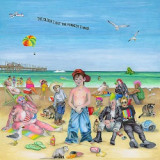
WHITMER THOMAS - THE OLDER I GET, THE FUNNIER I WAS

The Older I Get, the Funnier I Was, which follows Thomas’ brilliant 2020 HBO special The Golden One and his Can't Believe You're Happy Here EP released earlier this year, surveys a range of emotion and offers a broad sonic palette, moving between pop punk, electro, and the obvious influence of the singer-songwriters he grew up listening to in early childhood. It conjures the ennui of Bright Eyes alongside the barefaced storytelling of John Prine, the overstuffed lists of Fred Thomas with the lackadaisical humor of Colleen Green, among many others.

Thomas attributes the dexterity of the record to Duterte, who recorded and engineered most of it in addition to serving up plenty of encouragement when Thomas got down on the process. “As a comic, I used to test out new songs during sets to see if the funny bits were hitting, but since I wrote this in isolation I ended up writing lyrics and worrying less about making jokes,” Thomas says. That said, the album’s plenty funny. Stand-out and lead single “Rigamarole” opens with a Thomas-voiced infomercial that recalls his oft-cited lookalike Jim Carrey as the Grinch, before launching into a buoyant pop song about being depressed.

Whitmer Thomas will admit that when he traveled home to small town Gulf Shores, Alabama to record his HBO stand-up special, The Golden One, he expected to be greeted as a returning hero, a conquering king, or at minimum, a guy with a moderately successful career as an entertainer in Los Angeles. “I expected a big welcome home, open arms, but when I went back I realized: nobody fucking knows me. Nobody remembers me,” Thomas says. “In the years I’d been performing that show, I’d been romanticizing my childhood in this mythologized place, but the visit made me see that I’m not really from there anymore.”

The sense of alienation compounded when Thomas recognized how few people in town remembered his mom, to whom The Golden One is dedicated and largely about. Thomas grew up watching her perform with her twin sister at the legendary Flora-Bama Lounge, where he set the special, and still counts her as one of his musical influences. His new album, The Older I Get, the Funnier I Was, isn’t overtly about his mom, her presence is deeply felt throughout. While in Gulf Shores, Thomas discovered dozens of her old recordings, all of which had been wrecked by Katrina, but upon returning to LA, Thomas paid “a fancy place in Hollywood” to fix the tapes and hired Melina Duterte (Jay Som, Bachelor, Routine) to mix them. The two struck up a collaborative friendship, and Thomas had the sound of his mom’s voice back. “I was listening to songs she recorded when she was about my age, just these heartfelt, sweet Americana songs,” he says. “I decided then that I wanted to lose the Ian Curtis voice I always sing with; I wanted to do what came naturally, because my mom always sounded like herself, even when she was singing some cheesy reggae song about, like, Jamaica.”

Thus he went into The Older I Get, the Funnier I Was knowing it was time to retire his darkwave persona, and leaning into his natural, chirpier voice, which he says sounds “like a 12-year-old’s.” It makes sense: much of the album chronicles what Thomas calls “being a kid and feeling like you have no control and overcompensating by being annoying.” “So much of the album is about witnessing drug and alcohol addiction as a kid and seeing what it does to people, but also realizing that there's nothing you can do about it,” Thomas says. It’s familiar territory (see: “Partied to Death”) but the methodology is different this time around; true to its title, The Older I Get, the Funnier I Was isn’t always looking for laughs. Thomas might’ve left his hometown behind, but his kid self is still tagging along, a Peter Pan shadow he can’t untether himself from. The first line he sings on The Older I Get, the Funnier I Was is: “There should be a room at every party where you can just sit and watch a movie.” Find a 12-year-old who wouldn’t say the same.

pre-order now21.10.2022

expected to be published on 21.10.2022

27,10
THE LIBERTINES - UP THE BRACKET (20TH ANNIVERSARY EDITION) LP (2x12")
also available

Red Vinyl[27,69 €]


Up The Bracket arrived like a raging bull in a tired post-Britpop china shop and introduced the world to The Libertines, a new gang of London bohemians, whose ragged tunes, red military tunics, opiated poetry and "live now pay never" lifestyle came to define the millennial angst of the early noughties. At the heart of the band is the blood bond bromance between the ramshackle Music Hall Jagger/Richards, Peter Doherty and Carl Barat, ably assisted by the rock solid rhythm twins John Hassall and Gary Powell. Any bookie worth his salt would have given you short odds on this quartet surviving more than a month or two, given the teetering on the brink lifestyle they chose to lead, but here we are two decades later and our Byronic heroes, though older and wiser, are still fighting the good fight and making music every bit as vital as their debut. The belief, talent and fervour that Doherty spoke of in their earliest manifesto has stood them in good stead. Up The Bracket, justly considered one of the greatest albums of the noughties, was originally released on October 21st 2002 by Rough Trade Records. The album, a heady stew of indie rock, skiffle, blues, dub and English bucolic pop, was a huge shot in the arm to a largely redundant music scene and helped to inspire the rebirth of guitar music, going on to influence countless artists who followed in its wake. Up The Bracket, which was produced by Mick Jones of The Clash, takes you on a wondrously poetic journey into the band"s mythical world and their fevered dreams of Albion, a land of squalid glamour, liberty, equality, fraternity, gin palaces and chip shops. Quite simply Pete, Carl, Gary and John created a hugely compelling timeless British rock"n"roll classic debut as relevant now as it was upon its release.

pre-order now21.10.2022

expected to be published on 21.10.2022

27,69
Alice Boman - The Space Between

Alice Boman’s second album, available on CD housed in
digisleeve and booklet, and translucent coloured vinyl
housed in single sleeve with printed inners.
 Imbued with an enveloping warmth which radiates from
Boman’s gossamer-light vocals, ‘The Space Between’
ruminates on intimacy and existential angst, her quiet
contemplations cocooned in sympathetic arrangements
created in collaboration with producer Patrik Berger
(Robyn, Lana Del Rey).
 For ‘Feels Like A Dream’, additional vocals were provided
by Perfume Genius, a collaboration that came about via
Instagram and was recorded at a distance.
 “I have been a fan of his for a long time,” Boman explains.
“I love his voice - it’s so special. Initially I wanted us to
harmonise with each other but I love how the song turned
out, with us each having our separate verses, and singing
together at the end.”
 With vocals left largely unadorned throughout, the focus
falls squarely on Boman’s lyrics, which were written from
the deeply personal perspective of someone settled within
a relationship, and learning to be vulnerable with their
partner.
 The album is very much a journey, charting Boman’s
progress from fear (‘Honey’, ‘Maybe’) to the ‘place of
tenderness’ she ultimately arrives at on ‘Space’, the
album’s exquisite closing track. It’s a journey she hopes
listeners will share in, finding comfort in community.
Because, as Boman knows all too well, when life gets too
much, there’s always music.
 For fans of Aldous Harding, Angel Olsen, Sufjan Stevens.

pre-order now21.10.2022

expected to be published on 21.10.2022

27,31
Makaya McCraven - In These Times LP

Today Chicago-based percussionist, composer and producer Makaya McCraven announces the details of his new album In These Times, which is set for release on September 23rd via International Anthem / Nonesuch / XL Recordings. The first offering from the new album is a song tiled "Seventh String," which encapsulates the various musical dimensions present on McCraven's new album, a career-defining body of work that is a remarkable new peak for the already-soaring McCraven. In These Times is a collection of polytemporal compositions inspired as much by broader cultural struggles as McCraven's personal experience as a product of a multinational, working class musician community. It's the recording that he's been trying to create for 7+ years, as it's been consistently in process in the background while he's put forth a prolific run of releases including: In The Moment (2015), Highly Rare (2017), Where We Come From (2018), Universal Beings (2018), We're New Again (2020), Universal Beings E&F Sides (2020), and Deciphering the Message (2021). With contributions from over a dozen musicians and creative partners from his tight-knit circle of collaborators - including Jeff Parker, Junius Paul, Brandee Younger, Joel Ross, and Marquis Hill - the music was recorded in five different studios and four live performance spaces while McCraven engaged in extensive post-production work at home. Featuring orchestral, large ensemble arrangements interwoven with the signature "organic beat music" sound that's become his signature, the album is an evolution and a milestone for McCraven, the producer. But moreover, it's the strongest and clearest statement we've yet to hear from McCraven, the composer. Profiled in the New York Times, Vice, Pitchfork, Rolling Stone, the Guardian, and NPR, among other publications, Makaya and the music he makes today is what Passion of Weiss explains, "is part of a necessary conversation about the next evolution of the Black improvised music known colloquially as 'jazz.' He's found the threads connecting the past with the present, and is either wrapping them with new colors and textures, or he's plucking them gleefully like the strings of a grand instrument." McCraven, who has been aptly called a "cultural synthesizer" and "beat scientist," has a unique gift for collapsing space, destroying borders and blending past, present, and future into poly-textural arrangements of post-genre, jazz-rooted 21st century folk music. In These Times encompasses his artistic ethos, his experiences, identity and lineage, while pushing his music to new heights.

pre-order now20.10.2022

expected to be published on 20.10.2022

23,07
Isokratisses - Cry With Tears: Greek-Albanian Songs of Many Voices

Isokratisses (Greek for "women who sing the "iso" or "drone") is a vocal ensemble comprised of eight women who carry the ancient tradition of polyphonic songs from Epirus: a region in northern Greece and southern Albania. Born and reared in the Greek speaking villages around Deropoli and Politsani in Albania, the women of Isokratisses have sung these songs since childhood. The group ranges in age from 19 to 56 with some sisters in the group as well as an aunt. They were nurtured by this archaic music, listening and singing it with their family and friends. The songs were passed down from generation to generation. The group started its artistic activity in 2015, after the singer Anna Katsi took the initiative to encourage the younger members to perform regularly. The communal nature of polyphonic singing is a way of revitalizing an art that has declined in recent years and to reassert the primacy of female voices in the southern Balkans. Singing these songs builds an invisible bridge that connects the present with the past, the memories of childhood travel with the immediacy of daily life. On Oct 14, 2022, Third Man Records will release a full album of these solo polyphonic songs, with Grammy-winning producer Christopher King. "It is social music, woven into the fabric of poor, marginalized, and disenfranchised communities. Many of the songs are variations of mirologia (songs of fate, songs of morning) that used to be sung throughout the southern Balkans but have largely disappeared on an informal cultural level except for Epirus. Structurally, the songs are pentatonic (five notes with no semitones) and are composed of three or four distinct melodic voices that weave together in an organic yet unexpected way. The remaining members of the group provide the iso or “drone” that is the low tonic note of the melody." - Chris King.

out of Stock

Order now and we will order the item for you at our supplier.

17,61

Last In: 3 years ago
Lee Tracy & Isaac Manning - Is it What You Want

As the sun sets on a quaint East Nashville house, a young man bares a piece of his soul. Facing the camera, sporting a silky suit jacket/shirt/slacks/fingerless gloves ensemble that announces "singer" before he's even opened his mouth, Lee Tracy Johnson settles onto his stage, the front yard. He sways to the dirge-like drum machine pulse of a synth-soaked slow jam, extends his arms as if gaining his balance, and croons in affecting, fragile earnest, "I need your love… oh baby…"

Dogs in the yard next door begin barking. A mysterious cardboard robot figure, beamed in from galaxies unknown and affixed to a tree, is less vocal. Lee doesn't acknowledge either's presence. He's busy feeling it, arms and hands gesticulating. His voice rises in falsetto over the now-quiet dogs, over the ambient noise from the street that seeps into the handheld camcorder's microphone, over the recording of his own voice played back from a boombox off-camera. After six minutes the single, continuous shot ends. In this intimate creative universe there are no re-takes. There are many more music videos to shoot, and as Lee later puts it, "The first time you do it is actually the best. Because you can never get that again. You expressing yourself from within."

"I Need Your Love" dates from a lost heyday. From some time in the '80s or early '90s, when Lee Tracy (as he was known in performance) and his music partner/producer/manager Isaac Manning committed hours upon hours of their sonic and visual ideas to tape. Embracing drum machines and synthesizers – electronics that made their personal futurism palpable – they recorded exclusively at home, live in a room into a simple cassette deck. Soul, funk, electro and new wave informed their songs, yet Lee and Isaac eschewed the confinement of conventional categories and genres, preferring to let experimentation guide them.

"Anytime somebody put out a new record they had the same instruments or the same sound," explains Isaac. "So I basically wanted to find something that's really gonna stand out away from all of the rest of 'em." Their ethos meant that every idea they came up with was at least worth trying: echoed out half-rapped exhortations over frantic techno-style beats, gospel synth soul, modal electro-funk, oddball pop reinterpretations, emo AOR balladry, nods to Prince and the Fat Boys, or arrangements that might collapse mid-song into a mess of arcade game-ish blips before rallying to reach the finish line. All of it conjoined by consistent tape hiss, and most vitally, Lee's chameleonic voice, which managed to wildly shape shift and still evoke something sincere – whether toggling between falsetto and tenor exalting Jesus's return, or punctuating a melismatic romantic adlib with a succinct, "We all know how it feels to be alone."

"People think we went to a studio," says Isaac derisively. "We never went to no studio. We didn't have the money to go to no studio! We did this stuff at home. I shot videos in my front yard with whatever we could to get things together." Sometimes Isaac would just put on an instrumental record, be it "Planet Rock" or "Don't Cry For Me Argentina" (from Evita), press "record," and let Lee improvise over it, yielding peculiar love songs, would-be patriotic anthems, or Elvis Presley or Marilyn Monroe tributes. Technical limitations and a lack of professional polish never dissuaded them. They believed they were onto something.

"That struggle," Isaac says, "made that sound sound good to me."

In the parlance of modern music criticism Lee and Isaac's dizzying DIY efforts would inevitably be described as "outsider." But "outsider" carries the burden of untold additional layers of meaning if you're Black and from the South, creating on a budget, and trying to get someone, anyone within the country music capital of the world to take your vision seriously. "What category should we put it in?" Isaac asks rhetorically. "I don't know. All I know is feeling. I ain't gonna name it nothing. It's music. If it grabs your soul and touch your heart that's what it basically is supposed to do."

=

Born in 1963, the baby boy of nine siblings, Lee Tracy spent his earliest years living amidst the shotgun houses on Nashville's south side. "We was poor, man!" he says, recalling the outhouse his family used for a bathroom and the blocks of ice they kept in the kitchen to chill perishables. "But I actually don't think I really realized I was in poverty until I got grown and started thinking about it." Lee's mom worked at the Holiday Inn; his dad did whatever he had to do, from selling fruit from a horse drawn cart to bootlegging. "We didn't have much," Lee continues, "but my mother and my father got us the things we needed, the clothes on our back." By the end of the decade with the city's urban renewal programs razing entire neighborhoods to accommodate construction of the Interstate, the family moved to Edgehill Projects. Lee remembers music and art as a constant source of inspiration for he and his brothers and sisters – especially after seeing the Jackson 5 perform on Ed Sullivan. "As a small child I just knew that was what I wanted to do."

His older brother Don began musically mentoring him, introducing Lee to a variety of instruments and sounds. "He would never play one particular type of music, like R&B," says Lee. "I was surrounded by jazz, hard rock and roll, easy listening, gospel, reggae, country music; I mean I was a sponge absorbing all of that." Lee taught himself to play drums by beating on cardboard boxes, gaining a rep around the way for his timekeeping, and his singing voice. Emulating his favorites, Earth Wind & Fire and Cameo, he formed groups with other kids with era-evocative band names like Concept and TNT Connection, and emerged as the leader of disciplined rehearsals. "I made them practice," says Lee. "We practiced and practiced and practiced. Because I wanted that perfection." By high school the most accomplished of these bands would take top prize in a prominent local talent show. It was a big moment for Lee, and he felt ready to take things to the next level. But his band-mates had other ideas.

"I don't know what happened," he says, still miffed at the memory. "It must have blew they mind after we won and people started showing notice, because it's like everybody quit! I was like, where the hell did everybody go?" Lee had always made a point of interrogating prospective musicians about their intentions before joining his groups: were they really serious or just looking for a way to pick up girls? Now he understood even more the importance of finding a collaborator just as committed to the music as he was.

=

Isaac Manning had spent much of his life immersed in music and the arts – singing in the church choir with his family on Nashville's north side, writing, painting, dancing, and working various gigs within the entertainment industry. After serving in the armed forces, in the early '70s he ran The Teenage Place, a music and performance venue that catered to the local youth. But he was forced out of town when word of one of his recreational routines created a stir beyond the safe haven of his bohemian circles.

"I was growing marijuana," Isaac explains. "It wasn't no business, I was smoking it myself… I would put marijuana in scrambled eggs, cornbread and stuff." His weed use originated as a form of self-medication to combat severe tooth pain. But when he began sharing it with some of the other young people he hung out with, some of who just so happened to be the kids of Nashville politicians, the cops came calling. "When I got busted," he remembers, "they were talking about how they were gonna get rid of me because they didn't want me saying nothing about they children because of the politics and stuff. So I got my family, took two raggedy cars, and left Nashville and went to Vegas."

Out in the desert, Isaac happened to meet Chubby Checker of "The Twist" fame while the singer was gigging at The Flamingo. Impressed by Isaac's zeal, Checker invited him to go on the road with him as his tour manager/roadie/valet. The experience gave Isaac a window into a part of the entertainment world he'd never encountered – a glimpse of what a true pop act's audience looked like. "Chubby Checker, none of his shows were played for Black folks," he remembers. "All his gigs were done at high-class white people areas." Returning home after a few years with Chubby, Isaac was properly motivated to make it in Music City. He began writing songs and scouting around Nashville for local talent anywhere he could find it with an expressed goal: "Find someone who can deliver your songs the way you want 'em delivered and make people feel what you want them to feel."

One day while walking through Edgehill Projects Isaac heard someone playing the drums in a way that made him stop and take notice. "The music was so tight, just the drums made me feel like, oh I'm-a find this person," he recalls. "So I circled through the projects until I found who it was.

"That's how I met him – Lee Tracy. When I found him and he started singing and stuff, I said, ohhh, this is somebody different."

=

Theirs was a true complementary partnership: young Lee possessed the raw talent, the older Isaac the belief. "He's really the only one besides my brother and my family that really seen the potential in me," says Lee. "He made me see that I could do it."

Isaac long being a night owl, his house also made for a fertile collaborative environment – a space where there always seemed to be a new piece of his visual art on display: paintings, illustrations, and dolls and figures (including an enigmatic cardboard robot). Lee and Issac would hang out together and talk, listen to music, conjure ideas, and smoke the herb Isaac had resumed growing in his yard. "It got to where I could trust him, he could trust me," Isaac says of their bond. They also worked together for hours on drawings, spreading larges rolls of paper on the walls and sketching faces with abstract patterns and imagery: alien-like beings, tri-horned horse heads, inverted Janus-like characters where one visage blurred into the other.

Soon it became apparent that they didn't need other collaborators; self-sufficiency was the natural way forward. At Isaac's behest Lee, already fed up with dealing with band musicians, began playing around with a poly-sonic Yamaha keyboard at the local music store. "It had everything on it – trumpet, bass, drums, organ," remembers Lee. "And that's when I started recording my own stuff."

The technology afforded Lee the flexibility and independence he craved, setting him on a path other bedroom musicians and producers around the world were simultaneously following through the '80s into the early '90s. Saving up money from day jobs, he eventually supplemented the Yamaha Isaac had gotten him with Roland and Casio drum machines and a Moog. Lee was living in an apartment in Hillside at that point caring for his dad, who'd been partially paralyzed since early in life. In the evenings up in his second floor room, the music put him in a zone where he could tune out everything and lose himself in his ideas.

"Oh I loved it," he recalls. "I would really experiment with the instruments and use a lot of different sound effects. I was looking for something nobody else had. I wanted something totally different. And once I found the sound I was looking for, I would just smoke me a good joint and just let it go, hit the record button." More potent a creative stimulant than even Isaac's weed was the holistic flow and spontaneity of recording. Between sessions at Isaac's place and Lee's apartment, their volume of output quickly ballooned.

"We was always recording," says Lee. "That's why we have so much music. Even when I went to Isaac's and we start creating, I get home, my mind is racing, I gotta start creating, creating, creating. I remember there were times when I took a 90-minute tape from front to back and just filled it up."

"We never practiced," says Isaac. "See, that was just so odd about the whole thing. I could relate to him, and tell him about the songs I had ideas for and everything and stuff. And then he would bring it back or whatever, and we'd get together and put it down." Once the taskmaster hell bent on rehearsing, Lee had flipped a full 180. Perfection was no longer an aspiration, but the enemy of inspiration.

"I seen where practicing and practicing got me," says Lee. "A lot of musicians you get to playing and they gotta stop, they have to analyze the music. But while you analyzing you losing a lot of the greatness of what you creating. Stop analyzing what you play, just play! And it'll all take shape."

=

"I hope you understood the beginning of the record because this was invented from a dream I had today… (You tell me, I'll tell you, we'll figure it out together)" – Lee Tracy and Isaac Manning, "Hope You Understand"

Lee lets loose a maniacal cackle when he acknowledges that the material that he and Isaac recorded was by anyone's estimation pretty out there. It's the same laugh that commences "Hope You Understand" – a chaotic transmission that encapsulates the duality at the heart of their music: a stated desire to reach people and a compulsion to go as leftfield as they saw fit.

"We just did it," says Lee. "We cut the music on and cut loose. I don't sit around and write. I do it by listening, get a feeling, play the music, and the lyrics and stuff just come out of me."

The approach proved adaptable to interpreting other artists' material. While recording a cover of Whitney Houston's pop ballad "Saving All My Love For You," Lee played Whitney's version in his headphones as he laid down his own vocals – partially following the lyrics, partially using them as a departure point. The end result is barely recognizable compared with the original, Lee and Isaac having switched up the time signature and reinvented the melody along the way towards morphing a slick mainstream radio standard into something that sounds solely their own.

"I really used that song to get me started," says Lee. "Then I said, well I need something else, something is missing. Something just came over me. That's when I came up with 'Is It What You Want.'"

The song would become the centerpiece of Lee and Isaac's repertoire. Pushed along by a percolating metronomic Rhythm King style beat somewhere between a military march and a samba, "Is It What You Want" finds Lee pleading the sincerity of his commitment to a potential love interest embellished by vocal tics and hiccups subtlely reminiscent of his childhood hero MJ. Absent chord changes, only synth riffs gliding in and out like apparitions, the song achieves a lingering lo-fi power that leaves you feeling like it's still playing, somewhere, even after the fade out.

"I don't know, it's like a real spiritual song," Lee reflects. "But it's not just spiritual. To me the more I listen to it it's like about everything that you do in your everyday life, period. Is it what you want? Do you want a car or you don't want a car? Do you want Jesus or do you want the Devil? It's basically asking you the question. Can't nobody answer the question but you yourself."

In 1989 Lee won a lawsuit stemming from injuries sustained from a fight he'd gotten into. He took part of the settlement money and with Isaac pressed up "Saving All My Love For You" b/w "Is It What You Want" as a 45 single. Isaac christened the label One Chance Records. "Because that's all we wanted," he says with a laugh, "one chance."

Isaac sent the record out to radio stations and major labels, hoping for it to make enough noise to get picked up nationally. But the response he and Lee were hoping for never materialized. According to Isaac the closest the single got to getting played on the radio is when a disk jock from a local station made a highly unusual announcement on air: "The dude said on the radio, 107.5 – 'We are not gonna play 'Is It What You Want.' We cracked up! Wow, that's deep.

"It was a whole racist thing that was going on," he reflects. "So we just looked over and kept on going. That was it. That was about the way it goes… If you were Black and you were living in Nashville and stuff, that's the way you got treated." Isaac already knew as much from all the times he'd brought he and Lee's tapes (even their cache of country music tunes) over to Music Row to try to drum up interest to no avail.

"Isaac, he really worked his ass off," says Lee. "He probably been to every record place down on Music Row." Nashville's famed recording and music business corridor wasn't but a few blocks from where Lee grew up. Close enough, he remembers, for him to ride his bike along its back alleys and stumble upon the occasional random treasure, like a discarded box of harmonicas. Getting in through the front door, however, still felt a world away.

"I just don't think at the time our music fell into a category for them," he concedes. "It was before its time."

=

Lee stopped making music some time in the latter part of the '90s, around the time his mom passed away and life became increasingly tough to manage. "When my mother died I had a nervous breakdown," he says, "So I shut down for a long time. I was in such a sadness frame of mind. That's why nobody seen me. I had just disappeared off the map." He fell out of touch with Isaac, and in an indication of just how bad things had gotten for him, lost track of all the recordings they'd made together. Music became a distant memory.

Fortunately, Isaac kept the faith. In a self-published collection of his poetry – paeans to some of his favorite entertainment and public figures entitled Friends and Dick Clark – he'd written that he believed "music has a life of its own." But his prescience and presence of mind were truly manifested in the fact that he kept an archive of he and Lee's work. As perfectly imperfect as "Is It What You Want" now sounds in a post-Personal Space world, Lee and Isaac's lone official release was in fact just a taste. The bulk of the Is It What You Want album is culled from the pair's essentially unheard home recordings – complete songs, half-realized experiments, Isaac's blue monologues and pronouncements et al – compiled, mixed and programmed in the loose and impulsive creative spirit of their regular get-togethers from decades ago. The rest of us, it seems, may have finally caught up to them.

On the prospect of at long last reaching a wider audience, Isaac says simply, "I been trying for a long time, it feels good." Ever the survivor, he adds, "The only way I know how to make it to the top is to keep climbing. If one leg break on the ladder, hey, you gotta fix it and keep on going… That's where I be at. I'll kill death to make it out there."

For Lee it all feels akin to a personal resurrection: "It's like I was in a tomb and the tomb was opened and I'm back… Man, it feels so great. I feel like I'm gonna jump out of my skin." Success at this stage of his life, he realizes, probably means something different than what it did back when he was singing and dancing in Isaac's front yard. "What I really mean by 'making it,'" he explains isn't just the music being heard but, "the story being told."

Occasionally Lee will pull up "Is It What You Want" on YouTube on his phone, put on his headphones, and listen. He remembers the first time he heard his recorded voice. How surreal it was, how he thought to himself, "Is that really me?" What would he say to that younger version of himself now?

"I would probably tell myself, hang in there, don't give up. Keep striving for the goal. And everything will work out."

Despite what's printed on the record label, sometimes you do get more than one chance.

out of Stock

Order now and we will order the item for you at our supplier.

11,72

Last In: 3 years ago
Buscrates - Internal Dialogue / Early Morning

Pittsburgh, PA-native Buscrates returns to Bastard Jazz with a synth-heavy 7" single, "Internal Dialogue." The two-tracker sees the artist take an easy-going approach to his signature funk-filled sound, with a slowed-down tempo and melodic key riffs. "Internal Dialogue" is a mellow boogie joint that combines plenty of Moog, rich ARP strings, and syncopated clavinet chord stabs; "Early Morning" is reminiscent of a late-90s neo-soul beat, with rich Rhodes chords, while a squelching bass line evokes 70s electro-funk. Both tracks are undeniably Buscrates and are sure to have your head bobbing.

Buscrates - aka Orlando Marshall - is a DJ, producer, and multi-instrumentalist based in Pittsburgh. He draws influences largely from 90s hip hop and early-mid 80s electronic funk, which is evident in the boomy, swinging drums and bubbly Minimoog bass lines heard throughout some of his productions. He works locally and sometimes internationally either behind a pair of turntables spinning 45s or working his trusty Roland SP-404SX sampler and various other little portable gadgets at one of his beat sets. Some of his production credits include Phonte & Eric Roberson, Wiz Khalifa, and the late great Mac Miller.

out of Stock

Order now and we will order the item for you at our supplier.

9,20

Last In: 3 years ago
Items per Page:
N/ABPM
Vinyl