Search:large pro

Styles
All
Rebecca Trescher - Paris Zyklus - The Spirit of the Streets

May one say that nobody has composed for jazz like Rebecca
Trescher?" (Frankfurter Allgemeine Zeitung) The composer, clarinettist
and bandleader Rebecca Trescher has been leading her own large
ensemble for almost 10 years and has made an excellent name for
herself in the German jazz scene
She has also received numerous prizes and grants (e.g. Wolfram-von-Eschenbach
Prize 2021, Artist in Residence at the Cité Internationales des Arts de Paris 2019,
Bavarian Art Promotion Prize 2017, scholarship holder of the Baden-Württemberg
Art Foundation 2014). Now she is presenting the new album Paris Cycle - The
Spirit of the Streets with her tentett. The four- part work cycle was inspired by
Trescher's six-month Composer in Residence at the renowned Cité Internationale
des Arts in Paris. The composer walked the streets of Paris a lot and was
nspired by the spirit of the city. Become part of a musical journey through Paris.
The composer is looking forward to a live concert with a real audience! With the
unique and multifaceted line- up of her ten- piece Large Ensemble of trumpet,
saxophone, clarinet, cello, concert harp, piano, vibraphone, bass and drums,
Rebecca Trescher creates a refreshing, modern sound that moves experimentally
between jazz and classical music. Under her leadership, the ensemble weaves a
fascinating musical network that is based on Trescher's contemporary
compositional style, but also on the musicians' shared experience, precise
coordination and mutual trust.

pre-order now30.09.2022

expected to be published on 30.09.2022

22,27
Reverend Bizarre - Slice of Doom LP 4x12"

This is the final nail in the coffin of Reverend Bizarre and also the final part of Svart Records’ long-standing mission to release the band’s entire discography on vinyl. The vinyl box set contains both versions of the band’s legendary demo Slice of Doom plus the promo tape the band did to get a deal for their first album In The Rectory. Additional bonus is a live DVD of the band’s very first live show at TVO in Turku, Finland on September 18th, 1999. Then there’s replicas of three early gig posters, the rare True Doom manifesto by Earl of Void, a large booklet compiling all visual material and background info from these early years, a very rare promo booklet replica, flyers plus hidden gems.

pre-order now30.09.2022

expected to be published on 30.09.2022

96,60
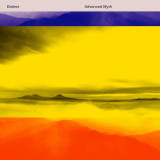
DIALECT - ADVANCED MYTH LP

Advanced Myth is the lucid debut album from Dialect, the long standing project of British composer, multi-instrumentalist, and field recordist Andrew PM Hunt. An enchanted exploration of unusual source synthesis, electro-acoustic arrangements, and sound found in foreign environments, Advanced Myth is its own cosmos expanding and contracting in real time. Although a largely meditative listen, it oscillates between moments of shimmering lucidity and corrosive washes of noise. Originally released digitally by tasty morsels in 2015, Advanced Myth has been newly mastered by Stephan Mathieu from definitive mixes, and is available for the first time on vinyl. Since his debut, Hunt has built a broad oeuvre with a quiet confidence across several albums, including Gowanus Drifts (2015), Loose Blooms (2017), and Under ~ Between (2021), his debut for RVNG Intl., and its companion piece, Keep Goingü... Under. For Fans of Laurie Spiegel, Visible Cloaks, Oneohtrix Point Never, Catarina Barbieri, Clare Rousay.

pre-order now30.09.2022

expected to be published on 30.09.2022

21,22
John Fullbright - The Liar LP

“If you can’t say it, you don’t have to,” sings John Fullbright on “Bearden 1645,” the opening track to his new record “The Liar,” out September 30, 2022. The song details Fullbright finding refuge in playing the piano, starting as a child and still today. For fans, it may feel like a bit of a rebuttal to “Happy,” the opener from 2014’s “Songs,” one of several in his repertoire that speak explicitly about mining one’s angst in order to make music. In that way, “Bearden 1645” is also a firm nod to the fourth wall: Fullbright knows you’re thinking about his songwriting. He is, too…but not quite the way he was before. The public at-large hasn’t heard much from him since the critically lauded “Songs,” a chasm of eight years that seemed unthinkable for an artist with so much hype surrounding his early career. Why did it take so long? “Honestly, I don’t know, and that’s been the scariest question to think about and the hardest one to answer,” Fullbright said. Maybe it was a tacit rejection of mounting industry pressure, mixed with a little fear. Or maybe it was the adjustment to a massive upheaval of his way of life. Whether we bore witness or not, it’s been a critical period of change for Fullbright, now in his 30s. Since his last release, he moved out of rural Oklahoma—the aforementioned Bearden has a population of about 130 people—to Tulsa. Once there, he worked to build a place for himself in the context of an established and vibrant musical coterie, performing often as both a bandleader and, more curiously, a sideman: storied loner John Fullbright lugging a piano from this small stage to that one with an uncharacteristic looseness. “It’s been a process of learning how to be in a community of musicians and less focusing on the lone, depressed songwriter…just playing something that has a beat and is really fun,” Fullbright said. “That’s not to say there are no songs on this record where I depart from that, because there are, but there's also a band with an opinion

pre-order now30.09.2022

expected to be published on 30.09.2022

22,23
Titus Andronicus - The Will to Live

LP comes with a Side D etching in triple gatefold jacket + full album download. The Will to Live was produced by Titus Andronicus singer-songwriter Patrick Stickles and Canadian icon Howard Bilerman (Arcade Fire, Leonard Cohen, The Whole Nine Yards) at the latter’s Hotel 2 Tango recording studio in Montreal. Drawing on maximalist rock epics from Who’s Next to Hysteria, Bilerman and Stickles have crafted the richest, densest, and hardest hitting sound for Titus Andronicus yet. All at once, the record matches the sprawl and scope of the band’s most celebrated work, while also honing their ambitious attack to greater effect than ever before. “It may strike some as ironic we had to go to Canada to record our equivalent to Born in the USA,” quips Stickles, “but the pursuit of Ultimate Rock knows no borders. ”For his recent stretch of personal stability, he credits a newfound domestic bliss and steadfast mental health regimen (“Lamictal is a hell of a drug”) as well as the endurance of what has become the longest-running consistent lineup of Titus Andronicus—Liam Betson on guitar, R.J. Gordon on bass, and Chris Wilson on drums. On the crueler side of the coin, however, The Will to Live was created in large part as an attempt to process the untimely 2021 death of Matt “Money” Miller, the founding keyboardist of the band and Stickles’ closest cousin. Stickles explains: “The passing of my dearest friend forced me to recognize not only the precious and fragile nature of life, but also the interconnectivity of all life. Loved ones we have lost are really not lost at all, as they, and we still living, are all component pieces of a far larger continuous organism, which both precedes and succeeds our illusory individual selves, united through time by (you guessed it) the will to live.” “Naturally, though, our long-suffering narrator can only arrive at this conclusion through a painful and arduous odyssey through Hell itself,” he qualifies. “This is a Titus Andronicus record, after all.” When Titus Andronicus made their long-awaited return to the stage in 2021, it was to celebrate the anniversary of their landmark breakthrough The Monitor, and the act of playing that material before an ecstatic audience left the band determined to deliver an album that would reach for those same lofty heights, relying this time less on the reckless fire of youth and more on the experience and perspective at which a band only arrives with a thousand shows under their belt. Through this golden ratio, Titus Andronicus have arrived at the peak of their creative powers. From its adrenalizing opening instrumental “My Mother Is Going to Kill Me” to its wistful closing benediction “69 Stones,” The Will to Live conjures a vast landscape and sends the listener on a rocket ride from peak to vertiginous peak. Rock fans will find themselves a feast, whether they crave barn-burning rock anthems such as “(I’m) Screwed” and “All Through the Night,” rapid-fire lyrical gymnastics (“Baby Crazy”), symphonic punk throwdowns (“Dead Meat”), or an adventurous excursion into the darkness that delivers thrills as it breezes boldly past the 7 minute mark, “An Anomaly.” As if that wasn’t enough gas for the tank, The Will to Live features sterling contributions from members of the Hold Steady, Arcade Fire, and the E Street Band, as well as duets with the aforementioned Betson, former Titus Andronicus drummer Eric Harm, and Josée Caron of the Canadian rock band Partner. The album comes packaged with gorgeous triple-gatefold artwork by illustrious illustrator Nicole Rifkin, a Hieronymus Bosch–inspired triptych which mirrors the three-part structure of the narrator’s perilous voyage across the corresponding three sides of vinyl. All together, this esteemed ensemble, with Stickles and Bilerman determined and defiant at the helm, have found The Will to Live—now, the question is… will you?

SIDE A 1. My Mother is Going to Kill Me 2. (I’m) Screwed 3. I Can Not Be Satisfied 4. Bridge and Tunnel SIDE B 5. Grey Goo 6. Dead Meat 7. An Anomaly SIDE C 8. Give Me Grief 9. Baby Crazy 10. All Through the Night 11. We’re Coming Back 12. 69 Stones SIDE D Etching

pre-order now30.09.2022

expected to be published on 30.09.2022

28,99
Choked Up - Mala Lengua

Choked Up

Mala Lengua

12inchLPDG260C
Don Giovanni
30.09.2022

Cristy C Road has built a reputation in punk circles for her heavily political
visual art, showcasing her skills through zines, books, tarot cards, and
album art for bands such as the Muslims
Focusing on her identity as a queer latinx woman, these projects represent an
important part of her creative expression, but to her, they are just one part of a
larger whole. While her visual work thrived, Road was sharing another part of
herself with the world through music, most recently with her band Choked Up.
While her illustration allows her the opportunity to express frustration with an
unjust status quo, her music captures the parts of life that happen in between
politics. Feeling pigeon holed into the themes of her visual art, Road explains - its
an annoying task to be expected to be a certain way because you're a woman or
you're latina or you're queer. Choked Up pushes against that expectation by
making simple, catchy pop- punk rooted in everyday feelings. Pressed on Pink
color vinyl.

pre-order now30.09.2022

expected to be published on 30.09.2022

23,95
Zusammen Clark - Earlier

Genteel, springlike sounds emanate once more from Paris. Those who live there or have visited will know a joy in this that non-residents or travelers can only imagine, but one senses that there’s a texture to it all that bakes into the human experience when winter finally lifts and trees blossom, warm breezes blow. After being stuck at home for two years, once the weather picks up and the world hopes to shift back in gear without millions of deaths, one’s imagination begins to run. Parisian duo Zusammen Clark have codified this sound of openness and warmth using known goalposts of sound – the subtle drag of these sturdy, easygoing songs, a direct path from Jean-Charles Delarue’s previous outing in Bruit Direct outfit City Band; the descent of chord structures, a deep voice going high and staying louche. Maybe a bit of Felt’s cherry red pastoral, shades of that time in speculative fiction where Pavement signed to Postcard (remember? it was the same year that Dandelion and Les Temps Heureux got out of bed and toured coffeehouses together), the Go-Betweens just before the wheels fell off, or NYC underdogs Plates of Cake. Horns swoop in at the right moments and don’t linger. Hooks lock in and down, lead guitar casually doubles itself. Hair gets done, stubble let fashionably go. Along with bandmate and cousin Jerome Lemee, Delarue constructs a frame, pencils in the outline and begins decorating these songs with all the right touches and a confidence that knows where to place them, not just the value of the objects. This is a world of sound where everything has a story and a place, every room can provide a closet mix. It’s a world that opens into a larger world, a human world, maybe a world these two knew from childhood, maybe one they’ve built for themselves. Earlier is too well-assembled to not have a foundation in profoundly comfortable moments in life, and the knowledge of how to get there, even if one knows they can never stay. It’s a catalogue of delight, impossible to oversell. – Doug Mosurock TRACKLIST: A1 - Magyar A2 - Animals & Evidence A3 - Rest Position A4 - Swim In A Blue B1 - Parallel Lines B2 - Ho Chi Minh B3 - The Postcard B4 - Own Company

pre-order now30.09.2022

expected to be published on 30.09.2022

22,06
Red Sparowes - The Fear is Excruciating, But Therein Lies the Answer

Red Sparowes sweeping guitar orchestrations thrive unbound by narrative, reliant on the merits and strength of their power alone. "The Fear Is Excruciating, But Therein Lies The Answer" serves as a conduit where limitless amounts of imagery can reside within the grandiose scope of the quintet's lush symphonic vignettes. Though Red Sparowes’ music thrives unbound by narrative, the band provides a roadmap to their muse. Their 2005 debut album, At The Soundless Dawn, cast the scientific inevitability of the Sixth Extinction into a grand funeral oration, revealing the message within the individual track titles. Their second full-length, Every Red Heart Shines Toward the Red Sun (2006) provided a synopsis of the Great Sparrow campaign of the Great Leap Forward, laying bare its conceptual role. The Aphorisms EP (2008 digital, 2009 12" vinyl) served a thematic precursor to the next album. Red Sparowes' latest offering, The Fear is Excruciating, But Therein Lies the Answer, began with the larger existential pondering of truth, faith, order, causality, and the innate demand for an understanding of the larger world around us. While Red Sparowes’ majesty is hardly in need of story, the provision of the larger metaphor yields a heightened depth and gravity to their work. Red Sparowes consists of guitarist/keyboardist Bryant Clifford Meyer (also of Isis), bassist/pedal steel player Gregory Burns (ex-Halifax Pier), drummer David Clifford (ex-Pleasure Forever), guitarist/keyboardist Andy Arahood (ex-Angel Hair) and guitarist Emma Ruth Rundle (also of The Nocturnes). Tracks : 1 Truths Arise, 2 In Illusions of Order, 3 A Hail of Bombs, 4 Giving Birth to Imagined Saviors, 5 A Swarm, 6 In Every Mind, 7 A Mutiny, 8 As Each End Looms and Subsides

pre-order now29.09.2022

expected to be published on 29.09.2022

28,99
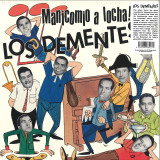
LOS DEMENTES - MANICOMIO A LOCHA LP

This album marks the debut recording for Venezuela's Velvet label by pianist Ray Pérez and his trombone-led salsa band Los Dementes. Heavy dance numbers and the distinctive vocals of Perucho Torcat make this historic 1967 rarity a sought-after collector's item. Now the LP has been lovingly restored, mastered from the original tapes, with its original artwork intact, preserving the legacy of Los Dementes for today's generation of salsa lovers everywhere. First time reissue. Salsa pianist, vocalist, composer and arranger Ray Pérez, acquired his nickname "Loco" by being a free, independent spirit, an innovator and iconoclast who was initially branded as "crazy" for the freshness and audacity of his sound. Amazingly, he is not that well known in the US, where he spent some time in the late 1960s and salsa was king during the 1970s. Yet he was quite popular in his home country from the beginning, especially amongst the working class of Caracas and Maracaibo, who adopted Cuban music played by New York Puerto Ricans as their own and called it "salsa" years before the term was employed by US labels like Fania as a marketing tool. Pérez is revered in Venezuela, as well as in Mexico and Colombia, and his storied career, which spans seven decades and thousands of concerts, has yielded more than 35 albums recorded by his various bands, including Los Dementes, Los Kenya, and Los Calvos, all of which are collector's items today. At the start of 1967 Pérez debuted Los Dementes, with vocalists Claudio Zerpa and Perucho Torcat backed by an ace band featuring only trombones in the brass section. Titled "¡Alerta mundo! Llegaron los 'The Crazy Men'" the record was released on the small Venezuelan label Prodansa. Soon after, Prodansa folded and Los Dementes were left without representation or much compensation for their efforts, being paid only in records. In the end of February of that year, Pérez returned to Caracas from a stint in Maracaibo in order to finish his first LP with the well-established and larger Velvet label, entitled "Manicomio a locha". In the first quarter of 1967, Velvet unleashed a trilogy of salsa records in order to compete with rival label Palacio and their recent success with Federico y su Combo Latino: "Porfi '67 Salsa & Boogaloo" by Porfi Jiménez y su Orquesta, "Guasancó" by Sexteto Juventud and lastly "Manicomio a locha". The LP begins appropriately with the boisterous title track, written by the band's conguero Carlos "Nené" Quintero, who would become a legend in coming years. Torcat describes a jam session in mental institution and introduces the band, with tasty solos by trombonist Rufo García followed by Ray on piano. Already you can hear something was different about Ray and his "Crazy Men"-a sound as wild and innovative as what was happening in New York with Eddie Palmieri, but with a more unhinged, raw feeling in line with Willie Colón and other younger Nuyorican bands. Next up is an intriguing track sung in a mix of Italian, English, Spanish and Papiamento by Pérez himself, performed in the complicated rhythm of the mozambique, an Afro-Cuban carnival beat developed in the early 1960s. This is followed by the heavy dancer 'Rico guaguancó', penned by Angelito Pérez, which changes from the guaguancó to the mozambique rhythm mid-way through, proving that Los Dementes were "different from the rest" as the lyrics say. 'Puerto Libre', sung by Torcat, is dedicated to the Venezuelan island of Margarita in the Oriente region, and the independent spirit of its working people. The rhythm changes from guaguancó to guajira and back again but remains danceable all the way through. The side closes out with a "3 in 1" medley inspired by the popular formula of the mosaicos of Billo's Caracas Boys, seamlessly knitting together several different tempos, rhythms, moods and compositions. Side two starts strong with the fierce yet satirical 'Corte e' patas', then 'Alma Cumanesa', a typical folk song refashioned as a guaguancó. This is followed by the funky 'Guajira con Boogaloo'. The tune echoes the sound of young Latin New York, pointing out the connection between Cuban and African American soul music. The pace picks up again with 'Fiesta de trombones', a hot descarga and then the album closes with another medley. Though this marks the end of a rather short album, it also signaled the emerging success of Los Dementes and their involvement with the salsa boom in Venezuela, quickly selling out of its initial run of 1000 records and making for a memorable debut on the Velvet label. Now this rare and sought-after LP has been lovingly restored, mastered from the original tapes, with its original artwork intact, preserving the legacy of Los Dementes for today's generation of salsa lovers everywhere.

out of Stock

Order now and we will order the item for you at our supplier.

24,58

Last In: 3 years ago
Lee Tracy & Isaac Manning - Is it What You Want LP

As the sun sets on a quaint East Nashville house, a young man bares a piece of his soul. Facing the camera, sporting a silky suit jacket/shirt/slacks/fingerless gloves ensemble that announces "singer" before he's even opened his mouth, Lee Tracy Johnson settles onto his stage, the front yard. He sways to the dirge-like drum machine pulse of a synth-soaked slow jam, extends his arms as if gaining his balance, and croons in affecting, fragile earnest, "I need your love… oh baby…"

Dogs in the yard next door begin barking. A mysterious cardboard robot figure, beamed in from galaxies unknown and affixed to a tree, is less vocal. Lee doesn't acknowledge either's presence. He's busy feeling it, arms and hands gesticulating. His voice rises in falsetto over the now-quiet dogs, over the ambient noise from the street that seeps into the handheld camcorder's microphone, over the recording of his own voice played back from a boombox off-camera. After six minutes the single, continuous shot ends. In this intimate creative universe there are no re-takes. There are many more music videos to shoot, and as Lee later puts it, "The first time you do it is actually the best. Because you can never get that again. You expressing yourself from within."

"I Need Your Love" dates from a lost heyday. From some time in the '80s or early '90s, when Lee Tracy (as he was known in performance) and his music partner/producer/manager Isaac Manning committed hours upon hours of their sonic and visual ideas to tape. Embracing drum machines and synthesizers – electronics that made their personal futurism palpable – they recorded exclusively at home, live in a room into a simple cassette deck. Soul, funk, electro and new wave informed their songs, yet Lee and Isaac eschewed the confinement of conventional categories and genres, preferring to let experimentation guide them.

"Anytime somebody put out a new record they had the same instruments or the same sound," explains Isaac. "So I basically wanted to find something that's really gonna stand out away from all of the rest of 'em." Their ethos meant that every idea they came up with was at least worth trying: echoed out half-rapped exhortations over frantic techno-style beats, gospel synth soul, modal electro-funk, oddball pop reinterpretations, emo AOR balladry, nods to Prince and the Fat Boys, or arrangements that might collapse mid-song into a mess of arcade game-ish blips before rallying to reach the finish line. All of it conjoined by consistent tape hiss, and most vitally, Lee's chameleonic voice, which managed to wildly shape shift and still evoke something sincere – whether toggling between falsetto and tenor exalting Jesus's return, or punctuating a melismatic romantic adlib with a succinct, "We all know how it feels to be alone."

"People think we went to a studio," says Isaac derisively. "We never went to no studio. We didn't have the money to go to no studio! We did this stuff at home. I shot videos in my front yard with whatever we could to get things together." Sometimes Isaac would just put on an instrumental record, be it "Planet Rock" or "Don't Cry For Me Argentina" (from Evita), press "record," and let Lee improvise over it, yielding peculiar love songs, would-be patriotic anthems, or Elvis Presley or Marilyn Monroe tributes. Technical limitations and a lack of professional polish never dissuaded them. They believed they were onto something.

"That struggle," Isaac says, "made that sound sound good to me."

In the parlance of modern music criticism Lee and Isaac's dizzying DIY efforts would inevitably be described as "outsider." But "outsider" carries the burden of untold additional layers of meaning if you're Black and from the South, creating on a budget, and trying to get someone, anyone within the country music capital of the world to take your vision seriously. "What category should we put it in?" Isaac asks rhetorically. "I don't know. All I know is feeling. I ain't gonna name it nothing. It's music. If it grabs your soul and touch your heart that's what it basically is supposed to do."

=

Born in 1963, the baby boy of nine siblings, Lee Tracy spent his earliest years living amidst the shotgun houses on Nashville's south side. "We was poor, man!" he says, recalling the outhouse his family used for a bathroom and the blocks of ice they kept in the kitchen to chill perishables. "But I actually don't think I really realized I was in poverty until I got grown and started thinking about it." Lee's mom worked at the Holiday Inn; his dad did whatever he had to do, from selling fruit from a horse drawn cart to bootlegging. "We didn't have much," Lee continues, "but my mother and my father got us the things we needed, the clothes on our back." By the end of the decade with the city's urban renewal programs razing entire neighborhoods to accommodate construction of the Interstate, the family moved to Edgehill Projects. Lee remembers music and art as a constant source of inspiration for he and his brothers and sisters – especially after seeing the Jackson 5 perform on Ed Sullivan. "As a small child I just knew that was what I wanted to do."

His older brother Don began musically mentoring him, introducing Lee to a variety of instruments and sounds. "He would never play one particular type of music, like R&B," says Lee. "I was surrounded by jazz, hard rock and roll, easy listening, gospel, reggae, country music; I mean I was a sponge absorbing all of that." Lee taught himself to play drums by beating on cardboard boxes, gaining a rep around the way for his timekeeping, and his singing voice. Emulating his favorites, Earth Wind & Fire and Cameo, he formed groups with other kids with era-evocative band names like Concept and TNT Connection, and emerged as the leader of disciplined rehearsals. "I made them practice," says Lee. "We practiced and practiced and practiced. Because I wanted that perfection." By high school the most accomplished of these bands would take top prize in a prominent local talent show. It was a big moment for Lee, and he felt ready to take things to the next level. But his band-mates had other ideas.

"I don't know what happened," he says, still miffed at the memory. "It must have blew they mind after we won and people started showing notice, because it's like everybody quit! I was like, where the hell did everybody go?" Lee had always made a point of interrogating prospective musicians about their intentions before joining his groups: were they really serious or just looking for a way to pick up girls? Now he understood even more the importance of finding a collaborator just as committed to the music as he was.

=

Isaac Manning had spent much of his life immersed in music and the arts – singing in the church choir with his family on Nashville's north side, writing, painting, dancing, and working various gigs within the entertainment industry. After serving in the armed forces, in the early '70s he ran The Teenage Place, a music and performance venue that catered to the local youth. But he was forced out of town when word of one of his recreational routines created a stir beyond the safe haven of his bohemian circles.

"I was growing marijuana," Isaac explains. "It wasn't no business, I was smoking it myself… I would put marijuana in scrambled eggs, cornbread and stuff." His weed use originated as a form of self-medication to combat severe tooth pain. But when he began sharing it with some of the other young people he hung out with, some of who just so happened to be the kids of Nashville politicians, the cops came calling. "When I got busted," he remembers, "they were talking about how they were gonna get rid of me because they didn't want me saying nothing about they children because of the politics and stuff. So I got my family, took two raggedy cars, and left Nashville and went to Vegas."

Out in the desert, Isaac happened to meet Chubby Checker of "The Twist" fame while the singer was gigging at The Flamingo. Impressed by Isaac's zeal, Checker invited him to go on the road with him as his tour manager/roadie/valet. The experience gave Isaac a window into a part of the entertainment world he'd never encountered – a glimpse of what a true pop act's audience looked like. "Chubby Checker, none of his shows were played for Black folks," he remembers. "All his gigs were done at high-class white people areas." Returning home after a few years with Chubby, Isaac was properly motivated to make it in Music City. He began writing songs and scouting around Nashville for local talent anywhere he could find it with an expressed goal: "Find someone who can deliver your songs the way you want 'em delivered and make people feel what you want them to feel."

One day while walking through Edgehill Projects Isaac heard someone playing the drums in a way that made him stop and take notice. "The music was so tight, just the drums made me feel like, oh I'm-a find this person," he recalls. "So I circled through the projects until I found who it was.

"That's how I met him – Lee Tracy. When I found him and he started singing and stuff, I said, ohhh, this is somebody different."

=

Theirs was a true complementary partnership: young Lee possessed the raw talent, the older Isaac the belief. "He's really the only one besides my brother and my family that really seen the potential in me," says Lee. "He made me see that I could do it."

Isaac long being a night owl, his house also made for a fertile collaborative environment – a space where there always seemed to be a new piece of his visual art on display: paintings, illustrations, and dolls and figures (including an enigmatic cardboard robot). Lee and Issac would hang out together and talk, listen to music, conjure ideas, and smoke the herb Isaac had resumed growing in his yard. "It got to where I could trust him, he could trust me," Isaac says of their bond. They also worked together for hours on drawings, spreading larges rolls of paper on the walls and sketching faces with abstract patterns and imagery: alien-like beings, tri-horned horse heads, inverted Janus-like characters where one visage blurred into the other.

Soon it became apparent that they didn't need other collaborators; self-sufficiency was the natural way forward. At Isaac's behest Lee, already fed up with dealing with band musicians, began playing around with a poly-sonic Yamaha keyboard at the local music store. "It had everything on it – trumpet, bass, drums, organ," remembers Lee. "And that's when I started recording my own stuff."

The technology afforded Lee the flexibility and independence he craved, setting him on a path other bedroom musicians and producers around the world were simultaneously following through the '80s into the early '90s. Saving up money from day jobs, he eventually supplemented the Yamaha Isaac had gotten him with Roland and Casio drum machines and a Moog. Lee was living in an apartment in Hillside at that point caring for his dad, who'd been partially paralyzed since early in life. In the evenings up in his second floor room, the music put him in a zone where he could tune out everything and lose himself in his ideas.

"Oh I loved it," he recalls. "I would really experiment with the instruments and use a lot of different sound effects. I was looking for something nobody else had. I wanted something totally different. And once I found the sound I was looking for, I would just smoke me a good joint and just let it go, hit the record button." More potent a creative stimulant than even Isaac's weed was the holistic flow and spontaneity of recording. Between sessions at Isaac's place and Lee's apartment, their volume of output quickly ballooned.

"We was always recording," says Lee. "That's why we have so much music. Even when I went to Isaac's and we start creating, I get home, my mind is racing, I gotta start creating, creating, creating. I remember there were times when I took a 90-minute tape from front to back and just filled it up."

"We never practiced," says Isaac. "See, that was just so odd about the whole thing. I could relate to him, and tell him about the songs I had ideas for and everything and stuff. And then he would bring it back or whatever, and we'd get together and put it down." Once the taskmaster hell bent on rehearsing, Lee had flipped a full 180. Perfection was no longer an aspiration, but the enemy of inspiration.

"I seen where practicing and practicing got me," says Lee. "A lot of musicians you get to playing and they gotta stop, they have to analyze the music. But while you analyzing you losing a lot of the greatness of what you creating. Stop analyzing what you play, just play! And it'll all take shape."

=

"I hope you understood the beginning of the record because this was invented from a dream I had today… (You tell me, I'll tell you, we'll figure it out together)" – Lee Tracy and Isaac Manning, "Hope You Understand"

Lee lets loose a maniacal cackle when he acknowledges that the material that he and Isaac recorded was by anyone's estimation pretty out there. It's the same laugh that commences "Hope You Understand" – a chaotic transmission that encapsulates the duality at the heart of their music: a stated desire to reach people and a compulsion to go as leftfield as they saw fit.

"We just did it," says Lee. "We cut the music on and cut loose. I don't sit around and write. I do it by listening, get a feeling, play the music, and the lyrics and stuff just come out of me."

The approach proved adaptable to interpreting other artists' material. While recording a cover of Whitney Houston's pop ballad "Saving All My Love For You," Lee played Whitney's version in his headphones as he laid down his own vocals – partially following the lyrics, partially using them as a departure point. The end result is barely recognizable compared with the original, Lee and Isaac having switched up the time signature and reinvented the melody along the way towards morphing a slick mainstream radio standard into something that sounds solely their own.

"I really used that song to get me started," says Lee. "Then I said, well I need something else, something is missing. Something just came over me. That's when I came up with 'Is It What You Want.'"

The song would become the centerpiece of Lee and Isaac's repertoire. Pushed along by a percolating metronomic Rhythm King style beat somewhere between a military march and a samba, "Is It What You Want" finds Lee pleading the sincerity of his commitment to a potential love interest embellished by vocal tics and hiccups subtlely reminiscent of his childhood hero MJ. Absent chord changes, only synth riffs gliding in and out like apparitions, the song achieves a lingering lo-fi power that leaves you feeling like it's still playing, somewhere, even after the fade out.

"I don't know, it's like a real spiritual song," Lee reflects. "But it's not just spiritual. To me the more I listen to it it's like about everything that you do in your everyday life, period. Is it what you want? Do you want a car or you don't want a car? Do you want Jesus or do you want the Devil? It's basically asking you the question. Can't nobody answer the question but you yourself."

In 1989 Lee won a lawsuit stemming from injuries sustained from a fight he'd gotten into. He took part of the settlement money and with Isaac pressed up "Saving All My Love For You" b/w "Is It What You Want" as a 45 single. Isaac christened the label One Chance Records. "Because that's all we wanted," he says with a laugh, "one chance."

Isaac sent the record out to radio stations and major labels, hoping for it to make enough noise to get picked up nationally. But the response he and Lee were hoping for never materialized. According to Isaac the closest the single got to getting played on the radio is when a disk jock from a local station made a highly unusual announcement on air: "The dude said on the radio, 107.5 – 'We are not gonna play 'Is It What You Want.' We cracked up! Wow, that's deep.

"It was a whole racist thing that was going on," he reflects. "So we just looked over and kept on going. That was it. That was about the way it goes… If you were Black and you were living in Nashville and stuff, that's the way you got treated." Isaac already knew as much from all the times he'd brought he and Lee's tapes (even their cache of country music tunes) over to Music Row to try to drum up interest to no avail.

"Isaac, he really worked his ass off," says Lee. "He probably been to every record place down on Music Row." Nashville's famed recording and music business corridor wasn't but a few blocks from where Lee grew up. Close enough, he remembers, for him to ride his bike along its back alleys and stumble upon the occasional random treasure, like a discarded box of harmonicas. Getting in through the front door, however, still felt a world away.

"I just don't think at the time our music fell into a category for them," he concedes. "It was before its time."

=

Lee stopped making music some time in the latter part of the '90s, around the time his mom passed away and life became increasingly tough to manage. "When my mother died I had a nervous breakdown," he says, "So I shut down for a long time. I was in such a sadness frame of mind. That's why nobody seen me. I had just disappeared off the map." He fell out of touch with Isaac, and in an indication of just how bad things had gotten for him, lost track of all the recordings they'd made together. Music became a distant memory.

Fortunately, Isaac kept the faith. In a self-published collection of his poetry – paeans to some of his favorite entertainment and public figures entitled Friends and Dick Clark – he'd written that he believed "music has a life of its own." But his prescience and presence of mind were truly manifested in the fact that he kept an archive of he and Lee's work. As perfectly imperfect as "Is It What You Want" now sounds in a post-Personal Space world, Lee and Isaac's lone official release was in fact just a taste. The bulk of the Is It What You Want album is culled from the pair's essentially unheard home recordings – complete songs, half-realized experiments, Isaac's blue monologues and pronouncements et al – compiled, mixed and programmed in the loose and impulsive creative spirit of their regular get-togethers from decades ago. The rest of us, it seems, may have finally caught up to them.

On the prospect of at long last reaching a wider audience, Isaac says simply, "I been trying for a long time, it feels good." Ever the survivor, he adds, "The only way I know how to make it to the top is to keep climbing. If one leg break on the ladder, hey, you gotta fix it and keep on going… That's where I be at. I'll kill death to make it out there."

For Lee it all feels akin to a personal resurrection: "It's like I was in a tomb and the tomb was opened and I'm back… Man, it feels so great. I feel like I'm gonna jump out of my skin." Success at this stage of his life, he realizes, probably means something different than what it did back when he was singing and dancing in Isaac's front yard. "What I really mean by 'making it,'" he explains isn't just the music being heard but, "the story being told."

Occasionally Lee will pull up "Is It What You Want" on YouTube on his phone, put on his headphones, and listen. He remembers the first time he heard his recorded voice. How surreal it was, how he thought to himself, "Is that really me?" What would he say to that younger version of himself now?

"I would probably tell myself, hang in there, don't give up. Keep striving for the goal. And everything will work out."

Despite what's printed on the record label, sometimes you do get more than one chance.

out of Stock

Order now and we will order the item for you at our supplier.

23,49

Last In: 3 years ago
DEATHPROD - SOW YOUR GOLD IN THE WHITE FOLIATED EARTH LP

Oslo's Ultima Festival for contemporary music in 2014. The idea was to give revered Norwegian experimental electronic musician Helge Sten, aka Deathprod, access to seminal avant-garde composer Harry Partch's self-designed, custom-made, specialized, invented instruments - an orchestra tuned to just intonation, using up to 43 intervals instead of the standard 12 for the most commonly used Western equal temperament. An artist with a 30+ year career and an uncompromising reputation that reflects the emotional specificity of his uneasy, yet compelling sound, maintained throughout his expansive discography, Sten was an intriguing choice for such a project. Although he attended art school, training in electronic music and sound art, he had little experience with acoustic instruments and can neither read nor write music notation. Yet he's been engaged with Partch's music, and outsider art more generally, since he was a teenager. His resulting piece/composition for the project was originally intended only for performance by Cologne-based Ensemble Musikfabrik, for a series of concerts in five European cities between 2015 and 2018. It's Musikfabrik that undertook the painstaking, expensive process of building an entire set of the composer's creations - the second only to the originals built by Partch himself. They are the professional musicians and virtuosic instrumentalists that had to re-train and re-educate on these unknown and experimental sound sculptures in non-standard tunings. And they house this large, gorgeous physical instrumentarium and deal with the enormous logistics of working with it, sometimes shipping the fragile pieces to other locales via semi-trucks or ships. Because of such monumental efforts, Musikfabrik are notoriously guarded with recordings of the instruments. And rightly so. They're the only ones allowed to perform on them, too. But Sow Your Gold isn't Musikfabrik playing. Instead, Sten spent days and nights alone with the instrumentarium in Cologne. He played the instruments himself while recording, layering the recordings and editing without effects to compose an `audio score' for Musikfabrik to work from in order for the ensemble to perform the piece. (Partch also regularly worked this way, although he would transcribe afterwards. Likewise, Sten worked with a professional arranger to create a detailed score, too.) So, that makes Sow Your Gold an even less likely rarity - partly why its release comes seven years after its creation. If you ask Sten about the album's title, he'll point you to the text he borrowed it from - Michael Maier's Atalanta Fugiens by H.M.E. De Jong, a 1969 study of a 1617 book of alchemical emblems - and notable passages dealing with alchemy, chemistry, and agriculture, all transformative processes. And while that may sound complicated, his takeaway is simple: "You have to break something down to create something new," - a lesson he felt related strongly to his own musical process, especially in this project. So, while Sow Your Gold in the White Foliated Earth is a piece written for specific, oddly tuned, extremely rare and unusual instruments, and for a certain ensemble - namely, some of the finest contemporary musicians in Europe - Sten grew fond of the audio score, recognizing it as coming directly from the creative process in its purest, most natural form. And so from a foliated earth, where obscure tradition, treasured scarcity, immense effort, and patient certainty layer and criss-cross, comes rugged gold, polished to shining by one outsider for another.

pre-order now23.09.2022

expected to be published on 23.09.2022

25,17
Jessie Baylin - Jersey Gir LP

“I had to write myself back into existence,” says Jessie Baylin. “I’d been feeling lost, empty, unsure if I’d ever make music again, and I think this album came along to remind me of who I really am, of who I could still become.” Indeed, Jersey Girl is more than just another record for Baylin; it’s a radical act of self-actualization, a moving work of reflection and rebirth from an artist who’s spent the better part of her adult life running from her roots. Written and recorded with GRAMMY-winning producers Daniel Tashian and Ian Fitchuk (Kacey Musgraves, Birdy), the collection marks Baylin’s first release since the passing of her longtime collaborator Richard Swift, whose influence looms large here even in his absence, and it signals the start of a profound new chapter, one marked by love and empathy for the face staring back in the mirror. The songs are lush and dreamy here, drawing on a hazy palette of warm guitars and vintage keyboard tones, and Baylin’s performances are nothing short of mesmerizing, her tender voice front-and-center in the mix as she grapples with guilt and shame, pain and healing, purpose and identity. Baylin’s the first to tell you this wasn’t an easy record to make—in fact, it wasn’t a record she intended to make at all—but sometimes the biggest breakthroughs come from the most unexpected places. “I had to be tricked into writing these songs,” Baylin confesses, “but it was a good kind of trick. I didn’t realize what was happening until I was already in the midst of it, and that turned out to be exactly what I needed.”

pre-order now23.09.2022

expected to be published on 23.09.2022

24,16
Sunny Sweeney - Married Alone LP

Sunny Sweeney, a genre-bending songwriting spitfire who has spent equal time in the rich musical traditions of Texas and Tennessee, returns with 'Married Alone', the celebrated singer-songwriter’s fifth studio album and the follow-up to 2017’s critically acclaimed 'Trophy'. Co-produced by beloved Texas musician and larger-than-life personality Paul Cauthen and the Texas Gentlemen’s multi-hyphenate Beau Bedford, Married Alone is Sweeney’s finest work yet, bringing together confessional songwriting, image-rich narratives and no shortage of sonic surprises for a loosely conceptual album about loss and healing. "Before I made this album, I did two things I’d never done before. I saw Stevie Nicks in concert with Fleetwood Mac, and I toured with Bob Seger. While Waylon and Loretta are tattooed on my heart and I’m deep-rooted in fiddle, steel, and twangy telecaster, this time, I channelled my deep love for rock icons Stevie, Tom Petty, Neil Young and Bob Seger in a way I never have before. I married ethereal rock vibes with the grit of a country lyric. Paul Cauthen took the helm as producer and brought in the stellar Beau Bedford and Jeff Saenz to complete the trifecta to get the sound we were going for. The majority of the album was recorded at Modern Electric Sound Recorders in Dallas, TX and features some of the band members I play with every night on tour. I want my fans to be able to take home that live experience, the guitar tones, fiddle solos - I leave everything on the stage each night and I want people to feel that in this recording."

pre-order now23.09.2022

expected to be published on 23.09.2022

21,39
MAI MAO - Ricshari

Mai Mao

Ricshari

12inchAN33
An'archives
23.09.2022

An’archives announce the release of Ricshari, the first LP from Japanese free improvising duo MAI MAO. Consisting of Shizuo Uchida of Hasegawa-Shizuo, Albedo Gravitas, Archeus, Kito Muzukumi Rouber, TERROR SHIT, UH, etc. on bass, and Kyosuke Terada, of HUH (who have their own release due on An’archives soon), TERROR SHIT, Bay City Rolaz, Praymate, The Obey Unit, etc. on guitar, they’ve previously released two wild cassettes, Curvature Improvement Plan (Haang Niap, 2020) and Folk Dope Rally (2021), both documenting one-take improvisations from live gigs. Ricshari was recorded by Nobuki Nishiyama in January 2021, and is proof, if any was needed, that this duo is one of the most fiercely unique, out -there units currently extant – in Japan, or anywhere, for that matter.

The music of MAI MAO seems to proceed by opposites and juxtaposition, shifting from frantic, hectic runs of splattering note spray to moments of granular stasis, where Uchida and Terada coax their instruments into and out of deep wells of silence, or rest, temporarily, in a lagoon of fermenting fuzz. Spiralling kinetics are largely the order of the day, though – the opener, “Chew a flying flash prayer”, skitters here and there, guitar and bass jumping over one another in games of leapfrog and Twis ter, finding new ways to perplex and puzzle the listener, and perhaps each other in the process, Uchida and Terada fully committed to the short -circuiting spirit of the moment.

The energy here is hyperactive, but it also speaks of a curious and committed attention to improvisatory responsiveness, one that’s just as likely to fork off into different directions in a split second – it’s real edge-of-the-seat stuff, as though the hands are moving too fast for the mind to follow. That’s all the better, then, to let the gush of genuinely free-thinking, devoted duo improvisation to fly at its most playful and intelligent. File next to the likes of Davey Williams & LaDonna Smith and their TransMuseq companions, or th e wickedly perplexing bass-synth/trombone duets of Dave Dove Paul Duo, and you’ve some idea of what’s going on here, provisionally at least, ‘cos this one’s an enthralling, yet welcoming, head-scratcher of the highest calibre.

pre-order now23.09.2022

expected to be published on 23.09.2022

31,05
Dionysos Now! - Adriano 3

Dionysos Now!

Adriano 3

12inchEPRC0047
EPR-CLASSIC
23.09.2022

A rediscovered untitled Mass by Adriaen Willaert "Missa Ippolito", a
hidden ode to the Cardinal of Ferrara, Willaert's patron.Adriaen Willaert
must have already been a prolific composer before he assumed the
position of kapellmeister at the Basilica of San Marco in Venice
After all, a second Mass of his was included in a large, illuminated choral
manuscript that was produced for the Illustrious Brotherhood of Our Blessed
Lady in 's- Hertogenbosch, the Netherlands (the first Mass in this manuscript,
Missa sex vocum super "Benedicta," can be found on the LP Adriano 2). The title
page of the Mass does not mention the name of the composition, only that of the
composer, Adrianus Willart. It was catalogued as a Missa sine nomine, a Mass
without a name. It is assumed that the work was composed between 1522 and
1527, at a time when Willaert was a member of the music chapel of Cardinal
Ippolito d'Este in Ferrara, Italy. At first glance, what's striking about this
composition is that one of the tenor voices sings a cantus firmus (a "given, fixed,
foundational voice" that provides the basis for each movement of the Mass, to
which the other voices are added) that always consists of the same 13 notes: mi
ut mi sol mi ut fa mi fa mi re mi.
In an article about the Mass, the musicologist Joshua Rifkin claims to have
discovered a sogetto cavato delle parole in this sequence of notes. This is a
compositional technique common for the time in which the notes of a melody, in
this case the cantus firmus, are derived from the vowels of certain words. The
notes used for the tone poetry are those of the Guidonian hexachord, a series of
the 6 notes ut-re-mi-fa-sol-la.
For example, the word Maria (Ma-ri-a) can be "translated" into the notes la mi la.
The cantus firmus of the Mass, according to Rifkin, fits the words "Primus
Ippolitus Cardinalis Estensis" (Ippolito I, Cardinal d'Este) perfectly. The Mass is
thus almost certainly (via a hidden message in the music) an ode to the Cardinal
of Ferrara who was Willaert's patron. This rediscovered untitled Mass by Adriaen
Willaert, which we have now sung as a world premiere, can therefore rightly bear
the name Missa Ippolito.

pre-order now23.09.2022

expected to be published on 23.09.2022

17,23
Makaya McCraven - In These Times LP

Today Chicago-based percussionist, composer and producer Makaya McCraven announces the details of his new album In These Times, which is set for release on September 23rd via International Anthem / Nonesuch / XL Recordings. The first offering from the new album is a song tiled "Seventh String," which encapsulates the various musical dimensions present on McCraven's new album, a career-defining body of work that is a remarkable new peak for the already-soaring McCraven. In These Times is a collection of polytemporal compositions inspired as much by broader cultural struggles as McCraven's personal experience as a product of a multinational, working class musician community. It's the recording that he's been trying to create for 7+ years, as it's been consistently in process in the background while he's put forth a prolific run of releases including: In The Moment (2015), Highly Rare (2017), Where We Come From (2018), Universal Beings (2018), We're New Again (2020), Universal Beings E&F Sides (2020), and Deciphering the Message (2021). With contributions from over a dozen musicians and creative partners from his tight-knit circle of collaborators - including Jeff Parker, Junius Paul, Brandee Younger, Joel Ross, and Marquis Hill - the music was recorded in five different studios and four live performance spaces while McCraven engaged in extensive post-production work at home. Featuring orchestral, large ensemble arrangements interwoven with the signature "organic beat music" sound that's become his signature, the album is an evolution and a milestone for McCraven, the producer. But moreover, it's the strongest and clearest statement we've yet to hear from McCraven, the composer. Profiled in the New York Times, Vice, Pitchfork, Rolling Stone, the Guardian, and NPR, among other publications, Makaya and the music he makes today is what Passion of Weiss explains, "is part of a necessary conversation about the next evolution of the Black improvised music known colloquially as 'jazz.' He's found the threads connecting the past with the present, and is either wrapping them with new colors and textures, or he's plucking them gleefully like the strings of a grand instrument." McCraven, who has been aptly called a "cultural synthesizer" and "beat scientist," has a unique gift for collapsing space, destroying borders and blending past, present, and future into poly-textural arrangements of post-genre, jazz-rooted 21st century folk music. In These Times encompasses his artistic ethos, his experiences, identity and lineage, while pushing his music to new heights.

out of Stock

Order now and we will order the item for you at our supplier.

19,79

Last In: 3 years ago
Rishin Singh with Martin Sturm - Mewl Infans

Deep-listening organ piece from Malaysia-born, Berlin-based composer Rishin Singh, performed by Martin Sturm on the Lizst organ in Thuringia, Germany. RIYL: Kali Malone, Anna von-Hausswolff - "An endless and captivating exploration of one organ's timbres and tones. Both whispered and shouted, large and small, close and far, Singh's work is both unsettling and a balm, and has invited me to reconsider pitch, consonance, dissonance, tension and release." – Clarice Jensen, artistic director of the American Contemporary Music Ensemble (ACME) In the 1850s the influential composer Franz Liszt, who was living in Weimar, Germany at the time, carried out, with the famous cantor Alexander Wilhelm Gottschalg, a series of “ländlichen Orgelexperimente” (rural organ experiments) in Thuringia – investigating various instruments and their capabilities for contemporary music. They eventually settled on the organ in Denstedt because of its high quality. Many years later, award-winning organist Martin Sturm would invite the Berlin-based composer Rishin Singh to repeat these “ländlichen Orgelexperimente” with him and they again chose the organ at Denstedt, now named in honour of Liszt, as the best instrument – the most flexible and expressive – to perform and record Singh's music for organ. mewl infans is a contemporary classical piece that invites modern listeners to ponder the enduring pull of an instrument that was first conceived more than 2,000 years ago and has, in recent years, been rediscovered by a new generation of composers and listeners. Throughout the larger architecture of the four movements, melodic motifs return over and over, fractured by noise, fragmented by carefully calibrated alternate tunings, dissolving into thin air, and generating drones which then transform into new melodic variations. Over the 44 minutes of the piece the organist at times attempts to exert complete control over the instrument, and at other times relinquishes all control entirely. Conceptually rigorous and emotionally charged, mewl infans rewards deep listening and patience. At times conjuring a sense of doom, at other times suspense, pastoral drift, or aquatic submersion, the album is a universe of tiny details comprised of noise and air, of the journey each tone takes from birth to expiration. HIGHLIGHTS: – Singh has been commissioned by the GRAMMY-nominated JACK Quartet. Premiere in NYC Spring 2023 – Collaborations between Singh and Sturm are ongoing: Sturm will premiere Singh’s concerto for organ, timpani, and string orchestra later this year – Sturm is the youngest professor of organ in German history – The debut album from Singh‘s ensemble Leider, A Fog Like Liars Loving, was released by Beacon Sound in May of 2021 Bios: Martin Sturm, born 1992 in South Germany, in an International award-winning organist (ION, Schwäbisch Gmünd, Festival St Albans, Haarlem, Bavarian Culture Prize, and Keck-Köppe Foundation). He performs regularly as an interpreter and organ improviser at festivals, churches, and concert halls around the world. In 2019 he was appointed Professor for Organ and Organ Improvisation at the University of Music “Franz Liszt” in Weimar (Germany), after teaching at the Universities of Music in Würzburg and Leipzig. Rishin Singh (b. Kuala Lumpur, Malaysia) is a composer and trombonist living in Berlin. He has been commissioned to compose for the JACK Quartet (US), Piano+ (US), Claire Edwardes (AUS), DNK Ensemble (NL), Prof. Martin Sturm (DE), the Amsterdam Wandelweiser Festival (NL), Quiet Music Ensemble (IE), and others. Upcoming premieres include “every day” a concerto for organ, timpani, and string orchestra (Martin Sturm, Thuringia, 2022), and “melancholy objects” a string quartet (the JACK Quartet, New York, Spring 2023). He is currently working on his first chamber opera and is the composer and lyricist for the art song ensemble Leider.

pre-order now16.09.2022

expected to be published on 16.09.2022

27,31
Fatso Jetson - Cruel & Delicious

FATSO JETSON was formed in Palm Desert, CA, in 1994 and are often credited as one of the fathers of the desert strain of stoner rock made most famous by their slightly younger neighbours Kyuss and Queens of the Stone Age. While musically similar to some of their stoner brethren, FATSO JETSON incorporate a broader variety of musical influences that includes punk, blues, jazz and surf music. That is not to say that the band isn't capable of dishing out supremely heavy riffs... Certainly grounded in dense hard rock, FATSO JETSON experiment with many musical textures, angular instrumental epics, and bizarre lyrics to create a punk, blues art rock all their own. In 1995, the group recorded their debut "Stinky Little Gods" and followed that up in 1997 with "Power of Three" (both appeared on SST). Brant Bjork briefly joined up as second guitarist and appeared on two 7" releases. The band then teamed up with Bongload Records, who released FATSO JETSON's third full-length, "Toasted", in 1998. Guitarist and old friend Gary Arce joined the band to record their fourth LP "Flames for All" in 2000 for Artist Frank Kozik's Mans Ruin Label. FATSO JETSON also contributed to "The Desert Sessions" releases that Josh Homme organized, bringing desert musicians and other creative like-minded rock musicians together to collaborate. It was Homme's record label Rekords Rekords that released the next FATSO JETSON album in 2001 "Cruel and Delicious". For this session the band was joined by Vince Meghrouni on Sax and Harp, adding a new dimension to FATSO's hard to pin sound. The band continues with this line up in 2009. There must be something in the sand of sweltering Palm Desert, a California town that has birthed Kyuss and Queens of the Stone Age, as well as Fatso Jetson. Like Kyuss/QOTSA, Fatso Jetson built a name for themselves by putting their own unique spin on the Sabbath sound, but unlike their counterparts, larger than life singer/guitarist Mario Lalli's true love lies in both jazz (Thelonious Monk, Eric Dolphy) and experimental rock (Frank Zappa, Devo). On paper, this conglomeration of different styles sounds like the perfect recipe for a train wreck, but it somehow all comes together on disc, as evidenced by the trio's 2003 offering, Cruel & Delicious. Issued on old pal Josh Homme's label, Rekords Rekords, the trippy songs perfectly fit the feel of the album's cover (a sun-bleached photo of a long stretch of desert highway), especially such standouts as the saxophone free for all "Drinkin Mode," the melodic "Light Yourself on Fire," the bouncy instrumental "Heavenly Hearse," a barely recognizable cover of the Devo obscurity, "Ton O Luv," and the jazzoid freak-out, "Pig Hat Smokin." Cruel & Delicious is an enjoyable slice of hard rock, well off the beaten path. Originally released on CD via Josh Hommes rekords rekords label. Right in time for its 20th Originally released on CD in 2001 on Josh Hommes own Rekords Rekords-label and now on vinyl for the first time! 20th anniversary! Remastered for the vinyl release. This record is a classic and we’re happy and proud to put it out on wax! Track listing: Pleasure Bent; Drinkin’ MODE; Light Yourself On Fire; Died In California; Heavenly Hears; Ton O Luv; Pig Hat Smokin’; Superfrown; Iron Chef; Sunshine Enema; Party Pig; Stranglers Blues; Mountain Of Debt

pre-order now16.09.2022

expected to be published on 16.09.2022

20,38
Say ZuZu - Here Again: A Retrospective (1994-2002)

Say ZuZu is an Americana rock band from New Hampshire - Originally
formed in 1991,Say ZuZu recorded and released nine full-length albums
before disbanding in 2003 and reuniting in 2019
The band's first release on Strolling Bones Records is Here Again: A Retrospective
(1994-2002) and includes highlights from the group's five studio albums recorded
during its touring heyday. A new studio record from the band is scheduled for
release in October 2022 on Strolling Bones Records. 'For those who haven't met
our music before, these are highlights from five records released between
1994-2002. The songs focus on the large internal lives of people in small mill
towns like ours. This record also chronicles a decade of growth from a fiercely
independent, self-produced New Hampshire band that flew under the radar during
the heyday of the 1990s alt- country movement. The title of the record, "Here
Again", is inspired by a song from our 1994 self-titled record. We've always sought
to write songs that hold up, personal songs that are durable and can stand on
their own in a variety of arrangements. "Here Again" is one of those songs. It's
also a fitting title for a record that's an opening salvo from a recently reunited
band with its first new studio record forthcoming in Fall of '22.' Here Again is set
for release on February 25, 2022 via Strolling Bones Records.

pre-order now16.09.2022

expected to be published on 16.09.2022

30,67
The Mellons - Introducing The Mellons

Introducing - The Mellons finds that balance somewhere in pages of the
Beach Boys book of psych pop.Jepson and Beck unlocked the expansive
potential of their songwriting when they found their match in another pair
of collaborators
Multi- instrumentalist and producer Dennis Fuller and percussionist Ian Francis
had worked together in a handful of bands, and Jepson and Beck enlisted them to
join The Mellons and round out their sound. "All of these pieces of songs that Rob
and I had swirling around in our heads started to magically come together," Beck
says. Though the resultant tracks are jampacked with everything from clarinets
and violins to sleigh bells and trumpets, the layers never overpower the intimate
harmonies and honeyed lyrical emotionality at the songs' core. "I wanna get
closer/ I wanna go deeper/ I wanna know it all," they sigh on opener "So Much to
Say", surrounded by twirling guitar riffs and glimmering bells. The Mellons play a
symphony's worth of instruments, and self-producing the record largely at Fuller's
No. 9 Studios in Salt Lake City allowed them to chase that stratified sweetness to
its heartfelt extreme. "Writing, arranging, and composing everything ourselves
gives us the freedom to really get the exact sound we're all interested in," Fuller
says. Always focused on the power of a taut hook, The Mellons made sure that
freedom was used for a purpose. "We stay true to the musical stylings of the midto late-'60s while still creating room for the vogue," Francis says. "It's all about
finding that balance." The nostalgic vibe to the psychedelia doesn't end at the
music, as the quartet opt for paisley or matching turtlenecks as well as vintage
collage. A trained illustrator and designer, Beck funnels visual influences into The
Mellons' vibe. Pressed on Yellow color vinyl.

pre-order now16.09.2022

expected to be published on 16.09.2022

29,37
Items per Page:
N/ABPM
Vinyl