Cerca:large profes

Generi
Tutto
Superstar Quamallah - Invisible Man LP 2x12"

A Gilles Peterson-approved deep jazz-rap classic.

2024 first time vinyl release, 140g double vinyl, remastered audio with restored artwork.

Limited and Non-Returnable.

Holy grail hip-hop alert! Superstar Quamallah's Invisible Man was never released on wax so, to celebrate the 15th anniversary of this astounding record, we present the first ever vinyl edition. A stunning record which gained accolades upon its initial release, such as a prominent feature on Gilles Peterson's renowned Best Of 2009 show, it's one of the most essential jazz rap albums of all time.

Deep jazz rap on that mellow-melodic tip, Invisible Man is an unforgettable album with nothing but dope beats and dope bars. There's a strong chance this album has passed you by but we truly believe it to be a lost hip-hop masterpiece. It supremely captures the essence of a golden age classic without being slavish to the past. No, this ain't some facile throwback rap. It's a fresh and deeply soulful, original album shot through straight from the heart. Perfect to chill to, Invisible Man is profoundly jazz-oriented and captures with simplicity and sincerity the essence of hip-hop circa 1983-1994. It sounds like vibing with your nearest, dearest and oldest friends on a long hot summer night as the tantalising thought that anything is possible fills the air. You know what, we can just call this "magic hour rap" and we think you'll know what we mean. It's just beautiful. Just Listen.

Brooklyn-born, California-based emcee, DJ, and producer Superstar Quamallah was active in the West Coast underground scene throughout the 90s and recorded extensively with such revered names as Defari and Tajai. His parents were some serious artistic heavyweights, too; his father was soul organist Big John Patton, a giant in the jazz world known for his releases on Blue Note whilst his mother was an active designer. However, he remains relatively unknown. Invisible Man, named ostensibly after the classic Ralph Ellison novel, could also refer to how he is viewed by the public at large. With close affiliations to the Hieroglyphics, Dilated Peoples and Likwit crew, his debut EP "Don't Call Me John" arrived in 1999 on ABB Records, after which he took a sabbatical from recording which included graduate school, travelling, teaching at Inglewood High and eventually a professorship of African Studies at Berkeley.

With a laidback flow and deep, relaxing presence on the mic, Superstar Quamallah is equal parts Big Daddy Kane, Rakim and Guru. Invisible Man is refined, soulful, feel-good hip-hop of the old school. Its wise, spiritual and literate sound, combined with the summertime vibes projected by the smooth beats and the nostalgia-inducing samples and vocal scratches, created jazzy boom-bap rap reminiscent of prime De La Soul, A Tribe Called Quest and Gang Starr.

Irresistibly bouncing opener "You Need Knowledge" loops sparkling pianos, horns and a nagging whistle refrain with scratched vocal refrains from Slick Rick, Mobb Deep and Guru. The super-smooth head-nod classic "88 Soul" also utilises a beautifully swelling piano line and dusty breaks whilst Quamé reminisces about his childhood in NYC. Deeply moving, the silky, sultry "Black Shakespeare" is built around an elegant piano loop and goes hard on the superman lover tip whilst "For My People...It's Spiritual" is transcendental rap in conversation with Rakim and older gods. The "Moment Of Truth"-sampling "Lonely At The Top" is striking for its undiluted boom-bap stylings and the staccato flute-hop of "Just Listen" is riddled with soulful refinement. The deeply-affecting, wistful-yet-triumphant bells and horn-drenched single "California Dreamin'" is top-tier rap of unimpeachable quality. What a flow!

Another highlight is the rich melodic piano-rap of "Purity", a beautiful ode to the foundations of rap and those keeping the culture authentically alive. Beautifully played instruments and spiritual jazz samples elevate the deep thinking present on "Kunta Kente" whilst the darker jazz-tinged battle-rap of "93 Shit" goes super hard both in a lyrical sense and with its no-holds drum punches. The breezy Rhodes and string loops that serve as the sonic backdrop to the slinky jazz rap of "We Got Plots" are just gorgeous as our hero evokes Common's "I Used To Love H.E.R." with a head-spinning tale of crime, deception and double crossing. And some twist! "Do Win-Dis" has a tense crime-funk backing and rolling beats which complement Quamé's flow perfectly before the record is rounded out by the tough yet jazzy brilliance of rap confessional "Hope She Remembers Me". Just sensational.

Upon its original release, Quamallah himself declared: "My favorite time period for Hip Hop music was definitely between 1983 and 1994 with 1988 and 1993 being two years that standout as extremely impressive years musically and culturally. The fashion, slang, movies, TV shows and vibe during those years was incredible. While totally submerged in the feelings and music of that entire time period, I went to work on Invisible Man and I am excited for people to hear the result! It is an album that I would want to hear from some of my favorite artists of the past and present today. This is not a RETRO trip for me; this is me at my best lyrically and spiritually using the accessories of the 80s and 90s to fuel me. I am a 88 soul as the song states!"

This album goes deep. It goes all in. When Invisible Man first came out it had a real hold on us here at Be With HQ. We couldn't stop listening to it. We'd venture to say it's one of the top 25 rap records of the 2000s. In the years since its release, it has remained a criminally underrated record, an increasingly hidden gem. We sincerely hope this first time double LP release will go some way to correct this.

It's been mastered for vinyl by Simon Francis, cut by Cicely Balston and pressed at Record Industry. Finally available on the format it should always have been on, it must never be rendered invisible again.

non in magazzino

Ordina ora e ordineremo l'articolo per te presso il nostro fornitore.

33,19

Last In: 22 months ago
Turntable / Plattenspieler - Reloop RP-4000 MK2

The RP-4000 MK2 is a solid DJ turntable for advanced users. The new MK2 version comes with several improvements, including a newly developed top panel and reworked metallic buttons with enhanced feel as well as a variety of functions. Precise motor control with 3 speeds: The precision-engineered die-cast platter is accelerated by a powerful motor with a high-torque direct drive of more than 1.8 kg/cm. The precise motor control with 3 speeds (33 1/3, 45 & 78 rpm) allows for the RP-4000 MK2 to play back any record. The pitch section with a selectable range of +/-8% and +/-16%, respectively, is suitable for the finest pitch adjustments. Statically balanced s-shaped tone arm: The RP-4000 MK2 features a statically balanced s-shaped tone arm with hydraulic lift and anti-skating mechanism. Via the universal connection for pick-up systems (SME) a large number of pick-up systems can be connected. Reverse function, pitch reset and extendible needle illumination: Additional features, such as reverse play and pitch reset, offer all DJs direct control of their turntable. With the push of a button the aluminium target light can be extended, so that the needle position can be seen in dark surroundings. Newly developed top panel and sturdy housing design: The new deep black metallic top panel construction is equipped with metallic buttons for start/stop, platter speed, pitch control, reverse function and tempo reset. The improved touch upon hit offers a clear haptic feedback. The sturdy construction with optimized damping features and shock-absorbing feet improve isolation from unwanted vibrations. With pick-up and headshell (made by Ortofon in Denmark): The RP-4000 MK2 comes with the high-quality OM Black pick-up, handmade by Ortofon in Denmark, pre-fitted to a headshell ready for immediate playback.


Technical data Turntable:
Type: direct drive turntable
Drive: quartz-driven high-torque direct drive
Motor: 8-pol., 3-phase, brushless DC motor
Turntable speeds: 3 speeds, manual (33 1/3, 45, 78 rpm)
Starting torque: > 1.8 kg/cm
Brake time: 50 dB (DIN-B)
Brake system: electronic brake
Platter:
Material: aluminium die-cast
Diameter: 332 mm
Tone arm:
Type: universal, statically balanced, s-shaped
Effective length: 230.5 mm
Overhang: 16 mm
Tracking angle error: < 3°
Applicable pick-up weight: 3.5 - 8.5 g (incl. headshell 13 - 18 g)
Anti-skating range: 0 - 7 g
Connections:
1x PHONO out (gold-plated), 1x GND
General:
Power supply: AC 115/230 V, 60/50 Hz (EU/US), AC 100 V, 50/60 Hz (JP)
Power consumption: 12 W
Dimensions: 450 (w) x 352 (d) x 144 (h) mm
Weight: appr. 9.8 kg
Included accessories:
Platter, OM Black pick-up system (by Ortofon), headshell, slipmat, counterweight, AC psu, instruction manual
Features
NEW in the MK2 version:
Newly developed top panel and reinforced housing construction
Reworked metallic buttons with improved feel & tactile response
Precision Pitch with selectable ranges of +/-8 % & +/-16 %
Tempo reset (Quartz Lock) feature
Superior finish in deep black metallic
Quartz-driven DJ turntable with high-torque direct drive
Designed for professional use
Powerful brushless DC motor with more than 1.8 kg/cm torque
Precise motor control with 3 speeds selectable (33 1/3, 45 & 78 rpm)
Reverse function: switch for forward/reverse playback
Precision-engineered die-cast aluminium platter with stable rotation
Statically balanced s-shaped tone arm with hydraulic lift and anti-skating mechanism
Universal connection for pick-up systems (SME)
Extendible needle illumination
Shock-absorbing feet for vibration isolation
Sturdy, heavy construction with optimized damping features
Prepared for dust cover (available as optional accessory)
Incl. slipmat, removable headshell and ready-mounted OM Black pick-up made by Ortofon

non in magazzino

Ordina ora e ordineremo l'articolo per te presso il nostro fornitore.

284,83

Last In: 13 months ago
Boot Camp Clik - The Last Stand 2x12"

Boot Camp Clik

The Last Stand 2x12"

2x12inchDDM2035FBX
DUCK DOWN
31.05.2024

The landmark 2006 album that showcased Brooklyn's legendary Hip Hop collective with their original lineup for the first time since their 1997 debut LP "For the People." Buckshot, Smif-N-Wessun, Heltah Skeltah, and O.G.C. sound as raw as ever over a hall-of-fame production lineup including beats by Pete Rock, Large Professor, Da Beatminerz, 9th Wonder, Marco Polo, and more.

pre-ordina ora31.05.2024

dovrebbe essere pubblicato su 31.05.2024

38,61
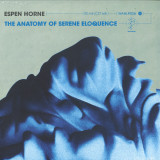
Espen Horne - The Anatomy Of Serene Eloquence LP

2023 sees the return of multi-talented Norwegian producer Espen Horne to Wah Wah 45s, after a 24 year hiatus. The man behind the label's very first release, the now seminal Magnetica, never lost his connection with the imprint and has remained very much part of the Wah Wah family, making a comeback this year with his first solo material under his own name since that club classic from 1999.

Back in the spring, the first single from the project, the gorgeous soul-jazz beauty Bakeren, featuring the stunning vocals of Resonators' Faye Houston, quickly found a home on Gilles Peterson's internationally renowned BBC Radio 6 show as well as that of Jazz FM legend Robbie Vincent, Bandcamp Weekly and the Fresh Finds Jazz Spotify playlist.

Following that, Bergen Sunrays, became a weekly fixture on the Craig Charles Funk & Soul Show on BBC 6 Music, with the limited 7-inch of both singles selling out within hours of release.

Next up was the wistful Den Franske Gitaren, a lugubrious soul-jazz piece with drum & bass leanings featuring Bergen based MC and vocalist Aich, which found favour with legends Laurent Garnier and Jazzanova as well as hot Japanese production outfit Dazzle Drums.

This was closely followed by the final single to be taken from the album, the stunning and outspoken vocal jazz waltzer Nada Pode Me Calar (which roughly translates to Nothing Can Shut Me Up!) featuring the sublime talent of Olav Wöllo on vocals and Juno - anotherr big one with Gilles Peterson on Worldwide FM and Deb Grant on BBC 6 Music.

And now the full album, entitled The Anatomy Of Serene Eloquence is available for your aural delectation. Recorded largely during lockdown, the LP is a sophisticated and composed piece of work that sees the Norwegian producer make connections with musicians from across Europe, and some closer to home, to collaborate on this sedate and peaceful collection of songs.

The aforementioned Faye Houston also appears on the soulful, dub flavoured Don't Fall Asleep, a piece of music that explores the feeling of being isolated whilst sharing a mutual love and drive to explore new sonic possibilities.

Elsewhere, Olav Wöllo pops up again too, this time on O Mar E A Lua and once again singing in Portuguese to give this track a certain Tropicalia feel, as Espen explains:

"Olav Wöllo is a close friend, an excellent musician and vocalist, and a capoeira professor here in Bergen. He has spent much of his life living in Brazil and speaks Portuguese fluently. He wrote the lyrics for this tune years ago and had just been waiting for the right collaboration to come along.

We went to his lovely studio out on this remote island, made a massive gyoza meal, had some serious good wine and stayed the whole night to record his vocal harmonies and outspoken lyrics."

The single Bergen Sunrays also appears on the album in instrumental form with featured keys courtesy of London based player Rory More - here entitled Rory's Sunrays. His Lowrey organ adds a more melancholic feel to the track, as it does on the stunning Belle Époque, alongside the ivory work of Eirik Blåsternes - an emotional, contemplative and atmospheric track that was tested and shaped in the eclipse of Covid.

As with Belle Époque, La Psychosomnie is a playful yet explorative cut that examines insomnia, paralysis and hypnosis courtesy of some enigmatic French spoken word spinning around a framework of drums, bass and swirling keys.

And finally, the album offers up an alternative version of the single Den Franske Gitaren, this time featuring Martin Halla, a vocalist out of the Bergen Grieg Jazz Academy and winner of the Norwegian version of The Voice back in 2012! The perfect flip to Aich's more mournful interpretation of this bass and drum future classic.

non in magazzino

Ordina ora e ordineremo l'articolo per te presso il nostro fornitore.

22,65

Last In: 9 months ago
Paraorchestra with Brett Anderson & Charles Hazlewood - Death Songbook LP 2x12"

Death Songbook is an exquisite and unique collaboration between Suede’s Brett Anderson, Charles Hazlewood and Paraorchestra featuring special guests Nadine Shah and Gwenno. The album features delicate new interpretations of iconic songs by the likes of Echo & The Bunnymen, Suede, Depeche Mode, Mercury Rev and Japan tackling themes of death, the death of love, anxiety, loss and transcendence. Paraorchestra is the world's first large-scale virtuoso ensemble of professional disabled and non-disabled musicians. The CD and LP packages feature beautiful photography from the original recordings at Wales Millennium Centre, Cardiff.

pre-ordina ora19.04.2024

dovrebbe essere pubblicato su 19.04.2024

28,53
Kolonel Djafaar - Getaway LP

Having built a loyal local Antwerp following off of the success of their 2019 debut self released album, ‘Forgotten Kingdom’, and growing reputation for electrifying stage performances, Kolonel Djafaar achieved worldwide recognition in 2021 for the ‘Cold Heat’ EP on Batov Records, attracting praise from Music Is My Sanctuary (“triumphant), and support from Gideon Coe on BBC 6 Radio Music, and DJs across Worldwide FM, Soho Radio, Le Mellotron, and KEXP.

The group overcame busy schedules and frequent quarantine periods to hit the studio in February 2022 to lay down four tracks. However, the creative itch persisted, leading to an intense writing session in August, deep in the heart of a tranquil forest. From noon until midnight, the band immersed themselves in the creative process, embracing the freedom to make noise without restraint.

Fueled by hearty breakfasts, unwavering focus, and the ambient clucking of chickens roaming the studio, Kolonel Djafaar crafted the majority of ‘Getaway’. This period marked a pivotal shift as a number of new band members joined just in time for the August sessions.

Membership changes, including Emiel Lauryssen joining on trumpet, alongside guitarist Philip Matthhijnssens, the band's palette has broadened and new sounds are able to break through. From psychedelic rock and soul influence of the Daptone Records’ affiliated Budos Band, surf rock (“Urban Dweller”), Morricone Spaghetti Western guitar, and Afro Cuban (“Kelmendi”), alongside the brassy Afrobeat and Ethio jazz vibes the group have been known for.

The broader dynamics of ‘Getaway’, and the band’s more cinematic and experimental approach, is particularly apparent on "Siren’s Glitch" and "Phil’s First Tear". The latter, first conceived by drummer Anton Van Hove, features the lead guitar doubling up with the bass guitar for added impact. Whilst the origins of "Convoi Exceptionnel", a brass & synths stomper of a march, trace back to a jam session during the band's Hungarian tour, another vital period of prolonged time together, capturing the organic essence of their experiences on the road.

Each track on ‘Getaway’ holds a unique connection to at least one band member, and all benefit from a collaborative approach to songwriting. "Sparking Clover'', an Ethio-inspired psych & soul groover penned by tenor saxophonist Doyin Smith, carries a poignant undertone inspired by personal loss, while psych rock leaning tracks like "Apologies in Advance" showcase the band's evolution and increasing professionalism in crafting a distinct sonic experience.

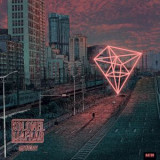
The curious cover art depicts a lone individual heading down an empty city street towards a large mysterious glowing object, evoking the common emptiness and struggle of urban life, and the search for meaning or just something better. The band envision the object to represent this album, offering a beacon to like-minded listeners. Kolonel Djafaar invite music enthusiasts on an immersive journey, to ‘Getaway’ from the daily grind of life, on an album reflecting diverse influences and marking a new chapter in their musical exploration.

pre-ordina ora05.04.2024

dovrebbe essere pubblicato su 05.04.2024

22,65
Various - Series - 1$ Bin Breaks

$1 Bin Breaks: Sakura (Edit) by Odetta / On The Hill (Edit) by Oliver Sain / Enchanted Lady (Edit) by Milt Jackson With The Ray Brown Big Band b/w Survival (Edit) by Annette Peacock / Sunrise (Edit) by The Originals / A Few More Kisses To Go (Edit) by Issac Hayes / Go On & Cry (Edit) by Les McCann | Galaxy Sound Company — GSC45-041 | Very special hot-off-the-test-presses donut via the always on-point @galaxy_sound_company crew. This will be number 41 in their cop-on-site 45 series, set to be released in 2024. This time out we are treated to 7 “$1 Bin Breaks” &, as with many in the GSC45 series, these are the sources of some of your fav hip-hop jams.

Side A:
1) “Sakura” by Odetta; Sampled in “Tried By 12” by The East Flatbush Posse

2) “On The Hill” by Oliver Sain; Sampled in “Tell Me” by Pete Rock & C.L. Smooth, “Day One” by D.I.T.C., “Young G’s” by Puff Daddy, The Notorious B.I.G., Jay-Z & Kelly Price

3) “Enchanted Lady” by Milt Jackson With The Ray Brown Big Band;
Sampled in “Dinnit” by De La Soul, “Escape” & “Carmel City” by Pete Rock & C.L. Smooth, & “Ijuswannachill“ by Large Professor

Side B:
1) “Survival” by Annette Peacock; Sampled in “Braggin' Writes” by J-Live, “Rules We Live By” by Lord Finesse, “Scientists of Sound” by Brand Nubian, “Kunta Fly Shit “by Ghostface Killah, “Video Game” by J Dilla

2) “Sunrise” by The Originals; Sampled in “Accepte Mon Concept” by 2 Bal 2 Neg' & “Guess Who’s Back” by Scarface, Jay-Z & Beanie Sigel

3) “A Few More Kisses To Go” by Issac Hayes; Sampled in “Tonight's Da Night” by Redman, “Ain't No Fun (If the Homies Can't Have None)” by Snoop Dogg, “Rough Life” by Shabba Ranks, “Is There a Heaven 4 a Gangsta?” by Master P, “B-Cuz I Got a Girl” by Nate Dogg, “The Life” by Alicia Keys

4) “Go On & Cry” by Les McCann; Sampled in “Tha Next Episode” by Snoop Dogg & Dr. Dre, “Runnin' Wit No Breaks" by Warren G, “No Pain” by Lords of the Underground

Mr. Thelonious Edits
File under: HIp Hop breaks , Jazz Funk, Funk, Samples breaks

non in magazzino

Ordina ora e ordineremo l'articolo per te presso il nostro fornitore.

11,35

Last In: 2 years ago
LARGE PRO - BEATZ VOLUME THREE

Legendary Hip Hop Producer and Emcee Large Pro aka The Large Professor returns with his highly anticipated 3rd instrumental album, BEATZ VOLUME 3. Back with his traditional signature Boomp Bap sound, LP brings you more well-crafted soulful BEATZ that you can rhyme to, DJ with, skateboard, or even dance to! This album features 10 bangers that are sure to make DJs want doubles to back spin!

Large Professor states:
"Beatz Vol. 3 was made to lift the spirits. From the youthful "Let It Fly" to the ghetto love story sounds of "Rooftop Love", all of the Beatz on this project were made to make the listener feel good. After learning more about my family history, I had to dedicate the song "Ancestors" to my predecessors who are in the "Friendly Skies". Overall, I want to keep that original Boomp Bap style of hip hop alive for my generation, and the real ones to follow."

Large Professor is a founding member of the Hip Hop group Main Source. In 1991 their classic debut album "Breaking Atoms" introduced the world to NAS, who was featured on the track "Live at the Barbeque". LP's debut solo album "The LP" (PSP006) was finally released in 2009 featuring hits like "IJuswannachill", "Mad Scientist" & More.

Some of Large Pro's production and remix credits include tracks for NAS, Eric B. & Rakim, A Tribe Called Quest, Slick Rick, Pete Rock & CL Smooth, Tragedy Khadafi, Mobb Deep, Busta Rhymes, Big Daddy Kane, Lord Finesse, Akinyele, Masta Ace, Czarface, Cormega and many more. Recent production credits: RawWattage "Eyez" (2020), "Pressure" Soundtrack (2020), The Lox/Westside Gunn & Benny "Think of the Lox" (2021), Al Skratch "Be Original" (2021), Neek The Exotic ft. Large Pro "XtraExotic" (album) (2021), K.McGyver Hemisphere (2021), Papoose "Represent" (2021), Papoose "Cold Winter" (2021) and the "All The Streets are Silent" Motion Picture Soundtrack (2021).

pre-ordina ora31.01.2024

dovrebbe essere pubblicato su 31.01.2024

44,33
LARGE PRO - BEATZ VOLUME THREE

Large Pro

BEATZ VOLUME THREE

12inchPSP-010CLEAR
Red Line Music
31.01.2024

Legendary Hip Hop Producer and Emcee Large Pro aka The Large Professor returns with his highly anticipated 3rd instrumental album, BEATZ VOLUME 3. Back with his traditional signature Boomp Bap sound, LP brings you more well-crafted soulful BEATZ that you can rhyme to, DJ with, skateboard, or even dance to! This album features 10 bangers that are sure to make DJs want doubles to back spin!

Large Professor states:
"Beatz Vol. 3 was made to lift the spirits. From the youthful "Let It Fly" to the ghetto love story sounds of "Rooftop Love", all of the Beatz on this project were made to make the listener feel good. After learning more about my family history, I had to dedicate the song "Ancestors" to my predecessors who are in the "Friendly Skies". Overall, I want to keep that original Boomp Bap style of hip hop alive for my generation, and the real ones to follow."

Large Professor is a founding member of the Hip Hop group Main Source. In 1991 their classic debut album "Breaking Atoms" introduced the world to NAS, who was featured on the track "Live at the Barbeque". LP's debut solo album "The LP" (PSP006) was finally released in 2009 featuring hits like "IJuswannachill", "Mad Scientist" & More.

Some of Large Pro's production and remix credits include tracks for NAS, Eric B. & Rakim, A Tribe Called Quest, Slick Rick, Pete Rock & CL Smooth, Tragedy Khadafi, Mobb Deep, Busta Rhymes, Big Daddy Kane, Lord Finesse, Akinyele, Masta Ace, Czarface, Cormega and many more. Recent production credits: RawWattage "Eyez" (2020), "Pressure" Soundtrack (2020), The Lox/Westside Gunn & Benny "Think of the Lox" (2021), Al Skratch "Be Original" (2021), Neek The Exotic ft. Large Pro "XtraExotic" (album) (2021), K.McGyver Hemisphere (2021), Papoose "Represent" (2021), Papoose "Cold Winter" (2021) and the "All The Streets are Silent" Motion Picture Soundtrack (2021).

pre-ordina ora31.01.2024

dovrebbe essere pubblicato su 31.01.2024

50,38
Dancefloor Classics - Dancefloor Classics Vol. 1 - 5 (5x10€)

Sasu Ripatti's complete "Dancefloor Classics" series. Music for imaginary dancefloors, released on Ripatti's own label Rajaton.

”Look up, into the light” she said, while the camera shutter clicked. ”Like this? Does it look holy?” His neck felt stiff. Her reply: ”Yes, just like that. What do you mean holy? Like religious? ”No, more like trying to look very far, somewhere beyond what we can see.” ”Okay, stand still, I’m going to come close to you now. The light hits your face great.” click, click, click.
He noticed her fingernails. They were not polished. Natural. Even somewhat rugged, as if something wore out the fingers slightly. What had these hands held besides the camera? What made the edges of her fingernails drift off?
He thought it’s weird to look straight into the camera. The photographer had closed her left eye, the one not looking into the lens. Then it opened, she looked up, perusing the surroundings, then she closed her eye again, then looked up, closed, looking up, very quickly. It all seemed very professional. Maybe she calculated the light, making sure it’s close to perfect. ”What will these photos look like?” – the thought popped into his head briefly. It was liberating to think it wouldn’t matter.
”What’s that song playing?” he asked. ”Wait a sec, Ol’ Dirty Bastard?” she replied. ”Oh yeah, right. But the sample?” ”Hey, could you look up again, like that. No, lower.”
New directions: ”Look out from the window, turn left.” ”My left or yours?” ”Yours, I always try to think from the direction of my model.” How professional! This is a good shoot, so natural. Should I worry about how the photos look like? No, I don’t want to. His thoughts bounced around. What would the story be like? It’s a big newspaper, everyone will read it. Maybe someone drinks coffee and eats a stroopwafel while they do it. Will they place the waffle on top of the mug for a brief while, so that it gets hot and the syrup melts a little? Then it feels wet, and you can bend the cookie.
She broke his train of thought off midway through: ”Now turn right, but look left, and slightly up, but don’t turn your face right.” ”Umm, like this? Sounds like a set of pilates instructions.” she laughed ”You do pilates?” ”Yeah, it’s hard sometimes. Have you tried?” ”No”, she said. ”I’m not good for sports that are done in groups.” ”Yeah, but in pilates you can just be inside your mind, drowning in your private thoughts.”
”What are you thinking in pilates?” she asked, taking more photos. ”Well, mostly just which way is right. And which left.” click, click.

Q&A with Sasu Ripatti:

1) Tell us something about the EP series ”Dancefloor Classics”, what’s the idea and what can we expect?

I’ve been slowly writing these sort of dance music pieces and finally curated them together for a conceptual release. I like to create music for a dancefloor that exists only in my imagination and doesn’t try to suck up to the standardized reality.

2) Your vinyl format is 10” which is quite special (as opposed to LP / 12”). Why did you choose it?

It’s my favourite format, absolutely. The size is perfect, and you can make it sound really good @ 45 rpm. And you still can make great artwork.

3) You seem interested in sampling/repurposing, what does it mean to you as an artist to approach something already existing from a new angle? How does the source material inform you about the approach to take?

I guess i could flip it around and just say I’ve outgrown synths or electronic sounds to a great extend, and having gotten rid off all my synths already good while ago I’ve used samples as my main source material a lot. It’s obvious on this series that i’ve sampled existing music, but I also sample instruments and things in the studio and resample my own library that I have built over the years, it’s quite large. To me the end result matters, not so much how I get there. Once I have something on my keyboard and play around, it’s all an instrument, though with sampling other music it becomes a really interesting and complex one as you’re possibly playing rhythm, but also harmonic content and maybe hooks or whatever, all at once.
I never sample premeditadedly, like listening to records and looking for that mindblowing 3 sec part. I just throw the cards in the air and see what lands where, just full intuition and hopefully zero mind involved, playing tons of stuff, trying things, just recording hours of stuff. Then comes the interesting part to listen to hours of mostly crazy stuff and finding that mindblowing 3 sec part.

4) What is your relationship with the dancefloor (conceptually and/or in experiences / as a performer)?

Very complicated. I have never really felt comfortable on a dancefloor but have always wanted to. There’s something in club music, in theory, that really speaks to me. It has never really materialized for me – speaking mainly from a performer’s point of view who goes to check on a dancefloor for a moment after a concert. I never have DJ’d or felt much interest towards it. But again, I love the idea and concept of DJing. As well as producing music for imaginary DJs. Lately, as in the past 10+ years, I haven’t even performed in any sort of club spaces. So my relationship to the dancefloor is quite removed and reduced, but there’s quite a bit of passion and interest left.

All tracks composed and produced by Sasu Ripatti.
Artwork & photography by Marc Hohmann.
Mastering by Stephan Mathieu for Schwebung Mastering.
Vinyl cut by SST Brueggemann.
Publishing by WARP Music Ltd.

non in magazzino

Ordina ora e ordineremo l'articolo per te presso il nostro fornitore.

66,35

Last In: 20 months ago
Kon Faber - Weberwiese EP

Kon Faber

Weberwiese EP

12inchKAMAI026
Kamai Music
25.10.2023

Kamai Music’s 26th release comes from the Electronic producer duo and live act Kon Faber.

A1: “Ambiguity” is a bouncy, groove- and percussion-heavy collaboration between established producer Iorie,
including a vocal duet.

A2: “Cheer” is an emotional, atmospheric track with a mesmerizing interplay of synth lines and jazzy melodic
licks from professional jazz saxophone player Marius Dick.

A3: “Weberwiese” is a large space with choirs and wide synth pads. The track opens up through a virtuous,
acoustic lead guitar embedded into a hypnotic and bouncy groove.

B1: South African producer Fka Mash gives a deep Afro House twist including a rich bass lead synth.

B2: Kamai’s own Jacob Groening shows a simplistic interpretation of “Cheer” and adds a new depth through a
non-metrically played lead synth.

B3: “Weberwiese” is remixed by Joep Mencke, who adds trance-like melodies and creates a melodic house
spin for the big stage.

non in magazzino

Ordina ora e ordineremo l'articolo per te presso il nostro fornitore.

13,87

Last In: 57 days ago
Various - Masterpieces Of Modern Soul

Repress!

Having been brought up as much on albums as singles, it is a natural progression for Kent to make a 12' version of our 'Masterpieces Of Modern Soul' CD series. The Modern soul fan is used to wielding 12' of plastic in various forms and our latest Kent LP is aimed squarely at them.

We have lifted a fantastic LP-only track from theSpring album by Act 1, 'It's The Same Old Story', one of the most catchy, melodious songs of the era and as a Ray Godfrey Spring production it is high quality. The same source provides the Millie Jackson LP track 'If That Don't Turn You On'; inevitably raunchy - but clean!

The Mayberry Movement were on sister label Event and we have their smooth and addictive 'Two Wrongs Don't Make A Right', unreleased until Kent issued it. On the pricey side we feature Eddie Billups' anthem 'Shake Off That Dream'. Scarce is more the word for Gail Anderson's Doré release 'Just A Little Ugly' which is anything but and stablemates Natural Resources have a recently discovered find, 'If There Were No You': it would have been the buzz of the Mecca a few decades earlier. Into the 80s we go with a 60s legend: Dave Hamilton, whose later recordings are proving to be as highly admired as his tracks from the golden era of 60s soul. Nightchill's 'I Don't Play Games' sounds like a hit to me and the New Experience's pleading 'I've Never Felt This Way Before' is one for those who like to sympathise with a bit of anguish. Darondo provides another gem of west coast soul from his own special perspective.

The Hesitations' GWP recording is as polished and professional as ever and there is more top harmony from Street People with a previously unissued track from their first recording session.

There had to be a teaser. After reissuing Herman Davis' 'Gotta Be Loved' we discovered a brilliant unissued Part 2 to the highly collectable single. It had been abandoned before the 45s' pressing but now rounds off an LP that will grace those large and overburdened LP shelves of the modern soul Kent fans.

non in magazzino

Ordina ora e ordineremo l'articolo per te presso il nostro fornitore.

20,13

Last In: 10 years ago
Brand New Heavies - Best Of Never Stop 2x12"

2023 marks 35 years since the first single by The Brand New Heavie

Twenty-one seminal tracks from Acid Jazz royalty, The Brand New Heavies, who transcended London’s local funk scene to become to enjoy global success across with hits such as ‘Sometimes’, ‘You Are The Universe’, ‘Dream on Dreamer’, ‘Midnight at The Oasis’ and more.

This new compilation brings together all the singles from the band’s time with London Records, featuring 15 Top 40, 5 Top 20, and 1 Top 10 UK hits.

All formats feature new liner notes from producer and long-time fan Mark Ronson.

Presented on double heavyweight vinyl with 21 hits – all their biggest hits + 4 US Singles- and expanded 2 x CD with remixes by Masters at Work, Dimitri from Paris, Roger Sanchez and a new remix of ‘Stay This Way’ by Bob Sinclar

non in magazzino

Ordina ora e ordineremo l'articolo per te presso il nostro fornitore.

31,72

Last In: 2 years ago
Tomislav Simovic - Professor Balthazar LP
 
15

Original soundtrack from the animated TV series 'Professor Balthazar' (1967 - 1978) by Tomislav Simovic.

Gatefold LP, cut from the original master tapes, liner notes by Zeljko Luketic and exclusive graphics by Boris Stapic.

Master tapes were considered lost; now found and restored for this unique release celebrating Yugoslavia's biggest cartoon export of the times.

Professor Balthazar was filmed from 1967 to 1978 in Zagreb. It was a huge international success: from large fan base in Scandinavia to broadcasting on USA television and countries like Germany, Italy, UK, France and even Iran. It's still aired on various TV programs and video platforms.

Animation style and content is widely praised for being one of the rare cartoons that does not feature any kind of violence or aggression. The character of Professor Balthazar solves problems in a peaceful way. He uses his inventions and science to help his friends. Distinctive visual influence is a crossover of bright, psychedelic colors, weird shapes and naive art, typical for Zagreb School of Animated Film. This soundtrack is mastered from original tapes, composed and conducted by Tomislav Simovic.

The music is busy, playful and mixes influences of jazz, modern classical and even electronica. Fox & His Friends Records, also the curators of the largest ever multimedia exhibition on Professor Balthazar series in Museum of Modern and Contemporary Art in Rijeka as a part of the European Capital of Culture program in 2020, present the masters without any interventions in sound. This album cut includes longer rare version of main credits, made exclusively for Zagrebfilmijada, an event of public screenings of Professor Balthazar and other cartoons in cinemas in 1970's Yugoslavia.

non in magazzino

Ordina ora e ordineremo l'articolo per te presso il nostro fornitore.

26,68

Last In: 2 years ago
The Good People - A Good Year LP

The Good People, consisting of producer Saint and lyricist Emskee, hail from Brooklyn, New York. The dynamic duo brings a fresh take on the nostalgic elements of East Coast hip-hop. The Good People are coming off of two acclaimed albums, each showcasing their soulful instrumentals and flawless lyricism. In 2019, the duo dropped Good For Nuthin’ featuring Large Professor, Lilí Fame, Sadat X, Napoleon Da Legend, Cella Dwellas, G-Roc and Red Alert. They followed up with The Greater Good in 2021 featuring Lords of the Underground, Shabaam Sahdeeq, Craig G, Rasheed Chappell, DJ C-Reality, DJ Ace, Tone Spliff, Mikey D, Skanks the Rap Martyr, John Jigg$, DJ Eclipse, Rockwelz, Mouf and Nam Nitty. Now, The Good People bring you the new limited edition run of A Good Year. In 2022 they dropped a new single digitally every month which would become the tracklist for the new album. The new 12-track album features Dinco D, Charlie Brown, Makeba Mooncycle, John Jigg$ and Bobby J From Rockaway and is the perfect addition to their growing catalog

pre-ordina ora22.09.2023

dovrebbe essere pubblicato su 22.09.2023

25,42
Les Masques - Brasilian Sound LP

At the end of the 60s and early 70s Brazil was a dream. It was fashionable everywhere in Europe and therefore in France too. One thinks of 'Samba Saravah' from the Un homme et une femme OST, Françoise Hardy and her record produced by Tuca, Isabelle Aubret and her 'Casa Forte' or France Gall with 'Zozoi'. Three Brazilian musicians exiled in France, Edson Lobo (bass), Fernando Martins (piano) and Nelson Serra (drums) form the Trio Camara. They met a group of friends who loved Brazilian music, all professional musicians, but who wanted to remain anonymous, hence the name of the band : Les Masques (The Masks)…

Claude Germain (Les double six), José Bartel, Marie Vassiliu, Pierre Vassiliu … Indeed the singers forming Les Masques are from being unknown. In 1969 they entered Studio Davout with le Trio Camara to record "Brasilian Sound". Composed of 11 tracks, it is a superb album, masterfully produced and recorded, a gripping record to listen in one go and transports us in atmospheres both dreamy and naïve which belong to that period. Produced in 500 copies on CBS, 'Brazilian Sound' was not, unfortunately, a success and it is today impossible to find the original French pressing (which sounds much better than the Canadian pressing released at the same time). This reissue on Le Très Groove Club is welcome, so that 50 years after its release, a larger audience can discover this beautiful record, echo of a once and for all past era.

pre-ordina ora08.09.2023

dovrebbe essere pubblicato su 08.09.2023

27,94
Fat Tony & Taydex - I Will Make a Baby in this Damn Economy

With I Will Make a Baby in this Damn Economy, Fat Tony embodies the kind of quixotic figure he would rap about; a singular entity who’s motivated, confident, and hungry; a perpetual-motion-machine locked in a staring contest with his country. It’s the latest album in his catalog produced entirely by L.A-based producer Taydex since 2020’s Wake Up. Later that same year Fat Tony released Exotica, and ever since he’s demonstrated he is in his own lane as a professional rapper with the mind of a magician, as quick to conjure an image as pull it out from under you, deftly manoeuvring through so many details and references a listener feels as if they have witnessed the work of an illusionist. He paints these canvases inside of songs that rarely spill past three minutes; they’re pocket-sized diaries replete with acute observations, character studies, microdoses of storytelling, and single-minded ruminations on a topic that bud, blossom, and fade before too long. Fat Tony & Taydex’s I Will Make a Baby in this Damn Economy cements Tony’s status as someone whose albums are not so much lyrically-lyrical as they are picaresque.
As with any Fat Tony project, the bars are tight as ever, but are so fluid for the 34-year-old it’s almost easy to take for granted the details, warmth, and humanity inside his free-associative tales of day-one friends who’ve passed, edgelord grifters who want to spit game, and nights on ketamine. Taydex’s production sprints through disparate yet simpatico styles, dipping its toes into Pi’erre Bourne-esque bass (see lead single “Spectacular”), house (“Loosen Up”), and even hyperpop. Meditations on loss and grief are woven throughout, but Tony throws a few curveballs as well: Consider “Alexis,” which sweetly reflects on a long-term platonic friendship. Taydex finds a Teddy Riley-indebted New Jack Swing groove just deep enough for the feeling to land and underlines the song’s sincere candor. This is the appeal of Fat Tony writ-large: his boisterous voice and genial personality invite you to the party, then you stick around to hear what he’s saying, which is frequently more introspective and complex than one assumes.
Written and recorded in Taydex’s new studio in North Hollywood, Tony says, “We had much more freedom and flexibility in making this album and you can hear it. It felt like a family project.” If the album is comfortable and loose, it is also dense and substantial. The album’s final two tracks contextualize the immediacy of what came before it—the mezcal with ices drank, Paul Wall swangin’ through to drop knowledge, the Polaris Prize-winning rapper Cadence Weapon providing a vibe check. “Make a Baby” accounts for Tony who’s seen everything, and knows he’s met the one to be a father with, and yet chooses to take his time to get it done. Taydex’s beat recalls turn-of-the-century R&B and the millennial promise of an endless good time. Sombre closer “Jasper, TX” is Tony coming to grips with the story of James Byrd, Jr., a Black man from East Texas dragged to his death by three white supremacists in 1998. These songs are not only trademarks of Tony’s fastidious rapping—they are deeply personal examples of his approach to artistry and life itself, where every decision is made in the shadow of history.
It’s here the mission statement of I Will Make a Baby in this Damn Economy comes into focus—you get the sense he means it, he’s ready for it, he’ll fight for it. He’s waiting to take the world at its word.

pre-ordina ora25.08.2023

dovrebbe essere pubblicato su 25.08.2023

25,00
Wendell Harrison - The Carnivorous Lady LP

Rare Detroit Jazz-Funk Fusion Album from 1988.

Wendell delivers a unique and different sound compared to his earlier body of work.

First ever vinyl reissue. Mastered on 45 RPM for an optimal audiophile experience.

Featuring an all-star line-up including Tribe alumni Marcus Belgrave & Duke Billingslea.

180g BLACK vinyl limited to 500 copies (w/obi strip). Non-Returnable.

Wendell Harrison was born in Detroit in 1942 where he began formal jazz studies for piano, clarinet and tenor saxophone. At 14, while still in high school, Harrison started performing & recording professionally with artists such as Marvin Gaye, Grant Green, Sun Ra, Hank Crawford … and many others.

In 1971, Harrison began teaching music at Metro Arts (a multi-arts complex for youth) where he also connected with Marcus Belgrave, Harold McKinney and Phil Ranelin…soon after they formed the (now legendary) Afro-centric TRIBErecord label and artist collective. TRIBE used the Metro Arts complex as a vehicle to convey a growing black political consciousness. Wendell Harrison also published the very popular TRIBE magazine, a publication dedicated to local and national social and political issues, as well as featuring artistic contributions such as poetry and visual pieces.

In 1978 Harrison and McKinney co-founded REBIRTH, a non-profit jazz performance and education organization, in which many notable jazz artists have participated. Around the same time Wendell Harrison also created the WENHArecord label and publishing company, which released many of his (now classic) recordings as well as those of other artists, such as Phil Ranelin, Doug Hammond and Reggie Fields (The Real ShooBeeDoo).

In the early 1990s, Wendell Harrison was awarded the title of “Jazz Master” by Arts Midwest. This distinction led Harrison to collaborate with fellow honorees and gave him the chance to tour throughout the United States, Middle East and Africa. Even to this day Wendell Harrison’s recordings for the TRIBE, WENHA and REBIRTH labels have a large worldwide fanbase.

It is on REBIRTH that Harrison released the opus: THE CARNIVOROUS LADY (1988), which we are proudly presenting you today.

‘The Carnivorous Lady’ is a monster of an album featuring an all-star line-up that includes Marcus Belgrave (Ray Charles, Houston Person, Charlie Mingus) on guitar, Duke Billingslea (Martha Reeves) & Pamela Wise (Tribe) on keyboards, Larry Fratangelo (Fred Wesley, Dennis Coffey) on percussion and Shirley Hayden (Parliament/Funkadelic) on vocals.

On this fantastic sounding album (produced by the maestro himself) the listener is invited to experience a synthesis of what has been and what is now. The record shows Wendell’s trademark proficiency on saxophone, flute and clarinet. Although you can hear the 80ies creeping in with a smoother fusion sound, infectious boogie synths, R&B vocals and a lot of mind-blowing Jazz-Funk percussions…this album remains a very spiritual (and soulful) hard bop jazz record. From the first to the last note you get an irresistible blend of so

pre-ordina ora28.07.2023

dovrebbe essere pubblicato su 28.07.2023

28,53
Sami - Elevate EP

Sami

Elevate EP

12inch1432R022
1432 R
19.07.2023

For the last twenty years, Sami Yenigun has DJed, thrown parties, released records and built community in Washington DC. He lived in and helped produce the underground event space Subterranean A. He's a co-founder of the DC mega party ROAM. He started the label 1432 R alongside Joyce Lim and Dawit Eklund. He's made music for Future Times, World Building, Rhythm Section, and Ghostly International. He’s produced for Dreamcastmoe and jammed with the Lifted crew.

Sami's also an award-winning journalist and Executive Producer of the largest afternoon news broadcast in radio, All Things Considered. He's won a Peabody, a Murrow, A World Press Photo Award and a National Press Club Award for his work, which includes creating a show with the legendary DJs Stretch and Bobbito, serving as editor of NPR's podcast about race, Code Switch, and covering elections, epidemics, insurrections, and of course, music.

It’s a lot, but whether finding a flute that fits, an extra battery for his Marantz, or the energy to make beats after a week of telling stories, Sami's enthusiasm for life, and the people in it, make it work.

The latest record, Elevate, is a testament to that enthusiasm. Four tracks that crackle and pulse with the same electricity that runs through all of what he makes. Just as Sami's interests in his personal and professional life are ranging, so are his tastes for club fare, and you can hear it on this release.

Four views of mother nature: a forest and a mountain range; a wicked city and a well. Traced from house and techno, through a lens and back.

It's a body of work that continues to branch and build. Elevate is a step into Sami's next chapter: Where flutes, stories, queerness and truth curve together.

non in magazzino

Ordina ora e ordineremo l'articolo per te presso il nostro fornitore.

12,82

Last In: 2 years ago
Wendell Harrison - Fly By Night

Tidal Waves Music proudly presents ‘Fly By Night’ for the FIRST TIME on vinyl (the album was only released as a limited compact disc back in the early nineties).
This unique record comes as a deluxe 180g vinyl edition (strictly limited to 500 copies) with obi strip.NonReturnable.

This vinyl edition also features the original painted front cover artwork by Virgil Grady (known for his work with Tribe records) and back photography by acclaimed Detroit scene photographer & author Barbara Barefield, whose work has appeared in many renowned publications such as The New York Times, LA Times, People magazine and countless others.

Released exclusively for Record Store Day 2023 (UK/Europe) and available in participating stores on April 22, 2023.

Wendell Harrison was born in Detroit in 1942 where he began formal jazz studies for piano, clarinet and tenor saxophone. At 14, while still in high school, Harrison started performing & recording professionally with artists such as Marvin Gaye, Grant Green, Sun Ra, Hank Crawford … and many others.

In 1971, Harrison began teaching music at Metro Arts (a multi-arts complex for youth) where he also connected with Marcus Belgrave, Harold McKinney and Phil Ranelin…soon after they formed the (now
legendary) Afro-centric TRIBE record label and artist collective. TRIBE used the Metro Arts complex as a vehicle to convey a growing black political consciousness. Wendell Harrison also published the very popular TRIBE magazine, a publication dedicated to local and national social and political issues, as well as featuring artistic contributions such as poetry and visual pieces.

In 1978 Harrison and McKinney co-founded REBIRTH, a non-profit jazz performance and education organization, in which many notable jazz artists have participated. Around the same time Wendell Harrison
also created the WENHA record label and publishing company, which released many of his (now classic) recordings as well as those of other artists, such as Phil Ranelin, Doug Hammond and Reggie Fields (The Real ShooBeeDoo).
In the early 1990s, Wendell Harrison was awarded the title of “Jazz Master” by Arts Midwest. This distinction led Harrison to collaborate with fellow honorees and gave him the chance to tour throughout the UnitedStates, Middle East and Africa. Even to this day Wendell Harrison's recordings for the TRIBE, WENHA and REBIRTH labels have a large worldwide fanbase.

It is on WEHHA in 1990 that Harrison released (and self-produced) the opus: ‘Fly By Night’ which we are proudly presenting you today. ‘Fly By Night’ is a monster of an album featuring an all-star line-up that
includes Doug Hammond (Mingus, Lonnie Liston Smith) on drums, Kirk Lightsey (Chet Baker, Calvin Keys) on piano, Cecil McBee (John Hicks, Pharoah Sanders, Alice Coltrane) on bass, Jaribu Shahid (Sun Ra) on contrabass and Pamela Wise (Tribe) on Piano. Harrison is killing it here with this selected ensemble (guys he grew up with in Detroit in the late 50’s, when hard bop was the thing and Miles and Coltrane were the heroes of the day). This group of talented veterans are taking this classic album to unseen heights.

On ‘Fly By Night’ the gloves come off…no more jazzy-funk or poppy-jazz. Wendell picks up his tenor for one tune but the remainder of the sessions he performs on clarinet. Wendell’s mastery coaxes the sweet piquant sound of the instrument and as it re-emerges in the contemporary jazz scene. The eight handpicked tunes demonstrate the fertile new directions Wendell Harrison has been working on, combing standards with a fresh new approach.

On these amazing recordings (recorded at the Rebirth Studios in Detroit) the listener is invited to experience a synthesis of what has been and what is now. The record shows Wendell’s trademark proficiency. All of the above makes this incredible record both timeless and as relevant today as it was back when it was initially
released.

pre-ordina ora02.06.2023

dovrebbe essere pubblicato su 02.06.2023

30,46
Various - Hidden Waters:Strange & SublimeSounds Of Rio De Janeiro 2x12"
 
22

The popularity of Brazilian music from the 60s, 70s and 80s has experienced quite the renaissance; artists such as Gal Costa, Gilberto Gil, Arthur Verocai, Joyce et al, have become household names to an international audience passionate about global sounds. However, even for die-hard fans and collectors of Brazilian music of the past, discovering contemporary Brazilian artists is not always easy, nor accessible. But, if you know where to look, you will see that there is a resurgence well underway that can be epitomised by an exciting new wave of Brazilian artists beginning to break through and gather momentum overseas. It’s with thanks to Sound and Colours, a website devoted to promoting Latin American music and culture, that we can help shine a light on one particular collective, bursting with creativity and camaraderie.

‘Hidden Waters: Strange and Sublime Sounds of Rio de Janeiro’ is compiled by Joe Osborne (founder of specialist Brazilian music platform Brazilian Wax) and Russ Slater (editor at large of Sounds and Colours). Focusing solely on the 'Rio Scene', rather than taking on the mammoth task of tackling Brazil as a whole, this collection presents 20-plus ground-breaking artists selected from Rio’s resurgent music scene. By presenting a snapshot into the pulse of the city and the vibrant musicians that live in it, ‘Hidden Waters’ collates tracks from a wide spectrum of musical genres from the avant-garde edge to bossa nova, samba, Candomblé, lo-fi rock, jazz and funk.

‘Hidden Waters’ showcases musicians such as iconic Rio mainstays Negro Leo & Ava Rocha, Brazilian jazz upstart Antônio Neves, critically lauded Avant-pop trailblazer Thiago Nassif, breakthrough artists Ana Frango Elétrico and Letrux, lo-fi psych rocker Lê Almeida, plus the Latin Grammy-winning Bala Desejo who are set to explode onto the world stage. The music featured on ‘Hidden Waters’ is unequivocally Brazilian, swelling with samba, bossa nova, funk, and jazz. But it’s within the album's blend; from sunny psychedelia to dusky synth-pop via experimental electronics, that marks the compilation as the sound of modern, multicultural Rio.

This comprehensive compilation comes with album artwork designed by Rio music’s leading album artwork designer, Caio Paiva. It features essays by professor and music critic Bernardo Oliveira and music journalist Leonardo Lichote, plus extensive notes on each track by the artists themselves.

non in magazzino

Ordina ora e ordineremo l'articolo per te presso il nostro fornitore.

27,52

Last In: 3 years ago
Orlando Voorn - Space Funk Ep

Limited Edition COLOR green lime Vinyl – 75 units Hand numbered

Orlando Voorn is a Dutch DJ and electronic music producer. As a solo artist he has released work since the early 80s under a large amount of aliases containing Balance, Frequency, Baruka, Basic Bastard, Fix, Dope Dog, Boy, Stalker and The Nighttripper. He also produced tracks with Blake Baxter under the name Ghetto Brothers and with Jeff Porter as Designer Loops.
Voorn won the Dutch DMC DJ Championships in 1986 which meant the beginning of a large number of released tracks. As a professional DJ he released his first club tracks under the record label Lower East Side Records. Together with Detroit techno music pioneers Juan Atkins, Derrick May and Blake Baxter he produced tracks under various labels. Voorn's music is characterized by its variety of styles such as Techno, Drum n bass, Ambient, Hip hop and Electro. By many people Orlando Voorn is considered the first one to establish a connection (in music) between Detroit and Amsterdam.

non in magazzino

Ordina ora e ordineremo l'articolo per te presso il nostro fornitore.

12,19

Last In: 3 years ago
MAIN SOURCE - Live At The Barbeque (Japanese Edition)

Main Source cut a sharp figure when they broke through in the early 90s, made up of Toronto's K-Cut and Sir Scratch and New York's Large Professor. Their debut album Breaking Atoms is one of the greatest from that golden era for hip-hop, and there's no shortage of hot tracks to pick for a 7" pressing, but here Japan's P-Vine picks out the classic 'Live At The Barbeque' and backs it up with Large Professor's own self-titled joint. This is early 90s hip-hop at its best, boiled down on a handy little single for those moments when you just want the hits.

non in magazzino

Ordina ora e ordineremo l'articolo per te presso il nostro fornitore.

26,43

Last In: 3 years ago
Takeshi Terauchi - Eleki Bushi 1966-1974 LP

Japan's guitar hero Takeshi Terauchi reworks traditional songs and lets everything go wild with his magnificent and frenzied guitar sound. Enter the electrifying world of Eleki!

Gatefold 180g heavy vinyl LP, reverse board print. Comes with extensive liner notes by Japanese pop culture writer Julien Seveon (Cinexploitation)

All tracks licensed by King Record Co., Ltd., Tokyo, Japan.

Mastering and lacquer cut by Jukka Sarapää at Timmion Cutting Lab, Helsinki, Finland.

Artwork by Nker

The aftermath of World War II gave rise to a global phenomenon that saw new generations of young people rise up determined to forge new paths from their elders – culturally, politically, and musically. Japan was no exception and the recent past made the local youth angrier, hungrier and even more determined to fully experience something different from their parents. The country caught on to the early rock & roll craze almost in tandem as it was happening in the States. Teenager Chiemi Eri singing "Rock Around The Clock" and Kazuya Kosaka with "Heartbreak Hotel" were among the first to make what would soon be called Rokabiri accessible to a large audience. Teacher and parent associations showed concern regarding this new music when teenagers started missing school to attend afternoon shows – one of which most notably being the Nichigeki Western Carnival where all the top names of Rokabiri played to sold out audiences. But by the end of the 1950s, the youth of Japan had moved on to something else entirely: Eleki.

The 50s and 60s were a time of rapid change that saw trends come and go. Japan, like all other industrial countries, saw its youth move from one musical sensation to the next. And in the early 60s, there was one band in particular that created a distinct new flavor: The Ventures. Leaving behind vocals and focusing strictly on the impact of the sound of the electric guitar, The Ventures drove kids crazy all over the world. Other bands followed, most notably The Shadows, but in Japan, no other instrumental rock band managed to leave such an impact. The sound of The Ventures helped boost guitar sales in Japan and soon hundreds of cover bands were popping up all over the country. The Eleki Bumu (electric boom) was now in full effect with Takeshi Terauchi emerging as its first and greatest guitar hero.

Terauchi was born January 1939 in the prefecture of Tochigi, north of Tokyo. His mother taught music and played the shamisen – a traditional Japanese stringed instrument – while his father ran, among other things, an electronics shop. Their respective professions were to be decisive in the path that Terauchi would later take. Serendipitously, at the age of five, Takeshi was given his first instrument – a guitar. His destiny sealed, he quickly began experimenting with different tools from his father's shop to give his instrument a stronger sound. The technological approach came from his father, the technique from his mother. Terauchi's signature playing style owes a lot to his mother's instrument of choice, as he attacks the notes on his guitar as one plucks the strings of a shamisen.

This exceptional compilation you are holding in your hands explores some of the best works by Takeshi Terauchi, recorded between 1966 and 1974, where the guitar hero looks inwards to Japan for inspiration. A meeting between traditional folk songs and the unique way Terauchi and his band play: the content is explosive, inspired, and highly addictive! The 60s and 70s were undoubtedly Terauchi's finest hours, and in the late 60s, one Japanese critic said that Terauchi was not only the best guitarist in Japan, but also in the world. You can now find out why.

non in magazzino

Ordina ora e ordineremo l'articolo per te presso il nostro fornitore.

30,21

Last In: 3 years ago
NILS FRAHM - ALL ENCORES LP 3X12"

Nils Frahm

ALL ENCORES LP 3X12"

3x12inchERATP126LP
Erased Tapes
27.02.2023

In celebration of the fifth Piano Day, Nils Frahm will release his acclaimed All Encores album on 3LP vinyl. Originally only available as a CD and digital download in October, All Encores encompassed the three Encores EPs as one full length featuring 80 minutes of music, following his masterful 2018 album All Melody. Whilst Encores 1 focused on an acoustic pallet of sounds with solo piano and harmonium at the core, and Encores 2 explored more ambient landscapes, now Encores 3 sees Nils expand on the percussive and electronic elements in his work. “The idea behind All Encores is one we had from before All Melody; to separate releases each with their own distinct musical style and theme, perhaps even as a triple album. But All Melody became larger than itself and took over any initial concepts. I think the idea of All Encores is like musical islands that compliment All Melody.” Moulded during All Melody but refined by his live performances, All Encores is testament to Nils’ exceptional ability to craft his art on stage. Artificially Intelligent which showcases his ‘mad professor’ organ, and All Armed which has been a live favourite for some time, appearing on set lists since 2015, are now available to hear on record for the very first time. The final track of Encores 3, as well as the whole series, Amirador, perhaps aptly nods to the Spanish word for ‘lookout’ and hints at what’s to come.

non in magazzino

Ordina ora e ordineremo l'articolo per te presso il nostro fornitore.

32,14

Last In: 11 months ago
SoulRocca - In Good Company

Boggiedown Base has been a producer and remixer since debuting as part of Die Reimbanditen in 1993. His CV includes productions for Die Coolen Säue/DCS, Albino, Chaoze One, and Die Deutsche Reimachse. In 2005 he met the Backspin-Magazine-DJ DJ 12 Finger Dan and the two formed a production duo. As Soulbrotha, the two produced mainly for and with American artists such as Sadat X from Brand Nubian, DJ Premier from Gangstarr, Large Professor, Big Shug, Blaq Poet, Masta Ace, Beneficience, Cella Dwellas, El Da Sensei, Kev Brown, Edo G and much more. The two came into contact with the producer Roccwell from Munich by chance. Through the common love for soul samples, hard drums, the clanking of the E-MU SP-1200, dope raps and spectacular cuts, the idea of a collabo-album came up.

"In Good Company" is a celebration of the classic boom bap sound and comes up with top-class feature guests. Among others, the New York cult rapper J-Live was won for the song "Real Reconize Real". Q Ball & Curt Cazal aka QnC from the legendary D&D Studios in New York show on "Classic Position" why they are still relevant after more than 20 years in the game and the Boston MC M-Dot proves on "Toil" why there is a hype around his person. But there are also other top artists on the guest list, such as DJ Eclipse, DJ Riz or KORE. "In Good Company" is to be understood as a homage to the many rap classics of the last three decades and sees itself in their tradition, but always remains modern thanks to the contributions of many young and talented artists such as Wildelux, Duo Pesci, Resolute or Empulse.

non in magazzino

Ordina ora e ordineremo l'articolo per te presso il nostro fornitore.

21,81

Last In: 3 years ago
DJ X-Rated - Backstory

DJ X-Rated is back with a new album – Backstory! Full of feel-good funk & Hip Hop swagger with dusty, gritty vintage production, Backstory is everything you need right now.
Think funky, flowing vocals, warm heavy drums, funky melodies, and fat basslines. The style is progressive instrumental Hip Hop like DJ Shadow, Jurassic Five & 90’s Boom Bap! What makes “Backstory” different is the unique production style of DJ X-Rated. Set across 15 tracks, Backstory is a journey deep into the soul of DJ X-Rated & his incredible collective group of artists.

pre-ordina ora30.10.2022

dovrebbe essere pubblicato su 30.10.2022

25,84
Leif Ove Andsnes - Dvorák: Poetic Tone Pictures, Op.85 2x12"

"Ich muss sagen, dass ich dies für den großen vergessenen Zyklus der Klaviermusik des 19. Jahrhunderts halte. Vielleicht sind das große Worte, aber ich empfinde das so", sagt der Pianist Leif Ove Andsnes über seine neueste Veröffentlichung bei Sony Classical. Auf diesem Album präsentiert er die umfangreichste Klaviersammlung des großen romantischen Komponisten Antonín Dvorák - die zu Unrecht vernachlässigten Poetischen Tonbilder. Dem norwegischen Pianisten zufolge zeigen diese unentdeckten Perlen eine ganz andere Seite des für seine Sinfonien und Streichquartette bekannten Komponisten. Ich liebe diese Musik und niemand scheint sie zu spielen", sagt Andsnes, der sich 2017 mit der Veröffentlichung "Sibelius" auch für die selten gespielten Klavierwerke von Jean Sibelius einsetzte. Die 13 Postkarten für Klavier, aus denen sich Dvoráks poetische Tonbilder zusammensetzen, wurden im Frühjahr 1889 geschrieben und signalisieren eine Stilverschiebung von einem Komponisten, der sich von formalen Konstruktionen weg zu einer freieren, inspirierten Ästhetik bewegt. Zu diesen bezaubernden Stücken gehören Beschwörungen von Magie und Geheimnissen ("Das alte Schloss"), ländliche Tänze ("Furiant" und "Bauernballade"), nostalgische Stimmungsstücke ("Dämmerungsweg") und tragische Reminiszenzen ("Am Grab eines Helden"). Die Werke reichen von tiefgründig bis verspielt, von heiter bis wütend - "ich spüre in ihnen eine sehr starke, wunderbare Erzählung", sagt Leif Ove Andsnes, der fest daran glaubt, dass Dvorák die Stücke dieses "außergewöhnlichen" Sets als einen Zyklus konzipiert hat, der zusammen gespielt werden soll.Sur son nouvel album, Leif Ove Andsnes présente la plus importante collection pour piano du grand compositeur romantique Antonín Dvorák - les Poetic Tone Pictures, injustement négligés. Selon le pianiste norvégien, ces joyaux méconnus montrent une toute autre facette du compositeur connu pour ses symphonies et ses quatuors à cordes. « J'adore cette musique et personne ne semble la jouer », déclare Andsnes. Les 13 cartes postales pour piano qui composent l'oeuvre Poetic Tone Pictures de Dvorák ont été composées au printemps 1889, et signalent le changement de style d'un compositeur s'éloignant des constructions formelles vers une esthétique plus libre et inspirée. Parmi ces charmantes pièces, on trouve des évocations de magie et de mystère (In the Old Castle), des danses rustiques (Furiant et Peasants' Ballad), des pièces d'ambiance nostalgiques (Twillight Way) et des réminiscences tragiques (At the Hero's Grave). Les oeuvres vont de la profondeur à l'espièglerie, de la légèreté à la fureur - « Je sens en elles un récit très fort et merveilleux », dit Leif Ove Andsnes, qui croit fermement que Dvorák a conçu les pièces de cet ensemble « exceptionnel » comme un seul cycle à jouer d'un coup. L'un des pianistes les plus éminents du monde, Andsnes a eu l'idée de jouer de la musique tchèque lorsqu'un nouveau professeur est arrivé de Prague à son conservatoire de Bergen, en Norvège. Alors âgé de 12 ans, son énorme fascination pour les Tableaux de tons poétiques l'a conduit à présenter une partie du répertoire lors d'un concours pour jeunes pianistes. Des années plus tard, alors que la pandémie de Covid-19 frappait le monde, Andsnes a profité de ce temps d'arrêt pour se plonger plus profondément dans les tableaux de tons poétiques et communier avec leurs histoires. Il a trouvé des oeuvres d'un charme infaillible et de nombreux exemples de Dvorák déployant une largeur de couleur orchestrale à partir du piano - en plus de son utilisation excitante de rythmes croisés et de syncopes, à la manière des danses folkloriques tchèques.

pre-ordina ora28.10.2022

dovrebbe essere pubblicato su 28.10.2022

30,21
Elektro Nova - Elektro Nova 2x12"

Like a rediscovered Viking burial ship, Electro Nova compiles near-mythical drone recordings produced in 1998 and described by Helge Sten aka Deathprod as some of the most important music to ever come out of Norway. It's the work of Kåre Dehlie Thorstad and compiles two of the earliest releases on Smalltown Supersound, back when it was basically no more than a bedroom operation. It’s taken over two decades, but finally the label have given the material a first ever proper release on vinyl, complete with mixing and mastering by Deathprod. If you’re into the ice cold swells of anyone from Thomas Köner to Harley Gaber, Biosphere, Kali Malone or, of course, Deathprod - this one's as essential as they come.

Kaare Dehlie Thorstad's Elektro Nova produced just two releases during the late ‘90s that have since slipped into drone lore - Trans-Inter-Ference and Elektro Nova/Electro Nova. Admired not only by Deathprod and Joakim Haugland of Smalltown, but also by his contemporaries Lasse Marhaug and Biosphere, his work has evaded pretty much any attention outside of Norway these last two decades. Following a chance meeting with Thorstad at Oslo airport a few years back, Smalltown were prompted to give the recordings a second wind, presenting what is essentially a captivating new release, and crucial addition to the Norsk drone canon.

As the story goes, Thorstad was studying photography in the late 90’s in Scotland, but instead of delivering a photo for his final exam he made a record - a double album (2CDs) and a 10” to be precise. That should provide some idea of the textural synaesthetic and landscaping qualities evoked by his music, which he ended up sending to a then-young Smalltown label, who were mostly issuing tapes at the time. With no proper distribution the records largely bypassed wider attention, and become a personal favourite of Smalltown’s Joakim Haugland, as well as avowed fan Helge Sten (Deathprod), who helped render its diaphanous scale in mix down, and Lasse Marhaug who describes them as "two perfect records that deserved much bigger attention”.

Between its jaw-dropping opener; the post-apocalyptic vision of its untitled part; and the cinematic white-out of the 10” tracks; Thorstad comes as close as we’ve ever heard to evoking the inhospitable nature and stark beauty of the wild far north. We can hear those landscapes palpably internalised and alchemically transmuted into its coarse grained textural swells and a reverberating multi-dimensionality, variously sustained to extents that evoke an abandonment of the senses, or likewise squashed and isolated to imply the relative anxiety relief of atmospheric flux, where a few degrees temperature rise or a drop in the wind speed can make the difference between life and death.

Impressively, Thorstad realised after the release of Elektro Nova and just two live shows that he couldn’t really follow up the work and instead pursued a career as professional cyclist, eventually combining his visual skills to become a pro cycling photographer. In that sense, he’s a bit like composer-turned-tennis coach Harley Gaber, whose almighty ‘The Winds Rise In The North’ (1976) is in some ways richly prescient of this work. Like Gaber, Thorstad can remain safe in the knowledge that his contribution to the drone sphere will endure for the ages, especially with this important, impressive new edition.

non in magazzino

Ordina ora e ordineremo l'articolo per te presso il nostro fornitore.

32,56

Last In: 3 years ago
Lee Tracy & Isaac Manning - Is it What You Want

As the sun sets on a quaint East Nashville house, a young man bares a piece of his soul. Facing the camera, sporting a silky suit jacket/shirt/slacks/fingerless gloves ensemble that announces "singer" before he's even opened his mouth, Lee Tracy Johnson settles onto his stage, the front yard. He sways to the dirge-like drum machine pulse of a synth-soaked slow jam, extends his arms as if gaining his balance, and croons in affecting, fragile earnest, "I need your love… oh baby…"

Dogs in the yard next door begin barking. A mysterious cardboard robot figure, beamed in from galaxies unknown and affixed to a tree, is less vocal. Lee doesn't acknowledge either's presence. He's busy feeling it, arms and hands gesticulating. His voice rises in falsetto over the now-quiet dogs, over the ambient noise from the street that seeps into the handheld camcorder's microphone, over the recording of his own voice played back from a boombox off-camera. After six minutes the single, continuous shot ends. In this intimate creative universe there are no re-takes. There are many more music videos to shoot, and as Lee later puts it, "The first time you do it is actually the best. Because you can never get that again. You expressing yourself from within."

"I Need Your Love" dates from a lost heyday. From some time in the '80s or early '90s, when Lee Tracy (as he was known in performance) and his music partner/producer/manager Isaac Manning committed hours upon hours of their sonic and visual ideas to tape. Embracing drum machines and synthesizers – electronics that made their personal futurism palpable – they recorded exclusively at home, live in a room into a simple cassette deck. Soul, funk, electro and new wave informed their songs, yet Lee and Isaac eschewed the confinement of conventional categories and genres, preferring to let experimentation guide them.

"Anytime somebody put out a new record they had the same instruments or the same sound," explains Isaac. "So I basically wanted to find something that's really gonna stand out away from all of the rest of 'em." Their ethos meant that every idea they came up with was at least worth trying: echoed out half-rapped exhortations over frantic techno-style beats, gospel synth soul, modal electro-funk, oddball pop reinterpretations, emo AOR balladry, nods to Prince and the Fat Boys, or arrangements that might collapse mid-song into a mess of arcade game-ish blips before rallying to reach the finish line. All of it conjoined by consistent tape hiss, and most vitally, Lee's chameleonic voice, which managed to wildly shape shift and still evoke something sincere – whether toggling between falsetto and tenor exalting Jesus's return, or punctuating a melismatic romantic adlib with a succinct, "We all know how it feels to be alone."

"People think we went to a studio," says Isaac derisively. "We never went to no studio. We didn't have the money to go to no studio! We did this stuff at home. I shot videos in my front yard with whatever we could to get things together." Sometimes Isaac would just put on an instrumental record, be it "Planet Rock" or "Don't Cry For Me Argentina" (from Evita), press "record," and let Lee improvise over it, yielding peculiar love songs, would-be patriotic anthems, or Elvis Presley or Marilyn Monroe tributes. Technical limitations and a lack of professional polish never dissuaded them. They believed they were onto something.

"That struggle," Isaac says, "made that sound sound good to me."

In the parlance of modern music criticism Lee and Isaac's dizzying DIY efforts would inevitably be described as "outsider." But "outsider" carries the burden of untold additional layers of meaning if you're Black and from the South, creating on a budget, and trying to get someone, anyone within the country music capital of the world to take your vision seriously. "What category should we put it in?" Isaac asks rhetorically. "I don't know. All I know is feeling. I ain't gonna name it nothing. It's music. If it grabs your soul and touch your heart that's what it basically is supposed to do."

=

Born in 1963, the baby boy of nine siblings, Lee Tracy spent his earliest years living amidst the shotgun houses on Nashville's south side. "We was poor, man!" he says, recalling the outhouse his family used for a bathroom and the blocks of ice they kept in the kitchen to chill perishables. "But I actually don't think I really realized I was in poverty until I got grown and started thinking about it." Lee's mom worked at the Holiday Inn; his dad did whatever he had to do, from selling fruit from a horse drawn cart to bootlegging. "We didn't have much," Lee continues, "but my mother and my father got us the things we needed, the clothes on our back." By the end of the decade with the city's urban renewal programs razing entire neighborhoods to accommodate construction of the Interstate, the family moved to Edgehill Projects. Lee remembers music and art as a constant source of inspiration for he and his brothers and sisters – especially after seeing the Jackson 5 perform on Ed Sullivan. "As a small child I just knew that was what I wanted to do."

His older brother Don began musically mentoring him, introducing Lee to a variety of instruments and sounds. "He would never play one particular type of music, like R&B," says Lee. "I was surrounded by jazz, hard rock and roll, easy listening, gospel, reggae, country music; I mean I was a sponge absorbing all of that." Lee taught himself to play drums by beating on cardboard boxes, gaining a rep around the way for his timekeeping, and his singing voice. Emulating his favorites, Earth Wind & Fire and Cameo, he formed groups with other kids with era-evocative band names like Concept and TNT Connection, and emerged as the leader of disciplined rehearsals. "I made them practice," says Lee. "We practiced and practiced and practiced. Because I wanted that perfection." By high school the most accomplished of these bands would take top prize in a prominent local talent show. It was a big moment for Lee, and he felt ready to take things to the next level. But his band-mates had other ideas.

"I don't know what happened," he says, still miffed at the memory. "It must have blew they mind after we won and people started showing notice, because it's like everybody quit! I was like, where the hell did everybody go?" Lee had always made a point of interrogating prospective musicians about their intentions before joining his groups: were they really serious or just looking for a way to pick up girls? Now he understood even more the importance of finding a collaborator just as committed to the music as he was.

=

Isaac Manning had spent much of his life immersed in music and the arts – singing in the church choir with his family on Nashville's north side, writing, painting, dancing, and working various gigs within the entertainment industry. After serving in the armed forces, in the early '70s he ran The Teenage Place, a music and performance venue that catered to the local youth. But he was forced out of town when word of one of his recreational routines created a stir beyond the safe haven of his bohemian circles.

"I was growing marijuana," Isaac explains. "It wasn't no business, I was smoking it myself… I would put marijuana in scrambled eggs, cornbread and stuff." His weed use originated as a form of self-medication to combat severe tooth pain. But when he began sharing it with some of the other young people he hung out with, some of who just so happened to be the kids of Nashville politicians, the cops came calling. "When I got busted," he remembers, "they were talking about how they were gonna get rid of me because they didn't want me saying nothing about they children because of the politics and stuff. So I got my family, took two raggedy cars, and left Nashville and went to Vegas."

Out in the desert, Isaac happened to meet Chubby Checker of "The Twist" fame while the singer was gigging at The Flamingo. Impressed by Isaac's zeal, Checker invited him to go on the road with him as his tour manager/roadie/valet. The experience gave Isaac a window into a part of the entertainment world he'd never encountered – a glimpse of what a true pop act's audience looked like. "Chubby Checker, none of his shows were played for Black folks," he remembers. "All his gigs were done at high-class white people areas." Returning home after a few years with Chubby, Isaac was properly motivated to make it in Music City. He began writing songs and scouting around Nashville for local talent anywhere he could find it with an expressed goal: "Find someone who can deliver your songs the way you want 'em delivered and make people feel what you want them to feel."

One day while walking through Edgehill Projects Isaac heard someone playing the drums in a way that made him stop and take notice. "The music was so tight, just the drums made me feel like, oh I'm-a find this person," he recalls. "So I circled through the projects until I found who it was.

"That's how I met him – Lee Tracy. When I found him and he started singing and stuff, I said, ohhh, this is somebody different."

=

Theirs was a true complementary partnership: young Lee possessed the raw talent, the older Isaac the belief. "He's really the only one besides my brother and my family that really seen the potential in me," says Lee. "He made me see that I could do it."

Isaac long being a night owl, his house also made for a fertile collaborative environment – a space where there always seemed to be a new piece of his visual art on display: paintings, illustrations, and dolls and figures (including an enigmatic cardboard robot). Lee and Issac would hang out together and talk, listen to music, conjure ideas, and smoke the herb Isaac had resumed growing in his yard. "It got to where I could trust him, he could trust me," Isaac says of their bond. They also worked together for hours on drawings, spreading larges rolls of paper on the walls and sketching faces with abstract patterns and imagery: alien-like beings, tri-horned horse heads, inverted Janus-like characters where one visage blurred into the other.

Soon it became apparent that they didn't need other collaborators; self-sufficiency was the natural way forward. At Isaac's behest Lee, already fed up with dealing with band musicians, began playing around with a poly-sonic Yamaha keyboard at the local music store. "It had everything on it – trumpet, bass, drums, organ," remembers Lee. "And that's when I started recording my own stuff."

The technology afforded Lee the flexibility and independence he craved, setting him on a path other bedroom musicians and producers around the world were simultaneously following through the '80s into the early '90s. Saving up money from day jobs, he eventually supplemented the Yamaha Isaac had gotten him with Roland and Casio drum machines and a Moog. Lee was living in an apartment in Hillside at that point caring for his dad, who'd been partially paralyzed since early in life. In the evenings up in his second floor room, the music put him in a zone where he could tune out everything and lose himself in his ideas.

"Oh I loved it," he recalls. "I would really experiment with the instruments and use a lot of different sound effects. I was looking for something nobody else had. I wanted something totally different. And once I found the sound I was looking for, I would just smoke me a good joint and just let it go, hit the record button." More potent a creative stimulant than even Isaac's weed was the holistic flow and spontaneity of recording. Between sessions at Isaac's place and Lee's apartment, their volume of output quickly ballooned.

"We was always recording," says Lee. "That's why we have so much music. Even when I went to Isaac's and we start creating, I get home, my mind is racing, I gotta start creating, creating, creating. I remember there were times when I took a 90-minute tape from front to back and just filled it up."

"We never practiced," says Isaac. "See, that was just so odd about the whole thing. I could relate to him, and tell him about the songs I had ideas for and everything and stuff. And then he would bring it back or whatever, and we'd get together and put it down." Once the taskmaster hell bent on rehearsing, Lee had flipped a full 180. Perfection was no longer an aspiration, but the enemy of inspiration.

"I seen where practicing and practicing got me," says Lee. "A lot of musicians you get to playing and they gotta stop, they have to analyze the music. But while you analyzing you losing a lot of the greatness of what you creating. Stop analyzing what you play, just play! And it'll all take shape."

=

"I hope you understood the beginning of the record because this was invented from a dream I had today… (You tell me, I'll tell you, we'll figure it out together)" – Lee Tracy and Isaac Manning, "Hope You Understand"

Lee lets loose a maniacal cackle when he acknowledges that the material that he and Isaac recorded was by anyone's estimation pretty out there. It's the same laugh that commences "Hope You Understand" – a chaotic transmission that encapsulates the duality at the heart of their music: a stated desire to reach people and a compulsion to go as leftfield as they saw fit.

"We just did it," says Lee. "We cut the music on and cut loose. I don't sit around and write. I do it by listening, get a feeling, play the music, and the lyrics and stuff just come out of me."

The approach proved adaptable to interpreting other artists' material. While recording a cover of Whitney Houston's pop ballad "Saving All My Love For You," Lee played Whitney's version in his headphones as he laid down his own vocals – partially following the lyrics, partially using them as a departure point. The end result is barely recognizable compared with the original, Lee and Isaac having switched up the time signature and reinvented the melody along the way towards morphing a slick mainstream radio standard into something that sounds solely their own.

"I really used that song to get me started," says Lee. "Then I said, well I need something else, something is missing. Something just came over me. That's when I came up with 'Is It What You Want.'"

The song would become the centerpiece of Lee and Isaac's repertoire. Pushed along by a percolating metronomic Rhythm King style beat somewhere between a military march and a samba, "Is It What You Want" finds Lee pleading the sincerity of his commitment to a potential love interest embellished by vocal tics and hiccups subtlely reminiscent of his childhood hero MJ. Absent chord changes, only synth riffs gliding in and out like apparitions, the song achieves a lingering lo-fi power that leaves you feeling like it's still playing, somewhere, even after the fade out.

"I don't know, it's like a real spiritual song," Lee reflects. "But it's not just spiritual. To me the more I listen to it it's like about everything that you do in your everyday life, period. Is it what you want? Do you want a car or you don't want a car? Do you want Jesus or do you want the Devil? It's basically asking you the question. Can't nobody answer the question but you yourself."

In 1989 Lee won a lawsuit stemming from injuries sustained from a fight he'd gotten into. He took part of the settlement money and with Isaac pressed up "Saving All My Love For You" b/w "Is It What You Want" as a 45 single. Isaac christened the label One Chance Records. "Because that's all we wanted," he says with a laugh, "one chance."

Isaac sent the record out to radio stations and major labels, hoping for it to make enough noise to get picked up nationally. But the response he and Lee were hoping for never materialized. According to Isaac the closest the single got to getting played on the radio is when a disk jock from a local station made a highly unusual announcement on air: "The dude said on the radio, 107.5 – 'We are not gonna play 'Is It What You Want.' We cracked up! Wow, that's deep.

"It was a whole racist thing that was going on," he reflects. "So we just looked over and kept on going. That was it. That was about the way it goes… If you were Black and you were living in Nashville and stuff, that's the way you got treated." Isaac already knew as much from all the times he'd brought he and Lee's tapes (even their cache of country music tunes) over to Music Row to try to drum up interest to no avail.

"Isaac, he really worked his ass off," says Lee. "He probably been to every record place down on Music Row." Nashville's famed recording and music business corridor wasn't but a few blocks from where Lee grew up. Close enough, he remembers, for him to ride his bike along its back alleys and stumble upon the occasional random treasure, like a discarded box of harmonicas. Getting in through the front door, however, still felt a world away.

"I just don't think at the time our music fell into a category for them," he concedes. "It was before its time."

=

Lee stopped making music some time in the latter part of the '90s, around the time his mom passed away and life became increasingly tough to manage. "When my mother died I had a nervous breakdown," he says, "So I shut down for a long time. I was in such a sadness frame of mind. That's why nobody seen me. I had just disappeared off the map." He fell out of touch with Isaac, and in an indication of just how bad things had gotten for him, lost track of all the recordings they'd made together. Music became a distant memory.

Fortunately, Isaac kept the faith. In a self-published collection of his poetry – paeans to some of his favorite entertainment and public figures entitled Friends and Dick Clark – he'd written that he believed "music has a life of its own." But his prescience and presence of mind were truly manifested in the fact that he kept an archive of he and Lee's work. As perfectly imperfect as "Is It What You Want" now sounds in a post-Personal Space world, Lee and Isaac's lone official release was in fact just a taste. The bulk of the Is It What You Want album is culled from the pair's essentially unheard home recordings – complete songs, half-realized experiments, Isaac's blue monologues and pronouncements et al – compiled, mixed and programmed in the loose and impulsive creative spirit of their regular get-togethers from decades ago. The rest of us, it seems, may have finally caught up to them.

On the prospect of at long last reaching a wider audience, Isaac says simply, "I been trying for a long time, it feels good." Ever the survivor, he adds, "The only way I know how to make it to the top is to keep climbing. If one leg break on the ladder, hey, you gotta fix it and keep on going… That's where I be at. I'll kill death to make it out there."

For Lee it all feels akin to a personal resurrection: "It's like I was in a tomb and the tomb was opened and I'm back… Man, it feels so great. I feel like I'm gonna jump out of my skin." Success at this stage of his life, he realizes, probably means something different than what it did back when he was singing and dancing in Isaac's front yard. "What I really mean by 'making it,'" he explains isn't just the music being heard but, "the story being told."

Occasionally Lee will pull up "Is It What You Want" on YouTube on his phone, put on his headphones, and listen. He remembers the first time he heard his recorded voice. How surreal it was, how he thought to himself, "Is that really me?" What would he say to that younger version of himself now?

"I would probably tell myself, hang in there, don't give up. Keep striving for the goal. And everything will work out."

Despite what's printed on the record label, sometimes you do get more than one chance.

non in magazzino

Ordina ora e ordineremo l'articolo per te presso il nostro fornitore.

11,72

Last In: 3 years ago
Lee Tracy & Isaac Manning - Is it What You Want LP

As the sun sets on a quaint East Nashville house, a young man bares a piece of his soul. Facing the camera, sporting a silky suit jacket/shirt/slacks/fingerless gloves ensemble that announces "singer" before he's even opened his mouth, Lee Tracy Johnson settles onto his stage, the front yard. He sways to the dirge-like drum machine pulse of a synth-soaked slow jam, extends his arms as if gaining his balance, and croons in affecting, fragile earnest, "I need your love… oh baby…"

Dogs in the yard next door begin barking. A mysterious cardboard robot figure, beamed in from galaxies unknown and affixed to a tree, is less vocal. Lee doesn't acknowledge either's presence. He's busy feeling it, arms and hands gesticulating. His voice rises in falsetto over the now-quiet dogs, over the ambient noise from the street that seeps into the handheld camcorder's microphone, over the recording of his own voice played back from a boombox off-camera. After six minutes the single, continuous shot ends. In this intimate creative universe there are no re-takes. There are many more music videos to shoot, and as Lee later puts it, "The first time you do it is actually the best. Because you can never get that again. You expressing yourself from within."

"I Need Your Love" dates from a lost heyday. From some time in the '80s or early '90s, when Lee Tracy (as he was known in performance) and his music partner/producer/manager Isaac Manning committed hours upon hours of their sonic and visual ideas to tape. Embracing drum machines and synthesizers – electronics that made their personal futurism palpable – they recorded exclusively at home, live in a room into a simple cassette deck. Soul, funk, electro and new wave informed their songs, yet Lee and Isaac eschewed the confinement of conventional categories and genres, preferring to let experimentation guide them.

"Anytime somebody put out a new record they had the same instruments or the same sound," explains Isaac. "So I basically wanted to find something that's really gonna stand out away from all of the rest of 'em." Their ethos meant that every idea they came up with was at least worth trying: echoed out half-rapped exhortations over frantic techno-style beats, gospel synth soul, modal electro-funk, oddball pop reinterpretations, emo AOR balladry, nods to Prince and the Fat Boys, or arrangements that might collapse mid-song into a mess of arcade game-ish blips before rallying to reach the finish line. All of it conjoined by consistent tape hiss, and most vitally, Lee's chameleonic voice, which managed to wildly shape shift and still evoke something sincere – whether toggling between falsetto and tenor exalting Jesus's return, or punctuating a melismatic romantic adlib with a succinct, "We all know how it feels to be alone."

"People think we went to a studio," says Isaac derisively. "We never went to no studio. We didn't have the money to go to no studio! We did this stuff at home. I shot videos in my front yard with whatever we could to get things together." Sometimes Isaac would just put on an instrumental record, be it "Planet Rock" or "Don't Cry For Me Argentina" (from Evita), press "record," and let Lee improvise over it, yielding peculiar love songs, would-be patriotic anthems, or Elvis Presley or Marilyn Monroe tributes. Technical limitations and a lack of professional polish never dissuaded them. They believed they were onto something.

"That struggle," Isaac says, "made that sound sound good to me."

In the parlance of modern music criticism Lee and Isaac's dizzying DIY efforts would inevitably be described as "outsider." But "outsider" carries the burden of untold additional layers of meaning if you're Black and from the South, creating on a budget, and trying to get someone, anyone within the country music capital of the world to take your vision seriously. "What category should we put it in?" Isaac asks rhetorically. "I don't know. All I know is feeling. I ain't gonna name it nothing. It's music. If it grabs your soul and touch your heart that's what it basically is supposed to do."

=

Born in 1963, the baby boy of nine siblings, Lee Tracy spent his earliest years living amidst the shotgun houses on Nashville's south side. "We was poor, man!" he says, recalling the outhouse his family used for a bathroom and the blocks of ice they kept in the kitchen to chill perishables. "But I actually don't think I really realized I was in poverty until I got grown and started thinking about it." Lee's mom worked at the Holiday Inn; his dad did whatever he had to do, from selling fruit from a horse drawn cart to bootlegging. "We didn't have much," Lee continues, "but my mother and my father got us the things we needed, the clothes on our back." By the end of the decade with the city's urban renewal programs razing entire neighborhoods to accommodate construction of the Interstate, the family moved to Edgehill Projects. Lee remembers music and art as a constant source of inspiration for he and his brothers and sisters – especially after seeing the Jackson 5 perform on Ed Sullivan. "As a small child I just knew that was what I wanted to do."

His older brother Don began musically mentoring him, introducing Lee to a variety of instruments and sounds. "He would never play one particular type of music, like R&B," says Lee. "I was surrounded by jazz, hard rock and roll, easy listening, gospel, reggae, country music; I mean I was a sponge absorbing all of that." Lee taught himself to play drums by beating on cardboard boxes, gaining a rep around the way for his timekeeping, and his singing voice. Emulating his favorites, Earth Wind & Fire and Cameo, he formed groups with other kids with era-evocative band names like Concept and TNT Connection, and emerged as the leader of disciplined rehearsals. "I made them practice," says Lee. "We practiced and practiced and practiced. Because I wanted that perfection." By high school the most accomplished of these bands would take top prize in a prominent local talent show. It was a big moment for Lee, and he felt ready to take things to the next level. But his band-mates had other ideas.

"I don't know what happened," he says, still miffed at the memory. "It must have blew they mind after we won and people started showing notice, because it's like everybody quit! I was like, where the hell did everybody go?" Lee had always made a point of interrogating prospective musicians about their intentions before joining his groups: were they really serious or just looking for a way to pick up girls? Now he understood even more the importance of finding a collaborator just as committed to the music as he was.

=

Isaac Manning had spent much of his life immersed in music and the arts – singing in the church choir with his family on Nashville's north side, writing, painting, dancing, and working various gigs within the entertainment industry. After serving in the armed forces, in the early '70s he ran The Teenage Place, a music and performance venue that catered to the local youth. But he was forced out of town when word of one of his recreational routines created a stir beyond the safe haven of his bohemian circles.

"I was growing marijuana," Isaac explains. "It wasn't no business, I was smoking it myself… I would put marijuana in scrambled eggs, cornbread and stuff." His weed use originated as a form of self-medication to combat severe tooth pain. But when he began sharing it with some of the other young people he hung out with, some of who just so happened to be the kids of Nashville politicians, the cops came calling. "When I got busted," he remembers, "they were talking about how they were gonna get rid of me because they didn't want me saying nothing about they children because of the politics and stuff. So I got my family, took two raggedy cars, and left Nashville and went to Vegas."

Out in the desert, Isaac happened to meet Chubby Checker of "The Twist" fame while the singer was gigging at The Flamingo. Impressed by Isaac's zeal, Checker invited him to go on the road with him as his tour manager/roadie/valet. The experience gave Isaac a window into a part of the entertainment world he'd never encountered – a glimpse of what a true pop act's audience looked like. "Chubby Checker, none of his shows were played for Black folks," he remembers. "All his gigs were done at high-class white people areas." Returning home after a few years with Chubby, Isaac was properly motivated to make it in Music City. He began writing songs and scouting around Nashville for local talent anywhere he could find it with an expressed goal: "Find someone who can deliver your songs the way you want 'em delivered and make people feel what you want them to feel."

One day while walking through Edgehill Projects Isaac heard someone playing the drums in a way that made him stop and take notice. "The music was so tight, just the drums made me feel like, oh I'm-a find this person," he recalls. "So I circled through the projects until I found who it was.

"That's how I met him – Lee Tracy. When I found him and he started singing and stuff, I said, ohhh, this is somebody different."

=

Theirs was a true complementary partnership: young Lee possessed the raw talent, the older Isaac the belief. "He's really the only one besides my brother and my family that really seen the potential in me," says Lee. "He made me see that I could do it."

Isaac long being a night owl, his house also made for a fertile collaborative environment – a space where there always seemed to be a new piece of his visual art on display: paintings, illustrations, and dolls and figures (including an enigmatic cardboard robot). Lee and Issac would hang out together and talk, listen to music, conjure ideas, and smoke the herb Isaac had resumed growing in his yard. "It got to where I could trust him, he could trust me," Isaac says of their bond. They also worked together for hours on drawings, spreading larges rolls of paper on the walls and sketching faces with abstract patterns and imagery: alien-like beings, tri-horned horse heads, inverted Janus-like characters where one visage blurred into the other.

Soon it became apparent that they didn't need other collaborators; self-sufficiency was the natural way forward. At Isaac's behest Lee, already fed up with dealing with band musicians, began playing around with a poly-sonic Yamaha keyboard at the local music store. "It had everything on it – trumpet, bass, drums, organ," remembers Lee. "And that's when I started recording my own stuff."

The technology afforded Lee the flexibility and independence he craved, setting him on a path other bedroom musicians and producers around the world were simultaneously following through the '80s into the early '90s. Saving up money from day jobs, he eventually supplemented the Yamaha Isaac had gotten him with Roland and Casio drum machines and a Moog. Lee was living in an apartment in Hillside at that point caring for his dad, who'd been partially paralyzed since early in life. In the evenings up in his second floor room, the music put him in a zone where he could tune out everything and lose himself in his ideas.

"Oh I loved it," he recalls. "I would really experiment with the instruments and use a lot of different sound effects. I was looking for something nobody else had. I wanted something totally different. And once I found the sound I was looking for, I would just smoke me a good joint and just let it go, hit the record button." More potent a creative stimulant than even Isaac's weed was the holistic flow and spontaneity of recording. Between sessions at Isaac's place and Lee's apartment, their volume of output quickly ballooned.

"We was always recording," says Lee. "That's why we have so much music. Even when I went to Isaac's and we start creating, I get home, my mind is racing, I gotta start creating, creating, creating. I remember there were times when I took a 90-minute tape from front to back and just filled it up."

"We never practiced," says Isaac. "See, that was just so odd about the whole thing. I could relate to him, and tell him about the songs I had ideas for and everything and stuff. And then he would bring it back or whatever, and we'd get together and put it down." Once the taskmaster hell bent on rehearsing, Lee had flipped a full 180. Perfection was no longer an aspiration, but the enemy of inspiration.

"I seen where practicing and practicing got me," says Lee. "A lot of musicians you get to playing and they gotta stop, they have to analyze the music. But while you analyzing you losing a lot of the greatness of what you creating. Stop analyzing what you play, just play! And it'll all take shape."

=

"I hope you understood the beginning of the record because this was invented from a dream I had today… (You tell me, I'll tell you, we'll figure it out together)" – Lee Tracy and Isaac Manning, "Hope You Understand"

Lee lets loose a maniacal cackle when he acknowledges that the material that he and Isaac recorded was by anyone's estimation pretty out there. It's the same laugh that commences "Hope You Understand" – a chaotic transmission that encapsulates the duality at the heart of their music: a stated desire to reach people and a compulsion to go as leftfield as they saw fit.

"We just did it," says Lee. "We cut the music on and cut loose. I don't sit around and write. I do it by listening, get a feeling, play the music, and the lyrics and stuff just come out of me."

The approach proved adaptable to interpreting other artists' material. While recording a cover of Whitney Houston's pop ballad "Saving All My Love For You," Lee played Whitney's version in his headphones as he laid down his own vocals – partially following the lyrics, partially using them as a departure point. The end result is barely recognizable compared with the original, Lee and Isaac having switched up the time signature and reinvented the melody along the way towards morphing a slick mainstream radio standard into something that sounds solely their own.

"I really used that song to get me started," says Lee. "Then I said, well I need something else, something is missing. Something just came over me. That's when I came up with 'Is It What You Want.'"

The song would become the centerpiece of Lee and Isaac's repertoire. Pushed along by a percolating metronomic Rhythm King style beat somewhere between a military march and a samba, "Is It What You Want" finds Lee pleading the sincerity of his commitment to a potential love interest embellished by vocal tics and hiccups subtlely reminiscent of his childhood hero MJ. Absent chord changes, only synth riffs gliding in and out like apparitions, the song achieves a lingering lo-fi power that leaves you feeling like it's still playing, somewhere, even after the fade out.

"I don't know, it's like a real spiritual song," Lee reflects. "But it's not just spiritual. To me the more I listen to it it's like about everything that you do in your everyday life, period. Is it what you want? Do you want a car or you don't want a car? Do you want Jesus or do you want the Devil? It's basically asking you the question. Can't nobody answer the question but you yourself."

In 1989 Lee won a lawsuit stemming from injuries sustained from a fight he'd gotten into. He took part of the settlement money and with Isaac pressed up "Saving All My Love For You" b/w "Is It What You Want" as a 45 single. Isaac christened the label One Chance Records. "Because that's all we wanted," he says with a laugh, "one chance."

Isaac sent the record out to radio stations and major labels, hoping for it to make enough noise to get picked up nationally. But the response he and Lee were hoping for never materialized. According to Isaac the closest the single got to getting played on the radio is when a disk jock from a local station made a highly unusual announcement on air: "The dude said on the radio, 107.5 – 'We are not gonna play 'Is It What You Want.' We cracked up! Wow, that's deep.

"It was a whole racist thing that was going on," he reflects. "So we just looked over and kept on going. That was it. That was about the way it goes… If you were Black and you were living in Nashville and stuff, that's the way you got treated." Isaac already knew as much from all the times he'd brought he and Lee's tapes (even their cache of country music tunes) over to Music Row to try to drum up interest to no avail.

"Isaac, he really worked his ass off," says Lee. "He probably been to every record place down on Music Row." Nashville's famed recording and music business corridor wasn't but a few blocks from where Lee grew up. Close enough, he remembers, for him to ride his bike along its back alleys and stumble upon the occasional random treasure, like a discarded box of harmonicas. Getting in through the front door, however, still felt a world away.

"I just don't think at the time our music fell into a category for them," he concedes. "It was before its time."

=

Lee stopped making music some time in the latter part of the '90s, around the time his mom passed away and life became increasingly tough to manage. "When my mother died I had a nervous breakdown," he says, "So I shut down for a long time. I was in such a sadness frame of mind. That's why nobody seen me. I had just disappeared off the map." He fell out of touch with Isaac, and in an indication of just how bad things had gotten for him, lost track of all the recordings they'd made together. Music became a distant memory.

Fortunately, Isaac kept the faith. In a self-published collection of his poetry – paeans to some of his favorite entertainment and public figures entitled Friends and Dick Clark – he'd written that he believed "music has a life of its own." But his prescience and presence of mind were truly manifested in the fact that he kept an archive of he and Lee's work. As perfectly imperfect as "Is It What You Want" now sounds in a post-Personal Space world, Lee and Isaac's lone official release was in fact just a taste. The bulk of the Is It What You Want album is culled from the pair's essentially unheard home recordings – complete songs, half-realized experiments, Isaac's blue monologues and pronouncements et al – compiled, mixed and programmed in the loose and impulsive creative spirit of their regular get-togethers from decades ago. The rest of us, it seems, may have finally caught up to them.

On the prospect of at long last reaching a wider audience, Isaac says simply, "I been trying for a long time, it feels good." Ever the survivor, he adds, "The only way I know how to make it to the top is to keep climbing. If one leg break on the ladder, hey, you gotta fix it and keep on going… That's where I be at. I'll kill death to make it out there."

For Lee it all feels akin to a personal resurrection: "It's like I was in a tomb and the tomb was opened and I'm back… Man, it feels so great. I feel like I'm gonna jump out of my skin." Success at this stage of his life, he realizes, probably means something different than what it did back when he was singing and dancing in Isaac's front yard. "What I really mean by 'making it,'" he explains isn't just the music being heard but, "the story being told."

Occasionally Lee will pull up "Is It What You Want" on YouTube on his phone, put on his headphones, and listen. He remembers the first time he heard his recorded voice. How surreal it was, how he thought to himself, "Is that really me?" What would he say to that younger version of himself now?

"I would probably tell myself, hang in there, don't give up. Keep striving for the goal. And everything will work out."

Despite what's printed on the record label, sometimes you do get more than one chance.

non in magazzino

Ordina ora e ordineremo l'articolo per te presso il nostro fornitore.

23,49

Last In: 3 years ago
DEATHPROD - SOW YOUR GOLD IN THE WHITE FOLIATED EARTH LP

Oslo's Ultima Festival for contemporary music in 2014. The idea was to give revered Norwegian experimental electronic musician Helge Sten, aka Deathprod, access to seminal avant-garde composer Harry Partch's self-designed, custom-made, specialized, invented instruments - an orchestra tuned to just intonation, using up to 43 intervals instead of the standard 12 for the most commonly used Western equal temperament. An artist with a 30+ year career and an uncompromising reputation that reflects the emotional specificity of his uneasy, yet compelling sound, maintained throughout his expansive discography, Sten was an intriguing choice for such a project. Although he attended art school, training in electronic music and sound art, he had little experience with acoustic instruments and can neither read nor write music notation. Yet he's been engaged with Partch's music, and outsider art more generally, since he was a teenager. His resulting piece/composition for the project was originally intended only for performance by Cologne-based Ensemble Musikfabrik, for a series of concerts in five European cities between 2015 and 2018. It's Musikfabrik that undertook the painstaking, expensive process of building an entire set of the composer's creations - the second only to the originals built by Partch himself. They are the professional musicians and virtuosic instrumentalists that had to re-train and re-educate on these unknown and experimental sound sculptures in non-standard tunings. And they house this large, gorgeous physical instrumentarium and deal with the enormous logistics of working with it, sometimes shipping the fragile pieces to other locales via semi-trucks or ships. Because of such monumental efforts, Musikfabrik are notoriously guarded with recordings of the instruments. And rightly so. They're the only ones allowed to perform on them, too. But Sow Your Gold isn't Musikfabrik playing. Instead, Sten spent days and nights alone with the instrumentarium in Cologne. He played the instruments himself while recording, layering the recordings and editing without effects to compose an `audio score' for Musikfabrik to work from in order for the ensemble to perform the piece. (Partch also regularly worked this way, although he would transcribe afterwards. Likewise, Sten worked with a professional arranger to create a detailed score, too.) So, that makes Sow Your Gold an even less likely rarity - partly why its release comes seven years after its creation. If you ask Sten about the album's title, he'll point you to the text he borrowed it from - Michael Maier's Atalanta Fugiens by H.M.E. De Jong, a 1969 study of a 1617 book of alchemical emblems - and notable passages dealing with alchemy, chemistry, and agriculture, all transformative processes. And while that may sound complicated, his takeaway is simple: "You have to break something down to create something new," - a lesson he felt related strongly to his own musical process, especially in this project. So, while Sow Your Gold in the White Foliated Earth is a piece written for specific, oddly tuned, extremely rare and unusual instruments, and for a certain ensemble - namely, some of the finest contemporary musicians in Europe - Sten grew fond of the audio score, recognizing it as coming directly from the creative process in its purest, most natural form. And so from a foliated earth, where obscure tradition, treasured scarcity, immense effort, and patient certainty layer and criss-cross, comes rugged gold, polished to shining by one outsider for another.

pre-ordina ora23.09.2022

dovrebbe essere pubblicato su 23.09.2022

25,17
Rishin Singh with Martin Sturm - Mewl Infans

Deep-listening organ piece from Malaysia-born, Berlin-based composer Rishin Singh, performed by Martin Sturm on the Lizst organ in Thuringia, Germany. RIYL: Kali Malone, Anna von-Hausswolff - "An endless and captivating exploration of one organ's timbres and tones. Both whispered and shouted, large and small, close and far, Singh's work is both unsettling and a balm, and has invited me to reconsider pitch, consonance, dissonance, tension and release." – Clarice Jensen, artistic director of the American Contemporary Music Ensemble (ACME) In the 1850s the influential composer Franz Liszt, who was living in Weimar, Germany at the time, carried out, with the famous cantor Alexander Wilhelm Gottschalg, a series of “ländlichen Orgelexperimente” (rural organ experiments) in Thuringia – investigating various instruments and their capabilities for contemporary music. They eventually settled on the organ in Denstedt because of its high quality. Many years later, award-winning organist Martin Sturm would invite the Berlin-based composer Rishin Singh to repeat these “ländlichen Orgelexperimente” with him and they again chose the organ at Denstedt, now named in honour of Liszt, as the best instrument – the most flexible and expressive – to perform and record Singh's music for organ. mewl infans is a contemporary classical piece that invites modern listeners to ponder the enduring pull of an instrument that was first conceived more than 2,000 years ago and has, in recent years, been rediscovered by a new generation of composers and listeners. Throughout the larger architecture of the four movements, melodic motifs return over and over, fractured by noise, fragmented by carefully calibrated alternate tunings, dissolving into thin air, and generating drones which then transform into new melodic variations. Over the 44 minutes of the piece the organist at times attempts to exert complete control over the instrument, and at other times relinquishes all control entirely. Conceptually rigorous and emotionally charged, mewl infans rewards deep listening and patience. At times conjuring a sense of doom, at other times suspense, pastoral drift, or aquatic submersion, the album is a universe of tiny details comprised of noise and air, of the journey each tone takes from birth to expiration. HIGHLIGHTS: – Singh has been commissioned by the GRAMMY-nominated JACK Quartet. Premiere in NYC Spring 2023 – Collaborations between Singh and Sturm are ongoing: Sturm will premiere Singh’s concerto for organ, timpani, and string orchestra later this year – Sturm is the youngest professor of organ in German history – The debut album from Singh‘s ensemble Leider, A Fog Like Liars Loving, was released by Beacon Sound in May of 2021 Bios: Martin Sturm, born 1992 in South Germany, in an International award-winning organist (ION, Schwäbisch Gmünd, Festival St Albans, Haarlem, Bavarian Culture Prize, and Keck-Köppe Foundation). He performs regularly as an interpreter and organ improviser at festivals, churches, and concert halls around the world. In 2019 he was appointed Professor for Organ and Organ Improvisation at the University of Music “Franz Liszt” in Weimar (Germany), after teaching at the Universities of Music in Würzburg and Leipzig. Rishin Singh (b. Kuala Lumpur, Malaysia) is a composer and trombonist living in Berlin. He has been commissioned to compose for the JACK Quartet (US), Piano+ (US), Claire Edwardes (AUS), DNK Ensemble (NL), Prof. Martin Sturm (DE), the Amsterdam Wandelweiser Festival (NL), Quiet Music Ensemble (IE), and others. Upcoming premieres include “every day” a concerto for organ, timpani, and string orchestra (Martin Sturm, Thuringia, 2022), and “melancholy objects” a string quartet (the JACK Quartet, New York, Spring 2023). He is currently working on his first chamber opera and is the composer and lyricist for the art song ensemble Leider.
pre-ordina ora16.09.2022

dovrebbe essere pubblicato su 16.09.2022

27,31
Colorado - Colorado / Para Ti

"Matasuna Records" returns to Mexico for a third time to dig for rare treasures. They got their hands on a special gem - two obscure Latin/Jazzfunk tunes by a band called "Colorado" from "Mexico City". The songs were released in 1976 on the Mexican label Peerless and the super rare original 7inch is virtually unavailable. Fortunately, the release is finally available for the first time as an official reissue in a remastered edition. An unjustly under-the-radar Latin jazzfunk highlight!

The song "Colorado", named after the band, opens the "A-side" of the single. The hypnotic fender rhodes puts the listener in the right mood right from the start, before the drums and percussion set the rhythm. The horns also add depth and melodiousness before the song takes a turn and reveals its funky side with guitars, synths and bass. A nice guitar solo also reveals the affinity for rock music without losing sight of the vibe of the song or tipping it a different direction. Definitely a fabulous song that comes up with a lot of ideas and inspirations, offering an unexpected richness in the under 3-minute running time.

The "B-side" also continues musically energetic in the same way with "Para Ti". Here, too, you can feel and hear the playfulness and experimentation of these extraordinary musicians. Atmospherically dense passages alternate with quieter phases and solo parts, before the tension rises again and literally explodes. As in the song "Colorado", rhodes, brass, guitars & bass offer a great and varied interplay. The secret highlight, however, might be the drum and percussion parts in the middle of the track, which will surely enchant not only the B-Boys and B-Girls.

Artist info:

The internet, a source of almost endless knowledge, offers no information about the band Colorado. All the more fortunate that one of the band's founding members, "Emilio Espinosa Becerra", provides detailed info for the reissue.

In 1968 the three brothers "Luis", "Francisco" and "Emilio Espinosa Becerra" from Mexico City started to rehearse together to play wellknown rock & pop songs at friends or family parties. At first, they played on Japanese guitars and a Teisco bass borrowed from a school friend. They saved up money to then buy guitar & bass amps and a microphone, which they always had to rent until then. However, the budget was only enough for Mexican replicas of the legendary Fender Bassman and the Fender Super Reverb. Original equipment was simply unaffordable.

Shortly thereafter, more members joined the band. Three musicians from the school band "Tepeyac": "Marco Nieto Bermudez" (trumpet), "Raymundo Mier Garza" (tenor saxophone) and "Alfonso Romero" (trombone). Another classmate named "Carlos Mauricio Fernández Ordóñez", who studied piano, also joined the group. His father had a chemical factory in the United States and helped bring equipment (amplifiers and a Farfisa Fast 5 organ) - hidden in the back of a truck - to Mexico. In the time that followed, more instruments were acquired, including bass and guitars (from Gibson, Rickenbacher and Fender) and microphones (from Shure) for vocals and horns.

With a larger band and new equipment, they played many parties in their district of "Lindavista" in "Mexico City" and neighboring areas from 1970 to 1973, as well as gigs at various festivals and school events. The group's band name at the time was "Sound Core Brass". However, more and more often people with turntables and speakers showed up at parties, which were also able to heat up. The so-called "Sonideros", a sound system culture that was emerging in the 1960s, charged less than a multi-piece live band, so the band's performances declined.

During those years, three other "Espinosa Becerra" family members joined the band: "Jorge Rafael" (trombone), "Sergio Alejandro" (tenor saxophone) and "Felipe de Jesus" (drums and percussion).

A brother of the musicians, "Carlos Espinosa Becerra", studied electrical engineering at the University. Together with another fellow student, he designed and built a 10-channel console with a variety of functions and features that far surpassed the devices available at the time. They also went to the US again to buy JBL speakers & tweeters to build their own sound system. On another trip to Los Angeles, they bought Phase Linear amplifiers, which offered enormous power by the standards of the time and had an extremely low distortion factor. With this equipment they could turn up the volume really loud and noise-free.

This was also the time when they stopped playing music from English bands & youth groups and changed their repertoire completely. They played mambos, chachachas, pasodobles and tangos on special occasions in big ballrooms and halls. Also, every now and then they hired a string quartet of well-known Mexican violinists to provide the musical entertainment at dinner events.

During those years, classmate "Pablo Rached Diaz" joined the band, playing tenor saxophone. Pablo was very active and organized many parties. He was also the one who helped the band to record on the Mexican label "Peerless". So in 1975 they were asked by Peerles Records to record their own songs. They had recorded a total of 12 songs - six of these songs were released on three vinyl singles (45rpm). Most of the songs were composed by "Gustavo Ruiz de Chavez Sr.". The band was asked to adopt a more commercial name, and so they had chosen the band name "Colorado". In the course of the releases, the band made some promotional tours and appeared in shows on "Televisa", the most important television station in Mexico in those years.

Later, several members of "Colorado" graduated and began to pursue regular professions. They didn't stop playing at events, but priority was given to more formal duties and the band was no longer as active as it had been in its heyday.

About 8 years ago, the band got back together to play again. The next generation of musicians also joined the band: two sons, a nephew and a brother-in-law of the original band members. Currently, they are back playing at friends' parties and family gatherings in Mexico City.

non in magazzino

Ordina ora e ordineremo l'articolo per te presso il nostro fornitore.

10,71

Last In: 3 years ago
Mr Thing - The Cavendish Music Library Archive Vol. 1 & 2 - compiled by Mr Thing & Chris Read (2x12")

Crate digging DJs Mr Thing and Chris Read return to BBE Music with a second volume of their compilation series ‘The Library Archive’, presenting more Funk, Jazz, Beats and Soundtracks from the archives of Cavendish Music. Founded back in 1937 and originally known as Boosey & Hawkes Recorded Music Library, Cavendish Music is the largest independent Library Music publisher in the UK and also represents a host of music catalogues across the globe. The influence of Library Music on British pop culture cannot be overstated, especially during the 1970s when companies KPM, De Wolfe and of course Boosey & Hawkes provided the soundtracks to iconic TV shows such as The Sweeney and The Professionals, as well as a host of feature films. The discs produced by Boosey & Hawkes for TV and radio production have, over the intervening years, gained a cult following among collectors and have found themselves sampled by successive generations of beatmakers. Renowned scratch DJ Mr Thing and WhoSampled’s Chris Read, both lifetime beat fanatics, first entered the Cavendish vaults in 2014, presenting their first compilation of rare Library Music cuts in 2017 on BBE Music. Both knew that Cavendish Music’s vast low-ceilinged London basement still held a host of hidden treasure just waiting to be rediscovered, so the pair returned in 2020, emerging with ‘The Library Archive 2 - More Funk, Jazz, Beats and Soundtracks from the Archives of Cavendish Music’. “This new collection leans toward the less obvious titles, not only the funky sides and tracks ripe for sampling but also some of the jazzier corners of the catalogue” says Chris Read. “As with Volume 1, this is more than merely a collection for sample heads - it's a compilation of great funk, jazz, soundtracks and experimental themes to be enjoyed by DJs, producers and fans of good music alike.”

pre-ordina ora09.09.2022

dovrebbe essere pubblicato su 09.09.2022

35,25
E-Blaze - For The Luv' Of It - Vol. 1 Reloaded - Part One

The last and long-awaited third instalment of the trilogy "For The Luv Of It" is finally out, exclusively on vinyl. After Volume 3 and Volume 2, both critically acclaimed and supported by a worldwide audience, E.Blaze just released Volume One, with an emphasis on instrumental versions of some of his classic productions such as "Capital Q" by Infamous Mobb, "Contagious" by D.i.T.C's O.C. and AG from their oasis album, and with a mix of updated bangers from the past alongside some new productions.
The musical cocktail of beats is a feast for the ears, and a truly rare piece of hip hop mastery with a beautiful artwork cover to go with it.
The instrumental record For The Luv Of It - Volume One Reloaded - Part One is a real treasure to be added to any serious vinyl collection of the genre.

Eric Blaze (E. Blaze) is a Paris record shop owner, a worldwide music producer and a label manager at The Group NYC. Before embarking on his New York journey, he co-founded the legendary Hip Hop French group Tout Simplement Noir in 1989 and eventually decided to move to the Mecca of Hip Hop where he has worked for two decades as a vinyl specialist at world-famous A1 and Academy records, and as a music producer, crafting numerous tracks for Hip Hop finest MCs such as Krs one, D.I.T.C., Milano Constantine, OC and AG, Blaq Poet, Infamous Mobb, etc. Over the years, to highlight his skills and efforts, and most importantly recognized and encouraged by his peers. Co-signed by the best original beatmakers in the world, Lord Finesse, DJ Premier, and Large Professor, Eric released on his own New York based company four instrumental records: For the Luv of it Volume Three and Volume Two, Bandwidth and Flip Side

non in magazzino

Ordina ora e ordineremo l'articolo per te presso il nostro fornitore.

20,13

Last In: 4 years ago
Masta Ace & Edo G - Arts & Entertainment LP 2x12"

Repressed! When asked at the time about what to expect from this collaboration with Edo G, the legend Masta Ace fired back without hesitation: “People are gonna be surprised when they hear the mixture of styles. We both have a different approach. It’s like the old Reeses commercial... Ya got peanut butter walking down the street. Coming from the other direction is chocolate. Someone trips and blam, a peanut butter cup was born. Something new and amazing was created that no one had ever thought of!” When one thinks of Boston and New York, the first thing that comes to mind is the infamous Red Sox/Yankees rivalry. But this time when Boston met New York, it was a collaborative effort to bring the world one of the tightest Hip Hop efforts of 2009. Two of the game’s most exceptionally creative and well-rounded artists, Edo. G and Masta Ace brought the two cities together with Arts & Entertainment. Like their home cities, these artists have a long history and have influenced the world. Hailing from Brownsville, Brooklyn, Masta Ace got his proper introduction setting off the quintessential Juice Crew posse cut, “The Symphony.” Not long after, Edo G’s debut Life Of A Kid In The Ghetto and it’s lead single “I Got To Have It” went to the top of the Billboard Rap Singles chart with heavy rotation on Yo! MTV Raps. Both Ace and Edo have continued to stay relevant, drop albums, tour the globe, and influence up and coming artists everywhere. Joining the duo on Arts & Entertainment was a notable list of prominent artists from NYC and the Bean including Posdnuos of De La Soul, Large Professor, DJ Spinna, KRS-One, Marsha Ambrosius, Mr. Lif, Akrobatik, Chester French, Double O of Kidz in the Hall, M Phases, and more. The album continues to be a fan favorite to this day, especially the never-gets-old cuts “Little Young” and “Dancin’ Like A White Girl,” and this re-issue is sure to be well received once again.

pre-ordina ora01.04.2022

dovrebbe essere pubblicato su 01.04.2022

31,89
Doctor T & Presley Strong - Love Is A Heartbreaker / Lets be Together

Selma's own Doctor T, a.k.a. Lenoah Presley Strong, a.k.a. Rick Strong, was a fierce Selma talent, he could pick up any instrument and play it and was always playing local clubs. Lenoah came from a large musical family, his Dad, a professional gospel singer, would mentor him and his brother, who ended up recording on Malaco Records and has an underground classic - "Doing It Cause It Feels Good.

Lenoah split his time between the historic community of Selma, AL, where he was born, Beverly Hills, CA where he worked as an auto body hand alongside his older brother, Chuck Strong, a musical force in his own right. In California, T impressed the great Willie Hutch with his playing, rubbed elbows with soul icons such as Leon Haywood and Carl Carlton.

Athens of The North is proud to present a compilation of Doctor T's 7" Recording, all have been difficult to find on original vinyl even to the most avid collectors, most notably "Love Is A Heartbreaker," which is one of the best ballads and grittiest recordings ever laid to wax.

T recorded all of the instruments himself and had an ear like no other, always listening to music and drawing inspiration from his surrounding artists and musicians. Sadly, T passed away in 2021 at the age of 68 but leaves us some timeless Funk & soul that will endure

non in magazzino

Ordina ora e ordineremo l'articolo per te presso il nostro fornitore.

9,66

Last In: 4 years ago
Diamond D - Stunts, Blunts & Hip Hop LP (2x12")

Repress! Long out of print, and even impossible to find on vinyl at the time of its release, Get on Down presents the classic Diamond D debut Stunts, Blunts and Hip Hop. As the album title states, this album is one long party from beginning to end. Diamond shines both on the mic and behind the boards creating one of the greatest Hip Hop albums ever made. Coming in at over an hour long Stunts never has a dull moment, Diamond along with the Psychotic Neurotic's and his D.I.T.C brethren are able to make each song or interlude stand out and play through without any skip worthy moments. Literally each track has such uniqueness to it, each song fits like a piece to the puzzle. Stand out tracks like "Step To Me", "Pass that S#*t" or "Check One, Two" are perfect examples of Diamonds ability to create a different mood from song to song, the rhymes mirror the music almost perfectly. Singles such as "Best Kept Secret" and "Sally Got A One Track Mind" were perfect choices in showcasing the overall feel of the album. Although Diamond D handles the majority of the album's production, others such as Large Professor, Q-Tip, Jazzy Jay, Showbiz, and DJ Mark the 45 King co-produce on several tracks. The music he was making in 1992 cemented Diamond as one of the best producers in the game. This record is true to his heart, and because of the immense quality of its contents, it should be remembered fondly by all lovers of this music. As he puts it "Diamond is Dope Nuff Said"! //

SIDE A


SIDE B


SIDE C


SIDE D

non in magazzino

Ordina ora e ordineremo l'articolo per te presso il nostro fornitore.

24,75

Last In: 4 years ago
Nas - Illmatic

Nas

Illmatic

12inchGET51297LP
GET ON DOWN
18.02.2022

In 1994, hip-hop was going through an at-times painful growth spurt. Since N.W.A.'s and Ice-T's ascent in the late '80s, the rap game was no longer owned by the East Coast. After the worldwide popularity of Dr. Dre's The Chronic in 1992, things were looking even worse for hip-hop's hometown. The East Coast / West Coast feud that would later indirectly claim the lives of Biggie and Pac was still in its infancy, but New York needed a shot in the arm. The hype behind young Queensbridge native Nasir 'Nas' Jones had been in full swing months before his smash debut album Illmatic, thanks to Columbia Records' promo machine. From his earliest appearance on Main Source's 'Live at the BBQ,' to his own accomplished debut 'Half Time' (as Nasty Nas, on the Zebrahead soundtrack in late 1992), it was clear that this kid was something special. In fact, the pressure on him must have been overwhelming at times. April 19, 1994 couldn't have come soon enough. And as soon as the first lines of 'N.Y. State of Mind' kick in, bolstered by perhaps DJ Premier's darkest beat of all time, the entire East Coast breathed a collective sigh of relief. God's Son had arrived. Backed by an absolute all-star cast of New York's top-shelf producers - Premier, Pete Rock, Large Professor, Q-Tip and a youngster named L.E.S. - the album never lets up. Serious to a fault, and lyrically dense to an extent that has possibly never been matched, the 20-year old Nas stood on the shoulders of his predecessors and proudly proclaimed, 'Don't f*** with the East... we are BACK.' Illmatic was actually a slow-burn, which might surprise fans that have come to its genius more recently. Despite an unheard-of '5 Mics' in The Source - despite an unwritten rule of never awarding classic status to debuts - it didn't go gold until early 1996, and didn't hit platinum status until late 2001. But when you dive deeper that shouldn't be a shock: like Black Moon and Wu-Tang's debuts, it was a dark, hard record, made for heads in New York, not teeny-boppers in Des Moines. There were no dance beats, no crossover love songs. Just boom-bap and rhymes, skills and heart.

non in magazzino

Ordina ora e ordineremo l'articolo per te presso il nostro fornitore.

31,47

Last In: 4 years ago
Articoli per pagina:
N/ABPM
Vinyl