DESTIN CONRAD, is a sultry R&B singer hailing from Tampa, Florida. A newcomer to the music industry, DESTIN actually got his start on Vine, amassing over 1M followers. Years later he received his first major writing credits on Kehlani's Billboard #2 album, It Was Good Until It Wasn’t. DESTIN’s debut project, COLORWAY, was released in 2021 and has surpassed over 120 million streams. He spent 2022 on the road opening for artists Syd and Kehlani on their respective tours.
DESTIN CONRAD did his first headlining tour in EU and UK in 2023, where he sold out shows in Amsterdam, Paris, and three nights in London. His sophomore project, SATIN, was released November 2022 and has been just as successful as COLORWAY. Fader described his catalog as, "lush, intimate earworms infused with a gentle touch." The following releases, SUBMISSIVE, & SUBMISSIVE2, showcased a new era of growth for DESTIN, landing major features on both projects and embarking on a massive 47 show global tour.
All of this has culminated in the release of DESTIN CONRAD’s debut album, LOVE ON DIGITAL, setting himself up as one of the new promising voices in R&B. Previously released singles include “The Last Time (feat. Teezo Touchdown),” “KISSING IN PUBLIC,” & “DELUSIONAL.”
Cerca:las
yellow vinyl[14,71 €]
Tech-Nology was launched in 2003 specifically to make records with the artist Bjorn Svin. Bjorn was the first Danish artist who made underground crossover into commercial hit territory via "Mer Strom" - but still keeping respect in the "real" music world for his enthusiasm, non-compromising style, persona, and sweaty live performance skills - his musical understanding and need to explore new directions took the crowd on a personal musical journey from jazz and classical musicians to early electronic pioneers - but always in a tone of his own. Bjorn always felt a need to escape norms, to grow and not to repeat, but investigate and create. The first record on Tech-Nology was born under the alias - El Far: Couples of lonely dancers. "Bjorn is maybe the most talented electronic producer ever in Denmark" and he was celebrated as a wonder kid by the media back in the 90's. An insider with new knowledge of Bjorn told us: "Yeah I think its good music.. It's not for everyone I must add, but it's definitely quality music for those who dig this sound.. sometimes a bit too deep.. which kind of works against it, cause you really need to listen to it.. you cannot just skip through it, cause then you don't really grasp the soul of it.. so this is what makes it more difficult to sell - but if a guy like this was a bigger name he would sell much better.."
We love Bjorn and we agree - We have tried to sell Bjorn and his music for over 2 decades now - But you can't capture Bjorn, you can't own him - he is only making music for himself - and you can get on the ride if you want to, but don't expect all the rides to be fun - sometimes it hurts! Bjorn is difficult to sell, but we don't think Bjorn really would like to sell much better if he had the option to do a more commercial approach to his music - because Bjorn is about not selling out, he's a purist at heart, making music documents for the few. Bjorn is bigger than superficial success and streaming numbers. He made jingles for Nokia, toured and played Roskilde's main stage, the biggest Festival in Denmark, but he still doesn't care... and that is important if you want to make interesting music that last for the future. When Bjorn met Mester Jakobsen, label boss of Tech-Nology, he has been releasing on numerous underground labels, made the jump to a major label, and everything more or less turned out as a big disappointment, so Bjorn presented a completely experimental album to the Tech-Nology label under the moniker Prinz Ezo - The Body Offset. We loved it then - we still love it now - and a truly collectors item and a secret DJ tool.
Today, Bjorn is still breaking all habits and rules, still doing the same thing - just in new ways, but he has gained insight on another level, adding even more nuances and textures to his post-genre compositions.
Welcome to the second album by Prinz Ezo on Tech-Nology: KURIER Why Kurier? Because Bjorn left to explore the Berlin Underground, shortly after the first two releases on Tech-Nology - he left his roots to search for a bigger meaning, a bigger understanding, to compose real mature sounds and understanding his skills, at the point where you understand why you have to cross borders, still incognito, doing smuggler-sounds, always in transit - between cities, between cultures, between worlds, time and space. Not Restless nor rootless, just forever on the move, always discovering new landscapes! But now Bjorn is settling down - accordingly with the music - to find - not inner peace, but to be completely in balance with the music inside of him. Prinz Ezo is raw, narrative, minimalistic electronic storytelling that refuses to freeze. Tension builds and releases - feel the energy and the drama for the last 2 decades if you dare to take the journey?
Almost twenty years after the first Prinz Ezo album, it has now been possible to make the music for those who never arrived.
Techno Club Retro Vol. 1 – Vinyl Edition
Sechs legendäre Trance-Tracks aus den 90ern & 2000ern – in den erfolgreichen Talla 2XLC Reworks – auf exklusiv farbiger, streng limitierter Vinyl!
Mit seinem Label Technoclub Retro! lässt Talla 2XLC unvergessene Trance-Klassiker mit viel Liebe zum Detail kraftvoll und emotional neu aufleben.
Techno Club Retro Vol. 1 ist eine Zeitreise durch die Trance-Geschichte, präsentiert durch die ersten sechs erfolgreichen Veröffentlichungen des Labels. Perfekt für Liebhaber, DJs und Sammler gleichermaßen ein Statement auf Vinyl!
Side A:
• Dito – Shadows (Talla 2XLC Remix): Das Original aus 2000 – melancholisch und hypnotisch – erhält eine treibende Dynamik mit Gänsehautmomenten.
• Triple Concept – Tonetwister (Talla 2XLC Remix): Von 1998, bekannt für das ikonische NASA-Sample. Der Remix liefert eine wuchtige Bassline und modernes Clubfeeling.
• Alpha Breed – Epic Future (Talla 2XLC Remix): Ralphie B’s Meisterwerk von 1999, jetzt mit psytrancigen Akzenten – energetisch und atmosphärisch zugleich.
Side B:
• Talla 2XLC – Follow The Meteor: Ein Remake des Vectrex-Hits von 2004 – zwischen mystischem Drive und Adrenalinschub, perfekt für die Peak-Time.
• Plastic Angel – Schatten 2021 (Talla 2XLC & Para X Remix): „Schatten“ von 2001, neu aufgelegt von zwei Trance-Veteranen – emotional, druckvoll und voller Tiefe.
• Traveller – Bright Sign (Talla 2XLC Remix): Hardtrance trifft Psy – der 2002er Kulttrack bekommt fette Breaks, bunte Strings und kompromisslose Energie
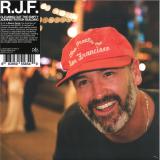
R.J.F. (ROSS J. FARRAR)
CLEANING OUT THE EMPTY ADMINISTRATION BUILDING
Cleaning Out The Empty Administration Building ist Ross Farrars neuestes Werk aus rohem, gesprochenem Wort und experimentellem Sounddesign, hier präsentiert unter dem Namen R.J.F.. Der Frontmann der amerikanischen Bands Ceremony und SPICE begann dieses Soloprojekt zunächst als persönliche Herausforderung: Songs von Grund auf selbst zu schreiben, sich mit Instrumenten vertraut zu machen und dabei zugleich sein Unterbewusstsein freizulegen. Dabei ging es weniger um musikalische Virtuosität als um Verletzlichkeit - darum, etwas Ehrliches aus einem ungeschützten, unbearbeiteten, unpolierten Moment zu ziehen, kompromisslos amateurhaft und rein.Diese Sammlung zeigt Farrar im offenen, poetischen Dialog: mit Drumloops und gefundenen Klängen, durchbrochen von Gitarren, Bass und Tasteninstrumenten. Nach über zwanzig Jahren in der vertrauten wie chaotischen Welt von Band-Kollaborationen, legt Farrar all das ab - als Experiment. Das Ergebnis ist unverwechselbar und bewegend.Farrars Punk-Pathos ist in Spuren vorhanden, doch seine deutlichsten Einflüsse stammen von repetitiven Musikformen: Drone, No-Wave, Avant-Jazz und darüber hinaus. Seine nüchternen Texte erinnern an Lou Reed, Rowland S. Howard und andere große Exzentriker. Farrars Texte kreisen um Liebe, Sucht, Vaterschaft und das Leben in der heutigen Welt. ,Ich wollte Bilder schaffen, die die Menschen klar vor sich sehen können", sagt er. Farrar unterrichtete früher Schreiben und Literatur - und wendet hier ein einfaches Prinzip an, das er auch seinen Schülern mitgab: Nicht zu viel nachdenken. ,Ich habe mir einfach gesagt: Diese Songs sollen Spaß machen. Sie sollen nicht stressig sein. Zwei, drei Takes aufnehmen und dann gut ist. Nicht über jedes Geräusch den Kopf zerbrechen. Mach einfach das, was natürlich aus dir herauskommt - und wenn es sich gut anfühlt, dann nimm es."Aus hunderten freier Songs, die Farrar in den letzten Jahren mit geliehenem Equipment aufgenommen hat, kristallisierte sich dieses Album langsam heraus. ,Es kam einfach immer wieder."Der Ton von Cleaning scheint die Zeit zu verbiegen, versetzt die Hörer in eine Art Gang voller Songs, bei denen jede Tür in einen neuen Raum führt - Räume, die oft auf unheimliche Weise vertraut wirken. Der gurgelnde Bass des Openers ,Advance" taucht auch in anderen Stücken wieder auf, etwa im gespenstischen ,Ovidian", benannt nach Ovids Metamorphosen, in dem Farrar über das Wunder der Veränderung sinniert - begleitet von fernen Glockenklängen. Instrumentalstücke wie ,Gravity Hill" - ein Flattern aus Synth-Brummen und statischem Rauschen - oder ,Frogs", mit Saiteninstrumenten und perkussivem Topfschlagen, wirken wie tranceartige Zwischenspiele und verstärken die Wirkung der Texte drumherum.,Exile" blickt zurück auf Verluste, die sich nicht mehr reparieren lassen: ,So much of your heart caught in my exile", singt Farrar mit sanfter Resignation - über einer einsamen Klaviermelodie und schlingernden Gitarrenakkorden. Es ist das strukturierteste Stück der Sammlung und erinnert daran, dass Farrar ein Gespür für melodische Linien besitzt.Das Album endet mit ,Traveling Light From Afar", deutlich schneller als alle vorherigen Songs. Hier, über einem stoischen Motorik-Beat, spricht Farrar das zentrale Thema des Projekts direkt an:,I've been so young in my old age / Selfish & self-pitying / But that's just narcissism - man."Genau dieser Balanceakt - zwischen schonungsloser Selbstbefragung und der Klarheit, die mit dem Älterwerden kommt - schafft Raum für Entwicklung. Farrar leert das Gebäude - Zeile für Zeile.
Gladstone Deluxe is one of the most exciting musicians in the US right now. They make futuristic, deep, percussive yet smooth techno, deep house and electro. They also play timbales in NYC queer and trans salsa band Las Mariquitas, and are a frequent collaborator with fellow East Coast sonic trailblazers Kiernan Laveaux, Johnny Zoloft, and Mira Mira. They have released on Black Techno Matters, Data Disk, Misc, Innocent Music, How Things Are Made, and now Fixed Rhythms is excited to add to the Gladstone lore with their new offering, “No Haterade EP”.
A1 “Cleanse” is zippy tech-y house…think groovy, up-beat, sexy, like something you’d hear in a Titonton Duvante set. A2 is a remix, “Teakup – Where’s My Snare (Gladstone Deluxe Remix)”. Now the EP takes a turn towards psychedelic electro. Spacey trippy vocal manipulations, swelling deep space gravitational waves swelling and resolving. The B side opens with the “No Haterade” track. Arpeggiated electro that slaps with swagger. The final track is a longer, 9 minute driving deep housey techno tune. A bass line that you never want to stop, luscious pads, brain-tingling pings, melodic percussive synth runs, and a touch of acid.
If Gladstone is not already on your radar, take heed! Big tunes here!
- A1: Cluster & Eno - Ho Renomo
- A2: Roedelius - Veilchenwurzeln
- A3: Der Plan - Die Wüste
- A4: Rolf Trostel - Hope Is The Answer
- A5: Vono - Hitze
- B1: You - E-Night (Bureau B Edit)
- B2: Serge Blenner - Phrase Iv
- B3: Moebius - Falsche Ruhe
- B4: Harald Grosskopf - Oceanheart
- B5: Lapre - Tedan (Bureau B Edit)
- C1: Riechmann - Abendlicht
- C2: Adelbert Von Deyen - Per Aspera Ad Astra - Mental Voyag
- C3: Faust - Lampe An, Tür Zu, Leute Rein! (Bureau B Edit)
- C4: Conrad Schnitzler - Electric Garden (Bureau B Edit)
- C5: Moebius & Plank - Nordöstliches Gefühl (Bureau B Edit)
- D1: Deutsche Wertarbeit - Unter Tage (Bureau B Edit)
- D2: Asmus Tietchens - Räuschlinge
- D3: Pyrolator - Minimal Tape 1/8
- D4: Rüdiger Lorenz - Southland (Bureau B Edit)
- D5: Thomas Dinger - Alleewalzer
On their last trip to Silberland, Bureau B hurtled along the chrome highways and glass skyways of the kosmische landscape, powered ever onwards in perpetual motorik motion. This time, however, the Hamburg imprint opt for an unhurried itinerary, coasting far beyond the familiar rhythmic terrain to explore crystal caverns and emerald pastures, immersing listeners in the ambient side of this alternative Allemagne. Building on the tape loops, tone poems, and minimalist compositions of the 60"s avant-garde, these musicians utilised the sweeping scope of the synthesiser to create expansive meditations on outer-planetary escapism, human connection, and the natural world. This compilation offers a survey of this singular era, blending pioneering voices with lesser-known artists for an immersive sonic experience.
Musique de Niche Vol.1 barked for a Vol.2. The second opus of any relevant trilogy (did I just spoil a Vol.3?) undergoes always the hardest trial by fire: but the bois, Pierre Marty and Admo, once again delivered these flavors you didnt know your collection was missing.
Same city, different district and new inspirations: following the world premiere in Berlin of their Liveset, they hit the home studio, refining the last bits of this new EP and giving it a new twist while still echoing the first volume.
Tech-house yes, but is it really ?
Indecisiveness feels like we could've said maybe yes but no but...
Well: Alpyren did the quite impressive feat of pressing this feeling on a record - that's A1. The haunting voice sample is this sassy inner self trying to tell you whats up. At least, you're not alone: the quirky bleeps and the punchy bassline are there lending you a hand to make that surely bad decision.
By flipping the record or the usb, you get to the two tracks where they let their new inspirations hit the speakers.
B1 is out before GTA VI, but it could've been in the soundtrack if the game was actually happening between Los Santos and Marseille.G-funk with the Alpyren touch: for the floor, a tune that will make you sway. Broken beats, almost broken legs.
B2 is the freaky one of the bunch: starts with the gloomy sound signature of the duo, but we're back with more 80's inspirations.Darker synth pop with a twist: you end up following the kick with the head bobbing in sync, while all the FX sounds bring to the track this extra spice.
It's 5pm here at the Ordinateuf HQ and we've just finished listening to the latest masters of the new E.P by Alpyren 'Musique de Niche vol2'. Before we're back to more phone calls, we'd like to thank all the friends that bought the first volume: the support has been quite amazing so far.
Enjoy this new one - its got our paw of approval.
The writer Max Sebald often pondered over the nature of human memory, specifically, how our thoughts and desires - and their results - overlap and mutate over time. In A Place in the Country, he writes of the significance of what see as “similarities, overlaps and coincidences”. Are they the “delusions” of the self and senses, or manifestations of “an order underlying the chaos of human relationships, ... which lies beyond our comprehension”?
Song of the Night Mists, the new album by post-classical composer Stefan Wesołowski, often feels it draws on Sebald’s premise.
On a simpler plane, the one where the market dictates the neatly ordered information we consume, Song of the Night Mists can be described thus: recorded in the main by Stefan Wesołowski in Gdańsk, both in his studio and in Saint Nicholas' Basilica, the album incorporates acoustic instruments - piano, violin, double bass - and classic synthesizers such as the Roland Jupiter-8, the Soviet Polivoks. A Roland Space Echo RE-150 tape delay was also pressed into service as an instrument. We also hear the basillica’s organ and field recordings from the Tatra Mountains. Other musicians were Maja Miro, who played the flute parts on ‘Glacial Troughs’ and brother Piotr Wesołowski, who played the organ on ‘Wilhelm Tombeau’. Sound engineer was Marcin Nenko, who was also on hand to record the basilica organ parts. The album was mixed in New York by Al Carlson (Oneohtrix Point Never, Jessica Pratt, Zola Jesus, Lady Gaga, and Liturgy) and Rafael Anton Irisarri handled the mastering.
Ostensibly, Song of the Night Mists is the last in a trilogy, following on from albums Liebestod (2013) and Rite of the End (2017). All three deal with existential matters such as love, death, decay and “an ultimate end”; apocalyptic and Promethean in spirit, and betraying very human conceits. The Sebaldian nature of the new record starts to make itself felt when Wesołowski talks of how he used sampling. One element is unexpected, that of sampling himself: “I go back to dozens of my own unused sketches and recordings, treating them as raw material to cut, slow down, reverse, and transform in every possible way.” Memory as sound, to be reemployed by the listener through their own imaginings.
Another set of samples made by Wesołowski plays another role. These are field recordings, originally created for an audio illustration of the formation of the Tatra Mountains, and used in a film by sound designer Michał Fojcik. Wesołowski: “You can hear cracking ice, streams, footsteps in the snow and the wind, and a real avalanche, recorded from the inside.” The “Tatra connection” on the album is also found in samples referencing composer Karol Szymanowski. The album’s title alludes to a poem about the mountains by Polish poet, Kazimierz Przerwa-Tetmajer.
Wesołowski’s Tatra recordings are “about a world without humans - about the fact that the world existed, was beautiful, and had meaning long before people arrived, and for the vast majority of its history, it was a place without us.” Wesołowski, using one iteration of the natural world, plays out in sound Sebald’s idea of another order, underlying the chaos of human relationships lying beyond human comprehension.
These feelings play themselves out on the five album tracks. Sonorous and rich, they illustrate tectonic shifts we have no control over. Wesołowski hints that the overall sound is a “meditation on the metaphysics of the non-human set against the spirituality that human presence has brought into it.” In that light, the opening number, ‘Core’, with its slow build, and crackling and straining sound effects, create an effect of the earth groaning into life in a creation myth. Once the piano part raps out a simple melody and modulated tonguing trumpet samples add to the overall atmosphere, the listener can certainly find a cue in the “spiritual”, or “human” side of the story. Human versus nature: from the strains and harmonic muscle stretches of the second number, ‘Glacial Troughs’, through to the powerful and filmic ‘Stalagmite’ and heart-on-sleeve romance expressed in closer, ‘Wilhelm Tombeau’, we listeners are cast as Friedrich’s wanderer, looking out over a landscape that will appear only if we engage with it.
Formations of melody appear incrementally, almost appearing by chance - like hidden footings in the rock shelves to give us something to grasp onto. Rhythms are used sparsely: the prolonged percussive taps on ‘Glacial Troughs’ are an anomaly and maybe there to give pace to the album to come; essentially to keep the listener strapped in. Elsewhere, percussion is used as an aid to mood, the two thudding, timpani-style passages on ‘Peak’ there to offset the short, beautiful, kosmische passage that splits them.
Elements of the borderline religious spirit that drove German electronic music in the late 1960s and 1970s also find a place on Song of the Night Mists. The swells and recessions of the organ find their emotional climax on ‘Wilhelm Tombeau’, a track which summons up echoes of the “mountain magic” vistas created by Popol Vuh or Tangerine Dream, especially with the slightly atonal wobble of the Mellotron that counters it.
This is a dramatic album, but it does feel a strangely short, or curtailed listen on ending, evoking the feeling one gets when waking from a dream, and, for all its incipient grandeur, a track like ‘Stalagmite’, for instance, ends on a minor note. Wesołowski admits that Song of the Night Mists is born of the all too human process of temptation, doubt and recalibration - Sebaldian overlaps and coincidences forming something that must live another life, away from its creator. In Wesołowski’s words, the album is “a newborn foal must stand up and walk right after birth.” Now it is yours to ponder.
EXOTIC GARDENS is the dub focused solo project of Aaron Coyes. As a member of PEAKING LIGHTS, LEISURE CONNECTION, and a mainstay on both NTS and DUBLAB radio (among many other credits), Aaron should be nothing less than a household name. But here, in EXOTIC GARDENS, Coyes' only collaborator is a make-shift dub home studio that would make any tech head weep with ecstatic joy. For the last 6 months, little snippets and whispers of the project have been emerging on various social outlets, but here we find the culmination of those efforts: EIGHT DEEPLY HEAVY, DEEPLY DUBBY, DEEPLY PSYCHEDELIC, DUB TRACKS FOR THE ENTIRE FAMILY.
It's been a couple of years since Oscide impressed with his contribution to Chez Damier's House Of Chez label on the 'Identity Of Our Sound Vol 2' EP, so we're glad to hear more now. This outing on Traxx Underground taps into his pure house sound and opens with the bubbly kicks and bass of 'Alone Tonight' (ft Ryan Hayden & Collie). It's dynamic deep house with a spiritual synth edge and heartfelt vocals, which will make it a real crowd favourite. After the more direct club mix comes the percussive US garage throb of 'The Last Time' and the raw and bumping house realness of 'What I Said', which has another smart vocal hook adding the irresistible emotion. Four effective but stylish house jams.
PRESSED ON PINK COLORED VINYL Czarface returns from the shadows with "Knull & Void", a bone-rattling 12” straight from the film Venom: The Last Dance. Featuring Wu-Tang Clan's Method Man and the elusive Frankie Pulitzer, and rounded out with a never-before-heard B-side "Safe Haven", this one's destined to be a collector's grail. Whether you're a hip-hop head or a Marvel-maniac, these tracks hit harder than Venom himself...grab it before it vanishes into the void!
2025 Repress
Modus Operandi, an EP by Impérieux, is the latest release from Sum Over Histories, the label from Frankey & Sandrino that champions introspective sounds for reflective times.
There’s an air of mystery surrounding Impérieux. The Bulgarian-born artist prefers to avoid the spotlight and work diligently on music instead, building a sound influenced by the underground scene in Sofia and his Turkish roots.
Impérieux began production of Modus Operandi in Bulgaria, and continued throughout his move to Berlin last year. The artist says it was a melancholic time; dealing with culture shock and a new language was challenging even without a pandemic. This EP is a reflection of that. Dark and brooding, simplistic and surreal, Impérieux took inspiration from the fantasy worlds of novelist Murukami and named the tracks after his work.
Drummer and Composer David Lee Jr.’s stunning and rare album Evolution (1974) blends the deep experimentalism of John Coltrane and Sun Ra with the pulsating second-line and parade rhythms of New Orleans to create a stunning sonic and rhythmical tour de force. In a lineage of incredible New Orleans drummers that includes James Black, Idris Muhammed, Zigaboo Modeliste of The Meters, and stretching back to Earl Palmer and Baby Dodds, David Lee Jr. stands out for his fire, experimentalism and an out-there-ness like no other. 'Evolution' is a super deep, ‘lost classic’ radical and groundbreaking deep spiritual jazz album. Originally released in New York in 1974 (400 copies only ever pressed!), ‘Evolution’ is an extraordinary one-off solo album, pressed on the artist’s own Supernal Records, a record company whose slogan ‘seeking creative progress’ and dedication ‘to peace and freedom’ clearly displayed artistic intent over any commercial or market-led forces. David Lee Jr was born in New Orleans and the deep experimental drum-compositions featured on ‘Evolution’ are as rooted in this southern city rhythmically as they are in the spiritual and metaphysical musical ideas of Afro-Futurist pioneers like Coltrane, Sun Ra and others. In the early 1970s Lee Jr. headed off to New York, playing in Roy Ayers’ Ubiquity and later immersing himself in the thriving loft deep jazz scene playing with Leon Thomas, Lonnie Liston Smith, Harold Alexander, Charles Rouse, and recording for a host of seminal deep jazz labels including Strata-East, India Navigation and Flying Dutchman. Today 'Evolution' remains one of the rarest and heaviest of all deep and spiritual jazz albums ever made. One-off super-limited edition magenta colour vinyl, newly digitally remastered, complete with new reproduction artwork, sleevenotes and download code.
French talent Framboisier lands on the eighth Duality Trax release this August with his debut EP Planetary Vision, backed by a remix from breakbeat queen Angel D’lite.
Landing just in time for the height of summer, the release has already garnered support from scene heavyweights Spray, Job Jobse and James Zabiela. The Grenoble-based artist known as Framboisier has seen his prole steadily rise in the last two years, with his 90s-inspired house sound
lighting up labels like Shue Valley, Backspin and Gestalt. It was through the latter and a back-to-back set at Edinburgh’s legendary Sneaky Pete’s with Gestalt founder Steffan Todorović that label boss Holly Lester rst encountered Framboisier’s music - instantly recognising its place on Duality Trax.
The title track Planetary Vision kicks off the EP with a rush of prog-house nostalgia. Contemplative pads and shimmering synths verge with driving percussion and a bouncing Juno bassline, creating brief moments of euphoria before slamming back in for a powerful peak-time reprise.
Memory Access follows with sun-drenched textures and a rolling groove - locking into a deep, introspective danceoor moment led by an infectious bassline. The B-side shifts gears with Neuro System, a deep house excursion driven by sweeping pads, subtle melodies and a hypnotic low-end.
Rounding off the EP, Angel D’lite brings her signature rave energy to a remix of Memory Access, ipping it into a breakbeat-heavy workout packed with amen breaks, playful spinbacks, and cheeky vocal chops
- 1: Peace & Purpose
- 2: Safe Room
- 3: Not The Same Thing
- 4: Life On A Farm
- 5: Pick Apart
- 6: Marathon Of Hope
- 7: Stop Cutting Me Down
- 8: Shut The Fuck Up
- 9: Reunion
- 10: Phantom Limb
- 11: Thoughts On My Faith
- 12: Eris On The Run
- 13: Red House
- 14: Truth In Trauma
Can’t go over it. Can’t go under it. Gotta go through it. And somewhere out there in the Pitch black beyond all darkness lies Peace & Purpose. The horizon you never quite crest until the inevitable end. Breathe deep — this fearful moment is the most alive you’re ever gonna feel. For the last decade, Crack Cloud’s vision has grown ever more expansive, more cinematic. Last go around, they dropped from The Heavens and then performed with their bare backs to an endless darkening desert. Now they’ve crammed all that life into some metallic and strange object called Peace & Purpose. All the terror of living. All the helplessness. All the raw human will. All glued and screwed and locked into this impossible tactile shape of dungeon dub; sour milk vox; Avant-protest music. Music arm wrestling itself to the ground. Far afield of beauty. The discordant symphony of factory farming and grim timber of the meat processing plant. The grinding din of the cogs. And yet, never giving up in spite of all good sense. Even in death, we are a coterie of survivors. Look now: There’s Terry Fox on his one-legged Marathon of Hope across The Great White North while cancer spreads through his lungs. A self-annihilating drive to feel alive. Rage against the dying of the light, they say. Well, how ‘bout it then!??! Peace & Purpose is not in any way some art project meditation on Punk Rock. It is Punk Rock. Terrifying, inspiring, vital, invigorating and most importantly, utterly unexpected. Every goddamn stupid day is a sublime slice of fresh hell. That’s the point. Gotta go through it. Wishing you Peace & Purpose — if only in that last big breath.
SKYLAX RECORDS proudly unveils the final chapter in its monumental 4-part saga — SKYLAX BLACK 4: Enlightenment Theory. This visionary series, bringing together two of France’s most iconic electronic artists — ARNAUD REBOTINI and ACID WASHED — was never just a collection of records. It was a journey through the deepest layers of the underground — a conceptual project where each release was a coded message, each track a fragment of a greater whole. On the A-side, Enlightenment Theory explodes with fierce urgency — an anthem forged in the spirit of Underground Resistance, echoing the soulful intensity of early ’90s Detroit without imitation. It’s bold, emotional, and militantly underground — a future classic cloaked in defiance and elegance. On the B-side: B1. Space Is The Place channels the weightless gravity of dub techno at its purest — all echo chambers and endless delay, a direct line to the Berlin school of Basic Channel, Maurizio, and Deepchord. B2. Beyond Current Biological Constraints closes the chapter in deep space — an electro masterwork evoking Drexciya, full of aquatic melancholy and cybernetic funk. It’s not retro — it’s timeless. With this last installment, the puzzle is complete. The meaning is revealed: R.A.V.E. — four records forming one powerful word. One timeless idea. A tribute to everything this culture stands for: raw energy, emotional truth, sonic innovation, and spiritual depth. This project could only be born on SKYLAX RECORDS — a label that has always stood apart. Uncompromising. Devoted to physical formats. Fiercely loyal to the culture. While others chase trends, SKYLAX continues to chart a different course — one rooted in the sacred codes of house, techno, electro, and beyond. It is no exaggeration to say that SKYLAX is one of the last true purist strongholds of underground music — and this series, with its layered meanings and fearless artistry, is proof. From Redshifts to Blueshifts to Artificial Darwinism then Vision Quest, every chapter has pointed toward this moment. Now, with Enlightenment Theory, the full vision is revealed. RAVE is not just a word — it is the truth. A philosophy. A myth reborn. The circle is complete. The message endures. The legacy lives on.
- A1: Music Is The Healing Force Of The Universe
- A2: Masonic Inborn
- B1: A Man Is Like A Tree
- B2: Oh! Love Of Life
- B3: Island Harvest
- B4: Drudgery
Music Is the Healing Force of the Universe is a powerful and often ignored 1970 recording from the American avant-garde jazz saxophonist, singer and composer Albert Ayler. Apart from the posthumous album The Last Album, this was to be Ayler's last studio album, recorded and released before his death in November 1970. The album was initially judged as too difficult by Down Beat, then recognized by the most as “an important portrait of a man facing a life and death inner struggle beyond the boundaries of jazz, which takes jazz itself into a new dimension”. It also includes some of the most innovative use of sound by the free-jazz icon Albert Ayler.
MCRV019 – VA – Phase Drift. Passage is a graceful and emotionally nuanced four-track journey through modern deep tech house. Blending reimagined echoes of early 2000s deep sounds with forward-thinking production, the release moves between moods and textures with surgical control and quiet sophistication. It’s an EP that balances warmth and restraint, melancholy and motion — built for selectors who appreciate finely tuned emotional arcs.
A1. Stephano Franca – Arriving opens with a fluid, introspective piece. Gentle and melancholic, it glides with cinematic poise, drawing listeners into a state of suspended reflection.
A2. Dot – Distance Call introduces a percussive, tribal undercurrent — earthy and grounded, yet full of bounce. It energizes the space while maintaining depth and groove.
Flipping over, B1. Reenday – Last Call (Nicolas Barnes Remix) brings a refined sense of cold elegance. Dubby and atmospheric, it’s a minimalist piece that evokes distance and stillness — a cool breath in the night.
Closing the release, B2. Jeronimo Watson – On The Prowl is a deep tech gem — emotive, seductive, and sharply detailed. With a slow-burning energy, it brings the record to a confident and composed close.
From Brazilian talent Stephano Franca to Dot and Nicolas Barnes, two of the label’s most precise and consistent producers, and rising standout Reenday, a finalist of the ANTS: NEXT GEN Artist Program 2025, this release represents the current essence of MixCult. It is sealed by the distinct touch of Jeronimo Watson, whose Los Angeles–rooted sound closes the circle with style.
Phase Drift. Passage is not just a collection of tracks — it’s a refined toolkit for navigating emotional shifts and dancefloor narratives, framed by elegance and intention.
Limited Edition.
- Hotel California
- New Kid In Town
- Life In The Fast Lane
- Wasted Time
- Wasted Time (Reprise)
- Victim Of Love
- Pretty Maids All In A Row
- Try And Love Again
- The Last Resort
The moment the instantly recognizable intertwined guitar passage on the title track to the Eagles' Hotel California begins, the record's genius becomes obvious all over again. Ranked the 118th Greatest Album of All Time by Rolling Stone, certified by RIAA as the third best-selling LP in history, and considered the foundation on which the Golden State's mid-‘70s music scene was built, the 1976 landmark is a music staple immune to shifts in trends, eras, and styles. Fearlessly addressing the chaos and consequences of American life, its songs remain strikingly prescient and gain creedence with each passing day.
Mastered from the original analogue master tapes, pressed on MoFi SuperVinyl, and limited to 17,500 numbered copies, Mobile Fidelity's UltraDisc One-Step 180g 45RPM 2LP vinyl box set ensures you will want to permanently check into and never leave this particular Hotel California. Up to the herculean task of standing head and shoulders above all prior reissues, this collectible edition plays with extreme clarity, organic richness, tube-like warmth, massive dynamics, and microscopic levels of detail. You'll be able to practically smell the colitas and feel the breeze in your hair. Songs come across with an epic sweep and feature immersive, front-to-back soundstages that allow the music unprecedented air, roominess, and separation. As for the noise floor? It's basically as invisible as the spirits that waft in the corridors of the unforgettable title song.
Aesthetically, the premium packaging and presentation of the UD1S Hotel California pressing befit its esteemed status. Housed in a deluxe box, it features gorgeous foil-stamped jackets and faithful-to-the-original graphics that illuminate the splendour of the recording. From every angle, this UD1S reissue exists as a curatorial artefact meant to be preserved, touched, and examined. It is made for discerning listeners that prize sound quality and production, and who desire to fully immerse themselves in the art – and everything involved with the album, from the renowned cover art to the meticulous finishes.
Indeed, the opportunity to zero in on all the particulars of the 26-million-selling Eagles record dubbed "a legitimate rock masterpiece" by vaunted Los Angeles Times scribe Robert Hilburn has never been better. A global phenomenon that marked the band debut of guitarist-singer Joe Walsh, Hotel California continues to resonate and connect with listeners of all generations taken by its narrative depth, stark directness, picturesque melodies, daring majesty, and ardent emotionalism. Adorned with a breathtaking exterior photograph of the Beverly Hills Hotel that serves as the simultaneously haunting and alluring cover art, and rounded out by a rear-cover shot of the Lido Hotel lobby that reinforces a notion that teeters between permanence and transience, Hotel California is brilliantly tied to a specific place that functions as a universally understood metaphor for the American Dream.
Confronting the darker undercurrents and oft-ignored constructs attached to that romantic notion, the record's songs revolve around a host of shared themes: excess, mobility, stability, illusion, fame, destruction, and idealism included. Notably, Hotel California appeared at a crucial junction in American history: During the country's bicentennial and amid escalating controversies related to the Vietnam War, energy crisis, and governmental corruption. That the Eagles manage to channel such cultural, social, and economical matters into a cohesive, stately, big-picture statement is alone a stupendous feat. That the album's reach, boldness, vitality, accessibility, and understated intensity have never waned make it a marvel.
Reflecting on Hotel California 40 years after its original release, and indirectly explaining its enduring appeal and increasing relevance, singer-songwriter Don Henley confirmed the record pertains to the "loss of innocence, the cost of naiveté...the difficulties of balancing loving relationships and work, trying to square the conflicting relationship between business and art; the corruption in politics, the fading away of the Sixties dream of ‘peace, love and understanding.'"
It can be argued that Henley and company squarely hit on and drove home those ideas in the surreal title track, chart-topping "Life in the Fast Lane," and grand "The Last Resort" alone. But that would miss the forest for the trees. Experienced as an unbroken whole, complete with the pristinely shot imagery and physical grooves, Hotel California unfolds like a geography-conscious saga by James Michener and plays like colour-saturated movie shot on 70mm film by Martin Scorsese. It's about our collective and individual decisions – and the shape of our past, present, and future. And, just like that conjured by our imaginations, Hotel California continues to take on a life of its own.
More About Mobile Fidelity UltraDisc One-Step and Why It Is Superior
Mobile Fidelity Sound Lab's UltraDisc One-Step (UD1S) technique bypasses generational losses inherent to the traditional three-step plating process by removing two steps: the production of father and mother plates, which are created to yield numerous stampers from each lacquer that is cut. For UD1S plating, stampers (also called "converts") are made directly from the lacquers. Since each lacquer yields only one stamper, multiple lacquers need to be cut. Mobile Fidelity's UD1S process produces a final LP with the lowest-possible noise floor. The removal of two steps of the plating process also reveals musical details and dynamics that would otherwise be lost due to the standard multi-step process. With UD1S, every aspect of vinyl production is optimized to produce the best-sounding vinyl album available today.
MoFi SuperVinyl
Developed by NEOTECH and RTI, MoFi SuperVinyl is the most exacting-to-specification vinyl compound ever devised. Analogue lovers have never seen (or heard) anything like it. Extraordinarily expensive and extremely painstaking to produce, the special proprietary compound addresses two specific areas of improvement: noise floor reduction and enhanced groove definition. The vinyl composition features a new carbonless dye (hold the disc up to the light and see) and produces the world's quietest surfaces. This high-definition formula also allows for the creation of cleaner grooves that are indistinguishable from the original lacquer. MoFi SuperVinyl provides the closest approximation of what the label's engineers hear in the mastering lab.
collecting orders for repress be fast to grab your copy!
Baby Ford and Zip locked themselves in the studio after january's "Get Perlonized.." party in Berlin and the result is this 12" with 2 very special tracks. The A-side, entitled "The Riverbed" doesn't lack those subtile, humorous details that we already know from productions of this duo.The B-side offers a new, extended version of last years constribution for the "Superlongevity4" compilation entitled "Morning Sir".