Search:last resort

Styles
All
Gun Outfit - Process and Reality LP 2x12"

For two decades, Gun Outfit has been a band defined less by genre than by continuity, patience, and a commitment to making music that reflects their lived experience.
Formed in Olympia, Washington in 2006 but long since rooted in Los Angeles, the group has evolved from a raw duo into a quietly formidable five-piece, their sound growing from scrappy post-punk beginnings into something spacious yet intimate, and always underpinned by an experimental edge.
On Process & Reality, Gun Outfit return with their most ambitious and immersive work to-date, a sprawling 80-minute double album shaped by time, environment, and philosophy. Recorded over the course of a single month in the late summer of 2020, on an 80-acre ranch in Pine Flat, California, while a massive forest fire burned less than ten miles away, the seeds of these songs were stark and strange.
Its title, Process & Reality, draws from the central work of philosopher Alfred North Whitehead, whose philosophy places intuition, experience, creativity, and relationality at the center of existence.
The band’s current lineup reflects both longevity and openness. Sharp and Keith remain the band’s primary architects, joined by longtime drummer Daniel Swire, multi-instrumentalist Henry Barnes, and bassist Kayla Cohen. Additional collaborators include Chris Cohen, Warren Lee, and Danny Sasaki all of whom add further depth, leaving subtle fingerprints across the album.
Musically, the album expands the band’s palette without abandoning its core sensibility. Dulcimer, autoharp, sitar, melodica, keyboards, homemade electronics, and a wide range of acoustic and electric textures appear throughout. The sound is mellow yet expansive, songs move between fragility and hefty atmospheric passages.
Influences surface obliquely rather than overtly. Elements of reggae and dub inform the production’s spatial sensibility. Echoes of long-form European jam bands coexist with sharp post-punk. British folk traditions, American country, and classic West Coast songwriting drift in and out of focus; the band is never afraid to lead or follow.

pre-order now

This item has not yet been released. You can pre-order the product now.

24,16
Study WITH Midnight Noise / Tomer Baruch - Saturn's Rings Hotel & Spa

This album plays like an invitation rather than a record - a slow boarding pass to an imagined retreat somewhere beyond gravity. Analogue synths shimmer like gold, bubbling rhythms drift in gentle orbits, and playful melodies sketch out distant galaxies with an easy, unforced charm. There's a strong lineage here, with the music echoing classic library and soundtrack recordings cherished by deep diggers, yet it never feels nostalgic for its own sake. The grooves are light but nourishing - 'Uranium Jungle' has a touch of Luke Vibert's frisky funk about it, while 'Martian Sunset' is interstellar bossa nova with a light dusting of 70s analogue magic to boot - designed as much for sofa-bound drifting as for attentive listening. Musicianship is front and centre throughout, with smart, accessible compositions that reward repeat visits. A fully realised concept - sign us up for a stay.

out of Stock

Order now and we will order the item for you at our supplier.

21,43

Last In: 8 days ago
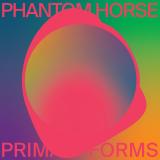
Phantom Horse - Primal Forms

Phantom Horse

Primal Forms

12inchUR162LP
Umor-Rex
01.05.2026

After their last album six years ago, "Primal Forms," the new album by Phantom Horse, finally arrives. The German duo of Ulf Schütte and Niklas Dommaschk have long established a reputation for expertly crafted, hypnotically slow-burning electronic music, and we do not hesitate to say that "Primal Forms" stands among the epitomes of their discography.

The sequencing of "Primal Forms" cannot be underestimated. It is an album in the classic sense. It demands to be listened to in its entirety, which also points to a closer affinity with Krautrock. Likewise, a touch of dub is perceptible, wafting around the songs, which, as usual, bear clandestine titles. It is not unreasonable to see in these compact compositions a clear statement against multitasking.

Phantom Horse are not trumpeters of dystopia. They present themselves resolutely, almost stoically, turned away from the world. This turning away is clearly a statement that can be contemplated in the Mariana Trench as well as in comet belts. In any case, it is best experienced in a space without any human beings. This does not mean that grumpy hermits are tinkering with synths behind closed shutters, armed with wooden walking sticks. This is still open minded music with a connection to current developments. The approach itself is what is audible, and with it, Phantom Horse proves once again that their main connection to time is timelessness.

In an age of all-encompassing distraction on every sensory, thematic, and semantic level, Phantom Horse explores the possibilities of reduction, searching for simplified melodic arcs without resorting to the vocabulary of classical minimalism. The overall impression is more electronic; the slowly shifting, polyrhythmic compositions repeatedly lead to a peculiar danceability. However, these are perhaps the dances of mechanical birds, undeterred by anything.

Written and produced in Hamburg, Nijmegen and Ojén by Niklas Dommaschk & Ulf Schütte
Mastering by Rafael Anton Irisarri at Black Knoll
Artwork by Daniel Castrejón

pre-order now01.05.2026

expected to be published on 01.05.2026

22,27
TOOPER KEPS - 1000 GUEST ROOMS

TOOPER KEPS

1000 GUEST ROOMS

7"-VinylSON07-005
SOUTH OF NORTH
Release unknown
 
4

Holiday resort entertainer Tooper Keps takes a break from entertaining the professional leisure class, and reflects their own world back at them with an EP of otherworldly synths and eerie carnivalesque chansons.

Tooper Keps has fired up his trusty Yamaha PSR-11 and PSS-360 to write his first (and probably last) EP, condensing his favourite chord changes from years of distracting the retired and affluent. The result is a collection of floating song structures that revolve like fairground waltzes, punctuated by modulated effects, cowbells and Tooper’s own bitter tenor. Tapping into his inner goblin, he tackles themes such as property (as theft), Drexler’s gray goo problem, and the ‘merits’ of complaining about a system while also benefiting from it - a typical parasite’s paradox.

“1000 Guest Rooms” finds itself on location in luxury homes, cruise ships and holiday resorts, soaked in Tooper’s own self-loathing while casting a critical eye over the state of the world. While we hurtle towards a future that no one wants, “1000 Guest Rooms” is perhaps the best soundtrack we could hope for.

pre-order now

This item has not yet been released. You can pre-order the product now.

12,56
The Dead 60s - The Dead 60s LP 2x12"
  • A1: Riot Radio
  • A2: A Different Age
  • A3: Train To Nowhere
  • A4: Red Light
  • A5: We Get Low
  • A6: Ghostfaced Killer
  • B1: Loaded Gun
  • B2: Control This
  • B3: Soul Survivor
  • B4: Nationwide
  • B5: Horizontal
  • B6: The Last Resort
  • B7: You're Not The Law
  • C1: Too Much Tv Dub
  • C2: Invader Dub
  • C3: D-60 Fights The Evil Force
  • C4: No Control Dub
  • C5: Tower Block Dub
  • D1: Cns Lazer Attack D-60
  • D2: Police Radio Dub
  • D3: Flight Mission Dub
  • D4: No Good Town Dub
  • D5: Game Over

The Dead 60s seminal self-titled album gets a timely Deluxe edition reissue on Vinyl for its 20th Anniversary, on Deltasonic Records


“Back in the day, punk and dub weren’t just sharing space—they were smashing into each other headfirst. Late '70s Britain was a pressure cooker, and for kids like me, growing up between Brixton’s bass bins and the chaos of King’s Road, that collision was everything. Jamaican sound system culture met punk’s raw spirit in a haze of smoke, sweat, and feedback. It wasn’t about genre—it was about energy. Identity. Defiance. so when The Dead 60s came along, post-Britpop and post-bullshit, it felt like someone had dusted off the blueprint and run it through a battered old tape echo. These weren’t just lads with good taste—they understood the assignment. They took the DNA of two rebel cultures and mutated it into something that could stand tall in the 21st century. Dub-soaked, punk-fuelled, dripping with that Liverpool attitude. I remember first hearing them and thinking—yeah, here we go again. Not in a retro way, but in a real way. Guitars that cut like sirens in the night. Basslines fat and warm, straight out the Channel One playbook. Lyrics that painted the grey corners of Britain like CCTV poetry. It was the sound of youth under pressure. The sound of not fitting in—and not wanting to.

Their debut album dropped in 2005, and it hit like a flare in the dark. “Riot Radio” was a pirate broadcast from the concrete frontlines. “Control This” swaggered with menace and reverb. It was like someone opened a time capsule from the punky-reggae party and rewired it for a new generation.

Now, with this 20th anniversary vinyl reissue—complete with the full dub companion produced by Central Nervous System—we get to hear the bones and blood of it all. The dub versions pull the tracks apart and let the ghosts speak. Reverb, delay, space—it’s not just production, it’s meditation. Revolution slowed down to a heartbeat. It’s music that makes you move and think. What they’ve done here is more than remix a record—they’ve revealed its soul. That’s what dub does when it’s done right. And The Dead 60s, they got that. They weren’t tourists in the culture—they were students of it, shaped by it, and ultimately, contributors to the legacy. Liverpool’s long had a love affair with Jamaican music—you can hear it in the streets if you’re really listening. The Dead 60s tapped into that lineage, but they brought their own thing to the table. Punk's fire. Dub’s depth. Ska’s bounce. All filtered through a Northern lens and blasted out like protest graffiti. This 20th anniversary reissue ain’t about nostalgia. It’s a reminder. A celebration. A call to arms. Music like this doesn’t belong in a museum—it belongs on a system, shaking walls and waking minds. Crate diggers, completists, young punks, old heads—this one's for all of you.

So put it on and turn it up. Let the punk edge sharpen your thoughts, and the dub shake your bones ‘cos this isn’t just a reissue - it’s resistance on wax.....”

pre-order now31.10.2025

expected to be published on 31.10.2025

33,19
Tilman - Altered Spaces

After his 2024 album The Spirit Continues, Tilman returns with Altered Spaces, a tightly focused four-track EP that distills his signature sound into a concise, club-ready format.

Opening track Make My Body Move sets the tone with soulful vocals, warm piano stabs, a rolling bassline and a breezy Balearic vibe. The Last Resort deepens the mood, layering pads, organ hits and shimmering strings over a steady, driving groove. Rounding out the EP are two reimagined cuts from The Spirit Continues. Dance Department (Spirit Mix) smooths out the rougher edges of the original, adding organ stabs and a more melodic sensibility.

Need It (Dance Dub) transforms the track into a softer, dub-tinged version - hypnotic, restrained and full of subtle movement. Altered Spaces is classic Tilman: warm, understated house music that's rich in detail and groove - made for dancers and deep listeners alike.

out of Stock

Order now and we will order the item for you at our supplier.

13,66

Last In: 6 months ago
Various - Dolores: Salsa & Guaracha From 70's French West Indies

In Guadeloupe, many people think that jazz and ka music are like a ring and a finger. To some extent, the same could be said about so called Latin music and the music played in the French West Indies.

Both aesthetics were born in the Caribbean and bear so many connections that they can easily be considered cousins. In constant dialogue, there are lots of examples of their fruitful alliance and have been for a while. The English country dance that used to be practiced in European lounges came to be called kadrille in Martinique and contradanza in Cuba. They both featured additional percussion instruments inherited from the transatlantic deportation. Drawing from shared feelings about the same traumatized identity – later to be creolized – it would be hard not to assume that they were meant to inspire each other. The golden age of the orchestras that graced the Pigalle nights during the interwar period further proves the point. As soon as the 1930s, Havana-born Don Barreto naturally mixed danzón and biguine music in a combo based at Melody's Bar. In the following decade, Félix Valvert, a conductor who was born and raised in Basse-Terre in Guadelupe, also worked wonders in Montparnasse with La Coupole, which was an orchestra made up of eclectic musicians. Afro- Caribbean performers of various origins were often hired on rhythm and brass sections in jazz bands, which used to enliven the typical French balls of the capital. In the 1930s and onwards, Rico’s Creole Band was one of them.


Martinican violinist-clarinettist Ernest Léardée, who would become the king of biguine music as well as the main figure of French Uncle Ben's TV commercials (a dark stigma of post-colonial stereotypes), had musicians from the whole Caribbean sphere play at his Bal Blomet – and they all enchanted "ces Zazous-là" (according the words of Léardée's biguine-calypso piece). In les Antilles (French for French West Indies), music history started to speed up in the 1950s, when trade expanded and radio stations grew bigger. The Guadelupean and Martiniquais youth tuned in their old galena radio sets to South American and Caribbean music. As for the women traders, les pacotilleuses, they bought and sold goods across different islands (the "passing of items through various hands" was thought to be most pleasurable) and brought back countless sounds in their luggage. Such was the case of Madame Balthazar, who once returned from Puerto Rico with the first 45rpm and 33rpm to ever enter Martinique.

Out of this adventure was created the famous Martinican label La Maison des Merengues, a music business she opened and undertook with her husband and which proved to be a major landmark. At the end of the 1950s, in Puerto Rico, Marius Cultier competed in the Piano International Contest playing a version of Monk's Round 'Midnight. He won the first prize and this distinction foreshadowed everything that was to come. Cultier, the heretic Monk of jazz, was quickly praised for writing superb melodies, always tinged with a twist that conferred a unique sound to his music. It didn't take long for the gifted self-taught musician to get to play with Los Cubanos, making a name for himself thanks to his impressive maestria on merengues.

The rest is history. Besides, in the late 1950s, Frantz Charles-Denis, born into the upper middle class in Saint-Pierre and better known by his first name Francisco, went back home after working at La Cabane Cubaine – a club located rue Fontaine where he had caught the Latin fever. Francisco's music was therefore heavily marked by his Cuban cousins' influence, which gave the combos he led a specific style and also led to renewal. Things were swinging hard in La Savane, located in the main square in Fort-de-France. He set up the Shango club close by and tested out the biguine lélé there, a new music formula spiced up with Latin rhythms. Soon afterwards, fate had him fly to Puerto Rico and Venezuela.

As for percussionist Henri Guédon (percussions were only a part of his many talents), he was born in Fort-de-France in May 22nd 1944, the day marking the celebration of the abolition of slavery. As an old man, he could remember that in " his father's Teppaz, a lot of hectic 6/8 music was constantly playing...". In the opening lines of his Lettre à Dizzy, a small illustrated collection of writings published by Del Arco, he highlighted the huge impact that cubop had on him as a teenage boy, around 1960. He eventually turned out to be the lider maximo in La Contesta, a big band steeped in Latin jazz. He was also the one who originated the word zouk to describe music which brought the sound of the New York barrio to Paris. It was the culmination of a journey that started in Sainte-Marie: "a mythical place for bélé, the equivalent of Cuban guaguancó". In the early 1960s, the tertiary economy developed to the detriment of agriculture. Yet rural life was where roots music emerged in Martinique and in Guadeloupe.

Record companies played a major part in the process of Latin versions sweeping across the islands – before reaching everywhere else. Producer Célini, boss of the great Aux Ondes label, and Marcel Mavounzy, both the head of Émeraude records - a firm which was founded in 1953 - as well as the brother of famous saxophonist Robert Mavounzy, were big names to bear in mind. Although there were many of them - all of whom are featured on this record - Henri Debs was definitely the major figure in the recording adventure. He proved to be so influential that he even got compared to Berry Gordy. In the mid 1950s, when he acquired his first Teppaz, he worked on his first compositions: a bolero and a chachacha. Then, he became the one man who made people discover Caribbean music, from calypso to merengue. He was among the first ones to rush out to San Juan, Puerto Rico, to buy records and distribute them through a store run by one of his brothers in Fort-de-France. He had members of the Fania All Star come and perform there, which he was madly proud about. He was also the first one to pay attention to Haitian music, such as compas direct and various other rhythms which would soon flood the market. As a result, many of the combos hitting his legendary studio would end up boosted by widespread "Afro-Latin" rhythms. However, he never denied his identity: gwo ka drums were given a major role, although they were instruments which had long been banned from the "official" music spheres. The present selection bears witness to such a creative swarming. Here are fourteen tracks of untimely yet unprecedented cross-fertilization: all types of music rooted in the Creole archipelago have found their way, whatsoever, to the tracklisting. Whether originating from the city or being more rural, they all go back to what Edouard Glissant, in an interview about the place of West Indian music in the Afro-American scope, called "the trace of singing, the one which got erased by slavery." "It is so in jazz, but also in reggae, calypso, biguine, salsa... This trace also manifests through the drums, whether Guadelupean, Dominican, Jamaican or Cuban... None of them being quite the same. They all point to the idea of a trace, seeking it out and connecting to each other through it. This is the hallmark of the African diaspora: its ability to create something new, in relation to itself, out of a trace. It may be the memory of a rhythm, the crafting of a drum, a means of expression which doesn't resort to an old language but to the modalities of it." The opening track features one of the emblematic orchestras of this aesthetic identity, criscrossing many music types from the archipelago. The 1974 Ray Barretto guajira – Ray Barretto was a major New York drummer influenced by Charlie Parker and Chano Pozzo – is magnificently performed by Malavoi, a legendary Fayolais group (i.e from Fort-de-France). Additionally, the compilation ends on a piece by Los Martiniqueños de Francisco. It symbolically closes the circle as it is a genuine potomitan of Martinique culture which also functions as a tireless campaigner for Afro-Caribbean music. Practicing the danmyé rounds (a kind of capoeiria) to the rhythm of the bèlè drum, it delivers a terrific Caterete, a kind of champeta of Afro- Colombian obedience which was originally composed by Colombian Fabián Ramón Veloz Fernández for the group Wgenda Kenya. The icing on the cake is Brazilian Marku Ribas, who found refuge in Martinique in the early 1970s, bringing his singing to the last trance-inducing track. These two "versions" convey the whole tone of a selection composed of rarities and classics of the tropicalized genre, swarming with tonic accents and convoluted rhythms. It is the sort of cocktail that the West Indians never failed to spice up with their own ingredients. For instance, the Los Caraïbes cover of Dónde, a famous Cuban theme composed by producer Ernesto Duarte Brito, has a typical violin and features renowned Martinique singer Joby Valente and his piquant voice.


The track used to be – or so we think – their only existing 45rpm. The meaningful Amor en chachachá by L'Ensemble Tropicana, a band which included Haitian musicians among whom was composer and leader Michel Desgrotte, also recalls how Latin music was pervasive in the tropics in the mid-1960s. They were the ones keeping people dancing at Le Cocoteraie in Guadelupe and La Bananeraie in Martinique. Around the same time, another "foreign" band, Congolese Freddy Mars N'Kounkou's Ryco Jazz, achieved some success on both islands by covering Latin jazz classics – such as their adaptation of Wachi Wara, a "soul sauce" by Dizzy Gillespie and Chano Pozo whose interweaving of strings and percussions can have anyone hit the dancefloor. How can you resist Dap Pinian indeed, a powerful guaguancó by Eugene Balthazar, performed by the Tropicana Orchestra and published by the Martinique-founded La Maison des Merengues? It also acts as a symbol of the maelstrom at work. Going by the name Paco et L'orchestre Cachunga, Roger Jaffory used to play guaguancó too: his Fania-inspired Oye mi consejo is one example of his style. Baila!!!!! Dancing was also one of the Kings' focus points. Oriza is a Puerto Rican bomba and a "classic" originally composed by Nuevayorquino trumpeter Ernie Agosto, which reserves major space for brasses, giving it a special sheen.

Emerging from the New York barrios crucible was also La Perfecta, a Martinique group originating from Trinidad, whose name directly references the totemic Eddie Palmieri figure as well as his own band, also called La Perfecta. Here they borrow Toumbadora from Colombian producer and composer Efraín Lancheros and interpret it by emphasizing percussions, which set fire to the track even more than the wind instruments. The same goes for Martinique's Super Jaguars, who use Tatalibaba – a composition by Cuban guitarist Florencio "Picolo" Santana which was made famous by Celia Cruz & La Sonora Matencera – as a pretext for sending their cadences into a frenzy. In a more typically salsa vein, the Super Combo, a famous Guadelupean orchestra from Pointe-Noire that was formed around the Desplan family and had Roger Plonquitte and Elie Bianay on board, adapt Serana, a theme by Roberto Angleró Pepín, a Puerto Rican composer, singer and musician also known for his song Soy Boricua. Here again, their vision comes close to surpassing the original. In the 1970s, L'Ensemble Abricot provided a handful of tracks of different syles, hence reaching the pinnacle of the art of achieving variety and giving pleasure. They played boleros, biguines, compas direct, guaguancó and even a good old boogaloo - the type they wanted to keep close to their hearts for ever, "pour toujours", as they sang along together in one of their songs. Léon Bertide's Martinican ensemble excelled at the boogaloo which had been composed by Puerto Rican saxophonist Hector Santos for the legendary El Gran Combo.


Three years later, in 1972, Henri Guédon, with the help of Paul Rosine on the vibraphone, tackled the Bilongo made famous by Eddie Palmieri. Such a classic!!!!! And so were the Aiglons, the band from Guadelupe: choosing to execute Pensando en tí, a composition by Dominican Aniceto Batista, on a cooler tempo than the original, they noticeably used a wonderfully (un)tuned keyboard in place of the accordion. On the high-value collectible single – the first one released by Les Aiglons under the Duli Disc label – there is a sticker classifying the track under the generic name "Afro". Now that is what we call a symbol. Jacques Denis

out of Stock

Order now and we will order the item for you at our supplier.

21,43

Last In: 56 days ago
Thomas Ankersmit - The Dip
 
2

Students of Decay presents The Dip, a new full-length recording by Berlin-based artist and composer Thomas Ankersmit, marking his debut with the label and sixth album to date. Comprised of two expansive, sidelong pieces composed entirely on the Serge Modular synthesizer, it signals a subtle yet significant shift in Ankersmit’s trajectory, imbuing the hyper-physical, psychoacoustic intensities of his live performances with introspective, atmospheric, and even melodic elements.

Primarily known for a site-responsive approach to sound, often realized in the moment of performance, Ankersmit’s turn toward the studio in the last few years has opened up a new dimension within his practice. It is in this quiet rupture that The Dip emerged, a study in internality and suspended states, rich with cinematic undercurrents and ghostly spatial suggestion. Here, electricity itself feels transfigured – becoming supple, even organic – within an environment shaped entirely by analog signals.

Over the past two decades, Ankersmit has established himself as one of the foremost practitioners of the Serge, the notoriously idiosyncratic and expressive instrument that has remained central to his work. On The Dip, he harnesses its potential not for brute force or disorientation, but for spaciousness, resonance, and lyrical abstraction. Without resorting to additional processing or effects, he draws out tones that feel simultaneously raw and refined, articulated and blurred – intricate structures that seem to breathe and evolve of their own volition.

The result is a kind of auditory hallucination, a “cinema for the ears,” wherein impressions, emotional arcs, and imagined topographies unfold. Each side of The Dip plays like a single gesture unfolding in time – a spatial narrative constructed through vibration, density, and the movement of air.

The Dip follows acclaimed works on PAN, Touch, and Shelter Press, and reaffirms Thomas Ankersmit’s position as one of the most focused and probing voices in contemporary experimental music. Quietly radical and meticulously constructed, it is less a departure than a deepening – a descent into a more private sonic world, where the boundaries between perception, memory, and pure signal dissolve.

pre-order now29.08.2025

expected to be published on 29.08.2025

22,65
VARIOUS - CARRY ON OI! VINYL ALBUM EDITION LP
  • A1: Garry Johnson - United
  • A2: Jj Allstars - Dambusters March
  • A3: The Business - Suburban Rebels
  • A4: Infa Riot - Each Dawn I Die
  • A5: The Partisans - Arms Race
  • A6: The Ejected - East End Kids
  • A7: Peter & The Test Tube Babies - Transvestite
  • A8: Blitz - Nation On Fire
  • A9: Last Resort - King Of The Jungle
  • B1: The Gonads - Tuckers Ruckers Ain’t No Suckers
  • B2 4: Skins - Evil
  • B3: The Business - Product
  • B4: Red Alert - Spg
  • B5: Oi! The Comrade - Guvnors Man
  • B6: Peter & The Test Tube Babies - Maniac
  • B7: The Ejected - What Am I Gonna Do
  • B8: The Partisans - No U Turns
  • B9: Blitz - Youth
  • B10: Oi! The Choir - Walk On

Originally released in 1981 ‘Carry On Oi!!’ hit No.4 in the Independent Chart.
It “introduced” the likes of The Business, The Partisans, Blitz, Red Alert and The Ejected alongside ‘veterans’ such as The 4 Skins and Infa Riot

Now re-issued on vinyl complete with a gatefold sleeve and original inner bag, Previous vinyl re-issues of ‘Oi! The Album’ (AHOYLP 72)
and ‘Strength Thru Oi!’ (AHOYLP 230) have all proved strong sellers and we expect ‘Carry On Oi!’ to do the same.

pre-order now11.07.2025

expected to be published on 11.07.2025

28,99
Papa Roach - Crooked Teeth LP

Über die letzten zwei Jahrzehnte hat sich Papa Roach als echter Trendsetter im Heavy-Genre etabliert: Sie wurden für zwei Grammys nominiert, tourten weltweit mit allen von Eminem bis Marilyn Manson und erschufen die Nu-Metal-Hymne »Last Resort«, die siebzehn Jahre nach Erscheinen noch immer auf Heavy Rotation in den Rock-Radios läuft.

Dennoch markiert das neunte Album der Band »Crooked Teeth« die Rückkehr zu ihren ursprünglichen – hungrigen – Wurzeln. Aufgenommen wurde das Album mit den aufstrebenden Produzenten Nicholas »RAS« Furlong und Colin Brittain in einem kleinen Studio in North Hollywood. Furlong und Brittain sind mit der Musik von Papa Roach aufgewachsen und haben die Band dazu inspiriert, sich auf einige der Tugenden zu besinnen, die sie an Papa Roach immer besonders gemocht hatten – allen voran die bemerkenswerte Rap-Technik von Frontmann Jacoby Shaddix.

out of Stock

Order now and we will order the item for you at our supplier.

26,01

Last In: 11 months ago
Papa Roach - Crooked Teeth LP
also available

Black Vinyl[26,01 €]

Blue Vinyl[26,85 €]


Über die letzten zwei Jahrzehnte hat sich Papa Roach als echter Trendsetter im Heavy-Genre etabliert: Sie wurden für zwei Grammys nominiert, tourten weltweit mit allen von Eminem bis Marilyn Manson und erschufen die Nu-Metal-Hymne »Last Resort«, die siebzehn Jahre nach Erscheinen noch immer auf Heavy Rotation in den Rock-Radios läuft.

Dennoch markiert das neunte Album der Band »Crooked Teeth« die Rückkehr zu ihren ursprünglichen – hungrigen – Wurzeln. Aufgenommen wurde das Album mit den aufstrebenden Produzenten Nicholas »RAS« Furlong und Colin Brittain in einem kleinen Studio in North Hollywood. Furlong und Brittain sind mit der Musik von Papa Roach aufgewachsen und haben die Band dazu inspiriert, sich auf einige der Tugenden zu besinnen, die sie an Papa Roach immer besonders gemocht hatten – allen voran die bemerkenswerte Rap-Technik von Frontmann Jacoby Shaddix.

pre-order now16.05.2025

expected to be published on 16.05.2025

26,68
Papa Roach - Crooked Teeth LP
also available

Black Vinyl[26,01 €]

Red White Vinyl[26,68 €]


Über die letzten zwei Jahrzehnte hat sich Papa Roach als echter Trendsetter im Heavy-Genre etabliert: Sie wurden für zwei Grammys nominiert, tourten weltweit mit allen von Eminem bis Marilyn Manson und erschufen die Nu-Metal-Hymne »Last Resort«, die siebzehn Jahre nach Erscheinen noch immer auf Heavy Rotation in den Rock-Radios läuft.

Dennoch markiert das neunte Album der Band »Crooked Teeth« die Rückkehr zu ihren ursprünglichen – hungrigen – Wurzeln. Aufgenommen wurde das Album mit den aufstrebenden Produzenten Nicholas »RAS« Furlong und Colin Brittain in einem kleinen Studio in North Hollywood. Furlong und Brittain sind mit der Musik von Papa Roach aufgewachsen und haben die Band dazu inspiriert, sich auf einige der Tugenden zu besinnen, die sie an Papa Roach immer besonders gemocht hatten – allen voran die bemerkenswerte Rap-Technik von Frontmann Jacoby Shaddix.

pre-order now16.05.2025

expected to be published on 16.05.2025

26,85
Sobs - Air Guitar

Sobs

Air Guitar

12inchLPTSRC2523
TOPSHELF RECORDS
28.03.2025

Dedicated to the power of pop music, Sobs are Singapore’s premier indiepop propagandists. After releasing a breakout bedroom pop EP Catflap and a dream-jangle LP Telltale Signs that brought international embrace, Sobs now assemble a front-to-back indiepop behemoth – Air Guitar – after a much anticipated three-year wait.

A thirty-minute trip for the post-Internet consumer, Air Guitar calibrates inventive pop hooks for the indie rock lover, instantly accessible yet intricately arranged. The album draws a line through the history of pop stylistics from 80s new wave ("Last Resort") and 90s power-pop ("Burn Book") to 00s sk8er punk and radio pop ("Air Guitar"). Further informed by the cosmopolitan, culturally astute ethos of PC Music – Sobs connects the uptempo of Shibuya’s Advantage Lucy ("Lucked Out"), heart-on-sleeve indie rock of Bettie Serveert and Big Star ("World Implode"), with the eclecticism of New York’s Darla Records ("Friday Night") to define the pulse of indiepop then and now.

pre-order now28.03.2025

expected to be published on 28.03.2025

31,72
BLK ODYSSY - 1-800 FANTASY lp

Blk Odyssy

1-800 FANTASY lp

12inchERE1068
EMPIRE
28.03.2025

1-800 FANTASY is the third studio album from producer, artist, and visionary, BLK ODYSSY. In what represents somewhat of a sonic shift for BLK ODYSSY - from the dark, brooding blend of R&B & G-Funk to a brighter, warmer and more upbeat Alternative leaning sound - the concept album tells a coming of age story of a teenage boy in the 90s navigating the unfamiliarities of love and lust. The 13-track album includes the previously released singles, “WANT YOU,” “XXX (feat. Wiz Khalifa),” “STANK ROSE (feat. Joey Bada$$),” & “CHANGES” - as well the song, “PHASE,” which was premiered via COLORS. This latest project marks a pivotal moment in BLK’s career, cementing his role as a forward-thinking artist who continues to push the boundaries of R&B and beyond. “Between exploring a new level of storytelling and also a new world of production and songwriting, this record has been a new chapter for me as an artist.” BLK ODYSSY says about the new album. Pressed on Baby Blue Galaxy vinyl, includes double sided insert.

out of Stock

Order now and we will order the item for you at our supplier.

26,68

Last In: 13 months ago
Prairiewolf - Deep Time LP
  • 1: Peach Blossom Paradise
  • 2: Demon Cicadas In The Night
  • 3: The Cold Curve
  • 4: Saying Yes To Everything
  • 5: Lighthouse
  • 6: Revisionist Mystery
  • 7: The Meander
  • 8: The Wheel Of Persuasion
  • 9: Another Tomorrow
  • 10: Common Exotic

Prairiewolf make easy listening music for an age of fracture. They almost do it in spite of themselves. No one can seriously question the head music bona fides of the members of this Colorado-based trio.

Guitarist Stefan Beck has already assembled a formidable discography of jewel-toned guitar zone-outs under his Golden Brown moniker. And keyboardist and guitarist Jeremy Erwin and bassist Tyler Wilcox have both made their reputations as chroniclers of the vast world of out-music. Erwin helms the indispensable Heat Warps blog, a performance-by-performance archive of Miles Davis’s labyrinthine electric period. And Wilcox has been covering the ragged edges of psychedelia and experimental rock at Aquarium Drunkard and other publications, not to mention his own virtual basement for heads, the great bootleg blog Doom and Gloom from the Tomb.

These guys come by it honestly. And yet, given their backgrounds, Prairiewolf’s self-titled debut last spring was remarkably free of face-melters, brown acid blowouts, and ascendant spiritual jazz odysseys. Instead, they dropped a record of beautiful, elegant, low-key cosmic groovers that sounded like the piped-in background music to a resort hotel on Jupiter. It was an unlikely psychedelia, brocaded with mid-twentieth century sonic threading from the hi-fi era: vintage synthesizers, smears of spaghetti western, luxe tropical details, the faint schmaltz of space age pop. Imagine something like a Harmonia residency in the airport lounge. And yet somehow it all worked brilliantly. Prairiewolf became last summer’s cool-down standard. After a year woodshedding around Colorado’s Front Range region, the Prairiewolf boys have fired up their trusty Korg SR-120 drum machine for another outstanding collection of suborbital exotica. The appropriately titled Deep Time operates in its own chronology, unspooling at its unhurried pace. All its incongruous period and stylistic references—the new age pulses, Hawaiian steel, shaggy hippie rambles, lysergic guitar spirals, and orchestral synthesizer flourishes—float atop the album’s own singular temporality. Deep Time makes its own time.

From the moment Beck folds his slide guitar, origami-like, into a sound resembling the call of gulls on the tranquil album opener, “Peach Blossom Paradise,” there is a sense of departure from everyday life. The shimmering “Lighthouse” has a similar sunbaked nonchalance, like an afternoon passed day-drinking in a seaside bar. That they named their lush, kaleidoscopic downtempo track “The Meander” pretty much says it all. The ranging, propulsive “Saying Yes to Everything” seems like a nod in the direction of Rose City Band’s brand of wookie krautrock. And the motorik noir of “Demon Cicadas in the Night” also goes hard. Beck and Erwin’s intertwined guitar jam on the eerie album standout “The Cold Curve” evolves into something that sounds like primitive computer music. A genteel bassline from Wilcox on another album highlight, “Revisionist Mystery,” sets the stage for a loopy space jazz turn from guest clarinettist Matt Loewen of Rayonism. The title of post-rock cowboy tune “Another Tomorrow” might refer to the alternative future that so many critics heard in the music of Prairiewolf’s first album. Or it might simply refer to the persistence of time, however deep. Either way,

I’m thankful for the way Prairiewolf make each of their tunes a little oasis or sanctuary, each subsisting according to its own crystalline little logic for a few minutes. It is no simple task to filter out the omnipresent anger and anxiety of everyday life these days. But Prairiewolf are out here making it seem easy.

Brent S. Sirota

pre-order now06.12.2024

expected to be published on 06.12.2024

26,01
TOXPACK - BASTARDE VON MORGEN

Reissue des sechsten Toxpackers, original aus 2011, endlich wieder auf Vinyl! 2011 veröffentlichten TOXPACK zum 10 jährigen Bandjubiläum ihr Album "Bastarde von Morgen" und danach war nichts mehr wie zuvor für die Berliner: Das Album war Start- und Sprungbrett für den rasanten Erfolg der Band, die seitdem in den vordersten Rängen der Charts mit ihren Veröffentlichungen vertreten sind. Und Fans sind sich einig: "Bastarde von Morgen" ist ein Meilenstein gewesen und ihr wohl bestes Album! Ihr packender Trademark-Sound aus Punk, Hardcore, Rock`n`Roll und einem Hauch Metal, von der Band gerne als East Berlin Street Core (E.B.S.C.) umschrieben, entwickelte sich von Album zu Album weiter und hat ihnen eine zahlreiche und stetig wachsende Fangemeinde beschert. 13 mitreißende Songs, die sofort ins Ohr gehen - und in Refrains gipfeln, die durch die Bank stadiontauglich sind. Textlich schleichen sich Tiefgang und Reife in den als beherzt zupackend bekannten Themenkreis der Band ein. Die bewährte Tradition, befreundete Musiker als Gastsänger ins Studio zu holen, wird mit Roi Pearce von The Last Resort (Heute So, Morgen So) und Paul Shearer von Sheer Terror (E.B.S.C.) fortgesetzt. "Bastarde Von Morgen" wurde von Studiolegende Harris Johns (im House Of Music / Stuttgart und Musiclab / Berlin) produziert, aufgenommen gemischt und gemastert. Unterm Strich steht ein Monolith von einem Album, das von der Punk- über die Streetcore-Fraktion bis hin zu Metal- und Hardcore-Fans und den Freunden harten deutschsprachigen Rocks alle prompt dort abholt, wo sie gerade stehen. Und das ganz ohne einen einzigen Funken Beliebigkeit. Ein sicherer Streetpunk-Klassiker! Seit vielen Jahren auf Vinyl vergriffen veröffentlicht ihr damaliges Label "Sunny Bastards" jetzt eine Collector's Edition Neuauflage auf 180gr. Vinyl in zwei Farben jeweils limitiert auf nur 250 Stück!

pre-order now15.11.2024

expected to be published on 15.11.2024

21,22
TOXPACK - BASTARDE VON MORGEN

Reissue des sechsten Toxpackers, original aus 2011, endlich wieder auf Vinyl! 2011 veröffentlichten TOXPACK zum 10 jährigen Bandjubiläum ihr Album "Bastarde von Morgen" und danach war nichts mehr wie zuvor für die Berliner: Das Album war Start- und Sprungbrett für den rasanten Erfolg der Band, die seitdem in den vordersten Rängen der Charts mit ihren Veröffentlichungen vertreten sind. Und Fans sind sich einig: "Bastarde von Morgen" ist ein Meilenstein gewesen und ihr wohl bestes Album! Ihr packender Trademark-Sound aus Punk, Hardcore, Rock`n`Roll und einem Hauch Metal, von der Band gerne als East Berlin Street Core (E.B.S.C.) umschrieben, entwickelte sich von Album zu Album weiter und hat ihnen eine zahlreiche und stetig wachsende Fangemeinde beschert. 13 mitreißende Songs, die sofort ins Ohr gehen - und in Refrains gipfeln, die durch die Bank stadiontauglich sind. Textlich schleichen sich Tiefgang und Reife in den als beherzt zupackend bekannten Themenkreis der Band ein. Die bewährte Tradition, befreundete Musiker als Gastsänger ins Studio zu holen, wird mit Roi Pearce von The Last Resort (Heute So, Morgen So) und Paul Shearer von Sheer Terror (E.B.S.C.) fortgesetzt. "Bastarde Von Morgen" wurde von Studiolegende Harris Johns (im House Of Music / Stuttgart und Musiclab / Berlin) produziert, aufgenommen gemischt und gemastert. Unterm Strich steht ein Monolith von einem Album, das von der Punk- über die Streetcore-Fraktion bis hin zu Metal- und Hardcore-Fans und den Freunden harten deutschsprachigen Rocks alle prompt dort abholt, wo sie gerade stehen. Und das ganz ohne einen einzigen Funken Beliebigkeit. Ein sicherer Streetpunk-Klassiker! Seit vielen Jahren auf Vinyl vergriffen veröffentlicht ihr damaliges Label "Sunny Bastards" jetzt eine Collector's Edition Neuauflage auf 180gr. Vinyl in zwei Farben jeweils limitiert auf nur 250 Stück!

pre-order now15.11.2024

expected to be published on 15.11.2024

21,22
BASIC - THIS IS BASIC

BASIC is a mind-meld between Chris Forsyth, his frequent running partner (and formidable 6-string thinker) Nick Millevoi, and Mikel Patrick Avery (Natural Information Society). "This Is BASIC", their debut album, is a complex and entrancing instrumental LP recasting forgotten scraps of guitar history into a moving mosaic of strings, skins and electronics. Taking inspiration (and their name) from the 1984 Robert Quine/Fred Maher album ("Basic"), Forsyth and Millevoi got together for a run of low-key jam sessions using an Alesis drum machine for rhythm tracks and forging a collaborative language from angular polyrhythms, pulsing baritone-guitar lines, and shimmering chorus-pedal washes (another stylistic nod, this time to the glistening post-punk of the Durutti Column and numerous 4AD bands). Avery was soon enlisted on drum kit_a setup that quickly morphed into a single drum, bell, and a bespoke electronics rig of his own creation. The trio quickly flowered into an improvisational swirl of disorienting electronics, hypnotic throb, and dense flanged-guitar harmonics: three unique voices spinning a complex conversation of textures and rhythms.

pre-order now06.09.2024

expected to be published on 06.09.2024

21,22
Items per Page:
N/ABPM
Vinyl