I must admit to being a sucker for two-guitar bands. Ok, Hendrix pulled off a trio. But I don’t care what anybody says: The Yardbirds were a better band than anything that came out of them (Ok, maybe not Zep. But Cream?).
Maybe the reason I go back so far in my references is that, within the two-guitar band format, original new roles are difficult and rare. There’s the classic (socially problematic and often boring) “rhythm/lead” solution. There’s the JB’s or Nile Rodgers’ chicken pickin’ vs comping solution (which avoids chordal clashes by relegating one of the guitars to the role of single-note percussion instrument). There’s Ornette’s Prime Time division between Bern Nix’s rolled-off “jazz” tone and Charles Ellerbee’s trebly wah. Almost everything else is a variation on one of these.
In Ches Smith’s record Clone Row, each piece is built around a different concept for guitar interaction. The delightful and gifted weirdness of Mary Halvorson’s playing is counterpointed, contrasted, unisoned with, played off, juxtaposed (that is to say, enters every relationship possible) with Liberty Ellman’s equally amazing sound palette, chops, and imagination. This definitely ain’t your father’s guitar band.
The overall vibe of the record—despite Halvorson’s occasional noise outbursts or Ellman’s distorted guitar lines (see Mixed Fridge) is neither punk/funk, nor Zorn-ish metal—and certainly not the looser parameters of Ornette’s improvised harmolodics. Smith’s vibraphone playing, Halvorson’s guitar tone (whammy pedal squiggles aside), the brilliant electronics, and (most of all) the compositions themselves are somehow strangely West Coast cool. It’s as if I’m hearing a Jim Hall concert in which one of us did a lot of mushrooms, or (dare I write this?) some post-punk post-Dave Brubeck post-trip-hop experiment with classical form.
This recording is, most of all, about Ches as composer. He’s picked up a lot on his long, strange trip of the last few decades. The Haitian funkiness of his work with We All Break is audible—but deeply buried, encoded in the polyrhythms (check out Heart Breakthrough). His long-running side musician collaborations with John Zorn and Tim Berne are also evident but sublimated here into something new.
Not that improvising is absent. Check out the compelling collective statements in Sustained Nightmare and Ready Beat. Check out the brilliant interplay and bass soloing on Abrade With Me (a Weather Report for the age of extreme weather?) Nick Dunston is my favorite bassist of the new generation, and he plays brilliantly throughout. And Ches’ drumming here has all the groove, energy, and incredible range that have kept him in demand from Saturday night Vodou services to jazz and new music recording sessions (…the thinking man’s rock barbarian?).
The sus chords in Abrade With Me do build, for a moment, towards a fusion type of climax...but just at the moment I was gritting my teeth in anticipated defense against some horrible synth solo, the drums drop out, and we’re transported to the ambient lounge at the rave, and we suddenly understand we’re in the hands of a composer with the power to transport us just about anywhere.
So, this is a composer’s record most of all; a composer’s record performed by musicians who happen to be great improvisers. Ches Smith builds here on his reputation as a gifted new voice with an important vision, while showcasing some of the most creative musicians of our time.
Search:last rhythm
With over 2 decades of formal exploration and exhilarating abstraction Get On is, somewhat surprisingly, only the fourth solo Pita full length. Peter Rehberg has always been vouched for pushing the very limits of the technology du jour, be it software or in recent years a complex modular set. Rehberg’s motives are one of unbridled exploration often resulting in extreme and exhilarating audio works.
Having spearheaded the contemporary electronic sound with his uncompromising explorations of noise, rhythm and extreme computer music, he has also worked with numerous experimental musicians in collaboration. Rehberg stands in the wake of a sonic revolution, once fringe, which transformed over time into the sound of a generation of experimental geeks and club freaks worldwide.
Get On follows on from the 2016 release Get In. As with other titles in his ‘Get’ series we have an unwieldy blend of noise, abstraction, gnarled rhythm and blurred melody. Both analogue and digital tools are deployed as a means of expressing something outside of everyday electronics. ‘AMFM’ launches proceedings with some delightfully disorientating ricocheting electronics setting off a subversive sonic spectrum. ‘Frozen Jumper’ presents some ugly skittering electronics which rotate into exquisitely mangled forms before launching into an unsettling euphoria. The last piece ‘Motivation’ is a towering sensitive work, simultaneously haunted and emotionally moving. Get On marks another monumental work in the ongoing evolution from one of the ground zero pioneers of contemporary radical electronic music. As uncompromising as ever this is Pita in his prime. Emotion rung from the most twisted of frames.
Born from a desire to explore her background in film composing to create a music film, Hannah Holland’s upcoming album 'Last Exit On Bethnal’ is set for release via PRAH Recordings on 18th July. Together with director Lydia Garnett, the multi-faceted London producer shaped ideas born out of images the pair weren’t finding in film, inspired by queer icon filmmakers like Kenneth Anger and Derek Jarman. “We wanted to craft something unapologetically for dykes: a poetic, surreal exploration of dyke power and sexuality set in a fantasy underworld,” explains Holland. Once the film was shot, she channelled its stunning imagery and the energy of the cast into making the record. Seductive and bass-driven, its nine tracks merge sleazy guitars with 707 machine drums, beautiful evolving arps, and surreal moments of Lynchian dreaminess and Aphex Twin-inspired atmospherics. "It was a really amazing collaborative experience and coming together of a community to make something totally unique….and hot!” she continues. The first single ‘Biker’ features a filthy synth hook atop Hannah’s signature bass-guitar, perfectly capturing the raw and sexy energy of the album and its visual centrepiece. You can listen to it here. The film will be screened at a one-off club night at London’s ICA on 11th April in association with Culture Divided, Somesuch and Bala Project.
Hannah Holland has played a pivotal role in London’s alternative and queer London club scene since the mid-noughties. Rooted deeply in London’s fertile musical community, musical exploration and the transcendent potential of dancefloor have always been her biggest inspiration. Her recent delve into experimental theatre, film and TV scores has proved a future further artistic voyage to explore her creative vision. Holland first arrived on dancefloors sharing electro-tinged techno, with equal inspiration taken from the sounds of DnB and jungle heard at legendary parties such as Metalheadz, which she had frequented in her early teens. Having already been “borrowing” (and perhaps never since returning) Kraftwerk, Grace Jones and Talking Heads records from her parents, the influence of this metropolitan musical soup ensured that Holland emerged on the decks with a unique musical character and diverse taste, hallmarks of her sound that she has not lost since. This has been reinforced with trusted residencies at iconic parties such as Trailer Trash, Adonis, Glastonbury’s NYC Downlow, or undertaking far-reaching marathon sets at Berlin’s Panorama Bar. In 2006 Hannah started Batty Bass with vocalist Mama. Immediately a roadblock party and then a record label with releases from Josh Caffe and The Carry Nation sitting in its discography, Batty Bass explores the disparate strains of electro, acid, techno and house. Hannah also released her own music on the label including the ever-anthemic Paris’ Acid Ball.
A steady stream of releases have followed on Shall Not Fade, Super Rhythm Trax, Crosstown Rebels, Classic, Nervous, as well as remixes for Blessed Madonna ft. Kylie Minogue, Planningtorock, The Knife and Goldfrapp among others. Hannah also finds the time to play bass in several bands including Black Gold Buffalo whose debut album she also co-wrote. Her much-anticipated debut album, Tectonic, came out on PRAH Recordings in 2021, with a second on the way. Hannah’s latest venture into the world of film scores have included queer icon Bruce LaBruce’s ‘The Visitor,’ Channel 4 series Adult Material and award-winning indie feature Electrician.
Hannah Holland continues to push the boundaries of electronic and live music, telling stories and carving her own path in the deeper frequencies.
The cassette format SPCS1680 features "With Trampled by Turtles" on the A Side and last years 'White Roses, My God' SP1655 on the B Side! No one can help you build something beautiful quite like those who know you best. Alan Sparhawk knows this well. In his years in Low, he built decades of stirring music with his wife and lifelong creative partner Mimi Parker. In recent years, he has performed around Minnesota with his son Cyrus in DERECHO Rhythm Section, a funk band that also frequently features his daughter Hollis on vocals. There's an irreplaceable naturalism that comes with this kind of dynamic. Those who know you understand you. They love you. They want to help you bring your greatest passions to fruition. So it made sense that Sparhawk would turn to fellow Duluth musicians Trampled by Turtles to realize his latest record. As friends and mentees of Low's, taken under Sparhawk and Parker's wing from their earliest days as a bar band, Trampled by Turtles have performed with Sparhawk countless times over the years. The Duluth ties run deep: "There's a certain vibe that has to do with underdog syndrome, coming from a small town," Sparhawk muses. "Some of it is the weird grind and slackness that being at the mercy of Mother Nature puts in you. It humbles you." The two artists hold the kind of ironclad bond. Following Parker's passing in 2022, Trampled by Turtles invited Sparhawk to join them on tour to give him a space to be surrounded by friends. Occasionally, he would join them onstage. The outpouring of love was palpable every time they played together, a surge of warmth. When playing together is that powerful, why stop there? In winter, 2024, Sparhawk and Trampled by Turtles created With Trampled by Turtles, a record exactly as its name implies: Collective. Communal. Fraternal. Empathetic. A vessel for comfort, a reminder of the harmony that can exist when surrounded by those closest to you. Where White Roses, My God, Sparhawk's last album, plunged headfirst into electronica and radical vocal modulation, With Trampled by Turtles leans into the folk and bluegrass stylings of its backing band, Sparhawk's voice now completely unvarnished. With Trampled by Turtles is far more than just Alan Sparhawk and Trampled by Turtles. It's an affirmation of all the people who have been vital in Sparhawk's life and music, and an opportunity to hold each of their gifts into the light. It's producer Nat Harvie, who has been collaborating and performing with him for years. It's Sparhawk's daughter Hollis, who duets with her father on "Not Broken." And it's Mimi Parker, too: "Too High," "Princess Road Surgery," and "Not Broken" were all tracks she and Sparhawk had been working on in the last few years. These songs finally found a setting that stirringly commemorates them, bolstered by a full ensemble to make every note sing. Their presence is a kind of eternal connection to Parker, a way her musical grace will keep flourishing.
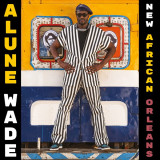
In his sixth and latest album “New African Orleans”, released by ENJA and Yellow Bird, bass guitarist and composer Alune Wade explores the multiple junctions between his native West African rhythms, the Afrobeat and juju rhythms from Lagos and the brass band repertoire immortalized in New Orleans. “I’m exploring a world that goes from my roots to the lost branches on the other side of the Atlantic,” explains the musician from Senegal. He has whittled down around 50 compositions – both original and standards - to a dozen which Alune recorded in Paris, Dakar, Lagos and New Orleans. “The idea first came to me during the Jazz à Gorée festival I organized back in 2014,” he explains. “It had me reflect on the notion of reversing the musical trip most people take from the United States to the African continent. I wanted to set out westward and begin a musical conversation with the best artists, both in Nigeria and the US.”
To achieve this, Wade has invited top artists from both sides of the Atlantic, including the Nigerian talking drummer Olaore Muyiwa Ayandeji, the percussionist Weedie Braimah and the jazz drummer Herlin Riley from New Orleans. The musical inspirations are equally transatlantic, ranging from Dr. John to Manu Dibango and Charlie Parker. But the 45-year-old also pays homage to his father who was a brass band star in his native Senegal back in the Sixties.
BACKGROUND
We only have a partial idea of the birth and remarkable development of the music born of the transatlantic slave trade. From Malinke ballads to Cuban son, from call-and-response patterns to field hollers and hip-hop, Yoruba rhythms to Argentinian tango, from Angolan percussions to the New Orleans brass band sounds… all have roots in Africa and a shackled migration that lasted four centuries. No more so than Congo Square in the Louisiana capital. In 2024, we mark the 300th anniversary of the implementation of the Code Noir which “gave enslaved Africans Sundays off to dance”. A drop in the ocean, but one which shows the importance of culture as a lifebuoy against this barbaric trade. As the Guadeloupian writer Daniel Maximin once claimed: “Our music guided us from the scream to the song, from dragging our chains to dancing.”
With releases on Brooklyn’s Major Records and UK imprints Non Stop Rhythm and Indulgence, DJ Split is a breakthrough producer putting his own stamp on the classic Chicago house sound. For his Shadow Pressings debut he has conjured up five original club cuts that will work their magic on any dance-floor worth it’s salt.
Last Night Baby sets the tone with taught 909 beats, punchy bassline stuttering vocal hits. Piano chords and a smattering of melodic chimes and just the right amount of musicality without taking away any of the raw energy and turbo-charged grunt. Treading a similar path but upping the BPM’s, XNXX goes for the jugular with gnarly FM bassline and frenetic groove.
Flip over for Can I Tell You? which goes a little deeper with a rolling bassline, filtering Detroit pads and strings whilst Step For brings touches of acid, banging 909 toms and vocal chops. Closing out the EP we have One In A Life Time which turns up the jack factor with snappy 808 snares, mechanical bass line and deep stabs. DJ Split is a man on a mission to bang the party and has come prepared with his piñata fully loaded with big, fat beats n basslines.
In an ever-expanding musical universe, Azymuth have long existed as a celestial giant, drawing countless artists, musicians and followers into their orbit. Marking fifty years since their 1975 debut album Azimuth, their new album Marca Passo proves that the band’s alchemic brew of Brazilian jazz-funk and cosmic samba soul remains as vital as ever, as the group honours the profound legacy of their departed founders.
Recorded in Rio de Janeiro, Marca Passo is the first full-length release since the passing of founding drummer Ivan "Mamão" Conti in 2023, following the earlier loss of keyboardist José Roberto Bertrami in 2012. Alex Malheiros, the sole remaining original member, sees his stewardship of the band’s musical legacy as his spiritual duty. He is joined by the equally devoted Kiko Continentino (Milton Nascimento, Djavan) on keyboards, who has been with the group since 2016, and new recruit Renato Massa (Marcos Valle, Ed Motta) on drums.
Yet since their earliest recorded music, Azymuth have always been far greater than the sum of their parts. The "three-man orchestra’s" unmistakable sound is rooted in Brazil's MPB studio scene of the 1970s and early 1980s—a time when artists blended traditional Brazilian rhythms with global jazz, rock, and emerging psychedelic and progressive elements. Marca Passo continues this legacy, seamlessly fusing Brazilian musical traditions with global influences while showcasing the exceptional musicianship that powers Azymuth's distinctive, multi-dimensional sound.
The album is produced by studio mastermind Daniel Maunick, responsible for Azymuth’s two previous studio albums, Fênix in 2016 and Aurora in 2011. Daniel’s credits also include albums by Marcos Valle, Sabrina Malheiros and Terry Callier. Azymuth also invited Daniel’s father, British jazz-funk royalty Jean Paul “Bluey” Maunick, of Incognito, to play guitar on a new version of Azymuth’s eighties classic “Last Summer In Rio”, in tribute to the song’s composer, José Roberto Bertrami. Equally, “Samba Pro Mamao” is a new composition dedicated to Azymuth’s beloved original drummer, Ivan “Mamão” Conti.
Credits:
Alex Malheiros - Bass, Acoustic Guitar & Vocals: 1,2, 3, 4, 5, 6, 7, 8, 9, 10
Kiko Continentino - Keyboards, Organ, Vocoder & Vocals: 2, 3, 4, 5, 6, 7, 8, 9, 10
Renato Massa - Drums & Vocals: : 2, 3, 4, 5, 6, 8, 9, 10
Ian Moreira - Percussion: 1, 2, 3, 4, 5, 6, 8, 9, 10
Sidinho Moreira - Percussion: 1, 2, 3, 4, 5, 7, 8, 9, 10
Dudu Viana - Keyboards & Vocals: 1
Victor Bertrami - Drums: 1
Mangueirinha - Repinique: 3
Jean Paul ‘Bluey’ Maunick - Electric Guitar: 5
Jose Carlos Bigorna - Soprano Sax: 9
Daniel Maunick: Additional Percussion, Synths & EFX: 1, 2, 3, 4, 5, 6, 7, 8, 9
Produced, Engineered, Mixed & Arranged by Daniel Maunick
Co-Produced & Arranged by Alex Malheiros
Executive Producer: Joe Davis
Recorded by:
Daniel Maunick & Leonardo Vieira @ Estúdio Nos Trilhos, Santa Teresa, Rio, Brazil
Daniel Maunick & Amadeu Signorelli @ Sigstudio, Niterói, Rio, Brazil
Daniel Maunick & Alex Malheiros @ Estúdio Basslab, Piratininga, Rio, Brazil
Mixed by Daniel Maunick @ The Sugar Shack, Carluke, Scotland
Artwork & Design: Tyler Askew
After a three year hiatus, Mutual Response returns for its long awaited second release, by talented artist and close friend of the label, Dockett Eddy.
Moving through fresh yet familiar combinations of drum patterns and melodies, his first EP displays the beginnings of a unique, honed style.
Calling on a varied palette of reference from the last 30 years of electronic music, the atmosphere of the release is established somewhere between the skipping, dream-like rhythms of ’00:04’ and the rough, driving drums of ‘Delayed Response’. The gritty awkwardness of the title track, Monofly, builds to an unexpected, ethereal moment, in what is the worthy climax of all four tracks.
The record sets an ominous tone, consolidating itself as a recognisable contribution to the label’s evolving output, but at the same time demonstrating a sound which is entirely the producers own.
COMPUMA's new new album “horizons”now available on vinyl via his own label Something About!
The album “horizons” is a further development of COMPUMA's “horizons EP”, which was released in July 2023 as a digital-only EP on his Bandcamp. The songs are inspired by the scenery and environment of Lake Ezu, Kumamoto, where the artist's roots lie, and by his walks in various places around Japan.
Horizons 1”, in which the undulations of electronic sounds seem to represent a leisurely walk across a clear expanse of sky and lake scenery, and the vocoder voice somewhat reminds us of people's activities, and the piece changes to a more minimalistic play of rhythms and electronic sounds, as if focusing on introspection in the midst of walking. The album also includes “horizons 2,” which changes with exquisite salinity, “horizons 3,” which pays homage to early electronic music, and “horizons 4,” a more stoic minimal electro-dubwise piece that seems to be immersed in the act of walking, The last track on the album, “horizons 5,” is a non-beat ambient track with a hint of the waterfront, as if the artist is gazing at the vast sky, as if the steps of the first half of the album are expanding into a faint memory, and is accompanied by a field recording. The album includes “horizons 5”, a non-beating ambient taste that is covered by field recordings and depicts the atmosphere of a wandering waterfront, and five versions of “horizons” that remind us of the days of “walking”, sometimes immersed in the scenery and walking, sometimes lost in thought, with “horizons interlude” in between, which reminds us of the surface of a bobbing lake, and is a self-titled version of “View 2” from the previous album, “A View”. The album contains seven songs in total, including a self-remix of “View 2” and an electro version of “view 2 electro”, reminiscent of the shimmering surface of a lake.
Personally speaking, this work reminds me somewhat of Kraftwerk's “Autobahn,” which depicted the countryside of West Germany with minimal electronic sounds, and this work also seems to depict a scene of a “walk” with electronic sounds. However, what is different from “Autobahn” is that there is an element in the middle part of the album that seems to go into introspection in the midst of walking, and it is a work that shows various views (including feelings) throughout the album. From a macro perspective, this album is a new response to the recent environmental music revival and generalization of ambient music, which he has introduced as a DJ and record buyer for a long time.
The album was co-produced by hacchi, who also works with Deavid Soul, Urban Volcano Sound, and as a recording/mastering engineer, and mastered by Nakamura Soichiro of Peace Music, a studio that has produced many masterpieces, including Shintaro Sakamoto's solo work. The package artwork is by designer Seiichiro Suzuki. The package artwork is by designer Sei Suzuki. (The package artwork was designed by designer Sei Suzuki.)
******
Compuma is a Tokyo-based log-serving DJ whose extensive knowledge of obscure and left-field music across so many genres and different regions of the world established himself as one of the most respected record buyers in Japan,
a country well known as record collectors’ paradise. While he built his career in record business over decades, he has also been sharing his expertise in music as a DJ just as long. Not only the breath and the depth of where his selection derives are hard to compete, the way he blends them all together is also a state of art. Often intricately layered and collaged, Compuma is capable of sculpting something entirely new with bits and pieces of existing tracks in various forms such as ambient soundscapes to dubbed out club sets. In 2017, his unique ability caught the attention of Berlin Atonal directors and he was invited to play at the festival in Berlin.
He extends his skills into remixing which can be heard on the released from EM Records - “Compuma meets Haku” (2015) and “Bangkok Nights” (2017.) In June 2022, he released his first solo album, A View.
He is also an active member of a DJ trio called Akuma No Numa (which translates to “devil’s swamp”) in which he explores darker and more psychedelic periphery of dance music.
- 1: American Pie
- 2: Heaven It Cries
- 3: Tongue N' Groove
- 4: Can We Find A Way
- 5: Stuck On You
- 6: Hard To Say Goodbye
- 7: Revolution
- 8: Guck
- 9: Heat Of The Moment
- 10: Rocky Mountain Way
- 11: You're My Everything
- 12: I'm Gone
- 13: Ad-Majorem-Dei-Gloriam
Slaughter was formed in Las Vegas, Nevada in 1988. The group was founded by lead vocalist and rhythm guitarist Mark Slaughter
and bassist Dana Strum, who previously played together in the band Vinnie Vincent Invasion. The addition of guitarist Tim Kelly
and drummer Blas Elias allowed Slaughter to quickly gain attention for their lively performances, catchy hooks, and melodic guitar solos. Slaughter's debut album Stick It to Ya had three singles released that hit the Billboard Hot 100: the hit "Fly to the Angels" (US#19), and the moderate hits "Up All Night" (US#27) and "Spend My Life" (US#39). In 1992, the band released their second album, titled The Wild Life. It reached number eight on the
US Billboard Top 200 Album Chart and was certified gold, but did not produce any Top 40 hits on the US Hot 100. The only single to reach the Hot 100 was the first single "Real Love" (US#69). The band would go on to release Fear No Evil in 1995, followed up by Revolution in 1997 and their last studio album Back To Reality in 1999. Now Revolution is getting a makeover, being released in updated packaging by original artist Ioannis (Deep Purple, Allman Brothers, BOC), including a 6-Panel Digipak CD
Record is limited to 100 copies, numbered on sleeve
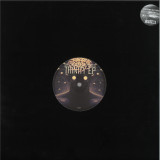
Spectrums Data Forces returns to New Flesh Records 15 years after his debut on the french label. Following the "Exodus"(NF02) and "Reencarnacion" (NFLTD05) releases, Granada based Jose Maria Moreno Vega proudly presents the "Trinity EP", a collection of groundbreaking mayhems characterized by powerful basslines, intricate drum programming, and dystopian atmospheres.
Pounding electro "form900" opens A side with a captivating track where arpeggiated melodies fuse into retro modern vibes in SDF typical signature. The invasion has begun!!
This well-crafted tune comes with a devastating remix from NF mastermind. Umwelt unveils of pure distinctive and instinctive analog beast, merging techno to electro-driven rhythms. Merciless!
B side kicks off with outstanding "Mind restore". Written under SDF techno side project C-System, this 4/4 monster of a track alternates between eerie atmosphere, IDM touches and futuristic sororities.
Last but not the least "7H3 F4M1LY" from 7053M4R14 (another Spectrum Data Forces moniker) reveals subtle and crystal clear stabs over groovy yet dancefloor broken rhythms.
Rarely has a release ever stuck so much to the world of New Flesh Records. Rush on it!
- A1: People Rock Steady- The Uniques
- A2: Musical Train- Roy Shirley & Glen Adams
- A3: Hold Down Miss Winey- Glen Adams
- A4: Forever- Cynthia Richards
- A5: Right On Time- The Sensations
- A6: Till I Die- Delroy Winston
- A7: The Beatitude- The Uniques
- B1: Don't Believe Him- Winston Samuels
- B2: Touch Them(Never Let Them Go)- Roy Shirley
- B3: Revelation- Alva 'Reggie' Lewis
- B4: Love And Devotion- Slim Smith
- B5: The Russians Are Coming- Val Bennett
- B6: Run Come Dance- Glen Adams
- B7: Long Time Me No See You Girl- The Sensations
'The greatest man that came from Jamaica and changed the whole beat from Ska to Rock Steady was Lyn Taitt.He was from Trinidad but Bryon Lee did bring him come to Jamaica as an organist but he started playing guitar and the rest is history! We should call him Rock Steady...Its Lyn Taitt as he was the man! He played lead guitar and Ska at the same time'...Bunny Lee
Rock Steady only lasted for a brief period from 1966 to 1968,but its significance to the subsequent development of Jamaican music is incalculable and it would go on to shape each successive musical movement over the next four decades.
Deejays,Digital and Dance hall all stepped to the tune and pace of rhythms whose origins were grounded in the Rock Steady beat and it is impossible to ever overstate its importance...or its beauty
- Proceed To Memory
- Glide
- Drawstring
- Sherman
- His Phase
- Diminished
- True North
- A Request
- Denslow, You Idiot!
- Sediment
Colored vinyl repress of last Pinback album, originally released in 2012. On one hand, their fifth album, Information Retrieved, is the logical and accessible realization of a sound Pinback have been developing and refining for over a decade. However, that consistency that we've taken for granted is what makes Information Retrieved such a euphoric surprise; their finest and most fully realized album, a dozen years deep into a career that includes bona fide modern classics like "Good To Sea" and Summer In Abaddon. Simply put, this is better than we ever could have expected. They could have coasted on automatic pilot to another lauded album that likely would have made it onto plenty of year-end lists, but instead they shot the moon, and the result is a major triumph. The touchstones are still there: Zach Smith's stunningly unique bass guitar acrobatics driving both rhythm and melody in lock-step unison; the incredible immediacy of Rob Crow's voice that could make a phone book sound compelling; and the musical and lyrical interplay between the two of them that made Pinback so special in the first place. The difference now is their exquisite control over dynamics and a greater emotional resonance throughout. It's the most complete and soulful Pinback album by a fair distance, the finest moment in the career of a band whose unfettered brilliance we've come to count on, but will never again take for granted. For Fan of The xx, Deerhunter, Built To Spill, Broken Social Scene
Amuleto Apotropaico has a way to fend off demons by channeling a secular spiritualism rooted in a rigorous but playful connexion to the infinite possibilities of noise. The propulsion of their continuous music ebbs into and flows out of this primordial flux through their unique brand of brutalist liturgy.
Amuleto Apotropaico is a Portuguese duo consisting of António Feiteira (drums & electronics) and Francisco Pedro Oliveira (guitar, flute & electronics) formed in 2021. Having grown up together, saturated in the lore of their hometown of Santa Maria da Feira, the duo now resides in Porto and continues to moor their rhythmic rituals in the traditions of Northern Iberia.
None of this is a nostalgic look back to a time-that-never-was. Amuleto Apotropaico's cycles are ouroboric: every step forward invokes a simultaneous step backward such that their observance of sonic ceremony (seeming to invoke a now-forgotten tradition) becomes a constructivist gesture that shapes its own legacy. If time-travel exists, this duo has found out how.
For their self-titled first release (also the first release of the Perf label), António Feiteira has culled, recomposed and processed recordings from the band's last two years of concerts in order to create a exciting 4-tracker. Apotropia I & II, which open sides A and B on the vinyl release, are both textural meditations on subtle density. Feiteira's sensitive percussion flourishes are married to Oliveira's modular-enhanced flute and guitar patterns. Albedo e Rito showcases the duo's sense of melodic contour while crescendoing to a peak of lightness. Bruxa do Calhau Branco, lifts the whole journey into an astral dimension where multi-layered drums, synths and digital clicks breathe out, announcing that their moment of worship has settled back into the ubiquitous hubbub of room hum.
- It's Luxury
- Instinct (Backtosense)
- Under Glass
- Memories Of Skin And Snow
- The Spirit Behind The Circus Dream
- The Ghost Never Smiles
- A Second Breath
- Everybody Is Christ
- Disintegrate
Cindytalk is the mercurial, expressionist outlet of Scottish artist Cinder, inspired by the crossroads of exploratory UK post-punk and early European industrial. Her work thrives on chance and transformation, collaging elements of noise, balladry, soundtrack, catharsis, and improvisation. "We were trying to find our own space," says Cinder of the formative period Camouflage Heart emerged from, amidst a move from Edinburgh to London and Cinder's evolving exploration of gender identity, well before culture at large was equipped to understand. With contemporary discourse we see that the project manifested her transgender ideas as visceral music. The guttural, feral sound marked a notably darker turn from The Freeze's sixyear run on the fringes of punk. Changing the project's name became vital, not just because they kept hearing the former was already taken, but the desire to embody the spiritual and sonic shift, "to uncover new pathways_to feminize it," she says. Cinder, with bandmates David Clancy and John Byrne, arrived at Cindytalk, a winking nod to Sindy, the British fashion doll rival to Barbie known then for its pull-string talking mechanism. "The goal was to have a more interesting narrative, more interesting dialogue. Music was ultimately my only way of talking to people. That was my conversation with the world, an abstracted conversation_an attempt to make some kind of tiny, tiny mark, if possible, you hope somebody will notice." Over the years, Cinder has heard from fans who did pick up on the signals and find refuge in Camouflage Heart. Camouflage Heart plays with tension and pace, from creeping to feverish to claustrophobic. The percussion moves between restless marches and barely-there pulses; for some parts, they scratched and hit a tin bath, among other objects. Guitar lines vibrate and stab as Cinder contorts her voice freely. She pulls poetry from a cerebral abyss, like "make the snake in your eye, pierce the camouflage heart" on the slow-droning centerpiece "The Spirit Behind the Circus Dream." In that register is raw power, both vulnerable and menacing, an ability to locate something deep and emotionally charged within. "I still remember that person who was way too intense for their own good," Cinder reflects. "I couldn't make a record like that now, certainly not vocally, while that anger hasn't dissipated; there's still a kind of warrior." For all the destruction and disintegration of Camouflage Heart, Cinder maintains the objective was never full-on fatalistic; these songs seek not to destroy but to poke and provoke, to transform and heal, to find cracks of light in a crumbling world. She points to the last lines of the opening track, "It's Luxury": "Don't look down," the lyric pines through static and rhythm. Cinder extrapolates, "I'm essentially saying, just keep fucking going. As time went on, for me, that falling became flying. Camouflage Heart is the beginning of believing in flight."
Brooklyn-based musician and producer Eliot Lipp has spent the last two decades crafting a signature sound that fuses hip-hop, synthwave, glitch, and electro. His breakthrough came in 2004 when Prefuse 73 released his debut album on Eastern Developments, a then-subsidiary of Warp Records. Since then, he has built an extensive discography across influential independent labels like Hefty Records, Mush Records, Pretty Lights Music, Young Heavy Souls, and his own Old Tacoma Records. Lipp's music, described by Billboard as "funky and experimental, crunchy and distorted, romantic, thoughtful, and all around playful," blends vintage and modern influences, with Kaltblut Magazine noting his inspiration from "sci-fi soundtracks and '70s and BDs funk" to create "weird, high-definition, melodic beats." His work has been featured by Bandcamp, Magnetic, XLR8R, and major radio stations like BBC Radio 6, KEXP, and KCRW. A seasoned performer, Lipp has toured extensively for over 15 years, playing in cities like New York, Los Angeles, Seattle, and Denver, as well as major festivals such as Electric Forest, Forecastle, and SXSW. With a career rooted in both classic beat-making and forward-thinking electronic production, Eliot Lipp remains a vital force in the independent music scene.
On his first release with Bastard Jazz, veteran Brooklyn producer Eliot Lipp delivers Kona, a bright blend of guitar samples, breakbeats, and his signature Korg MS-20 synth lines, evoking the feeling of kicking back on a beach at sunset. The beat hits hard from the start, but as the track unfolds, it eases into a more laid-back, summery vibe. Lipp's signature fusion of retro synth textures and crisp modern rhythms shines through, capturing an effortless, sun-soaked energy perfect for a night drive or a rooftop party. The B-side, Silver Bass, takes a different approach—starting with live drums, electric bass, and a groovy guitar and piano arrangement before morphing into a futuristic, digitally sequenced version of itself. With dueling saxophone and Moog melodies weaving between organic and electronic elements, the track transforms into a breezy electro jam that feels both nostalgic and forward-thinking, solidifying Lipp's ability to craft timeless, genre-blending sounds.
For its latest release, Last Year in Marienbad welcomes back French producer Moonee, who delivers an EP brimming with his signature blend of euphoric and emotive grooves.
One of François Lefevre’s main aliases, Moonee explores the airier side of dance music, crafting deeply immersive sonic experiences that evoke introspection and escapism. While initially focused on deep house, his sound has evolved across recent releases, particularly on his Sandquest LP for OATH. His finely curated approach highlights fluid, intuitive soundscapes that invite repeat listens.
His new EP, Brotherhood, is perhaps his most refined and carefully poised work to date. The title track’s Glitched version opens with a sense of urgency, combining a stepping garage beat, lo-fi vocal snippets, and deep basslines. Existenzfollows, elevating four-on- the-floor energy with intricate rhythmic textures and a rich, orchestral-like melodic palette. Panorama rounds off the EP’s initial arc with playful vocal samples and an uplifting bassline—perfect for late-night city wanderings.
Closing out the release, Oath affiliate Moomin reinterprets the title track with an electro-infused remix. More understated than the original, his version builds gradually, offering a masterclass in energy control.For those seeking enriching grooves, entrancing melodies, and warmth, Brotherhood delivers. It’s a journey through electronic currents, shifting effortlessly between moments of calm and surging energy—press play and dive in.
- A1: Running Man
- A2: The Lullaby
- A3: Empty
- A4: Two Rolls Of The Dice
- A5: Last Chance
- A6: Saloon
- B1: Falling The Fog
- B2: I Know You're Damaged
- B3: I Am Frank
The East Sussex three piece take a sidestep to their country punk debut. The revamped sound is gritty and raw, with basslines that rumble with unfiltered intensity and drums that drive each track with pounding, relentless energy. The dark twang elements have not disappeared but if you break the surface you will find a restless undercurrent of electronic rhythms, adding complexity and tension. Andrew J Davies’ baritone vocals help answer the question you never knew you needed to ask. What would Lee Hazlewood guesting on a Leftfield track sound like?
A fully licensed, analogue reissue -- sure, on cassette and not on vinyl, that's a
long story -- of the first Index LP, originally released in 1967
The "Black Album" is one of the all-time holy grails of psychedelia, with originals going
for more than $4,000. It is an album "with a really druggie sound, full of feedback and
fuzzy guitars. The vocals, when present, are not easily heard. The cover of 'Eight Miles
High' is very good, probably one of the best cover versions I have ever heard. The
original songs all follow a similar pattern as the covers, with hazy guitar riffs and loud
rhythms. The last track is particularly noisy and unstructured. Hidden in amongst the
echoing canyons of sound there's some really snotty punk attitude wrapped up in
trippy velvet fuzz."
This record is magnificent-- bizarre, atmospheric, amateurish (in the best of all
possible ways). It has a wonderful bleak sound, both droning and murky... the atonal
sound of 1960's rock that would leave the most lasting impression on what would
become future punk, post-punk and indie rock artists.
"Much has been written about this incredible band. Much of it isn't true. Index was
formed in the early spring of 1967 in Grosse Pointe, Michigan. I was 18 years old
when I met a chain-smoking 16-year-old named Gary Francis. Our conversation soon
got around to rock and roll. He told me that he and his friend, John Ford, were forming
a band. I told him that I played drums and we arranged a jam session at John's home
on Lakeshore Drive. Our first meeting was incredible. Our sound was full and
powerful. John's lead guitar techniques were fresh and innovative. After our first
sessions we knew we had something special. Index was born. Soon we hit the local
'sock hop' circuit, playing at high schools and teen clubs in the area. We poured our
unique sound out at The Hideout, Undercroft and G.P. War Memorial every weekend.
One afternoon John pulled out a new album he had been listening to. It was a new
band with a mind-shattering sound called 'The Jimi Hendrix Experience.' John played
some songs he had written inspired by this 'psychedelic' sound. Over the next few
days, 'Fire Eyes,' 'Shock Wave' and 'Feedback' were written. This album was recorded
in December of 1967 at the Ford estate. It is recorded in mono with literally one
microphone and with all instruments and vocals recorded at the same time. The cover
photo is of founders of a singing group John joined at Yale. The stiff, board- like
figures seem to characterize the exact opposite of this musical collection. This
reissue is taken from the original recordings. Nothing has been added and all songs
are in their original length. Over the years various bootleg copies of this album have
surfaced but this is the original work." --Jim Valice
Hyldon, Brazil’s highly revered vocalist, musician and producer, has partnered with Adrian Younge to create a new psychedelic soul album, HYLDON JID023. The duo, highly inspired by Hyldon’s seminal work in the ‘60s and ‘70s, revisits’ the spirit of this epoch while creating a modern-day classic. Hyldon’s unique voice and lyrical depth, combined with Younge’s innovative analogue production, ensures this album will not be forgotten. JID023 is one of the last recordings featuring Hyldon’s long-time collaborator and friend, the late drummer Ivan “Mamao” Conti of Azymuth.
Hyldon, a musical pioneer and early contributor to the “Black Rio” movement is a genius in synthesizing the sounds of MPB, Tropicália and Black American R&B. His unique voice, coupled with his rich arrangements and laid-back grooves set him apart from the contemporaries of the time. In ’75, his remarkable debut album, Na Rua, Na Chuva, Na Fazenda changed the sound of Brazil forever. Hyldon’s earnest and experimental approach in creating that album served as the inspiration for Younge’s production on the new JID023.
Months before Mamão's untimely passing, Adrian Younge and Hyldon invited the legendary drummer to join them at Younge’s Linear Labs studio in Los Angeles. Mamão and Hyldon shared a rich musical history — Azymuth, Mamão’s group, served as the rhythm section for much of Hyldon’s work, including his iconic 1975 LP, Na Rua, Na Chuva, Na Fazenda. Their goal was ambitious: to craft an album that would stand alongside Hyldon’s finest achievements, one that would captivate fans who love his unique blend of psychedelic and soulful “Música Brasileira.” The result is nothing short of remarkable.
“Producing a Hyldon album was a dream come true. I’ve studied his catalogue for so many years and highly respect the way he mixed the sound of The Beatles, with that of Marvin Gaye and Tim Maia. I’m still enamored by the fact that he is even a better singer now than he was, in what many deem, his prime. Also, we greatly miss our dear friend and contributor Mamão, the late drummer of Azymuth. We dedicated this album to his memory, and we wish he could have had the chance to hear the finished album.” – Adrian Younge
Songs such as “Olhos Castanhos” evoke the ethereal nature of The Beatles “Strawberry Fields” as the mellotron flutes and Hyldon’s vulnerable performance captivates our hearts. Mamão’s gritty and funky drumming on “Nhanderuvucu (The Creator of God)” showcase what made him a leading pioneer in Brazil’s samba funk scene. Apart from the remarkable drumming, multi-instrumentalist Younge accomplishes the unthinkable by playing every other instrument on JID023. The experimental fusion of horns, analog synthesizers and acoustic instrumentation on songs like “Viajante de Planeta Azul” take listeners on a funky journey to the blue planet; a fictional space that Hyldon lyrically describes with passion and conviction.
Hyldon JID023 is an unexpected, yet remarkable addition to the canon of Brazilian Music. Hyldon’s emotional resonance, coupled with Younge’s sophisticated production and Mamao’s outstanding drumming make this a standout album within the deep catalogue of Jazz Is Dead.