
Поиск:last step
Стили
Все

- A1: We'll Do Thee Somethin
- A2: Relovution
- A3: Down The Black Hole
- A4: I Got Soul
- A5: Not Too Good To Be True
- A6: New World
- B1: Spookie
- B2: Reborn
- B3: Go Back To Paradise
- B4: Dance Trance
- B5: Lastmanonearth
Aftersome refers to that suspended moment of wonder, when you realize you’ve been led here by a chain of unexpected events and small decisions — so improbable they almost feel preordained. Between chance and destiny, it is a fragile state where emotion and reflection intertwine.
This album by You Man embodies precisely that idea: each track is a step along this path, a resonance born of accidents and coincidences, ultimately shaping a coherent trajectory despite its improbability.
The work moves between techno, house and post-wave, infused with science-fiction and fantastical influences, constantly blurring the line between reality and imagination.
The experience is enriched by remarkable collaborations: Marc Almond (Soft Cell), Local Suicide, Jérôme Voisin, each bringing their own brilliance to this odyssey.

- A1: Ben Klock & Fadi Mohem Feat. Flowdan - Our Sector (Azu Tiwaline & Cinna Peyghamy Remix)
- A2: Ben Klock & Fadi Mohem Feat. Coby Sey - Ultimately (Amotik Remix)
- B1: Ben Klock & Fadi Mohem Feat. Flowdan - Our Sector (Quelza Reinterpretation)
- B2: Ben Klock & Fadi Mohem Feat. Coby Sey - Clean Slate (Alarico Remix)
4
Azu Tiwaline & Cinna Peyghamy, Amotik, Quelza, and Alarico remix four tracks from Ben Klock and Fadi Mohem’s collaborative album ‘Layer One’. Released last year on the pair’s label LAYER, each artist on the ‘Layer One Remixes’ EP retains the weighty, low-end edge that shaped the album, while reinterpreting four tracks through a myriad of techno, IDM, bass, and experimental shades.
Honouring the conceptual direction of ‘Layer One’, which delved into a post-human world and offered a serene reflection on a realm that continued to flourish in the absence of humanity, the ‘Layer One Remixes’ EP echoes the same theme. The remaining human survivors on Earth signal a remembrance of their sensibilities, told through the powerful lyrics and vocals of grime MC Flowdan and interdisciplinary artist Coby Sey.
Azu Tiwaline & Cinna Peyghamy open the EP with their remix of ‘Our Sector’ featuring the commanding vocals of Flowdan. Fragmented bass-driven textures skitter across the sparse soundscape, culminating in a track primed for the weirder hours of the night. On ‘Ultimately’, Amotik delivers his take on the original featuring spoken word by Coby Sey, and whips up a rolling four-four number pierced with bleepy percussion.
On the flip, Quelza’s reinterpretation of ‘Our Sector’ unfolds with zappy motifs and technoid flourishes, permeating the shadowy pads and spine-chilling harmonics that slink through the atmosphere. Alarico remixes ‘Clean Slate’, serving a potent techno track laced with equal parts restraint and release, enhanced by Coby Sey’s taut vocals.
While the original album represented the more exploratory sides of Ben Klock and Fadi Mohem, the ‘Layer One Remixes’ EP offers a further step into the void, led by five contemporary artists who are unafraid to delve into the murkiest corners of the dystopian world conjured up by Klock and Mohem.
4
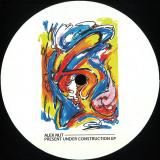
After years of shaping the UK underground from behind the scenes, Alex Nut steps out with his first official solo EP, serving up an intoxicating blend of Spiritual Jazz, Deep House, Dub, Hip Hop and analog electronics. The Present Under Construction EP is rooted in a deep musical language and future-facing energy, it captures a moment of creative transformation and exploration.
Built up over a few years from rough sketches made on an old MPC2000XL, the tracks were revisited, reshaped and eventually brought to life in the studio with longtime friend and collaborator Sam Crowe (Cleo Sol, Lianne La Havas). Together, they added a range of analogue sounds using the Dave Smith Prophet Rev 2, a Fender Rhodes, and a Moog Sub 37. Those recordings were then chopped, resampled, and restructured into the versions you hear on the record today. The records lead track 'andthenitstarted' features saxophonist James Mollison (Ezra Collective, Nala Sinephro) and includes remixes from Detroit House legend Patrice Scott and fellow Eglo Records alumni Last Nubian.
Best known as a DJ, broadcaster, curator and co-founder of Eglo Records, Alex has spent over a decade championing soulful underground music, through fabled Radio shows to legendary club nights, his fingerprints are all over a scene that continues to evolve. Initially making noise alongside the likes of Floating Points, Steven Julien, and Fatima, Alex Nut has long been a cornerstone of the UK's soulful underground. His work continues to champion the evolution of Jazz, Soul, House, and Broken Beat — nurturing a generation of artists now reshaping the global soundscape.
- A1: Micå - Echoes Of Blue 6 21
- A2: Segensklang - Schauer Der Musen 5 18
- A3: Ümit Han - Eines Tages 6 12
- A4: Pass Into Silence - Pale Blue Dot 6 40
- A5: Würden & Schäfer - Analysis Of Variance Iv 5 25
- A6: Richard Ojijo - Verzettelung Live@Filmforum 5 00
- B1: Sebastian Mullaert / Hush - Forever Traces 7 28
- B2: Luis Reich - Distant Ort 6 48
- B3: Morgen Wurde - Wusste Längst Feat Tetsuroh Konishi 5 20
- B4: Dirk Leyers - Regolith 6 56
- B5: Thore Pfeiffer / Niko Tzoukmanis - Impuls 5 52
11
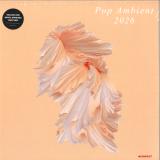
“Everything flows – nothing remains, there is only an eternal becoming and changing” is a well-known formulation of the river theory of the Greek philosopher Heraclitus, also known as panta rhei (ancient Greek: πάντα ῥεῖ, “everything flows”). This teaching states that everything in the universe is subject to constant change and that nothing stays the same forever. The metaphor of the river illustrates this: You can't step into the same river twice because both the river and you are constantly changing. The water is constantly flowing, but the river stays in one place. Thus, reality is constantly changing, even if sometimes perceived as constant.”
„Same Same but Different.“ Always different – always the same. Chill-Out DJ Heraklit
For the 26th time, the most consistent of all ambient compilations, in a constant flux of static change, is released on Kompakt. Joining good friends from the early days and reliable confidants are some new additions to the non-hierarchical charts of contemplative rapture culture.
Leading the way is Micå, a Japanese electronic musician whose finely chiseled, graceful musical style has made it onto the new collection with two pieces. Also making his debut is Richard Ojijo, a seasoned sound engineer known, among other things, for his long-standing collaboration with the artist Marcel Odenbach and the Cologne-based label Magazine. Oskø aka Max Hytrek, a multi-talented newcomer to Kompakt and the music scene, debuts with his rapturously ecstatic piece "Ar Vag." He's followed by Sebastian Mullaert, appearing for the second time—this time teamed up with Sebastian Lilja aka Hush Forever. After his surprise return last year after a 20 year hiatus, we are delighted that Tetsuo Sakae aka Pass Into Silence is back again this year with one of his distinctive sound gems. As are Dirk Leyers (Closer Musik) and Mikkel Metal. 18 tracks are featured on this CD. "Erlösung" (Redemption) is the title of Segensklang's closing track. A kind of ambient bolero into infinity. Or at least until next year...
And what would Pop Ambient be without the iconic, artistic cover design of Veronika Unland, who once again, in her unmistakable way, says through the digital flower: The eye always listens...

8
Channeling inventive sound design into incisive, characterful techno variations, Jurango returns to Livity Sound with an eight-track double EP — his longest release to date. Taíno Gold captures a moment in time for Bristol-based Nate Reece's continually evolving sound as it draws on the full spectrum of UK club music.
Following a debut for Livity's reverse label in 2021 and last year's An Amorphous Mass EP, Reece is more assured than ever tackling a variety of club-focused cuts. The tracks on the release all came together before, during and after a two-month visit to Reece's grandparents' home — an idyllic tropical environment in a small community at the top of a hill in the northern part of Jamaica.
Taíno Gold refers to the island's indigenous Taíno community and the legend of a witch luring Spanish settlers into a trap on the Martha Brae river. There are no messages explicitly embedded in the music, but the release is both a personal reflection of Reece's own experiences and family heritage, plus a reminder about the enduring sceptre of colonialism and the continued need to fight against it. From absorbing Jamaica's fraught history through museum and plantation visits to the abundant nature in the garden surrounding his grandparent's house, the double EP marks a place in time for Reece, with eight advanced, ear-catching tracks as the end result.
From the cascading arps of 'Black Torches' to the tunnelling chords of 'Waiting For Trelawny', the melodic dimension of the Jurango sound is more confident than ever. 'Hibiscus' is a shimmering celebration of dub techno and crooked drum pressure and 'Chalk On Trees' basks in aqueous, fathoms-deep pads to close out the EP. Elsewhere, Reece brings new textural and tonal detail to his percussive workouts, splashing acidic noise around the angular experimentation of 'Maybe It's Broken' and firing off double-time rhythms to inject 'Double Sevens' with infectious urgency.
With the space afforded by a longer release, Reece widens out the scope of his artistic identity while absorbing the particular scene and setting that surrounded him while making the tracks. Taíno Gold is a vibrant next step for Jurango and a natural continuation of his work with Livity Sound.
Livity Sound is a label set up by Peverelist in 2011 as a vehicle for a raw and exploratory strain of UK techno, rooted in the heritage of UK dance music and sound system culture. It has since become one of the UK's foremost protagonists for cutting edge underground electronic music.

5
Remix Ep with a broad spectrum of styles and some big named remixers. Side A kicks off with Colin Dale's remix of Dark Male, which is a typically throbbing techno cut for the dance floor, the Second track on Side A is David Duriez pushing an acid house remix of fellow French act G-Prod. On the flip is MOY's step into big bass and fast based breaks led drums which will make your head explode as they build their intensity, the second track is Derek Carr remixing The Vast Profound, his house rework offers all you might expect from this veteran of the scene - looped hooks and deep pads. Lastly The Vast Profound digs into the deeper end of house music layering up pads, strings and lush melodies. Comes with an insert "Remix track selector" on coloured vinyl limited to 135 sale copies.

Jonathan Kaspar returns to These Eyes with his long-awaited Time EP - his third release on the label after six years. Known for his deep, emotive productions, Kaspar takes a bold step forward on this EP, exploring more unconventional, off-kilter sounds while still delivering his signature groove. The release also features a special moment for the artist: “Where Are You”, his very first ambient track, showcasing a new, introspective side of his sound.

4
Leeds based IMAGINARIUM announce their record label delivering a four track EP featuring music from residents Pete Melba (Planet Orange), Phil Warner (Plant & Deck / Pic N’ Mix), and Roya Brehl (Creatures of the night / Last days of Rome). Joining the crew is rising star and one half of duo Le Frequency, James Geeson.
Pete Melba kicks things off in his signature style of groovy tech house with skipping percussion, twinkling melodies and a touch of darkness. Phil Warner takes the A2 into techno leaning tech house territory sporting spacey pads, acid licks and spooky vocal snippets. On the B1, Roya Brehl moves into darker realms utilising cascading synths, eerie vocals and jangling percussion. Closing out the EP James Geeson continues the dark theme of the B-side warping the classic moonraker vocal into a deep dance floor chugger.
A well-rounded EP for cultured diggers bound to scintillate dance floors and after parties across the globe.

- 01: Tafese Tesfaye - The Dove &Amp; The Pigeon
- 02: Yetemwork Mulat - Heathen &Amp; Earth
- 03: Alemu Aga - The World Is But A Place Of Survival
- 04: Sosena Gebre Eyesus - Save Us From Our Death
- 05: Abiy Seyoum - The Last Judgement
- 06: Tafese Tesfaye - You Who Take Good Care Of Me
- 07: Sosena Gebre Eyesus - When I Say Your Name
- 08: Akalu Yossef - Who Can Doubt
- 09: Abiy Seyoum - We Are All Mortals
- 10: Yetemwork Mulat - The Second Coming Of Christ
- 11: Akalu Yossef - Our Father
- 12: Alemu Aga - Song Of Praise Played With A Plectrum
12
также имеющийся в продаже
LP 2x12"[28,36 €]
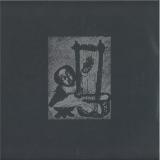
The begena is a large ten-stringed lyre which is part of the traditional Amharic heritage of Ethiopia. The Amharas, who have long formed the politically and culturally dominant people of Ethiopia, mainly inhabit the central and northern part of the country. In the majority, they follow the monophysite Orthodox Tewahido Church established in the early fourth century AD.
Music plays a very important part in the life of the church. Most of the liturgy is sung and, contrary to secular music, it is accompanied by percussion instruments only. The begena occupies a special place because it is the one melodic instrument exclusively dedicated to the spiritual repertory. Because of its mythical origin, it is highly respected. Tradition holds that the begena was given to king David by God, and brought to Ethiopia by Menelik I, together with the Ark of the Covenant. It has always been the instrument of kings and nobles. Played by pious men and women of letters, it never became widespread. But it never disappeared either, not even under the Derg regime (1974-1991) which had banned the instrument.
Among Amhara string instruments, the begena is the most carefully crafted, especially with regard to the ornately sculpted crossbar. Its ten gut strings are cleaned and twisted several times. The characteristic buzzing timbre equalled by no other Amhara instrument is due to the enzirotch, that is, small bits of leather placed between each string and the bridge. This plays an important part in the sound production by creating a brief contact between the string and the upper rim of the bridge, thus modifying the vibrating properties of the string. In this manner, the spectrum of the sound is considerably enhanced (up to over 10 kHz).
The begena is a very powerful instrument, it keeps the devil thirty steps away, and its presence in the home wards off malicious spirits. Priests and preachers recommend its presence, especially during Lent (Fassika Tsom) when the Orthodox Amharas ponder their sins and repent. Because of its spiritual import, the begena generates intense emotion. According to some musicians, playing the begena brings them into direct contact with God or the Virgin Mary. The religious role of the begena is underscored by the shape of the instrument, each part symbolises an important element of the faith. The crossbar for instance, which reaches across the entire width of the instrument, represents God who is above all things. The belly which "gives birth" to the sound represents the Virgin Mary, and the ten strings recall the Ten Commandments.
Recorded by Stéphanie Weisser in Addis Ababa, Ethiopia, March 2002-December 2005.
Mastered by Renaud Millet-Lacombe.
Issued under license from VDE-Gallo, Switzerland.


6
La Rama’s club ready sub-label RamaJam is back after a long stretch with 6x new traxx for the dance. Introducing for the first time on record, two Montréal duos that have been rocking the city for the last few years.
The Wet Steppahz are Boogaloo Jones & Pitza Dave, young producers extraordinaire, engineers at local studio Breakglass, live PA performers and organizers of the 140/160 party series. You can also find Boogaloo every weekend laying it down with the Fella’s Q-Tips & Curls crews. Young guns on the come up, be sure to follow their label STEPPATRAXX for some hot fire.
DAPASHU? is the meeting of veteran producer Shash’U & long time local DJ, promoter and studio fiend Dapapa. A quick lookup on Shash’U will have you inundated with originals and versions for you to drop at any jam. A mainstay at dance competitions, a regular feature of institution Loop Sessions, and always ready to share a tip from his production tool kit. Dapapa gets busy on the regular at venues around the city & heads both the Ol’Jack Nu Jack organization and DASA (a Montréal production suite bridging local and international likeminded artists). A fellow who takes no tune for granted.
Musically we make it easy, 3 cuts per side, representing each crew’s essence. No need to describe each tune, listen in and take notes on the mood + we laced you with those BPMs on the label so you can throw them in to the mix at any moment, no stress!
Mastered and cut in the city by our man Cristobal Urbina. Pressed in Canada & distributed from our brick and mortar shop located at 77 rue Bernard O, Montréal QC, H2T 2J9.
PS Props: These tunes were selected from recordings of the Steppahz and DAPASHU? playing live for a Seer Records party at Osmo x Marusan in April 2024… Big shout out to Emiliano & Maximum Enemi <3
- A1: Tafese Tesfaye - The Dove &Amp; The Pigeon
- A2: Yetemwork Mulat - Heathen &Amp; Earth
- A3: Alemu Aga - The World Is But A Place Of Survival
- B1: Sosena Gebre Eyesus - Save Us From Our Death
- B2: Abiy Seyoum - The Last Judgement
- B3: Tafese Tesfaye - You Who Take Good Care Of Me
- C1: Sosena Gebre Eyesus - When I Say Your Name
- C2: Akalu Yossef - Who Can Doubt
- C3: Abiy Seyoum - We Are All Mortals
- D1: Yetemwork Mulat - The Second Coming Of Christ
- D2: Akalu Yossef - Our Father
- D3: Alemu Aga - Song Of Praise Played With A Plectrum
12
также имеющийся в продаже
Cassette[16,18 €]
The begena is a large ten-stringed lyre which is part of the traditional Amharic heritage of Ethiopia. The Amharas, who have long formed the politically and culturally dominant people of Ethiopia, mainly inhabit the central and northern part of the country. In the majority, they follow the monophysite Orthodox Tewahido Church established in the early fourth century AD.
Music plays a very important part in the life of the church. Most of the liturgy is sung and, contrary to secular music, it is accompanied by percussion instruments only. The begena occupies a special place because it is the one melodic instrument exclusively dedicated to the spiritual repertory. Because of its mythical origin, it is highly respected. Tradition holds that the begena was given to king David by God, and brought to Ethiopia by Menelik I, together with the Ark of the Covenant. It has always been the instrument of kings and nobles. Played by pious men and women of letters, it never became widespread. But it never disappeared either, not even under the Derg regime (1974-1991) which had banned the instrument.
Among Amhara string instruments, the begena is the most carefully crafted, especially with regard to the ornately sculpted crossbar. Its ten gut strings are cleaned and twisted several times. The characteristic buzzing timbre equalled by no other Amhara instrument is due to the enzirotch, that is, small bits of leather placed between each string and the bridge. This plays an important part in the sound production by creating a brief contact between the string and the upper rim of the bridge, thus modifying the vibrating properties of the string. In this manner, the spectrum of the sound is considerably enhanced (up to over 10 kHz).
The begena is a very powerful instrument, it keeps the devil thirty steps away, and its presence in the home wards off malicious spirits. Priests and preachers recommend its presence, especially during Lent (Fassika Tsom) when the Orthodox Amharas ponder their sins and repent. Because of its spiritual import, the begena generates intense emotion. According to some musicians, playing the begena brings them into direct contact with God or the Virgin Mary. The religious role of the begena is underscored by the shape of the instrument, each part symbolises an important element of the faith. The crossbar for instance, which reaches across the entire width of the instrument, represents God who is above all things. The belly which "gives birth" to the sound represents the Virgin Mary, and the ten strings recall the Ten Commandments.
Recorded by Stéphanie Weisser in Addis Ababa, Ethiopia, March 2002-December 2005.
Mastered by Renaud Millet-Lacombe.
Issued under license from VDE-Gallo, Switzerland.
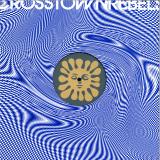
KinAhau returns to Crosstown Rebels with expansive new single ‘Under the Flowerpot’, featuring Luke Cusato. Backed by a cosmic, synth-driven remix from Perel, the release lands on the label. After debuting on the label with his remix of Airrica’s ‘Hi Speed Lover’ last year, surging wonderkid KinAhau steps forward with his first full solo release for Crosstown Rebels. ‘Under the Flowerpot’ captures a moment of raw honesty and transition for the young Mexican artist, revealing a more expansive, song-led direction in collaboration with UK vocalist Luke Cusato.
The single was born during a turbulent period, written in the wake of a panic attack shortly after relocating to Rome. That sense of fragility and release runs through the record, pairing Cusato’s stirring topline with KinAhau’s widescreen production to create a cut that blurs the lines between club energy and confessional songwriting. For the remix, Damian Lazarus welcomes Perel to Crosstown Rebels. A unique voice within the electronic landscape, crafting her own lane with a genre-blurring approach, her remix is chugging, synth-led, and infused with a signature retro-futurist touch, channeling cosmic energy and slow-burning tension for dancefloors that like things deep and driving.Now 22, KinAhau’s journey has already taken him from handing Solid Grooves founder Michael Bibi a USB disguised as a trash collector to playing at DC10, Fabric, Space Miami and Mayan Warrior. His breakthrough collaboration ‘Different Side’ with Bibi and Audio Bullys carried his name onto global stages, while his 2024 mixtape comprised of old demos, drafts and edits revealed a more confessional, unfiltered edge to his sound. Yet ‘Under the Flowerpot’ feels like a deeper statement, one rooted not in hype but in self-exploration.

Continuing the release series on our town of multicultural multimedia hub called Sakskøbing, which has been named after a lovely place in Denmark. This time a true veteran of electronic music DJ Honesty steps up under his moniker Honeydrop. Delivering four cuts of honest house music infused with elements of dub and break this release is guaranteed to cause the turntables feeling good and appreciated, they will be asking you for more. Hans has been producing music fanatically for long time with first official releases dating back to 1995 so it is a true honour to welcome him to the label 30 years later, now in 2025. The release is an intergalactic warm blanket with music on it that is completely ready for different moods and settings of the events/parties/listening sessions one might find itself in. Starting with “Penha de Franca” right until the last track named after the release’s title “Free at Last” a smooth ride can be felt which hopefully by the end of it will set the listener free, if it needs to do so. Free at last dear listener, free at last.

Next up on Mesh is Throwing Snow’s ‘Jackals’, a five-track EP drawing on echoes of UK subcultures.
Written in Ireland late last year with the London 2010s in mind, ‘Jackals’ is Throwing Snow’s love letter to his time spent there, tapping into a detailed web of sounds and styles through a personal lens, but skillfully produced to resonate with many. Locating memories in a transient city that is constantly reconfiguring itself, each track is an attempt at honouring fragments of recent, but seemingly distant, musical history. Taking us from DMZ at Brixton Mass to FWD at Plastic People, or Future Garage Fridays in Soho (IYKYK) to early days of NTS, the EP captures some of the fleeting moments that continue to play a significant part in the city’s sonic patchwork.
Production-wise, all the tracks share the same sounds twisted in different directions. The hats are vocoded with noise and random LFOs, and much like the chaos of London, every bounce has a unique pattern.
Opening track ‘Jackals’ walks the line between dub and UK bass, quickly overtaken by a wonky synth lead that spirals eternally upwards. ‘Ohnein’ jumps in with a massive pad swirling above a half-time step. In Throwing Snow’s own words, ‘I had to check with Martyn whether I'd ripped him off, turns out I hadn't, but it's a heavy head nod crossed with Un Vingt from my first 12"’. ‘A Cloud Mountain’ - a nod to the timeless James Holden remix of Nathan Fake’s ‘The Sky Was Pink’, leans into a maximalist progression of deep chords and fractured synths. ‘Forged’ steps into a weightier space with sparse drums driven forward by a deep cut of bass and twitchy echoes. Rounding things off, ‘Path Dependency’ speeds things up with touches of DnB in the drums, distant echoes in the forefront and the occasional sub wobble holding things together.

CAIV deliver rigorous, syncopated machine rhythms on the Lives EP from U.S bi-coastal collaborators Israel Vines and Camile Altay, following on from their formidable debut EP Dwellers on Tresor last year. Lives is four finely calibrated cuts riding a diverse tempo range, unified by rich harmonics and resonant percussive layering over veiled bass textures, where distortion becomes detail. Observe-Orient-Decide-Act.

2025 Repress
For the second installment of its renewed imprint, Fuse's own in-house resident and one of Belgium's proudest exports Phara takes the reins for a deep dive into thick percussion and vibrant club landscapes. 'The Wall' puts current dance music under a microscope with a brush of truly vintage spontaneity, merging techno's confrontational nature with house's harmonic genuineness. This duality is reflected through Phara's own relationship with his home base Fuse and the complementary contrast between its two rooms.
The EP's title track serves as a hypnotic introduction for the A1, imposing a bass-heavy rhythm and a persistently oscillating synthline. A dense production full of energy, 'The Wall' inspires intrigue throughout its duration, revealing its true intentions through a capable sound system. Sharing the first side of the press is 'Blaes 208', a name that Fuse club goers will likely recognise, that guides the listener from effect into embrace. With lush keys echoing past a comforting drum sequence fit for a close-eyed dancefloor experience, Phara's impactful tendencies meet his affinity for the melodic through a blissful six minutes of crowd to selector connection. Switching sides, a return to a cold cold aesthetic is quickly apparent through 'Hush Now 206'. A pummeling, saturated bass competes with a kick of equal effect, rolling through a storm of metallic stabs. Mastering the message of urgency, Phara presents a lightshow of resonating percussive work, defining his space just to cut right through it. To close out with a lasting impression, the producer mutes the acoustics of his work through razor-sharp sound design dotting along playful snares, a duality reminiscent of the dynamism of Detroit electro. 'Motion Steps', referring to the stairs that ascend from Fuse's main room to its more left-field counterpart, captures the atmosphere of the almost shimmering music that can be expected to be played there; a place where Phara and many others have been known to explore the extremities of their music. He swiftly throws in melodic elements to recontextualize an otherwise pressing composition, and after three chapters of considerable weight, he concludes his record with infectious groove that flaunts technical ability.
Japan’s SUDO return to Drumcode with ‘We Are Free’, following their landmark 2024 debut ‘Real World’ Last summer brothers Isao and Takashi aka SUDO gifted Drumcode one of the most inspiring releases we’ve heard in recent times with ‘Real World’. Inspired by Underworld’s incendiary ‘Rez’, the EP was the sound of two producers pouring all their passion and shared musical history into a work that’ll be remembered for years to come.
The release peaked at no.1 on Beatport’s Release Charts and saw a follow up collaboration with Bart Skils ‘Nexus’ out later that year on Drumcode. ‘We Are Free’ continues SUDO’s emotion-led and timeless approach to techno, crafting a four-tracker inspired by the concepts of “freedom, divinity, memory and transition”. The title track genre-hops between electro-edged techno, silky ambient textures and breakbeats. Isao says: “We wanted to express in a powerful and explosive way one of our purposes on the dancefloor – a time of celebration, and freedom from restrictions.”
‘Elysium’ is a transcendental slice of techno that juxtaposes tough industrial rhythms with a stunning break that was inspired by a children’s choir Isao heard one day at Berlin Cathedral. “It took a long time to producer with many patterns until we were satisfied,” Isao shares.
“It was a real process of immersing oneself in the hypnotic groove and finding divinity.” Initially inspired by watching Bart Skils play a NYE 2025 set in Argentina, ‘Lost in Paradise’ is led by a delicate Latin vocal and crisp sun-dappled beats, before stepping up the pace in the second half. “As the production progressed, we were led to a wonderful result with the track’s vocal, a tribute to one of our biggest influences – the untouched nature of Ibiza and the vibes of the light and beautiful people that flow there.” The EP winds down with ‘Horizon’, a simultaneously beautiful yet bittersweet hymn that signals the end of the party.

- Hotel California
- New Kid In Town
- Life In The Fast Lane
- Wasted Time
- Wasted Time (Reprise)
- Victim Of Love
- Pretty Maids All In A Row
- Try And Love Again
- The Last Resort
The moment the instantly recognizable intertwined guitar passage on the title track to the Eagles' Hotel California begins, the record's genius becomes obvious all over again. Ranked the 118th Greatest Album of All Time by Rolling Stone, certified by RIAA as the third best-selling LP in history, and considered the foundation on which the Golden State's mid-‘70s music scene was built, the 1976 landmark is a music staple immune to shifts in trends, eras, and styles. Fearlessly addressing the chaos and consequences of American life, its songs remain strikingly prescient and gain creedence with each passing day.
Mastered from the original analogue master tapes, pressed on MoFi SuperVinyl, and limited to 17,500 numbered copies, Mobile Fidelity's UltraDisc One-Step 180g 45RPM 2LP vinyl box set ensures you will want to permanently check into and never leave this particular Hotel California. Up to the herculean task of standing head and shoulders above all prior reissues, this collectible edition plays with extreme clarity, organic richness, tube-like warmth, massive dynamics, and microscopic levels of detail. You'll be able to practically smell the colitas and feel the breeze in your hair. Songs come across with an epic sweep and feature immersive, front-to-back soundstages that allow the music unprecedented air, roominess, and separation. As for the noise floor? It's basically as invisible as the spirits that waft in the corridors of the unforgettable title song.
Aesthetically, the premium packaging and presentation of the UD1S Hotel California pressing befit its esteemed status. Housed in a deluxe box, it features gorgeous foil-stamped jackets and faithful-to-the-original graphics that illuminate the splendour of the recording. From every angle, this UD1S reissue exists as a curatorial artefact meant to be preserved, touched, and examined. It is made for discerning listeners that prize sound quality and production, and who desire to fully immerse themselves in the art – and everything involved with the album, from the renowned cover art to the meticulous finishes.
Indeed, the opportunity to zero in on all the particulars of the 26-million-selling Eagles record dubbed "a legitimate rock masterpiece" by vaunted Los Angeles Times scribe Robert Hilburn has never been better. A global phenomenon that marked the band debut of guitarist-singer Joe Walsh, Hotel California continues to resonate and connect with listeners of all generations taken by its narrative depth, stark directness, picturesque melodies, daring majesty, and ardent emotionalism. Adorned with a breathtaking exterior photograph of the Beverly Hills Hotel that serves as the simultaneously haunting and alluring cover art, and rounded out by a rear-cover shot of the Lido Hotel lobby that reinforces a notion that teeters between permanence and transience, Hotel California is brilliantly tied to a specific place that functions as a universally understood metaphor for the American Dream.
Confronting the darker undercurrents and oft-ignored constructs attached to that romantic notion, the record's songs revolve around a host of shared themes: excess, mobility, stability, illusion, fame, destruction, and idealism included. Notably, Hotel California appeared at a crucial junction in American history: During the country's bicentennial and amid escalating controversies related to the Vietnam War, energy crisis, and governmental corruption. That the Eagles manage to channel such cultural, social, and economical matters into a cohesive, stately, big-picture statement is alone a stupendous feat. That the album's reach, boldness, vitality, accessibility, and understated intensity have never waned make it a marvel.
Reflecting on Hotel California 40 years after its original release, and indirectly explaining its enduring appeal and increasing relevance, singer-songwriter Don Henley confirmed the record pertains to the "loss of innocence, the cost of naiveté...the difficulties of balancing loving relationships and work, trying to square the conflicting relationship between business and art; the corruption in politics, the fading away of the Sixties dream of ‘peace, love and understanding.'"
It can be argued that Henley and company squarely hit on and drove home those ideas in the surreal title track, chart-topping "Life in the Fast Lane," and grand "The Last Resort" alone. But that would miss the forest for the trees. Experienced as an unbroken whole, complete with the pristinely shot imagery and physical grooves, Hotel California unfolds like a geography-conscious saga by James Michener and plays like colour-saturated movie shot on 70mm film by Martin Scorsese. It's about our collective and individual decisions – and the shape of our past, present, and future. And, just like that conjured by our imaginations, Hotel California continues to take on a life of its own.
More About Mobile Fidelity UltraDisc One-Step and Why It Is Superior
Mobile Fidelity Sound Lab's UltraDisc One-Step (UD1S) technique bypasses generational losses inherent to the traditional three-step plating process by removing two steps: the production of father and mother plates, which are created to yield numerous stampers from each lacquer that is cut. For UD1S plating, stampers (also called "converts") are made directly from the lacquers. Since each lacquer yields only one stamper, multiple lacquers need to be cut. Mobile Fidelity's UD1S process produces a final LP with the lowest-possible noise floor. The removal of two steps of the plating process also reveals musical details and dynamics that would otherwise be lost due to the standard multi-step process. With UD1S, every aspect of vinyl production is optimized to produce the best-sounding vinyl album available today.
MoFi SuperVinyl
Developed by NEOTECH and RTI, MoFi SuperVinyl is the most exacting-to-specification vinyl compound ever devised. Analogue lovers have never seen (or heard) anything like it. Extraordinarily expensive and extremely painstaking to produce, the special proprietary compound addresses two specific areas of improvement: noise floor reduction and enhanced groove definition. The vinyl composition features a new carbonless dye (hold the disc up to the light and see) and produces the world's quietest surfaces. This high-definition formula also allows for the creation of cleaner grooves that are indistinguishable from the original lacquer. MoFi SuperVinyl provides the closest approximation of what the label's engineers hear in the mastering lab.
