Buscar:later version

Estilos
Todo
SOUL SUPREME - FOLLOW ME

SOUL SUPREME

FOLLOW ME

7"-VinylGAMM200A
GAMM Recordings
01.04.2026

GAMM REACH 200 !!
And what better way to celebrate than 3 unbelievably amazing remix 7's of their very first release ?

A track that defined GAMM's identity and helped pave the way for everything they've achieved since. Now, 23 years later, GAMM has reached its landmark 200th release.

To mark this anniversary and honour our dear friend Fredrik Lager (aka Red Astaire), who sadly and unexpectedly passed away three years ago, we are re-releasing 'Follow Me' alongside remixes from some of our favourite producers. The remixes will be released across three separate 7-inch EPs featuring Soul Supreme, DJ Spinna, Ukokos, and Kampinos.

On the first EP, Amsterdam-based keyboardist and producer Soul Supreme delivers a masterful cover version featuring live instrumentation, programmed beats, and fresh vocals. It is a beautiful tribute that honours the original while evolving the track from its sample-based roots into a full-scale production. The EP features two takes: a Jazz-Funk infused original and a Samba/Bossa-inspired version ('Follow My Samba').

Timeless music

No en stock

Haga su pedido ahora y le encargaremos el artículo en nuestro proveedor.

15,76

Ültimo hace: 7 Días
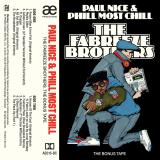
Paul Nice & Phill Most Chill - The Fabreeze Brothers (Tape)

Expanded Edition Double Cassette Box Set including main album and Bonus Cassette with unique download cards


AE Productions in association with Sure Shot Recordings and In Effect Recordings are pleased to announce a 10 Year Anniversary Edition of the critically acclaimed Phill Most Chill and Paul Nice album as the Fabreeze Brothers.

The hugely successful first edition which was pressed on colour vinyl and supplied in double fold out sleeve sold out in only 2 weeks from release date and then the 2nd pressing black vinyl edition sold out a little while later but has for years been out of print but is increasingly requested by shops, via email, social media, AE Productions website back in stock requests, etc…

As it has been 10 years since original release back in 2015 at the time of proceeding with manufacturing, it was the perfect opportunity to do a 3rd pressing to mark the anniversary but we had to pull out all the stops for a 3rd run of this incredible album and also make it subtly different again in packaging design from the 1st and 2nd pressings so that each has it’s own particular feel and quality.

With help from the original designer and all-round vinyl artwork supremo Mr Krum we have found some nice adjustments for the gatefold sleeve where the detail from the insert sheet found in the original issues is incorporated into the inside panels of the sleeve. We have also tweaked the hype sticker to mark the 10th Anniversary Edition and updated the vinyl labels so as to work better with the new Splatter vinyl which follows the original red and yellow vinyl but each splattered with the opposite colour.

For something a little extra we have compiled a Limited Expanded Edition Double Cassette Box Set that includes the original album and also a ‘Bonus Tape’ which features all of the remixes, alternate versions, Original Versions of album cuts and bonus tracks found on B-sides of the array of singles and we included for good measure 2 tracks that only appeared on the promotional only LP sampler that ended up being different on the final release. This is limited to cassette just for the non-vinyl heads as all of these tracks already appear on vinyl. The outer box is A5 card in black with gold foil Fabreeze Brothers logo and comes with discography booklet.

‘The Bonus Tape’ from the box set is also available as a standalone cassette release with alternate j-card art work so that it has it’s own flavour and so that anyone that purchased one of the original run of cassettes that sold out before we could even ship any copies, did not need to purchase the main album again unnecessarily and to make it noticeable from the Expanded Edition Box Set version.

This version also has an alternate shell design in keeping with the clear shell with dark liner that was commonplace back in the 90’s and the cassette geeks may note the red text on the spine as was also a common design back then – giving this a pseudonym of ‘the 90’s tape’ during the design process.

We couldn’t stop there so we also have an extremely low quantity Limited Edition Mini Disc version which is the main album plus 8 of the bonus tracks from The Bonus Tape – only missing the 2 least significant alternate versions but clocking in at just a few seconds under 80 minutes – the absolute maximum for the format! Mini Disc???!!! You’re probably asking – yes!

While looking into the cassette duplication options we realised that the duplicator also offers Mini Disc production so we thought that it may be worth doing a very small run just because not only are professionally manufactured Mini Disc’s rare in Hip Hop, they are rare within the entire music industry as they never really took off as a medium to purchase music but ended up as the choice for home recorded Walkman and car use. Indeed, AE boss Mr Fantastic still has his main machine, portable and old discs. Amazingly also, the sleeve artwork transferred brilliantly to the Mini Disc template. They are manufactured using high quality Sony discs using ATRAC 4.5 codec.

All releases are supplied with unique free download codes on cards that are included inside the packaging but also with the Expanded Edition cassette and Mini Disc having 2 cards – 1 for the main album and a 2nd card for ‘The Bonus Tape’. The free downloads are supplied direct from Phill Most Chill’s Bandcamp page keeping it independent.

Reservar27.03.2026

debe ser publicado en 27.03.2026

38,87
Coil - Backwards (2x12")

Coil

Backwards (2x12")

2x12inchCSRLPW203
Cold Spring
27.03.2026

Double LP in matt-laminate gatefold sleeve with silver detail. We mark a decade since we first released COIL's landmark album 'Backwards', with a special 10 year anniversary vinyl reissue. After the ground-breaking release of 1990's "Love's Secret Domain" album, Coil were not dormant; the main project was "Backwards", which was started in 1992, updated considerably between 1993 and 1995, and transferred in 1996 to New Orleans, where it was finished in the magic of the Nothing studios of Trent Reznor (Nine Inch Nails). The album saw the fruition of Jhonn Balance's recent vocal coaching, producing haunting, passionate vocals, while reaching new heights. 23 years after its initiation, these tracks have been beautifully preserved by Danny Hyde and are finally available in highest quality audio. Differing substantially from the later, remixed incarnation, "The New Backwards" (2008), "Backwards" contains the original versions of Coil's much-loved tracks; 'A Cold Cell' and 'Fire Of The Mind', which have appeared on various compilations over the years, and are now presented as originally intended. his album is the essential bridge between "LSD" and the later "Musick To Play In The Dark" series. It is an essential conduit, to understand the journey that was taken. It was to be released... it should have been released... but because of issues with grey men it wasn't. It is now, so enjoy. (Danny Hyde).

Reservar27.03.2026

debe ser publicado en 27.03.2026

34,87
RED D - THIS IS STILL BELGIUM VOL 2

Somewhere long ago in a vinyl galaxy near you We Play House Recordings released an E.P. called ‘This Is Still Belgium Vol 1’. The release was called like that because the music on it could only have been made by Belgians. Vol 2 never happened…until now. Label boss Red D has always been inspired by the rich Belgian club music of the 90’s and inevitably those influences have sneaked into his own productions, but never as clear as on the three tracks you are reading about now.

And so the original WPH series has been revived with WPH 024.5, aptly called ‘This Is Still Belgium Vol 2’. The music is situated somewhere between house, progressive house and early trance music, basically club music with soul & melody at its core.

On the A-side we find Red D teaming up with his friend Mona Lee, a soul sister who has been making waves in recent years in soulful house circles and who comes up with the vocal prowess to match Red D’s emotional trip of a track and heartfelt lyrics. Can you handle the break?

The B-side opens up with ‘Tides’, a deep hypnotic builder for late night eyes-closed dance floors and closes with ‘Papillon’, a track that came to life long ago in the minds of Telepaticos (Marcos Salon & Sandro Valcke). When Red D heard a demo version of this one the melody got stuck in his head and never really left him. Many moons later he rediscovered the parts of this one on a hard drive and got to work on his interpretation that features on this E.P. Safe to say the track holds a special place in Red D’s heart and we’re sure you’ll feel it as well!

Disponible a partir del13.05.2026

16,60

Ültimo hace: 51 Días
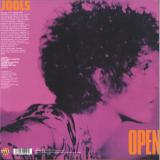
Julie Driscoll, Brian Auger & The Trinity - Open LP

Released in 1967, Open marked a bold debut for Brian Auger & The Trinity, featuring the dynamic vocals of Julie Driscoll. Music and its makers were rapidly evolving in ‘67, the UK's Jazz and R&B scenes were being influenced by pop and psychedelia and socially, musicians of many styles found common ground in London’s clubs like The Cromwellian and The Scotch Of St James where the The Beatles, US legends Wilson Pickett and Jimi Hendrix mingled with the capitals jazzers and pop stars, often loudly jamming together in even louder 'Lord Byron' shirts. 'Open' fully embraced this spirit by fusing together those genres and attitudes of the era. From the outset Auger displays his jazz rooted approach on the A side with 'In and Out' and 'Isola Natale' (later covered by one of his American jazz heroes Richard ‘Groove’ Holmes). Both showcase the Trinity's musicianship and Brian's improvisational flair. Auger himself takes on vocal duties on the raucous ‘Black Cat’, a track that became a club hit. Open is marked by its eclecticism; 'Lament for Miss Baker' is a tender, piano ballad influenced by Duke Ellington, reflecting Auger’s jazz and classical influences whilst 'Goodbye Jungle Telegraph' is a wild and crazy percussive freak out. Brian displayed not only his virtuosity but also his surrealist sense of humour with bizarre sound effects, inspired by Spike Milligan's The Goons' radio show interspersed between the tracks.

Julie Driscoll’s arrival on the album’s B side brings a sharp shift in tone. Her smoky, emotive vocals inject a soulful depth, notably on covers of Otis Redding & Carla Thomas hit 'Tramp', Aretha's 'Save Me' and The Staples Singers ‘Why Am I Treated So Bad". With original numbers 'Break It Up' and 'A Kind Of Love In' we hear the Auger / Driscoll pop infused R&B at its very best, whilst the version of Donovan’s 'Season of the Witch' stretches out into a slow-burning epic. In 2025, Open is viewed as a cult classic and testament to a unique period when genre boundaries were fluid and artistic risk-taking was the norm. Brian Auger & The Trinity’s debut captures the adventurous energy of the late 1960s. 58 years later, its importance in the development of British jazz fusion and progressive bands that followed is undeniable, with The Charlatans Tim Burgess recently commenting on Auger's Instagram that The Trinity were a 'huge influence'.

No en stock

Haga su pedido ahora y le encargaremos el artículo en nuestro proveedor.

21,43

Ültimo hace: 52 Días
Brian Auger’s Oblivion Express - Oblivion Express LP

Strut Records presents a fresh look at Oblivion Express, the 1971 album that marked Brian Auger’s shift into a new musical frontier. After years spent shaping the sound of British jazz-soul with the Trinity, Auger stepped into the new decade with a leaner, electrified ensemble and a renewed sense of purpose. This record captures the moment that transformation took shape.

Oblivion Express introduced a sound that was distinctly Auger’s own. Rather than echoing the fusion emerging in the United States, Auger developed a language rooted in the UK’s jazz underground, culminating in a spaced out jazz- rock / prog-fusion album awash with larger than life drum fills and Auger’s virtuosic organ playing. Between bassist Barry Dean and drummer Robbie McIntosh the album moves effortlessly between tight, articulated phrases and broader, improvisational passages. The trio’s interplay forms the backbone of the album and sets the tone for the sound that would define the early years of the Express.

Album opener “Dragon Song” launches with a restless drive that immediately signals Auger’s new direction. Auger chose to record this version of John McLaughlin’s piece (his friend and former bandmate in 'The Niddy Griddys') after hearing McLaughlin’s album Devotion during its mix at New York’s Record Plant Studios. Auger was blown away, recalling, “Oh my god, this is amazing. I wanted to record that myself - and I did!”. Pieces like “Total Eclipse” demonstrate the Oblivion Express’ command of dynamic contrast, and title track “Oblivion Express” explores the cinematic and compositional prowess of the group through stripped back, building moments vs. explosive melodic breakdowns. Riff-heavy “The Sword” later became known through Madlib’s usage in 2014 tracks “Yeti Movie” and “Parodies”.

In retrospect, Oblivion Express stands as a jazz leaning, prog-rock masterpiece and foundational moment in Auger’s catalogue. It captures the starting point of a new sound that is more focused, more urgent, and fully committed to the possibilities of jazz-rock at the dawn of the seventies. The album remains a vivid document of a band discovering its identity and setting the stage for the further array of influential releases that would follow.

No en stock

Haga su pedido ahora y le encargaremos el artículo en nuestro proveedor.

23,11

Ültimo hace: 52 Días
TURMA DA BÊNÇÃO - CONJUNTO ANGOLA 70 E PAULO FLORES

Turma da Bênção – A Semba Gathering Across Generations

Conjunto Angola 70 & Paulo Flores

The Turma da Bênção project brings together Conjunto Angola 70, a collective dedicated to recreating and preserving the golden-era sound of Angolan music from the 1970s, and Paulo Flores, one of the most important ambassadors of semba worldwide and one of the creators of kizomba. Throughout his career, Flores has built bridges between tradition and modernity, helping shape the global understanding of contemporary Angolan music.

Recorded in Lisbon in 2018 in an intimate “roda de semba” setting, informal jam sessions rooted in collective rhythm and storytelling, Turma da Bênção gathers legendary musicians such as Botto Trindade (guitar), Joãozinho Morgado (congas) and Teddy N’Singui (guitar); mid-generation artists including Galiano Neto (percussion), Paulo Flores (vocals and artistic direction) and Pirika Duia (viola); and younger creators such as Mayo Bass (bass), Jéssica Pina (trumpet) and Armando Gobliss (keys).

The result is a powerful dialogue between eras. Classic Angolan repertoire meets new compositions, all deeply rooted in semba — the rhythmic and poetic foundation from which kizomba later emerged.

The album revisits emblematic songs such as Runfo da Liberdade, Memórias de Gui and Lamento de Duia, while introducing new works including Morgadinho, Catuta 45, Boas Festas Conterrâ and Réveillon, the latter awarded Semba of the Year at the Angola Music Awards in 2020.

Before this LP, Keep On Pushin Records released the singles Turma da Bênção presents: Joãozinho Morgado and Turma da Bênção presents: Botto Trindade, building anticipation for what now becomes the label’s first full-length vinyl release.

Issued on vinyl in the year Angola celebrates 50 years of Independence, Turma da Bênção stands as a symbolic statement, honoring the elders, empowering the present generation, and ensuring that the pulse of semba continues to resonate across borders.

Turma da Bênção is more than an album. It is a rare intergenerational encounter and a living celebration of Angola’s musical heritage.

No en stock

Haga su pedido ahora y le encargaremos el artículo en nuestro proveedor.

22,65

Ültimo hace: 58 Días
Oronzo De Filippi - Meccanizzazione LP
  • 01: Architettura Industriale
  • 02: Fabbrica - I Versione
  • 03: Fabbrica - Ii Versione
  • 04: Termomeccanica
  • 05: Dinamica
  • 06: Raffineria
  • 07: Dinamica - Ii Versione
  • 08: Meccanizzazione Agraria
  • 09: Industria Metallurgica
  • 10: Chimica Industriale

First-ever official reissue - 180g black vinyl edition

In the late 1960s, a distinctive musical movement began to flourish in Italy—while also gaining momentum abroad, particularly in France and the United Kingdom. Known as library music (or sonorization), this genre consisted of genuine music libraries created specifically to accompany audiovisual productions such as television programs, commercials, documentaries, and films.

Produced under conditions of complete artistic freedom, these recordings often defy clear categorization, as they are not tied to any single musical genre. This creative independence allowed composers—frequently working in total anonymity—to experiment boldly, crafting avant-garde and forward-thinking sounds that, in many cases, anticipated musical trends that would only become widespread years later.

Oronzo De Filippiis known not only for his contributions to library music, but also for being part of the projectThe Braen's MachinealongsideAlessandro Alessandroni, one of the most significant figures in this field.

Meccanizzazione is a fully instrumental album—as is typical of the genre—literally dominated by the distinctive sound of the harpsichord. The record essentially alternates between two main compositional approaches: on one hand, more accessible and "friendly" tracks with a refined jazz-lounge and bossa nova flavor; on the other, darker and more hypnotic pieces, whose repetitive structures vividly evoke the rhythms and mechanical pulse of the industrial world.

Reservar06.03.2026

debe ser publicado en 06.03.2026

28,36
Michel Houellebecq & Frédéric Lo - SOUVENEZ-VOUS DE L'HOMME LP
  • 01: Le Bleu Du Ciel Central
  • 02: Ils Chevauchaient Le Vent
  • 03: La Mémoire De La Mer
  • 04: Fin De Partie
  • 05: Le Dialogue Des Machines
  • 06: Autoroute B
  • 07: Le Lendemain De L&Apos;Explosion
  • 08: Perdus Dans Des Rêves Inutiles
  • 09: En Attendant L&Apos;Envahisseur
  • 10: Les Contrées Solitaires
  • 11: L&Apos;Ancienne Voie Romaine
  • 12: L&Apos;Ultime Archipel

Michel Houellebecq is, of course, well-known for his novels, translated into more than 40 languages, and his Goncourt Prize (The Map and the Territory, 2010), but perhaps less so for his debut album, released exactly a quarter of a century ago on Tricatel label. One can sense the influence of Serge Gainsbourg's L'Homme à la Tête de Chou, a disillusioned Procol Harum and a world-weary Burt Bacharach hovering over Houellebecq's poems in Présence Humaine, a now cult classic album orchestrated by Bertrand Burgalat and the musicians of Eiffel. Twelve thousand copies sold and a few concerts later, the writer decided (or so we thought) to bid farewell to the stage, only to generate more media attention though his literary success. Frédéric Lo is, of course, known as an exceptional lyricist, composer, arranger, and producer, author of a sublime fourth solo album (L'Outrebleu, released last March) and a master of collaborative work, notably with Bill Pritchard, Peter Doherty and Daniel Darc. Initially, Michel Houellebecq and Frédéric Lo met for the tribute album that the latter was planning for the tenth anniversary of Daniel Darc's death, but their recording of "Psalm XXIII" was, to their great disappointment, rejected by the label and therefore did not appear on the final version of Cœur Sacré (2023). Fortunately, every cloud has a silver lining, and the two men decided to take their collaboration a step further. Lo decided to set the writer's words to music, in his studio in Pantin. Raw, stripped-down music draped in electronica, adorned with piano and antediluvian drum machines, often minimalist, sometimes repetitive, provides the perfect backdrop for twelve tracks that question and reflect on humanity's past and future (if indeed there is one). Reflections on the human condition, 21st-century style, a work of speculative fiction conceived by two eternally modern "young lads," Souvenez-Vous de l'Homme (Remember Man) is an album that might occasionally evoke The Stranglers' La Folie, and, given the title, that's probably no coincidence. But above all, it's a hypnotic and melancholic album, uncompromising and captivating. Most importantly, it's an album like no other.

Reservar06.03.2026

debe ser publicado en 06.03.2026

28,53
Various - 12 INCH LOVERS 11 LP 2x12"

Since 2020, 12 Inch Lovers have been releasing new samplers every year, eagerly anticipated by collectors. These samplers have now become a staple and are easily added to vinyl collections across Europe. They offer timeless classics and rare tracks that are often hard to find elsewhere.

With Samplers 11 & 12, they surprise again with a mix of modern classics and tracks that have never been released on vinyl or are difficult to find. By adding unique and exclusive tracks, the 12 Inch Lovers samplers remain innovative and high-quality. They are a must-have for DJs, collectors, and fans of contemporary classics!

SAMPLER 11

A1) Paul Kalkbrenner - No Goodbye (2019)

Berlin techno producer Paul Kalkbrenner became world-famous with his 2008 hit Sky & Sand. Since then, he has released one record after another and performed all over the world in the biggest venues and at the most renowned festivals. No Goodbye is one of his more recent hits, released in the summer of 2019.

The track was created using an a cappella he received on a demo tape while on tour. He was immediately inspired by the vocal and built his own sound and production around it. Interestingly, Kalkbrenner rarely uses vocals, but for No Goodbye he collaborated with Australian singer Chiara Hunter, giving the track a unique and instantly recognisable character. The result is a stylish, dance-floor-friendly track with a rolling house groove that quickly became a modern classic on dance floors worldwide.

A2) Water World - Give Me Love (2000)

This trance classic by Water World appeared in 2000 on the French label Adequat Records and is the perfect tune for a sunny summer evening. Warm melodies and pulsing beats instantly create that beach feeling, as if you were dancing with your feet in the sand. The record recalls Beachball by Nalin & Kane, sharing the same dreamy, sun-drenched vibe.

Behind Water World were producers Laurent David and Frédéric De Backer-names well known to many trance fans. In the nineties De Backer was active with projects such as Global Trance Mission (Dream Mission) and Y-Traxx, the trio that released the 1997 classic Mystery Land.

Give Me Love clearly bears their combined signature: euphoric, warm and melodic, with a timeless build that perfectly balances emotion and energy. The track was released on vinyl as part of Trance E.P. Vol. 01 and remains a fixture in retro-trance sets to this day.

B1) Panoramic - Colors (1996)

Colors by Panoramic is a Belgian trance classic released in 1996 on the legendary label XTC Records, a sub-label of Bonzai Records. Panoramic was a collaboration between Belgian techno icon Marco Bailey and Mauro Mirisola. The duo, also known under playful aliases such as The Coke Man & Sniff, released an EP featuring two powerful trance tracks.

We chose Colors, a tune with pure Belgian trance DNA: driving rhythm, dreamy synths and a catchy female vocal. The combination of Bailey's production expertise and Mirisola's creative touch resulted in a timeless track that still appears in many classic playlists.

B2) Natasha Bedingfield - Pocketful Of Sunshine (StoneBridge Club Remix) (2008)

British singer-songwriter Natasha Bedingfield released the album Pocketful of Sunshine in 2008, featuring the title track as a single. The original pop version became a major hit in North America, reaching the Top 5 in the US. Swedish DJ and producer StoneBridge (Sten Hallström) reworked the song into a groovy house version, released in the summer of 2008.

StoneBridge gave the upbeat pop tune a club-ready beat and an infectious piano riff that made it shine on dance floors worldwide. It was not his first time transforming pop into house gold-he had already achieved global fame with his remix of Robin S - Show Me Love (1992), one of the greatest house anthems of all time. He also remixed Sia - The Girl You Lost to Cocaine in 2008, another club favourite.

The StoneBridge Club Remix of Pocketful of Sunshine appeared on a special remix EP in July 2008 and was played endlessly in clubs-by us too, in the venues where we performed. The result is a timeless, sun-soaked house classic thatmakes sitting still impossible.

C1) Y-Traxx - Mystery Land (Fred Baker vs Mr Sam's Magical Mystery Dub Mix) (original release 1995)

Y-Traxx was a nineties trance project by DJs Laurent David and Fred Baker. This trance classic first appeared in 1995 as a B-side but gained real attention when it featured on a Paul Oakenfold mix album. Thanks to that success it received an official re-release in 1998 on the respected French label FFRR (Full Frequency Range Recordings).

In 2003 an excellent remix by Mr. Sam & Fred Baker followed on the Nebula label. That version is highly sought after on vinyl by trance collectors, and we are proud to feature it on our new sampler.

C2) Weiss - Feel My Needs (2018)

Feel My Needs by British producer Weiss (alias Richard Dinsdale) is the tune with that unmistakable old-school piano and catchy vocal that instantly pulls you onto the dance floor. Released in May 2018on the UK label Toolroom Records, the track is pure feel-good house with a modern touch. From the very first piano riff, hands go up in the air.

Toolroom even called it a "future anthem" for the summer of 2018, and indeed Feel My Needs became a huge floor-filler. The record charted high on global dance lists and gained massive popularity at festivals and clubs that year. With its warm piano chords, tight beat and soulful vocal, this is a modern house classic that will stay in the collective club memory for a long time.

D1) The Killers - Mr. Brightside (Jacques Lu Cont's Thin White Duke Mix) (2005)

American band The Killers formed in 2001 and scored a massive hit a few years later with Mr Brightside. Taken from their debut album Hot Fuss (2004), it became their biggest and best-known track-a true rock-pop anthem.

In 2005 the song was given an electronic twist when renowned producer and remixer Jacques Lu Cont (the alias of Stuart Price) created an eight-minute dance version titled Mr Brightside (Jacques Lu Cont's Thin White Duke Mix). This remix replaced the raw rock energy with a more progressive and electronic vibe, driven by a steady beat and long build-up.

The track found a second life in club culture and quickly became a dance-floor favourite. For vinyl collectors it was an instant must-have, and to this day it stands as the perfect party closer. The Killers themselves loved it so much that they often used the remix live as an outro, followed by the original version. A remix that perfectly bridged rock and club culture-and has since become a genuine classic.

D2) Sia - Drink To Get Drunk (Different Gear Remix) (2001)

The legendary ice-cube sleeve says it all: Drink to Get Drunk was a huge club hit in the early 2000s. Released in 2001 on the UK label INCredible, a sub-label of Sony Music, it was a collaboration between British DJ duo DifferentGear (Gino Scaletti & Quinn Whalley) and singer Sia.

The producers took Sia's original song Drink to Get Drunk from her album Healing Is Difficult and gave it a complete transformation, keeping her distinctive vocal and placing it over a hypnotic progressive-house groove.

The combination of Sia's unmistakable voice and the deep, driving production hit hard: the track became hugely popular in Belgian clubs and turned into an anthem of its time. In Belgium it even reached number one in the dance chart in early 2001, and it also performed strongly in the UK and the Netherlands.

To this day it remains a nostalgic crowd-pleaser that perfectly captures the atmosphere of the early 2000s.

No en stock

Haga su pedido ahora y le encargaremos el artículo en nuestro proveedor.

26,26

Ültimo hace: 67 Días
BLOOP - Delirious Allusion EP

2026 Repress !

“It 's curious… for over 20 years nobody was interested in these tracks. They were not played by DJs at all.” - Bloop Bloop is the short-lived techno project by Dirk Bittner and Dirk Jan Müller who are both part of the German psychedelic Krautrock band Electric Orange. Three decades later, Delirious Allusion sees the light of day on the new Brussels imprint Pinguin Society. The A-side features both the original and the mix ahead versions of Delirious Allusion (1997). The flip side offers ‘Robotic Operation’, a previously unreleased track by the duo from ‘98.

No en stock

Haga su pedido ahora y le encargaremos el artículo en nuestro proveedor.

13,24

Ültimo hace: 72 Días
Slam - Dark Channel 2x12"

2026 Repress

As electronic music pioneers and co-founders of Soma Records, Slam have continually shaped the landscape of underground techno. With their forthcoming album, Dark Channel, they present a raw, club-focused record that stands as both a reflection of our turbulent times and a celebration of the dance floor's enduring power.

In 2025, the world feels fractured, dominated by division and extremism. Amidst this chaos, the dance floor remains a rare sanctuary-one of unity, self-expression, and collective escape. Dark Channel is an unapologetic tribute to this sacred space, where rhythm dissolves barriers and music serves as a universal language. Through relentless energy, deep textures, and hypnotic grooves, the album embodies the essence of club culture: a place where we reconnect with ourselves and each other.

Slam make no mistake when it comes to the sonic tone of the album as it opens with the tribalistic Use It, Lose It before the discordant sounds of title track Dark Channel hints at the relentless nature of things to come. The intensity continues with Parametric Factor & Glide - both pushing a pulsating, synth driven trip; the later leading on a more traditional Slam percussive workout. The dance floor warping Morganatic pursues dark territory while Infinit Spaces adds trippy FX to an already animated synth hook. The beautifully crafted Kuture Version delves into a more immersive sound as more direct, chord driven elements take the lead. The pace quickens yet again with Ghost Dancer highlighting sub tones whilst still crafting ominous intonations with its modulating FX. Approaching the conclusion, the ferocious Beat On The Drum delivers a lesson in rhythm and energy before the contorted Irregular Object completes proceedings in a suitably hypnotic fashion.

Mastered By Conor Dalton @ Glowcast Mastering

No en stock

Haga su pedido ahora y le encargaremos el artículo en nuestro proveedor.

20,59

Ültimo hace: 33 Días
Mark Fry - Not On The Radar (The Demos) LP
  • Only Love
  • Big Red Sun
  • Stormy Sunday
  • Where The Water Meets The Land
  • Not On The Radar
  • Daybreak
  • Where Would I Be
  • Jamais A L'heure
  • Rainbow Days
  • If I Could

Includes demos of every track from the original album, stripped back to (mainly) guitar and voice. Originally a Norman Records exclusive, these are the last few copies available from a limited pressing of just 300. Mark Fry is a France- based, English singer- songwriter/ artist whose debut album, 'Dreaming With Alice,' released in Italy in 1971, became a much-bootlegged "acid-folk" classic three decades later. Fry returned to recording in 2008 and has since released 4 more acclaimed studio albums. These days, far less "acid" than in his youth, Fry still knows his way around a beautiful melody. This album of sketches is resplendent with love songs, the beauty of nature and the passing of time Fry is certainly no stranger to the preparatory sketch. An artist in the truest sense of the word, renowned equally for his decades- long career as a painter of vibrant abstracts and as a cult psychedelic minstrel turned intimate, evocative singersongwriter, his atelier, housed in a converted stable building at his Normandy home, literally doubles as his music studio. It was in this space that Mark's fifth solo album, 'Not On The Radar,' released back in May, was recorded in the summer of 2024, with the singer pushing back his easels to accommodate a four-piece live band and vanloads of miscellaneous accompanying paraphernalia.

Before that, the studio had been a considerably emptier space in which working versions of the album's ten languidly bucolic compositions were first demoed by the solitary songwriter (although some emergent tracks were also captured at Balintore - the home studio of Mark's regular guitarist, Iain Ross, housed on the latter's London-moored canal barge). With those sketches presented here in the same running order as on the mothership longplayer, this new album stands as a document of process - offering the opportunity for track- by- track comparison for those already familiar with Not On The Radar. Crucially, it also makes for a very fine standalone album in its own right, which, if nothing else, bears testament to the inherent robustness of Mark Fry's songwriting.

Reservar20.02.2026

debe ser publicado en 20.02.2026

25,00
King Tubby - The Roots Of Dub

“Tubby did three original dub albums, ‘Dub From The Roots’. ‘The Roots of Dub’ and the third is ‘Brass Rockers’ with Tommy McCook ‘pon the flying cymbals. Where he mixed it with the horn going in and out in a dub way and one named ‘Shalom Dub’ you can call Tubby’s too because he mixed the versions as they were off forty fives’’

Bunny ‘Striker’ Lee

King Tubby and Producer Bunny ‘Striker’ Lee are intertwined in the birth of Dub Music. After discovering a mistake that made a ‘serious joke’ (more of which later...) they went on to release the first pressings of this new musical genre namely ‘Dub Music’. Tubby’s vast knowledge of electronics and Bunny’s vast catalogue of rhythms would lay the foundations of what today is taken as a standard... the Remix / Version cuts to an existing vocal tune.

Osbourne ‘King Tubby’ Ruddock was born in Kingston, Jamaica on 28th January 1941 and grew up in the High Holborn Street area of downtown Kingston. He studied electronics at Kingston’s National Technical College and also on two correspondence courses from the U.S.A... When he had qualified Tubby began repairing radios and other electrical appliances in a shack in the back yard of his mother’s home. His work in the early days included winding transformers and building amplifiers for Kingston’s Sound Systems. Tubby built his first Sound System in 1957 playing jazz and Rhythm & Blues at local weddings and birthday parties. His reputation as a man who knew and understood both electronics and music grew steadily and as the sixties drew to a close. Tubby
purchased his own basic two track equipment. He installed this alongside his dub cutting machine, a home-made mixing console, and his impressive collection of jazz albums in the back bedroom of his home at 18 Dromilly Avenue which he christened his music room.

Tubby and Striker were at Treasure Isle Studio’s one day while Ruddy from Spanish Town was working with the engineer Byron Smith....

“Tubby and myself was talking when Ruddy was cutting some dub but Smithy (engineer) made a mistake through we were talking and forgot to put in the voice. It was two track recording in those days. Ruddy said ‘No Man! Make it stay! and so they cut the rhythm. When I went over to Ruddy’s that Saturday night a dance was in progress and when they played the vocal to the tune... then he said we’re going to play ‘Part Two’. They never called it ‘Version’..and then he played the rhythm track. The song was a catchy song and everybody started to sing along and the deejay started to toast so everything went down well. On Monday morning I went up and I said ‘Tubbs the mistake we made was a serious joke.It mash up Spanish Town! The people went wild. So you have to start to do that now ‘cause when the man put on the ‘Part Two’ everyone start singing this song. It played about twenty times. I said you try Tubbs!’...Well the next Saturday night now when Tubby strung up down the farm U Roy said he’s going to play ‘Part Two’ but Tubby did it different now. He started with the voice then dropped it out and let the rhythm run and then he brought in the voice in the middle and from there Tubby started to get really popular.’’
Bunny ‘Striker’ Lee

Dynamic Sounds upgraded to sixteen track recording in 1972 and Tubby purchased, again with the help of a deal brokered by Bunny Lee. The old four track equipment and the MCI console from their Studio B. The four tracks now gave him far wider scope to work with and he began to create a new musical form where the bass and drum parts were brought up while the faders allowed Tubby to ease the vocal and rhythm in and out of the mix. It was only a matter of time before Tubby’s dub plate experiments began to make it on to vinyl and the first ever long-playing King Tubby releases would feature a collection of his mixes to a selection of Strikers rhythms. So please sit back and enjoy this historic set of sounds. Lovingly restored and with a few extra gems added to the CD Editions. These releases were the first to carry the name of King Tubby and the first to credit the great musicians that contributed so much to the rhythms that made these albums possible.

No en stock

Haga su pedido ahora y le encargaremos el artículo en nuestro proveedor.

13,24

Ültimo hace: 80 Días
BJÖRK - CORNUCOPIA : LIVE LP 3x12"

i am so thrilled to share the film for my concert cornucopia with you . this has been a long journey with hundreds of people helping out . i am so beyond enormously grateful to every single one of them .

i feel the modern concert film is a matriarchially friendly construct , welcomed in the current climate . where female musicians can share their worlds uncorrupted . in cornucopia , i was joined by musical director and multi instrumentalist bergur þórisson , percussionist manu delago , flute septet Viibra , harpist katie buckley and the hamrahlid choir .

i spent last decade working with 360-degree sound and visual software in virtual reality and animation, creating Biophilia and later Vulnicura as a VR album . i was deeply inspired by the idea of a fully-immersive experience spreading Utopia and Fossora into fully surround speakers . my intention was to bring what we had created for 21st-century VR into a 19th-century theatre - taking it from the headset to the stage .

this vision was realised with 27 moving curtains that captured projections on different textures and LED screens , creating a digitally animated show : a "modern lanterna magica" for live music . i also wanted to feature bespoke instruments: a magnetic harp , an aluphone , a circular flute , and a reverb chamber , specially built with an audio architect to enhance the most intimate version of a performance—in a personal chapel .

throughout this tale, there is a subplot woven in : a second story of an avatar—a modern marionette who alchemically mutates , from puppet to puppet , from the injury of a heart wound to a fully healed state . i hope you enjoy it . warmness , björk

No en stock

Haga su pedido ahora y le encargaremos el artículo en nuestro proveedor.

41,98

Ültimo hace: 3 Meses
Esa Pethman - In Belgium 1967

Esa Pethman

In Belgium 1967

7"-VinylWJ075001
WE JAZZ
06.02.2026

We Jazz Records kicks off their new series of archival 7" releases with Esa Pethman "In Belgium 1967" released 23 September 2022. The two-tracker is licensed from the Belgian VRT radio archives and both of the pieces are previously unreleased. Finnish jazz legend Pethman, heard here on alto flute and tenor sax, joins forces with European jazz greats such as Heinz Bigler, Uffe Karskov and Jean Fanis. This is a small but valuable piece of unheard European jazz history from the early heyday of modern jazz. The physical release is a quality "inside-out"-styled EP with 3mm spine and small center hole on the 45rpm vinyl.

An excerpt from the liner notes by Mikko Mattlar:

"Esa Pethman (b. 1938) was one of the key figures of modern Finnish jazz in the 1960s. His album The Modern Sound Of Finland was the first Finnish modern jazz album and his composition "The Flame" a true modern Fenno-jazz evergreen.

Pethman was born in Kuusankoski, 135 kilometres from Helsinki in the Kymenlaakso area. The jazz scene was active even though it was an area of rural landscapes and paper mills. Pethman discovered jazz when he heard a Charlie Parker record being played at a local music shop in the late 1940s. Following Parker, bebop became his favourite style of jazz.

Young Pethman played flute and saxophone in local bands who accompanied schlager singers. They played tangos and waltzes for dancers, but usually started a typical dance event with an hour of jazz. In 1959 Pethman moved to Helsinki to study music at the Sibelius Academy. Back then it was a strictly classical music academy, but Pethman later described the studies as crucial for his development and career. He quickly made his way to studio sessions and into the best orchestras in Helsinki.

As a student of composition, Pethman also began writing his own music. "The Flame" was a melody he just got on his mind one night, and he decided to write it down. The catchy composition was released as a 7" single in 1964, a year before Pethman's debut album. Both records stand as benchmarks for modern Finnish jazz. The album consisted entirely of Pethman's compositions, not versions of jazz standards like a lot of the Finnish jazz released until then.

In the mid 1960s, Finnish jazz was also taking its first international steps. Pethman's quintet took part in the first Montreux Jazz Festival in Switzerland in June 1967. At the Montreux jazz band competition, the quintet came in fourth of the twelve contestants. Despite not winning the competition, the band got an honourable mention, and Pethman was now recognized outside Finland.

In December 1967 Pethman travelled to Brussels. His visit was organised by the national Finnish broadcasting company Yleisradio and their jazz program producer Matti Konttinen. Konttinen was supposed to go to Brussels with Pethman, but the musician ended up traveling alone.

In the Decca recording studios Pethman played two songs. He recorded a version of his most famous composition "The Flame", where he played the alto flute and was accompanied by Belgian musicians. On Swiss saxophonist Heinz Bigler's composition "Like Steel", Pethman played the tenor saxophone. The band was now more international, consisting of Bigler, the Italian Francesco Santucci, the Dane Uffe Karskov, a Belgian rhythm section and Pethman. After 55 years, Pethman still remembers Bigler's remarkable skills as a saxophonist.

The two-day visit included the recording session, a dinner and a concert. Pethman and the other non-Belgian musicians came to Brussels mainly to play at a jazz concert organised by the European Broadcasting Union EBU. They played at the studio first, and the concert was held the following day. Pethman and all the other soloists played as members of an international big band. The studio and live session were produced by the Belgian Radio and Television jazz section leader Elias Gistelinck."

No en stock

Haga su pedido ahora y le encargaremos el artículo en nuestro proveedor.

16,39

Ültimo hace: 3 Años
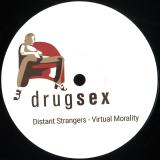
Distant Strangers - Virtual Morality

Originally released in 2005, this standout EP returns as part of the much-anticipated reissue campaign from cult New York imprint Drugsex — a label that quickly became a treasured name among heads who lived and breathed the underground. Born from the creative partnership between UK producers Rob Pearson and Simon Copleston, Drugsex carved out its own raw, hypnotic corner of the international tech house movement.

For the second instalment in the reissue series, label head Rob Pearson teams up with Daniel Poli under their Distant Strangers moniker — a project that, even back then, was whispered about among selectors for its deep, rolling grooves and stripped-back intensity. Both artists had already made their mark with releases on some of the most respected labels of the era — from Rekids and Swag Records to Evasive Records, Rescue Recordings, and beyond.

The pair’s first collaboration, the Lost Souls EP, became a highly limited, in-demand underground gem, pressed in small quantities and played by those in the know. This follow-up, crafted at Online Studios in Croydon, took their sound to the next level — two original tracks built for dancefloors that like things hypnotic, physical and uncompromising.

On the A-side, Virtual Morality is a slick and driving slice of tech house pressure. Crisp percussion, rolling low-end and a subtle but addictive hook make it a peak-time weapon that never goes out of style. Flip it over for Take Us In Deeper — a track that lives up to its name with a shadowy groove, atmospheric layers and a perfectly balanced push and pull that draws dancers further into the late-night haze.

Adding even more weight to the release, Adam Collins — known for his work with Omni AM and Euphoria Records — steps in with a remix of Virtual Morality on B2. His version injects an unmistakable acid edge, elevating the original into a tripped-out, floor-focused burner that fits as comfortably in a basement sweatbox as it does on a sunrise terrace.

Nearly two decades later, these tracks still carry the same raw power and effortless groove that made them cult favourites in the first place. This reissue isn’t just a nod to the past — it’s a reminder of why this sound endures.

No en stock

Haga su pedido ahora y le encargaremos el artículo en nuestro proveedor.

12,40

Ültimo hace: 34 Días
Various - Wizzz! French Psychorama Volume 5 (67-75)

The journey through French-speaking pop archives continues with this fifth volume, packed with fuzz, gimmicks, and dissent. Far from the charts, the selected tracks display a great creative freedom, often backed by corrosive humor. Welcome to the surprising, kaleidoscopic, and colorful world of the late sixties and early seventies, Wizzz!
Born in Montauban, Robert Pico stumbled into music by chance when he met René Vaneste, then artistic director at Pathé-Marconi. René brought him to Paris to record his first 45 RPM EP in 1964. A year later, Pierre Perret introduced him to Vogue, where he recorded his second album with Claude Nougaro’s orchestra. Sylvie Vartan then introduced him to RCA, where he recorded four singles, including the astonishing "Chien Fidèle," a track backed by a hair-rising fuzz guitar. Alongside his solo career, he also composed for other artists like Alain Delon (the song was recorded but remains unreleased), Magali Noël, Bourvil, and Georges Guétary. In the Paris of the sixties, he mingled with Mireille Darc, Elsa Martinelli, Marie Laforêt, France Gall, Françoise Hardy, Petula Clark, Régine, Dani, Serge Gainsbourg, Joe Dassin, Franck Fernandel, Charles Level, and Roland Vincent. Despite his efforts and winning a Grand Prix Sacem for his final record, Robert Pico didn’t achieve the expected success in show business and decided to leave Paris and return to the Southwest, where he devoted himself to writing. He is the author of 23 books (including Delon et Compagnie, Jean-Marc Savary Editions 2025, a memoir about his youth and his many encounters). Today, he is relieved to never have become a celebrity and devotes himself to his work with passion.
In 1969, the Franco-Italian movie Erotissimo was released, directed by Gérard Pirès (who later directed Taxi in 1998, written and produced by Luc Besson). This pop comedy features Annie Girardot, Jean Yanne, Francis Blanche, Serge Gainsbourg, Nicole Croisille, Jacques Martin, and Patrick Topaloff. The soundtrack was written by Michel Polnareff and William Sheller, with lyrics by Jean-Lou Dabadie. "La Femme Faux-cils," performed by Annie Girardot. It recounts the feelings of a rich CEO's wife who seeks to develop her sex appeal under the influence of advertisement and magazines. Groovy, sparkling and light, this track, with ITS lush arrangements humorously critiques consumer society and feminine beauty standards.
“Je suis l’Etat” (1967) is the flagship track of the first EP by singer-songwriter Spauv Georges, aka Georges Larriaga, better known as Jim Larriaga (1941-2022). Born into a family of bakers, the young man was initially planning to become a hairdresser when he discovered English-speaking music through Elvis Presley and the Beatles. After this revelation, he decided he would become a songwriter and gave himself five years to succeed. He recorded his first two EP’s independently for RCA under the pseudonym Spauv Georges; meaning “that poor George”, a nickname given to him by the mother of her friend Jean-Pierre Prévotat (future drummer of the Players, Triangle, or Johnny Hallyday). Portraying a depressed and eccentric young man, Spauv Georges created corrosive and amusing songs that didn’t reach a wide audience, despite a TV appearance with Jean-Christophe Averty.
Supported by his loyal friend and fellow songwriter Jean-Max Rivière, Georges Larriaga met the future singer Carlos in the early '70s, then Sylvie Vartan’s assistant. He wrote songs for Carlos, including the popular "La vie est belle," "Y’a des indiens partout," and "La cantine", which went onto become a huge hit in 1972. He also composed for Claude François (“Anne-Marie”, 1971), Charlotte Julian (“Fleur de province”, 1972), helped launch child singer Roméo (who sold 4 million records), and later wrote the hit "Pas besoin d’éducation sexuelle" (1975) for the young Julie Bataille. In 1971, Jim recorded an album for Disc'Az: “L’univers étrange et fou de Jim Larriaga”, which featured pop gems like “La maison de mon père”.
The story of the song "Zoé" began when Pierre Dorsay, artistic director at Vogue Records, asked Swiss singer and musician Pierre Alain to write a song for a new female singer. The inspiration came when he realized that Zoé (the artist's name) was also the name of France's first atomic battery, created in 1948, which consisted of uranium oxide immersed in heavy water! The lyrics reflect a bubbling energy that must be handled with caution, while the instrumentation echoes this atomic theme, notably with the use of a theremin.
Zoé’s career lasted only as long as a single 45 RPM, but it seems Christine Fontane was the vocalist behind this pseudonym, who is known for several EPs, a good "popcorn" album in 1964, and a handful of children’s singles in the '70s. Regardless, the photograph on the cover is of a different girl entirely.
Later, Pierre Alain continued his career, writing songs for himself, Marie Laforêt, Danièle Licari, Alice Dona, Arlette Zola (3rd place in Eurovision 1982), and achieving multiple gold and platinum records in Canada. Also an inventor with several patents, president of the Romande Academy, and head of the French Alliance in Geneva, he now composes atonal music, books, and poetry. Moreover, he is also the host of "Les Mardis de Pierre Alain" at "Le P'tit Music'Hohl" in Geneva.
Filled with oriental choruses and fuzz guitar, "Fou" is from Jacques Da Sylva's only EP released by Vogue in 1967. Despite the quality of this recording, all traces of this singer disappear after this first effort.
Valentin is a baroque pop singer born in Belgium. He is the songwriter and composer of most of the tracks on his three singles released in the late 60s in Canada. A legend says that he reincarnated himself as Jacky Valentin during the 1970s for a rock'n'roll revival career in Belgium, but his older brother sadly debunked this story. Valentin's first two singles were arranged by Claude Rogen, a Parisian session pianist who had come to Canada to promote the song “Mister A Gogo”, a cover of David Bowie’s “Laughing Gnome”, adapted by singer Delphine, his wife at the time. Far from his usual network, Claude Rogen arranged music for Polydor, including the arrangements for “Je suis un vagabond” in 1969, a jerk tune with string arrangements and a furious optimism.
Jacques Malia wrote, composed, and recorded his only 45 EP for Festival in 1966. “Histoire de gitan” is an incredible beat track with bohemian scat that tells the story of a gypsy musician who came to Paris to make it in the Music-Hall, to no avail. The hero of the song and its author probably shared a similar fate, as Jacques Malia faded into anonymity after this remarkable attempt.
Bernard Jamet recorded two EPs for Barclay in the late sixties and co-wrote several songs with Christine Pilzer, Pascal Danel, and prolific songwriters Michel Delancray and Mya Simile. The track “Raison Légale” (1968), his masterpiece, immerses the listener in a courtroom right when a murderer is being judged, with jerk rhythm and free arrangements. A unique, paranoid, judicial, and psychedelic oddity.
Jean-Pierre Lebrot-Millers started his career in show business in 1967 as a singer and songwriter for the Philips label. After three singles, he wrote several songs of a new kind with his friend Pierre Halioche, in the midst of the sexual liberation movement and the democratization of drugs. With provocative lyrics, “Les filles du hasard” and “Barbara au Chapeau Rose” were released on a Philips singles in 1968. The character of Barbara was inspired by a queen of Parisian nightlife during the psychedelic years: model Charlotte Martin, who dated Eric Clapton from 1965 to 1968, then Jimmy Page from 1970 to 1983. Jean-Claude Petit’s arrangements, with a table-filled intro, soul brass, and Hendrixian guitar, emphasize the flamboyance of a hedonistic and sexy character, whose dog is named Junkie because “Junkie est un nom exquis”! The track was recorded live in three takes with a full orchestra.
Upon its release, the record was censored by Europe 1 and RTL due to its references to drug use. Jean-Pierre Lebrot was then banned from the airwaves and later dismissed by his record label. He changed his artist name to Jean-Pierre Millers, while his companion Pierre Halioche became D. Dolby for a new dreamy composition, “Chilla”, which Jean-Pierre produced himself with arrangements by Jean Musy. Once again, the song was immediately censored everywhere. After this setback, he decided to stop singing and started taking on odd jobs to support his Swedish wife and their son until the day he met Jean-Pierre Martin, then production manager at Decca, who had worked with Manu Dibango. Martin offered Jean-Pierre Lebrot-Millers, then employed at Rank Xerox, the position of artistic director at Decca. He accepted and became, a year later, promotion director (radio, press, TV). He worked on Julio Iglesias’s first album for Decca, which became a massive hit and allowed him to meet Claude Carrère. The latter asked him to write new songs and find their performers, much like a “talent scout.” It’s through him that Jean-Pierre discovered Julie Pietri and Corinne Hermès. He composed “Ma Pompadour” for Ringo, Sheila’s husband, and took the microphone again for the syncope hit “Rendez-Vous” in 1982.
That same year, Jean-Pierre Lebrot-Millers tried to release a track for which he had heavily gone into debt: “Si la vie est un cadeau”. Having recorded it in London, he presented it to numerous professionals, all of whom refused to get involved. The same thing happened with Antenne 2 and the Sacem when he proposed the song as France’s entry for Eurovision. He then met Haïm Saban, who was producing cartoon soundtracks and had just launched the Goldorak theme song. Saban, having listened to the song, declared it had the potential to become a hit. He sent Jean-Pierre and Corinne Hermès to meet the CEO of the Luxembourg radio and television network. The latter received them, asked to hear a verse and chorus a cappella in his office, and immediately hired them to represent Luxembourg at Eurovision 1983. They reworked the arrangements and recorded a new version with Haïm Saban as co-producer. The song ended up winning Eurovision 1983, a great comeback for our hero. He continued producing and hung out with the band Nacash in Belgium when a couple came to introduce their daughter for an impromptu audition in a hotel room. The girl sang “Les démons de minuit” while dancing to a radio cassette. Impressed, he had her take singing lessons for a year and composed a song for her (for which he had the melody and title, but no lyrics). This required him to go on the hunt for a lyricist, who ended up being Guy Carlier. They recorded the song, which was initially a ballad, at Bernard Estardy’s CBE studio, and gave the singer a new name: Melody. They showed the song around their industry network without success. Later, Estardy called Jean-Pierre to suggest changing the rhythm and making it pop-rock. Orlando, Dalida’s brother, liked the result and decided to co-produce the track. “Y’a pas que les grands qui rêvent » became a classic hit. The song has since been covered by Juliette Armanet (as a ballad, like the original) and Valentina.

Born into an aristocratic Breton family, Hervé Mettais-Cartier worked as a DJ at Queen Kiss, a nightclub in Poitiers, where he formed the band Les Concentrés with Michel (an actor) and Christian (a radio technician). Together, they created a repertoire of whimsical songs (“Ma bique est morte”, “J’suis un salaud”, “Fils de dégénéré”...) that they performed on stage dressed in white (in homage to “concentrated milk”). They performed at Bliboquet and Olympia in 1968 for the 10th edition of the “Relais de la chanson Française” organized by L’Humanité-Dimanche and Nous les Garçons et les Filles, sponsored by Pepsi Cola. Winners in the author-composer category, alongside Danish singer Dorte, their visibility allowed them to record a 45, and appear on television in Jean-Christophe Averty’s show. The A-side of the disc features Bruno le ravageur, a casatchok dedicated to Bruno Caquatrix, the director of Olympia, nicknamed in the song “Coq Atroce” or “croque-actrices”. The B-side is dedicated to “Fils de dégénéré”, a quirky tribute to Hervé's aristocratic roots, mixing absurdity with sophisticated vocal harmonies.
After Les Concentrés, Hervé Mettais-Cartier formed the duo La Paire et sa Bêtise with his friend Olivier Robert. They performed in Parisian cabarets and toured with Pierre Vassiliu. In the late 1970s, Hervé began a solo career. He recorded two albums for the Motors label in 1978 and 1979, which did not achieve their anticipated success due to lack of promotion. In 1980, he met Bernadette, with whom he started a family and created a “Chansons à voir” (songs to see) show that he performed until his death at the end of 2024.

Publicité comes from the final EP by the Missiles (Ducretet Thomson, 1966), a disc that also includes “La (nouvelle) guerre de cent ans”, featured on Volume 4 of our Wizzz! series. Please refer to the booklet for the story of the band.

“He’s 1.82 meters tall, 28 years old, weighs 135 kg, is black and Belgian”: this is the description of singer Hegesippe on the back of his sole single (Decca, 1967). He appears on the album cover wearing a Greek toga, like a hippie gag – we are at the end of the year 1967. In “Le crédo d’Hegesippe”, this former bodyguard of Antoine and the Charlots plays the delightful card of the thick brute converted to Flower-Power and non-violence, with arrangements by Jean-Daniel Mercier, aka Paul Mille.
“Ethéro-disco” was released on a promotional record for clients of the Maréchal company (Liège, Belgium) for the New Year 1979. Over a funky rhythm, celebrity impersonations (Brigitte Bardot, Jacques Dutronc, Fernandel…) deliver an enigmatic text about pharmaceutical products like ether, bismuth, and aspartate. The track was composed by Dan Sarravah (responsible for Joanna's “Hold-up inusité” featured on Wizzz! Volume 3) and Tony Talado, who was also a singer (one 45 in 1967), songwriter (with over a dozen credits between 1964 and 1985 in various styles from surf music to disco), author (Devenez Végétarien, Dricot Editions, 1985), ad designer, and psychologist.

Décollez-les is on the A-side of Mamlouk's only single, a pseudonym for Marsel Hurten, who is known for his work on several EPs in the late sixties, as well as composing music for Hervé Vilard’s “Capri, c’est fini”, Claude Channes' “La Haine”, Annie Philippe’s “On m’a toujours dit”, and Nancy Holloway’s “Panne de Cœur”.
This strange song, with Afrobeat horns and absurd dialogues between a chef and his kitchen staff, is the result of a collaboration between Marsel Hurten and one of his neighbors, a photographer from Pavillon-sous-Bois (93), where the musician settled after returning from the Algerian War. A music video was shot to promote the record.
Marsel Hurten was born in Tourcoing (59) into a musical family. At a young age, he joined the brass band founded by his grandfather, playing the piston before studying trumpet at the conservatory, as well as teaching himself how to play the guitar. As an orchestra musician, he toured in France, Belgium, Germany, and England. He released a series of solo 45’s between 1965 and 1968 for the DMF and Az labels before stopping recording to focus on working for other artists (Gilles Olivier, Noëlle Cordier…).
“L’amour nu” (Vogue, 1971) is the work of the short-lived Belgian band Mozaïque. The track, written by singer Jacques Albin, closely resembles another of his compositions, “Carré Blanc”, which he recorded in 1969 for Disc’AZ.
Represented by the Lumi Son micro-label based in Marignane (Côte d'Azur), Jean-Marc Garrigues released two 45 RPMs in the late sixties, defending the French jerk sound. The song “Je dis Non” is a short, joyful ode to youth, pop music, and rebellion.
Songwriter and performer Jacques Penuel released three singles. The first one, “Astronef 328” (Fontana, 1969), features a dizzying series of chords punctuated by sound effects, a sci-fi story, and arrangements by Jean-Claude Vannier.

We would like to sincerely thank Pierre Alain, Moon Blaha, Marsel Hurten, Bastien Larriaga, Jean-Pierre Lebrot-Millers, Bernadette Mettais-Cartier, Robert Pico, Olivier Robert, Claude Rogen, Micky Segura.

No en stock

Haga su pedido ahora y le encargaremos el artículo en nuestro proveedor.

23,11

Ültimo hace: 3 Meses
BUNDLE OF HISS - AUDIO DESIGN SESSIONS: 1987-1988
  • Swamp
  • Sleep No More
  • Amphetamine
  • White
  • Drown
  • What Dreams May Come
  • Rabies
  • Strobe
  • 12: Gauge

This release resurrects a long-lost cornerstone of Seattle's early grunge history, showcasing Bundle of Hiss, featuring future Mudhoney and TAD guys and singer Jamie lane, one of the genre's missing links. Between 1986 and 1988, when Seattle was still a circuit of small clubs, four-track tapes and bands sharing drummers and singers, Jack Endino went in to record one of the most solid - and most unfairly invisible - outfits of that scene: BUNDLE OF HISS. Two sessions (1986 at Reciprocal and 1987/88 at Audio Design) fell into limbo, stored in the basement of Mudhoney-Drummer Dan Peters and for years they were a kind of pre-grunge legend, everyone knew they existed, but there was no record, until Loveless Records from NYC released both on CD. The second one, Audio Design Sessions, now sees the light of vinyl for the first time, just as it should have come out in the late '80s: a basement document turned into a collectible artifact. For those who want real grunge, not the domesticated version. It gathers the core of those 1987-1988 recordings done by Endino: the moment when the band is tighter, darker and closer to what the press would later call the "Seattle sound": minor-key melodies, thick fuzz, vocals on the edge, and that mix of hard rock, punk and Sabbath-like heaviness we'd later hear in Mudhoney, TAD or early Soundgarden. And Jack Endino himself summed up these sessions: "Vintage Seattle grunge from one of the original practitioners_ I always felt sad that this hard-working band never managed to get a record out and was almost lost to history. It was a pleasure -and a technical pain!- to resurrect all this." Kinda key release of the early grunge days, first-generation material, recorded by the scene's producer, at the exact moment Seattle was shifting from noisy punk to that heavy, shadowy rock that later blew up. It sounds raw, young and dangerous: this is not a polished compilation, it's a snapshot of the scene.

Reservar30.01.2026

debe ser publicado en 30.01.2026

23,49
NOOTHGRUSH - KASHYYK LP
  • 1: Gage
  • 2: Sith
  • 3: Dianoga
  • 4: Imperial March / Alderaan
  • 5: Jundland Wastes
  • 6: Bric-A-Brac
  • 7: Gage (1996 Demo Version)

Kashyyyk was originally released in late 1995. Each copy was recorded onto a blank cassette, almost never new. We'd find boxes of tapes at flea markets and dub the demo over one side of them. Never knew what was on the other side. The collage on the cover evolved over time. Early copies had a sparse cover and later copies had a cover collages like this one. The text also changed over time. Edits were made, the thanks list grew, and the address changed. The text on this rereleases is the same as the last copies made in the '90s, with only tiny changes. Three of these songs were recorded in August of 1995 and originally released as the 8D8 demo. We made an unknown number of copies before we recorded again with Matt on guitar. We added our three new songs to the old and named the demo demo after Chewbacca's home planet. The other collages were put together specifically for this 30th anniversary release. Bonus track: Gage recorded January 19, 1996. This is the original version with Matt on vocals. Gary re-recorded the vocals before it was released on Cry Now Cry Later vol. 4.”—Noothgrush

Reservar30.01.2026

debe ser publicado en 30.01.2026

28,78
Artículos por página
N/ABPM
Vinyl