repressed !
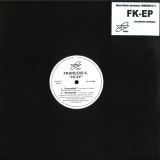
Francois Kevorkian is a name that should need no introduction. With over 40 years in the game FK has occupied numerous roles in his long and storied career - drummer, DJ, A&R man, remixer and producer - his skills know no boundaries. Having DJ-ed during the nascent days of club culture in NYC alongside Walter Gibbons, Larry Levan and more, Kevorkian has been there from day one. Years spent in the seminal clubs of the day sharpened his ears and his prowess behind the mixing desk saw him become the A&R man at the legendary Prelude records in the early 80's, this in turn led to him working with everyone from The Eurythmics, Depeche Mode, Erasure, D-Train, Yazoo, The Smiths, Kraftwerk and many many more. A true NYC original and legend, Kevorkian is still active today and the respect he commands amongst his peers has never waned, his adventurous extended DJ sets, seminal mixes and remixes and his open ears and open mind have ensured that he will go down in history as a musical pioneer.
Rewind to 1995. Kevorkian's 'Wave Music' imprint has come into existence with a handful of releases. No-one could imagine that his self-produced 'FK EP' - the next release on the label - would be a stone cold classic. Easily one of the most consistent, exciting and solid EP's to come out of NYC during this golden era of dance music. Across 4 tracks we are taken on a sound journey through a world that is undoubtedly informed by FK's time as an engineer, DJ and most importantly, a music lover.
EP opener 'Hypnodelic' brings us into this world, a deep, driving cut that fuses the dubbed out vocals of Freddie Turner against FK's keyboards and immaculate drum programming, oozing cosmic electronic soul, this track was destined to be a future classic. 'Mindspeak' also boasts some tough drums and with a respectful nod to Chicago is an incredibly mixed and arranged peak-time cut that will drive your dancefloor into deep space again and again. 'Edge Of Time' welcomes us to the flipside of the EP, wild Latin percussions, tablas and old school horn stabs drive this monstrous cut, not to mention cavernous dub FX and that huge bassline that just doesn't let up. Essential. 'Moov' rounds things out on a more subdued, stripped back vibe. Reversed percussions and spaced-out synth chords lace this beautifully understated and warm track, one that builds into a crescendo of melodies and hypnotic rhythms and the perfect way to close what has been a truly special musical journey.
This essential reissue of the 'FK EP' has been fully licensed, sanctioned and remastered in conjunction with FK from the original master sources by Optimum Mastering, Bristol UK, repressed onto high quality vinyl and packaged as the 1995 release was. A truly classic record indeed, available again for 2018. Welcome back Wave Music!
Cerca:latin drummer
Tip on sleeve.
Latin Grammy-Winning Producer Pupillo Unites Global
Artists on his new album
Co-produced by Mario Caldato Jr. (Beastie Boys), featuring collaborations with Rodrigo
Amarante, Carminho, Adrian Younge, Gaslamp Killer, Cut Chemist, Hervé Salters, and more
Drummer, percussionist and producer Pupillo, one of the most influential figures in Brazilian
music and a four-time Latin Grammy winner, releases his first original album through the Los
Angeles–based label Amor in Sound. The record brings together an impressive and diverse
group of collaborators from Brazil and abroad. Amor in Sound is run by Samantha Caldato,
the project’s executive producer and creative director, and Mario Caldato Jr. (Beastie Boys),
who co-produced the album alongside Pupillo. The project was developed in a free,
experimental environment, allowing the artist to explore the many rhythmic and sonic
territories that have shaped his career — from Northeastern Brazilian traditions to jazz, hip
hop, and cinematic soundscapes. Listen here.
The album features special appearances by Brazilian artists such as Céu, Rodrigo Amarante,
Agnes Nunes, Amaro Freitas, Davi Moraes, Alberto Continentino and Pedro Martins,
alongside a strong roster of international collaborators, including Carminho, Gaslamp Killer,
Loren Oden, Adrian Younge, Cut Chemist and Hervé Salters (known for his work with
General Elektriks). The album’s 12 tracks were further enriched by contributions from
Jeremy Gustin, Roberto Schilling, and other musicians who make Amor in Sound Studios in
Los Angeles a place of creative exchange.
Beyond his work as the drummer of Nação Zumbi, Pupillo has built a prolific career as a
producer and collaborator with some of the most important names in Brazilian music,
including Gal Costa, Nando Reis, Erasmo Carlos, Céu, and Otto, helping to shape the sound
of multiple generations. This trajectory has earned him four Latin Grammy Awards.
From Pernambuco, Pupillo is also an acclaimed composer for cinema, having written
soundtracks for films such as Arido Movie and Blue Blood (directed by Lirio Ferreira), The
Assailant (directed by João Daniel Tikhomiroff), among others. This cinematic sensibility
permeates the album, which unfolds like a film, moving through richly textured soundscapes
that cross continents and musical traditions.
Gap Mangione's monumentally influential Diana In The Autumn Wind. AKA BEWITH200LP. And, without question, Be With's White Whale.
They said it could never be done. And with good reason.
We've spent the past 12 years trying to license this legendary 1968 recording from Gap and, after much work, it's finally here. Remarkably, this is the first ever vinyl reissue of Gap Mangione's Diana In The Autumn Wind, produced with the full and extensive participation of Gap. An exceedingly rare album, it's been coveted by funk, soul, jazz and hip-hop sample fiends for decades.
It's unarguably *the* most sought after album for J Dilla / Madlib sample collectors. It has also been brilliantly sampled by A Tribe Called Quest, Large Professor, Ghostface Killah, Kendrick Lamar and Talib Kweli.
But this record is so much more than a sample-spotters curio. It's solid gold throughout. Bursting with killer funky-jazz grooves and tracks adorned with warm electric piano, the release is notable for featuring some extremely significant players at the very outset of their careers; Tony Levin, at 21, whose superb playing on both acoustic and electric bass was the harmonic mainstay of the trio and Steve Gadd, at 23, one of the greatest drummers of his generation.
With acceptable copies of this holy grail changing hands for $400, to call this reissue "much-needed" underplays just how vital it is. Gap's story is told in his words alongside rare photos across a sumptuously designed 2-page insert and, to augment this deluxe edition further, its all wrapped up in a beautiful, no-expense-spared luxury tip-on sleeve, as per the original hens-teeth release. And, while we're talking packaging, just take a look at that cover - a work of art in and of itself.
The tracks are short but complex, with that extraordinary rhythm section backing the beautiful piano, organ and electric piano work of Gap. It's like the best ever library funk breaks record you never heard - but all your favourite golden age rap producers were all over it, long ago. It's a stunning blend of the vibrant, driving music of the Gap Mangione Trio coupled with the sensitive composition and superb orchestration of Gap's legendary brother, Chuck Mangione, who helmed an amalgam of seemingly disparate elements – rock, big band jazz, solo improvisation and "classical" music - into a spectacularly cohesive whole that has aged wonderfully well. As Gap himself notes in the liners, "with this group I was able to explore and add new and exciting elements from rock, Brazilian and then-current pop music."
Opener "Boy With Toys" triumphantly swaggers out the gate, all big band horns, flutes and dextrous organ work. The synthesis of everything going on is nothing short of stunning. When one wise YouTube commentator called this tune "old school superhero music", Gap agreed. Rap luminaries did, too, amongst them Talib Kweli, who rapped over DJ Scratch's chopped up intro for "Shock Body" on his Quality album back in 2002.
You've barely recovered from that incredibly affecting opener when you get hit over the head with the exquisite title-track. And now you see how two of the greatest beats of all time emerged from one single track produced nearly 50 years earlier. Unforgettably utilised by Dilla for Slum Village's heartbreakingly good "Fall In Love" and then Madlib for his "Official" beat for Dilla to rap over, on the Jaylib record. Regardless of the records it went on to spawn, this is just a staggering tune in its own right. Be beguiled by the flutes and the flutter tonguing, the counter-melody from the trombones, the soprano sax solo. All of it. Simply beautiful.
The questing organ and horn workout "Long Hair Soulful" deserves a lot more attention, overshadowed somewhat by the opening two monsters but no less fantastic. It swings, it grooves and Gadd and Levin truly cook. Up next, Gap's wonderfully percussive, mellifluously piano-heavy cover of "Yesterday" by some fellas called The Beatles. It's a subtly arresting gem. "The XIth Commandment" is damn fine, with thick, gorgeous electric piano and snappy drum work underpinning chaotic soundtracky horns. To close out the side, "St. Thomas" showcases the "fourth" member of the Gap Mangione Trio, conga drummer Dhui Mandingo. Having performed with the Trio since 1965, Dhui‘s African-based and jazz-latin-influenced style amazed listeners and its way to hear why.
Opening the B-Side, standard "You're Nobody Till Somebody Loves You" breezes along in the late-night jazz club fashion before things get super deep with the outstanding and - up to now - un-sampled "Pond With Swans". It's simply heavenly, and how its moody, melancholic intro has yet to be pilfered is anybody's guess. It oscillates between gentle, sombre movements and bombastic grooves, equally hypnotic and joyous. The rendition of "You Are My Sunshine" is yet another showcase for Gap's virtuoso playing and Gadd's mastery of the pocket. Indeed Gadd's drumming on "Free Again" is nothing short of neck-SNAPPING! Ghostface took it for not one but two "Iron's Theme" tracks across his seminal Supreme Clientele. It's got that Galt MacDermot "Coffee Cold" feel. Suuuuuper cool. The frantic "Dream On Little Dreamer" hurtles along and must've surely had the whole room absolutely swinging from the chandeliers back in Rochester in the late 60s. The album closes with the magnificent Graduate Medley, featuring memorable renditions of "Scarborough Fair", "The Sounds of Silence" and "Mrs. Robinson". The warm electric piano lines of the former were sampled by The Ummah (Dilla again!) for Tribe's "Pad & Pen" from their reappraised final album, The Love Movement, as well as by Large Professor on his much-loved "The LP (For My People)".
Under the watchful eye - and extremely attentive ears - of Gap Mangione himself, the audio for Diana In The Autumn Wind has been carefully remastered by Be With regular Simon Francis, with a few much needed tweaks here and there, according to the artist's wishes. At the prestigious Abbey Road Studios, Cicely Balston's expert skills have made sure nothing is lost in the cut whilst the records have been pressed to the highest possible standard at the always stellar Record Industry in Holland. The artwork restoration has taken place here at Be With HQ and has that drop-dead gorgeous cover artwork popping like new. Buy on sight!
- 01: Expreso Ritmico
- 02: Mi Conga Es La Que Es
- 03: Tambo Iya
- 04: Yeya Son
- 05: De Mis Razones
- 01: La 132
- 02: Este Tumbao
- 03: Mas No Me Falta Fe
- 04: Que La Tristeza Se Fue
- 05: Te Quedas
Next up in our Cuban Classics series, one of the jewels of record label Areito’s extensive and sought-after catalogue. Ricardo Eddy Martinez’s Expreso Ritmico from 1978 is a prized album fusing funk, disco, and orchestrated influences with Afro-Cuban percussion, Latin breaks, and lush vocal harmonies.
Whilst maintaining its distinctive Cuban identity, Expreso Ritmico is one of the more American / Western-influenced Cuban titles of the time drawing inspiration from jazz funk, disco, and library music. The album was directed, written, and orchestrated by keyboardist and drummer Ricardo Eddy Martinez, who was also the mastermind behind the orchestration of the Los Reyes 73 album (that was recently reissued by Mr Bongo). Martinez would later go on to work with international musicians and singers such as Gloria Estefan, José Feliciano, Chick Corea, and many more, whilst also working as a sound engineer in the US.
Produced by Adolfo Pichardo, who worked on much of Areito’s output, Expreso Ritmico is packed with gold. The opening title track carries a loose, breezy Latin-disco-funk vibe that breaks into a brilliant Afro-Cuban workout. ‘Que La Tristeza Se Fue’ was expertly sampled and looped by Jazzanova on their 2008 song ‘Look What You Are Doing To Me, featuring Phonte from the hip hop group Little Brother. Elsewhere, ‘Tambo Iya’ has an Afro-funk, Soul Makossa-esque groove, while tracks such as ‘Te Quedas’, ‘Mi Conga Es La Que Es’ and ‘La 132’ run with a heavy pulsating Latin-funk sound. Head to the sultry psych funk of ‘Este Tumbao’ for a spacey journey that blends and morphs through genres.
Source of an all-time 'Breaks and Beats' classic, Mr Bongo reissue Herman Kelly’s timeless 1978 album Percussion Explosion!. Immortalised in hip-hop folklore, when the anthemic 'Dance To The Drummer's Beat’ was featured on the influential Ultimate Breaks & Beats compilation series in 1986.
Percussion Explosion! was the brainchild of drummer, percussionist, producer and arranger, Herman Kelly and his percussive disco-funk group from Miami, 'Life', that featured Aaron McCarthy, Oliver Well, John DeMonica, Michal Cordoza and Travis Biggs. The album houses a collection of disco, funk and Latin-inspired cuts that were destined for greatness. Nestled within the grooves is the B-Boy and B-Girl’s anthem, 'Dance To The Drummer's Beat’, which contains a now legendary break. A cursory glance at Whosampled will show that it has been sampled in over 125+ songs. These include Double Dee & Steinski on their groundbreaking 1985 production 'Lesson 3 (History Of Hip Hop Mix)', as well as by DJ Shadow, N.W.A, Masters At Work, Run D.M.C. and a whole host of heavyweights across hip-hop, dance and pop music.
When the album was released in 1978 it came out on two different labels, Alston Records and Electric Cat. Each label pressed different versions of 'Dance To The Drummer's Beat’, with the former featuring a 4:12 version and the latter a longer 5:09 version that has a different structure, crowd noise at the start and overdubbed percussion.
For this Mr Bongo reissue, we have chosen the classic 4:12 version from the Alston Records release, which would later find its way on to the illustrious Ultimate Breaks & Beats compilation. To make matters even more confusing the Alston version art on the back cover also states the track length as 5:09, whilst the centre label lists it correctly as 4:12.
Aside from the much celebrated 'Dance To The Drummer's Beat’, the album includes a range of other fantastic overlooked cuts. From the percussive soul stepper 'Share Your Love', to the beautiful Latin-flavoured 'A Refreshing Love' or the party disco-funk groover 'Who's The Funky D.J.?'.
This wonderful and inspirational record features an important piece of hip-hop heritage and deserves a place in every collection.
2024 Repress
Lars Huismann is back on Mutual Rytm with the much-anticipated third volume of his 'Sounds From The Past' trilogy.
A core part of SHDW & Obscure Shape's ever more crucial Mutual Rytm imprint thanks to his timeless techno offerings as part of his ongoing 'Sounds From The Past' series, Berlin-based DJ/producer Lars Huismann's stock continues to rise release by release as a talent merging influences from the past with forward-thinking nuances of the future. Drawing on the early 2000 techno sound, he embellishes it with his own perspective, as evidenced by his earlier releases on the label. This latest six-track offering is another accomplished outing from this unique talent as he concludes the three-part series on the label in style.
The title track 'Sound From The Past III' opens up with a finely filtered chord groove that provides a smooth and hypnotising foundation. A subtle bassline, buoyant kick drums, and embedded vocal patterns harmonise with the synths, unveiling a smooth linear groove that soon sweeps you up.
'Fusion' brings more intensity with its barreling drum kicks, a dirty driving bassline, and melodies flashing by like headlights on an intergalactic motorway, with the overhanging pent-up energy inescapable. Next, 'Shimmer' rides on vast, heavy layered drums that are warm, and comforting as the track travels through a journey of diverse dub techno elements.
Like in 'Loucura', taken from 'Sounds From The Past II', Lars again showcases his strong influences from Brazilian and Latin music. On 'Estar Farto', the drums and bass are tightly interwoven, racing beneath bright and funky synth lines that bring ever-evolving shades of colour. A jazz drummer himself, the music transports into the groove via intelligent brass chord progressions and fine-tuned vocal and percussion elements.
It's straight dance floor business on the closing vinyl production 'Bittersweet', with its muted synth smears darting over more macho drum programming, while digital bonus 'Dusty Lick' is an unrelenting, jazzy, percussion-driven banger that hits hard and heavy in all the right places.
Jackie Mittoo is one of the most important artists in the history of Jamaican music. As founding member of the legendary Skatalites, as in-house arranger/producer at Studio One and as a solo artist in his own right leading groups such as The Soul Brothers, Sound Dimension and Soul Vendors.
These classic and rare recordings were made in the mid 1960's at Studio One. The Soul Brothers bridged the gap between Ska and the arrival of Rocksteady mixing it all up with Funk, Jazz and Latin styles. The Soul Brothers recorded at Studio One between 1965-1967. This was the transitionary period between Ska and Rocksteady where the music was a mixture of Funk, Latin and Jazz sometimes with a reminder of Ska and the hint of Rocksteady.
The previous era of Ska had been dominated by the Skatalites, the first in-house band at Studio One who created classic hits such as "Guns of Navaronne", "Man in the Street", "El Pussy Cat" and many more. Unfortunately the strong personalities in the group meant that The Skatalites stayed together for less than two years. It was also around this time that the mentally unwell Don Drummond was arrested for the murder of his girlfriend, the dancer Margerita.
In August 1965, barely a week after the demise of the original Skatalites, The Soul Brothers (featuring ex-Skatalites members Jackie Mittoo, Roland Alphonso, Johnny Moore and Lloyd Brevitt) were up and running as the new house band at Studio One.
The Soul Brothers were essentially a collective, releasing material under their own name or under a nominal leader (usually Jackie Mittoo or Rolando Alphonso). The group line-up changed over time with Bobby Ellis (trumpet), Bryan Atkinson (bass), Dennis Campbell (Sax), Harry Haughton (guitarist) and Joe Isaacs (drummer) replacing various members alongside the ever present Jackie Mittoo.
REVIEWS
"Jackie Mittoo was a true star of Jamaican music; a founder member of The Skatalites, a prolific composer and the keyboard powerhouse behind many a classic tune. His simple, often hypnotic approach, to ska, rocksteady and reggae made him one of the most distinctive sounding musicians of the era." BBC.
"Jackie Mittoo was one of the great names in Jamaican music, manning the keyboards for the Skatalites, the Soul Vendors, and Sound Dimension-- three of the greatest house bands of the 60's
(and I mean anywhere, not just in Jamaica)." PITCHFORK.
The gifted Puerto Rican-American drummer and percussionist Willie Bobo was one of the architects of Latin Jazz. Following mentorship from Machito and Mongo Santamaria, Bobo played with Tito Puente, Cal Tjader, and Herbie Mann, before going solo. Bobo’s Beat is a sure-fire winner from 1962 with excellent support from trumpeter Clark Terry, saxophonist Joe Farrell and keyboardist Frank Anderson, a fully three-dimensional set with fine jazz nuances. It shows that Bobo never accepted less than the best from his counterparts, and there are some bossa nova covers mixed in with the driving Latin originals too. An essential work!
repressed !
From samba and bossa nova through to baile funk, with carioca expressions of jazz, rock and hip hop in between, the sound of Rio de Janeiro, while continually evolving, has always held an unnameable quality which reflects the magic and mystique of the city itself. Multi-instrumentalist and arranger Antonio Neves is the city’s newest trailblazer: the enfant-terrible of Rio’s music scene, leading a vital and diverse constellation of both emerging and well-known artists advancing the city’s musical legacy.
“It all started one sleepless night, after watching a Quincy Jones documentary”. Inspired by the legendary music magnate, Neves began writing a list of artists residing in Rio de Janeiro “people that I admire, that I consider geniuses of their instruments, who share with me affinities, anxieties and projects.” The list included some of Brazil’s most revered living musicians who Neves has worked with in recent years: Hamilton de Holanda, Leo Gandelman and Dorival Caymmi. Neves also called on some of Brazil's most exciting emerging talents including Alice Cayymii and Ana Frango Eletrico.
A Pegada Agora É Essa (The Sway Now) is Neves’ second album: a vibrant portrait of the current Brazilian music scene. From the regional to universal, popular to erudite, samba to rap, Latin rhythms to jazz, MPB and pop to good old rock'n'roll, Neves walks with fluency and mastery amongst all the musical genres that Brazil has to offer.
“My offer to the musicians was complete freedom to express themselves through the songs I proposed – classics like “Summertime”, “Luz Negra” and “Noite de Temporal”, and compositions of my own – creating a space of authorship for the band and the guests. A space for inventions, purges, delusions, laughter. The idea was to bring the freedom of jazz crossed by Brazilian rhythms, such as the traditionals Partido Alto (A Pegada Agora É Essa) and Jongo (Jongo no Feudo and Luz Negra); rhythms of African-Brazilian religions like Candomblé (Noite de Temporal) and Umbanda (Forte Apache); and a tribute to newest Rio de Janeiro’s contribution to Brazilian music, the Funk Carioca (Simba)”.
Coming from a musical family, Antonio’s father, Eduardo Neves, was a renowned conductor and a professor at Juilliard School of Music and the California Jazz Conservatory. In the bohemian neighbourhood of Lapa, aged 14, Antonio began his career as a drummer, before experimenting with brass. He would soon become a skilled trombonist and arranger achieving the recognition of his teachers and peers. It wasn’t long before he would be playing with some of the biggest names in Brazilian music, such as Hamilton de Holanda, Leo Gandelman, Moreno Veloso, Kassin and Elza Soares.
His debut album as a trombonist was PA7 (2017, Rock It), released at the same time he was travelling the world playing with artists like Moreno Veloso, Kassin and Leo Gandelman, and recording the albums Jobim, Orquestra e Convidados (2017, Biscoito Fino), with Mário Adnet and Paulo Jobim; and Elza Soares Canta e Chora Lupi (2017, Coqueiro Verde Records). More recently, Neves was the arranger for the acclaimed Little Electric Chicken Heart album, by Ana Frango Elétrico, which has been nominated for a Latin Grammy and voted 2019’s ‘Brazilian Music Revelation’ by The Art Critics Association of São Paulo.
RIYL: Toro y Moi, Helado Negro, Rosalía, Tame Impala, Cuco.
Follow up to their 2019 breakout ‘Foam,’ of which Pitchfork said “Foam demonstrates that it’s possible to draw from everywhere, without sounding quite like anything else.” Lead to tours supporting Durand Jones & The Indications, Belle & Sebastian, Chicano Batman, Crumb, Innerwave, and festival appearances at Pitchfork Festival Chicago and Primavera Sound LA. ‘Last Spa on Earth’ is wildly unique and creative music, mixing the sounds of Indie, Electronic, Drum & Bass, Reggaeton, Latin Hip Hop, and more to create a sound all to their own. Divino Niño are no strangers to bold reinvention. When Camilo Medina and Javier Forero friends whose bond dates back to their childhoods in Bogotá, Colombia moved to Chicago and recruited guitarist Guillermo Rodriguez to form a band, they were psych-pop outsiders playing live shows with a drum machine. With the addition of drummer Pierce Codina, their 2019 breakthrough and debut LP for Winspear, Foam, solidified their place as local indie rock mainstays. Soon after, multi-instrumentalist Justin Vittori joined to round out their lineup. Once again, with their masterful, unpredictable, and eminently danceable new album, the band has done something radical: They totally upended the way they write songs, eschewing practice room jams for unrelentingly collaborative beats, implied grooves for immersive dance floor heaters, and mellow vibes for frenetic doses of reggaeton, electropop, and trap on their most adventurous and ambitious work to date. Welcome to the Last Spa on Earth. Written and recorded over the past two years, Last Spa on Earth deals in release and catharsis: confronting your darkest moments and coming out better for it. The album artwork, done by Medina, a longstanding visual artist, depicts a dreamy, yet graffiti-tagged spa, void of physical bodies so listeners can envision themselves in this unique environment. It represents the yin and yang approach Divino Niño took while creating the album: the serenity of the spa and the chaos of the party. Ultimately, the band’s desire is to provide healing in the same way one feels after sweating, shivering, stretching, and resting at the spa against the backdrop of the world’s darkness. Last Spa on Earth is the cathartic product of Divino Niño letting go of their musical preconceptions, past traumas, and future anxieties to embrace change, chaos, and each other’s contributions both to these songs and to each other. Track Listing: 01. LSE 02. Nos Soltamos 03. Tu Tonto 04. XO 05. Toy Premiado 06. Ecstasy 07. Drive 08. Miami 09. Mona 10. Especial 11. Papelito 12. I Am Nobody
Lee Burridges’ All Day I Dream Presents Jim Rider’s Fantastic New EP, The Final Straw
The UK-Producer Revives the Labels’ Heavier Melodic Sensibilities Across 4-Originals
The title track opens an EP led by intention, accenting a time in the producer’s life where he was disillusioned with his day job and intent on pursuing music full time once again. “The Final Straw'' includes a romantic, husky narrative delivered by Namibian vocalist “Black Soda” (AKA Annely Ickua). Here we find him pulling from his musical upbringing - melodic elements afforded to him by his Mother, a folk musician and singer, and his focus on percussion fueled by his background as a drummer.
“Rascals” is a follow up to “Fools” from Jim’s 2021 Beatport category #1 EP “Popcorn & Politics”. It pays homage to the classic 1950s American TV show “Little Rascals” with eccentric keys and playful percussion alongside dazzling, eccentric elements from keys to tropical-inspired marimbas. “Los Que Caen,” as the name suggests, is inspired by Rider’s love of latin music and percussion and includes a heavy bass guitar riff, bouncy synths and a harp-led rhythm section. EP closer “The Cypriot” blends lead flute lines with plucky synths and a driving bassline while sporadic haunting vocal ad-libs and delayed keys add decoration to the track.
After more than 30 years Early Sounds and Halfway Ritmo are finally releasing unpublished recordings (1982-1989) from former Tangerine Dream and Iggy Pop's drummer Klaus Krüger.
Advanced Dance combines a sweeping mix of Krüger's handcrafted acoustic drums and distinctive electronic sounds of the late Berlin-School years, creating a unique blend of advanced polyrhythms.
Krüger achieved a balance between creativity and classic drum patterns giving birth to an unconventional and avant-garde type of music that could be easily defined as a precursor of techno.
His progressive mentality led him to delve further into the tape collage technique and unique ways of triggering his drums. It was a whole new world of music - sustained by his artistic surroundings, which included collaborations as well as friendships with other influential artists such as David Bowie, Martin Kippenberger and Helmut Newton.
In the time of German division, the pulsating West Berlin became a melting pot of creativity and international encounters. Advanced Dance is the result of the blazing heat feeding the unstoppable thirst of discovery which characterized that generation, creating tunes that transform the listener's experience into one blissful moment amidst beautiful confusion.
In the pantheon of classic free jazz, Noah Howard's The Black Ark looms large. Recorded at Bell Sound Studios in New York City in 1969 – just prior to the alto saxophonist's relocation to Europe – the album was eventually released in 1972.
The Black Ark exhibits not only the power and imagination of Howard's playing, but also his breadth as a composer and bandleader. Listeners expecting unrelenting blasts of "energy music" might be surprised to find a cohesion atypical of free jazz; amidst the wild, impassioned solos, Howard weaves in Latin rhythms and fat-bottomed grooves.
The first side, consisting of "Domiabra" and “Ole Negro,” sets the album's tone. Both tracks sound as if they could have appeared on some of Blue Note's proto-spiritual jazz, groove-heavy releases – evoking the likes of Lou Donaldson or Horace Silver – before ceding the floor to the horn players' anarchic firepower.
As John Corbett writes in the liner notes, "Two players stand out. Bassist Norris Jones – who would soon consolidate his name into a one-word reversed amalgamation/permutation of the two, Sirone – is given ample room, largely unaccompanied; his corporal approach foreshadows later work with the Revolutionary Ensemble. But the secret weapon on The Black Ark is Arthur Doyle. Straight from basement rehearsal sessions with Milford Graves, whose ensemble he had joined and who remained a favorite of the drummer for decades, Doyle is a human flamethrower."
Trumpeter Earl Cross' guttural, vocal effects complement Doyle's take-no-prisoners approach, while the estimable combination of Muhammad Ali (Rashied's brother) on drums and Juma Sultan on congas adds an ever-shifting propulsion. The septet is rounded out by the enigmatic pianist Leslie Waldron, who anchors the group with imaginative accompaniment and occasional boppish flourishes.
Every bit worthy of its reputation as an "out-jazz" holy grail, The Black Ark only sounds better with age. It remains the ideal record to convert the remaining free-jazz skeptics.
Originally released in 1981, Mr. Circle’s Thi Nam should really have been recognised decades ago as a jazz dance classic. A beautiful example of European jazz fusion at its most sophisticated and optimistic, the album is immersed in the sonics and rhythms of pan-Latin fusion and Brazilian samba, but with one foot in the upful jazz fusion exemplified by Roy Ayers or the Mighty Ryeders.
Taking inspiration from Ursula Dudziak, Flora Purim, and Norma Winstone, singer Monika Linges uses the crystalline tone of her voice as an instrument within the ensemble. The LP is built around the interaction of her vocalising with bandleader Mikesch van Grümmer’s keyboard versatility, all underpinned by the surging Brazilian rhythms laid down by drummer Gerd Breuer and percussionist Ponda O’Bryan.
The result is a unique set of sunlit, Brazilian-inspired jazz fusion. Aimed squarely at the feet throughout, the album kicks off with a double whammy: the funky title track, followed by. the percussion-rich Juntos. The long form Suka begins with a shimmering intro before taking flight halfway through into an urgent jazz samba with Linges’ vocals to the fore. Featuring the vocals of Bill Ramsay, Tides is another driving jazz-dancer with a Brazilian twist, while the summery, propulsive Schoch-Schach features virtuosic interplay between Linges and alto saxophone.
The Rhythm Makers's Soul On Your Side is flawless proto-disco funk. The Bronx-based band - that later went on to form heavyweight disco outfit GQ - originally released this treasure in 1976 and it's long been a hard to find record. It's also rare to find a record this hard. Captivating funk at its rawest, no doubt.
Storming out the gate with the rollicking Loft/Garage staple "Can You Feel It (Part 1)", the listener is immediately put on notice that this LP is just a little bit special. The title track, "Soul On Your Side", is a classic dancer and the basis of GQ's future hit "Disco Nights". But it's perhaps "Zone", a huge Baldelli track, that the record is best known for. Hypnotic psyched-out cosmic-disco / cosmic funk, it's an unrelenting groove that really thrusts the party into hyperdrive. With doses of scintillating Latin and pulsating African rhythms driving the pumping tune, atop an unstoppable bassline and imaginative, soul-slathered keyboard figures, it's basically a full-on funk assault. You might need a lie-down after this.
But there's no let-up on the B-Side, immediately grooving thanks to "Funk-N-You", a laidback glider that just rolls in the sleek style. Gorgeous harmony skills are displayed on "Street Dreamin'". Beautiful and gritty funk, by turns. "You're My Last Girl" is an airy ballad with two leads before the legendary "Monterey" enters the fray. A much-sampled instrumental and heavy disco-funk nugget, it contains an amazing B-Boy drum break making the whole LP worth the price of admission. "Can You Feel It (Part 2)" closes out this spectacular set.
The Rhythm Makers had been gigging around New York City since the late ’60s, having initially come together as Sabu and the Survivors, named after bassist Keith “Sabu” Crier. They eventually - for this album at least! - settled on The Rhythm Makers and cut one record for the small De-Lite subsidiary Vigor. The core lineup featured Crier, keyboardist Herb Lane, drummer Kenny Banks and rhythm guitarist Rahiem Leblanc.
Mastered for vinyl by Simon Francis, cut by Cicely Balston for Alchemy at AIR Studios with artwork restored at Be With HQ, this new edition should hopefully bring this album into the homes and record boxes of many more people.
- 088:
- 087:
- 089:
- 088:
- 087:
- 089:
DELUXE EDITION[26,01 €]
Requiescat Record is the new EP by New Brutalism, a minimal rock quartet formed in Knoxville, Tennessee, in 1998. The band comprises vocalist Shane Elliott, guitarist/vocalist Matt Hall, bassist/vocalist David Basford, and drummer Carey Balch. The three-track release - "088," "087" and "089," in keeping with their strict numerical naming convention - was recorded in 2021 by the late, great Steve Albini at Electrical Audio, and mastered by Bob Weston at Chicago Mastering Service in 2025. For the band, "less is more" became a guiding principle - channeled through an unwaveringly raw, direct, and honest approach to sound. Out of partly sound, partly aesthetic, mainly a thirst to build, New Brutalism performs on aluminum instruments built by the band members. They chose the material because itE¼s lighter than steel, more consistent than wood, and easy to machine. Above all, itE¼s precise - and thereby, can produce precise music. In 2021, New Brutalism entered Electrical Audio to record Requiescat Record. Named after a Latin term meaning a prayer for the repose of a dead person, Requiescat Record retroactively became a dedication to AlbiniE¼s memory. The band acknowledges that so much of the aesthetic, interests and sounds they admired are a product of his influence and the circle of artists around him. His death instigated a state of urgency. A desire to act became more pressing, to strike more often, and usher in a new era of productivity. Shattered and kinetic, forgedby time and tragedy, with god-given sonicquality, Requiescat Record may acknowledge the dead, but this music feels ever so alive.
- A1: Malavoi - Te Traigo Guajira
- A2: Los Caraibes - Donde
- A3: Tropicana - Amor En Chachacha
- A4: Ryco Jazz - Wachi Wara
- A5: Eugene Balthazar - Dap Pignan
- A6: Roger Jaffort - Oye Mi Consejo
- A7: Les Kings - Oriza
- B1: Les Supers Jaguars - Tatalibaba
- B2: Super Combo De Pointe A Pitre - Serrana
- B3: L'ensemble Abricot - Se Quedo Boogaloo
- B4: Henri Guedon - Bilonga
- B5: Les Aiglons - Pensando En Ti
- B6: Los Martiniquenos - Caterate
In Guadeloupe, many people think that jazz and ka music are like a ring and a finger. To some extent, the same could be said about so called Latin music and the music played in the French West Indies.
Both aesthetics were born in the Caribbean and bear so many connections that they can easily be considered cousins. In constant dialogue, there are lots of examples of their fruitful alliance and have been for a while. The English country dance that used to be practiced in European lounges came to be called kadrille in Martinique and contradanza in Cuba. They both featured additional percussion instruments inherited from the transatlantic deportation. Drawing from shared feelings about the same traumatized identity – later to be creolized – it would be hard not to assume that they were meant to inspire each other. The golden age of the orchestras that graced the Pigalle nights during the interwar period further proves the point. As soon as the 1930s, Havana-born Don Barreto naturally mixed danzón and biguine music in a combo based at Melody's Bar. In the following decade, Félix Valvert, a conductor who was born and raised in Basse-Terre in Guadelupe, also worked wonders in Montparnasse with La Coupole, which was an orchestra made up of eclectic musicians. Afro- Caribbean performers of various origins were often hired on rhythm and brass sections in jazz bands, which used to enliven the typical French balls of the capital. In the 1930s and onwards, Rico’s Creole Band was one of them.
Martinican violinist-clarinettist Ernest Léardée, who would become the king of biguine music as well as the main figure of French Uncle Ben's TV commercials (a dark stigma of post-colonial stereotypes), had musicians from the whole Caribbean sphere play at his Bal Blomet – and they all enchanted "ces Zazous-là" (according the words of Léardée's biguine-calypso piece). In les Antilles (French for French West Indies), music history started to speed up in the 1950s, when trade expanded and radio stations grew bigger. The Guadelupean and Martiniquais youth tuned in their old galena radio sets to South American and Caribbean music. As for the women traders, les pacotilleuses, they bought and sold goods across different islands (the "passing of items through various hands" was thought to be most pleasurable) and brought back countless sounds in their luggage. Such was the case of Madame Balthazar, who once returned from Puerto Rico with the first 45rpm and 33rpm to ever enter Martinique.
Out of this adventure was created the famous Martinican label La Maison des Merengues, a music business she opened and undertook with her husband and which proved to be a major landmark. At the end of the 1950s, in Puerto Rico, Marius Cultier competed in the Piano International Contest playing a version of Monk's Round 'Midnight. He won the first prize and this distinction foreshadowed everything that was to come. Cultier, the heretic Monk of jazz, was quickly praised for writing superb melodies, always tinged with a twist that conferred a unique sound to his music. It didn't take long for the gifted self-taught musician to get to play with Los Cubanos, making a name for himself thanks to his impressive maestria on merengues.
The rest is history. Besides, in the late 1950s, Frantz Charles-Denis, born into the upper middle class in Saint-Pierre and better known by his first name Francisco, went back home after working at La Cabane Cubaine – a club located rue Fontaine where he had caught the Latin fever. Francisco's music was therefore heavily marked by his Cuban cousins' influence, which gave the combos he led a specific style and also led to renewal. Things were swinging hard in La Savane, located in the main square in Fort-de-France. He set up the Shango club close by and tested out the biguine lélé there, a new music formula spiced up with Latin rhythms. Soon afterwards, fate had him fly to Puerto Rico and Venezuela.
As for percussionist Henri Guédon (percussions were only a part of his many talents), he was born in Fort-de-France in May 22nd 1944, the day marking the celebration of the abolition of slavery. As an old man, he could remember that in " his father's Teppaz, a lot of hectic 6/8 music was constantly playing...". In the opening lines of his Lettre à Dizzy, a small illustrated collection of writings published by Del Arco, he highlighted the huge impact that cubop had on him as a teenage boy, around 1960. He eventually turned out to be the lider maximo in La Contesta, a big band steeped in Latin jazz. He was also the one who originated the word zouk to describe music which brought the sound of the New York barrio to Paris. It was the culmination of a journey that started in Sainte-Marie: "a mythical place for bélé, the equivalent of Cuban guaguancó". In the early 1960s, the tertiary economy developed to the detriment of agriculture. Yet rural life was where roots music emerged in Martinique and in Guadeloupe.
Record companies played a major part in the process of Latin versions sweeping across the islands – before reaching everywhere else. Producer Célini, boss of the great Aux Ondes label, and Marcel Mavounzy, both the head of Émeraude records - a firm which was founded in 1953 - as well as the brother of famous saxophonist Robert Mavounzy, were big names to bear in mind. Although there were many of them - all of whom are featured on this record - Henri Debs was definitely the major figure in the recording adventure. He proved to be so influential that he even got compared to Berry Gordy. In the mid 1950s, when he acquired his first Teppaz, he worked on his first compositions: a bolero and a chachacha. Then, he became the one man who made people discover Caribbean music, from calypso to merengue. He was among the first ones to rush out to San Juan, Puerto Rico, to buy records and distribute them through a store run by one of his brothers in Fort-de-France. He had members of the Fania All Star come and perform there, which he was madly proud about. He was also the first one to pay attention to Haitian music, such as compas direct and various other rhythms which would soon flood the market. As a result, many of the combos hitting his legendary studio would end up boosted by widespread "Afro-Latin" rhythms. However, he never denied his identity: gwo ka drums were given a major role, although they were instruments which had long been banned from the "official" music spheres. The present selection bears witness to such a creative swarming. Here are fourteen tracks of untimely yet unprecedented cross-fertilization: all types of music rooted in the Creole archipelago have found their way, whatsoever, to the tracklisting. Whether originating from the city or being more rural, they all go back to what Edouard Glissant, in an interview about the place of West Indian music in the Afro-American scope, called "the trace of singing, the one which got erased by slavery." "It is so in jazz, but also in reggae, calypso, biguine, salsa... This trace also manifests through the drums, whether Guadelupean, Dominican, Jamaican or Cuban... None of them being quite the same. They all point to the idea of a trace, seeking it out and connecting to each other through it. This is the hallmark of the African diaspora: its ability to create something new, in relation to itself, out of a trace. It may be the memory of a rhythm, the crafting of a drum, a means of expression which doesn't resort to an old language but to the modalities of it." The opening track features one of the emblematic orchestras of this aesthetic identity, criscrossing many music types from the archipelago. The 1974 Ray Barretto guajira – Ray Barretto was a major New York drummer influenced by Charlie Parker and Chano Pozzo – is magnificently performed by Malavoi, a legendary Fayolais group (i.e from Fort-de-France). Additionally, the compilation ends on a piece by Los Martiniqueños de Francisco. It symbolically closes the circle as it is a genuine potomitan of Martinique culture which also functions as a tireless campaigner for Afro-Caribbean music. Practicing the danmyé rounds (a kind of capoeiria) to the rhythm of the bèlè drum, it delivers a terrific Caterete, a kind of champeta of Afro- Colombian obedience which was originally composed by Colombian Fabián Ramón Veloz Fernández for the group Wgenda Kenya. The icing on the cake is Brazilian Marku Ribas, who found refuge in Martinique in the early 1970s, bringing his singing to the last trance-inducing track. These two "versions" convey the whole tone of a selection composed of rarities and classics of the tropicalized genre, swarming with tonic accents and convoluted rhythms. It is the sort of cocktail that the West Indians never failed to spice up with their own ingredients. For instance, the Los Caraïbes cover of Dónde, a famous Cuban theme composed by producer Ernesto Duarte Brito, has a typical violin and features renowned Martinique singer Joby Valente and his piquant voice.
The track used to be – or so we think – their only existing 45rpm. The meaningful Amor en chachachá by L'Ensemble Tropicana, a band which included Haitian musicians among whom was composer and leader Michel Desgrotte, also recalls how Latin music was pervasive in the tropics in the mid-1960s. They were the ones keeping people dancing at Le Cocoteraie in Guadelupe and La Bananeraie in Martinique. Around the same time, another "foreign" band, Congolese Freddy Mars N'Kounkou's Ryco Jazz, achieved some success on both islands by covering Latin jazz classics – such as their adaptation of Wachi Wara, a "soul sauce" by Dizzy Gillespie and Chano Pozo whose interweaving of strings and percussions can have anyone hit the dancefloor. How can you resist Dap Pinian indeed, a powerful guaguancó by Eugene Balthazar, performed by the Tropicana Orchestra and published by the Martinique-founded La Maison des Merengues? It also acts as a symbol of the maelstrom at work. Going by the name Paco et L'orchestre Cachunga, Roger Jaffory used to play guaguancó too: his Fania-inspired Oye mi consejo is one example of his style. Baila!!!!! Dancing was also one of the Kings' focus points. Oriza is a Puerto Rican bomba and a "classic" originally composed by Nuevayorquino trumpeter Ernie Agosto, which reserves major space for brasses, giving it a special sheen.
Emerging from the New York barrios crucible was also La Perfecta, a Martinique group originating from Trinidad, whose name directly references the totemic Eddie Palmieri figure as well as his own band, also called La Perfecta. Here they borrow Toumbadora from Colombian producer and composer Efraín Lancheros and interpret it by emphasizing percussions, which set fire to the track even more than the wind instruments. The same goes for Martinique's Super Jaguars, who use Tatalibaba – a composition by Cuban guitarist Florencio "Picolo" Santana which was made famous by Celia Cruz & La Sonora Matencera – as a pretext for sending their cadences into a frenzy. In a more typically salsa vein, the Super Combo, a famous Guadelupean orchestra from Pointe-Noire that was formed around the Desplan family and had Roger Plonquitte and Elie Bianay on board, adapt Serana, a theme by Roberto Angleró Pepín, a Puerto Rican composer, singer and musician also known for his song Soy Boricua. Here again, their vision comes close to surpassing the original. In the 1970s, L'Ensemble Abricot provided a handful of tracks of different syles, hence reaching the pinnacle of the art of achieving variety and giving pleasure. They played boleros, biguines, compas direct, guaguancó and even a good old boogaloo - the type they wanted to keep close to their hearts for ever, "pour toujours", as they sang along together in one of their songs. Léon Bertide's Martinican ensemble excelled at the boogaloo which had been composed by Puerto Rican saxophonist Hector Santos for the legendary El Gran Combo.
Three years later, in 1972, Henri Guédon, with the help of Paul Rosine on the vibraphone, tackled the Bilongo made famous by Eddie Palmieri. Such a classic!!!!! And so were the Aiglons, the band from Guadelupe: choosing to execute Pensando en tí, a composition by Dominican Aniceto Batista, on a cooler tempo than the original, they noticeably used a wonderfully (un)tuned keyboard in place of the accordion. On the high-value collectible single – the first one released by Les Aiglons under the Duli Disc label – there is a sticker classifying the track under the generic name "Afro". Now that is what we call a symbol. Jacques Denis

The Ramones were punks before punk rock was even invented. With their catchy, sing-along tunes, iconic hair styles and outfits, Joey, Dee Dee, Johnny and Tommy rewrote rock history and are now, as part of the first wave of US punk, firmly considered part of the subcultural world heritage. In the DUB-cultural world, on the other hand, their footprint has been pretty slim, particularly if one considers their stomping, three-chord songs, instantly recognizable chants (“Gabba gabba hey!”) and laconic humour. There are a few reggae and Latin versions of their songs online, but never before have the Ramones been honoured with an entire album in early reggae style…until now, bang on time for the band's 50th anniversary in 2024. The label Echo Beach, a bit of a specialist for missions such as these with a string of releases including “Bad Brains in Dub”, “Dubby Stardust”, got together with André Meyer (production, bass) and Manougazou (production, guitar). Both were part of the 2008 Echo Beach New Wave/Dub project DubXanne and were involved in the production and subsequent live shows. Also back in the team is keyboarder and DubXanne mastermind Guido Craveiro, who plays Hammond organ and piano on half of the tracks. The other two additions to the core team are singer and all-round instrumentalist Sebastian Sturm and drummer Raul Pfeffer. Together they homed in on the 11 most iconic Ramones three-minute-singalongs, including "Blitzkrieg Bop", "I Wanna Be Sedated", "Pet Sematary" and "Rock'n'Roll Highschool", and treated them to a reggae make-over. The whole process was kicked off by a slightly off-beat question (reggae music does that to you): What if Joey, Johnny, Tommy and Dee Dee had gotten together not in NYC, but in Kingston? And then stepped up to the mic alongside local singing and deejay greats? In musical terms the answer is surprisingly plausible and the line-up is sensational, even for a label like Echo Beach with its unrivalled connections. From up-and-coming youngsters to living legends, everyone is included, albeit with a focus on the elder statemen and stateswomen: the vast majority of the guests are over 60 and look back on deeply impressive careers! The artists come from Jamaica, the USA, the UK and Germany. All contributed one or two songs, and all of them tackle the songs in pairs with infectiously good humour, transforming legendary punk rock bangers into unpredictable dub tracks. Ramones’ classics such as "Blitzkrieg Bop" with its trademark battle cry "Hey! Ho! Let's Go!", "Sheena Is A Punkrocker" and "The KKK Took My Baby Away" are slowed down and underpinned with roots and rocksteady riddims. It almost goes without saying that the lyrics have been adapted to everyday Jamaican life with a great deal of fun and creativity. And amidst all the icons of early reggae, the Ramones also make an appearance: in the opening track "Pinhead", for example, we learn that the Ramones did actually listen to reggae and had even been planning a reggae album. Features guest vocals from Susan Cadogan, Ranking Joe, Ranking Ann, Prince Alla, Welton Irie, U Brown, Earl Sixteen, Dennis Alcapone and more
Carwyn Ellis & Rio 18 release their new album "Fontana Rosa". Possibly the world's only musical group to fuse Latin music of all kinds with the Welsh language, this time Rio 18 draw inspiration from slightly different musical corners, including Chicano Soul, Nuyorican pop, and Salsoul disco plus Latin sounds filtered through the cultural spectrum of the USA.

Most significantly though, the album was among the last ever to be recorded by the acclaimed producer Liam Watson at his legendary studio and shrine to all things analogue, Toerag Studios - a huge inspiration and influence on Rio 18's Carwyn Ellis. The "Fontana Rosa" sessions saw Ellis draw together an all-star band at the fabled studio which is perhaps best known through its place in the White Stripes history.
Talking about the story and gestation of the album, Carwyn said:
"I was in Mexico City with Baldo Verdú when I heard that Toerag Studios in London was going to close. It came as a shock - Toerag and Liam Watson, its owner and resident producer had been a massive influence on me. Liam, along with Edwyn Collins, had taught me much of what I know about recording, had hired me as an instrumentalist on countless sessions and had helped me to get started when I began my own solo career. And over the years, I'd still go in to record with Liam whenever the opportunity arose. When I heard that Liam was shutting up shop, I took it upon myself to try and ensure he went out with a musical bang. I rounded up the best band I could get: the aforementioned Venezuelan percussion wiz and singer, Baldo Verdú: American drummer, multi-instrumentalist and producer Shawn Lee: the Isle of Wight's finest drum and percussion master, producer and composer Rupert Brown (whom I'd originally met at Toerag many moons ago): Elan Rhys, one of Wales's finest voices and long term collaborator with Rio 18, as well as being one third of the wonderful folk group, Plu: and Kassin - my Brazilian brother from Rio de Janeiro, bassist and producer with artists such as Jorge Ben, Caetano Veloso, Gilberto Gil and a multitude of others, including Carwyn Ellis & Rio 18.
So this was my dream team, assembled to make beautiful music one more time at Toerag (I have to add at this point that Shawn and Rupert hit it off so well at our sessions that they booked their own session shortly afterwards! Look out for the brilliant Shawn Lee's Toerag Orchestra 'Percussion Discussion' album). Toerag, if you're not familiar with the place, made its name as London's foremost analogue studio for some 30 years, recording directly to tape which in essence means musicians playing live, together in a room until they get it right. And the sound? Oh the SOUND!! And this is all Liam Watson's doing, his sonic aesthetic - a real master engineer. The studio is perhaps best known as the place where the White Stripes recorded their monster hit album 'Elephant' but for me it's where I got to record with James Hunter, Lay Low (from Iceland), Quruli (from Japan), Fabienne Delsol (from France) and made many lasting friendships, learnt a great deal about popular music, as well as making a bunch of my own best recordings with Colorama.
Over the course of five days we laid down as much music as we could. We had some visitors too: guitar slinger Little Barrie (Primal Scream, The The and Liam Gallagher among other things, but also my dear bandmate in Edwyn Collins's band): sax and flute maestro Jim Hunt (Amy Winehouse, Primal Scream, Duffy and very many others): and Diego Laverde Rojas, the Colombian Latin harp virtuoso.
This time the music had a slightly different edge - although we still maintained our Brazilian/Welsh connection on 'Deffro'r Dydd' (written with and sung by Elan Rhys), our Cumbia vibe and some Merengue ('Mariposa' and 'Te Adoro', sung by Baldo Verdú) and even a traditional Afro-Venezuelan tune ('La Quichimba', again sung by Baldo) - the main influence for me this time was Latin music as recorded in the USA, both new and old. 'No More Secrets' is a straight up slice of Salsoul disco, while 'Hei Ti' is a punky funky but of Nu Yorican pop somewhere between ESG and the Beastie Boys. But one of my main influences in the last couple of years has been the current wave of Chicano Soul coming from California, particularly via the Penrose and Big Crown labels. I was turned on to this music when I was in Japan in early 2023 - Takashi-san at Pleased To Meet Me Records in Nara played me the Altons' 'Float' and I was hooked!
And that music has a similar aesthetic to Toerag: music recorded live to tape by excellent engineers, performed by fine musicians and singers. So our songs 'Impossible', 'Heartbreaker' and 'Lovesick' are very much in this vein. And that just leaves the title track, 'Fontana Rosa'."
- Rumbon En Casa De Cando
- Afro Funky
- Sabor A Mantecado
- Abacua
- Son Montuno
- Cosas De Manteca
- Gozando El Timbal
Proudly presenting our reissue of the sought-after 1978 album 'Ritmo Y Sabor' from Cuban, master bongo player, Manteca. A deep, hypnotic, sonic excursion of Afro-Cuban/mambo rhythms to get lost within. Released in 1978, there are a number of different pressings of the album coming out on labels including GRC, Desca Records and Sound Triangle Records. Stripped-back and low-fi, this is a pulsating hit of instrumental Latin-jazz dance magic.
Predominantly made up of just percussion and bass, the album comes courtesy of Carlos "Rico" Ramirez on bass, Carlos Patato on congas, timbales by Nelson Padron and Lazaro Pla aka Manteca as band leader. A Cuban legend, Manteca rose to fame playing with Ernesto Lecuona and the Cuban Boys. Although he featured on numerous recordings in his home of Cuba, only a handful exist of his as featured soloist or band leader.
A whirlwind of percussive brilliance, ‘Ritmo Y Sabor’ is brimming with energy regardless of the tempo of the track. An instantaneous ability to make you move, the grooves come alive with each new rhythm introduced. Take for instance, the track 'Afro Funky' that more than lives up to its name. A breakbeat Latin-funk workout, with a mighty fine walking bass line that provides the basis for the drummers to vibe off. Elsewhere, 'Rumbon En Casa De Cando' is fast and furious perfect for the jazz dance specialist, whilst 'Sabor A Mantecado' keeps you on your toes with its trance-like repetitive bassline and percussive interplay. 'Cosa De Manteca' is another heavy-Latin funk gem with a rough and raw feeling of relentless yet groove-driven percussion.
A must-have Afro-Cuban, rhythmic funk triumph, that shows Manteca and his band in full flight
- Babylon
- Beyond A Dream
- Montreux Overture
- The End Of The Beginning
- Casino Latino
"Beyond a Dream" is a live jazz album by saxophonist Pharoah Sanders and drummer Norman Connors, recorded on July 22, 1978, at the Montreux Jazz Festival in Switzerland and released in 1981 by Arista Novus. The album showcases a blend of spiritual and free jazz elements characteristic of Sanders' style, complemented by Connors' dynamic drumming. A reviewer from Dusty Groove described it as "a dream of a record from this legendary spiritual jazz duo."
- A1: X The Soul
- A2: Be Someone
- A3: Red Shoes
- A4: Wasp
- B1: Sneer At The Drummer
- B2: The Price
- B3 99: Point 9
- B4: We Danced
- B5: Everybody Needs
- A1 10: Slow Dream
- B1 10: Clavo Y La Cruz
LP[20,59 €]
Von seiner Arbeit in der explosiven frühen Hollywood-Punk-Musikszene mit seiner Band The Plugz über das Produzieren von Bands wie The Gun Club bis hin zur Filmmusik, seiner beachtlichen Schauspielkarriere und der Gründung von Fatima Records - Tito Larriva verdient den Titel, den ihm die LA Times einst verliehen hat, durch und durch: "Renaissance Man".
The Plugz, 1978 in Los Angeles von Tito Larriva gegründet, waren inspirierend für die frühe Latino/Latinx-Punk-Gemeinschaft und ihr "West Coast Punk" hatte einen anhaltenden Einfluss auf ganze Generationen von Rockbands.
Kenner der Latino-Kultur würdigten die Band für ihre unkonventionelle Version von "La Bamba" und ihren Einfluss auf die Chicano/Xicanx-Rocker in Südkalifornien.
Mit "Hombre Secreto", einer spanischen Version des 60er-Jahre-Klassikers "Secret Agent Man", brachte Larriva seine einzigartige Handschrift in die Filmmusik des Kult-Klassikers "Repo Man" ein. Seine Karriere ging von hier aus kontinuierlich und vielfältig weiter; zu den wichtigsten Etappen zählen seine Arbeit als Produzent des Cast-Albums der "Pee-Wee Herman Show" und des Debüts "Fire of Love" von The Gun Club, sein Einsatz als Schauspieler in David Byrnes "True Stories" und die von ihm 1984 gegründeten The Cruzados. 1992 entwickelte sich aus The Cruzados die Band Tito & Tarantula, mit der Larrivas intensive Arbeitsbeziehung zu Robert Rodriguez und Quentin Tarantino begann. Er spielte in einem halben Dutzend ihrer Filme mit, unter anderem auch in "From Dusk Till Dawn", wo sein Song "After Dark" und sein musikalischer Auftritt im legendären "Titty Twister Club" eine legendäre Rolle spielt.
Nun veröffentlichen Tito & Tarantula ihr mit Spannung erwartetes Album "!Brincamos!". Das neue Werk ist eine Soundreise, die die Tiefen der menschlichen Seele erforscht, durchsetzt von der rohen Kraft des Rock und dem reichen Erbe des Latino/Latinx-Punkrock. Jeder Track ist ein Beweis für die Fähigkeit Larrivas, Grenzen, Genres und Sprache zu überwinden und einen Sound zu kreieren, der bei Fans auf der ganzen Welt Anklang findet. Mit rohen Balladen und emotionalen Rock-Hymnen ist Larriva mit "!Brincamos!" ein musikalisches Meisterwerk gelungen, das die Geschichte von Tito & Tarantula mehr als würdig fortschreibt.
Neben der Veröffentlichung dieses Albums bereiten sich Tito & Tarantula derzeit auf ihre "!Brincamos!"-Europatournee vor, um ihre berüchtigten Live-Performances auf die Bühnen des europäischen Kontinents zu bringen. Die Fans werden eine Verschmelzung von Rock'n'Roll und cineastischen Welten erleben und Teil unvergesslicher Konzerte sein. Mit Titos intensivem Gesang und der unvergleichlichen Bühnenpräsenz der Band schickt diese Tournee sich an, eines der großen Highlights des Jahres für Musik-Enthusiasten zu werden.
Mit der Veröffentlichung von "!Brincamos!" und dem Beginn ihrer Europatournee im März 2025 laden Tito & Tarantula alte und neue Fans ein, sie auf dieser aufregenden Reise zu begleiten. Die Musik dieser Band ist ein Zeugnis für die Energie des Rock und den vereinenden, kulturellen Stolz der Latinos.
"!Brincamos!" erscheint am 14.03.2025 als Vinyl (aufgrund der Spiellänge des Albums fallen 2 Live Tracks weg), limitierte Vinyl mit einer separaten 10" incl. der Livetracks, CD und digital auf allen gängigen Streaming Plattformen
- A1: X The Soul
- A2: Be Someone
- A3: Red Shoes
- A4: Wasp
- B1: Sneer At The Drummer
- B2: The Price
- B3 99: Point 9
- B4: We Danced
- B5: Everybody Needs
LP + 10"[30,04 €]
Von seiner Arbeit in der explosiven frühen Hollywood-Punk-Musikszene mit seiner Band The Plugz über das Produzieren von Bands wie The Gun Club bis hin zur Filmmusik, seiner beachtlichen Schauspielkarriere und der Gründung von Fatima Records - Tito Larriva verdient den Titel, den ihm die LA Times einst verliehen hat, durch und durch: "Renaissance Man".
The Plugz, 1978 in Los Angeles von Tito Larriva gegründet, waren inspirierend für die frühe Latino/Latinx-Punk-Gemeinschaft und ihr "West Coast Punk" hatte einen anhaltenden Einfluss auf ganze Generationen von Rockbands.
Kenner der Latino-Kultur würdigten die Band für ihre unkonventionelle Version von "La Bamba" und ihren Einfluss auf die Chicano/Xicanx-Rocker in Südkalifornien.
Mit "Hombre Secreto", einer spanischen Version des 60er-Jahre-Klassikers "Secret Agent Man", brachte Larriva seine einzigartige Handschrift in die Filmmusik des Kult-Klassikers "Repo Man" ein. Seine Karriere ging von hier aus kontinuierlich und vielfältig weiter; zu den wichtigsten Etappen zählen seine Arbeit als Produzent des Cast-Albums der "Pee-Wee Herman Show" und des Debüts "Fire of Love" von The Gun Club, sein Einsatz als Schauspieler in David Byrnes "True Stories" und die von ihm 1984 gegründeten The Cruzados. 1992 entwickelte sich aus The Cruzados die Band Tito & Tarantula, mit der Larrivas intensive Arbeitsbeziehung zu Robert Rodriguez und Quentin Tarantino begann. Er spielte in einem halben Dutzend ihrer Filme mit, unter anderem auch in "From Dusk Till Dawn", wo sein Song "After Dark" und sein musikalischer Auftritt im legendären "Titty Twister Club" eine legendäre Rolle spielt.
Nun veröffentlichen Tito & Tarantula ihr mit Spannung erwartetes Album "!Brincamos!". Das neue Werk ist eine Soundreise, die die Tiefen der menschlichen Seele erforscht, durchsetzt von der rohen Kraft des Rock und dem reichen Erbe des Latino/Latinx-Punkrock. Jeder Track ist ein Beweis für die Fähigkeit Larrivas, Grenzen, Genres und Sprache zu überwinden und einen Sound zu kreieren, der bei Fans auf der ganzen Welt Anklang findet. Mit rohen Balladen und emotionalen Rock-Hymnen ist Larriva mit "!Brincamos!" ein musikalisches Meisterwerk gelungen, das die Geschichte von Tito & Tarantula mehr als würdig fortschreibt.
Neben der Veröffentlichung dieses Albums bereiten sich Tito & Tarantula derzeit auf ihre "!Brincamos!"-Europatournee vor, um ihre berüchtigten Live-Performances auf die Bühnen des europäischen Kontinents zu bringen. Die Fans werden eine Verschmelzung von Rock'n'Roll und cineastischen Welten erleben und Teil unvergesslicher Konzerte sein. Mit Titos intensivem Gesang und der unvergleichlichen Bühnenpräsenz der Band schickt diese Tournee sich an, eines der großen Highlights des Jahres für Musik-Enthusiasten zu werden.
Mit der Veröffentlichung von "!Brincamos!" und dem Beginn ihrer Europatournee im März 2025 laden Tito & Tarantula alte und neue Fans ein, sie auf dieser aufregenden Reise zu begleiten. Die Musik dieser Band ist ein Zeugnis für die Energie des Rock und den vereinenden, kulturellen Stolz der Latinos.
"!Brincamos!" erscheint am 14.03.2025 als Vinyl (aufgrund der Spiellänge des Albums fallen 2 Live Tracks weg), limitierte Vinyl mit einer separaten 10" incl. der Livetracks, CD und digital auf allen gängigen Streaming Plattformen
- 1: Seems Right
- 2: Monte Jacinto
- 3: The Reason
- 4: Forest
- 5: Silver Lining
- 6: Turning Back
- 7: If I Ever
- 8: Remember
- 9: Nice Liquor
- 10: All I Got
Mount Jacinto is the creative vision of Costa Rican artist Sonya Carmona, formerly a member of Colornoise and Las Robertas. Inspired by the majestic Mount San Jacinto in Palm Springs and the expansive landscapes of Northern California, Sonya sought to embody a sense of freedom and openness in her new musical project.
The band lineup includes Gini Jungi of Annie Taylor on guitar, drummer Adrian Oesch, and a touch of Latin American flair with Peruvian Joel Morales on bass and Mexican Yan-Cey on synthesizer.
In their music, chamber music elements intertwine with gentle bass lines reminiscent of Air’s Moon Safari and melodic compositions rooted in raw alternative rock. Their debut EP, Outward Signs, released in March 2023, explores modern pop-rock psychedelia with a groovy touch of twang.
The album was recorded with JooJoo Ashworth from Froth and mixed by Alex Newport (Bloc Party etc.).
The title track, Silver Lining, is a standout on the album, showcasing the evolution of Mount Jacinto's sound over recent years. Sonya explains:
"This song is my favorite at the moment from the album. I think it kind of represents it well and reflects that there is always a 'Silver Lining' in everything, where something good can come from a difficult or bad situation. It’s very exciting to play it live and marks the evolution of our sound through this last year. It has its own character and creates its own sonic universe. It’s a homage to the synth wave era, a mix between Depeche Mode, Eurythmics, and Lebanon Hanover."
The debut album Silver Lining is more than a collection of songs—it’s a deeply personal journey through love, loss, and self-discovery. Created during a period of transformation in Sonya Carmona's life, it captures raw emotions and the resilience required to find one’s true self. Tracks like Forest delve into the path to self-acceptance and the importance of confronting inner struggles, whileThe Reason explores the inner dialogues we have during pivotal moments. The album blends heartfelt, intimate lyrics with lush, soulful soundscapes.
Musically, Silver Lining combines classic 60s and 70s influences with a modern indie vibe. It reflects the profound changes Carmona has experienced, offering listeners a moving musical journey.
- A – Desert Rose
- B- Tnt
On their debut 45 for Batov Records, Indonesia-based BABON deliver two irresistible jams, cooked from a recipe full of Indonesian flavours, Afro Latin funk, Morricone grooves, Bollywood breaks and blues, they call “Tropical Desert Music”. A must-hear for fans of Surprise Chef, Khruangbin, or Sababa 5.
Drummer Wahyudi T. Raupp and multi-instrumentalist Rayi Raditia, friends since high school in Jakarta, via university life in Melbourne, formed BABON in 2023 to address environmental issues through instrumental music, thus combining
two mutual passions.
Working in their home studio free of time restraints, Babon developed their “Tropical Desert Music’’ sound, mixing the energy and influences of Melbourne’s vibrant music scene, with traditional Indonesian forms, from the pulsating rhythms of dangdut, and gamelan, the ritualistic percussion ensemble music native to Java and Bali, to keroncong, a popular and melodic folk style; while addressing environmental concerns and societal complexities, such as the
impact of ruthless exploitation on tropical regions.
On the A-side, “Desert Rose” is a spaghetti blues dedicated to the widows marginalised and objectified by mine workers. Rayi’s electric guitar gently wails with the cinematic effect akin to a Tarantino soundtrack, over a hypnotic groove that never grows tired.
On the flip, “TNT” explores the moral dilemma faced by a miner torn between the destructive nature of his occupation and the dire financial needs of his family, leading to a downward spiral of alcohol abuse. Slowly raising tension levels,
BABON pit somber organ riffs over bass guitar fuzz and Indonesian-sounding guitar motifs, leading to a final explosion
of guitars and drums. BABON’s “Tropical Desert Music” perfectly complements Batov Records’ rich catalogue of Middle Eastern grooves and is an irresistible sound its own right with a poignant message.
"Long sought-after by those in know, this essential Irish jazz album finally gets a vinyl reissue on Outernational Sounds! Fully licensed from producer John D’Ardis, remastered at Abbey Road from the original tapes, and with lacquers cut at Dubplates and Mastering, the Noel Kelehan Quintet’s stunning 1979 Ozone is presented with unseen photographs of the band and commentary from original band members.
Featuring moody, modal jazz of the first order, subtle and original composing and world- class playing, Ozone was the creation of Ireland’s most respected jazz composer and musician, pianist Noel Kelehan (1935-2012). The only small-group album under his name, and arguably the first ever Irish jazz LP, Ozone was a landmark recording, but it was far from Kelehan’s only achievement. Born in Dublin, Kelehan had studied music from an early age. From the mid-1950s he worked at state-broadcaster Radio Éireann (RÉ, later RTÉ – Radio Telefis Éireann), and from the early 1960s he fronted Dublin’s first be-bop unit, the Jazz Heralds. A busy professional career saw him compose for numerous Irish pop stars, arrange and conduct many of Ireland’s Eurovision entries, and even contribute string arrangements to U2’s Unforgettable Fire LP.
But jazz was Kelehan’s first passion, and he never stopped playing in both small modernist units and composing for his own big band. The late 1970s saw him fronting the Noel Kelehan Quintet, alongside drummer John Wadham, saxophonist Keith Donald, bassist Frank Hess and trumpeter Mick Nolan. Playing weekly in Dublin for several years, they opened for visiting stars including Dollar Brand and the Ronnie Scott Orchestra, and eventually played a two-week residency at Ronnie Scotts in London. Though Kelehan had recorded a big-band LP of traditional Irish songs arranged as easy jazz in 1970, Ozone was his first album of modern jazz. Released on John D’Ardis’s independent Cargo imprint and press on blue vinyl, it featured original compositions such as the deep collectors cut ‘Spon Song’, subtle Latin flavours on ‘Spacer’s Delight’ and a beautiful modal arrangement of the traditional Irish air ‘Castle of Dromore’. A legendary recording in Ireland, Ozone reflected Kelehan’s keen appreciation of classic quintet-era Miles, with touches of the cerebral fusion of Ian Carr and the arranging genius of Neil Ardley. Not just a landmark Irish jazz set, Ozone is a lost classic of European jazz more widely."
Black vinyl 180g made only in 100 numbered copies.
This record is different. It is different from what might be expected of Jan Emil Mlynarski by those who know him, from sold-out shows and platinum albums of his bands – Jazz Band Młynarski – Masecki and Warsaw Dance Combo, as an old-timer, curator and reenactor of pre-World War II Warsaw's plush dancehalls and backyards folklore. Quite likely they may not recognize him until the last song, when he removes his shaman mask and bows down: Yeah, that's really me, folks, your good ol' Jan Emil, the entertainer. They might not have even known that he ever played drums because in his flagship bands, clad in a white tux in the former or in a Peaky Blinder hat in the latter, he sings and plays mandolin banjo. In fact, Młynarski has been a drummer for a lot longer than a singer. He stands clear of the jazz mainstream but is active on the progressive scene. A record he contributed to, trumpeter Tomasz Dąbrowski's 2022 release The Individual Beings, was recognized by Downbeat magazine as "excellent" and awarded the highest rating of five stars.
However, this is the first instrumental record to bear his name. As an album by a drummer, it stands out from other records, especially as it features drums as the principal content rather than the performance by a band with a drummer as the leader. It's all about drums, there is neither an articulate melody – because the melodies that are there are only micro-linesencased in ostinato modules – nor is harmony as an intentional chord progression – because whatever harmony-wise there is, is rather a product of the counterpoint of overlapping voices. All sounds other than the drums make only a riverbed through which runs a raging stream of rhythms. And indeed, this record took off just with this stream. At first all the drums were recorded live onto an analog tape, all at once, without overdubs or editing. After that, synthesizer riffs were added, and the record was ultimately assembled on tape without the use of computers or complex postproduction, which sets it apart from most releases today.
Młynarski the drummer acknowledges that he follows the trail beaten by Art Blakey, Max Roach, Roy Haynes, and Billy Higgins, but he walks it in his own strides. He treats the jazz drumming with specific reversed engineering by decompiling the jazz drum kit originally compiled by the pioneer jazz drummers from an array of instruments that had made their way from a jungle to New Orleans, first to Congo Square and then to street brass bands.
This takes him back to the jungle, his drums don't sound like jazz drums, the snare is rare, and the hi-hat and ride aren't there at all. Instead, there are drums and bells from Nigeria, Ghana, Burkina Faso, and Côte d'Ivoire. He doesn't sound like a jazz drummer either, but like a gang of drummers, each playing their own rhythm, and it's hard to believe that all this is the work of one man.
Not only his drumware comes from the jungle, but also the software – his approach to rhythm and time. Its essence is polyrhythm and ostinato. The polyrhythmic matters were unveiled to Młynarski and Piotr Zabrodzki, his creative partner in many projects and co-composer/producer of this album, by the legendary eccentric veteran-drummer Władysław Jagiełło, who introduced them, aged thirteen, to his concept and practice of "17 Latino rhythms at once". Ostinato, an obstinate repetition of a phrase or rhythm, "arrests" time, turning its linear course into cyclical in-place rotations. This is specific not only to African music but also to cultural music of other regions and differs from Western artistic music in that it does not "run" to fulfil an aesthetic intention but "stays" to provide the framework for recurrent routines of communal proceedings.
So, this record is different. And, if you are different too, this is the record for you.
- A1: Cliff Cliff (Jacques Hesse) 5’14
- A2: Phenil Isopropil Amine (Bobby Jaspar) 3’29
- A3: Mysterioso (Thelonious Monk) 3’27
- A4: Lullaby Of The Leaves (Joe Young) 3’34
- A5: There Will Never Be Another You (Harry Warren – Mack Gordon) 3’20
- B1: Waiting For Irene (Bobby Jaspar) 3’53
- B2: Le Jamf (Bobby Jaspar) 4’15
- B3: Chasing The Bird (Charlie Parker) 5’10
- B4: Speak Low (Kurt Weill) 4’27
- B5: Doxology (Memory Of Dick (Bobby Jaspar) 2’31
2024 Repress
Re-mastered from original stereo master tapes.
Limited edition 1000 copies.
180 gr vinyl pressed by Pallas in Germany.
Deluxe high-gloss flipback album jacket.
Facsimile reissue using the original cover art (front photo is lost).
Double insert using an original photo by JP Leloir from 1959.
Each record has been visually checked to prevent defects.
Recorded December 19 and 20, 1958 at the studio Hoche, Paris.
Original LP issue: Barclay 84.063.
Belgian jazz artist Bobby Jaspar died far too young at age 37 in 1963, but fortunately made a handful of memorable dates as a leader. This is the last studio session under his name. Jaspar sticks exclusively to flute on these December 1958 studio recordings. He’s joined by drummer Kenny Clarke, Sadi Lallemand or Michel Hausser (who also doubles on xylophone) on vibes, and either Paul Rovere or Jymie Merritt on bass, as well as percussionist Humberto Canto (on one of the two sessions). Jaspar’s soft arrangements prove very appealing for his originals, standards such as ‘Lullaby of the Leaves’ and ‘There Will Never Be Another You’, and classic jazz tunes (an exotic ‘Misterioso’ and a Latin-flavored ‘Chasin’ the Bird’, the latter featuring Hausser on xylophone). This is easily one of Jaspar’s finest recordings as a leader.
Ken Dryden / All Music
Bobby Jaspar (Flute)
Michel Hausser (Vibes) (tracks 1 to 4, 6,8,9)
Sadi Lallemand (Vibes) (tracks 5,7,10)
Paul Rovère (Bass) (tracks 1 to 4, 6,8,9)
Jymie Merritt (Bass) (tracks 5,7,10)
Humberto Canto (Percussion)
Kenny Clarke (Drums)
Just under a year after their acclaimed self-titled debut, dreampop duo deary release a brand new six-track EP – Aurelia – via Sonic Cathedral on November 1. It includes the singles ‘The Moth’, ‘Selene’ and ‘The Drift’ and features Slowdive drummer Simon Scott playing on three songs. It will be available on three different vinyl variants, a CD with three bonus tracks and digitally. It’s a stunning record, which displays a new-found maturity in terms of production as well as musically and lyrically. The band – singer Rebecca ‘Dottie’ Cockram and guitarist/producer Ben Easton – have had to grow up in public since the release of their debut single at the start of 2023, supporting legends such as Slowdive and Cranes and TikTok sensations like Wisp along the way. An aurelian is a rare old term for a lepidopterist – someone who studies and collects moths – derived from the Latin aurelia, meaning chrysalis. The perfect title for an EP which is based around the theme of metamorphosis and change. “It leans on the natural world, the human body, the earth and sky as well as human emotion,” says Ben of how the EP represents physical and metaphysical growth. “Change can be daunting but equally exciting, which is something we’ve come to learn.” “While writing the EP, I found a letter I had written to myself when I was 22,” adds Dottie. “I was fresh out of university and had moved back in with my parents as Covid was in full force. I was uninspired and lost and reaching out to my future self for some hope. It was a physical representation of what can happen in a few years; how much can change and how you never know what’s coming next. “I found it interesting that – at the age of 26 – here I was looking back to my younger self for hope or just some comfort in the fact that things will and do move on. It was important to me to bring both of these versions of myself into the new songs.” “Personally, I had noticed a change in myself; a new level of social anxiety, a strange disassociation to things that once brought me joy as well as negative repetitions in my daily life,” reveals Ben. “I began the year sober which allowed me to finish the writing process as a letter of care to my own mental health. There are motifs throughout the EP – for example the riffs in ‘The Moth’ and ‘The Drift’ being reminiscent of each other – which are like musical reflections of these repeated cycles.” It’s musically where the change deary have undergone is most obvious. ‘The Moth’ mixes howling guitars atop a strident breakbeat making it more Curve than Cocteaus; ‘Selene’ is a slow-building wall of noise; ‘The Drift’ combines a perfect pop melody with an incredible sense of urgency. These three singles are balanced by the brief but beautiful ‘Where You Are’ which leads into the Portishead-style trip-hop of ‘Dream Of Me’. The title track has been a staple of their live sets for about a year as ‘Can’t Sleep Tonight’, but its mix of The Cure circa Disintegration and Mezzanine Massive Attack has grown and evolved so much that they renamed it ‘Aurelia’ as the embodiment of the change they have been through. “We’ve allowed deary to naturally grow over the past year, we didn’t want to force it to take a certain shape or sound,” explains Dottie of the duo’s slow and steady approach. “A lot of the last EP was written by sending ideas back and forth over WhatsApp, but this time we were able to sit in the same room and I think that really shows. We know each other a lot better now as we have experienced this journey together and that benefits the writing process as we are more open with each other and can be vulnerable.” “Aurelia definitely feels a lot more collaborative, more personal and more fully realised than the first EP,” concludes Ben. “It feels like a real document of what has been a very important time in both of our lives. Ironically, the band has changed and matured even more since the recording, so we’re both excited to document the next stage
- A1: Mytron & Balam - Cabasa Loca (Poland/Argentina)
- A2: Caveman & The Machine - Grasslands Dance (Scotland/Germany)
- B1: Natural Numbers Feat U Brown - Wicked Can't Run (Us/Jamaica)
- B2: Thomass Jackson - Numeris Vienas (Argentina/Mexico)
- B3: Changa Boys Feat Ndiaxo Dal Jaam - Jaar Jaar Dub (Germany/Brasil/Senegal)
Following on from last years's "Mondo Organico" compilation, the latest Invisible Inc compilation EP "Mondo Ritmo" sets its sights firmly on rhythm and percussion.
Featuring a global array of artists hailing from Argentina to Senegal and everywhere in between, the influences and styles featured include latin, afro, dub, dancehall, experimental, acid and more.
Proven and tested dancefloor bombs are Mytron & Balam's opening track "Cabasa Loca" which label boss GK Machine has been spinning at his Wrong Party nights and elsewhere for the last 6 months or so...and the house/dancehall hybrid floor filler "Wicked Can't Run" by LA producer Tom Chasteen (Exist Dance/Dub Club) featuring legendary Jamaican DJ and toaster U Brown, and mixed by equally legendary producer/keyboardist David Harrow who first came to our attention through his regular keyboard contributions to all things On-U Sound related in the 1980s.
The rest of the tracks may not be peak time bangers but they are sure to please the more esoteric and adventurous dancefloors out there...it's an honour to have on board Calypso Records head honcho Thomass Jackson, Thomash (Voodoohop) and GATS (Suçuarana / Curuba) who together as Changa Boys bring in Senegalese drummer Ndiaxo dal Jaam, and last but not least a certain Machine with assistance on percussion from the mysterious Congo Caveman.
Amputechture Beneath the technical flash, the fury, the fearless creative brinkmanship of the first two Mars Volta albums lay a potent seam of the blues, an existential vexation that powered every twist and turn of Omar and Cedric’s imaginations. That mournful vibe would come to the surface of the group’s third full-length Amputechture, a simmering/blistering set that was unquestionably the group’s darkest yet. There was no overarching theme here, no interlinking concept binding the songs together, though Cedric concedes that, lyrically, the album was influenced “by a lot of stuff I was going through, a really bad break-up and a lot of other crazy stuff, and trying to put that feeling into the record.” But Amputechture – its name another of the late Jeremy Michael Ward’s invented words – was no downbeat bummer. Opener Vicarious Atonement might’ve been a deliciously gloomy, slow-burning thing, capturing Cedric in delirious duet with Omar’s swooning guitar lines, accompanied by squalling saxophone by Adrian Terrazas-Gonzales and dream-frequency fuckery by the group’s new sonic manipulator, former At The Drive- In member Paul Hinojos. But second track Tetragrammaton swiftly set pulses racing, an epic-in-miniature and containing more ideas within its 16 minutes than most bands manage over an entire career, its proggy, complex guitar figures tessellating in infinite configurations and converging as if conforming to mathematical formulae from another reality. The raw material Amputechture was hewn from started life on the road. Omar now travelled with his own mobile recording studio – a little Neve ten-channel tape recorder and an array of microphones – and was able to work on new ideas on tourbuses, in hotel rooms and during soundcheck (and, occasionally, after the show was done). After touring for Frances The Mute was complete, Omar relocated to Amsterdam, staying with his photographer friend Danielle Van Ark and her partner, Nils Post. It’s here that he demoed Amputechture, flying in engineer Jon DeBaun, drummer Jon Theodore and his brother, Chino, to work on these raw sketches. He later returned to Los Angeles, where the album was finally recorded. Omar ceded guitar duties to his dear friend and kindred spirit John Frusciante, instead assuming the role of musical director. “I wanted to hear the sound of the band,” he says. “I thought, I’ll be able to sit at the console, feel the air of the speakers moving, the unified sound of everything, and not feel distant from it. It was fun, but it was also challenging.” Part of Omar’s new method was to teach the musicians their parts only moments before the tapes rolled. “To keep things fresh, and to keep everyone on edge,” he says, before chuckling. “No, not on edge – on their toes. Amputechture would prove The Mars Volta’s most diverse set yet, drawing into the group’s tornado of influences moments of fiery jazz spirituality and esoteric folk introspection, finding space for passages of devastating subtlety and also their most fierce and full-on moments to date. The aforementioned Vicarious Atonement found its meditative mood echoed by Asilos Magdalena, an intimate, acoustic piece that invoked traditional Latin folk music, as Cedric sang in Spanish a sorrowful tale of a lost soul’s quest for sanctuary within a Magdalen Asylum, a refuge set up by the Catholic church for “fallen women”. The shadowy, sinister closer El Ciervo Vulnerado, meanwhile, tapped into the darker side of spiritual jazz to further explore the album’s themes of redemption and religious myth and magick. Elsewhere, the interplay between guitar and clarinet on Viscera Eyes created complex, unsettling counter-melodies, while the coiling, ornate Meccamputechture – Cedric’s wild fusion of sacred texts, occultism and dystopian science fiction – proved a great showcase for Ikey Owens’ swarming, infernal organ runs, in concert with Frusciante’s arcane guitar-play. But it was Day Of The Baphomets that would prove Amputechture’s most ambitious and most defining epic. Cedric’s lyrics tore into the hypocrisy of religious cant and myths of sin and punishment. “I wanted to make a song that was like the movie The Believers, where this cabal stole kids and did some occult shit with them,” he explains. “But I wanted it to be like, ‘What if the people you hire to do jobs you don’t wanna do rise up one day and then pull some shit like that?’ Like it was the guerrilla warfare, them taking over – wouldn’t that be some fucked up shit? And the music just lent itself to that – the big intro, the bass solo, and all of the ruckus that occurs.” That ruckus was some of the most thrilling Mars Volta music yet, as Omar directed his musicians to rumble through fiery modes of wild tribal groove, ransack-the-palaces riot- rock and supreme progressive experimentalism. Amputechture, then, is the sound of The Mars Volta in imperial mode: fearless, insatiable, unstoppable.
Debut album from Los Angeles duo Los Yesterdays, Sweet Soul music meets Mexican Folklorico "Sweet soul music also known as lowrider oldies on the West Coast, rolas and souldies are typically early 60s-style tunes that emphasize vocal harmonies. Most songs are slow-to-midtempo, many are ballads, and the sub-genre is generally stripped down compared to the highly produced Motown hits of the time....there is a generations-long appreciation for sweet soul music among California’s Latino communities. Eastern Los Angeles teens.... helped foster a love of sweet soul in the early 60s by covering soulful ballads by artists like James Brown... Those sounds... were kept alive by record collectors and people who spent evenings cruising along East Los boulevards." BILLBOARD // Los Yesterdays are a Chicano soul band from Los Angeles based around the creative collaboration between Gabriel Rowland and Victor Benavides. They began working together when Rowland a drummer by trade, then creaky and exhausted from waking up at dawn to work construction decided to channel those struggles into song. He contacted Benavides, a former bandmate of Rowland’s deceased brother, to record the soul ballads that Southland Chicanos call “oldies.” Los Yesterdays filter love-struck R&B crooning through guitar-strumming Mexican balladeering; the result is something that sounds like the Los Angeles of yesterday and today the indelible, immovable Los Angeles of cruising Whittier Boulevard, of cold drinks on the porch on blazing summer nights, of watching a blue-orange toxic sunset and wondering if they are thinking about you. Los Angeles changes; Los Angeles stays the same. Los Yesterdays have changed, outgrown their childhood barrios and the bands of their early 20s and their private garage hermitude; Los Yesterdays are Frozen In Time. Tracks: A1. Nobody’s Clown A2. Frozen In Time A3. Something Happened A4. I Can’t Feel A5. Brown Boy B1. Last Request B2. I Want You To Stay B3. But You Did B4. Name On Me B5. Love Is A Game For Fools
Debut album from Los Angeles duo Los Yesterdays - Sweet Soul music meets Mexican Folklorico
"Sweet soul music - also known as lowrider oldies on the West Coast, rolas and souldies - are typically early 60s-style tunes that emphasize vocal harmonies. Most songs are slow-to-midtempo, many are ballads, and the sub-genre is generally stripped down compared to the highly produced Motown hits of the time....there is a generations-long appreciation for sweet soul music among California’s Latino communities. Eastern Los Angeles teens.... helped foster a love of sweet soul in the early 60s by covering soulful ballads by artists like James Brown... Those sounds....were kept alive by record collectors and people who spent evenings cruising along East Los boulevards." - Los Yesterdays are a Chicano soul band from Los Angeles based around the creative collaboration between Gabriel Rowland and Victor Benavides. They began working together when Rowland - a drummer by trade, then creaky and exhausted from waking up at dawn to work construction - decided to channel those struggles into song. He contacted Benavides, a former bandmate of Rowland’s deceased brother, to record the soul ballads that Southland Chicanos call “oldies.” Los Yesterdays filter love-struck R&B crooning through guitar-strumming Mexican balladeering; the result is something that sounds like the Los Angeles of yesterday and today - the indelible, immovable Los Angeles of cruising Whittier Boulevard, of cold drinks on the porch on blazing summer nights, of watching a blue-orange toxic sunset and wondering if they are thinking about you. Los Angeles changes; Los Angeles stays the same. Los Yesterdays have changed, outgrown their childhood barrios and the bands of their early 20s and their private garage hermitude; Los Yesterdays are Frozen In Time.
- A1: Thats How It All Is (Feat Kevin Mark Trail)
- A2: Dumplings For Dinner (Feat Omar)
- A3: Long Road
- B1: No Crime To Try
- B2: Work It Out (Feat Ange Williams)
- C1: Clearer Skies (Feat Kevin Mark Trail)
- C2: Sherwood Ave (Kitchen Party)
- C3: Everything I Have To Give
- D1: That Love (Feat Louis Baker)
- D2: Some Kind Of Blockage
Black Vinyl[30,88 €]
The records is released in two options. Both hvae 180g vinyl records. The first version has two black vinyls and the second limited edition (numbered 100 pieces) has one turquoise vinyl and the other red.
Over the last three decades, Auckland, New Zealand, has given birth to several generations of musicians, DJs, and producers who operated within the interzone between jazz, blues, soul, funk, Latin music, hip-hop, house, boogie, and broken beat. Across two slow-cooked albums that sit at the intersection of machine funk and vivid live instrumentation, Odyssey (2016) and their forthcoming sophomore release Long Road (2024), After 'Ours - the group project of pianist and composer Michal Martyniuk and drummer, guitarist and producer Nick Williams - have comfortably located themselves within this antipodean tradition.
Born and raised in Auckland, Nick Williams grew up surrounded by music from a young age. At home, his mother, Mary Anne, a record collector and DJ with deep, diverse vinyl crates, kept his ear sharp. By the time he was eight years old, he was regularly joining his musician father on stages across Australia in his blues rock band Slippery Sam. In his early twenties, Nick began leading the eleven-piece Auckland Latin-dub-funk fusion big band Tangent, who performed regularly until the late 2000s.
Michal Martyniuk, on the other hand, grew up on the opposite side of the world in Szczecin, Poland. After playing classical music for twelve years and attending jazz school, he relocated to New Zealand with his family in his teens. While studying at Auckland University Jazz school, Michal came into the orbit of the legendary New Zealand saxophonist, composer, producer, and band leader Nathan Haines, who brought him into the same world as future collaborators like Tama Waipara, Batacada Sound Machine, Sola Rosa and Nick.
Inspired by the rich stories of jazz, neo-soul, electronica, and dance music from both sides of the Atlantic Ocean and the open-eared Auckland scene they emerged from, After 'Ours formed in 2011. Born out of a friendship cultivated through playing together at bars and nightclubs around town and home studio sessions. "Nick had family and work, so I had to wait all day," Michal says. "We'd come to the studio at 10 PM and go till 3 AM. That's how we came up with the name.
Session by session, After 'Ours revealed itself to be a creatively fertile meeting of minds. "We both have our angles, but it works well in the end," Nick reflects. "It takes the music to a place we can't get to by ourselves."
Between 2011 and 2016, they wrote and recorded Odyssey with a cast of musical collaborators that included KP, Sharlene Hector & Kevin Mark Trail (UK), Matt Nanai, Nathan Haines, Jakub Skowronski, Nick's partner Ange Williams (nee Saunders) and British producer Mike Patto from the lauded UK future jazz group Reel People. Influenced by the smooth yacht rock of Steely Dan and Donald Fagan, the warm midtempo bounce of A Tribe Called Quest and J Dilla, and the complex jazz/RnB bop of Robert Glasper, Odyssey was a labour of love that emphasised community, warm-hearted hospitality, and care.
Seven years on, they're finally ready to return with Long Road, an album that contains some of their best work yet. As well as reconnecting with past collaborators Kevin Mark Trail and Ange Williams, Long Road sees After 'Ours calling on assistance from Louis Baker, Jakarta-based saxophone player Kuba Skowroński, bassist Dan Antunovich, Los Angeles-based drummer Chris Bailey and the journeyman British soul artist Omar Lyefook.
Across ten songs that plot a stargazed course through their antipodean spin on UK broken beat, jazz, modern soul, and blues rock, Nick and Michal build on everything they learned while writing and recording Odyssey. In the process, they take their joyful musical visions to sublime new heights.
- A1: Thats How It All Is (Feat Kevin Mark Trail)
- A2: Dumplings For Dinner (Feat Omar)
- A3: Long Road
- B1: No Crime To Try
- B2: Work It Out (Feat Ange Williams)
- C1: Clearer Skies (Feat Kevin Mark Trail)
- C2: Sherwood Ave (Kitchen Party)
- C3: Everything I Have To Give
- D1: That Love (Feat Louis Baker)
- D2: Some Kind Of Blockage
Color Vinyl[35,71 €]
The records is released in two options. Both hvae 180g vinyl records. The first version has two black vinyls and the second limited edition (numbered 100 pieces) has one turquoise vinyl and the other red.
Over the last three decades, Auckland, New Zealand, has given birth to several generations of musicians, DJs, and producers who operated within the interzone between jazz, blues, soul, funk, Latin music, hip-hop, house, boogie, and broken beat. Across two slow-cooked albums that sit at the intersection of machine funk and vivid live instrumentation, Odyssey (2016) and their forthcoming sophomore release Long Road (2024), After 'Ours - the group project of pianist and composer Michal Martyniuk and drummer, guitarist and producer Nick Williams - have comfortably located themselves within this antipodean tradition.
Born and raised in Auckland, Nick Williams grew up surrounded by music from a young age. At home, his mother, Mary Anne, a record collector and DJ with deep, diverse vinyl crates, kept his ear sharp. By the time he was eight years old, he was regularly joining his musician father on stages across Australia in his blues rock band Slippery Sam. In his early twenties, Nick began leading the eleven-piece Auckland Latin-dub-funk fusion big band Tangent, who performed regularly until the late 2000s.
Michal Martyniuk, on the other hand, grew up on the opposite side of the world in Szczecin, Poland. After playing classical music for twelve years and attending jazz school, he relocated to New Zealand with his family in his teens. While studying at Auckland University Jazz school, Michal came into the orbit of the legendary New Zealand saxophonist, composer, producer, and band leader Nathan Haines, who brought him into the same world as future collaborators like Tama Waipara, Batacada Sound Machine, Sola Rosa and Nick.
Inspired by the rich stories of jazz, neo-soul, electronica, and dance music from both sides of the Atlantic Ocean and the open-eared Auckland scene they emerged from, After 'Ours formed in 2011. Born out of a friendship cultivated through playing together at bars and nightclubs around town and home studio sessions. "Nick had family and work, so I had to wait all day," Michal says. "We'd come to the studio at 10 PM and go till 3 AM. That's how we came up with the name.
Session by session, After 'Ours revealed itself to be a creatively fertile meeting of minds. "We both have our angles, but it works well in the end," Nick reflects. "It takes the music to a place we can't get to by ourselves."
Between 2011 and 2016, they wrote and recorded Odyssey with a cast of musical collaborators that included KP, Sharlene Hector & Kevin Mark Trail (UK), Matt Nanai, Nathan Haines, Jakub Skowronski, Nick's partner Ange Williams (nee Saunders) and British producer Mike Patto from the lauded UK future jazz group Reel People. Influenced by the smooth yacht rock of Steely Dan and Donald Fagan, the warm midtempo bounce of A Tribe Called Quest and J Dilla, and the complex jazz/RnB bop of Robert Glasper, Odyssey was a labour of love that emphasised community, warm-hearted hospitality, and care.
Seven years on, they're finally ready to return with Long Road, an album that contains some of their best work yet. As well as reconnecting with past collaborators Kevin Mark Trail and Ange Williams, Long Road sees After 'Ours calling on assistance from Louis Baker, Jakarta-based saxophone player Kuba Skowroński, bassist Dan Antunovich, Los Angeles-based drummer Chris Bailey and the journeyman British soul artist Omar Lyefook.
Across ten songs that plot a stargazed course through their antipodean spin on UK broken beat, jazz, modern soul, and blues rock, Nick and Michal build on everything they learned while writing and recording Odyssey. In the process, they take their joyful musical visions to sublime new heights.
- 01: Double Take (Feat. Lucas De Mulder)
- 02: Hey! (Feat. Lucas De Mulder)
- 03: El Gato (Feat. Lucas De Mulder &Amp; The Haggis Horns)
- 04: Guinnee Drop (Feat. Lucas De Mulder)
- 05: Sugar Man (Feat. Lucas De Mulder)
- 06: Galáctico (Feat. Lucas De Mulder)
- 07: Retiro (Feat. Lucas De Mulder)
- 08: Dame Lo Que Tienes (Feat. Lucas De Mulder)
- 09: Moonbow (Feat. Lucas De Mulder)
- 10: Lost On You (Feat. Lucas De Mulder)
An exciting new collaboration between New Mastersounds Hammond organist and Madrid based guitarist Lucas De Mulder plus drummer Luke Flowers (Cinematic Orchestra). Recorded at Joe's home studio on his cherished C3 Hammond (where The New Mastersounds' latest album "Old School" was recorded Galáctico will delight vintage jazz-funk fans with nods to Jimmy Mcgriff, Dr Lonnie Smith,George Benson etc etc. Joe and Lucas worked together on Lucas's album "Feel the spirit" in 2019 on Color Red label based in Denver.
The trio will be launching the record at the Saint Paul Soul Jazz festival in the south of France on 7th July and continue to play a series of other fgigs through-out the summer
The album starts with the frenetic James Brown groove of Double Take - a catch jazz guitar head that builds moving up in key to a frenetic hammond solo punctuated by The Haggis Horns.
Track 2 is the Meters-esque "Hey!" The only English language vocal track on the record and at that only one word
Next up is "El Gato" featuring Sam Bell on Congas and Atholl Ransome and Malcolm Strachan from the Haggis Horns a latin four to the floor vibe with solos traded throughout
Guinnee Drop is a swaggering funk jam with Luke Flowers funk drums breaks a feature
The only cover on the album is Sixto Rodriguez' Sugarman - Lucas and Joe were both inspired by his story and loved the song so much it had to go on the album with a mellow instrumental twist
The title track "Galáctico" is has funky soundtrack tune - the horns are back and take the track out with some blistering solos
"Retiro" inspired by the park near Lucas's pad in Madrid is a laid back boogaloo vibe and has Sam Bell on Congas and an upright piano solo from Tatton
"Dame Lo Que Tienes" - The first single from Joe Tatton's second album "Give me what you got!"- led by a funky guitar riff followed by a cutting hammond melody - a little "Meters, Booker T, The Crusaders "!
"Moonbow" a hypnotic slower tune with a nod to Khurangbin
The final track on the album is "Lost on You" A Breezy George Benson nod along
Out on vinyl, CD and digital on 5th July !
- A1: Dennis Coffey And The Detroit Guitar Band - Scorpio
- A2: The Jimmy Castor Bunch - It's Just Begun
- A3: B T. Express - Energy Level
- A4: James Brown - Get On The Good Foot
- A5: Afrika Bambaataa & The Soul Sonic Force - Planet Rock
- B1: Manu Dibango - Soul Makossa
- B2: Esther Williams - Last Night Changed It All
- B3: The Mohawks - The Champ
- B4: Herman Kelly & Life - Dance To The Drummer’s Beat
- B5: Spanky Wilson - Sunshine Of Your Love
- C1: James Brown - Give It Up Or Turnit A Loose
- C2: Candido - Soulwanco
- C3: Arthur Baker - Breaker's Revenge
- C4: Manu Dibango - The Panther
- D1: Abaco Dream - Life And Death In G & A
- D2: The Jackson 5 - Dancing Machine
- D3: Mongo Santamaria - Cloud Nine
- D4: Edwin Starr - I Just Wanna Do My Thing
- D5: Badder Than Evil - Hot Wheels
Compiled by legendary producer Arthur Baker, ‘Breakers Revenge’ is a near-definitive collection of original Funk, Soul, Latin, Disco and Electro classic tracks from 1970-1984. These tracks, a combination of classics and obscurities, have all since become legendary to Breakdancers everywhere.
First played at South Bronx block parties, community halls and park jams in the 1970s and 80s, spun endlessly by the first three major hip-hop DJs – Kool Herc, Grandmaster Flash and Afrika Bambaataa – and found in the record crates of any DJ of note ever since. Seminal funk and soul tracks such as Dennis Coffey’s ‘Scorpio’, The Jimmy Castor Bunch’s ‘It’s Just Begun’, James Brown’s ‘Get on the Good Foot’, The Mohawks’ ‘Champ’ sit side-by-side here with the ground-breaking, classic electro of Afrika Bambaataa’s ‘Planet Rock’, and Arthur Baker’s own definitive ‘Breaker’s Revenge.’ Breakdancing has come a long way from its New York roots to its respected position as an art form today where, for the first time ever, it is to be featured in the Olympics held in Paris this August 2024.
The ‘breakbeat’ remains at the very heart of hip-hop, the mercurial funk, soul and disco tracks, always 100% guaranteed to get B-Boys, B-Girls and Breakdancers moving at any block party, with the percussive breakdown of each track the pinnacle soundtrack to any dance/battle between Breakdancers of any note. Similarly these tracks have been sampled many 1000s of times over by every hip-hop artist and producer of note. KRS-ONE, Marley Marl, Kanye West, Jay-Z, Public Enemy, Eric B, The Fugees, Outkast, Mos Def, Main Source, Jungle Brothers, LL Cool J, De La Soul and, well, everyone!
Compiler Arthur Baker played a pivotal role in hip-hop history when in 1982 he produced Afrika Bambaataa’s seminal ‘Planet Rock’ (as featured here), introducing electronic instruments into hip-hop for the first time ever and in the process created electro. After ‘Planet Rock’, Arthur Baker went on to remix or produce every major artist of note – from New Order to the Rolling Stones, Al Green to the Pet Shop Boys
Big Crown Records is proud to present Brainstory’s sophomore full-length album Sounds Good.
Based in L.A. but hailing from the Inland Empire's own Rialto, California, two-thirds of Brainstory, Kevin and Tony Martin are brothers by blood, while Eric Hagstrom is a brother through their music and long term friendship. Since they started the band they have constantly faced situations that forced them to rise to the occasion. They got signed to Big Crown Records, they stepped up their game. COVID happened, they learned to record themselves. They started touring a ton sharing the stage with the likes of Lady Wray and they got their live show super tight. All of this time spent grinding and growing has certainly paid off. The path to take their art to the next level is clearer than ever, and once again, they are here for it. If there is one thing that is abundantly clear on Sounds Good, it’s that Brainstory has leveled up.
Part of this evolution is undoubtedly attributed to having access to and working constantly in their own studio in Long Beach. Another major factor is that their brotherhood has expanded. "I've been playing music with my brother all my life and now with Eric for a long time," Tony tells us. "Leon, though, is like another brother I've just met."
Leon Michels, Big Crown's co-owner, produced this record and applied his unmistakable golden touch in crucial ways. The other member of the extended Brainstory brotherhood whose contributions were essential to the album, is studio engineer legend Jens Jungkurth who controls the tones and textures of the music. "That's what you're hearing, our connection, the fun moments, the little details," Kevin describes. "This record isn't half what it is without them—and it made us want to match that effort," and match that effort they did. Album opener "Nobody But You" is an uplifting, dance oor burner, that shows off a new side of Brainstory's range. Drummer Eric Hagstrom’s crushing back beat lays the foundation for an inspirational feel good banger that manages to take the uncomfortable truth that “nobody will save you but you” and turn it into pure blissful motivation. "Peach Optimo" is a laid back half time tune that blends the bounce of Down South Hip-Hop with California G funk and Jazz. They once again show off their B said ballad talents with "Gift Of Life" but this time taking the genre to a new place with lyrics about existentialism and a track that is drop dead gorgeous, haunting, and profound all at once. "NyNy" is an homage to Kev and Tony's recently deceased grandfather while "Too Yung" is a show stopping, deeply personal, stripped down number about being introduced to
alcohol at a young age. They put another hit on the boards with "Hanging On," a Latin / Psychedelic Soul inspired banger featuring Claire Cottrill on background vocals while "XFaded” addresses the all too common vicious cycle of smoking and drinking too much over a trippy shufe.
"It's been four years since our last full length record, and with everything that's happened since, it's like we've been catching up to ourselves." That's one way to describe change: catching up to oneself. Each member of Brainstory has gone through shifts, both personally and musically, and all of that threads through Sounds Good. It's easy to say that the music industry can be short on lasting, genuine relationships. However, for Brainstory, from day one it's been about standing by each other, for each other. Their friendship started the group. Track listing:
With his latest release, Swingin’ Live at the Church in Tulsa, Taj adds to his legendary legacy with an extraordinary set recorded at the Tulsa studio best known as the home base of the late, great Leon Russell. The ten songs reach across multiple genres that he has explored in his incomparable career, and feature his long-time quartet—bassist Bill Rich, drummer Kester Smith, and guitarist/Hawaiian lap steel player Bobby Ingano—augmented by dobro player Rob Ickes and guitarist and vocalist Trey Hensley. In a career spanning seven decades and almost 50 albums, Taj Mahal has not only helped popularize and reshape the scope of the blues, but he has also personified the concept of “World Music” since years before the phrase even existed. From a base of traditional country blues, Taj has explored and incorporated reggae, Latin, R&B, Cajun, Caribbean, gospel, West African, jazz, calypso, Hawaiian slack-key, and countless other musical styles into his astonishing body of work.
Swingin’ Live at the Church in Tulsa by The Taj Mahal Sextet, released 22 March 2024.
This version of Swingin’ Live at the Church in Tulsa comes as a 2xLP in a(n) Gatefold Sleeve packaging.
The vinyl is pressed as a splatter, white & gold disc. Another vinyl is pressed as a splatter, white & gold disc.