Arguably one of Get Physical’s most influential tracks, ‘O Superman’ sees a new release with remixes from Man Power and SIS alongside the 2008 version from Robag Whrume and a remaster of the now classic original. Man Power kicks off the new interpretations with an epic, ten and half minute version that patiently stretches the original’s melodies into pads and held bass tones across crisp, micro-house styled beats before unleashing loose, clattering breakbeats after a striking, extended breakdown. SIS’s dreamy, percussive version sees the German producer in hypnotic, and tracky form, focussing on the ebb and flow of the original’s tuneful vocoder and synth work that drift across his perfect groove. Robag’s Pumper-Nikkel remix, for those that missed it some years back, is yet another funky, chopped, sliced and diced piece of work from the playful producer and still sounds as fresh as ever. M.A.N.D.Y. vs Booka Shade feat. Laurie Anderson - O Superman Remixes are released on Get Physical 12” in late July with a digital release following in the Autumn.
Search:laurie anderson
- 1: From The Air
- 2: Good Evening
- 3: Cloud
- 4: Let X=X
- 5: It Tango
- 6: Drum Solo
- 7: Teachers
- 8: Story To No One
- 9: Gravity’s Angel
- 10: Ramon
- 11: New Angels
- 12: Walk The Dog
- 13: Looking At The Moon
- 14: Church Of Panic
- 15: Dog Show
- 16: Junior Dad
- 17: O Superman
- 18: The Lake
- 19: Swimming
- 20: It’s Not The Bullet That Kills You
- 21: Only An Expert
- 22: What Are Days For?
- 23: How To Feel Sad Without Being Sad
Nonesuch Records releases Let X=X, by Laurie Anderson with Sexmob. This triple-LP/double-CD set was recorded live during a 2023 tour by Anderson and the jazz band Sexmob – Steven Bernstein and Briggan Krauss on brass, Kenny Wollesen on percussion, Douglas Wieselman on winds and guitar, and Tony Scherr on bass. Its cover and interior packaging feature paintings by Anderson. The album features 23 songs, including many favourites from throughout Anderson’s career, performed in new arrangements – plus one by Lou Reed and Metallica, ‘Junior Dad’. Anderson and Sexmob play more US and international dates this spring and summer (details below).
The New York Times said Anderson and Sexmob’s concert at the Brooklyn Academy of Music (BAM) ‘wasn’t a historical recreation of past recordings; Sexmob’s sound is a beefier one than on Anderson’s albums. With musicians who can double on electric guitar and bass clarinet, its members offered a rich range of textural variation throughout the evening.’
Laurie Anderson is one of America’s most renowned – and daring – creative pioneers. Her work, which encompasses music, visual art, poetry, film, and photography, has challenged and delighted audiences around the world for more than 40 years. In a recent 60 Minutes profile, Anderson Cooper said she ‘is a pioneer of the avant-garde, but... that doesn’t begin to describe what she creates... It’s experienced by audiences who come to see her perform: singing, telling stories, and playing strange violins of her own invention... she blends the beautiful and the bizarre, challenging audiences with homilies and humor. She blurs boundaries across music, theater, dance, and film.’ The Washington Post has said she ‘doesn’t just tell stories; she draws out every word with a kind of physical pleasure, tasting its flavor as she probes the everyday mysteries of life.’
Anderson released her first album with Nonesuch Records, the critically lauded Life on a String, in 2001. Her subsequent releases on the label include Live in New York (2002); Homeland (2010); the soundtrack to her acclaimed film Heart of a Dog (2015); and her Grammy-winning collaboration with Kronos Quartet, Landfall (2018). Nonesuch released a re-mastered edition of Big Science in 2007 for its 25th anniversary, followed by a vinyl LP re-issue in 2021; the album includes Anderson’s beloved, surprise hit, song, ‘O Superman’, which also is featured on Let X=X. Her recent Nonesuch release was 2024’s Amelia, about renowned female aviator Amelia Earhart’s tragic last flight.
Anderson’s virtual-reality film La Camera Insabbiata, with Hsin-Chien Huang, won the 2017 Venice Film Festival Award for Best VR Experience, and, in 2018, Skira Rizzoli published her book All the Things I Lost in the Flood: Essays on Pictures, Language and Code, the most comprehensive collection of her artwork to date. Recent exhibitions and installations of Anderson’s work include Habeas Corpus at New York’s Park Avenue Armory; her largest exhibition to date, The Weather, at Washington, DC’s Smithsonian’s Hirshhorn Museum of Modern Art; and Looking into a Mirror Sideways at Stockholm’s Moderna Museet, which was her largest European exhibition to date.
Laurie Anderson was awarded the 2024 Stephen Hawking Medal for Science Communication, along with Christopher Nolan and David Attenborough, and the International Astronomical Union named a minor planet in her honour: Asteroid 270588, Laurieanderson. That same year, she was awarded a Grammy Lifetime Achievement Award.
- A1: To Circle The World
- A2: I See Something Shining
- A3: Takeoff
- A4: Aloft
- A5: San Juan
- A6: Brazil
- A7: Crossing The Equator
- A8: The Badlands
- A9: Waves Of Sand
- A10: The Letter
- A11: India And On Down To Australia
- B1: This Modern World
- B2: Flying At Night
- B3: The Word For Woman
- B4: Road To Mandalay
- B5: Broken Chronometers
- B6: Nothing But Silt
- B7: The Wrong Way
- B8: Fly Into The Sun
- B9: Howland Island
- B10: Radio
- B11: Lucky Dime
Nonesuch Records releases Laurie Anderson’s Amelia, the 2024 Grammy Lifetime Achievement Award recipient's first new album since 2018’s Grammy-winning Landfall. The record comprises 22 tracks about renowned female aviator Amelia Earhart’s tragic last flight. Anderson, who Pitchfork says, ‘sees the future, but she starts by paying attention’, wrote the music and lyrics for this subjective narrative piece. On the album, she is joined by the Czech orchestra Filharmonie Brno, conducted by Dennis Russell Davies, and Anohni, Gabriel Cabezas, Rob Moose, Ryan Kelly, Martha Mooke, Marc Ribot, Tony Scherr, Nadia Sirota, and Kenny Wolleson.
Earhart was a passionate pioneer of early aviation, achieving fame as the first woman to cross the Atlantic, in 1932. Five years later, she embarked on a flight around the world. Before she could complete the voyage, her plane disappeared without a trace; it has never been found. “The words used in Amelia are inspired by her pilot diaries, the telegrams she wrote to her husband, and my idea of what a woman flying around the world might think about,” Anderson says. First premiered at Carnegie Hall in 2000, the updated piece was recently performed across Europe.
Laurie Anderson is one of America’s most renowned – and daring – creative pioneers. Her work, which encompasses music, visual art, poetry, film, and photography, has challenged and delighted audiences around the world for more than 40 years. In a recent 60 Minutes profile, Anderson Cooper said she ‘is a pioneer of the avant-garde, but ... that doesn’t begin to describe what she creates. Her work isn’t sold in galleries. It’s experienced by audiences who come to see her perform: singing, telling stories, and playing strange violins of her own invention... she blends the beautiful and the bizarre, challenging audiences with homilies and humor. She blurs boundaries across music, theater, dance, and film.’ The Washington Post has said she ‘doesn’t just tell stories; she draws out every word with a kind of physical pleasure, tasting its flavor as she probes the everyday mysteries of life,’ and the Guardian has called Anderson ‘one of the great popular artists and storytellers of our time.’
Anderson released her first album with Nonesuch Records in 2001, the critically lauded Life on a String. Her subsequent releases on the label include Live in New York (2002), Homeland (2010), the soundtrack to Anderson’s acclaimed film Heart of a Dog (2015), and her Grammy-winning collaboration with Kronos Quartet, Landfall (2018). Additionally, Anderson’s virtual-reality film La Camera Insabbiata, with Hsin-Chien Huang, won the 2017 Venice Film Festival Award for Best VR Experience, and, in 2018, Skira Rizzoli published her book All the Things I Lost in the Flood: Essays on Pictures, Language and Code, the most comprehensive collection of her artwork to date.
Recent exhibitions and installations of Anderson’s work include Habeas Corpus at New York’s Park Avenue Armory; her largest exhibition to date, The Weather, at Washington, DC’s Smithsonian’s Hirshhorn Museum of Modern Art; and Looking into a Mirror Sideways at Stockholm’s Moderna Museet, which was her largest European exhibition to date. Anderson recently toured with Sex Mob, performing her piece Let X=X. Earlier this year, she was awarded the 2024 Stephen Hawking Medal for Science Communication, along with Christopher Nolan and David Attenborough, and the International Astronomical Union named a minor planet in her honour: Asteroid 270588, Laurieanderson.
Nonesuch released a re-mastered edition of Anderson’s landmark 1982 album Big Science in 2007 for its 25th anniversary, followed by a vinyl LP re-issue in 2021; its beloved single, ‘O Superman’, became a surprise viral hit on TikTok earlier this year.
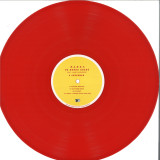
180gr./4p Booklet/Ft. Lou Reed/3000 Cps On Red Vinyl
Bright Red (Ltd. Red Vinyl) is an album by Laurie Anderson, released in 2022. Bright Red (Ltd. Red Vinyl) includes a.o. the following tracks: “Speechless”, “The Puppet Motel”, “Love Among The Sailors”, “Poison” and more. The album is a Coloured Vinyl, High Quality, Insert pop LP.
“This is the time. And this is the record of the time.”
Laurie Anderson’s 1982 debut album, Big Science, will return to vinyl for the first time in 30 years with a new red vinyl edition on Nonesuch Records. The release includes the re-mastered original album first released on CD for the 25thanniversary in 2007.
In the early 1980s, Laurie Anderson was already respected as a conceptual artist and composer, adept at employing gear both high-tech and homemade in her often violin-based pieces, and she was a familiar figure in the cross-pollinating, Lower Manhattan music-visual art-performance circles from which Philip Glass and David Byrne also emerged. While working on her now-legendary seven-hour performance art/theater piece United States, Part I–IV, she cut the spare ‘O Superman (For Massenet)’, an electronic-age update of 19th century French operatic composer Jules Massenet’s aria ‘O Souverain’, for the tiny New York City indie label 110 Records. In the UK, DJ John Peel picked up a copy of this very limited-edition 33⅓ RPM 7” and spun the eight-minute-plus track on BBC Radio 1. The exposure resulted in an unlikely #2 hit, lots of attention in the press, and a worldwide deal with Warner Bros. Records.
’Cause when love is gone, there's always justice.
And when justice is gone, there's always force.
And when force is gone, there's always Mom. Hi Mom!
At the time of its original release, the NME wrote of Big Science, ‘There’s a dream-like, subconscious quality about her songs which helps them work at deeper, secret levels of the psyche.’ With instrumentation ranging from tape loops to found sounds to bag pipes, Big Science anticipated the tech-savvy beats, anything-goes instrumentation and sample-based nature of much contemporary electronic and dance music. On the album’s 25th anniversary, Uncut noted, ‘The broader themes of alienation and disconnection still resonate, while Anderson’s use of loops and traditional/synthesized instrumentation is prescient.’
“In the ’70s I travelled a lot,” Anderson recounts. “I worked on a tobacco farm in Kentucky, hitchhiked to the North Pole, lived in a yurt in Chiapas, and worked on a media commune. I had my own romantic vision of the road. My plan was to make a portrait of the country. Big Science, the first part of the puzzle, eventually became part two of United States I–IV (Transportation, Politics, Money, Love). My goal was to be not just the narrator but also the outsider, the stranger. Although I wasfascinated by the United States, this portrait was also about how the country looked from a distance. I was performing a lot in Europe, where American culture was simultaneously booed and cheered. But the portrait was also a picture of a culture inventing a digital world and learning to live in it. Big Science was about technology, size, industrialization,shifting attitudes toward authority, and individuality. It was sometimes alarmist, picturing the country as a burning building, a plane crash. Alongside the techno was the apocalyptic. The absurd. The everyday. It was also a series of short stories about odd characters – hatcheck clerks and pilots, preachers, drifters and strangers. There was something about Massenet’s aria ‘O Souverain’ – which inspired ‘O Superman’ – that almost stopped my heart. The pauses, the melody. “O souverain, ô juge, ô père” (O Lord, o judge, o father). A prayer about empire, ambition, and loss.”
Laurie Anderson is one of America's most renowned – and daring – creative pioneers. Her work, which encompasses music, visual art, poetry, film, and photography, has challenged and delighted audiences around the world for over 40 years. Anderson released her first album with Nonesuch Records in 2001, the critically lauded Life on a String. Her subsequent releases on the label include Live in New York (2002), Homeland (2010), the soundtrack to Anderson’s acclaimed film Heart of a Dog (2015), and her Grammy-winning collaboration with Kronos Quartet, Landfall (2018). Additionally, Anderson’s virtual-reality film La Camera Insabbiata, with Hsin-Chien Huang, won the 2017 Venice Film Festival Award for Best VR Experience, and, in 2018, Skira Rizzoli published her book All the Things I Lost in the Flood: Essays on Pictures, Language and Code, the most comprehensive collection of her artwork to date.
Nach ihrer gemeinsamen Interpretation von I See A Darkness mit Perfume Genius kündigt Anna Calvi die neue EP Is This All There Is? an, die am 20. März erscheint. Die vier Songs versammeln Kollaborationen mit Perfume Genius, Iggy Pop, Laurie Anderson und Matt Berninger.
Eröffnet wird die EP von God’s Lonely Man, in dem Calvi Iggy Pop die Stimme eines zerstörerischen inneren Monologs überlässt. Der Song ist von nervöser Energie getragen: kantige Gitarren, antreibende Drums, eine direkte Konfrontation mit emotionaler Stagnation. Pop verkörpert dabei genau jene rohe Präsenz, die Calvi für die Erzählung suchte.
Seht und hört "God´s Lonely Man" HIER.
Is This All There Is? bildet den ersten Teil einer geplanten Trilogie, die Identität als etwas Veränderliches begreift, geformt durch Nähe, Liebe und biografische Brüche. Ausgangspunkt ist Calvis eigene Erfahrung des Mutterwerdens, die ihren Blick auf Sicherheit, Verantwortung und Möglichkeiten verschoben hat. Die EP kreist um grundlegende Fragen moderner Existenz: Wie lässt sich Intimität neu denken? Was bedeutet es, sich wirklich verbunden zu fühlen? Und wann fühlt man sich wach?
Neben dem bereits veröffentlichten I See A Darkness interpretiert Calvi gemeinsam mit Laurie Anderson Kraftwerks Computer Love neu. Mit Andersons Stimme im Zentrum und choralen Arrangements entsteht ein Stück über digitale Nähe und emotionale Distanz. In ihrer Gesamtheit wirkt die EP wie ein zusammenhängender filmischer Bogen – vier Songs, vier Perspektiven, eine fortlaufende Erzählung.
Is This All There Is? versteht Kollaboration nicht als Zusatz, sondern als Strukturprinzip: Die Stimmen der Beteiligten werden zu Figuren innerhalb eines gemeinsamen Klangraums, in dem Fragen offen bleiben dürfen.
On the cover: The Body & Dis Fig. Inside: Farida Amadou, Steve Beresford, Pavel Richter, Dialect, petals, Erica Dawn Lyle, H-Fusion, Invisible Jukebox: Melt-Banana, The Inner Sleeve: Eve Libertine, Epiphanies: Roy Claire Potter, Global Ear: Barcelona, Unlimited Editions: YOUTH, plus in the review sections: Laurie Anderson, Belong, Seefeel, Three Quarter Skies, Dhangsha, NicoNote, Laura Cannell, Primitive Percussion Youth Orchestra, Endon, Bobby Hutcherson, Harold Land, Red Kross, David Corio’s images of Black musicians, the Gnaoua & World Music Festival, Gary Stewart, Lonnie Holley, specialist columnists, and more.
‘One of the finest jazz guitarists of her generation, Halvorson is possessed of a questing, restless spirit.’ – Jazzwise
‘With an album of string quartet music as strong as this one, she is worthy of as much renown in the classical field as she holds in the jazz community.’ – New York Times
‘One of America’s finest guitarists. Halvorson’s musicianship is open-minded, demanding and richly engaging.’ – Uncut
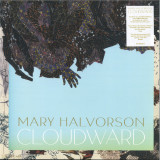
Nonesuch Records releases Cloudward by Brooklyn-based guitarist, composer, and MacArthur fellow Mary Halvorson on January 19. The album features eight new compositions by Halvorson, performed with her sextet Amaryllis, the improvisatory band that performed on her critically praised 2022 albums Amaryllis and Belladonna comprising Halvorson, Patricia Brennan (vibraphone), Nick Dunston (bass), Tomas Fujiwara (drums), Jacob Garchik (trombone), and Adam O’Farrill (trumpet). Labelmate Laurie Anderson also is featured on the album track ‘Incarnadine’. Halvorson and Amaryllis will tour internationally following the release of the new album, including January dates in Europe, as well as at the Big Ears Festival as part of Nonesuch’s 60th anniversary celebration.
Halvorson says, “All of the music on Amaryllis was written in 2020, during the thick of the pandemic, in one of the more bizarre time periods I’ve experienced in my life. While composing for Amaryllis, I expanded upon certain musical concepts I’d developed in my life up until that point—the ones that felt fruitful—and left others behind, hitting the reset button and attempting to build from scratch. Two years later, after the release of the first album, I was still writing music for Amaryllis.
“All the music on Cloudward was written in 2022, mostly in the fall and winter, when things started moving forward. Life felt like a creaky machine starting up again,” she continues. “Air travel, however chaotic, had resumed, and we were once again cloudward. Performances and tours and recordings were happening after a long hiatus and with a renewed sense of gratitude. This band, for me, was quite simply working, both musically and personally, and the main thing I felt while writing the music was optimism.”
The Guardian said Halvorson’s 2022 double release “shows how far this single-minded original has come, and affords a glimpse of how far she may go. Both sessions confirm how years of jaggedly lyrical solo and ensemble improvising and a quirkily subversive affection for mainstream music have now nurtured a composer of unpredictable but warmly expressive character… These are new landmarks in Halvorson’s already inimitable discography.” Pitchfork said, “Amaryllis and Belladonna are distinct statements; one could hear either album on its own without a sense that something is missing. But they are most powerful when taken together, like a landscape and its reflection in rippling water.”
Halvorson has released a series of critically acclaimed albums, from Dragon’s Head (2008), her trio debut featuring bassist John Hébert and drummer Ches Smith, expanding to a quintet with trumpeter Jonathan Finlayson and alto saxophonist Jon Irabagon on Saturn Sings (2010) and Bending Bridges (2012), a septet with tenor saxophonist Ingrid Laubrock and trombonist Jacob Garchik on Illusionary Sea (2014), and finally an octet with pedal steel guitarist Susan Alcorn on Away With You (2016). She also released the solo recording Meltframe (2015), and most recently debuted Code Girl (2018, 2020), a new ensemble featuring vocalist Amirtha Kidambi (singing Halvorson’s own lyrics), trumpeter Adam O’Farrill, saxophonist and vocalist María Grand, bassist Michael Formanek, and drummer Tomas Fujiwara.
One of New York City’s most in-demand guitarists, over the past decade Halvorson has worked with such diverse musicians as Tim Berne, Anthony Braxton, Taylor Ho Bynum, John Dieterich, Trevor Dunn, Bill Frisell, Ingrid Laubrock, Jason Moran, Joe Morris, Tom Rainey, Jessica Pavone, Tomeka Reid, Marc Ribot, and John Zorn. She is also part of several collaborative projects, most notably the longstanding trio Thumbscrew with Michael Formanek on bass and Tomas Fujiwara on drums.
Following up last year’s Acrobatic Thoughts album, Panoram delves even deeper into his own musical universe with Keep Looking Where The Light Comes From. We find the producer in confident form, exploring the fuzzy fringes of beauty and chaos. The result is an album that sounds even more like himself and yet surprising at each turn.
Opening track Feathers sounds like only Panoram can, buzzy arpeggiated distortion takes flight somewhere in the direction of a distant multiverse where Animal Collective and Boards of Canada soundtracked Koyaanisqatsi. But the psychedelic drift is all Panoram’s own, conjuring a stark sense of the uncanny with the repeated phrases. The digital guitar and vocal loops of I Can Only Repeat Your Love are practically on the brink of collapsing in on themselves, to the point where the structure begins to shift like a collapsing monument. Flat Stones nods towards ASMR, as flute and woodwind tones caress the ears and a whispered voice teases out an altered state.
It’s this dreamlike mood that pervades the whole album, a maximal effect that’s wrung from minimalist compositions. The Wide House picks up the baton from Laurie Anderson to trip gently through different states of awareness, while the piano patterns of Blank Sheep float through the synth ambience like ideas entering an empty dream. There Is A Hole Here is another mutant loop that unravels as it proceeds - the rhythms turn into a pulse, and despite what the lyrics say, it does indeed mess around with your brain.
Panoram balances dance tropes, classical composition, ambient drones and a washed out, fuzzy twist on avant garde pop, and manages to transform it all into a uniform whole that fits all those puzzle pieces together. Yet such is the assuredness of Panoram’s production that it sounds effortless. At this point, the music is more like a midwife, manifesting your future self‘s enlightened consciousness with surreal effect.
Bringing a combination of two conceptual artists Ultrastretch 11 moves away from dance music to present this comtemporary off kilter.
On the A side, Montreal based producer Ohm Hourani, known for minimalistic jazz influenced works on his own imprint ANOMA and beyond, with compositions showcasing infusions of organic sounds combined with modular synthestisers, drum machines and vocalists such as his collaboration with award winning Jazz singer and Vocalist Diminique Fils Aime.
On this release he presents a 14 minute stripped down, intrinsically and subtly arranged combination of elements Initiale by a minimalistic kick drum joined by a synth driven, quirky / hypnotic mind drilling element paired with the finest straight hihats delicately placed on the background as the Constant. The subtle movement of the track is introduced by percussive drumming, vocals and piano keys forming the most beautiful atmospheric melody. The last element of surprise brings shuffling hihats bringing amazing swing to the overall elegantly slick piece.
The B side brings the highly sought-after drummer Samuel Rohrer. Ranging from ECM sideman to member of KAVE, a quartet alongside techno pioneer Max Loderbauer, Stian Westerhus and Tobias Freund as well as collaborative works with Ricardo Villalobos and Laurie Anderson, he is known for his unique sound aesthetics on advanced musical cross-pollination, developments of improvisation in acoustic jazz and wider horizons of live electronics.
Rohrer also brings a hypnotic reinterpretation but in a very different manner / mood than the A side. Initiated by strings combined with Rohrer’s tight drumming patterns at the forefront and bass line underneath as the constant, combination by which forms a tense yet peaceful core pattern to this track. To compliment this, synths create movement by adding cosmic and quirky sounds forming an atmospheric soundscape with the whispering vocal “shake it” on top. Overall, the paradoxical relationship between tight (rhythm) and lose (soundscape) is presented in perfect harmony with each other.
Nach ihrer gemeinsamen Interpretation von I See A Darkness mit Perfume Genius kündigt Anna Calvi die neue EP Is This All There Is? an, die am 20. März erscheint. Die vier Songs versammeln Kollaborationen mit Perfume Genius, Iggy Pop, Laurie Anderson und Matt Berninger.
Eröffnet wird die EP von God’s Lonely Man, in dem Calvi Iggy Pop die Stimme eines zerstörerischen inneren Monologs überlässt. Der Song ist von nervöser Energie getragen: kantige Gitarren, antreibende Drums, eine direkte Konfrontation mit emotionaler Stagnation. Pop verkörpert dabei genau jene rohe Präsenz, die Calvi für die Erzählung suchte.
Seht und hört "God´s Lonely Man" HIER.
Is This All There Is? bildet den ersten Teil einer geplanten Trilogie, die Identität als etwas Veränderliches begreift, geformt durch Nähe, Liebe und biografische Brüche. Ausgangspunkt ist Calvis eigene Erfahrung des Mutterwerdens, die ihren Blick auf Sicherheit, Verantwortung und Möglichkeiten verschoben hat. Die EP kreist um grundlegende Fragen moderner Existenz: Wie lässt sich Intimität neu denken? Was bedeutet es, sich wirklich verbunden zu fühlen? Und wann fühlt man sich wach?
Neben dem bereits veröffentlichten I See A Darkness interpretiert Calvi gemeinsam mit Laurie Anderson Kraftwerks Computer Love neu. Mit Andersons Stimme im Zentrum und choralen Arrangements entsteht ein Stück über digitale Nähe und emotionale Distanz. In ihrer Gesamtheit wirkt die EP wie ein zusammenhängender filmischer Bogen – vier Songs, vier Perspektiven, eine fortlaufende Erzählung.
Is This All There Is? versteht Kollaboration nicht als Zusatz, sondern als Strukturprinzip: Die Stimmen der Beteiligten werden zu Figuren innerhalb eines gemeinsamen Klangraums, in dem Fragen offen bleiben dürfen.
Wewantsounds is delighted to release for the 1st time on vinyl Brion Gysin's cult recordings, produced by Ramuntcho Matta in the 80s and early 90s. The release features the hypnotic 32-minute journey "Dreamachine," which transforms the effects of Gysin's legendary light art device into a mesmerizing audio experience, alongside the track "The Door," featuring the visionary saxophonist Steve Lacy. A towering figure in avant-garde art, literature, and sound, Gysin influenced generations of creators, from William Burroughs to David Bowie and Laurie Anderson. Newly remastered and accompanied by liner notes by Gysin scholar Jason Weiss, this LP edition coincides with a major exhibition dedicated to Gysin at the Museum of Modern Art in Paris, opening Spring 2026, underscoring his lasting impact on contemporary culture.
- A1: Dlp 1 1 (Section I) 21 15
- B1: Dlp 1 1 (Section Ii) 21 00
- C1: Dlp 1 1 (Section Iii) 21 20
- D1: Dlp 2 1 10 50
- E1: Dlp 2 2 (Section I) 16 21
- F1: Dlp 2 2 (Section Ii) 16 20
- G1: Dlp 3 (Section I) 21 00
- H1: Dlp 3 (Section Ii) 20 53
- I1: Dlp 4 20 12
- J1: Dlp 5 (Section I) 17 20
- K1: Dlp 5 (Section Ii) 17 20
- L1: Dlp 5 (Section Iii) 17 39
- M1: Dlp 6 (Section I) 20 20
- N1: Dlp 6 (Section Ii) 20 12
- O1: Dlp 1 2 21 41
- P1: Dlp 1 3 12 00
Since the turn of this century, perhaps no other modern composition has had a more resonant healing effect than The Disintegration Loops. Composer William Basinski’s deteriorating analog tape loops evolved from melodic symphonies to melancholic silence over a span of time that uncannily turned passing minutes into pensive lifetimes. In her foreword for the new box set reissue of The Disintegration Loops, the pioneering multimedia storyteller Laurie Anderson describes the impact of this transformation in poetic detail: “These dissolving sounds, this emptying space, has gained my complete confidence. They are taking me somewhere. I am willingly following these sounds, becoming more and more transparent.”
The Disintegration Loops – Arcadia Archive Edition is an expansive new box set that includes the entire 5-hour suite of iconic work. Newly remastered from the original recordings by Josh Bonati, the hefty package includes eight vinyl records (or four CDs for the less analog-inclined) in sturdy full-color jackets featuring the restored original artwork, and a new 1000-word foreword by Laurie Anderson – all housed in a striking heavyweight, case-wrapped box. It is the ideal encapsulation of one of the 21st century’s most truly transcendent works. As Anderson concludes in her foreword, “this music has created another world, a world to be carried away in.”
- 1: You Could Perhaps
- 2: Dream Life
- 3: Antarctica
- 4 20: Days Of Summer
- 5: Alpha Centauri
- 6: Shoe Shaped Cloud
- 7: Neon Lights
- 8: Gold Mine
- 9: Some Days (Feat. Fenne Kuppens)
- 10: Oh, My Father
Die italienische Singer-Songwriterin Marta Del Grandi veröffentlicht Ende Januar 2026 ihr neues Album Dream Life bei Fire Records, ihre erste neue Musik seit dem raffinierten, hingebungsvollen Pop ihres Albums Selva aus dem Jahr 2023. Del Grandi kehrt mit einem Album zurück, das in einem Feld der Träume spielt, einer multidimensionalen Panoramaaufnahme, unterbrochen von gelassener Desillusionierung, die musikalische Grenzen überschreitet, während persönliche Hoffnungen und Sehnsüchte gegen die Weite der Sterne und darüber hinaus geworfen werden. Das Album beginnt mit ,Antarctica", einem Song, der sich mit dem ethischen Dilemma der Welt auseinandersetzt und uns mit einem Riff, das an Talking Heads in ihrer Blütezeit erinnert und mit abstrakten Phrasierungen à la Laurie Anderson durchsetzt ist, aus unserer Komfortzone reißt. ,Neon Lights" unterstreicht diese Stimmung, geht jedoch auf einer persönlicheren Ebene darauf ein. Die verzerrten Gitarren und der wandernde Bass bieten einen härteren Einblick in rebellische Selbstfindung, eingebettet in einen symphonischen Klangteppich. Weiter in ,Dream Life" ist ,Alpha Centauri" ein eindringliches, introspektives Stück Pop-Magie, das Martas wunderschöne Stimme in Nostalgie für die Teenagerzeit schwelgen lässt und ihr inneres Kind wiederentdeckt, während eine entfernte Tuba eine Gegenmelodie trägt. Der Titeltrack untersucht den Quantensprung zwischen Realität und unseren Träumen und Ambitionen und bildet einen Kontrapunkt zu ,Shoe Shaped Cloud" und seiner grüblerischen Untersuchung einer gescheiterten Beziehung, die von einer schmerzerfüllten Stimme vorangetrieben wird, die an Radiohead in ihrer zerbrechlichsten Phase erinnert. Das Album spiegelt das wachsende Bewusstsein wider, dass wir die Zukunft oder das Ergebnis unserer Pläne nicht vollständig kontrollieren können. Dieser rote Faden zieht sich durch das gesamte Album, eine Reise, die poetisch, ironisch und tief in der Gegenwart verwurzelt ist. ,Mein vorheriges Album Selva hatte einen poetischen und bukolischen Charakter - in meinem Kopf kann ich mir jeden Song als Ölgemälde vorstellen - Dream Life hat einen zeitgemäßeren Ansatz, mit Texten, die politische und soziale Themen berühren, einer expliziteren persönlichen Erzählweise und einem klareren Pop-Sound. Es ist eher wie ein Fotobuch, klarer und detaillierter." - Marta Del Grandi Limitiertes, goldfarbenes Vinyl, bedruckte Innenhülle, mit DLC oder Digi-Sleeve CD.
Mit Secret Love legt die Londoner Band Dry Cleaning ihr bislang reifstes Werk vor. Das dritte Studioalbum, produziert von Cate Le Bon, ist eine konzentrierte Momentaufnahme der besonderen Chemie zwischen Florence Shaw, Tom Dowse, Nick Buxton und Lewis Maynard. Aus intensiven Sessions in Peckham, Chicago, Dublin und schließlich im Black Box Studio in Frankreich entstand ein Werk, das Vertrauen und Verletzlichkeit ins Zentrum stellt - die Bande zwischen den vier Musiker*innen ebenso wie das fragile Verhältnis zwischen Nähe und Manipulation in der Gesellschaft. Musikalisch schlägt Secret Love eine Brücke zwischen den paranoiden Untertönen des frühen US-Punks, dem coolen Strut der Stones, Stoner-Rock, No-Wave-Experimenten und zarten, fast pastoralen Gitarrenfiguren. Die Stücke atmen gleichermaßen Schärfe und Verspieltheit, immer getragen von Shaws unverwechselbarem Sprechgesang, der präzise auf die dynamischen Soundlandschaften ihrer Band reagiert. Damit knüpft sie an eine Tradition von Spoken-Word-Künstlerinnen wie Laurie Anderson an, erweitert sie aber um eine ganz eigene Mischung aus Absurdität, Empfindsamkeit und lakonischem Humor. Die erste Single "Hit My Head All Day" zeigt exemplarisch, wie Secret Love gesellschaftliche Themen - etwa Desinformation und Einflussnahme - mit persönlicher Unsicherheit und existenzieller Fragilität verknüpft. Doch trotz aller Schwere bleibt das Album von einer spielerischen Offenheit geprägt: Ideen wurden ausprobiert, verworfen, neu zusammengesetzt - bis ein Sound entstand, der gleichzeitig roh, elegant und unerwartet warm klingt. Secret Love ist ein Album über das Vertrauen - in Freundschaften, in Musik, in sich selbst - und über die Risiken, die damit verbunden sind. Es markiert für Dry Cleaning den Schritt zu einer Band, die ihre avantgardistische Energie zu einem unverwechselbaren Ausdruck verdichtet hat.
With her new album, Spira (Sprout), Olof Arnalds has found her joy in writing songs rekindled. In many ways it harkens back to her debut: it is exclusively in Icelandic, the arrangements are markedly stripped back compared to her last two records, and it is mostly recorded in single takes in the control room of Sundlaugin, much like Vio og vio. Although a classically trained singer and violinist, Olof has been an active practitioner of popular music for thirty years, the watershed moment was the 2007 release of her debut solo album Vio og vio (Now and Again, wider international release in 2009), produced by Sigur Ros' Kjartan Sveinsson in the band's converted swimming-pool studio Sundlaugin. It seemed to appear fully formed out of the ether, and became a local classic almost overnight, winning accolades such as 'Best Alternative Album' at the Iceland Music Awards, named 'Record of the Year' by Iceland's principal daily newspaper and recognised as one of the decade's 100 best albums by eMusic. Spira is produced by Skuli Sverrisson, who also contributes bass and guitar. His mind-melting resume includes musical direction for Laurie Anderson, recordings with Blonde Redhead and work with artists such as David Sylvian, Jon Hassell, Ryuichi Sakamoto, Bill Frisell and Arto Lindsay. Davio por Jonsson contributes piano and guitar to the record-much as he did during Olof's busiest touring schedule nearly fifteen years ago when the two of them toured the world for months on end. There is hardly a jazz musician in Iceland he hasn't played with but lately he is perhaps best known for his close collaboration with Ragnar Kjartansson, one of this century's most celebrated visual artists.
Mit Secret Love legt die Londoner Band Dry Cleaning ihr bislang reifstes Werk vor. Das dritte Studioalbum, produziert von Cate Le Bon, ist eine konzentrierte Momentaufnahme der besonderen Chemie zwischen Florence Shaw, Tom Dowse, Nick Buxton und Lewis Maynard. Aus intensiven Sessions in Peckham, Chicago, Dublin und schließlich im Black Box Studio in Frankreich entstand ein Werk, das Vertrauen und Verletzlichkeit ins Zentrum stellt - die Bande zwischen den vier Musiker*innen ebenso wie das fragile Verhältnis zwischen Nähe und Manipulation in der Gesellschaft. Musikalisch schlägt Secret Love eine Brücke zwischen den paranoiden Untertönen des frühen US-Punks, dem coolen Strut der Stones, Stoner-Rock, No-Wave-Experimenten und zarten, fast pastoralen Gitarrenfiguren. Die Stücke atmen gleichermaßen Schärfe und Verspieltheit, immer getragen von Shaws unverwechselbarem Sprechgesang, der präzise auf die dynamischen Soundlandschaften ihrer Band reagiert. Damit knüpft sie an eine Tradition von Spoken-Word-Künstlerinnen wie Laurie Anderson an, erweitert sie aber um eine ganz eigene Mischung aus Absurdität, Empfindsamkeit und lakonischem Humor. Die erste Single "Hit My Head All Day" zeigt exemplarisch, wie Secret Love gesellschaftliche Themen - etwa Desinformation und Einflussnahme - mit persönlicher Unsicherheit und existenzieller Fragilität verknüpft. Doch trotz aller Schwere bleibt das Album von einer spielerischen Offenheit geprägt: Ideen wurden ausprobiert, verworfen, neu zusammengesetzt - bis ein Sound entstand, der gleichzeitig roh, elegant und unerwartet warm klingt. Secret Love ist ein Album über das Vertrauen - in Freundschaften, in Musik, in sich selbst - und über die Risiken, die damit verbunden sind. Es markiert für Dry Cleaning den Schritt zu einer Band, die ihre avantgardistische Energie zu einem unverwechselbaren Ausdruck verdichtet hat.
- Riparian A
- Riparian B
Eyvind Kang ist Komponist und Bratschist, dessen Werk experimentelle, klassische und traditionelle Musikformen umfasst. Zu seinen Kollaborationen zählen unter anderem Jessika Kenney, Bill Frisell, Laurie Anderson, Bennie Maupin, Stuart Dempster, Sun City Girls und SUNN O))). Kang ist bekannt für seine Erkundungen der Mikrotonalität, der modalen Improvisation und des Klangrituals. Seine Werke wurden weltweit auf führenden Festivals und Veranstaltungsorten präsentiert. Kang ist derzeit Fakultätsmitglied am CalArts und unterrichtet Komposition und experimentelle Klangpraktiken. Seit über dreißig Jahren erforscht Eyvind Kang die verschwommenen Grenzen zwischen Komponist, Interpret und Zuhörer. Auf Riparian präsentiert er eines seiner bisher intimsten und fokussiertesten Werke: zwei Langformstücke für Viola d'amore, improvisiert innerhalb mikrotonaler Systeme, die er während der Pandemie entwickelt hat. Kang bezeichnet diese Improvisationsmethode als ,Riparian" und beschwört damit das Bild eines Flusses herauf, der in verschiedene Richtungen überquert wird - fließend, nichtlinear und lebendig mit subtilen Variationen. ,Ich stellte mir Pizzicato und Arco wie das Springen von Stein zu Stein in einem Bach vor", sagt er. ,Es gibt eine geerdete Zufälligkeit, wie bei einem Frosch oder einer Schildkröte, die sich zwischen Land und Wasser bewegt." Jedes Stück auf Riparian ist eine erste Aufnahme, die im Studio als Teil dessen aufgenommen wurde, was Kang als ,eine Art Geschichtenerzählen unter gleichgesinnten Freunden" bezeichnet. Das Ergebnis ist Musik, die mit stiller Intensität und emotionaler Klarheit fließt und Melodien entfaltet, die sich sowohl uralt als auch lebendig präsent anfühlen. Produziert und aufgenommen von Randall Dunn (SU NN O))), Omar S ouleyman, Kali Malone) produziert und aufgenommen, fängt Riparian die volle Resonanz der Viola d'amore in einem reichen, dimensionalen Klang ein. Dunns Handschrift verleiht Kangs lyrischer Phrasierung Wärme und Transparenz und offenbart subtile Klangtexturen, die ein tiefes Hören belohnen. Meditativ und ausdrucksstark zugleich lädt Riparian den Hörer in einen Raum ein, in dem die Zeit weicher wird und Klang zu einer Form der Einstimmung wird .
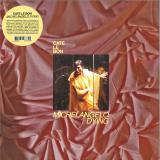
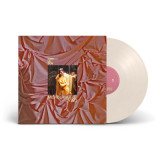
Cate Le Bons siebtes Album 'Michelangelo Dying', dessen Entstehung von purer Emotion geleitet wurde, hat das Album, das sie zu machen glaubte, verdrängt. Als Produkt eines alles verzehrenden Herzschmerzes überwanden ihre Gefühle ihren Widerwillen, ein Album über die Liebe zu schreiben, und wurden in diesem Prozess zu einer Art Exorzismus. Herausgekommen ist ein wunderbar schillernder Versuch, eine Wunde zu fotografieren, bevor sie sich schließt - und dabei auch in ihr zu stochern.
Musikalisch gibt es eine Fortsetzung und Erweiterung eines Sounds - eine Maschine mit Herz -, der auf ihren letzten beiden Platten 'Reward' (2019) und 'Pompeii' (2022) Gestalt angenommen hat, da Le Bon zunehmend selbst die Kontrolle über das Spielen und Produzieren übernommen hat. Wenn Gitarren und Saxophone durch Pedale gepresst und Perkussion und Stimmen durch Filter gejagt werden, entsteht ein schillernder, grüner und seidiger Sound, in dem die künstlerischen Eigenheiten von David Bowie, Nico, John McGeoch und Laurie Anderson aufblitzen und wieder verschwinden.
Was übrig bleibt, ist eine sich ständig verändernde, kontinuierliche Einheit, eine Art Songzyklus. Jede Iteration reflektiert die letzte und entwickelt sie weiter. „Jede ist eine Scherbe desselben zerbrochenen Spiegels“: Sie verschiebt sich, glitzert, verbirgt und enthüllt, je nachdem, wie sie im Licht gedreht wird. Letztendlich gibt es, so Cate, „keine Enthüllungen. Keine Schlussfolgerungen. Es gibt keinen Grund. Es gibt nur Wiederholungen und Chaos. Ich habe mir schließlich erlaubt, einen offenen Geist zu haben, um es ohne Widerstand zu erleben, ohne nach einer Offenbarung oder Ordnung zu suchen.“
'Michelangelo Dying' ist eine Übung in der Viszeralität des Lebens, der Liebe und der Menschlichkeit, sowohl für den Hörer als auch für die Künstlerin selbst, und es weiß, was es heißt Halt zu geben, gehalten zu werden aber auch sich ganz und gar allein zu fühlen. „Die Figuren sind austauschbar“, schließt Cate, „aber am Ende bin ich es, der sich selbst begegnet.“
- LP: (Vollfarbige Hülle, 140g schwarzes Vinyl, bedruckte Innenhülle und Download-Karte)
Cate Le Bons siebtes Album 'Michelangelo Dying', dessen Entstehung von purer Emotion geleitet wurde, hat das Album, das sie zu machen glaubte, verdrängt. Als Produkt eines alles verzehrenden Herzschmerzes überwanden ihre Gefühle ihren Widerwillen, ein Album über die Liebe zu schreiben, und wurden in diesem Prozess zu einer Art Exorzismus. Herausgekommen ist ein wunderbar schillernder Versuch, eine Wunde zu fotografieren, bevor sie sich schließt - und dabei auch in ihr zu stochern.
Musikalisch gibt es eine Fortsetzung und Erweiterung eines Sounds - eine Maschine mit Herz -, der auf ihren letzten beiden Platten 'Reward' (2019) und 'Pompeii' (2022) Gestalt angenommen hat, da Le Bon zunehmend selbst die Kontrolle über das Spielen und Produzieren übernommen hat. Wenn Gitarren und Saxophone durch Pedale gepresst und Perkussion und Stimmen durch Filter gejagt werden, entsteht ein schillernder, grüner und seidiger Sound, in dem die künstlerischen Eigenheiten von David Bowie, Nico, John McGeoch und Laurie Anderson aufblitzen und wieder verschwinden.
Was übrig bleibt, ist eine sich ständig verändernde, kontinuierliche Einheit, eine Art Songzyklus. Jede Iteration reflektiert die letzte und entwickelt sie weiter. „Jede ist eine Scherbe desselben zerbrochenen Spiegels“: Sie verschiebt sich, glitzert, verbirgt und enthüllt, je nachdem, wie sie im Licht gedreht wird. Letztendlich gibt es, so Cate, „keine Enthüllungen. Keine Schlussfolgerungen. Es gibt keinen Grund. Es gibt nur Wiederholungen und Chaos. Ich habe mir schließlich erlaubt, einen offenen Geist zu haben, um es ohne Widerstand zu erleben, ohne nach einer Offenbarung oder Ordnung zu suchen.“
'Michelangelo Dying' ist eine Übung in der Viszeralität des Lebens, der Liebe und der Menschlichkeit, sowohl für den Hörer als auch für die Künstlerin selbst, und es weiß, was es heißt Halt zu geben, gehalten zu werden aber auch sich ganz und gar allein zu fühlen. „Die Figuren sind austauschbar“, schließt Cate, „aber am Ende bin ich es, der sich selbst begegnet.“
- LP: (Vollfarbige Hülle, 140g schwarzes Vinyl, bedruckte Innenhülle und Download-Karte)
Demon presents the second volume of the Tim Burgess Listening Party compilation. Following on from the success of
2024’s listening party, Tim is back with a further 24 eclectic cuts. This 2LP collection is pressed on blue translucent
vinyl, bringing together 24 further highlights from the 1,278 Listening Parties that took place.
The parties themselves were an eclectic mix of genres and eras, and the compilation reflects that with track from Paul
McCartney, The Magic Numbers, Ibibio Sound Machine, Róisín Murphy, Iron Maiden, Laurie Anderson and Norah
Jones.
“I’d done Charlatans listening parties and some solo album listening parties, and as the Twitter followers grew, I’d
repeat it and do it again and again. It was maybe about a week before being told that we were going to go into a
lockdown before we actually did something. I saw all the TV stuff, all the kind of crazy things that were happening and
thought if there’s going to be a lockdown, there’s going to be something that I can do.”
As well Tim's Twitter Listening Party, Tim's Listening Party is also a six-part radio and podcast series airing on Sunday
nights on Absolute Radio.
She’s out of this world…
Maltese musician & producer Joon’s galactic debut arrives on our shores fully formed a decade after she first set sail. 12 cuts of uniquely addictive Synthesized Pop twist & turn on the rocky waters of life.
Her story begins after a life-changing car crash on the streets of Malta many moons ago. She was lucky to walk away in one piece. “That car crash was a wake-up call,” she says. “It made me realize how precious life is & I started living the life I felt was worth living.” Inspired to finally pursue her love of music full time, she began collecting instruments. Starting with a Stylophone& a vintage rhythm box, she started documenting ideas. Returning home to Malta after a few years in London, she only met one other woman making electronic music on the island. Driven by the desire to make music possible & accessible for the next generation, Joon co-founded the Malta Sound Women’s Network.
Ten years later, she sends us messages in a bottle from across the Mediterranean Sea. Armed with a Moog & her ethereal voice, she transmits hope & joy from a bedroom somewhere between Sicily & North Africa. Her music is right at home alongside outsider pioneers like Fever Ray, Grimes, Laurie Anderson & Molly Nilsson. Dream Again glides across heavy rhythms & eclectic electro. Telling stories of alienation with a throbbing heartbeat & space-age melodies, she lets us into her ultra-vivid world where anything is possible. Produced by Johnny Jewel, the album shines bright like comet orbiting the label’s dark sky, a much-needed vision of light on the horizon.
“Even if I’m sad or heartbroken, I remain optimistic. I want to grow old with no regrets.”
It’s time to Dream Again…
- 1: Missing
- 2: White Fleece_^°
- 3: An Eye For A Heart
- 4: Le Ranch De Mes Reves
- 5: I'll Remember This
- 6: The Lighthouse
- 7: Ballad Of Miss Keats
- 8: Free
- 9: How__?
- 10: Florida Mermaids
- 11: For Mary
- 12: Autopilot
- 13: Phony Cowboys
- 14: Codependency Interlude (Horny Country)
- 15: Horse Girl
- 16: Country
Lucy Sissy Miller is a French/British singer-songwriter, performer and artist based in Paris. On her latest release for Mêtron Records, Pre Country, she renders her own personal take on country music, an ambient and airy ode to her love of Americana. Across 16 tracks, Miller recollects about love-like friendships, breakups, mermaids and missing girl mysteries - the album acting as a movie-like homage to girlhood and desire.
“With this album I really enjoyed blurring the lines between fiction and reality, a bit like what movies are able to do to us. I hide a little bit of personal truth behind each song.”
Influenced by the tones of Laurie Anderson and Imogen Heap, as well as the imagery found in Twin Peaks and Paris, Texas, Pre Country is a rich and explorative record that mixes a wide range of sonic sources. Though very much rooted in folk music, Pre Country is laced with layers of autotune, bringing an other worldly and haunted presence to the work.
“It’s an album about memories and how we stitch up these moments, making them movie-like to make sense of these experiences.”
The record was crafted with notes from journals, poetry, voice memos, transformed and collected sounds and here it carries the many layers of desire, loss and fear that Miller wanted to convey in the songs, communicating an unsteady, explosion of feeling whilst remaining delicate and personal.
- A1: Fusées
- A2: Les Astres
- A3: Partout
- A4: Quitter La Ville
- A5: La Maison
- B1: Les Ombres
- B2: Falaise
- B3: Nulle Part
- B4: Je Reste
- B5: Puisque Tu Pars
Die französische Singer-Songwriterin Laura Cahen zählt in ihrem Heimatland zu einer der wichtigsten Stimmen der Indie-Szene, nun kündigt sie ihr viertes Studioalbum 'De l'autre côté' für den 24. Januar 2025 an. Inspiriert von Künstlerinnen wie Laurie Anderson, Laura Marling oder Adrianne Lenker verbindet ihre Musik akustische und elektronische Elemente, um emotional reiche, selbstreflektierende Klanglandschaften zu schaffen. In Form poetischer Liebeslieder behandelt sie Themen wie Weiblichkeit, Ökologie, Homosexualität und Gleichberechtigung.
2024 Repress
“Live at Sound City” is an instrumental collaboration between bassist Pino Palladino, guitarist/multi-instrumentalist/producer Blake Mills, and LA-based saxophonist Sam Gendel. Recorded in one day at the legendary Sound City Studios in Van Nuys, the EP presents new versions of compositions from Palladino & Mills’ Grammy-nominated 2021 album “Notes with Attachments” in an intimate chamber trio setting. Across four tracks, the accomplished trio explores common musical vocabularies, then goes about the work of defamiliarizing them in search of something new, blending the sounds of West African and Cuban music, jazz, R&B, English folk, pop, and beyond.
Pino Palladino is a Grammy Award winning songwriter, producer and bassist who helped create the rhythm-section sound of D’Angelo’s Voodoo and Black Messiah, and over a four-decade career has worked with artists including Keith Richards, Erykah Badu, Eric Clapton, Nine Inch Nails, Questlove, John Mayer, Paul Simon, Jeff Beck, Herbie Hancock and Adele.
Blake Mills is a two-time Grammy Awards Producer of the Year nominee. He has released four solo albums and produced and recorded with artists such as Alabama Shakes, Fiona Apple, Bob Dylan, John Legend, Perfume Genius, Jim James, Moses Sumney, Laura Marling, Phoebe Bridgers, Cass McCombs, The Killers, Sara Bareilles, Weyes Blood and Randy Newman. His most recent album Mutable Set, released last year, was praised by Pitchfork as “a hushed collection that floats through the subconscious like a tender dream,” and earned their Best New Music title.
Sam Gendel is a musician living in Los Angeles, CA. He is most known for his work with the saxophone, though he is proficient on multiple instruments. His work is diverse and includes collaborations with a wide range of artists including Ry Cooder, Laurie Anderson, Mach-Hommy, Sam Amidon, Perfume Genius, Moses Sumney, Knower, Vampire Weekend, and inc. no world.
*Includes download code
The two works which comprise this retrospective release project - "Plan for Sleep” (1984) and "Every Dog Has His Day” (1985) - are collaborations between Yamanaka and Furuhashi which were foundational to the music development of Dumb Type's aural legacy and intermedia innovations at large. Their early stage music possessed a unique charm and innovation, serving as an essential element at the core of their art. Through this project, the legacy of these works is to be re-evaluated, and the essence of the music contributing to the evolution of Dumb Type's sound through this day will be introduced to a new generation.
DUMB TYPE is a multimedia performance art group based in Kyoto that was formed in 1984 and continues to be active at the forefront of the art scene. We are excited to announce the simultaneous release of two cassette book works produced by musician Toru Yamanaka and the late Teiji Furuhashi, a central figure of the group, for works from the early DUMB TYPE Theatre era: "Every Dog Has His Day (recorded in 1985)" and "Plan For Sleep (recorded in 1986)," now available for the first time on vinyl.
Since the founding of DUMB TYPE, Yamanaka has primarily been responsible for music production, while the late Furuhashi played a crucial role in translating Yamanaka’s compositions into stage direction. Their collaboration began with previous groups ORG and R-STILL, and was influenced by the NEW WAVE and progressive rock trends they were pursuing at the time, as well as by artists like Laurie Anderson, Meredith Monk, and Robert Wilson, who fused minimal music and avant-garde performance. Moreover, their bold incorporation of cutting-edge sampling and house music during that era laid the foundation for DUMB TYPE's sound, marking an important intersection in the history of minimalism, ambient music and performance art in Japan.
*Includes download code
In the performance of this work, "Plan for Sleep" (1986), created simultaneously with “Every Dog Has His Day” (1985), Yamanaka took on the role of sound operation. The performance begins with a minimal piece where the tones of the electronic organ and striking phrases from the piano and saxophone race forward in syncopation. Following this, various sound fragments drift over a deafening industrial beat reminiscent of machine noises. There are also pieces that transform the typing sounds of a typewriter into rhythm, showcasing a range of experiments inspired by the then-novel sampling technology, beautifully intertwining with the physicality of the performance.
Additionally, influenced significantly by film music, Yamanaka incorporates a rich tapestry of colors through melancholic melodies that evoke various scenes, from secular jazz to other influences. This work constructs a uniquely original and sophisticated worldview that stands out even when surveying the canon of avant-garde performance art from around the globe in the postmodern era.
DUMB TYPE is a multimedia performance art group based in Kyoto that was formed in 1984 and continues to be active at the forefront of the art scene. We are excited to announce the simultaneous release of two cassette book works produced by musician Toru Yamanaka and the late Teiji Furuhashi, a central figure of the group, for works from the early DUMB TYPE Theatre era: "Every Dog Has His Day (recorded in 1985)" and "Plan For Sleep (recorded in 1986)," now available for the first time on vinyl.
Since the founding of DUMB TYPE, Yamanaka has primarily been responsible for music production, while the late Furuhashi played a crucial role in translating Yamanaka’s compositions into stage direction. Their collaboration began with previous groups ORG and R-STILL, and was influenced by the NEW WAVE and progressive rock trends they were pursuing at the time, as well as by artists like Laurie Anderson, Meredith Monk, and Robert Wilson, who fused minimal music and avant-garde performance. Moreover, their bold incorporation of cutting-edge sampling and house music during that era laid the foundation for DUMB TYPE's sound, marking an important intersection in the history of minimalism, ambient music and performance art in Japan.
- A1: The Dream (3 32)
- A2: Full Time Heist (3 57)
- A3: Back Again (3 52)
- A4: With Hope In My Breath (3 51)
- A5: Long For Ruin (3 44)
- A6: Started Off Free (4 12)
- B1: Remember The Voice (2 52)
- B2: Oh Joan (4 06)
- B3: Lemons, Limes & Orchids (6 08)
- B4: Tribute To Holding On (2 40)
- B5: Safe To Say (5 13)
- B6: Help Is On It's Way (2 44)
Das zwölfte Studioalbum von Joan As Police Woman 'Lemons, Limes, and Orchids' ist eine krönende Darbietung ihrer Stimme in all ihrer metamorphen Pracht. “I was ready to make an album that truly featured my voice. The basics were recorded like they used to be- with me singing live along with the band. My good friend said told me this is the sexiest album I’ve ever made. Honestly, I think she’s right.”
Die Platte ist eine Nocturne über Liebe und Verlust und eine Abrechnung mit unserer kollektiven Desorientierung, zwischen Festhalten und Loslassen.
Joan tourte um die Welt, trat in Spelunken und Konzertsälen, bei unabhängigen Musikfestivals und bei der BBC auf und arbeitete mit einer Vielzahl von Berühmtheiten zusammen, darunter Lou Reed, Rufus Wainwright, Tony Allen, Damon Albarn, John Cale, Laurie Anderson, Sufjan Stevens, Anohni, Beck, Meshell Ndegeocello, Toshi Reagon, David Byrne und Daniel Johnston. Sie nahm an drei Africa Express-Projekten teil, unterrichtet am Clive Davis Institute of Recorded Music an der NYU, lebt in Brooklyn und liebt die Welt.
- Ltd. Col. LP: (Tangerine (orangerotes) Vinyl):
- The Ostrich
- Cycle Annie
- I'm Gonna Fight
- Soul City
- Oh No Don't Do It
- Love Can Make You Cry
- Teardrop In The Sand
- You're Driving Me Insane
- Sneaky Pete
- Wild One
- Really - Really - Really - Really - Really - Really Love
- Soul City
- Ya Running But I'll Getcha
- We Got Trouble
- Why Don't You Smile
- Johnny Won't Surf No More
- Tell Mamma Not To Cry
- Maybe Tomorrow
- Flowers For The Lady
- This Rose
- Surfin
- Little Deuce Coupe
- Sad Lonely Orphan Boy
- I've Got A Tiger In My Tank
- What About Me
Oxblood & Gold Vinyl[54,58 €]
Light In The Attic präsentiert in Zusammenarbeit mit Laurie Anderson und dem Lou Reed Archive die erste offizielle Anthologie von Lou Reeds Arbeiten für Pickwick Records 1964-1965. "Why Don't You Smile Now: Lou Reed At Pickwick Records 1964-65"enthält Raritäten, Kultklassiker (The Primitives' "The Ostrich") und bisher unveröffentlichtes Material (The Beachnuts' "Sad, Lonely Orphan Boy") und ist eine Zusammenstellung von Popsongs aus Reeds Feder, die er Mitte der 60er Jahre als angestellter Songwriter für das längst untergegangene Label Pickwick Records schrieb. Die Zusammenstellung ist der neueste Teil der Lou Reed Archive Serie und folgt auf Lou Reeds "Words & Music, May 1965" (2022) und die Wiederveröffentlichung von "Hudson River Wind Meditations" (2023). Als eine der originellsten und innovativsten Persönlichkeiten der Musikgeschichte erlangte Reed (1942-2013) zunächst als Mitbegründer und Frontmann der einflussreichen Band Velvet Underground Anerkennung. Im Laufe seiner fünf Jahrzehnte währenden Karriere brachte der zweifache Rock & Roll Hall of Famer seine einzigartige Vision in eine eklektische Bandbreite musikalischer Unternehmungen ein, darunter epochale Alben wie "Transformer" (1972) und wild experimentelle Werke wie der avantgardistische Noise-Klassiker "Metal Machine Music" (1975). Doch bevor er sich als Sänger, Songschreiber, Musiker und Dichter etablierte, begann Reed als interner Songschreiber (und gelegentlicher Session-Gitarrist/Sänger) bei Pickwick Records, einem Label, das sich auf Sound-ähnliche Aufnahmen spezialisierte, die die großen Pop-Hits der damaligen Zeit nachahmten. Von Garage-Rock und Girl-Group-Pop bis hin zu Blue-Eyed-Soul und Teenie-Idol-Balladen bietet Reeds Schaffen für Pickwick einen faszinierenden frühen Einblick in sein sich ständig weiterentwickelndes und wahrhaft grenzenloses künstlerisches Schaffen, das vom GRAMMYr-nominierten Mastering-Ingenieur John Baldwin restauriert und remastered wurde. Sowohl die 2xLP- als auch die CD-Editionen enthalten ausführliche Booklets mit ungesehenen Fotos, Linernotes von Richie Unterberger (renommierter Musikjournalist und Autor von "White Light/White Heat: The Velvet Underground day-by-day") und ein Essay von Lenny Kaye (dem legendären Gitarristen, Mitbegründer der Patti Smith Group, Autor, Produzent und Kurator der bahnbrechenden Garage-Rock-Anthologie "Nuggets"). Die Doppel-LP-Verpackung wurde von dem mehrfach mit dem GRAMMYr ausgezeichneten Künstler Masaki Koike gestaltet.
- The Ostrich
- Cycle Annie
- I'm Gonna Fight
- Soul City
- Oh No Don't Do It
- Love Can Make You Cry
- Teardrop In The Sand
- You're Driving Me Insane
- Sneaky Pete
- Wild One
- Really - Really - Really - Really - Really - Really Love
- Soul City
- Ya Running But I'll Getcha
- We Got Trouble
- Why Don't You Smile
- Johnny Won't Surf No More
- Tell Mamma Not To Cry
- Maybe Tomorrow
- Flowers For The Lady
- This Rose
- Surfin
- Little Deuce Coupe
- Sad Lonely Orphan Boy
- I've Got A Tiger In My Tank
- What About Me
Black Vinyl[50,38 €]
Oxblood & Gold Vinyl. Light In The Attic präsentiert in Zusammenarbeit mit Laurie Anderson und dem Lou Reed Archive die erste offizielle Anthologie von Lou Reeds Arbeiten für Pickwick Records 1964-1965. "Why Don't You Smile Now: Lou Reed At Pickwick Records 1964-65"enthält Raritäten, Kultklassiker (The Primitives' "The Ostrich") und bisher unveröffentlichtes Material (The Beachnuts' "Sad, Lonely Orphan Boy") und ist eine Zusammenstellung von Popsongs aus Reeds Feder, die er Mitte der 60er Jahre als angestellter Songwriter für das längst untergegangene Label Pickwick Records schrieb. Die Zusammenstellung ist der neueste Teil der Lou Reed Archive Serie und folgt auf Lou Reeds "Words & Music, May 1965" (2022) und die Wiederveröffentlichung von "Hudson River Wind Meditations" (2023). Als eine der originellsten und innovativsten Persönlichkeiten der Musikgeschichte erlangte Reed (1942-2013) zunächst als Mitbegründer und Frontmann der einflussreichen Band Velvet Underground Anerkennung. Im Laufe seiner fünf Jahrzehnte währenden Karriere brachte der zweifache Rock & Roll Hall of Famer seine einzigartige Vision in eine eklektische Bandbreite musikalischer Unternehmungen ein, darunter epochale Alben wie "Transformer" (1972) und wild experimentelle Werke wie der avantgardistische Noise-Klassiker "Metal Machine Music" (1975). Doch bevor er sich als Sänger, Songschreiber, Musiker und Dichter etablierte, begann Reed als interner Songschreiber (und gelegentlicher Session-Gitarrist/Sänger) bei Pickwick Records, einem Label, das sich auf Sound-ähnliche Aufnahmen spezialisierte, die die großen Pop-Hits der damaligen Zeit nachahmten. Von Garage-Rock und Girl-Group-Pop bis hin zu Blue-Eyed-Soul und Teenie-Idol-Balladen bietet Reeds Schaffen für Pickwick einen faszinierenden frühen Einblick in sein sich ständig weiterentwickelndes und wahrhaft grenzenloses künstlerisches Schaffen, das vom GRAMMYr-nominierten Mastering-Ingenieur John Baldwin restauriert und remastered wurde. Sowohl die 2xLP- als auch die CD-Editionen enthalten ausführliche Booklets mit ungesehenen Fotos, Linernotes von Richie Unterberger (renommierter Musikjournalist und Autor von "White Light/White Heat: The Velvet Underground day-by-day") und ein Essay von Lenny Kaye (dem legendären Gitarristen, Mitbegründer der Patti Smith Group, Autor, Produzent und Kurator der bahnbrechenden Garage-Rock-Anthologie "Nuggets"). Die Doppel-LP-Verpackung wurde von dem mehrfach mit dem GRAMMYr ausgezeichneten Künstler Masaki Koike gestaltet. Eine spezielle farbige Vinyl-Edition wird auf "Oxblood"-Wachs (A/B-Seite) und "Gold"-Wachs (C/D-Seite) gepresst.
Individually, Kronos Quartet and Sun Ra are two of the most groundbreaking names in contemporary music. The former is the legendary San Francisco-based string quartet that laid a blueprint for what concert music could become, working with the likes of John Cage, Tanya Tagaq, and Astor Piazzolla. The latter was a singular jazz and avant-garde bandleader, as well as a philosopher and poet, who honed an extraordinary strain of cosmic experimental music from the 1950s until his ascension in 1993. As a capstone to Kronos Quartet’s 50th anniversary, the group has joined forces with the Red Hot Organization for the new album Outer Spaceways Incorporated: Kronos Quartet & Friends Meet Sun Ra. It’s stacked with some of the most innovative artists active today — everyone from multidimensional electronic musician Jlin, to Moor Mother and DJ Haram’s radical noise / rap project 700 Bliss, to abstract hip hop luminaries Armand Hammer, to avant-garde hero Laurie Anderson, to minimalist pioneer Terry Riley.
Marking its first decade of activity, Blume returns with the first ever vinyl reissue of the seminal “New Music for Electronic and Recorded Media”, from 1977, the third and final instalment in a suite of releases that includes James Tenney’s “Postal Pieces” and Ben Vida’s “Vocal Trio”. Unquestionably among the most important collections of experimental music to emerge during the 20th Century, “New Music for Electronic and Recorded Media” is the original feminist presentation in its context, releasing the work of Johanna M. Beyer, Annea Lockwood, Pauline Oliveros, Laurie Spiegel, Megan Roberts, Ruth Anderson, and Laurie Anderson under its collective banner. Includes newly commissioned liner notes by Jennifer Lucy Allen and Bradford Bailey.
Since its founding back in 2014, Blume has carved a unique place in cultural landscape, issuing free standing works, spanning the historical and contemporary, that represent singular gestures of creativity within the field of experimental sound. Joining their broad efforts in building networks of context and understanding that already includes the efforts of efforts of Werner Durand, Sarah Hennies, Bruce Nauman, John Butcher, Jocy de Oliveira, Mary Jane Leach, Valentina Magaletti, Alvin Curran, Julius Eastman, Alvin Lucier, and others, Blume delivers their third release in their first suite of releases for 2024, the fist ever vinyl reissue of the seminal “New Music for Electronic and Recorded Media” compilation, originally issued by Thomas Buckner's 1750 Arch Records in 1977. Out of print for decades on vinyl and arguably the most important feminist statement in the history of experimental music, illuminating the work of Johanna M. Beyer, Annea Lockwood, Pauline Oliveros, Laurie Spiegel, Megan Robert, Ruth Anderson, and Laurie Anderson - in a number of cases representing their recording debuts - during a crucial moment in the history of experimental music. Blume’s brand new edition - complete with newly commissioned liner notes by Jennifer Lucy Allen and Bradford Bailey, as well as reproducing Charles Amirkhanian’s original accompanying text - radically shifts perceptions of the past and present day with its truly revolutionary sounds.
Issued by Thomas Buckner's 1750 Arch Records in 1977, and out of print nearly the entire time since, “New Music for Electronic and Recorded Media” can be understood within two simple frameworks. On one hand, it is an astounding document of the landscape of experimental music toward the end of the 1970s. On the other, it is a historically significant feminist statement, being the first collection of experimental music entirely dedicated to female composers, a number of whom were grossly under-celebrated at the time, but have since gone on to be regarded as among the most important composers of their generation.
The eight pieces gathered by “New Music for Electronic and Recorded Media” - Johanna M. Beyer’s “Music of the Spheres”, Annea Lockwood’s “World Rhythms”, Pauline Oliveros’ “Bye Bye Butterfly”, Laurie Spiegel’s “Appalachian Grove I”, Megan Roberts’ “I Could Sit Here All Day”, Ruth Anderson’s “Points”, and Laurie Anderson’s “New York Social Life” and “Time To Go (For Diego)” - might be regarded as the first cohesive vision of alternate proximity or expression of experimental music to what has always been a frustratingly male dominated environment, and to the tropes, temperaments, and sensibilities that have been historically perceived to define it. It is an expanded vision of truth. While the presence of feminine sensibilities and temperaments in experimental music, however they may present themselves, were anything but new in 1977, “New Music for Electronic and Recorded Media” was the first opportunity, beyond the temporal limitations of live performance, to view them collectively, rather than as individualised expressions within a larger body of similar gestures (as was the case of Oliveros’ inclusion in Odyssey’s 1967 “New Sounds In Electronic Music” and “Extended Voices” compilations) where they might be confused for something else; to regard and celebrate a radical notion of feminine sonority for its unique characteristics and through its interrelations.
While its historical significance and groundbreaking nature can not be debated in its totality, nearly half a century on “New Music for Electronic and Recorded Media” remains compelling in both its musicality and the palpable sense of its lasting influence. Every composition across the album’s two sides is not only engrossing and deeply compelling - feeling as fresh and relevant as the day it was laid to tape - but clearly tangible in their lasting influence. Viewed in context, the album’s eight works feel like breath of fresh air when compared to much of what came before, and laid the groundwork for much of what was to come, introducing a new, often more holistic temperament and more sensitive and inclusive sensibility into the landscape of experimental music.
Particularly in the case of Annea Lockwood, Pauline Oliveros, Laurie Spiegel, Ruth Anderson, and Laurie Anderson, it's hard to throw ourselves back in time and imagine a moment when these composers rested in a fairly marginalised corner of the creative landscape. Blume’s brand new edition of “New Music for Electronic and Recorded Media” - complete with newly commissioned liner notes by Jennifer Lucy Allen and Bradford Bailey, as well as reproducing Charles Amirkhanian’s original accompanying text - brings us back to this confounding moment and points us toward a crucial moment of change set forth by these incredible composers and their sounds. Absolutely seminal and not to be missed.
January 2023, Dorset. Snow is piled at the door, icy roads are closed, and Emily Cross is in a coffin. Not a setting typical for a rebirth. But for Loma, this is where they bring their band back from the brink. "It's like a demon enters the room, whenever we get together", writer, singer and instrumentalist Cross says of the struggle to bring new Loma music into the world. Following the release of their 2020 second album Don't Shy Away, Loma's three members were cast around the globe and the band-not for the first time-entered a deep sleep. Multi-instrumentalist and recording engineer Dan Duszynski remained in his studio in Don't Shy Away's central Texas heart, but Cross, a UK citizen, moved to Dorset, and writer and instrumentalist Jonathan Meiburg left the US for Germany to research a book. In the pandemic years, even being in the same room was impossible, and attempts to start a new record faltered. The following winter, in an attempt to salvage the record and the band, Cross suggested they regroup in the UK, in the tiny stone house-once a coffin-maker's workshop-where she works as an end-of-life doula. With minimal recording gear and few instruments, Loma turned two whitewashed rooms into a makeshift studio, using a padded coffin as a vocal booth. It was a turning point. They scrapped much of what they'd made, letting a new place set a new course. The one-lane roads, hedgerows and dark skies of Dorset gave the new songs an ineffable but unmistakable Englishness. The band used the ruin of a 12th-century chapel as a reverb chamber-surprising hillwalkers who peeked in to find them singing to no one-and the sounds of Cross's chilly workshop wormed their way into the recording: a leaky pipe, a drummer's brushes on a metal lampshade, the voices left on an ancient answering machine. What emerged was How Will I Live Without A Body?: a gorgeous, unique, and oddly comforting album about partnership, loss, regeneration, and fighting the feeling that we're all in this alone. Many of its songs have a feeling of restless motion; faceless characters drift through meetings and partings, tangling together and slipping away. "I Swallowed A Stone" is like a nightmare with a happy ending; "How It Starts" and "Broken Doorbell" reflect on the challenge (and necessity) of wrestling with agoraphobia. Though the record nods to the trio's separate lives- a German percussion ensemble, a pair of Texan owls, and the surf at Chesil Beach make guest appearances-the core of Loma's sound remains intact: earthy, organic and deeply human, anchored by Cross's cool, clear voice. Loma's previous album, Don't Shy Away, was galvanized by the unexpected encouragement and contributions of Brian Eno. This time, they found inspiration in another hero, Laurie Anderson, who offered a chance to work with an AI trained on her entire body of work. Meiburg sent her a photo from his book-in-progress about the once and future life of Antarctica; Anderson's AI responded with two haunting poems. "We used parts of them in a few songs," he says. "And then Dan noticed that one of its lines, 'How will I live without a body?' would be a perfect name for the album, since we nearly lost sight of each other in the recording process." In the end, Loma's efforts to reconnect with one another are the album's central focus: what do you owe a shared past, when everyone and everything has changed? "Making this record tested us all," says Duszynski. "I think that feeling was alchemized through the music." Alchemized, because How Will I Live Without A Body? is by no means a stressed-out record: an undercurrent of deep calm runs through it. But maybe 'relaxed' isn't the right word. It's more like a feeling of relief, of making it through a tough journey together.
"The seven songs of Tombeaux comprise the Brooklyn-based composer and multi-instrumentalist’s third full-length recording, and her first written and arranged for a large ensemble. Frustrated by the limitations of self-production and solitary home recording, Sridharan set out to create something sonically broader, featuring sitar, vibraphone, woodwinds, horns, strings, and piano. Tombeaux is richly textured and deeply felt, weaving medieval and classical influences into a distinct art pop tapestry that will be much loved by fans of Laurie Anderson, Bel Canto, Anna von Hausswolf, and Julia Holter, who produced the record.
The record’s subject is as expansive as the ensemble; each song is a discrete tale of a death, imagined by Sridharan and told in the first person. From reimagining the work of 16th-century Indian poet Mirabai to exploring Ursula K. Le Guin’s Earthsea afterworld, The Dry Land, to writing about her own grandmother’s death, Sridharan teases out the varied nature of death, applying a broad range of historical and cultural lenses to this great inevitability.
Sridharan was raised by an Indian father who exposed her to Indian classical music and a mother whose passion for history, archeology, and medieval music informed and inspired her from an early age. Her upbringing in the woods of Michigan and high school years on the shores Lake Michigan perhaps further inspired her tendency toward reverie, imagined narratives, and the drama that unfolds between this shore and the next.
Though not intended as an exhaustive survey of ideas of death across cultures, Tombeaux’s scope is impressive, shot through with the feel of a book of short stories, or a performance of tales. It is enchanting and elegantly executed, sensitively shepherded by Holter’s production."
A landmark publication celebrating the life and work of American musician and composer Arthur Russell, the man the Guardian called 'One of the 20th century's true musical visionaries'
The music of Arthur Russell defies classification. From his pioneering compositions as part of New York's vibrant avant-garde scene (alongside artists including Philip Glass, David Byrne, Laurie Anderson, John Cage, and Allen Ginsberg) to his genre-expanding disco productions, from his new wave and art pop to his posthumously released folk songs, Russell crafted timeless and foundationally influential work until his premature death in 1992 from AIDS-related illnesses.
Now, in a landmark publication assembled by critically-acclaimed writer Richard King, Travels Over Feeling collects the extensive ephemera found in Russell’s New York Public Library archive, along with pieces from the personal collections of those who were closest to him. Combining unseen visual material—handwritten scores, lyrics, photos, letters, and drawings—with new texts by King and extensive original interviews with Arthur’s collaborators, contemporaries, family, and friends, Travels Over Feeling paints a portrait of Arthur Russell unlike any which has come before, revealing a true picture of one of the most distinctive artists of the last fifty years.
Charles Arthur Russell Jr., better known as Arthur Russell (May 21, 1951—April 4, 1992) was an American cellist, composer, producer, singer, and musician from Iowa whose work spanned a disparate range of styles. After studying contemporary composition and Indian classical music in California, Russell relocated to New York City in the mid-1970s, where he became involved with both Lower Manhattan's avant-garde community and the city's burgeoning disco scene. His eclectic music was often marked by adventurous production choices and his distinctive voice. He died from AIDS-related illnesses in 1992.
Richard King was born in South Wales and for the last twenty years has lived in the rural county of Powys, in mid-Wales. He is author of Original Rockers (2015), which was shortlisted for the Gordon Burn Prize, and How Soon Is Now? (2012), which was Sunday Times Music Book of the Year. The Lark Ascending was published in 2019, and was a Rough Trade, Mojo, and Evening Standard Book of the Year. His latest book, Brittle with Relics, was published in February 2022.
Steph Richards has already made quite a name for herself in the worlds of avant garde music and creative jazz - She has recorded for Relative Pitch and Northern Spy, worked with Laurie Anderson, Anthony Braxton and Ravi Coltrane and studied with Wadada Leo Smith - As co-producer of the FONT Music Festival, Richards worked for years alongside fellow trumpeter Dave Douglas. Her records have been praised for displaying her evident virtuosity and inventiveness, the New York Times calling Richards "boldly inventive." NPR's Nate Chinen says Richards is "ingenious" and Downbeat insisted that she is "the latest figure of note" in jazz while All About Jazz cuts to the chase, saying simply, that Richards "kicks ass." It's an impressive history and litany of praise for a young trumpeter, but with her latest full-length for Northern Spy, Power Vibe, Richards pushes even further, marrying avant garde and cinematic moods with a kind of infectious and patently pleasing tunefulness that is certain to expand her dedicated audience even further. The addition of "sensory electronics" -- subtle but compelling textures and tactile rhythms which are physically triggered by drum-mounted sensors -- compels fascination here, interweaving a kind of aural hyper-lucidity throughout the record. Though boldly original, this music strides surefootedly alongside the work of contemporaries like Nicole Mitchell and Rob Mazurek and the late jaimie branch
On Gut Buster, Yosa Peit spawns fleshy sonic escapades, a swarm of vigorously processed vocals and soulful bass, set to a backdrop of visceral percussive structures. Full of roguish curiosity, the record is cast with an air of lo-fi experimentation, but with a platinum glint of pop sensibility. Peit's second album grapples with the destructive force of modern consumption, Gut Buster is an anti-capitalist battle cry that syntheses intimacy and hostility; a surrealist-punk affirmation and a testament to Peit's singular vision and unique approach. The free-ranging sound of Yosa Peit recalls the intense arrangements of a cyber-era Prince with the surrealist tones of Arthur Russell and early Björk. At the album's core, "World Eaters" unleashes scorching guitars in search of humankind's end, "I was born on a planet, I got hungry and I ate it." Even in the face of planetary doom and personal obstacles, Yosa evokes our propensity for mischief, humor and pleasure. "bb moon" processes sound solely from her bass into wicked oblivion. "CALL ME," a song about friendship, chews up it's anthemic melody into a gnarled strut worthy of an A$AP Rocky production, while "HAD3S" urges us to find balance, nodding to the mystical fuzz of Prince. Yosa's work has been called "personal, punk, poignant, deep" yet her genre-defying production, as textured as it is catchy, escapes definition. Gut Buster takes that collective playground for creation to planetary reaches, congregating friends from Berlin, Cologne, and New York's fuzzy musical underbelly: Employee, Funkycan, Gerry Franke, Glenn Astro, Nauker, Paingel, Tbz, and UCC Harlo. The record was mixed by Brainfeeder affiliate Benjamin Vukelic in Portland and Jan Brauer in Berlin. "Glitchy yet supple, the broken beats and warped abstractions are wholly unpredictable yet deliciously odd, like an esoteric mashup of Bjork, Aphex and Laurie Anderson" Electronic Sound Classic Black Vinyl, Gloss Laminated Sleeve, Printed inner "Gut" sleeve plus DL card.
The debut solo album (and second studio LP) by German singer Nico, Chelsea Girl was released by Verve Records in October 1967, following Nico's collaboration with the Velvet Underground on their 1967 debut studio album. The title is a reference to Andy Warhol's 1966 film Chelsea Girls, which Nico starred in. Born Christa Päffgen in Cologne in 1938, Nico was a singer, songwriter, actress and model. Besides working with Warhol, she had roles in several films, including Federico Fellini's La Dolce Vita (1960). In the 1980s, she toured extensively. She died in Ibiza on July 18, 1988, as the result of a cycling accident at the age of 49. Musically, Chelsea Girl can be described as a cross between chamber folk and 1960s baroque pop. AllMusic reviewer Lindsay Planer gave it four and a half out of five stars, stating that "Nico's inherently bleak delivery is similar to the more modern contributions of Laurie Anderson, Ann Magnuson, and Patti Smith. An unqualified masterpiece." Produced by Tom Wilson, much of the album features instrumental work and songwriting credits from Velvet Underground members Lou Reed, Sterling Morrison, and John Cale. "I'll Keep It with Mine" was written by Bob Dylan, while three other songs are by Jackson Browne.
The album features the offbeat unworldliness of the single, My Tentacles and the mesmeric standout track, Think Like a Swarm, reminiscent of Laurie Anderson's art meets pop music sensibilities. The album bristles with quirky, dysfunctional beats and chimeric fusions. Her Tentacles are truly her own, for this free-spirited
champion of outsider art pop.
The album features bass by Teitur Arnason & Renell Shaw, acoustic guitar & backing vocals Sam Carter, electric guitar by David Cunningham, Viola by Ella Burch, Cello by Francesca Ter-Berg & Lucinda Skinner, Trumpet by Eddie 'Tan Tan' Thornton.
Recorded / Mixed / Produced by Mieko Shimizu & Peter Morris at Street Furniture Studios, Soho, London. Mastered by Keith Tenniswood at Curve Pusher My Tentacles by Mieko Shimizu will be re- released on 13th March 2024 on Street Furniture Records.
It was originally released in 2011. This digitally remastered version has been repackaged with new designs by We Are Noisy.