Cerca:le car

Generi
Tutto
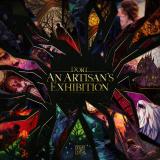
D’ort - An Artisan's Exhibition LP
  • A1: The Artisan
  • A2: Locked Away
  • A3: Broken
  • A4: Hopeless
  • A5: Belial's Call
  • B1: Jkm
  • B2: Silent Tears
  • B3: The Escape
  • B4: Cerridwen's Song
  • B5: A Final Wish
  • B6: Dear Warriors (Vinyl Exclusive)

The album is a conceptual work presented as an exhibition of inner emotions, told from the perspective of the Artisan: an artist seeking to express through sound what cannot be put into words.

Musically,An Artisan's Exhibitionis rooted in emotional, passionate and distinctive Frenchcore. The sound is intense yet intimate, driven by untamed energy but crafted with warmth, care and love. Rather than focusing solely on aggressive sounds or speed, the album emphasizes feeling and expression, using Frenchcore as a vessel for storytelling and emotional release. The story follows a journey from misunderstanding and exclusion to despair, anger, and ultimately insight. What begins as an uncomprehended message evolves into a confrontational struggle with emotions, where anger proves to be a misleading response. Only through learning to express his feelings does The Artisan discover his true purpose.

pre-ordina ora24.04.2026

dovrebbe essere pubblicato su 24.04.2026

22,65
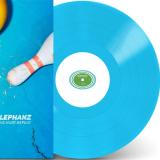
Elephanz - LOVE. HURT. REPEAT LP
  • A1: Follow Your Love
  • A2: That's In My Head
  • A3: The Novel Of Our End
  • A4: Mother
  • A5: I Don't Wanna Know
  • B1: My Feet On The Ground
  • B2: Invisible
  • B3: Streets Of Rage
  • B4: In A Porcelain Shop
  • B5: What Is Love

Fifteen years after their first album "Time for a Change", and drawing on the experience of two others ("Elephanz" 2017, and "Rien de personnel" 2023), ELEPHANZ now returns with a fourth album that carries the scent of first loves, the kind you sing from the heart with your hands gripping a guitar.

"Love. Hurt. Repeat." tells, across ten songs, the story of a return to oneself, like coming home after years spent roaming the world, only to realize that everything you needed to understand yourself was already there at the starting line.

To help you understand what this new album makes me feel, I'd like to tell you about my first meeting with Jon and Max in 2009, when I became the band's bassist. Sixteen years ago, I discovered these two young men and set off in their family Kangoo van on my very first tour.

Through our early rehearsals around the piano of their childhood, I discovered their love for pop music in all its breadth, always in search of harmonies and melodies that touch the heart in the simplest way and gently ease your sorrows along the way. With them, I learned to appreciate the mainstream hits I had previously dismissed on principle, and I discovered the demanding art of melody as I listened to them sing about love and friendship through unforgettable catchphrases.

Listening today to some of the songs from their new album, I think back to those two young men with a big-city rock look, shut away in the living room of their family home, talking only about leaving that dull countryside behind to live the big life in the capital (Streets of Rage). What I once took for a kind of revenge against the hostile environment of their adolescence was in fact an almost vital need to find their place among others, to feel understood in order to feel at ease in their own skin.

Today, I find them again with the same guitar and the same inexpensive Juno as back then, but with the confidence shaped by years of concerts, writing, studio encounters, and all kinds of experimentation. The music of this fourth album has never been so close to that of their earliest days, but their voices have been set free. They no longer sing about who they dreamed of becoming, but about who they have always been, their most distant concerns, sometimes even their darkest ones, yet always in search of the light.

It is as if ELEPHANZ had to travel all the way around the world to come face to face with themselves again. There is no longer any shame in being who you are, and it is even the best way to understand yourself, to exist and to heal. To heal from grief and heartbreak, to understand the child you once were and the one who carried them (Mother), to forgive yourself and finally learn to love yourself.

That is what makes this record as sensitive as it is powerful and strikingly truthful. It was written and recorded like a cry, live, in just a few weeks, using the instruments of their beginnings: sharp bass and drums, powerful guitars, and synthesizers that are at times soaring, at times carriers of liberating melodies. The art of ballads remains, as does that of universal pop songs.

There is a beautiful urgency here, the urgency of finding oneself again in order to understand oneself through both pain and beauty, and "Love. Hurt. Repeat." is its most perfect expression.

pre-ordina ora24.04.2026

dovrebbe essere pubblicato su 24.04.2026

22,65
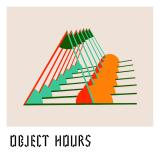
Object Hours - Solved By Walking LP

Leather-jacket krautrock? Indeed. Welcome to the world of Carrboro NC's Object Hours. These generous saviors consist of three Triangle scene lifers who all worship the riff but imagine what happens if the riff fell into the middle of your favorite CAN LP. Yes, it lives up to the hype.

"Solved By Walking" was recorded in the winter of 2025 at Betty's in the Chapel Hill woods, these are mighty rock slabs ready for all seasons. Rock believers have felt the ripples and knew the day was coming. Object Hours is a band that fits right in on stage alongside acts as varied as Kim Gordon and Tropical Fuck Storm, bringing the house down in these and similar moments. These are songs that groove, peel paint, sandblast, inspire unconscious movement, make your head bob - frequently all at the same time. These are the jams inspired by the time that you heard "Fun House" coming out of that dude's car with the windows down in the middle of the summer, the ones inspired by the kids who own 3 copies of "Daydream Nation," the ones who listen to the last 1:30 of Wire's "Too Late" over and over. This is the band that has a timer on stage so they don't keep each song playing for days on end, the band whose Bandcamp bio succinctly summarizes their approach thusly: "We try to keep songs under 25 minutes for your sake." Every word here should be inspiration for you to *want* and *need* to hear this record and every word here is true. Just you wait.

Real heads know and the rest of the heads are getting ready to find out. Get ready for Object Hours' "Solved By Walking".

pre-ordina ora24.04.2026

dovrebbe essere pubblicato su 24.04.2026

27,69
The Gentle People - Soundtracks For Living (Expanded Edition) (LP 3x12")

WRWTFWW Records is proud to present THE GENTLE PEOPLE - Soundtracks for Living (Expanded Edition), ?the ultimate Lounge/Chill Out classic from 1997, reborn! Available as a limited edition white vinyl 3LP in heavyweight 3-panel gatefold sleeve.

When The Gentle People first glided into the mid-90s on clouds of strings, sugar and sine waves, they sounded like visitors from another, more glamorous planet. Signed to Richard D. James and Grant Wilson-Claridge's cult label Rephlex, this multinational "E-Z-Core" lounge unit took the aesthetics of 50s/60s easy listening and exotica and gently smuggled them into 1990s club culture.

Soundtracks for Living was their defining statement: an album that "takes the lounge scene and runs away with it entirely… blissful and heavenly," as one contemporary review put it. Imagine KLF's Chill Out or Space growing up on French 60/70s pop, bossa nova, soundtracks, vocal harmony groups, library music and easy listening then slipping out for a late-night date with dub, ambient techno and bubble-bath pop. That's Soundtracks for Living: a record that can score cocktail hour, 4am taxi rides, and daydreams in headphones with the same effortless grace.

The Gentle People - Dougee Dimensional, Laurie LeMans, Valentine Carnelian and Honeymink - began in early-90s Brixton, throwing dress-up theme parties before taking their audio-visual universe into the studio. For them, music was "a way of life": soothing to the ear, rich in pop hooks, and pitched somewhere between the playfully idiotic and the hyper-intelligent. Their debut on Rephlex was the single "Journey", later blessed with a shimmering Aphex Twin remix that pushed their sugar-coated sound even further into outer space.

This Expanded Edition of Soundtracks for Living finally gives this glambient lounge-pop milestone the treatment it has always deserved. Spread lovingly across 3LP, it features new mastering from the original sources, allowing every harp glissando, string swell and analog squiggle to float in high-fidelity widescreen. The core album is complemented by a bonus 12" of unreleased and rare material, offering a deeper dive into the Gentle world: alternate takes, lost interludes, and secret soundtrack cues for lives not yet lived.

Crucially, "Journey" appears here in its original version, Gentle Instrumental and the cult Aphex Twin remix, reuniting band and labelmate in one place and underlining the quietly radical nature of the project: this was lounge music that could sit next to braindance, acid and IDM and still steal the scene.

Pressed on limited edition white vinyl, Soundtrack for Living (Expanded Edition) invites long-time fans and new listeners alike to step back into The Gentle People's universe - a place of fondue parties, bubble chairs, star-lit elevators and endlessly rewinding sunsets, where "the pathway to the stars" is never quite out of reach.

In an era that often reduces the 90s to big-room bangers and grunge guitars, Soundtracks for Living remains a quietly subversive reminder that the decade was also about imagination, camp, softness and utopian possibility. As later writers have noted, The Gentle People weren't just a curiosity on a weird label; they became unlikely icons of a whole loungecore moment, gracing TV, compilations and magazine spreads, and proving that tenderness could be as futuristic as any drum machine.
In conjunction with this release, WRWTFWW has also unearthed The Gentle People's Peel Sessions, a 4-track EP from their 1997 BBC on-air performance, available on vinyl for the first time ever !

non in magazzino

Ordina ora e ordineremo l'articolo per te presso il nostro fornitore.

31,51

Last In: 52 days ago
Nitai Hershkovits & Daniel Dor - Found & Found LP

Nitai Hershkovits and Daniel Dor return with Found & Found, their second collaborative album and a natural continuation of the musical dialogue initiated with The Garden Suite.

Born out of pure curiosity - "there was more to say, more to explore," explains Dor - the album expands the duo's sonic language beyond the synth-only framework of their previous work. While the Moog remains central, Found & Found introduces clarinet and acoustic guitar, gently dissolving the boundaries between electronic and acoustic sound.

Each composition unfolds through interlocking, mantra-like patterns. Repetition becomes a space for transformation: melodies circle, textures shift, and subtle harmonic movements invite the listener inward. The music is structured with care, yet it feels open and fluid. intimate, spacious and quietly immersive. If their previous record explored orchestral depth through synthesizers, this new chapter embraces air and clarity. Acoustic gestures emerge within electronic landscapes, creating a sound world that is both grounded and weightless.

Nitai Hershkovits brings with his fellow partner Daniel Dor a refined harmonic sensitivity shaped by both jazz and classical traditions. Together they continue to refine a shared language that moves between structure and freedom, precision and emotion.

non in magazzino

Ordina ora e ordineremo l'articolo per te presso il nostro fornitore.

21,81

Last In: 52 days ago
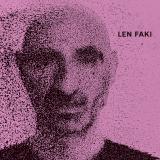
Len Faki - Zera

Len Faki

Zera

12inchFIGURE X52
Figure
24.04.2026

With Zera, Len Faki returns to Figure with a tightly focused EP that moves between raw, driving functionality and more open, atmospheric moments. Across five tracks, he explores variations in groove, tone and energy, balancing direct, floor-ready structures with a more fluid and spacious approach.

Opening cut Maschine Girl locks into a restless, forward-driving groove. Crisp percussion and a tightly coiled low end create immediate momentum, while sharp synth fragments and metallic accents add a nervous edge. The track stays stripped and efficient, letting its steady build and controlled tension carry the energy.
Kobold follows with a darker and more twisted tone. Warped synth figures weave through a heavy rhythmic backbone, giving the track a slightly mischievous character while maintaining a firm, heads-down drive. The interplay between tonal movement and grounded percussion keeps the groove dynamic without breaking its focus.
Closing the A-side, Maschine Girl (Version) revisits the opener from a different angle. Elements are tightened and subtly rebalanced, shifting the emphasis further toward rhythm and direct impact. More reduced and tool-like in nature, it pushes the groove forward with a sharper, club-ready feel.
On the flip, Zera unfolds with a broader sense of space. Hypnotic synth movement and layered atmospheres sit atop a firm low-end framework, gradually building intensity while maintaining a deep, immersive flow. The track thrives on its slow development, drawing the listener further into its evolving structure.
Rounding out the release, Zera (Hardspace Mix) reimagines the original with a heavier, more physical approach. The groove becomes more pronounced and the rhythmic pressure more direct, tightening the structure into a denser, floor-driven tool that emphasises impact and propulsion.
With Zera, Len Faki delivers a cohesive and wide-ranging release that connects raw, driving tools with more expansive, early morning-leaning grooves — further reflecting the breadth and versatility that has defined his output in recent years.

non in magazzino

Ordina ora e ordineremo l'articolo per te presso il nostro fornitore.

13,24

Last In: 37 days ago
Salamanda - Music To Watch Seeds Grow By 008: Salamanda (Basil) (Tape)

Music To Watch Seeds Grow By continues its second season with Seoul-based left of centre ambient duo Salamanda - Uman Therma (Sala) and Yetsuby (Manda) - and their meditation on the inner life of a basil plant. Seeds 008 is an ambient composition born from quiet domestic observation: a single basil on a windowsill, its days shaped by light, warmth, and the slow passage of time.

The album moves through a full day in the plant's life opening with ‘introduce my atom which is my favorite one’, an act of quiet self-declaration in morning light, before settling into the unhurried rhythmic pulse of ‘to to ki toki tok’- the drip of water, the tick of a clock, the slow beat of photosynthesis. ‘allez, pousse!’ - one of the standouts in this journey - carries the basil's gentle will to grow, to push, to tilt toward the sun, while ‘hungry snail’ captures a moment of creaturely encounter on the glass: an uninvited visitor, moving slowly, wanting. As the afternoon deepens, 'Basil's Ritual' traces the daily ceremony of light and warmth, repeated with calm devotion from root to leaf. Night falls across 'Basil's Dream', and in the stillness something like sleep arrives - the plant resting, imagining tomorrow's sun. The album closes with ‘the blue wine’, a final mysterious reverie in which the basil seems to contemplate its own fate, somewhere between acceptance and wonder.

non in magazzino

Ordina ora e ordineremo l'articolo per te presso il nostro fornitore.

12,56

Last In: 50 days ago
inrain - RISE

inrain

RISE

12inchMFM082
MUSIC FROM MEMORY
23.04.2026

Music From Memory presents inrain, a collaborative project by Rudy Tambala of A.R. Kane and Alison Shaw of Cranes, originally recorded in the early 1990s.

inrain brought together two artists who were at the time shaping distinct yet quietly influential currents within alternative music. Through A.R. Kane, Tambala had helped redefine the possibilities of guitar music, placing atmosphere, abstraction, and emotional ambiguity at its centre in ways that would later resonate across dream pop, shoegaze, trip hop and experimental pop. At the same time, Shaw’s work with Cranes was establishing a singular vocal presence and a deeply intuitive approach to mood and space. inrain emerged at the intersection of these sensibilities.

The project began after Tambala was introduced to Shaw by Geoff Travis, leading to sessions at H.Ark! Studios in Stratford, East London. Working outside the expectations of their primary bands, the pair recorded informally over several months, building songs from minimal foundations. Early sampling technology, drum machines, acoustic guitar, and voice were used sparingly, with arrangements left open and space treated as an active element within the music. Vocals were often improvised, first takes preserved, and the atmosphere of the studio — calm, unhurried — became part of the sound itself.

Originally released in limited form during the early 1990s, the recordings carried subtle traces of the surrounding musical landscape: the low-end experimentation of emerging jungle, dub-influenced rhythmic structures, and a restrained melodic sensibility shaped as much by classical textures as by contemporary underground culture. Though modest in scale, the music feels quietly expansive — intimate, patient, and emotionally direct.

For this release, all tracks have been newly remastered from the original DAT tapes. This edition also includes the additional track 'Biology', written and recorded in 2012

In stock dal19.06.2026

19,54

Last In: 4 days ago
ASHA PUTHLI & SAY SHE SHE - PAWA!

Naya Beat is excited to announce 'PAWA!', a soaring disco-funk anthem celebrating feminism and the power (pawa) of togetherness. It is a mouthwatering collaboration between legendary jazz vocalist and disco pioneer Asha Puthli and NYC’s punk-chic, discodelic stars Say She She.

A fortuitous and fleeting window between touring schedules allowed Puthli and Say She She’s Nya Gazelle Brown, Sabrina Cunningham, and Piya Malik to write and record Pawa! with members of the cult funk band Orgone in the English countryside at Mike Oldfield’s (Tubular Bells) studio. Pawa! is a tribute to female fortitude and an anthemic call to action for unity and collective action. PAWA TO THE PEOPLE! Asha’s spoken word bursts into a soaring falsetto while Say She She’s celestial three-part harmonies make for a sublime call and response between the fabled mentor and her gifted disciples. Throw in a stellar bassline and one of tightest rhythm sections around, and you have an instant classic. And if that wasn’t enough, four remixes bring Pawa to the dancefloor! The UK’s legendary Crazy P deliver not one, but three future classics – an epic house take with a stomping bassline, a stripped-down vocal dub, and a sunshine-ready disco dub. Not to be outdone, Greece’s favourite dance duo Boys’ Shorts add magical disco touches and reimagine the original as an eight-minute balearic opus.

Featuring beautiful artwork and a premium poly-lined inner sleeve, the 12" has been cut to vinyl for the discerning DJ and listener by Grammy-nominated Frank Merritt from The Carvery, London.

non in magazzino

Ordina ora e ordineremo l'articolo per te presso il nostro fornitore.

16,39

Last In: 37 days ago
Soul Jazz Records - STUDIO ONE SOUND (2x12")
  • 1: Slim Smith – Hip Hug
  • 2: Ras Michael And The Sons Of Negus – Good People
  • 3: Lord Tanamo – Keep On Moving
  • 4: Wailing Soul – Trouble Maker
  • 5: Rita Marley – Come To Me
  • 6: Johnny Osbourne – All I Have Is Love
  • 7: The Martinis – I Second That Emotion
  • 8: Irving Brown – Run Come
  • 9: The Heptones – Give Give Love
  • 10: Rockie Ellis – Double Minded Man
  • 11: Jackie Opel – The Lord Is With Me
  • 12: Dub Specialist – Happy Feelings
  • 13: Prince Lincoln – Live Up To Your Name
  • 14: Ken Boothe – I Am A Fool
  • 15: Rheuben Alexander – Happy Valley
  • 16: Larry Marshall – There’s A Fire
  • 17: Roland Alphonso – Rolando Special
  • 18: Freddie Mcgregor – Homeward Bound

Studio One Sound is the classic Studio One collection from Soul Jazz Records. Described as ‘The University of Reggae’ by Chris Blackwell, Studio One, and founder Clement ‘Sir Coxsone’ Dodd are by far the most-important names in the history of reggae music. Originally released in 2012 this album has been out of print for many years, making it one of the most-collectible of Soul Jazz Records’ Studio One Series. This is the first ever colour vinyl edition of this classic album.

The album features some of the most in-demand and collectible Studio One tracks from over its fifty-year history and includes incredible legendary reggae artists such as The Heptones, Ken Boothe, The Skatalites, Johnny Osbourne and Wailing Souls. All these artists (and hundreds more) launched their careers at Studio One under the guidance of Clement 'Sir Coxsone' Dodd. The Studio One Sound collection features everything from classic ska and rocksteady to the deepest roots, heaviest dub and dancehall roots. Sleevenotes are by Rob Chapman, author of the celebrated books about Studio One Records, 'Never Grow Old' and 'Downbeat the Ruler'. The exact reproduction of the original artwork features the classic image of Dennis Brown on the cover. This album is newly fully remastered for vinyl by Jason Goz at Transition. Exclusive one-off pressing on heavyweight double transparent green vinyl.

pre-ordina ora18.04.2026

dovrebbe essere pubblicato su 18.04.2026

30,67
Annihilator - Carnival Diablos (2x12")

Annihilator

Carnival Diablos (2x12")

2x12inch4029759175254
Ear Music
17.04.2026
  • A1: Denied
  • A2: Battered
  • A3: Hunter Killer
  • A4: Time Bomb
  • A5: Carnival Diablos
  • B1: The Perfect Virus
  • B2: The Rush
  • B3: Insomniac
  • B4: Epic Of War
  • B5: Liquid Oval
  • B6: Shallow Grave
  • B7: Chicken And Corn (Hidden Track)

Carnival Diablos is an album of red-blooded metal that connected Annihilator’s legacy to their present-day and re-established Jeff Waters’ place in the thrash pantheon. From the frenzied call-and-response of album opener ‘Denied’ to the progressively-edged mid-tempo sway of the title track, Carnival Diablos is a wholly satisfying offering of steak and potatoes heavy metal thrash – more heavy metal, less thrash, but 100% Annihilator at one of their many peaks.

pre-ordina ora17.04.2026

dovrebbe essere pubblicato su 17.04.2026

25,59
Various - Tchic Tchic: French Bossa Nova 1963-1974  Colored Edition LP 2x12"
  • A1: Les Masques - Il Faut Tenir (1969)
  • A2: Isabelle Aubret - Casa Forte (1971)
  • A3: Christianne Legrand - Hlm Et Ciné Roman (1972)
  • A4: Jean Constantin - Pas Tant D'chichi Ponpon (1972)
  • A5: Billy Nencioli & Baden Powell - Si Rien Ne Va (1969)
  • B1-: Marpessa Dawn - Le Petit Cuica (1963)
  • B2: Jean-Pierre Sabar - Vai Vai (1974)
  • B3: Sophia Loren - De Jour En Jour (1963)
  • B4: Isabelle - Jusqu’à La Tombée Du Jour (1969)
  • B5: Sylvia Fels - Corto Maltesse (1974)
  • C1: Frank Gérard - Comme Une Samba (1972)
  • C2: Ann Sorel - La Poupée Des Favellas (1971)
  • C3: Charles Level - Un Enfant Café Au Lait (1971)
  • C4: Andrea Parisy - Les Mains Qui Font Du Bien (1970)
  • C5: Audrey Arno - Quand Jean-Paul Rentrera (1969)
  • C6: Aldo Frank - T’as Vu Ce Printemps (1970)
  • D1: Christianne Legrand - Cent Mille Poissons Dans Ton Filet (1972)
  • D2: Clarinha - Lemenja (1970)
  • D3: Hit Parade Des Enfants - Aquarela (1976)
  • D4: Jean-Pierre Lang - Tendresse (1965)
  • D5: Magalie Noël - Une Énorme Samba (1970)
  • D6: Françoise Legrand - La Lune

Ever since the late 1950s bossa-nova revolution, Brazil’s influence on French music has been undeniable. Pierre Barouh, Georges Moustaki and a vast array of lesser known artists, all made the Musica Popular Brasileira (MPB) an axis of promotion at the service of a cool and metaphysical, modern and mixed Brazilian lifestyle. Some were seduced by the poetic languors of the bossa, some were looking for fun, and others just loved the American hybridization of jazz-bossa, jazz-samba.


What is bossa nova? One of its creators, Joao Gilberto said: "Its style, cadence, everything is samba. At the very start, we didn't call it bossa nova, we sang a little samba made up of a single note - Samba de uma nota so .... The discussion around the origins of bossa nova is therefore useless”. It is nevertheless useful to remember that these magnificent Brazilian songs, which the guitarist describes as samba, were shifted and balanced around improbable chords. "I like things that lean, the in-betweens that limp with grace," said Pierre Barrouh, quoting Jean Cocteau.


With emotion, arrangements for violin and supple guitar licks, bossa nova rapidly changed. A transformation that can be heard in the Tchic, tchic, French Bossa Nova 1963-1974 compilation, the result of a cultural reappropriation, which traveled through the United States and supplemented itself in France.

A musical revolution that has remained significant, bossa nova was born in Rio. From 1956 to 1961, Brazil lived through its golden years. In five years, the country had invented its modernist style. Elected president in 1956, Juscelino Kubitschek de Oliveira, an elegant man with a broad forehead, brandished a promising slogan: "Fifty years of progress in five years". He quickly got to work. Not worried about increasing debt, he launched the project for a new federal capital, Brasilia, designed by the communist architect Oscar Niemeyer. Volkswagen opened state-of-the-art factories and created the “fusquinha”, the Beetle. In Rio, the Vespa made its first appearance. The Arpoador Surf Club crew run into the “girl” from Ipanema, Helô Pinheiro - the tanned garota ("chick"), between a flower and mermaid, who at 17 walked by the Veloso bar, where the fiery author and composer, Tom Jobim and Vinicius de Moraes, were getting drunk on whiskey. From then on, bossa symbolized cool.

In 1958, Joao Gilberto recorded Chega de Saudade, which the directors of Philips denied, calling it "music for fagots". The marketing director, who believed in it, secretly pressed 3000 78-inch vinyls and distributed them at schools around Rio, creating a tidal wave.

American jazzmen then took over. In particular, trumpeter Dizzy Gillespie and guitarist Charlie Byrd. In November 1962, the Brazilian Ministry of Foreign Affairs funded a "Bossa-Nova" concert at Carnegie Hall in New York, inviting the genre’s pioneers. Unprepared, the show soon turned to disaster. But the troupe was invited to the White House by Jackie Kennedy. The first lady loved "the new beat" and in particular Maria Ninguem, a song by Carlos Lyra, later covered by Brigitte Bardot.

In Brazil, the 1964 military coup quickly ended this euphoria. The destructive atmosphere that ensued pushed many Brazilian musicians to leave, if not to exile. Thus, Tom Jobim, Sergio Mendes and Joao Gilberto arrived to the United States. In New York, Joao Gilberto met saxophonist Stan Getz. At the time, he was married to the Bahianese Astrud Weinert Gilberto, who had a German father. She had never sung before, but she knew how to speak English. Getz therefore asked her to replace her husband on The Girl From Ipanema. The Getz/Gilberto record with Tom Jobim on piano, was released in March 1964. Phil Ramone, the "pope of pop" was in charge of sound.

Bossa nova arrived in Paris through the classic “guitar-voice” channel (Pierre Barouh, Baden Powell, Moustaki…) But France loved jazz and Paris had already welcomed its American contributors. All these good people were to pass through Saint-Germain-des-Prés. The cabaret l'Escale became the Mecca of Latin American sound where one could find Pierre Barrouh and his friends, such as the Camara Trio, samba-jazz aces, whose only record was published by the Saravah label. With a band strangely called Les Masques (a band that included Nicole Croisille and Pierre Vassiliu, among others), the Camara Trio recorded an interesting Brazilian Sound, including the track Il faut tenir which is present on this tasty compilation of rarities.

Other enlightened musicians can also be found on the compilation, such as Jean-Pierre Sabar (songwriter for Hardy, Auffray, Leforestier ...) and the French pop rock organist Balthazar. In 1975, Sabar recorded Aurinkoinen Musiikkimatka on a Finnish label, which featured the crazy Vai, Vai, included on this record. We are now following the footsteps of Brazilian electronic musicians such as Sergio Mendes, Eumir Deodato or Marcos Valle who created funk and disco sounds on their keyboards and synthesizers. A style that influenced Véronique Sanson when she wrote Jusqu’à la Tombée de la nuit in 1969 for Isabelle de Funès, the niece of Louis and a great friend of Michel Berger - Sanson did end up singing this track on her 1992 Sans Regret record.


The pinnacle of exoticism and travel, Sylvia Fels’ Corto Maltese includes bongos, sea mist and ocean sounds. The title was taken from Jacky Chalard’s concept album written in 1974, Je suis vivant, mais j’ai peur (I am alive, but I am scared), based on Gilbert Deflez’s science fiction novel.


However, bossa nova extended the scope of popularity. "In the 1970s, I was a fan of Sergio Mendes, Getz / Gilberto. I fell in love with this music that I knew because I had been an orchestral singer, " explained Isabelle Aubret, who in 1971 delivered a composite record of covers by the very funky Jorge Ben, Orfeu Negro, Tom Jobim, Vinicius de Morais and Jean Ferrat. "I recorded this album for Meys Records in Paris, far from Brazil, with wonderful musicians, François Raubert, Roland Vincent, Alain Goraguer...". The latter wrote the arrangements for Casa Forte, a very percussive title borrowed from Edu Lobo, one of the initiators of the bossa who spent time in California. "Jazz and bossa came together and produced very rhythmic music. I love singing, it allows me to dream, to have fun, to feel a high on stage, and these songs brought me joy, made me swing, my singing felt like a dance.”


The world tours of French singers and their desire for the tropics, often brought them to Rio with its hills, forests, caipirinhas and tanned bodies. There are surprises though, like this Iemenja (Iemenja is the goddess of the sea in the Afro-Brazilian candomblé religion). Not unlike the composer and musician Jean-Pierre Lang, based in Sao Paulo, Claire Chevalier taught Brazil to Brazil. In 1970, the singer and painter published a 45-inch vinyl, Mon mari et mes amants (My husband and my lovers), under the improbable pseudonym of Clarinha (little Claire). She was then living in Rio, with her husband, Joël Leibovitz, who founded a band called Azimuth, and who owned a record label specialized in "sambas enredos" songs for samba school parades.


For its B side, she asked Pierre Perret to come up with lyrics for a song composed by Carlos Imperial: "Oh goddess of the sea, o goddess Iemenja, I bring a white rose to adorn your long hair ..." . "Perret came to see us, and we had fun, remembers Joël Leibovitz. We wrote Lemenja for fun, we recorded it at the Havaí studio, behind the Central do Brasil the central station. Erlon Chaves, the arranger who worked with Elis Regina, joined us" adding his share of Afro-Brazilian percussions and funky brass to the mix.

There is a common misunderstanding in Franco-Brazilian history: that bossa, admittedly hedonistic, is perceived as funny, even though the poets who wrote the texts are often philosophizing on the human condition. Its French interpreters pull it towards a carnival inspired universe, far removed from its fundamental essence. Thus, Jean Constantin covered the famous Samba da minha terra, an ode to the art of samba written by the classic Bahian composer Dorival Caymmi, renaming it with the enticing title of Pas tant de tchi tchi pompon: "On your pier there is no tchi tchi / when you arch your back, you know everything is alright ”(lyrics by Gérard Calvi). This expedited bossa aims for the absurd, but retains a certain elegance.

Indeed, Jean Constantin was not an idiot, the rather large man had a huge mustache and liked fantasy, (Les pantoufles à papa, Le pacha, inspired by cha-cha-cha-cha, salsa and jazz) but he was also the lyricist of Mon manège à moi interpreted by Edith Piaf, the composer of Mon Truc en plume by Zizi Jeanmaire and the soundtrack of François Truffaut’s 400 Blows. Le Poulpe, published in 1970, from which this bossa is extract, was arranged by Jean-Claude Vannier, an accomplice of Serge Gainsbourg’s Melody Nelson. In short: "There is enough of samba / By looking at the parasol / Because my poor cabeza / Is going to die in the sun".

Even the American actress Marpessa Down, who was at the heart of the bossa nova revolution with her role as Euridyce in Marcel Camus’ film Orfeu Negro, winner of the 1959 Cannes Palme d'or, fed the clichée with Je voudrais parler au petit cuica - "Tell me how you manage to always make people want to dance / It's true, I must admit that I cannot resist your magic" - in consequence, once can hear the cuica, a little drum inherited from the Bantu.


But bossa nova had many angles. Societal, of course, pushing actresses who were symbols of women's liberation like Brigitte Bardot, Jeanne Moreau, or Sophia Loren to engage in the exercise of accelerated bossa. In February of 1963, Sophia Loren made a record in French in Rome, Je ne t'aime plus, featuring the song De jour en jour, a bossa written by two Italians, Armando Trovajoli and Tino Fornai, which was released a little later by Barclay. Bossa accompanied the 1960s, a decade of moral liberation. Ann Sorel, who interpreted La Poupée des favellas, caused a sensation with L’amour à plusieurs, a provocative song written by Frédéric Bottom and Jean-Claude Vannier. As for the actress Andrea Parisy, she displayed her bourgeois cheekiness in Marcel Carné's Les Tricheurs before interpreting Les mains qui font du bien. And Magalie Noël, the friend of Boris Vian, who sung Johnny fais-moi mal, was hired to sing Une énorme Samba, composed by Alain Goraguer (arranger to Gainsbourg, Bobby Lapointe and Jean Ferrat) with lyrics by Frédéric Botton.

But in the end, of what wood is bossa nova made of? The answer is given by Christianne Legrand, daughter of Raymond the conductor, and sister to Michel the composer: "With me, with jà" - jà means "immediately" in Portuguese. In 1972, the singer, an expert in vocal jazz and a member of the Double Six, published Le Brésil de Christianne Legrand. Two songs included on the Tchic Tchic compilation that demonstrate how bossa, jazz, funk, rock, etc. work like a swiss army knife: the music is used to denounce broken systems, or miracles, HLM et ciné roman, Cent mille poissons dans ton filet, two songs from the O Cafona soundtrack, a successful telenovela broadcast, at the time in black and white, on TV Globo. The first was adapted in French by the fighter and friend of the Legrand tribe, Agnès Varda. The second is content with a play on words, jostling them into a summer fun.


Véronique Mortaigne
pre-ordina ora

Questo articolo non è stato ancora rilasciato. È possibile pre-ordinare il prodotto ora.

27,31
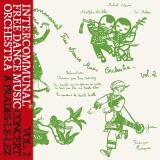
Intercommunal Free Dance Music Orchestra - Vol. 2 Concert A Prades Le Lez

Concert at Prades-le-Lez marks the origins of the Intercommunal Free Dance Music Orchestra. In 1974, François Tusques and his companions (Michel Marre, Jo Maka, Adolf Winkler and Guem), in the spirit of Don Cherry or Chris McGregor, playfully dismantle all borders and all styles of creative music.

On this second volume, the Intercommunal builds unprecedented soundscapes around a song of revolt, a dance tune, or a burst of dissonance. The journey is unforgettable, no question about it. On repeat listening, it even becomes… lunar!

“The music that we make is primarily meant to be listened to live,” warned a leaflet from the Intercommunal Free Dance Music Orchestra. This is precisely why the (restored!) reissue of the two volumes of Concert at Prades-le-Lez, recorded on January 25 and 26, 1974 by François Tusques and his comrades, is such an important event.

In 1971, after recording a series of albums that would leave a lasting mark on French jazz (Free Jazz, of course, with Michel Portal, François Jeanneau, Bernard Vitet, Beb Guérin and Charles Saudrais, but also Le Nouveau Jazz with Barney Wilen, or the solo Piano Dazibao), François Tusques founded the Intercommunal—a grouping whose very name called for the fraternization of the various communities making up the country: Our music will help, we hope, to resolve the contradictions that exist between workers be longing to different communities, by breaking down various forms of national chauvinism, and more particularly the chauvinism of certain French people toward the cultures of Third World countries… Long live the friendship between the peoples of the whole world!

Among the great records made by the Intercommunal Free Dance Music Orchestra, the two volumes of Concert at Prades-le-Lez come first, before L’Inter Communal, Vol. 4, Le Musichien, and Après la marée noire (four titles already reissued by Souffle Continu). François Tusques and his companions (Michel Marre and Jo Maka on saxophones, Adolf Winkler on trombone, and Guem on percussion) performed on January 25 and 26, 1974 at the Moulin de Prades-le-Lez, a few kilometers from Montpellier. It was thus in the southern region of Occitanie that the first echoes of this musical vision of a borderless brotherhood were recorded.

“We’re not among the Colonels,” the Intercommunal reassures us right away, performing a stride piano tune carried by African winds that the audience cannot resist for long. The energy is already striking and it never lets up throughout these two recordings, from start to finish: jazz, blues, traditional music, minimalism, even funk… The musicians of the Intercommunal have heard a lot of great music and now delight in reinventing it by mixing it all together.

“We want the song form to take its place as a weapon in the struggle against capitalist exploitation and all those who oppress us morally and materially,” declared an Intercommunal leaflet, quoting Jean-Baptiste Clément, author of the lyrics to “Le Temps des cerises.” The struggle was therefore serious—but it did not prevent François Tusques and his group from waging it in a festive spirit: each piece on Concert at Prades-le- Lez sends out a call for love and fraternity. Fifty years later, the message remains as relevant as ever—and once again, it is François Tusques who makes it heard.

pre-ordina ora17.04.2026

dovrebbe essere pubblicato su 17.04.2026

23,95
Intercommunal Free Dance Music Orchestra - Vol. 1 Concert A Prades Le Lez
  • On N'est Pas Chez Les Colonels
  • Intercommunal Blues
  • Mazir
  • Kan-Ha-Diskan - We Shall Over Come
  • African Rythm-N-Logy
disponibile anche

2[23,95 €]


Concert at Prades-le-Lez marks the origins of the Intercommunal Free Dance Music Orchestra. In 1974, François Tusques and his companions (Michel Marre, Jo Maka, Adolf Winkler and Guem), in the spirit of Don Cherry or Chris McGregor, playfully dismantle all borders and all styles of creative music.

On this first volume, the Intercommunal takes its audience from New Orleans to Brittany and on to North Africa. The journey was bold, without a doubt—and its memory remains unforgettable.

“The music that we make is primarily meant to be listened to live,” warned a leaflet from the Intercommunal Free Dance Music Orchestra. This is precisely why the (restored!) reissue of the two volumes of Concert at Prades-le-Lez, recorded on January 25 and 26, 1974 by François Tusques and his comrades, is such an important event.

In 1971, after recording a series of albums that would leave a lasting mark on French jazz (Free Jazz, of course, with Michel Portal, François Jeanneau, Bernard Vitet, Beb Guérin and Charles Saudrais, but also Le Nouveau Jazz with Barney Wilen, or the solo Piano Dazibao), François Tusques founded the Intercommunal—a grouping whose very name called for the fraternization of the various communities making up the country: Our music will help, we hope, to resolve the contradictions that exist between workers be longing to different communities, by breaking down various forms of national chauvinism, and more particularly the chauvinism of certain French people toward the cultures of Third World countries… Long live the friendship between the peoples of the whole world!

Among the great records made by the Intercommunal Free Dance Music Orchestra, the two volumes of Concert at Prades-le-Lez come first, before L’Inter Communal, Vol. 4, Le Musichien, and Après la marée noire (four titles already reissued by Souffle Continu). François Tusques and his companions (Michel Marre and Jo Maka on saxophones, Adolf Winkler on trombone, and Guem on percussion) performed on January 25 and 26, 1974 at the Moulin de Prades-le-Lez, a few kilometers from Montpellier. It was thus in the southern region of Occitanie that the first echoes of this musical vision of a borderless brotherhood were recorded.

“We’re not among the Colonels,” the Intercommunal reassures us right away, performing a stride piano tune carried by African winds that the audience cannot resist for long. The energy is already striking and it never lets up throughout these two recordings, from start to finish: jazz, blues, traditional music, minimalism, even funk… The musicians of the Intercommunal have heard a lot of great music and now delight in reinventing it by mixing it all together.

“We want the song form to take its place as a weapon in the struggle against capitalist exploitation and all those who oppress us morally and materially,” declared an Intercommunal leaflet, quoting Jean-Baptiste Clément, author of the lyrics to “Le Temps des cerises.” The struggle was therefore serious—but it did not prevent François Tusques and his group from waging it in a festive spirit: each piece on Concert at Prades-le- Lez sends out a call for love and fraternity. Fifty years later, the message remains as relevant as ever—and once again, it is François Tusques who makes it heard.

pre-ordina ora17.04.2026

dovrebbe essere pubblicato su 17.04.2026

23,95
Morita Vargas - III

“III” is an intimate, cinematic and dream-like body of work — written, produced and mixed by Morita Vargas, and recorded in Buenos Aires between 2014 and 2025. The album was mastered by Rafael Anton Irisarri at Black Knoll Studio (NY), adding depth and clarity to its carefully built sonic landscape.

The visual world of the record is an essential part of the release. The cover artwork was crafted by Juliana Guglielmi, Ariadna Aylen Barrios, and Noelia Garreffa, whose combined vision creates a unified visual narrative that reflects the album’s emotional depth and atmospheric essence. The LP layout and full manufacturing realization were carefully executed by Ilja Tulit, translating the complex design ideas into their final tangible form of a vinyl release.

“III” marks a special release for Hidden Harmony Recordings. Morita Vargas was among the first artists released when the label began in 2020–2021, and her work played an important role in shaping the spirit and direction of Hidden Harmony.

pre-ordina ora17.04.2026

dovrebbe essere pubblicato su 17.04.2026

27,52
Edith Piaf - Essential LP
  • Non, Je Ne Regrette Rien
  • La Foule
  • L'accordeoniste
  • La Goualante Du Pauvre Jean
  • Les Trois Cloches
  • Un Etranger
  • Les Mots D'amour
  • Sous Le Ciel De Paris
  • Hymne A L'amour
  • La Vie En Rose
  • Milord
  • Mon Dieu
  • Bravo Pour Le Clown!
  • C'est L'amour
  • Cri Du Coeur
  • Je Hais Les Dimanches
  • Le Chevalier De Paris
  • Padam, Padam

This 18- track selection spans Edith Piaf' s career from the years 1946 to 1961. It includes all of her big hits, such as 'La Vie en rose', 'Non, je ne regrette rien', 'Hymne a l'amour', 'Milord', 'La Foule', 'L'Accordeoniste', and 'Padam Padam', among many others. Regarded as France's national chanteuse, singer songwrite, and actress Edith Piaf (1915-1963), also became one of the country's greatest international stars. Her music was often autobiographical with her songs reflecting her own personal life. Piaf's specialties were the chanson and torch ballads, particularly those of love, loss, and sorrow.


[q] Le Chevalier De Paris [aka Les Pommiers Doux]

pre-ordina ora17.04.2026

dovrebbe essere pubblicato su 17.04.2026

21,64
Jérôme Bouve & Delphine Dora - Vents d’aether LP
  • Vent D'aether
  • Réville V
  • Levast Ill
  • Le Vast Iv
  • Le Vast Xiii
  • Montfarville V

»Vents d’aether« is the first collaborative album by sound artist Jérôme Bouve and composer-performer Delphine Dora. The six pieces are based on live improvisations on organ and harmonium. They were recorded in different churches on the Cotentin peninsula in France’s Normandy region and later enriched with additional field recordings by SA~RA. This adds an extra layer to compositions which were created both in and out of the moment and which quite literally resonate with the histories of the instruments and the buildings that were so integral to their emergence. »Vents d’aether« is to be understood as a dialogue between sound and space that takes place across time and place.

Bouve carried the idea of working with the organs and harmoniums that can be found in the churches and chapels in the Val de Saire in the Northeast of Cotentin around with him for years. When he got to know Dora, he found the perfect musical partner with whom to finally make a record »about the wind, the wood, the stones of the Val de Saire.« In September 2024, the duo embarked on a short but fruitful journey during which they stopped by at several different churches. They recorded hours-long improvised sessions dedicated to »capturing the moment, letting space and time shape gestures and sound, seizing fleeting epiphanies in their greatest simplicity,« as Dora notes in the album’s linernotes.

She took the lead behind the instruments, however Bouve assisted her on drawbars for the last two pieces on »Vents d’aether,« thus adding an even more unusual touch to the recordings. They formed the basis for an album that Dora calls »the testimony of a sensory quest, a collection of memories suspended in time.« Indeed, starting with the epic 20-minute-long titular piece up until the ringing of church bells near the end of the closing piece »Montfarville V,« this overwhelming yet intimate record blurs the boundaries between different times and spaces altogether.

pre-ordina ora17.04.2026

dovrebbe essere pubblicato su 17.04.2026

23,49
Niagara - Buxtehude (TAPE)

Niagara

Buxtehude (TAPE)

CassetteSUC75
Sucata Tapes
17.04.2026

Niagara return to Discrepant with Buxtehude, a new work bending the legacy of Dietrich Buxtehude into their own fractured, electro-organic language.

Rather than a tribute, Buxtehude feels like an abstract dialogue with the Baroque composer’s sense of structure and flow—reimagined through Niagara’s raw synth work, off-grid rhythms and subtly warped melodic cycles. The trio let the music grow from the inside out: patterns expand and contract, harmonies tilt slightly off their axis, and small details accumulate until each piece reveals its own internal gravity.

There’s a clarity to Buxtehude that feels carved rather than composed. Tracks move with a quiet insistence, like mechanical organisms finding coherence through repetition and drift. Melodic fragments surface briefly, disappear, then return transformed, lending the album a strange balance between austerity and warmth.

With Buxtehude, Niagara continue to refine their unmistakable approach—playful yet rigorous, minimal yet full of life— remaining entirely their own.

pre-ordina ora17.04.2026

dovrebbe essere pubblicato su 17.04.2026

13,03
Kiioto & Lou Rhodes - Black Salt LP

Kiioto & Lou Rhodes

Black Salt LP

12inchKIIOTOLP01
Kiioto
17.04.2026
  • 01: Moth
  • 02: Butterfly
  • 03: Warpaint
  • 04: Walking Backwards
  • 05: Lost Map
  • 06: Zero Gravity
  • 07: Little Axe
  • 08: Paper Ships
  • 09: White Noise
  • 10: Five Eight

Black Salt is the second album from Kiiōtō (Mercury Music Prize nominated singer/songwriter Lou Rhodes, former lead vocalist and co-founder of Lamb and award-winning songwriter and pianist Rohan Heath). Their debut album, As Dust We Rise, was released in 2024 to critical acclaim.


Stylistically Black Salt leans further into Jazz, broken beat and soul textures than the debut,with references as diverse as Carole King, Khruangbin and Alice Coltrane. The resulting album is impossible to define by genre, but is fused by the unique interplay of Heath's melodic sensibilities and Rhodes inimitable voice.

Written primarily in Kiiōtō's home studio in North London, Black Salt features guest appearances from a melting pot of musicians, notably guitarist Hawi Gondwe (Amy Winehouse), double-bassist Andy Hamill (4 Hero, Carleen Anderson), drummer Mykey Wilson (Corrine Bailey Rae), and even some impromptu guitar by the one and only David Arnold.


BLACK SALT is out April 2026.

pre-ordina ora17.04.2026

dovrebbe essere pubblicato su 17.04.2026

25,00
Various - Scorcese Sounds - A Tribute To Martin Scorsese (2x12")
  • A1: Dean Martin - You're Nobody Till Somebody Loves You
  • A2: Tony Bennett - Rags To Riches
  • A3: The Ink Spots - Whispering Grass (Don't Tell The Trees)
  • A4: The Shirelles - I Met Him On A Sunday (Aka "Da Doo Ron Ron")
  • A5: Robert & Johnny - You're Mine
  • A6: Howlin' Wolf - Smokestack Lightning
  • A7: The Cramps - The Creature From The Black Leather Lagoon
  • B1: Jimmy Smith - Walk On The Wild Side
  • B2: Jimpson & Group - The Murderer's Home
  • B3: Santo & Johnny - Sleep Walk
  • B4: Lonnie Johnson - Tomorrow Night
  • B5: Glenn Miller & His Orchestra - Moonlight Serenade
  • B6: Muddy Waters - Hoochie Coochie Man
  • B7: The Berlin Radio Symphony Orchestra - Radetzky March
  • C1: The Harptones - Life Is But A Dream
  • C2: Bing Crosby With Victor Young's Orchestra - Just One More Chance
  • C3: Charlie Parker - I'll Remember April
  • C4: Johnnie Ray - Cry
  • C5: Benny Goodman - Moonglow
  • C6: Lavern Baker - Tweedlee Dee
  • C7: Frankie Carle - I Want A Girl (Just Like The Girl)
  • D1: Ray Charles - Come Rain Or Come Shine
  • D2: Bo Diddley - Road Runner
  • D3: Brenda Lee - I'm Sorry
  • D4: The Marvelettes - Please Mr. Postman
  • D5: Jackie Gleason - Melancholy Serenade
  • D6: The Hot Club Of France With Django Reinhardt & Stéphane Grappelli - What Is This Thing Called Love
  • D7: The Danleers - One Summer Night
pre-ordina ora17.04.2026

dovrebbe essere pubblicato su 17.04.2026

25,17
Articoli per pagina:
N/ABPM
Vinyl