
out of Stock
Order now and we will order the item for you at our supplier.
18,45 €
Last In: 7 years ago
Order now and we will order the item for you at our supplier.

Order now and we will order the item for you at our supplier.

Alésia Cosmos was a collective of musicians led by Bruno de Chénerilles formed in the early 1980s in Strasbourg, France. The group consisted of Pascal Holtzer (guitar, synthesizer, tapes, drum machine, vocals), Pierre Clavreux (vocals, gong), Marie-Berthe Servier (vocals), Bruno (guitar, tapes, synthesizer, drum machine, vocals) and Tunisian percussionist Lotfi Ben Ayed (darbukas, bendir). In 1981 Bruno composed and wrote some sci-fi radio plays for French state radio channel France Culture. Under the influences of William Burroughs, John Cage, Pierre Henry and others, he developed tape music studio work. By 1982 he appeared for the first time under the name Alésia Cosmos Furi Show. It was a solo performance on guitar, voice, analog synth and tapes. This experimental show lead to a music project based on Bruno and Pascal's compositions to be performed and recorded with other musicians in the beginning of 1983.
Exclusivo! was the group's debut album recorded and self-released in 1983 on Planetarium. Pascal and Bruno would compose tunes in their personal home studios. Then they would bring the tapes, electronics, guitar lines and lyrics to experiment and rehearse with the other members of the group. Improvisations and adaptations brought more ideas and the album was recorded in a few days. The result was a musical mixing of electronic music, field recordings, North African and Asian percussion, electric guitars and voices, compositions and free improvisations. All four musicians take turns singing onomatopoeic phrases and backing vocals, even sometimes in an unknown language, a sort of mixed bag between Breton and Japanese. All songs have been remastered cut by George Horn at Fantasy Studios in Berkeley. Each LP is housed in a replica of the 1983 cover and includes a 6-page insert with photos, lyrics, reviews and liner notes by Bruno de Chénerilles.
Order now and we will order the item for you at our supplier.

Bambino Recordings is back with the highly anticipated repress of Toka Project's 'Ego Trip’ EP due to overwhelming demand for the vinyl. W&P by Andrew Riley, renowned as one-half of the legendary Inland Knights. Originally released 21 years ago, this timeless classic is now available once again. Secure your fresh copy now before it sells out! The tracks still sound as fresh today as they did 21 years ago, one of the very reasons they have been in constant rotation in many of well known DJ’s sets for years. Expect deep, tough, bumping underground house aimed to liven up any dance floor.
On Stock and ready to ship

Limited Edition[25,63 €]
The fifth release from Diggers Society Records is signed by one of the most influential duos in the underground electronic scene of the past 20 years: The Analogue Cops. Lucretio and Marieu deliver a finely crafted, dancefloor-oriented EP, strongly defined by the techno, electro, acid, and house sounds that have become their unmistakable signature. The A-side opens with two full-on techno dancefloor bangers, ‘Fake Black Out’ and ‘Do What You Want’, while the B-side leans more towards house, driven by the hypnotic progression of ‘Milano Gipsy’ and the intense bassline of ‘Chinese Coffee’. The duo’s creativity and brilliance shine through in raw, unconventional solutions that surface in every moment of the EP.
Artwork by @designattitude_graphic
The item is already on it's way to us and is expected to be shipped from 02.06.2026.

The fifth release from Diggers Society Records is signed by one of the most influential duos in the underground electronic scene of the past 20 years: The Analogue Cops. Lucretio and Marieu deliver a finely crafted, dancefloor-oriented EP, strongly defined by the techno, electro, acid, and house sounds that have become their unmistakable signature. The A-side opens with two full-on techno dancefloor bangers, ‘Fake Black Out’ and ‘Do What You Want’, while the B-side leans more towards house, driven by the hypnotic progression of ‘Milano Gipsy’ and the intense bassline of ‘Chinese Coffee’. The duo’s creativity and brilliance shine through in raw, unconventional solutions that surface in every moment of the EP.
This special edition also includes a 10" limited to 100 hand-numbered copies, featuring two exclusive productions: “Burning Jack” and “Yes Or Not”.
Artwork by @designattitude_graphic
The item is already on it's way to us and is expected to be shipped from 02.06.2026.

Collecting Orders for 2026 Repress
Music for Swimming Pools has put together their first-ever compilation here and it's a self-titled series that launches with Volume One. It's an assembly of their friends and label family members in with newly discovered gems.
Some cuts are exclusive and some of them hint at projects to come, while some are making vinyl debuts. Pete Herbert kicks off with a seductive downbeat jam, Max Essa's 'Sacaton Skylines' is a new age delight and Gafas Du Soul lays down deep sunset house vibes on the gorgeous 'Embers' amongst many other highlights. A fine first collection for sure.
expected to be published on 02.06.2026

Xistence Records is destroying the boundaries between house and techno. The Rise E.P. simply goes to show you a good label does not lose it's competency after 4 years of releasing music. This 4 tracker sounds sublime! If you like deep emotional melodic music, you should have this 12”.
Difficult to pick a standout track as they all offer something different…
The original version of Resilience is a stunning track, reminds of the early Octave One sound with a great mixture of percussion, classy bassline, nice layering of textures and melodies.
While Gerald Mitchell (Underground Resistance/Los Hermanos) retouch is a soulful stripped back tune with elegant drum work, linked together by a uplifting synth pattern.
Sunset To Sunrise, a delightful piece of haunting electronica. It’s a real journey back to the birth of Los Hermanos. Class!
Meteoric Rise original version came out as digital earlier on the label, Journey Around The Sun Mix here has the UR sound. It’s more complex, Detroit lesson in syncopation and rhythmic programming with chord stabs and shuffling drum work drives this one forward..epic!
“Without Hope None Of Us Have Anything “
expected to be published on 02.06.2026

Sometimes the title of an album tells you everything you need to know. Laurence Pike’s Possible Utopias for Jazz Quintet is like that: The music within represents a search for freedom, potentiality—liberatory strategies that transcend the ego and the solitary, atomized figure.
But in this case, the album title is also a red herring, because there is no jazz quintet here—just Pike, his drums, and his machines, not so much an ersatz ensemble as a purely notional one, a thought experiment equipped with drumsticks, circuitry, and the desire to go beyond hardwired limits.
And the results, strictly speaking, aren’t really jazz, though they incorporate the vocabulary of jazz, along with that of ambient, electronica, and post-rock. They are some other thing, cognizant of genre but never beholden to it. Again, we’re talking about a search for freedom here.
The Sydney-based musician has a long history of coloring outside the lines, not just in his solo recordings—including four albums for the Leaf label between 2018 and 2024—but also in the trio Pivot (later PVT); Szun Waves (alongside saxophonist Jack Wyllie and Border Community’s Luke Abbott); Triosk, which recorded an album with Jan Jelinek in 2003; and even post-punk titans Liars, whom he joined in late 2018.
Of his first album for Balmat, Pike says, “My loose concept was: What does music sound like when the expectations of late capitalism are removed from it? How might a jazz musician from an idealised culture of the future, or even another world, utilise musical language when the conventions of style and marketing are no longer a factor in music making?”
That inquiry, he says, connects to his “guiding principle: that the purpose of music is to access something bigger than the individual, and reveal a sense of possibility and freedom in the world to the listener. To create an understanding that the future can be something other than what we imagined or expect, even unconsciously.”
Heady ideas, but plug into his stream-of-metaconsciousness flow and you may start to intuit what motivates him. There is a deeply lyrical expression in these pieces—in the ruminative piano of opener “Guardians of Memory,” for example—but also a sense of exploded perspective, of ideas approached from more angles than any one mind could dream up. Of a collectivized consciousness, of mycelial networks branching across tone and rhythm and timbre, of ideas articulated in distributed fashion, nodal points dancing across drum heads.
Pike’s imaginary quintet is hardly without precedent; it’s a continuation of concepts floated across Jan Jelinek’s Loop-Finding-Jazz-Records, Burnt Friedman’s many guises, and much of the recombinant improv of the International Anthem roster, not to mention the far corners of ECM’s catalog in the late 1970s and 1980s, which Pike says have been integral to his development since he was a teenager. Possible Utopias for Jazz Quintet is a point in a continuum, a voice in a conversation, a question with no obvious answer: How can the search for otherness in music manifest something true about ourselves?
expected to be published on 02.06.2026

PARK PLACE With PAUL TILLMAN SMITH
MAGAZINE GIRL b/w SIMPLE LOVE LIFE
IZIPHO SOUL in association with CHUMP CHANGE RECORDS is thrilled to announce an intriguing new 7”.
From the pen and production prowess of Oakland’s unsung hero Paul Tillman Smith, ably assisted by co-producers Nelson Braxton and Levi Seacer Jr. we present the following musical gems:-
‘Magazine Girl’ featuring the striking vocals of Donnie Williams singing a tale of fantasy. Delightfully crafted for this record, ‘The Catwalk Mix’ by Philip Ward.
‘Simple Love Life’ - modern-day soulful boogie of the highest order, featuring the sensual voice of Terrill Carter.
Also included is Paul Tillman Smith’s ‘Country Rap Epilogue’ cut as a separate track to offer both a humorous twist and context to the song.
Dual label design to reflect the theme’s of each side.
expected to be published on 02.06.2026

With releases on now legendary labels like Kazumi or Holzplatten the Japanese producer Yamaoka has been rooted in the Techno scene since the late 90s, even though the stylistic range of his entire body of work over the past decades exceeds pure dancefloor functionality by far. Originally released via the Leipzig-based underground label Minor in 2017 the two tracks on this super limited 7“ vinyl release capture a raw, hounded and unpolished high octane take on Techno which is rarely to be found these days with especially the B-side cut „Low“ presenting an absolute peaktime weapon for the adventurous and experienced DJ's out there.
Never officially distributed before and only known and recognized by a few well informed selectors out there this is the first time ever this unrecognized gem is available to a wider audience, albeit in highly limited quantities.
Limited pressing of 100 single copies on blue vinyl.
The item is already on it's way to us and is expected to be shipped from 02.06.2026.

New to the label family artist HAL from Leipzig (with previous releases for Masa Series, Counterchange Recordings & Kann Records) makes his a.r.t.less debut with "Halcyon" for the second release in the XTR series, a three-track journey through dreamy, dubby and slightly acid-touched deep techno, music made for the magic morning hours. The vinyl comes in various random special editions, including glow in the dark, pearl like green and holographic purple, marbled and some black copies for the purists. Enjoy!
The item is already on it's way to us and is expected to be shipped from 02.06.2026.
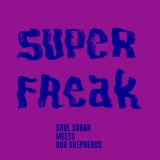
After the success of their first collaborative album Blue House Rockin’, Soul Sugar and Dub Shepherds reunited at the Blue House Studio for a new analog-heavy recording session.
Super Freak is the first single from these sessions: a fiery 70s-style reggae reinterpretation of Rick James’ classic. Led by Jolly Joseph’s signature falsetto, it rides a heavyweight bass line, playful reggae groove, and warm layers of organ, piano, guitar, and Mini Moog, all recorded live on vintage gear.
The journey continues at Bat Records Studio, where Dub Shepherds apply their trademark “hard mix” on 24-track tape,
bending sound, space, and rhythm into a deep dub sorcery.
This 7-inch 45 rpm single features both vocal and dub versions and paves the way for the forthcoming album Blue House Rockin’ Vol. 2.
The item is already on it's way to us and is expected to be shipped from 03.06.2026.

Since the early 2010s, photographer and producer Izaak Schlossman has been surreptitiously using the Topdown Dialectic moniker to frame his most enigmatic and most psychedelic productions: faceless pure sound experiments that ogled dub and techno archetypes from somewhere far beyond the veil. This generous 2LP collection surveys over a decade of persistent activity, pulling together recently unearthed gear written between 2013 and 2016 (the same time period as the iconic Peak Oil trilogy) and muddling it with more contemporary material. It's a rare chance to fully comprehend the slow, measured evolution of the project: its genesis as a method to fractalize various bass music frequencies with suggestion rather than over-compression, and its ongoing advancement through sensitively finessed ASMR ambiance towards spangled neo-psychedelia.
So it's no surprise that the lengthy suite of five-minute snapshots was initially devised while Schlossman was preparing for his first ever Topdown Dialectic live appearance in 2025. A hazed early morning, open air performance that's still lodged in the memory banks of anyone who witnessed it, the set provided the narrative anchor for the album, blurring the past and present and reaching tentatively into the future - ideal material for audiences whose brains are fully plasticized. The tracks, while divided, sound as if they're breathing over and into one another; beats and phrases materialize and dissolve just for moments, leaving the mind to fill in the gaps with any available sonic material. What might reflect the bright neon light of acid house at first soon embodies the flicker of a candle over a desk of drum machines in a Midwestern basement, or the first blush of sunlight over a tiny campground as subwoofers creak in the distance.
It's music that asks the listener to be involved in the creation itself, projecting their own shapes on the negative space, their discreet fantasies on haunted stretches of near silence. Schlossman's identity was never the point, Topdown Dialectic was always a scrying stone intended to divine far more personal revelations.
expected to be published on 03.06.2026
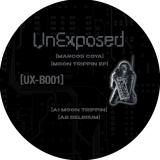
For UnExposed Records first vinyl release, Uruguay’s Marcos Coya wanted to show the world a different side of his artistic approach. In a world of monotonous copy/paste, Marcos wanted to bring something unique to the table. A compilation of spacey, dreamy & emotional tunes custom built for the dance floor yet still experimental as well. Deep grooves & long developments. No fluff. No overbearing bangers. True underground production principles. Crafted for those with a refined palate.
The A-side is dedicated to Marcos Coya’s four to the floor production work. This sonic expedition begins w/ a bang: the record’s title track “Moon Trippin”! A showcase of freaky melodies accompanied by groovy percussions which bolster a vocal of Prince speaking his mind about the true essence of creating musical art & his disdain for mainstream music industry critics.
“Delirium” closes out the A-side w/ a dreamy acid house tune adding an emotional touch to the record. After hours material. A real step forward for Marcos and his production work. Leaning heavier than ever into trusting his melodies. Taking a bit more risk with his approach by creating something you’ve never heard from him on any of his nearly 20 vinyl releases over his career.
For the B-side we shift over to a more breakbeat approach with 2 absolute heaters. B1 introduces the track Hearthug has claimed to be one of the tracks of the year: “Rage Dog”. Rage Dog is a Marcos Coya signature track due to its rock & hip hop influences developed during his adolescence. Marcos even purchased new synthesizers specifically to improve this track & its melodies. The cherry on top is the vocal from Rage Against The Machine’s front man, Zack de la Rocha, which adds a rebelliously political undertone to the record, something UnExposed & Marcos both are very proud to address w/ passionate conviction during this time of war and injustice.
We close out the record with “D.N.A.”, the most experimental piece of art on this vinyl release. A wild combination of breakbeats, guitars, melodies & crazy vocals. The perfect bizarrely fascinating conclusion to this wild trip to the moon and back.
Early support from heavy hitters such as: DJ Koolt, Anthea, Velasco, KT, Hearthug, Mario Liberti, Daïf & many more!
The item is already on it's way to us and is expected to be shipped from 03.06.2026.
London-based DJ, producer, singer, and Fine Human Records owner Dino Lenny returns to vinyl releases on his own label.
Two fast-paced tracks that meander through waves of dark electronica and diabolical synths.
These tracks were created to capture the inner workings of Lenny's mind, transforming them into hypnotic works.
With releases on R&S, Diynamic, Innervisions, Rekids, Crosstown Rebels, Strictly Rhythm, Cocoon, and his own Fine Human Records label,
has remixed and collaborated with Underworld, Missy Elliott, Wu-Tang Clan, and Madonna,
Lenny has long held a firm foothold in both the underground and mainstream electronic music scene.
Consistently supported by Laurent Garnier, Carl Cox, Sven Vath, he maintains a presence that spans multiple scenes without being defined by just one.
Since 2021, he has hosted Tomorrowland's CORE radio show, featuring artists such as Nina Kraviz, Ellen Allien, Ame and Sven Vath
expected to be published on 03.06.2026
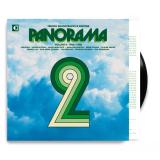
Transversales Disques proudly presents PANORAMA Vol. 2, another deep dive into rare French soundtracks, Library music, and instrumental oddities that have largely remained untouched by reissues or compilations.
This curated selection features 11 forgotten gems recorded between 1968 and 1980. It showcases the brilliance of celebrated maestros like Francis Lai, Karl-Heinz Schäfer, Eric Demarsan and Jean-Claude Petit, standing shoulder-to-shoulder with unsung composers such as Oswald d'Andréa, and Jean-Louis Bucchi.
Embark on a cinematic journey brimming with moody string arrangements, funky flanged drums, signature French basslines, and deeply dramatic atmospheres.
Deluxe Tip-On jacket LP with printed innersleeves
Including exclusive and extensive liner notes.
Vinyl Only / No Digital
The item is already on it's way to us and is expected to be shipped from 03.06.2026.
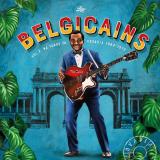
Following the sold-out first volume, the Belgian label Covadia presents a second chapter of Les Belgicains, focusing on the European rumba created by Congolese students in Belgium during the 1960s.
Volume 2 includes 11 rare tracks originally issued on 45 rpm singles or never released before. Highlights include the dancefloor favourite “Guaracha Fredo” by LOS NICKELOS and previously unreleased recordings by the orchestra EBUKA EBUKA, like the swinging “Merengue Soucouss” and the emotional “Mpenzi Niambiye”. The songs unmistakably express a longing for recognition and for a rightful place for a new nation.
The item is already on it's way to us and is expected to be shipped from 03.06.2026.
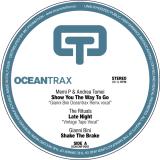
New chapter on the internationally famous labels "Ocean Trax" and "Confidential Records"
“Shake That Brake” an energetic track that blends classic House elements with a modern club sound.
“Late Night” by The Rituals is a vibrant soul/funk/disco track infused with retro flair and modern polish.
Driven by groovy basslines, tight rhythmic patterns, and shimmering disco elements, the song delivers a warm, feel-good energy.
Funky guitar licks and dynamic arrangements blend seamlessly with soulful influences, creating a lively and infectious atmosphere made for the dancefloor.
“Let Me Show Ya” by Memi P & Andrea Tomei is a groovy soul/funk track packed with rhythm and attitude.
Built around a tight bassline and punchy drum patterns, the song delivers an infectious groove that instantly grabs attention.
Funk-driven instrumental touches and smooth vocal elements blend seamlessly, creating a vibrant, feel-good atmosphere rooted in classic soul energy with a contemporary edge.
“You Know How To Love Me” for this track Gianni Bini and Memi P. joins forces to create a new soul-funk anthem perfect for dancefloors all across the world.
With the help from Fatimah Provillon’s rich and expressive vocals this track has a timeless yet modern sound, a perfect fit for nu-disco, funk and soulful dance playlists.
“Feel The Rhythm” by Memi P is a driving house track built around a solid groove and infectious energy.
Steady four-on-the-floor drums, pulsating basslines, and vibrant synth elements create a dynamic club atmosphere.
The track balances rhythmic intensity with catchy vocal touches, delivering a powerful and uplifting vibe designed to move the dancefloor.
expected to be published on 03.06.2026

For the past two years, we have been playing almost every production by Matthew Dekay & Lee Burridge. Now we're very happy to welcome both of them on Innervisions IV38.
"Lost In A Moment" is a track that has given us goosebumps when playing it out in the clubs. A Dixon Mix on the flipside takes a different approach and shows that the summer
season is just around the corner. 2026 Repress on transparent Vinyl!
On Stock and ready to ship
