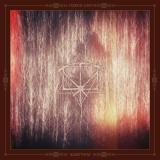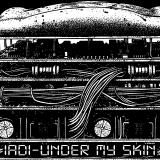
Between flesh and silicon. “Under My Skin” (2026) is the first album by IADI, released by Neo Life. A record like few
others, highly conceptual, cover art included. Its essence lies in the folds of the increasingly ambiguous relationship
between man and machine, where the former designs the latter and, perhaps without fully realizing it, is gradually
destined to adapt and be reprogrammed by it. Each track of “Under My Skin” is, in fact, a sort of interface, connector, or
any other imaginative point of contact between two creative phases, amid emotional impulses and binary calculations.
The sonic architecture oscillates between analog warmth and algorithmic coldness, constructing landscapes in which
pulsating synthesizers and mechanical rhythms seem to question each other. There's no linear narrative, but rather a
progressive immersion in a zone of near-friction, where the comfort of technology coexists with more than a faint
musical uneasiness, like a background noise that never ceases to remind you who's truly in charge. In “Under My Skin”,
the machine is neither an enemy nor a simple instrument: it's a real presence, intimate, even tactile, amplifying desires,
fears, and dreams of dawns beyond the digital realm. Intelligent dance music. Less noise, more sensations. Electronic,
but profoundly human.
The final result, then, is a music project that speaks to the present, yet sounds like an X-ray of the future, capturing that
fragile moment when humanity and technology stop observing each other from afar and begin to merge, track after
track. It's no coincidence that IADI's album opens with “Impulse”, an immediate expression of an electrical impulse, for
both humans and machines, which is also the language of the nervous system, as fast as it is vital—pure energy and
rhythm, a track as intense as it is irregular. And after this introduction, it's the turn of the equally erratic “Axon”, whose
title describes the neuron that transmits the signal over distance, telling the listener to sit back and relax for a new
journey through the notes toward the more melodic “Cortex”. The cerebral cortex, the ultimate seat of thought and
memory, becomes the source from which the musical flow of the first part of the work is drawn.
Then, suddenly, an automatic, or instinctive, response to the constant succession of impulses: “Reflex”, or zerotemperature techno, with a fragmented pace, featuring vocal samples, breaks, and restarts. In the producer's
imagination, the subsequent, and conversely placid, “Neuron” represents the emotional core of the second part of the
work, providing a kind of respite from the seething vibrations. While the neuron is the basic unit of the nervous system,
the synapse is the functional connection point between one neuron and another effector cell, essential for the
transmission of nerve impulses and communication in the nervous system, enabling functions such as learning and
movement. Likewise, a track like “Synapse” once again illuminates the path traced by IADI. The more experimental and
streamlined “Static” instead suggests true ordered chaos. “Dreamstate” is the conclusion suspended in the void, relating
to that dreamlike state between waking and sleeping, where consciousness fades toward infinity and visions begin. Pure
fading into the subconscious. Eternal return to where it all began. Dancing is a form of consciousness. Every beat is a
question. IADI, however, holds all the answers you need.

Поиск:le sound express
Все
Mathias Kaden announces the ‘Three Decades’ LP on Rekids, releasing 3rd April 2026, with single ‘Fyutr’ featuring Zoë Xenia and a remix from the legendary Dennis Ferrer available now. His third full-length, following 2009’s ‘Studio 10’ on Vakant and 2015’s ‘Energetic’ on Freunden Am Tanzen, ‘Three Decades’ spans nine tracks and celebrates Kaden’s 30-year career as one of Germany’s most enduring House and Techno figures.
The ‘Three Decades' album opens with a title intro, in which Mathias Kaden expresses gratitude to those closest to him before moving into his signature deep, emotive House sound. Tracks like ‘Keep Balance’ set the tone with sub-heavy bass and crisp, driving drums, occasionally punctuated by vocal snippets, while ‘I Got You’ features Cassy for a high-energy, soulful dancefloor moment. Reminiscent of Kaden’s work as Mathimidori, the dubbiness of ‘Getting Closer’ sets the stage for ‘Inner Signal’, which leans into wiggy electro territory, before the second record shifts gears with ‘Next Wave’ and ‘Shelter’, returning to pacey, piano-fuelled rave energy.
‘Viral’ follows with tough drums and excellent stab work, before the album closes on ‘Fyutr’, Kaden’s collaboration with Zoë Xenia, already supported by Honey Dijon, DJ Deep, Laurent Garnier, and more. Active since the mid-90s, Mathias Kaden quickly became one of the artists at the forefront of Germany’s flourishing rave scene. He began releasing music in the early 2000s, first collaborating with Marek Hemmann on a series of EPs for Freude Am Tanzen, before establishing himself as a solo artist with more than two dozen EPs on labels including Desolat, Watergate Records, Pets Recordings, Diynamic, Ovum, and Cocoon. Since first appearing on Rekids in 2019 with the ‘Control Your Mind’ EP, Kaden has released multiple projects on the label and remains a regular contributor to its catalogue.
Alongside his own productions, he has remixed artists such as DJ Koze, KiNK, Monika Kruse, Trentemøller, and Sven Väth, while under his Mathimidori alias, he has explored more spacious territory with releases on Mule Musiq, Ornaments, and Freund der Familie, including an additional album, ‘Akebono’, on Echocord.
From the quiet desolation of earlier Iterum Nata now rises something heavier – more aggressive and defiant. With “Heartwood”, Finnish multi-instrumentalist Jesse Heikkinen (The Abbey, Henget, ex-Hexvessel) reshapes his progressive rock and neo-folk foundations through the crucible of metal, layering doom-laden riffs and blackened textures upon the project’s introspective core.
To give this vision its pulse, Heikkinen enlisted Ukrainian drummer Yurii Ciel (Stoned Jesus, Cailleach Calling, ex-White Ward), whose expressive performance transforms “Heartwood” into the most visceral Iterum Nata release to date. Together they carve a sound both expansive and immediate: progressive journeys steeped in folk atmosphere, driven by the weight and force of metal.
The record also features rare guest appearances: King Dude lends his commanding voice to “Forgiveness Undone”, Alexander Kuoppala (ex-Children of Bodom) unleashes a searing solo in “I Have Been Sacrificed”, and Sami Hynninen (Reverend Bizarre) delivers an unearthly vocal in “Only Ash and Bones Remain”.
“Heartwood” is an album hewn from fury yet tempered by revelation. Where past Iterum Nata releases drew from solitude and sorrow, here the wellspring is anger – but anger that points beyond itself, toward beauty, hope, and transcendence. It is a meditation on the spiritual war within the collective unconscious, channelled through music that flows between Anathema and My Dying Bride, Opeth and In the Woods…, Pink Floyd and Green Carnation.
- 1: Missionary Of Mercy
- 2: Puppet Regime
- 3: Canary
- 4: Blaze Of Obscurity
- 5: Retaliate!
- 6: Hypochondriac
- 7: Enemy Within
- 8: The Brotherhood
Pariah’s cult album re-issued! “Blaze of Obscurity” brings you pure Thrash Metal fury! Satan changed their name to Pariah in 1988-1989. There’s Heavy Metal, Power Metal, Thrash Metal, Death Metal, the list seems almost endless. Sub-genres are important in metal and bands are quickly classified and labeled. Pariah (the last re-incarnation of Satan) is one of few bands that are difficult if not impossible to classify. Is it Heavy metal? NWOBHM? Thrash Metal? Pariah did not make it easy to describe their sound. It might be too sophisticated to simply label it Heavy Metal, which in its infancy was a rather simple affair.
They don’t sound like any Metal band out there, perhaps discounting some of the more aggressive and technical ones, and then the signature NWOBHM sound is added. The guitar playing by Russ Tippins and Steve Ramsey is undeniably what defines Pariah as well as Satan in the past. Undeniably, Satan has gone a long way; from humble NWOBHM beginnings, to Experimental/Melodic Mettal (in Blind Fury) and something that could be described as a NWOBHM/Thrash Metal hybrid (“The Kindred”). It’s as if they’ve been experimenting trying to find their identity, and theyfinally found it. Stylistically, “Blaze of Obscurity” could be seen a step back to “Suspended Sentence”, but this time around they got everything right, down to the last note. Those who have heard Satan know what to expect: great guitar playing.
And sure enough, “Blaze of Obscurity” is a demonstration of guitar mastery and is overall a very guitar-driven album, with plenty of mind-boggling riffs and solos are all over the place, but more importantly, it’s a demonstration of some amazing songwriting as well. This is easily Pariah/Satan’s creative peak and one of the most consistent albums I’ve ever heard, featuring eight great and conceptually perfect songs with lyrics that come across as sophisticated and thought-provoking. It is not fair to put the entire spotlight on Tippins and Ramsey though since the drumming and bass work from Sean Taylor and Graham English really shines. The rhythm is fast and tight, keeping it focused, aggressive and intense till the end. Vocalist Michael Jackson (yes, that’s his name) has to be commended too as this is easily his careers best performance.
The verdict: “Blaze of Obscurity”: the level of musical genius expressed here, along with near flawless songwriting, is more than enough to skyrocket it to heights reserved only for classics. Probably not your choice for some light listening those quiet Sunday evenings, but those who take a more serious, intellectual approach when selecting their music will find very much to appreciate here.
Tracklisting
- 1: Adhd
- 2: Worry Days
- 3: Crying Song
- 4: Fuck U
- 5: Bastard State
- 6: Mania
- 7 3: Sides Touching
- 8: Canned Coffee
- 9: Babymusicc
As collaborative projects often do, 33 has in time found a more fixed form, a kind of structure that turned it from a loose collection of collaborators gravitating around founders Bill John Bultheel and Alexander Iezzi into something resembling more of a traditional band. Not that there is anything conventional in their creative process tho, nor in the music itself… Nontheless Tripolar - their second album and first for Haunter - seems to take them closer to song territory than ever before.
The (progressive) graduation of multi-instrumentalist Cem Dukkha and vocalist/clarinet player Ivan Cheng from collaborators to full-time members has brought 33 to a more refined awareness of their possibilities as a creative unit, although their compositional process has retained a high level of spontaneity and musical madness. Tripolar was in fact assembled by editing hours of improvisation that Bultheel, Iezzi and Dukkah recorded with no specific endgame in mind. The sessions saw them exchange a variety of acoustic, electronic and electric musical instruments: percussions, guitars, strings, piano, hurdy gurdy, synthesizers and even CDJs as a tool of live sampling manipulation.
By molding the pieces into what they are now, the band managed to concoct some beautiful vignettes of contradictory mental and emotional states, as sonically playful as a renaissance fair happening within a broken timestream. Cheng’s lyrical and vocal contributions helped them coalesce even further into proper songs, adding a melodic presence that’s at once seductive and uncanny. But vocal duties are often ceded to guests, namely Danish pop-neoclassicist Astrid Sonne, Kenyan metal guru Lord Spikeheart, Irish goth raconteur Olan Monk and Japanese body-poet Golin.The amount of different sounds arranged into each of the tracks produces a unique sense of awe and bewilderment, a testament to the incredible talent and craft the musicians have employed into putting together such a broad range of influences and approaches into a coherent and extremely effective musical journey.
An equally erratic thematic thread seems to run through all the tracks, one ultimately preoccupied with mental health and its ramifications. Without turning the project into a concept album, 33 and their collaborators have sprinkled it with references to personality disorders and mental conditions that are all too relevant to the contemporary age, reflecting on the lineage of human inner life. A wide display of lyrical and musical tools is employed to explore these themes, ranging from Sonne’s expressionist depiction of ADHD in the opener, to Cheng’s queer-themed reinvention of an Irish murder ballad in closing track ‘Babymusicc’. Tracing lateral trajectories for introspection, Tripolar is not only highly captivating, but it ultimately sounds esoteric in the best possible way: progressively revealing layer after layer of incredible aural magic, its true meaning living in the form and in its manic scope of energies.
- 1: Wichita Lineman
- 2: I'm Getting Old
- 3: Ordinary World
- 4: Two Whole Summers, Half A Life
- 5: Catch
- 6: Between The Bars
- 7: Alone And Forsaken
- 8: You've Been Flirting Again
- 9: Frozen
- 10: Gloomy Sunday
On her new album, Two Whole Summers, Half A Life, Lisa Bassenge is once again accompanied by her trusted fellow musicians, pianist Jacob Karlzon and bassist Andreas Lang, with whom she has already realised numerous projects. Typical of Bassenge, the repertoire comprises a seemingly wild yet harmoniously connected mix of pop, singer-songwriter and jazz elements. The spectrum ranges from Elliott Smith to Duran Duran, from Billie Holiday to Björk. ‘It's always about the expressiveness of the songs – that's the common thread for us,’ emphasises the Berlin-based artist. The album features a track by Hank Williams as well as Madonna's ‘Frozen’ and “Catch” by The Cure. Two original compositions are also part of the recording: the title track ‘Two Whole Summers, Half a Life,’ a tribute to the power of friendship and youth, and the neo-folk ballad ‘I'm Getting Old.’ Both works impressively underline Lisa Bassenge's own artistic signature. For over two decades, Lisa Bassenge has stood for stylistic openness and a characteristic voice that lends new nuances to every song. Despite all the diversity, jazz remains the tonal basis. The Scandinavian-style relaxed sound of Karlzon and Lang lends the interpretations a soft, atmospheric depth.
- 1: Brand New Heartache
- 2: Long Ride
- 3: The Lie
- 4: Barroom Feather (Radio Edit)
- 5: Blind
- 6: Nothing New
- 7: One To One Another
- 8: Always Almost
- 9: Barroom Feather
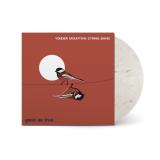
Good As True (2026), the 12th studio album from Yonder Mountain String Band, leans into a warm, expressive sound — bluegrass shaped with an indie edge, rock undertones, and a hint of country. Recorded live in the studio, its eight original tracks trace romantic, personal, and societal relationships and the work it takes to stay connected. The lead single “Brand New Heartache” pairs rock-driven verses with a bluegrass-lifted chorus as it follows the fallout of a breakup and the uneasy hope of starting again, while “Blind” opens with a striking instrumental riff that lingers long after the song ends, while its lyrics confront regret, mental health struggles, and the pull to become something better. “Long Ride” delivers a sharp, sarcastic look at life in a touring band; “Nothing New” and “The Lie” confront political rigidity and division; “One to One Another” and “Always Almost” pull toward quieter emotional corners; and “Barroom Feather” drifts into indie-folk terrain with one of the album’s most atmospheric jams. Across Good As True, Yonder moves between high-tempo runs, layered harmonies, and moments that breathe — a reminder that nearly three decades in, they’re still charting new ground.
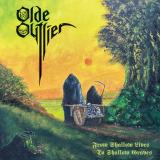
In many ways, OLDE OUTLIER rise from the legacy of Australia’s late Innsmouth — a cult band whose 2014 debut Consumed by Elder Sign endures as an underground classic. The connection is more than symbolic: guitarist Askew, vocalist Appleton, and bassist Greenbank all passed through Innsmouth’s ranks, while Beau Dyer now leads this new incarnation after years spent shaping the sound of Innsmouth and the earlier project Grenade.
From Shallow Lives to Shallow Graves marks OLDE OUTLIER’s recorded debut, a four-track, thirty-five-minute descent into their own cavernous realm. While faint echoes of Innsmouth’s inspirations — Armoured Angel and early Samael — linger, the band draw from a broader and far more obscure constellation. Shades of Amon Goeth, Martyrium, Head of the Demon, and Florida’s Equinox collide with the spectral drift of Ophthalamia and early Katatonia and Tiamat, all eroded and blackened into something untraceable.
Despite these depths, OLDE OUTLIER avoid any sense of technical indulgence. Their sound carries a rough, deliberate simplicity — a raw and smoky power that pushes each of the four long tracks forward with unhurried certainty. The songwriting unfolds through patient repetition and subtle shifts, allowing motifs to seep into place and gradually hypnotise. Appleton’s low gutturals bring a grim, expressive edge reminiscent of early Septic Flesh or Thou Art Lord, while the more open, lead-driven riffing imparts a distinctly archaic heavy metal aura that separates this band from their origins.
At many moments, that union of grit and atmosphere surpasses even Innsmouth’s achievements. Accented by well-placed clean and chorused guitar lines, From Shallow Lives to Shallow Graves becomes an immersive and strangely timeless work — a glimpse into an ancient, dimly lit world where OLDE OUTLIER feel less like a new formation and more like something unearthed from a forgotten past.
The first resonant space Zosha Warpeha played in was the Emanuel Vigeland Museum in Oslo, Norway. Built as a mausoleum, its walls reach up into a gradual archway, creating an environment where sound expands and reverberates for twelve seconds before decaying into silence. Warpeha was greeted only by dim lights when she entered, and it wasn’t until she had spent several minutes listening that she was able to make out the frescoes that covered every inch of the room: graphic depictions of the cycle of life from conception through death. As the sound of her Hardanger d’amore encountered the walls and these slowly emerging scenes, they obscured its point of origin in both time and space, augmenting its own life cycle. The experience sat in the back of her mind over the next several years as she developed her own patient style of composition and performance, one that comes into full bloom on her new album I grow accustomed to the dark.
When Warpeha was selected as an artist in residence at Brooklyn’s ISSUE Project Room in 2025, she saw it as an opportunity to more intentionally explore how her music might fill a room with ample natural reverb. I grow accustomed to the dark documents two single-take solo performances for Hardanger d’amore and voice at IPR, with both pieces composed in a unique tuning system developed to interact with the space itself. Listeners can trace resonance from the contact of the bow on gut strings into the body of the instrument, its five sympathetic strings offering another layer of refraction, before the sound is thrown about the cavity of the room. The echoes emerge like a photographic double exposure, or wisps of smoke that linger in the air, creating ghostly harmonic convergences that blur the line between what is there and not-there. Sound begins to act like light, a synesthetic alchemy that transforms drones into beams and ornamental trills into flickers.
Both side-long compositions, “filament” and “visual purple,” exemplify a duality that animates Warpeha’s music: an expressive, individualistic style that draws on extensive knowledge of her instrument’s history in folk traditions, and an austere, devotional quality maintained by focus and precision. Though very different in character and structure, both pieces evolve slowly through numerous repetitive phrases, passages of stillness, and bursts of intensity. “filament” opens with a cycle of delicate melodic fragments played and sung around a drone before blossoming into an outpouring of swooping arpeggios, harmonics flying from the strings like sparks off a bonfire. The disorienting pulsation of harmonic beating forms the core of “visual purple,” the close-tone dissonance building to a swarm of open strings ringing boldly throughout the space. After the knotty tones reach their climax, the piece collapses into studied quietude, hushed, but without any drop in intensity.
When Warpeha first visited the Vigeland Museum in 2019, she was in Oslo to deepen her relationship to the Hardanger fiddle through the study of Norwegian traditional music, which is primarily passed down aurally. The experience of learning songs by ear, not only internalizing the tune but also absorbing the techniques and tonalities by listening, was a crucial step in her development as a composer. The years since have seen her sharpen those skills as a prolific member of the New York avant-garde and improvised music communities. Warpeha’s music encourages listeners to join her in this journey, to listen closely with each repeated phrase and through each dramatic shift. Like the frescoes on Vigeland’s walls, with time and intention, the depth of I grow accustomed to the dark comes on like a revelation.
- Rabbit
- Whip The Wind
- Let's Get Involved
- It's Your World
- Cherry
- Bottomless
- Be Better
- The Valley
- In Orbit
- Paper Children
- Breathe
Green Vinyl[23,49 €]
Singer-songwriter and multi-instrumentalist Son Little expands his musical palette on his upcoming album, Cityfolk. Blending elements of soul, folk, and blues, Son Little captures his signature sound along with expressive yet personal lyrics. Cityfolk is a reflection on love, loss, and finding peace in the chaos. It"s about holding on, letting go, and learning to breathe again when the world feels heavy. Born Aaron Earl Livingston to a preacher and a teacher in Los Angeles, Little"s collaborations with The Roots and RJD2 helped him make a name for himself in his adopted hometown of Philadelphia. Critics were quick to recognize the unique power of Little"s solo recordings, which stripped the past for parts that could be reconstituted into something wholly new and original. NPR hailed Little"s "impeccably crafted songs" as "honest and unpretentious," while The Independent proclaimed him "a formidable talent." Since then, his catalog has racked up over 250 million streams, and Little has toured with everyone from Leon Bridges and Kelis to Shakey Graves and Mumford & Sons alongside festival appearances at Bonnaroo, Newport Folk, and more. Never one to rest on his laurels, Little also earned a GRAMMYî for his work helming Mavis Staples" acclaimed "See That My Grave Is Kept Clean."
- 01: Bunny&Apos;S Pie (Feat. Bruce Johnson, John Abercrombie &Amp; Chip White)
- 02: Trial N. 5 (Feat. Bruce Johnson, John Abercrombie &Amp; Chip White)
- 03: Dimenticare Stanca (Feat. Bruce Johnson, John Abercrombie &Amp; Chip White)
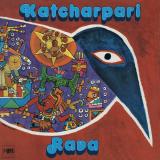
- 04: Katcharpari (Feat. Bruce Johnson, John Abercrombie &Amp; Chip White)
- 05: Fluid Connection (Feat. Bruce Johnson, John Abercrombie &Amp; Chip White)
- 06: Cheerin&Apos; Cherry (Feat. Bruce Johnson, John Abercrombie &Amp; Chip White)
- 07: Peace (Feat. Bruce Johnson, John Abercrombie &Amp; Chip White)
The breakthrough album. Enrico Rava's second solo record, recorded in Milan in January 1973 and released on the German BASF label, is nothing less than a cornerstone of Italian jazz-rock - the record that caught Manfred Eicher's attention and opened the doors to ECM. Rava himself has called it his breakthrough, and history proved him right.
The lineup is killer: John Abercrombie on guitar, Bruce Johnson on bass, Chip White on drums. Four musicians operating at the absolute peak of early seventies fusion energy - electric, cosmopolitan, burning with that particular fire that only existed in that brief window when jazz met rock and nobody knew the rules yet. Abercrombie, already on his way to becoming one of the most distinctive voices in electric jazz guitar, delivers some of his most ferocious early work here. White's drumming is relentless, pushing the music forward with an intensity that never lets up.
If Miles' Bitches Brew-era speaks to you, if Ian Carr's Nucleus gets you moving, if you know Sun Ra's Lanquidity and Don Cherry's Relativity Suite by heart - this is essential listening. Rava's vision was already fully formed: South American rhythms, Mediterranean warmth, free jazz ferocity, rock power - all flowing together without borders or categories. By the early seventies, Rava had absorbed everything - the New Thing, the European free scene, the electric revolution coming out of Miles' studio - and forged something entirely his own.
The seven tracks cover serious ground. "Bunny's Pie" introduces the music with an almost cosmic atmosphere of suspense, hovering in that liminal space before it trails off into the up-tempo vibrant frenzy of "Trial N. 5" - Abercrombie and Rava trading swirling solos at full intensity, the rhythm section locked in tight. "Dimenticare Stanca" moves from Rava's expressive balladic intro into pure funk, guitar and trumpet steering over the rhythmic drive with absolute confidence. The title track carries the lyrical feel and cadence of an Incan-Peruvian folksong - that cosmopolitan spirit made audible. "Fluid Connection" rides a funky bass riff into fusion heaven, with standout trumpet and guitar solos that build and release with perfect tension. "Cheerin' Cherry" pays homage to the great Don Cherry - Rava's spiritual mentor and fellow traveler in world music - exploring a North African soundscape that points toward the global jazz to come. Johnson's "Peace" closes the album with a minute and a half of serene, blissful calm - a moment of stillness after the storm.
This audiophile reissue - cut from the original masters, pressed by Pallas in Germany on 180gm vinyl, housed in a thick laminated hand-glued gatefold - does full justice to an album that remains a collector's holy grail.
Don't sleep on this one. Limited Edition.
Opaque Pink Version
Bubble Bath for Giants is an ode, a Tribute, a reverence for Oceans, for the Mighty Magnificent Power of Fairies, to the energy that we are all everything, whole, well, but in different sized and shaped vessels at times . . . It is a Celebration of Gentleness and of incredible Force, and Charge . . . These, I sea as the same. The Yang Springs from the Yin and together they ever reflect, dance, and express themselves . . .
Many Bells, Bowls, Ceramics, Chimes, Cymbals, Drums (Bass, Sakara, Surdo, Tom, and many more,) Gongs (Chao, Cup, Indonesian, Sun, and Symphonic,) Keyboards (Metal, Synthesizer, and Wooden,) Percussion, Plant Leaf Bundles and Fronds (Bamboo, Eucalyptus, and Palm,) Ratlles, Shakers, Voice, Whistles, and Sound Design by Carlos Niño.
Featuring:
Luis Pérez Ixoneztli, Bernard Xolotl, Aaron Shaw, Surya Botofasina, Nate Mercereau, Laraaji, Darius Jones, Sheila Govindarajan, Idris Ackamoor, Deantoni Parks, André 3000, Marshall Allen, Sam Gendel, Sibusile Xaba, Mia Doi Todd, Anisia Uzeyman, Saul Williams, Jojo Abot, Jowee Omicil, Aztlan Unearthed
///
Cover Photo by Carlos, from in the Maui Waters
Art Direction, Design and Original Art by Nep Sidhu
Layout Production by Jonny O'Hara
Recorded by Carlos Niño in Topanga, California, and by some of the Artists named above, from their Homes . . .
Mastered by David Allen
///
As the world sinks deeper into screens and algorithms blur the line between creation and imitation, Nubiyan Twist return with Chasing Shadows, a record that reclaims the pulse, warmth and spontaneity of human connection.
The band’s fifth studio album is a rich and restless blend of jazz, afrobeat, hip hop and electronic textures, exploring the space between the organic and the digital. It’s music that moves, sweats, and breathes, made by real people in real rooms with heavyweight features bringing together varied voices from the music community which they inhabit.
Bandleader and producer Tom Excel explains: “We wanted to make something that felt joyous and defiantly human — something that couldn’t exist without that connection between people. You can get an AI to write a fugue in seconds, but it can’t capture the chemistry and chaos that happens when musicians lock in together. Chasing Shadows is our way of holding onto that.”
Folowing 2024’s acclaimed Find Your Flame, praised by Roling Stone, Jazzwise, NPR and more, Chasing Shadows pushes the band’s sound further into new soulful territory under Exce l’s expert guidance, featuring bright new vocalist Eniola and a glowing cast of icons and innovators. Malian star Fatoumata Diawara lights up the title track on a powerful slice of Afrobeat, Joe Armon Jones leads the dub workout ‘Rhythm Of You’ and the band take it back to their hip hop roots on great colabs with The Pharcyde’s Booty Brown, Ghanaian MC M.anifest and London dancehal favourite, Mr Wi liamz.
On Chasing Shadows, Nubiyan Twist continue to look outwards with their music but keep the focus firmly on humanity and positivity. It is an album which crosses continents and which shamelessly celebrates our co lective strength.
Fifth album from UK-based co lective Nubiyan Twist led by bandleader & producer Tom Excel (Africa Express, Onipa)
Featuring Booty Brown, Fatoumata Diawara, M.Anifest, Mr Wi liamz and Joe Armon Jones.
Pressed on Yelow Vinyl LP, or Green & Yelow splatter Vinyl LP (exclusively for UK indies).
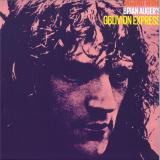
Strut Records presents a fresh look at Oblivion Express, the 1971 album that marked Brian Auger’s shift into a new musical frontier. After years spent shaping the sound of British jazz-soul with the Trinity, Auger stepped into the new decade with a leaner, electrified ensemble and a renewed sense of purpose. This record captures the moment that transformation took shape.
Oblivion Express introduced a sound that was distinctly Auger’s own. Rather than echoing the fusion emerging in the United States, Auger developed a language rooted in the UK’s jazz underground, culminating in a spaced out jazz- rock / prog-fusion album awash with larger than life drum fills and Auger’s virtuosic organ playing. Between bassist Barry Dean and drummer Robbie McIntosh the album moves effortlessly between tight, articulated phrases and broader, improvisational passages. The trio’s interplay forms the backbone of the album and sets the tone for the sound that would define the early years of the Express.
Album opener “Dragon Song” launches with a restless drive that immediately signals Auger’s new direction. Auger chose to record this version of John McLaughlin’s piece (his friend and former bandmate in 'The Niddy Griddys') after hearing McLaughlin’s album Devotion during its mix at New York’s Record Plant Studios. Auger was blown away, recalling, “Oh my god, this is amazing. I wanted to record that myself - and I did!”. Pieces like “Total Eclipse” demonstrate the Oblivion Express’ command of dynamic contrast, and title track “Oblivion Express” explores the cinematic and compositional prowess of the group through stripped back, building moments vs. explosive melodic breakdowns. Riff-heavy “The Sword” later became known through Madlib’s usage in 2014 tracks “Yeti Movie” and “Parodies”.
In retrospect, Oblivion Express stands as a jazz leaning, prog-rock masterpiece and foundational moment in Auger’s catalogue. It captures the starting point of a new sound that is more focused, more urgent, and fully committed to the possibilities of jazz-rock at the dawn of the seventies. The album remains a vivid document of a band discovering its identity and setting the stage for the further array of influential releases that would follow.
Strut Records highlights a landmark in British jazz-rock with Second Wind, the 1972 album from keyboard visionary Brian Auger and his powerhouse group Oblivion Express. Capturing a fully matured lineup, the record finds Auger expanding his fusion language - bridging jazz sophistication, funk-driven rhythm, and soul-infused songwriting with the clarity and fire that defined his early ’70s work.
Though Auger’s roots lie in the lineage of hard-swinging jazz organ and the improvisational fire of the ’60s British scene, he has never been an artist content with tradition. With Second Wind, he moves further into a hybrid language that fuses rhythm with harmonic depth and groove, without sacrificing sophistication. His playing is expansive yet precise, translating the electricity of live performance into a studio work that breathes with immediacy.
At the heart of this era of Oblivion Express is the telepathic rapport among its members. Vocalist Alex Ligertwood (in one of his earliest major recordings before Santana fame) brings a soulful intensity that feels both grounded and forward- looking. Second Wind contains tracks that have become deeply significant in Auger’s discography - original compositions Second Wind, and Truth to name a few - but it was Auger's high octane revisioning of Eddie Harris' Freedom Jazz Dance, (adding new lyrics to the original instrumental) that genuinely broke barriers. The track became a DJ friendly classic and highlighted the groups deeply original approach.
The rhythm section of Barry Dean and Robbie McIntosh balances weight and fluidity, giving Auger the space to stretch across Hammond organ, Rhodes, and keys with characteristic boldness. Their collective sound is one of seamless motion: jazz-inflected lines swelling into rock-driven crescendos, funk-leaning grooves locking with vocal hooks, moments of quiet clarity emerging between bursts of improvisation.
Second Wind stands as a pivotal moment in Auger’s discography: a record that bridges the exploratory spirit of his earlier projects with the more groove-oriented approach that would soon bring international attention. More than five decades later, it remains a vivid document of a band carving out its own language. Music born of instinct, collaboration, and a restless desire to push beyond the expected.
Delphine Dora, the prolific French composer and multi-instrumentalist, graces Marionette with a suite of keyboard instrumentals that evoke futurism and the transcendental. Based in France and actively releasing music since the 00’s, Delphine’s remarkable solo and collaborative projects loosely connect the dots scattered across modern classical, folk, ambient, and poetic writing - always seeking new ambitions in terms of her sound.
Leaving behind the chaos of city life for the quiet solitude of a small village in the French countryside, Delphine finds herself fully immersed in the present moment and committed to her multi-disciplinary creative practices, savoring the experiences of deep listening in nature and her environment. Drawing from an academic background in Outsider Art and Art Brut, Dora yearns to express intimate inner dialogues, revealing the beauty of vulnerability through transportive musical passages to the mystical and sublime.
L’inéluctable pulsation du temps was composed in 2018, at a time when Delphine’s life was becoming increasingly busy, marked by relentless touring and concerts unfolding in rapid succession across different places. Written in parallel with L’Inattingible, her most ambitious album, it stands as its instrumental counterpart. The recordings reflect a period of exploration and assimilation of the Nord Electro, an instrument that opened up vast sonic possibilities, particularly for the development of rich polyphonies inspired by repetitive music. The track titles draw inspiration from an essay by Hartmut Rosa on the notions of acceleration and alienation - a reflection that resonates strongly with the pre-covid era right before the quarantine. The album reveals Delphine’s most colorful and rhythmic side, an aural mille-feuille, in total contrast with her previous melancholic vocal works.
On L’inéluctable pulsation du temps, Dora sustains atmospheric drone miniatures that form the foundation for flowing, cyclical arpeggios, spiraling into a liminal dream space where the repetitive phrasing of melodies rewards introspective listening. The compositions move through (dis)enchanted landscapes, taking unexpected turns into more haunted terrain, their contours further blurred by Dora’s intuitive articulation and sense of refinement. By mirroring both the acceleration of time and the experience of alienation, Delphine conjures up timeless sonic meditations, rendering the inevitable pulsation of time as something at once mesmerizing and unsettling.
- 1: Cancion Y Danza
- 2: Ungarische Melodie
- 3: Youkali
- 4: Morgen
- 5: Assyrian Woman
- 6: Mondnacht
- 7: Verschwiegene Liebe
- 8: Oblivion
- 9: Sense
- 10: Nana
- 11: Oscar
- 12: Tu Madre
- 13: Schlendern (Konstantin Wecker)
Trio Sfera – Verschwiegene Lieder is a richly atmospheric album that weaves classical melodies, world music influences, and intimate soundscapes into a deeply expressive listening experience. With pieces such as Verschwiegene Liebe, Oblivion, and Assyrian Woman, the trio invites the listener into a world of quiet intensity, emotional depth, and subtle beauty. Each track unfolds with sensitivity and nuance, creating a musical journey that speaks softly yet leaves a lasting impression.
WOLF welcomes Reagan Grey for the label’s second release of 2026. Based in Toronto, Reagan has been immersed in the underground for over 15 years, with recent releases on Local Talk and her hometown label, Selections.
This four-track EP presents a refined and assured expression of her sound, drawing from the enduring legacy of New York, Detroit, and Chicago house music. The release opens with “Not Giving Up,” featuring vocals from Christie Nelson. It’s a deep, dub-inflected, driving track designed for intimate, late-night dancefloor settings.
“Your Love” follows, featuring Finn Rees (30/70 / Mr Bongo), whose musical sensibility and deft keys add a distinctive touch. On the flip, we’re treated to two further cuts that both fall into the dancefloor sureshot category.
A brilliant debut release full of energy from Reagan Grey proving why she's a strong and welcome addition to the WOLF roster.
Music From Memory is thrilled to present ‘Aquáticos’, a captivating new record from Los Angeles producer Eddie Ruscha and Brazilian guitarist Fabiano Do Nascimento. Blending Nascimento’s expressive, Afro-samba and choro-inflected guitar with Ruscha’s cosmic, groove-driven sound, ‘Aquáticos’ marks the start of a vibrant musical partnership—an organic, free-spirited collaboration full of interplay and vitality.
Conceived during the early 2020’s, ‘Aquáticos’ grew from a series of recording sessions in which the music unfolded naturally, in a state of effortless flow. Album opener ‘Nascer,’ the very first piece they recorded, captures such a moment perfectly: Nascimento’s 7- and 10-string nylon guitars weave seamlessly with Ruscha’s modular synths, drum machines, and vintage keyboards. Like much of Ruscha’s work under Secret Circuit and E Ruscha V, it is rich in lush, rhythmic textures—pulsing and bubbling with vibrant energy.
The initial session that produced the opening track set the tone for the record, establishing a template of intuitive interplay and musical freedom. Each subsequent session built upon the last, gradually shaping ‘Aquáticos’ across nine tracks, all characterized by melodic richness, rhythmic depth, and an unshakable sense of spontaneity.
‘Aquáticos’ pulls the listener gently into a celebration of musical conversation — a radiant, immersive journey where Ruscha and Nascimento’s instruments breathe together, echoing the joy, curiosity, and playful spirit that define their collaboration.
Sleeve art and design by Michael Willis.
- 1: This Chain
- 2: T.m.t
- 3: White Lies (Feat. Gut Instinct)
- 4: Predetermined Hate
- 5: Prey Strikes Back
- 6: Truth Revealed
- 7: Self Evident Truth
Tape[14,50 €]
Out of Baltimore, Maryland comes The S.E.T. who are crafting 100% unapologetic hardcore music. Formed between bassist Che (founder of Flatspot Records), guitarist Brady (formerly of Turnstile), and drummer Ryan (formerly of End It), the band started through jam sessions in early 2024. Before they knew it, they had instrumentals for seven songs written and were ready to put lyrics to the tracks, and the search for a vocalist began. Che spotted Tim hopping on stage and grabbing the microphone at Disturbin’ The Peace Festival, invited him to try out for vocalist, and The S.E.T. was then complete.
The S.E.T. will release their debut Self Evident Truth EP, on February 27th through Flatspot Records. It’s 15 minutes of fury and groove, taking cues from Baltimore acts such as Gut Instinct (whose Sebastian Gorgone features on “White Lies”) and Stout and the crossover sounds of New York like Leeway and Judge. Recorded and mixed by Justin Day at New Noise Recording and mastered by Brad Boatright at Audiosiege, the tracks roar with thick bass lines, fast-paced drums, and rage fueled vocals. Lyrics come from a place of candor, expressing the basis of equal rights and defying the propaganda the current administration is spewing.
As The S.E.T. comes into fruition, the band wants to exist as a place to put words to action and come together as a community through both their music and live shows