Rebecca Delle Piane launches her new imprint called EXTRASENSO with a four-track ep full of hypnotic and punchy sounds that clearly define the direction of the label. Bringing and keeping her techno vision as the highest form of expression, with leads, vocals and fat percussions, she again writes her trademark.
Поиск:le sound express
Все
- A1: Tambourine Dream
- A2: Dj’s Chord Organ (Feat Sza)
- A3: Do You Have A Destination?
- B1: 5 Dollar Pony Rides
- B2: Friendly Hallucinations
- B3: Mrs Deborah Downer
- B4: Stoned
- C1: Shangri-La
- C2: Funny Papers
- C3: Excelsior
- C4: Transformations (Feat Delusional Thomas)
- D1: Manakins
- D2: Rick’s Piano
- D3: Tomorrow Will Never Know
The Mac Miller Estate announces new album Balloonerism.
Many of Malcolm's fans are aware of Balloonerism, a full-length album that Malcolm created around the time of the release of Faces in 2014. It is a project that was of great importance to Malcolm -- to the extent that he commissioned artwork for it and discussions concerning when it should be released were had regularly, though ultimately GO:OD AM and subsequent albums ended up taking precedence.
We believe the project showcases both the breadth of his musical talents and fearlessness as an artist. Given that unofficial versions of the album have circulated online for years and that releasing Balloonerism was something that Malcolm frequently expressed being important to him, we felt it most appropriate to present an official version of the project to the world. With that in mind, we're happy to announce that Balloonerism will be released on January 17th, 2025.
The album was born from the same creative period in which Mac was working on Watching Movies with the Sound Off, Delusional Thomas, Faces and more, and represents the creative ambition that he had agnostic of musical genre.
Dienne creates hazy pieces of music full of the melancholy of remembrance and loss combining analogue instruments with reverb-drenched vocals and shimmers of processed electronic sources. Her new album "Conducturis" emerges as a sensory exploration of the human spirit and the boundless horizons of artificial intelligence.
"Abundant in beauty and rich in disturbances" serves as the guiding principle for Belgian composer, Dienne, as she builds songs and soundscapes that portray the images and stories that play behind her eyes.
Combining analogue instruments like the oboe, the piano, and the flute with reverb-drenched vocals and shimmers of processed electronic sources, she creates hazy pieces of music full of the melancholy of remembrance and loss.
Her debut album Addio (2022) was released on Nicolás Jaar's Other People imprint. Addio is a 32-minute study on loss and mourning. Following the death of her grandmother due to Covid-19, and unable to say a proper goodbye due to travel restrictions, Dienne set out to give her "Addio" through musical form. The result is a deeply intimate work that channels classical instrumentation through foggy electronic experimentation.
Memories, biographies, and family histories merge in this simultaneously somber and optimistic work which plays out like a universal and comforting ode to lost loved ones. Her second album, Conducturis, accompanies an immersive film installation delving into speculative fiction, conceptualized by Mira Sanders and Cédric Noël. Conducturis will be released on Cortizona at the end of January 2025.
Conducturis is an immersive film installation project that delves into the realms of speculative fiction, employing the cinematic language of the road movie to envision the ramifications of constructing an artificial brain within the Swiss landscape.
Following their encounters with key figures in the Human Brain Project during an art research expedition in Geneva from 2019 to 2020, conceptualized by Cédric Noël & Mira Sanders, they stumbled upon a remarkable discovery: a hidden fiber-optic cable linking Geneva to Lugano.
Anchored at both ends by the Human Brain Project in Geneva and the CSCS (Centre Suisse de Calcul Scientifique) in Lugano, this conduit facilitated the transmission of intricate brain simulations from the imposing computational hub in Lugano to Geneva via a 'superconductor' cable.
While the nuances of this fiber network eluded the naked eye, Sanders & Noël meticulously pored over maps, gathered endless data, and traversed the terrain. In crafting "Conducturis", they chose to portray an immersive journey along this IT infrastructure connecting Geneva and Lugano, exploring the curious allure of dreaming about artificial landscapes.
The accompanying originalscore by Dienne invites audiences to delve into the intersection of human creativity and machine intelligence. Guided by the principle of being "abundant in beauty and rich in disturbances", Dienne embarks on a sonic exploration of the Swiss landscape, translating its ethereal beauty and technological wonders into evocative musical compositions.
"How can a human sound like a machine?"
This intriguing question lies at the heart of Dienne's artistic endeavor. For her, the soundtrack of "Conducturis'' transcends mere musical notes; it embodies a profound philosophical exploration into the essence of human creativity amidst the rise of artificial intelligence.
Similarly, "How can a human being compose like a machine?" serves as a pivotal inquiry guiding Dienne's creative journey. As she navigates the delicate boundary between human expression and machine cognition, she skillfully intertwines the pulsating rhythms of data transmission with the haunting melodies inspired by artificial landscapes.
Drawing inspiration from the cinematic aesthetics of the road movie genre, as envisioned by Sanders & Noël in their speculation on the construction of an artificial brain, Dienne weaves a sonic tapestry that transports listeners on a contemplative journey through mountains, lakes, and cities.
Each track for "Conducturis" becomes a testament to the fusion of brain and landscape, inviting audiences to ponder the limitless potential of human imagination.
As audiences immerse themselves in the evocative world of "Conducturis", Dienne's soundtrack serves as a guiding force and perfect companion, leading them through a transcendental experience where reality and imagination merge, and the symphony of human and machine harmonizes seamlessly.
"Conducturis" emerges as a sensory exploration of the human spirit and the boundless horizons of artificial intelligence. With Dienne's soundtrack as its heartbeat, this project invites audiences to embark on a voyage of discovery, where the echoes of human creativity reverberate across the digital frontier.
"When it travels, the voice is a double agent, a trickster, or a dubious guru, but when it pauses for a recording, it's historical, capturing a mood or an emotion for all time. I didn't expect that I would hardly recognize the people who made Salt — myself and Hessel Veldman — a year and a half after recording it, but this is where I find myself now, so I'll say a few words about this temporary prosopagnosia.
Twelve years ago, when I moved to the Netherlands from Japan, I made a piece called How to Lose Your Voice. It was a YouTube hit because people wanted to learn how to actually lose their voices, though I doubt they found what they were looking for in the video. But I mention it because it's like a diary for me: my voice simply isn't the same now as it was then.
I wonder where my voice has gone.
I just listened to a radio interview with a woman who had her larynx removed.
About fifteen minutes after listening to her new voice, altered by the use of a voice prosthesis to make her audible, the interviewer played a recording of her pre-surgery voice. Of course, I was curious to hear it, and although it was immediately obvious that the gentle ease of her first voice was gone, this new voice, with its raw, gravelly sound, was even more intriguing because of its determined power to express that which needed to be expressed.
When Hessel and I first listened to the Salt in its entirety, I said in astonishment, "who wrote this?"
Marianna Maruyama, sure, but this artist goes by more than one name. Many voices spoke through me in this album. You might even recognize one of them as yours."
A familiar face to the art circles of NYC and Detroit, Scott Avery is the tabbed alias for Philly-born, Detroit-based producer, Amani Olu — an ambitious creative who makes his music debut via Child Self. The EP includes four disparate tracks that explore wanderlust, play, experimentation, and unencumbered curiosity. An homage to innocence and the source of his creative expression, Child Self represents a juncture in Avery’s personal history, a moment of reflection as the artist considers the roads which have led him to the present.
Throughout the EP, memory—both personal and historical—resurfaces in roundabout ways, unlocked in ecstatic sonic transmissions, expressing the depths and sentiments that language can’t express. Coupled with Detroit’s legendary history and an aching devotion to the early years of Avery’s life, Child Self richly entwines sounds with spiritual expression. With subtle reference points and underlying samples seamlessly flowing between disco and rap, house and Motown, Child Self is a composition of gradual histories tactically woven back together into proof of concept for an ambitious and varied career to come.
- At Ends
- Copper Entries
- All Canals Dry
- On The Folding Of Leaves
- Servitude
- The Grinding Wheel
- Pale Stars
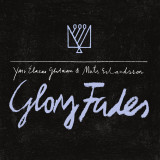
- Glory Fades
Glory Fades is a song book written using a common collaborative musical language developed by Yair Elazar Glotman and Mats Erlandsson, building intimate musical spaces, primarily focused on acoustic instrumentation with electronic counterparts contributing light and shade. Throughout the eight songs on the record, each piece unfolds according to its own logic while simultaneously reflecting the overarching tonality of the song book as a whole. The music focuses on the topography outlined by a melodic and harmonic modal framework and the exploration of the negative space found in the decay and in between the notes. There is a tension in this music caused by a reduced and stark emotional expression on the surface and the complex structures hidden underneath, where the harmonic material shimmers and shifts, and tempo and time signature modulates imperceptibly. The instrumentation forms a non-traditional chamber ensemble consisting of plucked and bowed acoustic guitars, zithers, bells, double bass, violin and percussion with additional treatments through manipulated tape and reamplification techniques. Mats Erlandsson is part of the vibrantly re-emerging field of drone music in Stockholm, Sweden, and is associated with practices characterized by the extensive use of sustained sound. Utilizing synthesized and recorded analog and digital sound, contaminated field-recordings and extensive tape processing his music slowly unfolds sets of precisely tuned harmonic material while textural properties of the imaginary rooms where the music takes form shifts, shimmers and moves from sparse and open to dense and claustrophobic. In addition to his own artistic practice, Erlandsson holds a position as studio technician at the world-renowned Elektronmusikstudion (EMS) in Stockholm and has frequently presented electroacoustic music and new music from Sweden in concert. Yair Elazar Glotman is a composer and a musician based in Berlin. Glotman trained in classical music as an orchestral contrabass player and in electroacoustic composition. His work for film as well as his independent musical releases are informed by both classical and electroacoustic traditions, and employs a range of improvisation, extended contrabass techniques, and a special interest in textural and spatial compositions and in combining analog and digital processing. His compositions for film began through his close work with the influential, late composer Jóhann Jóhannsson, writing additional music for Mandy (2018) and co-composing Last and First Men (2020). He also collaborated on two oscar-winning soundtracks (Joker and All Quiet on the Western Front). Glotman also regularly releases and performs his own music, which has been released on notable labels including Deutsche Grammophon, Bedroom Community and Subtext Recordings. As a duo Glotman and Erlandsson have been collaborating since 2015 and have previously released music on the labels Miasmah Recordings and 130701. This record is the third installment in a series of collaborative records and live presentations by Yair Elazar Glotman and Mats Erlandsson and will be their first published by XKatedral.
MAMMOTH is a grabber right out of the gate, every step they take is unleashed with deadly economical precision. They may flash on Lynyrd Skynyrd and other vintage southern rock traditions but the brilliant way the vocals are recorded and the to-the-point interlocking guitar moves will fire up anybody into any sort of hard rock. They can rip it up with hot leads, probably jammed out on these songs at live shows but lucky us, they laid them down for all times here with the sort of thought out unified force and construction that screams hit radio. Loads of personality, accessible, produced and mixed with the clarity of classic rock that never loses it's perfectly deployed impact. The uncluttered arrangements leave plenty of space, crafted with the kind of balanced mojo in the mix where every detail adds to the whole. Down and dirty but also achieving a universal pop-friendly appeal! The Mammoth LP was recorded in 1981 at Relayer Studios in DeLand, Florida with the two guitars, bass and drums quartet line-up sounding like it could have been a decade earlier. Buzz Fetters on lead guitar, Bill Abell on rhythm guitar, Joey Costa on bass and Ron Herman on drums… with everybody contributing to the vocals. Rather than having a strong up front emotive singer the lead vocals here are multi-tracked and integrated into the songs with plenty of attitude but also a genre-transcending presence… you can imagine the vocal ambience working in punk, glam, even psychedelic contexts. Mammoth have a sound informed by roots music but it is really in the rear-view mirror the way they roll. The songwriting here is terrific, they have a way of saying things that comes off as sincere but not too serious. You get plenty of in-your-face hard rock action but also several melodic tracks that have a more reflective charm to round out the trip. AND… when you hear their brilliant ode to southern rock titled "Southern Sounds" I challenge you to find any song about the subject more delightful. These guys keep it real, whether they're being bad ass or vulnerable they express themselves with 100% genuine feeling as contagious and life affirming as it gets!
Immerse yourself in an electrifying fusion of analog textures and experimental soundscapes. This record is a bold, underground exploration where Electro, Techno, and Experimental collide in an uplifting yet distorted sonic journey. Crafted with an unwavering commitment to authenticity, the tracks embody the raw, unpolished energy of analog gear, delivering a gritty, dynamic experience. The artists--Filmmaker, Hanniball III, DJ Nephil, Mule Driver, Porosty, and DJ Sigils--bring their uncompromising vision to the forefront, creating a soundscape that rejects mainstream conventions. This record isn't shaped by market trends or hype; it's a pure expression of underground artistry, designed to break boundaries and let creativity flow untethered. With each track, the listener is invited into a world where the unexpected thrives, and where the only rule is to push the limits of sound.
Tours (France) -based post-psych and deep-shoegaze powerhouse Stuffed Foxes are set to release their third LP, Standardized, on December 6th, 2024, via Bristol’s Stolen Body Records and French labels Reverse Tapes and Figures Libres. Songs / Revolving and Songs / Motion Return, a discographic diptych released in 2022, established Stuffed Foxes as accomplished ambassadors of the French rock scene. True to its predecessors, Standardized was recorded live in the Rennes studio of producer and musician Thomas Poli (Laetitia Sheriff, Dominique A). Mastering was entrusted to Matt Colton (Spiritualized, Swans, Shame). Early on, the six members transformed their youthful camaraderie into an adventure, embracing communal living (sharing a leaky roof had to be an integral part of the ride) and diving into the underground with their label, Reverse Tapes, a source of endless exciting music. They also adopted a democratic approach to creation fueled by endless jams, with the sexted striving to compose together from the outset. It is from this collective spontaneity that the unique expression of their music is born: long, hypnotic tracks, swirling mists of noise, and moments of vocal urgency that should be experienced in person during their invariably cathartic and incendiary concerts. It is a band that strives to stay true to its ethos, its soul haunted but never enthralled by the ghosts of its musical ancestors and battered icons. Their influences create joyful chaos: the musical walls of noise of My Bloody Valentine, the No-Wave drones of Swans, the psychedelic vapours of Brian Jonestown Massacre and the Post-Shoegaze eclecticism of Six-By-Seven. Standardized opens with Biting the Dawn, a Noise elegy that builds with relentless intensity. Léo's recitative voice soars above a searing blend of saturated guitars and echo-drenched drums. Next, Merry Xmas unleashes sharp, incisive guitar riffs reminiscent of Gang of Four and Fugazi, only to surprise with a dramatic twist that builds to a breathtaking, soaring climax echoing the brilliance of Ride’s most epic moments. Rough Up emerges as a Velvet Underground-inspired ballad, built on two simple acoustic guitar chords and an organ, showcasing a more subdued and vulnerable side of the band. In contrast, Standardized plunges into a powerful trance, unleashing a massive, deliciously primal wall of saturation with raw, unfiltered intensity. With Standardized, Stuffed Foxes appear to have reached an aesthetic milestone, transcending the semantics of the genres that once defined them. They have ‘de-standardized’ their sound and embraced a sense of freedom, opening up to the possibilities of a wider creative spectrum. Stuffed Foxes - Pretend to Be a Dog (Gamelle) (Official Video)
- 01: Alejandro Mendoza - Cumbia Indígena
- 02: Alejandro Mendoza - María
- 03: Alejandro Mendoza - Solo Botas
- 04: Andrés Narváez - No Tengo Na&Apos;
- 05: Andrés Narváez - Me Voy Pa&Apos; La Europa
- 06: Ismael Ortíz - Los Aguacatales
- 07: Ismael Ortíz - Suénale El Tambó
- 08: Ismael Ortíz - Acabación De Ismael
- 09: Marqueza Mercado - Cumbia En El Magdalena
- 10: Marqueza Mercado - Mujer Costeña
- 11: Marqueza Mercado - Que No Muera El Folclor
In 2019, Resistencia Sonora was launched as a collaborative project where urban resistances and ethnic-peasant rural resistances converge in the greater area of Montes de Maria, situated in Colombia's western Caribbean region. This initiative originates in one of the musical epicenters of ancestral sounds that have fostered a now global recognition for styles such as gaita, cumbia, bullerengue, son palenque and son de negro, as well as Sabanero accordion music like porros and pajaritos.
The aim of this extensive project has been to serve as a rare living archive of festive gatherings, conversations, knowledge exchange, and co-creative processes that have spawned specifically from the municipality of Ovejas, which sits in the Sucre Department of Montes de Maria. Resistencia Sonora's documentation in Ovejas is more than just a musical recording, rather an all-encompassing snapshot of a very real folkloric life within neighborhoods such as El Bolsillo, El Corea and La Ciudadela. The initial inspiration of the project can be credited to a specific call to arms from composer Andrés Narváez, who expressed the dream to record his own original compositions set amongst this region's local history. Andrés, like many leaders from the old sabanas beyond Montes de Maria, is a social leader and land-rights activist. He proposed not only to record his songs but also to invite other musicians and composers to take part in this documentation, an extended hand to uphold the legacies, knowledge, and traditions of the region's elders.
All songs recorded between 2022-23 on location in Ovejas and Bogotá, Colombia. Mixed in Brooklyn by Names You Can Trust and mastered by Frank Meritt at The Carvery, London. Limited Edition 250 vinyl press with included 12-page booklet and liner notes in English and Spanish.
Moody cacophonies, sonic dispatches from Japan, crystalline breakbeats that are more environment than rhythm: Jake Muir’s enmixed, described by Muir as a “(re)mixtape,” is a mind-bending deep dive into the enmossed archive. Besides reflecting the history of the label, Muir’s mix is a production in its own right. A Los Angeles native based in Berlin, Muir is a DJ and field recordist who “sees mixes as a vehicle to explore narratives outside of the album format.”
In Bathhouse Blues (2023), where Muir sampled various sources to explore gay cruising culture and sensuality, his more expansive, conceptual approach to the form is illuminated. Mixes are not just a linear succession of tracks with transitions—they’re excavations that also result in the creation of new audio artifacts. Inspired by the psychedelic impulses of illbient, Muir uses DJ and sound engineering techniques to melt down genre distinctions and create alien atmospheres.
From the enmossed community, Muir pulls from artists like bad lsd trips, Angelo Harmsworth, Nick Klein, Tetsuya Nakayama, and Patrick Gallagher to coalesce a super-compendium of the global sonic underground, all viewed through his own unique lens. Muir takes major liberties with processing and effects automation to carve new worlds from the soil of these preexisting works. Some of the tracks and material on enmixed are heavily edited, emphasizing specific harmonics or bass frequencies, and some portions contain three or four layers, putting artists in direct conversation with each other.
This heady approach—using the tools of both mixtape and remix—results in a super textual and dense palimpsest of the enmossed catalog. “Because mixes are more open- source,” Muir says, “it’s easier to express some ideas since there is more material to pull from.”
- Rob Goyanes
Silver foil printed j-cards on heavyweight iridescent ('Lapis Lazuli') recycled paper Duplicated at a carbon-neutral facility
Following up on the Hayal EP in 2023, Dutch techno refractor Konduku makes a welcome return to Bitta with another four cuts of prismatic club fuel. Throughout his consistent output Ruben Uvez applies non-standard ideas to the techno formula, toying with rhythm and eliciting transcendental atmospheres from unusual patterns. This mode of exploration continues unabated on Gazoz, with the title track in particular leaning on a full-frequency, one-note synth pulse which dominates the mix and becomes truly hypnotic in its relentless presence. In the wrong hands it would come off garish, but ?vez knows how to weave subtlety around such forthright sonics to create a sublime sonic experience. 'Mikros' aligns with Konduku's more recognisable palette -- taut, bell-like rhythmic threads that balance delicacy and impact while tunnelling into mysterious, introspective zones. Aimed squarely at the heads-down section of the night, 'Luna' strides forth with a decisive dub techno palette and finds space for expression and progression in the most linear of arrangements. In true B2 style, 'Inici' rounds the EP out with a more fractured approach centred on reversed kicks and psychoactive arps riding wide and slow pitch bends for a mind-melting finish running at a formidable pace. As well as showcasing Konduku at his best, the sound on Gazoz serves as an extension of Bitta boss DJ Nobu's own particular tastes in techno -- brain-tweaking machine music crafted from supple parts, honed for the club without being limited by it.
- 1: The Spanish Master
- 2: Cesca
- 3: Tigris
- 4: First Light
- 5: Village Of The Sun
- 6: Ted
Village Of The Sun return today with the announcement of their highly anticipated debut LP “First Light”. Due out 4th November on heavyweight vinyl via London analogue specialists Gearbox Records, the record follows their widely acclaimed double A-side single “Village Of The Sun / “Ted”. Village Of The Sun is an enigmatic collaboration between UK jazz virtuosos Binker Golding & Moses Boyd and electronic music legend Simon Ratcliffe of Basement Jaxx fame. Born out of a shared passion for improvised instrumental music, the new project sees all three of the artists steps into relatively new territory, combining their respective sensibilities to create something all at once atmospheric and danceable. Evocative of some of Simon’s inspirations such as Alice Coltrane, Airto Moreira and Masters at Work, Village Of The Sun embodies a hybrid of electronic beats, heady jazz improvisation, and sheer, raw energy, breaking ground between pseudo-Samba rhythms, dreamy ambient textures, and explosive sax and percussion. The new single “The Spanish Master” is a total embodiment of what Village Of The Sun is at it’s heart. Combining atmospheric synth lines with percussive electronics, which gently ebb around Boyd’s intricate drumming and Golding’s expressive sax. With tension building around every element the track careens into a movement of frenetic drumming, electronic idiosyncrasies, and fervent sax breakouts, which find the trio performing at their energetic, adrenaline-fuelled best. The album is truly a project of passion and exploration, and one that refuses to follow just one path. Tracks such as “Cesca” and “Tigris” emphasise Ratcliffe’s ability to weave shapeshifting keys and electronics around Golding and Boyd’s interplay, changing the mood and direction of the track at a moment’s notice. Whereas the title track “First Light” channels the sound of the current UK jazz scene with Ratcliffe imbuing a sense of dramatic tension and release with electronic atmospherics and keys that ferment alongside the almost shamanic, semi-free sax lines and uncomprimising drums. As part of one of British dance music’s biggest ever acts, Basement Jaxx, Ratcliffe and collaborator Felix Buxton led the progressive house sound in the 90s/00s with ground-breaking albums Remedy and Rooty, and by releasing a string of Top 10 singles including Red Alert, Rendez-Vu, Romeo, and Where’s Your Head At?. Ratcliffe’s own solo work includes the 1995 EP City Dreams and the 2011 EP Dorus Rijkers - both releases prove his musical versatility and virtuosity. Speaking about the Village of the Sun collaboration, Simon says, “I’ve always liked improvised instrumental music. It has this intensity and eccentricity that takes me places.
Writing music, for singer-songwriter and producer Fine, “feels like being entrusted with a secret.” On Rocky Top Ballads, the Copenhagen-based musician’s debut album, these secrets take the form of minimalist compositions that search for glimpses of beauty in the everyday. Recorded, produced, and mixed by Fine, the album is a mystical soundtrack to a captivating songwriter’s explorations of process and intuition.
“The whole album is about the moments when you see a crack in something,” Fine explains, “where you briefly see another side of yourself or of someone you've known forever.”
Fine grew up in Denmark’s rural Northern Jutland; there, her father’s guitar and banjo playing formed the sonic backdrop of her childhood. In the years since, her musical curiosity has led her to work across a range of styles and sounds. In her early twenties, she became part of Danish electronic trio Chinah, which released three albums. You might also have caught her sampled vocals on the joyfully rollicking Two Shell song “Home,” from 2021. Then, last year, she — along with Erika de Casier and Smerz — co-wrote three songs for the massive, critically lauded K-pop group New Jeans. Fine is also a part of Clarissa Connelly Canons group back home in Denmark, and writes music under the moniker Coined with composer and songwriter Astrid Sonne.
But Rocky Top Ballads is a turn back towards a more personal, stream-of-consciousness songwriting style. Fine wrote and recorded these songs sporadically over the course of the last few years. In light of Chinah’s collaborative, piecemeal production style, Fine craved a more organic, intuitive process for these songs. Her work on the record combines sample-based production with the sounds of instruments she and her collaborators could hold in their hands, ones that inspired free-flowing improvisation: electric and acoustic guitar, even the Ensoniq keyboard that was in her childhood home. The resulting songs are equally inspired by the country and folk of her childhood, the hazy beauty of Mazzy Star, the avant-garde pop of Dean Blunt, and the songwriting of ’90s singer-songwriters like Suzanne Vega.
Fine describes her songwriting process as a “magical thinking method”: being in contact with the present moment and pretending as if she already knows the song she’s about to write. Many of the songs on Rocky Top Ballads use the original takes of Fine’s vocals, an attempt to capture a song’s initial essence and avoid disturbing the song’s generative idea as much as possible. You can hear that well-preserved spark on songs like “Losing Tennessee,” a minimalist and wistful reflection on the inherent loss and change of growing older. She wrote other tracks, like the piano-led “Whys” and the woozy “Coasting,” through a process of cutting and layering her improvisations, carefully merging multiple musical snippets into newly seamless compositions. And the stunning closing track “A Star” is the product of a slow process of evolution: beginning as an understated expression of sincerity before dissolving into a rich, distorted guitar-driven exploration.
As a songwriter and producer, Fine’s work often peers into the universes of experience that can be hidden inside a fragmentary moment. Sometimes she explores this literally — as in “Days Incomplete,” which she built off a short sample from “A Star.” This impulse — to zoom in, to recontextualize, to excavate — threads throughout her lyrics, too. What happens, her songs ask, when we pay close attention to those everyday images and physical realities we might otherwise ignore: the sky, the rain, the sun, the sea? On the spacious and swoony “Big Muzzy,” with its gentle sway and Cocteau Twins-inflected vocals, Fine sings about watching the “summer turn blue”; the grooving, propulsive “Remember The Heart” is a love letter to the sea where she grew up. In her airy voice, Fine traces meandering melodies that continually unspool with fresh insights.
A particular mantra guided Fine’s songwriting throughout the creation of Rocky Top Ballads: “Everything has potential.” In these songs, small moments are worthy of deep contemplation, and gentleness can evoke worlds of emotion. The resulting songs offer a gift of momentary pleasure, flowing and unhurried as a gentle breeze.
Marissa Lorusso
I Will Find You” takes listeners on a journey through Mathame’s greatest inspiration, Franchino, who’s love for electronic music inspired not only the brothers, but the entire nation. As this track reveals itself, the duo’s devotion to creating meaningful music that is deeply rooted in their own influences reverberates throughout as they translate its gripping sonic identity through their own, distinct lens.
Throughout their career, Mathame (brothers Matteo and Amedeo Giovanelli), have been elevating fans to new heights through their sophisticated compositions that infuse cinematic soundscapes with ethereal energies and raw, real emotions that command movement. While Franchino’s version of this track was originally introduced in 1993 and influenced some legends of the italian progressive techno pioneer scene such as Ricky Le Roi and Mauro Picotto, the Mathame record is actually a rework of Clannad’s theme song from the soundtrack of the 1992 film “The Last of Mohicans”, which the duo first incorporated into performances during their 2019 Cercle set in Mexico City.
“I Will Find You” has since become an anthemic and defining element of Mathame's performances, inclusive of the duo’s 2023/2024 world tour, and has already garnered critical acclaim. The release of “I Will Find You” carries a special endorsement from its original composers, Clannad. The Grammy and BAFTA award-winning band has expressed their delight in seeing their music embraced and reinterpreted by not only new generations, but new genres, as the duo breathe new life into the track's legacy.
From the solitude of volcanic Mount Etna to stages around the world, Italian DJ and producer duo Mathame connect audiences around the globe through transportive music that transcends genres, generations and dimensions. More than another DJ duo, Mathame are sonic alchemists whose productions unfold as poignant odysseys that blur the lines between reverie and reality. Defying convention through their sound, the brothers masterfully immerse listeners into the futuristic realms they conjure, pulsating with sensorial magic and ethereal energies that linger in the air akin to candles in a great cathedral. Their first LP, “MEMO” was a technically driven masterpiece, paving the way for colossal collaborations with global talents like Tiësto and John Summit and amassing over 6 Million streams on Spotify and support from the likes of industry authorities such as Forbes’ 15 Best Albums List of 2023.
The arrival of their solo record “I Will Find You” signals a return to their shared artistic vision and will be released in tandem with the announcement of the duo’s Ibiza Residency concept - NEO - at the beloved electronic temple, Amnesia. Born from an inspirational journey in Tokyo, Japan this past year, Mathame will introduce their most groundbreaking concept to date that masterfully blends the worlds of technology, artificial intelligence and their profound performances with a sense of mysticism that dances between what is seen and what is heard. The cinematic experience - complete with a setup, development and climax - will take place at Amnesia under the HORIZON framework from June 7 to July 5, and from September 13 to 27, with each chapter boasting an eclectic lineup of performances from the likes of The Blaze (DJ Set), Mind Against, NTO and more.
Coloured[25,17 €]
Ben Lukas Boysen’s new album, Alta Ripa, signifies a seismic shift in his artistic journey. It revisits the foundational impulses of his youth, shaped amidst the serene beauty of rural Germany—a bucolic backdrop where his creative palette flourished. However, it was his move to Berlin in the early 2000s that electrified his sound, infusing it with the city’s pulsating energy and diverse cultural influences. Alta Ripa captures this transformative experience, blending the introspective melodies of his rural beginnings with the bold, experimental tones born from Berlin’s vibrant electronic music scene. This album is a testament to Boysen’s evolution, showcasing how geographical shifts can profoundly shape artistic expression.
Boysen’s fourth studio album under his own name, Alta Ripa is a nod to his beginnings as much as a hint to his future, and as a work, it’s almost contradictory in its boldness and humility. He invites the listener on a journey of self-discovery; both for himself and for them, describing the music as “something the 15-year-old in me would have liked to hear but only the grown-up version of myself can write.”
His last two albums involved working closely with other musicians, including cellist Anne Müller, flugelhorn player Steffen Zimmer, and drummer Achim Färber. However, inspired in part by a recent return to live performance, Alta Ripa sees Boysen circling back to his passion for pure computer music.
For Boysen, the return to his youthful musical language marks a major turning point in his career. It represents a departure from his roots in classical music – his mother was an opera singer and his father an actor with an appreciation for Wagner, Arvo Pärt, Keith Jarrett, and Stockhausen. Although these are still important influences, Alta Ripa encapsulates a new, exploratory interplay between Boysen’s careful craft and his ability to let go of some of the process.
The album’s title comes from the original Roman name of the town that Boysen grew up in, Altrip, where he lived until his early twenties. This formative period is central to the ideas behind this album, from Boysen’s parental ‘schooling’ in classical music through to his sonic journeys through drum and bass, Aphex Twin, and Autechre — all of which changed his idea of what music could be. The extreme energy of tracks like ‘Acperience 1’ by Hardfloor, ‘Tracks & Fragment’ by Cari Lekebusch, ‘Focus2 Implan’ by Jiri.Ceiver, and ‘Low On Ice’ by Alec Empire are also pivotal influences.
For Boysen, this time of his musical development also involved knocking down the pillars that he previously thought had carried his world. A key moment for Boysen was being given a precious (pre-internet) club cassette at school that featured artists like Source Direct, Photek and Goldie. Excited by this new discovery, he introduced his father to the song ‘Dred Bass’ by Dead Dred. After the song finished, Boysen Sr. turned off the tape and proclaimed it was “the end of all music”. This heated exchange sparked a new, and more mature dialogue between the two that involved them sharing and discussing music on a regular basis.
Boysen’s classical and jazz music upbringing might not be easily noticeable from the electronic palette that he uses. But it can be found in its bones; the structure of the tracks and their dynamic shifts. On Alta Ripa, he intentionally embraces a spirit of controlled chaos, churning out sonic ideas to see what sticks.
One of Brian Eno’s Oblique Strategy cards contains the phrase “gardening, not architecture”, and the trajectory of Boysen’s creative path reflects this metaphor. In much of his previous work he followed a sort of Brutalist architect’s approach; here, he was fully responsible for the tracks’ austere structures and planned them with deliberate care. But by sacrificing some of that control on Alta Ripa, he sets the right conditions for a dark and unpredictable, organic growth. It’s a push forward into a new world.
Classic free jazz album reissued for the first time since the 70s. Old-style gatefold sleeve LP, with liner notes by Ed Hazell.
Noah Howard, an alto saxophonist and composer, was known for weaving intricate and innovative musical patterns, often likening his work to "sound paintings." His 1971 album Patterns, the first LP he self-produced on his Altsax label, stands as a testament to his experimental and spiritual approach to music. In interviews, Howard frequently used visual terms like "patterns" and "shapes" to describe his compositions, emphasizing the importance of melody and structure even in highly improvisational settings. For Howard, patterns and melodies were essential to guiding listeners through his explorations without alienating them, maintaining a balance between innovation and accessibility. Howard's quest for an original sound was deeply influenced by jazz greats like Charlie Parker, Ornette Coleman, and Jackie McLean. While he admired these legends, Howard avoided imitation, striving instead to develop his own distinct voice. His sound was unmistakably his own, and he felt a deep obligation to carry the jazz tradition forward through personal expression, not by mimicking others. His music was also rooted in spirituality, a legacy he traced to his upbringing in the Black Baptist Church. He believed jazz had always contained a spiritual essence, from Louis Armstrong to John Coltrane, and his work aimed to channel this cosmic, spiritual energy.
Patterns was recorded in the Netherlands during Howard's second stint in Europe, where he found a more open, less racially charged environment compared to the U.S. For the album, Howard collaborated with Dutch musicians such as Misha Mengelberg (piano), Han Bennink (drums), and Earl Freeman (bass). Despite the challenges faced by guitarist Jaap Schoonhoven, who felt out of place in the session, the album came together as a powerful mix of blues, jazz, and classical elements.
The music on Patterns is a high-energy fusion of American free jazz and Dutch improvisation. Howard's saxophone work alternates between leading with passionate, lyrical lines and blending into the collective improvisation. The album’s dynamic interplay, particularly between Mengelberg’s dissonant piano clusters and Bennink’s thunderous drumming, creates a vivid "sound painting" full of contrasting forms and colors. Patterns remains one of Howard’s most unique and celebrated recordings, showcasing his visionary approach to jazz.
As Odysee celebrates its 30th anniversary, the label’s original founder Atila Kemal (T-Mirage) steps up to deliver this jaw-dropping E.P.
In 1994, Tilla was just 17 years old, and an integral part of the original St Albans collective that comprised Jim Baker & Phil Aslett (Source Direct) and Rupert Parkes (Photek), when he set up the Odysee imprint and released the first Source Direct record (Future London/Shimmer). With a follow-up release from Photek (Phaze 1/Try A Style) and a second from Source Direct, the profile of the label began to grow exponentially.
It was the 3 Mirage releases however that really put the label on the map. These tracks were engineered by Jim Baker but heavily co-produced by Tilla himself with a major focus on his keen ear for dark 70’s Noire samples and eerie abstract electronica pitted against soulful R&B vocals. In hindsight, the impact of this rather different soundscape on the Source Direct material that followed is unmistakable.
The A side track Dark Rhodes is a showcase of T-Mirage’s production skillsets. From the opening atmosphere of utter menace and spacious percussion, to the trademark call and response between the different breaks and speaker shaking subs; this track will take the listener straight back to that infamous dark 1995/6 sound that emerged from both the Odysee & Source Direct studios. What is particularly noticeable is the distinctive pairing of sets of samples to form unique sections within the piece, whilst maintaining the consistent rolling energy of the drums & bass. This was a clear stylistic trait the earlier tracks like Feel My Dreams, and is very much on display in Dark Rhodes; leaving us in no doubt that we are listening to the work of one of the OG St Albans Jungle masters!
One of the most important aspects of each Odysee release was to demonstrate versatility on the B side tunes. As a label that was an important part of the mid 90’s Atmospheric scene, it would be remiss not to revisit that style on this seminal E.P. The first of the two B-side tracks is the incredible Existence.
Everything about this piece is a pure distillation of Tilla’s musical style; from the intricacy of the break work and the depth of the subs, to the masterful dovetailing of the 70’s Noire and Jazz samples that build a cohesive arrangement drawing the listener deeper into the tune’s narrative- “A piece of music that’s just a pure expression.... A celebration of existence!” There is no need to re-invent the wheel, or to force groundbreaking new tricks when the strength of this classic sound is so overwhelmingly persuasive!
With the final track Flawless, Tilla delivers an absolute heart-breaker of a tune that rivals the very best of the original Odysee & SD B-sides. Misty-eyed pads and Jazzy rides launch the crisp rolling Think breaks. The deep melodic sub line and haunting guitar riffs draw the listener in, then hold the listener in suspense for a moment before dropping down in the body of the track. The gorgeous guitar motifs are paired with achingly gorgeous vocal ad-libs and avant-garde electronica, emerging orchestral flutters with that unmistakable 70’s Noire flavour. Once again it is
Tilla’s ear for those ‘special sounds’ that really sets this track apart, and as if that wasn’t enough, some 4 minutes down the track Flawless nonchalantly unveils another primary motif; well worthy in of itself of being the tracks centrepiece!
Absolutely stunning heritage-style Atmospheric Jungle at its finest!
Mischievous festa punk meets astral steppas, kalaedoscopic free ambient meets harsh noise, scattered amen breaks with IDM and free jazz trumpets meets the earthly plod of digidub. It can only be Felinto from Sao Paulo.
UTOPIA MILHÃO honors the life forces that allow us to transform the darkness where dreams reside. The album brings a new moment of intimacy for Felinto's musical expression flowing through dirty, raw, dense and brilliant dub fractals, ready to transform unexpectedly into a new shape then another, and another, and another... featuring collaborations with magical people: Sarine (Deafkids), Douglas Leal (Deafkids), Guizado (Afrobombas), Sandra X, Paula Rebellato (Rakta), Lorena Hollander, Yao Bobby, Kiko Dinucci, Paulo Papaleo, Cint Murphy, Rodrigo Lima.
Felinto is a political agitator and musician at the heart of the São Paulo underground - a movement that confronts the various effects of the capitalist system of racial, sexual, ,,,,, and 22222 lawand material oppression.
His provocations range from yoga for children and parenting studies (SACYOGA), theatre (PROJETO CRIOULOS and PROJETO JAMES BALDWIN), web series highlighting the black presence in electronic music in São Paulo (MODULAÇÃO PRETA), reflective groups on gender violence and masculinities, occupation of public spaces for political art q(Coletivo Sistema Negro), artistic curatorship (Residência SOMSOCOSMOS) and studies with sound as a tool in conflict mediation practices. Felinto composes for film, theatre and immersive installations such as MEGACITIES presented at the National Gallery of Victoria, Canada in 2023.
He is currently researching - as part of a masters project in clinical psychology - the collectivised dream realities of black people. A field of action that contemporary anthropology, psychoanalysis and psychology call ONIROPOLITICA.
His interest in affinity groups, autonomous networks of micro-political articulation and penal abolitionism led him to the questions: what do black people dream about within the permanent context of civil war and state violence (like the one in Brazil)? How does this experience create dreams and how does the dream affect the construction of identities beyond the boundaries established by the capitalist unconscious?
Roman Flügel returns to Phantasy with his second release of 2024 on Erol Alkan’s beloved London label, ‘No Solutions EP’. Following on from ‘Hotel Kathargo / Energies’, which garnered a summer of support from a typically diverse array of DJs including Gerd Janson, Jamie Jones and Saoirse, ‘No Solutions’ expands Flügel’s contributions to Phantasy into a triple track delight, another generous expression of his lifelong immersion in electronic music culture.
Transporting the zeitgeist of future-facing, eighties pop production onto modern dance floors, the title track ‘No Solutions’ is a fizzy, escalating ode to some of Flügel’s very earliest musical influences. Playfully channeling the wide-eyed electronics pioneered by The Human League or Soft Cell, it accelerates into a contemporary funhouse of wild oscillations and dreamy melodies.
‘Sapphire’ shifts this sound palette forward, a steady acid-not-acid bubbler that maintains maximum intrigue and pressure, occasionally breaking through its hazy clouds with pillowy breakdowns and a sense of space-age whimsy. Flügel takes the same palette in a different, more exacting direction on ‘Dragged’, spinning a creeping, Krautrock-esque groove that pays homage to the steady, lifting pulse of German kosmische traditions. Lift off!