To All That We Lose And All We Fight For is the debut album by Vera Logdanidi - the
culmination of nearly two decades of musical evolution. Her journey began in the world of drum & bass and jungle, gradually expanding into deep explorations of house, dub techno, and techno. Over the years, Vera has performed on leading stages across Ukraine and internationally, while also mentoring a new generation of DJs and producers, hosting radio shows, and supporting the scene through her label and community work.
This album was written during a time of deep upheaval. The outbreak of full-scale war forced Vera to leave behind a well-established life and begin again on the international stage. While the music often feels dreamy and introspective, To All That We Lose And All We Fight For is a profoundly personal record - a sonic refuge shaped by grief, uncertainty, and resilience.
The album doesn't follow formulas; it's driven by intuition, texture, and a genuine connection to sound. It's rich, emotional, and occasionally unexpected. The tracks form the core of Vera's current live set, which has resonated at major festivals such as Draaimolen or Strichka - captivating audiences with its depth and subtle, immersive energy.
The cover art, created in close collaboration with Vera's longtime visual team, is a real
photograph - not a digital effect. It captures the tension between anxiety and hope: a glance back, and a step forward into the unknown. This visual metaphor reflects the emotional landscape of the album - the fragility of what's been lost, and the courage to embrace what lies ahead.
This release also marks a new chapter for Rhythm Buro Records - one that moves towards music that is more personal, intimate, and unconstrained by expectations.
To All That We Lose And All We Fight For is released alongside another important Rhythm Buro release: RB011 - Your Curves EP by Na Nich. Ukrainian producer Oleksandr Pavlenko, formerly known as Sunchase, returns to his roots in broken beats and bass music, blending them with house and techno sensibilities. The four-track EP ranges from deep grooves to melancholic late-night moods - a compelling counterpoint to Vera's album and a testament to the label's evolving identity.
Order RB012 n
Поиск:leâo
Все
múm are returning with a new album on Morr Music. »History of Silence« is the first full body of work by the Icelandic collective since 2013's »Smilewound« and their seventh studio album to date—recorded, deconstructed, put back together again, refined and finished over the course of two years. Vibrantly oscillating around a carefully curated palette of electronic and analogue sounds, the eight new tracks reflect the group's continuous strive to explore sonic spaces through subtle yet gripping songwriting.
For a long time now, múm have been exploring the idea of distance in their music. In the beginning, this was born purely out of necessity. Founded in Iceland in the late 1990s, the members soon began embarking on journeys across the world—collectively while touring, but also individually, exploring new places to live and create. Settling in, moving on, catching up: The concept of distance soon became an integral part of the collective's process. »History of Silence« leans into this idea, with space and time becoming indispensable pillars of the arrangements. While being coherent and structured, they echo their origins from different seasons, cities, and spaces—neatly stitched together with unparalleled craftsmanship. They breathe an overall airy and intimate atmosphere, yet resonate with the structural heft of time.
On »History of Silence« time manifests in unexpected, liberating, and mesmerizing ways. It does not move reliably forward; it drifts, takes twists and turns, even disappears completely. Electronic textures blur into acoustic sounds, voices flicker and dissolve, melodies stumble and repeat. The arrangements often feel like they’re wandering, gently resisting direction. »Our Love is Distorting,« for instance, begins with a subtle piano motif, playing hide and seek with feedback noises, digital artefacts, and lush—yet very quiet—string arrangements, before gradually forming into a distinctive song. It's a perfect illustration of múm's general approach on this album. »Mild at Heart« turns this idea upside-down, flowing freely from start to finish with moments of silence sprinkled in—serving to emphasize the musical elements. The music on »History of Silence« moves like weather: unexpected, intimate, quietly detailed. Contrasted with vivid phrases, rhythmic shifts, and small hooks, the album offers a new angle of compositional clarity and vision.
Work on »History of Silence« began at Sudestudio in southern Italy. Additional recordings were made in Reykjavík, Berlin, Athens, Helsinki, New York, and Prague. The strings were recorded by Sinfonia Nord at the Hof concert hall, Akureyri, arranged and conducted by Ingi Garðar Erlendsson, who has worked with the band for many years. The orchestral elements don’t dominate the record—instead, they surface gently, adding depth and resonance to the songs without disturbing the songs' fragility.
Contrary to what the album title suggests, »History of Silence« is a collection of bold and colorful songs, no matter how muted they might sound at times. They tickle like a feather drifting through the wind, ending up in unexpected places, stimulating long-forgotten thoughts and feelings, intimate moments of introspection. The songs move through the echoes those moments leave behind: the emotional traces of things unsaid, the weight of stillness. Offering closeness by means of distance and much-needed support.
múm are returning with a new album on Morr Music. »History of Silence« is the first full body of work by the Icelandic collective since 2013's »Smilewound« and their seventh studio album to date—recorded, deconstructed, put back together again, refined and finished over the course of two years. Vibrantly oscillating around a carefully curated palette of electronic and analogue sounds, the eight new tracks reflect the group's continuous strive to explore sonic spaces through subtle yet gripping songwriting.
For a long time now, múm have been exploring the idea of distance in their music. In the beginning, this was born purely out of necessity. Founded in Iceland in the late 1990s, the members soon began embarking on journeys across the world—collectively while touring, but also individually, exploring new places to live and create. Settling in, moving on, catching up: The concept of distance soon became an integral part of the collective's process. »History of Silence« leans into this idea, with space and time becoming indispensable pillars of the arrangements. While being coherent and structured, they echo their origins from different seasons, cities, and spaces—neatly stitched together with unparalleled craftsmanship. They breathe an overall airy and intimate atmosphere, yet resonate with the structural heft of time.
On »History of Silence« time manifests in unexpected, liberating, and mesmerizing ways. It does not move reliably forward; it drifts, takes twists and turns, even disappears completely. Electronic textures blur into acoustic sounds, voices flicker and dissolve, melodies stumble and repeat. The arrangements often feel like they’re wandering, gently resisting direction. »Our Love is Distorting,« for instance, begins with a subtle piano motif, playing hide and seek with feedback noises, digital artefacts, and lush—yet very quiet—string arrangements, before gradually forming into a distinctive song. It's a perfect illustration of múm's general approach on this album. »Mild at Heart« turns this idea upside-down, flowing freely from start to finish with moments of silence sprinkled in—serving to emphasize the musical elements. The music on »History of Silence« moves like weather: unexpected, intimate, quietly detailed. Contrasted with vivid phrases, rhythmic shifts, and small hooks, the album offers a new angle of compositional clarity and vision.
Work on »History of Silence« began at Sudestudio in southern Italy. Additional recordings were made in Reykjavík, Berlin, Athens, Helsinki, New York, and Prague. The strings were recorded by Sinfonia Nord at the Hof concert hall, Akureyri, arranged and conducted by Ingi Garðar Erlendsson, who has worked with the band for many years. The orchestral elements don’t dominate the record—instead, they surface gently, adding depth and resonance to the songs without disturbing the songs' fragility.
Contrary to what the album title suggests, »History of Silence« is a collection of bold and colorful songs, no matter how muted they might sound at times. They tickle like a feather drifting through the wind, ending up in unexpected places, stimulating long-forgotten thoughts and feelings, intimate moments of introspection. The songs move through the echoes those moments leave behind: the emotional traces of things unsaid, the weight of stillness. Offering closeness by means of distance and much-needed support.
múm are returning with a new album on Morr Music. »History of Silence« is the first full body of work by the Icelandic collective since 2013's »Smilewound« and their seventh studio album to date—recorded, deconstructed, put back together again, refined and finished over the course of two years. Vibrantly oscillating around a carefully curated palette of electronic and analogue sounds, the eight new tracks reflect the group's continuous strive to explore sonic spaces through subtle yet gripping songwriting.
For a long time now, múm have been exploring the idea of distance in their music. In the beginning, this was born purely out of necessity. Founded in Iceland in the late 1990s, the members soon began embarking on journeys across the world—collectively while touring, but also individually, exploring new places to live and create. Settling in, moving on, catching up: The concept of distance soon became an integral part of the collective's process. »History of Silence« leans into this idea, with space and time becoming indispensable pillars of the arrangements. While being coherent and structured, they echo their origins from different seasons, cities, and spaces—neatly stitched together with unparalleled craftsmanship. They breathe an overall airy and intimate atmosphere, yet resonate with the structural heft of time.
On »History of Silence« time manifests in unexpected, liberating, and mesmerizing ways. It does not move reliably forward; it drifts, takes twists and turns, even disappears completely. Electronic textures blur into acoustic sounds, voices flicker and dissolve, melodies stumble and repeat. The arrangements often feel like they’re wandering, gently resisting direction. »Our Love is Distorting,« for instance, begins with a subtle piano motif, playing hide and seek with feedback noises, digital artefacts, and lush—yet very quiet—string arrangements, before gradually forming into a distinctive song. It's a perfect illustration of múm's general approach on this album. »Mild at Heart« turns this idea upside-down, flowing freely from start to finish with moments of silence sprinkled in—serving to emphasize the musical elements. The music on »History of Silence« moves like weather: unexpected, intimate, quietly detailed. Contrasted with vivid phrases, rhythmic shifts, and small hooks, the album offers a new angle of compositional clarity and vision.
Work on »History of Silence« began at Sudestudio in southern Italy. Additional recordings were made in Reykjavík, Berlin, Athens, Helsinki, New York, and Prague. The strings were recorded by Sinfonia Nord at the Hof concert hall, Akureyri, arranged and conducted by Ingi Garðar Erlendsson, who has worked with the band for many years. The orchestral elements don’t dominate the record—instead, they surface gently, adding depth and resonance to the songs without disturbing the songs' fragility.
Contrary to what the album title suggests, »History of Silence« is a collection of bold and colorful songs, no matter how muted they might sound at times. They tickle like a feather drifting through the wind, ending up in unexpected places, stimulating long-forgotten thoughts and feelings, intimate moments of introspection. The songs move through the echoes those moments leave behind: the emotional traces of things unsaid, the weight of stillness. Offering closeness by means of distance and much-needed support.
- Omoge
- Eleven Eleven
- Eau De Vie
- Oops
- Sweet Tooth
- Wasting My Body
- Cocoa Body
- Feel About It
- Aundromat
- November Like U
- Callum
Halima's debut album SWEET TOOTH is a bold declaration of power from an undeniable talent. Seductive, restless, and deeply assured, the record unspools like a night in motion. In the afterglow of her 2024 EP on drink sum wtr, praised by Clash Magazine, The Fader, BBC Radio, and others, the Brooklyn-based, UK/Nigerian musician solidifies her sound and expands it tenfold. If EXU was a spark, SWEET TOOTH is the full burn. Not so much genre-less as "genre-full"; the album spans a bright, lush world where club bangers meet deep ballads in a striking, fully-formed hybrid of honeyed Afro-pop and scorched R&B. Across its eleven tracks, Halima maps the push-pull of desire, transformation, and emotional reckoning. "Sweetness on my terms," she offers a mantra for reclaiming softness without surrendering strength. "The album is about the journey to reclaim one's self amidst the chaos of life and ultimately acts as a love letter to the pleasures and pain of these human pursuits." While SWEET TOOTH declares Halima's artistic arrival, she calls it an epilogue, a reflection on past behaviors and lessons learned. "Am I the person that I wanted to grow into becoming? I think so. I've given myself permission to be free of those things. To be bold. To take up space."
- A1: Vertigo
- A2: Circles
- A3: Reaching For The Sky
- A4: Whispers Of The Fake
- B1: Into The Deep (North America Tour 2024 "Kizuna No Kiseki" In Mexico)
- B2: Merry-Go-Round (North America Tour 2024 "Kizuna No Kiseki" In Mexico)
- B3: Seven Deadly Sins (North America Tour 2024 "Kizuna No Kiseki" In Mexico)
- B4: Kizuna No Kiseki (North America Tour 2024 "Kizuna No Kiseki" In Mexico)
MAN WITH A MISSION feierten im März 2025 mit der EP "XV e.p." ihre 15jähriges Band-Jubiläum. Die EP erschien digital (und in Japan auch physisch). Mit "XV e.p. Across the Globe" bringt die Band sie nun auch nach Europa, im Vorfeld ihrer Anfang Oktober startenden Headliner-Tour. Die EP enthält 14 Tracks auf CD und 8 Tracks auf Vinyl, darunter die neuesten Songs der Band: das schwere "Vertigo", das erhebende "Circles", die berührende Rockballade "Whispers of the Fake" und die Leadsingle "REACHING FOR THE SKY". Einen Vorgeschmack auf ihre mitreißenden Live-Auftritte geben die zusätzlichen Live-Tracks auf dem Album, die auf ihrer letzten "Kizuna no Kiseki"-Welttournee aufgenommen wurden. Die Live-Songs wurden 2024 im Pabellón Oeste del Palacio de los Deportes in Mexiko-Stadt mit Songs aus ihrem umfangreichen Katalog aus 15 Jahren Bandgeschichte aufge-nommen. Zusätzlich wird die CD zwei exklusive Live-Bonustracks enthalten, die bisher noch nicht veröffentlicht wurden: "REACHING FOR THE SKY" und "VERTIGO", die auf der "PLAY WHAT U WANT TOUR 2025" der Band in Japan in diesem Jahr aufgenommen wurden.
Blue House Rockin’ is the result of a unique collaboration between Soul Sugar and Dub Shepherds — two projects united by a shared love for roots reggae, vintage studio gear, and warm analog sound.
The album was recorded live over two intense days at Blue House Studio by Christophe “French kiss” Adam, using ribbon and tube microphones from the ’50s and ’60s from the ’50s and ’60s, a Hammond organ, upright piano, Fender bass and Gibson guitars, classic amps and preamps, along with drums, syndrums and percussion. The sessions were transferred to a 24-track tape machine, and final mixes were crafted the old-school way by the Dub Shepherds at their own Bat Records Studio, using analog consoles and hardware vintage effects.
The tracklist brings together deep cuts, timeless classics, and original compositions. Curtis Mayfield’s Give Me Your Love and Aaron Frazer’s My God Has a Telephone (Colemine Records) — two soul gems, one vintage, one modern — are reimagined in reggae style, both featuring the great Jolly Joseph on lead vocals, working wonders with his falsetto. He also shines on Hold My Hand, a sweet and mellow original composition with lovers rock flair, written on the spot during the session.
Other standout moments include the soulful fire of UK singer Shniece McMenamin, who lights up Family Affair (Mary J. Blige / Dr. Dre) — flipped into a fiery hip-hop-meets-reggae version packed with energy and attitude.
Instrumentals like Disco Jack, Choice of Music, and Drum Song — all originally composed by Jamaican organ legend Jackie Mittoo — bring Guillaume “Booker G” Metenier’s Hammond work to the front. The playful exchange between organ, guitar, and a rock-solid rhythm section is elevated by swirling spring reverb, dub echoes, and filter sweeps.
The album’s explosive title track — Blue House Rock — was composed and recorded on the spot at the end of the session. A raw, greasy groove that sounds like The Meters jamming at Studio One or a lost instrumental from a Beastie Boys B-side.
Blue House Rockin’ is a vibrant blend of soulful roots reggae and funk, wrapped in the deep, dusty tones of analog tape. A joyful and authentic studio experience, captured live — and played loud.
- Strange Meeting With Owls
- Skewered By The Daystar
- It Was A Flood
- Atlas On His Day Off
- Turn Signal
- And You Want To Be My Dog
- Secret Weather
- A Tavern Poem, Passed From Mouth To Mouth
- Another Bullshit Rodeo
- They Laugh That Win
- Escape Artist
- Darkness Leaning Like Water Against The Windows
- The Moon Says
- Hores & Hero
- Demon Confrontation
- Fixing The Past Is A Sucker's Game
- Sea & Swimmer
Gabriel Birnbaum, der Hauptsongwriter der Brooklyn-Band Wilder Maker, sagt, dass das neueste Album der Gruppe, The Streets Like Beds Still Warm, ,einer allgemeinen formalen Asymmetrie folgt, wie einer Traumlogik". Es ist reichhaltig strukturiert, stimmungsvoll und tiefgründig und ebenso narrativ wie experimentell. Es als Konzeptalbum zu bezeichnen, so groß dieser Begriff auch ist, würde ihm eigentlich nicht gerecht werden. Tatsächlich ist es nur der erste Teil einer Konzepttrilogie, die die Geschichte einer langen Nacht in der Stadt erzählt, von der Dämmerung bis zum Morgengrauen. Das Album folgt einem einsamen Erzähler, der durch die Straßen treibt und Bars und Krankenhauszimmer betritt und wieder verlässt. Wenn das ein bisschen noir klingt, dann liegt das daran, dass es das auch ist. ,Film noir Detektive sehen am Anfang immer makellos aus, aber am Ende des Films haben sie einen zerrissenen Kragen, ein blaues Auge, ihre Hosen sind fleckig und sie fangen an, aus Verzweiflung Leute zu schlagen", sagt Birnbaum. ,Sind sie noch die Guten? Ich finde das faszinierend und ich liebe die visuellen Hinweise, die die innere Landschaft widerspiegeln." Zwar gibt es auf The Streets Like Beds Still Warm keine visuellen Hinweise im eigentlichen Sinne, doch das Album verdankt sein großartiges Debüt der Kinematografie. Impressionistische Wirbel aus verzerrter Gitarre, Schlagzeug und Saxophon untermalen Birnbaums heiseres, weltmüdes Bariton-Crooning, das manchmal an Bill Fay erinnert. Aber manchmal, in all den düsteren Bar-Geschichten, denkt man auch an Tom Waits. Es ist ein Vergleich, der sowohl irreführend als auch verkürzend sein kann, aber es ist schwer, diese Assoziationen beim Hören von The Streets Like Beds Still Warm nicht zu sehen - vielleicht eine langsam schwingende Tiffany-Lampe direkt über dem Kopf des Erzählers, der etwas mehr als halbtrunken ist und eine brillant poetische, antiheroische Geschichte auf eine Serviette in einer Bar kritzelt. Seien Sie jedoch versichert, dass dies nicht ,The Heart of Saturday Night" und auch nicht ,In the Wee Small Hours" ist. Tatsächlich stammen die musikalischen Vorläufer von ,The Streets Like Beds Still Warm" aus ganz anderen Ecken des musikalischen Universums. Die Band lässt sich direkt von den Werken der zeitgenössischen Alt-Jazz-Musiker Anna Butterss und Jeff Parker sowie vom Ambient-Pionier Brian Eno ,The Streets Like Beds Still Warm" ist insgesamt ein Statement für nächtliches und hypnotisches Storytelling - sowohl in Bezug auf Stil als auch Inhalt. Birnbaums Engagement für die Erzählung, die letztendlich von Menschlichkeit handelt, spiegelt sich in der traumhaften Art und Weise wider, wie sich die Melodien entfalten. Es könnte gar nicht anders funktionieren. Tief empfunden und fokussiert, unbestreitbar hörenswert, aber schwer zu fassen - ,The Streets Like Beds Still Warm ist wunderschön seltsam - und es fühlt sich genau wie etwas an, das in zehn Jahren die Anerkennung erhalten wird, die es verdient.
- 1: Intro
- 2: Bear Hill
- 3: Pomogranite
- 4: Veterans Only Billionaire Rehab (Skit)
- 5: Wild Corsicans
- 6: 1 Life
- 7: Barber Shop Bullies (Skit)
- 8: Open Doors
- 9: 600 School
- 10: The Guy That Plans It
- 11: Da Heavies
- 12: Officer Full Beard (Skit)
- 13: The Omerta
- 14: Get Outta Here
- 15: The Sober Dose Gift (Skit)
- 16: Debra Night Wine
- 17: Mac & Lobster
Color Vinyl[27,10 €]
Focus Track: Bear Hill Album Description: Raekwon’s The Emperor’s New Clothes is a sharp return to form, showcasing the Wu-Tang veteran’s lyrical precision and timeless street wisdom. The album is powerful with equal parts - high-quality bars and carefully sculpted production. Raekwon recruits a stacked lineup of guests, including Nas, Griselda, Method Man, Inspectah Deck, and Ghostface Killah, injecting the project with gritty energy and legacy chemistry. Marsha Ambrosius and Stacy Barthe provide smooth, soulful hooks, adding emotional layers to the hard-edged verses. Production comes courtesy of Nottz, Swizz Beatz J.U.S.T.I.C.E League and more. The LP is a reminder of Raekwon’s enduring power as a lyricist and curator. A veteran artist showing that mastery doesn’t need excess. The Emperor’s New Clothes is regal, streetwise, and sharply tailored for those who value craft.
- Last Chance
- Wait For Us To Be Home
- Prayers And Pollen
- Transparent Towns
- Who You Thought I Was
- Jump The Gun
- Regret Without Reason
- Door Of No Return
- Sierra Dawn
- Cardinal Direction
John Calvin Abney rises again from the Oklahoman prairies with his latest album Transparent Towns. The ten songs focus on how we remember, and ultimately accept, though he is not always certain the memories we carry adequately mark the moments that make us. "This record is wrapped around the passage of time, whether or not we can trust the memories that we swear on, how we forgive ourselves and others as seasons turn, and how we define what is important as we roll the boulder back up the hill," Abney says of Transparent Towns. "We build these routines and live our stories, we rely on our histories and our memories - spoken and recorded. Now, we're relying on copies of copies, memories of memories, all packed like sardines into our phones, and we're losing the ability to tell our own stories. I have to constantly remind myself, as well as redefine what matters at the end of a day." Transparent Towns is the seventh studio album for Abney, and his first since 2022's Tourist, which he crafted after spending the pandemic as an itinerant writer. In contrast Abney penned most of the album's 10 tracks during a period of introspection and convalescence while recovering from vocal cord surgery in 2023. The time to himself - "I didn't sing for nearly a year, and after surgery, I couldn't talk for a month, and couldn't sing for over three months," he says, left him contemplating how to trace his experiences in the silence. The album's title track is Abney's take on the inaccessible past, witnessing loss and grief through the years, damning the "days we let go left unsaid", and accepting the uncontrollable circumstances we are sometimes placed in. "The troubles and the joys exist vibrantly in your memory, but you're wondering if you remember correctly," Abney remarks. "I've sometimes had this sort of confusion between memory and dreams - you crafted this ideal in your head of how things were or might be, in order to soften the blow of a harsher reality." The places we inhabit dictate how our memories form, and for Abney, there is one place to which he is constantly drawn: Oklahoma. Although he was born in the biggest little city in America, Reno, Nevada, he grew up learning guitar and piano in Tulsa, playing bars and DIY spaces from Norman to Stillwater. His affinity for the land that raised him is evident in the production of Transparent Towns. Abney self-produced the record, tracking most of it at Cardinal Song outside of Oklahoma City, with Michael Trepagnier handling mixing and engineering. The band was comprised mostly of Sooner State musicians too, along with Lydia Loveless and John Moreland contributing harmony vocals. His signature vulnerable voice and lyrical handiwork comes through in each of the songs, along with his penchant for alternative pop melodies set against colorful chords and subtle soundscapes. Having toured for years backing up artists like Moreland, Wild Child, Ben Kweller, and S.G. Goodman, Abney embraces a lead role again, as he presses forward with the loving lament and defiant joy throughout Transparent Towns, calling us to leave behind the pressures we place on our ourselves and recognize that just because there is an ending, it doesn't mean it's the end.
- 1: The Song Of The Sun
- 2: Celtic Rain
- 3: The Hero
- 4: Women Of Ireland
- 5: The Voyager
- 6: She Moves Through The Fair
- 7: Dark Island
- 8: Wild Goose Flaps Its Wings
- 9: Flowers Of The Forest
- 10: Mont St. Michel
Voyager is Mike Oldfield 17th album and was released in 1996. It is a Celtic-themed album with new pieces intertwined with covers of 20th century compositions and older traditional pieces. The music on this album is the most overtly Celtic music Mike Oldfield has produced. The album was originally recorded using only acoustic hand-played instruments. Later on Oldfield added synthesizers and more instruments to the album. His rendition of "Women of Ireland" was released as a single in 1997. "She Moves Through the Fair" is an traditional Irish song, the melody of which had been used by Simple Minds for "Belfast Child" in 1989 and "Celtic Rain" was sampled in 2008 by Snoop Dogg for his song "Why Did You Leave Me"
Yoyager is available as a limited edition of 1000 individually numbered copies on purple coloured vinyl.
- 1: 20 Season
- 2: Otherworld
- 3: See Me Old
- 4: Beautiful & Treacherous
- 5: Reincarnated
- 6: Abigail
- 7: Couch Interlude
- 8: Oh No!
- 9: New Bliss
- 10: Miss Universe
- 11: Feel Through
- 12: Aurora
- 13: Running With Scissors
Running with Scissors is a cathartic heart ache and, ultimately, a therapeutic exploration of what it means to be alive—to love, to grieve, to regret, and to grow. It pulses with rawness and authenticity, sincerity and honesty, offering both solace and strength to anyone navigating their own emotional journey.
Running with Scissors is the third full-length album from Canadian trio Afternoon Bike Ride. Residing in Montreal, the group is made up of Lia (vocals, guitar, programming), David (vocals, guitar, drums, programming), and Éloi (vocals, keys, drums, programming). Since their formation in 2019, the band has released numerous projects where indie rock blends with acoustic pop, ambient field recordings, and lofi folk.
With each track on the new album, the three artists explore the rollercoaster ride of life’s most profound lessons—falling in and out of love, embracing grief, and navigating the complex spectrum of human emotion. The album feels like a series of journal entries, capturing moments of vulnerability, self-discovery, and personal growth. A lot has changed since their formation in 2019 but their hearts are still in the right place. Lead singer and songwriter Lia reflects on the bittersweet realization that life is an ongoing journey and we’ll never have all the answers, but we can still find meaning through love, meaningful connection, and the lessons that shape us. If life is one big lesson, then according to Lia, "I guess these songs are some classes I've taken."
The twelve song soundscape blends raw, emotional acoustic elements with subtle electronic layers and indie rock grunge, creating a textured blend that feels as vast and intimate as the album’s themes. It’s an immersive record that shifts perspectives, from the micro to the macro, zooming out to explore the universe and zooming in on the personal experiences that define our lives. Throughout the album, ABR explores the beauty of feeling deeply while embracing both the intensity of emotion and the struggles of finding purpose. "I'm finding my way through this world now," says Lia, "with the comfort of knowing I'll never know it all.”
- Alright Alright Alright (Feat. Bloom Twins)
- What Took You So Long
- Spirit Meets The Bone
- Snakes & Ladders
- Honest To God
- You Make It Look So Easy
- Don't Make Me Beg
- Dear Life
- Better For Me
- Gravitational
- Tic Tac Toe
- Hunting Season (Feat. Lissie & Los Bitchos)
- Better For You
- Gratitude
White Vinyl[22,27 €]
Newton Faulkner"s eighth studio album, OCTOPUS, marks a bold new chapter for the multi platinum selling singer-songwriter - his most authentic and adventurous to date. Over five years in the making, the album sees Faulkner stepping into a new era with a refreshed sense of artistic freedom, blending unexpected influences from funk and R&B to soul and Latin grooves. Swapping his trademark acoustic guitar for a distortion-charged Hofner Violin Bass, he unlocks a fresh songwriting approach that fuels standout tracks like the anthemic lead single "Alright, Alright, Alright." Rich in collaboration, OCTOPUS features contributions from Lissie, Los Bitchos and Bloom Twins, bringing new textures to his sound. It"s a record that celebrates creative reinvention, grounded by moments of heartfelt reflection and driven by a renewed passion for making music.
cassette[23,11 €]
Danny Elfman, film composer, classical composer, singer-songwriter, and recording artist, has garnered international recognition for composing over 100 feature film scores, as well as compositions for television, stage productions, and the concert hall. Elfman has been Tim Burton’s composer for more than 35 years, having scored 17 Burton films such as Batman, Pee-wee’s Big Adventure, Beetlejuice, Edward Scissorhands, Charlie and the Chocolate Factory, Big Fish, Alice in Wonderland, and Beetlejuice Beetlejuice, as well as music, lyrics and songs for The Nightmare Before Christmas for which he also sang the part of Jack Skellington. Elfman was also the lead singer and songwriter for the LA rock band Oingo Boingo for 17 years.
Waxwork Records is thrilled to release BULLET TIME Original Animated Picture Soundtrack by Danny Elfmanas a deluxe 7" vinyl EP and also on cassette! Features include 90s inspired splatter colored vinyl, an insert, and artwork by Kostas Firinidis and cassette artwork by Tristan Tait and Kostas Firinidis.
On his new album All Cylinders, Yves Jarvis expresses a brazen songcraft and pure musicianship. 11 tracks he played himself, without a single additional contributor, transforming his now four-time-Polaris-nominated vision into the stuff of verses and choruses, hooks and hits, vibrating like a cosmic anthropology. Whereas once he had fetishized analog tape, now Jarvis appreciated the value of working without any such preciousness: much of All Cylinders was recorded on bare-bones Audacity, sans plugins, channeling the spirit of Paul McCartney’s II.
Jarvis is an omnivore, and All Cylinders smashes together a stunning array of influences: Serge Gainsbourg, Judee Sill, Sheryl Crow, Captain Beefheart, Jackson Browne, Throbbing Gristle, Ray Charles, Brian Eno, Fleetwood Mac… All distilled into tunes that feel like taking sips from a cup, or drags from a cigarette. Vivid and self-contained songs that are just two or three minutes long. “I feel like this is the least contrived thing I’ve ever done,” Jarvis declares. Lyrics that matter. Vocals up front, where people will actually hear them. “If something’s true to you,” he explains, “it’s probably true to a million other people.”
The first run of All Cylinders on limited edition vinyl sold out, leading to this highly anticipated second pressing. This edition includes 4 bonus tracks from the forthcoming deluxe release, making it an essential piece for fans and collectors alike. Originally released via In Real Life to critical acclaim from Pitchfork, Financial Times, NPR, Aquarium Drunkard, Far Out Magazine, New Noise, Out Front, KCRW, RANGE, Atwood Magazine, The Luna Collective, Billboard Canada, The Fader, Blamo! Podcast, Stereogum, and Guitar World.
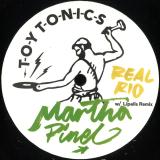
A new Toy Tonics artist! Brazilian DJ, vinyl collector, party promoter, and style aficionado Martha Pinel has joined the Toy Tonics family.
Originally from Rio de Janeiro, where she is a well-established DJ and a prominent figure in the lifestyle scene, Martha also resides in Berlin, where she became friends with the Toy Tonics crew.
She is the creator of Assembleia, a celebrated party in Rio de Janeiro known for its laid-back and unpretentious atmosphere. Assembleia has also become a Carnival sensation, hosting unforgettable annual editions that are now a highlight of the season. In Brazil, she is also known as the co-founder of the Croma project, where fashion and music merged to revolutionize Rio de Janeiro's alternative scene. She has been featured on the cover of GQ Brazil, which named her one of the "13 artists giving voice to the generation that is changing the world."
Martha has been DJing worldwide at festivals such as KALA Festival, Paris Fashion Week, DGTL, and Boiler Room. She has made a name for herself in the diggers scene, sharing the stage with DJs such as Hunee, Antal, Yusu, Sam Ruffillo, Prins Thomas, and many others.
Martha is passionate about discovering music daily and crafts dynamic, non-linear sets that play with the audience's emotions. Known for her bold approach, her sets are always powerful and brimming with personality. They seamlessly blend ethnic musical influences with cutting-edge productions from Brazil and beyond, incorporating African and Middle Eastern sounds, space disco, Italo disco, Balearic beats, house, and its subgenres.
Martha Pinel's debut EP, Real Rio, was born during a moment of rediscovery in her hometown, Rio de Janeiro, after spending a long time abroad. This project is a celebration of that reconnection, capturing the city's most authentic and visceral aspects-a place where beauty and chaos coexist, with dramatic highs and lows.
In the track "Uber Moto," Martha reflects on the urban phenomenon of app-based motorcycles, which have become a symbol of the city.
"Espírito de Estado," on the other hand, is a track that embodies the spirit of the Carioca Carnival, the greatest party in the world.
Finally, "Assim" offers a personal reinterpretation of Marcos Valle's classic Estrelar. In this track, Martha and Gabto leave their mark on this Brazilian music icon, reflecting on the concept of Body Culture-it's often said that it's impossible to walk along Ipanema Beach without noticing the Carioca cult of the body.
- The Voice Of Water
- Lake Of Sphinxes
With »Roto«, Derek Piotr revisits the aqueous terrain first explored in his 2016 album »Drono«, where the paradox of water’s stillness and perpetual motion was refracted into looping voices and glitching textures. Conceived as a »spiritual successor« and recorded in 2019, the album has lain dormant for six years before surfacing on Discreet Archive. That stretch of silence seems to have deepened its charge – the sound feels unearthed rather than made, like a whirlpool biding its time in obscurity until now.
Unlike »Drono«’s mosaic of shorter pieces, »Roto« unfurls as two expansive half-hour tracks, allowing Piotr to probe repetition with greater intensity. Vowels accumulate until they shimmer with alien sentience, drones grow dense and psychoacoustic, and the smallest digital artifacts flicker like neural sparks. The result is a work that denies familiarity; recurrence here only breeds strangeness, unspooling into a procession of hidden pulses and altered voices that resist prediction, drawing the listener deeper into a submerged, otherworldly space.
Derek Piotr is a folklorist, researcher and performer whose work focuses primarily on the human voice. His work covers practices including fieldwork, vocal performance, preservation and autoethnography; and is primarily concerned with tenderness, fragility, beauty and brutality. He has collaborated with artists including Scott Solter, Nathan Salsburg and Thomas Brinkmann across various disciplines.
He is lead archivist and creative director of the Fieldwork Archive.
François and Sylvain Rabbath have turned six years of touring into a joint album that patiently and intensely distills a variety of musical flavors gathered from around the world.
Since the early 1960s, François Rabbath's double bass has resonated through enough landmark recordings to fill several shelves in a record collection. As an arranger, composer, and musician, his imprint on music goes far beyond his collaborations with Barbara, Paco Ibáñez, Charles Aznavour, or Édith Piaf. Aspiring double bassists owe him a groundbreaking method for learning the instrument. Born into a lush musical universe that quickly became his own, his son Sylvain first accompanied him on his travels before settling at the piano and sharing stages around the world at his side.
Those years of accumulating visas in their passports were put to good use by father and son. The continents, countries, and cities they passed through became a rich source of inspiration for composing Amall, the album by the Rabbath Electric Orchestra.
Long hours spent in the air or on the road, watching passing landscapes that never stayed the same, were transformed into compositions imbued with the atmospheres of the places they crossed or visited. Inspiration sometimes struck with force, like a green oasis appearing in a desert of stone—unexpectedly, as glowing red rocks suddenly dominated an otherwise open landscape with an endless horizon, while the mind wandered into a state between meditation and introspection.
Born from these travels, the pieces took on their final colors once brought into the studio, refined, and finally arranged to welcome the guitars of Keziah Jones and Matthieu Chedid, the piano of Laurent de Wilde, the bass of Victor Wooten, the saxophone of Raphaël Imbert, and the percussion of Minino Garay. Enhanced by the scale of the jazz-soul orchestrations, by the richness of arrangements bursting from strings, brass, rhythms, or keyboards, the epic breath of vast plains became ingrained. The urban tension of funk, echoing their movements, found its place—alongside more electric expressions or the ambience of a darkened room.
Melancholic and melodious, expressive and edgy, the bowed double bass—played in the high register where few dare to go—emerged as the musical guide. One that draws a path between Seville and Minneapolis, connects François Rabbath's native Syria to France, and bridges South America to Europe. It sets the tone to follow—the emotion that will carry the piece, and if not filled with light, will carry it there nonetheless.
Musical visions packed in luggage, transported in cargo holds, or imprinted in their minds just long enough to cover the distances to the next stop—father and son deepened their bond, beyond family and art. And their hands have never held each other more tightly.
François et Sylvain Rabbath ont fait fructifier six ans de tournées pour un album commun distillant patiemment et intensément la variété de parfums musicaux récoltés autour du monde.
Depuis le début des 60’s, la contrebasse de François Rabbath résonne dans assez de références pour combler plusieurs étagères d’une collection de disques. Arrangeur, compositeur, musicien, l'empreinte laissée dans la musique va bien au-delà de ses collaborations avec Barbara, Paco Ibanez, Charles Aznavour, ou Edith Piaf. C’est à lui que les
apprentis contrebassistes doivent une méthode novatrice pour apprendre l’instrument.
Né dans un univers musical luxuriant qui est vite devenu aussi le sien, c’est d’abord dans ses voyages que son fils Sylvain l’a accompagné, avant de s’installer au piano, et parcourir les scènes du monde à ses côtés. Ces années où les visas se sont entassés sur leurs passeports, père et fils les ont mises à profit. Continents, pays, et villes qui se sont succédés sont devenues un gisement pour composer Amall, l’album du Rabbath Electric Orchestra.
Les longs moments passés dans les airs ou sur la route à contempler un paysage qui défile sans pour autant rester le même, se sont convertis en compositions habitées par les ambiances de ces endroits traversés ou visités. Là où l’inspiration s’est imposée parfois brutalement, sous
la forme d’un oasis de verdure surgissant au milieu d’un désert de pierres. Au hasard d’imposantes roches rougeoyantes s’invitant dans un paysage jusqu’alors dégagé sur un horizon sans fin, quand l’esprit se laisse aller à un mélange de méditation et d'introspection.
Nés de ces pérégrinations, les titres ont pris leurs couleurs définitives une fois ramenés en studio, peaufinés puis, enfin, pensés pour y inviter les guitares de Keziah Jones et de Matthieu Chedid, le piano de Laurent de Wilde, la basse de Victor Wooten, le saxophone de Raphaël Imbert, les percussions de Minino Garay. Sublimé par la dimension des orchestrations jazz-soul, par la richesse des arrangements jaillissant des cordes, des cuivres, des rythmiques ou des claviers, le souffle épique des plaines immenses s’est imprimé.
La nervosité citadine du funk rythmant les déplacements a trouvé sa place, non loin d’une expression plus électrique ou d’une atmosphère de salle obscure.
Mélancolique et mélodieuse, expressive et nerveuse, la contrebasse jouée à l’archet, dans les notes hautes du manche où peu s’aventurent, s’est érigée en guide musical. Celui qui trace le chemin entre Séville et Minneapolis, relie la Syrie natale de François Rabbath à la France,
réduit la distance entre l’Amérique du Sud et l’Europe. Donne la note à suivre, l’émotion qui traversera le morceau qui, s’il n’est pas habité par la lumière, le portera néanmoins jusque là.
Visions musicales mises dans le coffre, transportées en soute ou imprimées dans l’esprit le temps de couvrir les distances qui les mèneront aux prochaines, c’est côte à côte que père et fils ont prolongé leur lien par delà des seules limites familiales et artistiques. Et leurs mains ne se sont jamais serrées aussi fort.
credits
- Introduction
- Fish Introduction
- The Meaning Of Life
- The Miracle Of Birth
- Link (Frying Eggs)
- The Third World (Yorkshire)
- Every Sperm Is Sacred
- Protestant Couple
- Link (Martin Luther)
- Growth And Learning
- Fighting Each Other
- Link (The Great Tea Of 1914–18)
- Fish Link
- Terry Gilliam Intro
- Accountancy Shanty
- Zulu Wars
- Middle Age
- Live Organ Transplants
- Galaxy Song
- Penis Song (Not The Noël Coward Song)
- The Autumn Years
- Death
- Christmas In Heaven
- Dedication To Fish
S
oundtrack-Klassiker zum Kultfilm – neu aufgelegt auf rotem Vinyl
Monty Python’s The Meaning of Life erschien 1983 als Soundtrack zum gleichnamigen Film – und ist nun zum ersten Mal seit Jahrzehnten wieder erhältlich, diesmal als rote Vinyl-Edition.
Die Platte ist ein wilder Mix aus Sketchen, Songs und absurden Zwischenspielen – darunter „Every Sperm Is Sacred“, „Galaxy Song“ und das schräg-romantische „Penis Song (Not the Noël Coward Song)“. Ergänzt wird das Ganze durch Bonus-Dialoge, Soundeffekte und Auftritte von Michael Palin und Terry Gilliam, die eigens fürs Audioformat eingespielt wurden.
Ein absurdes, geniales Hörerlebnis – ganz in Monty Python-Tradition.