*REPRESS* 2x12"
Poland's finest reggae dubstep export is back to guide us through the long dark winter with his highly anticipated second studio
album, Subconcious. Mat Miller solidified his position as one of the most exciting global ambassadors for the sound with his 2011
debut album and he returns to the mighty Moonshine Recordings with another killer full length selection of thick dread bassweight
and proper roots vibes. Matt's influences have always been varied, and his music's rich diversity is in full effect across the LP as he
adeptly shifts between tempos and moods, utilising his ear for melody and rhythm to create an absorbing collection of timeless
sounds. The ground shaking sub-frequencies central to each track are built to challenge soundsystems and ignite dancefloors,
whether it's on the livewire rhythms of his jungle indebted track 'Wicked Dub', the driving sonic force of the drum and bass styled
'Different Dub' or the dubbed out, skank-ready movements of tracks like 'Earthwalker' and 'Indra'. As well as the all-powerful bass
pressure, Radikal Guru works with a colourful array of instrumentation, and brings in characterful vocalists YT, Danman and Echo
Ranks to provide melodic lead and reggae lyricism on 'Stay Calm', 'Know Yourself' and 'Warning!' respectively. The final result is
shining example of modern roots/ reggae-centred music in 2013, executed brilliantly and certain to last the test of time.
Search:leâo
- A1: Echoes Of A Billion Sun's
- A2: Messages From The Andromeda Galaxy
- A3: Stardust Memories (Among The Stars Dreams And Memories)
- A4: Trailblazer Of The Cosmos (Comet Rider A Leap Of Faith Into The Unknown)
- B1: Seeds Of Light (Hope For Growth And New Beginnings)
- B2: Fragile Eden (Threads Of Emerald Green)
- B3: The Cold Embrace Of Infinity
- B4: The Star Charts We Shared (A Maurizio Requiem)
After a 30-year interstellar silence, the enigmatic producer Alien Signal—pioneering alias of Italian electronic composer Alex Silvi—reemerges with Whispers from Distant Suns, a transcendent odyssey that bridges retro-futurism and modern electronica. Hailed as a magnum opus, this album transcends genre boundaries, captivating ambient purists, downtempo aficionados, and even experimental listeners with its hypnotic fusion of analog warmth and digital precision.
Cosmic Tapestry of Sound
Drawing comparisons to Vangelis’ Antarctica and Alpha—but reimagined through a 21stcentury lens—Whispers from Distant Suns marries nostalgic synth textures with cuttingedge production. Silvi’s mastery of melody shines through in tracks like “Stardust
Memories” and “Fragile Eden” where shimmering arpeggios and celestial pads drift over robotic, glitch-infused drum patterns and sparse, meditative percussion. The result is a paradox: a retro-futuristic soundscape that feels simultaneously ancient and alien, familiar yet unexplored.
Listener Testimonials
Fans and critics have flooded forums with praise:
“An auditory revelation! It’s like Vangelis met Jon Hopkins in a nebula—vintage soul with a futuristic heartbeat.”
“The textures are gorgeously cinematic. Closing your eyes, you’re adrift in a Tarkovsky film scored for the Andromeda galaxy.”
The Vinyl Experience
Pressed on heavyweight vinyl, the album’s physical release amplifies its immersive qualities. The gatefold sleeve, adorned with surrealist astrophotography and metallic
foiling, mirrors the music’s cosmic ethos. Side A leans into Balearic serenity, with sundappled grooves and aquatic synth ripples, while Side B delves into darker, more
experimental terrain—think Aphex Twin’s Selected Ambient Works colliding with the organic rhythms of Jon Hopkins.
Maturity in Motion
This album is a testament to Silvi’s evolution. Tracks like “Seeds Of Light” and “Message from Andromeda Galaxy” showcase his refined ear for dynamics, balancing silence and sound with surgical precision. Vintage drum machines spar with glitches, while field recordings of crashing waves and interstellar static blur the line between Earth and cosmos. The closing track, “The Star Charts We Shared” crescendos into a 6-minute ambient requiem, leaving listeners suspended in a state of weightless awe.
Final Transmission
Whispers from Distant Suns is more than an album—it’s a transcendent odyssey. Spanning time, space, and the artist’s own creative evolution, this immersive work invites listeners to lose themselves in its ebb and flow. Designed for moments both intimate and expansive, its balearic-tinged atmospheres resonate equally through dawnlit Mediterranean terraces or the solitary glow of headphones in darkness. These are compositions that pulse, morph, and haunt the air long after the final note fades. A living soundscape meant to accompany life’s quiet revelations and clandestine joys—a soundtrack to your most personal moments, crafted as what the artist calls ‘private dance music.’
Tailored for the Discerning Listener
Whispers from Distant Suns is designed with the true connoisseur in mind. This album is a must-have for:
Vinyl Collectors & Audiophiles: Those who value the warmth and tactile experience of heavyweight, limited edition pressings
Electronic Ambient and Downtempo Fans: Listeners who appreciate immersive soundscapes that merge retro analog charm with modern digital innovation.
Retro-Futurism Enthusiasts: Fans of pioneering artists like Vangelis, Boards of Canada, and early Warp Records who seek music that bridges nostalgic synth textures with futuristic experimentation.
Experimental Music Explorers: Individuals drawn to sonic narratives that invite deep, contemplative listening—perfect for both introspective moments and immersive listening sessions.
This release is not just an album; it’s a curated experience for those who desire music as a multidimensional art form, merging the vintage allure of analog sound with a contemporary, cosmic vision.
For fans of: Vangelis, Biosphere, Jon Hopkins, early Warp Records.
Patrick Conway crossed the threshold to find a new hope. This is his third offering for the ESP Institute. On side A, 'Loss' sets an overall melancholic tone for the record. A single repeating high note on the piano establishes a guiding element, which is eventually supported by a tear-jerking yet resolving chord progression, a trailing choir of angelic voices, and a filter-modulating synth that pads the widest zones of the mix with the occasional counter-melody. Robust in and of itself, Patrick’s melodic arrangement floats gracefully over an otherwise antagonistic rhythm section built from his signature corroded dancehall arsenal. This hornets nest of boxed live kick drums, piccolo snares, and high-pitched toms is held together by a dry veneer of saturation, sitting at safe distance from but in natural harmony with the bulbous low-frequency atmospherics. On the flip, 'Silencio' employs a similar statement at the top of each measure, this time an anthemic polyphonic synth stab as opposed to the singular piano note, however, unlike the layered melodies throughout 'Lost', here Patrick explores the narrative possibility of negative space—call and response, rhythmic dialogue, and the implied notes that leave the listener’s or dancer’s intuition to complete a phrase. In the game “musical chairs,” children run around manically until signaled to find a chair, at which point their diverse personalties must urgently synchronize, until set free to run again and repeat the process. Patrick's approach for 'Silencio' conjures said metaphor—his melody and rhythm are unleashed to meander and spasm within the confines of each respective bar, until that anticipated synth stab unifies everything “on the one”—controlling the chaos, calling on muscle memory and affirming logic. These two songs will be with you always as they always have been.
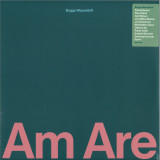
Bugge Wesseltoft has long been a shaper of his own jazz idioms, through his diverse solo albums, his group projects such as New Conception of Jazz, OKWorld! and RYMDEN, and collaborations with artists such as Sidsel Endresen, Henning Kraggerud or Henrik Schwarz.
"Am Are" features special constellations of superb musicians that spans both generations and styles, and is an exploration of sonic textures, dynamic contrasts of mood and style, and ranges from sparse arrangements through to complex layers of dubs and loops and improvisational interplay.
The album begins with Bugge alone on "How?" with layers of undulating atmospheric synth, brought into focus by Bugge's piano at the forefront, creating a minimalist miniature that is both emotive and serene. For "Villrein" Bugge is joined by Elias Tafjord on drums, beginning with a santur-like synth figure, floating over ominous formant sci-fi bass synths bubbling and pulsing, and overlaid by phrenetic piano that only stops to lock into the santur figure before relaunching on its own journeys, all underpinned by Elias Tafjord's expressive drumming. "Is Anyone Listening?" demonstrate's Bugge's songcraft, layering muted percussive piano behind Rohey's distinctive and beautiful vocals punctuated by Martin Myhre Olsen's tenor saxophone, creating a soulful mood tinged with desperation.
"BAG" presents the first classic piano trio of the album - Bugge on piano and synths, Arild Andersen on bass, and Gard Nilssen on drums - announcing itself with an insistent riff, chattering drums, breaking into a progressive rock-style passage of bass and piano in unison. "Reel", the second track from this trio, is a mellow soundscape that evolves to become hazy urban downbeat jazz.
The second piano trio of Bugge (Rhodes and Korg MS20 synth), Sveinung Hovensjø (Electric Bass), and Jon Christensen (Drums and Bells) offers a completely different perspective. The first track "Render" features Bugge's Zawinul-esque Rhodes and monosynth leads, Sveinung's fuzz bass in something of a leading role, all carried with chattering gusto by Jon Christensen's dynamic drumming that brings texture and space as well as rhythm to the piece. "Vender" begins as an atmospheric piece, with reed organ-like synth washes, and octave-processed bass with a somewhat sitar-like tone, meandering until the track breaks down into drums and bass weaving around an insistent drum machine loop, dripping with synth pads and monosynth lead.
"JazzBasill" introduces the third piano trio - featuring Bugge (Piano), Jens Mikkel Madsen (Acoustic Bass) and Øyunn (Drums) - and offers a classic piano trio style with urban sophistication, that is lyrical, and interspersed with staccato cadences, giving a feeling of broken swing, slightly staggered yet driving forwards. The title track "AM ARE" is late night jazz, with baroque whispers, and distinctly melodic.
The final track, "Think Ahead" features the non-standard trio of Bugge (Piano/Organ), Oddrun Lilja (Guitar) and Sanskriti Shrestha (Tablas/Harp). Beginning with a minimalist piano figure, table, and sustained guitar, the track breaks down to a noise surge and ambient windscape, with guitar birds and abstract grinding, before returning to minimalist melodicism.
The shifting personnel across the album, as well as the three different studios in which it was recorded - Village Recording in Copenhagen, Rainbow Studios in Oslo, and his own Buggesroom Studio - creates a feeling of dynamic change and musical variety that is unified by Bugge's piano and keyboards. His playing moves between foreground, where he allows the music to elevate him, and background, where he move gently like a beneficent presence, tending to the demands of the spirit of the musical moments he has captured. It is an album powered by restless exploration and shaped by distinctive musical personalities; it is a journey through different moods, illuminated and brought into focus by Bugge's measured approach and guiding hand.
- A1: Montego Bay - Everything (Paradise Mix) 04 59
- A2: Atelier - Got To Live Together (Club Mix) 06 06
- A3: Golem - Music Sensations 04 56
- B1: The True Underground Sound Of Rome Feat. Stefano Di Carlo - Gladiators 05 26
- B2: Eagle Parade - I Believe 04 26
- C1: Dj Le Roi - Bocachica (Detroit Version) 05 28
- C2: Green Baize - Synthetic Rhythm 01 41
- C3: M.c.j. Feat. Sima - Sexitivity (Deep Mix) 05 30
- D1: Kwanzaa Posse Feat. Funk Master Sweat - Wicked Funk (Afro Ambient Mix) 06 31
- D2: Progetto Tribale - The Bird Of Paradise 06 29
- D3: Mbg - The Quite 06 59
Vol 1[28,99 €]
Googling “paradise house”, the first results to pop up are an endless list of European b&b’s with whitewashed lime façades, all of them promising “…an unmatched travel experience a few steps from the sea”. Next, a little further down, are the institutional websites of a few select semi-luxury retirement homes (no photos shown, but lots of stock images of smiling nurses with reassuring looks). To find the “paradise house” we’re after, we have to scroll even further down. Much further down.
It feels like yesterday, and at the same time it seems like a million years ago. The Eighties had just ended, and it was still unclear what to expect from the Nineties. Mobile phones that were not the size of a briefcase and did not cost as much as a car? A frightening economic crisis? The guitar-rock revival?! Certainly, the best place to observe that moment of transition was the dancefloor. Truly epochal transformations were happening there. From America, within a short distance one from the other, two revolutionary new musical styles had arrived: the first one sounded a bit like an “on a budget” version of the best Seventies disco-music – Philly sound made with a set of piano-bar keyboards! – the other was even more sparse, futuristic and extraterrestrial. It was a music with a quite distinct “physical” component, which at the same time, to be fully grasped, seemed to call for the knotty theories of certain French post-modern philosophers: Gilles Deleuze, Félix Guattari, Paul Virilio... Both those genres – we would learn shortly after – were born in the black communities of Chicago and Detroit, although listening to those vinyl 12” (often wrapped in generic white covers, and with little indication in the label) you could not easily guess whether behind them there was a black boy from somewhere in the Usa, or a girl from Berlin, or a pale kid from a Cornish coastal town.
Quickly, similar sounds began to show up from all corners of Europe. A thousand variations of the same intuition: leaner, less lean, happier, slightly less intoxicated, more broken, slower, faster, much faster... Boom! From the dancefloors – the London ones at least, whose chronicles we eagerly read every month in the pages of The Face and i-D – came tales of a new generation of clubbers who had completely stopped “dressing up” to go dancing; of hot tempered hooligans bursting into tears and hugging everyone under the strobe lights as the notes of Strings of Life rose up through the fumes of dry ice (certain “smiling” pills were also involved, sure). At this point, however, we must move on to Switzerland.
In Switzerland, in the quiet and diligent town of Lugano, between the 1980s and 1990s there was a club called “Morandi”. Its hot night was on Wednesdays, when the audience also came from Milan, Como, Varese and Zurich. Legend goes that, one night, none less than Prince and Sheila E were spotted hiding among the sofas, on a day-off of the Italian dates of the Nude Tour… The Wednesday resident and superstar was an Italian dj with an exotic name: Don Carlos. The soundtrack he devised was a mixture of Chicago, Detroit, the most progressive R&B and certain forgotten classics of old disco music: practically, what the Paradise Garage in New York might have sounded like had it not closed in 1987. In between, Don Carlos also managed to squeeze in some tracks he had worked on in his studio on Lago Maggiore. One in particular: a track that was rather slow compared to the BPM in fashion at the time, but which was a perfect bridge between house and R&B. The title was Alone: Don Carlos would explain years later that it had to be intended both in the English meaning of “by itself” and like the Italian word meaning “halo”. That wasn’t the only double entendre about the song, anyway. Its own very deep nature was, indeed, double. On the one hand, Alone was built around an angelic keyboard pattern and a romantic piano riff that took you straight to heaven; on the other, it showcased enough electronic squelches (plus a sax part that sounded like it had been dissolved by acid rain) to pigeonhole the tune into the “junk modernity” section, aka the hallmark of all the most innovative sounds of the time: music that sounded like it was hand-crafted from the scraps of glittering overground pop.
No one knows who was the first to call it “paradise house”, nor when it happened. Alternative definitions on the same topic one happened to hear included “ambient house”, “dream house”, “Mediterranean progressive”… but of course none were as good (and alluring) as “paradise house”. What is certain is that such inclination for sounds that were in equal measure angelic and neurotic, romantic and unaffective, quickly became the trademark of the second generation of Italian house. Music that seemed shyly equidistant from all the rhythmic and electronic revolutions that had happened up to that moment (“Music perfectly adept at going nowhere slowly” as noted by English journalist Craig McLean in a legendary field report for Blah Blah Blah magazine). Music that to a inattentive ear might have sounded as anonymous as a snapshot of a random group of passers-by at 10AM in the centre of any major city, but perfectly described the (slow) awakening in the real world after the universal love binge of the so-called Second Summer of Love.
For a brief but unforgettable season, in Italy “paradise house” was the official soundtrack of interminable weekends spent inside the car, darting from one club to another, cutting the peninsula from North to centre, from East to West coast in pursuit of the latest after-hours disco, trading kilometres per hour with beats per minute: practically, a new New Year’s Eve every Friday and Saturday night. This too was no small transformation, as well as a shock for an adult Italy that was encountering for the first time – thanks to its sons and daughters – the wild side of industrial modernity. The clubbers of the so-called “fuoriorario” scene were the balls gone mad in the pinball machine most feared by newspapers, magazines and TV pundits. What they did each and every weekend, apart from going crazy to the sound of the current white labels, was linking distant geographical points and non-places (thank you Marc Augé!) – old dance halls, farmhouses and business centres – transformed for one night into house music heaven. As Marco D’Eramo wrote in his 1995 essay on Chicago, Il maiale e il grattacielo: “Four-wheeled capitalism distorts our age-old image of the city, it allows the suburbs to be connected to each other, whereas before they were connected only by the centre (…) It makes possible a metropolitan area without a metropolis, without a city centre, without downtown. The periphery is no longer a periphery of any centre, but is self-centred”.
“Paradise house” perfectly understood all of this and turned it into a sort of cyber-blues that didn’t even need words, and unexpectedly brought back a drop of melancholic (post?)-humanity within a world that by then – as we would wholly realise in the decades to come – was fully inhuman and heartless. A world where we were all alone, and surrounded by a sinister yellowish halo, like a neon at the end of its life cycle. But, for one night at least, happy."
Now and again, an album project with no home comes along out of the blue, demanding to be licensed and shared with the world.
It was unearthed on one of Paper's digging trips. BOM's album sounded like nothing else out there, only the future. Shrouded in mystery and country-of-origin unknown, Africa runs through its DNA, but sometimes mysteries are best left...
Ase - a Yoruba philosophy signifying the power that makes things happen and produces change; given to Gods, ancestors, spirits, humans, animals, plants, rocks, rivers, songs and prayers.
BOM takes influence from all corners of Africa and its diaspora, blending them with 25 years of Western electronic music into a melange of forward facing, leftfield afro futurism.
The album features one of Africa's brightest rising stars, Luka Productions (from Mali), cosmic poet Sirius Rush (UK) and master drummer & vocalist Felix Ngindu (DRC/Liverpool) for a journey into kaleidoscopic Afro-tech funk. Gqom, Shangaan electro and township funk rub shoulders with hip-hop, bass, deep house and dub for a psychedelic celebration of collaboration and possibility.
As geographical and musical barriers are broken down, BOM's 'Ase' album is leading the charge; London to Lagos, Lisbon to Sao Paulo, Bamako to Berlin, BOM captures the sound of the underground.
Folding the ambient techno tradition into neatly arranged packets of rhythm and space, Delsin proudly presents a striking new collaboration from Tobias. and Doltz. A project developed from a chance encounter, Versus combines classic synth and drum machine configurations with needlepoint sound design to create a quintessential electronica listening experience. Tobias. is the lead alias from Tobias Freund, the celebrated German techno pioneer who has been actively exploring new territories in electronic music production since the early 1980s. As Doltz, Shun Watanabe has quickly developed his own impressive artistic stamp in the field of leftfield techno and ambient since debuting in 2020. After seeing Doltz perform a live set at Eden Festival 2024 in Japan, Freund instantly invited him to collaborate. After the success of the first collaboration, they went on to develop five of the tracks on Versus together, while Jiawen Wang performed additional vocals on 'We Are Not Alone'. Versus is an album that balances variety and consistency across its finely sequenced run time, maintaining a focus on pointillist, exploratory rhythm from crisp drum machines and twitchy digitalia alike, all backed up by richly rendered atmospherics from gaseous pads to icy drones. It's a warm and inviting sound world, but also fearlessly futuristic, speaking to both Freund's decades of refinement and the startling clarity of Doltz's vision.
Thaiboy Digital is a founding member of the music group and cultural phenomenon Drain Gang. Following huge success at D2C (over 2000 units sold), YEAR0001 are now presenting this first collection of Thaiboy Digital records to retail. “Tiger” is Thaiboy Digital’s first studio album and includes fan-favourite track “Diamonds” featuring Yung Lean. The album also includes features from Thaiboy’s Drain Gang compatriot Bladee.
“Legendary Member” is the second studio album from founding Drain Gang member Thaiboy Digital, featuring appearances from Yung Lean and the group’s other icons Bladee, Ecco2k and Whitearmor. Following huge success at D2C, where this title sold over 3000 units, this release will now be available in retail for the first time.
“Trash Island” is the second collaborative mixtape from Drain Gang. It features the biggest hit in the Drain Gang catalogue “Western Union”, which has accumulated millions of streams on DSPs. Featuring Yung Lean alongside key DG members Bladee, Ecco2k and Thaiboy Digital, this title is hotly anticipated by the fanbase. This will be the first time the mixtape is available on vinyl.
“Back 2 Life” is Thaiboy Digital’s third studio album. Featuring Yung Lean and fellow Drain Gang member Bladee, Back 2 Life dials in a forward-facing sound with the help of producers Rok (Lil Uzi Vert, Future) Outtatown (Kendrick Lamar, Playboi Carti) and others. This is the first time this release will be available at retail, having previously sold over 1000 units via D2C.
Since its inception in 2020, Italo Moderni’s energy, spirit and inspiration has been the dancefloor. The darkened bunkers of Belgium, the trembling speakers of Valencia, the warming dawn of Rimini, these influences have been the lifeblood. Solidifying this tireless effort, Mellow Bangers Vol 2 is the label’s most ambitious collection to date.
In celebration of the imprint’s fifth anniversary, four artists gather with every single one united under a rallying cry. From across the globe, machinists have been drawn together to deliver a statement of acid and wave, of electro and synth with flourishes of italo. The shadowy fringes of the floor are well represented, audio artisans like Cyrk serving distorted drums and melodies dripping with menace in the twisted shape of “Double Crash.” The static haze remains with Fragedis’ “Disco Nicotina,” a lancing melody piercing the soaked speakers of this sweaty romp. Label boss, Adrian Marth leads the charge on the flip. “Modernism” is a stripped and playful two-stepper, a two-stepper that Marth beefs into bawdy proportions before balancing the track with crystalline chords. Amongst the litany of talent are musicians who have both inspired Italo Moderni as well as those who have appeared on the label. Antoni Maiovvi fits such a description, the sound sorcerer slicing beats through bittersweet bars in the immersive “Stopping Power.”
Mellow Bangers Vol 2 is a breathless expression of the floor. A contemporary imagining of the racing rhythms and addictive hooks of the 1980s and 1990s. Four works that summarise what Italo Moderni is and will continue to be
From Chicago To New York via the Uk. Three well selected cuts out of the House Music Universe. Including Vick Lavender who is a founding Member of the Strictly Jaz Unit. A Donna Summer related House Version of her all time classic "Love To Love You". Last but not least the yet only Release on Disco Magic related JFD Records bringing all the vibes a Dancefloor needs. Soulful, Progy & classy NY school.
- Love In Store
- Can’t Go Back
- That’s Alright
- Book Of Love
- Gypsy
- Only Over You
- Empire State
- Straight Back
- Hold Me
- Oh Diane
- Eyes Of The World
- Wish You Were Here
If every significant artist has an underrated gem in its catalog, then Mirage is that album for Fleetwood Mac. An obvious return to relative simplicity after the dramatic tension of Rumours and experimental ambitions of Tusk, the 1982 album finds the band re-grouping after a brief hiatus and again climbing to the top of the charts. Extremely well-crafted, well-produced, and well-performed, the double-platinum effort distills the group’s hallmark strengths into a filler-free set that never runs short of addictive pop hooks or daft accents.
Sourced from the original analog master tapes, pressed at Fidelity Record Pressing in California, and housed in a Stoughton jacket, Mobile Fidelity’s numbered-edition 180g 45RPM 2LP set presents Mirage in reference sound for the first time. The efforts co-producers/engineers Ken Caillat and Richard Dashut went to capture the splintered albeit formidable band can be heard with stunning accuracy, range, depth, and detail.
Though Rumours understandably gets a permanent spot in the audiophile hall of fame, the smooth, clear, and dynamic sonics on Mirage confirm that the record that stood as Fleetwood Mac’s last effort for five years deserves a place in the same vaunted arena. The presence and imaging of Mick Fleetwood’s percussion alone on this reissue might have you wondering how this slice of soft-rock bliss has gone under-noticed for decades. Other prized aural aspects — separation, definition, impact, tonal balance — are also here in spades.
Like much surrounding Fleetwood Mac in the 1980s, arriving at Mirage was not easy. Caillat searched for studios located outside of Los Angeles on a mission to change up the vibe of the band’s prior recording sessions. Everyone settled on Le Chateau in France, where relations between some members remained icy — and cooperation with the producers strained. Battles with exhaustion, bitterness, and addiction further informed the proceedings at the 18th century complex in the French countryside, where even communal meals were allegedly eaten in silence.
Inevitably, the feelings that co-producer Lindsey Buckingham, Stevie Nicks, Christine McVie, and company harbored — as well as the situations in which they found themselves — drifted into the songwriting. In its rapid ascent to rock-star royalty status, Fleetwood Mac drifted apart, embarked on solo pursuits, and found it was lonely at the top. Emptiness, the illusion of dreams, the longing for love, the want to escape to bygone times of innocence and happiness: Such themes inform a majority of the narratives. Even if the lyrics regularly take a back seat to easygoing arrangements that allow Mirage to come on like a refreshing breeze on a sunny summer afternoon.
Home to three Top 25 singles in the U.S. and having occupied the pole position of the Top 200 album charts for five weeks, Mirage rightfully resonated with the mainstream and attracted listeners on both sides of the pond. And how, via a smart blend of sugary melodies, warm harmonies, interlaced notes, nimble rhythms, taut structures, and passionate vocals. Not to mention the presence of what arguably remains Nicks’ signature song, the biographical “Gypsy,” a meditation on the loss of her close friend Robin Anderson that teems with majesty, mystery, and mysticism — and which gets an assist from Buckingham’s shaded tack piano and richly strummed guitar chords.
Its ranking as an all-time classic aside, that No. 12 hit has plenty of company when it comes to brilliant pop turns on Mirage. On the subject of Nicks, the raspy singer gets a little bit country on “That’s Alright.” Its clip-clopping pace and two-stepping progression complement subtle vocal swells that emerge during the final verse of a tune that is ostensibly about leaving but still conveys forgiveness and grace. And what would a Fleetwood Mac record be without Nicks drawing on the tools of the supernatural — cards, dreams, wolves, and the like — on the twirling “Straight Back.”
Despite the potency of Nicks’ primary contributions, Mirage seemingly unfolds as a tight competition between Buckingham and McVie — and one that ultimately ends in a draw. Buckingham’s salvos include the contagious “Can’t Go Back,” a yearning to time-travel back to the past that’s complete with hall-of-mirrors backing vocals; “Oh Diane,” out-of- left-field ear candy sweetened with hiccupped vocals and salt-and-pepper-shaken grooves; the chiming “Eyes of the World”; and “Empire State,” a delightfully fluttering track whose high-range vocals, lap harp notes, and ringing xylophones hint at the galaxies of sound that would erupt on Tango in the Night.
Then there’s McVie. As elegant, understated, and coolheaded as she’s ever been on record, she pours her heart out on cuts that revolve around her inevitable split with Beach Boy Dennis Wilson. In the process, she punctuates Mirage with a characteristic not always associated with catchy pop music: emotional weight, and the sense of dreaded acceptance in the face of dreams deferred.
“I wish you were here/Holding me tight,” McVie sings over a delicate melody on the album-closing piano ballad “Wish You Were Here.” Though they hoped otherwise, for the members Fleetwood Mac, distance and separation were always close at hand. Believing otherwise, inviting nostalgia, and pretending everything was fine only amounts to a mirage.
- Save Me
- The Mind Of Love
- Miss Chatelaine
- Wash Me Clean
- So It Shall Be
- Still Thrives This Love
- Season Of Hollow Soul
- Outside Myself
- Tears Of Love's Recall
- Constant Craving
Because Sound Matters' meticulous One-Step process creates the definitive sounding audiophile version of k.d. lang Ingénue. This all-analog release comes from the original first-generation master tapes for the first time. Vinyl guru and editor Michael Fremer says, "This k.d. One-Step is insane – It's otherworldly great!"
This One-Step version is strictly limited to 3,000 copies. The album is housed inside a top-quality, foil-stamped, uniquely designed numbered slipcase. The enclosed gatefold jacket will feature an "old style" tip-on jacket with the original artwork.
Special care has been taken to faithfully preserve the original sound with exceptional clarity and depth, capturing the recording's nuances and subtleties at every step to create the best sounding record possible.
The One-Step process is highly regarded among audiophiles and collectors for its unparalleled sound fidelity and represents the pinnacle of vinyl manufacturing craftsmanship.
Ingénue was originally released March 17, 1992 and is k.d. lang's second solo album.
Upon release, the album charted at #18 in the US, #13 in Canada, #3 in the UK and Australia and #1 in New Zealand. Nominated for six Grammy® Awards with the breakout single "Constant Craving" winning a Grammy® Award for Best Female Pop Vocal Performance. "Miss Chatelaine" and "The Mind of Love" were follow-up singles.
k.d. received universal critical acclaim for the album from publications like Mojo, Pitchfork, Rolling Stone, Uncut and dozens more! Today, Ingénue is a true classic album and considered one of the great audiophile recordings of the modern era. This One-Step version certainly proves that!
Notes for This Release:
Ingénue was originally recorded and mixed on analogue tape and produced by Greg Penny, Ben Mink and k.d. lang. The original analogue master tapes were directly used as the audio source for this One-Step pressing! This is the first time the analogue tapes have been used as a vinyl source for this brilliant recording. The results are stunning.
Because Sound Matters used the Neotech VR900-D2 180g High-Performance vinyl compound, which is the same as what is known as Super Vinyl – the best in the world.
Chris Bellman at Bernie Grundman Mastering cut the lacquers with meticulous care! He also did the original mastering of the CD release in 1992.
Dorin Sauerbier at Record Technology, Inc (R.T.I.) has been plating records for decades and is considered the best in the world – he also has done more One-Step processing than anybody. This is a vital step in the process to ultimately delivering the absolute best sounding version of Ingénue ever.
Record Technology, Inc did the pressing – using the exact pressing machine used for so many other One-Step releases. The QC team is constantly monitoring each copy as it comes off the press.
Because Sound Matters' slipcases and gatefold "old style" tip on original art jackets were printed by world-renowned Stoughton Printing Company.
This new all-analogue edition will draw you into the music as never before—at least it did me. The sonic picture is rich, well-textured, harmonically saturated, spatially deep and all the rest of the audiophile buzzwords that no doubt the producers (who include lang) intended to give listeners but until now couldn't fully deliver. The musical flow will have you swooning in your seat. Before the opener 'Save Me' concludes you may already feel overwhelmed and in need of lifting the stylus to catch your emotional breath...What a treat!
-Michael Fremer, Tracking Angle, Music 11/10, Sound 11/10
Summertime Whiteout is a debut Bleach Cult album - the quirky ambient pop record that
fantasizes about 1960s surf culture and romanticizes the neverending dilemmas of teen
life. It is all about raw imperfections and beautiful spontaneity, captured live on a
modular synthesizer, often relying on single takes and instinctive executions of tracks
that leave little to no room for extensive tweaking and post-processing. Recorded in the
living room at night it shies away from sophistication and complexity instead employing
rough, rock and roll inspired ideas. Raw drifting analog sequences, pulsating textures
and polychromatic vocals. No guitars or drum machines, however.
- 1: 3 Am
- 2: Timber
- 3: People Listen (To The Radio)
- 4: Everything's Green
- 5: Generator 6. Gossip
- 7: Shadow Boxing
- 8: Glossary
- 9: An Echo
- 10: Common
'Through Today' is the sophomore album for rising Australian band Chimers. A husband / wife duo comprising life partners Padraic Skehan (vocals / guitar) and Binx (drums / vocals). Recorded by Jono Boulet (Party Dozen) over two days at Stranded Studios, Wollongong and mixed at Boulet’s Sydney home studio, produced by the band and veteran manager / promoter / producer Tim Pittman (Feel Presents), 'Through Today' features ten tracks of tightly-coiled intensity that barely lets up for all of its 34 mins. In enlisting Boulet, the band were confident that due to his own experience of being one half of Party Dozen, they had someone who understood the confines of working within the structure of a two-piece but also the possibilities that creates. Boulet, in turn, rewarding that trust by capturing a powerful bedrock of sound that allowed the band's taught rhythms to circle and permeate and yet give full breathing space for the melody within. For Pittman’s part, having a third ear on hand to devote serious listening time and critical commentary was an added bonus. It’s a major step forward from the band’s 2021 self-titled debut. A twelve track effort that snuck out during covid and only hinted at the power within. "Our debut felt more like just trying to capture the songs we had at the time, we weren’t sure if we’d even release it or if it would be our only album" "This time around we were intent on capturing the energy and intensity of our live show on the recording but with a more produced sound than self-titled. We worked more on song structure previous to the sessions. We rehearsed a lot playing quietly so we could actually talk to each other whilst playing the song and iron out any kinks.” “Jono turned the whole live room into a drum room, mics everywhere. The guitar amps were situated outside to prevent too much spill but still recorded live along with about half of the vocals. Second guitar and the rest of the vocals were recorded the next day. Jono was super quick and had the same work ethic and mindset, get in, get it done. If the first take was good enough, move on.” - Padraic Lyrically Chimers maintain the intensity as they tackle the themes of love, life, death and relationships, distance from home (Padraic is Irish, moving to Australia in 2001) and the current political climate providing enough drama to fuel a forest fire. Guest musicians on the album include saxophonist Kirsty Tickle - also of Party Dozen - and violinist Jordan Ireland of The Middle East. Both of whom were invited in on short notice adding their respective parts in just 1-2 takes each without any prior knowledge of the material. Binx too showing added versatility contributing lead vocals to An Echo and sharing lead across 3AM, Generator and others. “Singing is not something that comes naturally to me, and it was at the last minute before we went into the studio that Padraic suggested I sing the lead in An Echo. Having very minimal musical instruments within the band I think having the two different vocals adds a nice dynamic to the record.” - Binx 'Through Today' is a great album. Solid and confident from the get go. No waste. No unnecessary fat. Should it be Chimers last it would remain a defining statement of originality and intent. But it’s not the last, it’s just the beginning. And there’s plenty more where that came from. BIO Like many good bands Chimers are a band born of isolation, not geographically though, via the pandemic. Irish born Padraic Skehan and his life partner Binx, formed the band in their Wollongong backyard during the initial lockdown of 2020. Veterans and drummers both of the ‘Gong’s vibrant garage-scene – The Pink Fits, The Drop Offs, Evol and more – Chimers is an altogether different beast, Padraic taking a giant leap forward by removing himself from the back-seat and assuming the role of driver; singing, playing guitar and writing the songs that would eventually become their 2021 self-titled debut album. It’s a sound and album that draws heavily on Skehan’s time as a youth in Ireland and the post-hardcore sounds of Dischord Records, Husker Du, The Wipers and which has seen the band find friends and favour in like-minds The Mark Of Cain, Henry Rollins, Guy Picciotto and Mudhoney. This is no mere nostalgia though, the band instead landing at the vanguard of a new generation of Sydney and surrounds bands – Body Type, Second Idol, Dust, Private Wives, R.M.F.C – borrowing from the past in order to create a future.
"For nearly four decades, Alison Krauss & Union Station have upheld their legacy as one of the most influential and widely celebrated acts in bluegrass and roots music. Krauss is a 27-time Grammy winner and was inducted into the Bluegrass Music Hall of Fame in 2021. Known for an immaculately crafted but endlessly surprising sound that transcends the boundaries of roots, country, rock & roll, and pop, Alison Krauss & Union Station are making their long-awaited return with Arcadia – their first LP since the 2011 masterpiece Paper Airplane—a critically lauded, multiple Grammy Award winning LP that debuted at #1 on the Billboard Country, Bluegrass, and Folk Album charts. This spring, they will embark on a 73-date tour of North America, their first since 2015.
Arcadia was produced by Alison Krauss & Union Station with additional production by 10-time Grammy winning producer Gary Paczosa, who has worked extensively with the band. The players – Alison Krauss (fiddle, lead vocal), Jerry Douglas (Dobro, lap steel, vocals), Ron Block (banjo, guitar, vocals), Barry Bales (bass, vocals), and welcoming highly acclaimed and celebrated tenor vocalist Russell Moore (guitar, mandolin, lead vocal) as the newest member – are five distinct personalities, each of whom also enjoys a flourishing solo career. But when they come together, they transform into a peerless group of musicians who share a singular focus."
Produced by A Great Big Pile of Leaves and recorded primarily at their home studio, new album Pono was mixed by touring guitarist Matthew Weber at Gradwell House Recording and mastered by Dave Downham (Beach Slang, Into It. Over It.). With eight years between releases, the band recalls how the recording process of Pono felt like they were making their first record, adding 'we worked at our own pace with no preconceived notion of what it needed to be.'
Perc Trax is proud to unleash the second EP of remixes of tracks from Perc's Resident Advisor recommended album 'The Cut Off'. Following on from EP1 this collection of remixes again covers a range of sounds from cutting edge Parisian deep techno to the sound of the UK underground scene.
Opening up the EP is Mac Declos, a breakout star of the Paris techno scene and a key member of Anetha's Mama Told Ya crew. Mac takes 'Full Goblin', one of the more uncompromising tracks on 'The Cut Off' and transforms it into a slice of grinding stripped back techno, recalling the glory days of Daniel Bell's DBX project.
Next up Sweden's Peder Mannerfelt, who has a long association with Perc & Perc Trax, remixes album standout track 'Static' which features his regular collaborator Sissel Wincent. Peder's version of 'Static' recalls classic Detroit electro with the addition of gliding harp runs providing a glistening counterpoint to the jabbing drums and Sissel's deadpan vocal delivery.
On the B-side Perc Trax new boy Million follows up his recent 'Six Ways To Die' EP taking hold of 'UK Style', originally one of the 'The Cut Off's more abstract tracks, energising it into a driving techno / jungle hybrid with just a sprinkling of classic UK rave to raise a smile on the face of the most exhausted raver.
Finally UK underground legend Boy Pete drags 'Imperial Leather' to the nearest free party, dirtying up Perc's epic original delivering a remix that will keep any 4am dance floor bubbling with energy. The relentless energy that Pete's productions are known for is all over this remix as it continuously powers forward.