Wilson Simonal and Trio Mocotó provide a double dose of Brazilian classics for this Brazil 45’s 7 inch.
First up, an infectious, samba-MPB hit from one of Brazil’s most popular artists of the ‘60s and early ’70s, Wilson Simonal. Originally released on 7 inch by Odeon in 1967 and landing on Simonal’s Alegria, Alegria !!! album in the same year, ‘Nem Vem Que Nao Tem’s fame had a new lease of life in 2002 when it was used as part of the soundtrack to the critically acclaimed film, ‘City Of God’.
On the B side, one of Jorge Ben’s main backing bands and a group that was highly influential to his sound, Trio Mocotó. Alongside recording with Ben on the seminal Força Bruta, Negro É Lindo and Tábua de Esmeralda LPs, they were also key figures in the development of the samba rock sound – a fusion of samba, soul and rock influenced by music from the USA.
First appearing on Trio Mocotó’s self-titled 1977 Arlequim LP, ‘Nao Adianta’ is a dynamic orchestral-infused gem, laced with that sun-kissed, samba flavour.
Remastered with refreshed artwork.
Search:leâo
- A1: Thats How It All Is (Feat Kevin Mark Trail)
- A2: Dumplings For Dinner (Feat Omar)
- A3: Long Road
- B1: No Crime To Try
- B2: Work It Out (Feat Ange Williams)
- C1: Clearer Skies (Feat Kevin Mark Trail)
- C2: Sherwood Ave (Kitchen Party)
- C3: Everything I Have To Give
- D1: That Love (Feat Louis Baker)
- D2: Some Kind Of Blockage
Color Vinyl[35,71 €]
The records is released in two options. Both hvae 180g vinyl records. The first version has two black vinyls and the second limited edition (numbered 100 pieces) has one turquoise vinyl and the other red.
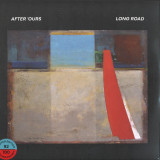
Over the last three decades, Auckland, New Zealand, has given birth to several generations of musicians, DJs, and producers who operated within the interzone between jazz, blues, soul, funk, Latin music, hip-hop, house, boogie, and broken beat. Across two slow-cooked albums that sit at the intersection of machine funk and vivid live instrumentation, Odyssey (2016) and their forthcoming sophomore release Long Road (2024), After 'Ours - the group project of pianist and composer Michal Martyniuk and drummer, guitarist and producer Nick Williams - have comfortably located themselves within this antipodean tradition.
Born and raised in Auckland, Nick Williams grew up surrounded by music from a young age. At home, his mother, Mary Anne, a record collector and DJ with deep, diverse vinyl crates, kept his ear sharp. By the time he was eight years old, he was regularly joining his musician father on stages across Australia in his blues rock band Slippery Sam. In his early twenties, Nick began leading the eleven-piece Auckland Latin-dub-funk fusion big band Tangent, who performed regularly until the late 2000s.
Michal Martyniuk, on the other hand, grew up on the opposite side of the world in Szczecin, Poland. After playing classical music for twelve years and attending jazz school, he relocated to New Zealand with his family in his teens. While studying at Auckland University Jazz school, Michal came into the orbit of the legendary New Zealand saxophonist, composer, producer, and band leader Nathan Haines, who brought him into the same world as future collaborators like Tama Waipara, Batacada Sound Machine, Sola Rosa and Nick.
Inspired by the rich stories of jazz, neo-soul, electronica, and dance music from both sides of the Atlantic Ocean and the open-eared Auckland scene they emerged from, After 'Ours formed in 2011. Born out of a friendship cultivated through playing together at bars and nightclubs around town and home studio sessions. "Nick had family and work, so I had to wait all day," Michal says. "We'd come to the studio at 10 PM and go till 3 AM. That's how we came up with the name.
Session by session, After 'Ours revealed itself to be a creatively fertile meeting of minds. "We both have our angles, but it works well in the end," Nick reflects. "It takes the music to a place we can't get to by ourselves."
Between 2011 and 2016, they wrote and recorded Odyssey with a cast of musical collaborators that included KP, Sharlene Hector & Kevin Mark Trail (UK), Matt Nanai, Nathan Haines, Jakub Skowronski, Nick's partner Ange Williams (nee Saunders) and British producer Mike Patto from the lauded UK future jazz group Reel People. Influenced by the smooth yacht rock of Steely Dan and Donald Fagan, the warm midtempo bounce of A Tribe Called Quest and J Dilla, and the complex jazz/RnB bop of Robert Glasper, Odyssey was a labour of love that emphasised community, warm-hearted hospitality, and care.
Seven years on, they're finally ready to return with Long Road, an album that contains some of their best work yet. As well as reconnecting with past collaborators Kevin Mark Trail and Ange Williams, Long Road sees After 'Ours calling on assistance from Louis Baker, Jakarta-based saxophone player Kuba Skowroński, bassist Dan Antunovich, Los Angeles-based drummer Chris Bailey and the journeyman British soul artist Omar Lyefook.
Across ten songs that plot a stargazed course through their antipodean spin on UK broken beat, jazz, modern soul, and blues rock, Nick and Michal build on everything they learned while writing and recording Odyssey. In the process, they take their joyful musical visions to sublime new heights.
- A1: Inaya Day & Robin S - Right Now (A Director’s Cut Master)
- A2: Director’s Cut Pres Inaya Day & Duane Harden - Good Feelin (Frankie Knuckles & Eric Kupper Director’s Cut Mix)
- B1: Peyton & Director’s Cut - Beautiful (Original Mix)
- B2: Frankie Knuckles Pres Director’s Cut Starring Inaya Day - Let’s Stay Home (Tony Humphries ‘Work & Play Mix)
- C1: Dbow - Get Involved (Director’s Cut Classic House Mix)
- C2: Marko Militano - Good People (Director’s Cut Signature Mix)
- D1: Vintage Lounge Orchestra - Dreams (Director’s Cut Classic Mix)
- D2: Art Department Pres Martina Topley Bird Feat. Mark Lanegan &
There are few people across the globe, who will have not been touched by the work of Frankie Knuckles. Forever regarded as ‘The Godfather of House’ for his unrivalled contribution to the house music we know today; what started as an underground movement in Chicago has grown to international heights thanks to Frankie. His records earned him recognition on a global scale, allowing him to work with some of the globes biggest names including the likes of Diana Ross, Whitney Houston and Michael Jackson.
Frankie passed away in Chicago on 31st March 2014 leaving behind one of the greatest house music legacies spanning almost four decades. Now he is commemorated by long time writing and production partner Eric Kupper. Eric, himself a seasoned DJ producer and writer, has worked on over 116 Billboard #1 Dance Records and played a pivotal role in many of Frankie’s productions. Having both worked together for many years they established themselves as ‘Director’s Cut’ from 2011 and set about producing original releases and remixes based on the classic ‘Def Mix’ sound while sharing equal credits for their creations.
Together they re-produced and re-purposed classic cuts for modern dancefloors, with reworks including tracks from Marshall Jefferson, Ashford & Simpson, Artful & Ridney and The Sunburst Band, alongside Frankie Knuckles originals. These releases have now been brought together by Eric to feature on special album called ‘The Directors Cut Collection’ on SoSure Music.
For the third volume classic cuts such as Inaya Day & Robin S. - Right Now (A Director’s Cut Master) and Marko Militano - Good People (Director’s Cut Signature Mix) are nestled alongside equally absorbing Directors Cut mixes of Vintage Lounge Orchestra covering 'Dreams' and Art Department pres. Martina Topley Bird feat. Mark Lanegan & Warpaint covering 'Crystalised'.
The Director’s Cut Collection is a fitting tribute to commemorate the seventh anniversary of Frankie’s passing whilst giving Eric a platform to tell his side of the creative story. This album is to be released in collaboration with The Frankie Knuckles Foundation who work to continuing Frankie’s legacy well into the future.
DJ Feedback:
Dixon - 5/5 - "Classic"
The Black Madonna - 5/5 - "Love you Frankie!!!"
Laurent Garnier - 5/5 - "“niiiiiiiiiiiiiiiiiiiiiiiiice OHHHH SOOOOO NIIIIIIIIIIIIICE !!!!!”
Honey Dijon - 5/5 - "Iconic!!!!!!"
Axel Boman - 5/5 - "It's all about love - not about emotions!!!!
Adam Beyer - 5/5 - "<3"
Space Dimension Controller - 5/5 - "Always"
Tensnake - 5/5 - "Classic Love It"
Jonny Rock - 5/5 - "Hot!!!"
Prins Thomas - 4/5 - "very nice! fresh take on an all-time classic"
Len Faki - 5/5 - "It's been a while listening to this masterpiece - and yes - it's timeless and I love the new touch on the new version. thanks Frankie!"
robdabank (Radio 1) - 5/5 - “One of my all time faves and great mixes here!”
Severino Panzetta (Horse Meat Disco) - 5/5 - "OH YASS!!"
Matthias Tanzmann - 5/5 - "Can't believe it has been five years already. Legendary
Michael Serafini - 4/5 - "Excellant Retouch on this!!!"
Ease-Nightmares On Wax - 4/5 - "Timeless classic for a true legend RIP x"
Timo Maas - 5/5 - "well...classic!"
Tiefschwarz - 5/5 "bless Frankie Knuckles!!"
Red Rack'em - 4/5 - "Love this new version. Really tasteful. Well done!"
Few names shine as brightly in the cosmology of dubwise bass music as that of V.I.V.E.K. From releasing absolutely ground-breaking tracks for the better part of 20 years primarily on his own System and VIVEK imprints, to curating and hosting his legendary System nights, to bringing so much rising talent to light, it’s honestly difficult to imagine the last two decades of UK and global sound system music without him.
For ZamZam 96 V.I.V.E.K went straight to the bedrock of sound system music and delivered a power-stepper of galactic proportions.
“Illusions Dub” opens with starkly heavy valve bass and a punishing kick, leaving little doubt where this journey is headed . Richly adorned with neck-snapping percussion, industrial snares, post-punk atmospherics and a gorgeous melodic figure, the tune employs classic 90s digi-dub principles while feeling like a message from a gloriously human -or post-human- future.
“Illusions (Raw Dub)” runs rugged through the desk in fine style, with barely restrained feedback, phasers, and deep space echo and reverb ripping open shimmering holes in space-time for a truly cosmic Part 2.
‘The Oakland band’s wide-ranging debut is a whirlwind of biting critique, nervy post-punk guitars, and absurdist humor. Rarely does a first record speak with such a trenchant voice.’ 7.5 PITCHFORK
‘Post-punk lovers have a new act to follow" - PASTE
Fake Fruit’s visceral indie rock operates so firmly in the present that it’s transportive and unmooring. The Oakland trio’s songs careen with volatile energy and lead singer Ham D’Amato’s lyrics are enveloped with acerbic humor and resonant perceptiveness. Though their new LP Mucho Mistrust is a sly reference to a beloved Blondie lyric, the title encapsulates both the anxieties of daily life, a bloodless music industry, and global capitalism as well as the clear-eyed skepticism needed to rebel against it. Across 12 propulsively unpredictable tracks, the album is both their most collaborative and most immediate yet.
Following the 2021 release of Fake Fruit’s self-titled debut LP, the band’s personal lives hit a turbulent and transformational period. “There were big life changes and I was so close to boiling over,” says D’Amato. “I left a bad relationship, entered a more stable and loving one, got diagnosed with alopecia, and I'm turning 30 soon too.” This personal upheaval was channeled into the explosive lead single “Mucho Mistrust.” The track is simultaneously disorienting and direct, with clanging guitars from Alex Post, off-kilter drums from Miles MacDiarmid, and D’Amato snarling, “How you gonna blame me / when you could’ve done something about it / it’s not right / How you gonna marinate me / in shitty things overnight.” She explains, “This song was a snapshot of how I got through a difficult year.”
Recorded live at the Bay Area’s Atomic Garden studio with producer Jack Shirley (Deafheaven, Home Is Where), the band’s palpable ferocity shines throughout the record. Single “Más o Menos” is searing punk, with buzzsaw guitars and surging bass. It’s a clenched-fist song, one where D’Amato sings, “I decided to assert myself / After I lost all my sense of self.” Later in the track, D’Amato, who is Chicana, sings in Spanish, “¡No me hables! / ¡No escuchare!” While some of these songs deal in heartbreak, they are charged with way bigger themes. “There's also wanting to break up with capitalism and feeling upset about things politically,” says D’Amato.
For the band, these themes are personal. “I'm managing us while I'm in between changing diapers in my day job as a nanny,” says D’Amato. “Everyone in the band still believes in it and is motivated to keep wading through the bullshit.” On this album, they had no choice but to bet on themselves and each other. No track broadcasts their evolution better than the single “Cause of Death,” which morphs from a gorgeous sax-laden banger to something cathartic and anthemic.
As adventurous and righteous as Mucho Mistrust gets, there’s still an inviting core that never takes itself too seriously. From the ripping “Cause of Death,” which self-deprecatingly takes aim at anxiety and indecision, to the searing title track, Fake Fruit imbue their songs with humor and heart. “Our band is fun,” says D’Amato. “My number one coping mechanism for all of life is to joke about it. Even when the album talks about serious things, I am proud of how funny it can be.”
Nach einer äußerst erfolgreichen Tournee mit einer Gruppe von New Yorker Musikern namens The Band Geeks im Jahr 2023 beschloss Jon Anderson, die kreative Partnerschaft mit der Band zu erweitern, um neues Material für ein mögliches neues Studioalbum zu schaffen. Das Ergebnis dieser Bemühungen ist "True".
Während seiner 39-jährigen Karriere in der Rock and Roll Hall of Fame als Leadsänger von YES galt Jon Anderson als einer der führenden Vertreter der Progressive-Rock-Bewegung. Alben wie das "YES"-Album, "Fragile", "Close to the Edge", "Tales of Topographic Oceans" und "90125" sind auch heute noch Klassiker. Während seiner Zeit bei YES veröffentlichte Jon mehrere Soloalben und Kollaborationen, von denen seine vier Alben mit dem griechischen Komponisten Vangelis besonders hervorzuheben sind, und auch nach seinem Ausstieg bei YES im Jahr 2008 veröffentlichte er Soloalben.
Das neue 9-Song-Album ist ein willkommenes Geschenk für alle Fans von Jons 40-jähriger Tätigkeit als Leadsänger der Band YES. Die Songs des Albums erinnern sowohl an den klassischen 70er-Jahre-Sound von YES als auch an ihren heutigen Erfolg mit dem Album "90125". Das Album wurde von Richie Castellano, dem Bassisten und musikalischen Leiter von Band Geek, mitproduziert, produziert und abgemischt. Das Herzstück des Albums ist der 16-einhalbminütige Titel Once Upon a Dream".
Sara May grew up on a dirt road just outside a small Ontario town known for its Honda plant and Potato Festival. Over the course of ten indie-leaning, alt-country tracks on 'Legacy', her latest album as Falcon Jane, she expounds on that origin story through the great archetypes of country music: the drinker, the vagabond, the absent father. She presents these characters with a clarity and empathy that feels almost transgressive-a loving touch that crosses our rural / urban divides. But these are Sara's stories too: her rural childhood, her move to Toronto, her current home in the working class town of Shelburne, and her life on the road. She comes by it honest. And the transformation on 'Legacy' isn't just lyrical. Alongside producer José Contreras (By Divine Right), Falcon Jane refine their sound-pushing toward folk and country like contemporaries Waxahatchee and Angel Olsen. May's voice, the one constant from 2015's 'Alive n Well' EP, through the dream pop of her 2018 debut album 'Feelin' Freaky', to the sprawling indie rock of 2020's 'Faith', is more powerful here, sitting atop the warm, Nashville-leaning production. The result is both striking and blindingly obvious: Sara May has found her way back home.
Debüt-Soloalbum der Multiinstrumentalistin und Leadsängerin Nicole Miglis von Hundred Waters. Die Songs für ihr Solo-Debütalbum Myopia entstanden stückweise: in eine neue Stadt reisen, Feldaufnahmen sammeln, eine Idee entwickeln, verfeinern und in immer neuer Reihenfolge wiederholen. Viele der Songs entstanden innerhalb weniger Wochen, während sich die reichhaltige Instrumentierung geduldig entwickelte, als Miglis an den vielschichtigen Klanglandschaften herumtüftelte. Myopia ist ein Album, das die komplexen Überschneidungen von Sehnsucht, Melancholie und Identität erforscht und gleichzeitig ihre faszinierende Fähigkeit unter Beweis stellt, experimentelle Produktionen, Popmelodien und klassische Formen zu einer ganz eigenen musikalischen Sprache zu vereinen. Die Veröffentlichungen von Hundred Waters wurden von zahlreichen Medien gelobt, darunter Pitchfork, Rolling Stone, NPR, New York Times und viele mehr. Für ihr erstes Soloalbum Myopia war Miglis entschlossen, alle Songs selbst zu schreiben, zu produzieren und aufzuführen. Obwohl viele der Tracks noch in der Zeit mit HW entstanden, fand sie nach ihrer Welttournee als Leadsängerin des für einen Grammy nominierten Elektronikmusikers Bonobo in den Jahren 2022-23 neue kreative Kraft und finalizierte ihr Solowerk. In Myopia kristallisiert Miglis ineinander verwobene Zustände von Besessenheit, Liebe und Verlust neben einer gleichmäßig eklektischen Reihe von Klängen, sowohl organisch als auch digital. Das Album ist der Höhepunkt eines lebenslangen künstlerischen Schaffens, das Momente aus ihrer gesamten Karriere in ihrer bisher üppigsten und überzeugendsten Sammlung von Songs zusammenfasst. Es vermischt Texturen und Genres mit Instrumenten und Einflüssen - von Klavieren und Streichern bis hin zu akustischen Harfenklängen und ätherischen Loops - und überbrückt die Kluft zwischen Klassik und Moderne mit einem Album, das Fans von elektronischer, orchestraler und Pop-Musik gleichermaßen faszinieren wird.
"Music On Vinyl proudly presents the first installment of the acclaimed Miles Davis Bootleg series on pristine 180 gram vinyl!
The explosive transformation of Miles Davis' 'second great Quintet' with Wayne Shorter (tenor sax), Herbie Hancock (piano), Ron Carter (bass), and Tony Williams (drums) is laid bare on Live In Europe 1967: The Bootleg Series Vol. 1.
Culled from original state-owned television and radio sources in Belgium, Denmark, and France, this 5 LP box set spans three northern European festival performances over the course of nine days in October-November 1967. The audio shows consist entirely of previously unreleased or previously only bootlegged material. Miles' Quintet lineup of 1965 to '68 is acknowledged as one of the high reference points in 20th century jazz, and its influence continues to reverberate in small group jazz today, and it was the quintet's live performances, as they evolved into Miles' ideal of a ""leaderless"" jamming ensemble, that truly immortalized them.
Live In Europe 1967: The Bootleg Series Vol. 1 is the best historical album of 2012, according to the Downbeat Critics Poll 2012. "
Previously Unreleased Recording. Limited to 1200 copies on transparent cherry vinyl. Tip-on jacket, Download code. Insert featuring LP sized original art by Grungie O'Muck. Includes the original recording of Richard Tucker's "Are You Leaving For The Country", later covered by Karen Dalton, and the only song co-written by Karen & Richard, "Sleeping In The Garden". "Richard, Cam & Bert seem to have grasped The Great Harmony. That is, ensemble singing that is at once sweet, precise, funky and a bit sardonic..." -Mike Jahn / New York Times (1970) "For a few years in the late sixties and early seventies Richard Cam & Bert ruled MacDougal St. walking a fine line between the increasingly commercialized demands created by groups like Crosby Stills and Nash and the fierce integrity of earlier folk performers, the generation to which Richard belonged. They managed this with great aplomb, producing original tunes of great integrity and obvious folkloric origins, as well as those which expressed the anarchic omnipresent psychedelia of the moment. They also never abandoned the idea of including some traditional material in their performances. But for the usual random application of luck they could have been very big." - Grungie O'Muck / Artist, Bluesman, Cover artist for their first album and contributor to this one. Richard Tucker, Campbell Bruce, and Bert Lee coalesced as a trio in the spring of 1968, and by the end of that year had become regular performers at fabled Greenwich Village nightspots - The Gaslight, The Bag I'm In, Cafe Feenjon, among others. But mostly they were street singers, busking regularly in Central Park. Their only LP, Limited Edition, was released in 1970, and sold mainly at gigs and on the street. Somewhere in The Stars compiles earlier, previously unreleased recordings, when all three members were signed with Peer-Southern Music publishers as writers and began using their studio to make demos and experiment musically. Beautifully recorded by house engineer Charlie Mack (supervised by Jimmy Ienner), the demos capture a back room casualness and rustic, homespun quality. For me, listening to their songs and harmonies is like entering a world you always hoped existed but had never experienced. Some of the songs were re-recorded the following year for Limited Edition, but many are heard here for the first time. Among them is the original demo for Richard Tucker's song, "Are You Leaving For The Country", which Karen Dalton covered on her seminal 1971 release, In My Own Time. Richard and Karen were husband and wife for much of the 1960s, performing as a duo (initially as a trio with Tim Hardin), and navigating their time on the Village scene while alternating living in a small mining town outside Boulder, Co. before splitting up in 1967. Also making its debut, is the only song Richard and Karen ever wrote together, the haunting "Sleeping In The Garden". Also contains two epic songs by Cam "One Of These First Nights", and "Stockholm") not on their LP, but staples of their live performances, and noted in a gig review by The New York Times, and in a column by future A&R hero, Karin Berg, who was an early champion. Another rarity is the only cover of "Sweet Mama" by Fred Neil we've ever heard. Campell Bruce came to New York in 1967 as lead singer with a band from Washington, DC, The Natty Bumpo. They'd recently signed a record deal with Phillips, but were falling apart. Cam landed in the Village with an acoustic guitar and first started playing and singing in the basket houses, and shortly thereafter at The Gaslight, as the "Cam Bruce Trio" (which included Collin Walcott). After opening for Mose Allison, Cam's hero, the trio went their separate ways, and Cam returned to regular solo gigs at The Flamenco, and the basket houses on Bleecker. Richard and Cam met up on that scene and quickly found a musical kinship as well as becoming best pals. Bert Lee arrived in New York as a runaway the following winter, and began playing and sleeping wherever he could. His sometime accompanist, Ron Price, introduced Bert to Richard and Cam just as Bert's own songs were garnering attention from publishers. According to Bert, "I arrived on the New York scene during a time of great change, and it was the notion of change that influenced me. All around me I saw there were two sorts of songwriters, on the one hand dedicated to the traditions that had inspired them, folk, jazz, the American songbook. On the other hand were songwriters influenced by the wave of experimentation that The Beatles were the perfect example of. Mixing genres, writing lyrics that weren't just about ordinary love and loss. Richard Tucker was a country blues player, with a relaxed and melodic approach to the craft. Cam wrote something more akin to soul songs, with a hint of jazz in the changes. I was writing tunes that sometimes drew on classical structures with a tendency toward what I suppose would be known as prog-rock. But I was rather adamant about not being pinned down stylistically, and so I would write, for example, a song based on some complex classical chord structure, and then go right ahead and write a simple folk song, like Evelyn. Our band was popular locally, and it was this variety that made it distinct." Delmore is excited to present this unearthed treasure, fifteen years in the making. In the words of Richard Tucker, "Tap on your knee, roll on the floor; if you aint free, what's it all for?" "The trio's singing, playing, and writing have all withstood the test of time. Believe me, because I was there. In 1969 R,C&B, myself, Charles John Quarto, David Bromberg, Ron Price, and Keith Sykes were just a few of that year's crop of song-slingers. We were young turks back then, out on the prowl in New York's Greenwich Village for record deals, gigs, and beautiful young women to sleep with and maybe even write a song about. I've lost the names and numbers of those lovelies and I'm not sure what happened to Ron Price, but Richard, Cam, and Bert are back! - Loudon Wainwright lll
There are ghosts all across AVANTI, the debut album from Malice K. At points it's howling and unhinged, a grungy layer atop a lush foundation of melodic capital-s Songwriting, but in other moments it dissolves into a gentle, wistful haunting. Malice K's songs are blunt, uncomplicated and unflinching as he probes the interiority of memories, of mistakes - saturated with an innate intensity that sucks you into his gnarled and visceral world, so barbed it could draw blood. Malice K is helmed by visual artist and songwriter Alex Konschuh, New York-based but born and raised in Olympia, Washington. Following a stint living in Los Angeles, where he became a member of the artist collective Death Proof Inc., a trip to New York resulted in him simply never leaving the city. A period of chaos ensued, Malice K exhausted and unmoored and ultimately, unwell. The record is unpredictable across its 11 songs. The album opens with a jarring scream on "Halloween," Malice K's breathless vocals buried beneath a grungy, roving Nineties riff. The track emanates a manic energy, enveloping. It's a fitting entrypoint for the record, and for the vividness of Malice K. The snarling and obsessive "You're My Girl" has a swaggering paranoia: "I got so high I thought my hand touching my hand was your hand." But AVANTI exists in quieter moments too; "Radio," with its fluttering morose cello, moves at an almost glacial pace comparatively. The aching wistfulness of "The Old House" is an album stand-out, anchored in an acoustic guitar, an uneasy lullaby that never quite settles into itself: "I think to myself I got the things that I wanted, but I can't help think there's something else that I forgot to do." A recent press interview called Malice K a shapeshifter, but he's not amorphous in that way. He's decisive and intense, more concerned with carving his own path, and building his own world. Every part of Malice K is distinctly himself: from his sweaty high-octane shows to the high-flash high-contrast photos; from his gnarled and unsettling illustrations to the studio recordings that vacillate between grief and tenderness, there's an exceptional ferocity across everything Malice K touches. AVANTI feels lived in, like peering into an abandoned house through a window smeared with grimy fingerprints, relics of a life well-lived scattered inside - despite being a debut, there's the sense that Malice K arrived fully-realized, imperfections and all.
The latest full-length from Kishi Bashi, Kantos is a work of exquisite duality: a party album about the possible end of humanity as we know it, at turns deeply unsettling and sublimely joyful. In a sonic departure from the symphonic folk of his critically lauded 2019 LP Omoiyari - a career-defining body of work born from his intensive meditation on the mass incarceration of Japanese-Americans during World War II - the Seattle-born singer/songwriter/producer's fifth studio album encompasses everything from Brazilian jazz and '70s funk to orchestral rock and city pop (a Japanese genre that peaked in the mid-'80s). Informed by an equally kaleidoscopic mix of inspirations - the cult-classic sci-fi novel series Hyperion Cantos, the writings of 18th century enlightenment philosopher Immanuel Kant, a revelatory trip to ancient ruins on the island of Crete - Kantos ultimately serves as an unbridled exaltation of the human spirit and all its wild complexities. During the earliest stages of creating songs for the album, Ishibashi's main intent was to return to his highly eclectic musical roots, in part by tapping into his jazz background and by delving into the dance-rock-leaning sensibilities he previously embraced as co-founder of Brooklyn-bred indie band Jupiter One. But not too long into the songwriting process, he stumbled upon an AI-equipped website capable of composing catchy song hooks based on a prompt - a turn of events that quickly catalyzed the existential inquiry at the heart of Kantos. Although his ruminations on AI, transhumanism, and humanity's troubled fate indelibly guided the making of Kantos, Ishibashi nonetheless views the album as "less of a warning about this kind of hubris but more a celebration of the very characteristics that make us human: desire, passion, empathy, and love." "If there's anything I want people to come away with when they hear this record, it's a feeling of excitement about the possibilities of human-created art," he says. "Even as we're learning more about all the amazing things AI can do, I think humans will always be one step ahead in terms of our creativity and innovation. There's still no limit to what we have to offer."
Abstrack Records is back with a new EP, putting the emphasis on instrumental music. Angers based band Auroboros, whose paths crossed on numerous time with Abstracks, largely on the occasion of infamous Freaks Pop festival, delivers twenty minutes of a progressive and cosmic, rocky jam.
«Camel» feels like a pursuit, a chase after an uncatchable vanishing point. The relentless acceleration of the tempo and the increasing power of the instruments feel like they’re leading us to an inconcei- vable paroxysm.
During the breakdown, everything strangely feels faster and calmer at the same time, we think we’re catching a glance at this horizon, even believing we’re reaching it as drums are fading away. But the ascent starts again and the trance is non negotiable. The power stream of the instrumental energies washes over the immobiles and the sceptics.
On the B side, two very different reworks complete the picture. Romain FX distills the dancefloor essence of «Camel». With a cosmic, almost oriental approach. The original piece gives birth to a proper peak-time banger, pure leg shaking material.
Mytron gives us a more playful and trippy remix. Seven minutes of a vibe that seems to be spinning and drifting, without ever breaking the patiently settled groove, filled with tribal spirit and sometimes even humour.
Following a ten-part series of unannounced artist records and a spectacular high-concept album on Mask Records, label head ZentaSkai returns to the imprint for his next solo vinyl-only release, ‘Bob’.
The A1 sees the Berlin-based ZentaSkai combine a dusty, taped white noise feel with subtle, swirling dub chords as its high-end propels the track forward. It’s a stunning and evocative piece before the A2 continues with minimal drums and electric acid bleeps, a smooth organ lead completing its gorgeous soundscape.
On the B-side of the ‘Bob’ EP, ZentaSkai joins forces with long-time collaborator Sebastian Klenk. It follows their
‘Apeiron’ track on ZentaSkai’s 2023 ‘Architecture Of The Mind’ LP, among other joint work, and sees them deliver a near-twelve-minute track that is a true masterpiece. The track takes listeners through found-sound texture samples, intricate drum patterns, crunchy breakbeats, and more beautiful dub melodics.
‘Bob’ is another fantastic listening experience on Mask Records, already supported by Satoshi Tomiie, Raresh and Laurent Garnier.
Die aus Hawthorne, Kalifornien, stammenden Thee Heart Tones setzen mit ihrer Musik sowohl eine Tradition fort als auch neue Grenzen. Leadsängerin Jazmine Alvarado ist gerade mal 19 Jahre alt und das älteste Mitglied der Gruppe, Jorge Rodriguez, ist 21, aber wenn man sich ihre Platte anhört, wird deutlich, dass sie weit über ihr Alter hinaus talentiert sind. Thee Heart Tones, das sind Jazmine (Gesang), Ricky Cerezo (Tasten und Orgel), Jorge (Schlagzeug), Jeffrey Romero (Bass), Peter Chagolla (Leadgitarre) und Walter Morales (Rhythmusgitarre). "Eines Tages bekam ich eine Mail von Ricky Cerezo mit der Frage, ob ich einen Song für seine neue (damals noch namenlose) Band schreiben wolle", erzählt Jazmine. "Ich kannte seinen Schlagzeuger und die anderen Jungs aus der Mittelschule, sie waren also bekannte Gesichter. Sie schickten mir ein mp3 eines Instrumentalstücks, das sie geschrieben hatten, und sagten mir, sie wollten einen Text, also schrieb ich einen und schickte ihn ihnen." Dieser Song wurde schließlich "Don't Take Me as a Fool", eine schwermütige Moll-Ballade, in der Jazmines schwülstiger, perfekter Gesang erklingt, und die nun für ihr Debütalbum bestimmt ist. Ricky ging nach Hause und spielte seinem Vater "Don't Take Me As a Fool" vor, das er als Sprachnotiz auf seinem Telefon aufgenommen hatte. "Ich war zögerlich. Dad kannte diese Musik besser als jeder andere, er ist damit aufgewachsen. Aber er hat sich mein Telefon geschnappt und es an sein Ohr gehalten. Seine Zustimmung bedeutete mir sehr viel. Aber er hatte die gleiche Reaktion wie Jorge und ich, als wir Jazmine zum ersten Mal singen hörten. 'Das wird ein Hit', sagte er mir. Ihr habt hier etwas ganz Besonderes". Es war dieselbe Aufnahme, die Leon Michels und Danny Akalepse von Big Crown Records aufhorchen ließ, die beide sofort das Potenzial der Gruppe erkannten. Nachdem sie bei dem Label unterschrieben hatten, flog Leon nach Los Angeles, um mit Tommy Brenneck in Tommys Diamond West Studio ihr Debütalbum aufzunehmen. In fünf Tagen haben sie 14 Songs aufgenommen, die den Charme des Teenager-Souls einfangen und ihn mit ihren bewährten Produktionsfähigkeiten mischen - das Ergebnis ist ein modernes klassisches Soul-Album. Der Album-Opener und Titeltrack "Forever & Ever" ist ein ansteckender Two-Stepper, der sofort die Stimmung hebt, während schwere B-Seiten-Balladen wie "Should I Call You Tonight", "Cry My Tears Away" und "It's Time" den Klassikern des Genres den Rang ablaufen. Mit "Need Something More" ziehen sie das Tempo an und füllen die Tanzfläche, während Jazmine mit einem Track im Northern-Soul-Stil ganz sachlich die Dinge auf den Punkt bringt. Sie covern den Klassiker "Sabor A Mi" aus der Feder von Alvaro Carrillo mit großem Effekt, werden ihm gerecht und stellen ihre Version auf eine Stufe mit den besten von ihnen. Ein weiterer Höhepunkt ist ihre Version des The Vanguards-Klassikers "Somebody Please", den sie auf eine ganz andere Ebene heben. Die stampfenden Drums von "No Longer Mine" stehen im Kontrast zu Jazmines honigsüßem Gesang und enden mit der düsteren Energie eines Hip-Hop-Samples aus den mittleren 90ern. Forever & Ever ist sowohl ein Beweis für die unverwechselbare musikalische Chemie als auch für das Talent der beiden. Ihre Intentionen als Band sind ein Beweis für ihren kollektiven Charakter. Die Entscheidung, "Sabor A Mi" zu covern, "erlaubt es uns, unser Publikum wissen zu lassen, dass wir zu unseren Wurzeln zurückkehren", sagt Jazmine. "Wenn man in L.A. aufwächst, wird man von der Stadt, den Kunstwerken und der Musik beeinflusst", sagt Ricky. "Dad besaß kein Lowrider-Auto, aber andere Mitglieder unserer Familie schon. Impalas. El Caminos. Wir waren von der Kultur beeinflusst, insbesondere von der Chicano-Kultur. Und Oldies und Soulmusik spielten eine große Rolle." Der Stil. Die Kultur. Die Anspielung auf die Vergangenheit. "Das ist es, was wir anstreben. Wir wollen junge Chicanos mit ihrem Erbe verbinden. Und wir wollen die Menschen vereinen_ alt und jung."