quête:leaf do

Genres
Tout
Module One, RFL - Sundays EP

Module One, RFL

Sundays EP

12inchLOA009
Luck of Access
06.05.2026out soon

Fresh as morning dew, “Sundays” marks Module One’s debut EP on Luck of Access. Throughout this beautiful release, the Berlin-based artist continues exploring the deeper shades of electronic music, our favorite, as he has done for the past decade. The EP is complemented by an ambient rework from Leafar Legov’s new alias “rfl”, making it the perfect closing piece, and the ideal soundtrack for a reflective Sunday at home.

pré-commande

Cet article n'a pas encore été publié. Vous pouvez pré-commander le produit maintenant.

11,13
The Reds, Pinks and Purples - Acknowledge Kindness LP

Acknowledge Kindness expands San Francisco based The Reds, Pinks And Purples' distinctive brand of emotional pop, music built for the quiet hours and the restless mind. Evolving naturally from the heavier, melancholic indie rock of previous releases, the mood here feels more exposed and reflective, blossoming into lush dreamscapes that recall the bittersweet sorrow of The Cure or the tenderly gloomy transcendence of California by American Music Club. Created from a new headspace, the album finds main man Glenn Donaldson observing both the present and the weight of what came before it. Songs lean into a deeper sense of nostalgia, allowing him to look back with intent and revisit moments that once carried a sting. Donaldson's vocals are captured in high fidelity, raw and immediate, with lyrical abstraction underpinned by chiming acoustic guitars and achingly beautiful piano. Across its 11 tracks, Acknowledge Kindness expands The Reds, Pinks And Purples' emotional and sonic panorama, with Donaldson's ongoing world-building remaining both warmly nostalgic and strikingly original. "Donaldson's best work hides allure within a bigger picture, like a jangle-pop egg hunt" Pitchfork FFO The Smiths, Guided By Voices, The Chills, Leonard Cohen, The Go-Betweens, Robert Wyatt, Twee-, Jangle- & Sophisticated Guitar Pop. Coloured vinyl LP versions and digisleeve CD available

pré-commande24.04.2026

il devrait être publié sur 24.04.2026

26,01
Salamanda - Music To Watch Seeds Grow By 008: Salamanda (Basil) (Tape)

Music To Watch Seeds Grow By continues its second season with Seoul-based left of centre ambient duo Salamanda - Uman Therma (Sala) and Yetsuby (Manda) - and their meditation on the inner life of a basil plant. Seeds 008 is an ambient composition born from quiet domestic observation: a single basil on a windowsill, its days shaped by light, warmth, and the slow passage of time.

The album moves through a full day in the plant's life opening with ‘introduce my atom which is my favorite one’, an act of quiet self-declaration in morning light, before settling into the unhurried rhythmic pulse of ‘to to ki toki tok’- the drip of water, the tick of a clock, the slow beat of photosynthesis. ‘allez, pousse!’ - one of the standouts in this journey - carries the basil's gentle will to grow, to push, to tilt toward the sun, while ‘hungry snail’ captures a moment of creaturely encounter on the glass: an uninvited visitor, moving slowly, wanting. As the afternoon deepens, 'Basil's Ritual' traces the daily ceremony of light and warmth, repeated with calm devotion from root to leaf. Night falls across 'Basil's Dream', and in the stillness something like sleep arrives - the plant resting, imagining tomorrow's sun. The album closes with ‘the blue wine’, a final mysterious reverie in which the basil seems to contemplate its own fate, somewhere between acceptance and wonder.

pas en stock

Commandez maintenant et nous commanderons l'article pour vous chez notre fournisseur.

12,56

Derniere entrée: 16 jours
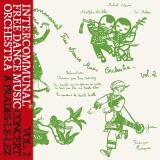
Intercommunal Free Dance Music Orchestra - Vol. 2 Concert A Prades Le Lez

Concert at Prades-le-Lez marks the origins of the Intercommunal Free Dance Music Orchestra. In 1974, François Tusques and his companions (Michel Marre, Jo Maka, Adolf Winkler and Guem), in the spirit of Don Cherry or Chris McGregor, playfully dismantle all borders and all styles of creative music.

On this second volume, the Intercommunal builds unprecedented soundscapes around a song of revolt, a dance tune, or a burst of dissonance. The journey is unforgettable, no question about it. On repeat listening, it even becomes… lunar!

“The music that we make is primarily meant to be listened to live,” warned a leaflet from the Intercommunal Free Dance Music Orchestra. This is precisely why the (restored!) reissue of the two volumes of Concert at Prades-le-Lez, recorded on January 25 and 26, 1974 by François Tusques and his comrades, is such an important event.

In 1971, after recording a series of albums that would leave a lasting mark on French jazz (Free Jazz, of course, with Michel Portal, François Jeanneau, Bernard Vitet, Beb Guérin and Charles Saudrais, but also Le Nouveau Jazz with Barney Wilen, or the solo Piano Dazibao), François Tusques founded the Intercommunal—a grouping whose very name called for the fraternization of the various communities making up the country: Our music will help, we hope, to resolve the contradictions that exist between workers be longing to different communities, by breaking down various forms of national chauvinism, and more particularly the chauvinism of certain French people toward the cultures of Third World countries… Long live the friendship between the peoples of the whole world!

Among the great records made by the Intercommunal Free Dance Music Orchestra, the two volumes of Concert at Prades-le-Lez come first, before L’Inter Communal, Vol. 4, Le Musichien, and Après la marée noire (four titles already reissued by Souffle Continu). François Tusques and his companions (Michel Marre and Jo Maka on saxophones, Adolf Winkler on trombone, and Guem on percussion) performed on January 25 and 26, 1974 at the Moulin de Prades-le-Lez, a few kilometers from Montpellier. It was thus in the southern region of Occitanie that the first echoes of this musical vision of a borderless brotherhood were recorded.

“We’re not among the Colonels,” the Intercommunal reassures us right away, performing a stride piano tune carried by African winds that the audience cannot resist for long. The energy is already striking and it never lets up throughout these two recordings, from start to finish: jazz, blues, traditional music, minimalism, even funk… The musicians of the Intercommunal have heard a lot of great music and now delight in reinventing it by mixing it all together.

“We want the song form to take its place as a weapon in the struggle against capitalist exploitation and all those who oppress us morally and materially,” declared an Intercommunal leaflet, quoting Jean-Baptiste Clément, author of the lyrics to “Le Temps des cerises.” The struggle was therefore serious—but it did not prevent François Tusques and his group from waging it in a festive spirit: each piece on Concert at Prades-le- Lez sends out a call for love and fraternity. Fifty years later, the message remains as relevant as ever—and once again, it is François Tusques who makes it heard.

pré-commande17.04.2026

il devrait être publié sur 17.04.2026

23,95
Intercommunal Free Dance Music Orchestra - Vol. 1 Concert A Prades Le Lez
  • On N'est Pas Chez Les Colonels
  • Intercommunal Blues
  • Mazir
  • Kan-Ha-Diskan - We Shall Over Come
  • African Rythm-N-Logy
également disponible

2[23,95 €]


Concert at Prades-le-Lez marks the origins of the Intercommunal Free Dance Music Orchestra. In 1974, François Tusques and his companions (Michel Marre, Jo Maka, Adolf Winkler and Guem), in the spirit of Don Cherry or Chris McGregor, playfully dismantle all borders and all styles of creative music.

On this first volume, the Intercommunal takes its audience from New Orleans to Brittany and on to North Africa. The journey was bold, without a doubt—and its memory remains unforgettable.

“The music that we make is primarily meant to be listened to live,” warned a leaflet from the Intercommunal Free Dance Music Orchestra. This is precisely why the (restored!) reissue of the two volumes of Concert at Prades-le-Lez, recorded on January 25 and 26, 1974 by François Tusques and his comrades, is such an important event.

In 1971, after recording a series of albums that would leave a lasting mark on French jazz (Free Jazz, of course, with Michel Portal, François Jeanneau, Bernard Vitet, Beb Guérin and Charles Saudrais, but also Le Nouveau Jazz with Barney Wilen, or the solo Piano Dazibao), François Tusques founded the Intercommunal—a grouping whose very name called for the fraternization of the various communities making up the country: Our music will help, we hope, to resolve the contradictions that exist between workers be longing to different communities, by breaking down various forms of national chauvinism, and more particularly the chauvinism of certain French people toward the cultures of Third World countries… Long live the friendship between the peoples of the whole world!

Among the great records made by the Intercommunal Free Dance Music Orchestra, the two volumes of Concert at Prades-le-Lez come first, before L’Inter Communal, Vol. 4, Le Musichien, and Après la marée noire (four titles already reissued by Souffle Continu). François Tusques and his companions (Michel Marre and Jo Maka on saxophones, Adolf Winkler on trombone, and Guem on percussion) performed on January 25 and 26, 1974 at the Moulin de Prades-le-Lez, a few kilometers from Montpellier. It was thus in the southern region of Occitanie that the first echoes of this musical vision of a borderless brotherhood were recorded.

“We’re not among the Colonels,” the Intercommunal reassures us right away, performing a stride piano tune carried by African winds that the audience cannot resist for long. The energy is already striking and it never lets up throughout these two recordings, from start to finish: jazz, blues, traditional music, minimalism, even funk… The musicians of the Intercommunal have heard a lot of great music and now delight in reinventing it by mixing it all together.

“We want the song form to take its place as a weapon in the struggle against capitalist exploitation and all those who oppress us morally and materially,” declared an Intercommunal leaflet, quoting Jean-Baptiste Clément, author of the lyrics to “Le Temps des cerises.” The struggle was therefore serious—but it did not prevent François Tusques and his group from waging it in a festive spirit: each piece on Concert at Prades-le- Lez sends out a call for love and fraternity. Fifty years later, the message remains as relevant as ever—and once again, it is François Tusques who makes it heard.

pré-commande17.04.2026

il devrait être publié sur 17.04.2026

23,95
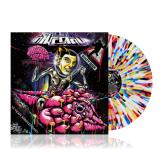
Dirty Dike - Constant Dikestar
  • 01: Ladies An Gentlemen
  • 02: Hi I'm James
  • 03: The Agitated (Feat. Skuff)
  • 04: Full Colour Dreams
  • 05: Little Mr. Grin And Bare
  • 06: What D'you Expect (Feat. Mr. Key, Jam Baxter, Ronnie Bosh)
  • 07: Average Wank Fam (Feat. Mr Key)
  • 08: Yeah I Act Like A Freak
  • 09: Where Is Scissor Tongue
  • 10: Pork Pie
  • 11: Morph Into Any Shape
  • 12: Never Seen A Reason
  • 13: From The Future (Feat. Slang Immaculate, Stig Of The Dump, Jam Baxter, Skuff, Ed Scissortongue, Fliptrix, The Three Amigos)
  • 14: Inabit

Dirty Dike's legendary High Focus Records debut 'Constant Dikestar' featuring classics such as 'Pork Pie', 'Hi I'm James' as well as appearances from Jam Baxter, Fliptrix, Ronnie Bosh, Edward Scissortongue, Mr Key, Leaf Dog, BVA, Stig Of The Dump and more!

Limited edition 15 year anniversary repress on colour vinyl, full colour 350gsm reverse board sleeve. 14-track LP over 1-disc. Shrink wrapped.

Silver foiling on the '15 Year Anniversary' text on front of sleeve.

Album comes with digital download upon purchase.

pré-commande17.04.2026

il devrait être publié sur 17.04.2026

34,41
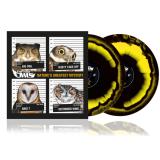
The Four Owls - Nature´s Greatest Mystery

The Four Owls

Nature´s Greatest Mystery

2x12inchHFRLP026B
HIGH FOCUS RECORDS
14.04.2026

The Four Owls debut album ’Nature’s Greatest Mystery’ returns on 2x12” Black and Yellow Galaxy Repress across 500 copies (never to be repressed in this colourway).

Celebrating FIFTEEN YEARS since the original release (and with rumours of a new album in the works) ’Nature’s Greatest Mystery’ Black and Yellow Galaxy Repress is a critically acclaimed UKHH classic!

The Four Owls are Big Owl (Fliptrix), Rusty Take-Off (BVA), Bird T (Verb T) and Deformed Wing (Leaf Dog) who also handles all of the production.

’Nature’s Greatest Mystery' features guest appearances from Q-Unique (Arsonists), Dirty Dike and Jam Baxter. A critically acclaimed modern day UKHH classic!

Limited edition pressing of 500 copies.

Black and yellow galaxy vinyl, full colour 350gsm reverse board gatefold sleeve. 14-track album. Shrink wrapped.

pas en stock

Commandez maintenant et nous commanderons l'article pour vous chez notre fournisseur.

34,41

Derniere entrée: 26 jours
Guilty Razors - Complete Recordings 1977 - 1978

UILTY RAZORS, BONA FIDE PUNKS.


Writings on the topic that go off in all directions, mind-numbing lectures given by academics, and testimonies, most of them heavily doctored, from those who “lived through that era”: so many people today fantasize about the early days of punk in our country… This blessed moment when no one had yet thought of flaunting a ridiculous green mohawk, taking Sid Vicious as a hero, or – even worse – making the so-called alternative scene both festive and boorish. There was no such thing in 1976 or 1977, when it wasn’t easy to get hold of the first 45s by the Pistols or the Clash. Few people were aware of what was happening on the fringes of the fringes at the time. Malcolm McLaren was virtually unknown, and having short hair made you seem strange. Who knew then that rock music, which had taken a very bad turn since the early 1970s, would once again become an essential element of liberation? That, thanks to short and fast songs, it would once again rediscover that primitive, social side that was so hated by older generations? Who knew that, besides a few loners who read the music press (it was even better if they read it in English) and frequented the right record stores? Many of these formed bands, because it was impossible to do otherwise. We quickly went from listening to the Velvet Underground to trying to play the Stooges’ intros. It’s a somewhat collective story, even though there weren’t many people to start it.
The Guilty Razors were among those who took part in this initial upheaval in Paris. They were far from being the worst. They had something special and even released a single that was well above the national average. They also had enough songs to fill an album, the one you’re holding. In everyone’s opinion, they were definitely not among the punk impostors that followed in their wake. They were, at least, genuine and credible.

Guilty Razors, Parisian punk band (1975-1978). To understand something about their somewhat linear but very energetic sound, we might need to talk about the context in which it was born and, more broadly, recall the boredom (a theme that would become capital in punk songs) coupled with the desire to blow everything off, which were the basis for the formation of bands playing a rejuvenated rock music ; about the passion for a few records by the Kinks or the early Who, by the Stooges, by the Velvet mostly, which set you apart from the crowd.
And of course, we should remember this new wave, which was promoted by a few articles in the specialized press and some cutting-edge record stores, coming from New York or London, whose small but powerful influence could be felt in Paris and in a handful of isolated places in the provinces, lulled to sleep by so many appalling things, from Tangerine Dream to President Giscard d’Estaing...
In 1975-76, French music was, as almost always, in a sorry state ; it was still dominated by Johnny Hallyday and Sylvie Vartan. Local rock music was also rather bleak, apart from Bijou and Little Bob who tried to revive this small scene with poorly sound-engineered gigs played to almost no one.
In the working class suburbs at the time, it was mainly hard rock music played to 11 that helped people forget about their gruelling shifts at the factory. Here and there, on the outskirts of major cities, you still could find a few rockers with sideburns wearing black armbands since the death of Gene Vincent, but it wasn’t a proper mass movement, just a source of real danger to anyone they came across who wasn't like them. In August 1976, a festival unlike any other took place in Mont-de-Marsan – the First European Punk Festival as the poster said – with almost as many people on stage as in the audience. Yet, on that day, a quasi historical event happened, when, under the blazing afternoon sun, a band of unknowns called The Damned made an unprecedented noise in the arena, reminiscent of the chaotic Stooges in their early adolescence. They were the first genuine punk band to perform in our country: from then on, anything was possible, almost anything seemed permissible.

It makes sense that the four+1 members of Guilty Razors, who initially amplified acoustic guitars with crappy tape recorder microphones, would adopt punk music (pronounced paink in French) naturally and instinctively, since it combines liberating noise with speed of execution and – crucially – a very healthy sense of rebellion (the protesters of May 1968 proclaimed, and it was even a slogan, that they weren’t against old people, but against what had made them grow old. In the mid-1970s, it seemed normal and obvious that old people should now ALSO be targeted!!!).
At the time, the desire to fight back, and break down authority and apathy, was either red or black, often taking the form of leafleting, tumultuous general assemblies in the schoolyard, and massive or shabby demonstrations, most of the time overflowing with an exciting vitality that sometimes turned into fights with the riot police. Indeed, soon after the end of the Vietnam War and following Pinochet’s coup in Chile, all over France, Trotskyist and anarcho-libertarian fervour was firmly entrenched among parts of the educated youth population, who were equally rebellious and troublemakers whenever they had the chance. It should also be noted that when the single "Anarchy in the UK" was first heard, even though not many of us had access to it, both the title and its explosive sound immediately resonated with some of those troublemakers crying out for ANARCHY!!! Meanwhile, the left-wing majority still equated punks with reckless young neo-Nazis. Of course, the widely circulated photos in the mainstream press of Siouxsie Sioux with her swastikas didn’t necessarily help to win over the theorists of the Great Revolution. It took Joe Strummer to introduce The Clash as an anti-racist, anti-fascist and anti-ignorance band for the rejection of old-school revolutionaries to fade a little.

The Lycée Jean-Baptiste Say at Porte d’Auteuil, despite being located in the very posh and very exclusive 16th arrondissement of Paris, didn’t escape these "committed" upheavals, which doubled as the perfect outlet for the less timid members of this generation.
“Back then, politics were fun,” says Tristam Nada, who studied there and went on to become Guilty Razors’ frontman. “Jean-Baptiste was the leftist high-school in the neighbourhood. When the far right guys from the GUD came down there, the Communist League guys from elsewhere helped us fight them off.”
Anything that could challenge authority was fair game and of course, strikes for just about any reason would lead to increasingly frequent truancy (with a definitive farewell to education that would soon follow). Tristam Nada spent his 10th and 11th unfinished grades with José Perez, who had come from Spain, where his father, a janitor, had been sentenced to death by Franco. “José steered my tastes towards solid acts such as The Who. Like most teenagers, I had previously absorbed just about everything that came my way, from Yes to Led Zeppelin to Genesis. I was exploring… And then one day, he told me that he and his brother Carlos wanted to start a rock band.” The Perez brothers already played guitar. “Of course, they were Spanish!”, jokes their singer. “Then, somewhat reluctantly, José took up the bass and we were soon joined by Jano – who called himself Jano Homicid – who took up the rhythm guitar.” Several drummers would later join this core of not easily intimidated young guys who didn’t let adversity get the better of them.

The first rehearsals of the newly named Guilty Razors took place in the bedroom of a Perez aunt. There, the three rookies tried to cover a few standards, songs that often were an integral part of their lives. During a first, short gig, in front of a bewildered audience of tough old-school rockers, they launched into a clunky version of the Velvet Underground's “Heroin”. Challenge or recklessness? A bit of both, probably… And then, step by step, their limited repertoire expanded as they decided to write their own songs, sung in a not always very accurate or academic English, but who cared about proper grammar or the right vocabulary, since what truly mattered was to make the words sound as good as possible while playing very, very fast music? And spitting out those words in a language that left no doubt as to what it conveyed mattered as well.
Trying their hand a the kind of rock music disliked by most of the neighbourhood, making noise, being fiercely provocative: they still belonged to a tiny clique who, at this very moment, had chosen to impose this difference. And there were very few places in France or elsewhere, where one could witness the first stirrings of something that wasn’t a trend yet, let alone a movement.

In the provinces, in late 1976 or early 1977, there couldn’t be more than thirty record stores that were a bit more discerning than average, where you could hear this new kind of short-haired rock music called “punk”. The old clientele, who previously had no problem coming in to buy the latest McCartney or Aerosmith LP, now felt a little less comfortable there…
In Paris, these enlightened places were quite rare and often located nex to what would become the Forum des Halles, a big shopping mall. Between three aging sex workers, a couple of second-hand clothes shops, sellers of hippie paraphernalia and small fashion designers, the good word was loudly spread in two pioneering places – propagators of what was still only a new underground movement. Historically, the first one was the Open Market, a kind of poorly, but tastefully stocked cave. Speakers blasted out the sound of sixties garage bands from the Nuggets compilation (a crucial reference for José Perez) or the badly dressed English kids of Eddie and the Hot Rods. This black-painted den was opened a few years earlier by Marc Zermati, a character who wasn’t always in a sunny disposition, but always quite radical in his (good) choices and his opinions. He founded the independent label Skydog and was one of the promoters of the Mont-de-Marsan punk festivals. Not far from there was Harry Cover, another store more in tune with the new New York scene, which was amply covered in the house fanzine, Rock News (even though it was in it that the photos of the Sex Pistols were first published in France).
It was a favorite hang-out of the Perez brothers and Tristam Nada, as the latter explained. “It’s at Harry Cover’s that we first heard the Pistols and Clash’s 45s, and after that, we decided to start writing our first songs. If they could do it, so could we!”
The sonic shocks that were “Anarchy in the UK”, “White Riot” or the Buzzcocks’s EP, “Spiral Scratch” – which Guilty Razors' sound is reminiscent of – were soon to be amplified by an unparalleled visual shock. In April 1977, right after the release of their first LP, The Clash performed at the Palais des Glaces in Paris, during a punk night organised by Marc Zermati. For many who were there, it was the gig of a lifetime…
Of course, Guilty Razors and Tristam were in the audience: “That concert was fabulous… We Parisian punks were almost all dressed in black and white, with white shirts, skinny leather ties, bikers jackets or light jackets, etc. The Clash, on the other hand, wore colourful clothes. Well, the next day, at the Gibus, you’d spot everyone who had been at this concert, but they weren’t wearing anything black, they were all wearing colours.”

It makes sense to mention the Gibus club, as Guilty Razors often played there (sometimes in front of a hostile audience). It was also the only place in Paris that regularly scheduled new Parisian or Anglo-Saxon acts, such as Generation X, Siouxsie and the Banshees, the Slits, and Johnny Thunders who would become a kind of messed-up mascot for the venue. A little later, in 1978, the Rose Bonbon – formerly the Nashville – also attracted nightly owls in search of electric thrills… In 1977, the iconic but not necessarily excellent Asphalt Jungle often played at the Gibus, sometimes sharing the bill with Metal Urbain, the only band whose aura would later transcend the French borders (“I saw them as the French Sex Pistols,” said Geoff Travis, head of their British label Rough Trade). Already established in this small scene, Metal Urbain helped the young and restless Guilty Razors who had just arrived. Guitarist for Metal Urbain Hermann Schwartz remembers it: “They were younger than us, we were a bit like their mentors even if it’s too strong a word… At least they were credible. We thought they were good, and they had good songs which reminded of the Buzzcocks that I liked a lot. But at some point, they started hanging out with the Hells Angels. That’s when we stopped following them.”

The break-up was mutual, since, Guilty Razors, for their part, were shocked when they saw a fringe element of the audience at Metal Urbain concerts who repeatedly shouted “Sieg Heil” and gave Nazi salutes. These provocations, even still minor (the bulk of the skinhead crowd would later make their presence felt during concerts), weren’t really to the liking of the Perez brothers, whose anti-fascist convictions were firmly rooted. Some things are non-negotiable.
A few months earlier (in July 1978), Guilty Razors had nevertheless opened very successfully for Metal Urbain at the Bus Palladium, a more traditonally old-school rock night-club. But, as was sometimes the case back then, the night turned into a mass brawl when suburban rockers came to “beat up punks”.

Back then, Parisian nights weren’t always sweet and serene.

So, after opening as best as they could for The Jam (their sound having been ruined by the PA system), our local heroes were – once again – met outside by a horde of greasers out to get them. “Thankfully,” says Tristam, “we were with our roadies, motorless bikers who acted as a protective barrier. We were chased in the neighbouring streets and the whole thing ended in front of a bar, with the owner coming out with a rifle…”
Although Tristam and the Perez brothers narrowly escaped various, potentially bloody, incidents, they weren’t completely innocent of wrongdoing either. They still find amusing their mugging of two strangers in the street for example (“We were broke and we simply wanted to buy tickets for the Heartbreakers concert that night,” says Tristam). It so happened that their victims were two key figures in the rock business at the time: radio presenter Alain Manneval and music publisher Philippe Constantin. They filed a complaint and sought monetary compensation, but somehow the band’s manager, the skilful but very controversial Alexis, managed to get the complaint withdrawn and Guilty Razors ended up signing with Constantin with a substantial advance.

They also signed with Polydor and the label released in 1978 their only three-track 45, featuring “I Don't Wanna be A Rich”, “Hurts and Noises” and “Provocate” (songs that exuded perpetual rebellion and an unquenchable desire for “class” confrontation). It was a very good record, but due to a lack of promotion (radio stations didn’t play French artists singing in English), it didn’t sell very well. Only 800 copies were allegedly sold and the rest of the stock was pulped… Initially, the three tracks were to be included on a LP that never came to be, since they were dropped by Polydor (“Let’s say we sometimes caused a ruckus in their offices!” laughs Tristam.) In order to perfect the long-awaited LP, the band recorded demos of other tracks. There was a cover of Pink Floyd's “Lucifer Sam” from the Syd Barrett era – proof of an enduring love for the sixties’ greats –, “Wake Up” a hangover tale and “Bad Heart” about the Baader-Meinhof gang, whose actions had a profound impact on the era and on a generation seeking extreme dissent... On the album you’re now discovering, you can also hear five previously unreleased tracks recorded a bit later during an extended and freezing stay in Madrid, in a makeshift studio with the invaluable help of a drummer also acting as sound engineer. He was both an enthusiastic old hippie and a proper whizz at sound engineering. Here too, certain influences from the fifties and sixties (Link Wray, the Troggs) are more than obvious in the band’s music.

Shortly after a final stormy and rather barbaric (on the audience’s side) “Punk night” at the Olympia in June 1978, Tristam left the band ; his bandmates continued without him for a short while.

But like most pioneering punk bands of the era, Guilty Razors eventually split up for good after three years (besides once in Spain, they’d only played in Paris). The reason for ceasing business activities were more or less the same for everyone: there were no venues outside one’s small circuit to play this kind of rock music, which was still frightening, unknown, or of little interest to most people. The chances of recording an LP were virtually null, since major labels were only signing unoriginal but reassuring sub-Téléphone clones, and the smaller ones were only interested in progressive rock or French chanson for youth clubs. And what about self-production? No one in our small safety-pinned world had thought about it yet. There wasn’t enough money to embark on that sort of venture anyway.

So yes, the early days of punk in France were truly No Future!

pas en stock

Commandez maintenant et nous commanderons l'article pour vous chez notre fournisseur.

21,43

Derniere entrée: 30 jours
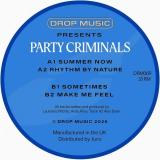
Inland Knights - Party Criminals

Andy Riley and Laurence Ritchie are Drop Music accomplices; the label is a natural outgrowth of yesterday's Smokescreen Soundsystem, one of the oldest and best-respected UK crews to endorse (sound-) systems thinking. In case you don't know, remember this: they were early 90s stanchions of pressure-dropping UK house heft. This rare new reissue hears their hugely in-demand classic 'Party Criminals' return to fully swung, gatecrashing mode. And boy, weren't they just. Their fourth ever Drop drop, it first surfaced in 1999 and turned instant heads for its crystalline blue inners and jacking, organic sound, not to mention a cameo from fellow duo Freaked on the A2's 'Rhythm By Nature'. But our favourite has to be 'Make Me Feel' with its soft-attack hi-hats, not tapping, more fizzing like metal leaf against the ears.

pas en stock

Commandez maintenant et nous commanderons l'article pour vous chez notre fournisseur.

14,08

Derniere entrée: 31 jours
Genevieve Artadi & Real Bad Man - Everything Is Under Control
  • A1: I Need A Break
  • A2: Little Claws
  • A3: Kill The Lie
  • A4: Set In Motion
  • A5: Wrong Shape
  • B1: Don’t Gotta Think About U
  • B2: No Regular No Chance
  • B3: Everything’s Under Control (Feat. Pink Siifu)
  • B4: Really Really Right

LA-based producer Real Bad Man and LA musician Genevieve Artadi announce their new collaborative album Everything Is Under Control, out October 3rd via the producer’s own Real Bad Man Records. Alongside the announcement, the duo are sharing two new singles from the forthcoming album, “Don’t Gotta Think About U” and “Little Claws”. The former is an electro pop banger that propels Artadi’s intoxicating vocals to the forefront and arrives with an accompanying visual. With Everything Is Under Control, Real Bad Man is proving his versatility as a producer, crafting intricate and lively electronic-forward foundations for an old friend in Genevieve to explore an eclectic, funky approach to her vocals.

Speaking about the single, Artadi says, "'Don’t Gotta Think About U' is about a person celebrating the explosion of her most recent unhealthy romantic relationship. Her spitefulness and delusion of freedom indicate she’s still inside the pattern she hasn’t yet realized she keeps signing herself up for. The sound is melancholic pop, the thread that has always tied Adam and me together despite our musical differences."

"I love juxtaposing dense drums and a very pretty voice," Real Bad Man says of collaborating with Artadi. "That’s what 'Don’t Wanna Think About U' is. We’re also trying to make something catchy at the same time, that’s what I’ve always been drawn to musically is blending genres and moods and get them to work together. As well as pulling Genevieve away from what she does with Knower and her solo stuff.

Real Bad Man’s collaboration with Artadi is a radical shift in approach for the producer, whose previous full-length projects this year were rooted in the distinct strain of underground hip-hop that he’s amassed an extensive catalog in. Everything Is Under Control marks an entirely different, and unpredictable, sonic approach for the duo, embracing experimentation and synth-led electronica that’s reminiscent of Artadi’s work as part with Pollyn (her former band with Adam/Real Bad Man) as well as current duo KNOWER with Louis Cole. Real Bad Man’s latest project extends his prolific run of collaborations this year, embarking in a new genre and sound entirely after releasing full-length projects with ZelooperZ (Dear Psilocybin), Boldly James (Conversational Pieces) and Willie The Kid (Midnight) in the first half of 2025.

Known for her complex, yet playful writing style, Genevieve Artadi has made a name for herself through four solo albums that stretch the gambit of jazz, dream pop and dance music. The last three albums were released on iconic label Brainfeeder Records and the fourth (Another Leaf) was made as part of her being a composer-in-residence with Sweden’s Norrbotten Big Band. She’s also been an accomplished collaborator with her bands Expensive Magnets, Pollyn and KNOWER, and performing and recording with the likes of Thundercat and Snarky Puppy.

Check out “Don’t Gotta Think About U” and “Little Claws” above, see below for more details on Everything Is Under Control and stay tuned for more from Real Bad Man coming soon.

pré-commande03.04.2026

il devrait être publié sur 03.04.2026

26,01
The Leaf Library - After The Rain, Strange Seeds LP
  • A1: ) Colour Chant
  • A2: ) Still & Moving
  • A3: ) The Reader’s Lamp
  • A4: ) Sun In My Room
  • A5: ) Carry A River In Your Mouth
  • B1: ) Catch Up, Isobel
  • B2: ) A Ship In The Sky
  • B3: ) Some Circling
  • B4: ) There Was Always A Golden Age

London quartet The Leaf Library return with their bold new album After The Rain, Strange Seeds. A luminous collection of pastoral indiepop, drawing inspiration from suburban isolation, unreliable memories and the surreality of the weather. Their most immediate and melodic work to date, the richly evocative songs brim with chiming guitars, buzzing organs and warm, dulcet strings, evoking Yo La Tengo’s more contemplative moments, The Clientele’s autumnal jangle pop and early Stereolab’s motorik melodicism. The sound of the album is defined by mixer John McEntire, whose work with Stereolab and Yo La Tengo (as well as a member of Tortoise/The Sea And Cake) have been major inspirations to the band.
The album explores themes of memory and place, albeit through an abstract haze – returning again and again to specific moments frozen in time: midsummer bright hot days in the Chilterns (“Sun In My Room”), meteorology and the strange movement of the weather (“Colour Chant”), red kites circling over suburban motorways (“Some Circling”), and the uncanny feeling of dusk and nighttime creatures on “The Reader’s Lamp” (titled by celebrated film director Peter Strickland). The lyrics are vivid yet elliptical, strung with abstract ideas and imagery, conjuring a gently unsettling, though never unwelcoming atmosphere. Not quite trusting your own recollection of things, while marvelling at the oddness of the natural world, the album’s title a good summation of the mix of strangeness and hope contained within.

As on past albums the band - founded by singer Kate Gibson and ex-Saloon guitarist Matt Ashton in the mid 2000s, and now completed by drummer Lewis Young and bassist Gareth Jones - have involved their extended musical family, including guitarist Mike Cranny (of fellow drone pop travellers Firestations) and keyboardist Irina Shtreis, both members of the Leaf Library live band. The album also sees the return of James Underwood’s Iskra Strings, a quartet that features on 4 tracks, with sumptuous arrangements by Daniel Fordham, as well as regular contributor Melinda Bronstein on vocals and Will Twynham (Dimorphodons) on harpsichord. They also welcomed Paddy Milner (on Hammond organ) and Scott McKeon (guitar) – both current members of Tom Jones’ band – for a startlingly delicate rolling crescendo to closing track “There Was Always A Golden Age”.
After The Rain, Strange Seeds is their 4th studio album. The result is The Leaf Library’s most accomplished and affecting work, John McEntire’s mix bringing a bold clarity to the band’s meticulous arrangements – closer to how they sound live than anything they’ve done before.

pré-commande20.03.2026

il devrait être publié sur 20.03.2026

22,90
CARLOS NIÑO & FRIENDS - BUBBLE BATHS FOR GIANTS

Opaque Pink Version

Bubble Bath for Giants is an ode, a Tribute, a reverence for Oceans, for the Mighty Magnificent Power of Fairies, to the energy that we are all everything, whole, well, but in different sized and shaped vessels at times . . . It is a Celebration of Gentleness and of incredible Force, and Charge . . . These, I sea as the same. The Yang Springs from the Yin and together they ever reflect, dance, and express themselves . . .

Many Bells, Bowls, Ceramics, Chimes, Cymbals, Drums (Bass, Sakara, Surdo, Tom, and many more,) Gongs (Chao, Cup, Indonesian, Sun, and Symphonic,) Keyboards (Metal, Synthesizer, and Wooden,) Percussion, Plant Leaf Bundles and Fronds (Bamboo, Eucalyptus, and Palm,) Ratlles, Shakers, Voice, Whistles, and Sound Design by Carlos Niño.

Featuring:
Luis ​Pérez Ixoneztli, Bernard Xolotl, ​Aaron ​Shaw, Surya ​Botofasina, Nate Mercereau, Laraaji, Darius ​Jones, Sheila Govindarajan, ​Idris Ackamoor, Deantoni ​Parks, André 3000, ​Marshall Allen, Sam ​Gendel, Sibusile ​Xaba, Mia ​Doi Todd, ​Anisia Uzeyman, Saul Williams, Jojo Abot, Jowee ​Omicil, Aztlan ​Unearthed

///

Cover Photo by Carlos, from in the Maui Waters
Art Direction, Design and Original Art by Nep Sidhu
Layout Production by Jonny O'Hara

Recorded by Carlos Niño in Topanga, California, and by some of the Artists named above, from their Homes . . .

Mastered by David Allen

///

pré-commande20.03.2026

il devrait être publié sur 20.03.2026

28,36
Fliptrix - Elevation (LIMITED EDITION Tape)

LIMITED TO 50 COPIES! Hand Numbered, Edition of 50.

‘Elevation’ is album eleven from High Focus Records founder and 1/4 of The Four Owls Fliptrix.

The latest instalment in a formidable run sees the lyricist further his vision of the world in the hope of elevating the collective mind and spirit of both artist and listener across 19-tracks.

Having worked with Forest DLG in some capacity across all of his records over the past fifteen years, from mixing and mastering, but also collaborating on multiple tracks as rapper / producer, it is surprising that it took so long for the pair to come together on a full-length collaborative project.

‘Elevation’ is that record.

Fliptrix reached out to Forest with a view to creating something completely different from his previous boom bap heavy outing ‘Dragonfly’, he is always looking to advance his craft and take things higher, and after Forest responded with a pack of 70+ instrumentals the direction of travel became crystal clear. The result is an album designed to lift the listener into a higher state of consciousness and trigger conversations about the state of the world, in the hope of enacting positive change during tumultuous times.

Fliptrix’s vision and Forest DLG’s style feel perfectly aligned. The album is truly collaborative; Forest going away and creating the artwork inspired by Fliptrix’s otherworldly experiences with the Shipibo tribe in the rainforests of Peru; from the single covers, to the album cover and merchandise as Fliptrix focussed on writing.

Having worked with all the greats in the UK hip hop scene, Fliptrix actively sought out new energies on ‘Elevation’, especially when it comes to the album features. Jungle forefather General Levy on lead single ‘ENERGY! ENERGY! ENERGY!’ Grime legend Frisco on ‘Visionaries’, Ayah Marar on ‘Transform’, Da Flyy Hooligan, Kamakaze, Coops, and a 19-strong HF posse cut in the shape of ‘Dangerous’ make this album a must-listen for anyone looking to elevate.

pré-commande20.03.2026

il devrait être publié sur 20.03.2026

17,23
Brit Taylor - Land Of The Forgotten
  • 1: Broke No More
  • 2: All For Sale
  • 3: Warning You Whiskey
  • 4: Done Pretending
  • 5: Land Of The Forgotten
  • 6: Lately I've Been Thinkin
  • 7: Queen Of Fools
  • 8: Around And Around
  • 9: Crazy Leaf
  • 10: Bars Closing
  • 11: Bird Of Prey

On her new album, Land of the Forgotten, Brit Taylor takes us to her much discussed and misunderstood homeland, Appalachia, with songs that reveal the complex heart and complicated people of the place. Taylor is an accomplished singer-songwriter who has been performing professionally since she was a child. She has always taken the bull by the horns; Taylor has spent seven nights a week singing on Broadway, cold-called record execs, and she even formed a cleaning business to help finance her first album, Real Me, on which Dan Auerbach (The Black Keys) co-wrote five of the songs. Only three years later she found herself being produced by two of the most sought-after producers in Nashville: Grammy winners Sturgill Simpson and David Ferguson. Since then she has made her Grand Ole Opry debut, gained a devoted following as she toured the whole country, and garnered praise from the likes of NPR, Billboard, Rolling Stone, and American Songwriter.  Land of the Forgotten will be released March 6th 2026 by RidgeTone Records, LLC Under Exclusive License from Cut A Shine Records, LLC Marketed and Distributed by Thirty Tigers

pré-commande06.03.2026

il devrait être publié sur 06.03.2026

22,65
Lalo Schifrin - Insensatez LP

Lalo Schifrin

Insensatez LP

12inch709108X
Jazz Samba
30.01.2026
  • 4: Lalo's Bossa Nova
  • 10: Samba Do Perroquet
  • 1: The Wave
  • 2: Insensatez
  • 3: You And Me
  • 5: Silvia
  • 6: Murmurio
  • 7: An Evening In Sao Paulo
  • 8: Maria
  • 9: Rapaz De Bem
  • 11: Rio After Dark
  • 12: Time For Love
  • 13: (I'm Looking Over A) Four Leaf Clover
  • 14: Desafinado

Best known for his film and TV scores ( Dirty Harry, Enter The Dragon , Mission Impossible , The Eagle Has Landed , to name just a few) Lalo Schifrin (1932-2025) began as a jazz pianist who worked with some of the most important musicians of his day. The Insensatez session was cut during Schifrin's involvement in Dizzy Gillespie's band, which explains the participation of musicians from that aggregation. First issued as Piano, Strings & Bossa Nova in 1962 (produced by Creed Taylor), this album was reissued with one less title, as Insensatez on Verve in 1969. Featuring 12 Brazilianized themes and four Lalo Schifrin originals - 'The Wave', 'Rio After Dark', and 'Silvia' from Schifrin's movie score El Jefe, and 'Lalo's Bossa Nova' written for Quincy Jones' 1962 album Big Band Bossa Nova. Insensatez offers a rare insight to Schifrin's superb musicianship, not only as a composer, but also as a pianist


c 3 You And Me [voce E Eu]
[d] 4 Lalo's Bossa Nova [samba Para Dos]


[j] 10 Samba Do Perroquet [parrot Samba]


[c] 3 You And Me [voce E Eu]
[d] 4 Lalo's Bossa Nova [samba Para Dos]


[j] 10 Samba Do Perroquet [parrot Samba]

pré-commande30.01.2026

il devrait être publié sur 30.01.2026

21,81
Barry Walker Jr. - Paleo Sol LP

Barry Walker Jr. is a pedal steel player and guitarist whose roots in Americana, Country and Folk traditions influence his melding of minimalism, ambient and spiritual music. The Portland-based instrumentalist is also a member of the Rose City Band, known for his gorgeous phrasing and deft interplay with guitarist Ripley Johnson. On Paleo Sol, Walker demonstrates his singular voice as a pedal steel player and composer. Evoking the American western ranges and basins, the album embodies a longer, geologic view of time that patiently marvels at the ripples of change throughout lifetimes and ages. Walker is joined on Paleo Sol by drummer Rob Smith (Rhytion, Pigeons) and bassist and Mouth Painter bandmate Jason Willmon (Fruited Planes). Paleo Sol"s tranquil landscapes glide, built on warm finger-picked guitar figures and pedal steel swells coupled with deft percussion and bass touches by Smith and Willmon respectively. The trio plays with exceptional fluidity either completing each others phrasing or working together to build momentum. Smith notes: "The drums are not keeping time as much as evidencing its elasticity, mixing into the other instruments, changing phase states." Every gesture on the album is rich with intention, moving with grace and playing with timbre and time.

pré-commande30.01.2026

il devrait être publié sur 30.01.2026

26,68
Moodymann - DJ-Kicks (3x12")

Moodymann

DJ-Kicks (3x12")

3x12inchK7327LP40
!K7 Records
29.01.2026
 
19

In 2016, a year after the 50th entry in the long-running series, none other but the iconic Detroit artist, DJ and producer Moodymann stepped up to helm the next landmark edition of DJ-Kicks, his first ever multi-artist DJ mix compilation. Following !K7's 40 th anniversary, this classic DJ-Kicks mix is now being repressed on coke bottle clear vinyl.
Born Kenny Dixon Jr., Moodymann is a one-of-a-kind electronic music icon, hailing from, and wholly synonymous with the Motor City. He is an outspoken, impossibly charismatic artist who has been putting a distinctive and soulful stamp on house and techno since the early 90s. Melting together jazz, funk, soul, blues and rock in captivating ways, he is responsible for some of electronic music’s most definitive tracks, EPs and LPs on labels like Planet E, Peacefrog and his own KDJ and Mahogani Music imprints. As able to serve up the sweetest and most sensual sounds as he is the darkest and most depraved grooves, his own unique voice and stream of conscious musings infuse expertly sought-out samples for music that is decisively alive and authentic.

Across 75 minutes and 30 tracks, Moodymann does not disappoint: despite being a notorious vinyl fetishist, Dixon’s aim is to present music of quality, not to one-up fellow collectors. Rather than serving up ridiculously rare or hard- to-find records, he instead focuses on creating a libidinous, blues-drenched mood that takes in heart-breaking soul, gorgeous hip-hop and love-fuelled house.

In addition to cuts from his own creative circle, the mix features 11 exclusive Moodymann edits. Like everything Kenny Dixon Jr. touches, his DJ-Kicks showcases the taste, skill, and soul of a dance music original.

En stock du13.05.2026

36,93

Derniere entrée: 19 jours
U.e. (Ulla) - Hometown Girl

U.e. (Ulla)

Hometown Girl

12inch28912-1
28912
23.01.2026

Groggy, engrossing new work from Ulla under their newly minted U.e. tag, riffing to the sublime on a set of (mostly) acoustic reveries that tap into the kind of smokey vapours favoured by the likes of Vincent Gallo, Voice Actor, Jonnine.

A new year, label, album and handle for Ulla, a multifaceted artist who has draped our pages with wonder, under numerous aliases and collabs, for almost a decade. On ‘Hometown Girl’ they distill transience and flux into a quiet set of chamber works subtly resembling the room recorded nuance of their ‘Jazz Plates’ side with Perila - here taken a step further into more elusive, low-lit dimensions.

In a mode that’s wistful and melancholic, listening to the album’s dozen discrete pieces feels like leafing thru a journal of hand-written notes, reflecting on the feelings that come with separation from loved ones and displacement from familiarity. Ulla performed and recorded all of the instruments themselves, lending a tangible tactility to layered arrangements of woodwind, keys, strings, drums and voice, lightly speckled with electronics and perfused with open window field recordings.

They locate a crackling frisson of personality in the voice notes and day-dreaminess of their mottled inscapes, gauzily demarcating lines between past and present selves. In that aesthetic and approach we can also hear similarities to Jonnine’s blue-skied ‘Southside Girl’ or crys cole’s poetic sensuality, often leaning into the domestic surreal.

A frayed, opening salutation ‘Good Morning’ signals a delirious half hour in Ulla’s company, variously swaying to the downstroked jazz swing of a ‘Lavender (NF)’ spritzed with clarinet, whilst ‘Froggy Explorer’ stirs the air like Jan Jelinek on a barely-there tip. The Basinski-esque fritz of degraded loops really snags the imagination along with a twinkling nightlight ‘Ball’, as the album opens out into its most fully resolved songs with a closing couplet of disarming wonders ‘Drawing of Me’, and a blurry ‘Mute’ that feels like Ulla 〜almost〜 reveals too much before retreating back into the shadows.

pré-commande23.01.2026

il devrait être publié sur 23.01.2026

31,72
Articles par page:
N/ABPM
Vinyl