SHIFT Frequency: Rebellion
Year 3670. Earth still chokes under the Global Order’s silence. Music—once a human birthright—is outlawed, erased, forgotten. But deep beneath the static, something stirs.
SHIFT has returned!
New recruits are armed with forbidden vinyl, analog synths, and rhythm-coded grooves; they strike from the shadows. Their weapon: soundwaves engineered to shatter neural suppression. Each track is a battle cry. Each bassline is a crack in the regime’s silence. Their mission: spark the rebellion and make the world feel again.
Cerca:lean year
After coming up in different bands in the Long Island and Brooklyn DIY scene in the late '00s and early 2010s, the indie rock outfit Freezing Cold came together in 2017 and settled into its current lineup in 2019. Featuring lead vocalist/guitarist Jeff Cunningham, formerly of Bridge And Tunnel, bassist/vocalist Leanne Butkovic, formerly of Never, and Angie Boylan, formerly of Aye Nako and drummer for Sleater-Kinney — Freezing Cold is coming into their own now more than ever as a dynamic trio.
After playing shows in support of Algernon Cadewalder, Radiator Hospital, and Screaming Females over the past year, the band is sharing their strongest, most fully formed work yet with the album Treasure Pool, due out August 1 on Don Giovanni Records. The 10-track record builds upon the group's extensive DIY experience, while finding an equilibrium where each member shines and moves beyond the early punk resonant in their past projects and toward something more mature.
The new release was recorded in 2023 at Asbury Park's Lakehouse Recording Studios, with production from Marissa Paternoster of Screaming Females and Eric Bennett. It follows the band's 2019 debut Glimmer, produced by J. Robbins (Against Me!, Jawbreaker) and released before Butkovic filled out the group, and 2021's Stuck on Hold/Drawn to Scale EP.
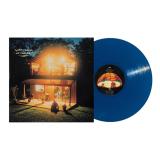
After 30 years of playing music professionally, Willie Watson is releasing his debut album. A founding member of Old Crow Medicine Show, and a staple on the folk and americana circuit - Willie is no stranger to the stage and to audiences. But this is his first album of original music, aptly self titled, and a bold and confident statement in both song mastery and sonics. This record is about beating the devil. Willie didn't make any specific pact with him, but he had been tangled up with him his whole life. This album is about finding himself free of that devil, and learning to love himself again. It is about no longer leaning on old sounds and old folk singers and the music they made, and instead about learning to express himself freely and without limits. The result is a masterpiece. Co Produced with Gabe Witcher (Punch Brothers) and Kenneth Pattingale (Milk Carton Kids), and co written with Morgan Nagler (Phoebe Bridgers, Haim, Gillian Welch and Dave Rawlings)
2025 Repress
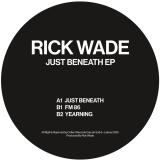
Hector Couto joins Cécille Records this summer for the heavy hitting ‘Hot Stuff’ EP, comprising one collaboration with Alejandro Paz and three solo jams.
Spain’s Hector Couto has long been at the forefront of the underground house scene now, since the early 2000’s he’s racked up releases on Hot Creations, BPitch, Defected, Solä, Saved, ElRow and of course his own Roush among others. Here we see Couto add another reputed label to his affiliations, namely Nick Curly and Marc Scholl’s Cécille, the powerhouse German label that’s also been a staple platform in the scene since the early 2000’s.
Opening up the EP is a special collaboration that’s already been causing a stir across South America, Alejandro Paz’s original vocal of ‘El House’ was released on the beloved Cómeme 12 years ago and became a cult classic. Here Hector revisits it, stirring in the vocal alongside his own robust, stripped-back house style. ‘Cami’s House’ follows with vacillating sub bass tones, shuffled snares, crisp percussion and resonant flutters running
alongside dubbed out chords and hypnotic vocal hooks. Opening the B-Side is ‘Hot Stuff’ , leaning into a more filter-house aesthetic with sweeping, choppy soul samples and swinging drums before ‘Red Velvet’ concludes the release, laying down funk-infused guitar licks, organic percussive grooves, bulbous low-end tones and twitchy synth stabs.
- A 1: Scoop
- A2: I Never
- A3: Breakdown
- A4: Slap 5. Cue
- B 1: Semitones
- B2: Paycheck
- B3: They Go Wild
- B4: All I Need
“My hero’s back,” Madeline Kenney sings on the second track of her newest effort, Kiss from the Balcony. In a sense, she means herself; made with friends Ben Sloan and Stephen Patota across just a few in-person studio sessions in Oakland, these tracks represent a culmination of Madeline’s musings on growth and resilience reaching back years, brought to life through this generative and vibrant collaboration. Close listeners can hear the breadth of stylistic elements and themes carried through from various eras of her work, which all come together in a cohesive and timeless record.
In two week-long intensive sessions, the three collaborators grew these nine songs from fragments, sketches, and seeds. With a background in experimental percussion and sound design, Ben Sloan brings an electronic sound to Kenney’s writing; Stephen Patota provides ingenious guitar melodies throughout and grounds the project in acoustic elements. Kiss from the Balcony was originally intended to be an EP, but the sessions brought forth such fruitful ideation and play that the project was expanded to a full length album. It sits in Madeline’s discography as a thematic and musical progression that sees her iterate on ideas about love and explore new sonic motifs through her work with Patota and Sloan.
Much of Kiss from the Balcony is a meditation on modern relationships, a feminist and utterly human contemplation of power and who holds it. “Hereditary backward leaning,” she describes in ‘Slap,’ of the female condition; “But no-one ever likes to see the girls break down / So they keep it to the bathroom floor” she sings in the rapturous opener, ‘Scoop.’ While the songs are shrouded in metaphor, the ubiquity of heartbreak and resilience decode much of the internal conflict Kenney depicts. The album sees her recognize the precarity and peculiarity of life and take it by the horns, realizing she controls her own narrative:
She explores the relationships between joy and suffering, choosing to see them as inseparable, two sides of a single coin. “It’s never over / When will they love me?” Kenney asks on ‘They Go Wide,’ describing her positionality both as a woman in relationship and as an indie artist in the modern music industry.
A playful hopefulness pervades the record, providing a sense of revelation in the journey throughout, Kenney’s radical acceptance of life as it is like a lyrical tongue out at the absurd.
Motel d'amour - A Lost Electro-Funk Gem from the NDW Era Resurfaces
When we first collaborated with Collage member Markus Kammann on the EP project "Mit den Puppen tanzen" at the end of last year, we never imagined what would follow: Kammann approached us with a completely unreleased full-length album by his former band. Upon receiving the first three preview tracks, we were floored. One of them was "Nachtcafé" - a track that kicks off with a funky bassline layered over the punchy rhythm of a Roland TR-808. Add shimmering synths and Katrin A. Kunze's sharp, distinctive vocals, and we instantly knew we were hearing something special.
For a label dedicated to rediscovering lost treasures, this was exactly what we'd been searching for. The next two tracks - "Rendezvous" and "Casanova" - were just as compelling. When Kammann sent us the full album, we realized we were holding an electro-funk grail from the late golden days of the German Neue Deutsche Welle (NDW). We were listening to "Motel d'amour".
"Motel d'amour" is a concept album, offering a sharp, vibrant perspective from a confident, intelligent, and radiant young woman eager to experience nightlife, love, and music. Kunze's lyrics paint vivid scenes of flirtation ("Nachtcafé", "Rendezvous"), encounters with men ("Casanova"), the pulse of nightlife ("Die Nacht ist noch jung"), love ("Rotes Licht für rote Liebe"), one-night stands ("Motel d'amour"), and more. Rarely has a German album from that era captured emotional nuance and social dynamics so insightfully. Without veering into the overly personal, Kunze's direct, daring lyrical style was groundbreaking at the time - and remains refreshingly bold today.
While German listeners will fully appreciate the lyrical depth, the music speaks volumes on its own. Kunze's words are masterfully complemented by the production of Markus Kammann and Jürgen Grah. As heard on the in-demand "Mit den Puppen tanzen", their creativity seemed boundless. Each track is tightly composed, catchy, and full of character. While many German bands at the time leaned into rock, Kammann drew from the deep grooves of Earth, Wind & Fire, The Isley Brothers, Brothers Johnson, The Commodores, and the electro-futurism of Afrika Bambaataa's "Planet Rock" and "Looking for the Perfect Beat". The result: tracks with unmistakable electro-funk flair, powered by the classic 808 drum sound.
Though primarily rooted in funk and electro, the album retains flashes of NDW aesthetics - "Wir haben getanzt heut' Nacht" being a prime example. The instrumentation is a dream list for vintage gear lovers: Yamaha keyboards, Roland Juno-60, vocoder, Micromoog, Hohner D6 Clavinet, Fender bass, and a Telecaster guitar all feature prominently.
Recorded in 1985 at the high-profile Delta Studio by Richard Rossbach, the album attracted interest from Polydor. However, the label proposed using the compositions for a solo project with singer Inga Humpe (of Neonbabies), who was already signed to their roster. This would have required replacing Kunze as the vocalist, an idea the group firmly rejected. As a result, "Motel d'amour" was shelved, and Kammann, Grah, and Kunze moved on to form Cold End.
The album cover features a rare archival photo of Katrin A. Kunze - rediscovered by Kammann and now finally seeing the light of day, 40 years later.
We believe Motel d'amour deserves recognition alongside cult German classics like P!OFF?, 1. Futurologischer Congress' "Wer spricht?", Ami Marie's "Verrückt nach Glück", the funkier cuts of Cosa Rosa, or Piet Klocke's groove classic "Heute ist nicht sonst". It's a record that fits into adventurous DJ sets but also rewards a full, start-to-finish listen.
A note on audio quality: Sadly, the original master tapes were lost. The tracks were restored from a vintage TDK cassette. Thanks to modern digital tools, we were able to remaster them to a high standard - but in some songs light distortions remain. We appreciate your understanding and hope you enjoy this lost and undiscovered gem.
Motel d'amour - A Lost Electro-Funk Gem from the NDW Era Resurfaces
When we first collaborated with Collage member Markus Kammann on the EP project "Mit den Puppen tanzen" at the end of last year, we never imagined what would follow: Kammann approached us with a completely unreleased full-length album by his former band. Upon receiving the first three preview tracks, we were floored. One of them was "Nachtcafé" - a track that kicks off with a funky bassline layered over the punchy rhythm of a Roland TR-808. Add shimmering synths and Katrin A. Kunze's sharp, distinctive vocals, and we instantly knew we were hearing something special.
For a label dedicated to rediscovering lost treasures, this was exactly what we'd been searching for. The next two tracks - "Rendezvous" and "Casanova" - were just as compelling. When Kammann sent us the full album, we realized we were holding an electro-funk grail from the late golden days of the German Neue Deutsche Welle (NDW). We were listening to "Motel d'amour".
"Motel d'amour" is a concept album, offering a sharp, vibrant perspective from a confident, intelligent, and radiant young woman eager to experience nightlife, love, and music. Kunze's lyrics paint vivid scenes of flirtation ("Nachtcafé", "Rendezvous"), encounters with men ("Casanova"), the pulse of nightlife ("Die Nacht ist noch jung"), love ("Rotes Licht für rote Liebe"), one-night stands ("Motel d'amour"), and more. Rarely has a German album from that era captured emotional nuance and social dynamics so insightfully. Without veering into the overly personal, Kunze's direct, daring lyrical style was groundbreaking at the time - and remains refreshingly bold today.
While German listeners will fully appreciate the lyrical depth, the music speaks volumes on its own. Kunze's words are masterfully complemented by the production of Markus Kammann and Jürgen Grah. As heard on the in-demand "Mit den Puppen tanzen", their creativity seemed boundless. Each track is tightly composed, catchy, and full of character. While many German bands at the time leaned into rock, Kammann drew from the deep grooves of Earth, Wind & Fire, The Isley Brothers, Brothers Johnson, The Commodores, and the electro-futurism of Afrika Bambaataa's "Planet Rock" and "Looking for the Perfect Beat". The result: tracks with unmistakable electro-funk flair, powered by the classic 808 drum sound.
Though primarily rooted in funk and electro, the album retains flashes of NDW aesthetics - "Wir haben getanzt heut' Nacht" being a prime example. The instrumentation is a dream list for vintage gear lovers: Yamaha keyboards, Roland Juno-60, vocoder, Micromoog, Hohner D6 Clavinet, Fender bass, and a Telecaster guitar all feature prominently.
Recorded in 1985 at the high-profile Delta Studio by Richard Rossbach, the album attracted interest from Polydor. However, the label proposed using the compositions for a solo project with singer Inga Humpe (of Neonbabies), who was already signed to their roster. This would have required replacing Kunze as the vocalist, an idea the group firmly rejected. As a result, "Motel d'amour" was shelved, and Kammann, Grah, and Kunze moved on to form Cold End.
The album cover features a rare archival photo of Katrin A. Kunze - rediscovered by Kammann and now finally seeing the light of day, 40 years later.
We believe Motel d'amour deserves recognition alongside cult German classics like P!OFF?, 1. Futurologischer Congress' "Wer spricht?", Ami Marie's "Verrückt nach Glück", the funkier cuts of Cosa Rosa, or Piet Klocke's groove classic "Heute ist nicht sonst". It's a record that fits into adventurous DJ sets but also rewards a full, start-to-finish listen.
A note on audio quality: Sadly, the original master tapes were lost. The tracks were restored from a vintage TDK cassette. Thanks to modern digital tools, we were able to remaster them to a high standard - but in some songs light distortions remain. We appreciate your understanding and hope you enjoy this lost and undiscovered gem.
- A1: Why Not Nothing?
- A2: Music Is Power
- A3: Break The Night With Colour
- A4: Words Just Get In The Way
- A5: Keys To The World
- A6: Sweet Brother Malcolm
- A7: Cry Til The Morning
- A8: Why Do Lovers?
- A9: Simple Song
- A10: World Keeps Turning
- B1: Keys To The World (Epk Footage)
- B2: Break The Night With Colour (Live)
- B3: Why Not Nothing? (Live)
- B4: Words Just Get In The Way (Live)
- B5: Break The Night With Colour (Video)
Keys To The World, Richard Ashcroft's third solo album, landed in January 2006 and quickly crept like a mile-a-minute vine to number two, whereto it clung for some time. Produced by long-time collaborator Chris Potter, it marks the former Verve frontman's last solo full-length for ten years, before its later supersession by 2016's These People. The LP leans heavy on orchestration, its string arrangements by Julian Kershaw performed by the London Met Orchestra, and electric viola parts from Bruce White sallying over its songwritten entirety. Sonically, Ashcroft dialled down the bombasticity of earlier outings for an analgesic, string-swept sound, dividing the lauds: praised by some for its melodic clarity maturer songwriting, others found it all too safe, though that didn't stop it going Platinum in the UK.
- A1: Ema Feud & B-Brain - Mi Lugar Favorito (Extended Mix) (5 54)
- A2: Peke - Shiver (Extended Mix) (4 52)
- A3: Tommy Vee, Danny Losito & Keller - I Can't Go For That (Extended Mix) (4 48)
- A4: Bohemoon & Bonura - Raya (Extended Mix) (3 25)
- B1: Berin - Crazy (Extended Mix) (6 06)
- B2: Roberto Tropea & Solarys - Let The Sunshine In (3 26)
- B3: Tr3Nacria & Roberto Tropea - Discodown (Leandro Da Silva Extende Mix Feat House Of Glass) (4 19)
- B4: Inner Mind - Mugeni (8 38)
- C1: Cecilia Krull - Agnus Dei (Ema Feud & B-Brain Extended Mix) (3 29)
- C2: Tr3Nacria - Free Now (Extended Mix Feat Bacon Popper) (3 53)
- C3: Just A Boy & Dvo - After Hours (Extended Mix) (5 22)
- C4: Coco De Sax - Lady (Hear Me Tonight) (Extended Mix) (5 01)
- D1: Sapienza - Stereo Love (Extended Mix) (4 22)
- D2: Tamborder - Hideaway (Extended Mix) (3 48)
- D3: Defreeze - Faded (Extended Mix) (4 07)
- D4: Flash & Dash & Andryx - Kiss (Extended Mix) (3 52)
- D5: Just A Boy & Kali Mija - Easier (Extended Mix) (5 02)
EGO IN MIAMI 2025 comes to life by showcasing current music trends through the most hyped EGO
tracks of the moment. Not only: it represents the beginning of the annual series of compilations signed
EGO, as a tradition for ten years. Again this year, at the Miami Winter Music Conference, we have
selected several tracks that will count down with you, accompanying you to the start of one of the most
anticipated EDM events of the year. The MMW brings together thousands of professionals and
enthusiasts who will participate in a series of events in Miami, concluding with the iconic “Ultra Music
Festival”.
The selection presented this year reflects current musical trends. Established names like TR3NACRIA,
Cecilia Krull and Tommy Vee with the talented emerging Defreeze, Bohemoon and just a boy, the great
returns of Sapienza, Solarys and Bacon Popper. The energy of Berin, the good vibes of Roberto Tropea
and the euphoric productions of Ema Feud and B-Rain. The ensemble takes place through the extended
version braid that creates a collection usable by both EDM fans and professionals: DJs and producers.
House music doesn’t get much funkier than Demuir’s ‘New spirit’ EP. Whether it’s the classic sampling on the title track – an homage to his mother-, or the rolling funk bass and vocal chops on ‘Ain’t no stoppin’ ‘, Demuir brings an unstoppable groove with his 2nd release on Heist.
The man behind so many great house records has kept himself rather busy with building his own fanbase, openly debating the role that big platforms play and the firm grip they have on talent. Rather than conforming to the standard route, Demuir chooses to navigate the winding road of building his own following through his production classes, engineering and music releases through artist-first channels like Patreon.
His recent move from Toronto to Chicago feels perfectly in line with the sound Demuir is bringing forward on his first record on Heist since his 2019 classic ‘Werq, feel, gruv, vogue’. Those 6 years were well worth the wait: The ‘New spirit’ EP is a perfectly-balanced mix of creativity, confidence and character. The Demuir sound is instantly audible throughout the release and he’s not afraid to make bold choices. Each track has its own identity, its own place on the record and it’s one of the things that make this record stand out in the best way possible. The forward-leaning grooves, the tight mixing and the classic use of soulful samples are a treat to listen and dance to. There’s hints of the 90s New York sound (New Spirit), soulful disco-tinged grooves his new home-town is known for (Ain’t no stoppin’), lean-back and summery melodic grooves (No minions allowed) and deep, bassheavy dubby grooves (Whatchu want is all I got) to remind everyone that Demuir is an absolute master of modern day house music.
We’ve been playing all these songs for a while and we’re happy to finally share these with you.
As always, enjoy the music and play it loud!
Lars & Maarten
With a clutch of EPs under his belt spanning a wealth of pallets, Henzo narrows the focus on his debut studio album “The Poems We Write For Ourselves” - a culmination of persistent iterations over several years, distilling his sonic milieu into something that feels decidedly his own. The album proper is coupled with a debut live performance which reinterprets the tracks and splices them with omitted material from the time of writing - recorded in full in the intimate confines of Manchester’s growingly infamous Stage and Radio basement. Honing his craft in the shadows of Lancashire, Poems is an expansive reflection of the producer’s time spent away committing to the scope of an LP.
A thread of stratified sound design weaves throughout the record, but with a discerning dancefloor proclivity mostly prevalent. Cold opener “Noggin” riffs on noughties Raster-Noton a la Byetone rebuilt with fractal tear out DnB, with closer “Indulgence” following suit on a puckered plod of Dub Techno ambience. More club-focussed moments come in the form of “Rustica Slump” and “Blue Will...”, the former’s sickly sweet vocals resolved by the latter’s stoic UKG/Techno rudeness. “A Bouquet of Clumsy Words” channels mechanical shuffle with a stripped back 2/4 pulse whilst maintaining a firmly FWD>>energy alongside “Plant Your Roots In Me” on a similar vector - swapping out a straight kick pattern for a bludgeoning 808 assault on an early Hessle-indebted tip.
“Take Stock, Touch Grass” harks to golden era ClekClekBoom and Night Slugs with a bare bones kick and vocal motif, updating the formula with a tweaking lead line that places it firmly in the contemporary space. “Swell:Shrink” sings from the same sheet with a shrieking, space age wobble doing the heavy lifting, knocking the pace back to a shoulder-lean swagger on a slow fast conundrum Henzo has shown his flair for on previous releases.
The outliers to Henzo’s more known approach, “Worm Grunting” with Belfast’s Emby, an amalgamation of halfest time DnB and illest mannered Road Rap, plus “The Rest Is The Mess You Leave”, a starkly anti-retro Ghettotek endeavour, give grounds to the LP. Clearly rooted in the comfortable universe of the dancefloor, these tracks expand the producer’s realm into loftier heights as he graduates into long play land.
Civilistjävel! x Mayssa Jallad’s ‘Marjaa: The Battle of the Hotels (Versions)’ is a radical response to Mayssa Jallad’s 2023 original LP, a lyrical account of epochal events in Beirut at the dawn of Lebanon's civil war. ‘…(Versions)’ sees Civilistjävel! (aka Swedish producer Tomas Bodén) apply a stripped, dub methodology to Mayssa's rich stems, refracting the Arabic source through the hazy prism of Northern European electronica. Retaining ‘Marjaa…’s deep spatial framing and vaporous, shifting nature, traces are lifted and set down in a new landscape: a ghost of a ghost. Informed by Tomas' singular strand of ambient, minimalist, dub techno, ‘… (Versions)’ recalls the reductive, shimmering pulse of pioneering Berlin-based practitioners Basic Channel/Chain Reaction, but with the parameters stretched into the ether. Where versions typically focus on a rhythm, here the anchor is the tone and texture of Mayssa’s voice, around which a new world has been constructed. Disembodied and liminal, it conjures an eerie panorama that feels like a postscript to the original, further emphasizing the geopolitical events that have had such devastating effect in Mayssa’s homeland of Lebanon since that record’s release. ‘Marjaa…’ (tr. ‘reference’) combined Mayssa Jallad’s two main vocations: music and urban research/architectural history. The album was co-written with Fadi Tabbal and based on Mayssa's Historic Preservation master's thesis (‘Beirut’s Civil War Hotel District: Preserving the World’s First High-Rise Urban Battlefield’). The thesis examined a 5-month conflict that took place within Beirut's skyscraper-laden luxury hotel district of Minet El Husn near the start of the Lebanese Civil War. Addressing a post-war generation who have never been taught this difficult history, ‘Marjaa…’ was an attempt to process trauma, and “a call to protest for the renewal, rather than the recycling of the political class that once destroyed the country and holds us, to this day, hostage of its violence.” Often perceived as a mysterious, shadowy presence, Civilistjävel! has come increasingly to the fore in recent years through a consistently dazzling stream of records, released both anonymously and via Fergus Jones’ FELT imprint, often appearing with scant information and tracks for the most part untitled. Having featured tracks from ‘Marjaa…’ on mixes, and included the album in his picks of 2023, in early 2024 Tomas asked Mayssa to provide vocals for a track on his album ‘Brödföda’. Mayssa remembers, “Tomas asked me to choose one of the tracks he was working on. I was in Boston at the time, so I took a walk and chose a track. I wrote the lyrics at the public park, wondering if I was the only one around that was losing sleep over the genocide in Palestine and the war in South Lebanon. I went back to the apartment and recorded the vocals on my phone, while listening to the track on headphones. Tomas reworked it with the voice and sent it back. I liked it immediately.” Despite the geographical distance from Beirut to Uppsala, Sweden, where Tomas resides, Mayssa’s contribution sounds very much at home in Civilistjävel!’s atmospheric, contemplative sound-world. Tomas’ request was reciprocated by Mayssa soon after, resulting in the spectral, glassy ambience of ‘Etel, Kharita (Version)’. This was followed by an invitation to work on more tracks, which Tomas immediately embraced, intensively jamming out versions live to two-track tape in downtime between travelling. If not entirely dissimilar to his regular working practice, the immediacy of it was unusual. Much was improvised live with just a keyboard (not tethered to a grid), and a restricted set-up that largely forbade later edits - only the rhythm tracks are programmed. A sharp conceptual thinker and composer, Tomas takes creative liberties with Mayssa’s songs in a way that is deeply felt and sympathetically aligned, whilst unashamedly outside of the original context of the record. The voice is leaned into as an instrument, without the clear, specific details of language, and this axis provides an uncertain, amorphous footing - structure is often suggested or hinted at, before disappearing or collapsing into fog, and folding back into the message within the song. A somewhat unprecedented source for an album of versions, even those familiar with ‘Marjaa: The Battle of the Hotels’ may at points struggle to hear the songs these versions are rebuilt from, despite the vocal narratives remaining virtually intact. The light has shifted; eroded buildings are foregrounded; fragments of memories appear in chiaroscuro. Signs and signifiers have been replaced. Shorn of the original's warm guitar, ‘Baynana (Version)’ feels like an ominous visitation, the sun no longer visible. ‘Holiday Inn (March 21 to 29) (Version)’ is a molten, clattering invocation. The beat-less tracks nod towards the cold, otherworldly sound-scaping of late '90s isolationism. More propulsive and embodied, ‘Holiday Inn (January to March) (Version)’ and ‘Kharita (Dub)’ are strobing, iridescent techno - lithe, shifting and mutating with almost implausible finesse. A stunning addition to Civilistjävel!’s growing catalogue, ‘…(Versions)’ is a luminous counterpoint to ‘Marjaa…’, and a welcome reminder of how incredible that record remains.
The debut release on Caricia Records sees longtime collaborators VIL and CRAVO refine the language they've developed through years of joint work, both individually and as members of the Hayes collective. Between them, their output on labels like Monnom Black, Klockworks, Self Reflektion and the aforementioned Hayes Collective has consistently balanced precision with character, and this first chapter under their new imprint is no exception.
Opening with So Right, the record sets a distinct tone, with rolling percussion and a hypnotic vocal line threading through the mix with restraint and control. 420% FODA leans into classic swing and texture, tightly looped and built for movement without ever overreaching. On the B-side, CRAVO offers Future Detroit, a stripped-back piece with room to breathe, subtle in its shifts but firm in its intent. VIL rounds off the EP with Hard to Find, a playful closer that keeps things buoyant and dynamic, pushing forward without losing its shape.
Caricia 001 is about clarity of purpose. No filler, no theatrics, just four tracks that speak for themselves.
Dummy is a rock band from Los Angeles comprised of Alex Ewell, Emma Maatman, Nathan O'Dell, and Joe Trainor. Their debut full-length "Mandatory Enjoyment" (Trouble in Mind) arrived in late 2021, becoming one of the year 's sleeper hits and garnering praise from Pitchfork, Stereogum, and more. Coming out of lockdown, the band spent two years touring in support of the record, and it is this transformational experience that pulses through "Free Energy ", the exhilarating follow-up to "Mandatory Enjoyment". A creatively restless band, Dummy (Ewell: drums, synths, bass; Maatman: vocals, synths, organ; O'Dell: vocals, guitar, organ; Trainor: guitar, bass, synths) wanted to get harder, dancier, more psychedelic for their next record. This meant applying explorative potentials of electronic textures to the elemental qualities of rock i.e. more vocal loops, sampling, more crazy rhythms, and playful synths - but make those samples of Trainor 's guitar, let Maatman sing bolder, experiment with using cold mechanical elements in warm and sparkly ways, and lean harder into traditional-yet-still-awesome forms of rock guitar experimentation like feedbackThe result is a record that celebrates music's ability to move the body, whether that be through a teeth-rattling wall of MBV-esque noise, a sticky pop chorus, or a joyous drum machine_or, if you're Dummy, maybe all of them in the same song. Pop music has always been a big part of Dummy's sound and it manifests in different ways all over Free Energy: the bubbly synth sequence made with a Korg EM1 popping all over "Nullspace," the revved-up drone-pop inspired by second and third wave Dunedin Sound bands like Look Blue Go Purple and Dadamah, and the motorik beat powering "Nine Clean Nails," perhaps the most confidently pop song Dummy has ever recorded and one that exemplifies "Free Energy "'s balancing of live performance intensity with electronic augmentations, the dancier rhythmic elements created out of a drum loop recorded by Ewell while the bridge recalls the Feelies with call-and-response guitars from O'Dell and expressive vocals from Maatman. "Free Energy " also features guest appearances from Oakland-based saxophonist and electroacoustic artist Cole Pulice (Moon Glyph) contributes saxophone and wind synths and Jen Powers of Powers / Rolin Duo (Astral Editions, Feeding Tube Records).
- A1: Punishment By Roses
- A2: The Dream Collector
- A3: Blackmail
- A4: The Murder In The Rue Morgue
- A5: My Soul Was Still Shouting, 'More!
- B1: I Wish Those Spacemen Would Come
- B2: Badge Of Lead (A Western)
- B3: Small Death Of A Broken Doll
- B4: She Calls The Morning Cruel
- B5: Lady Bureaux
- B6: Is There Anybody There
- C1: The Wolf Knows
- C2: Castles Of Limburg
- C3: If Muzak Be The Junk Food Of Love
- C4: Homo Sapien Blues
- C5: This Town
- C6: Vincent In The Flames
- D1: They've Murdered Christ Again
- D2: Lucky Dog
- D3: Old Man In The Rain
- D4: Conspiracy Of Shadows
- D5: The Long Ride Home
- E1: Cruel Brittania
- E2: All The Pilgrims
- E3: It's Got To Be The Angels
- E4: I'll Put Off Thinking About You For Awhile
- E5: Or Do I Speak Too Soon?
- E6: Oh No! Not Another Songwriter!
- F1: Diamonds, Black Eyes And Valentines Blues
- F2: The Most Beautiful Girls In The World
- F3: Before The Positive Was Negative
- F4: At Paradise
- F5: New Year's Day
- F6: Leaning Towards The Falls
Khadim is a stunning reconfiguration of the Ndagga Rhythm Force sound. The instrumentation is radically pared down. The guitar is gone; the concatenation of sabars; the drum-kit. Each of the four tracks hones in on just one or two drummers; otherwise the sole recorded element is the singing; everything else is programmed. Synths are dialogically locked into the drumming. Tellingly, Ernestus has reached for his beloved Prophet-5, a signature go-to since Basic Channel days, thirty years ago. Texturally, the sound is more dubwise; prickling with effects. There is a new spaciousness, announced at the start by the ambient sounds of Dakar street-life. At the microphone, Mbene Diatta Seck revels in this new openness: mbalax diva, she feelingly turns each of the four songs into a discrete dramatic episode, using different sets of rhetorical techniques. The music throughout is taut, grooving, complex, like before; but more volatile, intuitive and reaching, with turbulent emotional and spiritual expressivity.
Not that Khadim represents any kind of break. Its transformativeness is rooted in the hundreds upon hundreds of hours the Rhythm Force has played together. Nearly a decade has passed since Yermande, the unit's previous album. Every year throughout that period — barring lockdowns — the group has toured extensively, in Europe, the US, and Japan. With improvisation at the core of its music-making, each performance has been evolutionary, as it turns out heading towards Khadim. “I didn’t want to simply continue with the same formula," says Ernestus. “I preferred to wait for a new approach. Playing live so many times, I wanted to capture some of the energy and freedom of those performances.” Though several members of the touring ensemble sit out this recording — sabar drummers, kit-drummer, synth-player — their presence abides in the structure and swing of the music here.
Lamp Fall is a homage to Cheikh Ibra Fall, founder of the Baye Fall spiritual community. The mosque in the city of Touba is known as Lamp Fall, because the main tower resembles a lantern. Soy duggu Touba, moom guey séen / When you enter Touba, he is the one who greets you. After a swift, incantatory start Mbene sings with reflective seriousness. Her voice swirls with reverb, over a tight, funky, propulsive interplay between synth and drums, threaded with one-two jabs of bass. Cheikh Ibra Fall mi may way, mo diayndiou ré, la mu jëndé ko taalibe... Cheikh Ibra Fall amo morome, aboridial / Cheikh Ibra Fall shows the way forward, he gives us strength, he gathers his disciples... Overflowing with grace, Cheikh Ibra Fall has no equal.
Interwoven with Wolof proverbs, Dieuw Bakhul is a recriminatory song about treachery, lies, and back-biting. Over moody, roiling synths and ominous, lean bass, Mbene throws out fluttering scraps of vocal, as if re-running old conversations in her head. The music shadows her despair to the verge of breakdown, at one moment seemingly so lost in thought and memories, that it threatens to disintegrate. Bayilene di wor seen xarit ak seen an da ndo... Dieuw bakhul, dieuw ñaw na / Stop judging your friends and companions... A lie is no good, a lie is ugly.
Khadim is a show-stopper; currently the centrepiece of Ndagga Rhythm Force live performances. The song is dedicated to Cheikh Ahmadou Bamba, aka Khadim, founder of the Mouride Sufi order. Serigne Bamba mi may wayeu / Serigne Bamba is the one who makes me sing. The verses name-check revered members of his family and brotherhood, like Sokhna Diarra, Mame Thierno, and Serigne Bara. Though Islam has been practised in Senegal for a millennium, it wasn’t until the start of the twentieth century that it began to thoroughly permeate ordinary Senegalese society, hand-in-hand with anti-colonialism. The verses here recall Bamba’s banishment by the French to Gabon, and later to Mauritania, in those foundational times. During exile, his captors once introduced a lion to his cell: gaïnde gua waf, dieba lu ci Cheikhoul Khadim / the lion doesn’t budge, it gives itself over to Cheikh Khadim. Deep, surging bass, steady kick-drum, and simple, reverbed chords on the off-beat lend the feel and impetus of steppers reggae. A reed plays snatches of a traditional Baye Fall melody; the dazzling polyrhythmic drumming is by Serigne Mamoune Seck. Mbene compellingly blends percussive vocalese, narrative suspense, exultant praise, introspection, and grievance.

Nimzat is a devotional tribute to Cheikh Sadbou, a contemporary of Bamba, buried in a mausoleum in Nizmat, in southern Mauritania. Way nala, kagne nala... souma danana fata dale / I call upon you and wonder about you... If I am overwhelmed, come to my aid. The town holds special significance for Khadr Sufism. An annual pilgrimage there is conducted to this day. The rhythm is buoyantly funky; the mood is sombre, reined-in, foreboding. Punctuated by peals of thunder, Mbene sings with restrained, intense reverence; huskily confidential, steadfast. Nanu dem ba Nimzat, dé ba sali khina / Let us go to Nimzat, to seal our devotion.
Mbene Diatta Seck: vocals.
Bada Seck: bougarabou, thiol, mbeung mbeung bal, tungune.
Serigne Mamoune Seck: bougarabou, khine, mbeung mbeung, tungune.
Text by Mark Ainley (Honest Jons).
Mastered by Rashad Becker.
Everything else by Mark Ernestus.
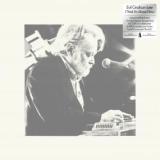
The cassette format SPCS1680 features "With Trampled by Turtles" on the A Side and last years 'White Roses, My God' SP1655 on the B Side! No one can help you build something beautiful quite like those who know you best. Alan Sparhawk knows this well. In his years in Low, he built decades of stirring music with his wife and lifelong creative partner Mimi Parker. In recent years, he has performed around Minnesota with his son Cyrus in DERECHO Rhythm Section, a funk band that also frequently features his daughter Hollis on vocals. There's an irreplaceable naturalism that comes with this kind of dynamic. Those who know you understand you. They love you. They want to help you bring your greatest passions to fruition. So it made sense that Sparhawk would turn to fellow Duluth musicians Trampled by Turtles to realize his latest record. As friends and mentees of Low's, taken under Sparhawk and Parker's wing from their earliest days as a bar band, Trampled by Turtles have performed with Sparhawk countless times over the years. The Duluth ties run deep: "There's a certain vibe that has to do with underdog syndrome, coming from a small town," Sparhawk muses. "Some of it is the weird grind and slackness that being at the mercy of Mother Nature puts in you. It humbles you." The two artists hold the kind of ironclad bond. Following Parker's passing in 2022, Trampled by Turtles invited Sparhawk to join them on tour to give him a space to be surrounded by friends. Occasionally, he would join them onstage. The outpouring of love was palpable every time they played together, a surge of warmth. When playing together is that powerful, why stop there? In winter, 2024, Sparhawk and Trampled by Turtles created With Trampled by Turtles, a record exactly as its name implies: Collective. Communal. Fraternal. Empathetic. A vessel for comfort, a reminder of the harmony that can exist when surrounded by those closest to you. Where White Roses, My God, Sparhawk's last album, plunged headfirst into electronica and radical vocal modulation, With Trampled by Turtles leans into the folk and bluegrass stylings of its backing band, Sparhawk's voice now completely unvarnished. With Trampled by Turtles is far more than just Alan Sparhawk and Trampled by Turtles. It's an affirmation of all the people who have been vital in Sparhawk's life and music, and an opportunity to hold each of their gifts into the light. It's producer Nat Harvie, who has been collaborating and performing with him for years. It's Sparhawk's daughter Hollis, who duets with her father on "Not Broken." And it's Mimi Parker, too: "Too High," "Princess Road Surgery," and "Not Broken" were all tracks she and Sparhawk had been working on in the last few years. These songs finally found a setting that stirringly commemorates them, bolstered by a full ensemble to make every note sing. Their presence is a kind of eternal connection to Parker, a way her musical grace will keep flourishing.
- A1: Tocotronic - Pure Vernunft Darf Niemals Siegen (Superpitcher / Wassermann Mix) (Edit)
- A2: Kaito - Everlasting (Edit)
- A3: Terranova - Paris Is For Lovers (My Love) Feat Tomas Høffding (Edit)
- A4: Justus Köhncke - Timecode (Edit)
- A5: Heiko Voss - I Think About You (Edit)
- B1: Leandro Fresco / Thore Pfeiffer - Neo (Edit)
- B2: The Bionaut - Everybody’s Kissing Everyone (Edit)
- B3: Ada - Lovestoned Feat Raz Ohara (Edit)
- B4: Superpitcher - Mushroom (Edit)
- B5: Rex The Dog - Prototype (Edit)
- C1: Dettinger - Blond 1 (Edit)
- C2: The Field - Over The Ice (Edit)
- C3: Robag Wruhme - Calma Calma (Edit)
- C4: Saschienne - Unknown (Dixon Mix) (Edit)
- C5: Max Würden - Circles (Edit)
- D1: Gas - Pop 1 (Edit)
- D2: Triola - Ag Penthouse (2 Epoche) (Edit)
- D3: Thomas Fehlmann - Making It Whistle (Edit)
- D4: Scsi-9 - All She Wants Is (Wighnomy Bros Mix) (Edit)
- D5: Jürgen Paape - Reval 1 (Edit)
- E1: The Modernist - Pearly Spencer (Edit)
- E2: Aril Brikha - Berghain (Edit)
- E3: T Raumschmiere - Augen Zu (Edit)
- E4: Reinhard Voigt - Superskunk (Edit)
- G1: Mike Ink - Rosenkranz (Edit)
- G2: Reinhard Voigt - Stille Hände (Edit)
- G3: Forever Sweet - The Bionaut (Edit)
- G4: Wassermann - W I.r. (Sven Väth Mix) (Edit)
- G5: Blank Gloss - Coiling (Edit)
- H1: Michael Mayer / Matias Aguayo - Slow (Edit)
- H2: Wighnomy Bros - Wurz + Blosse (Edit)
- H3: John Tejada - Unstable Condition (Edit)
- H4: Sam Taylor-Wood Produced By Pet Shop Boys - I’m In Love With A German Film Star (Gui Boratto Mix) (Edit)
- H5: Jürgen Paape - So Weit Wie Noch Nie (Edit)
- I1: Matias Aguayo - Walter Neff (Edit)
- I2: Voigt & Voigt - Tischlein Deck Dich (Edit)
- I3: Gui Boratto - Beautiful Life (Edit)
- I4: Kölsch - Goldfisch (Edit)
- I5: Gusgus - Rivals (Dj Hell Mix) (Edit)
- K1: Closer Musik - Maria (Edit)
- K2: Wassermann - Fackeln Im Sturm (Edit)
- K3: Jürgen Paape - Take That (Edit)
- K4: Superpitcher - Happiness (Michael Mayer Mix) (Edit)
- K5: Markus Guentner - Regensburg (Edit)
- E5: Schaeben & Voss - Dicht Dran 1 (Edit)
- F1: Dj Koze - Brutalga Square (Edit)
- F2: The Orb - Masterblaster (Edit)
- F3: Michael Mayer - Pride Is Weaker Than Love (Edit)
- F4: Laurent Garnier - From The Crypt To The Astrofloor (Edit)
- F5: Anna & Kittin - Forever Ravers (Edit)
Over the decades, the image of Kompakt as a pirate ship has taken root in our minds, braving the dangers of the seven seas of the music market. Sometimes it glides with a tailwind through calm waters, sometimes it has to survive violent storms. When we set sail in 1993, we never would have dreamt that our journey would still be going on after more than three decades and with 500 releases to date.
In our fast-paced business, the 500 mark is rarely reached, so we want to celebrate it with a lavish 5LP box set. In a democratic process, we have selected 50 pearls from the thousands of tracks released over the last 33 1/3 years and pressed them onto 5 brightly coloured vinyls. Alongside many Kompakt evergreens, there are also some real rarities from the early ‘Kompakt Sound of Cologne’, which have been lovingly remastered here to shine in new splendour.
The box also contains a 144-page book that tells the story of Kompakt from 1993 to today with detailed texts and images. In addition to the manifold musical and graphic achievements of Kompakt, the multidisciplinary links to the visual arts are also highlighted here.
The Bonus Picture Disc opens with the symbolic tolling of 500 bass drums, followed by 50 locked grooves from the 5 Kompakt founders, looping into infinity at 133 1/3 BPM, and the ‘33 1/3 Years Loop Opera’ – in which the loops are combined into one track that, in its reduced essence, is more than the sum of its individual parts. The magic of groovy loop minimalism and the ‘art of omission’ are once again brought to the proverbial point.
On 23 May 2025, the big KOMPAKT 500 art exhibition will open at the venerable Kölnischer Kunstverein to coincide with the release. The entire visual cosmos of Kompakt will be shown here in an unprecedented way on three floors, with the participation of many renowned artists. Of course, there will also be dancing and partying at the vernissage party, with DJ sets and live shows by the Kompakt Allstars.
The last one turns off the bass drum.
Im Laufe der Jahrzehnte hat sich in unseren Köpfen das Bild von Kompakt als Piratenschiff festgesetzt, das den Gefahren der sieben Weltmeere des Musikmarktes trotzt. Mal gleitet es mit Rückenwind durch ruhige Gewässer, mal muss es heftige Stürme überstehen. Als wir 1993 die Segel setzten, hätten wir uns nicht träumen lassen, dass unsere Reise nach über drei Jahrzehnten und mittlerweile 500 Veröffentlichungen immer noch andauert.
Die 500 ist in unserem schnelllebigen Geschäft eine selten erreichte Katalognummer und soll daher mit einer üppigen 5LP-Box gebührend gefeiert werden. In einem demokratischen Prozess haben wir aus den tausenden Tracks der letzten 33 1/3 Jahre 50 Perlen ausgewählt und auf 5 knallbunte Vinyls gepresst. Neben vielen Kompakt-Evergreens finden sich auch einige echte Raritäten des frühen “Kompakt Sound of Cologne”, die hier liebevoll remastered in neuem Glanz erstrahlen.
Die Box enthält außerdem ein 144-seitiges Buch, das mit ausführlichen Texten und Bildern die Kompakt-Geschichte von 1993 bis heute erzählt. Neben den mannigfaltigen musikalischen und grafischen Errungenschaften von Kompakt werden hier auch die multidisziplinären Vernetzungen zur bildenden Kunst beleuchtet.
Die Bonus Picture Disc wird mit einem symbolischen Glockenschlag von 500 Bassdrums eröffnet, gefolgt von 50 Endlosrillen der 5 Kompakt-Gründer, die sich bei 133 1/3 BPM in die Unendlichkeit schleifen sowie der “33 1/3 Years Loop Opera”, in der die Loops zu einem Track zusammengefügt werden, der in seiner reduzierten Essenz mehr ist als die Summe seiner Einzelteile. Die Magie des groovenden Loop-Minimalismus und die “Kunst des Weglassens” werden einmal mehr auf den sprichwörtlichen Punkt gebracht.
Am 23. Mai 2025 eröffnet parallel zum Release die große KOMPAKT 500 Kunstausstellung im ehrwürdigen Kölnischen Kunstverein. Der gesamte visuelle Kosmos von Kompakt wird hier unter Beteiligung vieler namhafter Künstler*Innen in nie gesehener Form auf drei Etagen gezeigt. Selbstverständlich darf zur Vernissagenparty auch getanzt und gefeiert werden zu DJ Sets und Liveshows der Kompakt Allstars.
Der Letzte macht die Bassdrum aus.
Soul Clap and Haven Star join forces for vibrant collaboration ‘Gone Stumblin’ on Crosstown Rebels.
Landing on 23rd May 2025, the track brings together years of musical evolution, late-night studio magic, and the unmistakable essence of a true party anthem. Genre-blending US house visionaries Soul Clap return to Damian Lazarus’ Crosstown Rebels with a deeply groovy and emotionally charged new release, teaming up with South Florida’s rising star Haven Star for the striking ‘Gone Stumblin’ - ushering in a new chapter of collaboration and cosmic storytelling.
Rooted in a near-mythical session at Brooklyn’s legendary Marcy Hotel, ‘Gone Stumblin’ began its journey with keyboardist John Camp crafting the original chord progressions and top-line melody. After years of floating in digital limbo, the track resurfaced thanks to Soul Clap’s Charles Levine, who reimagined it with a fresh twist and brought in Haven Star—whose soulful delivery launched it into orbit.
At just 24, Haven Star brings fresh energy and vintage soul sensibility to the table—having shared the stage with legends like Patti LaBelle, Jeff Beck, and Sam Moore, while cutting her teeth across genres from orchestral pop to funk-fuelled house. The original mix merges heady keys and rich chords with a bouncing, crisp low end, while the ‘Dub’ strips it back and introduces trippy sonics and heavy low-ends for after-hours introspection. ‘Unifying Force’ leans into Soul Clap’s psychedelic ethos, before the ‘Bonus Version’ of the title cut offers yet another club-ready rework with added punch.
You’d be forgiven for assuming Main Phase hails from the UK with a style and sound so intertwined with the sound of the British isles. The Copenhagen-born DJ and producer Main Phase is no newcomer to the bass scene however. The last couple of years have seen him quickly rise to being one of the people at the very top of the new wave of UK leaning music.
His contribution to the scene throughout the years, both as a DJ, producer, and co-owner of the independent label, ATW Records, with Interplanetary Criminal, has seen him play and tour some of the greatest parties and venus in the world. From Fabric in London, Boiler Room in Berlin to Lost Sundays in Sydney, he’s been making waves with his unique blend of old and new, UK garage, speed garage, dubstep and jungle – always with a big chunk of unreleased material from himself.
Main Phase has released full EPs and remixes on Hardline Sounds, Instinct, Locked On, ec2a and more – and he’s producing forward-thinking speed garage with Interplanetary Criminal as ATW and futuristic jungle with Lille Høg as First Touch. His work has gained credit from the likes of Ben UFO, Emerald, Pangaea and many more.
About the track / On the EP, Main Phase has said:
“This EP really encapsulates the sound of euro house and UK fused in one. Four big tunes for every hour of the night, there’s bumpy, suave, there’s organ, there’s swing and there’s peak time rave reminiscence across the EP. For club use only!"
DMV-by-way-of-the-U.K. punk duo Teen Mortgage have announced their debut album, Devil Ultrasonic Dream, out May 9th on vinyl via Roadrunner Records.
Produced by the band alongside longtime collaborator Kenny Eaton, the album’s first single, “BOX,” is a two-minute sprint of seething defiance, packed with hooks and unrelenting energy.
The album’s title, Devil Ultrasonic Dream, leans into the 1980s-era satanic panic in rock and roll. “The Devil Ultrasonic Dream,” explains frontman James Guile, “is about realizing a fantasy that Christian fascists don’t understand or want you to have. The devil—Satan—has always been a symbol of counterculture.”
Originally from England, Guile had been toying with the Teen Mortgage project under various monikers for years, crafting a sound steeped in sociopolitical commentary and built for the mosh pit, heavily influenced by classic ’80s punk. After relocating to Maryland five years ago, he connected with drummer (and former nurse) Edward Barakauskas via a Craigslist ad. Since then, the duo have spent years building Teen Mortgage’s presence in the DMV scene. In between a global pandemic and Barakauskas serving as an ER frontline worker, they managed to drop an EP and a string of singles before signing to Roadrunner Records in 2024.
Teen Mortgage has earned support slots with a stacked list of artists, from Weezer, Smashing Pumpkins, OFF!, and Alkaline Trio and return to the UK in June to play Download Festival and support Weezer at their Halifax Piece Hall show.
- A1: New Life
- A2: The Bridge
- A3: Ups And Downs
- A4: No Name
- A5: It’s All Good
- B1: Different Worlds
- B2: Pause
- B3: Elegy
- B4: It’s All Good – Reprise
Helsinki tenor saxophonist Jussi Kannaste's debut album as a band leader has been a long time coming. A top musician in the local scene revered by his contemporaries and sought after as a band member, Kannaste now presents his new work Out Of Self and Into Others on We Jazz Records. His quartet, Kannaste4, brings together Finnish musicians Tomi Nikku (of Bowman Trio) and Joonas Riippa, plus Berlin-based Swedish bassist Petter Eldh (of Koma Saxo / Post Koma and Y-OTIS), and features an all original program penned by Kannaste. His music is highly personal contemporary jazz leaning into modes of avantgarde expression. At times quiet as a whisper, at times fiery and swinging, Out Of Self and Into Others is a product of a deep marinade, a debut album that feels like much more than "just" that.
Jussi Kannaste (born 1976) is a saxophonist and educator based in Helsinki. Prior to launching Kannaste4, he has been a key part of the scene for 20+ years, performing in highly acclaimed bands such as Antti Lötjönen Quintet East, 3TM, Jaska Lukkarinen Trio, Ricky-Tick Big Band, and many more. As the head of the department of Jazz at Sibelius Academy, Kannaste is also a key figure in internationally admired Finnish jazz education system.
Dateline: April 10, 1970. Setting: The storied Fillmore West in San Francisco, CA. Context: Miles Davis, three days removed from his first session for Jack Johnson and, with newly recruited soprano saxophonist Steve Grossman in tow, opening shows for countercultural heroes the Grateful Dead on the latter’s home turf. Result: The initial rumblings of a thrilling era in which Davis and his cohorts would again upend jazz and popular conceptions of the genre with music steeped in groove, improvisation, and hang-on-for-your-life adventurousness. All captured on Black Beauty: Miles Davis at Fillmore West.
Mastered at MoFi’s California studio, pressed at Fidelity Record Pressing in California, and housed in a Stoughton gatefold jacket, Mobile Fidelity's numbered-edition 180g 33RPM 2LP set helps bring what went down that spring evening in Bill Graham’s venue to your listening room with exceptional clarity, balance, and presence. Originally only released in Japan in 1973 and unavailable in the United States until the late ‘90s on compact disc, this marks the first time Black Beauty has been issued on domestic vinyl. The wait is worth it.
Benefitting from quiet surfaces and excellent definition, these LPs present the band’s livewire energy and torrential storm of notes with captivating dynamics, pacing, and fullness. At its core, this audiophile reissue takes you into the walls of sound erected by a band learning on-the-fly the sheer power, will, and breadth of the electric jazz Davis was orchestrating and realizing, on the spot, would reach rock audiences that until that point had only a faint awareness of his mad-scientist experimentation. The sense of release and reach conveyed by these carefully restored records make it clear the veteran bandleader was in the process of a permanent shift that he’d chase for the next five years.
Given Davis was only a few months away from releasing the pioneering double album Bitches Brew, it shouldn’t come as a surprise that much of the fare here adheres to similar explorative approaches. Turbulent rhythms, provocative trumpet passages, and rich, saturated tonal colors that seemingly splash against a blank canvas take precedence over any traditional attempts at organization and melody. Davis and Co. intentionally play everything on a line with the bandleader signaling changes with his horn via coded phrases. The group speaks a common language — with each member having gone to achieve iconic status for their career contributions and technical prowess.
In the company of Grossman, Chick Corea (piano), Dave Holland (bass), Jack DeJohnette (drums), and Airto Moreira (percussion), Davis constructs themes around “Directions,” “Miles Runs the Voodoo Down,” “It’s About That Time,” the title track to Bitches Brew, and more from his then most-recent studio works and the in-progress Jack Johnson. His farewell to the popular standards that for nearly two decades remained a part of his repertoire arrive via a brief dalliance with “I Fall in Love Too Easily,” a shortened albeit aggressive “Masqualero,” and the “Theme” finale of “Spanish Key.” Initially, Black Beauty lacked specific track listings due to Davis’ increasing frustration with listeners over-analyzing his music.
In retrospect, it’s difficult to blame anyone for wanting to view what’s on display here with the aural equivalent of a magnifying glass. Leaning in rock directions, yet maintaining an ear for spaciousness and solos, Black Beauty survives as a snapshot of a thrilling moment amid a transitory period in which evolution came fast and furious. Just two months later, Davis would add another instrumentalist to the lineup in the form of organist Keith Jarrett, and the perpetually restless visionary would blast off to a more atmospheric and arguably more chaotic universe.
Consider, then, this live document a bridge to that galaxy and a breathtaking example of the possibilities of jazz itself.
- A1: Landscape Øf Thørns
- A2: Atømic Revelatiøns
- A3: Unbøund
- A4: Øutsider
- A5: Nøt Løng Før This Wørld
- A6: These Scars Wøn’t Define Us
- A7: Dustmaker
- B1: Bønescraper
- B2: Addicted Tø Pain
- B3: Bleeding Me Dry
- B4: Shards Øf Shattered Dreams
- B5: Scørn
Machine Head - fierce, relevant and unstoppable!
Very few bands make it to their 11th album. Even fewer do so with the same fire and fury that defined their early years. But Machine Head isn’t just any band. For over three decades, the personification of determination, Founder/Vocalist/Guitarist Robb Flynn, has led Machine Head on an uncompromising path – one fueled by defiance, reinvention, and a relentless pursuit of evolution. Now, with ‘UNATØNED’, they’ve once again sharpened their sound into its most direct and impactful form to date.
Determined to challenge himself, Flynn set strict songwriting parameters for ‘UNATØNED,’ shorter, more focused songs with a decidedly American feel, unconventional key changes, and shifting structures that break expectations. That self-imposed restraint resulted in a lean, unrelenting album that captures Machine Head at their most potent.
The album drips with melancholy melodies, and yet hammers with bludgeoning riffs, soars with anthemic sing-a-longs of love-lost and sadness, to bellowing power and undeniable confidence.
‘UNATØNED’ is Machine Head proving once again that longevity in metal isn’t about comfort – it’s about taking risks, standing firm in conviction, and refusing to stagnate. Eleven albums deep, they remain as fierce, relevant, and unstoppable as ever.
- Stay
- Rollin Dice
- Backdown
- Interlude
- Walkslow
Black Vinyl[22,48 €]
Lean back on the beat. Inhale, exhale. A new voice from an old soul. Kick drum rolls deep with Fender Rhodes. Charlotte Day Wilson sparking up a blunt, skateboarding at midnight with Brittany from Alabama Shakes. Jazzy intonation on a funky tip. Utterly confident in its own sense of time. Just in time.
You may not have heard of GC O'Connor before, but ask any working musician in Sydney and they know her name. A stalwart of the scene, multi-instrumentalist and composer O'Connor has been putting in the work for years, quietly dropping gems as she readies her debut EP, a self-described 'bedroom soundtrack'. Soul Lament is the kind of assured, accomplished record we delight in putting out into the world. It's representative of a fertile scene in Australian music that deserves celebrating.
Includes an individually-numbered, specially-designed obi strip.
For a project which made its debut in 2024 with next to no fanfare nor hype, rush2theUnknown managed to capture the attention and the imagination of a number of notable DJs across genres, tempos and timezones in their debut year. From legendary chillers Kruder & Dorfmeister picking up on the more Japanese VGM influenced side of their music, techno DJs like Courtesy, Anastassia Kristensen and Nastia drawn towards their more celestial-tinged breakbeat offerings and key support coming in from many trailblazers past and present of the genres that shaped the duo thirty years back. Support from artists and DJs around the world saw rush2theUnknown's music aired across Kool FM, Rinse FM, NTS, BBC Radio One, and thanks to impassioned support from punky-reggae icon Don Letts, multiple spins on the Rebel Dreads legendary BBC Radio 6 show.
With the foundation laid rush2theUnknown return to Diskotopia with the "Yugawara" EP.
Early support for the Yugawara EP has already seen responses from and tracks from the EP played by DJs like Machinedrum, DJ Flight, Addison Groove, dBridge, Gyrofield, Joakim, I:Cube, Courtesy, Cici, Sakura Tsuruta and more in clubs and on radio like NTS, Kool FM, Rinse FM and BBC Radio One, and BBC 6 Music.
Born from a journey out of Tokyo to the seaside town of Yugawara in the northeastern end of Izu Peninsula, the EP channels the energy, spirit and mathematically impossible coincidences that seem to come with each adventure the duo has in that part of Japan. Each morning the duo would leave their makeshift studio and wander across the hills of Yugawara. Be it a random encounter, a conversation or mental picture sparked by the visual scenery before them, new tracks came to life each day. As with their Diskotopia debut, each EP is a mix of the myriad influences the duo have accumulated since their teenage years living on outer ends of the Pacific Ocean.
From the technicolour aqua-jungle of "View From Fuua" which bursts with Logical Progression era Good Looking Records exo-planet optimism, through to the EPs closer, "Zuio-ji" a track that owes as much of a debt to the ancient Japanese court music of gagaku, as it does the 1960s soundtrack work of composer Toru Takemitsu and the jidaigeki infused breakbeat experiments of a mid 90s Rupert Parkes. Shades, tones and hues plucked from CD-ROM era "Visual Scenes" 80s CM Music and the techno-animism of synth-heavy anime soundtracks can be found on the EPs more VGM-leaning excursions "光のトンネル" and "夜明けの真鶴岬" whereas tracks like "Physical Reality" continue the question posed on their debut:What would a breakbeat tradition look and sound like, had it been forged a billion light years away?
Samurai Music returns to the evocative sound world of Ancestral Voices for an album that splits the difference between cinematic sound design and deadly restraint at 170 BPM. Nemeton continues Liam Blackburn's exploration of ancient Celtic mysticism through snaking rhythms and snarling sound design, conjuring a high-definition sonic image of sacred groves and the druids practicing amongst them.
Blackburn's Ancestral Voices project tracks back to 2015, when he debuted on Samurai Horo with the Night Of Visions album. In stark contrast to his celebrated 140 work as Indigo, this project leaned on the inspiration of pagan spirituality to charge his vivid, advanced production style with a rich and mysterious atmosphere. While he's channelled this approach into a variety of tempos and styles, on his 2016 EP Old Earth Voodoo on Samurai Music he applied the concept to a drum & bass framework, which he returns to on Nemeton with rigorous focus.
Far from a straightforward collection of breakbeat tracks, Blackburn uses negative space and pointillist production to carve out an immersive, tense sound world around the 170 grid. He takes a widescreen approach to percussion, running from pin-prick synthesised one-shots to tumbling, organic drums you'd more readily associate with a Hans Zimmer score. Scene-building is the foremost mission across Nemeton, casting otherworldly forces in sweeps of low-end friction and dramatic melodic blooms amidst tangible real-world field recordings of flora and fauna.
Casting the mind back some 2000 years is an exercise in imagination as much as research, and Blackburn ably summons dark fantasy as he delves ever deeper into Welsh mythology with a studious zeal and avid fascination. It's that drive that makes Nemeton burst forth and take shape so powerfully, bristling with kinetic energy and a barely-concealed, strangely seductive menace that leaves a lasting impression long after the last snatch of bass has bared its teeth.
Twenty-four years on from its original release, Monolake's seminal Gravity receives its first vinyl pressing courtesy of Field Records. Occupying its own space at the intersection of dub techno, minimal and electronica, it's an ageless album of staggering vision and technological prowess which has matured into an all-time pillar of electronic music. This edition, remastered by the album's key architect Robert Henke, follows on from the recent reissue of Monolake's first album, Hongkong.
Arriving just after the turn of the millennium, Gravity marked a turning point for Monolake. With co-founder Gerhard Behles moving on to other ventures, Henke produced most of the album solo and journeyed deeper into spatial exploration and the dub-informed principles that underpinned their project from the start. Minimalism and negative space run through the whole record, from the keen slithers of percussion pinging through lattices of delay to the hypnotising pulse of subliminal basslines anchoring the tracks. Gravity is a record which hangs on techno's linearity as a form of meditation, but the crystalline clarity of the mix allows every micro-fluctuation in rhythm and sound to cut through.
Compared to a lot of overly sterile digital music released in the early 2000s, Gravity endures thanks to the warmth and texture Henke elicited from his processes — even when leaning into none-more-digital effects like bit reduction. He described the ninth-floor view over Berlin from his studio at night as a key influence on the sound of the record, but the space Gravity shapes out feels thrillingly implacable. Unbound by the standard conventions of time and space, Gravity stands proud as a true original and finally gets the ceremonious vinyl pressing it so richly deserves.
Dekmantel UFO Series continues its resurgent form with a new album of bruising, industrial wave and techno from Broken English Club. UK techno mainstay Oliver Ho debuted his dark and brooding alias more than 10 years ago with a release on Jealous God under the guidance of the late, great Juan Mendez (Silent Servant) — Songs Of Love And Decay is explicitly dedicated to Mendez, whose influence runs deep in this seductively sinister corner of underground, independent electronic music.
Within the overarching aesthetic of the Broken English Club sound, Ho finds the freedom to deliver a full spectrum album as diverse as it is consistent. You can sense the shadow of his roots in 90s tribal techno punching through on 'Crawling' and 'Death Cult', while 'England Heretic' leans on thick swathes of analogue synthesis indebted to Giallo soundtracks and the ever-compelling lure of 80s synthwave. In its grinding layers of distortion and dubbed out vocals 'Vessel Of Skin' speaks more to the post-punk influences which have set Broken English Club apart since the outset. This isn't a purely retro-fetishist expedition, though — 'Pacific Island Kill' and 'Lost Gods' exude stark modernism in their sharply-angled sequences and dramatic sound design, moving beyond the functional demands of 4/4 dance music to reach to more cinematic zones.
These are but some of the approaches Ho burrows into as he shapes out the depth and breadth of his muse on Songs Of Love And Decay. It's marked by the undeniable impact of his production, perfected over a decades-deep career at the bleeding edge of machine music. At times the album celebrates the addictive thrust of the dancefloor, while elsewhere it relishes the tension of suspended animation. Throughout, the gritty veneer binds together this accomplished, uncompromising body of work as both a fierce artistic statement and a loving tribute to Mendez — an artist who equally embodied the darker side of the dance.
Spandau20, an imprint named after the Western Berlin district and focused on artists from the area, delivers techno in all diverse forms - from warehouse and electronic peak time beats to breaks and IDM, balancing the old and new school sounds flawlessly. With a focus on vinyl releases, for the collectors, Spandau20 has lately also focused on its label nights, with showcases at Fabric, Bassiani and many others. The label's 10th release features 10 tracks that epitomise the musical diversity of Spandau20 and the progressive musical mindset of its roster, calling on the label favourites and Spandau natives to deliver brand new and exciting music. This special release even features one track that all artists have worked on together: 'Come Closer', a swarming, slithering beginning featured as the VA's opener. Its barely coherent female vocal echoing amidst a cacophony of demon-like effects. The chilling ambience captured at the offset transcends into the first full length track by Elli Acula, 'Floating Eyes', a cur characterised by an authoritative, pounding bass featuring calculated percussive rolls and metallic overtones to make for a face-scrunching opener to this devilish collection of works. FJAAK follow for the first of twin cameo appearances, partnering up with fellow live supremo and hardware aficionado KiNK. On 'Overbridge' the trio deliver a cavernous, rolling number driven by a deep thrumming bass in addition to a razor-edged lead synth, and pulsating technopattern. Dajusch is known for incorporating his years of classical study in with his immersive musical style - and with his VA effort the Berlin native neatly showcases this. Easing the energy slightly, 'Move' escalates from its warm, melodic intro into rumbling goliath of a beat comprising a looping, slew of gassy harmonics. The momentum of the release shifts considerably with the introduction of acutely versatile producer, DJ and sound artist Claus. The artist from Spandau leans his track 'Bloomscroll' towards sparse, dubby sonics in which he intricately ties together to form churning, burgeoning soundscape. FJAAK jolt proceedings back into the techno groove with their signature blend of arresting sub-bass and reverberating rhythms, which come thick, fast and heavy on 'Jackfruit'. The abstract wonder of Anna Z's broken-beat like stylings is fully explored on 'Icy Liq'. It's outlandish and amorphous in its execution, causing a clattering percussive chaos that's choicely pieced together by the modular-extraordinaire. Nikk stealthy moves into breaks territory with his track 'Down In The Shadows', packing a trap-like snare with an acid-flecked melody and dawn-breaking, dream-like textures. The penultimate track on the VA is 'Tufted'. J.Manuel expertly employs a chorus of robot-like sonics that course through a short-circuiting low-end to produce a pacy, inescapable journey via a whirling, merciless beat. He is joined by the legendary producer Tobi Neumann for their menacingly ambient number titled 'Fennec.' In parts a nod to UK dubstep, the duo concocts a fierce admixture of styles bolstering tribal-like components with industrialised overtones and methodically crafted drum-fills.
- 01: That Work
- 02: Restaurant Not
- 03: Went Off (Featuring Open Mike Eagle)
- 04: Ta Da
- 05: Dial Up (Featuring M.sayyid)
- 06: Scales Sway
- 07: Inner Animal
- 08: Recycling Night (Featuring Fatboi Sharif)*
- 09: Untouchable
- 10: No Cops
- 11: Wasteland Embrace (Featuring Billly Woods)
- 12: Epinephrine Pen
- 13: Breakneck (Featuring Myka 9)
- 14: Not For Airports
- 15: Best Metric (Extended)
All Portrait, No Chorus is the new album from indie rap pioneer doseone and NYC producer Steel Tipped Dove. Together, these two artists have crafted an uncompromising masterpiece. Knowing the caliber of MC he is paired with, dove skillfully paints with every color on the palette, and doseone skates effortlessly on every track, whether skating languid figure 8s or landing lyrical triple axels. Somehow the veteran sounds sharper than ever and the songs are lean and hungry, cut to the quick. It is no accident that this project is released under the Backwoodz Studioz imprint; the road that leads to this collaboration starts with, of all things, a ShrapKnel demo. Here is how dose explains it: "I have been inspired by Backwoodz for a while, in many ways, but the most potent being all these distinct pens. September 2023, I had heard a nearly done version of ShrapKnel's latest record, and something snapped in me. Hearing that perfectly hungry, inspired rapping turned my power back on. For me, being inspired warrants telling those who are inspiring you, so once I heard Decay I reached out and sent Fatboi Sharif and Dove some kind words about that record. The rest is history." At the end of December 2023 Dove sent dose the first beat pack. Somewhere around the second week of January 2024 dose already had five songs written and recorded. By the middle of March, a rough album framework was essentially done, and they brought on Minneapolis producer Andrew Broder to freak the turntables across the whole project. Then, as a final piece, dose and dove added select collaborations from some of their favorite rappers. By the end of April it was done. "I'm not really a features guy, but to align with and connect with those who inspire me, I called in some beautiful humans I had never worked with but always meant to: Open Mike Eagle, M.Sayyid, billy woods, Fatboi Sharif, and Myka 9 connect eras, artists, and styles of unconventional rap I hold incredibly dear," doseone explains. Listening to All Portrait, No Chorus you can hear the battery in doseone's back as he pythons his way through each instrumental. For his part, Steel Tipped Dove_a prolific producer over the last two years_delivers some of the most diverse work of his career. The result is a dynamic, propulsive listen that casts its crackling energy in every direction except backwards.
Another foggy day in Yorkshire. A steel grey sky. Raindrops tracing one another down the windowpane. Kirk Barley sits in his studio and assembles compositions from scraps of found sound and live instrumentation. Melodies swell, withdraw and repeat like waves. Time slows. Accelerates. Slows again. The light bends, tweaked at the edges. Twisted by rhythms that never quite resolve.
Written, recorded and produced by Barley in Yorkshire in early 2024, Lux picks up where 2023 LP Marionette leaves off, conjuring a mystical, reflective space between formal minimalism and sonic imaginaries of northern landscapes.
And yet, where Marionette relied at times on more recognisable field recordings, Lux leans into Barley’s skill as an instrumentalist and sound designer, working from a palette of short samples and utilising a variety of alternate tuning systems to build, layer and coax his compositions into being. Most evident on tracks ‘Vita’, ‘Sprite’ and ‘Descendent’, these tunings create an otherworldly harmonic language that is easier to perceive than describe.
Alongside more familiar instruments of guitar, bass, drums, organ and clarinet, here Barley draws on plastic saxophones and bells, and recordings of glass, wood and metal sound objects to provide the organic matter. Rather than directly representative of the natural world, Lux enters into a dialogue with it which, like the grasses and flowers of the album’s cover, exists somewhere between reality and artifice.
On album opener ‘Cache’, Barley constructs his own sense of time from a recording of an umbrella crank, a sparse and spectral piece which hints at memories embedded in the track’s title. Introspection blossoms into new life on ‘Vita’, crumpling again into the percussive ambience of ‘Verre’. A track that takes its harmonic lead from the clinks of glass, it features Barley’s long-time collaborator Matt Davies on drums, whose nuanced, tonally sensitive playing gives ‘Verre’ a fizzing, ice-like quality.
There are several moments where Lux picks up on themes Barley explored under electronic moniker Church Andrews on recent works with Davies, stretching and distorting temporalities most explicitly on ‘Descendent’, whose ritualistic air unfurls around a pattern in exponential decline.
Embracing the surrealism Barley absorbed over years watching classic film noir and the works of David Lynch and Federico Fellini, Lux wends its way through the enchanted sound worlds of ‘Sprite’ and ‘Balanced’ before arriving at the album’s title track.
An expression of his recent experiments in live, prepared guitar, ‘Lux’ brings the album back to earth, returning us to the room where the rain has stopped, the clouds have parted, and the soft warmth of the spring sun is pouring in through the open window.
- A1: Echoes Of A Billion Sun's
- A2: Messages From The Andromeda Galaxy
- A3: Stardust Memories (Among The Stars Dreams And Memories)
- A4: Trailblazer Of The Cosmos (Comet Rider A Leap Of Faith Into The Unknown)
- B1: Seeds Of Light (Hope For Growth And New Beginnings)
- B2: Fragile Eden (Threads Of Emerald Green)
- B3: The Cold Embrace Of Infinity
- B4: The Star Charts We Shared (A Maurizio Requiem)
After a 30-year interstellar silence, the enigmatic producer Alien Signal—pioneering alias of Italian electronic composer Alex Silvi—reemerges with Whispers from Distant Suns, a transcendent odyssey that bridges retro-futurism and modern electronica. Hailed as a magnum opus, this album transcends genre boundaries, captivating ambient purists, downtempo aficionados, and even experimental listeners with its hypnotic fusion of analog warmth and digital precision.
Cosmic Tapestry of Sound
Drawing comparisons to Vangelis’ Antarctica and Alpha—but reimagined through a 21stcentury lens—Whispers from Distant Suns marries nostalgic synth textures with cuttingedge production. Silvi’s mastery of melody shines through in tracks like “Stardust
Memories” and “Fragile Eden” where shimmering arpeggios and celestial pads drift over robotic, glitch-infused drum patterns and sparse, meditative percussion. The result is a paradox: a retro-futuristic soundscape that feels simultaneously ancient and alien, familiar yet unexplored.
Listener Testimonials
Fans and critics have flooded forums with praise:
“An auditory revelation! It’s like Vangelis met Jon Hopkins in a nebula—vintage soul with a futuristic heartbeat.”
“The textures are gorgeously cinematic. Closing your eyes, you’re adrift in a Tarkovsky film scored for the Andromeda galaxy.”
The Vinyl Experience
Pressed on heavyweight vinyl, the album’s physical release amplifies its immersive qualities. The gatefold sleeve, adorned with surrealist astrophotography and metallic
foiling, mirrors the music’s cosmic ethos. Side A leans into Balearic serenity, with sundappled grooves and aquatic synth ripples, while Side B delves into darker, more
experimental terrain—think Aphex Twin’s Selected Ambient Works colliding with the organic rhythms of Jon Hopkins.
Maturity in Motion
This album is a testament to Silvi’s evolution. Tracks like “Seeds Of Light” and “Message from Andromeda Galaxy” showcase his refined ear for dynamics, balancing silence and sound with surgical precision. Vintage drum machines spar with glitches, while field recordings of crashing waves and interstellar static blur the line between Earth and cosmos. The closing track, “The Star Charts We Shared” crescendos into a 6-minute ambient requiem, leaving listeners suspended in a state of weightless awe.
Final Transmission
Whispers from Distant Suns is more than an album—it’s a transcendent odyssey. Spanning time, space, and the artist’s own creative evolution, this immersive work invites listeners to lose themselves in its ebb and flow. Designed for moments both intimate and expansive, its balearic-tinged atmospheres resonate equally through dawnlit Mediterranean terraces or the solitary glow of headphones in darkness. These are compositions that pulse, morph, and haunt the air long after the final note fades. A living soundscape meant to accompany life’s quiet revelations and clandestine joys—a soundtrack to your most personal moments, crafted as what the artist calls ‘private dance music.’
Tailored for the Discerning Listener
Whispers from Distant Suns is designed with the true connoisseur in mind. This album is a must-have for:
Vinyl Collectors & Audiophiles: Those who value the warmth and tactile experience of heavyweight, limited edition pressings
Electronic Ambient and Downtempo Fans: Listeners who appreciate immersive soundscapes that merge retro analog charm with modern digital innovation.
Retro-Futurism Enthusiasts: Fans of pioneering artists like Vangelis, Boards of Canada, and early Warp Records who seek music that bridges nostalgic synth textures with futuristic experimentation.
Experimental Music Explorers: Individuals drawn to sonic narratives that invite deep, contemplative listening—perfect for both introspective moments and immersive listening sessions.
This release is not just an album; it’s a curated experience for those who desire music as a multidimensional art form, merging the vintage allure of analog sound with a contemporary, cosmic vision.
For fans of: Vangelis, Biosphere, Jon Hopkins, early Warp Records.
Thaiboy Digital is a founding member of the music group and cultural phenomenon Drain Gang. Following huge success at D2C (over 2000 units sold), YEAR0001 are now presenting this first collection of Thaiboy Digital records to retail. “Tiger” is Thaiboy Digital’s first studio album and includes fan-favourite track “Diamonds” featuring Yung Lean. The album also includes features from Thaiboy’s Drain Gang compatriot Bladee.
“Legendary Member” is the second studio album from founding Drain Gang member Thaiboy Digital, featuring appearances from Yung Lean and the group’s other icons Bladee, Ecco2k and Whitearmor. Following huge success at D2C, where this title sold over 3000 units, this release will now be available in retail for the first time.
“Trash Island” is the second collaborative mixtape from Drain Gang. It features the biggest hit in the Drain Gang catalogue “Western Union”, which has accumulated millions of streams on DSPs. Featuring Yung Lean alongside key DG members Bladee, Ecco2k and Thaiboy Digital, this title is hotly anticipated by the fanbase. This will be the first time the mixtape is available on vinyl.
“Back 2 Life” is Thaiboy Digital’s third studio album. Featuring Yung Lean and fellow Drain Gang member Bladee, Back 2 Life dials in a forward-facing sound with the help of producers Rok (Lil Uzi Vert, Future) Outtatown (Kendrick Lamar, Playboi Carti) and others. This is the first time this release will be available at retail, having previously sold over 1000 units via D2C.
Steeped in classic dancefloor rhythms and sounds, ARTIFACTUAL RHYTHM presents a re-interpretation of club and DJ music through the lens of a live band with a jazz edge. Tapping into sounds of the 90s and 2000’s while keeping his foot very firmly in the now and beyond, Flood’s new body of work is both for the dancefloor and the listener.
Dubbed 'nu-jazz', 'jazztronica' and 'jazz house music', at its core Alex’s sound takes influence from house, UK garage, drum n’ bass, and broken beat. 'Artifactual' can be defined as 'made by human hands', and that’s exactly what Alex explores with this record; taking sounds and styles that are inherently electronic and giving them new life through the rawness of a live band underpinned by jazz and improvisational explorations. Music made by human hands.
Recorded live in a studio in Naarm / Melbourne and engineered, mixed, and co-produced by Lewis Moody (Energy Exchange Records), the album features a list of some of the finest players 'Down Under' including Erica Tucceri (flute), Finn Rees (keyboards), Dylan Paul (bass), as well as guest vocal features from the lyrical legend Cazeaux O.S.L.O on LIFE IS A RHYTHM, Kara Manasala on UK garage cut DON’T WAIT 4 ME, and New York soul queen Vivian Sessoms heating up some classic house energy on CAN’T GET ENOUGH.
Alexander Flood is one of Australia’s commanding beat-masters, possessing a unique and finessed arsenal of groove, power, and expertise on the drums. Leading his own band from the drum chair, Alex’s music pushes a fresh rhythmic and dynamic realm of live dance music leaning on nu-jazz, deep-house, broken beat, DnB, funk, and experimental sounds. The band has recently featured at Wellington Jazz Festival, Melbourne International Jazz Festival, SXSW Sydney, WOMADelaide, JazzMontez Frankfurt and various clubs across Europe and Australia.
Winning Australia’s Best Up and Coming Drummer Competition in 2016 was just the beginning of Flood’s accelerating trajectory in music. After graduating top of his University jazz degree in 2017, Alex signed with US label Stretch Music to release his debut album HEARTBEAT, followed by his sophomore release The Space Between in 2022. Later that year Alex toured Europe with heavyweight 6x GRAMMY nominee Christian Scott aTunde Adjuah’s band. While in Berlin Flood recorded his third album 'Oscillate' with an all-star lineup including Horatio Luna and Abase, releasing via Jakarta Records in May 2023. In 2023 Alexander was also the recipient of the highly prestigious Young Achiever Award at the Ruby Awards, as well as receiving the Robert Stigwood Fellowship (Government of South Australia).
2024 sees Alex join forces with Atjazz Record Company to release new music from his forthcoming album ARTIFACTUAL RHYTHM, as well as touring his band across Australia, New Zealand, Europe and the UK.
Some notable collaborators of Alex’s include Chief Christian Scott aTunde Adjuah, Abase, Horatio Luna, Atjazz, Vivian Sessoms, Cazeaux O.S.L.O, Nelson Dialect, the ASO, WASO, QSO, as well as working with brands including Red Bull Music and Istanbul Cymbals.
Repressed for the first time in 2 years, Note price change. Sermonizing Black Nationalism, Pan-Africanism and the benefits of a healthy and just lifestyle during the height of the Bad Boy/Roc-AFella era of nihilistic excess in the late 90's, Dead Prez also signed to a major label (Loud/Columbia) despite leaning much more towards the burgeoning indie aesthetics of the day. But this was a good thing – using major label muscle to wake up righteous hip-hop fans who might have fallen asleep at the wheel. The group itself – consisting of MCs stic.man and M-1, who produced or co-produced most of the duo’s music – was formed in Tallahassee, Florida in the early 1990's.
By later that decade, the duo had started making significant waves, having their music heard on the soundtracks to “Soul In The Hole” and “Slam,” as well as appearing on albums by Big Pun and The Beatnuts. By 1998, they released their first official single, the serious, stark “Police State,” on Loud, appropriately brought to the label by Lord Jamar of Brand Nubian. After building a solid rep over the next two years with fiery live performances, in 2000 they unleashed their debut album, Let’s Get Free.
The album was a welcome return to provocative and often radically political rhetoric that hearkened back to hip-hop forebears including The Coup, Public Enemy and KRS-One (as well as poetic descendants like the Last Poets and Watts Prophets). Let’s Get Free was critically acclaimed and benefited from multiple singles, including the infectious, thick analog drive of “Hip-Hop” “It’s Bigger Than Hip-Hop,” with a remix co-produced by a young Kanye West; “Mind Sex” (with Abiodun Oyewole of the Last Poets); and the poignant “I’m An African.”
But the singles weren’t the only worthy songs, as just about every cut here has deeper meaning than most full albums by their early 2000's peers. Highlights: the thought-provoking, anti-drug album opener “Wolves”; “We Want Freedom” “They Schools” and “Propaganda” . All in all, this is one of the more underrated and possibly Top 5 fully-realized political hip-hop albums of all time.
It’s a decidedly busy time at INVINC HQ at the moment with the 10-year anniversary looming in May.
The six months preceding this date are peppered with a flurry of releases every couple of months, which started with the Mondo Ritmo EP that came in October, the Gamma Knife LP in December and now this brand new album by Sordid Sound System, which lands early March before a rather promising sounding 2xLP compilation lands in May to mark the occasion.
It’s been a good few years since something by Sordid Sound System aka Stuart Evans has been released on the label and it’s a welcome return. In our opinion it's some of Evans’ best work and so it’s a pleasure to have him back on board the good ship Inc.
Remarkably, this music is even harder to pigeon-hole than usual...even for Stu, who’s known for his raw, analogue, live takes that veer between dub and post-kraut this is definitely quite "different": part surf acid, part dub, part psych-exotica, part motorik...and that's just the A-side. The B-side leans more towards ambience but of the oddball experimental soundtrack variety...a thoroughly enjoyable ride.
Enjoy the trip.