
8
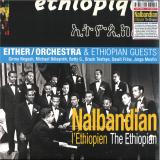
The Éthiopiques series returns! Essential archive recordings from an extremely fruitful period in Ethiopian music.
Before “Swinging Addis” took over the world, there was Moussié Nerses Nalbandian — the Armenian-born composer who shaped modern Ethiopian music. Mentor, arranger, and pioneer, he laid the foundations of Ethio-jazz.
This Éthiopiques volume revives his forgotten legacy, recorded live by Either/ Orchestra First issue ever with new exclusive photos and in depth liner 8-page insert.
“Ethiopian jazzmen are the best musicians that we have seen so far in Africa.
They really are promising handlers of jazz instruments.”
Wilbur De Paris
(1959, after a concert in Addis Ababa)
አዲስ፡ዘመን። *Addis zèmèn* **A new era.**
The time is the mid-1950s and early 1960s, just before "Swinging Addis" bloomed – or rather boomed – onto the scene. Brass instruments are still dominant, but the advent of the electric guitar, and the very first electronic organs, are just around the corner. Rock’n'Roll, R’n’B, Soul and the Twist have not yet barged their way in. Addis Ababa is steeped in the big band atmosphere of the post-war era, with Glenn Miller's *In the* *Mood* as its world-wide theme song, neck and neck with the Latin craze that was in vogue at the same period. Life has become enjoyable once again, with the return of peace after the terrible Italian Fascist invasion of Ethiopia (1935-1941). The redeployment of modern music is part and parcel of the postwar reconstruction. *Addis zèmèn* – a new era – is the watchword of the postwar period, just as it was all across war-torn Europe.
The generation who were the young parents of baby boomers** were the first to enjoy this musical renaissance, before the baby boomers themselves took over and forever super-charged the soundtrack of the final days of imperial reign. Music is Ethiopia's most popular art form, and very often serves as the best barometer for the upsurge of energy that is critical for reconstruction. Whether it be jazz in Saint-Germain-des-Prés or the *zazous* who revolutionised both jazz and French *chanson* after the *Libération*, be it Madrid's post-Franco Movida, or Dada, the Surrealists and *les années folles* that followed World War I, the periods just after mourning and hardship always give rise to brighter and more tuneful tomorrows. Addis Ababa, as the country's capital, and the epicentre of change, was no exception to this vital rule.
**Two generations of Nalbandian musicians**
Nersès Nalbandian belonged to a family of Armenian exiles, who had moved to Ethiopia in the mid-1920s. The uncle Kevork arrived along with the fabled "*Arba Lidjotch*", the** "*40 Kids*", young Armenian orphans and musicians that the Ras Tafari had recruited when he visited Jerusalem in 1924, intending to turn their brass band into the official imperial band. If Kevork Nalbandian was the one who first opened the way of modernism, pushing innovation so far as to invent musical theatre, it was his nephew Nersès who would go on to become, from the 1940s and until his death in 1977, a pivotal figure of modern Ethiopian music and of the heights it. Going all the way back to the 1950s. Nothing less. And it is Nersès who is largely to thank for the brassy colours that so greatly contributed to the international renown of Ethiopian groove. While the younger generations today venture timidly into the genealogy of their country's modern music, often losing their way amidst a distinctly xenophobic historiographical complacency, many survivors of the imperial period are still around to bear witness and pay tribute to the essential role that "Moussié Nersès" played in the rise of Abyssinia's musical modernity.
Given the year of his birth (15 March 1915), no one knows for sure if Nersès Nalbandian was born in Aintab, today Gaziantep (Turkiye/former Ottoman Empire) or on the other side of the border in Alep, Syria... What is certain is that his family, like the entire Armenian community, was amongst the victims of the genocide perpetrated by the Turks. Alep, the place of safety – today in ruins.
Before Nersès then, there was uncle Kevork (1887-1963). For a quarter of a century, he was a whirlwind of activity in music teaching and theatrical innovation. *Guèbrè Mariam le Gondaré* (የጎንደሬ ገብረ ማርያም አጥቶ ማግኘት, 1926 EC=1934) is his most famous creation. This play included "ten Ethiopian songs" — a totally innovative approach. According to his autobiographical notes, preserved by the Nalbandian family, Kevork indicates that he composed some 50 such pieces over the course of his career. This shows just how much he understood, very early on, the critical importance of song as Ethiopia's crowning artistic form. Indeed, for Ethiopian listeners, the most important thing is the lyrics, with all their multifarious mischief, far more than a strong melody, sophisticated arrangements or even an exceptional voice. (This is also why Ethiopians by and large, and beginning with the artists and producers themselves, believed for a long time — and wrongly — that their music could not possibly be exported, and could never win over audiences abroad, who did not speak the country's languages).
Last but not least, one of Kevork's major contributions remains composing Ethiopia's first national anthem – with lyrics by Yoftahé Negussié.
Nersès Nalbandian moved to Ethiopia at the end of the 1930s, at the behest of his ground-breaking uncle. Proficient in many instruments (pretty much everything but the drums), conductor, choir director, composer, arranger, adapter, creator, piano tuner, purveyor of rented pianos,... he was above all an energetic and influential teacher. From 1946 onwards, thanks to Kevork's connexion, Nersès was appointed musical director of the Addis Ababa Municipality Band. In just a few years, Nersès transformed it into the first truly modern ensemble, thanks to the quality of his teaching, his choice of repertoire, and the sophistication of his arrangements. It was this group that would go on to become the orchestra of the Haile Selassie Theatre shortly after its inauguration in 1955, which was a major celebration of the Emperor's jubilee, marking the 25th anniversary of his on-again-off-again reign.
At some point or other in his long career, Nersès Nalbandian had a hand in the creation of just about every institutional band (Municipality Band, Police Orchestra, Imperial Bodyguard Band, Army Band, Yared Music School…), but it was with the Haile Selassie Theatre – today the National Theatre – that his abilities were most on display, up until his death in 1977. To this must be added the development of choral singing in Ethiopia, hitherto unknown, and a sort of secret garden dedicated to the memory of Armenian sacred music, and brought together in two thick, unpublished volumes. Shortly before his death (November 13, 1977), he was appointed to lead the impressive Ethiopian delegation at Festac in Lagos, Nigeria (January-February 1977).
His status as a stateless foreigner regularly excluded him from the most senior positions, in spite of the respect he commanded (and commands to this day) from the musicians of his era. Naturally gifted and largely self-taught, Nerses was tirelessly curious about new musical developments, drawing inspiration from the very first imported records, and especially from listening intensely to the musical programmes broadcast over short-wave radio – BBC *First*. A prolific composer and arranger, he was constantly mindful of formalising and integrating Ethiopian parameters (specific “musical modes”, pentatonic scale, and the dominance of ternary rhythms) into his “modernisation” of the musical culture, rather than trying to over-westernise it. It even seems very probable that *Moussié* Nerses made a decisive contribution to the development of tighter music-teaching methods, in order to revitalise musical education during this period of prodigious cultural ferment. Flying in the face of all the historiographical and musicological evidence, it is taken as sacrosanct dogma that the four musical modes or chords officially recognised today, the *qǝñǝt* or *qiñit* (ቅኝት), are every bit as millennial as Ethiopia itself. It would appear however that some streamlining of these chords actually took place in around 1960. It was only from this time onward that music teaching was structured around these four fundamental musical modes and chords: *Ambassel*, *Bati*, *Tezeta* and *Antchi Hoyé*. A historical and musical “details” that is, apparently, difficult to swallow, especially if that should honour a *foreigner*. Modern Ethiopian music has Nersès to thank for many of its standards and, to this day, it is not unusual for the National Radio to broadcast thunderous oldies that bear unmistakable traces of his outrageously groovy touch.

2024 Repress
After 7 years and countless requests, Sneaker Social Club finally deliver a repress of Dream Cycle - Part One.
After a chance meeting at Gottwood in 2016 a bond was established between Dream Cycle (Robin Clarke) and label owner Jamie Russell over a shared love of 2 Bad Mice and Moving Shadow. It wasn't long before Clarke began channeling elements of that influence to produce his Dream Cycle Part.1 EP. Unfolding over 4 steppy tracks and an ambient closer, Clarke melds sharp snares, summery motifs, dense atmospheres and thick subs whilst keeping things suffused with a distinctly UK quality that marries his work perfectly with the Sneaker catalogue.
DJ Support: Ryan Elliott, DJ Die, The Blessed Madonna, Octo Octa, Bwana, Altered Natives, Noodles (Groove Chronicles), Liem (Lehult), Deejay Astral, LA4A, 2 Bad Mice, Fred P, Matt Karmil, Flori, Marco Zenker, J.Rocc (lol at comment!), Ajukaja, Gnork, William Djoko, Till Von Sein, Fold, ASOK, Gene Farris, DJ bwin, Seven Davis Jr, TRP, DJ Octopus, DJ Normal 4, Gerd, Dean Man s Chest, Poté, Doc Scott, Violet, James Welsh (Kamera), Konx-om-Pax, Etch, Raresh, Hrdvsion, Michael Serafini (Gramaphone), Frazer Ray, DJ Guy, Mak & Pasteman, Shenoda, Urulu, Mark Archer & James Zabiela, Zinc, Lehult, Jackie House, Mosca, Noodles (Groove Chronicles) & DJ Die.


Enterprising composer and musician Eddie Suzuki made his own path throughout his lifetime. Born on October 4, 1929, Suzuki worked as a young shoeshiner in 1940s Honolulu, saving enough money to take piano lessons. In high school, he lead a big band orchestra of 16, and sometimes up to 40 members. By the age of 18, he owned a piano shop that pivoted to become Honolulu’s top guitar store.
For Eddie Suzuki, music always came first. In 1973, after performing and composing songs for many years, Eddie Suzuki and his group, New Hawaii, recorded the now impossibly rare album, High Tide.
The LP is “not a rock-out”, local music journalist Wayne Harada ruminated in a 1973 review. “Rather, it’s one man’s vision — and version — of the now Hawaii.” A seasoned mix of psych, Hawaiian, and pop sensibilities, the music on High Tide gave the listener a look into Eddie’s singular vision celebrating the sights and sounds (and spirit) of Hawaii.
Eddie Suzuki’s New Hawaii:
Laurence Harada, guitar
John Schulmeister, bass
Gary Fittro, drums
Nani Kuaiwa, vocals
Eddie Suzuki, vocals, Hammond organ, Arp synthesizer.
"A beautiful album celebrating Hawaii’s warmth and spirit. The personal story here is that I reached out for a license just 1 week too late — Eddie Suzuki had died the week prior to my initial phone call. It took a couple years until I was able to connect with his son and get his permission to reissue Eddie's music." – Roger Bong, Aloha Got Soul

Volker.live ’s debut and final release
“My Love Will Set You Free” Final release? We see the question mark popping up over your head. Well yes, these four tracks are a time capsule, a historic cache which takes you back to one hot summer of 2019. When this care-free boy band formed and made it their goal to climb up the world’s stages to play an all-hardware live set & have f.u.n. while doing so. This endeavor went swimmingly. Festival gigs were pocketed and crowds intrigued. The stand-out track of their gigs was always “My Love Will Set You Free”, an acid-house stomper with uplifting, yet melancholic vocals from their friend ÆN.
Friends and neighbors were quick to re-interpret the song and the idea of a record took shape.
Lehult’s Lucky Charmz propels the listener into the void by upping the acidity. Closing in on a playtime of 10 minutes, we’re readily giving up our sense for time and space. Whirring drum hits meet feedbacking tape delay while riding the rock solid bass line.
Erobique liked the song so much, he quickly drew up two versions of his own. His “Disko Mix” oozes that saccharine, danceable magic mélange of days past. Warm keys, hand claps, and Aen’s intimate voice are stirred into an exquisite cocktail. You know that Carsten Meyer would never forget the umbrella on top. He’ll keep the cherry though.
The “Black Velvet Mix” closes the curtains for a slow dance. This is personal, it’s just between you and the song. Sub rosa.
In the meantime, Volker.live decided to follow separate paths of their adventure, but everyone agreed to release these songs into the world. May they serve as a reminder of what can be created out of care-free energy that’s driven by a deep connection to music. Please check out their other musical undertakings as Echoel and Goodmemory.live .

During the uprising in 2000, aided by the League of Humanity, two of Dr: Gall’s advanced prototypes escape the Rossum Universal Robot factory and flee Earth on a decommissioned spacecraft.
Travelling aimlessly through space, they begin to wonder what their new home would look like. They tell each other stories of planets with no humans to enslave them, no factories to go to — planets where fresh blue water runs through pink, sun kissed mountaintops.
Perhaps it’s fortunate then that these Robots can feel no time, have no sense of past and future? And by the time their ship touches down on Ebaum’s Dreamland, who knows how many years have passed on Earth…
“Ebaum’s Dreamland” is the first Rossum Universal Tracks release.
It features a remix by Julius Steinhoff, who first discovered the scrambled transmissions in his deep space observatory in the woods.


Lehult 015 serves you class-A Liem & Eddie Ness faux-bangers, neatly packed in a four-tracker on home ground. Crazy groovers from start to finish that have their feet firmly rooted on the dancefloor, lined with the boys' trademark hazy, slightly detached vibe. Liem & Eddie Ness have sunken into a natural groove, and all we want to do is relax and let it flow through us.

It's not the fall that hurts, it's when you hit the ground - that's what - Failing Upwards' is all about. On Lehult's fourteenth release Lucky Charms breaks away from 4-to-the-floor territory to deliver a fun trip through skippy drum workouts and jazzy warmth. Spread out across the full A-Side is 'Einbahnstraßen-Sound". Heard first on the Lehult Worldwide FM Special last year, this highly requested tune finally sees the light of day in all its trippy, warm, analogue glory. 'Oase' takes things a notch deeper by layering lush synths, swarming melodies and ski field recordings over a laid back electro-groove. 'Rex Dubius' translates the vibe of the first two tracks into a more straightforward, dubby groove - not without the skipping beats and the warm counterparts, though.
180g vinyl, limited pressing

"Shatterdome", cut deep across the whole first side of this record, is a no-prisoners-taken club workout that comes of surprisingly lightheaded with a pushing low-end and dusky athmo-stabs. "Lola T70" is a late night car chase on cyber-highway, reminiscing THX-1138 leaving everything behind in the classic George Lucas sci-fi film: A state of floating acceleration and melancholy. "Say Hi to everyone" is signature.

One of four unique hand-stamped Cover Artworks by Jan-Paul Müller
For our 10th release, we put together a ten track compilation featuring new material by us and our friends titled 'Nie wieder Streit'. The four sides showcase some familiar Lehult sounds as well as some unexpected surprises: Original crew members Liem, Lucky Charmz, Eddie Ness, Johan Kaseta and DJ Assam are all on board with new material, while Matthias Reiling, A Trap Jr. & DJ Slyngshot, Rainboy and Epikur also join the party. For the special occasion we wanted to compile a collection aimed at the DJs that have been buying our records and supporting the little outlet we founded a couple of years back. LHLT10 is one of those versatile records that offers something for every situation, one that never leaves your bag. There's chilled, intricate songs for the early and late hours on the dance floor, dark and vibey Jams for the dungeons, joyful and weird peak time stuff, and some straight up groove monsters - all on one release. Liem & Eddie join forces for the seemingly deteriorating, jumbling peak-time cut 'Exodoros' while Liem's other contribution, 'Truly Super', serves up sweaty basement magic. Lucky Charmz shows a unheard shade with his 150-BPM Kitch-Anthem 'Trance Song Cover', while Johan Kaseta's opener 'Venue Flieder' and Assam's floaty groover 'Looking for Revenge' stay in line with their trademark fruity/meditative sound. Epikur, a project between Eddie Ness and his longtime partner in crime Kryptofauna, snatch their debut release with the club-ready, synth-laden groover 'Speedrunner IV',

It's a pleasure to introduce Tony Rainwater - undoubtedly the most productive and creative savage we've come across recently. See usually we don't do this, Lehult is a crew affair, but this guy left us no choice. Being a music enthusiast, DJ and dancer for a long time, Tony has only most recently picked up producing his own music, yet at a stunning rate: When we first asked him for a demo - three months after he started producing - he swiftly dropped us a set of twenty-five tracks, another set of fifty more soon followed. His productions are straight rough edged, no-prisoners-taken Jams, combining samples from the most far-flung corners of his eclectic music collection. His magical patchwork wild style is on full display on his debut "Rockberry Jam" EP for Lehult. The A-Side takes us through the lighter side of his repertoire with the title tracks slow building house groove, some dizzy medieval monk grooves on "To All The World" and seductive R&B on "Lay It On The Line". On the flip "Operalight" irresistible groove and "Black Dream Flowers" provide some darker moments, before "Alone" closes on a soft note. The Vinyl version includes an extra goodie after the runout's. Tony is now a fixed member of the crew already and we're proud to have him and his crazy energy on the team. This won't be the last you'll hear of him.

The Erefora Land" is the first solo record by Johan Kaseta, Lehult founding member. It's a nostalgic, hazy affair where the tracks work both on a dancefloor and as the score to an imaginary Super Nin-tendo RPG. Squelching vocal samples ("Hi!") and bubbling synths are reminiscent of the oldschool, synth-laden nineties game soundtracks young Kaseta still can't get enough of. "The Erefora Land" is like coming across the soundtrack to Earthbound after having forgotten to have ever played it - suddenly a rush of sights, sounds and smells from the past come back to you and gently pull you in. Kaseta takes this nostalgia of the forgotten and puts it into his very own context: shuffling hihats, missed drops - a playful version of house music. Swept up to the shores of Erefora land, you're greeted by "Lei Tindissima". A seductive, blistering track on the verge of falling apart yet always staying groovy and pumping. Being somewhat ambient and airy, yet relentlessly moving, "Erefora Steps" is not just a charm to listen to, it is also one hell of a weapon in the club - tested by yours truly intensively. Grooving on a broken, somewhat latin type of bounce, there are several twists and turns between heavenly pads, psycho-vocals and, of course, echoed airhorns.The third cut, "U Timmi", is a laid back Sunday afternoon jam. Despite being light, smooth and grooving, it's layered samples and micro melodies draw you further into the mysterious sound world of Erefora land.Finally, "Me times U" could almost be the theme tune of "Erefora Land", it's blissful chords so close to a conclusion yet always behind a veil of waterfalls, trickling shakers and swooping filters.

Our sixth release marks the closing of a circle: Lucky Charmz—the man of our first release, Follow Me To Flottbeck Falls'-EP—returns to deliver his second full length effort. LHLT006 is the U Still Coming Over'-EP, a long overdue follow up to his first EP: More than anything else, it's a fresh slice of summer groovers. Opener Faceless Goat' instantly delights with it's majestic opening chords, only to unleash a smashing grandeur of sample fun and lustful grooves. It's a no-vocals-required anthem, rich in texture and yet subtly enchanting. While Faceless Goat is probably best enjoyed blasted out to vast, scenic landscapes on mediterranean costs from the terrace of a ancient estate, it is also tried and tested for Vorzech', houseparties and—of course—any club scenario (it won't fail you). We cannot help but to notice that Latency Jam''s stoic groove recalls the jungle books's march of the elephants, it's spacey synth madness points to outer space and, well, did we mention that It's super funky Yes, it's a funky spacewalk towards jupiter with your awesome, intergalactic elephant friends. Sonically charming with it's rapid fire hi-hat's, bubblegumspongecake melodies and zapping space laser's, that've all trickled out of a Nord Lead Young Lucky once laid hands on, Latency Jam' will also never let you down. On the flip we find Waffle Cut', yet another sun-oozing Lucky Charmz tune. Captivating trickle-down arpeggios radiate warmth, while soft pads sooth you into hypnosis. It's a bit like staring at the big yellow in the sky for too long—you get all frizzy, drizzy and a little silly.
