Поиск:les paul

Стили
Все
Rose's Pawn Shop - American Seams LP
  • 1: American Seams
  • 2: Where The Horizon Has A Light
  • 3: Darken My Door
  • 4: The Summer's Over
  • 5: What If We Run
  • 6: Escape Artist
  • 7: Going Out In The Wild
  • 8: Fare Thee Well
  • 9: Ain't No Way
  • 10: Autumn Eyes

It's an anthemic sound that's taken the group from their hometown of Los Angeles -- where frontman Paul Givant formed the band as a bluegrass- inspired act, making room for punky tempos and fiddle solos -- to venues across the country, where their sound grew to encompass the sweep of rock & roll, the sonics of folk music, and the storytelling of country. With American Seams, the band's fifth studio release, Rose's Pawn Shop nod to the wide range of those influences with also doubling down on their folky roots. Produced by Grammy nominee Eric Corne during a series of live-inthe-studio performances, it's a raw, reflective album about stepping into a new stage of life, reflecting upon all the lessons learned and mistakes made along the way.

For Givant -- a journeyman songwriter who's weathered the twists and turns of the music industry, unwaveringly dedicating himself to a project that's earned high marks from Rolling Stone (who called the band's work "a blast of 21st century pickin'-party music") and GQ (who praised their "knee-slapping bluegrass-y twang") -- it's also a showcase of the the band's staying power. This is resilient roots music, grounded in sharp songwriting and the hard-won experience of a band that's dedicated itself to the long haul.

Сделать предзаказ27.02.2026

он должен быть опубликован на 27.02.2026

32,14

Последний логин: 2026 г. назад
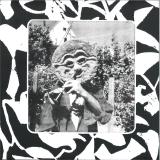
Various - Wizzz! French Psychorama Volume 5 (67-75)

The journey through French-speaking pop archives continues with this fifth volume, packed with fuzz, gimmicks, and dissent. Far from the charts, the selected tracks display a great creative freedom, often backed by corrosive humor. Welcome to the surprising, kaleidoscopic, and colorful world of the late sixties and early seventies, Wizzz!
Born in Montauban, Robert Pico stumbled into music by chance when he met René Vaneste, then artistic director at Pathé-Marconi. René brought him to Paris to record his first 45 RPM EP in 1964. A year later, Pierre Perret introduced him to Vogue, where he recorded his second album with Claude Nougaro’s orchestra. Sylvie Vartan then introduced him to RCA, where he recorded four singles, including the astonishing "Chien Fidèle," a track backed by a hair-rising fuzz guitar. Alongside his solo career, he also composed for other artists like Alain Delon (the song was recorded but remains unreleased), Magali Noël, Bourvil, and Georges Guétary. In the Paris of the sixties, he mingled with Mireille Darc, Elsa Martinelli, Marie Laforêt, France Gall, Françoise Hardy, Petula Clark, Régine, Dani, Serge Gainsbourg, Joe Dassin, Franck Fernandel, Charles Level, and Roland Vincent. Despite his efforts and winning a Grand Prix Sacem for his final record, Robert Pico didn’t achieve the expected success in show business and decided to leave Paris and return to the Southwest, where he devoted himself to writing. He is the author of 23 books (including Delon et Compagnie, Jean-Marc Savary Editions 2025, a memoir about his youth and his many encounters). Today, he is relieved to never have become a celebrity and devotes himself to his work with passion.
In 1969, the Franco-Italian movie Erotissimo was released, directed by Gérard Pirès (who later directed Taxi in 1998, written and produced by Luc Besson). This pop comedy features Annie Girardot, Jean Yanne, Francis Blanche, Serge Gainsbourg, Nicole Croisille, Jacques Martin, and Patrick Topaloff. The soundtrack was written by Michel Polnareff and William Sheller, with lyrics by Jean-Lou Dabadie. "La Femme Faux-cils," performed by Annie Girardot. It recounts the feelings of a rich CEO's wife who seeks to develop her sex appeal under the influence of advertisement and magazines. Groovy, sparkling and light, this track, with ITS lush arrangements humorously critiques consumer society and feminine beauty standards.
“Je suis l’Etat” (1967) is the flagship track of the first EP by singer-songwriter Spauv Georges, aka Georges Larriaga, better known as Jim Larriaga (1941-2022). Born into a family of bakers, the young man was initially planning to become a hairdresser when he discovered English-speaking music through Elvis Presley and the Beatles. After this revelation, he decided he would become a songwriter and gave himself five years to succeed. He recorded his first two EP’s independently for RCA under the pseudonym Spauv Georges; meaning “that poor George”, a nickname given to him by the mother of her friend Jean-Pierre Prévotat (future drummer of the Players, Triangle, or Johnny Hallyday). Portraying a depressed and eccentric young man, Spauv Georges created corrosive and amusing songs that didn’t reach a wide audience, despite a TV appearance with Jean-Christophe Averty.
Supported by his loyal friend and fellow songwriter Jean-Max Rivière, Georges Larriaga met the future singer Carlos in the early '70s, then Sylvie Vartan’s assistant. He wrote songs for Carlos, including the popular "La vie est belle," "Y’a des indiens partout," and "La cantine", which went onto become a huge hit in 1972. He also composed for Claude François (“Anne-Marie”, 1971), Charlotte Julian (“Fleur de province”, 1972), helped launch child singer Roméo (who sold 4 million records), and later wrote the hit "Pas besoin d’éducation sexuelle" (1975) for the young Julie Bataille. In 1971, Jim recorded an album for Disc'Az: “L’univers étrange et fou de Jim Larriaga”, which featured pop gems like “La maison de mon père”.
The story of the song "Zoé" began when Pierre Dorsay, artistic director at Vogue Records, asked Swiss singer and musician Pierre Alain to write a song for a new female singer. The inspiration came when he realized that Zoé (the artist's name) was also the name of France's first atomic battery, created in 1948, which consisted of uranium oxide immersed in heavy water! The lyrics reflect a bubbling energy that must be handled with caution, while the instrumentation echoes this atomic theme, notably with the use of a theremin.
Zoé’s career lasted only as long as a single 45 RPM, but it seems Christine Fontane was the vocalist behind this pseudonym, who is known for several EPs, a good "popcorn" album in 1964, and a handful of children’s singles in the '70s. Regardless, the photograph on the cover is of a different girl entirely.
Later, Pierre Alain continued his career, writing songs for himself, Marie Laforêt, Danièle Licari, Alice Dona, Arlette Zola (3rd place in Eurovision 1982), and achieving multiple gold and platinum records in Canada. Also an inventor with several patents, president of the Romande Academy, and head of the French Alliance in Geneva, he now composes atonal music, books, and poetry. Moreover, he is also the host of "Les Mardis de Pierre Alain" at "Le P'tit Music'Hohl" in Geneva.
Filled with oriental choruses and fuzz guitar, "Fou" is from Jacques Da Sylva's only EP released by Vogue in 1967. Despite the quality of this recording, all traces of this singer disappear after this first effort.
Valentin is a baroque pop singer born in Belgium. He is the songwriter and composer of most of the tracks on his three singles released in the late 60s in Canada. A legend says that he reincarnated himself as Jacky Valentin during the 1970s for a rock'n'roll revival career in Belgium, but his older brother sadly debunked this story. Valentin's first two singles were arranged by Claude Rogen, a Parisian session pianist who had come to Canada to promote the song “Mister A Gogo”, a cover of David Bowie’s “Laughing Gnome”, adapted by singer Delphine, his wife at the time. Far from his usual network, Claude Rogen arranged music for Polydor, including the arrangements for “Je suis un vagabond” in 1969, a jerk tune with string arrangements and a furious optimism.
Jacques Malia wrote, composed, and recorded his only 45 EP for Festival in 1966. “Histoire de gitan” is an incredible beat track with bohemian scat that tells the story of a gypsy musician who came to Paris to make it in the Music-Hall, to no avail. The hero of the song and its author probably shared a similar fate, as Jacques Malia faded into anonymity after this remarkable attempt.
Bernard Jamet recorded two EPs for Barclay in the late sixties and co-wrote several songs with Christine Pilzer, Pascal Danel, and prolific songwriters Michel Delancray and Mya Simile. The track “Raison Légale” (1968), his masterpiece, immerses the listener in a courtroom right when a murderer is being judged, with jerk rhythm and free arrangements. A unique, paranoid, judicial, and psychedelic oddity.
Jean-Pierre Lebrot-Millers started his career in show business in 1967 as a singer and songwriter for the Philips label. After three singles, he wrote several songs of a new kind with his friend Pierre Halioche, in the midst of the sexual liberation movement and the democratization of drugs. With provocative lyrics, “Les filles du hasard” and “Barbara au Chapeau Rose” were released on a Philips singles in 1968. The character of Barbara was inspired by a queen of Parisian nightlife during the psychedelic years: model Charlotte Martin, who dated Eric Clapton from 1965 to 1968, then Jimmy Page from 1970 to 1983. Jean-Claude Petit’s arrangements, with a table-filled intro, soul brass, and Hendrixian guitar, emphasize the flamboyance of a hedonistic and sexy character, whose dog is named Junkie because “Junkie est un nom exquis”! The track was recorded live in three takes with a full orchestra.
Upon its release, the record was censored by Europe 1 and RTL due to its references to drug use. Jean-Pierre Lebrot was then banned from the airwaves and later dismissed by his record label. He changed his artist name to Jean-Pierre Millers, while his companion Pierre Halioche became D. Dolby for a new dreamy composition, “Chilla”, which Jean-Pierre produced himself with arrangements by Jean Musy. Once again, the song was immediately censored everywhere. After this setback, he decided to stop singing and started taking on odd jobs to support his Swedish wife and their son until the day he met Jean-Pierre Martin, then production manager at Decca, who had worked with Manu Dibango. Martin offered Jean-Pierre Lebrot-Millers, then employed at Rank Xerox, the position of artistic director at Decca. He accepted and became, a year later, promotion director (radio, press, TV). He worked on Julio Iglesias’s first album for Decca, which became a massive hit and allowed him to meet Claude Carrère. The latter asked him to write new songs and find their performers, much like a “talent scout.” It’s through him that Jean-Pierre discovered Julie Pietri and Corinne Hermès. He composed “Ma Pompadour” for Ringo, Sheila’s husband, and took the microphone again for the syncope hit “Rendez-Vous” in 1982.
That same year, Jean-Pierre Lebrot-Millers tried to release a track for which he had heavily gone into debt: “Si la vie est un cadeau”. Having recorded it in London, he presented it to numerous professionals, all of whom refused to get involved. The same thing happened with Antenne 2 and the Sacem when he proposed the song as France’s entry for Eurovision. He then met Haïm Saban, who was producing cartoon soundtracks and had just launched the Goldorak theme song. Saban, having listened to the song, declared it had the potential to become a hit. He sent Jean-Pierre and Corinne Hermès to meet the CEO of the Luxembourg radio and television network. The latter received them, asked to hear a verse and chorus a cappella in his office, and immediately hired them to represent Luxembourg at Eurovision 1983. They reworked the arrangements and recorded a new version with Haïm Saban as co-producer. The song ended up winning Eurovision 1983, a great comeback for our hero. He continued producing and hung out with the band Nacash in Belgium when a couple came to introduce their daughter for an impromptu audition in a hotel room. The girl sang “Les démons de minuit” while dancing to a radio cassette. Impressed, he had her take singing lessons for a year and composed a song for her (for which he had the melody and title, but no lyrics). This required him to go on the hunt for a lyricist, who ended up being Guy Carlier. They recorded the song, which was initially a ballad, at Bernard Estardy’s CBE studio, and gave the singer a new name: Melody. They showed the song around their industry network without success. Later, Estardy called Jean-Pierre to suggest changing the rhythm and making it pop-rock. Orlando, Dalida’s brother, liked the result and decided to co-produce the track. “Y’a pas que les grands qui rêvent » became a classic hit. The song has since been covered by Juliette Armanet (as a ballad, like the original) and Valentina.

Born into an aristocratic Breton family, Hervé Mettais-Cartier worked as a DJ at Queen Kiss, a nightclub in Poitiers, where he formed the band Les Concentrés with Michel (an actor) and Christian (a radio technician). Together, they created a repertoire of whimsical songs (“Ma bique est morte”, “J’suis un salaud”, “Fils de dégénéré”...) that they performed on stage dressed in white (in homage to “concentrated milk”). They performed at Bliboquet and Olympia in 1968 for the 10th edition of the “Relais de la chanson Française” organized by L’Humanité-Dimanche and Nous les Garçons et les Filles, sponsored by Pepsi Cola. Winners in the author-composer category, alongside Danish singer Dorte, their visibility allowed them to record a 45, and appear on television in Jean-Christophe Averty’s show. The A-side of the disc features Bruno le ravageur, a casatchok dedicated to Bruno Caquatrix, the director of Olympia, nicknamed in the song “Coq Atroce” or “croque-actrices”. The B-side is dedicated to “Fils de dégénéré”, a quirky tribute to Hervé's aristocratic roots, mixing absurdity with sophisticated vocal harmonies.
After Les Concentrés, Hervé Mettais-Cartier formed the duo La Paire et sa Bêtise with his friend Olivier Robert. They performed in Parisian cabarets and toured with Pierre Vassiliu. In the late 1970s, Hervé began a solo career. He recorded two albums for the Motors label in 1978 and 1979, which did not achieve their anticipated success due to lack of promotion. In 1980, he met Bernadette, with whom he started a family and created a “Chansons à voir” (songs to see) show that he performed until his death at the end of 2024.

Publicité comes from the final EP by the Missiles (Ducretet Thomson, 1966), a disc that also includes “La (nouvelle) guerre de cent ans”, featured on Volume 4 of our Wizzz! series. Please refer to the booklet for the story of the band.

“He’s 1.82 meters tall, 28 years old, weighs 135 kg, is black and Belgian”: this is the description of singer Hegesippe on the back of his sole single (Decca, 1967). He appears on the album cover wearing a Greek toga, like a hippie gag – we are at the end of the year 1967. In “Le crédo d’Hegesippe”, this former bodyguard of Antoine and the Charlots plays the delightful card of the thick brute converted to Flower-Power and non-violence, with arrangements by Jean-Daniel Mercier, aka Paul Mille.
“Ethéro-disco” was released on a promotional record for clients of the Maréchal company (Liège, Belgium) for the New Year 1979. Over a funky rhythm, celebrity impersonations (Brigitte Bardot, Jacques Dutronc, Fernandel…) deliver an enigmatic text about pharmaceutical products like ether, bismuth, and aspartate. The track was composed by Dan Sarravah (responsible for Joanna's “Hold-up inusité” featured on Wizzz! Volume 3) and Tony Talado, who was also a singer (one 45 in 1967), songwriter (with over a dozen credits between 1964 and 1985 in various styles from surf music to disco), author (Devenez Végétarien, Dricot Editions, 1985), ad designer, and psychologist.

Décollez-les is on the A-side of Mamlouk's only single, a pseudonym for Marsel Hurten, who is known for his work on several EPs in the late sixties, as well as composing music for Hervé Vilard’s “Capri, c’est fini”, Claude Channes' “La Haine”, Annie Philippe’s “On m’a toujours dit”, and Nancy Holloway’s “Panne de Cœur”.
This strange song, with Afrobeat horns and absurd dialogues between a chef and his kitchen staff, is the result of a collaboration between Marsel Hurten and one of his neighbors, a photographer from Pavillon-sous-Bois (93), where the musician settled after returning from the Algerian War. A music video was shot to promote the record.
Marsel Hurten was born in Tourcoing (59) into a musical family. At a young age, he joined the brass band founded by his grandfather, playing the piston before studying trumpet at the conservatory, as well as teaching himself how to play the guitar. As an orchestra musician, he toured in France, Belgium, Germany, and England. He released a series of solo 45’s between 1965 and 1968 for the DMF and Az labels before stopping recording to focus on working for other artists (Gilles Olivier, Noëlle Cordier…).
“L’amour nu” (Vogue, 1971) is the work of the short-lived Belgian band Mozaïque. The track, written by singer Jacques Albin, closely resembles another of his compositions, “Carré Blanc”, which he recorded in 1969 for Disc’AZ.
Represented by the Lumi Son micro-label based in Marignane (Côte d'Azur), Jean-Marc Garrigues released two 45 RPMs in the late sixties, defending the French jerk sound. The song “Je dis Non” is a short, joyful ode to youth, pop music, and rebellion.
Songwriter and performer Jacques Penuel released three singles. The first one, “Astronef 328” (Fontana, 1969), features a dizzying series of chords punctuated by sound effects, a sci-fi story, and arrangements by Jean-Claude Vannier.

We would like to sincerely thank Pierre Alain, Moon Blaha, Marsel Hurten, Bastien Larriaga, Jean-Pierre Lebrot-Millers, Bernadette Mettais-Cartier, Robert Pico, Olivier Robert, Claude Rogen, Micky Segura.

нет на складе

Закажите сейчас, и мы закажем товар для вас у нашего поставщика.

23,11

Последний логин: 55 дн. назад
Lalo Schifrin - Insensatez LP

Lalo Schifrin

Insensatez LP

12inch709108X
Jazz Samba
30.01.2026
  • 4: Lalo's Bossa Nova
  • 10: Samba Do Perroquet
  • 1: The Wave
  • 2: Insensatez
  • 3: You And Me
  • 5: Silvia
  • 6: Murmurio
  • 7: An Evening In Sao Paulo
  • 8: Maria
  • 9: Rapaz De Bem
  • 11: Rio After Dark
  • 12: Time For Love
  • 13: (I'm Looking Over A) Four Leaf Clover
  • 14: Desafinado

Best known for his film and TV scores ( Dirty Harry, Enter The Dragon , Mission Impossible , The Eagle Has Landed , to name just a few) Lalo Schifrin (1932-2025) began as a jazz pianist who worked with some of the most important musicians of his day. The Insensatez session was cut during Schifrin's involvement in Dizzy Gillespie's band, which explains the participation of musicians from that aggregation. First issued as Piano, Strings & Bossa Nova in 1962 (produced by Creed Taylor), this album was reissued with one less title, as Insensatez on Verve in 1969. Featuring 12 Brazilianized themes and four Lalo Schifrin originals - 'The Wave', 'Rio After Dark', and 'Silvia' from Schifrin's movie score El Jefe, and 'Lalo's Bossa Nova' written for Quincy Jones' 1962 album Big Band Bossa Nova. Insensatez offers a rare insight to Schifrin's superb musicianship, not only as a composer, but also as a pianist


c 3 You And Me [voce E Eu]
[d] 4 Lalo's Bossa Nova [samba Para Dos]


[j] 10 Samba Do Perroquet [parrot Samba]


[c] 3 You And Me [voce E Eu]
[d] 4 Lalo's Bossa Nova [samba Para Dos]


[j] 10 Samba Do Perroquet [parrot Samba]

Сделать предзаказ30.01.2026

он должен быть опубликован на 30.01.2026

21,81

Последний логин: 2026 г. назад
Periode - Grapes of Nothingness LP

Waiting is the essence of travel. Patience is its own reward.

Two people. A Telecaster guitar with a few effect pedals. A drum machine. An audio interface is connected to a laptop. The ingredients are simple yet effective.

But any suggestion of four-track cassette machines and vintage bedsit productions is quickly dispelled by digital dubbiness and refined arrangements. A tail of reversed echos. The crystalline flourish of octave-pitched delays. Riddled hi-hats tickle and taunt. A bass drum asserts its space.

Winkler's guitar patterns have a fragmented, almost haphazard connotation. Searching in a shimmer of reverb. Until the beat, the framework, sets in to reveal structure. Intentionality. Reihse's programmed rhythms go just to the point of a groove, holding the moment of tension, knowingly delaying the gratification. Beats that have scratchy patina anda subtly playful edge; their crispness stands in contrast to the contemplative drift of the guitar. Is it a trance? Or a dance? Yes.

There are some apparent references here: a good portion of Les Disques du Crépuscule, some kraut-esque electronica, even a smidgen of Morricone / Spaghetti Western, blending into a kind of Musique Noir – yet these serve as a set of orientational coordinates, rather than quotations.

This is so far the most assured release by Periode, perhaps eschewing some of the naiveté that was wilfully cultivated in earlier output – there is no cheeky cover version this time. And no singing either. The nine pieces have the quality of a series, a variation on a mood, or a subset of moods. What emerges is an inviting swagger in the face of bleakness. There is a profound melancholy, but it is not the darker kind, and does not exclude humour.

First impressions may suggest that this is purely nocturnal music. Yet it equally evokes the harsh sunlight and baking summer heat. Or a rainy day. And transportation: the music suggests the motion of travel, even if that travel only happens within the mind. And waiting. Waiting while doing nothing much. Because that's all you can do. (Alexander Paulick)

Сделать предзаказ30.01.2026

он должен быть опубликован на 30.01.2026

21,81

Последний логин: 2026 г. назад
Paul Mac - Native EP

Paul Mac

Native EP

12inchA.R.T.LESS2169R
a.r.t.less
27.11.2025

2025 Repress
One for the heads as they say ... this deep Detroit Techno inspired 12" by UK Techno veteran Paul Mac was supposed to be released on Ben Sims' infamous Theory sub label Navite in 2003, but apart from 5 test pressings with the catalogue number NTV 04 it never made it to a proper release. When asking Paul about this 12" we were very happy that he agreed to release it on Mojuba sub label a.r.t.less. Some of his most soulful and deeper organic Techno EPs finally available and remastered by Redshape to current standards.
For illustration duties we are super grateful to have the one and only Kilian Eng on board for the next releases, showcasing some of his sketch work in a new context, some of you might remember his stunning artwork from the Sam McQueen album "Dreams In Sepia" for a.r.t.less. Enjoy! Limited edition in hand-pulled screen-printed cover.

нет на складе

Закажите сейчас, и мы закажем товар для вас у нашего поставщика.

11,72

Последний логин: 3 мес. назад
Count Jaakola - Kind Eyes LP
  • 1: Redcurrants
  • 2: Healing
  • 3: Placeholder
  • 4: Erica
  • 5: Number's Game
  • 6: Dead Inside
  • 7: Kind Eyes
  • 8: Boy Bingo

From the humdrum to the huge; Tiia explores heartbreak, disappointment, climate change, and dying house plants. The record plays with contrasts, light and shadow, fizz and gloom. Keys melt into darker textures before guitars and drums lift them back into sparkle. It's heaviest moment is the title track, written in an airport bathroom after Tiia's father passed, yet even here, hope breaks through in irresistible vocal harmonies and inventive melodies. "To me, 'Kind Eyes' is a feelings record," Tiia says. "The grief for my dad passing sits at the centre and expands towards the edges, but there's a range of other feelings too. Sometimes they're hard to pin down and navigate but the songs are my map, trying to chart where you are and where you're going. And listeners should remember that sometimes X does mark the spot."

Lead single 'Healing' hits like a mascara- smeared midnight drive through Lynch's America. First sketched with Prince in mind, it finally found its teeth on a long, lonely walk in north-east London: a rock song hiding in plain sight. Tiia says "As soon as I had a rough idea for the driving beat, I knew I had to get Sean Berry (fellow bandmate from the once mighty Comet Sands) involved on the guitar, and the hooks all fell into place". Dusted with plush keys, on 'Numbers Game', Tiia leans into classic rock drama - warmth turning suddenly cold, the floor falling away from underneath you. "The lesson here is don't spy on your exes, but when you do, be prepared to write a song about it. It was the first track I asked Paul Rains (of Allo Darlin' fame) to play guitar on and he instantly got where I was trying to go with it. Now he's my partner, I have no idea how he feels about the lyrics!" Tiia laughs. Having also worked with Tiia's previous cult all-girl indie band The Minor Characters, Seb Kellig lent his trademark dub- inspired production influences at the legendary sonic heaven of Sausage Studios, east London, which Tiia calls "My happy place".

Tiia will again be playing keys for Allo Darlin's four UK tour dates this October followed by tour dates as Count Jaakola. 'Kind Eyes' is set for release 21st November 2025 via Tip Top Recordings (Mandrake Handshake, Japanese Television, Pearl & The Oysters, Golden Toad).

Сделать предзаказ21.11.2025

он должен быть опубликован на 21.11.2025

23,32

Последний логин: 2026 г. назад
LUTHER DICKINSON - Dead Blues Volume 1

"While playing for Phil Lesh, I became friends with his son, Grahame, and we started booking shows called Dead Blues, a Phil and Friends offshoot that used the traditional blues and folk songs from the Dead catalog as a vehicle to bring new musicians from the blues and rock scene into Phil’s orbit. For example, we brought Phil together for the first time with the Blind Boys of Alabama, Charlie Musselwhite, G Love, JD Simo and many others new to Phil’s community.
Dead Blues was a great concept for live shows but I never considered making an album until I met singer Datrian Johnson, one of the most moving singers I’ve ever worked with. John Medeski brought Datrian into the community and we instantly became friends and collaborators and began recording the songs on Dead Blues Volume 1, reinterpreting the American classics.
The tracks feature North Mississippi Alumni Cody Dickinson and Rayfield “Ray Ray” Hollowman, as well as old friends from Memphis, Paul Taylor/New Memphis Colorways also on drums, bass and guitars and Steve Selvidge on Space Funk guitar. I found that writing the music on bass (then adding keys and guitar) led the music down a funky, jazzy avenue and Datrian worked his magic, reinterpreting the classic blues lyrics and melodies with his soulful vocals."

Сделать предзаказ17.10.2025

он должен быть опубликован на 17.10.2025

26,26

Последний логин: 2026 г. назад
JOHN MAUS - LATER THAN YOU THINK
  • Because We Built It
  • Disappears
  • Reconstruct Your Life
  • Shout
  • Came & Got
  • I Hate Antichrist
  • Theotokos
  • Let The Time Fly
  • Out Of Time
  • Tous Les Gens Qui Sont Ici Sont D'ici
  • Tonight
  • Let Me Through
  • Water
  • Pick Me Up
  • Losing Your Mind
  • Adorabo
также имеющийся в продаже

ICE BLUE EDIT[23,32 €]


"Later Than You Think" erscheint bei seinem neuen Label YOUNG und beschäftigt sich mit Themen wie Trauer, Gerechtigkeit, Wiedergeburt, Transformation und spirituellem Kampf. Es ist ein Werk von Bekenntnis und Konfrontation, für das sich Affekt, Intellekt und Geist auf der Suche nach dem Schönen, der Wahrheit und dem Realen zusammenschließen. Entstanden ist das Album in den Ozarks von Missouri. Die 16 Tracks vereinen Elemente und Gegensätze wie Üppigkeit und rohe Reduziertheit, das Heilige und das Profane, minimalistische Disziplin und maximale Schwelgerei, Kontrapunkt und simple Popharmonien. Im Kern unterstreicht das Album aber vor allem Maus" Hingabe an radikale Aufrichtigkeit und emotionale Wahrhaftigkeit in einem Zeitalter der Entfremdung - angetrieben von Konfrontation, Glauben und der tiefen Überzeugung, dass Sinn und Bedeutung noch immer etwas meinen. Maus, der einen Abschluss in Experimental Music und einen Doktortitel in Politikwissenschaft hat, wurde für die Art und Weise, auf die er akademische Sorgfalt und Lo-Fi Synthpop-Ästhetik verbindet, mal als "philosopher pop star" mal als "analog futurist" bezeichnet. Sein Wirken zieht sich dabei quer durch die Popkultur - von der Grime-Ikone Skepta, der seinen Track "I"m Only Human" sampelte bis zum Gen-Z-Rapper nettspend, von Filmemacher Josh Safdie ("Uncut Gems") bis zum Fotografen Wolfgang Tillmans. Sein Track "Cop Killer" ist im 2025er Film "Friendship" mit Tim Robinson und Paul Rudd enthalten. Mit exzessiven Liveshows und seinen bislang erschienenen Alben, auf denen Ironie, Trauer, Freude und Absurdität stets dicht beieinander liegen, hat Maus einen einzigartigen Weg beschritten und sich eine ergebene Fanbase erspielt.

Сделать предзаказ26.09.2025

он должен быть опубликован на 26.09.2025

23,32

Последний логин: 2026 г. назад
HISS GOLDEN MESSENGER - JUMP FOR JOY LP

It's spring of 2023 in the North Carolina Piedmont, and songwriter and singer M.C. Taylor - leader of the band Hiss Golden Messenger - is feeling alive. Joyful. Eternal, he might say. For the Grammy-nominated musician, whose albums have traced an internal path through adulthood, fatherhood, spirituality, and depression for well over a decade, this is something new. "The tunes on Jump for Joy were composed in free moments throughout 2022, a year during which Hiss was on the road more or less constantly," explains Taylor. "And perhaps because the post-pandemic energy out in the world felt so chaotic and uncertain, I found myself thinking a lot about the role that music has played in my life and how exactly I ended up in the rarefied position of leading a band and crew all over the globe through dingy graffiti-scrawled green rooms, venerated music halls, dust-blown roadside motels.

Sometimes playing in front of 5,000; sometimes 200. Sleeping sitting up. Laughing until my stomach hurts. Not being able to fall asleep at 3 a.m. in some anonymous bed because my mind is spinning with anxiety or depression or adrenaline, or because my ears are still ringing. Robbing Peter to pay Paul, then robbing Paul to pay Peter back. Over and over again. It's an outlaw life but one, I'm coming to realize, that makes me happy." The songs that make up Jump for Joy - the sharpest and most autobiographical that Taylor has written under the Hiss name - read as a sort of epistolary, postcards between the present-day songwriter and his alias Michael Crow, a teenaged dreamer very much like Taylor himself, who trips his way through the 14 tunes that make up the record. In this way, Jump for Joy is a meditation on a life lived with art, and the ways that our hopes and dreams and decisions bump up against_ and, with a little bit of luck, occasionally merge with real life. "Creating this character became the way that I could explore these vulnerable, tender moments that were so decisive in my life, even if I didn't know it at the time," explains Taylor.

Produced by Taylor and engineered by longtime Hiss compatriot Scott Hirsch over two weeks in the late fall of 2022 at the fabled Sonic Ranch studio in Tornillo, TX, just a short walk from the Mexican border, Jump for Joy dances with joyful, spontaneous energy that feels like a fresh chapter in the Hiss Golden Messenger oeuvre. Taylor is accompanied throughout the album by his crack live band: guitarist Chris Boerner, bassist Alex Bingham, keyboardist Sam Fribush, and drummer Nick Falk, a collection of musicians that have helped make Hiss Golden Messenger's live performances legendary affairs

нет на складе

Закажите сейчас, и мы закажем товар для вас у нашего поставщика.

24,33

Последний логин: 6 мес. назад
Sun Ra - Hidden Fire (2x12")

Sun Ra

Hidden Fire (2x12")

2x12inchSTRUTLP475
STRUT
19.09.2025
  • A1: Retrospect - This World Is Not My Home
  • A2: Hidden Fire Improvisation
  • B1: Hidden Fire Blues
  • B2: Hidden Fire Blues
  • C1: My Brothers The Wind And Son #9
  • C2: My Brothers The Wind And Son #9
  • D1: Hidden Fire I
  • D2: Hidden Fire Ii

Strut Records proudly presents the official reissue of Hidden Fire Volumes 1 & 2, the final album released by Sun Ra on his El Saturn label in 1988.
Captured live over three nights at the Knitting Factory in New York City, these performances mark the closing chapter of a 33-year odyssey of radical, independent music-making. Originally issued in tiny quantities with minimal packaging and cryptic artwork—often featuring hand-written labels or Ra’s own handmade designs—Hidden Fire was among the most elusive entries in Sun Ra’s vast discography.
Musically, these recordings stand apart from Ra’s other '80s compositions. Here, Hidden Fire plunges into darker, more dissonant territory. Ra performs exclusively on the Yamaha DX7 synthesiser, pushing its digital sound palette into alien dimensions. The Arkestra lineup is uniquely configured, featuring a rare and heavy string section with three violins, including the legendary Billy Bang, and the singular space vocalist Art Jenkins, whose eerie textures and vocalisations had not been heard so prominently since the early 1960s Choreographers Workshop sessions. The music is raw, unsettled, and often overwhelming.
“Retrospect / This World Is Not My Home” opens with a palindromic riff that evokes Ellington before unraveling into a stark sermon from Ra, warning of death’s dominion over Earth-bound minds. “Hidden Fire Improvisation” is a furious explosion of tone science, with Marshall Allen, Billy Bang, and John Gilmore delivering fire-breathing solos over relentless drumming and Ra’s cascading synth clusters. “Hidden Fire Blues” offers a warped, electrified version of Ra’s familiar blues feature, led by Bruce Edwards on guitar and Rollo Radford on electric bass, transformed through the haze of DX7 textures. “My Brothers The Wind And Sun #9” evokes the experimental weight of The Heliocentric Worlds with its crashing percussion, pulsing synth-vocal duets, and string- driven chaos that seems to spiral into oblivion.
Even the quieter moments—such as “Hidden Fire II,” a duet between Ra and Art Jenkins—feel thick with unease and shadowy beauty. These performances represent a Sun Ra less concerned with cosmic joy or outer-space swing, and more focused on conjuring portals to the unknown.
Remastered from original sources and presented with archival photos, new liner notes by Paul Griffiths, and restored artwork inspired by the original Saturn editions, this reissue offers a definitive window into the last creative surge of one of music’s most visionary figures across two Vinyl LP’s.

Сделать предзаказ19.09.2025

он должен быть опубликован на 19.09.2025

24,79

Последний логин: 2026 г. назад
Jim Croce - The Definitve Croce

”The Definitve Croce”, eine Sammlung von Jim Croces unvergleichlichem Studioalben, die 1972 und 1973
veröffentlicht wurden, ist wieder als limitierte 3LP-Box aus farbigem Vinyl oder als limitierte 3CD-Box
erhältlich. Alle drei Alben enthalten aktualisierte Mixe von Paul Hicks (George Harrison, John Lennon).
Disk 1 ist das Studioalbum von 1972 „You Don’t Mess Around with Jim“. Das Album erreichte Platz 1 und
ist mit GOLD ausgezeichnet, und enthält die Nummer-1-Single „Time In A Bottle“, sowie die Hits „You
Don’t Mess Around With Jim“ und „Operator (That’s Not The Way It Feels).“ Disk 2 ist das Studioalbum
von 1973 „Life and Times“. Das Album erreichte die Top 10 und ist mit GOLD ausgezeichnet, und enthält
die GOLD-Nummer-1-Single „Bad, Bad Leroy Brown“, sowie den Hit „One Less Set Of Footsteps“. Disk
3 ist das letzte Studioalbum von Jim Croce „I Got A Name“, das 1973 veröffentlicht wurde. Das Album
erreichte Platz 2 und ist mit GOLD ausgezeichnet, und enthält die Top 10 Hits „I’ll Have To Say I Love
You In A Song“ und „I Got A Name“ sowie den Top 40 Hit „Workin’ At The Car Wash Blues.“

Сделать предзаказ19.09.2025

он должен быть опубликован на 19.09.2025

65,97

Последний логин: 2026 г. назад
Spike Jones - Spike Jones In Stereo:A Spooktacular In Screming LP

BUY! HERE’S WHY! • The revolutionary 1959 stereo extravaganza returns on slime-green Vinyl and CD. • Features vocals by Paul Frees (Boris Badenov, The Haunted Mansion’s unseen Ghost Host), Thurl Ravenscroft (Tony The Tiger, “You’re A Mean One, Mr. Grinch”), George Rock (“All I Want For Christmas Is My Two Front Teeth”), and Loulie Jean Norman (singer on the theme from Star Trek). • Detailed liner notes from Joe Marchese (theseconddisc) feature new interviews with Spike’s children: multiple Grammy-winning engineer Leslie Ann Jones, Emmy-winning producer-director Spike Jones Jr., Linda Lee Jones, and Gina Jones.

Сделать предзаказ19.09.2025

он должен быть опубликован на 19.09.2025

23,11

Последний логин: 2026 г. назад
HISS GOLDEN MESSENGER - JUMP FOR JOY LP

Indie exclusive Peak Edition on Orange & Black Swirl Vinyl, in a gatefold cover + poster.


It's spring of 2023 in the North Carolina Piedmont, and songwriter and singer M.C. Taylor - leader of the band Hiss Golden Messenger - is feeling alive. Joyful. Eternal, he might say. For the Grammy-nominated musician, whose albums have traced an internal path through adulthood, fatherhood, spirituality, and depression for well over a decade, this is something new. "The tunes on Jump for Joy were composed in free moments throughout 2022, a year during which Hiss was on the road more or less constantly," explains Taylor. "And perhaps because the post-pandemic energy out in the world felt so chaotic and uncertain, I found myself thinking a lot about the role that music has played in my life and how exactly I ended up in the rarefied position of leading a band and crew all over the globe through dingy graffiti-scrawled green rooms, venerated music halls, dust-blown roadside motels.

Sometimes playing in front of 5,000; sometimes 200. Sleeping sitting up. Laughing until my stomach hurts. Not being able to fall asleep at 3 a.m. in some anonymous bed because my mind is spinning with anxiety or depression or adrenaline, or because my ears are still ringing. Robbing Peter to pay Paul, then robbing Paul to pay Peter back. Over and over again. It's an outlaw life but one, I'm coming to realize, that makes me happy." The songs that make up Jump for Joy - the sharpest and most autobiographical that Taylor has written under the Hiss name - read as a sort of epistolary, postcards between the present-day songwriter and his alias Michael Crow, a teenaged dreamer very much like Taylor himself, who trips his way through the 14 tunes that make up the record. In this way, Jump for Joy is a meditation on a life lived with art, and the ways that our hopes and dreams and decisions bump up against_ and, with a little bit of luck, occasionally merge with real life. "Creating this character became the way that I could explore these vulnerable, tender moments that were so decisive in my life, even if I didn't know it at the time," explains Taylor.

Produced by Taylor and engineered by longtime Hiss compatriot Scott Hirsch over two weeks in the late fall of 2022 at the fabled Sonic Ranch studio in Tornillo, TX, just a short walk from the Mexican border, Jump for Joy dances with joyful, spontaneous energy that feels like a fresh chapter in the Hiss Golden Messenger oeuvre. Taylor is accompanied throughout the album by his crack live band: guitarist Chris Boerner, bassist Alex Bingham, keyboardist Sam Fribush, and drummer Nick Falk, a collection of musicians that have helped make Hiss Golden Messenger's live performances legendary affairs

нет на складе

Закажите сейчас, и мы закажем товар для вас у нашего поставщика.

22,27

Последний логин: 6 мес. назад
Luisa - Luisa (featuring Azymuth) (7")

"This is brilliant" - Gilles Peterson

Azymuth bassist Alex Malheiros doesn't remember recording this single. It's understandable—the sessions happened over forty years ago, and at the time, Malheiros, Ivan Conti and José Roberto Bertrami were backing countless MPB artists throughout the genre's golden age. As one of Brazil’s most influential groups, Azymuth's story is well known. Vocalist Luisa, however, remains something of an enigma. She recorded this, her one and only single, in 1981 for Carlos Lemos' Piramide Label.

With Luisa’s powerful yet understated vocal, Bertrami's futuristic synths and José Carlos Bigorna's brow-raising tenor sax licks, the stirring early-80s pop ballad "Romantica" should have been a radio hit. On B-side, "Lenha na Fogueira", Azymuth lock into an exceptional samba-funk groove with legendary guitarist Paulinho Guitarra. The record also features backing vocals from the lesser-known vocal group Arco Iris.

Luisa will be reissued for the first time on 7" vinyl and digital on September 5th, 2025, via Far Out Recordings.

нет на складе

Закажите сейчас, и мы закажем товар для вас у нашего поставщика.

14,50

Последний логин: 5 мес. назад
VARIOUS - BELGIAN VAULTS VOL 5 LP
  • A1: Time For A Change (Paul’s Collection)
  • A2: Nobody Will Ever Help You (The Klan)
  • A3: 20Th Century (Berry Clan)
  • A4: See My Car (New Inspiration)
  • A5: I Don’t Need You (The Jumpers)
  • A6: Woman Don’t Love Me (The Swallows)
  • A7: When I’m Down (Ferre Grignard)
  • B1: Only Lonely Me (The Mec-Op Singers)
  • B2: Lonely Tears (R And The R’s)
  • B3: Mad Jane (François Nico)
  • B4: Tomorrow (The Midgets)
  • B5: Freedom (Les Altesses)
  • B6: Tus Es Mon Enfer (Mosaïque)
  • B7: Cocaine Blues (Patrick)
также имеющийся в продаже

Vol.4[23,95 €]

Vol.3[23,95 €]


Starman Records, the Belgian label renowned for re-releasing Belgian rock from the 60s, 70s, and 80s, has so far released five volumes in the highly anticipated and widely acclaimed Belgian Vaults Series, praised by both press and fans.

These unique albums focus entirely on the sixties and early seventies, compiling many rare and hard-to-find tracks—mainly originally released as singles on small, long-forgotten labels. Covering genres such as pop, beat, rock ’n’ roll, and psych, these gems are well worth rediscovering. Belgian Vaults are not just collector’s items; each album features restored and remastered sound quality and is carefully curated to appeal to all fans of sixties rock.

Сделать предзаказ12.09.2025

он должен быть опубликован на 12.09.2025

23,95

Последний логин: 2026 г. назад
Various - Dolores: Salsa & Guaracha From 70's French West Indies

In Guadeloupe, many people think that jazz and ka music are like a ring and a finger. To some extent, the same could be said about so called Latin music and the music played in the French West Indies.

Both aesthetics were born in the Caribbean and bear so many connections that they can easily be considered cousins. In constant dialogue, there are lots of examples of their fruitful alliance and have been for a while. The English country dance that used to be practiced in European lounges came to be called kadrille in Martinique and contradanza in Cuba. They both featured additional percussion instruments inherited from the transatlantic deportation. Drawing from shared feelings about the same traumatized identity – later to be creolized – it would be hard not to assume that they were meant to inspire each other. The golden age of the orchestras that graced the Pigalle nights during the interwar period further proves the point. As soon as the 1930s, Havana-born Don Barreto naturally mixed danzón and biguine music in a combo based at Melody's Bar. In the following decade, Félix Valvert, a conductor who was born and raised in Basse-Terre in Guadelupe, also worked wonders in Montparnasse with La Coupole, which was an orchestra made up of eclectic musicians. Afro- Caribbean performers of various origins were often hired on rhythm and brass sections in jazz bands, which used to enliven the typical French balls of the capital. In the 1930s and onwards, Rico’s Creole Band was one of them.


Martinican violinist-clarinettist Ernest Léardée, who would become the king of biguine music as well as the main figure of French Uncle Ben's TV commercials (a dark stigma of post-colonial stereotypes), had musicians from the whole Caribbean sphere play at his Bal Blomet – and they all enchanted "ces Zazous-là" (according the words of Léardée's biguine-calypso piece). In les Antilles (French for French West Indies), music history started to speed up in the 1950s, when trade expanded and radio stations grew bigger. The Guadelupean and Martiniquais youth tuned in their old galena radio sets to South American and Caribbean music. As for the women traders, les pacotilleuses, they bought and sold goods across different islands (the "passing of items through various hands" was thought to be most pleasurable) and brought back countless sounds in their luggage. Such was the case of Madame Balthazar, who once returned from Puerto Rico with the first 45rpm and 33rpm to ever enter Martinique.

Out of this adventure was created the famous Martinican label La Maison des Merengues, a music business she opened and undertook with her husband and which proved to be a major landmark. At the end of the 1950s, in Puerto Rico, Marius Cultier competed in the Piano International Contest playing a version of Monk's Round 'Midnight. He won the first prize and this distinction foreshadowed everything that was to come. Cultier, the heretic Monk of jazz, was quickly praised for writing superb melodies, always tinged with a twist that conferred a unique sound to his music. It didn't take long for the gifted self-taught musician to get to play with Los Cubanos, making a name for himself thanks to his impressive maestria on merengues.

The rest is history. Besides, in the late 1950s, Frantz Charles-Denis, born into the upper middle class in Saint-Pierre and better known by his first name Francisco, went back home after working at La Cabane Cubaine – a club located rue Fontaine where he had caught the Latin fever. Francisco's music was therefore heavily marked by his Cuban cousins' influence, which gave the combos he led a specific style and also led to renewal. Things were swinging hard in La Savane, located in the main square in Fort-de-France. He set up the Shango club close by and tested out the biguine lélé there, a new music formula spiced up with Latin rhythms. Soon afterwards, fate had him fly to Puerto Rico and Venezuela.

As for percussionist Henri Guédon (percussions were only a part of his many talents), he was born in Fort-de-France in May 22nd 1944, the day marking the celebration of the abolition of slavery. As an old man, he could remember that in " his father's Teppaz, a lot of hectic 6/8 music was constantly playing...". In the opening lines of his Lettre à Dizzy, a small illustrated collection of writings published by Del Arco, he highlighted the huge impact that cubop had on him as a teenage boy, around 1960. He eventually turned out to be the lider maximo in La Contesta, a big band steeped in Latin jazz. He was also the one who originated the word zouk to describe music which brought the sound of the New York barrio to Paris. It was the culmination of a journey that started in Sainte-Marie: "a mythical place for bélé, the equivalent of Cuban guaguancó". In the early 1960s, the tertiary economy developed to the detriment of agriculture. Yet rural life was where roots music emerged in Martinique and in Guadeloupe.

Record companies played a major part in the process of Latin versions sweeping across the islands – before reaching everywhere else. Producer Célini, boss of the great Aux Ondes label, and Marcel Mavounzy, both the head of Émeraude records - a firm which was founded in 1953 - as well as the brother of famous saxophonist Robert Mavounzy, were big names to bear in mind. Although there were many of them - all of whom are featured on this record - Henri Debs was definitely the major figure in the recording adventure. He proved to be so influential that he even got compared to Berry Gordy. In the mid 1950s, when he acquired his first Teppaz, he worked on his first compositions: a bolero and a chachacha. Then, he became the one man who made people discover Caribbean music, from calypso to merengue. He was among the first ones to rush out to San Juan, Puerto Rico, to buy records and distribute them through a store run by one of his brothers in Fort-de-France. He had members of the Fania All Star come and perform there, which he was madly proud about. He was also the first one to pay attention to Haitian music, such as compas direct and various other rhythms which would soon flood the market. As a result, many of the combos hitting his legendary studio would end up boosted by widespread "Afro-Latin" rhythms. However, he never denied his identity: gwo ka drums were given a major role, although they were instruments which had long been banned from the "official" music spheres. The present selection bears witness to such a creative swarming. Here are fourteen tracks of untimely yet unprecedented cross-fertilization: all types of music rooted in the Creole archipelago have found their way, whatsoever, to the tracklisting. Whether originating from the city or being more rural, they all go back to what Edouard Glissant, in an interview about the place of West Indian music in the Afro-American scope, called "the trace of singing, the one which got erased by slavery." "It is so in jazz, but also in reggae, calypso, biguine, salsa... This trace also manifests through the drums, whether Guadelupean, Dominican, Jamaican or Cuban... None of them being quite the same. They all point to the idea of a trace, seeking it out and connecting to each other through it. This is the hallmark of the African diaspora: its ability to create something new, in relation to itself, out of a trace. It may be the memory of a rhythm, the crafting of a drum, a means of expression which doesn't resort to an old language but to the modalities of it." The opening track features one of the emblematic orchestras of this aesthetic identity, criscrossing many music types from the archipelago. The 1974 Ray Barretto guajira – Ray Barretto was a major New York drummer influenced by Charlie Parker and Chano Pozzo – is magnificently performed by Malavoi, a legendary Fayolais group (i.e from Fort-de-France). Additionally, the compilation ends on a piece by Los Martiniqueños de Francisco. It symbolically closes the circle as it is a genuine potomitan of Martinique culture which also functions as a tireless campaigner for Afro-Caribbean music. Practicing the danmyé rounds (a kind of capoeiria) to the rhythm of the bèlè drum, it delivers a terrific Caterete, a kind of champeta of Afro- Colombian obedience which was originally composed by Colombian Fabián Ramón Veloz Fernández for the group Wgenda Kenya. The icing on the cake is Brazilian Marku Ribas, who found refuge in Martinique in the early 1970s, bringing his singing to the last trance-inducing track. These two "versions" convey the whole tone of a selection composed of rarities and classics of the tropicalized genre, swarming with tonic accents and convoluted rhythms. It is the sort of cocktail that the West Indians never failed to spice up with their own ingredients. For instance, the Los Caraïbes cover of Dónde, a famous Cuban theme composed by producer Ernesto Duarte Brito, has a typical violin and features renowned Martinique singer Joby Valente and his piquant voice.


The track used to be – or so we think – their only existing 45rpm. The meaningful Amor en chachachá by L'Ensemble Tropicana, a band which included Haitian musicians among whom was composer and leader Michel Desgrotte, also recalls how Latin music was pervasive in the tropics in the mid-1960s. They were the ones keeping people dancing at Le Cocoteraie in Guadelupe and La Bananeraie in Martinique. Around the same time, another "foreign" band, Congolese Freddy Mars N'Kounkou's Ryco Jazz, achieved some success on both islands by covering Latin jazz classics – such as their adaptation of Wachi Wara, a "soul sauce" by Dizzy Gillespie and Chano Pozo whose interweaving of strings and percussions can have anyone hit the dancefloor. How can you resist Dap Pinian indeed, a powerful guaguancó by Eugene Balthazar, performed by the Tropicana Orchestra and published by the Martinique-founded La Maison des Merengues? It also acts as a symbol of the maelstrom at work. Going by the name Paco et L'orchestre Cachunga, Roger Jaffory used to play guaguancó too: his Fania-inspired Oye mi consejo is one example of his style. Baila!!!!! Dancing was also one of the Kings' focus points. Oriza is a Puerto Rican bomba and a "classic" originally composed by Nuevayorquino trumpeter Ernie Agosto, which reserves major space for brasses, giving it a special sheen.

Emerging from the New York barrios crucible was also La Perfecta, a Martinique group originating from Trinidad, whose name directly references the totemic Eddie Palmieri figure as well as his own band, also called La Perfecta. Here they borrow Toumbadora from Colombian producer and composer Efraín Lancheros and interpret it by emphasizing percussions, which set fire to the track even more than the wind instruments. The same goes for Martinique's Super Jaguars, who use Tatalibaba – a composition by Cuban guitarist Florencio "Picolo" Santana which was made famous by Celia Cruz & La Sonora Matencera – as a pretext for sending their cadences into a frenzy. In a more typically salsa vein, the Super Combo, a famous Guadelupean orchestra from Pointe-Noire that was formed around the Desplan family and had Roger Plonquitte and Elie Bianay on board, adapt Serana, a theme by Roberto Angleró Pepín, a Puerto Rican composer, singer and musician also known for his song Soy Boricua. Here again, their vision comes close to surpassing the original. In the 1970s, L'Ensemble Abricot provided a handful of tracks of different syles, hence reaching the pinnacle of the art of achieving variety and giving pleasure. They played boleros, biguines, compas direct, guaguancó and even a good old boogaloo - the type they wanted to keep close to their hearts for ever, "pour toujours", as they sang along together in one of their songs. Léon Bertide's Martinican ensemble excelled at the boogaloo which had been composed by Puerto Rican saxophonist Hector Santos for the legendary El Gran Combo.


Three years later, in 1972, Henri Guédon, with the help of Paul Rosine on the vibraphone, tackled the Bilongo made famous by Eddie Palmieri. Such a classic!!!!! And so were the Aiglons, the band from Guadelupe: choosing to execute Pensando en tí, a composition by Dominican Aniceto Batista, on a cooler tempo than the original, they noticeably used a wonderfully (un)tuned keyboard in place of the accordion. On the high-value collectible single – the first one released by Les Aiglons under the Duli Disc label – there is a sticker classifying the track under the generic name "Afro". Now that is what we call a symbol. Jacques Denis

нет на складе

Закажите сейчас, и мы закажем товар для вас у нашего поставщика.

21,43

Последний логин: 8 дн. назад
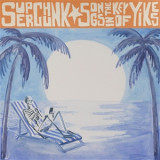
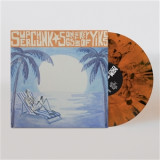
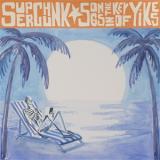
SUPERCHUNK - SONGS IN THE KEY OF YIKES
  • Is It Making You Feel Something
  • Bruised Lung
  • No Hope
  • Care Less
  • Climb The Walls
  • Cue
  • Everybody Dies
  • Stuck In A Dream
  • Train On Fire
  • Some Green
также имеющийся в продаже

ORANGE & BLACK SWIRL VINYL[23,49 €]


"Songs in the Key of Yikes" ist ein typisches Superchunk-Album: viszeral und zeitlos und verdammt eingängig - ein kathartischer Balsam für diese bedrückenden Zeiten. "Bruised Lung" - "No Hope" - "Care Less" - "Climb the Walls" - "Everybody Dies". Wenn man die Trackliste von "Songs in the Key of Yikes" überfliegt, fragt man sich unweigerlich: Sind Superchunk okay? In einer Welt, die wohl düsterer ist als die, die "Wild Loneliness" (2022) oder "What a Time to Be Alive" (2018) begrüßte, geht es uns da überhaupt noch gut? "Es war schon immer so, dass jeder etwas durchmacht, von dem man vielleicht nichts weiß", bemerkt Mac McCaughan. "Das gilt derzeit mehr denn je - aber es ist auch so, dass wir alle gemeinsam etwas durchmachen. Angesichts dessen, was nützt Kunst und wo findet man Glück? (Spoiler-Alarm: Ich weiß es nicht.)" Auf der Suche nach einer Antwort entfesselt "Songs in the Key of Yikes" einen Sound, der triumphierend und hell in der Dunkelheit ist, "Majesty Shredding" im Overdrive. Die Lead-Single ,Is It Making You Feel Something" gibt früh den Ton an, wobei die Band - McCaughan, Laura Ballance, Jim Wilbur und Laura King - aus dem Potenzial für Freude eine Hymne baut und in schlammverschmutzte Gewässer taucht und mit einer Perle wieder hochkommt. "No Hope" ist ähnlich widerstandsfähig, McCaughans Texte zeichnen ein niederschmetterndes Bild, bevor sie in den titelgebenden Refrain übergehen. Er wiederholt den Satz neun Mal, macht eine Pause und verwandelt die Stimmung vollständig, indem er den Gesang mit der Zeile "and here we are singing" unterbricht. Der Text ist scharf, gleichzeitig eine einfache Beobachtung und eine tiefgründige Aussage über das Sein, die erdrückenden Nächte und endlosen Tage, aber McCaughans Stimme findet eine gewisse Süße darin, durchgehalten zu haben und dies auch weiterhin zu tun. Paradoxerweise grenzt die Energie von "Songs in the Key of Yikes" an Euphorie und bricht manchmal sogar in sie aus, wie in "Stuck in a Dream", das wie eine oasenartige Fata Morgana zwischen "Everybody Dies" und "Train on Fire" auftaucht, ein voller Sprint, der die Menge begeistert und sich zum Pogen im Pit eignet. "Care Less" ist ein düsterer, komischer Spiegel dieser Energie, ein Garage-Jam, in dem ein scharfzüngiger McCaughan Zuflucht vor dem Sturm sucht, indem er so tut, als würde er nicht direkt vor seiner Tür toben. Diese Strategie funktioniert nicht. Natürlich funktioniert sie nicht. Es ist ein Song auf einem Superchunk-Album, und Superchunk-Alben sind Argumente gegen Engstirnigkeit und für Partys, die groß genug sind, um alle zu beherbergen. Dieses Album begrüßt nicht nur Laura King nach zwei Jahren als Tour-Schlagzeugerin in der Band, sondern enthält auch Beiträge von Rosali Middleman ("Bruised Lung" und "Everybody Dies"), Bella Quinlan und Holly Thomas von Quivers ("Cue") und der Tour-Bassistin Betsy Wright ("Care Less"). Das Album wurde von Paul Voran (The Menzingers, Hurray for the Riff Raff) und Eli Webb produziert und von Mike Montgomery (The Breeders, Protomartyr) gemischt. Gemeinsam kommen sie zu keinem Ergebnis darüber, was gute Kunst in Krisenzeiten ausmacht und schaffen gleichzeitig großartige Kunst.

Сделать предзаказ22.08.2025

он должен быть опубликован на 22.08.2025

22,27

Последний логин: 2026 г. назад
SUPERCHUNK - SONGS IN THE KEY OF YIKES

Superchunk

SONGS IN THE KEY OF YIKES

12inchMRGLPC1870
Merge
22.08.2025

"Songs in the Key of Yikes" ist ein typisches Superchunk-Album: viszeral und zeitlos und verdammt eingängig - ein kathartischer Balsam für diese bedrückenden Zeiten. "Bruised Lung" - "No Hope" - "Care Less" - "Climb the Walls" - "Everybody Dies". Wenn man die Trackliste von "Songs in the Key of Yikes" überfliegt, fragt man sich unweigerlich: Sind Superchunk okay? In einer Welt, die wohl düsterer ist als die, die "Wild Loneliness" (2022) oder "What a Time to Be Alive" (2018) begrüßte, geht es uns da überhaupt noch gut? "Es war schon immer so, dass jeder etwas durchmacht, von dem man vielleicht nichts weiß", bemerkt Mac McCaughan. "Das gilt derzeit mehr denn je - aber es ist auch so, dass wir alle gemeinsam etwas durchmachen. Angesichts dessen, was nützt Kunst und wo findet man Glück? (Spoiler-Alarm: Ich weiß es nicht.)" Auf der Suche nach einer Antwort entfesselt "Songs in the Key of Yikes" einen Sound, der triumphierend und hell in der Dunkelheit ist, "Majesty Shredding" im Overdrive. Die Lead-Single ,Is It Making You Feel Something" gibt früh den Ton an, wobei die Band - McCaughan, Laura Ballance, Jim Wilbur und Laura King - aus dem Potenzial für Freude eine Hymne baut und in schlammverschmutzte Gewässer taucht und mit einer Perle wieder hochkommt. "No Hope" ist ähnlich widerstandsfähig, McCaughans Texte zeichnen ein niederschmetterndes Bild, bevor sie in den titelgebenden Refrain übergehen. Er wiederholt den Satz neun Mal, macht eine Pause und verwandelt die Stimmung vollständig, indem er den Gesang mit der Zeile "and here we are singing" unterbricht. Der Text ist scharf, gleichzeitig eine einfache Beobachtung und eine tiefgründige Aussage über das Sein, die erdrückenden Nächte und endlosen Tage, aber McCaughans Stimme findet eine gewisse Süße darin, durchgehalten zu haben und dies auch weiterhin zu tun. Paradoxerweise grenzt die Energie von "Songs in the Key of Yikes" an Euphorie und bricht manchmal sogar in sie aus, wie in "Stuck in a Dream", das wie eine oasenartige Fata Morgana zwischen "Everybody Dies" und "Train on Fire" auftaucht, ein voller Sprint, der die Menge begeistert und sich zum Pogen im Pit eignet. "Care Less" ist ein düsterer, komischer Spiegel dieser Energie, ein Garage-Jam, in dem ein scharfzüngiger McCaughan Zuflucht vor dem Sturm sucht, indem er so tut, als würde er nicht direkt vor seiner Tür toben. Diese Strategie funktioniert nicht. Natürlich funktioniert sie nicht. Es ist ein Song auf einem Superchunk-Album, und Superchunk-Alben sind Argumente gegen Engstirnigkeit und für Partys, die groß genug sind, um alle zu beherbergen. Dieses Album begrüßt nicht nur Laura King nach zwei Jahren als Tour-Schlagzeugerin in der Band, sondern enthält auch Beiträge von Rosali Middleman ("Bruised Lung" und "Everybody Dies"), Bella Quinlan und Holly Thomas von Quivers ("Cue") und der Tour-Bassistin Betsy Wright ("Care Less"). Das Album wurde von Paul Voran (The Menzingers, Hurray for the Riff Raff) und Eli Webb produziert und von Mike Montgomery (The Breeders, Protomartyr) gemischt. Gemeinsam kommen sie zu keinem Ergebnis darüber, was gute Kunst in Krisenzeiten ausmacht und schaffen gleichzeitig großartige Kunst.

Сделать предзаказ22.08.2025

он должен быть опубликован на 22.08.2025

23,49

Последний логин: 2026 г. назад
SUPERCHUNK - SONGS IN THE KEY OF YIKES

SUPERCHUNK

SONGS IN THE KEY OF YIKES

12inchMRGLP870
Merge
22.08.2025

"Songs in the Key of Yikes" ist ein typisches Superchunk-Album: viszeral und zeitlos und verdammt eingängig - ein kathartischer Balsam für diese bedrückenden Zeiten. "Bruised Lung" - "No Hope" - "Care Less" - "Climb the Walls" - "Everybody Dies". Wenn man die Trackliste von "Songs in the Key of Yikes" überfliegt, fragt man sich unweigerlich: Sind Superchunk okay? In einer Welt, die wohl düsterer ist als die, die "Wild Loneliness" (2022) oder "What a Time to Be Alive" (2018) begrüßte, geht es uns da überhaupt noch gut? "Es war schon immer so, dass jeder etwas durchmacht, von dem man vielleicht nichts weiß", bemerkt Mac McCaughan. "Das gilt derzeit mehr denn je - aber es ist auch so, dass wir alle gemeinsam etwas durchmachen. Angesichts dessen, was nützt Kunst und wo findet man Glück? (Spoiler-Alarm: Ich weiß es nicht.)" Auf der Suche nach einer Antwort entfesselt "Songs in the Key of Yikes" einen Sound, der triumphierend und hell in der Dunkelheit ist, "Majesty Shredding" im Overdrive. Die Lead-Single ,Is It Making You Feel Something" gibt früh den Ton an, wobei die Band - McCaughan, Laura Ballance, Jim Wilbur und Laura King - aus dem Potenzial für Freude eine Hymne baut und in schlammverschmutzte Gewässer taucht und mit einer Perle wieder hochkommt. "No Hope" ist ähnlich widerstandsfähig, McCaughans Texte zeichnen ein niederschmetterndes Bild, bevor sie in den titelgebenden Refrain übergehen. Er wiederholt den Satz neun Mal, macht eine Pause und verwandelt die Stimmung vollständig, indem er den Gesang mit der Zeile "and here we are singing" unterbricht. Der Text ist scharf, gleichzeitig eine einfache Beobachtung und eine tiefgründige Aussage über das Sein, die erdrückenden Nächte und endlosen Tage, aber McCaughans Stimme findet eine gewisse Süße darin, durchgehalten zu haben und dies auch weiterhin zu tun. Paradoxerweise grenzt die Energie von "Songs in the Key of Yikes" an Euphorie und bricht manchmal sogar in sie aus, wie in "Stuck in a Dream", das wie eine oasenartige Fata Morgana zwischen "Everybody Dies" und "Train on Fire" auftaucht, ein voller Sprint, der die Menge begeistert und sich zum Pogen im Pit eignet. "Care Less" ist ein düsterer, komischer Spiegel dieser Energie, ein Garage-Jam, in dem ein scharfzüngiger McCaughan Zuflucht vor dem Sturm sucht, indem er so tut, als würde er nicht direkt vor seiner Tür toben. Diese Strategie funktioniert nicht. Natürlich funktioniert sie nicht. Es ist ein Song auf einem Superchunk-Album, und Superchunk-Alben sind Argumente gegen Engstirnigkeit und für Partys, die groß genug sind, um alle zu beherbergen. Dieses Album begrüßt nicht nur Laura King nach zwei Jahren als Tour-Schlagzeugerin in der Band, sondern enthält auch Beiträge von Rosali Middleman ("Bruised Lung" und "Everybody Dies"), Bella Quinlan und Holly Thomas von Quivers ("Cue") und der Tour-Bassistin Betsy Wright ("Care Less"). Das Album wurde von Paul Voran (The Menzingers, Hurray for the Riff Raff) und Eli Webb produziert und von Mike Montgomery (The Breeders, Protomartyr) gemischt. Gemeinsam kommen sie zu keinem Ergebnis darüber, was gute Kunst in Krisenzeiten ausmacht und schaffen gleichzeitig großartige Kunst.

Сделать предзаказ22.08.2025

он должен быть опубликован на 22.08.2025

22,27

Последний логин: 2026 г. назад
VICE SQUAD - PUNK ROCKERS: THE BEST OF VICE SQUAD VOL. 1
  • If I Knew What I Know Now
  • Out Of Reach
  • Get A Life
  • Resurrection
  • Allergy
  • Sniffing Glue
  • Ordinary Girl
  • The World Is Wrong
  • Citizen
  • Scarred For Life
  • Voice Of The People
  • Punk Police
также имеющийся в продаже

LTD EDITION[25,42 €]


Best of' albums are invariably repackaged collections of old recordings, so Vice Squad's `Punk Rockers' is a breath of fresh air The songs have been lovingly recorded and remastered, keeping all the original fire and adding decades of experience gained from punishing tours and continuous songwriting Beki is the original architect of the songs and the Vice Squad name, and she is the sole surviving member of the original lineup to have continued as a full-time musician Vice Squad are 100% DIY and record everything in their home studio with guitarist/riffmaster Paul Rooney engineering and mixing. There is nothing sloppy here; the whole album is concise and intelligent with lightning-speed diction, passion, and intent. The glorious `If I Knew What I Know Now' and `The World Is Wrong' are examples of Vice Squad's ability to write instantly catchy, witty songs, and the more gut-wrenching material from their last album, `Battle of Britain', showcases some enormous riffs and a voice that is a million decibels from Beki's untried teen vocals. The album opens with the deliciously effervescent `If I Knew What I Know Now', followed by the sparkling old-school tongue-twister `Out of Reach'. Next up is the visceral `Get A Life', an angry anti-suicide note to the desperate, originally the title track from their 1998 comeback album. This is followed by a shimmering version of Vice Squad's old-school classic `Resurrection'. While the treatment of the old songs remains true to the original teenage renditions, the upgraded versions pack more of a punch with detuned guitars and growling bass. The tribal tom-toms of `Allergy' underpin just over two minutes of punk protest about the delights of pollution and asthma. Then comes the sublime `Sniffing Glue', a near-perfect punk love song that would be a huge hit if not for its subject matter. `Ordinary Girl' is punk-pop perfection brimming with hook lines and harmonies, warmly mocking the life that could have been chosen instead of the grindstone at the sharp end of the music industry. `The World Is Wrong' is anthemic, joyous, and wonderfully contrary, and one would expect nothing less from a band that has soldiered on and grown through the decades. It's always great when bands lead by example. In these increasingly tough times where our survival is threatened by the gargantuan greed of a few individuals, it's important to continuously stick two fingers up to the grabbers and spoilers. 'The World Is Wrong' does just that in an impassioned, melodic, and optimistic style. 'Hold your head up, stand your ground, and don't let the bastards grind you down.' Then we roar into the final single Beki wrote with original and now sadly deceased guitarist Dave Bateman, `Citizen', and continue with another teenage opus, the quite brutal `Scarred For Life'. `Voice of the People' is a bulldozer of a song, all swagger and ballsy riffs, and the chorus, `Freedom of speech is against the law; now we're all criminals,' snarls its derision at red-handed red tape. `Punk Police' sneers over a catchy-as-COVID guitar riff, and the lyrics, `Regulation cut, you must measure up, down on the street, PR companies, monied families, running the scene,' call out the hierarchies that now permeate Punk. Baritone guitars add extra darkness to one of the first-ever animal rights songs, `Humane', and I'm struck by how relevant the older songs are. Chocks away, and the awesome 'Spitfire' takes flight like Motörhead on extra amphetamines. Merlin engines fade into `Born In A War', the second in the triumvirate of conflict-themed songs, an absolute stonker with huge muscular riffs and lyrics that roar pure outrage. Then comes the ominous Last Rockers, with all the angst of the original plus added depth and resonance. Beki: ' "Last Rockers" is a typically depressive adolescent song about nuclear war and being too young to die but too late to live. I believed Punks were the `Last Rockers', the final youth cult before the Apocalypse. I was obsessed with punk, and all I wanted to do was sing in a band and be part of the movement, so I would often romanticise the idea of punk in my lyrics.'

Сделать предзаказ18.07.2025

он должен быть опубликован на 18.07.2025

20,55

Последний логин: 2026 г. назад
VICE SQUAD - PUNK ROCKERS: THE BEST OF VICE SQUAD VOL. 1

Best of' albums are invariably repackaged collections of old recordings, so Vice Squad's `Punk Rockers' is a breath of fresh air The songs have been lovingly recorded and remastered, keeping all the original fire and adding decades of experience gained from punishing tours and continuous songwriting Beki is the original architect of the songs and the Vice Squad name, and she is the sole surviving member of the original lineup to have continued as a full-time musician Vice Squad are 100% DIY and record everything in their home studio with guitarist/riffmaster Paul Rooney engineering and mixing. There is nothing sloppy here; the whole album is concise and intelligent with lightning-speed diction, passion, and intent. The glorious `If I Knew What I Know Now' and `The World Is Wrong' are examples of Vice Squad's ability to write instantly catchy, witty songs, and the more gut-wrenching material from their last album, `Battle of Britain', showcases some enormous riffs and a voice that is a million decibels from Beki's untried teen vocals. The album opens with the deliciously effervescent `If I Knew What I Know Now', followed by the sparkling old-school tongue-twister `Out of Reach'. Next up is the visceral `Get A Life', an angry anti-suicide note to the desperate, originally the title track from their 1998 comeback album. This is followed by a shimmering version of Vice Squad's old-school classic `Resurrection'. While the treatment of the old songs remains true to the original teenage renditions, the upgraded versions pack more of a punch with detuned guitars and growling bass. The tribal tom-toms of `Allergy' underpin just over two minutes of punk protest about the delights of pollution and asthma. Then comes the sublime `Sniffing Glue', a near-perfect punk love song that would be a huge hit if not for its subject matter. `Ordinary Girl' is punk-pop perfection brimming with hook lines and harmonies, warmly mocking the life that could have been chosen instead of the grindstone at the sharp end of the music industry. `The World Is Wrong' is anthemic, joyous, and wonderfully contrary, and one would expect nothing less from a band that has soldiered on and grown through the decades. It's always great when bands lead by example. In these increasingly tough times where our survival is threatened by the gargantuan greed of a few individuals, it's important to continuously stick two fingers up to the grabbers and spoilers. 'The World Is Wrong' does just that in an impassioned, melodic, and optimistic style. 'Hold your head up, stand your ground, and don't let the bastards grind you down.' Then we roar into the final single Beki wrote with original and now sadly deceased guitarist Dave Bateman, `Citizen', and continue with another teenage opus, the quite brutal `Scarred For Life'. `Voice of the People' is a bulldozer of a song, all swagger and ballsy riffs, and the chorus, `Freedom of speech is against the law; now we're all criminals,' snarls its derision at red-handed red tape. `Punk Police' sneers over a catchy-as-COVID guitar riff, and the lyrics, `Regulation cut, you must measure up, down on the street, PR companies, monied families, running the scene,' call out the hierarchies that now permeate Punk. Baritone guitars add extra darkness to one of the first-ever animal rights songs, `Humane', and I'm struck by how relevant the older songs are. Chocks away, and the awesome 'Spitfire' takes flight like Motörhead on extra amphetamines. Merlin engines fade into `Born In A War', the second in the triumvirate of conflict-themed songs, an absolute stonker with huge muscular riffs and lyrics that roar pure outrage. Then comes the ominous Last Rockers, with all the angst of the original plus added depth and resonance. Beki: ' "Last Rockers" is a typically depressive adolescent song about nuclear war and being too young to die but too late to live. I believed Punks were the `Last Rockers', the final youth cult before the Apocalypse. I was obsessed with punk, and all I wanted to do was sing in a band and be part of the movement, so I would often romanticise the idea of punk in my lyrics.'

Сделать предзаказ18.07.2025

он должен быть опубликован на 18.07.2025

25,42

Последний логин: 2026 г. назад
Vice Squad - Punk Rockers : The Best of Vice Squad Volume 1
  • 1: If I Knew What I Know Now
  • 2: Out Of Reach
  • 3: Get A Life
  • 4: Resurrection
  • 5: Allergy
  • 6: Sniffing Glue
  • 7: Ordinary Girl
  • 8: The World Is Wrong
  • 9: Citizen
  • 10: Scarred For Life
  • 11: Voice Of The People
  • 12: Punk Police
  • 13: Humane
  • 14: Spitfire
  • 15: Born In A War
  • 16: Last Rockers

Vice Squad are 100% DIY and record everything in their home studio with guitarist/riffmaster Paul Rooney engineering and mixing. There is nothing sloppy here; the whole album is concise and intelligent with lightning-speed diction, passion, and intent. The glorious ‘If I Knew What I Know Now’ and ‘The World Is Wrong’ are examples of Vice Squad’s ability to write instantly catchy, witty songs, and the more gut-wrenching material from their last album, ‘Battle of Britain’, showcases some enormous riffs and a voice that is a million decibels from Beki's untried teen vocals. The album opens with the deliciously effervescent ‘If I Knew What I Know Now’, followed by the sparkling old-school tongue-twister ‘Out of Reach’. Next up is the visceral ‘Get A Life’, an angry anti-suicide note to the desperate, originally the title track from their 1998 comeback album. This is followed by a shimmering version of Vice Squad's old-school classic ‘Resurrection’. While the treatment of the old songs remains true to the original teenage renditions, the upgraded versions pack more of a punch with detuned guitars and growling bass. The tribal tom-toms of ‘Allergy’ underpin just over two minutes of punk protest about the delights of pollution and asthma. Then comes the sublime ‘Sniffing Glue’, a near-perfect punk love song that would be a huge hit if not for its subject matter. ‘Ordinary Girl’ is punk-pop perfection brimming with hook lines and harmonies, warmly mocking the life that could have been chosen instead of the grindstone at the sharp end of the music industry. ‘The World Is Wrong’ is anthemic, joyous, and wonderfully contrary, and one would expect nothing less from a band that has soldiered on and grown through the decades. It’s always great when bands lead by example. In these increasingly tough times where our survival is threatened by the gargantuan greed of a few individuals, it's important to continuously stick two fingers up to the grabbers and spoilers. 'The World Is Wrong' does just that in an impassioned, melodic, and optimistic style. 'Hold your head up, stand your ground, and don't let the bastards grind you down.' Then we roar into the final single Beki wrote with original and now sadly deceased guitarist Dave Bateman, ‘Citizen’, and continue with another teenage opus, the quite brutal ‘Scarred For Life’. ‘Voice of the People’ is a bulldozer of a song, all swagger and ballsy riffs, and the chorus, ‘Freedom of speech is against the law; now we’re all criminals,’ snarls its derision at red-handed red tape. ‘Punk Police’ sneers over a catchy-as-COVID guitar riff, and the lyrics, ‘Regulation cut, you must measure up, down on the street, PR companies, monied families, running the scene,’ call out the hierarchies that now permeate Punk. Baritone guitars add extra darkness to one of the first-ever animal rights songs, ‘Humane’, and I’m struck by how relevant the older songs are. Chocks away, and the awesome ’Spitfire’ takes flight like Motörhead on extra amphetamines. Merlin engines fade into ‘Born In A War’, the second in the triumvirate of conflict-themed songs, an absolute stonker with huge muscular riffs and lyrics that roar pure outrage. Then comes the ominous Last Rockers, with all the angst of the original plus added depth and resonance. Beki: ' "Last Rockers" is a typically depressive adolescent song about nuclear war and being too young to die but too late to live. I believed Punks were the ‘Last Rockers’, the final youth cult before the Apocalypse. I was obsessed with punk, and all I wanted to do was sing in a band and be part of the movement, so I would often romanticise the idea of punk in my lyrics.' The four bonus CD tracks kick off with ‘Coward’, another teen Bateman/Bond composition. ‘No You Don’t’ is just over two minutes of vocal acrobatics over a Dexedrine-driven Devo-esque chord sequence, and the frantically brilliant ‘I Dare To Breathe’ from ‘Battle of Britain’ continues the aural assault. Then the final sombre entreaty of ‘You Can’t Buy Back The Dead’ warns us that ‘Enough’s never enough; absolute power will corrupt; the war machine still rumbles on’ before fading into the future.

Сделать предзаказ18.07.2025

он должен быть опубликован на 18.07.2025

27,27

Последний логин: 2026 г. назад
Stimulator Jones - Cool Green Trees (1999-2005) (LP)

"Chasing the funky symphonies that filled my head and my dreams..."

December 25th, 2023 - an Instagram post. Stimulator Jones shared half a dozen FIRE tracks from his beat tape archive. We were immediately drawn to the rough hewn boom bap.

"I'd release that", Rob commented.

Hours of material was shared and the result is this: Cool Green Trees (1999-2005). A collection of beats and loops Stimulator Jones created between the ages of 14-20 at home in his basement, bedroom and computer room in Roanoke, Virginia.

You will not believe the profound soulful genius contained within these naive schoolboy melodies.

December 25th, 1998 - 25 years ago to the day and his much-coveted Yamaha SU10 sampler was finally bestowed upon young Stimmy AKA Sam Lunsford: "I immediately hooked up a CD Walkman to the input jack and looped the beginning two bars of Grover Washington Jr.'s "Mercy Mercy Me". I don't know what exactly was so thrilling about hearing two measures of music repeating over and over but it was so infectious and hypnotizing and enthralling to me. I'll never forget that ecstatic rush of making my first loop - an uncontrollable, gleeful smile plastered all over my face." When you hear the pocket breakbeat symphonies featured here on Cool Green Trees, you'll feel the same sense of frisson.

In the wake of his Stones Throw breakthrough - Exotic Worlds & Master Treasures - Stimulator Jones was pegged by many as a 90s throwback artist. However, he literally IS a 90s artist. He's been recording music most of his life and he's now 40. He created the bulk of Cool Green Trees as a teenager. Everything before 2004 was recorded when Sam was still in school. He was in 8th grade when he made the 1999 tracks - he didn't even have his learner's permit. This album is a snapshot of a young man in a simpler time. Things were still mysterious back then and he was flying blind, relying on his ears and having to figure things out for himself: "I had no road map for becoming a beatmaker. I have been collecting music since I was a kid, I am a lifelong digger and seeker of cool and interesting sounds. I was there in the golden age of Hip Hop, and while I may have been a suburban white kid in Roanoke, Virginia, I was tuned in and I bought so many classic albums when they came out. I was attracted to Hip Hop because of the musical and poetic quality. I was hypnotized by the rhythms, partially because I was a drummer. I didn't brag about collecting my breakbeat records or making beats - it was something I did in isolation. It wasn't something I generally wanted to bring attention to and it didn't really score me any cool points. I certainly wasn't flexing on social media about it."

Hell, he can do that now!

Opener "Pharoah Jones" was inspired by Yesterday's New Quintet and Madlib's ability to capture that classic 70s sound whilst playing all the instruments. Sam created this one stoned afternoon by laying down a 2 bar loop and a shaker loop on his Yamaha SU700 sampler. He hung a microphone from the ceiling and played his Yamaha Stage Custom drum kit over the top before adding ender Rhodes and playing his dad's Selmer tenor sax through an Electro Harmonix Memory Man echo pedal. Yes! Up next, "Ghost Gospel" utilises a dope loop from a gospel record and adds some soul-funk drums overtop, whilst working that filter knob. Says Sam: "The loop reminded me of something Ghostface would rap over. The sample was in 3/4 waltz time but I flipped it for a 4/4 groove, a technique I picked up from RZA. "Ill Feeling" uses sped-up pieces from a dusty old funk record and putting them over a classic NOLA drum loop; gain chopping up a slow, bluesy 3/4 time signature and bending it to a 4/4 groove. Classy shit. "Capital Punishment" features drums tapped in live, inspired by MF Doom's Special Herbs series. "Do Not Adjust" consists loops found on a compilation of 70s French music at Happy's Flea Market, a classic Roanoke digging spot.

The sublime, evocative title track, "Cool Green Trees" was created when Sam was still living at home. He dumped samples off his SU10 into the family desktop and arranged them in a demo version of Pro Tools: "This track was sort of my ode to the DJ Shadow style of sample based production. Super spacey, slow, and moody. The heavily filtered drums were inspired by Alec Empire's 'Low on Ice' album. I later added some scratches and sounds from a Spider Man storybook record." "Chill Scratch" snags the final bit of a bossanova record and pairs it with a drum loop before adding experimental scratching run through an Electro Harmonix Memory Man echo pedal. "Poisonous Fumes" was made using a sampler, mixer and a turntable; a kind of mixtape beat collage with added scratches and sounds from various records. Using dialogue from superhero records was a nod to Madlib. "Welcome Aboard The Starship" is dark, downtempo trip-hop with a spooky bent. Sam paired a slow, hard drum loop with a guitar sample grabbed off a psychedelic rock record. To finish, he added various backwards sounds and weird atmospheric effects and a little scratching. Swoon.

Side B opens with "Keep On Runnin", made on a borrowed Roland SP202 sampler. Having always loved the sound of the Lo-Fi filter on those machines, reminiscent of the Emu SP1200, Sam always imagined Del or another of the Hieroglyphics crew rapping over this beat. You can certainly hear why. "Sounds Impossible" sees Sam experimenting with layering multiple kick samples at different volumes to create patterns similar to those heard by Showbiz and Lord Finesse during their God-level 1995 period. "Painted Faces" was made by chopping up a REDACTED record which he had gotten from Happy's Flea Market and paired it with a REDACTED drum loop. By the time Sam recorded "The Knew Style", he had acquired a shitty old 1960s portable turntable off eBay. It didn't function properly when he bought it but his brother opened it up, cleaned it out and got it working: "I remember he told me that there was a bunch of sand inside of it when he opened it up, as if its previous owner had taken it to the beach. I would take that turntable on my Happy's Flea Market digs so I could preview records...that's how I found this loop."

"Chicken Wing Blues Sauce" loops up a classic blues joint and pairs it with some REDACTED drums. A bit of filtering and arranging et voilà! "Kool Breeze", from 1999, is one of Sam's oldest surviving beats, as is "Sexx Bullets". The Roots sampled the same record, leaving Sam frustrated yet vindicated. "Soul Child" was an early SU10 creation, looping a dusty old Soul Children 45 and pairing it with 70s rock drum loops to great effect. "Take Off Runnin" was another loop found digging with a portable turntable. Paired with some boom bap drums it makes for a hypnotic head-nod groove. "Centurian" was intended to be a little beat interlude a la Pete Rock. The sample is from a sun-dappled soft-psych record and it's paired with a Robin Trower drum loop that just happens to fit perfectly. Sometimes you slap things together kind of haphazardly and magic happens. "Bozack" was the first beat Sam made using Pro Tools, his first foray into using chopped sounds instead of loops, an exciting new world. "Church" is beat interlude using a Phil Upchurch loop with the "Long Red" drums - a favourite break of Dilla et al. Sam was really on a tear in late 2004, probably because he was unemployed and phoneless and able to just make beats all day. He made "Splash One" on a borrowed Yamaha SU700 and again was experimenting with tapping the drums in live with his fingers, instead of using a loop or sequenced pattern. Channeling 9th Wonder, Sam used a water splash sound effect from a Batman record as a percussive element, hence the title (also a 13th Floor Elevators reference). The main loop is a backwards portion of one of his favourite Roy Ayers songs.

"Hank" is another fun little beat interlude thing, created on a borrowed Roland SP202 sampler with the fantastic Lo-Fi effect that resembled the Emu SP1200 at a fraction of the price. "73 goatee", from 99, is another of his oldest surviving beats, created in his bedroom with his Yamaha SU10 and his brother's Vestax MR-300 4-track recorder: "This one will always feel special. I can remember having a feeling all the way back then on the night that I created it that this was a solid beat with a catchy loop. There was something in the Fender Rhodes melody that resonated with me emotionally, and I had never heard a producer sample that portion before. I felt like I had found my own unique sound, my own unique loop. It came from an Ahmad Jamal '73. I actually even recorded myself rapping and scratching over this beat way back then, I still have that version in all its imperfect sloppy glory."

Sam explains just how much these tracks mean to him: "They all have immense historical and sentimental value and I'm proud of them. These beats come from an innocent, simple time when I was just figuring out how to craft these sounds. They're something very personal to me. They are the initial part of a journey that I really was taking *alone*. There was no YouTube. I couldn't Google shit. I didn't even know any other beatmakers, producers or DJs in my town that could teach me anything. It was always just me, alone, in a room with some equipment - chasing the funky symphonies that filled my head and my dreams. What I was doing wasn't cool. Most of my peers thought I was a weirdo and couldn't care less. Creating these sounds was an anti-social endeavour. In a sense, I felt like it was me against the world, and all I had to instruct and assist me were the recordings produced by my heroes - RZA, DJ Premier, Erick Sermon, Beatminerz, Showbiz, Diamond D, Beatnuts, Prince Paul, The Bomb Squad, Pete Rock, Q-Tip, E-Swift, Mista Lawnge, DJ Shadow, Cut Chemist, Peanut Butter Wolf, El-P and so many more...I dedicate this collection to them, and to my older brother Joe who has always been a musical and technical guiding light for me.

This was a time before every kid was a self-described producer and beatmaker, before everyone had a DAW, before Kanye and "chipmunk soul", before Red Bull beat battles, before there was any social media beyond chat rooms and AOL Instant Messenger, before Soundcloud, before SP-404 mania, before lo-fi beats to study to, before Splice, before targeted ads for MIDI chord packs, etc. In 99 when I told people that I had a sampler and made beats I was mostly met with bewildered confusion and indifference. Kids and adults alike would wonder why I got this weird machine for Christmas instead of something worthwhile like a Playstation or a mountain bike or even a guitar for that matter because at least that could be used to make "real music". Back then, sampling was still not widely respected as an art form - it was seen as lazy, talentless and unoriginal at best and outright criminal theft at worst. I had gotten respect for playing drums and guitar and things of that nature but this was a step in the wrong direction in the eyes of many."

The cover photo is a picture of Sam standing on his back porch in the latter part of 1998, just before he got his first sampler. He was 13 years old, in 8th grade. His dad took the picture with his 35mm film camera: "I actually wanted to be pointing my dad's .22 pistol at the camera lens but he wouldn't let me. He gave me an old walking cane to use instead. The Tommy Hilfiger puffer jacket came from the lost and found at William Fleming High School where my mom worked as a secretary. I was thrilled when she brought it home because we never spent money on expensive name brand clothing like that - we were for the most part strictly a sale rack, bargain bin, thrift store, yard sale, flea market kind of family when it came to clothes. My watch is some cheap off-brand fake gold department store watch." Mastering for this vinyl edition was overseen by Be With regular Simon Francis and it was cut by the esteemed Cicely Balston at Abbey Road Studios to be pressed in the Netherlands by Record Industry.

нет на складе

Закажите сейчас, и мы закажем товар для вас у нашего поставщика.

25,63

Последний логин: 9 мес. назад
WYTCH HAZEL - II: SOJOURN

Wytch Hazel

II: SOJOURN

12inchOMEN17
Bad Omen
27.06.2025
  • The Devil Is Here
  • Save My Life
  • Still We Fight
  • Wait On The Wind
  • See My Demons
  • Barrow Hill
  • Chorale/Slaves To Righteousness
  • Victory
  • Angel Take Me

Wytch Hazel's stellar 2016 debut Prelude confirmed these Lancastrian apprentice wizards to be Britain's most promising new hard rock band. Two years on, that promise comes to abundant fruition on II: Sojourn, an album that moves Wytch Hazel on from the innocence and exuberance of the debut to a darker, more profound and complex place, carefully wrought into optimum shape by the band's singer, guitarist, songwriter and mastermind Colin Hendra. "I'm really into the idea of an album," notes Colin. "I don't do mix-tapes, I don't listen to singles, I'm interested in albums. I want to make a good, listenable, cohesive work, that is the whole thing." Asked what inspirations were brought to bear this time, Colin has good news, and even better taste: "I was listening to plenty of Judas Priest, Thin Lizzy and Wishbone Ash last year," remarks the frontman. "This seems to be more of a hard rock album, where the last one was more rock-folk. It's definitely more rock than folk!" The most crucial influence fully expresses itself via Les Paul guitars in sweet twin harmony through cranked Super Lead Marshalls - "Exactly the same type of amp that Thin Lizzy would have used," beams Colin - a benefit of working in James Atkinson's Hand Of Law Studio, a converted gaolhouse in Leeds. "We knew there would be a lot more great gear, more amps, more options," enthuses Colin of this productive new work environment. "We were more prepared, we planned better. I had a lot more vocals to record on this album, pretty much every song has at least three harmonies, but James is a really chilled out guy, he made it easy for us. I had a very clear idea of how I wanted each song to sound, I thought about every single aspect. I probably over-prepared for this album, and it paid off!" Wytch Hazel's proud, avowed Protestant Christianity continues to set them apart from the occult hocus-pocus of their peers, and the very title Sojourn has a Biblical inspiration: "It's used a lot in the Old Testament, people would travel somewhere to stay for a short period of time," explains Colin, comparing the idea to Wytch Hazel's development since Prelude. "We're going to reside here with this sound for a while, and the next album might not sound the same. Come and have a listen to this aspect of Wytch Hazel - it's a temporary stay. We'll be here for a while, then there will be something else. I'm always writing, it's a constant stream, but I'm always trying to raise the bar, because I don't want the next album to be not as good as the other ones!"

Сделать предзаказ27.06.2025

он должен быть опубликован на 27.06.2025

31,72

Последний логин: 2026 г. назад
STACEY KENT - SONGS FROM OTHER PLACES
  • A1: I Wish I Could Go Travelling Again, Songwriter – Jim Tomlinson, Kazuo Ishiguro
  • A2: Bonita, Songwriter – Antonio Carlos Jobim, Gene Lees, Ray Gilbert
  • A3: Craigie Burn, Songwriter – Jim Tomlinson, Kazuo Ishiguro
  • A4: Les Voyages, Songwriter – Raymond Lévesque
  • A5: American Tune, Songwriter – Paul Simon
  • B6: Tango In Macao, Songwriter – Jim Tomlinson, Kazuo Ishiguro
  • B7: Blackbird, Arranged By – Art Hirahara, Songwriter – Lennon-Mccartney
  • B8: My Ship, Songwriter – Ira Gershwin, Kurt Weill
  • B9: Imagina, Songwriter – Antonio Carlos Jobim, Chico Buarque
  • B10: Landslide, Songwriter – Stevie Nicks
Сделать предзаказ26.06.2025

он должен быть опубликован на 26.06.2025

27,10

Последний логин: 2026 г. назад
Corbin - Crisis Kid LP

Corbin (FKA Spooky Black) makes captivating, honest, and raw music that harkens back to the days when the singer-songwriter’s artistic vision prioritized vulnerability over image. The St. Paul, Minnesota native came to prominence during the rise of the SoundCloud gold rush, helping to influence the new generation of Gen Z songwriters. Songs such as the haunting portrait of addiction “Diazepam”, and his battle with insecurity and instability in relationships “ICE BOY”, showed off his ability to connect with the plight of modern adolescence. But it was the internet-breaking, classic ballad of yearning “Without You”, that inspired a generation of disaffected and abandoned adolescents, serving as a soundtrack to make the alienated feel a little less alone. He’s attracted some of the biggest names in music, featuring on songs with Chief Keef, Trippie Redd, and The Kid Laroi, among others. With his latest record, Crisis Kid, Corbin dials back the angst in favor of an intimate vocal style that sounds like he’s reading his diary from a candlelit cabin. A more polished and refined version of Corbin resurfaces as he contemplates collective suffering, generational trauma, and the quest to find hope during the bleakest timeline, offering a voice for the voiceless.

нет на складе

Закажите сейчас, и мы закажем товар для вас у нашего поставщика.

26,68

Последний логин: 9 мес. назад
Paul Weller - Lawdy Rolla / Pinball

Paul Weller

Lawdy Rolla / Pinball

7"-Vinyl5021732739919
Parlophone
20.06.2025
  • A1: Lawdy Rolla
  • B1: Pinball

'Find El Dorado' is a deeply personal new album of reinterpretations, that sees Weller revisit songs that have long lived in the back of his mind - now reimagined with fresh meaning and a sense of reverence. Less a covers album and more a map of his emotional and musical DNA. Produced by Steve Cradock, the album includes further guest appearances from Declan O’Rourke, Noel Gallagher, Amelia Coburn, Seckou Keita, Robert Plant and more.

First single Lawdy Rolla on 7” due out on 20th June.

Сделать предзаказ20.06.2025

он должен быть опубликован на 20.06.2025

20,13

Последний логин: 2026 г. назад
Berend Intelmann - Mother Nature

»Mother Nature« is the debut solo album by Berend Intelmann, a key figure in the German indie music scene since the late 1980s. Having made his name as a member of groups such as Hallelujah Ding Dong Happy Happy, Guther, and Paula, Intelmann most recently focussed on his work as a producer for artists such as Jens Friebe, MissinCat, or Fotos. »Mother Nature« sees the multi-instrumentalist and singer navigate between pop sentiment and his penchant for classical music on these eight pieces, three of which feature additional contributions by Karaoke Kalk label mate Marla Hansen, synth pop iconoclast Der Assistent, and the versatile Mieke Miami, respectively. »Mother Nature« combines a sense of playfulness with cunning compositional rigour to stunning effect.

Intelmann took full creative licence and worked with the instruments that he feels most comfortable using: the drums, synthesizers, and his voice. While inspired by his life-long passion for pop music in all shades, he also took some cues from his more recent passion for classical music. »The synthesizer melodies are arranged like string quartets, while the songs are presented as musical themes strung together so that they form a coherent story,« he explains. The resulting sound isn’t quite as »krauty« as someone called it, instead the artist prefers to call it »slow-kraut—1980s synth sound with 1970s George Duke-style beats,« though of course he never attempted to fit in one specific genre or replicate a certain sound: This is simply the essence of Berend Intelmann as a composer and storyteller.

The lyrical matter of »Mother Nature« is inspired by life and death. This informs an album that masterfully creates contrasts and utilises the friction generated between them to tell its stories. The album opener and second single »All Gone« greets its audience with the couplet »In the long run / We’re all gone,« but sets this to soothing sounds that form a joyful counterpoint to the fatalism of the words. Also the slowly-unfolding first single »Life Of Another One« sets the stage for a reflection on memories that have become so distant that they feel like belonging to another person altogether with sombre, intertwined melodies. However, these darker tones slowly give way to laid-back grooves, Intelmann’s smooth vocalisations and whirling synthesizer sequences.

The collaborations—a vocal duet with Marla Hansen on »A Focused Mind,« Der Assistent’s subtle theremin contributions to »The Less We Cared« and Mieke Miami flute and saxophone playing on »Mother Nature«—further enrich this album that the artist claims has been »co-produced by friends and family.« Indeed, »Mother Nature« might be Intelmann’s solo debut proper, but he remains a teamplayer at heart.

Сделать предзаказ30.05.2025

он должен быть опубликован на 30.05.2025

22,27

Последний логин: 2026 г. назад
THEE OH SEES - FLOATING COFFIN LP 2x12"

Crack the coffers, Oh Sees have spawned another frothy album of head-destroying psych-epics to grok and rock out to. Notice the fresh dollop of organ and keyboard prowess courtesy of Memory Of A Cut Off Head-alum and noted key-stabber Tom Dolas, while the Paul Quattrone / Dan Rincon drum-corps polyrhythmic pulse continues to astound and pound in equal measure, buttressed by the nimble fingered bottom end of Sir Tim Hellman the Brave and the shred-heaven fret frying of John Dwyer, whilst Lady Brigid Dawson again graces the wax with her harmonic gifts. Aside from the familiar psych-scorch familiar to soggy pit denizens the world over, there’s a fresh heavy-prog vibe that fits like a worn-in jean jacket comfortably among hairpin metal turns and the familiar but no less horns-worthy guitar fireworks Dwyer’s made his calling card. Perhaps the most notable thing about Smote Reverser is the artistic restlessness underpinning its flights of fancy. Dwyer refuses to repeat himself and for someone with such a hectic release schedule, that stretching of aesthetic borders and omnivorous appetite seems all the more superhuman!

Сделать предзаказ30.05.2025

он должен быть опубликован на 30.05.2025

50,38

Последний логин: 2026 г. назад
Various - NOW Yearbook. THE VAULT: 1980 (3x12")
 
45

"1980 was a huge year in pop music with every genre competing for hits. We have already included many tracks on the records of the 1980 Yearbook, the 80-84 Final Chapter, and their extras so far in our appreciation of the year…

Those tracks were generally the bigger hits of the year, with their chart achievement a factor in their inclusion – however – that’s not the whole singles story of the year, and our celebration of 1980 wouldn’t be complete without shining a light on some of the years’ singles that have been compiled much less frequently over the years.

Welcome to THE VAULT for 1980… Some of the tracks included were Top 40 hits, some missed the chart completely. Some were representative of massive selling albums, and some were big hits in the U.S. and not in the U.K… but all are part of the wonderful pop story of 1980. "

нет на складе

Закажите сейчас, и мы закажем товар для вас у нашего поставщика.

24,16

Последний логин: 5 мес. назад
OH SEES - ORC (2025 REISSUE) LP 2x12"
  • The Static God
  • Nite Expo
  • Animated Violence
  • Keys To The Castle
  • Jettisoned
  • Cadaver Dog
  • Paranoise
  • Cooling Tower
  • Drowned Beast
  • Raw Optics

The Oh Sees wasted no time in racing headlong into nightmarish battle with the mighty Orc, clawing even farther up the ghastly peak stormed so satisfyingly by their previous A Weird Exits. The band is in tour-greased, anvil-on-a-balance beam, gut-pleasingly heavy form, nimbly braining—with equal dashes of abandon and menace—on this fresh batch of bruisers and brooders, hypnotically stirred into to the cauldron of chaos you’ve come to expect. On Orc, fresh blood Paul Quattrone joins Dan Rincon to form a phalanx of interlocking double drums, alternately propelling and fleet-footing shifting ground to pinion John Dwyer’s cliff-face guitars to the boogie. Tim Hellman keeps it swinging like a battle-axe to the eyebrows. The tunes veer toward the violence of their live shows, with a few tasty swerves into other lanes: heavy to lush, groovy to stately. Throughout, it remains sinister in its swaggering skulk, manic in its fuzz-fried fugues. They hit all the sweet spots the heads foggily remember, and there’s plenty to sweat over if you just hopped into the sauna. More evil…more complex…more narcotic…more screech… more blare…more whisper…there’s even more Brigid. Less “Thee,” but more of everything else.

Сделать предзаказ09.05.2025

он должен быть опубликован на 09.05.2025

50,84

Последний логин: 2026 г. назад
BUTTERFLY (VINCENT GALLO & HARPER SIMON) - THE MUSIC OF BUTTERFLY

*180g virgin leaded vinyl in a deluxe textured heavy gatefold cover, with paste-on artwork and special anti-static innersleeve.* Note: The pressing is absolute on point!!!!

Vincent Gallo and Harper Simon with a beautifully recorded suite of songs and instrumentals.

" More than two decades since he blew minds with a suite of brilliant releases on Warp, Vincent Gallo returns to the world of music at long last in Butterfly, his duo with Harper Simon, with the project’s full-length debut, “The Music of Butterfly”. A gesture of gentle, DIY / bedroom left-field pop, falling within the rough territory for which Gallo became renowned during the late '90s and early 2000s, while interweaving fascinating flirtations with minimalism and experimentalism, it’s a truly captivating piece of work that’s hard to get off the turntable after the first needle drop.

In the arts, the lines between genius and madness, as well as fact and fiction, often blur. Such, it seems, has always been the life of the artist, filmmaker, actor, musician, and composer Vincent Gallo. A cult figure and a member of various creative undergrounds for the better part of half a century, Gallo has courted controversy, ruffled feathers, and made some of the most singular statements to flirt at the outer edges of popular culture that can be called to mind. Arguably most well known for his work in film, during the late '90s and early 2000s - notably with his soundtrack for “Buffalo 66” and a suite of releases on Warp - Gallo became something of a sensation in the world of independent music for a visionary, incredibly unique and sensitive approach to sonority. For a time, the world was abuzz, waiting on bated breath for more, and yet time passed. Bar a few fragments, appearing here and there, almost nothing has been heard from Gallo, within the world of music, for more than 20 years. That is, until now, with the release of “The Music of Butterfly”, the debut full-length of Butterfly, his duo with Harper Simon: beautifully produced and issued by Family Friend Records - Gallo’s own label, founded in 1981 - in a deluxe edition that simply left us speechless: 180g vinyl in textured heavy gatefold cover with paste-on artwork and thick anti-static innersleeve. More or less picking up from where we last encountered him, spinning captivating melodies and gentle song-craft within the quieter temperaments of DIY, left-field pop, once again, and at long last, Vincent Gallo, encountered in an incredibly successful collaboration with Harper Simon as Butterfly, reminds us that he’s as much a force within the realm of music as he is within film. Not to be missed. This one isn’t going to sit around for long.

Vincent Gallo’s biography reads like the stuff of blaring beauty: a figure of moderate fame in his own right, who has remained at the centre of cultural ferment as the decades have rolled by. Born in 1961, in Buffalo, New York, as the story goes he ran away to New York City at the age of 16 and fell into the brewing counterculture of the Downtown scene, William Burroughs and John Giorno, in addition to the cream of his own peers, and began making paintings, music, and experimenting with film. In addition to being a member of the now legendary band Gray, with the artist, Jean-Michel Basquiat, and the filmmaker, Michael Holman, Gallo appeared in the cult 1981 film “Downtown 81”, before slowly beginning a career as an actor and catching the eye of Claire Denis, who brought his talents into the broader cultural gaze. Catapulted into the public by his own subsequent career as a filmmaker with “Buffalo '66” (1998) and “The Brown Bunny” (2003), both of which were marked by controversy and praise, Gallo further captivated the public with a partially brilliant, if not relatively brief, flurry of activity in the realms of music.

While Gallo had already been making music for roughly two decades at the time of his release of the “Brown Bunny” soundtrack, and the four release issued by Warp in rapid succession between 2001 and 2002 - “When”, “Honey Bunny”, “So Sad”, and “Recordings of Music for Film” - the almost fanatical fandom reached a fever pitch at the moment, allowing him, for some, to be regarded as much, if not more, as a musical artist than an actor and filmmaker. Anyway you cut it, in a few short years, he proved himself to be a polymath of rare talent. Somewhere along the way, while both were working as members of Yoko Ono's Plastic One Band, Gallo met the New York based, highly regarded singer-songwriter, guitarist, and producer, Harper Simon, who also happens to be the son of Paul Simon. The pair fell into an incredibly fruitful duo collaboration, which came to be called Butterfly, and “The Music of Butterfly” being their debut full-length release.

Written, performed, and recorded by Vincent Gallo and Harper Simon in New York City between the winter of 2018 and the spring of 2019, the ten tracks comprising “The Music of Butterfly” are cumulatively a gesture of gentle, DIY / bedroom left-field pop, falling within the rough territory for which Gallo became renowned during the late '90s and early 2000s, making one feel like barely a moment had passed since we’d encountered his graceful hand at song-craft. Stripped back and raw, while retaining a sense of warmth and intimacy, across the length of “The Music of Butterfly” the duo of Gallo and Simon weave something completely captivating at the juncture of minimalism, experimentalism, and pop: meandering moments of texture and tone, slowly forming toward flirtations of melody that flower into song and back again. Somehow playful and light, while also remarkably emotive and personal, it’s almost as though each of these tracks crystallised out the air, unlabored and exactly as they should be without a note or beat more.

An engrossing immersion into both Gallo and Simon’s remarkably accomplished minds, having followed the path toward one another after radically different experiences and careers, “The Music of Butterfly” is one of those records that’ll be hard to get off the turntable after that first needle drop, and rarely leave the listening pile for some time to come. Issued by Family Friend Records in a beautiful deluxe edition that is unmatched even among the most stunning recent productions we can call to mind - 180g vinyl in textured heavy gatefold cover with paste-on artwork and thick anti-static innersleeve - it’s lovely to have Gallo back in the musical mix after so many years. "

Сделать предзаказ04.04.2025

он должен быть опубликован на 04.04.2025

56,26

Последний логин: 2026 г. назад
Paul McCartney & Wings - Venus & Mars (50th Anniversary Half-Speed Master)

Zur Feier des 50. Jubiläums von Venus and Mars wurde diese spezielle Vinyl-Edition mit halber Geschwindigkeit
geschnitten, wobei Miles Showell in den legendären Abbey Road Studios die Original-Masterbänder von
1975 in hoher Auflösung übertrug. Das Album ist eine sorgfältige Reproduktion der Originalpressung in
Großbritannien, mit Nachbildungen des originalen runden Aufklebers „Venus and Mars are alright tonight“
und des Lesezeichenaufklebers „comparative sizes of sun and planets“ und wird mit zwei Postern mit Fotografien von Aubrey Powell und Sylvia de Swaan geliefert. Das ikonische Album-Artwork von Hipgnosis
wurde sorgfältig nachgebildet und in einer Klapphülle präsentiert.

Сделать предзаказ21.03.2025

он должен быть опубликован на 21.03.2025

34,03

Последний логин: 2026 г. назад
Alain Meunier - Voyage Aux Fonds De La Mer

Issued on le Kiosque d'Orphée in 1979, Voyage aux fonds de la Mer is the only LP by Alain Meunier (not to be confused with French classical music cellist of the same name), and is one of the most elusive collector pieces of the 1970s electronic experimental French scene.

This rare sought after album starts with an instrumental guitar introduction but from the second track onwards it becomes a totally electronic experimental psychedelic trip that can be aligned with the most kosmische side of kraut rock, and of course also with other works by French experimentalists of the era like Pascal Comelade's Fluence or Richard Pinhas' production (including Heldon). Guitar comes in now and then showing also a certain Robert Fripp influence.

Instruments used according to the insert sheet that came with the LP are a Korg 800 DV synthesizer, a K.O. Welson Clavinet, effects like a Fender Echo or a Electroharmonix Small Stone phaser and a fuzz pedal, plus Meunier also used a Gibson Les Paul Custom Guitar, a 12 string acoustic Eko guitar and a 6 string Morris guitar.

First ever vinyl reissue. Limited edition to 500 copies only. Remastered sound.

нет на складе

Закажите сейчас, и мы закажем товар для вас у нашего поставщика.

24,16

Последний логин: 12 мес. назад
Various - ECHOES OF ITALY - ARTISTS IN WONDERLAND – EARLY 90S HOUSE VIBES VOL.1 LP 2x12"

Volume 1 of this expertly curated project of 90s Italian House - put together by Don Carlos.

If Paradise was half as nice… by Fabio De Luca.

Googling “paradise house”, the first results to pop up are an endless list of European b&b’s with whitewashed lime façades, all of them promising “…an unmatched travel experience a few steps from the sea”. Next, a little further down, are the institutional websites of a few select semi-luxury retirement homes (no photos shown, but lots of stock images of smiling nurses with reassuring looks). To find the “paradise house” we’re after, we have to scroll even further down. Much further down.

It feels like yesterday, and at the same time it seems like a million years ago. The Eighties had just ended, and it was still unclear what to expect from the Nineties. Mobile phones that were not the size of a briefcase and did not cost as much as a car? A frightening economic crisis? The guitar-rock revival?! Certainly, the best place to observe that moment of transition was the dancefloor. Truly epochal transformations were happening there. From America, within a short distance one from the other, two revolutionary new musical styles had arrived: the first one sounded a bit like an “on a budget” version of the best Seventies disco-music – Philly sound made with a set of piano-bar keyboards! – the other was even more sparse, futuristic and extraterrestrial. It was a music with a quite distinct “physical” component, which at the same time, to be fully grasped, seemed to call for the knotty theories of certain French post-modern philosophers: Gilles Deleuze, Félix Guattari, Paul Virilio... Both those genres – we would learn shortly after – were born in the black communities of Chicago and Detroit, although listening to those vinyl 12” (often wrapped in generic white covers, and with little indication in the label) you could not easily guess whether behind them there was a black boy from somewhere in the Usa, or a girl from Berlin, or a pale kid from a Cornish coastal town.

Quickly, similar sounds began to show up from all corners of Europe. A thousand variations of the same intuition: leaner, less lean, happier, slightly less intoxicated, more broken, slower, faster, much faster... Boom! From the dancefloors – the London ones at least, whose chronicles we eagerly read every month in the pages of The Face and i-D – came tales of a new generation of clubbers who had completely stopped “dressing up” to go dancing; of hot tempered hooligans bursting into tears and hugging everyone under the strobe lights as the notes of Strings of Life rose up through the fumes of dry ice (certain “smiling” pills were also involved, sure). At this point, however, we must move on to Switzerland.

In Switzerland, in the quiet and diligent town of Lugano, between the 1980s and 1990s there was a club called “Morandi”. Its hot night was on Wednesdays, when the audience also came from Milan, Como, Varese and Zurich. Legend goes that, one night, none less than Prince and Sheila E were spotted hiding among the sofas, on a day-off of the Italian dates of the Nude Tour… The Wednesday resident and superstar was an Italian dj with an exotic name: Don Carlos. The soundtrack he devised was a mixture of Chicago, Detroit, the most progressive R&B and certain forgotten classics of old disco music: practically, what the Paradise Garage in New York might have sounded like had it not closed in 1987. In between, Don Carlos also managed to squeeze in some tracks he had worked on in his studio on Lago Maggiore. One in particular: a track that was rather slow compared to the BPM in fashion at the time, but which was a perfect bridge between house and R&B. The title was Alone: Don Carlos would explain years later that it had to be intended both in the English meaning of “by itself” and like the Italian word meaning “halo”. That wasn’t the only double entendre about the song, anyway. Its own very deep nature was, indeed, double. On the one hand, Alone was built around an angelic keyboard pattern and a romantic piano riff that took you straight to heaven; on the other, it showcased enough electronic squelches (plus a sax part that sounded like it had been dissolved by acid rain) to pigeonhole the tune into the “junk modernity” section, aka the hallmark of all the most innovative sounds of the time: music that sounded like it was hand-crafted from the scraps of glittering overground pop.

No one knows who was the first to call it “paradise house”, nor when it happened. Alternative definitions on the same topic one happened to hear included “ambient house”, “dream house”, “Mediterranean progressive”… but of course none were as good (and alluring) as “paradise house”. What is certain is that such inclination for sounds that were in equal measure angelic and neurotic, romantic and unaffective, quickly became the trademark of the second generation of Italian house. Music that seemed shyly equidistant from all the rhythmic and electronic revolutions that had happened up to that moment (“Music perfectly adept at going nowhere slowly” as noted by English journalist Craig McLean in a legendary field report for Blah Blah Blah magazine). Music that to a inattentive ear might have sounded as anonymous as a snapshot of a random group of passers-by at 10AM in the centre of any major city, but perfectly described the (slow) awakening in the real world after the universal love binge of the so-called Second Summer of Love.

For a brief but unforgettable season, in Italy “paradise house” was the official soundtrack of interminable weekends spent inside the car, darting from one club to another, cutting the peninsula from North to centre, from East to West coast in pursuit of the latest after-hours disco, trading kilometres per hour with beats per minute: practically, a new New Year’s Eve every Friday and Saturday night. This too was no small transformation, as well as a shock for an adult Italy that was encountering for the first time – thanks to its sons and daughters – the wild side of industrial modernity. The clubbers of the so-called “fuoriorario” scene were the balls gone mad in the pinball machine most feared by newspapers, magazines and TV pundits. What they did each and every weekend, apart from going crazy to the sound of the current white labels, was linking distant geographical points and non-places (thank you Marc Augé!) – old dance halls, farmhouses and business centres – transformed for one night into house music heaven. As Marco D’Eramo wrote in his 1995 essay on Chicago, Il maiale e il grattacielo: “Four-wheeled capitalism distorts our age-old image of the city, it allows the suburbs to be connected to each other, whereas before they were connected only by the centre (…) It makes possible a metropolitan area without a metropolis, without a city centre, without downtown. The periphery is no longer a periphery of any centre, but is self-centred”.

“Paradise house” perfectly understood all of this and turned it into a sort of cyber-blues that didn’t even need words, and unexpectedly brought back a drop of melancholic (post?)-humanity within a world that by then – as we would wholly realise in the decades to come – was fully inhuman and heartless. A world where we were all alone, and surrounded by a sinister yellowish halo, like a neon at the end of its life cycle. But, for one night at least, happy.

нет на складе

Закажите сейчас, и мы закажем товар для вас у нашего поставщика.

28,99

Последний логин: 6 мес. назад
VLADIMIR COSMA - SES PLUS BELLES CHANSONS (BEST OF) LP 2x12"
 
24

Zum ersten Mal alle großartigen Songs von Vladimir Cosma auf einer Doppel-Vinyl.

Darunter die berühmten 80er Jahre Titel "Dreams" und "Your Eyes". Vladimir Cosma (* 13. April 1940 in Bukarest) ist ein rumänisch-französischer Filmkomponist, Violinist und Dirigent. Vladimir Cosma wurde in eine Musikerfamilie geboren, sein Vater ist der Dirigent Teodor Cosma. Nachdem Vladimir Cosma am Bukarester Conservatorium den ersten Preis in den Fächern Violine und Komposition gewonnen hatte, setzte er sein Studium ab 1963 am Conservatoire national supérieur de musique in Paris fort, wo er mit Nadia Boulanger zusammenarbeitete. 1966 lernte er den Filmkomponisten Michel Legrand kennen, der sein Interesse für die Filmmusik weckte und für den er zunächst als Arrangeur arbeitete. 1967 begann seine langjährige Zusammenarbeit mit dem Regisseur Yves Robert, die bis zu dessen Tod im Jahr 2002 andauerte. Im Laufe seiner Karriere hat er eine Reihe von Regisseuren mehrmals die Filmmusik geschrieben, für Yves Robert (13 Filme), Pierre Richard (fünf Filme), Pascal Thomas (elf Filme), Claude Zidi (zehn Filme), Gérard Oury (fünf Filme), Édouard Molinaro (sechs Filme), Claude Pinoteau (sieben Filme) oder Francis Veber (sieben Filme). Er vertonte außerdem drei Filme von Louis de Funès und zwei von Jean-Paul Belmondo.

нет на складе

Закажите сейчас, и мы закажем товар для вас у нашего поставщика.

26,26

Последний логин: 11 мес. назад
Bjarki - A Guide To Hellthier Lifestyle LP 2x12"

The prolific, virtuosic original Bjarki Sigurðarson returns to the concept album format, with ‘A Guide To Hellthier Lifestyle’. It’s the first LP to be released on Differance.

‘A Guide To Hellthier Lifestyle’ explores the psychological landscape of contemporary social issues, offering a sideways rumination on lifestyle dilemmas and wellness obsessions, presenting itself as a response to the modern condition. It combines storytelling with innovative sound textures – encouraging listeners to pause and contemplate the absurdities of contemporary life. Neither a critique nor an endorsement, it represents an honest exploration of our world through Bjarki’s sonic lens, gleaming a heart of darkness, but eventually finding light.

The album utilises hyper-stereo techniques, soothing melodies, complex audio structures, AIgenerated voices and sampled vocals – influenced by Coil, Genesis P- Orridge, and Paul Lansky. Bjarki investigates how specific frequencies can impact consciousness, awareness, mood, and mental state, thereby influencing our perception of reality. His vaporous sound design provides a listening experience that bridges the physical and imaginative realms; sometimes placing the listener in contemplative sanctuary, and at others making them lost – somewhere strange, uneasy, disconnected.

Bjarki on his Guide To Hellthier Lifestyle

“This new album has been two years in the works. It’s sort of my take on all the social weirdness and wellness obsessions happening right now. It kicked off with a track I started in California – the story of a soul that got born into the wrong womb. During that time, I was noticing more and more of this whole ‘wellness religion’ everywhere – people trying to sell you ‘good vibes’ and random people offering you life coaching sessions on Instagram who maybe have less life experience than a houseplant. All these apps that track our every move; it’s like they’re repackaging control and calling it ‘self care’. Capitalism in yoga pants. Thats when I started putting ‘A Guide To Hellthier Lifestyle’ concept together. A never ending, self improvement rabbit hole. We are all being sold this idea that we are not quite enough and we need to buy our way out to being better.

At one point, I took a break from the album and started working on another album full of satirical speeches, AI generated voices, where I create my own voices and type in some ideas of speeches, taking the piss out of wellness gurus and life coaches. I messed a lot with these AI voice generators, creating these deep, faux serious monologues. Proper weird stuff, but it cracked me up. Reminded me of the early days, when I was 13, making tracks on Fruity Loops, mucking around with text-to- speech generators. After the break I came back to finish ‘The Guide’ on a much deeper level.

I moved part of my studio to Latvia and continued in the countryside for few months. I realised that I just wanted something beautiful. So, yeah, this album is all of that. It’s spiritual, bits and pieces from the past, all these weird cultural moments, and whatever strange places my head goes. It’s a reflection, a rebellion, a bit of a piss take. But mostly, it’s just me, doing what I do.” - Duncan Clark

The album will be released only in its entirety, December 13th digi, with no advance singles.

нет на складе

Закажите сейчас, и мы закажем товар для вас у нашего поставщика.

35,71

Последний логин: 7 мес. назад
Dom Martin - Buried Alive LP 2x12"
  • A1: Daylight I Will Find (Live)
  • A2: Government (Live)
  • A3: Buried In The Hail (Live)
  • A4: Howlin' (Live)
  • A5: Belfast Blues (Live)
  • A6: Unhinged (Live)
  • A7: Lefty 2 Guns (Live)
  • A8: 12 Gauge (Live)
  • A9: Dixie Black Hand (Live)
  • B1: Easy Way Out, Belfast Blues (Live Acoustic)
  • B2: Hello In There, The Fall (Live Acoustic)
  • B3: Daylight I Will Find (Live Acoustic Feat. Demi Marriner)
  • B4: Here Comes The River, 12 Gauge (Live Acoustic)
  • B5: Dog Eat Dog (Live Acoustic)
  • B6: Hell For You, Mercy (Live Acoustic)
  • B7: Dealer (Live Acoustic)

Irishman Dom Martin is a multi award winning artist from Belfast Northern Ireland.
The 34 year old's music is steeped in the atmospheric celtic hallways of the past with many likening his style and stage presence to the likes of the late greats Rory Gallagher and Belfast's own Gary Moore.

Equally at home with an acoustic guitar in hand tearing at the heartstrings of the audience, he's an inducted UK Blues Hall of Fame Artist as a result of three consecutive acoustic awards, and his trusty telecasters and Les Pauls that lead his power trio, delivering him two consecutive Instrumentalist of The Year Awards, Dom tours internationally on a regular basis and has built a reputation for his emotional and powerful legendary shows.

His latest album 'Buried In The Hail' garnered rave reviews and was voted Best UK Blues Album of 2024 at the UK Blues Awards.

Whilst touring the UK and Europe in 2023/2024, many tracks from 'Buried In The Hail' were recorded live along with several from his previous albums, 'Spain To Italy' and 'A Savage Life'.
The result is 'Buried Alive', a double live album by one of the most exciting artists to come out of Ireland in a very long time.

Сделать предзаказ13.12.2024

он должен быть опубликован на 13.12.2024

32,73

Последний логин: 2026 г. назад
THE SOUNDCARRIERS - THROUGH OTHER REFLECTIONS LP

It’s abundantly clear from the first bars of their 5th studio album Through Other Reflection, that this is, and could only ever be, The Soundcarriers. From the enchanting vocal duets of folk-bidden Chanteuses Leonore Wheatley and Dorian Conway; to the precise bass lines of Paul Isherwood and the limber, jazz-cool, Hal Blaine-esque drums of his his co-songwriter Adam Cann; from the fairy-like flutes, 60s-garage guitars and organ sounds pilfered from the archives of exotica - listening to the Soundcarriers resembles a rediscovery of all the most prized, esoteric corners of the 1960s, all bundled up, warped and refracted through the quartet’s astutely modern cultural lens. Channelling Tropicalia, Middle Eastern psychedelic Jazz/Funk, The French Library sounds of Nino Nardini, and a whole host of lavish obscurites beside, Through Other Reflection delivers another sonic adventure from one of the most unique and distinctive voices of British Psychedelia. After an 8 year wait for their album 4 - 2022’s Wilds - it thankfully didn’t take so long for the follow-up this time round. In many ways, this feels like a companion to Wilds; recording again at their Nottingham warehouse studio, Through Other Reflection retains that same organic glow, all the passions and imperfections of a tightly clipped unit jamming out these living, breathing pop-art nuggets as if straight onto the acetate.”We wanted to keep an air of spontaneity with this album and not get too bogged with the recording process”, explains Cann, “It was more a case of getting the songs as tightly written and arranged as possible first so we could get them down quickly in the studio. It always takes longer than you think” Less packed with strident pop hooks as its predecessor however, the music of Through… has been given extra licence to breathe, stretch out, and wander more uncharted terrains. While gleaming psych-pop of tracks like ‘The City Was’, or ‘Already Over’ confidently carry on from where they left off, from the album’s 2nd track ‘Always’, the trip becomes a little less predictable. Starting out as a smoky Procol Harum-meets-French-Psych organ ballad, the music drifts, as if of its own accord into an eerie, garage trance that lingers, cycles, and hypnotises, growing ever stranger, reaching ever-further away from its point of conception. And almost every track on Through Other Reflections holds that outer-body moment, where the band fix themselves on a limber, lysergic groove, lose all grip on time and reality, and melt themselves away into a liquid state of blind euphoria. There are sequences on this record that feel more like rituals than songs, built upon a single hypnotic rhythm which, like the centre of a vortex, pulling everything under its beatific command. Take the finale to ‘What We Found’ for instance, sounding like a ghostly march across the psychedelic moors, or ‘Feel The Way’, where a single athletic drum-loop rises and rises, growing ever more urgent and suspenseful underneath its frantic harpsichords and rasping flutes. Full of such rich stylisms as these, The Soundcarriers showcase themselves as abstract storytellers par excellence by virtue of their textures and arrangements alone. Resembling Romantic composer Maurice Ravel, but if he had just a four-piece rock band at his disposal, Through Other Reflects is rich with detail; there’s shakers, rattles, clarinets, booming drums; there’s synthesiser swarms, chiming xylophones, vintage organs and experimental Cluster & Eno-esque ambiences. Within all this nuance the music flows like some undisclosed narrative swathed in a magnetic secrecy. “It almost comes across like a story in some ways”, says Cann of the album, “the music is quite sectional with elements of exotica and cinematic type layers, it's a good balance of grooves, tunes and weirdness”. No more is this “epic cinematic feel” heard more proudly than on short instrumental ‘Sonya’s Lament” - its innate, hauntological atmospheres befitting a Peter Strickland soundtrack, or the classics of Lex Baxter, the so-called ‘Founder of Exotica’ himself. On the other hand, providing a greasier undercurrent to all these bucolic sounds is a leaning towards a more “direct” lyricism referencing more “external concerns. Laying down the first tracks for the album in the wintry gloom of pre-lockdown 2020, and drawing inspiration from time spent in Berlin, Through Other Reflections returns to some of the post-apocalyptic futurism explored in 2014’s Entropicalia - a loose concept album inspired by J.G Ballard’s The Drowned World. “The songs explore a disillusionment with the way things are going particularly after 40 years of neoliberalism”, says Cann, “They follow that folk-song tradition of wanting to escape to an imagined time, but here it’s more urban than pastoral. The first couple of ideas I came up with when doing some music in Berlin and had some time to wander aimlessly. And think the atmosphere seeped in, particularly on The City Was and Already Over. He continues, “One aspect of the title, ‘Through Other Reflections’ is about synthesis and layers of influence. How things can be filtered through other things and change the perspective. This is something you get in cities as well.” Though, as with everything The Soundcarriers make, “It can mean anything. It also just sounds kind of cool.”

Сделать предзаказ09.12.2024

он должен быть опубликован на 09.12.2024

26,01

Последний логин: 2026 г. назад
Продуктов на странице:
N/ABPM
Vinyl