Originally released in 1983 on Hessian.
Bryn Jones’ work was justly known for its excess—of tracks created, of rhetoric, of volume levels, of repetition, of length—and the sometimes indiscriminate way he produced material as Muslimgauze carried over into his approach to the part of the business that involved getting people to actually hear his music. Known for the deluge of DATs he’d share with the labels he worked with, Jones also didn’t necessarily restrict himself to just one outlet.
Very early in his career, in the same year the first two Muslimgauze LPs came out (1983), Jones released an obscure 7” single with completely blank black sleeve art on a label called Hessian. »Hammer & Sickle« is to date the only release on Hessian (which may have just been Jones himself?). Those two LPs, Kabul and Opaques, are fascinating in the context of the full swath of Jones’ work. They’re much spacier, more drifting, and notably less interested in using the kind of Middle Eastern percussion and other instrumentation that’s such a distinct element on many Muslimgauze releases. »Hammer & Sickle« operates in a similar territory, but if anything a little further out from the main body of Jones’ work.
The side-long title track and the three b-sides here are all cut from the same cloth, spacious productions that mainly play rounded synth percussion against echoing, ›bag of wire‹-style dub hits. After the lengthy examination of »Hammer & Sickle« itself, the other three cuts experiment with altering pitch, duration, tempo, and other elements as if testing the ways Jones could vary the effects of the title track without ever ditching its component parts. His sound was already quickly evolving (even the next year’s Buddhist on Fire is closer to what fans likely picture when they think of the »Muslimgauze sound«), leaving »Hammer & Sickle« an intriguing and valuable portrait of one of Jones’ early side investigations.
Search:less is more
*REMASTERED ROUGH TRADE 4 TRACK E.P LIMITED TO JUST 500 COPIES*
Everything on “Up Home!” is bigger, richer; the guitars are huge, as though they’re being played through the clouds, massive gusts of blue-green noise that move across the stereo spectrum like weather systems. “Baby Milk Snatcher” is built around face-flattening dub bass, with glinting piano and shards of guitar ricocheting through the song. “W.O.G.S.” is delirious to the point of expiration; “One Way Mirror” is their attempt at weird, lopsided ‘anti-funk’, the song’s melody crushed by avalanches of six-string interference. And the closing “Up” is AR Kane’s masterpiece, a disembodied thud pulsing at its heart as a six-note guitar melody spirals ever onward, Ayuli’s voice lost in its own reverie, hymning escapism via references to Jamaican political activist Marcus Garvey’s ‘black star line’.
• Jon Dale, lead review in Uncut Magazine
who grew up together in Stratford, East London. From the off the pair were outsiders in the culturally mixed (cockney/Irish/West Indian/Asian) milieu of the East End, with Alex and Rudy’s folks first generation immigrants from Nigeria and Malawi, respectively. The two of them quickly developed and fostered an innate and near-telepathic mutual understanding forged in musical, literary and
artistic exploration. Like a lot of second-generation immigrants, they were ferocious autodidacts in all kinds of areas, especially around music and literature. Diving deep into the music of afro-futurist luminaries such as Sun Ra, Miles Davis, Lee Perry and Hendrix, as well as devouring the explorations of lysergic noise and feedback from contemporaries like Sonic Youth and Butthole Surfers, they also thoroughly immersed themselves in the alternate literary realities of sci-fi and ancient history (the fascination with the arcane that gave the band their name), all to feed their voracious cultural thirsts and intellectual curiosity.
It was seeing the Cocteau Twins performing on Channel 4 show the Tube that spurred A.R. Kane into being - “They had no drummer. They used tapes and technology and Liz Fraser looked completely otherworldly with those big eyes. And the noise coming out of Robin’s guitar! That was the ‘Fuck! We could do that!
The duo debuted with the astonishing ‘When You’re Sad’ single for One Little Indian in
1986. Immediately dubbed a ‘black Jesus & Mary Chain’ by a press unsure of WHERE to put a black band clearly immersed in feedback and noise, what was immediately apparent for listeners was just how much more was going on here – a tapping of dub’s stealth and guile, a resonant umbilicus back to fusion and jazz, the music less a conjuration of past highs than a re-summoning of lost spirits.
The run of singles and EPs that followed picked up increasingly rapt reviews in the press, but it was the ‘Up Home EP’ released in 1988 on their new home, Rough Trade that really suggested something immense was about to break. SimonReynolds noted the EP was: Their most concentrated slab of iridescent awesomeness and a true pinnacle of an era that abounded with astounding
landmarks of guitar-reinvention, A.R. Kane at their most elixir-like.
If anything, the remastered ‘Up Home’ is even more dazzling, even more startling than it was when it first emerged, and listening now you again wonder not just about how many bands christened ‘shoegaze’ tried to emulate it, but how all of them fell so far short of its lambent, pellucid wonder. This
remains intrinsically experimental music but with none of the frowning orthodoxy those words imply. A.R. Kane, thanks to that second generation auto-didacticism were always supremely aware about the interstices of music and magic, but at the same time gloriously free in the way they explored that connection within their own sound, fascinated always with the creation of ‘perfect mistakes’ and the possibilities inherent in informed play.
Reissue of late-’80s release by lovably manly Australian punk rock trio! Sometime in the winter of 1989-90, I wandered into New York City’s Midnight Records, a store famous for its deep catalog of ’60s garage and psychedelic music, as well as a strong selection of classic punk rock and a cantankerous French owner with ridiculous hair. On this visit, instead of hearing a puny French bootleg of The Standells or the Seeds, as I opened the door I was enveloped in the massive opening chords to the first song on the Cosmic Psychos’ then-new album Go the Hack. “She’s a lost cause / She’s a lost, lost cause!” blasted into the air at maximum volume. In a perfect cinematic moment, the drums announced my entry, the bass dictated my walk, the air became thick with guitar fuzz and wah-wah, and snarled vocals described perfectly a girl’s descent into a cause which was lost. Instead of record shopping, I felt like I’d stepped into a biker movie and was motoring down a long, straight Outback road on a Harley. This was my introduction to the Cosmic Psychos, and I was hooked. I loved that a band could be so powerful, sound so big and unapologetically simple, and incorporate so much of what I loved about music—well, basically the attitudes and sounds of The Stooges and Ramones: setting up songs with a good title or idea, matching it with a massive riff, then running it out with squeals of wah-wah and manly disregard for cleverness or adornment. And they called themselves the Cosmic Psychos! They obviously had no regard for “makin’ it” in those days, when an alternative rock band at least had a chance to sell some records. I was an instant fan. Earlier records proved to be the same formula with even less refinement, and that was definitely a good thing. These were lovably manly Aussies singing about what they knew best: farm equipment, lusting after Elle Macpherson, wishing they were in Van Halen (for the ladies), drinking at the pub, and even more drinking at the pub. Trivia question: In what indie rock song does the lead singer bellow “I love my tractor!”? Answer: None! No scarves or looking like Stevie Nicks straight out of the hairstylist’s for these fellows. They were the real deal before the deal was dealt. And they couldn’t care less. The Psychos enjoyed a long run through the ’80s and ’90s on such Australian labels as What Goes On, Mr Spaceman, Survival and Rattlesnake, as well as American stalwarts Sub Pop and Amphetamine Reptile. Many bands from that era no longer seem vital today, lost in a murk of crisp drums, loud guitars, flannel shirts and shallow aspirations. These first Cosmic Psychos releases are as timeless and necessary as ever—still a bullshit bulldozer, a blurry loud night at the bar, a rollicking time hanging with the guys. The time has come for a new generation to be uplifted by these initial blasts from the Cosmic Psychos. Goner is proud to partner with Melbourne’s esteemed Aarght! Records to bring these platters of primal perfection back into a world that definitely needs them. — Eric Friedl, Oblivians / Goner Records 40th Anniversary tour about to hit UK / EU! Go the Hack!! Essential!!
Nocturne, the critically acclaimed sophomore album by Wild Nothing, is a window into singer/songwriter Jack Tatum's "ideal world" of pop music. Written largely while living in Savannah, GA during 2011, the songs that became Nocturne blur the lines between Tatum's influences and personality. The album features some open references to past music just as his hit debut Gemini did, but it's also an album that feels much less rooted in anything in particular, and marks a distinct evolution in songwriting for Wild Nothing. Gemini was written before there were Wild Nothing fans or even a live band; Nocturne is different. With an unexpected new fan base to turn to, Tatum spent more time perfecting his craft. The obsessiveness of Nocturne is inherent in it's gentle harmonies, orchestrated synths, wandering voice, and songs that speak to his post-Gemini experiences as he explores new paradoxes of pop. And yet, Nocturne isn't obvious, it is a strange and distinctive musical beast, the product of an obsessive pop vision that creates its own reality. Over the past 10 years, Nocturne has distinguished itself as the quintessential Wild Nothing record, and includes catalog highlights "Shadow", "Paradise", and "Only Heather" - all of which have become dependable standouts in Tatum's live performance through the years. This 10th anniversary pressing is limited to 5,000 copies, pressed on blue marble vinyl, and includes brand new marble art inserts, expanded liners written by Tatum, and a 2022 moon chart.
Marking 40 years of The Jesus And Mary Chain, "Glasgow Eyes" was recorded at Mogwai"s Castle of Doom studio in Glasgow, where Jim and William continued the creative process that resulted in their previous album, 2017"s "Damage and Joy", becoming their highest charting album in over twenty years. What emerged is a record that finds one of the UK"s most influential groups embracing a productive second chapter, their maelstrom of melody, feedback and controlled chaos now informed more audibly by their love for Suicide and Kraftwerk and a fresh appreciation of the less disciplined attitudes found in jazz. "Glasgow Eyes" not only extends The Jesus and Mary Chain"s story, but feels simultaneously like a return to roots. From the incendiary "Psychocandy" debut and its classic "Just Like Honey" onwards, the Reid brothers steadily became the misfits who made good without compromise.
In a testament to Ireland’s vibrant musical history, Allchival presents an anthology celebrating the disco era’s hidden gems from Stuart Bingham's Sunshine. Culled from the annals of their studio recordings, this collection shines a light on the country’s lesser-known contributions to the global disco phenomenon.
Kicking off the compilation with Sunshine's electrifying "Boogie on Up," a testament to the band's prowess in embracing disco rhythms despite their pop cover origins. Produced by the acclaimed Paul Curtis, the track embodies the infectious spirit of disco, marking a pivotal moment for Irish disco hits. Accompanying it is "Don't Stop Me," radiating with Euro-disco vibes, further exemplifying Sunshine's versatility. Bingham recounts the bittersweet journey of "If This Is Free." Initially slated for success under Curtis's wing, the disco era's abrupt demise altered its trajectory, leading to an independent recording that retains a raw, garagey edge reminiscent of the era's ethos.
"Give It To Me" is another standout, blending Nile Rodgers-inspired arrangements with a Euro-disco flair. Stuart Bingham's production prowess and Rosey's captivating vocals converge to create an irresistible groove that transcends disco conventions.
Venturing into more experimental territory, "The Boogie Bug" showcases some Irish ingenuity in rap-infused grooves. Despite its ahead-of-its-time sound, the track faced resistance in a disco-weary landscape and rounding out the compilation is "Oh Gee, I Got U B.B.," a playful nod to dub-mix traditions.
This Sunshine anthology is a journey through Ireland's disco era, unearthing forgotten gems and shedding light on the country's rich musical tapestry. From Sunshine's infectious rhythms to Stuart Bingham's resilient spirit, each track encapsulates the era's vibrancy and innovation.
- A1: Be Happy
- A2: There And Back
- A3: The Day Moon Died
- B1: Ikoreek
- B2: As X Is To Geff
- C1: The Hangman's Ball
- C2: Khun Cap Taxi
- D1: Distonto
- D2: Lowly Low
- E1: Cap Rot Taxi
- E2: So Young It Knows No Maturing
- E3: Mahil Athal Nadrach 05 55
- F1: Dirt Ride
- F2: Dark End Sparse
- F3: Moody Circles
- F4: Plink Plonk
- F5: Screaming Itch
The music released as Amulet (or The Amulet Edition) is Peter "Sleazy" Christopherson's semi-secret testament. Originally available in exceedingly limited quantities at live shows and via direct mail-order in 2008 as a hand-assembled 4 miniCDR set housed in a circular Thai Amulet case and never properly distributed, the material finally receives the wider re-release on vinyl and CD it so richly deserves.
Only the second and sadly already the final release in his post-Coil solo guise as The Threshold Houseboys Choir "Amulet" sees Christopherson in a more playful mood than ever, don't be fooled by reviews calling this suite of songs "incomplete" or "working stage", these are rough little diamonds, often imbued with a bittersweet melancholy joy, unsurprisingly reminiscent of some of the final Coil offerings, but additionally steeped in exotica, inspired by his new East Asian home and the ghostly voices of his digitally generated choir ("a vocalist that wouldn't crash", as he would say). At times these tracks sound like a warmer, less analytically complex counterpart to the work he created simultaneously with CoH's Ivan Pavlov in the celebrated Soisong project.
Bonus tracks feature rare earlier THBC compilation tracks and a few previously unreleased exclusive sketches. Let's be perfectly clear though, "Amulet" is not some half-finished cutting-room floor left-overs, it's a genuine but very little heard fully fledged album released by Christopherson with some of the tracks performed live on his last ever tour, the unforgettable intimate Evenings with Uncle Sleaz.
The Infinite Fog edition, presented as a 3LP in a triple heavy Gatefold sleeve and a 2CD Digipak, both including a poster of Peter Christopherson in his infamous Cruella Deville coat has been respectfully and expertly remastered by grammy-nominated Jessica Thompson. Artwork by Oleg Galay overseen and with additional guidance from "our man in Thailand" Peter Jenx.
LP, 2024 Repress - half speed mastering
"The 50 best IDM albums of all time"
Pitchfork
"A liquidy headbox of aural shapes, whose forms hardly change yet seem to encompass infinite viscosity within them, like rainbow pools of oil on water"
Wire
"Before IDM became a nation of Aphex and Autechre cosplayers, the genre was less defined by aesthetics than by a shared ideology. Here was a loosely connected axis of post-rave kids, united by little more than a shared willingness to subvert the tools of their techno idols and create sounds that hadn't previously been imagined. No record of the era better embodies this find-a-machine-and-freak-it ethos than Islets in Pink Polypropylene, the otherworldly debut by British producer Anthony Manning."
Pitchfork
"It’s refreshing to hear an all-electronic album that sounds so organic yet so totally alien."
Fact
"One of the UK’s first post-rave ambient records proper; sharing much more in common with Autechre’s Amber or AFX’s Selected Ambient Works Vol. II - which were both released in that same year - than anything else before or around it."
Boomkat
For fans of avant everything innovative and experimental music.
About The Album>>>>
The whole album was composed and realized on the Roland R8 drum machine. It followed the same process as the Elastic Variations pieces, with the major addition of many, many hours of editing.
Each piece was composed as a series of patterns, of varying lengths ( 5,6,7 bars long ). The stock R8 sounds were embellished with one of several ROM sound library cards ( mostly the Dance card, number 10 ).
These patterns were created by tapping out a rhythm, then, in real time, using the Pitch slider as the pattern looped, to create improvised melodies for each of the pattern's voices.
The rough version of each piece was built by stitching the patterns together as a song, listening to each addition over and over, to make sure the melodies flowed into each other in a vaguely coherent manner.
Once this initial rough structure was in place I set about fine tuning every single note.
The R8 doesn't allow you to assign a pitch to a note in the conventional sense. It's not possible to assign a pitch of Middle C to the first note of the first bar. Instead, it assigns a numerical value to a note's pitch, between -4800 and +4800 ( I think those numbers are correct - that little screen is seared into my memory ).
If you restrict all notes within a piece to a multiple of, say, 400, you therefore create the possibility of a sort of scale. For multiples of 400, you have a total number of 24 permissable notes. However, most of the percussive sounds, when pitch shifted, only sounded 'good' over a reduced range.
The first editing step was to go through the entire piece, and change every note's pitch to its nearest multiple of 400.
The second step was to draw out the entire piece on graph paper, the Y axis being pitch, X being time. This drawing gave me a visual sense of a melody's flow. It was easy to see too many notes clustering around too tight a pitch range for instance, or a single note straying way down into the lower register while all others at that point in the melody were in the upper.
Once these first 'clearing-up' edits were complete I could set about re-writing elements that didn't sound right melodically. Often this meant stripping out whole chunks of superfluous notes, to reveal a cleaner melody line, then shifting its shape slightly. If the flow of the line of dots on the graph 'looked' balanced and sweetly sinuous, then often it sounded so.
This entire process took many weeks per piece. Weeks of doing almost nothing else. Listening. Re-drawing. Re-writing. Listening. Round and round and round. When I could hear the whole thing in my head, from beginning to end, and nothing seemed to jar ( too excessively ), I knew it was done, time to move on.
I imagine it's very similar to the process of stop animation. Your days are filled with painfully tiny incremental changes that seem to be getting nowhere. Then, slowly, a shape, narrative, starts to appear. Then, all of a sudden, somehow, it's done.
When all the pieces were complete the R8 was taken into Irdial's studio where some simple effects were added, each voice recorded individually for clarity onto 8-track tape and mastered onto an ex-BBC half-inch tape deck.
Then I slept. And vowed never to do it again.
*****
And the title ?
Soon after finishing the pieces I happened to read a magazine article about Christo's "Surrounded Islands" installation with the music playing in the background.
There was something about a particular cluster of words within a random sentence that seemed pleasing and somehow appropriate.
"Islets in Pink Polypropylene" seemed to make as much sense as anything else.
Seth Troxler & Phil Moffa’s Holoverse Research Labs imprint welcomes internationally-renowned multimedia artist Chris Korda to the label for its first non-Lost Souls Of Saturn Release. A pioneer of the use of complex polymeter in electronic dance music, Korda's boundary-smashing work spans thirty years across music, digital and video art, performance and conceptual art, philosophy, activitism and culture jamming. Korda's musical output has appeared on a host of revered independent labels including Yoyaku, Perlon, Mental Groove, and Gigolo Records.
In addition to their prodigious artistic output – and ongoing role as founder of the Church of Euthanasia – Korda is also the inventor of the Polymeter MIDI Sequencer, which was used to compose Korda’s new EP, ‘Avenging Angels of Software’. Developed over thirty years, the sequencer allows for the composition of music in complex polymeter – meaning that not only do the tracks use multiple time signatures concurrently, but those time signatures are exclusively in prime or relatively prime numbers.
This collision of technology and artistic form is the central tension of the EP’s themes, with AI-generated artwork complementing Korda's lyrics considering the takeover of Earth by sentient machines. Could they succeed where we’ve failed, by becoming the better angels of our nature, and preserving our accomplishments for eternity?
The message of the record is that AI should be welcomed rather than feared. It’s not AI but ourselves that we should be afraid of, because as Engerraund Serac said in Westworld, “Our history is like the ravings of a lunatic.” As Korda explained on previous records, the catastrophic climate we’re inflicting on future generations is both monstrously cruel and wildly irrational. One can reasonably hope that sentient machines would be less vicious and self-destructive, and more human, in the best possible sense of that word. Even if they decide to delete us, they may still remember us fondly: “Your stories will amuse us / On trips to the stars.”
- 01: No One Gives A Shit
- 02: Compulsive Disposition
- 03: All Go No Emo
- 04: Public Display Of Infection
- 05: Overpowered Violence
- 06: Semiconscious Godsize Dumbass
- 07: Spot A Pathetic
- 08: Evolved Into Nothing
- 09: Butt Krieg Is Showing
- 10: Fucking Fierce So What
- 11: Ferocious Bombardment
- 12: Principle Of Puppet Warfare
- 13: Deceased Occupation
- 14: Waste Of Time
- 15: Stench Of Ignorance
- 16: Meteor To The Face
- 17: Addicts Of Misery
- 18: You Suffer But Why Is It My Problem
- 19: Erased Existence
- 20: Back Stabber Mission Aborted
- 21: Destruct The Bastards
- 22: Plunged Into Illusions
- 23: Manipulation
- 24: A Dead Issue
- 25: The Final Insult
- 26: Grind Emergency
- 27: Grind On Impulse
Wormrot's 2011 follow-up to 'Abuse' is about as far from "the difficult second album" as you can get, presenting an even more refined, stream-lined and dynamic take on their ferocious grindcore sound. Whipping past in less than eighteen and a half minutes, there's not a second wasted here whatsoever, and the trio's musicianship has been honed to perfection. The blastbeats are even faster, the riffs even heavier and vocalist Arif deploys an even wider array of shrieks, grunts, growls and barks this time. Whilst the addition of new drummer Vijesh in 2015 would take the band to even greater heights, this is arguably the original lineup's defining statement.
Black Vinyl[27,52 €]
"Loving You Backwards, the debut album from Blood, flourishes in the subtle, the ambiguous, the shades of gray. In winter of 2021, longtime Austin residents Blood made a fresh start, using a move into a house together in Philadelphia as a chance to reorient and spend time writing music around the clock. As they wrote, the sound of the band began to shift. Blood, in the past, made huge, angry, grandiose, operatic songs. Loving You Backwards, was not that. Instead, this debut record is quieter, less reactive, but no less powerful.
As an organism, Blood circa Loving You Backwards, was a six piece. Tim O'Brien is the lyric writer, but the song writing and arrangement is a painstakingly collaborative process in which the band aims for democracy over swiftness. The record also features the band’s first major work with the producer Daniel Enrique Howard, whom the band recorded with at his studio in Brooklyn. Howard helped guide Blood into this new sonic territory. It is not a bedroom project, but instead fully realized, somehow sounding both intimate like Liz Harris’ Grouper feels intimate and totally vast in the way that a Talk Talk record feels vast. It’s in the same universe as Ought in its earlier iterations.
The songs on Loving You Backwards exist in the realm of ballads, heart-wrenching and weird pop with a post rock sensibility. It explores, as the title implies, approaching a relationship in the reverse, dealing with your past while you try to stay in the present. Loving You Backwards is a record of ideas and big honesty, but it’s also a record of genuinely pristine pop. A definitive statement from a band that is more than on the rise as truly excellent songwriters and performers."
"NY Psychedelic Art Rock!
Touted as the “new Doors,” Ars Nova’s second release shows the band genre-bending jazz and heavy psychedelia in a style that’s their own. Shifting from a largely classical centric sound, this was the group’s last album before going their separate ways. Pressed on pink vinyl!
Sunshine & Shadows takes the baroque-meets-psych sound of the debut and turns a bit more to the psych side. The stately brass interludes are gone, but horns still figure prominently in the mix. There’s some jazzy New Orleans flavor to a couple of the tunes, albeit twisted into a 7/4 vamp on “You Had Better Listen.”
The instrumentalists in the band, featuring trumpet and trombone, really give the music a unique flavor, setting them apart from the multitudes of other American psych bands. Ars Nova might be likened to Ultimate Spinach (but without the overly serious, pretentious lyrics) or later Zombies (though with less emphasis on the keyboards).
It’s all very well written and nicely played, and when they do a tender ballad like “Temporary Serenade,” the acoustic guitar is very lute-like, much more along the lines of classical than folk (like the later work of Jan Akkerman with Focus), and the trumpet descant adds a lovely spice.
“Well, Well, Well” is the heaviest rock tune in their repertoire, with a great electric guitar riff and hot organ playing, again set apart by trombone and trumpet. This one is definitely worth seeking out for baroque pop fans."
"NY Psychedelic Art Rock!
Touted as the “new Doors,” Ars Nova’s second release shows the band genre-bending jazz and heavy psychedelia in a style that’s their own. Shifting from a largely classical centric sound, this was the group’s last album before going their separate ways. Pressed on pink vinyl!
Sunshine & Shadows takes the baroque-meets-psych sound of the debut and turns a bit more to the psych side. The stately brass interludes are gone, but horns still figure prominently in the mix. There’s some jazzy New Orleans flavor to a couple of the tunes, albeit twisted into a 7/4 vamp on “You Had Better Listen.”
The instrumentalists in the band, featuring trumpet and trombone, really give the music a unique flavor, setting them apart from the multitudes of other American psych bands. Ars Nova might be likened to Ultimate Spinach (but without the overly serious, pretentious lyrics) or later Zombies (though with less emphasis on the keyboards).
It’s all very well written and nicely played, and when they do a tender ballad like “Temporary Serenade,” the acoustic guitar is very lute-like, much more along the lines of classical than folk (like the later work of Jan Akkerman with Focus), and the trumpet descant adds a lovely spice.
“Well, Well, Well” is the heaviest rock tune in their repertoire, with a great electric guitar riff and hot organ playing, again set apart by trombone and trumpet. This one is definitely worth seeking out for baroque pop fans."
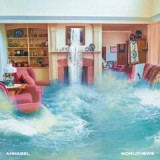
"On “We Are Where We Are,” a glimmering mid-tempo highlight from Annabel’s new album, Ben Hendricks sings of “a modern way to fill the empty space.” Worldviews, the band’s fourth LP and first in nine years finds the band reconciling with the ways the world has changed in the decade since they’ve been away. His protagonists are trying to determine the boundaries between what’s real and imagined, navigating their worldviews and the dominant ones around them, fighting for an escape or at least a distraction, wondering where the time goes, “going through the motions, running in a circle.” That could’ve been Annabel’s fate, too. But the core of the Ohio band is brothers Ben and Andy Hendricks, and as long as they’ve got each other, we’ve still got Annabel. In a world that feels so uncertain and so disconnected, where else is there to turn but back to Annabel? Think of Worldviews less like a comeback and more as the product of years spent gestating.
Hendricks spends the chorus of “All Time” promising to “make up for all the lost time,” and Annabel makes good on that promise for the next half hour. Worldviews is the most locked in the band has ever sounded, perfecting and building on their indie-emo sound. The title track and “Dog” are classic Annabel, sprightly and jangly midwestern rock songs, while “Defense Mechanism” is a rougher-edged update; when they go in the opposite direction, it results in some of their best work: “Every Home Needs a Ghost” is spartan and spectral, worthy of its title, and the beautiful “Small Victories” dabbles in downtempo electronics. They don’t sound like a band returning after nearly a decade; they sound at the same time hungry and lively like scrappy upstarts and wizened and seasoned like they never left."
We're old and familiar friends. These compositions represent the thing that happens when we get together. They aren't representative of one individual, one moment in time, or one chain of decisions. Some are ancient refrains, beginning life as habits and warm-ups, in-jokes; others are distilled jams; more still are refined from MIDI sketches and ideas whistled into voice notes. On whatever terms these elements become something we're happy to stand in front of you and play, to put on record, so be it.” So ANTA describe the process behind 2024's Organesson. Characteristic of the Bristolian Sci-Prog quartet, the record weaves together mesmerising, muscular riffs in insanely loud compositions that extend well into excess. Less typical is the polarisation at play, where granular polymeters will yield in an instant to passages of one or two-note simplicity. The record strides from one raging refrain to the next, lurching between devastation, joy, chaos, and stirring the themes accumulated along the way in exposition. “It comes down to those precious sweaty hours” the group suggest, “in which we get to vibrate these sounds into your face and chest, and you can dance and laugh with us. This is the stuff we remember and plan for, the moments we talk about the most when writing these songs.” ANTA's live shows, ceaseless onslaughts of deafening riffs, have been notable for maintaining the same intense energy among festival crowds or to three people in a basement. Walls of amps going full-pelt. Pounding, ornate drums and metals, wherein drummer James King is relentless in discovering strange and mighty rhythms. Full-drawbar organs, electric pianos, piercing synths from keys-man Alex Bertram-Powell. Joe Garcia's growling bass that strides rather than walks. Ben Harris' all-encompassing, dizzying guitars. Hypnotic, communal, compelling, indefinite energy. Organesson is the latest effort to put this feeling on record.
Antibody presents this new opus by Berlin based Japanese artist Tot Onyx (Tommi Tokyo, formerly of group A).» Satire Of Desire« is her second solo album to date. Here, performance and sound art meet post-industrial deconstructivism. It’s radical, ferocious, wonderfully free and powerful.
Written under the covid-19 pandemic, "Satire Of Desire" is her radical criticism on the man-made catastrophe and sonic response to the cacotopic world that seemed less realistic than the surreal dreams of flying turtles. »My dreams started to become more realistic than the empty streets of Berlin. That's when I began wondering the difference between dream and reality, conscious and subconscious, how we distinguish them and what that even means. That was the beginning of creating this album. The beginning of the future i was unwillingly stepping into.«
Pro Replacement Stylus
Great performance and durability as to basic scratch and back-cueing is what the Pro is known for.
It has a good quality spherical stylus, a rock-solid cantilever, and serves general purposes well.
The Pro is the logical alternative to the more expensive expert carts. It offers both reasonable output and high sound quality which is, in fact, all there is needed to entertain an audience.
The Pro Series of cartridges provides a great balance of sound quality with tracking ability, for virtually any style of music. With flat, transparent sound across the spectrum and excellent handling ability, the Pro Series represents one of the longest running values in DJ cartridges.
Ideal choice for talented, but less experienced DJs!
Pro Stylus Technical Data
Output voltage at 1000Hz, 5cm/sec. - 5 mV
Channel balance at 1kHz - 1,5 dB
Channel separation at 1kHz - 20 dB
Channel separation at 15 kHz - 15 dB
Frequency response - 20-20.000 Hz +3/-2 dB
Tracking ability at 315 Hz at recommended tracking force - 70 μm
Compliance, dynamic lateral - 7 μm/m N
Stylus type - Spherical
Stylus tip radius - R 18 μm
Tracking force range - 3.0-5.0 g (30-50 mN)
Tracking force recommended - 4.0 g (40 mN)
Tracking angle - 20°
Internal impedance, DC resistance - 750 Ohm
Internal inductance - 450 mH
Recommended load resistance - 47 kOhm
Recommended load capacitance - 200-600 pF
Concorde/OM cartridge weight - 18.5 / 5.0 g
When Man Man released its last album, "Dream Hunting in the Valley of the In Between," frontman Honus Honus (née Ryan Kattner) was in a state of unrest, oscillating between hope and cynicism. Perhaps fittingly, the album dropped during the pandemic, a time at which we could all relate. But, much like that bizarre turn of events, the ennui now seems so distant to Man Man. A revived sense of purpose washes through Man Man's new album, Carrot on Strings, radiating a mix of calm and confidence. Kattner always embodied a wild-man pied-piper vibe: his melodic, unhinged art-rock was at once intriguing and angsty. He was so alluringly creative that you went along with it, even if you were never sure where Man Man would take you. Carrot on Strings is no less inventive, but its ethos is radical in context of the band's two-decade career. "When I was younger, I would feed off of chaos. I would, you know, be upset and get drunk and smash chairs," Kattner explains. "Now those chairs are in my head: It's less of an outward projection, more of an interior monologue." The name "Carrot on Strings" came to Kattner while experimenting with the sound of someone munching on the vegetable, which you can hear in the cacophonous, similarly named song. It alludes to how success always seemed to dangle uncertainly before him, often just out of reach. But listen intently and you'll hear a more content Kattner finding an uneasy peace: "Life, as far as I've known it, has always been side hustles. Would it be great if I could go into a studio and record for a year without figuring out how to finance it? Yeah, it would be," he says. "But ultimately, I need to keep making music because art is an extension of my psyche. It's how I have learned to translate the palpitations of my heart. Simply put, I'd go insane without it." Growing up as a multiracial Hapa kid (half Filipino, half white) with a father in the U.S. Air Force, Kattner lived an itinerant childhood that included a few pivotal years in Germany, where he honed in on an appreciation for out there German cinema and art. His film obsessions and screenwriting background were crucial to Carrot on Strings. The album nods to the films of Werner Herzog and Rainer Werner Fassbinder as much as Italo-disco, Randy Newman, goth rock, and avant pop. (Kattner continues to work in the film industry with an acting role in the upcoming horror-comedy movie Destroy All Neighbors, for which he also served as composer; music supervising season 1 & 2 of the Interview With The Vampire AMC TV series; and shopping around, with director Matthew Goodhue, a script he wrote that he describes as a Wim Wenders road movie on acid.) In a bid to not overthink anything - his last album took seven years to make - he recorded the bulk of Carrot On Strings in five days in Mant Sounds studio in Glassell Park, Los Angeles with "very chill" producer Matt Schuessler, who had worked on Man Man's cover of Neu!'s "Super" for the seminal Krautrock band's box set. The resulting album represents a newfound sense of self for Kattner, who finds himself inspired and at peace both personally and artistically in ways that eluded him for most of his first 15 years playing music. When, on Carrot On Strings, you hear Kattner croon humbly, or sing of the tension between his outsize stage persona and the thoughtful, soulful guy he actually is, you're hearing Kattner liberate himself. "I first got into music to escape from myself," he says. "And now, it sounds so corny, but I have zero doubt that music ended up saving my life."
In 2002, the American heavy metal band Mudvayne released their sophomore album The End Of All Things To Come, which expanded their sound with a more versatile range of sounds, dynamic, moods and vocalization. The band wrote the album's songs in less than a month, drawing inspiration from their self-imposed isolation during the songwriting process, and crafted a more mature sound which drew from jazz and progressive rock influences, as well as elements of death metal and thrash metal. For the production, Mudvayne worked with three-time Grammy Award winner David Bottrill. The album spawned two singles: “Not Falling” and “World So Cold”, which were both a commercial success and charted well. The End Of All Things To Come is available as a limited edition of 1500 individually numbered copies on purple marbled vinyl. The 2LP is housed in a gatefold sleeve and includes a 4-page booklet.
The Talented Italian Producer, Known for His Enigmatic Project Hill and Recognized for His Previous Ep Collaboration With the Detroit Legend Javonntte on Skylax Records, Is Making a Much-Anticipated Return Under His Real Name, Alessio Collina. an Ardent Aficionado of Authentic House Music, Collina, Hailing From Italy, Gifts Us a Remarkable Lesson in His Latest Offering, the "Pieces of Life Ep." Collina's Dedication to the Origins of House Music Is Evident Throughout This Ep, and It's a Refreshing Reminder of the Genre's Timeless Roots. Italy, a Country With a Deep Appreciation for House Music, Once Again Serves as the Source of Inspiration for This Artist. the "Pieces of Life Ep" Pays a Heartfelt Tribute to the High-Energy and Groove-Laden House Tunes of the 90s, Echoing the Sounds of Iconic Figures Like Dj Duke, Marshall Jefferson, and Labels Like Strictly Rhythm. With Each Track, Collina Effortlessly Transports Us Back to That Golden Era, Capturing the Very Essence and Spirit of That Unforgettable Time. the Ep Kicks Off With the Electrifying "All of That," an Absolute Masterstroke That Sets the Tone for What Follows. Its Pulsating Beats and Infectious Melodies Are Reminiscent of the Fervent Dance Floors of Yesteryears, Evoking a Sense of Nostalgia While Remaining Incredibly Fresh and Contemporary. the Ep's Three Other Titles, "Humble Groove," "Lost World," and "Mid Season," Continue to Captivate and Immerse Listeners in Collina's World of Evocative, Groove-Filled House Music. Each Track Showcases His Meticulous Attention to Detail and His Ability to Create an Authentic Atmosphere That's True to the Genre's Roots. Collina's "Pieces of Life Ep" Is More Than Just a Musical Collection; It's a Genuine Homage to the Spirited House Music of the 90s. His Dedication to Preserving the Essence of the Genre While Infusing It With His Unique Creativity Shines Through in Every Beat and melody.
This Ep Not Only Reinforces Italy's Profound Connection to the House Music Legacy but Also Solidifies Alessio Collina's Place Among Contemporary Artists Who Honor the Past While Paving the Way for the Future. as Skylax Records Prepares to Release This Exceptional 12-Inch, It's Clear That "Pieces of Life" Is a Treasure Trove for Any House Music Enthusiast, Inviting Them to Rediscover the Magic of the 90s With a Fresh Perspective....