Buscar:less is more

Estilos
Todo
The Inspector Cluzo - LESS IS MORE (LP 2x12")
  • We Win Together, I’m Losing Alone
  • As Stupid As You Can
  • Catfarm
  • Rules
  • Thoreau
  • The Greenwashers
  • Less Is More
  • Mr Fameless
  • Workers
  • Almost Cut My Hair
  • Journey Men

Bisher haben Laurent (Gitarren, Gesang) und Mathieu (Schlagzeug) 9 Alben auf ihrem eigenen Label (F.TheBassPlayer Rercords) veröffentlicht und mehr als 1200 Konzerte in 67 Ländern weltweit gespielt, darunter Festivals wie Fuji Rock (Japan), Pentaport (Südkorea, gleich 3 mal!), Lollapalooza (Brasilien & Chile), Download (UK), Paléo (Schweiz), Oppikopi (Südafrika), Blues Fest (Australien), Shaky Knees (USA) und viele mehr.

Reservar27.06.2025

debe ser publicado en 27.06.2025

27,61
LOST FREQUENCIES - LESS IS MORE LP 2x12"

"Less Is More is the debut studio album by DJ and record producer Lost Frequencies. The Belgian youngster shook the world with debut single ""Are You With Me"" and soon found himself on top of the world, following up on his worldwide smash with global sensation ""Reality"" and ""Beautiful Life"". Now, he shows the full extent of his potential through his debut album. Harboring a plethora of ridiculously catchy singles alongside the before-mentioned hits, Less Is More shows exactly why Lost Frequencies' signature sound is so widely acclaimed. Easy on the ear, increasingly addictive, and filled with gorgeous, laid-back vibes, the songs on the album allow minds to drift and emotions to flow freely, all made possible through the delicate arrangements and a strong choice of sounds. Lost Frequencies describes the album himself as being ""all about the simplicity of good feelings blending together, bringing a chill, but still energetic vibe."" Less Is More is available as a limited edition of 1000 individually numbered copies on gold coloured vinyl. The vinyl package includes an insert with lyrics. "

Less Is More by Lost Frequencies, released 22 March 2024, includes the following tracks: "Beautiful Life", "Reality", "In Too Deep" and more.

This version of Less Is More comes as a 2xLP. This release comes with (a) Insert(s).

The vinyl is pressed as a gold disc. Another vinyl is pressed as a gold disc.

No en stock

Haga su pedido ahora y le encargaremos el artículo en nuestro proveedor.

36,35

Ültimo hace: 13 Meses
Lukey Kelly - Less Is More

Lukey Kelly

Less Is More

12inchHOTC181
HOT CREATIONS
15.11.2021

Emerging Irish talent Lukey makes his debut on Hot Creations next month with the three-track Less Is More. Achieving such a feat so early in his career signals a major milestone for the young artist, setting the tone for a highlight year ahead.

The title track kicks off the release, showcasing the Irishman’s signature style with a minimal, four-four led bassline that features a rolling synth throughout. Quick One soon ups the tempo, packed full of dubby undertones and cosmic-leaning synths, before We Will Never Hear brings things to a close. A devilishly danceable piece that features an iconic vocal, expect to hear this across the global club circuit in 2021.

Already an established presence in his home city of Dublin, it’s no surprise Lukey is beginning to take the wider industry by storm. Previous appearances on Play Groove and IWANT Music have solidified his reputation as one of dance music’s breakthrough talents. With two vinyl-only releases dropping on Carpet & Snares this year, as well as plenty of productions in the pipeline, the future is certainly shining bright for Lukey.

No en stock

Haga su pedido ahora y le encargaremos el artículo en nuestro proveedor.

10,88

Ültimo hace: 3 Años
Estroe / Mbc / Alexis Tyrel - Lessismore But Minimal Is Too Much

Lessismore (formerly Lessismorecordings) was launched 10 years ago, and has been on hold for a few years. At the time the transition from vinyl to digital didn't feel right and now that the vinyl market is coming up again the love and faith to release a beautiful product (vinyl with cool artwork) is back.This 10 year anniversary is a good reason to revive from hibernation state and to start sharing great music again. The first few releases from the relaunch will represent re-releases of the strongest EP's from the back catalogue with remixes by respected artists.

The Alexis Tyrel remix of Estroe's Taxotere has a palpable energy which comes from the masterful fusion of pounding kicks and luminous synth stabs that swell and bulge out through the mix like bright flashes of summer lightning.

The Advent remix of MBC's Zeitlupe starts with a galloping synth that builds in intensity. Just as one is lulled into a "false feel" of the track, the synth part transforms into the syncopated groove of the original version. The track fluctuates between both patterns periodically. With several intriguing modifications of the main sound throughout, and with a pacey aggression, this track is both fierce and deep.

Gideon also remixes Zeitlupe and in his version the intensity is increased a little more. The main groove is prevalent again which drives this remix. However, the real profound sections are where the beat breaks down and yields to the resonantly electrifying lead synth which consumes all in its path. Conspicuously powerful and driving.

Once more on remix duties, this time Gideon interprets Alexis Tyrel's H for Hustler. Rhythm and percussion based, it exemplifies Lessismore's ethic - it is both fundamental and bold. Strong and steady machine like beats push the track along relentlessly while industrial scrapes grind away on top. The "Hustler" sample is sporadically placed but is still used enough to give a hypnotic feel to its use.

The original version of H for Hustler by Alexis Tyrel focuses on the basic elements that are at the core of timeless dance classics. The captivating and hypnotizing beat powers its way throughout. The "Hustler" sample is used rhythmically to great effect while the perfectly aimed machine-gun snares find their mark and are perfectly positioned to hold attention and build atmosphere where needed.

No en stock

Haga su pedido ahora y le encargaremos el artículo en nuestro proveedor.

8,87

Ültimo hace: 6 Años
Bell Gardens - Slow Dawns For Lost Conclusions

Bell Gardens combines the musical visions of Kenneth James Gibson (formerly of Furry Things, now recording as
*Bell Gardens' origins began arguably as more of an experiment than the duo's current 'experimental' projects - McBride's drone- and string-laden ambient symphonies, and Gibson's ventures in dub and minimalist techno - as they sought to manifest their mutual reverence for folk, psychedelia and chamber pop in a traditional band structure without cannibalising any particular past genre. Bell Gardens' sound is less reliant on effects and studio trickery than the pairs' independent guises, laying bare as it does vocals and live instruments with emotional sincerity, and presenting songs imbued with an almost pastoral or gospel simplicity and timelessness.
Slow Dawns for Lost Conclusions was again recorded mostly at home studios, but additionally the band made use of a friend's desert cabin in Wonder Valley, California, and it seems this willingness to retreat from the city has lent an expansiveness to the tracks, in particular the spacious, ceremonial 'Silent Prayer' (written in a snowbound mountain cabin in Idyllwild, C.A.) and the crepuscular 'She's Stuck in an Endless Loop of Her Decline' (mapped out under the stars in the desert).
While the addition of strings (contributed by Lauren Chipman of The Rentals and The Section Quartet) and trumpet (Stewart Cole of Edward Sharpe and The Magnetic Zeros) provides a double rainbow of tonal textures throughout, the nine tracks of Slow Dawns for Lost Conclusions are united by an understated elegance belying the newly expanded, communal effort in the studio: each instrument earns its place, nothing is overwrought or conspicuous. Moreover, it is McBride and Gibson's artistry in building stirring soundscapes from the barest of materials in their other guises that lends such assurance and sophistication to these arrangements.
The band is a result of the complimentary cross-pollination of Gibson and McBride's musical tastes - borne from a late-night conversation between the two that grew wings - and it is the universality of the sentiments and their restrained, reflective approach to writing and recording that allows the music to simultaneously straddle the past and the present. The music avoids pastiche, its pedal steel, sleigh bells and harmonies giving a nod to the ghosts of musical genres past, but never overriding or distracting from the emotional content of the sum of its parts.
The album ends with the glorious 'Take Us Away' - one of the first demos Gibson gave McBride when he was on tour with Stars of the Lid - neatly bringing their work to date full circle and exemplifying the band's mindfulness of their own serendipitous beginnings: the dawning of an auspicious, unique musical force.

Bell Gardens - Take Us Away -
Harmonies alert!! Actually, this is rather lovely. Slow-tempo, just the right side of 'twee' and packed full of strings, as if Air and Midlake had been taking balloon trips over the mid-West and sprinkling good-vibes dust across the land. From L.A. and subconsciously plugged into the '60s dream-pop scene, taking in a little bit of Mercury Rev and Brendan Perry en route, stopping off at Pearls Before Swine and Big Star's house for inspiration, before getting stoned with '70s era Brian Eno and Harold Budd.

Reservar27.10.2014

debe ser publicado en 27.10.2014

13,74
Conic Rose - wedding  LP

Conic Rose

wedding LP

12inchCONICROSELP03
Conic Rose
17.04.2026

A guitar stands alone in Wedding, that metropolitan biotope in the western center of Berlin, caught in constant transformation between idyll and abyss. It lets its gaze wander, unsettled, almost shy, until it encounters a trumpet, with which it begins a cautious, then ever more intimate pas de deux.
Welcome to the second studio album by the Berlin-based band Conic Rose.
The album title Wedding is no coincidence. The story of Conic Rose is closely intertwined with the Berlin neighborhood that gives the record its name. The band's studio is located here, and both studio albums were created in the immediate vicinity of the small river Panke. This place settles over the music like a warming patina. The album feels as though the musicians and the neighborhood have invited one another to get to know each other. Not least because Wedding also means marriage. These marriages between a band and an urban landscape, a fading past and an emerging future, fear and hope - unfold in every single song on Wedding.
For their second album, Conic Rose repositioned themselves completely. Not in terms of personnel, but in the question of how to move forward. Conic Rose still sound like Conic Rose; their distinctive blend of cinematic jazz, ambient textures and guitar-led contemporary music remains untouched. And yet Wedding is, in many ways, the conceptual counterpart to their debut album Heller Tag. Where the debut documented movement within an urban setting, Wedding describes a state of being. Behind every piece seems to hover a large question mark.The group opens up its palette, allowing more influences, becoming at once more subtle, more profound, more filigree. It is less about definition than about the spaces in between. The most immediately striking difference from the previous album is the strong presence of the guitar. In Bertram Burkert's playing, many voices seem to converge. His yearning openness forms an equal counterpoint to Döben's trumpet and flugelhorn. Blurred and layered sounds occasionally make the ground seem to slip away beneath one's feet, while Döben's gliding lines create both closeness and distance. Together, the band express in a deeply subtle way a sense of life that corresponds precisely to our time. Something lurks in the background, omnipresent yet still unnameable. Conic Rose need no words to convey this feeling of uncertainty with remarkable eloquence. Perhaps this has something to do with Wedding being a place of confrontational introspection, but Conic Rose confront the escape from escape itself. With the recording and release of Wedding, this process is far from complete. The seed only begins to grow in the listener's ear. With every listen and the echo it leaves behind in memory, the studio bud continues to bloom. The album is merely the point of departure. What ultimately matters is what it sets in motion within those who encounter it.

Reservar17.04.2026

debe ser publicado en 17.04.2026

19,96
Various - Digging Central Asia: Musical Archaeology Along the Silk Road LP

Death Is Not The End collaborate with Uzbek label Maqom Soul to deliver an LP counterpart to last year's mixtape of the same title, compiling specially picked & fully licensed individual belters from the ex-soviet studios of Central Asian republics between 1978 and 1989 - incl. Uzbek, Tajik, Kurdish & Uyghur artists pulling traditional folk motifs together with pop & rock and psych elements.

"These recordings do not form a smooth or coherent history. They feel more like a sequence of discoveries made at different moments and in different circumstances. Songs and instrumental pieces that once lived inside specific contexts radio broadcasts, philharmonic programs, touring routes now sit side by side, revealing hidden connections as well as clear fractures between them.

Nasiba Abdullaeva appears here as a voice from the end of an era. Trained within a conservatory system, she worked inside the format of the Soviet pop song while filling it with melodic logic that did not come from Moscow or Leningrad. Her voice is soft and sustained, shaped by Eastern melisma, and it never functions as decoration. Even in tightly structured songs there is a sense of resistance, an effort to preserve a musical language rooted in Uzbek tradition rather than fully adapted to an all Union standard.

The ensemble Sintez, later renamed Navo, represents a different path. Beginning as a student rock group, the band was gradually absorbed into the official VIA system with all its limitations and compromises. Yet it was precisely within those boundaries that Sintez and Navo developed a recognizable sound. Electric guitars and jazz rock harmonies do not overpower the folk material but remain in tension with it. Their recordings feel like negotiations between what the musicians wanted to play and what they were allowed to perform.

The Tajik ensemble Gulshan reflects an institutional approach carried to a high professional level. Formed under television and radio structures, the group treated folk material almost as a written score. Carefully constructed arrangements, close attention to orchestration, and restrained use of pop techniques define their sound. There is less spontaneity here, but a strong sense of discipline and structure, where national melody becomes part of a carefully controlled sonic framework.

Koma Wetan occupies a very different space. Formed in the 1970s, this Kurdish rock group approached poetry and folklore as tools of cultural assertion. Their psychedelic rock never feels like a stylistic borrowing. Instead it functions as a contemporary vessel for language and themes that might otherwise have remained unheard. Even today these recordings sound fragile and stubborn at the same time.

The Uyghur ensemble Yashlik, closely connected to a musical drama theatre, operated somewhere between stage performance and popular music. Their songs are built on folk melodies but shaped for wide audiences. What emerges is a constant attempt to preserve the recognizability of Uyghur musical identity without freezing it in a folkloric frame. Yashlik's music exists in a state of balance between representation and development.

Digging Central Asia does not attempt to establish hierarchies or offer a single wayof listening. Names and dates matter less than the sound itself. Tape noise, abrupt transitions, and unexpected timbres remain part of the material rather than flaws to be corrected. This music existed at the crossroads of multiple routes geographic, cultural, and ideological. Heard today in a new context, it no longer feels peripheral. Instead it stands as a reminder that the history of popular music is far more fragmented, layered, and polyphonic than it is usually allowed to be."

Reservar17.04.2026

debe ser publicado en 17.04.2026

22,48
Various - Tchic Tchic: French Bossa Nova 1963-1974  Colored Edition LP 2x12"
  • A1: Les Masques - Il Faut Tenir (1969)
  • A2: Isabelle Aubret - Casa Forte (1971)
  • A3: Christianne Legrand - Hlm Et Ciné Roman (1972)
  • A4: Jean Constantin - Pas Tant D'chichi Ponpon (1972)
  • A5: Billy Nencioli & Baden Powell - Si Rien Ne Va (1969)
  • B1-: Marpessa Dawn - Le Petit Cuica (1963)
  • B2: Jean-Pierre Sabar - Vai Vai (1974)
  • B3: Sophia Loren - De Jour En Jour (1963)
  • B4: Isabelle - Jusqu’à La Tombée Du Jour (1969)
  • B5: Sylvia Fels - Corto Maltesse (1974)
  • C1: Frank Gérard - Comme Une Samba (1972)
  • C2: Ann Sorel - La Poupée Des Favellas (1971)
  • C3: Charles Level - Un Enfant Café Au Lait (1971)
  • C4: Andrea Parisy - Les Mains Qui Font Du Bien (1970)
  • C5: Audrey Arno - Quand Jean-Paul Rentrera (1969)
  • C6: Aldo Frank - T’as Vu Ce Printemps (1970)
  • D1: Christianne Legrand - Cent Mille Poissons Dans Ton Filet (1972)
  • D2: Clarinha - Lemenja (1970)
  • D3: Hit Parade Des Enfants - Aquarela (1976)
  • D4: Jean-Pierre Lang - Tendresse (1965)
  • D5: Magalie Noël - Une Énorme Samba (1970)
  • D6: Françoise Legrand - La Lune

Ever since the late 1950s bossa-nova revolution, Brazil’s influence on French music has been undeniable. Pierre Barouh, Georges Moustaki and a vast array of lesser known artists, all made the Musica Popular Brasileira (MPB) an axis of promotion at the service of a cool and metaphysical, modern and mixed Brazilian lifestyle. Some were seduced by the poetic languors of the bossa, some were looking for fun, and others just loved the American hybridization of jazz-bossa, jazz-samba.


What is bossa nova? One of its creators, Joao Gilberto said: "Its style, cadence, everything is samba. At the very start, we didn't call it bossa nova, we sang a little samba made up of a single note - Samba de uma nota so .... The discussion around the origins of bossa nova is therefore useless”. It is nevertheless useful to remember that these magnificent Brazilian songs, which the guitarist describes as samba, were shifted and balanced around improbable chords. "I like things that lean, the in-betweens that limp with grace," said Pierre Barrouh, quoting Jean Cocteau.


With emotion, arrangements for violin and supple guitar licks, bossa nova rapidly changed. A transformation that can be heard in the Tchic, tchic, French Bossa Nova 1963-1974 compilation, the result of a cultural reappropriation, which traveled through the United States and supplemented itself in France.

A musical revolution that has remained significant, bossa nova was born in Rio. From 1956 to 1961, Brazil lived through its golden years. In five years, the country had invented its modernist style. Elected president in 1956, Juscelino Kubitschek de Oliveira, an elegant man with a broad forehead, brandished a promising slogan: "Fifty years of progress in five years". He quickly got to work. Not worried about increasing debt, he launched the project for a new federal capital, Brasilia, designed by the communist architect Oscar Niemeyer. Volkswagen opened state-of-the-art factories and created the “fusquinha”, the Beetle. In Rio, the Vespa made its first appearance. The Arpoador Surf Club crew run into the “girl” from Ipanema, Helô Pinheiro - the tanned garota ("chick"), between a flower and mermaid, who at 17 walked by the Veloso bar, where the fiery author and composer, Tom Jobim and Vinicius de Moraes, were getting drunk on whiskey. From then on, bossa symbolized cool.

In 1958, Joao Gilberto recorded Chega de Saudade, which the directors of Philips denied, calling it "music for fagots". The marketing director, who believed in it, secretly pressed 3000 78-inch vinyls and distributed them at schools around Rio, creating a tidal wave.

American jazzmen then took over. In particular, trumpeter Dizzy Gillespie and guitarist Charlie Byrd. In November 1962, the Brazilian Ministry of Foreign Affairs funded a "Bossa-Nova" concert at Carnegie Hall in New York, inviting the genre’s pioneers. Unprepared, the show soon turned to disaster. But the troupe was invited to the White House by Jackie Kennedy. The first lady loved "the new beat" and in particular Maria Ninguem, a song by Carlos Lyra, later covered by Brigitte Bardot.

In Brazil, the 1964 military coup quickly ended this euphoria. The destructive atmosphere that ensued pushed many Brazilian musicians to leave, if not to exile. Thus, Tom Jobim, Sergio Mendes and Joao Gilberto arrived to the United States. In New York, Joao Gilberto met saxophonist Stan Getz. At the time, he was married to the Bahianese Astrud Weinert Gilberto, who had a German father. She had never sung before, but she knew how to speak English. Getz therefore asked her to replace her husband on The Girl From Ipanema. The Getz/Gilberto record with Tom Jobim on piano, was released in March 1964. Phil Ramone, the "pope of pop" was in charge of sound.

Bossa nova arrived in Paris through the classic “guitar-voice” channel (Pierre Barouh, Baden Powell, Moustaki…) But France loved jazz and Paris had already welcomed its American contributors. All these good people were to pass through Saint-Germain-des-Prés. The cabaret l'Escale became the Mecca of Latin American sound where one could find Pierre Barrouh and his friends, such as the Camara Trio, samba-jazz aces, whose only record was published by the Saravah label. With a band strangely called Les Masques (a band that included Nicole Croisille and Pierre Vassiliu, among others), the Camara Trio recorded an interesting Brazilian Sound, including the track Il faut tenir which is present on this tasty compilation of rarities.

Other enlightened musicians can also be found on the compilation, such as Jean-Pierre Sabar (songwriter for Hardy, Auffray, Leforestier ...) and the French pop rock organist Balthazar. In 1975, Sabar recorded Aurinkoinen Musiikkimatka on a Finnish label, which featured the crazy Vai, Vai, included on this record. We are now following the footsteps of Brazilian electronic musicians such as Sergio Mendes, Eumir Deodato or Marcos Valle who created funk and disco sounds on their keyboards and synthesizers. A style that influenced Véronique Sanson when she wrote Jusqu’à la Tombée de la nuit in 1969 for Isabelle de Funès, the niece of Louis and a great friend of Michel Berger - Sanson did end up singing this track on her 1992 Sans Regret record.


The pinnacle of exoticism and travel, Sylvia Fels’ Corto Maltese includes bongos, sea mist and ocean sounds. The title was taken from Jacky Chalard’s concept album written in 1974, Je suis vivant, mais j’ai peur (I am alive, but I am scared), based on Gilbert Deflez’s science fiction novel.


However, bossa nova extended the scope of popularity. "In the 1970s, I was a fan of Sergio Mendes, Getz / Gilberto. I fell in love with this music that I knew because I had been an orchestral singer, " explained Isabelle Aubret, who in 1971 delivered a composite record of covers by the very funky Jorge Ben, Orfeu Negro, Tom Jobim, Vinicius de Morais and Jean Ferrat. "I recorded this album for Meys Records in Paris, far from Brazil, with wonderful musicians, François Raubert, Roland Vincent, Alain Goraguer...". The latter wrote the arrangements for Casa Forte, a very percussive title borrowed from Edu Lobo, one of the initiators of the bossa who spent time in California. "Jazz and bossa came together and produced very rhythmic music. I love singing, it allows me to dream, to have fun, to feel a high on stage, and these songs brought me joy, made me swing, my singing felt like a dance.”


The world tours of French singers and their desire for the tropics, often brought them to Rio with its hills, forests, caipirinhas and tanned bodies. There are surprises though, like this Iemenja (Iemenja is the goddess of the sea in the Afro-Brazilian candomblé religion). Not unlike the composer and musician Jean-Pierre Lang, based in Sao Paulo, Claire Chevalier taught Brazil to Brazil. In 1970, the singer and painter published a 45-inch vinyl, Mon mari et mes amants (My husband and my lovers), under the improbable pseudonym of Clarinha (little Claire). She was then living in Rio, with her husband, Joël Leibovitz, who founded a band called Azimuth, and who owned a record label specialized in "sambas enredos" songs for samba school parades.


For its B side, she asked Pierre Perret to come up with lyrics for a song composed by Carlos Imperial: "Oh goddess of the sea, o goddess Iemenja, I bring a white rose to adorn your long hair ..." . "Perret came to see us, and we had fun, remembers Joël Leibovitz. We wrote Lemenja for fun, we recorded it at the Havaí studio, behind the Central do Brasil the central station. Erlon Chaves, the arranger who worked with Elis Regina, joined us" adding his share of Afro-Brazilian percussions and funky brass to the mix.

There is a common misunderstanding in Franco-Brazilian history: that bossa, admittedly hedonistic, is perceived as funny, even though the poets who wrote the texts are often philosophizing on the human condition. Its French interpreters pull it towards a carnival inspired universe, far removed from its fundamental essence. Thus, Jean Constantin covered the famous Samba da minha terra, an ode to the art of samba written by the classic Bahian composer Dorival Caymmi, renaming it with the enticing title of Pas tant de tchi tchi pompon: "On your pier there is no tchi tchi / when you arch your back, you know everything is alright ”(lyrics by Gérard Calvi). This expedited bossa aims for the absurd, but retains a certain elegance.

Indeed, Jean Constantin was not an idiot, the rather large man had a huge mustache and liked fantasy, (Les pantoufles à papa, Le pacha, inspired by cha-cha-cha-cha, salsa and jazz) but he was also the lyricist of Mon manège à moi interpreted by Edith Piaf, the composer of Mon Truc en plume by Zizi Jeanmaire and the soundtrack of François Truffaut’s 400 Blows. Le Poulpe, published in 1970, from which this bossa is extract, was arranged by Jean-Claude Vannier, an accomplice of Serge Gainsbourg’s Melody Nelson. In short: "There is enough of samba / By looking at the parasol / Because my poor cabeza / Is going to die in the sun".

Even the American actress Marpessa Down, who was at the heart of the bossa nova revolution with her role as Euridyce in Marcel Camus’ film Orfeu Negro, winner of the 1959 Cannes Palme d'or, fed the clichée with Je voudrais parler au petit cuica - "Tell me how you manage to always make people want to dance / It's true, I must admit that I cannot resist your magic" - in consequence, once can hear the cuica, a little drum inherited from the Bantu.


But bossa nova had many angles. Societal, of course, pushing actresses who were symbols of women's liberation like Brigitte Bardot, Jeanne Moreau, or Sophia Loren to engage in the exercise of accelerated bossa. In February of 1963, Sophia Loren made a record in French in Rome, Je ne t'aime plus, featuring the song De jour en jour, a bossa written by two Italians, Armando Trovajoli and Tino Fornai, which was released a little later by Barclay. Bossa accompanied the 1960s, a decade of moral liberation. Ann Sorel, who interpreted La Poupée des favellas, caused a sensation with L’amour à plusieurs, a provocative song written by Frédéric Bottom and Jean-Claude Vannier. As for the actress Andrea Parisy, she displayed her bourgeois cheekiness in Marcel Carné's Les Tricheurs before interpreting Les mains qui font du bien. And Magalie Noël, the friend of Boris Vian, who sung Johnny fais-moi mal, was hired to sing Une énorme Samba, composed by Alain Goraguer (arranger to Gainsbourg, Bobby Lapointe and Jean Ferrat) with lyrics by Frédéric Botton.

But in the end, of what wood is bossa nova made of? The answer is given by Christianne Legrand, daughter of Raymond the conductor, and sister to Michel the composer: "With me, with jà" - jà means "immediately" in Portuguese. In 1972, the singer, an expert in vocal jazz and a member of the Double Six, published Le Brésil de Christianne Legrand. Two songs included on the Tchic Tchic compilation that demonstrate how bossa, jazz, funk, rock, etc. work like a swiss army knife: the music is used to denounce broken systems, or miracles, HLM et ciné roman, Cent mille poissons dans ton filet, two songs from the O Cafona soundtrack, a successful telenovela broadcast, at the time in black and white, on TV Globo. The first was adapted in French by the fighter and friend of the Legrand tribe, Agnès Varda. The second is content with a play on words, jostling them into a summer fun.


Véronique Mortaigne

Reservar17.04.2026

debe ser publicado en 17.04.2026

27,31
Elijah Minnelli - Clams As A Main Meal

Even in these most turbulent of times, dub musician and fatigued onlooker Elijah Minnelli remains an inexplicable stalwart on the lower rungs of the Breadminster County Council.

His latest record ‘Clams As A Main Meal’ continues his astute siphoning of council funds, this time with help from the Breadminster Board of Abstinence. As a further mark of respect, the original head of the Board, Dr. K'houldoux, graces the cover art in his infamous ‘Looming Moon of Desire’ guise.*

As fine a backdrop as any for Minneli’s off-brand dub experiments, and ‘Clams...’ is the truest representation of his varied wheelhouse yet...

We find vocal appearances from dub goliath Dennis Bovell and Welsh-language singer Carwyn Ellis. A pair of tracks which build on 2024’s acclaimed ‘Perpetual Musket’, a collection of folk songs reworked alongside reggae vocalists, released by FatCat Records. It garnered glowing reviews, with nods from The Guardian and The Quietus concluding with prominent appearances on their respective yearly round-up lists.

Elsewhere, the album finds Minnelli in a more experimental mode, all wheezing contraptions and cockeyed bass, creaking with the weight of creation, a satisfying tactility laid seam-side up.

As well as ‘Perpetual Musket’, the new album follows years of sold out 7" singles, handmade and self-released. Online, the tracks have amassed global streams numbering in the millions. His tracks have found play across an eclectic range of radio mixes and dance floors, most notably the likes of Andrew Weatherall, Batu, Optimo and Zakia Sewell (BBC6Music).

It is perhaps worth mentioning that this everbuilding interest in his work is at great odds with the growing suspicions amongst his fellow townsfolk, who see his Breadminster County Council Music Initiative as nothing more than an empty cash-grab.

Further Reading on the Breadminster Board of Abstinence

In the late 70s, Breadminster was awash with the last vestiges of the hippy era. Though the flared silhouette of the lower leg remained, the utopian ideals that had once flowed merrily around the youth's shaded ankles had begun to wane. LSD and free love had led to a sharp spike in population and a generation of children raised by air-headed psychonauts unprepared for the bleary-eyed strictures of parenthood.

Aware of the crisis, the County Council entrusted Dr. Paulinque K'houldoux to spearhead a pushback, and it was his pro-abstinence movement - a mixture of education initiatives and radical renutrition campaigns - that came to impact Breadminster's census deep into the new millennium.

Being a pseudo-archipelago Breadminster has fundamentally limited resources, however deep-seated ties to distant coastal villages meant that oysters were a regular part of the local diet. K'houldoux pinpointed this as a factor in the town's overpopulation, and believed that simply replacing these with clams (a “lesser mollusk”) would help lower the erotic urges of the people. It was his “anti-aphrodesia” movement that first championed the idea of “Clams As A Main Meal,” and the slogan “Consider Abstinence” carried the message yet further.

The Breadminster Board of Abstinence soon became involved in all cultural happenings in the area, with K'houldoux MCing at prominent festivals and performances, sometimes dressed as the “Looming Moon of Desire” - an idea of his relating to the tide, seafood, menstrual cycles, and his privately held celestial predilections.

It was in 1981 that it was revealed Dr. K'houldoux had never fully qualified as a doctor and was seeking exile in Breadminster due to a series of botched bracelet heists in which he had previously been involved. K'houldoux was subsequently extradited to Basingstoke, where he served 3 of a 12-year sentence, owing to the lunar-oriented prisoner health campaigns he helped implement.

It has been a strange twist of bureaucratic fate that the Breadminster Board of Abstinence has never stopped receiving public funding, despite its lack of clear utility. And while its roots are tied to a rose-tinted past, the Board continues to sponsor cultural events and projects to this day.

An extract from: Eugeniq Schooner's article in Sydney Parishioner: “Clams, Breadminster and Countercultural Abstinence Trends” (2008)

Reservar17.04.2026

debe ser publicado en 17.04.2026

24,16

Ültimo hace: 4 Meses
Guests - Common Domestic Bird LP

Guests is the home recording project of Jessica Higgins and Matthew Walkerdine. Vaguely named as such to avoid any problems with the poster if they pull out of a gig (which has only happened once, about a year and half before any songs were actually written to be fair) but also to capture a sense of reverse hospitality. That is, arriving at your door with a bottle of good wine (can’t turn up empty handed) or a fist full of savoury or sweet snacks (time of day dependant); oversharing at the afters (and then passing out on your couch); reading to your toddler while you make their lunch or put everything back where it was meant to go (only to get torn apart again). So, something about what happens when private worlds meet each other, making or having been made a space for. But at times, it’s a different kind of intimacy, a temporal or material one, like the feeling of crisp fresh sheets, and abundant and soft, body-part appropriate towels in a hotel in a city you’ve been to before and love to go back to.

Their debut record, “I wish I was special”, was variously described as “a collage of concrète experiments and outerzone pop gestures, music that sounds as if it’s been written from the depths of a dream”; “music for people who love music but also hate it too”; “something like chasing ghosts or befriending a wild animal”; “pulling apart nervous sensations with haphazard ease and requisite humour”; and “a melody of refusal, of being all-in (…) finding the exact right WRONG sound to express the discontent”. Common Domestic Bird continues in this vein, layering synthesiser, keyboards and samples over rudimentary drum rhythms and field recordings, which are in turn sung or spoken with to create nine new songs.

Written and recorded between autumn 2024 and summer 2025 in Reading, Berkshire, the music has matured since its last outing, in a way, leaning less into collage and more toward structured composition and melodic depth, yet retains a healthy dose of indeterminacy and off-kilter rhythms for the forever-amateur. The songs on Common Domestic Bird hint at some “about”-ness through a series of discrete vignettes which sound a bit like architecture or end of year lists, gossip or over-thinking subjectivity, like disappearances and impressions, the support structure of the spine, letters and signs offs, things you could really do without and where they should go, hoping you’ll see something that isn’t there, pretences and performance. At times they feel kind of funny, others kind of sad or a bit angry and annoyed, a bit like you really.

Reservar17.04.2026

debe ser publicado en 17.04.2026

21,64
Cousin Feo & Dre Mendoza - Provoleta - 5th Anniversary’ LP

BLUE & WHITE COLOUR IN COLOUR VINYL

In the culinary arts, it’s easy to overcomplicate the final product. Theme, presentation, texture…they’re important but should work to complement the raison d'etre of any food. At the end of cooking a dish, it should taste good and feed people. Some dishes, like barbeque or provoleta, resist the tendency towards hollow showmanship. One of their expressions can be more or less aesthetic, but the first purpose is to be simple and tasteful. Argentinian provoleta goes so far as to blur the line between ingredient and dish. It relies on the inherent flavor of provolone being heated at the right speed for the perfect amount of time. You can add garlic or chives or red pepper to the slice, but ultimately they serve to bring out an essence that’s already there.

Los Angeles’ Cousin Feo has developed his rapping acumen in the five years since releasing Provoleta, but returning to the project today shows that he always had the penmanship, grit and delivery that christens an emcee worthy of remembrance. Like the bubbles rising up in the appetizer that is the album’s namesake, Feo showed that true profundity is found in the simple gestures.

Since dropping the project in 2019, Cousin Feo has expanded his vision of a world where hip-hop and football, two proletarian art forms, mingle in creative and compelling ways. He has collaborated across multiple continents, chronicled football histories, aided in canonizing legends, kept the flames high in age-old rivalries and constantly forced his audience to search for the last time they heard bars this hard. In anyone else’s hands it would be too great a task.

The maturity he showed on Provoleta wasn’t nascent, it was an inherent quality forcing itself to the surface. The songs refract his experience as a working class Angeleno through the archetypes of Argentinian football legends. The kernel that unites the two worlds is hustle. When Feo was coming up, missteps had greater consequences than crashing out in the group stage and street deals had the weight of a Boca-River Plate match.

Each track uses slightly different ingredients to let Feo’s underlying talent shine. “Maradona” feels salvific, fitting for a football legend canonized from the Andes to the Alps and a Los Angeles rapper looking to inspire similar hope in the neighborhoods that raised him. On “Di Stefano” Feo massages the instrumental with the same composure of the late forward, until he pierces through the headphones like one of Di Stefano’s arrows. It’s also refreshing to hear a song celebrating Messi before his meme-ification, focusing on the universal truths contained in his footballing talent instead of using number 10 as a stand-in to make a point in a fruitless argument. And he still finds space to show deference to Batistuta, Kempes and other members of the Argentinian pantheon who’ve been erased from the popular imagination by the national team's contemporary success.

Real ones know that true players, true rappers, and true artists will always stand the attacks of time and consensus. In Provoleta’s first verse, Cousin Feo says he moves with the hand of God. Maybe one day he’ll tell the whole truth and let us know how he was able to wrestle the pen away too. Limited edition of 300 hand-numbered copies.

Reservar17.04.2026

debe ser publicado en 17.04.2026

30,67
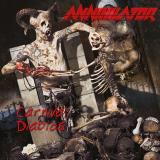
Annihilator - Carnival Diablos (2x12")

Annihilator

Carnival Diablos (2x12")

2x12inch4029759175254
Ear Music
17.04.2026
  • A1: Denied
  • A2: Battered
  • A3: Hunter Killer
  • A4: Time Bomb
  • A5: Carnival Diablos
  • B1: The Perfect Virus
  • B2: The Rush
  • B3: Insomniac
  • B4: Epic Of War
  • B5: Liquid Oval
  • B6: Shallow Grave
  • B7: Chicken And Corn (Hidden Track)

Carnival Diablos is an album of red-blooded metal that connected Annihilator’s legacy to their present-day and re-established Jeff Waters’ place in the thrash pantheon. From the frenzied call-and-response of album opener ‘Denied’ to the progressively-edged mid-tempo sway of the title track, Carnival Diablos is a wholly satisfying offering of steak and potatoes heavy metal thrash – more heavy metal, less thrash, but 100% Annihilator at one of their many peaks.

Reservar17.04.2026

debe ser publicado en 17.04.2026

25,59
WALTER G & JAY CARUSO - FROM EAST TO WEST 12"

Walter G & Jay Caruso deliver a warm, groove-led Soulful Disco version of “From East To West”, built for DJ’s who appreciate real disco dynamics. Rolling basslines, bright piano chords and lush strings wrap around an emotive vocal, creating a timeless club-ready moment that bridges classic 70s soul-disco with modern dancefloor aesthetics. Ben Liebrand delivers a classic 12-inch reconstruction rather than a modern nu-disco vibe. It leans into Ben Liebrand’s signature extended format philosophy, letting the groove breathe. His is a rhythm-first reconstruction with crisp percussion, dynamic low-end and long instrumental sections. The vocal sits naturally within the groove, while the arrangement allows DJs space to build, ride and transition with ease. Less modern sheen, more heritage authority, a purist disco tool with timeless floor appeal.

Reservar17.04.2026

debe ser publicado en 17.04.2026

15,34
Sarah/Shaun - It’s True What They Say?

It’s True What They Say is the debut EP from Edinburgh-based, husband-and-wife duo Sarah/Shaun (pronounced simply Sarah Shaun), aka Sarah and Shaun McLachlan (pronounced “McLochlin”).

“Sarah and I both have a love for nostalgia,” explains Shaun. “We watched that amazing old 80’s Sci-Fi, (John) Carpenter movie, Starman, a few months back. Myself and my brother David used to watch it all the time. We must have been, roughly, 5-7 at the time. I remember loving the movie but the end, you know, with the beautiful, atmospheric, synth ending, I love that particular moment the most - best part of the movie, you know, when he goes home… It’s heartbreaking but stunning, all the same. It’s the music that moves you most… It did when I was 5 and it still does to this day. It must have had some form of a (much deeper) impact on me.”

The duo narrates stories across themes of love, hope, family, friends, dreams and sadness - the good that comes with the bad in everyday life, not just on a personal scale but within a community as well.

“Starbed is the first song I have ever written and just came out of the blue really, with Shaun playing a melody and me singing along,” says Sarah. “It’s simple and just about two people in love. Love songs are always the best songs, after all… Music has been a big part of my life from a young age. I was unwillingly dragged to piano and violin lessons, which I’m thankful for now! I’d say the first band I really became obsessed with growing up were the Beatles, and on the back of that a lot of 60s music and fashion. From then on, I had a love for music.”

“Shaun definitely opened my ears to a lot of sounds and got me thinking about soundtracks and all the noises that can be made,” she goes on. “We love just spending time experimenting in the house with instruments, pedals etc and Ali is a real magician to work with, too…”

The recordings took place over the summers of 2022 and 2023, with fellow Delta Mainline member Ali Chisholm (aka Jaguar Eyes) plus long-term friend and collaborator Gavin King. Further collaboration then came via the ‘net from the (international) likes of Chris Dixie Darley (Father John Misty), Darren Coghill (Neon Waltz) and Daniel Land (The Modern Painters), among others (see a full list of credits below).

Both Sarah and Shaun have a love for uber-soundtrack producers such as Hanz Zimmer, Max Richter, Cliff Martinez plus live acts such as Beach House, Spiritualized, M83, Suicide, Moby and OMD (to name a few). Shaun also credits the work of Kyle Dixon & Michael Stein (from Survive) on the Stranger Things score… “Even a moment in a movie, whether it be just 30 seconds during a particular scene, it grips you,” he says. But there’s something much deeper at play as well. “Music is a healer,” he goes on, “and I write from my own perspective but more so for others. Once I've done my bit, it doesn't belong to me any longer. It belongs to whoever wants it or needs it.”

The result is a cinematic, synth-wavey, dream poppy and downright beguilingly beautiful body of work. And they’re just getting started…

REVIEWS/RADIO/FEEDBACK:

“Starbed is folky, flavoured by pedal steel, cello, and brass. Dust Tears, in stark contrast, is a mini synth-pop rave epic. Part Bicep. Part Human League. Keep Your Eyes Closed summons a mood that’s romantic, but also dark and potentially doomed – like David Lynch’s Twin Peaks meets Cliff Martinez’s Drive score. My pick though is It’s True What They Say, whose interwoven jangle and picking recalls New Order’s more introspective moments (Love Vigilantes, Love Less… ). Drums crashing, cathartic. Guitar raising dramatic arcs. Its chorus a rush, like a reprise of Pains Of Being Pure Of Heart’s ‘Higher Than The Stars’.” BAN BAN TON TON
"Dust Tears sees them sharing vocal duties over a synth foundation reminiscent of Moby’s Go - Artist Of The Week” THE SCOTSMAN
"Woozy pop" NEMONE (Mary Anne Hobbs Morning Show, BBC 6Music)
"Nice one, very David Lynch meets Euro dream pop" YOUTH (Killing Joke, Paul McCartney, U2, The Orb, Spiritualized etc)
"Music sounds killer! Real emotion” DAVID HOLMES
"I’m enjoying it” TIM BRINKHURST aka LONDON (IKLAN, Young Fathers, Callum Easter)
“Oh, this is lovely!” SEAN JOHNSTON (A Love From Outer Space)
"It’s totally my cup of tea with milk and biscuit" BRENT RADEMAKER (Beachwood Sparks/GospelBeach)
"Beautiful, ecstatic electronica! Short and to the point" KEVIN BALES (Spiritualized, Julian Cope, Soulsavers, BE)
"Makes me wanna sit in the sun and sip an Arnold Palmer" CHRIS DIXIE DARLEY (Father John Misty)
“Really beautiful - Cocteau Twins / Spiritualized vibes but has its own thing going on, too - worth checking out!” JULIAN CORRIE (Franz Ferdinand, Miaoux Miaoux)
‘Sounded nice on a sunny day, makes me think of Twin Peaks, nice moods’ EAMON HAMILTON (Sea Power)
"Dealing in nostalgia, no bad thing at all, great to play that (Dust Tears) for you” RODDY HART (BBC Radio Scotland)
“I'll give the vocal tracks a spin before the release." VIC GALLOWAY (BBC Radio Scotland)
"Rather good!" IAIN ANDERSON (BBC Radio Scotland)

CREDITS:

Lyrics, Guitars, Keys, Synths, Drums, Drum Programming, Percussion, Mandolin, Glockenspiel: Shaun McLachlan
Lyrics, Vocals, Keys by Sarah McLachlan
Guitars, Synths, String Arrangements, Drum Programming, Engineering: Jaguar Eyes Percussion/Drums/Effects, Fire Extinguisher: Darren Coghill (Neon Waltz)
Guitars by Daniel Land
Slide Guitar by Chris Dixie Darley (Father John Misty)
Brass by Bruce Michie
Keys, pre-production & engineering on “It’s true what they say”: Gavin King
All produced by Jaguar Eyes and Shaun McLachlan and then mixed at Glasgow’s Chem19 Studios by David McCaulay (From Scotland With Love, Rick Redbeard, BBC TV’s Attenborough and The Mammoth Graveyard score).
Artwork: Jamie Walman (Fourteen Admirals)

MORE INFO:

Although Shaun released a pair of solo singles (When We Dance and Give Your Love To Me) during Lockdown, he will be better known to many via his work as the multi-instrumentalist in Edinburgh band Delta Mainline. With two albums released to date, Oh! Enlightened and Bel Avenir, both rapturously received by fans and critics alike, Delta Mainline have developed an international, cult following. Oh Enlightened (2013) achieved widespread critical acclaim on release, earning the band comparisons to Arcade Fire and Echo & The Bunnymen, while 2019’s Bel Avenir pulled in references to The Flaming Lips, Pink Floyd, David Bowie and krautrock. A third DM album is currently being mixed and due for release later this year…

Disponible

En el almacen y preparando para el envío

18,70
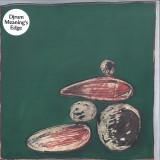
Djrum - Meaning’s Edge

Djrum

Meaning’s Edge

12inchHTH176
HOUNDSTOOTH
20.04.2026

Djrum's first release since 2019, the Meaning’s Edge EP is an introduction to a whole new world. For the artist also known as Felix Manuel, it was created in the final stretches of six rather traumatic years work. Having carefully honed his techniques and aesthetics, and learned some hard-won emotional lessons over this time, finally he began to work in a quicker, lighter fashion – and to cleanse his palate a little by bringing in a fresh ingredient: his own flute playing. For listeners, though, it will serve as an appetiser, a way into the delights and complexities of this new phase of his creativity.

It’s a serious work in its own right, mind. The use of flutes – including Bansuri, Shakuhatchi, Western Classical, and synthesised all blending and blurring into one another – gives it a coherence and a sense of airiness that unites the five tracks over half an hour, however divergent their beats get. And as in all his music, Felix’s whole life is in here. Ethnomusicology studies, untold hours of DJing everywhere from the gnarliest squat raves to the most rarefied deep house clubs, explorations of his own neurological and emotional makeup, and the technical finesse of someone who is never not creating music or art, all roll into an experience that’s dazzling, delightful and keeps on giving.

Just the opening track ‘Codex’ alone touches on OG dubstep, Aphex Twin-like braindance, post-classical exploration, movie themes and more. The gentle tones and melodies that rise up out of it perfectly conjure Felix’s running theme of a protective bubble that provides a sense of safety and tranquillity even as the beats and acid gurgles and spurts all around it conjure up the slings and arrows of life’s difficulties.

The tone set, the EP moves through ultra-rarefied glass-like percussion in an almost ambient setting, hints of grime’s counterintuitive patterns, and even more hectic patterns influenced by Tanzania’s hyperspeed singeli style of dance music – but always with that perfect balance of chaos and control, unpredictability and protection. It rewards playing and replaying endlessly, it’s a profound and often joyous experience… and it’s only just the beginning. This is the return of a master craftsperson more focused than ever on his vision and vocation and ready to blow your mind all over again.

Mastered and cut on 140g black vinyl by legendary mastering engineer Matt Colton at Metropolis Studios, London. Pressed at optimal media, Germany.

Reservar20.04.2026

debe ser publicado en 20.04.2026

15,76

Ültimo hace: 13 Meses
Marlon George - My Secrets Are Safe With Me

Marlon George is a British DJ and producer based in London renowned for his "slightly spacey, casually jazzy, and fully groovy house music," with support from names as illustrious as Kyle Hall and Jimpster. But really, if he's getting signed by the legendary Trelik, then that's all you need to know about his skills. He lays them bare across three tasteful cuts here, starting with the liquid dub of 'My Secrets Are Safe With Me' with its wispy shards of light piercing the water's surface and glistening against the dusty hi-hats. 'Najagen' has more drive but no less depth and warmth to it and 'Do The Rha!' is another smoky, minimal, heady dub house roller that sneaks right under your skin.

Reservar20.04.2026

debe ser publicado en 20.04.2026

16,18
Silicon Scally & Fleck ESC - Slip

Silicon Scally and Fleck E.S.C. need no introduction at this stage. Both artists are veterans not just of Sheffield's Central Processing Unit label but of modern electro as a whole, with the pair having decades of skin in the game at this point. Their new release, a four-track EP entitledSlipwhere Silicon Scally handles the first half and Fleck E.S.C. the second, carries itself with the adventurous confidence of a record made by masters of their craft.

Slipopener 'Phased Array' is exactly the kind of top quality machine-funk tackle you'd expect from this meeting of minds. The beat programming is deliciously tactile from the off, hissing and clanking like machinery in an old Detroit factory. The feel of 'Phased Array' is altered, though, when the chords come in, a series of alternating floating sounds which give the track an altogether eerier feel. When all of this is coupled with the otherworldly synth blurts that periodically force their way to the front of the track, the overall effect is a piece of real depth assembled by an expert practitioner.

'Phased Array' is followed up by 'Stax', another brilliantly propulsive number. Here we find the drum beat - one which is a little reminiscent of that Kraftwerk tune about the numbers, no less - once more offset by some decidedly more shadowy synth work, all while arpeggiated keyboard licks work against an intricate web of basslines, chords and unidentifiable flying synth tones.

Fleck E.S.C. opens theSlipB-side with 'Good Ride', a number where the nudge-wink title is borne out by a track built around looped snippets of sighing vocals. That said, with a bassline that sounds like a blurting old landline telephone, a ghoulish synth lead and all manner of motion-sick breakdowns, the 'ride' in question could just as well be aWipeout-style whizz through hyperspace as anything more suggestive. 'Good Ride' also sets itself apart from the other joints here by showing off a swaying halftime breakdown.

'Intox Remedy',Slip's closer, wraps the EP in a manner which continues some of the trends of the record's earlier tracks - richly tuneful chords, precision-engineered broken beat drum programming and a wide palette of delightfully unusual synth tones are all present and correct. However, there is also something about the chords here which pares back the eeriness of previous joints for a bit more of a wide-eyed, stargazing feel, and as such 'Intox Remedy' sees the record out by placing the listener firmly back in the cosmos.

Tough enough for the dancefloor and intricate enough for home listening, theSlipEP is a fabulous collaboration from two of the most respected voices in the electro game.

Disponible

En el almacen y preparando para el envío

16,39
Artículos por página
N/ABPM
Vinyl