Originally recorded in 1981, this album is best known for its tropical boogie bomb 'Let's Talk About It'. Having drawn attention from diggers for quite some time, it's finally available again on vinyl. Besides this killer boogie tune five other tracks from the album that have remained unknown to most people complete this French boogie / reggae / zouk re-issue.
Search:lets talk
- A1: The Magnificent Seven
- A2: Hitsville U.k
- A3: Junco Partner
- A4: Ivan Meets G.i. Joe
- A5: The Leader
- A6: Something About England
- B1: Rebel Waltz
- B2: Look Here
- B3: The Crooked Beat
- B4: Somebody Got Murdered
- B5: One More Time
- B6: One More Dub
- C1: Lightning Strikes (Not Once But Twice)
- C2: Up In Heaven (Not Only Here)
- C3: Corner Soul
- C4: Lets Go Crazy
- C5: If Music Could Talk
- C6: The Sound Of Sinners
- D1: Police On My Back
- D2: Midnight Log
- D3: The Equaliser
- D4: The Call Up
- D5: Washington Bullets
- D6: Broadway
- D7: Blowing In The Guns Of Brixton
- E1: Lose This Skin
- E2: Charlie Don't Surf
- E3: Mensforth Hill
- E4: Junkie Slip
- E5: Kingston Advice
- E6: The Street Parade
- F1: Version City
- F2: Living In Fame
- F3: Silicone On Sapphire
- F4: Version Pardner
- F5: Career Opportunities
- F6: Shepherds Delight
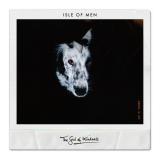
Isle Of Men is the band led by guitarist Dirk Fryns, featuring Gunther Verspecht (Stash) and all-round keyboard maestro Tom Van der Schueren, Herman Temmerman (bass and production), Niels Delvaux (drums) and Sara De Smedt (backing vocals). They made an impressive debut in 2015 with the album ‘Voluntary Blindness’.
Here is what the press had to say at the time:
De Morgen ****: “Subtle night music that inhabits the same world as David Sylvian, The Blue Nile, Ray Lamontagne… an excellent debut.
Focus: *** “A fine Belgian debut with an album that willingly lets itself be enveloped by the quiet twilight of the night.
Het Nieuwsblad/GVA ***: “Refined, intimate songs carried by the deep voice of Gunter Verspecht”.
RifRaf: “An impressive nocturnal record for fans of, say, Talk Talk, Tindersticks, Nick Cave or Nick Drake. Welcome to the fragile world of Homo Melancholicus”.
Now, at last, there is an equally atmospheric and impressive follow-up with the album “The Soul Of Kindness”.
- A1: Apache Talk 05 29
- A2: Jacaranda 03 49
- A3: Gentle Rain 05 18
- A4: You Or Not To Be 02 36
- A5: Strange Message 03 29
- B1: Don Quixote 03 35
- B2: Song Thoughts 03 27
- B3: Danse V 06 48
- B4: Empty Room 06 58
- B5: Sun Flower 05 24
Jacaranda is an album published in 1973 that highlights Bonfá’s refined approach to bossa nova and Brazilian instrumental music, blending Brazilian melody and rhythms with jazz-influenced harmonies. The album is cantered on Bonfá’s classical-influenced guitar technique. Indeed, rather than focusing on vocals, Jacaranda lets the guitar lead the narrative, creating a relaxed yet sophisticated atmosphere which evokes Brazilian landscapes and moods. Compared to his previous album Introspection (HE72018), Jacaranda is less restrained and inward, it does not have a meditative mood but offers warmer harmonies and a stronger melodic richness. This is the first vinyl edition of this album since its first edition in 1973.
- 1: Punk Art
- 2: Someone’s Tuning Up
- 3: Punk Rock Daze
- 4 1: 2-3-4
- 5: Mal-One’s Out To Lunch
- 6: The Ballad Of Punk Rock
- 1: Holiday In Other People’s Misery
- 2: Future Nostalgia
- 3: Welcome To The Punk Rock Disco
- 4: The Ballad Of Johnny Rotten
- 5: Those New York Dolls
- 6: Punky Rocking Xmas
Yes here we are 50 years on from year zero 1976 (where did that go!!!). To celebrate this and the fact we are all still here and talking about the importance of the Punk Rock movement i put together an album under the banner Punk Rock Daze. The title reflects it was all such a daze, as it ran by so fast and also as a reminder of an old Malcolm McLaren remark that came to mind. That when the band and management were discussing the look and name of the Sex Pistols forthcoming album ‘Never Mind The Bollocks’. Malcolm remarked, lets sell it as you would sell washing powder, bright, simple and with fluorescence colours. Great idea so here is my homage to that thought.
So I hope you enjoy the gesture and here’s to another 50 years of Alchemy, Joyousness and
instruction (Anarchy, Chaos and Destruction).
Peace and Punk Mal-One
More Rice and Jugaar Records – Two Bangkok-affiliated labels – bring together an assemblage of their mutual friends for a heady, floor-focused VA with moods to soundtrack peak flow, after-hours rabbit holes, and just about everything in between.
Rudoh of Jugaar Records fame kicks us off with ‘Madoh’, a bendy groove that initially bares flex of early 2000s Minimal with its trimmed, rubbery percussion and obscured vocal snippets. As the track progresses, a hefty break and a catchy synth line bolster things before breakdowns unfold like little trippy slumbers rudely interrupted by bold, punchy drops.
Next up is Tokyo legend Gonno who follows up with ‘Rad’, a broad-shouldered banger propelled by a heaving kick and clap combo. A wrought synth is paired with odd shocks of acid and a sequence that flickers like a strobe. All the while a thick, gnarled bass line rumbles underneath, keeping vibes at boiling point throughout.
More Rice’s DOTT follows up with a swampy excursion propelled by a potent kick and nimble submarine tones. Drums are neatly stacked in polyrhythms as an infectious swing unfolds, one that’s decorated with ghostly synths and a generous dose of psychedelic synthesis.
Sarayu – also of More Rice fame, closes things up with ‘Fuijan Groove’, a brilliantly lean cut that lets the subs do the talking. Sharp tonal blobs flesh out a simple but highly effective march as spectral pads expand in plumes of smoke until the conclusion of a rich and varied record that unites two kindred labels perfectly.’
‘More Rice and Jugaar Records – Two Bangkok-affiliated labels – bring together an assemblage of their mutual friends for a heady, floor-focused VA with moods to soundtrack peak flow, after-hours rabbit holes, and just about everything in between.
Rudoh of Jugaar Records fame kicks us off with ‘Madoh’, a bendy groove that initially bares flex of early 2000s Minimal with its trimmed, rubbery percussion and obscured vocal snippets. As the track progresses, a hefty break and a catchy synth line bolster things before breakdowns unfold like little trippy slumbers rudely interrupted by bold, punchy drops.
Next up is Tokyo legend Gonno who follows up with ‘Rad’, a broad-shouldered banger propelled by a heaving kick and clap combo. A wrought synth is paired with odd shocks of acid and a sequence that flickers like a strobe. All the while a thick, gnarled bass line rumbles underneath, keeping vibes at boiling point throughout.
More Rice’s DOTT follows up with a swampy excursion propelled by a potent kick and nimble submarine tones. Drums are neatly stacked in polyrhythms as an infectious swing unfolds, one that’s decorated with ghostly synths and a generous dose of psychedelic synthesis.
Sarayu – also of More Rice fame, closes things up with ‘Fuijan Groove’, a brilliantly lean cut that lets the subs do the talking. Sharp tonal blobs flesh out a simple but highly effective march as spectral pads expand in plumes of smoke until the conclusion of a rich and varied record that unites two kindred labels perfectly.’
I Talk To Water, the fifth album for Kompakt by Danish producer Kölsch, is the artist’s most personal statement yet. While all the trademarks that make his music so popular and powerful are still present – lush, melodic techno; swooping, trance-like figures; sensuous, shivery texturology – I Talk To Water is also a deep and intimate rapprochement with family and history, a beautiful, finely detailed document of loss and memory, and a tracing of the long, unbroken thread of grief that runs through our lives once we’ve lost those we loved.
The emotional core of I Talk To Water, then, is a cache of recordings by Kölsch’s father, Patrick Reilly, who passed away in 2003 from brain cancer. With time rendered elastic by the pandemic and its associated lockdowns, its sudden, alienating shifts in everyday living, Kölsch found himself reflecting on his father’s passing and ongoing spiritual presence, thinking about how best to memorialise such a significant figure in his own life. Those recordings opened a gateway, of sorts, for Kölsch to move through – a way to bring past and present together and entwine them in a sensitive, poetic manner.
Kölsch’s father was a musician – “touring in the sixties and seventies, in the Middle East especially, he was doing the whole hippy trail, playing guitar, and wrote some songs over the years,” he recalls. “But all in all, he decided to focus on family rather than pursue a musical career.” Reilly kept playing and writing music over the years, though Kölsch hadn’t listened to the material for some time: “I’d never had the guts to listen to it, because I just felt too fragile listening to his voice. It’s such a tough thing to go through.”
During the pandemic, though, Kölsch listened through the fragmented body of work that his father had produced over the years. “I decided I’m gonna finally release my dad’s music twenty years after his passing,” he reflects. “This whole album is about the process of loss, and for me it’s been one of my main driving forces in my musical life, the whole emotional aspect of whatever I’ve done has been based in that feeling that he’s not there anymore.”
Recordings of Reilly appear on three songs across I Talk To Water. His guitars drift pensively across “Grape”, offering a lush thread of melody that Kölsch wraps with clicking, driftwood rhythms and droning, melancholy bass. “Tell Me” is a lovely three-minute art song, a sadly beautiful reflection, minimally adorned with gentle keys and a muted pulse. And on the closing “It Ends Where It Began”, Kölsch lets his father’s acoustic guitar take centre stage for a lament that’s unexpectedly folksy, a guitar soli dream, which Reilly originally recorded in 1996. “He actually recorded it for my first album that never came out,” Kölsch reveals, “and I had it sitting around forever. That is purely him.”
These three imagined collaborations between father and son are poised and delicate. But their relationship also marks the gorgeous music Kölsch has made across the rest of I Talk To Water, from the itchy yet lush “Pet Sound” (titled in tribute to one of Reilly’s favourite albums), the flickering synths and yearning vocal samples that slide through “Khenpo”, the ecstatic shuddering that marks “Only Get Better”, or “Implant”’s slow-motion pans and subtle reveals.
There’s also the title song, where Kölsch is joined by guest Perry Farrell (Jane’s Addiction, Porno For Pyros), singing a mantra for internal reflection: “I talk to water / Searching for myself / Looking for answers / Oceans of you.” Farrell’s appearance brings another timbre, another spirit to the album, aligning neatly with his recent interest in electronic music. “He was completely taken by this idea of talking to water,” Kölsch says, thinking about the ways we collectively lean towards the natural world as a comfort and a listener, a guide through mourning, a way to map out the terrain of the heart. This mapping is something that Kölsch has proven remarkably adept at through the years; dance music for both body and mind, but also both for the here-and-now, and for the hereafter.
“I Talk To Water”, das fünfte Album des dänischen Produzenten Kölsch für Kompakt, ist zweifellos das persönlichste Statement des Künstlers bislang. Während alle Markenzeichen, die seine Musik so beliebt und kraftvoll machen, immer noch präsent sind – üppige, melodische Techno-Tracks; schwebende, tranceartige Elemente; sinnliche, fiebrige Texturen – ist “I Talk To Water” auch eine tiefe und intime Annäherung an Familie und Geschichte. Es ist ein wunderschönes, fein ausgearbeitetes Dokument des Verlusts und der Erinnerung, und es verfolgt den langen, ungebrochenen Faden der Trauer, der durch unser Leben läuft, sobald wir diejenigen verloren haben, die wir liebten.
Der emotionale Kern von “I Talk To Water” besteht aus Aufnahmen von Kölschs Vater, Patrick Reilly, der 2003 an Hirnkrebs verstarb. Durch die Pandemie und ihre damit verbundenen Lockdowns, die plötzlichen, entfremdenden Veränderungen im Alltag, fand Kölsch sich in Gedanken an den Tod seines Vaters und seine fortwährende spirituelle Präsenz wieder. Er überlegte, wie er eine so bedeutende Figur in seinem eigenen Leben am besten verewigen könnte. Diese Aufnahmen öffneten ihm sozusagen ein Portal, um Vergangenheit und Gegenwart miteinander zu verbinden und sie auf sensible und poetische Weise zu verweben.
Kölschs Vater war Musiker – “er tourte in den sechziger und siebziger Jahren, vor allem im Nahen Osten, auf dem Hippie Trail, spielte Gitarre und schrieb im Laufe der Jahre einige Songs”, erinnert sich Kölsch. “Aber alles in allem entschied er sich, sich auf die Familie zu konzentrieren, anstatt eine musikalische Karriere zu verfolgen.” Reilly spielte und schrieb jedoch im Laufe der Jahre weiterhin Musik, obwohl Kölsch das Material lange Zeit nicht angehört hatte: “Ich hatte nie den Mut, es anzuhören, weil ich mich einfach zu zerbrechlich fühlte, seine Stimme anzuhören. Es ist so schwer, das durchzustehen.”
Während der Pandemie hörte sich Kölsch jedoch durch das fragmentierte Werk, das sein Vater im Laufe der Jahre produziert hatte. “Ich beschloss, die Musik meines Vaters zwanzig Jahre nach seinem Tod endlich zu veröffentlichen”, reflektiert er. “Dieses ganze Album handelt von dem Verlustprozess, welcher für mich generell eine der Hauptantriebskräfte in meinem musikalischen Leben ist. Der ganze emotionale Aspekt von dem, was ich getan habe, basierte auf dem Gefühl, dass er nicht mehr da ist.”
Auf “I Talk To Water” sind Aufnahmen von Reilly in drei Songs zu hören. Seine Gitarren ziehen nachdenklich durch “Grape”, bieten einen üppigen Melodiefaden, den Kölsch mit klickenden, treibenden Rhythmen und dröhnendem, melancholischem Bass umwickelt. “Tell Me” ist ein schönes dreiminütiges Kunstlied, eine traurig-schöne Reflexion, minimal geschmückt mit sanften Tasten und einem gedämpften Puls. Und auf dem Abschlusstrack “It Ends Where It Began” lässt Kölsch die akustische Gitarre seines Vaters im Mittelpunkt stehen, ein überraschend folkiger Klagegesang, den Reilly ursprünglich 1996 aufgenommen hatte. “Er hat es tatsächlich für mein erstes Album aufgenommen, das nie veröffentlicht wurde”, enthüllt Kölsch, “und ich hatte es ewig liegen.”
Diese drei erdachten Kollaborationen zwischen Vater und Sohn sind ausgewogen und zart. Aber ihre Beziehung prägt auch die wunderschöne Musik, die Kölsch im Rest von “I Talk To Water” geschaffen hat, angefangen bei dem nervösen, aber üppigen “Pet Sound” (benannt als Hommage an eines von Reillys Lieblingsalben), den flimmernden Synthesizern und sehnsüchtigen Vocal-Samples in “Khenpo”, den ekstatischen Erschütterungen in “Only Get Better” oder den langsamen Schwenks und subtilen Enthüllungen in “Implant”.
Es gibt auch den Titelsong, in dem Kölsch von Gast Perry Farrell (Jane’s Addiction, Porno For Pyros) begleitet wird, der ein Mantra für die innere Reflexion singt: “I talk to water / Searching for myself / Looking for answers / Oceans of you.” Farrells Auftritt bringt eine weitere Klangfarbe, einen weiteren Geist in das Album, der gut zu seinem jüngsten Interesse an elektronischer Musik passt. “Er war völlig fasziniert von der Idee, mit Wasser zu sprechen”, sagt Kölsch und denkt darüber nach, wie wir kollektiv zur Natur als Trost, Zuhörer, Führer durch die Trauer neigen, um die Gelände des Herzens zu kartieren. Diese Kartierung ist etwas, in dem Kölsch im Laufe der Jahre erstaunlich geschickt war; Tanzmusik für Körper und Geist, sowohl für das Hier und Jetzt, als auch für das Leben danach.
Bold, delicious and full-bodied, it’s no wonder Rube Goldberg Series Wines have such a loyal following. Volume nine is certainly a top spot for exceptional tunes. Here, cool fogs help to keep temperatures down, giving the beats time to ripen slowly and develop intense, complex flavours. Oliver.R, B.Love, Two Opposites and Let's Talk bring out the best of this prized fruit, crafting a bright, silky record that’s a real step up from the norm. Discover vibrant notes of house, funk and sweet rhubarb, with touches of baking spice and earthy forest dancefloor. The tunes are aged for up to 12 months, giving it soft tannins and a smooth texture.
Riding high on the inexplicable Tech-house adoption of their last release, Talking Drums return with hit number six.
This desert island disc finds the family bagging a last minute flight to sunnier climes, where the cocktails are strong and the seas are calm.
On 'Air Ecosse', the crew provide an engine overhaul to a middling slice of Scotch boogie, squeezing maximum thrust out of the new beat-y intro before a bubbling bassline and chiming chords provide some serious uplift. The captain takes the comms for a late deadpan vocal, hinting at a little Pet Shop Boys karaoke prior to touchdown in paradise.
The percussion pals kick off the Birkies on the B side, boarding the bateau with a pair of proper harbour heaters. 'Too Yacht To Handle' bubbles along like Mick'n'Keef in disco mode, oozing grooves under a swooning vocal a la Nicolette Larson. A hazy arrangement lets the music play, indulging the instrumental breaks, soaring synths and subtle delays in true 12" Extended Mix stylee, perfect for peak-time at poolside or la playa.
Dropping the tempo to a sunset strut, 'AORwaves' provides the perfect cool-down, as TD cut back the fat on a forgotten soft-rocker to create a cosmic yacht bomb. Low slung, sleazy and spaced out, this is gonna rock a bar set and beyond.
Limited Press - Numbered Insert - Drum Fun Guaranteed.
On every copy sold 2 euros minimum goes to Mealespoirs : An NGO association who fight for Childhood rights, malnutrition and education.
lets talk about music now :
Crazy meet up between 2 monsters !
Atomic Compressor, the GTI number one composer who did the best of KSI records, and more recently a brilliant Komum brings a full side of his best recent tunes : Speed pityless kickerz bringing "le Père Noël Est une Ordure" special Thérèse édition !
On the flip you'll get Leatherface, newcomer from Cellul R production, with 2 Industrial psychedelic rolling kickerz : the first one is a C.Mantle hit combo, light kick mentalism ; and the second a powerfull Brotherhood lesson.
Let’s Start Again – A Collaboration between Mikekon & BTA (Byron The Aquarius), connected whilst Byron was touring Australia in 2023. Mike threw an intimate afterparty for Byron after his Nature’s Calling festival tour and got talking about Music, DJing and Life.
They threw some beats around to feel out and Byron began laying some lush keys, and within hours the magic was made. The project was left to cool off a little while and the two picked it up and polished it (Hence the title “Lets Start Again” before setting the date for a mid 2025 release via Mother Tongue distribution.
WIP Music is proud to have this as their first vinyl release under the label, further emphasising its desire to share timeless electronic music.
- A1: Family Life
- A2: Dark Mirage
- A3: First Fire Of Winter
- A4: Silver Eagle
- A5: Lets Roll Again
- B1: Big Change
- B2: Talkin To The Trees
- B3: Movin Ahead
- B4: Bottle Of Love
- B5: Thankful
Clear Vinyl[32,73 €]
Music possesses an incredible ability to transform raw emotion into an expansive array of expression. Nackley knows this ideation well. Having spent years working behind the scenes as an agent, Bordello’s latest discovery now steps fully into the spotlight with Anger Management, channeling the turbulence of transition into sound.
Cathartic and charged compositions are at the heart of this four-track release. Acid-dipped keys are both delicate and direct in the driving highs of Return of the Gecko, a track pulsing with raw energy. The crueler side of the music industry isn’t so much parodied here as it is dismissed entirely—Nackley lets the music do the talking. Sublime Desolation is pure dancefloor dynamite, where synth sirens detonate and explosive rhythm commands movement.
Been A Long Time arrives dripping in attitude. Breaks and a juddering bassline face off with a hustling 303 hook, harmonies weaving through deep sonic textures. A renewed confidence courses through the release as Nackley explores a range of styles, closing with the synth romance of Heartbreaker—an addictive blend of keyboards, guitar strings, and enveloping vocals are the emotive ingredients of this tear-streaked work of 1980s-inspired joy.
And joy is exactly what Anger Management delivers—a healing triumph and a bold debut declaration from a rising talent.
- 1: 3 Am
- 2: Timber
- 3: People Listen (To The Radio)
- 4: Everything's Green
- 5: Generator 6. Gossip
- 7: Shadow Boxing
- 8: Glossary
- 9: An Echo
- 10: Common
'Through Today' is the sophomore album for rising Australian band Chimers. A husband / wife duo comprising life partners Padraic Skehan (vocals / guitar) and Binx (drums / vocals). Recorded by Jono Boulet (Party Dozen) over two days at Stranded Studios, Wollongong and mixed at Boulet’s Sydney home studio, produced by the band and veteran manager / promoter / producer Tim Pittman (Feel Presents), 'Through Today' features ten tracks of tightly-coiled intensity that barely lets up for all of its 34 mins. In enlisting Boulet, the band were confident that due to his own experience of being one half of Party Dozen, they had someone who understood the confines of working within the structure of a two-piece but also the possibilities that creates. Boulet, in turn, rewarding that trust by capturing a powerful bedrock of sound that allowed the band's taught rhythms to circle and permeate and yet give full breathing space for the melody within. For Pittman’s part, having a third ear on hand to devote serious listening time and critical commentary was an added bonus. It’s a major step forward from the band’s 2021 self-titled debut. A twelve track effort that snuck out during covid and only hinted at the power within. "Our debut felt more like just trying to capture the songs we had at the time, we weren’t sure if we’d even release it or if it would be our only album" "This time around we were intent on capturing the energy and intensity of our live show on the recording but with a more produced sound than self-titled. We worked more on song structure previous to the sessions. We rehearsed a lot playing quietly so we could actually talk to each other whilst playing the song and iron out any kinks.” “Jono turned the whole live room into a drum room, mics everywhere. The guitar amps were situated outside to prevent too much spill but still recorded live along with about half of the vocals. Second guitar and the rest of the vocals were recorded the next day. Jono was super quick and had the same work ethic and mindset, get in, get it done. If the first take was good enough, move on.” - Padraic Lyrically Chimers maintain the intensity as they tackle the themes of love, life, death and relationships, distance from home (Padraic is Irish, moving to Australia in 2001) and the current political climate providing enough drama to fuel a forest fire. Guest musicians on the album include saxophonist Kirsty Tickle - also of Party Dozen - and violinist Jordan Ireland of The Middle East. Both of whom were invited in on short notice adding their respective parts in just 1-2 takes each without any prior knowledge of the material. Binx too showing added versatility contributing lead vocals to An Echo and sharing lead across 3AM, Generator and others. “Singing is not something that comes naturally to me, and it was at the last minute before we went into the studio that Padraic suggested I sing the lead in An Echo. Having very minimal musical instruments within the band I think having the two different vocals adds a nice dynamic to the record.” - Binx 'Through Today' is a great album. Solid and confident from the get go. No waste. No unnecessary fat. Should it be Chimers last it would remain a defining statement of originality and intent. But it’s not the last, it’s just the beginning. And there’s plenty more where that came from. BIO Like many good bands Chimers are a band born of isolation, not geographically though, via the pandemic. Irish born Padraic Skehan and his life partner Binx, formed the band in their Wollongong backyard during the initial lockdown of 2020. Veterans and drummers both of the ‘Gong’s vibrant garage-scene – The Pink Fits, The Drop Offs, Evol and more – Chimers is an altogether different beast, Padraic taking a giant leap forward by removing himself from the back-seat and assuming the role of driver; singing, playing guitar and writing the songs that would eventually become their 2021 self-titled debut album. It’s a sound and album that draws heavily on Skehan’s time as a youth in Ireland and the post-hardcore sounds of Dischord Records, Husker Du, The Wipers and which has seen the band find friends and favour in like-minds The Mark Of Cain, Henry Rollins, Guy Picciotto and Mudhoney. This is no mere nostalgia though, the band instead landing at the vanguard of a new generation of Sydney and surrounds bands – Body Type, Second Idol, Dust, Private Wives, R.M.F.C – borrowing from the past in order to create a future.
The second release on Between Stations (proceeding the «rst BETWEENTAPES release by DOOM TV), sees label head Cowper kicking off the «rst in the BETWEENEDITS series. Possessing atom-splitting heft at a tectonic pace, A1 writhes around on a French Kiss theme, tantalising FX swirls and thundering bass before sensual pads slowly begin to caress the central nervous system, taking us off into hypnotic revelry.
B1 grasps onto a swirling and mesmerising, opiated version of Larry Heard. A spine-tingling concoction of elements and drifting echoes transporting us to a blissful ocean, ebbing with the sonic currents in a suspended state of glee. B2 pulls on the space cord, bringing us back from our temporary drift with a slow and steady hand. This one lets the machines do the talking whilst we concentrate on keeping stable as the «nal remnants of euphoria are squeezed from our serotonin glands.
- A1: Dear John
- A2: Angel Artist Feat Tom Misch
- A3: Ice Water
- A4: Ottolenghi Feat Jordan Rakei
- A5: You Don't Know Feat Rebel Kleff & Kiko Bun
- A6: Still
- A7: It's Coming Home
- A8: Desoleil (Brilliant Corners) Feat Sampha)
- B1: Loose Ends Feat Jorja Smith
- B2: Not Waving, But Drowning
- B3: Krispy
- B4: Sail Away Freestyle
- B5: Looking Back
- B6: Carluccio
- B7: Dear Ben Feat Jean Coyle-Larner
Loyle Carner will release his highly anticipated sophomore record, 'Not Waving, But Drowning' on 19 April via AMF Records.
'Not Waving, But Drowning' follows Loyle's BRIT (Best Male, Best Newcomer) and Mercury Prize nominated, top 20 debut 'Yesterday's Gone'. The bedrock of honest and raw sentimentality that you heard on 'Yesterday's Gone' left an inextinguishable mark on music in general and UK Hip Hop in particular, standing out as an ageless, bulletproof debut.
'Not Waving, But Drowning', Loyle's new album, gives yet more evidence - as if it were needed - of his razor-sharp flow and his unique storytelling ability. Yes, he can rap, but he allies that with the sensitivity of a poet, the observational skills of a novelist, and warmth of your best friend. The album opens with 'Dear Jean', a letter to his mother in which he's telling her that he has found the love of his life, 'a woman from the skies', and he's moving out.
It goes without saying that Loyle's music is hard to categorise, but what is even more impressive is that for someone who grew up listening to Mos Def, Biggie Smalls, Roots Manuva, and Wu Tang Clan, he doesn't sound like any of them. Although he might from time to time give lyrical nods to them, he's no imitator.
Loyle loves cooking. There are two tracks on this album named after chefs. The British-Israeli chef Yotam Ottolenghi, and the now deceased Italian chef Antonio Carluccio. 'Ottolenghi' the first single from the album was featured on the BBC Radio 1 B-list, BBC 6 Music A-list and has already been streamed over 5 million times.
Loyle refers to real life for everything, the title of 'Yesterday's Gone' came from a song of his step father, the title of his new album 'Not Waving, But Drowning' comes from a poem by his grandfather, which in turn came from a Stevie Smith poem. What you hear on the track 'Krispy' is real. He is pouring his heart out to his best friend Rebel Kleff after their relationship went downhill, he invites him on the track to say his piece but he doesn't turn up, so we get a flugel solo instead.
Loyle also has his own personal black consciousness movement. When he refers to his 'fathers' in the track 'Looking Back' he really is referring to two fathers. His biological father, a black man who he knows, but knows very little of, and his step father, a poet and musician who happens to be a white man but died a sudden unexpected death from epilepsy (SUDEP). With no real emotional ties to his biological father, but a deep connection with a deceased step-father, where does a young child turn He succinctly captures many of the great, unspoken, cultural and historical paradoxes of multicultural Britain on 'Looking Back'.
An album like this is hard to find. It is for those who like their Hip Hop to have soul, and their soul to have spirit. This is because it works on so many levels, but it is reflecting the personality of its creator. There are a host of collaborators here, Jorja Smith, Rebel Kleff, Kiko Bun, Kwes, Jordan Rakei, Sampha, Tom Misch and more, but none are overpowering. They blend righteously into place.
Loyle is not bitter with people who have let him down, or a society that lets so many down, but the combination of anger and love he has gives his voice the perfect blend of strength and vulnerability. This might be a coming of age album, but it's also a coming of ageless album. Loyle's 2019 Spring tour - which includes London's Roundhouse - sold out within 20 minutes of being on sale.
Not Waving, But Drowning
A rapper that raps about family is hard to find. The boys in the 'hood' tend not to be that interested in how much a 'brother' loves his mother, or how much he misses his dad, or even how much he misses his best friend. The boys in the 'hood' tend to be obsessed with the size of their cars, girls, bank accounts, and other personal 'possessions'. Loyle Carner's Mercury and BRIT Prize nominated debut 'Yesterday's Gone' (Released 2017), made it clear that he wasn't that kind of rapper. In fact, every time I talk to him about his work we talk about the world, and we tended to confuse ourselves by calling his work rap, poems, or songs, sometimes in the same sentence. They are in truth all of these things.
Here's some poetry.
Honestly I need them.
I hate them but I grieve them
I think I've finally found the reason
Trust
Like the fire needs the air.
I won't burn unless you're there.
'Not Waving, But Drowning', Loyle's forthcoming new album, gives us yet more evidence, (if it were needed), that he still has what rappers call, flow, but he hasn't lost any of his story telling qualities. Yes, the boy can rap, but a rapper with the sensitivity of a true poet, the observational skills of a novelist, and warmth of your best friend. The album opens with 'Dear Jean', a letter to his mother in which he's telling her that he has found the love of his life, (a woman from the skies), and he's moving out. He really loves the woman from the skies, but he still loves his mum, and so he reassures her that there is no competition, and tells her that 'She's not behind me or behind you, but beside we and beside two', his words. Or to put it another way, moving out without moving out. My words.
It goes without saying that Loyle's music is hard to categorise, but what is even more impressive is that for someone who grew up listening to Mos Def, Biggie Smalls, Roots Manuva, and Wu Tang Clan, he doesn't sound like any of them. Although he might from time to time give lyrical nods to them, he's no imitator. He says finding his own voice was something he always found easy. Although young, (in terms of a musical career), he has confidence in his own words and his own voice, and has never been tempted to sound like he's been hanging out in the USA, or rolling in 'Grime' on the mean streets of East London. And so when it comes to the creative process he doesn't simply find a beat to jump on and ride. Beats are important, but they are tenderly layered with samples, keyboards, or live drums, all imaginatively assembled for the laying on of words. Some tracks start with the idea, some with poetry, and some with a verse from a singer or some other melodic inspiration, but there is no formula.
Here's some poetry.
Don't hold any memories of us
Rather hold you everyday until the memories are dust
Yo we only caught the train
Cos you know I hate the bus
A prolific reader, who has dyslexia is hard to find. Add ADHD (Attention deficit hyperactivity disorder) to that and life should become even more difficult. To deal with your difficulties you devise coping strategies, which can differ from person to person. Loyle loves cooking. There are two tracks on this album named after chefs. The British-Israeli chef Ottolenghi, and the now deceased Italian chef Antonio Carluccio. Loyle describes himself as 'weird' because he is happy to read a cookbook as if he was reading a novel or a book of poetry. He has opened a cookery school for young adults not just because he loves food and wants to make more of it, but because it is one of the few things that can focus the ADHD mind. And when it comes to his other love, football, his approach is the same. Focus. He wanted to be a striker he says, up front scoring goals, but found his best position was in midfield because he was able to focus, check options, and see passes ahead of time, providing passes for other players just when they needed them. He says, 'You don't grow out of ADHD, you grow into it.' Loyle is also working with Levi's® on their music project where he is mentoring young musicians over a six month period, culminating at Liverpool Sound City festival.
More poetry.
When the going is tough
I wait till it falls on deaf ears
Hearsay
Without the boundaries of love
He also said, 'Ask most people and they will say that they love their mothers, but most are not going to rap about her'. On his first album Loyle's mum Jean wrote about the 'scribble of a boy' that growing up would take things apart to see how they worked. On this album she speaks with pride about a man who has found his place in the world.
Yes, poetry.
I'm still looking for the answers
Trying to find the right questions
Still waiting for my fathers
But can't break them in to sections
This poetry is serious. Loyle has his own personal black consciousness movement. He told me that he always felt safe at home, and being the darkest one in the family never meant a thing, but then when he had to face the outside world he felt hostility. It shook him up. Now he had to start asking questions, but what were the questions. This is serious. When he refers to his 'fathers' in the verse above taken from the track 'Looking Back' he really is referring to two fathers. His biological father, a black man who he knows, but knows very little of, and his step father, a poet and musician who happens to be a white man but died a sudden unexpected death from epilepsy (SUDEP). So to whom would a young black (or mixed race) kid turn He succinctly captures many of the great, unspoken, cultural and historical paradoxes of multicultural Britain when he says, 'My great grandfather could of owned my other one.' We are a people descended from enslaved people on one hand, and enslavers on the other, something we are still struggling to come to terms with, and this can be apparent in one family. A big book could have told you that, but here we get it in one line on the track, Looking Back.
Loyle refers to real life for everything. The album is peppered with captured moments that he records on his phone. These moments can range from conversations with taxi drivers, to capturing the moment when England scores a goal in the world cup. The title of 'Yesterday's Gone' came from a song of his step father, the title of his new album 'Not Waving but Drowning' comes from a poem by his grandfather, which in turn came from a Stevie Smith poem. What you hear on the track 'Krispy' is real. He is pouring his heart out to his best friend after their relationship went downhill, he invites him on the track to say his piece but he doesn't turn up, so we get a flugel solo instead. Yes people, this is real.
An album like this is hard to find. It is for those who like their Hip Hop to have soul, and their soul to have spirit, this is an album for those who have, (I'm sorry, I'm going to say it), emotional intelligence. This is because it works on so many levels, but it is reflecting the personality of its creator. There are a host of collaborators here, Jorja Smith, Rebel Kleff, Kiko Bun, Jordan Rakei, Sampha, Tom Misch and more, but none are overpowering. They blend righteously into place. Loyle is not bitter with people who have let him down, or the society that has let him down, but the combination of anger and love he has gives his voice the perfect blend of strength and vulnerability. This might be a coming of age album, but it's also a coming of ageless album. His first album worked, and this second album is a continuation of that work. Not creating a form, but being formless, as someone like Bruce Lee once said.
And here's some poetry from mum.
We talked long in to the darkest hours
Until we saw the burnished sky
And our eyes stung
As our words blurred and became thoughts
As we were silenced by the dawn
We clung to each other like sailors in a storm
Panoram makes soundtracks for daydreams gone sideways. Picture the scene: an afternoon nap with the television on, quietly, in the corner; snatches of conversation drift in through the open window. Wandering, half-formed thoughts take unexpected detours; before you know it, there’s a movie playing out against closed lids, the colors bright, the characters unfamiliar. Accidental rhythms, incidental melodies, imitations of life, messages in code.
Across 17 fragmentary, sketch-like tracks, Panoram carves a labyrinthine path in which nothing is what it seems: a fantasy world of breathy vox pads, faux guitar, detuned synths, bursts of flute and orchestral percussion, and even the occasional cheeky cartoon sample. It’s chillout music with a chilly edge, ambient with a darkly ironic undertone. (The briefest glance at your news outlet of choice should be enough to confirm that the title—Great Times—ought to be taken with a healthy dose of skepticism.)
Panoram has been making music under his principal alias for more than a decade now, releasing albums on labels like Firecracker, Running Back, and his own Wandering Eye. (He has also performed and recorded with Amen Dunes, and has co-production credits on Amen Dunes’ forthcoming Sub Pop album Death Jokes.) Panoram’s output has ranged widely, taking in abstract pop, classical composition, twisted takes on library music, and cyborg funk. One record of “bio-acoustic transmissions” came with a cannabis leaf pressed in clear wax; his 2021 album Pianosequenza Vol. 1 gathers his experiments on the Yamaha Disklavier. But Great Times offers the truest picture yet of a project that has never been easy to pin down.
Loath to overshare details about his personal life, Panoram instead lets the music do the talking, using his cryptic tracks to express the slipperiest sorts of ideas—the thoughts that take root where anxiety, distraction, and the most fleeting traces of grace commingle. Panoram’s approach flies in the face of contemporary ambient orthodoxy, with its emphasis on immersion and uplift. Great Times expresses something thornier, more difficult to translate, yet also more tantalizing to contend with. Its 17 tracks offer a chance to get lost—and an invitation to remain in the maze as long as you like.
- 01: Make A Wish
- 02: Hollow Inside (Original Cassette Version)
- 03: Faded (Original Cassette Version)
- 04: Not Like I Was Doing Anything (Original Cassette Version)
- 05: Disappointed
- 06: I Wanted None Of This
- 07: Fire Damage
- 08: Halo
- 09: Aurora
- 10: It Might Never Happen
- 11: Nothing's Ever Quite That Simple
- 12: Brighter Star
- 13: The Phoebe I Know (Original Cassette Version)
- 14: Little And Small
- 15: Sleepyhead
- 16: Dust From A Memory
- 17: A 50S Ballad
- 18:
- 19: A Few Words
- 20:
- 21: From My Window
- 01: Third Floor Fire Escape View (Original Cassette Version)
- 02: You Left A Note On The Table (Original Cassette Version)
- 03: Short Sighted (Original Cassette Version)
- 06: Icecream
- 07: Saviours For The Hurrying Man
- 08: Ferry No. 6
- 09: Nothing New (Original Cassette Version)
- 10: Climb My Stairs (Original Cassette Version)
- 11: Autumn (Original Cassette Version)
- 12: I Really Don't Know (Original Cassette Version)
- 13: Sunday 14. Memphis 54
- 15: Walk On By
- 16: Georgie
- 04: I Hate Myself More Than You Do
- 05: Talking To Trees
The Cat's Miaow return to World Of Echo with Skipping Stones: The Cassette Years '92-'93, their second compilation for the imprint, and the fourth in a loosely defined series of reissues associated with the group (also including The Shapiros' Gone By Fall: The Collected Works of The Shapiros and Hydroplane's Selected Songs 1997-2003). It's a smart selection of songs by one of Australia's finest independent pop music groups, whose initial run, across the nineties, was as mysterious as it was bewitching. A generous double album featuring thirty-five songs drawn from The Cat's Miaow's history, Skipping Stones lets listeners in on a bunch more secrets. The four cassettes that Skipping Stones draws from - Little Baby Sour Puss, Pet Sounds (both 1992), From My Window, and How Did Everything Get So Fucked Up (both 1993) - were released or assisted by Toytown, a Melbourne cassette label of rare taste, savvy and intelligence. Diving into that two-year period, Skipping Stones is full of surprises, rich with unexpected and inspired detours, while reminding everyone just how clear and distinct The Cat's Miaow's music was from the very start. Looking in from the outside, they always felt like a group that knew just what they were doing, but intuitive as they are, they weren't forcing anything: these songs always sound exactly what they need to be, rough edges, playful moments and all. The Cat's Miaow may have been bedroom dreamers, but their songs were richly informed, with the sweetest of girl-pop moves sashaying into walls of tremolo-d and distorted guitar, jangling six strings tangling with melodic bass that's pure Peter Hook/Naomi Yang, while the gentle trickle of a drum machine or the earthy twitch of brushes on drum skins provided the spine for Kerrie's and Bart's lovely, unforced singing. This double LP on World Of Echo feels like the very core of the thing - some of the most heartbreakingly beautiful, effortlessly lush and deeply moving pop music you're likely to hear. RIYL: Hydroplane, The Cannanes, Magnetic Fields, Belle and Sebastian, Jesus and Mary Chain
180g audiophile vinyl reissue of American blues guitarist Melvin Taylor's 1995 album 'Melvin Taylor & The Slack Band', which is appearing on vinyl for the first time with remastering by Cicely Baston at Alchemy/Air Mastering, London "The U.S. release of Melvin Taylor's two early-'80s LPs by Evidence a decade later was a shock introduction to a blues guitarist who seemingly blazed out of nowhere - outside of Rosa's Lounge in Chicago, that is. "Blazed" is the right word, too, because Taylor is a total maximalist who unleashes torrents of notes to fill up every space. But he's so convincing a player that the concept of "blues guitar hero" might get a good name again, even with fans dead- tired of excess who never thought they'd think things like, "Man, can Melvin Taylor play the ever-loving (add the expletive superlative of your choice) out of the guitar" again. Taylor's first real-time release, Melvin Taylor & the Slack Band, is a pretty straightforward affair - basic trio with minimal overdubs, serviceable vocals in an Albert King mode, and a mix of originals and very classic covers. The opening "Texas Flood" lets him rip on a slow blues, constantly changing up his playing with wah-wah blitzes as the real ace in his sonic hole. The originals "Depression Blues" and "Groovin' in New Orleans" add some funk flair, while "Talking to Anna Mae" is a straight- up Chicago boogie instrumental that Taylor shines on. But he's even more in his element on the unadorned slow blues "Tin Pan Alley" and King's "Don't Throw Your Love on Me So Strong." It's partly the speed but even more the phrasing - the unexpected stops and starts, the spiky and blazing runs and flurries, the unusual note selections he tosses in - that sets his playing apart. The other covers have their sporadic moments - "TBone Shuffle" is inconsequential, but Otis Rush's "All Your Love" and "Voodoo Chile" are worth listening to, even if the latter doesn't add anything to the famous Hendrix wah-wah workout. Taylor actually doesn't sound that radical here, like he was playing to establish blues circuit credentials by putting his stamp on familiar songs more than indulging offbeat personal touches like the mellow lounge jazz take on the Champs' "Tequila." But his playing can be truly electrifying and Melvin Taylor & the Slack Band is recommended for anyone, especially Stevie Ray Vaughan fans, looking for a distinctive new blues guitar voice." - Don Snowden, AllMusic Personnel: Melvin Taylor, guitar, vocals / Willie Smith, bass guitar / Steve Potts, drums Recorded and mixed on March 27-30, 1995 at Dockside Studios, Maurice, LA