Blondie return with 11th studio album Pollinator lighting up 2017 with an incredible new record befitting one of the world's greatest bands. Produced live in the studio by John Congleton (St. Vincent, John Grant, War On Drugs, David Byrne). The last album recorded at New York's legendary Magic Shop studios before their closure. Blondie's classic writing duo of Chris Stein and Debbie Harry are at the heart of the creation with an impressive list of song writers on the project including Johnny Marr, TV On the Radio's Dave Sitek, Dev Hynes (Blood Orange, Lightspeed Champion) Adam Johnson aka An Unkindess, Sia and Charli XCX. Studio appearances from Joan Jett, Laurie Anderson and The Gregory Brothers.
Поиск:level 2
Все
Mannheim duo Ho Do Ri's Lost In Betty's Ford is an exercise in restraint with the EP delving into the deeper realms of house music. Elotrans' Kick things off with its shuffling percussion lending the track more of a jacking vibe. High Level boost ups the energy whilst still retaining a distinctly left field vibe whilst K For The Models delves into murkier realms in a superbly wonky way. Back Problems rounds things off with a sub-aquatic ride reminiscent of Baby Ford at his most coherent.
The G man returns to his Phoenix G home with a somewhat special album release.
Where the usual MR.G sound is still present on this 2x12'' LP, Night On The Town showcases G's more adventurous works and exposes some of his more exotic infuences.
African Rhythm sections, hints to EBM and low tempo chugs make this album very actual yet unique. Night On The Town will be available on 2X12'' and will get a digital release a while later.
Mutual fans Sherard Ingram and Mariska Neerman join forces to present four essential tracks spanning the breadth of contemporary electro on this second release from Bleep43 Recordings. The first side sees Ingram exploring the edges of his famously unique blend of intricate yet relentless electronics, simultaneously touching on Autechre's metallic abstractions while sounding the depths of bubbling oceanic vents. Mariska answers with two tracks of melancholy machine music that embody her talent for melody and arrangement and promise to make their presence felt on dancefloors across the spectrum.
Hot on the heels of his last outing for the Delsin house series comes this, another essential new offering from German producer Erdbeerschnitzel. The experienced producer has many skills in his arsenal and this new EP proves that once again. The title track The Ample Waters is a joyous and lively concoction that fuses curious melodies with busy little piano stabs and more trilling, sunny melodies. It's busy house for bustling dancefloors and next up, Never Tilt slows things down with jumbled, woody percussion falling over lazy drums and stretched, yawning synth smears. Colourful and effervescent, it's a track that makes you want to shake your limbs. With Level Hopes is again characterised by melodic colour, with pixelated patterns stretched over a funky, gooey bassline and clacking percussion. There's a beautifully DIY feel to the loosely assembled track that gives it a life all of its own before closer Yet Unfulfilled pairs slo-mo beats with neo-soul vocal snippets, lazy and stoned summer chords. It's the most emotive of the lot, but all four tracks are truly feel good jams that have come just in time for some serious summer action.
Dj T-Kut Team Leader of Skratcher Madrid, Skratch Elementz & Tablist Lounge Spain, publishes a new volume of Skratch Practice. After the success of the previous volumes, this time it will be called Skratch Fu-Finger Practice. Side A consists of 12 seamless loops at 100 BPM and Side B consists of 12 seamless loops at 133 BPM. This vinyl is a perfect tool for battle routines, freestyle scratching, in which you will find classic original sounds, phrases, Fx sounds and much more. This Battle Breaks & Scratch Tools vinyl promises hours of practice and is focused both for DJs who are beginning and advanced DJs. This work is published on 12" and 7" vinyl in black plus a limited edition in colour oxide blood for 12" and gold for 7". The 7" vinyl sides A and B consist of 6 loops per side at 100 BPM. Artwork: Adolfo Gerrero Mastered: Le Jad Producer: Dj T-Kut I hope you enjoy it and Happy Skratching!
- A1: Legacy
- A2: First Step
- A3: Auditory Hallucination
- A4: Between Worlds
- A5: Healing
- B1: God Of War
- B2: Next Dimension
- B3: Through The Roof
- B4: Foggy Times
- C1: Thought Bubble
- C2: Dark Corners
- C3: Purgatory
- C4: Eyes Of A Ghost
- C5: Lump Sums
- D1: Overnight
- D2: Feeling Strange
- D3: The Climb
- D4: Problematic
- D5: Blind Faith
High Focus Records are proud to present the latest collaboration from Verb T & Illinformed. ‘Stranded in Foggy Times’ both continues and completes the trilogy that began back in 2015, with ‘The Man with the Foggy Eyes’, before broadening the horizons with last year’s release ‘The Land of the Foggy Skies’. This final chapter returns to the same conceptual landscape as its predecessors, but also sees Verb T & Illinformed returning to a more classic approach to album making. In spite of its concept, the Foggy Trilogy is something of a personal outpouring for Verb T, with the original aim being to vicariously discuss the trials and tribulations that play a part in his life, including his struggles with chronic illness and the feeling of alienation from leaving his hometown, while also reflecting on the state of the world as a whole. Their approach to making the album meant taking it back to the most natural form, where the idea for the track would be outlined, Illinformed would make the beat, Verb T would write to it and then they would tweak and adjust accordingly. The result is 19 of the most finely crafted tracks to emerge from the UK shores this year. As with the previous albums, ‘Stranded in Foggy Times’ finds Illinformed moving away from the more rugged sound that has shrouded the British scene over the last few months, thanks to his collaborations with the likes of Datkid and Wish Master, instead providing Verb T with an arguably more mellow backdrop. From the string and piano driven introduction on ‘Legacy’, to the blissful head-nod vibes of the closing track, ‘Blind Faith’, the union between beats and rhymes sits at the perfect level. The album also boasts one of the most impressive guestlists of the year, one that is very much a product of both players’ worlds. Thanks to Illinformed’s Bristol connection, there are features from the likes of Res One, Datkid, Leaf Dog, Smellington Piff and Chillman, as well as some locally sourced cuts from DJ Rogue. While on Verb T’s side of the fence, we have features from Rye Shabby and Moreone, along with a collaboration that reignites the same creative spark he found in his early days, as King Kashmere steps into the booth on Feeling Strange. All in all, ‘Stranded in Foggy Times’ does exactly what it sets out to do, by drawing the trilogy to a close while also providing insights into Verb T’s personal world and the world at large. The fact that it also happens to be one of the strongest rap albums of the year is the icing on the cake
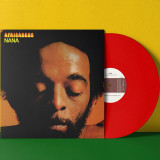
Spiritual, intimate and revolutionary, yet firmly rooted in Brazil's folklore. Africadeus was the breakthrough album of the mighty Naná Vasconcelos, in which he discovered the berimbau to the world and took the instrument to a universal level, abstracting it from its original context of capoeira. Having played in the shadows for other artists such as Milton Nascimento, Gato Barbieri or Som Imaginario, Naná is here finally in the spotlight.
Recorded in 1973 in France for Pierre Barouh's Saravah label, this is the album that definitely imprinted Naná's name in the international scene, on his track to becoming one of the best percussionists of all times.
Immensely proud to offer a quality reissue of both his early 70s albums for the French label Saravah.
Africadeus comes in its original gatefold cover, and is available in standard black vinyl and a limited edition of 200 copies on red transparent vinyl.
- A1: Les Masques - Il Faut Tenir (1969)
- A2: Isabelle Aubret - Casa Forte (1971)
- A3: Christianne Legrand - Hlm Et Ciné Roman (1972)
- A4: Jean Constantin - Pas Tant D'chichi Ponpon (1972)
- A5: Billy Nencioli & Baden Powell - Si Rien Ne Va (1969)
- B1-: Marpessa Dawn - Le Petit Cuica (1963)
- B2: Jean-Pierre Sabar - Vai Vai (1974)
- B3: Sophia Loren - De Jour En Jour (1963)
- B4: Isabelle - Jusqu’à La Tombée Du Jour (1969)
- B5: Sylvia Fels - Corto Maltesse (1974)
- C1: Frank Gérard - Comme Une Samba (1972)
- C2: Ann Sorel - La Poupée Des Favellas (1971)
- C3: Charles Level - Un Enfant Café Au Lait (1971)
- C4: Andrea Parisy - Les Mains Qui Font Du Bien (1970)
- C5: Audrey Arno - Quand Jean-Paul Rentrera (1969)
- C6: Aldo Frank - T’as Vu Ce Printemps (1970)
- D1: Christianne Legrand - Cent Mille Poissons Dans Ton Filet (1972)
- D2: Clarinha - Lemenja (1970)
- D3: Hit Parade Des Enfants - Aquarela (1976)
- D4: Jean-Pierre Lang - Tendresse (1965)
- D5: Magalie Noël - Une Énorme Samba (1970)
- D6: Françoise Legrand - La Lune
Ever since the late 1950s bossa-nova revolution, Brazil’s influence on French music has been undeniable. Pierre Barouh, Georges Moustaki and a vast array of lesser known artists, all made the Musica Popular Brasileira (MPB) an axis of promotion at the service of a cool and metaphysical, modern and mixed Brazilian lifestyle. Some were seduced by the poetic languors of the bossa, some were looking for fun, and others just loved the American hybridization of jazz-bossa, jazz-samba.
What is bossa nova? One of its creators, Joao Gilberto said: "Its style, cadence, everything is samba. At the very start, we didn't call it bossa nova, we sang a little samba made up of a single note - Samba de uma nota so .... The discussion around the origins of bossa nova is therefore useless”. It is nevertheless useful to remember that these magnificent Brazilian songs, which the guitarist describes as samba, were shifted and balanced around improbable chords. "I like things that lean, the in-betweens that limp with grace," said Pierre Barrouh, quoting Jean Cocteau.
With emotion, arrangements for violin and supple guitar licks, bossa nova rapidly changed. A transformation that can be heard in the Tchic, tchic, French Bossa Nova 1963-1974 compilation, the result of a cultural reappropriation, which traveled through the United States and supplemented itself in France.
A musical revolution that has remained significant, bossa nova was born in Rio. From 1956 to 1961, Brazil lived through its golden years. In five years, the country had invented its modernist style. Elected president in 1956, Juscelino Kubitschek de Oliveira, an elegant man with a broad forehead, brandished a promising slogan: "Fifty years of progress in five years". He quickly got to work. Not worried about increasing debt, he launched the project for a new federal capital, Brasilia, designed by the communist architect Oscar Niemeyer. Volkswagen opened state-of-the-art factories and created the “fusquinha”, the Beetle. In Rio, the Vespa made its first appearance. The Arpoador Surf Club crew run into the “girl” from Ipanema, Helô Pinheiro - the tanned garota ("chick"), between a flower and mermaid, who at 17 walked by the Veloso bar, where the fiery author and composer, Tom Jobim and Vinicius de Moraes, were getting drunk on whiskey. From then on, bossa symbolized cool.
In 1958, Joao Gilberto recorded Chega de Saudade, which the directors of Philips denied, calling it "music for fagots". The marketing director, who believed in it, secretly pressed 3000 78-inch vinyls and distributed them at schools around Rio, creating a tidal wave.
American jazzmen then took over. In particular, trumpeter Dizzy Gillespie and guitarist Charlie Byrd. In November 1962, the Brazilian Ministry of Foreign Affairs funded a "Bossa-Nova" concert at Carnegie Hall in New York, inviting the genre’s pioneers. Unprepared, the show soon turned to disaster. But the troupe was invited to the White House by Jackie Kennedy. The first lady loved "the new beat" and in particular Maria Ninguem, a song by Carlos Lyra, later covered by Brigitte Bardot.
In Brazil, the 1964 military coup quickly ended this euphoria. The destructive atmosphere that ensued pushed many Brazilian musicians to leave, if not to exile. Thus, Tom Jobim, Sergio Mendes and Joao Gilberto arrived to the United States. In New York, Joao Gilberto met saxophonist Stan Getz. At the time, he was married to the Bahianese Astrud Weinert Gilberto, who had a German father. She had never sung before, but she knew how to speak English. Getz therefore asked her to replace her husband on The Girl From Ipanema. The Getz/Gilberto record with Tom Jobim on piano, was released in March 1964. Phil Ramone, the "pope of pop" was in charge of sound.
Bossa nova arrived in Paris through the classic “guitar-voice” channel (Pierre Barouh, Baden Powell, Moustaki…) But France loved jazz and Paris had already welcomed its American contributors. All these good people were to pass through Saint-Germain-des-Prés. The cabaret l'Escale became the Mecca of Latin American sound where one could find Pierre Barrouh and his friends, such as the Camara Trio, samba-jazz aces, whose only record was published by the Saravah label. With a band strangely called Les Masques (a band that included Nicole Croisille and Pierre Vassiliu, among others), the Camara Trio recorded an interesting Brazilian Sound, including the track Il faut tenir which is present on this tasty compilation of rarities.
Other enlightened musicians can also be found on the compilation, such as Jean-Pierre Sabar (songwriter for Hardy, Auffray, Leforestier ...) and the French pop rock organist Balthazar. In 1975, Sabar recorded Aurinkoinen Musiikkimatka on a Finnish label, which featured the crazy Vai, Vai, included on this record. We are now following the footsteps of Brazilian electronic musicians such as Sergio Mendes, Eumir Deodato or Marcos Valle who created funk and disco sounds on their keyboards and synthesizers. A style that influenced Véronique Sanson when she wrote Jusqu’à la Tombée de la nuit in 1969 for Isabelle de Funès, the niece of Louis and a great friend of Michel Berger - Sanson did end up singing this track on her 1992 Sans Regret record.
The pinnacle of exoticism and travel, Sylvia Fels’ Corto Maltese includes bongos, sea mist and ocean sounds. The title was taken from Jacky Chalard’s concept album written in 1974, Je suis vivant, mais j’ai peur (I am alive, but I am scared), based on Gilbert Deflez’s science fiction novel.
However, bossa nova extended the scope of popularity. "In the 1970s, I was a fan of Sergio Mendes, Getz / Gilberto. I fell in love with this music that I knew because I had been an orchestral singer, " explained Isabelle Aubret, who in 1971 delivered a composite record of covers by the very funky Jorge Ben, Orfeu Negro, Tom Jobim, Vinicius de Morais and Jean Ferrat. "I recorded this album for Meys Records in Paris, far from Brazil, with wonderful musicians, François Raubert, Roland Vincent, Alain Goraguer...". The latter wrote the arrangements for Casa Forte, a very percussive title borrowed from Edu Lobo, one of the initiators of the bossa who spent time in California. "Jazz and bossa came together and produced very rhythmic music. I love singing, it allows me to dream, to have fun, to feel a high on stage, and these songs brought me joy, made me swing, my singing felt like a dance.”
The world tours of French singers and their desire for the tropics, often brought them to Rio with its hills, forests, caipirinhas and tanned bodies. There are surprises though, like this Iemenja (Iemenja is the goddess of the sea in the Afro-Brazilian candomblé religion). Not unlike the composer and musician Jean-Pierre Lang, based in Sao Paulo, Claire Chevalier taught Brazil to Brazil. In 1970, the singer and painter published a 45-inch vinyl, Mon mari et mes amants (My husband and my lovers), under the improbable pseudonym of Clarinha (little Claire). She was then living in Rio, with her husband, Joël Leibovitz, who founded a band called Azimuth, and who owned a record label specialized in "sambas enredos" songs for samba school parades.
For its B side, she asked Pierre Perret to come up with lyrics for a song composed by Carlos Imperial: "Oh goddess of the sea, o goddess Iemenja, I bring a white rose to adorn your long hair ..." . "Perret came to see us, and we had fun, remembers Joël Leibovitz. We wrote Lemenja for fun, we recorded it at the Havaí studio, behind the Central do Brasil the central station. Erlon Chaves, the arranger who worked with Elis Regina, joined us" adding his share of Afro-Brazilian percussions and funky brass to the mix.
There is a common misunderstanding in Franco-Brazilian history: that bossa, admittedly hedonistic, is perceived as funny, even though the poets who wrote the texts are often philosophizing on the human condition. Its French interpreters pull it towards a carnival inspired universe, far removed from its fundamental essence. Thus, Jean Constantin covered the famous Samba da minha terra, an ode to the art of samba written by the classic Bahian composer Dorival Caymmi, renaming it with the enticing title of Pas tant de tchi tchi pompon: "On your pier there is no tchi tchi / when you arch your back, you know everything is alright ”(lyrics by Gérard Calvi). This expedited bossa aims for the absurd, but retains a certain elegance.
Indeed, Jean Constantin was not an idiot, the rather large man had a huge mustache and liked fantasy, (Les pantoufles à papa, Le pacha, inspired by cha-cha-cha-cha, salsa and jazz) but he was also the lyricist of Mon manège à moi interpreted by Edith Piaf, the composer of Mon Truc en plume by Zizi Jeanmaire and the soundtrack of François Truffaut’s 400 Blows. Le Poulpe, published in 1970, from which this bossa is extract, was arranged by Jean-Claude Vannier, an accomplice of Serge Gainsbourg’s Melody Nelson. In short: "There is enough of samba / By looking at the parasol / Because my poor cabeza / Is going to die in the sun".
Even the American actress Marpessa Down, who was at the heart of the bossa nova revolution with her role as Euridyce in Marcel Camus’ film Orfeu Negro, winner of the 1959 Cannes Palme d'or, fed the clichée with Je voudrais parler au petit cuica - "Tell me how you manage to always make people want to dance / It's true, I must admit that I cannot resist your magic" - in consequence, once can hear the cuica, a little drum inherited from the Bantu.
But bossa nova had many angles. Societal, of course, pushing actresses who were symbols of women's liberation like Brigitte Bardot, Jeanne Moreau, or Sophia Loren to engage in the exercise of accelerated bossa. In February of 1963, Sophia Loren made a record in French in Rome, Je ne t'aime plus, featuring the song De jour en jour, a bossa written by two Italians, Armando Trovajoli and Tino Fornai, which was released a little later by Barclay. Bossa accompanied the 1960s, a decade of moral liberation. Ann Sorel, who interpreted La Poupée des favellas, caused a sensation with L’amour à plusieurs, a provocative song written by Frédéric Bottom and Jean-Claude Vannier. As for the actress Andrea Parisy, she displayed her bourgeois cheekiness in Marcel Carné's Les Tricheurs before interpreting Les mains qui font du bien. And Magalie Noël, the friend of Boris Vian, who sung Johnny fais-moi mal, was hired to sing Une énorme Samba, composed by Alain Goraguer (arranger to Gainsbourg, Bobby Lapointe and Jean Ferrat) with lyrics by Frédéric Botton.
But in the end, of what wood is bossa nova made of? The answer is given by Christianne Legrand, daughter of Raymond the conductor, and sister to Michel the composer: "With me, with jà" - jà means "immediately" in Portuguese. In 1972, the singer, an expert in vocal jazz and a member of the Double Six, published Le Brésil de Christianne Legrand. Two songs included on the Tchic Tchic compilation that demonstrate how bossa, jazz, funk, rock, etc. work like a swiss army knife: the music is used to denounce broken systems, or miracles, HLM et ciné roman, Cent mille poissons dans ton filet, two songs from the O Cafona soundtrack, a successful telenovela broadcast, at the time in black and white, on TV Globo. The first was adapted in French by the fighter and friend of the Legrand tribe, Agnès Varda. The second is content with a play on words, jostling them into a summer fun.
Véronique Mortaigne
REPRESS!
Exceptional music from Lance Desardi on his very own Legwork imprint.
Live Trax Vol. 1 is the first in a series of new releases that come from his live hardware sets. It’s rough & ready deep house that’s been road-tested on cultivated dance floors, including Heidigluhen, Block 9, Sunset Sound System and Love International.
For their first musical outing of 2012, Dubkasm take a walk down the avenues of digital 80s reggae, showcasing the fresh vocals of Rudey Lee and Solo Banton. 8 bit sounds meet tough JA riddims, with shades of Jammy's, Gussie Clarke and Steely & Cleevie, expertly mixed by UK veteran Nick Manasseh with razor-sharp precision. A key figure in Bristol's reggae ancestry, Rudey Lee helped connect the Bristol Sound with its dub origins through collaborations with legendary pioneers Smith & Mighty during the 90's. On his first outing since his appearance on Pinch's debut album 'Underwater Dancehall', Rudey takes us back to his reggae roots with 'Emotion', a soulful dancefloor bubbler with a conscious edge. Solo Banton, ever powerful in his hard-hitting delivery, proceeds to nail the message home with 'Are You Ready', a no-compromise deejay version taking things to a higher level. This cut guarantees a rewind in any dancehall, building on Solo's hit-after-hit track record, proven through his work with Jahtari, Maffi and Reality Shock.
- Dreamt Person V3
- Everything About You Is Special
- Slightly Bent Fork Tong V2
- Magnificent Stumble V2
- Decembers
- Can't Vote For Yourself V1
- You And Shayna V1
- Goose And Gary V2
- Anxattack Boss Level19 V3
- She Married A Chess Computer In The End
- Health Card10
- Paganism Ratchets
- Everything About You Is Ambient
- You And Shayna Slow Funk V2
- Your Bounce V1
- Magnificent Stumble V1
- Can't Vote For Yourself Video Version
- Goose And Gary V1
- Slightly Bent Fork Tong V1
- You And Shayna Video Version
- Terrazen 1012Nc
- Resting Tongue
The tenth anniversary edition of Venetian Snares' Traditional Synthesizer Music adds ten more tracks and alternative versions previously available only on a limited edition compact disc from the artist's Bandcamp.Traditional Synthesizer Music is a collection of songs created and performed live exclusively on the modular synthesizer by Aaron Funk. Each sound contained within was created purely with the modular synthesizer. No overdubbing or editing techniques were utilized in the recordings on Traditional Synthesizer Music. Each song was approached from the ground up and dismantled upon the completion of its recording. The goal was to develop songs with interchangeable structures and substructures, yet musically pleasing motifs.
Many techniques were incorporated to "humanize" or vary the rhythmic results within these sub structures. An exercise in constructing surprises, patches interrupting each other to create unforeseen progressions. Multiple takes were recorded for each song resulting in vastly different versions of each piece, a number of which are released for the first time on vinyl and digital for this updated version of the album. BIO Aaron Funk, mainly known artistically as Venetian Snares, is a Canadian electronic musician based in Winnipeg, Manitoba who’s been working since the mid nineties. He is widely known for innovating and popularising the breakcore genre being something of its breakout star. His signature style features complex drums and unusual time signatures and a knack for making ultra-vivid music that takes listeners into unusual places, from the aggressive and extreme, to the surreal, comic and sometimes plain beautiful. His musical explorations extend out in many different ways, from the complex Hungarian, classical-inspired Rossz Csillag Alatt Született, to acid explorations as Last Step, to innovations with modular synths on Traditional Synthesiser Music.
As a collaborator, he’s made music using intimate recordings as musical elements with the artist Hecate as Nymphomatriarch, as Poemss with Joanne Pollock, where they both sing over strange delicate pop. He’s recorded an album of rich, edited improvisations with producer and guitarist Daniel Lanois and he’s also part of the sometime duo Speed Dealer Moms with John Frusciante. Most recently he features on Rosalia’s album Lux on the song Reliquia, providing drum programming and production input.
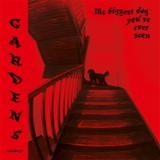
Following their debut album "Flaws," here is a high-quality follow-up from GARDENS. The popular Viennese indie band are making music that feels warm, direct, and a little rough around the edges. Bright guitars, soft synths, and melodies that stick without trying too hard. Their sound drifts between indie pop, dreamy folk, and gentle garage energy, grounded in honest, quietly catchy songwriting. EP digitally and on ltd tape available. "GARDENS certainly succeed in adding new layers of inspiration into the modern dream-pop genre, something which has been far too long overdue for a refresh. Their debut record offers a colossal level of promise" - Far Out Magazine " an irresistible sonic tapestry" - KEXP "intricately crafted_glistens with warmth and depth" - DIY
Death Is Not The End collaborate with Uzbek label Maqom Soul to deliver an LP counterpart to last year's mixtape of the same title, compiling specially picked & fully licensed individual belters from the ex-soviet studios of Central Asian republics between 1978 and 1989 - incl. Uzbek, Tajik, Kurdish & Uyghur artists pulling traditional folk motifs together with pop & rock and psych elements.
"These recordings do not form a smooth or coherent history. They feel more like a sequence of discoveries made at different moments and in different circumstances. Songs and instrumental pieces that once lived inside specific contexts radio broadcasts, philharmonic programs, touring routes now sit side by side, revealing hidden connections as well as clear fractures between them.
Nasiba Abdullaeva appears here as a voice from the end of an era. Trained within a conservatory system, she worked inside the format of the Soviet pop song while filling it with melodic logic that did not come from Moscow or Leningrad. Her voice is soft and sustained, shaped by Eastern melisma, and it never functions as decoration. Even in tightly structured songs there is a sense of resistance, an effort to preserve a musical language rooted in Uzbek tradition rather than fully adapted to an all Union standard.
The ensemble Sintez, later renamed Navo, represents a different path. Beginning as a student rock group, the band was gradually absorbed into the official VIA system with all its limitations and compromises. Yet it was precisely within those boundaries that Sintez and Navo developed a recognizable sound. Electric guitars and jazz rock harmonies do not overpower the folk material but remain in tension with it. Their recordings feel like negotiations between what the musicians wanted to play and what they were allowed to perform.
The Tajik ensemble Gulshan reflects an institutional approach carried to a high professional level. Formed under television and radio structures, the group treated folk material almost as a written score. Carefully constructed arrangements, close attention to orchestration, and restrained use of pop techniques define their sound. There is less spontaneity here, but a strong sense of discipline and structure, where national melody becomes part of a carefully controlled sonic framework.
Koma Wetan occupies a very different space. Formed in the 1970s, this Kurdish rock group approached poetry and folklore as tools of cultural assertion. Their psychedelic rock never feels like a stylistic borrowing. Instead it functions as a contemporary vessel for language and themes that might otherwise have remained unheard. Even today these recordings sound fragile and stubborn at the same time.
The Uyghur ensemble Yashlik, closely connected to a musical drama theatre, operated somewhere between stage performance and popular music. Their songs are built on folk melodies but shaped for wide audiences. What emerges is a constant attempt to preserve the recognizability of Uyghur musical identity without freezing it in a folkloric frame. Yashlik's music exists in a state of balance between representation and development.
Digging Central Asia does not attempt to establish hierarchies or offer a single wayof listening. Names and dates matter less than the sound itself. Tape noise, abrupt transitions, and unexpected timbres remain part of the material rather than flaws to be corrected. This music existed at the crossroads of multiple routes geographic, cultural, and ideological. Heard today in a new context, it no longer feels peripheral. Instead it stands as a reminder that the history of popular music is far more fragmented, layered, and polyphonic than it is usually allowed to be."
- 1: The Show Ain't Over Till The Fatman Swings
- 2: Portrait Of A Fiend
- 3: Just Like A Niguh
- 4: From The Brick Jungle
- 5: It Ain't Easy Bein' Me
- 6: Only In America
- 7: Hustler
- 8: It's Getting Hard
- 9: T.h.i.c.k
- 10: Marrero
- 11: You Said It Couldn't Be Done
- 12: Leave 'Em Out There
- 13: Bitch Contro
Originally released in 1993 on Big Beat/Atlantic, MC Thick’s The Show Ain’t Over Till the Fatman Swings followed his 1991 underground single “Marrero (What the Fellas Be Yellin)” and marked a defining moment for the Marrero, Louisiana rapper. While early ’90s New Orleans was dominated by bounce, MC Thick stood apart with gritty, street-level storytelling and a raw, unapologetic voice.
Featuring “T.H.I.C.K.” and production work involving T-Ray (Todd Ray), known for his work with Cypress Hill, the album remains an important piece of Southern rap history.
Fully remastered and pressed on black vinyl, this is the first vinyl availability in decades. Housed in a full-color jacket with a printed insert and is limited to 500 copies worldwide.
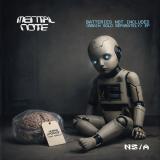
‘Batteries Not Included (Brain Sold Separately)’ EP Arrives Via No Static Automatic
No Static Automatic is proud to announce the new EP from UK Electro legend Phil Klein under his Mental Note alias. Titled “Batteries Not Included (Brain Sold Separately),” this release marks the dynamic follow-up to the acclaimed 2020 debut “Voices In My Head (Noises In My Pants).”
Few authentic Electro producers from the UK can wear the badge ‘legend’ with the same level of justification as Phil Klein, aka Bass Junkie. Active since the late 80s, Klein has tirelessly shaped his distinct vision of Electro, both as a solo artist and through storied collaborations with icons like Dynamix II, Keith Tenniswood (Radioactiveman), and Si Brown (Dexorcist). As a DJ, remixer, live act, and the driving force behind the seminal Battle Trax label, his influence is woven into the fabric of the genre.
With essential releases on labels including DMX Krew’s Breakin’ Records, Andrea Parker’s Touchin’ Bass, and Billy Nasty’s Elektrix, the Bass Junkie sound seamlessly bridges the old-school beats of Electro’s origins with a potent, borderline-industrial edge. As noted by Andy Barton of Bass Agenda: “From funky to ferocious, Bass Junkie’s discography is a must-have for anyone claiming passion for the genre – influential, individual, and infectious with every beat.”
Now, as Mental Note, Klein continues his exploration of electronic psychedelia. The new EP, “Batteries Not Included (Brain Sold Separately),” is a four-track expedition through the Electro cosmos:
“Brainwash” immerses the listener in swirling, hypnotic synths.
“They're Not Blue, They’re Purple” delivers a masterclass in crunchy, textured drums.
“Primordial Soup” showcases frantic, intricate programming.
“Kluster Funk” offers a moment of deep, sonic relief and groove.
Each track reinforces Mental Note’s signature: a journey that is cerebral, raw, and irresistibly rhythmic.
About Bass Junkie/Mental Note:
Phil Klein, operating primarily under the alias Bass Junkie, is a cornerstone of the UK Electro scene. For over three decades, his work has defined and evolved the sound, earning him a revered status among peers and purists. His Mental Note project is a focused outlet for a deeper, more experimental strand of his production genius, further solidifying his legacy as an electronic music innovator.
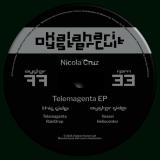
Traversing wormholes and flexing versatility, Nicola Cruz gets back on his club-ready biz.
No proper introductions needed here. Sometimes you just have to sit back and appreciate someone at the top of their game. The third portal thing, done masterfully. Hats off.
Time-honoured templates that provide the foundations for his hybrid mutations. Three mescaline-strength techno incursions backed up with a vivid projection of fractal electro.
Big on murk. Properly steeped in introspection, expanding consciousness and horizons. The vision quest endures for the duration.
New levels of insectoid detail and lysergic flourish revealed with every close listen, but he’s always keeping it robust. Giving it chest with some serious dancefloor dramatics until the final unfurling.
- A1: Piano Terra (Intro) – 01:02
- A2: Ricordati Di Me – 01:29
- A3: Sono In Un Van – 03:11
- A4: Onda Feat. Lauryyn – 03:07
- A5: Attesa (Skit) – 01:19
- A6: 10 Days Feat. Sup Nasa – 02:47
- A7: Avevo Un Sogno – 03:18
- B1: Ideal – 02:15
- B2: No Answer (Skit) – 00:58
- B3: La Noche En Que Te Fuiste – 03:29
- B4: Della Morte E Della Grazia – 02:28
- B5: Ikyk – 04:10
- B6: Calma – 02:22
- B7: Ultimo Piano (Outro) – 00:53
"PRONTO" is the debut album by ARYA, an Italian-Venezuelan artist who grew up in Milan. ARYA arrives with this first full-length album after the EPs
Peace of Mind (2021) and Punto Zero (2023), collaborations (Mahmood, Venerus, Ghemon, Dardust, Calibro35, and many others), and an intense live
activity, which have made her one of the most interesting voices on the Italian neo-soul/R&B scene.
Born from a personal journey of therapy and awareness, "PRONTO" takes shape as a concept album, transforming the emotional investigation into a
coherent and layered musical narrative. The title captures the meaning of the project: "Pronto" is a word that crosses all the languages present on the
album—Italian, English, and Spanish—taking on different meanings ("subito," "presto"), and is also the first word uttered in the intro. A term that introduces the listener to a space of availability, anticipation, and presence.
The entire album was produced by Claudio La Rocca (Sup Nasa), a key figure in building the project's sonic identity. Giuseppe Seccia, Matteo D'Ignazi,
Martina Tedesco, Tiziano Codoro, Stefano De Vivo, and Giulia Gentile also contributed to the album, recording the instrumental parts and contributing
to the arrangements and production of some tracks.
With "PRONTO," ARYA takes the listener on a journey through different levels of her emotional history, until the elevator starts moving again and leaves room for a new possibility of balance.
ARYA (AryaDelgado) is an Italian-Venezuelan artist born in Milan in 1994. Daughter of salsa singer Orlando Watussi, she grew up surrounded by music
and quickly developed a sensibility that blends Latin roots, nu-soul, and contemporary R&B, with a strong focus on the emotional and narrative dimensions of her writing. In 2021, she released her debut EP, Peace of Mind, followed in 2023 by Punto Zero. These releases attracted press attention
and led to collaborations with artists such as Mahmood, Venerus, Ghemon, Dardust, and Calibro35. Over the years, she has consolidated an increasingly recognizable presence, alternating songwriting, solo production, and an intense live schedule in Italy and abroad. In 2024, she accompanied Mahmood on tour and released the single, "Si Potesse Tornare." In 2025, La Noche En Que Te Fuiste and Onda were released, songs that marked the
beginning of a new artistic chapter and anticipated the release of “PRONTO,” her debut album, released in February 2026. An intimate and layered
work, which focuses on vulnerability as a language and confirms ARYA as one of the most personal and aware voices of the new Italian soul scene.