Mats Gustafsson - Flute, baritone sax, live electronics, Johan Berthling - Electric bass, Andreas Werliin - Drums with Goran Kajfes - Quartertone trumpet, Mats Aleklint - Trombone, sousaphone, horn arrangements. Fire! tracking new paths and reaching new levels of excellence, still honoring their 12 year old vow of presenting a fresh approach to improvised music. Their debut album, You Liked Me Five Minutes Ago, was released in 2009 to wide international acclaim. "The basic strategy of pairing the expressive energy of free jazz with a sturdy sense of groove has yielded something potent and self-contained" (New York Times). Between this and Defeat there's been five albums, including collaborations with Jim O'Rourke (Unreleased?, 2011) and Oren Ambarchi (In The Mouth A Hand, 2012). No two Fire! records sound the same, but with Defeat they have taken their biggest leap so far, with Gustafsson giving the flute a prominent place in the sound image, a surprising and most successful move, his both expressive and ornamental approach given ample room to breathe, especially on the two long tracks bookending the album. In places more subdued than on previous efforts, but with the distinctive bass figures and hypnotic mood fully intact. There are some lively stretches with guests Goran Kajfes and Mats Aleklint, bringing to mind their big band offshoot Fire! Orchestra, albeit on a smaller scale. For over 20 years we have made a habit of releasing music that is beyond easy classification, in later years typified by Hedvig Mollestad, Elephant9 and Krokofant, but cemented by Fire! and their exploratory curiosity and deep love of music in general. We, and many others, have tried to compare the trio to other groups, but listening to Defeat we realize how futile this is. Given the above there's no doubt there are many influences at play, but the resulting brew is in a class by itself.
Search:level 8
TERMINAL BLISS makes their Relapse Records debut with the unrelenting album Brute Err/atta! A veritable who’s who of Virginia punk, the band features vocalist Chris and guitarist Mike Taylor (Pg. 99 and Pygmy Lush), drummer Ryan Parrish (Darkest Hour, Iron Reagan, City of Caterpillar) and bassist Adam Juresko (City of Caterpillar). Inspired by the likes of Born Against, Gauze and Void—not to mention Black Flag, Crass, Negative Approach, Disrupt, Necros, Crossed Out and Disclose—TERMINAL BLISS conducted their first band practice on January 14 th, 2020. Just six weeks and five practices later, they were recording their full-length debut with Majority Rule frontman Matt Michel in the engineer’s chair. The name TERMINAL BLISS was born out of the merciless consumerism and environmental destruction that are America’s enduring legacy. From dystopian, sci-fi themes in tracks such as “March of the Grieving Droid”, to the apathy of the checked-out masses on “Small One Time Fee” and the personal recount of loss and the inefficacy of our healthcare system in "Clean Bill of Wealth", it’s the merging of personal experience and social critique that has informed the punk edge behind the members of TERMINAL BLISS for decades now. For TERMINAL BLISS, it’s become a crucial combination born of decades of playing live. (Unfortunately, the band’s first show was cancelled when the US began its COVID-19 lockdown.) “I realized early on that if you don’t write something that resonates with yourself on a fundamental level, it’s going to get trite when you’re performing night after night,” Chris Taylor says. “So, with the idea in mind that we’ll eventually play shows, I always try to write something that will resonate.”
Digging deep through old and new, Basso captures arcane woodland fusion, serene electronic suites and wide eyed Balearic bliss on this first Growing Bin compilation.
This collection celebrates those precious records which land in your life on their own terms. Even the most advanced digger will admit that chance is the secret ingredient in any successful haul. Sure, it helps if you know where to look, but if you arrive a day early at that secluded second hand shop, or an hour late at the convention, you might miss out on a rare sight of sound. But there are still ways to skew the odds in your favour. Even in the most crowded urban environment, a solitary tree soon becomes a nest, and Basso's fostered an abundant garden in his Hamburg hometown. A decade on and the Growing Bin is a safe haven for those exquisite sounds crowded out of the mainstream, the rare birds with the most striking song.
'Coffee' comes right after cocoa in the bin's headquarter, though start your morning with One Tongue and be prepared for a different kind of day. A witch's brew spiced with a hint of Durian and the early bird, this 1990 composition could be the blueprint for the Teutonic trance dancers beloved by the Salon set. A more meditative magic flows through the A2, a smooth blend of fusion guitar, softly syncopated drums and counterpoint keys from one time art-rockers Inandout. This Growing Bin favourite from their '93-95' LP sounds right at home beside the majestic melodies and spheric bass of Matthias Raue's 'Brücke am schwarzen Fluss 2'. Taken from the soundtrack to a TV drama filmed in Mali, this digital homage to African rhythm shimmies in step with New Age dancers from Mkwaju Ensemble and Louis Crelier. The A-side ends with the unbridled optimism of Kosmische maverick Hardy Kukuk. The synthesist hit the studio with friends Karsten Raecke and Andreas Schneider in 86, coalescing crystalline electronics and gentle guitar into tender chord progressions suited for sun bathing beside the Sea of Tranquility.
The second side slinks into motion with the deep beauty and sincere spoken word of Frank Suchland's 'Schnee', a subtle body in a cocoon of reverb which takes Sade's 'I Never Thought I'd See The Day' to another level of placidness. Melancholic Germans Die Fische met in Cairo for the first time, and 'Conversation Of Everyday Lovers' could be the theme for that great city. Underpinned by primal percussion and a restrained groove, the track twists and turns between a trio of ineffable motifs, eternal combinations to the catacombs of Abusir. From there we go sublime, soaring skywards with a ten minute triumph from Hugh Mane. Balancing concentric sequences and space age synth riffs atop an irresistible breakbeat and bubbling bassline, the British producer finds a sensuous sweet-spot between fellow Growing Bin affiliates Krakatau and Singu.
Lucky are we who hear the Bin's sounds.
Patrick Ryder
Wild Pink’s last album, 2018’s Yolk In The Fur, concluded with a song about the strange sense of relief that comes with “letting go of youth.” Frontman John Ross, then in his early thirties, was singing from a place of newfound comfort and wisdom, but it ended with a repetition of the line, “I don’t know what happens next.” The song, titled “All Some Frenchman’s Joke”, is a beautifully concise rendering of a universal milestone: leveling up from the wide-eyed naivety and self-destructive routines of our youth, only to realize that we’re as unprepared for the future as we were for the past. On Wild Pink’s third album and first for Royal Mountain Records, A Billion Little Lights, Ross explores that dichotomy of finally achieving emotional security—of accepting the love and peace he deprived himself of in his twenties—while also feeling existentially smaller and more directionless than ever before. The record is a two-pronged triumph: an extraordinary reflection on the human condition presented through the sharpest, grandest, and most captivating songs Wild Pink have ever composed. The band, which is rounded out by bassist T.C. Brownell and drummer Dan Keegan, formed in New York City in 2015 and put out a handful of EP’s before releasing their critically acclaimed self-titled debut in 2017. It was a sophisticated showing for a band’s first album, but it was the striking maturation of Yolk In The Fur that established Wild Pink’s unique sound: a glistening variety of pastoral indie-rock akin to The War On Drugs, Death Cab For Cutie, and Kurt Vile, but informed by classic American rock poets like Bruce Springsteen and Tom Petty.
- A1: The Ironsides - Sommer
- A2: Thee Sinseers - What's His Name
- A3: The Resonaires - Standing With You
- A4: Jr Thomas & The Volcanos - Sunk In The Mist
- A5: Ikebe Shakedown - Adonai
- A6: Ben Pirani - More Than A Memory
- A7: The Winston Brothers - Winston Theme
- A8: The Harlem Gospel Travelers - Nothing But His Love
- A9: Delvon Lamarr Organ Trio - Inner City Blues
- A10: Dojo Cuts - Here We Are
- A11: The Soul Chance & Wesley Bright - Who Could It Be?
- A12: Monophonics - It's Only Us (Acoustic)
- A13: Ghost Funk Orchestra - Fuzzy Logic
- A14: Reverend Baron - Jackie
- A15: Rudy De Anda - Espume
- A16: Andrew Gabbard - Cloud Of Smoke
- A17: Young Gun Silver Fox - Baby Girl
- A18: Kendra Morris - This Life
- A19: M Ross Perkins - Wrong Wrong Wrong
- A20: Ga-20 - I Ain't Got You
- A21: The Gabbard Brothers - Too Much To Feel
- A22: Neal Francis - Changes (Demo)
From label owner Terry Cole, "It was on March 16, 2020 that we closed up our storefront as the reality of a worldwide pandemic began to spread across the Midwest. We had no idea how it was going to impact our shop, our label, or the artists we represent. We were all fortunate to have our family members stay safe and healthy; however, the livelihood of many of our friends and artists were drastically and immediately impacted. No tours, no live performances, record shops closed, pressing plants shut down, etc. And while the level of uncertainty was unnerving, from that uncertainty came the idea for Brighter Days Ahead. We knew we wanted to continue to release new music, but proceeding with our heavy 2020 release schedule as planned seemed ill advised. So the idea was to release individual tracks from many of our artists on a weekly basis and as a musical family, we could all help shine light on each individual artist weekly. Strength in numbers! So throughout the summer and into the fall, that's what we did. We released several dozen tracks and the weekly announcements certainly garnered a strong sense of community for our artists and fans alike. We're very proud to present Brighter Days Ahead: a compilation from our talented stable of artists on both our Colemine and Karma Chief imprints."
"Awaken the Legacy" is the first EP to be released in early September 2020 on the Berlin Techno Label INHERIT. The four-track release spotlights two original tracks from the founders of INHERIT Daniel Heinrich & Disguised as well as two remixes by MORBECK & YA.
The original tracks "Awaken the Legacy" & "Power" perfectly demonstrate why Daniel Heinrich & Disguised decided to take their collaboration to the next level and to found INHERIT at the beginning of 2020. The sound of both original tracks is straightforward and shakes your body to a melodic mix of trance tunes combined with hard drum sessions.
MORBECK from Berlin, founder of "Code is Law" & "Low Life Club" brings with his first and unique driving remix a death melody interpretation of "Power" to the EP. The re-mix stands out with a playful and forward-driving rhythm and can be called the most danceable track on the EP.
YA from Paris, founder of Mainmise Records and Pulse perfectly completes the first release with his remix of "Awaken the Legacy'. His typical YA sound, as well as the mix of trance & hard techno elements, energizes you and lifts off the track to a different level. No time to rest, this remix should be part of every driving DJ set.
When Claud Mintz's mother finally heard the 13 songs on her kid's magnetic first album, Super Monster, she asked a concerned question: Just how many people had her 21-year-old dated? From beginning to end, these sparkling pop tunes capture the assorted stages of a relationship's delight and dejection_the giddy sensation of a first kiss during the beaming "Overnight," the heartsick longing of a pending rejection during the yearning "Jordan," the reluctant call for a requisite breakup during the smoldering "Ana." Claud, though, replied that these songs detailed the phases of only two or three relationships, simply written during them or at various points after they were over. The debut release on Phoebe Bridgers' Saddest Factory Records, Super Monster is a vertiginous but joyous coming-of-age reckoning with such young love. Claud sees relationships as games of endless wonder, intrigue, and second-guesses, a roller-coaster thrilling you even when it's terrifying. If "Gold" turns the tension and indecision of a bad match into an undeniable bit of lithe disco, "That's Mr. Bitch To You" uses a spurt of righteous indignation to fuse a little soul and emo into one breathless hook. Super Monster is like a compulsive compilation that Claud culled from a lifetime of musical enthusiasms_the arcing alt-rock of '90s airwaves, the rapturous pop of '00s chart-toppers, the diligent genre-hopping of modern online life. Claud emerges as the chameleonic mastermind of this mélange, channeling all of love's emotions into songs so sharp they make even the hardest times feel fun. Perhaps you are in the throes of one of these romantic moments yourself right now, resentful of a frustrating paramour like Claud during "Pepsi" or indulging in lust like "In or In Between." Or maybe these songs recall those wild days and tough situations. Incisive, instant, and addictive Super Monster works on either level_to remind us of love's wild ups and downs or to help us deal with them in real time. In that way, Mom, these songs are about dating, well, everyone.
Watching Abul Mogard’s Live performance in Atonal Festival 2017 and his releases on Not Waving’s Ecstatic record label were somewhat of a milestone in Malka Tuti’s sonic aesthetics. His ability to touch us with those pulsating sonic textures com-ing out of his modular machine inspired us in MTHQ for years to come. We were more then happy that Mogard chose to contact Tapan about their album and eventually deciding to remix not one but two track from the Belgrade duo… It was like a circle coming to a close.
On the A-side Mogard take the original 17 minute sax infused piece that is EUROPA and drenches it with drones and low freq pulses and atmosphere, creating a some sort of a post apoca-lyptic intense atmospheric soundtrack. The effect of drowning the horns from the original track in a sea of drones and pads, contributes to the over all impression of listening to a distant memory of music… fitting for days like these....
On the B-side Mogard takes it to the next level, capturing a line from Tapan's original collaboration with Jerusalem In My Heart's Radwan Ghazi Moumneh, and passing it through his modular system, amalgamating an epic piece of tension build ups and repetitive movements...
The original artwork was made by artist Marja de Sanctis and adapted, as always, to the sleeve by Morey Talmor.
"50th anniversary pressing of two iconic studio albums from America’s greatest rock and roll band at the peak of Creedence’s prolific career. Both albums were mastered at half-speed at Abbey Road Studios, benefiting from an exacting process that allows for an exceptional level of sonic clarity and punch. This 180-gram vinyl comes housed in a tip-on jacket replicating the original pressing packaging.
PENDULUM - First released in 1970, marking the band’s second release that year (following Cosmo’s Factory); their final with the original lineup •Includes the timeless hits “Have You Ever Seen The Rain,” “Hey Tonight” and more •Mastered by Miles Showell at Abbey Road Studios using an exacting half-speed technique for superior sound quality •Pressed on 180-gramaudiophile-quality vinyl, housed in a replica tip-on jacket
MARDI GRAS - THE FINAL STUDIO ALBUM FROM AMERICA’S ALL-TIME GREATEST ROCK BAND•Celebrating Creedence Clearwater Revival’s 50th anniversary•Includes the classics “Sweet Hitch-Hiker” and “Someday Never Comes,” plus a cover of “Hello Mary Lou”•Mastered by Miles Showell at Abbey Road Studios using an exacting half-speed technique for superior sound quality•Pressed on 180-gram audiophile-quality vinyl, housed in a replica tip-on jacket"
It was a solid bet that Skratchorama Records would release a 7” DJ tool specifically crafted for the international portable turntable scene. DJ Chmielix is known as a perfectionist when it comes to music production, turntable music, DJ battles and a rubix cube… he’s as hard on the cut as they come and the Mighty Wicked 7” embodies these vibrations.
The A & B side of this record both include 6 original skipless acapella scratch loops with a variety of laser samples, aaaahhhs and fressshhhhes. Side A has 4 tracks arranged in 100BPM and 2 tracks in 133.33BPM. Side B is all arranged at 83.33 BPM for use at regular speed on a turntable. This offers the ideal track size for a 7” battle record. The tracks are large enough to easily cue the needed loop on the fly, and small enough that the maximum amount of samples can be put on the record… needle dropping made easy! Each side’s tracks are separated by hidden samples which inject creativity into performances using this record. At the end of each side a single rotation of each skipless loop has been arranged twice back to back giving DJ’s two full sample banks to get dirty on the cut with.
The record has a secret theme, but we’ll leave it to you to figure it out!
Pressed on blue vinyl, artwork by Maciej Kwietnicki, and mastered by the legendary D. Perez, you are in for one of 2020’s finest scratch records… it’s time to take it to the next level!!
Much has changed in the musical life of renowned composer and director John Carpenter since 2016's Lost Themes II. Following the release of that album, he went on his first-ever concert tour, performing material from the Lost Themes albums, as well as music from his classic film scores. He re-recorded many of those classic movie themes for 2017's Anthology album, working alongside son Cody Carpenter and godson Daniel Davies. The following year, he was asked to executive produce and compose the music for the new Halloween movie directed by David Gordon Green, which promptly became the highest-grossing installment in the series. Now, he returns with his first album of non-soundtrack music in nearly five years, Lost Themes III: Alive After Death. Underpinning Carpenter's renaissance as a musician has been his collaboration with Cody Carpenter and Daniel Davies. They've composed and performed as a trio throughout this entire run, on studio albums, on soundtracks, and onstage. Here, the trio reaches a new level of creative mind meld. Richly rendered worlds are built in the interplay between Davies's guitar and the dueling synthesizers played by the Carpenters. "We begin with a theme, a bass line, a pad, something that sounds good and will lead us to the next layer," John says of the trio's process. "We then just keep adding on from there. We understand each other's strengths and weaknesses, how to communicate without words, and the process is easier now than it was in the beginning. We've matured." Whereas the original Lost Themes album came as a pleasant surprise after years of relative silence from Carpenter, the third installment sees him in the midst of a resurgent moment as a cultural force. The 2018 Halloween score gave his music its biggest audience in decades, and the world he releases his new album into is one that has, at long last, given him the credit he deserves as a founding father of modern electronic music.
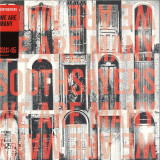
South London-based band Soothsayers are set to release their ninth studio album 'We Are Many'. Held together by heavy basslines, solid grooves, and socially and politically charged lyrics; the album takes the listener into different sonic spaces with elements of dub, Afrobeat, improvisational jazz and electronica.
The initial steps in recording 'We Are Many' came in January 2019 when the band's founders - saxophonist Idris Rahman and trumpeter Robin Hopcraft - set out on a journey to Brazil. With executive production in the Sao Paulo studio by renowned music journalist and author David Katz, they hooked up with bass player and producer Victor Rice who they'd met sharing the bill at Freedom Sounds festival in Cologne, Germany a year earlier. Victor organised a session in Studio Traquitana, home of acclaimed Brazilian band Bixiga 70, and invited a selection of local musicians. Percussionist and singer Ligia Kamara contributed lyrics and melodies written in the studio, and drummer Bruno Buarque, guitarist Joao Erbetta and bassist Victor provided some solid, personality-driven input. Fresh and vital, what came out was a fascinating blend of Soothsayers' dub and Afrobeat mixed with distinctly Brazilian inflections.
After arriving back in the UK, Idris and Robin set about creating the remainder of the album in a different, yet complimentary way, and called on the services of Wu-Lu and Kwake at their The Room studio in South London. Things started to take shape very quickly, Wu-Lu and Kwake combining Soothsayers' music with electronic elements, while also referencing elements of the current UK jazz scene.
When lockdown hit in March 2020, there was still a lot of work to do in order to complete a full album and Robin and Idris set about working on tracks with their musicians remotely. Having time to consider the album as a whole, they found strong connections between the music recorded in Brazil and the tracks recorded in London and they set about fusing and combining these elements further into a satisfying whole.
UK based Sengalese singer Modou Toure was enlisted to guest on one track while percussionists Satin Singh and Maurizio Ravalico were engaged to help affirm a sound-world where Brazilian flavours, such as the low-end Surdo drum, were combined with sounds more readily associated with reggae and Afrobeat.
Soothsayers' three part vocal harmony is a defining factor in this album. With strong references to the vocal styles of reggae legends such as The Gladiators, Mighty Diamonds, Heptones, and Abyssinnians; it has benefited from the long-standing friendship between Robin, Idris and Julia Biel. Lyrics, melodies and harmonies were presented, discussed, explored and recorded at Idris' and Julia's home studio in Streatham in a relaxed and positive way, with concepts from social and political commentary turned into powerful songs.
Themes cover political observations of Trump and beyond alongside Brazil's president Bolsanaro (Rat Race), speaking out against increasing levels of violence from the Brazilian government towards its native and indigenous people (Love And Unity) and keeping hopeful despite the impending horrors of a no-deal Brexit (We Won't Lose Hope).
Elsewhere they discuss striving to create space for meditation and reflection against the background noise of 24/7 news and social media (Move In Silence), the daily grind (No Sacrifice) and workers' rights (Slave), while highlighting those that fall through the cracks in society and end up without a permanent address, what led to this and how close we all are from this happening (One Step Away).
'We Are Many' represents a positive and uplifting statement in the face of challenging times - the overriding force, power and positivity of the music to continue forward, pushing the boundaries of musical concepts into the future.
"Whilst heavy questions of life and death and the future of our species surround us all, music is a guide that can help us perceive the challenges in a different way - a guide that can help us towards a deep inner peace. If we listen, music can help light the way. We hope you will listen, and we hope you will experience the joy, meditative power and beauty in the connection of different musical cultures that was experienced in the creation of this album."
Two years after the release of 'Kreise' Selm have once again peered out from the torture racked enclave they call a studio. Originally conceived as two separate EP's and later stacked into an all-consuming album over 44 minutes 'TiiiER / Post-Adrenaline' pushes Selm's agenda of black dwarf techno and physically exhausting industrial churning to new levels. The opening salvo of tracks that form the 'TiiiER' disc (tracks 1-5) posit a techno minimalism coated in the incredible, almost edible crust of controlled distortion and flaking edges garnered through masterful gain staging. Opener 'Sin' accrues greater density with each iteration and pass. 'Kreise' is classic DBX style beep ran into manic filters and weight gain classes.'Moger' is a truly sinister and clinical piece of industrial sound design raising blood pressure with its stainless steel poise. 'Laus' is a real percy, syncopated just the right side of falling over and baked into the toughest compression throbs. It closes the first 'disc' and perhaps what could be considered the more straight forward tracks of the album. 'Post-Adrenaline' the second disc of the set is where Selm's love of intensely textural sound design work can be best felt. 'Nineteen Voices' opens with its disembodied conversations utterly smothered by the roiling mass of bass synth which surrounds on all sides. 'Irr' terrifies the young with it's truly OTT undulance of seismic tone, as reverential to death industrial as it is to guitar music, the riff laid bare. 'Brett' is a damp, warm environment of intelligent growth. Fermenting itself again in a stew of gnashing bass heaviness now crowned with glowing bowed metal and tuned feedback. 'Sommeil' closes the second disc with not a single positive note played, it's a dreary escalation of all the albums previous incarnations, flickering noise shaped rhythm, serpentine bass formations and no rush to please or to entertain. At just under 6 minutes, it and the album are over. Selm do not hold up on this follow up to Kreise. While the albums share ideas they are refined to a point of punishment here. 'TiiiER / Post-Adrenaline' is hyper-modern music that sounds like it's made from air, stone and rust.
Ralph Heidel is one of the young musicians that represent the spirit of Berlin’s new musical ecleticism better than others. He is part of the avantgarde circles that mix modern jazz and contemporary classical music with elements of new electronica and experimental ambient music. This is the vibe of Germany's next generation.
Heidel creates a sonic universe that is unique. He takes the listener into a deep, atmospheric travel that stimulates emotions and feelings on a different level. Heidel brings together two worlds: what he learned at Musikhochschule München, Germany’s leading academy for classical music where he studied saxophon and composition and the moods happening in Germany's new electronic circles.
On „Relief“ Heidel created six songs. Except one, all of them are instrumental music. Partly composed and often improvised these sounds take the listener into Heidel's specific sonic universe. Raw beat structures, emotive horn lines, strong harmonical tensions and dramatic build ups. Heidel’s signature sound.
In fact Heidel is a multiple influenced artist with a strong personality that absorbs whats around him, connects it with his own wide artistic knowledge and fullfills it into magical musical moments.
Relief is the next step in what could become a longtime artistic career.
After a (very composed) debut album for string quartet and rhythm section for Kryptox (Moments of Resonance 2019), it was important for Heidel, to process current feelings of daily life.
Not just his cultural learnings, but also emotions connected to the hard COVID times and a lot of personal experiences.
Relief are six abstract, distorted patterns. Long deep transitions that lead into euphoric parts of sonic greatness. Heidel's sense for sound design and the soft tone of his saxophone phrases, add a personal note that is somehow alone in the current music scenario. Sampling his saxophone (reeds, keys etc.) to create very organic beats is one of the many techniques to create that special „Heidel“ sound. Also his calm and wide harmonies over disquiet, rough drums are part of his unique ambivalent, disrupted moods.
Most of this EP has been played by Heidel alone. For a few parts he was joined by musicians from the local scene. In fact besides his albums on Kryptox Ralph Heidel is very connected in Berlin’s current cultural playground: He creates music for underground performance art happenings in Neukölln as well as for new German theater (Volksbühne, Berliner Ensemble). Also German rapper Tarek from K.I.Z heard about Heidels string debut album, so they collaborated for an album, where Heidel reworked his record for stringquartet, piano, drums and bass.
South London-based band Soothsayers are set to release their ninth studio album 'We Are Many'. Held together by heavy basslines, solid grooves, and socially and politically charged lyrics; the album takes the listener into different sonic spaces with elements of dub, Afrobeat, improvisational jazz and electronica.
The initial steps in recording 'We Are Many' came in January 2019 when the band's founders - saxophonist Idris Rahman and trumpeter Robin Hopcraft - set out on a journey to Brazil. With executive production in the Sao Paulo studio by renowned music journalist and author David Katz, they hooked up with bass player and producer Victor Rice who they'd met sharing the bill at Freedom Sounds festival in Cologne, Germany a year earlier. Victor organised a session in Studio Traquitana, home of acclaimed Brazilian band Bixiga 70, and invited a selection of local musicians. Percussionist and singer Ligia Kamara contributed lyrics and melodies written in the studio, and drummer Bruno Buarque, guitarist Joao Erbetta and bassist Victor provided some solid, personality-driven input. Fresh and vital, what came out was a fascinating blend of Soothsayers' dub and Afrobeat mixed with distinctly Brazilian inflections.
After arriving back in the UK, Idris and Robin set about creating the remainder of the album in a different, yet complimentary way, and called on the services of Wu-Lu and Kwake at their The Room studio in South London. Things started to take shape very quickly, Wu-Lu and Kwake combining Soothsayers' music with electronic elements, while also referencing elements of the current UK jazz scene.
When lockdown hit in March 2020, there was still a lot of work to do in order to complete a full album and Robin and Idris set about working on tracks with their musicians remotely. Having time to consider the album as a whole, they found strong connections between the music recorded in Brazil and the tracks recorded in London and they set about fusing and combining these elements further into a satisfying whole.
UK based Sengalese singer Modou Toure was enlisted to guest on one track while percussionists Satin Singh and Maurizio Ravalico were engaged to help affirm a sound-world where Brazilian flavours, such as the low-end Surdo drum, were combined with sounds more readily associated with reggae and Afrobeat.
Soothsayers' three part vocal harmony is a defining factor in this album. With strong references to the vocal styles of reggae legends such as The Gladiators, Mighty Diamonds, Heptones, and Abyssinnians; it has benefited from the long-standing friendship between Robin, Idris and Julia Biel. Lyrics, melodies and harmonies were presented, discussed, explored and recorded at Idris' and Julia's home studio in Streatham in a relaxed and positive way, with concepts from social and political commentary turned into powerful songs.
Themes cover political observations of Trump and beyond alongside Brazil's president Bolsanaro (Rat Race), speaking out against increasing levels of violence from the Brazilian government towards its native and indigenous people (Love And Unity) and keeping hopeful despite the impending horrors of a no-deal Brexit (We Won't Lose Hope).
Elsewhere they discuss striving to create space for meditation and reflection against the background noise of 24/7 news and social media (Move In Silence), the daily grind (No Sacrifice) and workers' rights (Slave), while highlighting those that fall through the cracks in society and end up without a permanent address, what led to this and how close we all are from this happening (One Step Away).
'We Are Many' represents a positive and uplifting statement in the face of challenging times - the overriding force, power and positivity of the music to continue forward, pushing the boundaries of musical concepts into the future.
"Whilst heavy questions of life and death and the future of our species surround us all, music is a guide that can help us perceive the challenges in a different way - a guide that can help us towards a deep inner peace. If we listen, music can help light the way. We hope you will listen, and we hope you will experience the joy, meditative power and beauty in the connection of different musical cultures that was experienced in the creation of this album."
- Idris Rahman and Robin Hopcraft
Fabrizio Lapiana continues to offer up deep musical escape from these troubling times with another expertly crafted techno EP, Cantamen, on his own Attic Music label. It features four of his own original cuts and builds on the success of his latest release, Collective Chaos, back in March.
For more than a decade, this Italian artist has been at the forefront of a techno scene that deals in deep and rolling drums, well sculpted synths and cavernous grooves that are rich in ambient detail. His Attic Music label has been at the centre of that thanks to careful A&R and always innovative releases, while he has also released on cult imprints such as M_Rec Ltd, ARTS, Figure Jams and Out-Er and many other collaborations.
Sleek opener 'Demons' is a mind melting and widescreen deep techno groove. Groaning synths creep across the face of the track as all manner of earthy and organic motifs drift by, as if you're racing through an underground network of caves. It's music for the mind as well as the body, and the hugely atmospheric 'Cantamen' is just the same - fizzing synth details and alien life forms fill the airwave with tension as the smooth and supple kick drums pound away down below.
The hypnotic masterclass continues on 'Kura' with rattling snares and harder hitting drums making you move your body before coarse claps and a majestic arpeggiated synth hook repeats up top and takes you to another level of rapture. Last of all is the fantastic 'Back Home', which has a skeletal electro groove run through with late night sci-fi pads. Its vast sense of cosmic infinity leaves you feeling floating adrift amongst the stars.
These are four evocative and cinematic techno tracks that take you into another dimension.
- Sonata No 1 In G Minor, Bwv 1001
- A1: I Adagio
- A2: Ii Fuga Allegro
- A3: Iii Siciliana
- A4: Iv Presto
- Partita No 2 In D Minor, Bwv 1004
- A5: I Allemanda
- A6: Ii Courante
- B1: Iii Sarabande
- B2: Iv Gigue
- B3: V Ciaccona
- Partita No 1 In B Minor, Bwv 1002
- C1: I Allemanda
- C2: Ii Double
- C3: Iii Courante
- C4: Iv Double
- C5: V Sarabande
- C6: Vi Double
- C7: Vii Bourrée
- D1: Viii Double
- Partita No 3 In E Major, Bwv 1006
- D2: I Preludio
- D3: Ii Loure
- D4: Iii Gavotte En Rondeau
- D5: Iv Menuet I
- D6: V Menuet Ii
- D7: Vi Bourrée
- D8: Vii Gigue
- Sonata No 2 In A Minor, Bwv 1003
- E1: I Grave
- E2: Ii Fuga
- E3: Iii Andante
- E4: Iv Allegro
- Sonata No 3 In C Major, Bwv 1005
- F1: I Adagio
- F2: Ii Fuga
- F3: Iii Largo
- F4: Iv Allegro Assai
Itzhak Perlman, the supreme violinist of his time, performs the supreme works for unaccompanied violin. In preparing the Bach Sonatas and Partitas, Perlman sought authenticity through the score itself, not through musicological research: “Music is a language, and, performed responsively, with musical logic as guide, it will make sense.”
Bach’s Sonatas and Partitas are a landmark not only of the solo violin repertoire but of all music history. No composer before or since has created a comparable architectural miracle, or made better use of the violin’s polyphonic capabilities, than did Bach in this set of six works. The improvements in instrument-making introduced by such experts in the field as Niccolò Amati and his pupil Antonio Stradivari meant that performers and composers could now push the tone and power of the violin to bold new limits. The Second Partita also includes a Chaconne which appears to stand outside space and time. Its complexity, power and splendor make it in a way the keystone of the entire musical edifice — a magnificent set of variations on a single theme which exploits the violin’s full harmonic and contrapuntal potential. While the great virtuosos of the nineteenth century, Paganini chief among them, expanded the instrument’s technical capabilities, Bach had already established its limits in terms of polyphony.
Perlman made several earlier attempts at recording the set, none of which was ever released, then performed it live on stage at venues around the world. In other words, he had the wisdom to wait until he had achieved a level of excellence in both performing and understanding this music before committing it to disc. The most practised of ears may detect a subtle difference in tone between the C major and A minor Sonatas, which he recorded on the “Soil” Stradivarius, and the other four works, recorded on the Guarneri del Gesù “ex-Sauret”.
“If you have a vacancy for Favourite New Band, Pom Poko would like to apply for the role,” tweeted Tim Burgess in April, as Norway’s finest punkpop anti-conformists revisited their joyous debut album, ‘Birthday’, for one of Tim’s mood-lifting Twitter listening parties. Pom Poko pimp their CV on all fronts with their glorious second album, ‘Cheater’. Between the quartet’s sweet melodies, galvanic punky ructions and wild-at-art-rock eruptions, ‘Cheater’ is the sound of a band celebrating the binding extremes that make them so uniquely qualified to thrill: and, like Tim’s listening party, to fulfil any need you might have for a pick-you-up.
As singer Ragnhild Fangel explains of the leap from ‘Birthday’ to ‘Cheater’, “I think it’s very accurate to say that we wanted to embrace our extremes a bit more. In the production process I think we aimed more for some sort of contrast between the meticulously written and arranged songs and a more chaotic execution and recording, but also let ourselves explore the less frantic parts of the Pom Poko universe. I think both in the more extreme and painful way, and in the sweet and lovely way, this album is kind of amplified.”
The sound of four distinct personalities driving in divergent directions towards one destination, the result is an evolved snapshot of the bracingly contrary chemistry forged when Fangel, Tonne, Jonas Krøvel (bass) and Ola Djupvik (drums) united to play punk during a jazz gig at a literature festival in Trondheim (the band-members studied jazz there).
Along the way, the band drew praise from NME, Interview Magazine, DIY, PopMatters, The Line Of Best Fit, The Independent and BBC Radio 6, where Miranda Sawyer was moved to note that “‘Birthday’s ‘Crazy Energy Night’ seems to contain about 20 songs in one.” Meanwhile, a huge touring schedule included countless sold-out headline shows and a rapturously received UK jaunt with Ezra Furman.
‘Cheater’ does its predecessor proud on every front. Bursting with colour and wonky life from its cover art (by close collaborator Erlend Peder Kvam) outwards, it differs from ‘Birthday’ primarily in that its songs did not have a chance to be road-tested before going into the studio. But you wouldn’t know it. As Ragnhild explains, “That meant we had to practice the songs in a more serious way, but it also meant the songs had more potential to change when we recorded them since we didn’t have such a clear image of what each song should/could be as the last time.”
140g clear vinyl LP with PVC printed outer sleeve and digital download code.
Bristol-based trip hop trio Jabu this week announced details of their second album. ‘Sweet Company’ will be released on November 20th via the group’s own do you have peace? imprint.
Sweet Company is the second album by Jabu. Where their first LP, Sleep Heavy, was an unflinching exploration of grief, dark and disembodied, Sweet Company’s deep, sedative soul feels like more of a lovers’ outing: optimistic, becalmed, looking outwards as well as inwards, and longing for the kind of human connections where ego and self-consciousness might dissolve. It is perhaps also an exhortation to love and accept yourself, to recover a lost innocence and peace – that paradise which has always been lost. Released via their own do you have peace? label, Sweet Company is on the one hand a very intimate and private-sounding work - the sound of life played out in a room, a bubble, a home, a head. The rhythms of everyday domesticity: listening to the plants, cars in the street, voices through the wall…. going to work, not going to work, sleeping heavy or not sleeping at all. Wavering on the brink of a revelation, of something just beyond the material world, while you wait for the kettle to boil. The core Jabu trio of producer Amos Childs and vocalists Jasmine Butt and Alex Rendall is present and correct. Sweet Company has theexhilarating sweep and confidence of a collaboration between people who trust and understand each other implicitly, and, secure in that knowledge, are able to give the absolute best of themselves to us. As before, Jasmine’s voice is a textural, painterly instrument, layered and blurred into abstraction, resisting the limits of language; the songs she sings on are portals into vast internal landscapes where the normal rules of gravity are suspended, every sound is smothered in a cathedral-like resonance, and you're both fearful and hopeful that you might never find your way back out again. Alex takes a more narrative, confessional and no less engaging pop tack: as on the gauzy, decelerated 2-step of ‘Lately’, with his masochistic, self-mocking entreaties to “be cruel to me … I like it when you make a fool of me”. Childs has a true hip-hop fiend's ear for a striking sample, and how to loop it to most hypnotic and rapturous effect, but here takes things to ever more powerfully uncanny and auteurish places, drawing inspiration from the voidal bliss-outs of shoegaze (AR Kane’s amniotic dream-pop epic 69 is one influence cited) and the space-time disturbances of dub, commanding both a raindrops-on-cobwebs delicacy and an immense, oceanic pressure. His productions seem to resist linear progression - instead they move by a kind of unstoppable diffusion, like weeds reclaiming an unkempt garden, or alien flora patterning the sea-floor and coral-caves of the subaquatic level of a computer game which may exist only in your, or his, imagination. Perhaps it's Daniela Dyson, the British-Afro-Colombian artist who contributes her vivid, energising poetic mysticism to two tracks, who best sums up Sweet Company's ambition and effect: “Me quiero perder en los momentos tan puros en su esencia que Las Horas mismas se detienen para ser testigo de nuestro amor” (I want to lose myself in the moments so pure in their essence / that The Hours themselves stop to bear witness to our love…). For a precious half an hour, we're invited to celebrate the smallness of our lives - and the limitless grandeur which that smallness contains. When it ends, we step back from the brink but things aren’t quite the same anymore: we’re haunted by what we briefly almost knew.