Gregory T.S. Walker’s Minstrels & Minimoogs was self-published by a young, nomadic composer and virtuoso in 1988 to accompany an immersive multimedia performance at the University of Colorado Boulder’s Fiske Planetarium. Created with this outer, and other, world setting in mind, the four tracks find Walker stretching toward an ancient-to-future vision where Egyptian myths and Hieronymus Bosch-ian tableaus are rendered in a screaming three dimensional circuitry of electronic drums, synth guitars, and, of course, Minimoog. Given the musical terrains and outmoded topics traversed, and that this entirely DIY effort was originally released as a micro one-sided 12” edition, Minstrels & Minimoogs is as perplexing and euphoric a document lost-to-time as it is now found.
Born in 1961 into an intensely musical family spanning four generations, Gregory’s mother Helen Walker-Hill was a noted musicologist specializing in the rediscovery and work of historical Black female composers, while his father, George Walker, was the first African American composer to win the Pulitzer Prize for music. Both parents studied with the famed (and famously strict) Nadia Boulanger in Paris in the 1950s, and held to lofty aesthetic standards in their home life. Walker began studying the violin as a child, but when a burgeoning interest in the electric guitar and rock music as a teen manifested, it was largely verboten in the household. The rule was that the music played in the home was to be acoustic and classical. Although the elder Walkers eventually relented and allowed Gregory’s guitar to be plugged in for a brief interval on the weekends, the remaining days he settled for strumming it sans amplification.
Gregory, conditioned and eager for a life in music but looking to get out from under the influence and yoke of his famous composer father, ultimately chose to study computer music at the University of California at San Diego, where he earned a Master of Arts. This was followed by another MA in electronic music composition at that hotbed of West Coast experimental music, Mills College. Intermedia and multimedia in the arts was the rage in the 1980s, and Mills was one of the centers for it; audacious spectacle meeting visionary performance, such as one of the realizations for Anthony Braxton’s music for multiple orchestras a young Gregory performed in with his violin.
After a series of solo synthesizer concerts around California, Gregory followed a girlfriend on a mid-country move to Boulder, Colorado. After picking up yet another composition degree at University of Colorado Boulder, his life as a composer really started, writing a piece for extended technique for guitar, a passacaglia for vocoder and orchestra, as well as Minstrels & Minimoogs.
Envisioned as a multimedia performance such as the kind he’d experienced at Mills (which was all but unknown in Boulder at the time), Gregory roped in a number of college going or aged friends of varying skill levels and musical sympathies to accompany him with distorted sax or oblique spoken interludes. Confronted with a lack of finances, but driven to get his ideas captured in a complete musical package, the album was recorded in his brother’s apartment. If not every player assembled was on Gregory’s virtuosic level, so be it; it was more about capturing the spirit of his intentions and embracing the serendipity of mistakes.
An inspired attempt at world building, Minstrels & Minimoogs draws on the deep well of musical knowledge Gregory gathered from his parents and teachers, but all the while subverting that historical basis by incorporating mutant strains of prog and pop music. The work accumulated is not unlike the playful 1980s work of Gregorio Paniagua, where medieval estampies and rondeaus are wrenched into an anachronistic present where Hildegard Von Bingen and Kate Bush are contemporaries. Ars nova, new art, a 20th century minimalist jester and troubadour.
A one sided LP was the cheapest option Gregory found to have Minstrels & Minimoogs memorialized on vinyl, so somewhere between 50 to 100 copies were pressed. There was no distribution, outside of copies that were handed out to friends or sold at the performances at the planetarium. Gregory T.S. Walker’s cosmic-futuristic forays into oblique pop and baroque subversion could forever reside perfectly in both the domed simulacrum of our universe for which it was composed, in the formats it is being reintoduced now, and our own biblical firmament. For in the words of Gregory, straight from the original liner notes: “God Is A Minimoog”
Gregory T.S. Walker’s Minstrels & Minimoogs arrives again August 23, 2024 on vinyl and digitally as part of uncommon¢ (“uncommon sense”), an open-ended, serialized endeavor from Freedom to Spend that provides new meaning for rarefied recordings from music's outermost fringe.
Suche:level 8
Wer die Leoniden auch nur ein einziges Mal auf einer Bühne hat performen sehen, wird sich noch lange
erinnern: An surreal glückselige Gesichter auf und vor der Stage, an breite Sound-Kulissen, an solidarische
Circle Pits, Salto-Schläge, experimentelle Synth-Verrenkungen und zirkulierende Gitarren. Der überbordende, von Punk-Spirit getragene Live-Moment bildet seit Tag eins das Zentrum der Band-DNA. Lennart
und Felix Eicke, Jakob Amr, Marike Winkelmann und Djamin Izadi verbreitern die eigene Nische, erhalten
den subkulturellen Geist früher Tage, hieven das Indiepop-Postpunk-Synthgrunge-Ding auf’s nächste Level
und transformieren mit »Sophisticated Sad Songs« kollektives Unbehagen in Sekunden gemeinschaftlichen
Glücksgefühls.
Und damit wären wir beim Leoniden-Paradoxon. Die Lieder des Kieler Fünfgespanns sind maximal tanzbar
und für die größtmöglichen Bühnen prädestiniert. Im direkten Kontrast dazu transportieren dieselben Stücke
auf lyrischer Ebene fast immer negative, weltverschmerzte Gedanken, die nur darauf warten, im kollektiven
Tanzrausch ertränkt zu werden. Musikmachen war und ist für die Leoniden immer Selbsttherapie, Ausdruck und Ventil der eigenen Verkopftheit, kathartisches Dampf-Ablassen - das macht sie ja erst so stark,
so mitreißend. In der anstehenden Festivalsaison wird das Quintett einmal mehr über Bühnen klettern und
hunderte Individuen im Moshpit verknäulen lassen - mit seinem neuen, vierten Album »Sophisticated Sad
Songs«.
The French-Mauritanian conductor, pianist and composer Leila Olivesi presents her sixth album ASTRAL - a brilliant opus with the best musicians on the French jazz scene. The albumis also her second with a large ensemble, the first being the acclaimed Suite Andamane,which received a coveted "Coup de Coeur" from the Academie Charles Cros.
A gifted composer, Leila was inspired by the great jazz masters, including Duke Ellington, and Mary Lou Williams. 'ASTRAL'demonstrates their influence and her talent for creating harmonic and melodious original music, full of modernity.
"Leila's music has compositional and conceptual integrity - recurring themes intertwine and morph through the title track 'ASTRAL', the trippy interlude 'Interstellaire' and the song 'Au Feu Des Reves'. There are surprises waiting around every corner, and she deftly avoids any hint of that tired old "head insolo-solo-solo-head out" formula. Odd meters dance effortlessly, and she's not afraid to swing! While her original music is the focus of this album, Leila's fresh arrangement of Mary Lou Williams' classic 'Scorpio' is a lovely bonus. This is fully contemporary acoustic jazz on a high level, with brilliant musicians that interpret and breathe her musical visions to life." - Geoffrey Keezer
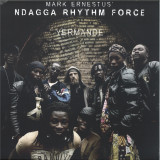
Five years into the project, Yermande announced a thrilling new phase for this Dakar-Berlin collaboration; a giant step forward.
The group of players is boiled down to twelve for recordings, eight for shows; sessions in Dakar become steeply more focused. ‘This time around I was better able to specify what I wanted right from the initial recording sessions in Dakar,’ says Ernestus; ‘and further in the production process I took more freedom in reducing and editing audio tracks, changing MIDI data, replacing synth sounds and introducing electronic drum samples.’
Right away you hear music-making which has come startlingly into its own. Rather than submitting to the routine, discrete gradations of recording, producing and mixing, the music is tangibly permeated with deadly intent from the off. Lethally it plays a coiled, clipped, percussive venom and thumping bass against the soaring, open-throated spirituality of Mbene Seck’s singing. Plainly expert, drilled and rooted, the drumming is unpredictable, exclamatory, zinging with life. Likewise the production: intuitive and fresh but utterly attentive; limber but hefty; vividly sculpted against a backdrop of cavernous silence.
Six chunks of stunning, next-level mbalax, then, funky as anything.
Beabadoobee announces her third studio album This Is How Tomorrow Moves, out Friday 16th August via her long standing label Dirty Hit. This Is How Tomorrow Moves finds Beabadoobee stepping up to a new level in her abilities as a songwriter, crafting arresting melodies and pushing herself to develop and explore new frontiers of vulnerability, both in her storytelling and her relationship with herself.
Produced by legendary producer Rick Rubin and long term collaborator and bandmate Jacob Bugden, Beabadoobee swaps her bedroom for his infamous Shangri-La studio in Malibu to create a deeply self-assured record with a vast sonic scope of rock and pop.
red LP[21,22 €]
Beabadoobee announces her third studio album This Is How Tomorrow Moves, out Friday 16th August via her long standing label Dirty Hit. This Is How Tomorrow Moves finds Beabadoobee stepping up to a new level in her abilities as a songwriter, crafting arresting melodies and pushing herself to develop and explore new frontiers of vulnerability, both in her storytelling and her relationship with herself.
Produced by legendary producer Rick Rubin and long term collaborator and bandmate Jacob Bugden, Beabadoobee swaps her bedroom for his infamous Shangri-La studio in Malibu to create a deeply self-assured record with a vast sonic scope of rock and pop.
GT Replacement stylus for tough handling - extremely sturdy for scratching DJs
GT was developed by Ortofon in close co-operation with SWS Audio GmbH. The cartridge was named "Great and Tough" and was based on the construction of the well-known Ortofon Series 500 design - mend for standard half inch mounting - in a black housing with white printing.
The vital parts in the GT are based on a very robust and reliable parts used in Scratch. Further, during development of GT, efforts were also concentrated on supplying a very high output of 8 mV and improvement of frequency response to give higher resolution and sound image.
Tracking avility is decisive for the DJs especially when scratching and back-cuing. In this situation raise of tracking force could be an immediate, but in many cases not very effective solution. The reason is that the antiskating adjustment, if not at a very moderate level, will double the skating effect when back-cuing.
As a rule, never use more than half of normal antiskating related to the tracking force! To make GT even more resistant against violent handling, such as drop or touch of fingers, we have made a rubber suspension of the cantilever even more rigid against axial pull.
GT Stylus Technical data
Output voltage at 1000Hz, 5cm/sec. - 8 mV
Channel balance at 1kHz - 1,5 dB
Channel separation at 1kHz - 25 dB
Channel separation at 15 kHz - 18 dB
Frequency response - 20-18.000 Hz +/- 2 dB
Tracking ability at 315 Hz at recommended tracking force - 80 μm
Compliance, dynamic lateral - 6 μm/m N
Stylus type - Spherical
Stylus tip radius - R 18 μm
Tracking force range - 3.0-5.0 g (30-50 mN)
Tracking force recommended - 4.0 g (40 mN)
Tracking angle - 20°
Internal impedance, DC resistance - 1000 Ohm
Internal inductance - 580 mH
Recommended load resistance - 47 kOhm
Recommended load capacitance - 200-400 pF
ALL-IN-ONE SET
The turntable tone arm and cartridge should always be correctly aligned and regularly maintained allowing you to enjoy the great sound of your vinyl collection to the max.
The Reloop Turntable Cartridge Mount & Gauge Set includes everything you need to perfectly align, care for and clean both your turntable and cartridge.
CARTRIDGE ALIGNMENT PROTRACTOR
The practical SME alignment tool with mirroring for aligning the cartridge allows you to precisely measure the distance between the cartridge tip and the tone arm pivot point so you can optimise the angle of the headshell system. The result is much improved track precision, significantly less wear, and crystal clear sound.
THOROUGH NEEDLE CARE
Thanks to the high-quality stylus cleaning fluid, both stubborn dirt and the finest vinyl residues can be removed without leaving any trace.
LEVEL YOUR TURNTABLE ACCURATELY
Another very useful tool, the spirit level, which allows you to finely align turntables and headshell systems so that they are in the perfect position.
DETERMINE THE STYLUS TRACKING FORCE
The stylus tracking force gauge and the five included balancing weights also make it possible to determine the optimum contact force of the pick-up systems.
COMPREHENSIVE ACCESSORIES
As you would expect, a metal screwdriver for mounting headshell systems and tweezers for delicate adjustments are also included.
PREMIUM GIFT PACKAGING
The set comes in a high-quality storage box to keep everything organised and safe.
"analogis »Mini Leveler«
Leveller in acrylic. Practical tool for perfect leveling of Hifi components and loudspeakers
Also usable for precise tone arm adjustment"
"analogis »Mini Leveler«
Libelle in Acryl. Praktisches Werkzeug zur perfekten Nivellierung
von Hifi-Geräten und Lautsprechern
Auch für präzise Tonarmeinstellung geeignet"
Greg 'Stakehouse' Prevosts Karriere ist eng als Frontman der Chesterfield Kings verbunden, aber seine Geschichte beginnt und endet nicht mit dieser Band. Seine Anfänge liegen in den Siebzigern als Sänger und Gitarrist in Combos wie Dr Electro & His Psychedelic Retards, Tar Babies, Distorted Levels, Cutdowns (dokumentiert auf der Prevost-Compilation Violence Vintage). Der hochkarätige Songwriter und einer der coolsten R&R-Sänger aller Zeiten kehrt nun mit seinem vierten Solowerk "After The Wars" zurück. Greg befindet sich in einem Zustand der Gnade. Nach der guten Resonanz auf sein drittes Werk (das akustische, gefühlvolle "Songs For These Times") kehrt unser Mann jetzt mit einem neuen, opulenteren Album unter dem Arm zurück. Und es steckt voller Überraschungen und Kollaborationen - mehr denn je, immer noch ein erstklassiger Songwriter und einer der coolsten R&R-Sänger überhaupt. Auf "After The Wars" finden sich wahre Folk-Rock-Wunder, stilvoller Barock-Pop und Psychedelia, Country, Blues, Gospel und natürlich Rock'n'Roll pur. Dies ist ein Festival des guten Geschmacks in Form von Songs mit glänzenden 12-saitigen Gitarren, plüschiger Akustik, ausgefeilten Gesangsharmonien, klagenden Harfen und hypnotischen Arrangements mit Cello, Klavier und Orgel, Steel Guitar und vielem mehr! All dies, abgerundet mit einer einfach perfekten Produktion, macht "After The Wars" zu Greg 'Stackhouse' Prevosts bisher abwechslungsreichstem, vollständigstem...und bestem Album. Checkt dies und auch den Backkatalog! Für Fans von Stiv, Johnny, David, Nikki, Dave, Epic, Tyla, Dead Boys/Lords Of The New Church, New York Dolls, Jacobites, Dog's Damour, Jagger/Richards, Woods/Stewart... Vinyl klassisch schwarz, CD mit einem Extratrack!
Fera’s trajectory sticks out like a sore thumb, you need to invest time, carefully divided between body & mind, to truly take a deep dive into his audacious output. After the acclaimed ‘Stupidamutaforma’ and ‘Corpo Senza Carne’, Fera is back with ‘Psiche Liberata’, an oblique, imperfect and broken record, in other words, exactly the type of magical voyage you want to be on. The mind, finally liberated.
Fera is Andrea De Franco, electronic composer from Southern Italy now residing in Bologna, also known for his work as visual artist/designer and member of the Undicesimacasa collective. His musical cosmos is profound and imaginative, intergalactic atmospheres that condense fragmented IDM, scintillating textures, distorted synthscapes, crunchy technoid rhythms and swirling abstractions that weave gently, sometimes moody and stark, more often celestial and awe-inspiring.
Mixed in Berlin by Steve Scanu ‘Psiche Liberata’ encapsulates Fera’s dense and intricate thought process in contrast with his simple and direct approach to writing and recording that finds its more natural output in his rapturous live sets where a mono signal runs through a few analog pedals transforming instantly into menacing alien grooves and fluid ecstasis.
Like ‘Psiche Liberata’s artwork, hand-drawn by Fera, every detailed miniature leads to a single cell of sound, tracks collide against each other in a psychotic kaleidoscope where every safe space is confronted with subsequent noise, alterations or interruptions. The black terror of ‘Celestial Anacusma’ is followed by the space-jazz banquet of ‘Milk Tears In The Hug Chamber’ doped up cyber Sun Ra extravaganza featuring Laura Agnusdei and Luigi Monteanni (Artetetra) on saxophones and flutes; ‘Silenzio Solare’ sprinkles Mille Plateaux era minimalism all over hallucinations, while ‘Diluvia’ crosses industrial acid with perpetual motion; title track ‘Psiche Liberata’ murmurs mechanically, a downtempo drifter for the wide-eyed 7AM comedown: ‘Simulacrima’ melts Boards Of Canada’s mellow pastoralism with dystopian meta-level dreamland and ‘Riposa’ showcases an overwhelming melancholy executed with elegance in a slo-mo world where the ineffable transcends notions of ambient and becomes a warm embrace.
Created on a Monotribe, MS20 & Volca Sample/fm, ‘Psiche Liberata’s velvet heaviness was achieved by re-amping many of the instruments through a Leslie Rotary Speaker and a reel-to-reel Telefunken. Fera’s sonic tapestry is in constant flux, underlying themes of love longing and affection run through the record but in a turbulent, volcanic, unleashed fashion, almost on the brink of utter noise or complete silence, reminding us that this is an artist like no other amidst the ever changing electronic scene. These are transmissions from the gutter, where the inevitable meets the unattainable and collapses.
"Fera’s tarnished materials are destined for ruin; “Stupida,” full of longing and regret, sounds like an elegy for a fallen world." Pitchfork
"A cut of dark magic that fits like a glove to overcast days, wild winds and lashing rains. Insistent, the treacle-thick bassline oozes out, soaking the space between the melancholic synth lines." Inverted Audio
"The songs on Stupidamutaforma feel hypnotizing...it establishes De Franco as a composer who uses space and time to create a set of rich, immersive works." Bandcamp 'Album Of The Day'
"Everybody Funk is the first album from Japigia Records, which launches into 2024 with great ardor. This is the first splendid house music album by Pasquale Fanelli, an industrialist from Bari with boundless passion for music and for the show in general, whose greatest merit is of having created a working group full of ideas and talent: the IAPIGI team. The DJ-arranger Paky Fanelli - so called by his friends - with the help of the multifaceted artist-DJ Fabio Ricciuti has dug extensively into the hinterland of the Puglia region in search of his own roots to find the right synergies and give meaning and value to the context, to the habits, to the organization of a city generous in history and culture like Bari, which crossed the ocean via the Adriatic Sea and the Mediterranean. Thanks to IAPIGI we have therefore arrived in New York where Danilo Braca captures Paky's work and shapes it with excellent Italian taste, which is exactly that of a DJ resident for several decades in the Big Apple where he generates surprising and always current sounds. Although radically different, "Daytona" and "Everybody Funk" represent some of the most exciting Italian house songs of this season. In addition to the skilful remix of these two songs, it is worth mentioning "The Edge", whose main melody develops slowly. Once again Danilo Braca has raised the bar and changed the rules of the game. Good boy! The experts Qubiko & Fabio Ricciuti bring a worthy close to this first work by Paky Fanelli with a short piece, originally entitled "Disaccord" and then merged into "Accord", with the aim of putting everyone on the same wavelength. on the same level or musical chord. Comes with an amazing embossed cover too."
Comes with insert and download coupon.
Imagine a Latin remake of Back to the Future. The mad scientist is Arsenio Rodriguez (the godfather of salsa) and the young student who travels through time with him is Eblis Alvarez (Meridian Brothers). This album can only be described as the perfect soundtrack for that movie that never was.
After the massive buzz generated by his first solo album, Mentallogenic, Alex Figueira got back in the studio to work in a more collective fashion this time, carefully assembling the second album of his largest project to date, Conjunto Papa Upa; a team of 6 musicians, spanning 3 generations of some of the best talent in the Latin and avant-garde scenes.
In an era where tropical music is dominated by purely electronic and rhythmically uniform sounds, the ten songs encompassed in “Fruta Madura” (“Ripe Fruit”) wander through the most diverse tempos, rhythms, and motifs effortlessly. A real breath of fresh air that gracefully incorporates soul, funk, jazz, psychedelia, and electronics into a solid tropical, irresistibly polyrhythmic foundation, without ever succumbing to the many genre clichés.
The distinctive production and catchy songwriting of Figueira shine in a very distinctive light on this second full-length. Living up to his reputation (Miles Cleret, founder of Soundway Records, called him “one of the scene's truly authentic and eccentric producers”), he takes the opportunity to show he’s not afraid to keep walking his own path.
Taking the band for a wild ride through the traditions of Africa, America, and the Caribbean; contrasting them with a ridiculously wide plethora of vintage, contemporary, and futuristic sounds, and pivoting on the exuberant musicality displayed by his musicians; the result leaves no doubt: this album is destined to be considered a future classic of the exciting tropical psychedelic music of the 21st century.
Addressing the most diverse themes in this new collection of songs, things take on a much more mature tone, as the title clearly suggests.
The opening track “El segundo es más sabroso” (“The second one is tastier”) sets the tone in the most assertive way imaginable, with the band boldly declaring, through multiple metaphorical references (laid upon a crazy mix of Dominican merengue, Detroit techno, classic and free jazz, dub, and electro), that the bar will be set higher with this second album.
The remaining compositions touch upon the most diverse subjects, with a fair dose of humor, sarcasm, and postmodern “magic realism”. “El Algoritmo” (The Algorithm) is a parranda-cumbia hybrid (for lack of a specific term) about the omnipresence of technology in our lives. The sophisticated Latin soul of the titling track “Fruta Madura” makes a case for the beauty of the maturity process. Some key philosophical teachings of Marcus Aurelius (the role of causality, the impositions of “the logos” and the importance of self-control) get a twisted cumbia treatment on “Reos del Deseo” (Prisoners of Desire). “No le pongas Coca-Cola” (“Don’t put Coca Cola in it”) shows us the most satirical side of the band, accusing those who mix Coca Cola with Rum of committing "sacrilege", on a powerful base of Dem Bow (the grandfather of Reggaeton), intertwined with touches of soul, salsa, and Cuban comparsa.
"Háblame Claro" (“Talk to me clearly”) is a story of heartbreak that evokes in its first part the spirit of the erotic salsa of the 80s (a subgenre deeply despised by purists), and after an unexpected samba interlude, leads to the hardest salsa of the 70s (a subgenre adored by purists), to end up in the surprising form of pure Afro-Cuban ceremonial music.
“Tu mamá tenía razón” ("Your Mom Was Right") is an attempt to exalt the spirit of the Latin American soap opera in the key of “acid bachata”, to recount a real-life case, witnessed by the band on countless occasions: the partying woman who arrives at the show accompanied by her bitter husband, who obviously does not like to dance. A very cheeky song to talk about the very serious and pertinent topic of female empowerment.
“La misma vaina” (“The same thing”) with its indescribable blend of bantú, candomblé, and Mozambique rhythms with abstract synthesizers, is an ode to adventure in favor of the aversion to taking risks and seeking predictability.
“Amigas picadas” (“Salty friends”) is another humorous song recounting another real-life case witnessed by the band on countless occasions: a love encounter sabotaged by the girlfriend's friends, who all happen to fancy the same guy. A jazzy take on the ancient Dominican rhythm of pambiche (grandfather of merengue), with generous psychedelic touches, resembling the classy late 60s releases of Guadeloupe's legendary producer / label owner Henri Debs.
“Vinimos a hablar” (“We came to talk”) takes sarcasm to the highest level, to ridicule the absurdity (also experienced by the band firsthand) seen in live music venues where people pay a ticket to go and have conversations that could be carried out much better on any bar, where no band is playing. The music alternates between a delicate melody with loose, sparse percussion and a full-on, pumping Angolan semba, with a techno kick drum included; bringing things to an apotheotic grooving finale, where the peculiar swing of Venezuelan calypso from the Callao region is thrown on top of all the precedent elements; closing the album in the most uplifting, “end of the carnival parade” feel.
The artwork is a delicate and impactful oil painting by Colombian artist Kevin Simón Mancera, who has collaborated many times with the label before (“Maracas, tambourines and other hellish things” tape and the Lola’s Dice LP).
What the experts are saying:
“Alex (Figueira) dove into this work with a brutal cohesion between lyrics and synths. Timbre poetry, sound poetry (you name it). And that, superimposed on his always impeccable percussive base, confirms the title of “avant-garde visionary of our beautiful Latin music”".
EBLIS ALVAREZ (MERIDIAN BROTHERS)
“Papa Upa's infectious quirkiness is a balm against boredom. A mature album, but without an expiration date”.
GLADYS PALMERA
“Here there is a lot of strength, drum, cadence and psychedelia, lost dance rhythms, united in an intercontinental Latin/African/and Caribbean journey, a unique winning combination that we could consider the new “Ritmo Figueira”.
DISCODELIC
Conjunto Papa Upa are:
Alex Figueira - Timbales, percussion, vocals.
Gerardo Rosales - Congas, percussion, vocals.
Ramón Mendeville - Bongos, percussion, vocals.
Randy Winterdal - Bass.
Andrew Moreno - Guitar.
Nico Chientarolli - Organ, piano, synths.
All songs written by Alex Figueira.
Arranged and performed by Conjunto Papa Upa.
Recorded, produced, mixed and mastered by Alex Figueira at Heat Too Hot, Amsterdam.
Diego Ruiz, aka DFRA, is an Argentine music producer very active in the last five years with several productions in the underground deep house scene. Now he's definitely setting the bar at the highest level with this project. He's introducing a full band of musicians with jazzy roots, and the result is a four-track EP that's a clear fusion of how jazz and electronic music merge in a unique way. It incorporates classic Deep House and House sounds plus the fusion of Modal Jazz, Bebop, and Hard Bop style melodies.
The Cutter & The Clan was the breakthrough album from Scottish Celtic rock band Runrig. Their fifth full length and the first with what is considered the classic line-up of the band. This record marked their debut for Chrysalis and took them to another level internationally, going Silver in the process. This was the beginning of a run of hit albums and features the song, 'An Ubhal as Airde', which was heard in the popular Carlsberg advert. The Cutter & The Clan has been mastered by Peter Beckmann at Technology Works, from the original pre-production 1/2" master and overseen by band member Malcolm Jones. Once In A Lifetime, originally released in 1988 and reaching Gold status, is considered to be one of the best live albums of the era. It's inclusion here gives listeners an insight into the excitement surrounding their live performances during this period.
Beginning in the 60"s, the small chamber group ensemble became increasingly important in the advancement of jazz, enabling horn players including Sonny Rollins, Joe Henderson, and Ornette Coleman to seek uncharted sonic territories and achieve new levels of freedom without the support of chordal instruments. With a mature, cohesive ensemble sound, the young trio juxtaposes tranquility and space with energy and tenacity across nine original compositions showcasing their stylistic breadth. From the swinging waltz "December" with a melodic contour reminiscent of a jazz standard, the soothing folk-influenced simplicity of "Vent", the intimate lyrical interplay between bass and clarinet in "Duo", to the heavy, propulsive power of the title track, the trio demonstrates fearlessness, listening, and spontaneity in a raw and personal recording that puts each of their distinctive voices in the spotlight. Christian Holm-Svendsen, currently resides in New York, studying for a master of music at Manhattan School of Music. In Denmark he played with, among others, The Danish Radio Big Band, Copenhagen Jazz Orchestra, Odense Jazz Orchestra, Jesper Zeuthen, and Regnfang. Daniel Sommer is an award-winning artist and sought-after drummer on the international jazz scene. Known for crossing the borders of different musical landscapes with a distinctive musical approach, Sommer currently performs with Karmen Roivassepp Quartet, Foyn/Hess/AC/Sommer and recently released the trio album "From Within" with Arild Andersen and Rob Luft on April Records. Mariusz Prasniewski is a Polish double bass player, residing in Copenhagen. A part of the Danish and European jazz scene for more than a decade, the bassist has worked with musicians like Tomasz Dabrowski, Anders Mogensen, and Gilad Hekselman.
The opening track to the Alan Parsons Project’s Eye in the Sky remains the most recognized instrumental in sports—fanfare inseparably tied with introducing NBA legend Michael Jordan and his six-time world-champion Chicago Bulls mates before games, and still used by many teams as an energy-raising prelude. Indeed, the subdued grandiosity, cosmic bluster, and lights-out wonder of “Sirius” sets the table for the band’s smash 1982 album, whose hallmark smoothness, lushness, and balance extend to the music’s exquisite song writing, dreamy emotions, and underlying orchestral scope. Credit for the record’s craft, cohesiveness, and accessibility also falls to Alan Parsons and creative partner Eric Woolfson’s knack for recruiting session pros that translate their visions with unquestioned feeling—particularly, vocalists who include former Zombie leader Colin Blunstone and soul singer Lenny Zakatek.
Mastered from the original master tapes, Mobile Fidelity’s RTI pressed 180g 45RPM 2LP version of Eye in the Sky features succulent warmth, magnificent balance, low-end heft, and see-through transparency that take you into the studio with Parsons at Abbey Road Studios. Each note seems perfectly placed, every sequence painstakingly considered. Boasting front-to- back depth, concert-hall-level separation, realistic presence, and bang-on accuracy. This release will test the capabilities of the world’s finest stereo systems. There’s more information, more texture, more nuance— more of everything to be experienced. British progressive rock would never again sound so sophisticated, suave, or steady.
Amazingblaze returns to home label KNTXT with an exhilarating new release that shows another subtle evolution in his style. His Touch The Sky EP features four standout new tracks that are sure to make a global impact.
Amazingblaze emerged as a pivotal tastemaker in the new school scene, marking his debut on KNTXT in 2022 with his Venture EP. Last year, he further solidified his presence on the label, with the release of two EPs and a remix of Charlotte de Witte’s single ‘High Street’. He has been obsessed with music since a young age and that shows in his productions which blend the inspirations of his youth with plenty of fresh contemporary style. His releases consistently aim to leave a significant mark on the club scene, and this latest EP is no exception. With powerful grooves and emotive synths, it sets the stage for another impactful experience.
Amazingblaze on his new EP: "Touch The Sky is a blend of emotions of early trance with the shape of a modern look. From start to finish it's catching you with pleasant pressure and doesn't let you go. Really proud of this one!"
Charlotte de Witte adds: “Amazingblaze is back and I'm just obsessed with these four tracks. They're all masterpieces, representing his very unique and distinctive sound. I'm very proud to be able to welcome him again on the label and continue to be a place he can call home.”
Opener Touch The Sky is a high speed and fresh techno sound that is laced with euphoric trance synths and a heartfelt vocal. It is sure to get hands in the air and dance floors locked into its spell. Kaleidoscope ups the ante further with more scintillating hard techno drums and flashes of synth that will chime perfectly with strobe-lit clubs. A spine-tinging breakdown features angelic vocals before the drums kick in and power things to the next level. Thank You, God Always is more straight up with hard edge drums and synths that spray about the mix with bright rave energy and futuristic soul and last of all is Habits, an urgent and high speed wave of lush trance techno with a classic vocal stab and more celestial voices drifting up to hypnotic effect.
This is another big release from Amazingblaze that shows he has plenty of new tricks up his sleeve.