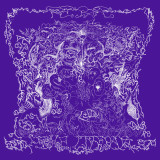
Belarusian post-punk / synth pop group Molchat Doma have always exuded the kind of brutalist aesthetic of the architecture that adorns their album art. It's cold, gray, imposing, industrial and yet there are human hearts beating within those foundations. In the wake of their breakthrough success in 2020, the trio endured a polarity of experiences, from the nadir of an uprooted life and forced relocation away from their native Minsk to the apex of headlining massive shows across the world. It was in this headspace that the band settled into their new home of Los Angeles to finish writing their fourth album Belaya Polosa, a testament to change in difficult times, a love letter to the digital pulse of the `90s, and a technicolor reinvention of the band's somber dancefloor anthems. From the opening synth swell and drum machine throb of "Ty Zhe Ne Znaesh' Kto Ya," to the goth / post-punk austerity of "Son", to the swirling electronic textures mixed with reverb-drenched guitar flourishes, expansive space, and yearning vocals of title track "Belaya Polosa" - that suggests Depeche Mode at their most reflective or The Cure at their most downtrodden - to the sultry and seductive "Chernye Cvety"_ a track reminiscent of Duran Duran's early `90s output in its fusion of dreamy guitars and authoritative mechanized beats _ and the interwoven layers of instrumentation, soaring chorus, and melodic sophistication of "Ya Tak Ustal", it's clear that Molchat Doma are operating on another level. Molchat Doma gained following with earlier albums that sound like third-generation bootlegs of banned recordings from the Eastern Bloc made after a few key entries in the Factory Records catalog were smuggled in from the West. Belaya Polosa propels them into a new direction while retaining their cold minimalist delivery they're known for. The basement grime and dirty tape-head sound of their previous work are now making space for digital luster and shimmering production values. And while Molchat Doma's broadened aural spectrum adds a synesthetic power to Belaya Polosa, the mood remains rooted in stark and unflinching self-reflection. Molchat Doma retain the duality of being both cold and feverish in their delivery while pushing their music into expanded territories through an armory of new textures. The trio continue to harness the sound of harrowing beauty thriving under harsh realities.
Search:level records
Belarusian post-punk / synth pop group Molchat Doma have always exuded the kind of brutalist aesthetic of the architecture that adorns their album art. It's cold, gray, imposing, industrial and yet there are human hearts beating within those foundations. In the wake of their breakthrough success in 2020, the trio endured a polarity of experiences, from the nadir of an uprooted life and forced relocation away from their native Minsk to the apex of headlining massive shows across the world. It was in this headspace that the band settled into their new home of Los Angeles to finish writing their fourth album Belaya Polosa, a testament to change in difficult times, a love letter to the digital pulse of the `90s, and a technicolor reinvention of the band's somber dancefloor anthems. From the opening synth swell and drum machine throb of "Ty Zhe Ne Znaesh' Kto Ya," to the goth / post-punk austerity of "Son", to the swirling electronic textures mixed with reverb-drenched guitar flourishes, expansive space, and yearning vocals of title track "Belaya Polosa" - that suggests Depeche Mode at their most reflective or The Cure at their most downtrodden - to the sultry and seductive "Chernye Cvety"_ a track reminiscent of Duran Duran's early `90s output in its fusion of dreamy guitars and authoritative mechanized beats _ and the interwoven layers of instrumentation, soaring chorus, and melodic sophistication of "Ya Tak Ustal", it's clear that Molchat Doma are operating on another level. Molchat Doma gained following with earlier albums that sound like third-generation bootlegs of banned recordings from the Eastern Bloc made after a few key entries in the Factory Records catalog were smuggled in from the West. Belaya Polosa propels them into a new direction while retaining their cold minimalist delivery they're known for. The basement grime and dirty tape-head sound of their previous work are now making space for digital luster and shimmering production values. And while Molchat Doma's broadened aural spectrum adds a synesthetic power to Belaya Polosa, the mood remains rooted in stark and unflinching self-reflection. Molchat Doma retain the duality of being both cold and feverish in their delivery while pushing their music into expanded territories through an armory of new textures. The trio continue to harness the sound of harrowing beauty thriving under harsh realities.
Lemonheads’ seminal album ‘It’s A Shame About Ray’, lovingly reissued for it’s 30th Anniversary. The long overdue reissue includes a slew of extra material, including an unreleased ‘My Drug Buddy’ KCRW session track from 1992 featuring Juliana Hatfield, B-sides from singles ‘It’s A Shame About Ray’ and ‘Confetti’, a track from the ‘Mrs. Robinson/Being Round’ EP, alongside demos that will be released for the first time on vinyl. This reissue celebrates their prestigious fifth album, these deluxe bookback editions feature new liner notes and unseen photos.
Described by music journalist and author Everett True as “A 30-minute insight into what it’s like to live hard and fast and loose and happy with like-minded buddies, fuelled by a shared love for similar bands and drugs and booze and freedom.”. ‘It's A Shame About Ray’ had a considerable impact back in those heady, carefree days of '92, the record perfectly captures Dando’s ability to effortlessly encapsulate teenage longing and lust over the course of a two-minute pop song.
Singles such as 'My Drug Buddy' and the breezy perfect pop of the title track might stand out (plus the add-on of 'Mrs. Robinson' which later copies included), but the album's real strength lies in the tracks in-between; the truly fantastic 'Confetti' (written about Evan's parents' divorce), and the eye-wateringly casual acoustic cover of 'Frank Mills' (from the "hippie" musical Hair), a version that seems to resonate with every ounce of pathos and emotion felt for the lost 1960s generation. To hear Evan Dando sing lines like 'I love him/but it embarrasses me/To walk down the street with him/He lives in Brooklyn somewhere/And he wears his white crash helmet' is to truly appreciate how wonderful and tantalising pop music can be. Then, there's the rush of insurgency and brattishness on the wonderfully truncated 'Bit Part'; the topsy-turvy 'Ceiling Fan In My Spoon'... this was male teenage skinny-tie pop music on a level of brilliance with The Kinks, early Undertones, Wipers.
- Lover
- It’s Only A Paper Moon
- My Blue Heaven
- It All Depends On You
- You Do Something To Me
- Should I
- The Continental
- When You’re Smiling
- You Do Something To Me (Orchestral Backing Track/False Starts/Alternate Vocal Take)
- It’s Only A Paper Moon (Alternate Take)
- Farewell, Farewell To Love (“Barbecue Riffs”)
- Deep Night
- American Beauty Rose (Orchestral Backing Track)
- American Beauty Rose (Vocal Take)
- Meet Me At The Copa
- It All Depends On You (Includes Previously Unreleased Session Material)
1STEP Process 180g 45rpm 2-LP, Pressed on VR900-Supreme Vinyl!
The ultimate edition of Frank Sinatra’s famed 1950 concept album
Cut Using Original Analogue Mix-down Masters by Chris Bellman and Andreas Meyer! Strictly Limited To 5,000 Numbered Pressings!
Two 45-rpm 1STEP LPs pressed by RTI on VR900 Supreme Vinyl
New lacquers cut after each run of 500 pressings
Distinctive Impex 1STEP packaging featuring a gorgeous tip-in 36-page booklet with exclusive photography and period graphics, an expanded historical essay by Charles L. Granata
A heavy-stock two-sleeve Monster Pack jacket by Stoughton Printing and a luxe colour-matched slip case
We are beyond thrilled to announce the release of a very special limited edition of Frank Sinatra’s historic Sing and Dance with Frank Sinatra on Impex 1STEP! Our all-analogue 2-LP set adds further narrative substance and sonic greatness to The Voice’s first big-band jazz long-play vinyl “concept” album! Our 33.3 release was a landmark reissue, but this is a whole other level!
Like all Impex 1STEPs, this audiophile recording is pressed at 45-RPM on high-definition, VR-900 Supreme vinyl for incredible clarity, immediacy and a tonal depth that virtually mirrors the original monophonic master tape. Additionally, the tapes and discs we mastered from have rarely been used by other labels, delivering the original recording sessions closer than releases whose tapes have gone through mastering chains over and over. Silent, flat surfaces provide for near-perfect audio playback without distracting non-fill issues.
Exclusive to the Impex 1STEP edition are two previously unreleased bonus recordings and an extended version of the “It All Depends On You” Session + Take, where Sinatra capably arranges the musicians in real time!
The luxurious 1STEP packaging includes a gorgeous 36-page full-colour booklet with expanded historical liner notes, unique photos and graphics, and a deluxe slipcase. It provides an excellent listening experience and a “coffee table book” for your living room or den!
A founding member and keyboardist of acclaimed jazz
groupBADBADNOTGOOD,Tavares has gone from being an in-demand
producer with some of the biggest names in music to a songwriter and
artist in his own right, having touched corners of the globe and cemented
twoGRAMMY Awardsand five nominations
Between collaborations with Kendrick Lamar , Ghostface Killah , MF DOOM , Tyler
the Creator , Kali Uchis , Tavares has also played with Frank Ocean ,
soundtracked Virgil Alboh 's landmark S/ S 2019 runway show for Louis Vuitton,
and penned songs for Post Malone , Rosalia , Travis Scott , Kodak Black , Justin
Beiber,Camilla Cabello,Jack Harlow amongst others.
With a sound that fuses his nostalgia for the golden era of blogs with the
eclecticism of the late 2000s, the combination of the internet crossed with an
isolated suburban upbringing has laid the groundwork for Matty's genre-bending
artistry. Embracing a raw creative output with an aversion to following the norms
of the industry reverberates across his discography,Matty has found success in
previous releases including 'Clear' and 'I'll Gladly Place Myself Below', which push
the boundaries of sonic creativity and knowledge.
Now with his upcoming album POPS , Matty relinquishes his lowkey and
understated style for something larger than life, while maintaining a level of
honesty and openness that has defined his past work to make for a dynamic
release that constellates around music's greatest subject - love.
Mas O Menos was set up by South African born, Manchester based, DJ and Producer Levi Love. Levi has played numerous dancefloors across the globe for the past 13 years developing a fine palate for Deep House and electronica.
A chance meeting with one half of >ONE, MAKO MCR resulted in Levi signing the DUO and their APPLEBUSH offering. To Levi, Applebush reignites the memories of Johannesburg townships when he was a teenager, which at the time was infused with
Kwaito music. Slow BPM, synth heavy and trippy at times, APPLEBUSH takes it to another level of impressive technical acumen and blessed creative prowess.
>ONE is comprised of MAKO MCR and METRODOME. METRODOME is a known producer for World renowned RED LASER DISCO imprint alongside Manchester's LEVELZ & Wet Play collectives, working with artists like Amp Fiddler & Zed Bias, with a bevy of heavy hitters to his name. MAKO MCR is no newcomer to the scene as he boasts releases from numerous labels such as Hot'n'Heavy, Gradient Audio, Abaga records and
Echodub. The Applebush EP marks the start of their creative endeavors together with an already varied back catalogue of electronic music from across the spectrum to come.
Fera’s trajectory sticks out like a sore thumb, you need to invest time, carefully divided between body & mind, to truly take a deep dive into his audacious output. After the acclaimed ‘Stupidamutaforma’ and ‘Corpo Senza Carne’, Fera is back with ‘Psiche Liberata’, an oblique, imperfect and broken record, in other words, exactly the type of magical voyage you want to be on. The mind, finally liberated.
Fera is Andrea De Franco, electronic composer from Southern Italy now residing in Bologna, also known for his work as visual artist/designer and member of the Undicesimacasa collective. His musical cosmos is profound and imaginative, intergalactic atmospheres that condense fragmented IDM, scintillating textures, distorted synthscapes, crunchy technoid rhythms and swirling abstractions that weave gently, sometimes moody and stark, more often celestial and awe-inspiring.
Mixed in Berlin by Steve Scanu ‘Psiche Liberata’ encapsulates Fera’s dense and intricate thought process in contrast with his simple and direct approach to writing and recording that finds its more natural output in his rapturous live sets where a mono signal runs through a few analog pedals transforming instantly into menacing alien grooves and fluid ecstasis.
Like ‘Psiche Liberata’s artwork, hand-drawn by Fera, every detailed miniature leads to a single cell of sound, tracks collide against each other in a psychotic kaleidoscope where every safe space is confronted with subsequent noise, alterations or interruptions. The black terror of ‘Celestial Anacusma’ is followed by the space-jazz banquet of ‘Milk Tears In The Hug Chamber’ doped up cyber Sun Ra extravaganza featuring Laura Agnusdei and Luigi Monteanni (Artetetra) on saxophones and flutes; ‘Silenzio Solare’ sprinkles Mille Plateaux era minimalism all over hallucinations, while ‘Diluvia’ crosses industrial acid with perpetual motion; title track ‘Psiche Liberata’ murmurs mechanically, a downtempo drifter for the wide-eyed 7AM comedown: ‘Simulacrima’ melts Boards Of Canada’s mellow pastoralism with dystopian meta-level dreamland and ‘Riposa’ showcases an overwhelming melancholy executed with elegance in a slo-mo world where the ineffable transcends notions of ambient and becomes a warm embrace.
Created on a Monotribe, MS20 & Volca Sample/fm, ‘Psiche Liberata’s velvet heaviness was achieved by re-amping many of the instruments through a Leslie Rotary Speaker and a reel-to-reel Telefunken. Fera’s sonic tapestry is in constant flux, underlying themes of love longing and affection run through the record but in a turbulent, volcanic, unleashed fashion, almost on the brink of utter noise or complete silence, reminding us that this is an artist like no other amidst the ever changing electronic scene. These are transmissions from the gutter, where the inevitable meets the unattainable and collapses.
"Fera’s tarnished materials are destined for ruin; “Stupida,” full of longing and regret, sounds like an elegy for a fallen world." Pitchfork
"A cut of dark magic that fits like a glove to overcast days, wild winds and lashing rains. Insistent, the treacle-thick bassline oozes out, soaking the space between the melancholic synth lines." Inverted Audio
"The songs on Stupidamutaforma feel hypnotizing...it establishes De Franco as a composer who uses space and time to create a set of rich, immersive works." Bandcamp 'Album Of The Day'
"Everybody Funk is the first album from Japigia Records, which launches into 2024 with great ardor. This is the first splendid house music album by Pasquale Fanelli, an industrialist from Bari with boundless passion for music and for the show in general, whose greatest merit is of having created a working group full of ideas and talent: the IAPIGI team. The DJ-arranger Paky Fanelli - so called by his friends - with the help of the multifaceted artist-DJ Fabio Ricciuti has dug extensively into the hinterland of the Puglia region in search of his own roots to find the right synergies and give meaning and value to the context, to the habits, to the organization of a city generous in history and culture like Bari, which crossed the ocean via the Adriatic Sea and the Mediterranean. Thanks to IAPIGI we have therefore arrived in New York where Danilo Braca captures Paky's work and shapes it with excellent Italian taste, which is exactly that of a DJ resident for several decades in the Big Apple where he generates surprising and always current sounds. Although radically different, "Daytona" and "Everybody Funk" represent some of the most exciting Italian house songs of this season. In addition to the skilful remix of these two songs, it is worth mentioning "The Edge", whose main melody develops slowly. Once again Danilo Braca has raised the bar and changed the rules of the game. Good boy! The experts Qubiko & Fabio Ricciuti bring a worthy close to this first work by Paky Fanelli with a short piece, originally entitled "Disaccord" and then merged into "Accord", with the aim of putting everyone on the same wavelength. on the same level or musical chord. Comes with an amazing embossed cover too."
Comes with insert and download coupon.
Imagine a Latin remake of Back to the Future. The mad scientist is Arsenio Rodriguez (the godfather of salsa) and the young student who travels through time with him is Eblis Alvarez (Meridian Brothers). This album can only be described as the perfect soundtrack for that movie that never was.
After the massive buzz generated by his first solo album, Mentallogenic, Alex Figueira got back in the studio to work in a more collective fashion this time, carefully assembling the second album of his largest project to date, Conjunto Papa Upa; a team of 6 musicians, spanning 3 generations of some of the best talent in the Latin and avant-garde scenes.
In an era where tropical music is dominated by purely electronic and rhythmically uniform sounds, the ten songs encompassed in “Fruta Madura” (“Ripe Fruit”) wander through the most diverse tempos, rhythms, and motifs effortlessly. A real breath of fresh air that gracefully incorporates soul, funk, jazz, psychedelia, and electronics into a solid tropical, irresistibly polyrhythmic foundation, without ever succumbing to the many genre clichés.
The distinctive production and catchy songwriting of Figueira shine in a very distinctive light on this second full-length. Living up to his reputation (Miles Cleret, founder of Soundway Records, called him “one of the scene's truly authentic and eccentric producers”), he takes the opportunity to show he’s not afraid to keep walking his own path.
Taking the band for a wild ride through the traditions of Africa, America, and the Caribbean; contrasting them with a ridiculously wide plethora of vintage, contemporary, and futuristic sounds, and pivoting on the exuberant musicality displayed by his musicians; the result leaves no doubt: this album is destined to be considered a future classic of the exciting tropical psychedelic music of the 21st century.
Addressing the most diverse themes in this new collection of songs, things take on a much more mature tone, as the title clearly suggests.
The opening track “El segundo es más sabroso” (“The second one is tastier”) sets the tone in the most assertive way imaginable, with the band boldly declaring, through multiple metaphorical references (laid upon a crazy mix of Dominican merengue, Detroit techno, classic and free jazz, dub, and electro), that the bar will be set higher with this second album.
The remaining compositions touch upon the most diverse subjects, with a fair dose of humor, sarcasm, and postmodern “magic realism”. “El Algoritmo” (The Algorithm) is a parranda-cumbia hybrid (for lack of a specific term) about the omnipresence of technology in our lives. The sophisticated Latin soul of the titling track “Fruta Madura” makes a case for the beauty of the maturity process. Some key philosophical teachings of Marcus Aurelius (the role of causality, the impositions of “the logos” and the importance of self-control) get a twisted cumbia treatment on “Reos del Deseo” (Prisoners of Desire). “No le pongas Coca-Cola” (“Don’t put Coca Cola in it”) shows us the most satirical side of the band, accusing those who mix Coca Cola with Rum of committing "sacrilege", on a powerful base of Dem Bow (the grandfather of Reggaeton), intertwined with touches of soul, salsa, and Cuban comparsa.
"Háblame Claro" (“Talk to me clearly”) is a story of heartbreak that evokes in its first part the spirit of the erotic salsa of the 80s (a subgenre deeply despised by purists), and after an unexpected samba interlude, leads to the hardest salsa of the 70s (a subgenre adored by purists), to end up in the surprising form of pure Afro-Cuban ceremonial music.
“Tu mamá tenía razón” ("Your Mom Was Right") is an attempt to exalt the spirit of the Latin American soap opera in the key of “acid bachata”, to recount a real-life case, witnessed by the band on countless occasions: the partying woman who arrives at the show accompanied by her bitter husband, who obviously does not like to dance. A very cheeky song to talk about the very serious and pertinent topic of female empowerment.
“La misma vaina” (“The same thing”) with its indescribable blend of bantú, candomblé, and Mozambique rhythms with abstract synthesizers, is an ode to adventure in favor of the aversion to taking risks and seeking predictability.
“Amigas picadas” (“Salty friends”) is another humorous song recounting another real-life case witnessed by the band on countless occasions: a love encounter sabotaged by the girlfriend's friends, who all happen to fancy the same guy. A jazzy take on the ancient Dominican rhythm of pambiche (grandfather of merengue), with generous psychedelic touches, resembling the classy late 60s releases of Guadeloupe's legendary producer / label owner Henri Debs.
“Vinimos a hablar” (“We came to talk”) takes sarcasm to the highest level, to ridicule the absurdity (also experienced by the band firsthand) seen in live music venues where people pay a ticket to go and have conversations that could be carried out much better on any bar, where no band is playing. The music alternates between a delicate melody with loose, sparse percussion and a full-on, pumping Angolan semba, with a techno kick drum included; bringing things to an apotheotic grooving finale, where the peculiar swing of Venezuelan calypso from the Callao region is thrown on top of all the precedent elements; closing the album in the most uplifting, “end of the carnival parade” feel.
The artwork is a delicate and impactful oil painting by Colombian artist Kevin Simón Mancera, who has collaborated many times with the label before (“Maracas, tambourines and other hellish things” tape and the Lola’s Dice LP).
What the experts are saying:
“Alex (Figueira) dove into this work with a brutal cohesion between lyrics and synths. Timbre poetry, sound poetry (you name it). And that, superimposed on his always impeccable percussive base, confirms the title of “avant-garde visionary of our beautiful Latin music”".
EBLIS ALVAREZ (MERIDIAN BROTHERS)
“Papa Upa's infectious quirkiness is a balm against boredom. A mature album, but without an expiration date”.
GLADYS PALMERA
“Here there is a lot of strength, drum, cadence and psychedelia, lost dance rhythms, united in an intercontinental Latin/African/and Caribbean journey, a unique winning combination that we could consider the new “Ritmo Figueira”.
DISCODELIC
Conjunto Papa Upa are:
Alex Figueira - Timbales, percussion, vocals.
Gerardo Rosales - Congas, percussion, vocals.
Ramón Mendeville - Bongos, percussion, vocals.
Randy Winterdal - Bass.
Andrew Moreno - Guitar.
Nico Chientarolli - Organ, piano, synths.
All songs written by Alex Figueira.
Arranged and performed by Conjunto Papa Upa.
Recorded, produced, mixed and mastered by Alex Figueira at Heat Too Hot, Amsterdam.
Beginning in the 60"s, the small chamber group ensemble became increasingly important in the advancement of jazz, enabling horn players including Sonny Rollins, Joe Henderson, and Ornette Coleman to seek uncharted sonic territories and achieve new levels of freedom without the support of chordal instruments. With a mature, cohesive ensemble sound, the young trio juxtaposes tranquility and space with energy and tenacity across nine original compositions showcasing their stylistic breadth. From the swinging waltz "December" with a melodic contour reminiscent of a jazz standard, the soothing folk-influenced simplicity of "Vent", the intimate lyrical interplay between bass and clarinet in "Duo", to the heavy, propulsive power of the title track, the trio demonstrates fearlessness, listening, and spontaneity in a raw and personal recording that puts each of their distinctive voices in the spotlight. Christian Holm-Svendsen, currently resides in New York, studying for a master of music at Manhattan School of Music. In Denmark he played with, among others, The Danish Radio Big Band, Copenhagen Jazz Orchestra, Odense Jazz Orchestra, Jesper Zeuthen, and Regnfang. Daniel Sommer is an award-winning artist and sought-after drummer on the international jazz scene. Known for crossing the borders of different musical landscapes with a distinctive musical approach, Sommer currently performs with Karmen Roivassepp Quartet, Foyn/Hess/AC/Sommer and recently released the trio album "From Within" with Arild Andersen and Rob Luft on April Records. Mariusz Prasniewski is a Polish double bass player, residing in Copenhagen. A part of the Danish and European jazz scene for more than a decade, the bassist has worked with musicians like Tomasz Dabrowski, Anders Mogensen, and Gilad Hekselman.
The Cutter & The Clan was the breakthrough album from Scottish Celtic rock band Runrig. Their fifth full length and the first with what is considered the classic line-up of the band. This record marked their debut for Chrysalis and took them to another level internationally, going Silver in the process. This was the beginning of a run of hit albums and features the song, 'An Ubhal as Airde', which was heard in the popular Carlsberg advert. The Cutter & The Clan has been mastered by Peter Beckmann at Technology Works, from the original pre-production 1/2" master and overseen by band member Malcolm Jones. Once In A Lifetime, originally released in 1988 and reaching Gold status, is considered to be one of the best live albums of the era. It's inclusion here gives listeners an insight into the excitement surrounding their live performances during this period.
"Moving Ahead" by Gerardo Frisina is a double LP worth of new material that gathers together the various sounds that have characterized his entire production. A multiform album whose stylistic components are easily identifiable (Latin jazz, nu-jazz, Afro-Cuban, dub, electronic music) but that transcends any possible classification as a whole. As the title suggests, "Moving Ahead" is the mature continuation of a 20-year long solo career that once again demonstrates how Gerardo's creativity still manifests itself today at very high levels. Available as a 2LP-set and as a digipack CD with the exclusive bonus track "Mwanga".
TIPP! :)
For the latest Cognitiva release the label present the 4th release of their Point of View series which focuses on dance floor-oriented sounds, this time they invite the marvellously talented Dr. Sud to deliver a wondrous, jazz laden odyssey, which entices as much as it delights - with some expert remixes to boot….
Dr Sud is the main alias of Gregorio Marigliano, an Italian music maker who was raised in Berlin. Marigliano’s music revolves around the principles of Jazz-meets-Dance music, drawing up the rich tradition that has come before in bringing a high level of musicality and ingenuity within his tunes. Moving fluidly between rhythms and feels, as Dr Sud he captures the imagination with thought provoking and captivating sequences, striking a fine balance between depth and danceability. Harmonies and groove play a key part within his music, such as was highlighted on his 2023 EP ‘Heading South’, coming courtesy of the Q1E2 imprint. This record really highlighted his profound abilities and deep set affection for instrumentation but also mood and tone, and it left many waiting for his next release with baited breath.
‘Point of View 4’ continues forth with the supreme feels that permeated through ‘Heading South’, with the key movement onwards being the inclusion of some killer remixes from Gary Superfly, Broke One, Turbojazz and Reekee. Two original cuts, ‘Breakfast Sun’ and ‘Desert Wind’, lead Sides A and B respectively, and do much to help create a distinctive balance and bookend kind of feel to the record. ‘Breakfast Sun’ begins with a wondrous polyrhythm to get things going, a lone vocal sample thrown in for good measure, and before long we are joined by some delicate but hyper precise melodic features. The slow drawn out chords contrast superbly with the short sharp stabs, acting in accordance with the drums, with the first breakdown providing space for the keys to really flourish and take over. The breakout back into the core rhythm allows for a lead synth line to emerge, and provide those bountiful feels we were all yearning for. The remixes do much to add flavour and some diverse alternative perpectives on the original, with the Turbojazz/Broke One remix taking things in a house-y leaning direction, with the hats and kicks shifting the rhythmic perspective towards sun kissed horizons. The Gary Superfly remix however takes things into a much more cosmic space, with a punchy acid line weaving within the underbelly of the track, providing that late night dance feel for club land scenarios.
On the B Side, ‘Desert Wind’ kicks things off, and once again the drums here start us off in a winning space. The groove is so delicate, poised and perfected, and when the first breakdown arrives the chords come into view, and its glorious to say the least. This track focuses on a much more smooth melodic sequence, with a greater emphasis placed on the lead line, but its just as impactful and soulful as the EPs opener. Delicate waterfall style keys shift in and out of view, providing an overall picture of sonic beauty that we can get behind time and time again. To wrap things up, the Reekee remix of ‘Desert Wind’ comes into view, with this track again moving into dance floor realms with a swinging garage beat that feels unstoppable, shifting and moving between the lines with a joyous ease.
Dr Sud may be a producer to keep a keen eye on, with this latest EP certainly doing that sentiment a great level of justice. This EP provides not only two beautiful original cuts from the man himself, but some imaginative remixes that honour the originals and provide us with an record that will linger long in the memory. For home use, down by the rivera, or in the club, this one has the lot…..
- A* | Blood (1:08)
- A1: Bullies Of The Block (4:55)
- A2: Everything’s Everything (3:47)
- A3: Shammy’s (4:16)
- A** | Heat Mizer (1:08)
- B1: Six Tray (4:39)
- B2: Danger (3:58)
- B3: Inner City Boundaries (4:39)
- B* | Bomb Zombies (1:06)
- C1: Cornbread (4:21)
- C2: Way Cool (4:22)
- C3: Hot Potato (4:30)
- C4: Mary (3:45)
- C5: Park Bench People (4:59)
- D1: Heavyweights (6:11)
- D* | Tolerate (1:01)
- D2: Respect Due (3:53)
- D3: Pure Thought (3:14)
2024 Repress
Innercity Griots, the second album from Freestyle Fellowship, is perhaps *the* essential West Coast left-field rap album of the early ’90s. Released in 1993 on 4th & Broadway, it’s a towering, progressive hip-hop masterpiece that expanded rap’s boundaries through lyrical elevation and production innovation. Their talent was ahead of everybody else by light years. This is pure b-boy jazz.
The original single vinyl LP is now hideously scarce, and of course the sound suffers from not being officially released as a double. This Be With re-issue fixes both problems, and for completeness also includes “Pure Thought” from the CD version of the album. This incredible display of imaginative hip-hop sounds better than ever.
Freestyle Fellowship were some of the earliest technically dazzling rappers to come out of California. Mikah 9, P.E.A.C.E., Aceyalone and Self Jupiter - along with DJ Kiilu - forged their famed lyrical dexterity in the ultra-competitive crucible of the Good Life Cafe. Founded in Leimert Park, South Central LA in December 1989, this earthy health-food store and cafe was where the city’s finest microphone fiends would gather to showcase their freestyle skills at the Thursday night open-mic.
Innercity Griots has been described as the Rosetta Stone for rap styles. The group’s dense, vibrant wordplay and enviable interplay quickly earned the attention and respect of the city’s hip-hop underground. Frenetically trading acrobatic rhymes with agility and grace, the Fellowship used their voices as instruments like true virtuosos, spraying improvised raps like a Coltrane sax solo.
With the bulk of the album’s production handled by The Earthquake Brothers, and Bambawar, Daddy-O, and Edman taking over for some of the tracks, Innercity Griots dances between organic and programmed music, largely forgoing sampling and instead built around live jazz jams. The likes of Freddie Hubbard’s “Red Clay” and Miles Davis’s “Black Comedy” were used more as templates for house band The Underground Railroad Band to spiral out from. As Pitchfork noted in their recent 9.0 review of this classic album, “Freestyle Fellowship embodied the style and spirit of jazz on a molecular level. They shared the effortless cool and tough countenance of the great bebop players from the ’50s without verging into jazz-rap parody. Their innate jazziness felt tangible and hard-earned”.
The unusual approach to the music was matched by the Fellowship’s lyrics. Eschewing the tired rap tropes of the time, this multifaceted album instead explores their ruminations on greed and homelessness, weed, sex, survival, insecurity and tribalism.
Remastered by Simon Francis for double vinyl and cut by Pete Norman, we hope this long-overdue re-issue of Innercity Griots satisfies the legions of fans that have since been bewitched by the majesty of this record. It should also introduce some new listeners to yet another overlooked classic.
Keep on Dancing EP by Marky Ramone's Blitzkrieg on 10-inch 45 rpm vinyl with four versions fresh out of the oven. Faithful to the essences, the band of the only Ramone still standing trims all the fat off the originals and makes every second count. High voltage. DESCRIPTION Marky Ramone needs little introduction. The only Ramone still standing was born in 1952 in Brooklyn and joined the band in 1978, replacing Tommy, and remained with the Ramones until they disbanded in 1996 (with a 1983-1987 hiatus due to personal problems). He is a restless person and has never stopped recording and performing live, either solo (MR & the Intruders, MR & the Speedkings) or in projects and collaborations (Joey Ramone, Teenage Head, Tequila Baby, Wardogs...). MARKY RAMONE'S BLITZKRIEG is the name of the band with which he has been touring the world for 15 years celebrating the Ramones' legacy, as well as adding some own-penned songs and some covers of other iconic punk rock bands to his repertoire. Over the years the line-up has varied, but in recent times the band has consolidated its position on stage with the resounding presence of Vitoria-Gasteiz's own Iñaki Urbizu "Pela" (La Excavadora, Victima's Club) as frontman and vocalist, and the Argentinians Marcelo Gallo and Martín Sauan (Expulsados) on guitar and bass. So, the time seemed right to transfer all the energy generated live to a 10" plastic EP. Four versions fresh out of the oven. Three tracks under two and a half minutes and one just over three minutes. True to the Ramones essence, they remove all the fat that was left over from the originals and make every second count. The Gentrys' "Keep On Dancing" opens the selection. The original track reached number four in the US charts in 1965 and, after passing through the hands of MARKY RAMONE'S BLITZKRIEG, classic Ramones covers like "Do You Wanna Dance" inevitably come to mind. The idea is easy, speed up the original a bit, in 4/4, and then play it faster. The hard part is that the result is so exciting and energetic. "It's Not Unusual", the Tom Jones hit, becomes maximum fun. The familiar, catchy tune is elevated to a whole new level of energy and intensity so that the chorus can be belted out loud. The Beatles' "Octopus's Garden", originally composed and sung by Ringo Star, is transformed into a playful punk-pop song to escape, if only momentarily, from the worries of the earthly world in the backdrop of a bar with a good sound system. Closing "New York, New York", the classic song from the Frank Sinatra songbook, celebrates New York City. It fits perfectly with Marky's identity as a native of the city, rooted in its culture and spirit, capturing the vibrant energy and rebellious attitude of the city that never sleeps. Some can cover hundreds of different songs and make them their own, and others can't. MARKY RAMONE'S BLITZKRIEG, like their originators, are certainly one of those who can. The band is just as comfortable with a colossal song as they are with a ditty, it's all about electric atmosphere and chemistry and, on each of these new recordings, the voltage is very high. One euro from the sale of each record will go to the victims of war. Stop the war!
‘’The duo’s music has traces of 1980s dream pop and 1990s slowcore, particularly Low, another married-couple band. There’s more to the comparison than ink on a certificate. Marriage’s suffering and devotion breed a particular kind of intimacy. Windy & Carl often resemble an ambient version of Yo La Tengo, another group that centers on a long-wed duo and conveys a secret, profound sense of life beyond the music.’’ PITCHFORK 7.2
For the first time in almost twenty years, Windy & Carl’s second album for kranky, Consciousness, will be available on the vinyl format once again. The fourth album from Michigan’s premier space duo, again delivers their shimmering trademark wall of sound, beautiful vocalization, and delicate songcraft. Six sweet and easy new tracks recorded in their home studio in Dearborn, that drift and dream with layered guitars, keyboards, bass and a love-arsenal of delicious effects and distortion.
“There is an airy shaft of light that extends straight through these six extended pieces, offsetting the density of sound with a breezy loveliness that’s almost impossible to articulate, towering on a floating sea of mesmerising, sub-level sounds.” —Boomkat
“Genre descriptions such as ‘ambient guitar soundscape’, ‘wall of sound’ and ‘drone’ fail miserably to capture the astonishing, magical emotional beauty of their pieces.” —Cyclic Defrost
VISIONS OF ATLANTIS entführen ihre Hörer auf ein symphonisches Abenteuer mit ihrem neuen Studioalbum PIRATES II – ARMADA, das am 5. Juli 2024 über Napalm Records erscheint. Es ist der Nachfolger ihres Erfolgsalbums Pirates (2022) und präsentiert das Schaffen der multinationalen Symphonic Metal Band auf einem ganz neuen Level. Mit dem zweiten Kapitel ihrer Pirates-Saga beweisen VISIONS OF ATLANTIS, dass sie mehr als bereit dafür sind Spitze des Symphonic Metals zu erobern.
Emotionen, Tiefe und ein beeindruckender Sound. VISIONS OF ATLANTIS liefern mit PIRATES II – ARMADA ein Meisterwerk ab und laden die Hörer ein, sich ihrer „Armada“ anzuschließen.
After releasing Flares, the multi-hatted producer and member of La Fine Équipe is back with « Birds », an ode to Lo-Fi and a testament to his love for nature and birds.
While Blanka remains the sole captain on « Birds », he also takes the opportunity to invite several of his long-standing collaborators (Sara Lugo, Onra,…) as well as new encounters (De Phase, King Krab, Papa Rua,…). All the tracks were created on the spot with the same direction. Whether in the choice of textures or instruments, all the guests and musicians put themselves at the service of the chosen theme.
Playa Bagdhad debuts in Boyanza Records with a heavy banger, straightforward track, that will bring dance floor energy to a maximum level. As the track goes by, Papa Jazz and DJ Bagdhad reminds how powerful house and dance music can be. A simple 808 to maintain feet stomping, a groovy baseline, fun vocals and a trippy trippy acid synth. A true peak time weapon.
First ever reissue of this excellent self-titled South African jazz album by Spirits Rejoice.
Check out tracks like 'Woza Uzo Kudanisa Nathi' or 'Papa's Funk' !
The 1970s is regarded as a period of experimentation, boundary-breaking and hybridization in modern music and this spirit certainly informed the mushrooming of ideas that occurred in South African jazz during this time. In the shadow of more commercial township jive and soul, South African jazz evolved on the fringe, nurtured by passionate and enterprising independent producers who courted the interest of the mainstream with enchanting concoctions of jazz with folk, rock, soul and funk.
With a lineup hailing from far flung regions of South Africa, the mercurial sound of Spirits Rejoice and its willingness to weave a patchwork of different influences into its recordings is not hard to account for. More difficult to reconcile is that the band didn’t manage to level up to the status enjoyed by its peers in larger music markets abroad. Nevertheless, Spirits Rejoice has maintained its revered status in the collective memory of South African jazz for over four decades and their recorded artifacts return in the 2020s with the group’s vitality and energy undiminished.