The last couple of years have seen a renaissance for West Coast singer-songwriters. LA-based youngsters such as Drugdealer and Sylvie have attracted considerable attention releasing warm and mellow records tonally reminiscent of the early 70s. Most fans of this new/old sound are unaware of Bart Davenport's early explorations in the same sonic territory. His now 20-year-old "Game Preserve"album should gain an appreciative new audience with its first ever vinyl release.
In the year 2000, Bay Area troubadour Bart Davenport and several other musicians were recruited by a major tech corporation in Seattle to work on an algorithm-based music matching/search engine. It was what looked like the beginning of a promising career. After a year, however, the project was shelved. Bart and his colleagues were laid off with a healthy severance package... on the 12th of September, 2001. Not only had the musician's life changed, so had the world. Rather than blow the money on a holiday or new car, Bart knew he had to make a record. A proper album that meant something.
Back in Oakland, he entered Wally Sound Studios with former Kinetics bandmate Jon Erickson at the controls, and a swathe of talented local musicians. "With Game Preserve," Bart explains, "Jon and I really wanted to knock it out of the park. I wanted to utilize people from my old bands like Loved Ones drummer John Kent. I also invited my newer indie-pop friends from Call & Response, and a young Nedelle Torrisi. Harmony singing by The Moore Brothers was an essential ingredient on Game Preserve as well."
Both Erickson and Davenport fondly recall growing up in households where the music of The Carpenters, Joni Mitchell and The Eagles soundtracked their young lives. By the early 00s they were ready to reconnect with what is often referred to as the "Laurel Canyon" sound. "I'd buy used tapes at garage sales and play them in the car. "Ladies Of The Canyon" by Joni and Jackson Browne's first album were both in heavy rotation. Jon Erickson was getting deeper into the Steely-Mac-Doobie yacht-rock sound in earnest. A certain amount of childhood nostalgia led a lot of us back to that part of the 70s. I'd flirted with classic soft-rock on my first album, but that record was pretty scattered esthetically. I wanted my next one to be more focused. Jon and I made some ground rules: no electric guitars (except on 'Bar-Code Trees'). No synths. Most importantly, all the songs have an air-tight, super dead, close mic'd drum sound. Putting these sorts of limitations on the sessions will give your record a specific quality. In the case of "Game Preserve"it's mostly about tight drums, acoustic instruments and analog production. We used a 24-track, two-inch tape machine for tracking, then ran the mixes through an analog board straight to a 1/4 inch master tape."
While the album's sonic palette may be firmly planted in 1970, Davenport's songwriting covers a sizable landscape of moods and reflections. From the quasi-flamenco intro of 'Sweetest Game' to the somber Wurlitzer of 'Nowhere Left To Go', to the 12-string shimmer of 'Intertwine', "Game Preserve" tells a story of young love, lost innocence and redemption, crossing borders and oceans along the way.
Released in 2003 on family-run Oakland label Antenna Farm, the ultra-analog sounding "Game Preserve" was only made available on digital formats, including CD. Copies were later pressed by labels in Germany and Spain; the latter being one country the album actually did well in, establishing Bart Davenport with a small but loyal fanbase he still enjoys today. Two European tours as support for Kings of Convenience also helped gain a foothold on the continent. Back in the US, however, Davenport and his sophomore album remained quite obscure.
Limited promotion meant it did little, but for the music lovers that heard it, the album undoubtedly remains a classic of the era, deserving far more. Twenty years on, it now finally receives its vinyl debut. "I personally think it holds up well," says Bart of the album two decades later. "The idea was to make something that could be an homage to late 60s/early 70s West Coast pop but hopefully timeless as well. Years on, I hear it as just that. It was a colorful and brief period of my life that felt at times like it could last forever. I discovered the joy of working in a proper studio with a perfect cast of characters. I'm still very close with all these people and still play music with many of them."
quête:li ve su
Naoki Zushi. Perhaps best known for his stellar guitar contributions to psych folk group, Nagisa Ni Te, Zushi has had a parallel career, for several decades, slowly releasing solo albums that spotlight his exultant guitar playing. Originally released to CD only by Shinji Shibayama of Nagisa Ni Te’s Org imprint in 2018, IV has Zushi playing and writing at a peak, its six songs slowly unfurling with a kind of paradoxical understated grandeur. This is psychedelic guitar music at its most paced and considered, yet given to flights of inspiration, and in this respect, Zushi sits within a lineage of guitarists who’ve used their instrument both as textural anchor and improvisatory tool – think of figures like Phil Manzanera and Robert Fripp, but also Roy Montgomery, Liz Harris of Grouper, even Tom Verlaine on his instrumental solo albums. Like those artists, Zushi locates moments of deep emotional resonance amidst luxuriant textural and melodic exploration. Zushi’s history stretches back to the mid 1970s. While for many, he first appeared on the scene as a founding member of noise legends Hijokaidan, alongside Jojo Hiroshige, his musical contributions predate that encounter. He started out playing progressive rock and improvised music, making home recordings of when he was in high school. He was a member of Rasenkaidan (Spiral Staircase) alongside Hiroshige and Idiot (Kenichi Takayama), the group that soon mutated into Hijokaidan (Emergency Staircase). Zushi and Takayama would soon form Idiot O’Clock, in 1982; Zushi also led his own Naoki Zushi Unit, starting in 1983. But for many, Zushi’s first significant appearance on record was as a member of Shinji Shibayama’s mid-eighties psych-pop group, Hallelujahs, whose sole album was recently reissued on vinyl. That group mutated into Nagisa Ni Te, and Zushi has played a significant role as their lead guitarist for several decades. His own solo music has appeared sporadically – Paradise (1987), Phenomenal Luciferin (1998), III (2005) and IV, with a few recent, meditative offerings, For My Friends’ Sleep (2021) and Nocturnes (2022). With IV, though, Zushi achieved something remarkable, a kind of extended exploration of the time-altering properties of echoplexed, hypnotically spiralling guitar interplay. The opening ‘Mirror’, “a song about the mirror inside me,” Zushi explains, starts out as a lush psych-folk song, slow and gentle, but soon takes to the skies with a cat’s cradle of Fripp-esque guitars, before thick, droning chords sweep the song to a drowsy coda. ‘Nocturne’ weaves silver skeins of guitar melody around a cyclical chord pattern; it gathers energy and quiet intensity through insistent repetition. The rest of the album explores the nuance Zushi can draw out of simple elements, building on what ‘Mirror’ and ‘Nocturne’ offer – the profundity of a chord change; the melancholy of a few quietly sighed words; the exhilaration of a guitar solo bursting out of the speakers; the subtle shifts in emotional register offered by tone and touch. Throughout, there’s something quiet, yet ineffable, shading the contours of the songs, such that it makes perfect sense when Zushi says, “What I want to express through music may be ‘sense of mystery’.” A few of the songs had their basic parts recorded at LM Studio and Studio Nemu with Shibayama and Masako Takeda joining on bass and drums, respectively; much of the album, however, was tracked at Zushi’s home studio. That seems appropriate for a collection of songs that are expansive in their intimacy. Asked what drove the sessions, Zushi answers, “I thought I’d make IV an album that particularly focuses on the guitar play.” And focus it does, as Zushi’s sky-scraping, soaring, elemental tone is front and centre throughout. But these are no guitar heroics; rather, Zushi uses the guitar as conduit and diviner, a tool for spirit location, and IV is his most eloquent expression yet of such singular magic.
Red Vinyl[15,55 €]
repressed !
It's been a busy 3 years since Danny Berman aka Red Rack'em released on his own Bergerac imprint.
Since then he's toured relentlessly, released a whole album of live music based disco/punk funk for Sonar Kollektiv as Hot Coins, managed to completely update his biggest track 'In Love Again' to make it a hit the second time around plus released spaced out, wonky party smashers on Wolf Music, Phonica, City Fly and Telefonplan.
While all this was going on Bergerac was largely on ice but now Berman is turning his energy back to the label with a vengeance.
Wonky Bassline Disco Banger is accurately titled. An uplifting intro breaks down into a slamming disco house number and just when you think you know what's going on...
Then the trademark Red Rack'em wonky bass drops in. 150% Guaranteed party smasher... Jazzy House Extension is super vintage Red Rack'em from around 2004 - something for the jazz heads out there - cracked out piano and far too loud double bass come together to birth a euphoric yet banging snapshot of a producer learning his chops. Destined is a slightly demented leftfield house number featuring mangled, pitch shifting fretless bass and vocals samples discussing someone's destiny.
A woozy end to the EP.
Four Flies keeps digging into the secret archives of Alessandro Alessandroni to bring hidden treasures back to light. After two successful releases - the EP Afro Discoteca and the compilation album Lost & Found -, it is now the turn of a new 7'' single featuring two tracks with a strong soul-funk influence, sung by the Maestro's beloved Cantori Moderni in a typically Italian harmonizing style, poised somewhere in between gospel and disco music. Both tracks are previously unreleased and were recorded in the same 1976 sessions that birthed Sangue di sbirro (Knell / Bloody Avenger), his most blaxploitation-inspired soundtrack.
Shine On, on Side A, is a disco-funk anthem driven by a killer rhythm section, with heavy drum breaks and bass lines enhanced by a powerful brass section, string interludes and Fender Rhodes phrasings with a distinctly jazz-funk flavour. In the same vein, Prohibition on Side B is a mid-tempo funk floor-filler built on a super groovy bass line on top of which are layered prominent brass and Wurlitzer passages.
This is another great find that expands the known horizons of Alessandroni's discography. And it won't be the last one…
This band, and this album, function as critical missing links that takes one from The Fall to Yard Act, from Television and The Minutemen to Parquet Courts and Sleaford Mods, from punk as a sound to punk purely as an ethos. While any Van Pelt album is a stand alone album, the unique approach they take begs one to enter their world and dig deep in.
RELATED TO: The Lapse, Native Nod, St Vincent, Blonde Redhead, Enon, Jets to Brazil, Vague Angels, Ted Leo and the Pharmacists, American Football, Texas is the Reason.
‘The lines between post-hardcore, indie rock, and emo blurred on the two mid-’90s full-lengths from the Van Pelt.’ Pitchfork
‘New York City’s The Van Pelt are an influential, but too often overlooked indie rock band -- cult favorites for many an emo-inclined crate digger.’ Consequence of Sound
‘...should be mentioned a lot more than they are when you talk about the history of emo.’
Washed Up Emo
Back in the day there was this thing called an A&R guy. They would hang out at small venues looking to throw money at the next big thing. In the early 90s, everyone was looking for the next Nirvana of course. NYC's The Van Pelt had just released an album of anthems called "Stealing From Our Favorite Thieves" that seemed to be just that. The only thing is, they didn't want to sign. Legend has it $2 million was turned down over pierogies and coffee one Monday morning because The Van Pelt didn't want to risk crashing and burning. Instead, they were gunning for a long and stable stride even if that meant they would largely remain out of the public's eye forever.
Lack of willingness to play the game didn't mean people weren't waiting with baited breath for their follow up album though. In 1997 The Van Pelt released "Sultans of Sentiment", an album nearly devoid of the anthems and licks people were expecting. In fact, it's a complete bummer of an album that subjects the listener to the point on life's curve where the hubris of youth gives way to a cresting crashing defeat no kid with heart could ever have seen coming. Seeing as humanity are sick fuckers who revel in the misery of both themselves and others, the popularity of Sultans grew and grew and continues to win new loyal fans even today. It's for this classic album The Van Pelt has never fallen off the radar.
That being said, their swan song "The Speeding Train" was recorded while they were working on their third album. In any other age, in any other way, this song would have been a hit. The Van Pelt broke up mid-recording, released Speeding Train as a single, and the rest of the songs from that session didn't see the light of day until they were released in 2014 as the "Imaginary Third" lp.
Why are we here talking about them today in 2023? Because in preparation for the release of "Imaginary Third" The Van Pelt started playing some reunion shows. Soundchecks revealed to them that this band has a voice that was prematurely muted by their inability to see clearly in the thick of it. Returning to explore just what that is 25 years later has led to this first collection of 9 songs, "Artisans & Merchants". This is not a reunion album. This is vindication for that decision made over pierogies and coffee decades ago. The Van Pelt is a band in it for the long haul, free from whatever trappings the mayflies of trends and markets may bring.
For lovers of The Van Pelt, listening to "Artisans & Merchants" is like hearing the voice of a dear friend you haven't seen in years, a friend you used to share countless beers with over banter that went nowhere other than delivering a solid night. Your friend is older, they've changed. In some ways you're worried for them, looks like they might be teetering on the brink of something. In other ways it's the same old them, a nugget of a soul too unique to ever be altered. It's for those unfamiliar with The Van Pelt though for whom we should be truly jealous. This is a stand alone album, incredible vital song writing in and of itself regardless of the long history this band has. The climax of the single "Image of Health" perhaps describes the beautiful desperation best: "And you never felt more alive / Than when the priest came to read you your rites!"
The first in a four-volume retrospective of Kuduro and tarraxinha pioneer DJ ZNOBIA. Incoming unto the world for a very long time from the musseke of Rangel, home of Casa da Mé&e Ju, in the Angolan capital o Ldanda, one if not the pivotal visionary of his country’s music electronic and digital modernism DJ Znobia, o/fum/an inventor. Usually considered the first purveyor of the fluency regarding tarraxinha (drinking in its foundational slow shuffle from the city of Benguela), as well as a main player in free thinking, spontaneous, funny, depressive, silly, melancholic, hilarious all encompassing beats within kuduro, batida, techno and beyond, his influence as a producer, DJ, MC and public fiuce has had a great imprint in Angolan culture for the better part of the last three ecades. This venture went through over 700 tracks of his archive (more than double are lost in the meantime between his and the NNT library) in order to collaboratively select a fiercely representative albeit balanced affair from his production, between instrumentals for sung kuduro, instrumental kuduro/batida, sung and instrumental tarraxinha, and other creative styling from the late 90’s to the mid 2000’s. Forms now heard around the world which started here, with Znobia a decisively influential contributor, along with several of his peers and collaborators, which will be also in evidence in this four volume retrospective. His story is way too far flung for this endeavor to try and make a simple narrative out of it. You have to be him, you have to be within this territory, and we ask of the people who will approach to ask him what has happened with the history of this music and what is the current reality at ground zero Luanda, as he is a mirror and visionary of its streets, in a country with such complicated dynamics and brutal treatment of its citizens. To try to put in a clean slate for this conversation, let’s talk to a genius of street music. Your question. First, here's the opening collection of what we have to share with you.
Who is Isabelle Lewis, anyway?
What kind of music does she make? Is she an opera singer? Does she write pop songs? Does she compose ethereal ambient soundscapes? Does she play chamber music on the violin? Is she producing dark, electronic beats?
Well… yes. But Isabelle Lewis is not so much a person as a project. Isabelle’s debut album, Greetings, credits a trio of composer–performers at its heart: producer Valgeir Sigurðsson, vocalist Benjamin Abel Meirhaeghe, and violinist Elisabeth Klinck. The sound of the elusive Isabelle Lewis is heard most clearly in the push and pull between them, the three-way tension that gives the album its musical and emotional drive.
Each of the three brings more to the collaboration than those epithets might imply. Elisabeth’s solo performance practice incorporates composition, improvisation, live electronics, and a close command of bowing and fingering techniques that make her fiddle sing, whisper or whistle as required. Benjamin is a self-taught countertenor - keening, crooning, and swelling to a voluptuous sensuality—but also an interdisciplinary stage director and performer. Well known for his work as a producer and studio collaborator, and as a composer of scores for film and stage, Valgeir’s solo discography interweaves meticulously crafted electronics, drones, noise, and other digital elements with acoustic instruments and vocals recorded with naked, unflinching clarity.
But the extravagant theatricality Benjamin brings to the aptly titled “Drama”—also featuring a heroic violin solo from Elisabeth—grapples against the thudding bass of the implacable digital backdrop. On “Mother, Shelter Me” Valgeir’s austere and detailed production throws the hushed violin and vocals into stark relief. The result is an exquisitely uncanny juxtaposition of past and present, human and mechanical, like a Rococo treasure viewed under cold fluorescent lights, or an 18th-century automaton slowly opening its clockwork eyes.
Even the lyrics seem somehow out of time. On “O Solitude,” Benjamin goes so far as to quote an entire song by the first great English opera composer, Henry Purcell, verbatim. No stranger to Purcell’s music, which has made its way into Benjamin’s theatrical productions as well, here Isabelle Lewis removes Purcell’s melodies and harmonies and sets the text, Katherine Phillips’s 17th century translation of a poem by Antoine Girard de Saint-Amant, to new music whose heightened, archaic character nevertheless seems haunted by Baroque ghosts.
Throughout the album, the outsized emotions and timeless archetypes of Benjamin’s lyrics feel like relics from some half-forgotten past—from the neatly rhymed couplets of “Fisherman,” a seemingly straightforward (but still somewhat askew) character study, to the abstraction of “Moonshell,” whose words seem like the fragments of some ancient, lost lament. It is just another of many ways in which Isabelle Lewis carefully distorts the listener’s notions of time. On a more micro level, time can stop for a moment of weightless, drifting ambience, and then plunge forward as the cloud of harmonies suddenly lock into tempo with the drop of the bass or the change of a chord. Or else that weightless moment is allowed to be, as in the aptly named prologue and epilogue to these Greetings (“Voicemail”/“…and farewell”), or in the interstitial tracks that bind the album together, connecting its dramatic peaks with expanses of meditative stasis.
The album as a whole is elegantly shaped, swelling from an intimate, interpersonal statement into something deeper and more spacious. The first half of the album leans slightly towards self-contained pop songcraft and ticking beats, while side B jumps off from “O Solitude” into the almost symphonic grandeur of songs like “Moonshell” or the instrumental “Not the water, air, or the dirt.”
But as it progresses, the contrasts only grow more sublime: antique and postmodern, human and machinelike. The ominous weight of the droning sub-bass and trombone (guest player Helgi Hrafn Jónsson) only makes the interplay between vocals and violins (guest player Daniel Pioro joining Elisabeth) seem more delicate and vulnerable. The ethereal string tremolos of “Moonshell” seem to pull against the heavy, shuddering electronics and layers of crooning vocals.
And that, in short, is where you will find Isabelle Lewis. Like an ancient stone archway, or a delicate house of cards, the architecture of Greetings is held together by the tension between opposing forces. Not just in Elisabeth’s playing, Benjamin’s singing, or Valgeir’s arrangements and production but in the conflict and contrast that generates the synergy between them.
Oh—Isabelle says hi, by the way. She’s looking forward to meeting you.
Sole Aspect takes us around the world and to the studios of artists based across Madrid, Switzerland, Los Angeles and Detroit on The Mystic Embrace EP. Opening it up is Ernes Joey & Robbin Hauz with 'U Should Know' (feat Shea Doll - Age Of Rage remix) which is a version by Dubbyman with some delightfully jazzy keeps, seductive deep house drums and aching vocals full of heart. The original is a stripped-back sound with less melodic luxuriousness but the still superb vocal front and centre. Dubbyman then mixes Klima Project's 'Sweetback' into a mid-tempo, cuddly back room deep house sound and Patrice Scott Reshapes it with some crystal-cut synth lines that bring cosmic charm.
DJ Support: Kevin Reynolds, James Baron, Hot Toddy, Pablo Valentino, Colin Dale
Suite For Chick is a heartfelt Homage to the late Jazz Maestro Chick Corea.
This collection features reinterpretations of City Gate, Rumble, Time Track, and Hymn of the Heart from the Chick Corea Elektric Band, as well as Return to Forever’s classic Romantic Warrior. These vibrant renditions celebrate Corea's enduring legacy in the jazz world.
Chick Corea played a crucial role in shaping Miles Davis's electric fusion era and was a key member of his Lost Quintet. He was also a founding force behind Return to Forever and many other influential groups.
Bangkok-based Maarten Goetheer collaborates with top Thai drummer Pong Nakornchai, blending Wurlitzer chords, Moog basslines, ARP leads, and signature Rhodes phasings. Nakornchai, a Master’s graduate in Jazz Studies from Mahidol University, leads his own quartet and embodies the progressive spirit of modern jazz in Thailand.
Maarten's inspiration stems from his musical upbringing; his father, Gerard Goetheer, was a jazz pianist. This environment fostered his deep appreciation for music. A pivotal moment came when he heard Masters at Work remixing Tania Maria, igniting his vision to merge genres and create something new.
With Suite for Chick Maarten wanted to incorporate a wider range of Modern influences that he became infatuated with throughout his Musical career such as Techno, Italo, Cosmic Disco, Dub, Acid, Boogie, Proto-House & Ambient Music.
To Maarten bringing these genres together is his current and unique interpretation of the JAZZ FUSION moniker.
Radio Support: Kev Beadle Radio support, Colin Curtis Radio support, RINSE FM mini album mix & interview on Tim Garcia show, BBC6 RADIO New Music Fix 16th Oct 2024
DJ Feedback:
DJ Harvey - Very cool collection of reworks
Terry Farley - so fucking good - house heads will be lovin’ this
Laurent Garnier / FG Radio France: Whaouuuu. That’s brilliant. Great album!
Lars Behrenroth / Deeper Shades Of House: This is so cool. Love the dub of City Gate, too. Great music
Jimpster / Freerange: Great idea to work up some contemporary interpretations of Chick classics! Was always a fan of Time Track so nice to hear this one included. These tracks strike a really nice balance of electronic/sequenced elements and live recording. I’m into it!
Tim Garcia / Rinse FM: I think this whole release is excellent and inspired, nice to see a tribute to one of my favourites work so well.
a A1: City Gate Rumble Original
[b] A2: City Gate Rumble [Reprise Dub]
[c] A3: Romantic Warrior [Original]
[d] B1: Time Track [Original]
[e] B2: Time Track [Reprise]
[Original]
- Canto La Habana
- Ahora Vendo Otra Cosa
- Nunca En Domingo
- Al Compás De La Charanga
- El Cumbanchero
- Black Orchid
- Happiness Is A Thing Called Joe
- I've Waited So Long
- Out Of Nowhere
- Guajira At The Blackhawk
Cascading through kaleidoscopic stardust and forming in the outer reaches of the music universe, transcending time and distance, cosmonaut musicians Mo Morris & Zeben Jameson reconnect to write & record songs from opposite sides of their planet (Bali and London) written over the internet during the pandemic. Landing the much anticipated and eagerly awaited new A Mountain of One album "Stars planets dust me".
Welcome to the formative British psych electronic heroes A Mountain Of Ones 3rd studio album.
Mastered and reimagined and a full forthcoming album rework by electronic wizard, master selector & global superstar Ricardo Villalobos, featuring additional collaborations from 80s/90s Balearic legends "The Woodentops`s" front man "Rolo McGinty,”, Japan’s cult heroes ``Dip in the Pool" and "Unkle" and "Toy Drum`s" Pablo Clements.
UK Dub master "Dennis Bovell MBE" also makes an incredible appearance on the "Custards Last Stands" dub versions. Now available on a ltd Japanese 10". A beautiful artwork series generously loaded in by photography legend Dick Sweeney, and co-mixed by Dea Barandana in Indonesia. With its cosmic pop sound, soulful soaring, balearic sensibilities and feel good choruses it carries all the weight of a much needed revo- lution in psychedelic, conceptual ever popular music and sounds & feels like the infamous crossover album that promised to come from the heady days of the bands ascend last time round.
So here’s some back story, garnered from the hearsay, folk law, the myths and the legends, of 10 years ago, in case, like Mo & Zeb, if they'd remembered any of it, they probably weren’t there, after 2 much acclaimed albums and sellout shows vanishing in a cosmic cloud of dust the yin and yang brothers Mo Morris (ZSOU/Electric Stew) & Zeb Jameson (Oasis/Tricky/Pretenders) uncoupled and each em- barked on a pathfinder mission to equip themselves for their inevitable return... they just didn’t know it at the time... and as the global community ground to a halt 2 years ago they sought refuge from opposite sides of the planet in each other's company again.
The solace and rejuvenation it gave had them re-emerging as invigorated, inspired and wiser music creators, this has given rise to the evolution of their 3rd all important album‘s sound.
Zeb "our capacity as human beings is more phenomenal and limitless and way beyond the conventional thinking of society constructs but also in complete harmony with the intelligence and brilliance of advancing technologies".
Experiencing this energy together, as dedicated and devoted music pioneers, these great collaborative universal truths were revealed, imbed and steeped in their writing and recording experience as the music touched and resonated with all involved to create the fresh and fully formed A Mountain Of One 2.0.
Moondog's jovial H'art Songs was the first release not to incorporate his name in the title, but the record that forever proved his genius. A rare vocal album recorded by Moondog when he was in his sixties, these ten art songs blur the boundaries between classical and pop music. Moondog called this series of art songs "H'art songs" - Hardin's art songs. The musical content is on a higher level than most popular music, but has an appeal to a wide range of tastes, from the pop to the classical listener. This collection of piano pop songs written and recorded in 1977 made Moondogs' stunningly eclectic discography even more chaotic musically. It also featured some of his most mesmerizing wordplay. Telling tales that can be interpreted as metaphors for how to live - sometimes political, sometimes autobiographical, sometimes nature loving - they are always intriguingly poetic, and helped push this album to the very top of all Moondog'sreleases. "My singing style is without vibrato, as is the singing style of most of the people in the world. The voice part I have kept simple, intentionally, so that I and many others who like to sing such songs, including the barbershop quartet people, would be able to sing them. As I did on the record, the voice part should be sung by one voice or in unison, but not in harmony, because the harmony is exclusively in the piano parts, which are more complicated than the voice parts, especially in the canons and the obligati, which carry the main melodic burden." "Moondog singing Moondog? Really! even goodness knows, Moondog doesn't sing a song; he shows you how it goes." - Louis T Hardin aka Moondog. First time on Vinyl since 1978. Inner sleeve with lyrics to sing along to. Album liner notes by Moondog.
Red Brut’s third album, "On Bare Ground", is a sonic tapestry woven from the final threads of her Rotterdam existence. Entirely composed of soundscapes captured during her last two years in the city, the album evolves into a poignant farewell as its creation mirrors the passage of time, culminating in a profound departure from her life there.
A Coherent States, Dead Mind Records and Econore co-release. 200 copies on white vinyl, comes with obi-strip.
“On Bare Ground” is a sculptural work blending its lo-fi with haunting melodies, field recordings, and ethereal soundscapes. Uncompromising in its approach, the album evokes the echoes of experimental music from a spectrum that ranges from dark bedroom pop to rhythmic noise, crafting a cloudy and dreamlike atmosphere. With meticulous attention, it unfolds as a strong hypnotic journey, where intricate sounds emerge from a hidden center, while, in a parallel narrative, they gradually expose On Bare Ground’s underlying deep melancholic core.
Red Brut is the artistic alias of Dutch artist Marijn Verbiesen, who recently moved to Groningen and has been a vital force in Rotterdam's art scene. Her work reveals a particular sensitivity to everyday sounds, the soundscapes of cassette music, musique concrète, and spontaneous sound collage, combining these elements into a unique and truly personal avant-garde expression. This expression is present in various forms, in a wave of releases that began with limited-edition underground cassette releases in the mid-2010s and culminated in her two full-length albums, "Red Brut" (2018) on the Belgian label (K-RAA-K)³ and "Cloaked Travels" (2020) on the Finnish labels Lal Lal Lal and Ikuisuus. She has appeared at many important European festivals such as Rewire, KRAAK festival, Inversia, Colour Out Of Space and in numerous smaller venues worldwide. In addition to her career as Red Brut, Marijn is a member of the free improv/weirdo electronic pop duo Goldblum and before in the experimental no wave/noise trio Sweat Tongue.
“On bare Ground works as like an homage to self discovery amid urban malaise” The Wire
SOILWORK is a band that has been through a lot. We don’t have to try and tidy things up by using clichés like personal and/or musical differences. It has been hell. We have lost loved ones and significant others have fallen ill. We are not young anymore, and our reality these days is the hellhounds on our tails, the ghosts in our subconscious and the coldness of existence that starts eating at your soul the very day that you leave the womb. We can no longer escape the fact that we’re vulnerable to the shortcomings of life itself. Verkligheten is the Swedish word for reality, the entity that we’re all trying to escape from. Verkligheten is our attempt to try and go somewhere else, to express all those things that are born in between hypnagogic states and frenzies of hyperrealism. Verkligheten is the otherworldliness of Swedish suburban anxiety, accompanied by blastbeats and slide guitars.
Today, chart-topping vocal powerhouse Teddy Swims releases four new surprise tracks on I’ve Tried Everything But Therapy (Part 1.5). The project includes his chart-conquering smash hit ‘Lose Control,’ which recently claimed the top spot on the Billboard Hot 100 chart, and has surpassed 1 billion streams across all platforms.
Among the four new tracks on I’ve Tried Everything But Therapy (Part 1.5) is ‘Hammer to the Heart,’ a moody anthem with a stirring, stadium-ready chorus, ‘Tell Me,’ an understated alt-leaning offering that explores loss and heartbreak, and ‘Apple Juice,’ the kind of soulful throwback that Swims does better than anyone. Another unforgettable highlight is ‘Growing Up Is Getting Old,’ an acoustic treasure that captures the Atlanta native’s magnetism like never before.
- 1: Jack Daniel's And Pizza
- 2: Angry Neurotic Catholics
- 3: S.m.d
- 4: Ground Zero Brooklyn
- 5: Race War
- 6: Inner Conflict
- 7: Jesus Hitler
- 8: Technophobia
- 9: Manic Depression
- 10: Usa For Usa
- 11: Five Billion Dead
- 12: Sex And Violence
- 13: World Wars Iii And Iv - Bonus Track
- 14: Carnivore - Bonus Track
- 15: The Subhuman - Bonus Track
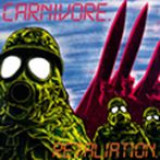
CARNIVORE is an American crossover / thrash metal band from Brooklyn, New York founded by singer and bassist Peter Steele, and was formed out of the breakup of the Brooklyn metal group FALLOUT in 1982. The first CARNIVORE album was heavily influenced by the contemporary New York metal scene. It also drew inspiration from BLACK SABBATH and early JUDAS PRIEST, whereas the second album had significant crossover influences. The "post-apocalyptic" theme that dominated the first album and was carried onto parts of the second album was apparently inspired by a dream Pete Steele had and which became the basis for the lyrics of "Predator", the first song from the original album. The lyrical theme was then expanded on to describe human society ( or the lack of one ) between imaginary World Wars III, IV and possibly V (as referenced in the song "World Wars III & IV"). Other lyrical themes included nihilism, anti-religious sentiment, cynicism, and explicit but tongue-in-cheek depictions of gore and despair. Song titles such as "Jesus Hitler", "Race War", "Thermonuclear Warrior" and "God is Dead" reflect these themes. In August 2017, it was announced that CARNIVORE would officially be reformed as CARNIVORE A.D., featuring original drummer Louie Beato and guitarist Marc Piovanetti along with secondary drummer Joe Branciforte sharing drum duties and also introducing new member Baron Misuraca as the bassist/vocalist. The band then made their live festival debut at the 2018 edition of Hellfest. CARNIVORE's "Retaliation" is a legendary and authentic metal/hc crossover album and an admittedly very heavy devastating wall of music with very much tongue in cheek lyrics. It became an absolute classic in the metal genre. It has remained unreleased for too many years and has now become very much in demand, now available again in Deluxe exclusive Limited edition 2LP vinyl and Digipack with no less than 3 bonus tracks ! ESSENTIAL CLASSIC !
- 1: Jack Daniel's And Pizza
- 2: Angry Neurotic Catholics
- 3: S.m.d
- 4: Ground Zero Brooklyn
- 5: Race War
- 6: Inner Conflict
- 7: Jesus Hitler
- 8: Technophobia
- 9: Manic Depression
- 10: Usa For Usa
- 11: Five Billion Dead
- 12: Sex And Violence
- 13: World Wars Iii And Iv - Bonus Track
- 14: Carnivore - Bonus Track
- 15: The Subhuman - Bonus Track
CARNIVORE is an American crossover / thrash metal band from Brooklyn, New York founded by singer and bassist Peter Steele, and was formed out of the breakup of the Brooklyn metal group FALLOUT in 1982. The first CARNIVORE album was heavily influenced by the contemporary New York metal scene. It also drew inspiration from BLACK SABBATH and early JUDAS PRIEST, whereas the second album had significant crossover influences. The "post-apocalyptic" theme that dominated the first album and was carried onto parts of the second album was apparently inspired by a dream Pete Steele had and which became the basis for the lyrics of "Predator", the first song from the original album. The lyrical theme was then expanded on to describe human society ( or the lack of one ) between imaginary World Wars III, IV and possibly V (as referenced in the song "World Wars III & IV"). Other lyrical themes included nihilism, anti-religious sentiment, cynicism, and explicit but tongue-in-cheek depictions of gore and despair. Song titles such as "Jesus Hitler", "Race War", "Thermonuclear Warrior" and "God is Dead" reflect these themes. In August 2017, it was announced that CARNIVORE would officially be reformed as CARNIVORE A.D., featuring original drummer Louie Beato and guitarist Marc Piovanetti along with secondary drummer Joe Branciforte sharing drum duties and also introducing new member Baron Misuraca as the bassist/vocalist. The band then made their live festival debut at the 2018 edition of Hellfest. CARNIVORE's "Retaliation" is a legendary and authentic metal/hc crossover album and an admittedly very heavy devastating wall of music with very much tongue in cheek lyrics. It became an absolute classic in the metal genre. It has remained unreleased for too many years and has now become very much in demand, now available again in Deluxe exclusive Limited edition 2LP vinyl and Digipack with no less than 3 bonus tracks ! ESSENTIAL CLASSIC !
- Sweet Georgia Brown
- Vagabond Shoes
- Oh! You Beautiful Doll
- Hard Hearted Hannah
- All By Myself
- Coastin
- Mama Goes Where Papa Goes
- Let's Fall In Love
- What'll I Do
- Limehouse Blues
- Sugar Town
- Button Up Your Overcoat
- My Buddy
- In Our Time (Bonus Track)
- Leave My Dog Alone (Bonus Track)
Pink Vinyl[32,35 €]
Sugar war das vierte Album, das Nancy Sinatra 1966 aufnahm - eine unheimliche Leistung, wenn man bedenkt, dass die Beatles zu dieser Zeit etwa zwei Alben pro Jahr aufnahmen. Das kultige Ron Joy-Coverfoto von Nancy im rosa Bikini (der erste auf einem Albumcover!) war 1967 ein gewagter Schachzug, der dazu beitrug, Sugar auf Platz 18 der Charts zu katapultieren (Nancys zweithöchstes Chartalbum nach Boots). Es ist ein seltsames Album, das einen von Nancys bekanntesten Songs, Sugar Town, mit Kompositionen aus den 1920er Jahren kombiniert, die in einem zeitgenössischen Dixieland-Jazz-Pop-Fusion-Stil aufgenommen wurden, der so nur von Produzent Lee Hazlewood stammen konnte. Nancy Sinatra war ihrer Zeit lange Zeit voraus - sowohl in ihren Entscheidungen als Künstlerin als auch als Geschäftsfrau - und zwar gleichermaßen stark, schwül und versiert. Unbeirrt schlug sie schon früh ihren eigenen Weg ein und ebnete den Weg für jahrzehntelang nachfolgende Künstlerinnen - und behielt dabei stets die Kontrolle über ihre Karriere, ihr Image und ihre Musik. Im Jahr 1965 veränderte Nancy Sinatra das Gesicht der Musik, der Mode und der Kultur. Die endgültige Vinyl-Neuauflage von Nancys legendärem Album von 1967 kommt alswunderschön verpackte und erweiterte Gatefold-LP mit 20-seitigem Booklet, enthält die Hits "Sugar Town", "In Our Time", und "Coastin'", wurde neu gemastert von den analogen Originalbändern vom GRAMMYr-nominierten Toningenieur John Baldwin und enthält zwei Bonustracks: die Non-Album-Singles "In Our Time" und "Leave My Dog Alone".